Lula supports de-dollarization on his trip to China, but that is not enough
By Lucas Leiroz | April 18, 2023
Lula’s trip to China was marked by several signals about what may be his foreign policy in his third term. In his speeches, Lula suggested that he will continue to bet on partnerships with the global south and emphasized his criticism of organizations linked to or controlled by the US. Lula’s trip was well received by Chinese partners and brought new hope to bilateral and intra-BRICS relations.
Undoubtedly, the most prominent point in his pronouncements was his support for the de-dollarization of international economic relations. Lula questioned the need to use the dollar as a global commercial currency and expressed his support for the “idea” of creating a currency for the BRICS – or starting to trade in national currencies.
“Why can’t we do trade based on our own currencies? (…) Who was it that decided that the dollar was the currency after the disappearance of the gold standard? (…) Why can’t a bank like that of the BRICS have a currency to finance trade relations between Brazil and China, between Brazil and other countries? It’s difficult because we are unaccustomed [to the idea]. Everyone depends on just one currency”, he said during a press conference.
With this, Lula reiterated what he had mentioned previously, during a trip to Argentina, in which he proposed the creation of a currency for Mercosur and another for the BRICS, both with the aim of advancing economic de-dollarization. To his supporters, this sounds like a big sign that Lula is distancing himself from the US and turning towards greater participation in building a multipolar world. However, this seems like an overly optimistic analysis.
De-dollarization is part of the multipolar world, but it is not its essence. Many countries, even US allies, have been seeking to de-dollarize their international transactions in recent years. Japan, for example, has traded with Beijing without the dollar since 2011, as well as Australia since 2013. Also, the EU has traded with Iran without the dollar since 2020. France recently started its de-dollarization process and Switzerland will certainly start this process soon, as it began to get rid of some of its dollar reserves.
In fact, economic de-dollarization is a technical and pragmatic measure, whose purpose is much more to generate economic benefits than to operate any geopolitical transition. In Brazil, the measure has even been supported on a large scale by businessmen and parliamentarians linked to the agribusiness sector, which is the main segment of the Brazilian economy and whose biggest partner is precisely China. Recognizing the Chinese interest in de-dollarization, there is internal pressure from the Brazilian business community for Lula to de-dollarize the economy. Therefore, it is a technical and pragmatic issue that does not mean much for Lula’s foreign policy agenda.
It is also necessary to emphasize that before traveling to China, Lula repeatedly stated that the main subject of his meeting with Xi would be to discuss the Ukrainian crisis. He planned to show his “peace club” proposal to the Chinese president and garner support, but apparently this was not a relevant topic in the talks. Both presidents limited themselves to generic declarations of support for peace and negotiations, without any more emphatic mention of Lula’s “peace club” project.
Considering that Lula planned the terms of his project in advance with American and European politicians, having even signed a joint statement with Biden condemning the Russian special military operation, it is most likely that Xi has refrained from giving any deep support to the Brazilian president. China and Russia are at their closest moment in history, with unlimited cooperation in all areas. Certainly, Xi would not agree to participate in a “peace club” supported precisely by the states that are waging war against Russia. Therefore, the Ukrainian subject ceased to be the main topic of the tour.
Furthermore, Lula signed interesting agreements with China in the field of space cooperation. A memorandum of understanding was also made in the semiconductor sector. The balance of the trip was positive for Brazil and advanced the de-dollarization agenda, but it did not significantly change the analyses that point out that Lula is closer to the West in this third term. In the same sense, Lula also did not revoke his support for prioritizing the EU-Mercosur agreement over the China-Mercosur agreement, which shows that his position of ambiguity remains.
It seems that Lula plans to continue maintaining this ambiguity. He develops his foreign policy based on a merely multilateralist, not a multipolar, mentality. Lula and his team are acting as if the current world scenario were the same as in his first terms, when there was no possibility of contesting the US unipolar geopolitical order, with the emerging countries only seeking greater economic development through multilateralism.
This reality has absolutely changed, and it is now possible to build a really polycentric system, where emerging countries also have a political role, not merely focused on economic and commercial development through multilateral cooperation. It is hoped that Lula’s team will realize this in time and take more relevant measures towards multipolarity, ignoring American pressure.
Lucas Leiroz is a journalist, researcher at the Center for Geostrategic Studies, geopolitical consultant.
Lula Is Lying: The NATO-Russian Proxy War Isn’t Being Fought “Over Small Things”
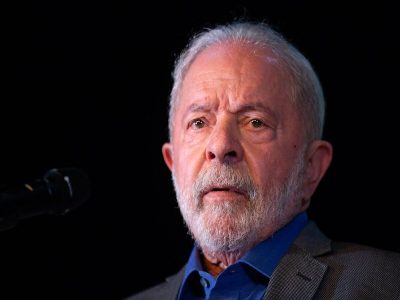
By Andrew Korybko | March 16, 2023
Brazilian President Lula proved that his recalibrated worldview in recent years is a lot more closely aligned with the US’ than ever after downplaying the causes of the NATO-Russian proxy war. According to him, “In the 21st century, it shouldn’t be possible that we have war over small things”, which he uttered after declaring that he won’t visit either Russia or Ukraine due to the special operation. This position serves as further proof that he endorses the US’ narrative about the conflict.
Lula previously condemned Russia in a joint statement with Biden during his trip to DC in early February, after which Brazil voted in support of a fiercely anti-Russian UN Resolution demanding Moscow’s full and immediate withdrawal without any preconditions from all the territory that Kiev claims as its own, which includes Crimea. Russian Permanent Representative to the UN Vasily Nebenzia reacted to the passing of that motion by describing it as pushing a “militaristic Russophobic line”.
Removing any ambiguity about his government’s stance, Lula then called Zelensky shortly afterwards to reaffirm that “Brazil defends Ukraine’s territorial integrity”. Despite these objectively existing and easily verifiable pieces of evidence documenting his political support of Russia’s nemeses in Kiev, an intense information warfare campaign has been waged by forces allied with the ruling party to gaslight its base into falsely thinking that Lula isn’t aligned with the US on this issue or others like Nicaragua.
Elite members of the Workers’ Party (PT) fear that the rank and file might revolt upon becoming aware that their leader is moving Brazil closer to the US-led West’s Golden Billion than the Sino-Russo Entente or even the Global South of which it’s a part amidst the impending trifurcation of International Relations. With a view towards preemptively averting the scenario of them publicly pressuring him en masse to change this grand strategic trajectory, they sought to manipulate their perceptions about Lula’s policies.
This explains the intense information warfare campaign that’s being waged against their minds at this pivotal point in the global systemic transition, which he himself is directly participating in upon downplaying the causes of the NATO-Russian proxy war in an attempt to justify his political support of Kiev. Lula wants his supporters to discount the evidence before their eyes and ears in favor of agreeing with the US’ narrative that Russia supposedly “invaded” Ukraine for purely “imperialistic” purposes.
If the PT’s base was aware of the military-strategic dynamics that forced Russia to commence its special operation as a last resort for defending the integrity of its national security red lines in Ukraine after NATO clandestinely crossed them there, then they’d be against his political support of Kiev. It would thus be self-evident to them that Lula is placing Brazil on a US-aligned grand strategic trajectory in the New Cold War, which could lead to them publicly pressuring him en masse to change his policy.
The following analyses explain the larger context within which the special operation is being waged:
* 15 March 2022: “Why Did U.S. Prioritize Containing Russia Over China?”
* 26 March 2022: “Russia Is Waging an Existential Struggle in Defense of Its Independence & Sovereignty”
* 24 December 2022: “Putin Explained Why He Had No Choice But To Protect The Russian Population In Ukraine”
* 22 February 2023: “Putin Reminded Everyone That Russia Is Using Force To End The War That The West Started”
* 22 February 2023: “Russia Would Be Torn To Pieces Exactly As Medvedev Predicted If It Ended Its Special Operation”
A summary of the abovementioned insight will now follow for the reader’s convenience.
In brief, the US spent the preceding eight years between its successful Color Revolution in early 2014 and the start of the special operation in 2022 turning Ukraine into an anti-Russian bastion, the purpose of which was to degrade that targeted Great Power’s strategic capabilities to defend itself from the US. This was to be done through a combination of Hybrid War means related to Kiev’s support of information warfare- and terrorist-driven separatism as well as conventional ones connected to NATO.
The first half of this policy aimed to destabilize Russia from within through the cultivation of forces that could advance its “Balkanization” while the second intended to eventually employ biological weapons, clandestine NATO bases, and “missile defense” infrastructure to place it in a position of blackmail. The US envisaged forcing Russia into a never-ending series of unilateral concessions that would ultimately result in its geostrategic neutralization and thus facilitate the successful “containment” of China.
This plot to restore its declining unipolar hegemony was to begin with Kiev’s NATO-supported reconquest of Donbass, which threatened to genocide that region’s indigenous Russian population and ethically cleanse the survivors. That sequence of events was foiled by the special operation that was launched after President Putin realized that the West had no interest in discussing his country’s security guarantee requests from December 2021 for politically resolving their security dilemma.
While the US prepared for the possibility of some kinetic response to its support of Kiev’s imminent reconquest of Donbass, American policymakers hadn’t calculated that President Putin would launch a preventive campaign across all of Ukraine to avert the impending scenario of Russia’s strategic neutralization simultaneously with the preemptive one to stop the Donbass genocide. Had it been otherwise, then they’d have retooled the West’s military-industrial complex well in advance.
This major miscalculation explains why the NATO chief admitted last month that his bloc is in a “race of logistics”/“war of attrition” with Russia, which wouldn’t be the case if it truly expected a protracted conflict of this scale, nor would Kiev’s forces be faring as badly as the Washington Post just revealed. President Putin regularly reminds everyone of the existential nature of this conflict, which places his decision to commence an interconnected preemptive-preventive campaign into context.
Returning to Lula’s latest remarks that inspired this analysis, there’s no doubt that he’s well aware of these military-strategic dynamics that forced President Putin’s hand, which thus means that he’s deliberately downplaying them in order to manipulate his base. He can’t claim ignorance after over a year of Russia explaining this at length, hence why it can now confidently be concluded that Lula politically aligned Brazil with the US in the most geostrategically significant conflict since World War II.
New law sought by Brazil’s Lula to ban and punish “fake news and disinformation” threatens free internet everywhere
Nations seem poised to abandon the core lesson of the Enlightenment: no human institution can or should be trusted to decree Absolute Truth and punish dissent
By Glenn Greenwald | February 25, 2023
A major escalation in official online censorship regimes is progressing rapidly in Brazil, with implications for everyone in the democratic world. Under Brazil’s new government headed by President Lula da Silva, the country is poised to become the first in the democratic world to implement a law censoring and banning “fake news and disinformation” online, and then punishing those deemed guilty of authoring and spreading it. Such laws already exist throughout the non-democratic world, adopted years ago by the planet’s most tyrannical regimes in Saudi Arabia, Egypt, Qatar, the United Arab Emirates and Turkey.
If one wishes to be generous with the phrase “the democratic world” and include Malaysia and Singapore – at best hybrid “democracies” – then one could argue that a couple other “democratic” governments have already seized the power to decree Absolute Truth and then ban any deviation from it. But absent unexpected opposition, Brazil will soon become the first country unambiguously included in the democratic world to outlaw “fake news” and vest government officials with the power to banish it and punish its authors.
Last May, the U.S. Department of Homeland Security was forced to retreat from its attempt to appoint a “disinformation czar” to oversee what would effectively be its Ministry of Truth. That new DHS agency, at least nominally, was to be only advisory: it would declare truth and falsity and then pressure online platforms to comply by banning that which was deemed by the U.S. Security State to be false. The backlash was so great — the CIA and company are not exactly world-renown for telling the truth — that DHS finally claimed to cancel it, though secret documents emerged in October describing the agency’s plans to continue to shape online censorship decisions of Big Tech.
Brazil’s law would be anything but advisory. Though the details are still yet to be released, it would empower law enforcement officials to take action against citizens deemed to be publishing statements that the government classifies as “false,” and to solicit courts to impose punishment on those who do so.
The Brazilian left is almost entirely united with the country’s largest corporate media outlets in supporting this censorship regime (sound familiar?). The leading advocates of this new censorship law include pro-government lawyers, famous pro-Lula YouTube influencers, and even journalists(!). They are now being invited to and feted in “fake news” and “disinformation” conferences in glamorous European capitals sponsored by UN agencies, because the EU is eager to obtain such censorship powers for itself, and sees Brazil as the first test case for whether the public will tolerate such an aggressive acquisition of dissent-suppression authorities by the state. (Recall that the EU itself, at the start of the war in Ukraine, escalated online censorship to an all-new level by making it illegal for any online platform to host Russian-state media outlets; Rumble’s refusal to obey France’s command to remove RT from its platform forced Rumble to cease broadcasting in France).
Last Sunday, Brazil’s largest newspaper, Folha of São Paulo, announced that I had become a regular columnist for the paper (I will likely publish columns every other week, and those with international relevance will be published in English as well). Their offer came after months of rather intense controversy in which I have been vocally denouncing as dangerously authoritarian the regime of censorship and other weapons of dissent-suppression imposed by a member of Brazil’s Supreme Court, Alexandre de Moraes.
Even prior to enactment of this newly proposed law, the online censorship attacks of this single Brazilian judge, acting with the support of the a majority of its Supreme Court, has been so extreme that even liberal American news outlets have published critical articles on him and what they suggests are his lawless and wild censorship binges (including three in The New York Times, one in the Associated Press and another in The Washington Post ). One New York Times article – published weeks before the first round of the 2022 presidential race that sent Lula and incumbent President Jair Bolsonaro to a run-off – described the judge’s conduct this way:
Mr. Moraes has jailed five people without a trial for posts on social media that he said attacked Brazil’s institutions. He has also ordered social networks to remove thousands of posts and videos with little room for appeal. And this year, 10 of the court’s 11 justices sentenced a congressman to nearly nine years in prison for making what they said were threats against them in a livestream.
The power grab by the nation’s highest court, legal experts say, has undermined a key democratic institution in Latin America’s biggest country as voters prepare to pick a president on Oct. 2. … In many cases, Mr. Moraes has acted unilaterally, emboldened by new powers the court granted itself in 2019 that allow it to, in effect, act as an investigator, prosecutor and judge all at once in some cases.
As the AP articles notes, we were the first to reveal one of Judge de Moraes’ secret censorship orders, which I obtained and then reported on in an episode of SYSTEM UPDATE, which was viewed by more than half a million people:
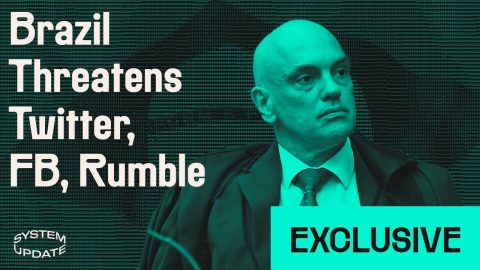
Despite also being the journalist who – back in 2019 and 2020 – exposed the grave corruption committed by the once-heroic Brazilian judge and prosecutors who imprisoned Lula in 2017 – reporting that won top journalism awards in Brazil, garnered universal praise from the Brazilian left, resulted in an unsuccessful attempt to prosecute me, and ultimately led to Lula’s release from prison and restored his eligibility to run for president in 2022 – both my husband David Miranda (a Congressman until last month) and I have, overnight, become among the most reviled figures by Lula’s followers. This has been in part due to my increasingly active opposition to growing censorship efforts led by this judge and his left-wing allies, censorship which the Brazilian left and their corporate-media allies support with great fervor and with something close to lock-step unanimity.
Those left-wing attacks against us began when David announced in January, 2022 that he was leaving his left-wing party PSOL – which had long been opposed to PT and Lula – because he objected to the party’s decision to support Lula’s presidential candidacy in the first round of voting. He instead joined the center-left party PDT in order to support presidential candidate Ciro Gomes.
Because David was the first national left-wing political official to publicly refuse to support Lula’s candidacy in the first-round of voting, it was necessary for PT to make an example of him (and, by extension, of me). The campaign of vilification was deeply personal. Even as a couple accustomed to being the target of such campaigns, the attacks on us from Lula’s followers were unlike anything I had seen in terms of vitriol, unrestrained online mob rage, and the kind of bigoted tropes the left pretends it reviles but instantly unleashes against any member (such as David) of the “marginalized groups” the left believes it owns.
As is true in the U.S., nothing enrages the left and provokes the lowest and most scurrilous attacks more than when a person they believe they own due to their membership in a “marginalized” group who proclaims their independence and right to think critically (in September, I was forced by David’s health crisis to petition the election court to withdraw his re-election candidacy, and the new Congress was inaugurated on February 1 without him).
But those already-lowly attacks escalated severely when I became much more vocal about my increasing concern over the country’s growing reliance on censorship and due-process-free persecution of PT’s opponents. Unlike in the U.S. – where the liberal-left still pays lip service to their support for free speech while clearly acting to subvert it – the Brazilian left barely bothers with this pretense. Many simply acknowledge that they do not believe in free speech, and equate a defense of free speech with fascism. They do so with no apparent recognition of the irony – that the first thing a fascist regime does is ban books and criminalize dissent – and despite the fact that free speech is a right guaranteed by the Brazilian constitution.
For the globalist order increasingly petrified of internet freedom – they blame online free speech for everything from Brexit and Hillary’s defeat to skepticism of health authorities and growing opposition to U.S. support for the proxy war in Ukraine – Brazil has become the perfect test case for seizing state power to censor the internet in the name of stopping “fake news and disinformation.” Nothing fosters support for authoritarianism the way fear does, and much of the Brazilian establishment believes they are fighting a new War on Terror. Even with Bolsonaro vanquished for now in Florida, his party in the last election won the most seats in both houses of Congress as well as key governorships across the country.
Just as the Bush/Cheney government exploited the 9/11 attack, and the Biden administration still exploits the January 6 riot, to justify previously unthinkable assaults on core civil liberties, the Brazilian left – in union with the country’s establishment – is now exploiting the January 8 invasion of government buildings by a few thousand Bolsonaro supporters to argue that anything and everything is justified in the name of their “war on terrorism” (unlike the 3,000 deaths on 9/11, and the deaths of four Trump supporters on 1/6, nobody died or was grievously injured on January 8 in Brasilia). And using the same playbook of neocons to support their crisis-justified civil liberties attacks, anyone in Brazil who even questions the need for new censorship powers and other attacks on dissidents demanded by the government is accused of being “pro-Terrorist” or an “apologist for fascism” (I honestly never thought I would live to see the day when one stands accused of being pro-facist for opposing censorship rather than supporting it, but such are the times in which we live).
That is why Europe, and large sectors of the U.S. establishment, see Brazil as the perfect laboratory to test how far censorship powers can go. With many Brazilians believing they just suffered their own 9/11 or January 6, all power centers know that the perfect time to seize new authoritarian powers and abridge core liberties is when the population is in a state of fear and terror, and thus willing to sacrifice liberties in exchange for illusory promises of security.
And recall that polling data in the U.S. shows that very large majorities of Democrats (and a disturbingly robust minority of GOP voters) would support a law similar to the one pending in Brazil to empower the state to restrict internet freedom in the name of stopping “misinformation.” As Pew found in 2021, 65% of Democrats “say the government should take steps to restrict false information, even if it means limiting freedom of information.” Perhaps the First Amendment would be a barrier to implementation of such a law in the U.S., but there is ample public support, especially on the liberal-left, for state censorship of the internet.
A major reason I accepted the offer to become a Folha columnist is that it gives me a significant platform in Brazil to combat what I regard as these increasingly grave attacks on core liberties, not only because they threaten rights of free speech, due process and a free internet in Brazil, but because they threaten all those values far beyond Brazil’s borders as well. My reporting on this new “fake news and disinformation” law sought by Lula’s government as set forth below includes parts of my first Folha column published last Sunday on the dangers of this newly proposed law, as well as significant new passages I wrote for an international audience and for publication of this new article here on Locals.
Ten days before the run-off voting for the 2018 presidential election which sent Bolsonaro into the presidency, Folha reported that an “illegal practice” was being used to help Jair Bolsonaro win that election. “Companies are purchasing large packages of messaging assailing [Lula’s] Workers’ Party (PT) for mass dissemination on WhatsApp,” Folha explained.
Bolsonaro not only denied the story but accused both Folha and PT of spreading Fake News. As Folha noted at the time, Bolsonaro’s party “intended to sue” his election-year rival Fernando Haddad of PT. Bolsonaro accused PT of “spreading false news.”
Upon winning the presidency, there was no law available to Bolsonaro – similar to the one which Lula’s government is now proposing – that would have empowered his government, or judges sympathetic to him, to ban discussion online of Folha’s reporting by claiming it was “fake news.” But if he did have that power – if the law which PT hopes to implement to govern “fake news” had been in the hands of Bolsonaro’s allies – it is very reasonable to suspect they may have used it to suppress those revelations on the ground that, in the view of Bosonaro’s supporters, the allegations were “false.”
After all, the new law proposed by Lula’s government would empower both the judiciary and the equivalent of Brazil’s Solicitor General (AGU) to take more aggressive action to combat “fake news” online. Among other new powers, the proposed law would permit “an action by the AGU, a body that legally represents the government, to file legal cases against those it regards as authors of false content.”
In a January 19 interview with Folha, Lula’s chief spokesman, Paulo Pimenta, vowed: “we will start to respond more forcefully, more sharply, to information that distorts the truth and is wrong.”
Everyone would love to live in a world in which an omnipotent and benevolent power who rules us allows only truthful statements, while it accurately identifies and then outlaws all false claims. Such a world sounds like paradise: no errors, only truth. Who could possibly be opposed to that?
Unfortunately, human nature makes such a world impossible. If history teaches any lesson, it is clear that treating human leaders or institutions as capable of god-like infallibility and super-human wisdom is quite dangerous.
Humans have tried all this before. For a thousand years prior to the Enlightenment, most societies were ruled by omnipotent institutions – monarchies, empires, churches – that claimed to possess absolute truth and therefore outlawed any views that deviated on the ground that they were “false.”
The core innovation of the Enlightenment, one of the greatest intellectual advancements of human liberation, was that all human institutions are fallible, that they endorse false claims either due to error or corruption, and that every individual must always retain the right to question and challenge their orthodoxies.
In sum, there is no such thing as an institution of authority that can be trusted to decree what Truth is. The oldest indigenous societies, far from Europe, had already internalized this lesson, having discarded faith in centralized authorities in favor of decentralized power and dispersed democratic values. And what is now called “the democratic world” is founded in the view that secular truths are ascertained not by decrees of monarchs, clerics and emperors, but by free and open debate driven by human reason and the sacred right to dissent.
Since the start of the COVID pandemic, it has been bizarre to hear left-liberals throughout the democratic world proclaim their devotion to science while simultaneously demanding that all “false statements” about science be banned. Science cannot exist if one assumes that permanent truth has already been apprehended. Science requires the acknowledgement that even its most brilliant and accomplished experts may have embraced grave errors and faulty assumptions. Scientific truth is unearthed only by permitting challenges to prevailing orthodoxies, not by prohibiting let alone outlawing them.
To say that one believes in science while demanding that “falsity” be banned is like saying that one believes in religion while demanding that prayer be banned. Scientific discovery, like all intellectual endeavors, only advances by a process of trial and error, by challenging and objecting to prevailing beliefs so that error can be uncovered. To ban “false claims” is not to honor and strengthen science but to vandalize and kill it.
From the start of the COVID pandemic, many of the claims made by the world’s most prestigious experts and trusted institutions have turned out to be false or uncertain. As just one example, the World Health Organization announced in February and March of 2020 that asymptomatic people should not wear masks and that doing so could make a COVID infection worse by “trapping” the virus. In April, the recommendation was the opposite: everyone should wear masks regardless of one’s health condition.
In 2018, any Brazilian “fact-checker” would have affirmed as true the statement that Lula was a “thief,” as he was convicted of multiple corruption felonies, which Brazilian appellate courts affirmed on appeal. By 2022, the situation was reversed as Brazilian courts nullified that conviction (in large part based on the revelations of our reporting regarding the corruption on the part of Lula’s judge and prosecutors). As a result, Brazil’s election courts in the 2022 campaign banned campaign materials calling Lula a “thief” on the ground that they were false.
In other words, what was considered Gospel about Lula in 2018 became prohibited Falsity just four years later. That is the unyielding, universal pattern driving human intellectual advancement: what is deemed Truth one minute becomes shameful and discredited the next.
For that reason, at the heart of every censor resides one of the most toxic human traits: hubris. It is astonishing to watch some humans believe that they have managed to liberate themselves from this historical cycle of misperception, misapprehension and error, and instead believe that they have become owners of the Truth. Even with the best of motives, only hubris would lead people to have so much confidence in their truth-finding abilities that they would want the state to make it a crime to question or deny their views of the world. And yet no other mentality than this one can account for someone supporting the kind of law to ban and punish “fake news and disinformation” as the new Brazilian government and its allies in Congress are on the verge of adopting.
Error is the inevitable condition of even the most well-intentioned humans. But most humans do not operate with the purest of motives. Humans with great power are highly likely to abuse that power absent very serious limits. Even if you believe you finally found political leaders with almost god-like virtue, who can be trusted not to abuse such powers when suppressing ideas as “false,” it is extremely likely such laws will be transferred in the future to new leaders with different ideologies and who are more human than the deity you have been fortunate enough to have found.
And as has been widely reported, the new industry to define “disinformation” is largely a scam. It is funded by a small handful of liberal billionaires, and employs highly politicized actors who claim a fake expertise – “disinformation experts” – to masquerade their ideological views as science. Any attempts by the state to make “fake news and disinformation” illegal will almost certainly rely on this fraudulent industry to justify their censorship decisions by claiming that their assessment of truth and falsity has been supported by “experts.”
If Brazil implements this proposed law, it will not be the first time a government is empowered to ban “fake news” on the internet. Other countries live under governments which have been given the power to ban journalism and commentary on the ground that it is judged by the state to be dangerous, to be false, to incite violence, or to foster social instability or even revolutions against the prevailing order.
Regimes with such laws are the planet’s most despotic: Saudi Arabia, United Arab Emirates, Egypt, Singapore and Qatar (whose law, entitled “Crimes against the internal security of the State,” allows the state to “impose up to five years imprisonment on anyone who spreads rumors or false news with bad intent”).
There, the outcome is predictable. All dissent against government orthodoxies and criticism of its leaders are quickly labeled “false” or “dangerous” or designed to incite violence and are censored on that ground. Last May, the UN, warning about a newly proposed “anti-disinformation” law in Turkey, “expressed concern after the vote by the Turkish parliament of a law that could imply the imprisonment of up to three years of journalists and users of ‘social media’ for the dissemination of ‘fake news’.”
Those attacks on dissent using these “Fake News” laws are not due to “abuse of a good law.” They are, instead, the inevitable, arguably the intended, outcome of such a law. No political faction is immune from believing that any dissent from its core pieties is not just misguided but deliberately false and even dangerous.
The dissent-suppressing persecution where such laws have been allowed to flourish are entirely predictable. Only in authoritarian cultures, or ones that wish to return to the pre-Enlightenment days of full submission to institutions of authority, would citizens trust political, governmental or religious officials with the power to declare absolute truth and then, using the force of law, bar any expression that deviates from it.
These abuses of “fake news” laws happen in those countries where those laws have been adopted not because those countries are different than ours, but because they are the same. All powerful leaders, even well-intentioned ones, will be highly tempted to ban dissent on the grounds that it is dangerous or “false.”
Humans, by our very nature, are incapable of acquiring absolute truth about politics or science even with the best of motives. What one generation believes to be proven Truth (the earth is the center of the universe) is demonstrated by subsequent generations to be gross error, though such truth-tellers often suffer severe persecution when “falsity” is rendered illegal (which is why Socrates, Copernicus, Galileo, Voltaire and many others like them wasted years attempting to avoid prison or worse, often unsuccessfully, due to laws banning ideas deemed “false” by the reigning authorities of their era). The intellectual history of humanity has one indisputable lesson: humans will always err when claiming they have discovered such absolute truth that nobody should be permitted to doubt or challenge their claims.
It is likely for these reasons that “the large portion” of the Brazilian legal specialists consulted by Folha about Lula’s proposed law to ban “fake news and disinformation” emphasized “that a legal process of this kind by the government can set a precedent that represents a risk to freedom of expression, given the possibility of being weaponized for judicial harassment against critics and opponents.”
Even if you are lucky to have found the most trustworthy and benevolent leaders in history, ones who are somehow capable of decreeing truth without erring and who use such laws only in the most noble ways – something the Brazilian left believes of Lula and his government – at some point other leaders will be elected and they, too, will have such powers.
When assessing whether one should support a proposed law, the key question is not whether one is comfortable with it in the hands of leaders one likes and trusts, but whether one is comfortable with such powers in the hands of different leaders.
Soros’ Strong Support Of Lula Discredits The Brazilian Leader’s Multipolar Credentials
By Andrew Korybko | February 17, 2023
Brazilian President Lula was already suspected of recalibrating his worldview a lot closer to the US’ strategic interests ever since the start of his third term in office, including after he condemned Russia in his joint statement with Biden earlier this month, but Soros’ strong support of him removes all doubt. That liberal-globalist Color Revolution mastermind praised Lula during his speech at this year’s Munich Security Conference, which completely discredits the latter’s multipolar credentials once and for all.
In Soros’ own words as shared on his official website:
“There are many other regional powers that can influence the course of history. Brazil stands out. The election of Lula at the end of last year was crucial.
On January 8th there was a coup attempt much like January 6th, 2021, in the US. Lula handled it masterfully and established his authority as president.
Brazil is on the front-line of the conflict between open and closed societies; it is also on the front-line of the fight against climate change. He must protect the rainforest, promote social justice, and reignite economic growth all at the same time.
He will need strong international support because there is no pathway to net zero emissions if he fails.”
Quite tellingly, Lula hasn’t distanced himself from this strong support and almost certainly revels in it.

After all, Soros stands in full solidarity with Biden so disrespecting one would be disrespecting the other, which Lula would never do after traveling to DC to kiss the second’s ring as thanks for fully supporting his re-election. The Brazilian leader is so heavily under his US counterpart’s influence right now that he even tweeted that he’s partnering with Biden partially in “defense of democracy” despite him having been Vice President during Ukraine’s “EuroMaidan” and Brazil’s “Operation Car Wash” regime changes.
Lula seemingly no longer cares that Biden played a role in undemocratically overthrowing him through lawfare-driven Hybrid War means so it therefore follows that he also wouldn’t care about Soros’ Color Revolution spree across the world either. In complete contradiction to everything that Russia has said thus far about the US indefinitely perpetuating its proxy war on it in order to fight until the last Ukrainian, Lula then tweeted that “I think Biden is clear that the war has to stop.”
His political love affair with Soros’ allies goes beyond Biden and extends to fellow faux leftists Bernie Sanders and Alexandria Ocasio-Cortez (AOC), both of whom met with Lula during his trip to DC. Lula was so enamored with AOC after their meeting that he responded with a heart emoji under her retweet of their pics together, while Bernie predicted that “the United States and Brazil will build a stronger partnership” as result of the Brazilian leader’s re-election.
As can be seen from Soros’ strong support of him, his enthusiastic praise of Biden, as well as the mutual shoulder-rubbing between him and Sanders-AOC, Lula has surrounded himself with the world’s most infamous liberal-globalists. This confirms the prior assessment from last November that the US’ Democrat Party has infiltrated Brazil’s Workers’ Party through these means, though it couldn’t have been known until now that this infiltration literally reached the height of its leadership.
Considering these “politically inconvenient” factual observations about Lula’s new ideological allies in the US, there’s no doubt that his multipolar credentials are discredited once and for all. This doesn’t mean, however, that he can’t continue helping to make gradual progress in that direction amidst the ongoing global systemic transition. Rather, it simply reinforces the perception hyperlinked in this analysis’ first sentence that whatever he does might inadvertently or deliberately advance US interests.
The abovementioned insight shouldn’t be misinterpreted as implying that Lula is “controlled” by Soros, Biden, or Sanders-AOC, but just that he’s definitely their “fellow traveler” since the Brazilian leader indisputably shares their worldview nowadays to a large extent. Even though he still shouts socialist slogans, Lula’s priority during his third term is less about improving the living conditions of his country’s impoverished and more about geostrategically realigning Brazil with the US-led West’s Golden Billion.
Lula Sealed His Deal With The Devil By Condemning Russia During His Meeting With Biden

By Andrew Korybko | February 11, 2023
Lula did indeed make a deal with the devil, in this case his US nemeses who were responsible for his imprisonment, in order to be sprung from jail and subsequently given a fighting chance to return to office. Upon doing so, this geopolitically repentant leader whose multipolar worldview was noticeably recalibrated behind bars did exactly as the US expected him to do, namely condemn Russia like all Sanders-style leftists have done and then rush to Biden to “kiss the ring”.
Brazilian President Luiz Inácio Lula da Silva, who was just re-elected to a third non-consecutive term in office and is popularly known as Lula, did what had previously been unthinkable for the same man who used to be regarded as a titan of the global multipolar movement. After meeting with Biden, who was Vice President when the US orchestrated “Operation Car Wash” against him and his successor Dilma Rousseff, Lula released a joint statement in which he fiercely condemned Russia.
According to the official White House website, “They deplored the violation of the territorial integrity of Ukraine by Russia and the annexation of parts of its territory as flagrant violations of international law and called for a just and durable peace.” No leader of Russia’s other fellow BRICS partners had ever expressed such sentiments, not even former Brazilian President Jair Bolsonaro, which proves that Lula has indeed recalibrated his worldview since his imprisonment in a more pro-US direction.
This development wasn’t surprising since Lula had earlier condemned Russia by comparing its special operation in Ukraine to the US’ Hybrid War on Venezuela. At the same time, he put forth a G20-like peace proposal that wasn’t just ignored by Russia, but even indirectly criticized by it an insincere publicity stunt that actually goes against Moscow’s interests. Intrepid readers can learn more about the first incident here and the second one here since they’re beyond the scope of the present piece.
Nevertheless, by fiercely condemning Russia while meeting with Biden in DC, it should be obvious to all that Lula made a proverbial deal with the devil. In hindsight, it compellingly appears as though the information that was leaked about his case proving the courts’ political bias against him and which ultimately annulled their prior ruling (which thus let him run for re-election last year) was probably the result of a US intelligence operation aimed at once again manipulating Brazil’s political process.
Throughout the course of his first two terms and the unfinished one of his successor, the US regarded Lula as a titan of the global multipolar movement whose foreign policies posed a threat to its hemispheric hegemony. For that reason, they leaked the detailed materials implicating Lula, Rousseff, and other Workers’ Party members in a massive corruption scandal that would serve to discredit their rule, jail that aforementioned titan, and pave the way for installing a much more pliable leader.
The US’ Hybrid War on Brazil achieved all three of its initial goals but the last of them proved to be unsustainable after Bolsonaro refused to sanction Huawei in exchange for an official NATO partnership and later defied similar demands against Russia in a surprising flex of his independence. Not only that, but his conservative-sovereigntist worldview that’s inaccurately been smeared as solely being a so-called “far right-wing” one is the polar opposite of the ruling US Democrats’ liberal-globalist one.
While the sequence of events that reversed the primary outcome of “Operation Car Wash” began under the Trump Administration, objective observers already know that his military, intelligence, and diplomatic bureaucracies (“deep state”) were working against him and his worldview this entire time. This was proven by their complicity in the Russiagate conspiracy theory, among many other examples, with their preemptive efforts to manipulate Brazil’s 2022 elections being another case in point.
The US’ “deep state” believed that their country’s interests would be best served by replacing increasingly independent Bolsonaro with a geopolitically repentant Lula, ergo why they worked so hard to reverse the same outcome that imprisoned the latter. They concluded that he’s no longer the multipolar titan that they previously thought he was, but is more akin to a Bernie Sanders-style leftist, which thus makes him amenable to manipulation in pursuit of their foreign policy goals.
Just like Sanders and his ilk fiercely condemned Russia, so too did Lula, which was entirely predictable once one realizes that this Brazilian leader has turned into a “fellow traveler” of the US left. The Workers’ Party has gradually been infiltrated by pro-US liberal-globalists who prioritize the promotion of so-called “woke” identity-centric politics at home over tangible improvements in poverty alleviation, workers’ rights, and accelerating the global systemic transition to complex multipolarity (“multiplexity”).
This observation explains why one of the three largest paragraphs of Lula’s joint statement with Biden included a pledge to fight racism and support LGBTQI+ persons. That’s not to deny the existence of racism in either of their countries, but just to point out that the Brazilian leader apparently believes that he can’t effectively counteract it with US assistance, which is a tacit deferral to the US’ de facto seniority in their revived partnership and thus by default confirms his country’s position as its “junior partner”.
Further evidence of the US’ successfully reasserted hegemony over Brazil in the aftermath of last year’s elections, which were manipulated by its intelligence services as was previously explained, can be seen by Lula agreeing to “strengthen democratic institutions” with Biden. This represents one of the most cringeworthy self-inflicted humiliations that any world leader has ever committed since it was during Biden’s term as Vice President that “Operation Car Wash” was orchestrated against Lula and his party.
He obviously knows that, yet he decided to “kiss the ring” and radically revise history as a quid pro quo for the US’ intelligence services once again manipulating Brazil’s domestic processes, albeit this time to release him from his unfair imprisonment. Lula went even further with his self-inflicted humiliation ritual by also agreeing in their statement to “build societal resilience to disinformation” together with the US despite the latter being the world’s largest fake news factory, which it earlier weaponized against him.
Another aspect of historical revisionism is evidenced by the remarks that preceded their meeting. The White House reported that Lula claimed that Brazil “isolated itself for four years” under Bolsonaro, who he claimed “didn’t enjoy to keep international relations with any country.” That’s factually false though since trade with China surged despite that former leader’s Sinophobic rhetoric on the campaign trail and he even visited President Putin in Moscow just before the special operation began despite US pressure.
These objectively existing and easily verifiable facts prove that Lula is lying through his teeth, which he believes he can do with impunity since he has the US’ support nowadays, unlike during his first two terms. He’s fully confident that nobody in the US-led West’s Mainstream Media (MSM) will fact-check him since they also share his ideological opposition to the conservative-sovereigntist worldview that Bolsonaro imperfectly embodied. It’s therefore in all their interests to so radically revise history.
The newly declared Brazilian-US joint crusade against “extremism and violence in politics” that was also unveiled in their statement strongly implies that Washington will help Lula crack down on the opposition in the aftermath of his country’s January 8th event. About that, the US arguably had a role in orchestrating everything as well in order to create the pretext for Lula to consolidate his rule, which is especially important for them since he shares their liberal-globalist worldview in the domestic sense.
More about that incident and the US’ role within it can be read about in detail here and here since it goes beyond the scope of the present analysis just like Lula’s prior condemnation of Russia and his doomed-to-fail G20-like peace plan that were earlier touched upon in this piece too. They’re relevant for intrepid readers to review, however, if they hope to obtain a deeper understanding of the ways in which Brazil and the US are now closely cooperating behind the scenes during Lula’s third term in office.
What all of this goes to show is that Lula did indeed make a deal with the devil, in this case his US nemeses who were responsible for his imprisonment, in order to be sprung from jail and subsequently given a fighting chance to return to office. Upon doing so, this geopolitically repentant leader whose multipolar worldview was noticeably recalibrated behind bars did exactly as the US expected him to do, namely condemn Russia like all Sanders-style leftists have done and then rush to Biden to “kiss the ring”.
Lula then radically revised history alongside his counterpart in order to publicly patch up their well-known differences brought about by the US’ Hybrid War on his country that was partially overseen by none other than Biden himself and ultimately resulted in the Brazilian leader’s imprisonment. This self-inflicted humiliation ritual was the cost that Lula had to pay, which included condemning Russia and thus discrediting himself among the multipolar community, but he looked happier than ever as he did it.
Will Japan and India become permanent members of the UN Security Council?
By Petr Konovalov – New Eastern Outlook – 14.01.2023
On December 12, 2022 in London, during a meeting of the British Foreign, Commonwealth and Development Office, its head, James Cleverly, said that he was in favor of expanding the number of permanent members of the UN Security Council (UNSC) by including Japan, India, Brazil and Germany.
The British diplomat believes that the current world order allows a much larger number of people to live much better than before, but today it needs some changes. According to Cleverly, the UK is interested in reflecting the needs of as many countries as possible in the UN. He also noted that the inclusion of Japan, Brazil, India and Germany would allow London to expand interaction with these countries and thus accelerate the growth of global prosperity.
The British Secretary of State for Foreign, Commonwealth and Development Affairs said that the established system of international relations, which was approved as a result of the victory of the Allies after the Second World War, is allegedly outdated due to the fact that since 1950 the volume of world trade has increased by about 40 times, which has led to a radical change in the balance of power in the world. Furthermore, he emphasized that demographic changes had also made their own adjustments to the modern world order.
The rhetoric of the British leadership is quite logical. The UK no longer represents the military and economic power that it used to be during the second half of the previous century. London is aware that it needs allies to support it internationally. The countries listed by James Cleverly, which, in his opinion, should become permanent members of the UN Security Council, maintain close relations with the US and the UK and are highly likely to pursue a common policy with London and Washington on many issues.
In accordance with the norms of international law, the UN Charter can be revised only with the unanimous consent of all the permanent members of the UN Security Council. France, which is a permanent member of the UN Security Council and is loyal to the policy pursued by Washington and London, will support the proposal of the UK, however, Russia and China, who are also permanent members of the UN Security Council, may not approve its expansion, as this may upset their geopolitical plans.
Russia welcomes the inclusion of India and Brazil in the list of permanent members of the UN Security Council. The Russian Federation has fairly warm relations with these states, and it is unlikely that Moscow will have any international disputes with them in the foreseeable future. Back in 2010, Russian President Vladimir Putin, who was serving as Prime Minister of the Russian Federation that year, during a meeting with Indian diplomats, said that India should be included in the list of permanent members of the UN Security Council. Subsequently, the Russian president has always adhered to this rhetoric. As for Russian-Brazilian relations, they have always been at a high level, and Lula da Silva, elected for the third time as President of Brazil in October 2022, is known for his pro-Russian views. During the previous presidency of Lula da Silva, the international organization BRICS was created (in 2006), which includes Brazil, Russia, India, China and South Africa. Consequently, the Russian Federation is likely to approve the inclusion of Brazil in the list of permanent members of the UN Security Council.
However, the Kremlin has a negative stance when it comes to the inclusion of Germany and Japan in the list of permanent members of the UN Security Council, since these states are pursuing an unfriendly policy towards Russia, and Tokyo completely casts doubt on the territorial integrity of the Russian Federation, claiming control over the Kuril Islands.
It should be noted that the inclusion of Germany, Brazil, Japan and India in the list of permanent members of the UN Security Council is not beneficial for China either, since these states maintain good relations with the United States and will adhere to a pro-American position in numerous international disputes.
Germany and Brazil are in close economic relations with London and Washington and therefore, with a high degree of probability, they will act in the interests of the US and the UK if they become permanent members of the UN Security Council. Of course, China will prevent such a development of events.
In China, the memory of Japan’s war crimes against the Chinese population during the Second World War is still fresh. Beijing also disapproves of Tokyo’s pro-American policy and is wary of the impressive number of US military installations in Japan.
Relations between Beijing and New Delhi are also at a fairly low level. India and China are competing for influence in places like Bangladesh and Sri Lanka. The Chinese authorities do not want the strengthening of Indian international influence and will do everything in their power to prevent India from being included in the list of permanent members of the UN Security Council.
It is important to emphasize that skirmishes have periodically occurred between Indian and Chinese border guards over the past 45 years. As recently as December 9, 2022, another conflict broke out between the military of China and India along the Indian line of actual control in the Tawang district in the west of the Indian state of Arunachal Pradesh in an area of the disputed territory. As a result of the collision, the military personnel of the two countries were slightly injured.
Despite the rationality of the idea of expanding the list of permanent members of the UN Security Council, Russia and China are unlikely to take such a step. Russia will not vote for granting this privilege to Germany and Japan, which today openly support the Ukrainian army participating in hostilities against the Russian Armed Forces. In turn, China is not interested in increasing the clout in the international arena of Tokyo and New Delhi, which are on cool terms with Beijing. Also, China will not give an opportunity to Germany and Brazil to become permanent members of the UN Security Council since both countries sympathize with the policies of the states of the Western bloc. As noted above, without the unanimous consent of all the permanent members of the UN Security Council, changes in the norms of international law are impossible.
The West is pursuing its own interests and engaging in geopolitical confrontation with China through the Quadrilateral Security Dialogue (QUAD), which includes Australia, the US, Japan and India. Within the framework of this organization, annual military exercises of the participating countries are held.
On May 24, 2022, a QUAD summit was held in Tokyo, the main agenda of which, according to Australian Prime Minister Anthony Albanese, was to discuss how to counter the growth of China’s influence in East and Southeast Asia.
As it stands now, there will be no expansion in the number of countries that are permanent members of the UN Security Council any time soon, since this comes into conflict with the plans of several current permanent members of the UN Security Council. However, the absence of Japan and India in the UN Security Council is offset by their participation in the QUAD, as well as their close cooperation with the United States in the field of defense.
Political chaos shaking Brazil
By Lucas Leiroz | January 10, 2023
The Brazilian political scene is increasingly tense. Anti-Lula protests grow day by day, with thousands of people taking to the streets in several cities to demand the revocation of the 2022 electoral process. Recently, in an act of vandalism and disdain for the most basic civic values, pro-Bolsonaro militants invaded Brasília, damaging public buildings and the facilities of the executive, legislative and judicial branches. As a result, the Lula government began a tough response to those involved, punishing protesters, and intervening in Brasilia’s regional politics.
The Federal District of Brasilia was the target of scenes of depredation on January 8th. Thousands of Bolsonaro supporters – commonly referred to as “Bolsonarists” – attacked the Parliament, the Supreme Court and the Planalto Palace – the headquarters of the Three Branches of the Republic. Historical pieces of art that were kept on site were also destroyed, creating a true scene of barbarism.
The majority of the militants wore shirts from the Brazilian soccer team and held flags of Brazil, the US and Israel – which has already become commonplace in Bolsonarist demonstrations. As in other protests across the country, Bolsonarists in Brasília demanded the end of the Lula government and called for new elections. Some more radical militants called for military intervention – which is also a common agenda among Brazilian rightists. The invasion lasted a few hours, but the authorities regained control of the situation before the end of the day.
In fact, if the Bolsonarists’ intention was to weaken the Lula government, the plan failed. The president of Brazil, with broad support from the national media and international authorities, took control of the situation with tough measures to guarantee law and order. Not only were the protesters repelled, but hundreds of them were identified and arrested.
Lula signed a decree imposing federal intervention in Brasília’s public security, taking exceptional measures to guarantee order and end the vandalism. Measures to break telephone secrecy and in-depth intelligence investigations are also being operated in order to point out all the culprits for the invasion, including its possible sponsors.
Indeed, mass protests in Brasilia are not common. The Brazilian capital has an urban structure that does not allow for large popular mobilizations to pressure the authorities who work there. The isolation of politicians and government’s facilities was precisely the central objective of the architectural project of Brasilia in the 1960s.
Before, when the capital was in Rio de Janeiro, federal facilities were easily accessible to the population, allowing mass protests and social chaos. Brasilia is built differently, with access routes that are very restricted and easily blocked by the authorities, so that large mobilizations there can only occur in case of negligence or connivance on the part of the police.
This led the Brazilian government to identify the heads of public administration in Brasília as Bolsonarists colluding with the demonstrations, dismissing them from their offices and reformulating the administrative structure of the city with some new allies of the government. The Brazilian media adopted this speech as official and referred to the former police chiefs of Brasilia as Bolsonarists, strengthening the coalition in support of Lula’s measures.
On the other hand, leaders of right-wing parties in Brazil claim that there was some kind of “false flag operation”, where the authorities would have deliberately permitted the vandalism of the angry mass precisely to boost a radicalization of the Lula government. The war of narratives does not seem to end anytime soon.
What is really important, however, is not the political position of the former police chiefs of Brasilia, but what comes next. The Brazilian government and the media formally classified the protesters as “terrorists”, which raises a series of questions. While there has undoubtedly been vandalism and a number of deplorable acts, classifying these acts as “terrorism” is questionable and justifies all sorts of exceptional measures. To combat terrorism, extraordinary actions are valid, thus justifying the breach of the legal-constitutional norms to restore order.
Some critics of Lula fear that the new government will commit abuses and make the January 8 decree a kind of Brazilian “Patriot Act”. This criticism is valid, and the actions must be monitored so that they do not become abuses, but the most important thing, instead of criticizing Lula’s measures, is to find the necessary mechanisms to pacify the country.
Brazil is absolutely divided, polarized and tense. On the one hand, radical Bolsonarists who do not accept the former president’s defeat; on the other, similarly radical pro-Lula militants – who are now even calling for popular mobilization to “stop” the rightist protesters. As a result, Brazil remains inflamed by political partisanship, with no real concern for a project for the Brazilian State that overcomes ideological and partisan antagonisms.
Lula is trying to find those responsible for the protests in the capital. He accuses Bolsonaro of being the instigator of the actions and has even received support from key members of the American Democratic Party, who are now asking Washington to “extradite” the former Brazilian president who is in the US since December. However, there is still no legal action that legitimizes such “extradition” and continuing to try to find “culprits” is perhaps just a way to further deepen polarization.
Lula’s great challenge will not be to punish the members of the former government, nor even to put an end to radical rightism in the country. His great task is to overcome social hostility and find a way to pacify Brazil. Perhaps, calling thousands of Brazilian citizens “terrorists” is not the best way to do this. Undoubtedly, vandalism must be punished, but the ultimate goal must be national reconciliation.
Lucas Leiroz is a researcher in Social Sciences at the Rural Federal University of Rio de Janeiro; geopolitical consultant.
Research: Countries That Sought ‘Zero-COVID’ Lockdowns Have The Least Immunity
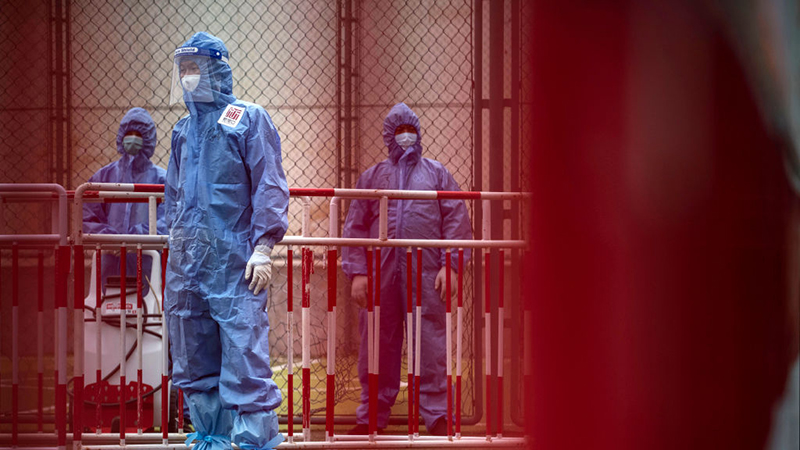
Kevin Frayer/Getty Images
By Steve Watson | Summit News | November 4, 2022
New research has revealed the countries that implemented the harshest lockdowns as part of ‘zero-COVID’ policies now have the least immunity from the virus itself.
The analysis by The Institute of Health Metrics and Evaluation (IHME) at the University of Washington’s School of Medicine estimates that China, which still has multiple lockdowns in place, has the lowest level of immunity to COVID-19 on the planet.
Other nations that didn’t institute harsh lockdowns, including Russia, Singapore and Brazil are thought to have the highest immunity levels, according to the research.
The research estimates immunity rates according to infection numbers, vaccination rates and how much time has passed in the interim.
The analysis posits that as of the end of October 2022, just 17.2% of the Chinese population have immunity from the virus, while Russia on the other hand is estimated to have an immunity rating of 74.5% with everyone in the country having contracted the virus.
While Singapore’s immunity rating is thought to be around 70%, and Brazil’s 68%, Japan, another country that put into place harsh restrictions is believed to have just 38.9% immunity.
The U.S. is believed to have 60.5% immunity at this time, according to the analysis.
Ironically, given the IHME’s COVID model being used to laud strict restrictions, the analysis again highlights the futility of lockdowns in preventing the spread of the virus in the longterm.
Johns Hopkins University previously concluded that lockdowns have had a much more detrimental impact on society than they have produced any benefit, with researchers urging that they “are ill-founded and should be rejected as a pandemic policy instrument.”
A Centers for Disease Control and Prevention report released last month highlighted how a record number of children in the U.S. are now being hospitalised with common colds due to weakened immune systems.
The CDC data is consistent with research by scientists at Yale who warned that it is not normal to see children with combinations of seven common viruses, including adenovirus, rhinovirus, respiratory syncytial virus (RSV), human metapneumovirus, influenza and parainfluenza, as well as COVID-19.
As we previously highlighted, there has also been a global outbreak of hepatitis cases in children, with the media asserting the cause is “unknown.”
Biden administration officials have continuously pushed for children to keep wearing masks in schools, and there are still hordes of hypochondriacs forcing their children to do so, despite COVID posing virtually no risk to the health of children in normal circumstances.
The European Medicines Agency’s (EMA), Europe’s equivalent of the FDA, has also warned that relying on endless rounds of booster shots to fight COVID-19 could end up causing “immune response” problems.
Russia Backs India’s Bid to Become Permanent Member of United Nations Security Council
Samizdat – 25.09.2022
Russia has come out in support of India’s bid to become one of the permanent members of the United Nations Security Council (UNSC) – the all-powerful global body which is responsible for taking key decisions about maintaining peace and security in the world.
At present, it comprises the United States, France, Russia, China, and Great Britain.
During his speech at the UNGA, Russian foreign minister Sergey Lavrov called for wider representation of Asian, African, and Latin American countries in the Security Council, making particular mention of New Delhi and Brazil.
“We see an opportunity to make the Security Council more democratic by having representation from African, Asian and Latin American countries. India and Brazil, in particular, are major international players and should be included as permanent members of the council,” Lavrov said in his address to the 77th United Nations General Assembly.
Earlier, in a joint statement, India and 31 other nations urged the UN to expand both the permanent and non-permanent membership of the UNSC.
Besides, New Delhi said that reforms in the UN were necessary to make it more effective and representative.
At another meeting in which foreign ministers from India, Japan, Germany, and Brazil took part, reforms of the Security Council were discussed at length.
The four nations together are known as the G4 and after the meeting they released a joint statement, saying that “today’s conflicts around the globe and the interconnected global challenges have brought to the fore the urgency to carry out reforms in the Security Council as well as expand the membership of other decision-making groups so that they are more representative of the interests of the developing nations.”
At present, India is a non-permanent member of the UNSC.
New Delhi’s two-year term on the Council ends on 31 December this year.
Sanctions on Russia ‘irresponsible’, adviser to Brazil’s Lula says
Samizdat | August 6, 2022
Celso Amorim, Brazil’s former foreign minister and current foreign policy adviser to presidential frontrunner Luiz Inacio Lula da Silva, has condemned the West’s sanctions on Russia and said that should Lula take office, Brazil would chart a different course.
In an interview with Bloomberg published on Friday, Amorim claimed that the West’s response to Russia’s military operation in Ukraine – sanctions on Russia and billions of dollars worth of weapons for Ukraine – have made nuclear war a real possibility.
“For the first time since the Cuban missile crisis we see articles about the risk of nuclear weapons published on a weekly basis,” he said, arguing that “it’s irresponsible not to seek peace.”
Amorim’s argument mirrors that of Lula himself. Back in May the former Brazilian leader told Time magazine that he sees Ukrainian President Vladimir Zelensky as equally responsible for the conflict in Ukraine, and condemned Washington for encouraging him to oppose Russia.
“The United States has a lot of political clout. And Biden could have avoided [the conflict], not incited it,” Lula argued at the time.
From the perspective of the US, Amorim questioned the logic of driving Russia into a deeper partnership with China, another economic and military rival of America.
“I have nothing against China,” he stated, adding that both are part of the BRICS group, but said that he “can’t understand the interest of the US in strengthening the China-Russia relationship.”
This relationship aside, Amorim told Bloomberg that an economy as large as Russia’s is “too big and strategic” to isolate, and that Lula’s administration would not pursue such policies if the two-term leftist president is elected in October. Speaking to Time in May, Lula said that “many different countries” are having to “foot the bill” for Washington’s hardline anti-Russia policies, and that if he is elected, “Brazil will again become a protagonist on the international stage and we will prove that it’s possible to have a better world.”
Lula is currently polling 11 points ahead of incumbent President Jair Bolsonaro, according to an aggregate compiled by the US-based Americas Society. Should he triumph in October, Amorim will likely be influential in setting his administration’s foreign policy, having served as Brazil’s foreign minister during Lula’s two terms in office from 2003 until 2010.
Bolsonaro has not followed the US’ lead on Ukraine either. Despite Brazil voting in the UN General Assembly to condemn Russia over the conflict, the president has refused to sanction Moscow and announced his intention to keep purchasing fertilizer from Russia and sign a new deal to import Russian diesel.
Like Lula, Bolsonaro also partly blamed Kiev for the conflict. Ukrainians, he said in February, had “trusted a comedian with the fate of a nation,” referring to Zelensky.
‘US-led effort to isolate Russia failed’
Samizdat – August 5, 2022
The US-led drive to isolate Russia through sanctions has not succeeded, as half the countries in the Group of Twenty leading global economies refused to sign on, Bloomberg reported on Friday.
According to the publication, senior officials from leading Western nations are surprised by the lack of support within the wider G20, despite their efforts to make the case for restrictions against Russia.
Argentina, Brazil, China, India, Indonesia, Mexico, Saudi Arabia, South Africa, and Turkey have not joined the sanctions that were adopted by the US, UK, EU, and their allies Australia, Canada, Japan, and South Korea. Some nations, like China and South Africa, have openly criticized the restrictions. The G20 nations account for around 85% of global economic output.
According to Bloomberg, the reasons for the lack of support include strong trade ties, historical affinities to Moscow, and a distrust of former colonial powers.
Brazilian mercenaries die in Ukraine

By Lucas Leiroz | July 6, 2022
Two Brazilians were killed in Ukraine in the first week of July after a Russian drone operation in Kharkiv. In all, three Brazilian mercenaries have died in Ukraine since the beginning of the Russian special military operation on February 24th. In the South American country, the mainstrem media has a strong pro-Western ideological orientation, which is why it encourages “volunteers” to go to Eastern Europe. In their speech, the media outlets claim that it is “easy” to fight against Russians because Kiev is supposedly “winning” the conflict. However, upon arriving in Ukraine, the foreign mercenaries are faced with a different and much harsher reality.
 Between the night of July 1 and the morning of July 2 Brazilian mercenaries Douglas Rodrigues Búrigo and Thalita do Valle died after a Russian attack in Khakiv. Douglas was a former soldier of the Brazilian Army and had been fighting in Ukraine since May. Thalita was a model, lawyer, and professional sniper, who had previously worked as a military volunteer and propaganda agent for the Kurdish women’s battalions in the Middle East. Apparently, she died of asphyxiation while trying to flee her accommodation in the face of a drone attack, while Douglas was reportedly hit by shrapnel from mortar shells on the outside.
In June, another Brazilian had already died in Ukraine. André Hack Bahi was fatally shot during Russian bombing raids in Severodonetsk. Bahi was a former fighter in the French Legion and had already participated in some missions in Africa, but he was not able to survive the intense reality of the fighting in Ukraine. It is also necessary to mention that not all the dead have been properly identified yet, which leads one to believe that there may be more Brazilians among the dead in Ukraine, since there is ample participation of mercenaries from the South American country in the region.
There is still no official report by the authorities indicating the precise number of Brazilian citizens who are fighting for Kiev’s side in the conflict, but the number is certainly greater than what was expected from a neutral country with good relations with Russia. Even Brazilian parliamentarians fought in favor of Kiev, such as former deputy Artur do Val, who had a quick and scandalous performance in Ukraine, where he committed acts of sexual harassment against Ukrainian women. It is also known that over the last eight years several Brazilians have tried to join the Ukrainian neo-Nazi paramilitary troops to fight in Donbass, having been rejected due to the anti-Latin racism of these groups. Now these same militants are finding their way into the Ukrainian positions due to Kiev’s policy of accepting all foreign volunteers.
But it is absolutely impossible to analyze the situation without criticizing the destabilizing role that the Brazilian local media has played in its coverage of the events in Ukraine. Pro-Western media outlets report the conflict fallaciously, pointing to a non-existent “Ukrainian victory” and “ease” in fighting Moscow’s forces, portraying voluntary combat as a kind of “hunting safari” against Russians. Obviously, when the “volunteers” (almost all of them being paid private soldiers linked to mercenary companies) arrive on the battlefield, they are faced with situations very different from those reported by the journalists who encourage volunteering.
Agencies also have tried to publicize an image of “heroism” when talking about Brazilians fighting in Ukraine, ignoring important issues, such as the fact that they are cooperating with neo-Nazi militants and supporting a government that practices genocidal policies against the Russian population. Since the beginning of the Russian operation, Brazilian media agencies and Brazilian branches of foreign agencies have praised the “heroism” of the mercenaries who would be “helping to fight the invasion”, which also serves as propaganda and incentive for volunteering.
Brazilian media is not acting alone, but following the agenda imposed by the great world media agencies, which have increasingly bet on the narrative of “Ukrainian victory” as a way to raise the morale of the troops and justify the irresponsible military aid that the Western countries are sending to Kiev.
Private security companies hired to help Kiev are the ones that profit most from the propagation of this fallacious narrative among the public opinion, as they manage to convince an increasing number of volunteers to go and fight in Ukraine. In fact, some of these volunteers are not designated for direct combat but remain in safe places taking photos and videos to publish on the internet, reproducing propaganda to encourage more men to go – always trying to convince that combats are “easy” and “safe”, so that more people enlist in the mercenary companies. The result is that of the deluded enlisted men only a few are directed to propaganda, while others die on the battlefield.
Obviously, for Western countries and for private companies, investing in this type of propaganda is strategic and profitable, but not for Brazil. As a member of the BRICS, not participating in anti-Russia sanctions and being Moscow’s partner in several areas, the Brazilian government should act more incisively to monitor the destabilizing role that its media agencies are playing, seeking to prevent foreign narratives from taking Brazilians to die on the battlefield. Furthermore, it is not at all beneficial to Brasilia’s international image that the country is known for having a large number of citizens volunteering to fight alongside neo-Nazi battalions.
It is important to remember that mercenaries and “volunteers are not considered prisoners of war, but common criminals, which means that Brazilian citizens can be tried by courts in the liberated parts of Ukraine if they are captured. This type of situation will certainly generate diplomatic discomfort and, as Brazil and Russia are members of the BRICS, this is not a favorable condition for either side.
The best thing for the Brazilian government to do is to ban its citizens from volunteering in wars that do not concern the national interest of Brazil.
Lucas Leiroz is a researcher in Social Sciences at the Rural Federal University of Rio de Janeiro; geopolitical consultant.
Featured Video
MIT Prof Ted Postol: U.S. Iran Missile War
or go to
Aletho News Archives – Video-Images
Frlom the Archives
A dark page from the CIA’s history: What was Project Artichoke, launched 74 years ago?
By Erkin Oncan | Strategic Culture Foundation | August 22, 2025
One of the most useful instruments hidden behind the U.S. empire’s rhetoric of “freedom and democracy” was the Central Intelligence Agency, founded on September 18, 1947, as the successor of the Office of Strategic Services (OSS).
Since its creation, the CIA has carried out countless inhumane operations: assassinations, coups, drug trafficking, support for terrorism, conspiracies. The list of its crimes is endless. But among the darkest and most inhumane chapters of its record lie the notorious “mind control” experiments. … continue
Blog Roll
 Aletho News
- MIT Prof Ted Postol: U.S. Iran Missile War
- Unpacking glaring contradictions in US-Zionist justifications for war against Iran
- Iraq and Cuba hit by blackouts amid US pressure and attacks on Iran
- US-Israeli Efforts to Degrade Iran’s Missile Might Failed – Military Researcher
- New American copium: Ghost of Kuwait
- IRGC strikes critical Israeli military sites with Khorramshahr-4 missiles in latest wave
- US racks up billions in losses during first four days of war as Iran pummels key Pentagon assets: Report
- US and Israeli Claims of Depleted Iranian Arsenals are Just Military Propaganda – Expert
- Iran denies attacking Azerbaijan, suggests Mossad involvement
- Iranian Armed Forces say no missile fired from Iran into Turkey
- If Americans Knew
- ‘Dirty Work’ :The truth about how Israel was founded
- Mass Expulsion in Lebanon as Israel Expands War: “We Don’t Know Where to Go”
- Lies, distortions, and propaganda: how the U.S. mainstream media coverage on Iran hides the truth
- Palestinians in Gaza fear famine returning as Israel cuts off food amid Iran war
- AIPAC, other pro-Israel groups enter midterms with $100 million to spend
- Iranian girls killed by ‘double-tap’ strikes on Minab school
- Bari Weiss Is Going Full ‘Propaganda-Palooza’ With the Iran War
- Inside the Pro-Israel Campaign to Stop ‘The Voice of Hind Rajab’ From Winning an Oscar
- After Iran, It’s Turkey
- War rages on Iran, while Israel withholds everything from Gaza – Not a ceasefire Day 146
- No Tricks Zone
- Televised! Leading German Political Candidate Tells Schoolchildren CO2 Makes Sun Hotter!
- New Study: A Century Warming Of 1.1°C Is ‘Commonplace’ And ‘Not Unusual’ During This Interglacial
- New Study: ‘Internal Noise’ And Volcanic Forcing Can Trigger 10-15°C Warming Within Decades
- Glaciers Worldwide Are Suddendly Surging, Experts Blame Warming!
- Surprising Discovery: Sahara Is Greening…Billions Of Trees Where Once Thought To Be Barren
- New Research Reaffirms Clouds, Aerosols, And Surface Solar Radiation Are ‘Driving The Climate System’
- Germany: Electric Car Catches Fire At Charging Station, Sets Off Local “Inferno”, Widespread Damage
- New Study: Canada’s New Brunswick Was 1°C Warmer Than Today During The Medieval Warm Period
- Coal Power Back In Trend As Globe Tries To Keep Pace With Growing Demand For Power
- New Study: A 4°C Warmer Beaufort Sea Had ‘No Sea Ice’ 11,700 – 8200 Years Ago
 Aletho News