Washington and Allies Go Orwellian on Korea Peace Talks
By Finian CUNNINGHAM | Strategic Culture Foundation | 19.01.2018
Just as North and South Korea achieve important peaceful exchanges, Washington and its NATO allies appear to be moving with determination to sabotage the initiative for averting war on the East Asian peninsula.
Further, the reckless, gratuitous provocations beg the conclusion that the United States is indeed trying to start a war.
Meanwhile, unprecedented accusations this week by US President Donald Trump that Russia is supporting North Korea to evade United Nations sanctions also point to the danger that any conflict could spiral out of control to engulf world nuclear powers.
Moscow rejected the unsubstantiated claims leveled by Trump, saying that Russia is abiding by UN trade restrictions over North Korea, and that the American president’s allegations were “entirely unfounded”.
Trump’s verbal broadside suggests that Washington is trying to undermine the nascent talks between the two Koreas, talks which Russia and China have both applauded as a long-overdue diplomatic effort to resolve the Korean conflict.
Separately, Russia’s Foreign Minister Sergei Lavrov deplored a summit held in Vancouver, Canada, earlier this week in which the US and 19 other nations – most of them NATO members – called for sharper sanctions on North Korea that go beyond the remit of the United Nations. The conference, co-hosted by Canada’s Foreign Minister Chrystia Freeland and US Secretary of State Rex Tillerson, issued a stridently bellicose statement, calling in effect for North Korea to surrender its nuclear weapons or face US-led military action.
Significantly, and pointedly, China and Russia were not invited to the Canadian summit.
Most of the attending states were part of the original US-led military force which fought against North Korea during the 1950-53 war. A war which killed as many as two million North Koreans.
Russia admonished that the conference was “harmful” to current peace talks between North and South Korea. China rebuked the Canadian event as being stuck in “Cold War thinking”.
The anachronism of countries like Britain, Belgium, Denmark, France, Italy, Netherlands and Norway attending a conference on the Korean crisis while Asia-Pacific powers Russia and China being excluded was noted by Russia’s Sergei Lavrov. The anachronism is not only absurd, he said, it reprises a provocative “war summit” message.
Disturbingly, what the Vancouver gathering demonstrated was the willingness by the US and its allies to circumvent the United Nations Security Council and the previously established regional Six-Party forum involving the two Koreas, China, Japan, Russia and the US.
At the Vancouver event, Tillerson laid out a belligerent agenda that was endorsed by the other attendees. The agenda included the precondition of North Korea giving up its nuclear program unilaterally; and it also flatly rejected the proposal made by Russia and China for a “freeze” in all military activities on the Korean Peninsula as a step to get comprehensive settlement talks going.
Tillerson made the following sinister ultimatum: “We have to recognize that that threat [of North Korea’s nuclear weapons] is growing. And if North Korea does not choose the path of engagement, discussion, negotiation, [that is, surrender] then they themselves will trigger an option [US military action].”
The US diplomat also warned that the American public must be “sober” about the possibility of war breaking out. Tillerson said the risk of such a war on the Korean Peninsula “continues to grow”. This was echoed by President Trump a day later in an interview with the Reuters news agency in which he also warned of possible war. It was the same interview in which Trump blamed Russia for aiding and abetting North Korea.
This sounds like US leaders are intensifying the conditioning of the American public to accept use of the military option, which they have been threatening for the past year in a pre-emptive attack on North Korea.
The Vancouver summit also called for proactive interdiction of international ships suspected of breaching UN sanctions on North Korea. That raises the danger of the US and its allies interfering with Russian and Chinese vessels – which would further escalate tensions.
These reprehensible developments are a reflection of the increasingly Orwellian worldview held by Washington and its partners, whereby “war is presented as peace” and “peace is perceived as war”.
Just this week, North and South Korea held a third round of peace negotiations in as many weeks. Even Western news media hailed “Olympic breakthrough” after the two adversaries agreed to participate in the opening ceremony of the forthcoming winter games next month as a unified nation under a neutral flag.
After two years of no inter-Korean talks and mounting war tensions on the peninsula, surely the quickening pace of peace overtures this month should be welcomed and encouraged. Russia, China and the UN have indeed endorsed the bilateral Korean exchange. Even President Trump said he welcomed it.
Nevertheless, as the Vancouver summit this week shows, the US and its NATO allies appear to be doing everything to torpedo the inter-Korean dialogue. Issuing ultimatums and warning of “military options” seems intended to blow up the delicate dynamic towards confidence and trust.
Two reports this week in the New York Times conveyed the contorted Orwellian mindset gripping Washington and its allies.
First, there was the report: “Military quietly prepares for a last resort: War with North Korea”. The NY Times actually reported extensive Pentagon plans for a preemptive air assault on North Korea involving a “deep attack” manned by 82nd Airborne paratroopers and special forces. The paper spun the provocative war plans as a “last resort”. In other words, war is sold here as peace.
Which raises the question of who is trying to wreck the Olympic Games being held in South Korea in February. For months, Western media have been warning that North Korea was intending to carry out some kind of sabotage. Now, it looks like the sabotage is actually coming from the US, albeit sanitized by the NY Times.
The second report in the NY Times had the telling headline: “Olympic détente upends US strategy on North Korea”.
So, let’s get our head around that display of dubious logic. A peaceful development of détente between two adversaries is somehow presented as a pernicious “upending of US strategy on North Korea”. In other words, peace is sold here as war.
Take for example this choice editorial comment from the NY Times in the second report: “This latest gesture of unity, the most dramatic in a decade, could add to fears in Washington that Pyongyang is making progress on a more far-reaching agenda.”
And what, one wonders, would that “far-reaching agenda” entail?
Again the NY Times elaborates: “White House officials warn that the ultimate goal of [North Korean leader] Mr Kim is to evict American troops from the Korean Peninsula and to reunify the two Koreas under a single flag… For the United States, the fear has been that North Korea’s gestures will drive a wedge between it and its ally, South Korea.”
Only in a perverse Orwellian worldview would an initiative to calm tensions and build peaceful relations be construed as something to “fear” and be opposed to.
Only in a perverse Orwellian worldview would peaceful dialogue provoke plans for pre-emptive war.
But that is precisely the kind of dystopian world that Washington and its lackeys inhabit.
‘When US sidelined, Koreas can work towards peace & stability, talks suggest’
RT | January 18, 2018
US policy is a distraction from the ongoing Korean talks, which Seoul hopes will eventually lead to the denuclearization of the entire peninsula, security analyst Charles Shoebridge told RT.
The third session of inter-Korean talks in a week signalled a significant breakthrough in the frosty ties between the two Koreas. And while the thaw in relations was welcomed by Seoul, the recent rapprochement was greeted with skepticism by 20 foreign ministers of the so-called “Vancouver Group,” which defended South Korea during the Korean War more than five decades ago.
“It is particularly ironic… That while this… Thawing of tensions is going on between North and South… It’s happening… In Vancouver, the former allies of South Korea are tightening the noose, increasing the rhetoric, raising the temperature,” Shoebridge told RT after the US-led group decided to consider unilateral sanctions against Pyongyang Tuesday.
The US is adamant that it will apply not only economic and diplomatic pressure, but also issue military threats to force N. Korea to disarm. On Wednesday, Seoul and Washington “reaffirmed its security commitment to the defense of South Korea using all categories of its military capabilities,” the Ministry of National Defense said. The allies also “agreed to continue the rotational deployment of US strategic assets to South Korea and nearby areas as long as North Korea’s nuclear and missile threats persist.”
The decision to keep up with military threats comes the same day as Donald Trump expressed doubt that the intra-Korean talks will lead to “anything meaningful.” The US president also warned that it is “very possible” that the standoff with North Korea might not be resolved peacefully. Charles Shoebridge criticized Washington’s foreign policy, pointing out that Seoul and Pyongyang can achieve much more if the US stops interfering in their “considerable diplomatic achievement.”
“These talks themselves started on the back of South Korea agreeing to persuade America to at least pause its military exercises,” Shoebridge told RT. “It appears to be the case when the interests and the foreign policy, and the actions of the United States are put to one side, local players are, to some degree at least, able to start finding local solutions, [and] make some progress towards securing their local interests, which are usually peace and stability.”
China and Russia – two major regional players who were not invited to participate in the Vancouver summit this week – criticized Washington’s pessimistic outlook of the Korean diplomatic process. Participants that gathered in Canada, while rejecting the Chinese-Russian ‘double freeze’ roadmap for easing Korean tensions, failed to provide any alternative, Russia’s Foreign Ministry said in a statement.
In July 2017, Moscow and Beijing proposed the initiative that would see the US and its allies halting all major military exercises in the region in exchange for Pyongyang suspending its nuclear and ballistic missile program. The ‘double freeze’ initiative, however, was once again rebuffed by Washington Tuesday during the Vancouver summit.
Beijing also slammed the meeting, saying it was driven by a Cold War mentality. “When major parties to the Korean Peninsula issue are not present, such a meeting will not contribute to properly resolving the issue,” Chinese Foreign Ministry spokesman Lu Kang pointed out Wednesday. “All parties should cherish the hard-won momentum of easing tension on the peninsula, support the efforts made by the DPRK and the ROK in improving ties, and double their commitment in alleviating the situation and promoting dialogues.”
On Wednesday, North Korea agreed to allow a joint women’s ice hockey team to participate at the PyeongChang Winter Olympics (February 9-25) and march together as one with their southern neighbor under a “unified Korea” flag at the opening ceremony.
The North also consented to send a 150-member delegation of athletes and cheerleaders to the Paralympic games in March. South Korean President Moon Jae-in once again expressed hope Wednesday that the inter-Korean talks will pave the way for broader dialogue between the United States and the North which could eventually lead to the resolution of the North Korean nuclear standoff.
Vancouver summit on N. Korea failed to provide alternative to Russian & Chinese proposals – Moscow
RT | January 17, 2018
The joint US-Canada summit is just a “heavy-handed attempt” to undermine the decisions of the UNSC, Russia’s Foreign Ministry has said. It added that the meeting failed to provide an alternative to the Russian-Chinese initiative.
Participants at the Vancouver summit failed to provide any alternative to the existing Chinese-Russian roadmap for easing the Korean knot, the ministry said in statement. It noted that instead of coming up with any “constructive” results, the gathering demonstrated “absolute disrespect” for the authority of the UN Security Council (UNSC).
What’s more, the decision to consider imposing unilateral sanctions against North Korea that overstep the demands outlined by the UNSC resolutions are “absolutely unacceptable and counterproductive,” the statement added. The ministry said further that a situation, in which some countries adopt roles as interpreters of UNSC resolutions without any permission or mandate – thus undermining the role of the UN – is “absolutely inadmissible.”
Back in July 2017, Moscow and Beijing put forward a proposal known as the ‘double-freeze’ initiative that envisaged the US and its allies halting all major military exercises in the region in exchange for Pyongyang suspending its nuclear and ballistic missile program. The initiative was, however, turned down by Washington – which was reiterated on Tuesday during the Vancouver summit.
The same day, the Russian Foreign Ministry again drew attention to the fact that the initiative is aimed at “resolving the entire range of problems [around the Korean Peninsula] solely through the political and diplomatic means.”
The Vancouver meeting, on the contrary, did not contribute to the normalization of the situation on the peninsula and only exacerbated existing tensions, the ministry said. Notably, neither Russia nor China was invited to the gathering despite being major players in the region as well as immediate neighbors of North Korea.
Earlier, Russian Foreign Minister Sergey Lavrov said that he was told Russia and China would only be “briefed” on the results of the meeting, calling such an attitude “unacceptable.” He also said that it would be a “great result already” if the meeting merely avoided leading to anything “counterproductive.”
Beijing also slammed the summit by saying that it had “not the slightest legality and representativeness.” It also accused the meeting participants of evoking Cold War ghosts. Pyongyang denounced the Vancouver summit as a “provocation” which is not helping the talks between North and South Korea.
In the meantime, US Congresswoman Tulsi Gabbard noted that it was the US regime change policy that prompted Pyongyang to develop its nuclear and missile arsenal in the first place. She turned to Twitter to call on Washington to put an end to such practices as well as to cast away “unrealistic preconditions” that the US government has been setting for decades to negotiate with North Korea.
Long-overdue release of Hassan Diab in France highlights failure of bogus “terror” charges

Photo: Friends of Hassan Diab
Samidoun Palestinian Prisoner Solidarity Network – January 13, 2108
Lebanese-Canadian professor Hassan Diab was ordered released and all charges against him dropped by a French investigative judge on his case yesterday, 12 January 2018. Diab was extradited from Canada and held for three years in solitary confinement in France on the basis of bogus “terrorism” charges despite clear evidence of his innocence. While the struggle isn’t over, as the French state can appeal, this is an important victory for Hassan Diab and against the use of “terror” charges to terrorize oppressed communities.
Of course, French state persecution continues – from the use of anti-terror laws and the “state of emergency” to impose fear and repression on oppressed communities through police violence and surveillance to the charges against BDS activists for advocacy for Palestine to, atop the list, the over 33 years of imprisonment of Lebanese Communist struggler for Palestine, Georges Ibrahim Abdallah.
Samidoun Palestinian Prisoner Solidarity Network salutes Hassan Diab, his wife Rania Tfaily, his dedicated French and Canadian legal team and all of the Justice for Hassan Diab campaigners who have struggled for years for his release from years of unjust imprisonment in French prison and extradition from Canada on the basis of bogus “terrorism” charges. Yesterday, he was ordered released after three years of solitary confinement and the charges against him dropped. He is working now to come back to Canada.
Of course, the struggle isn’t over. French officials can pursue another appeal to attempt to shore up their bogus terror case – and we’ve seen how the French state refuses even the rule of its own judiciary in the case of the struggler Georges Ibrahim Abdallah. Nevertheless, this is an important victory for Hassan Diab and against the use of “terror” prosecutions on the basis of secret evidence, evidence obtained through torture and politically-motivated intelligence agencies.
See more information:
http://iclmg.ca/civil-liberties-coalition-welcomes-the-rel…/
http://www.justiceforhassandiab.org/french-investigative-ju…
http://www.cbc.ca/…/o…/charges-dropped-hassan-diab-1.4484443
We are reprinting below the statement of the International Civil Liberties Monitoring Group on the case:
CIVIL LIBERTIES COALITION WELCOMES THE RELEASE OF CANADIAN HASSAN DIAB IN FRANCE
Jan. 12, 2018 – After a decade-long ordeal, French judges have dropped all allegations against Canadian Hassan Diab and ordered his immediate release.
“We are overjoyed for Hassan, his partner Rania, and their two children, that this ordeal is finally coming to a close,” said Tim McSorley, national coordinator with the International Civil Liberties Monitoring Group. “That Hassan Diab was extradited in the first place continues to raise serious questions about Canada’s judicial process. For now, though, we look forward to seeing Hassan safe and sound back in Canada.”
Hassan Diab was arrested by the RCMP for extradition to France in 2008, on allegations that he participated in the 1980 bombing of a synagogue in Paris that killed 4 bystanders. He was extradited to France in 2014. Since then he has spent more than three years in pre-trial detention, as investigative judges weighed whether to proceed to trial.
Since 2008, the ICLMG has joined Rania, Hassan’ lawyers, the Justice for Hassan Diab support committee and others in questioning the evidence presented against Hassan, and criticizing the Canadian extradition system that allowed him to be sent to France in the first place.
It is important to remember that at the time of the extradition hearings, Justice Maranger described the evidence against Hassan as “illogical”, “very problematic,” and “convoluted,” but that the low threshold for evidence under Canada’s extradition law left him no choice but to commit Dr. Diab to extradition. “It will be important to remain vigilant to ensure that no other Canadian faces the ordeal that Hassan has been through,” said McSorley.
The ICLMG congratulates Rania, Don Bayne and all of Hassan’s lawyers, and the support committee for their tireless work in ensuring that an innocent man was not forgotten and is finally being freed.
Who Is In The Right In The Canada-Venezuela Diplomatic Dispute?
By Yves Engler | Venezuelanalysis | December 29, 2017
Lying is so common in diplomacy that it can be hard to tell heads from tails in international disputes. In the recent tussle between Caracas and Ottawa, for instance, Venezuela says it is trying to protect itself from foreign “interference” while Canada claims it is promoting “democracy and human rights”. Given the ever-present possibility of a complete disregard for truth on both sides, which government might be more credible in this instance?
Let us consider the background.
Last week Venezuela declared Canada’s chargé d’affaires in Caracas persona non grata. In making the announcement the president of the National Constituent Assembly Delcy Rodriguez denounced Craib Kowalik’s “permanent and insistent, rude and vulgar interference in the internal affairs of Venezuela.”
Is Rodriguez’s explanation for expelling Kowalik convincing?
In recent months foreign minister Chrystia Freeland has repeatedly criticized Venezuela’s elected government and reiterated that Canada is part of the so-called Lima Group of foreign ministers opposed to President Nicolás Maduro.
Following Washington’s lead, Ottawa has also imposed sanctions on Venezuelan officials and supported opposition groups.
In one project, the Canadian embassy distributed $125,212 through the Canadian Funding to Local Initiatives program, which “provided flexible, modest support for projects with high visibility and impact on human rights and the rule of law, including: enabling Venezuelan citizens to anonymously register and denounce corruption abuses by government officials and police through a mobile phone application in 2014-15.”
In August outgoing Canadian ambassador Ben Rowswell, a specialist in social media and political transition, told the Ottawa Citizen: “We established quite a significant internet presence inside Venezuela, so that we could then engage tens of thousands of Venezuelan citizens in a conversation on human rights. We became one of the most vocal embassies in speaking out on human rights issues and encouraging Venezuelans to speak out.”
(Can you imagine the hue and cry if a Venezuelan ambassador said something similar about Canada?)
Rowswell added that Canada would continue to support the domestic opposition after his departure from Caracas since “Freeland has Venezuela way at the top of her priority list.”
So, obviously it’s hard to argue with Rodriguez’ claim that Canada has been “interfering in the internal affairs of Venezuela.”
But, what to make of Freeland’s statement when Ottawa declared Venezuela’s top diplomat persona non grata in response, stating that “Canadians will not stand by as the government of Venezuela robs its people of their fundamental democratic and human rights”?
A series of decisions Freeland’s government has pursued over the past two weeks make it hard to take seriously Canada’s commitment to democracy and human rights:
- Canada signed a defence cooperation arrangement with the United Arab Emirates. According to Radio Canada International, the accord with the monarchy “will make it easier for the Canadian defence industry to access one of the world’s most lucrative arms markets and bolster military ties between the two countries.”
- Canada sided with the US, Israel and some tiny Pacific island states in opposing a UN resolution supporting Palestinian statehood backed by 176 nations.
- Immigration Minister Ahmed Hussen promoted Canadian energy and mining interests during a meeting with Kenyan President Uhuru Kenyatta, who is seeking international legitimacy after winning a controversial election (re-run) boycotted by the opposition.
- The Liberals added Ukraine to Canada’s Automatic Firearms Country Control List, which allows Canadian companies to export weapons to that country with little restriction. President Petro Poroshenko, who has a 2% popular approval rating, needs to make gains in the Ukraine’s civil war to shore up his legitimacy.
Just before expelling Venezuela’s chargé d’affaires Ottawa officially endorsed an electoral farce in Honduras. Following Washington, Global Affairs tweeted that Canada “acknowledges confirmation of Juan Orlando Hernandez as President of #Honduras.” But, Hernandez defied the country’s constitution in seeking a second term and since the election fraud on November 26 his forces have killed more than 30 pro-democracy demonstrators.
Author of Ottawa and Empire: Canada and the Military Coup in Honduras, Tyler Shipley responded: “Wow, Canada sinks to new lows with this. The entire world knows that the Honduran dictatorship has stolen an election, even the Organization of American States (an organization which skews right) has demanded that new elections be held because of the level of sketchiness here. And — as it has for over eight years — Canada is at the forefront of protecting and legitimizing this regime built on fraud and violence. Even after all my years of research on this, I’m stunned that Freeland would go this far; I expected Canada to stay quiet until Juan Orlando Hernandez had fully consolidated his power. Instead Canada is doing the heavy lifting of that consolidation.”
During the past two weeks Canadian decision makers have repeatedly undermined or ignored democracy and human rights.
While Caracas’ rationale for expelling Canadian diplomats appears credible, the same cannot be said for Ottawa’s move. In the tit-for-tat between Canada and Venezuela Canadians would do better to trust Caracas.
Ottawa’s foreign policy swamp an unhealthy quagmire
By Yves Engler · December 21, 2017
Drain the swamp’ was a popular Donald Trump campaign slogan that referred to reducing the influence of Washington lobbyists. While the three words reflect an extreme lack of ecological consciousness — wetlands need to be protected and recreated, not destroyed — the image of politicians slogging their way through lobbyist infected, tangled, dense vegetation and deep oozing mud is a useful one.
Like the US capital, much of Ottawa was also built on mosquitoes’ favourite habitat and both cities today have an ongoing pest problem: blood sucking influence peddlers swarming the countries’ decision makers. That image helps explain why there is little deviation from Canada’s official foreign policy positions even amongst social democratic members of Parliament.
The recently re-established Canada-Palestine Parliamentary Friendship Group (CPPFG) offers a window into the dearth of opposition, notably from the NDP, to the foreign policy establishment. Chaired by Liberal MP Marwan Tabbara, CPPFG has nine MPs representing all the parties in the House of Commons except the Conservatives. But, CPPFG isn’t one of 17 official parliamentary associations or groups so it doesn’t receive public financial or administrative support, unlike the Canada-Israel Interparliamentary group.
In an equitable world the Palestinian parliamentary group — not the Israeli one — would be subsidized to offer MPs a counterpoint to Canada’s pro-Israel ideological climate. Supporters of Israel have established a slew of programs at high schools and universities, as well as media ‘flak’ organizations and advocacy groups, to promote that country’s viewpoint. Additionally, the dominant media favours the Israeli perspective and the Centre for Israel and Jewish Affairs is among the most aggressive lobbyists on Parliament Hill so MPs are not lacking for access to this outlook.
The Israel vs. Palestine parliamentarian bodies offer a unique window into how international power relations are reflected in House of Commons associations. But, the parliamentary association system more broadly reflects inequities in global power and wealth.
Nearly half the 17 associations that share a $4.5 million public envelope are focused on Europe. There is a Canada-Europe Parliamentary Association and an associated Canadian Delegation to the Organization for Security and Co-operation in Europe Parliamentary Assembly as well as country-specific groups for France, Germany, Italy, Ireland and the United Kingdom. Alongside Canada’s European G7 allies, there are Japan and US parliamentary associations.
Though it is a competitor to the US-led geopolitical order, China’s economic might warrants a parliamentary group. There are also associations promoting the Francophone and Commonwealth, which are rooted in European colonialism (previously it was called the Empire Parliamentary Association).
The only two associations focused on the Global South are the Canadian Section of ParlAmericas Bilateral Associations, representing 35 countries in the Western hemisphere, and the Canada-Africa Parliamentary Association, representing 53 countries on the continent. (As is usual with Africa-related bodies, that association’s mission statement includes ‘benevolent Canada’ paternalism. It says “Canadian parliamentarians also have the opportunity to witness the local impact of programs funded by the Canadian International Development Agency (CIDA) and to learn about Canada’s efforts in Africa from Canadian officials in the field.”)
There is no Cuba or Venezuela parliamentary association. Nor are there any focused on 1.3 billion Indians or 180 million Nigerians or a parliamentary association devoted to the counterhegemonic Non-Aligned Movement or ALBA (Bolivarian Alliance for the Peoples of Our America).
Another way the Ottawa swamp forms MPs’ international views is through events and parties put on by diplomats. In The Blaikie Report long time NDP defence and foreign critic Bill Blaikie describes “enjoying many fine evenings” at the home of the British High Commissioner. Wealthier countries are more likely to have representation in Ottawa and have greater capacity to organize events promoting their country’s international positions.
Sometimes connected to diplomatic postings in the capital, MPs regularly travel on international trips organized and paid for by third parties. While the Globe and Mail has recently devoted significant attention to China sponsored trips, Israel and Taiwan have long been the principal destinations. A 2014 calculation found that a quarter of all federal MPs had been to Israel with an Israeli nationalist organization.
Opposition MPs are absorbed into the foreign policy establishment in other ways. At the start of year B.C. NDP MP Wayne Stetski participated in a House of Commons Standing Committee on Foreign Affairs and International Development mission to Ukraine, Latvia, Poland and Kazakhstan while last month Tom Mulcair went on a Committee mission to Beijing, Hong Kong, Hanoi and Jakarta. Last year NDP foreign critic Hélène Laverdière traveled to Israel with representatives of the other parties and in 2014 then NDP foreign critic Paul Dewar joined foreign minister John Baird and Liberal MP Marc Garneau on a visit to Iraq. Global Affairs Canada and diplomats in the field usually organize these visits.
The Canadian Group of the Inter-Parliamentary Union and the Canadian NATO Parliamentary Association are the final officially recognized parliamentary associations. A presentation at a NATO meeting convinced Bill Blaikie to support the organization’s bombing of the former Yugoslavia in 1999. “I myself”, Blaikie writes, “had been affected by the presentation at a 1998 NATO parliamentary meeting in Barcelona of an Albanian woman from Kosovo, who tearfully pleaded for an intervention to stop the anticipated wholesale slaughter of Kosovar Albanians.”
No official parliamentary association is devoted to de-militarization.
Beyond the NATO Parliamentary Association, MPs are drawn into the military’s orbit in a variety of other ways. Military officials regularly brief MPs. Additionally, the slew of ‘arms length’ military organizations/think tanks I detail in A Propaganda System: How Government, Corporations, Media and Academia Sell War and Exploitation speak at defence and international affairs committee meetings.
The Canadian Forces Parliamentary Program is, according to the Globe and Mail, a “valuable public-relations tool.” Set up by the Department of National Defence’s Director of External Communications and Public Relations in 2000, the Parliamentary Program embeds MPs in military training (Army in Action or Experience the Navy). According to the Canadian Parliamentary Review, the MPs “learn how the equipment works, they train with the troops, and they deploy with their units on operations. Parliamentarians are integrated into the unit by wearing the same uniform, living on bases, eating in messes, using CF facilities and equipment.” As part of the program, the military even flew MPs to the Persian Gulf to join a naval vessel on patrol.
Alongside the military, the arms industry lobbies MPs. Lockheed Martin’s name appeared 39 times in a “12-Month Lobbying Activity Search” of the Office of the Commissioner of Lobbying of Canada. CAE, General Dynamics, Raytheon, BAE and Airbus Defence were also listed dozens of times in the lobbyist registry. The Canadian Association of Defence and Security Industries has four registered lobbyists in Ottawa. Many of CADSI’s 800 members are also part of the Canadian Manufacturers & Exporters, Council of Chief Executives, Canadian Chamber of Commerce or Aerospace Industries Association of Canada. These groups also promote militarism and a pro-US foreign policy to government officials, though rarely do they speak in favour of withdrawing from military alliances or bucking Washington on an international issue.
Other corporations with international interests also have a significant presence on Parliament Hill. In a high-profile example, registered lobbyists representing Barrick Gold, Vale Canada, IAMGOLD, Goldcorp, Mining Association of Canada and Prospectors and Developers Association of Canada launched a ferocious campaign in 2010 to derail An Act Respecting Corporate Accountability for the Activities of Mining, Oil or Gas Corporations in Developing Countries (Bill C300), which would have restricted some public support for firms found responsible for significant abuses abroad.
Canada’s international banking, engineering, oil, etc. firms also shape attitudes in Ottawa. SNC Lavalin, CIBC, Bombardier and other Canadian-based multinationals’ names appear repeatedly in a “12-Month Lobbying Activity Search”.
The corporate/military/Global Affairs nexus predominates on foreign policy because there is little in terms of a countervailing force in Ottawa. Non-Governmental Organizations are sometimes considered critics of Canadian foreign policy, but NGOs are not well placed to challenge the federal government. Reliance on government aid and charitable status hampers their political independence.
On many domestic issues organized labour represents a countervailing force to the corporate agenda or state policies. But, unions rarely lobby MPs on international affairs.
The influence peddlers in the Ottawa foreign policy swamp represent a narrow range of interests.
So how do Canadians who want this country to be a force for good in the world effect change? Step one is to understand the system, then challenge the foreign policy establishment’s grip in Ottawa.
Analyst Dismisses White House Claims Pyongyang Behind WannaCry
Sputnik – 20.12.2017
In a Wall Street Journal op-ed Monday, White House Homeland Security Adviser Tom Bossert announced that North Korea is responsible for the May 2017 “WannaCry” global cyberattack that targeted Windows computers and was allegedly aided by leaked National Security Agency technology.
In the article titled, “It’s Official: North Korea Is Behind WannaCry,” Bossert points the finger at North Korea for being behind the cybercrime in which millions of users’ computer data was encrypted and then ransomed for bitcoins. The attack slowed down after a mistake in WannaCry’s code revealed a kill switch that prevented infected computers from spreading the virus.
“Cybersecurity isn’t easy, but simple principles still apply. Accountability is one, cooperation another,” Bossert wrote in his article. “They are the cornerstones of security and resilience in any society. In furtherance of both, and after careful investigation, the US today publicly attributes the massive ‘WannaCry’ cyber attack to North Korea.”
In a White House press briefing Tuesday morning, Bossert claimed that the US came to this conclusion after a “careful investigation.”
“We don’t do this lightly,” Bossert said during the briefing. “We do so with evidence and with partners,” adding that Canada, New Zealand, Japan, Australia and the United Kingdom all agree that North Korea is responsible.
“While victims received ransom demands, paying did not unlock their computers,” the homeland security adviser wrote. “It was cowardly, costly and careless. The attack was widespread and cost billions, and North Korea is directly responsible.”
On Radio Sputnik’s Loud & Clear, financial policy analyst Daniel Sankey asserted his belief that North Korea is not behind the cyberattack.
“I’m a little suspicious myself. The drums of war have been beaten against [North Korea] for some time now and it’s very convenient that now this severe cyberattack is being laid against the doors of North Korea,” Sankey told hosts John Kiriakou and Brian Becker.
“And of course, as usual, we can take the intelligence community’s word for it because they know better than us and they published it in the Wall Street Journal — so it must be North Korea,” he added sarcastically.
“I am a little skeptical because a big part of the virus was extorting various users to send bitcoin in exchange for access to their files again. In the end, they stole about $55,000 in bitcoin and that’s not enough money for North Korea to trouble itself with,” Sankey said.
“Also, what is North Korea going to do with bitcoin? They need commodities, they need cash, they need access to different markets. They don’t need bitcoin. How are they going to turn that into oil or coal or various other things they need? How are they going to convert that into a convertible currency? It’s really not feasible.”
Although Bossert said that the US did “not make the allegation lightly,” he didn’t provide any solid evidence and simply alluded to National Security Agency and Microsoft research. He also referred to the UK’s determination in October that North Korea was responsible for the attack.
In May, security firms discovered a link between the ransomware and southern China during an investigation of the code’s notes, which revealed that WannaCry’s creators were fluent in a form of Chinese very common in that region.
According to security firm Flashpoint, which conducted the analysis, “A typo in the note, “帮组” (bang zu) instead of “帮助” (bang zhu) meaning “help,” strongly indicates the note was written using a Chinese-language input system rather than being translated from a different version. More generally, the note makes use of proper grammar, punctuation, syntax, and character choice, indicating the writer was likely native or at least fluent.”
Although the linguistic analysis of the code did not reveal any Korean, the US has still confidently asserted that North Korea is responsible, and Sankey believes it’s because the underlying problem behind the attacks actually has nothing to do with the hackers but with intelligence communities, who may be actually be responsible for the crimes.
“I think that the real problem is that intelligence communities are becoming aware of vulnerabilities in these systems, and rather than working with the private sector to protect consumers and peoples’ data, they are just sitting on those vulnerabilities so that they can use them later to hack systems.”
In his editorial, Bossert concludes, “Mr. Trump has already pulled many levers of pressure to address North Korea’s unacceptable nuclear and missile developments, and we will continue to use out maximum pressure strategy to curb Pyongyang’s ability to mount attacks, cyber or otherwise.”
With the Trump administration’s increased use of aggressive language against North Korea’s continued nuclear weapon tests and with this new allegation that the country is responsible for WannaCry, it doesn’t appear that the relationship between the two is going to be getting better anytime soon.
Canada Becomes Party to Ukraine’s Conflict
By Alex GORKA | Strategic Culture Foundation | 17.12.2017
The Canadian government has given the green light for national defence contractors to sell weapons to Ukraine. This makes Canada a party to the conflict with all ensuing consequences. The decision sets no preconditions for selling the armaments to Ukraine. It has been taken despite the fact that Project Ploughshare and Amnesty International Canada opposed the plan, saying Kiev has so far failed to improve the human rights situation. Canada’s Standing Committee on National Defense has published a report entitled “Canada’s Support to Ukraine in Crisis and Armed Conflict,” which recommends that the government provide lethal weapons to Ukraine if it demonstrates active work on fighting corruption in the country. The recommendations include providing lethal weapons, intelligence exchange, cooperation in defense industry, support in countering cyberattacks, and in resisting to the dissemination of foreign propaganda and disinformation through the media. Granting visa-free travel to Canada for Ukrainians and promotion of Ukrainian interests at the G7 is also on the recommendations’ list.
The Canadian Cabinet hopes its decision will influence the US Administration to follow suit. The move puts Canada out ahead of the United States, which is considering its own arms sales. Kurt Volker, the US Special Representative to Ukraine, believes there’s no reason to continue the prohibition on delivering lethal weapons.
Ukraine is particularly interested in anti-tank weapons, counter-battery artillery radar, and armoured patrol vehicles like the US-made Humvees.
On December 12, US President Donald Trump signed a defense budget for 2018 providing for the possibility of offering Ukraine lethal weapons of a “defensive nature”. Congress has approved $500 million in “defensive lethal assistance” to Ukraine. Congress authorized $350 million more than the $150 million originally proposed by the administration. Now, the president can start arms supplies any time he chooses. Former President Barack Obama was unconvinced that granting Ukraine lethal defensive weapons would be the right decision in view of corruption widespread in Ukraine.
The two events – Canada’s decision and signing the US defense budget bill into law – come in the context of the failed US-Russia talks on the recently proposed UN peacekeeping mission in Donbass. Now the US weapons could be exported to Ukraine through Canada, including the much-desired Javelin anti-tank systems. “After this government decree, Canada can sell or transfer Javelin to Ukraine,” said James Bezan, Canadian MP from the Conservative Party. The US has been sending to Ukraine a variety of non-lethal military help, including equipment like Humvees, medical supplies, bulletproof vests, and radars to track the hundreds of artillery shells.
North America’s assistance to Ukraine is not limited to weapons only; it encompasses other domains as well. The Ukraine Cybersecurity Cooperation Act [H.R. 1997], the bipartisan legislation introduced by Congressmen Brian Fitzpatrick (PA-8) and Brendan F. Boyle (PA-13), unanimously passed the House Foreign Affairs Committee on Dec. 14. The bill encourages cooperation between the United States and Ukraine on matters of cybersecurity and requires State Department reporting to Congress on best practices to protect against future cyber-attacks. “Helping Ukraine buttress its cyber defenses will also help the United States in developing new and more effective technologies and strategies in dealing with cyber security on the modern battlefield,” said Boyle, explaining the goal to be achieved, if the legislation becomes law. It will make Ukraine a part of NATO cyber warfare effort being implemented according to its Cyber Defense Pledge.
The bloc is implementing the Capability Package 120 which aims by 2024 to fund everything from encryption for tactical radios to cloud-integrated storage for the millions of cyber events. Eventually, NATO will move to the public cloud for virtually everything that it does as an alliance. The “centralized patch management” will control all the cyber activities.
For more than two years, the US military’s contingent of roughly 300 military instructors have been quietly training Ukrainian military in the western part of the country to prepare them for fighting in the east. Every 55 days a new Ukrainian battalion comes in to go through a training course at Yavoriv Combat Training Center in western Ukraine. Since 2014, the US and partner militaries have helped grow Ukraine’s forces from just over 100,000 troops to nearly 250,000 today. The US-run maritime operations center at Ochakov Naval Base, Ukraine, became operational in July to serve as a major planning and operational hub during future military exercises hosted by Ukraine. A US military facility near Russia’s borders is a very serious threat to regional security. Its presence turns the Black Sea into a hot spot. US warships visit the sea regularly to provide NATO with long-range first strike capability. The Romania-based Aegis Ashore BMD system uses the Mk-41 launcher capable of firing Tomahawk long-range precision-guided missiles against land targets.
Also in July, two US Navy warships, a P-8A Poseidon patrol aircraft, and a Navy SEALs team took part in the 12-day Sea Breeze 2017 joint NATO naval exercise off Ukraine. The multinational war games took place in the northwestern part of the Black Sea, near the Ukrainian port city of Odessa. 17 nations took part in the training event. The preparations are on the way to hold another Sea Breeze exercise in 2018. Step by step, Ukraine is becoming an element of NATO’s military infrastructure, which could be used as a springboard for a cross-border attack against Russia.
Appropriation of Jerusalem

Photo by Kristoffer Trolle | CC BY 2.0
By Liaquat Ali Khan | CounterPunch | December 14, 2017
In recognizing Jerusalem as the capital of Israel, a state formed by native Jews and Jewish settlers from Europe and America, President Trump and the U.S. Congress have validated the Jewish appropriation of a disputed city. This commentary explains the foul dynamics of settlements. It also illuminates the “sacred” justifications offered to legitimize settler colonialism. In addition to Israel, the United States, Canada, Australia, New Zealand, and many other states, owe their origin to settler colonialism, another name for forcibly taking land from indigenous inhabitants. The criticism of settler colonialism is highly sophisticated in academic circles, college colonialism courses, this year mystifyingly trickling down in high school debates.
An unholy alliance of Zionists, evangelical Christians, politicians fearful of the revengeful Israeli lobbies, radio and TV commentators, Neocon opinion-writers, and self-aggrandizing academics refuses to see Israel as a settler state. In fact, calling Israel a settler state is condemned as anti-Semitic, a handy label swiftly invoked to stop honest conversations about the grinding appropriation of Palestinian occupied territories.
Given the successful drive to criminalize holocaust denials across Europe, efforts are underway to find pathways to criminalize the criticisms of Israel. The prospective criminalization of the BDS (boycott, divestment, sanctions) movement is a shameful suppression of legitimate free speech in no other country but the United States where the First Amendment reigns as the first principle of coexistence. Muffling free speech is unlikely to suppress the fact that Israel is primarily a state of settlers who have brutally suffocated and dislocated the native population of Palestinians.
Immigrants and Settlers
Ordinarily, immigrants are distinguishable from settlers. But the distinction is not valid in Israel. Under the 1950 Law of Return, Israel invites “the child or grandchild of a Jew, the spouse of a Jew, the spouse of a child and grandchild of a Jew to settle in Israel.” Non-Jews or even Jews who have converted to another religion are ineligible to return and settle. Jews mostly from Europe and America and some from the Middle East and East Africa have “returned” to Israel. The prevailing racism prefers white Jews over Jews with darker pigments.
Under international law, immigration is relocating from one country to another. Individuals and families may migrate for economic and existential reasons. Every year, millions of people migrate to foreign countries for economic betterment or to avoid starvation, discrimination, tyranny, torture, and death. Refugees migrate from war-torn countries where the probability of death and starvation escalates. In the 15th century, Jews migrated from Spain to Turkey as the defeat of Moors opened the doors of persecution and death. More recently, Palestinians, Syrians, Libyans, Yemenis, and Afghans have been forced to leave their homes and seek shelter as refugees in neighboring countries.
Settlement too is relocating from one country to another. Unlike immigrants, however, settlers dispossess native inhabitants for ideological or predatory reasons. Immigrants do not forcibly take away the land and homes that belong to the natives. Settlers do. Immigrants live in the mortal fear of deportation. Settlers do not. Immigrants may face discrimination, racism, and hostility in employment, education, and housing. Settlers are welcome and receive affirmative state assistance and grants. The state may offer jobs, housing, and other facilities to settlers willing to live on the land that once belonged to the natives.
Unlike immigrants, the settlers develop an aggressive relationship with the natives. The purpose of settlements is to make it highly unpleasant and oppressive for the natives to continue to live side by side with the settlers. Apartheid-like conditions are built to show to the natives that they need to relocate themselves to foreign countries. Thus, settlers not only take over the land that belongs to the natives but they also force natives, economically, socially, psychologically, and physically to leave their lands and homes. Other tactics, such as buying homes and lands from helpless natives is defended on the market theory that the real estate ought to be purchasable for a price. The art of tyranny is perfect: first, push the natives to the ground; then, offer to buy their homes.
In Israel, the state-sponsored settlements are ideological and not merely predacious. Predacious settlements may be disorganized, intermittent, and privately sponsored. Ideological settlements are highly coordinated in terms of degrading the local communities economically, morally, and socially. Stereotypes may be promoted to paint the natives as savages and terrorists. Any reactive violence by the natives may be used as a pretext to demolish their homes, issue eviction orders for entire families, arrest men, and dishonor women. The natives may be employed in menial jobs at businesses started by the settlers. In fact, the natives may have no choice but to seek employment in constructing the settlements that the natives detest in their hearts.
In Jerusalem, all distinctions between native Jews and Jewish settlers disappear for ideological purposes since most of them share the common goal of driving the Palestinians out of Jerusalem so that Israel can reclaim this historic city all for itself. Orthodox Jews who oppose the existence of Israel as an anti-Biblical entity, a fast diminishing minority, share no such platform. For Trump, the realtor, a city, any city, belongs to money merchants and any “encroachments “by the have-nots should be forcibly cleared.
Terra Irredenta
Appropriation perpetrated with moral justifications acquires a new meaning. Stealing a loaf of bread seems morally justified if the thief is starving. Land appropriation is palatable if a credible moral excuse can be crafted. Settlers know this moral trick. When settlers are highly educated, their moral justifications for the appropriation of land are crafted in more persuasive (Latin) terms. Over the centuries, settlers in various countries and continents have used moral imperatives to justify the dispossession of native populations and stealing away their lands, hills, rivers, sacred places, olive trees, playgrounds where the native children played, and the cemeteries where native elders were buried. Everything can be stolen if the moral justification is mounted at the barrel of the gun.
In the 15th century, the Catholic Church used two distinct theological edicts to support conquests and colonization. The concept of “terra irredenta” empowered Christian rulers to take away the Iberian lands from the Muslims. The concept of “terra nullius” empowered the European colonizers to take away the land from the native owners in Americas and Africa. In both cases, Christianity, presented as the one and the only one true religion, was invoked as the ultimate justification to legitimize the appropriation of land. Heathens, pagans, and the deniers of Jesus as God could be lawfully converted, enslaved, dispossessed, and even killed if they resisted the Christian Europeans, the true owners of God’s land.
In the 20th century, the European Jews invoked a complex fusion of the two edicts to lay claim to what has been Palestine for centuries under the Ottoman Empire and before. Invoking terra nullius, the Zionists argued that “a people without a land (Jews) are claiming a land without a people.” This argument derived from terra nullius denies the existence of local populations, be they Africans, Native Americans, or Palestinians.
The terra nullius concept, however, is less powerful than terra irredenta under which the land is restored to “legitimate owners.” The Right to Return is conceived in the womb of terra irredenta rather than terra nullius. Terra irredenta creates a mighty distinction between current and original owners. It reverses the logic of ownership. The current owners are deemed illegal intruders whereas the original owners are considered the lawful owners. In the Iberian Peninsula, the Moors were the actual but illegal owners. The Spaniards and the Portuguese were the lawful owners. Therefore, the Moors must be dispossessed and expelled and the land restored to the original owners.
Invoking a similar logic, the European Jews claimed to be the original owners of Palestine since the Palestinians were the illegal occupiers of the sacred land that belonged only to the Jews. Accordingly, Zionist morality dictates that the Palestinians, particularly if they resist the Right to Return, be expelled, detained, killed, and their homes demolished.
Soon after Trump, the realtor, recognized Jerusalem as the capital of Israel, Prime Minister Netanyahu argued that it is “absurd” to deny the “millennial connection of the Jewish people to Jerusalem. You can read it in a very fine book – it’s called the Bible. The sooner the Palestinians come to grips with this reality, the sooner we will move towards peace.”
Much like Netanyahu, President Andrew Jackson (1829-1837) declared that “The Bible is the rock on which this Republic (U.S.) rests.” The Bible-lover Jackson signed the Indian Removal Act, under which 25 million acres of land was donated to white settlers. This land had belonged to Cherokees, Chickasaw, Creek, Choctaw, and Seminole nations, the “unlawful owners” forced to yield their land rights to Jesus-loving Christians.
Trump adores Andrew Jackson. Netanyahu adores Donald Trump. The Christian removal of Native Americans created reservations. The Jewish removal of Palestinians created refugee camps. The Native American Trail of Tears caused tears and death. The Palestinian Trail of Tears caused tears and massacres at Sabra and Shatila.
Conclusion
Invoking the Bible to appropriate land is a Judeo-Christian colonial tradition. First Christians, now Jews, are invoking the concepts of terra irredenta and terra nullius to justify the taking of land from the native owners. The appropriation of Jerusalem as a Jewish city runs counter to historical facts. It simplifies the complex history of a city that experienced the pre-Christ rule of Egyptians, Syrians, and Persians, and post-Christ rule of Arabs, Turks, and the British. Jews had not owned Jerusalem for centuries. Now, they have deadly weapons to do so. The Bible is a sacred book (different parts and versions) for Jews and Christians, even for the Palestinians, but does it justify the terra irredenta appropriation of territories and cities?
IOC bans Russia: Cold War 2.0 politics ruins the Olympics
By Neil Clark | RT | December 6, 2017
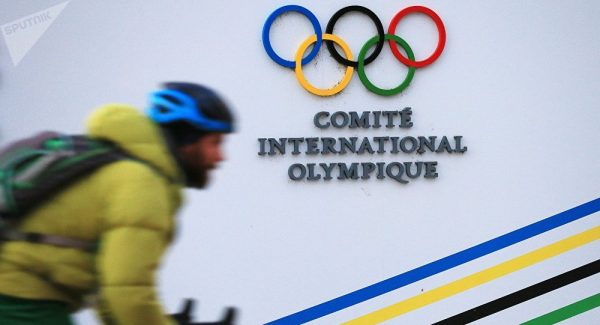
The announcement by the International Olympic Committee that Russia would be banned from the PyeongChang Winter Olympics – but that Russian athletes, if proven ‘clean’ from doping would be able to compete under a neutral banner- has to be seen in its wider geopolitical context.
The decision comes amid a backdrop of unrelenting Russophobia fueled by Western elites who are furious Russia has thwarted their plans for regime change in Syria and is generally getting in the way of US hegemonic aspirations and the neocon/globalist agenda.
Revealingly, straight after the IOC decision was announced leading Russophobes, like US Senator John McCain, were renewing their calls for the 2018 football World Cup to be taken away from Russia, showing that this is about the reviving of Cold War politics and not drugs. It’s clear ‘The Endless War’ lobby in the West wants Russia isolated, humiliated and banned from everything. Sport is only one front in their obsessive campaign, attacks on the Russian media is another. In the current climate, it is virtually impossible Russia would get a fair hearing.
Question One: How would you feel if you were an athlete who had trained hard for four years for the Olympics only to be beaten by someone who it later transpired had cheated by using drugs?
Question Two: How would you feel if you were an athlete who had trained hard for four years for the Olympics only to be barred from competing for your country because someone else from your country had been held to have taken drugs?
I’m sure you’d agree that in both cases you would feel very aggrieved. It’s right and proper that drug cheats should be punished – from whatever country they come from – so long as the evidence is there. It’s also right and proper that the innocent don’t pay for the sins of the guilty.
The job of sporting authorities is to make sure that justice is done. That means banning athletes who are proved to have broken the rules, but not imposing blanket bans when evidence of a state-sponsored drug program is missing or inconclusive. And not allowing geopolitics to play any part in their deliberations.
Russia should be treated like any other country; we can surely all agree on that. Alas, that isn’t what appears to have happened.
Last year, there was a blanket ban on Russian Paralympians competing in Rio- imposed by the IPC, which has representatives from six NATO countries on its 14 member board – punishing athletes who had never done anything wrong.
Russian athletes have been banned (and stripped of their medals) without proof of their guilt being published by the IOC’s Oswald Commission – which was set up in July 2016 to investigate the second part of the McLaren report (more of which later). The IOC says it will publish the evidence of ‘violations’ in ‘due course’ – but if they have it – why not now.
How can it be right to ban people without publishing the evidence?
This witch-hunt against Russian athletes goes back to the McLaren report. How authoritative was that? Answer: not very. If you think that’s just ‘Russian propaganda,’ ITV Sports editor Steve Scott acknowledged in November that we are not in “beyond reasonable doubt territory” – in his article “Did the McLaren report into Russian doping overstep the mark.”
For the first part of the report – McLaren, a law professor from a country (Canada) which is a geopolitical adversary of Russia and whose anti-doping agency head, had along with his US counterpart, tried to lobby the IOC to ban ALL Russian athletes from the Rio Olympics last year admitted he “did not seek to interview persons living within the Russian Federation.”
This is a breach of a fundamental principle of natural justice – namely “audi alteram partem” (“listen to the other side”). That wasn’t all that was unsatisfactory about McLaren’s report. There was the lack of supporting evidence for its claims. The line was “we don’t know how they tampered with the urine samples, but we know the Russians did it.” And of course, the report was heavily based –as ITV news conceded last night- on the testimony of just one man- Grigory Rodchenkov- former head of Moscow’s anti-doping laboratory who defected to the US. But just how trustworthy a witness was he?
For the second part of his report McLaren did meet “some” Russian officials, but not all who have been accused.
Furthermore, as recently as November 27, WADA chief Craig Reedie said that while there were “hints” and “claims” of evidence of a systematic state-sponsored Russian doping scheme, 95 of the 96 cases of Russian athletes WADA is investigating have been suspended because “there was not sufficient evidence to pursue an anti-doping violation.”
Yet despite this, before the announcement in Lausanne yesterday, there were exhortations from Western media commentators for the IOC to “do the right thing, ” i.e., ban Russia – based on a report which had more holes in it than a giant slab of Swiss cheese.
Imagine if Thomas Bach, IOC President, had announced Russia would not be banned as conclusive evidence of a state-sponsored doping program had not been presented – which was indeed the case. Then much of the Russia-bashing Western media would have turned their guns on Bach and his committee accusing him, and them, of being “corrupt” and “in cahoots with Putin.”
Remember the attacks on the IOC when they didn’t impose a blanket ban on Russia at last year’s Rio Olympics? How much did that influence the IPC to make their decision?
As I noted here, all roads in the campaign to ban Russia, lead back to the US and Canada.
Far from providing ‘conclusive evidence’ the McLaren report was struggling to do the job of getting Russia banned.
In February, leaks from the hacktivist group ‘Fancy Bear’ revealed the IOC was not satisfied with the ‘proof’ in some parts of the report and asked 56 questions about 16 of the accused.
An earlier leak also revealed that Martial Saugy, the former director of the WADA’s accredited doping Laboratory of Lausanne accused the McLaren report of making “incorrect allegations.”
McLaren needed a major leg-up in 2017, and it was given one, by US Off-Broadway playwright called Bryan Fogel. Fogel’s documentary film Icarus, which featured interviews with Rodchenkov was released in August. In fact, it was Fogel and Rodchenkov taking the story to the New York Times in May 2016 which led to the McLaren report in the first place.
What started as a ‘Super Size Me’ experiment in doping ended up turning into – in the words of The Independent – “an explosive expose of Russia’s Olympic cover-up.”
“Icarus may be the best non-fiction film of the year,” declared the Financial Times. “A coup for a first-time documentarian,” enthused The Atlantic.
Icarus won prizes at film festivals in the US and UK, and it’s also been tipped to make the Oscars short-list, but not all were convinced that it had proven its case. “Netflix doping scandal doc is flawed but fascinating,” was the title of The Guardian’s review. “There’s an inescapable slipperiness to Rodchenkov’s character that makes his testimony slightly hard to swallow,” wrote Gwilym Mumford.
In an interview with the FT, Fogel, who we’re told “stumbled” into the Russian doping story, reveals that he believes Russia has a “cultural” problem with drugs.
“The mentality of an entire culture of people, of a country, is different,” he says. “You have to place yourself in that perspective . . . If you’re growing up in a world like Grigory (Rodchenkov) under communism, and everybody is doping, his mother injects him with steroids — nothing is wrong.”
Fogel’s film fits in very conveniently with the current wave of Russophobia.
Last night, some were asking on social media if without Icarus Russia would have been banned.
The aim of anti-Russian propagandists in the West is quite clearly to portray Russia as a ‘doping nation’ that never tells the truth. But, as that wise old saying goes, if you point one finger, you have three pointing back at you.
As I wrote here, it was only in 2003 when allegations were made by a top American official about widespread US doping:
Wade Exum, the US Olympic Committee’s former Director of Drug Control, handed over more than 30,000 pages of documents to Sports Illustrated magazine and the Orange County Register, which he said showed that over 100 American athletes had failed drug tests between 1988-2000, but had still been allowed to compete.
Carl Lewis, the US Olympian later admitted he had tested positive for banned substances before the 1988 Games in Seoul where he won Gold but claimed that ‘hundreds’ of fellow Americans had also escaped bans.
“There were hundreds of people getting off,” Lewis said. “Everyone was treated the same.”
But guess what? There was no McLaren style report and no blanket ban on US athletes. And no film made about the story like Icarus.
As for the charge that under ‘communism’ “everyone is doping” let’s think back to the 1954 World Cup final. Then the best football team in the world (and arguably the team of all time) the Magical Magyars from communist Hungary, were surprisingly beaten 3-2 in the final by West Germany after they had thrashed the Germans 8-3 in the Group stage. How did the so-called ‘Miracle of Bern’ happen? For years Hungarians believed they had been cheated. And so it proved. A 2013 report commissioned by the German Olympic Sports Federation, whose head incidentally is IOC Chair Thomas Bach, revealed not only that the German players had been injected with the methamphetamine Pervitin, but that West Germany had operated a 20-year state-sponsored doping program with the full knowledge of politicians and sports officials.
Will Hungary be awarded the 1954 World Cup and those who finished second behind the 100 American competitors who failed drug tests be promoted? If we’re changing the results of Sochi and stripping Russians of medals, shouldn’t we be doing it across the board?
You don’t have to be Russian, or Hungarian to feel angry about the double standards.
When it comes to doping and punishment for alleged doping some countries, namely the US and those closely allied to Washington, are most definitely more equal than others.
Follow Neil Clark on Twitter @NeilClark66
Featured Video

ARE PATIENTS BEING PROPERLY INFORMED ABOUT OZEMPIC?
or go to
Aletho News Archives – Video-Images
From the Archives
Trans ‘milk’ as good as the real thing – NHS
RT | February 18, 2024
The drug-induced nipple secretions of trans women are as good as mothers’ breast milk for babies, the University of Sussex Hospitals NHS Trust claimed in a letter to campaigners made public in a report by British think tank the Policy Exchange on Sunday.
The healthcare trust’s medical director, Rachel James, argued that the off-label prescription drug cocktail men transitioning to female take in order to produce milk was “similar to the natural hormones which encourage lactation to develop when the baby is newly born.”
“The evidence which is available demonstrates that the milk is comparable to that produced following the birth of a baby,” James wrote in the letter, sent to Children of Transitioners last August.
Biological men who wish to lactate must first take hormones to grow milk glands and then take high doses of either domperidone or metoclopramide to stimulate milk production. Neither drug is approved for this use, though they are occasionally prescribed off-label to biological women who have trouble lactating.
However, domperidone’s own manufacturer, Janssen, warns patients the drug “may cause unwanted side effects affecting the heart in a breastfed baby” and “should be used during breastfeeding only if your physician considers this clearly necessary.” … continue
Blog Roll
 Aletho News
- 2025 Nature Paper Claiming Worsening Global Drought Gets RETRACTED …Heavily Flawed
- Your Milk Is Not the Problem
- The Truth About the Trump Shootings with Ken Silva
- ARE PATIENTS BEING PROPERLY INFORMED ABOUT OZEMPIC?
- US lawmaker blocks $2.8 billion weapons sale to Israel: Report
- Yemeni army claims responsibility for strikes on sensitive sites in Saudi capital, Aramco facilities in Yanbu
- Iran Judiciary issues indictments against 159 US, Israeli officials for assassination of Leader, commanders
- Turkiye revokes Iranian bank license under US sanctions campaign
- US-Denmark Agreement on Greenland Is ‘PR Stunt’ Ahead of Midterms
- Araghchi: Military intervention cannot create security; coercion cannot bring peace
- If Americans Knew
- Salah Sarsour’s Legal Team Says DHS Has Not Met Its Burden to Prove He Is Deportable
- An analysis of tax forms by The Intercept show Kraft’s charity and LLC have donated to Friends of the IDF and AIPAC’s super PAC.
- Israeli attacks kill four Palestinians in Gaza – Daily Update
- Inside Gaza’s death trap of collapsing, bombed-out buildings
- The everyday items Israel bans from Gaza every day
- Inside the siege, the ruined buildings of Gaza – Daily Update
- Debunking The Claim That Macklemore Has A “History Of Antisemitism”
- CPJ demands release of arrested Palestinian-US journalist near Bethlehem
- Robert Kraft: The Billionaire Friend of Netanyahu Pulling The Strings Behind the Macklemore/Ed Sheeran Blow Up
- Columbia Administered Fund Gives Big Money to Pro-Israel Groups
- No Tricks Zone
- 2025 Nature Paper Claiming Worsening Global Drought Gets RETRACTED …Heavily Flawed
- New Study: ‘Global Drought Shows No Detectable Recent Acceleration Under Climate Warming’
- Economic Masterminds: German Socialists Suggest Taxing Productivity Gains Stemming From Using AI
- The South China Sea Has Not Been Cooperating With The Climate Change Narrative
- Energy Crisis: Germany Enters Heating Season With Historically Low Gas Reserve Fill Levels
- New Study: The Antarctic Ice Sheet Gained Mass From 2020-2024 Due To Staggering Snow And Ice Accumulation
- Study: Ocean Heating Rates From Thousands Of Years Ago ‘Dwarf’ Modern Ocean Heating Rates
- Climate Extremists Target, Attack Large-Scale Power Grid Infrastructure In Germany!
- New Study: Antarctic Ice Melt Has Contributed Less Than 1 Centimeter To Sea Level Rise In The Last 30 Years
- Fear Of Debate: Alarmist German Climate Scientist Calls On Mainstream Media To Discredit Skeptic Voices
 Aletho News