UK chief of staff says West should be ready for war in three years
Al Mayadeen | July 23, 2024
The new chief of the British Army General Staff has warned that Britain must be ready to fight a war in three years and double the army’s lethality as threats from Russia, China, Iran, and the DPRK escalate.
General Sir Roly Walker, the head of the general staff, told reporters that the West was facing “an axis of upheaval” with rising military ambitions, warning that a conflict with one nation may lead to another detonation elsewhere.
He argued that the UK and its allies must prepare “to deter or fight a war in three years,” emphasizing the seriousness due to China’s “threat” to Taiwan, Iran’s nuclear goals, and Russia’s military buildup evidenced by the war in Ukraine.
Walker cited US reports claiming that China’s President Xi Jinping had directed military readiness for a potential Taiwan “invasion” by 2027, alongside concerns about Iran potentially violating nuclear agreements and the ongoing conflict in Ukraine.
In a subsequent speech, Walker stated that he had “a bold ambition” for the army to “double our fighting power in three years and triple by the end of the decade,” not with additional resources but by utilizing technology and techniques developed on Ukrainian battlefields, such as drones and AI.
He argued that Russia, China, Iran, and DPRK‘s independence was growing, citing that they are becoming more supportive of each other with weapons and intelligence.
Walker predicted that it would take “five years to grind their way through” to re-capture the eastern Donbass, costing 1.5 million fatalities, arguing that Russia could recover despite this and may emerge with “a sense of wanting retribution for the support that was given to Ukraine,” thus constituting a higher medium-term threat than previously thought.
As the Labour administration has only recently begun a strategic military review following the election, Walker asserted that Britain has an “absolute urgency to restore credible hard power in order to underwrite deterrence.”
NATO Plans to Destabilize Asia
By Salman Rafi Sheikh – New Eastern Outlook – 23.07.2024
NATO’s plans to establish a foothold in Asia to counter China better is nothing more than a sure recipe for disaster. Coming to Asia and beating war drums against a country that has not attacked anyone is akin to pushing it to take any and all necessary steps to protect its interests. NATO, thus, is pushing China to shun its regionally focused pacificism in favour of a more belligerent stance. A more aggressive China will, in NATO’s calculation, push Asian countries to move more towards the US out of their common fear of Beijing as the hegemon. However, Asian countries are not readily buying the US narrative. They remain sceptical, even as they are still committed to maintaining a balance between China and the US to avoid getting trapped in the ‘Cold War 2.0’.
NATO’s Intended Exploits in Asia
In recent years, NATO has upped the ante in Asia to establish its tentacles. The linchpin of this strategy is to hijack the Asian countries’ defence and military strategies and shape them in strictly Western ways. This will include, as in the West, military competition plus a shift away from deep economic ties with Beijing. Once accomplished, this will help isolate China globally. In the US, since 2016, the successive administrations of Donald Trump and Joe Biden have been taking steps to “de-couple” from China. The European Union, too, is now increasingly coming round to this idea of putting serious curbs on trade with China. A key reason for this is the inability of both the US and the EU to compete with Chinese products. Ultimately, they want Asia to ‘learn’ the same lesson.
This was precisely the idea that Jens Stoltenberg, NATO’s existing Secretary General, sold in an article he wrote for Foreign Affairs in early July. Addressing the China-Russia ties and blaming China for the combined failure of the US, EU, and NATO to defeat Russia in Ukraine, Stoltenberg said “this shows that in today’s world, security is not a regional matter but a global one. Europe’s security affects Asia, and Asia’s security affects Europe … These are big challenges that call for bold decisions”.
The bold decision, as it stands, is to link Europe’s security with Asia unnecessarily and at any cost. This will help the West centralize Asia’s security narrative under a common framework, with Asian countries ultimately losing their agency and autonomy. At least this is the idea.
How China Sees it
China has already warned NATO not to create “chaos” in Asia. “China urges NATO to … stop interfering in China’s internal politics and smearing China’s image and not create chaos in the Asia-Pacific after creating turmoil in Europe,” said Chinese spokesperson Lin Jian.
Still, NATO’s narrative could work against it, even as China will make sure to frame it in a way that could wean regional states away from it. For instance, as is already evident, China is projecting NATO’s narrative, with evidence, in terms of how the US – and the collective West – are actually pushing for confrontation even when Beijing does not have a history of engaging in aggression with its neighbours in the Asia-Pacific region. No shots have yet been fired that could draw a global outcry, calling for military solidarities against Beijing.
There is, therefore, a high degree of exaggeration and propaganda. If the imperative is really to counter China, why are the US and NATO countries not putting a premier on building deep economic ties with Asian countries? The reason is that they don’t have any economic plan of such magnitude that can counter China. Therefore, the West cannot help but offer military help. But this is a help that not many countries in Asia are even looking for. Defence cooperation with the US is one thing, but welcoming NATO, a typical military alliance, in their territories and developing a global military alliance is an entirely different thing.
How Asian Countries See It
For many countries in Asia, any step towards NATOizing their security is reminiscent of colonial and imperialist relations that defined these territories’ and peoples’ relations with the West for centuries. Therefore, they seem to put a very high premium on maintaining their strategic autonomy.
Ironically, the opposition to developing a fully-fledged alliance is visible even in such countries as the Philippines that are otherwise known for being ‘pro-US’. President Ferdinand Marcos has called on the region to reject a “Cold War mindset”. Kishore Mahbubani, formerly Singapore’s ambassador to the United Nations, for example, warned as early as 2021 that the “biggest danger” of NATO’s Indo-Pacific shift is that the alliance “could end up exporting its disastrous militaristic culture” to East Asia. Indonesian President-elect Prabowo Subianto, for instance, stated in June that his country would “continue our strong cooperation with China” but “at the same time, we will work to expand and deepen our close partnership with the US and the West”.
Let’s also not forget that this region also includes a critical mass of countries – such as Indonesia – that have a history of ‘non-alignment’. They refused to take sides during the Cold War, and they are again showing strong signs of maintaining a similar stance in the current scenario.
Still, these countries’ scepticism is intensified by NATO’s recent performances. It has thus far badly failed in Ukraine. It wreaked havoc in Libya and Afghanistan, ultimately failing in both cases to bring stability. Does it have a track record of fulfilling its promises and achieving its objectives? For countries in Asia, establishing an alliance with an organization with such a poor record is a poor trade – not only because it will not bring much benefit, but also because it might directly – and negatively – affect their flourishing economic ties with China.
Salman Rafi Sheikh is a research analyst of International Relations and Pakistan’s foreign and domestic affairs.
NATO States Embrace Conscription, Eyeing Future War with Russia
By Connor Freeman | The Libertarian Institute | July 22, 2024
As NATO escalates its proxy war in Ukraine and inches closer to fighting directly with Russia, the Washington-led bloc is embracing mandatory military service. Many European members of NATO have expanded or reintroduced conscription as part of large-scale preparations for such a war, CNN reports.
Already outpaced in terms of military industrial capacity by Russia, the alliance’s new battleplans will see an attempt to beef up weapons production and form 35-50 brigades of 3,000-7,000 battle ready troops.
Outgoing NATO Secretary General Jens Stoltenberg has insisted, “Today, we have 500,000 troops on high readiness, combat-ready battlegroups in the eastern part of the Alliance for the first time.” But the bloc is struggling to meet its goals of assembling 300,000 soldiers prepared to be activated within a month and another half a million in six months. There is also a question of whether the bloc can filed a military fit for a protracted war akin to the Ukraine conflict.
Following the end of the Cold War, several European states ceased conscripting their citizens. Although increasing numbers of NATO member countries have resorted to the draconian practice during recent years, especially in the Baltics and Scandinavia. Roughly a third of the NATO alliance practices some form of compulsory military service.
This year, for the first time since it was abolished in 2006, Latvia reimplemented its draft. Male citizens are subject to conscription within a year of turning 18 years old. Additionally, Norway has unveiled a long-term plan to increase its ranks of mandatorily conscripted troops, employees, and reservists by 20,000 as well as double the military budget. In 2015, Oslo became the first NATO government to establish a gender-neutral draft.
Lithuania brought back mandatory military service in 2015, each year drafting 3,500 to 4,000 men between the ages of 18-26 for a nine-month period. Although the Finnish Defense Forces employ only 13,000 people during peacetime, Helsinki claims it has the ability to activate over 900,000 reservists with 280,000 combat-ready troops. Sweden conscripts both men and women, Stockholm drafted 7,000 its citizens and the military expects to conscript 8,000 next year. The Swedes have had conscription since 1901.
Citing the supposed Russian threat to Europe, Robert Hamilton, the head of Eurasia Research at the Foreign Policy Research Institute, said “It is tragically true that here we are, in 2024, and we are grappling with the questions of how to mobilize millions of people to be thrown into a meatgrinder of a war potentially.” For 30 years, Hamiliton served as a US Army officer. “Meatgrinder” is a term often used by frontline troops in Ukraine, particularly during the battle of Bakhmut where the average life span of such a soldier was only a few hours.
In the United Kingdom, conscription is currently being pushed by Conservative MPs. The 2025 National Defense Authorization Act, the annual military spending bill, may include provisions which inter alia will seek to automatically register all eligible men and women for Selective Service, a form of conscripted labor, which could inevitably include military service.
Former Supreme Allied Commander of Europe General Wesley Clark echoed Hamilton’s hawkish sentiments, emphasizing “whether this is a new Cold War or an emerging hot war is unclear.” He added that NATO “must rebuild our defenses,” including with mandatory military drafts.
“I think young people in Europe and the US will come to realize that this generation, like the generation that fought WWII, it didn’t ask to be the ‘Greatest Generation’ but the circumstances thrust that burden on them,” Clark added.
The risk of direct war with Russia is growing by the day amidst the Ukraine proxy war, as the alliance has largely approved NATO missiles to be used for attacks against the Russian mainland. The bloc will soon provide Kiev with F-16s and an explicit green light for the warplanes to carry out direct strikes against Russian territory as well. Without irony, Stoltenberg claimed this should not be viewed by Russia as an escalation.
As NATO considers increasing its nuclear weapons deployments, the US is also planning to deploy previously banned, medium-range, nuclear capable missiles in Germany which has caused Russia to hint it could similarly retaliate. Pointing to the massive US-led buildup for war with China, President Vladimir Putin accused NATO of creating major security threats for Russia in Asia.
NATO set its sights on China four years ago, identifying Beijing as a military threat to European security. China maintains a “no limits” partnership with Russia. “NATO is already ‘moving’ there (to Asia) as if to a permanent place of residence. This, of course, creates a threat to all countries in the region, including the Russian Federation. We are obliged to respond to this and will do it,” Putin vowed earlier this year. That same month, Stoltenberg cited China as a reason the bloc is considering an “adaptation” of its nuclear arsenal.
China, Philippines reach provisional deal on grounded shoal at South China Sea
Press TV – July 22, 2024
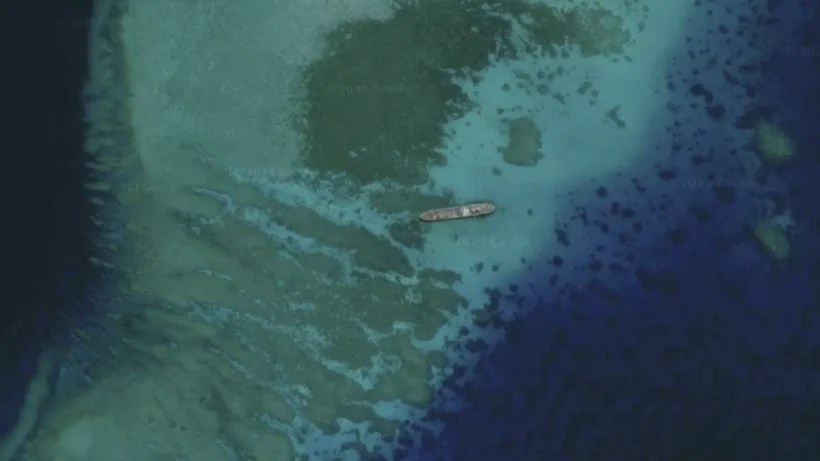
China and the Philippines have reached a provisional deal on resupply missions to a grounded Filipino ship in the South China Sea, amid efforts to ease maritime tensions.
The Philippines Department of Foreign Affairs (DFA) said on Sunday that Manila “reached an understanding” with Beijing on the resupply missions to the Sierra Madre.
The DFA did not elaborate on the “provisional arrangement” but said it followed “frank and constructive discussions” between the two countries earlier this month.
The Philippines deliberately grounded the ship, the Sierra Madre, on the reef of Ren’ai Jiao (aka Second Thomas Shoal) in 1999 to reinforce its claims over disputed waters surrounding it. Since then, it has maintained a small contingent of sailors aboard the vessel.
China and the Philippines have also agreed to jointly manage maritime differences and de-escalate the situation in the South China Sea.
“Both sides continue to recognize the need to de-escalate the situation in the South China Sea and manage differences through dialogue and consultation and agree that the agreement will not prejudice each other’s positions in the South China Sea,” the DFA said.
A Chinese foreign ministry spokesperson on Monday confirmed the “temporary arrangement”, but stated, “We continue to demand that the Philippines tow away the warship and restore Ren’ai Jiao’s state of hosting no personnel or facilities.”
“If the Philippines needs to provide supplies to the ship’s occupants before the Philippines tows away the beached warship, the Chinese side is willing to allow the Philippine side to carry out the transportation and replenishment on humanitarian grounds,” the spokesperson said, noting that the resupply process will take place after the Philippines informs China in advance and after on-site verification is conducted.
China reaffirmed that it won’t allow the establishment of “fixed facilities or permanent outpost” in the area.
“If the Philippines were to send large amount of construction materials to the warship and attempt to build fixed facilities or permanent outpost, China will absolutely not accept it and will resolutely stop it in accordance with the law and regulations to uphold China’s sovereignty.”
Philippine foreign ministry, however, rejected that the “provisional arrangement” required “prior notification and on-site confirmation.”
China says the Philippines has been violating its sovereignty and the Declaration on the Conduct of Parties in the South China Sea (DOC), especially Article 5 which stipulates that the parties should refrain from action of inhabiting on the uninhabited islands and reefs.
Beijing claims the South China Sea in its entirety. Vietnam, the Philippines, Malaysia, and Brunei have overlapping claims to parts of the waters.
Could Trump’s election end NATO’s proxy war in Ukraine against Russia?
Strategic Culture Foundation | July 19, 2024
The presidential nomination of Donald Trump and Senator JD Vance as his running mate raises the prospect of a peaceful settlement to the conflict in Ukraine. Both have been vociferous critics of the NATO proxy war and the arming of the Kiev regime. Vance has even proposed a peace settlement that is close to Moscow’s demands.
Hungarian Prime Minister Viktor Orban, who is recently pushing peace diplomacy, has voiced optimism that the omens are good for a settlement later this year to the worst war in Europe since the Second World War – if Trump and Vance are elected.
Only days after Donald Trump narrowly survived an assassination attempt, he was officially nominated as the Republican presidential candidate amid ecstatic scenes at the Republican National Convention in Milwaukee.
After the tumult and drama over the last week – a long time in politics, as the saying goes – the Trump election campaign is in the driving seat. His vice presidential running mate is 39 years of age and gives the Republican Party a youthful zest. Both men are very much singing from the same hymn sheet regarding their “Make America Great Again” vision.
Trump has united the GOP under his leadership. All former party rivals lined up this week in Milwaukee to endorse the former real estate magnate in his bid to seek re-election to the White House in November. That helps to solidify his manifesto, which bodes well for diplomacy in Ukraine.
By contrast, the election campaign of Democrat incumbent President Joe Biden has run into a ditch. This week he was self-isolating in Delaware having reportedly incurred a third-time Covid infection. Biden increasingly looks toast. His apparent mental decline – the latest gaffe this week was not remembering the name of his Secretary of Defense Lloyd Austin, referring to him haltingly as “a black man” – has provoked a crisis in the Democratic Party and the largely favorable U.S. corporate news media. Senior figures including former President Barack Obama and House Speaker Nancy Pelosi, are reportedly urging Biden to stand down and pass the torch to a younger candidate. Panic is in the air.
There are reports that Biden may throw in the towel within the next few days as the Democrats head into their National Convention to officially nominate their presidential candidate. The trouble for the Democrats is they do not have a viable alternative candidate at this late stage in the campaign – with less than four months to election day on November 7.
That means there is now a serious chance that Trump could return to the White House after he lost the election in 2020, which MAGA loyalists hotly disputed as “stolen”.
That election outcome turns attention to one issue in particular: the war in Ukraine. The conflict erupted in February 2022 and has cost the lives of over 500,000 Ukrainian soldiers. Under the Biden administration and aligned European NATO members, there is no sign of the war coming to an end. Biden and European allies have pledged to keep sending weapons to Ukraine and tens of billions of dollars to prop up a hopelessly corrupt NeoNazi regime in Kiev.
Trump and Vance have pitched a diametrically opposite policy on the U.S.-led NATO proxy war in Ukraine.
That stance is causing the Deep State and its military-industrial complex acute anxiety. The Ukraine war racket has been a bonanza that vested interests in the U.S. ruling class do not want to end. That tension provides a plausible explanation for the attempted assassination of Trump during an open-air rally at Butler, Pennsylvania, on July 13. Salient questions remain about how the shooter, Thomas Matthew Crooks, a 20-year-old student, gained access to such a high-security position to fire his rifle at Trump.
The Republican candidates have warned that the Ukraine conflict is in danger of spiraling into a nuclear world war. Trump has said that he would end the war immediately by cutting off the military aid spigot and forcing the Kiev regime to begin negotiations with Russia.
Tantalizingly, JD Vance (R-Ohio) has been even more explicit in proposing that the warring parties should accept the territorial gains made by Russia – including Crimea, Donbass, Zaporozhye and Kherson provinces – and that Ukraine must accept Moscow’s demand that it remain neutral and outside of the NATO alliance.
Such a position is a breath of fresh air for its rationality. Many respected American scholars and diplomats have also recommended this historically coherent position as a solution, including Professors John Mearsheimer and Jeffrey Sachs. At least Trump and Vance seem to be cognizant of this reality, unlike the Biden administration and the rest of the Democrat Party, along with the Western media establishment and European minions who insanely push a fraudulent war to the last Ukrainian.
Moreover, polls show that the majority of American citizens (and Europeans) would prefer to see a diplomatic solution to the worst war in Europe since 1945.
Hungary’s Orban has admirably advocated peaceful diplomacy and for his troubles, his government has been sanctioned by the European Union establishment. Slovakia’s Robert Fico has also called for an end to the war in Ukraine, which many believe led to an assassination attempt on his life in May.
The conflict in Ukraine is a senseless, bloody slaughter that should never have escalated if Russia’s peace proposals in December 2021 had been accepted instead of dismissed out of hand by the Biden administration and its NATO lackeys in Europe. Also, a peace deal was possible in April 2022 but again was scuppered by malicious U.S. and British intervention.
If an American presidential candidate is proposing a diplomatic end to the conflict then that should be welcomed. It seems that common sense is prevailing.
Having said that, however, there are caveats. The Trump-Vance rhetoric could be empty pre-election canvassing for votes.
Trump’s record is one of hyping expectations and not delivering. When he ran for the presidency in 2016, he promised to normalize relations with Russia – and did not deliver.
He also boasted about solving the conflict in the Middle East with a “deal of the century” – only to embolden Israeli aggression towards Palestinians and Iran.
A reality check is strongly advised on what Trump and Vance can achieve.
While both men express skepticism about “endless wars” and NATO, it should be borne in mind that the conflicts the U.S. empire is fueling have a systematic cause. The United States is desperately fighting to maintain its failing hegemony against the rise of a multipolar and more democratic global order.
Washington and its European vassals are unleashing wars as a matter of necessity for preserving their erstwhile global dominance. History teaches that wars are always the refuge of the Western imperialist ruling classes.
It is notable that while Trump and Vance talk about ending conflict in Ukraine, they are at the same time talking belligerently about confronting China and Iran.
Trump and the MAGA Republicans are deprecated by the U.S. establishment as being “isolationists” in their vision of pursuing “America First”.
But the notion of “isolationalism” is an oxymoron when one considers the objective reality of U.S. imperialism. Foreign wars are an insatiable appetite for Western dominance.
American relations with the rest of the world are all about power projection, dominance and ultimately using violence to assert its “might is right” presumed national privileges. That applies whether the incumbent in the White House is a Democrat or Republican.
Trump may sound more reasonable on the issue of conflict in Ukraine with Russia. That alone makes him a more plausible candidate compared with the reckless warmongering of Biden and the Democrat-Deep State nexus.
The war in Ukraine must be stopped as soon as possible and a more reasonable security arrangement for Europe must be negotiated as Russia has long been consistently advocating.
Any diplomatic opening towards achieving peace and ending the killing must be welcomed.
Trump and Vance might just deliver on ending the hostilities in Ukraine which in itself would be a huge step forward away from the abyss of all-out war with Russia. On that score alone, their election might bring about an improvement.
But alas there is a contradiction. Don’t expect world peace to break out in other parts of the globe, because U.S. imperialism is cranking up its war machine. Trump and Vance are hawkish in their policy towards China and Iran.
A comprehensive solution to ending U.S. aggression and militarism is not a change of personnel at the White House. A profound, systematic change in American politics and economics is required.
Is partial peace sufficient? Maybe it is for now.
China suspends arms control talks with Washington

RT | July 17, 2024
China has frozen arms control talks with the US in response to Washington’s continued weapons sales to Taiwan, the Chinese Foreign Ministry has said.
The US and China held a long-awaited round of nuclear non-proliferation talks in November, the first such meeting since 2018. While the talks produced no concrete results, they were seen as a crucial step in defusing tensions between the two superpowers, after Beijing severed almost all military communication with Washignton a year earlier, over then US House Speaker Nancy Pelosi’s visit to Taiwan.
Speaking at a press conference in Beijing on Wednesday, Chinese Foreign Ministry spokesman Lin Jian said that China would not discuss a new round of consultations with the US.
“The responsibility fully lies with the US,” Lin explained. “Over the past weeks and months, despite China’s firm opposition and repeated protest, the US has continued to sell arms to Taiwan and done things that severely undermine China’s core interests and the mutual trust between China and the US.”
“This has seriously compromised the political atmosphere for continuing the arms control consultations,” he said.
The US State Department has authorized more than a billion dollars worth of weapons sales to Taiwan since the last round of US-China arms control talks, according to figures from the Defense Security Cooperation Agency. Most recently, the department approved the sale of hundreds of Altius-600M and Switchblade kamikaze drones to Taipei, prompting Beijing to impose sanctions on US arms giant Lockheed Martin.
China considers Taiwan a part of its sovereign territory, a position referred to as the ‘One China’ principle. The US recognizes, but does not endorse, this policy. Beijing views American arms sales to Taipei, expressions of support for Taiwanese independence, and pledges of military assistance to Taiwan as violations of the ‘One China’ principle.
China maintains that it will peacefully reunify Taiwan with the Chinese mainland, while reserving the right to use military force if necessary.
Lin did not rule out a return to nuclear negotiations in the future. “China stands ready to maintain communication with the US on international arms control… but the US must respect China’s core interests and create necessary conditions for dialogue and exchange,” he said at Wednesday’s briefing.
Taiwan must pay for defense – Trump
RT | July 17, 2024
Republican presidential candidate Donald Trump has indicated he would be less willing to defend Taiwan from mainland China than his Democratic rival and incumbent US President Joe Biden.
It is “stupid” for Washington to offer protection to Taipei for free, Trump insisted in an interview with Bloomberg recorded on June 25 but published in full on Tuesday.
“I know the people very well, respect them greatly. They did take about 100% of our chip business. I think Taiwan should pay us for defense,” he said.
The self-governed island of Taiwan, which China views as part of its territory, produces an estimated 90% of the world’s super-advanced semiconductor chips.
“I don’t think we are any different from an insurance policy,” the former president stressed. “Taiwan doesn’t give us anything” despite being “immensely wealthy,” he added.
According to Trump, protecting Taipei would also be problematic for Washington due to purely geographical reasons. “Taiwan is 9,500 miles (around 15,000km) away [from the US]. It’s 68 miles (just under 110km) away from China,” he explained.
Taiwanese Premier Cho Jung-tai responded to Trump’s comments by saying that the island of 23.5 million is dedicated to boosting its defenses and “willing to take on more responsibility” for its own security.
“Taiwan has steadily strengthened its defense budget and demonstrated its responsibility to the international community,” he said during a press conference on Wednesday.
Cho expressed the belief that “as long as we continue to demonstrate [these efforts], we will receive support from more countries.”
The premier thanked the US several times for paying attention to the issue of Taiwanese security, stressing that Taipei and Washington have “good relations” despite the lack of any formal ties.
Officially, the US accepts the One China policy, which states that Taiwan is an integral part of Chinese territory. However, Washington has been backing Taiwanese pro-independence forces and supplying weapons to the island. Biden has pledged on several occasions that America would defend Taiwan militarily if it were attacked from the mainland.
Beijing vigorously opposes contacts between Washington and Taipei, repeatedly calling the Taiwanese issue its “red line.” The Chinese authorities have said that they would prefer peaceful reunification with the island, but have warned that a military scenario cannot be ruled out.
A poll published earlier this year by the Taiwanese National Chengchi University showed that more than 80% of the island’s population was not seeking independence, but wanted to maintain the status quo with mainland China.
Will the US-Japan military alliance make any difference?
By Salman Rafi Sheikh – New Eastern Outlook – 15.07.2024
The ongoing upgrades to the US-Japan military cooperation signals new regional developments. In reality, however, this upgrade is a continuation of the US strategy in the Pacific to build military outposts so that China can be deterred and tackled. On the one hand, it is militarizing Japan. On the other hand, the sale of weapons keeps bringing money to the US military-industrial complex. Ultimately, this alliance will do little to serve the purpose of ‘containing’ China. Most of the equipment the US is providing is outdated, basically getting rid of the scrap. The modern equipment, on the other hand, is unreliable. Still, Trump’s arrival in the White House could change the dynamics of military cooperation, making things worse.
The Upgrades:
Following the announcements made during the Biden-Kishida summit in April regarding big upgrades to the US-Japan alliance, the upgrade has finally arrived. On the 3rd of July, the Pentagon announced that the US was going to upgrade “tactical aircraft laydown across multiple military installations in Japan”. This so-called “modernization plan” is worth US$ 10 billion that will “bolster regional deterrence, and strengthen peace and stability in the Indo-Pacific region”. According to the announcement, the US will replace 48 F-15C/D with 36 F-15EX fighters at Kadena Air Base. The US Air Force will also replace 36 F-16 aircraft with 48 F-35A aircraft at Misawa Air Base. Overall, the plan to “station the Joint Force’s most advanced tactical aircraft in Japan demonstrates the ironclad U.S. commitment to the defence of Japan and both countries’ shared vision of a free and open Indo-Pacific region”. In addition to these new deployments, NATO is also in the middle of releasing its new policy documents outlining its new lines of cooperation with countries like Japan, Australia, New Zealand, and South Korea. There seems to be momentum, but it will soon run into problems that it may not be able to recover from.
Can US-Japan-NATO Counter China?
While the F-15EX seems like a significant upgrade from the outdated F-15C/Ds, they are still no match against China’s growing fleet of stealth fighter jets. It means that were Japan to use these fighters in an offensive against China, they would prove useless since they lack stealth features and would be unable to penetrate a heavily guarded airspace.
While the deployment of F-35 jets does mark a significant upgrade, there are serious questions about its operational and logistic utility, compromising its ability to tackle China’s J-20s. In 2023, according to one estimate, China produced 100 J-20. If China can maintain the same rate, it will have 1,000 J-20s by 2035. The US has less than F-22s, and its F-35 programme continues to run into problems.
The 2023 Annual Report by the Director, Operational Test and Evaluation made some startling observations, saying,
“The F-35 program development cycle continues to experience delays due to immature and deficient Block 4 mission systems software and avionics stability problems with the new Technology Refresh 3 (TR-3) hardware going into Lot 15 production aircraft. As a result, deliveries of production Lot 15 aircraft in the TR-3 configuration are on hold until more testing can be completed and the avionics issues resolved. Additionally, these delays prevented the F-35 Joint Program Office (JPO) from adequately planning and programming for hardware modifications for OT of the upgraded hardware configuration”.
As a result of these delays and difficulties, only 32 out of 205 baseline DT flights were conducted. The US is now stationing the F-35s in Japan, which basically relies on the assumption that these delays will ultimately be resolved and that Washington will not have to move these F-35s to a different location to meet the recurring shortages. But the reality is that, as the report concludes, “The operational suitability of the F-35 fleet remains below Service expectations and requirements”, which means that, according to the report, out of 628 aircraft produced until now, a majority of them remain “unavailable” for active service throughout most of the year. In fact, 2023 had fewer available aircraft than 2022. What this ‘upgrade’ will do to Japan’s security is, therefore, not hard to imagine. In the end, other than creating a false sense of security, it might not add any value to Japan’s offensive and defensive capabilities, compromising the politics of ‘China containment’.
The Trump Factor
Former US President Donald Trump’s return to the White House next year is already making Washington’s European allies extremely uneasy. Whereas Trump has thus far signalled that his administration will ideally continue to follow the Biden administration’s policy towards Japan and China, Trump has also assured his voters of the continuation of his “America First” and “Make America Great Again” policies, which also involve, among other things, military disengagements.
Therefore, the existing rhetoric of reassurance notwithstanding, Trump’s politics and/or his geopolitical vision has not seen any change in the recent past. Reports in the US media indicate that “a second Trump administration is likely to be far more disruptive for Asia than the first one was”. What it implies is that, with Trump forcing the US military footprint to reduce worldwide, countries like Japan will need to find ways to become self-reliant. So, instead of depending upon the actual supply and availability of otherwise “unavailable” fifth-generation jets, Tokyo will need to develop an alternative, more reliable strategy – a strategy that should not exclude the possibility of dialogue with China to sort out any existing issues without any external interference.
In fact, since Trump is likely to target China and push the US away from Japan’s military build-up, he is likely to antagonise both states. There is, therefore, an incentive for both Asian giants to collaborate and find peace.
Salman Rafi Sheikh is a research analyst of International Relations and Pakistan’s foreign and domestic affairs.
Russia could challenge NATO’s historical air dominance – media
By Ahmed Adel | July 15, 2024
Business Insider reported that NATO had never faced an adversary of Russia’s calibre after World War II, and it would have been difficult for the alliance to establish air superiority over Russian forces. The warning comes as experts have explained the sombre reality that the F-16 fighter jets, a key aircraft in many NATO air force fleets, provided to Kiev will not be a “magic bullet” that Ukrainian President Volodymyr Zelensky and his Western allies expect them to be.
“Russia could challenge NATO’s historical air dominance,” reported the media on July 13 after explaining that this is a change from the scenario that emerged after the Cold War when the West had a clear advantage. “Russia would be a very different opponent. It has the territory and industry to build and field massive and sophisticated air defenses that an opponent may struggle to destroy.”
“The US and its allies, even with fleets of fifth-generation stealth fighter jets, likely would find it difficult to establish the same level of air dominance they’ve largely had since the end of World War II,” the New York-based outlet said.
According to experts cited by the portal, Western aviation has never had the experience of combating air defence systems at a level similar to that of Russia’s. During the conflict in Ukraine, the Russian military proved that it could establish extremely difficult air defence areas for the enemy with powerful radars, electronic warfare systems and missiles.
“The Russians could attempt a surprising and impactful opening attack,” the article warned. “For example, the Russians could target vulnerabilities like satellites to try to disrupt the space-based communications and navigation NATO airpower depends upon.”
The worry that Russia could establish air superiority over NATO, particularly over the bloc’s 30 European members, became a more serious consideration after Russian forces methodically obliterated Ukraine’s air force. Russia so impressively dismantled the Ukrainian air force that the Kiev regime is desperately seeking F-16 fighter jets from Western allies to replenish its fleet, even though experts are saying that the aircraft is now obsolete and unlikely to survive the conflict.
“As soon as the Ukrainians encountered Russian-controlled air space, the F-16’s value would diminish markedly, as would its likelihood of survival,” Harrison Kass wrote for the National Interest. “In a conflict with a great power, China for example, the F-16 would remain on the backbench.”
This is a telling revelation considering the US still uses over 900 F-16s, NATO members, including Turkey, Greece, Poland, and Romania, use hundreds more, as well as US non-NATO allies Israel, Taiwan and South Korea. In effect, the F-16 would be rendered almost useless against Russia given that the Eastern European country’s military is ranked second, one above China, according to the 2024 PowerIndex.
Kass warns Kiev that the good performance of the F-16 fighter jets in Iraq and Afghanistan does not say anything about their capabilities against Russian air defences.
After stressing that “the F-16 fighting falcon era is coming to a rapid end,” Kass concludes that the US-made fighter jet “will not offer a magic bullet for Zelensky” and will merely “buy a little more time.”
Russian President Vladimir Putin has warned that the F-16s supplied to Kiev will be destroyed just like other Western military equipment. Russian Foreign Minister Sergey Lavrov also warned that their appearance in Ukraine will not change anything on the front and that they will be destroyed in the same way as other types of weapons.
Nonetheless, in 2023, several NATO states agreed to supply the Ukrainian armed forces with the fighter jets and launched training programs for Ukrainian pilots. On July 10, US Secretary of State Antony Blinken said that the US and its allies are “underway” in sending the promised F-16 fighter jets to Ukraine.
As Europe and the US are not interested in a viable, pragmatic, and lasting peace agreement in Ukraine which recognises Russian interests in the region and establishes a lasting solution, they are actively prolonging the fighting despite not only the humanitarian consequences but even the weakening of their own military. Whilst NATO members are distracted with training Ukrainian pilots to use fighter jets that are effectively obsolete in any combat with a great power, Russia, as Business Insider has acknowledged, has successfully challenged the air dominance NATO largely enjoyed since the start of the Cold War despite the introduction of fifth-generation fighter jets.
Ahmed Adel is a Cairo-based geopolitics and political economy researcher.
Possible consequences and prospects of Vladimir Putin’s visit to DPRK
By Konstantin Asmolov – New Eastern Outlook – 12.07.2024
The consequences of the visit of the Russian leader to North Korea and the documents signed there are so significant that they can propel the trend of global turbulence. How have Seoul, Beijing and Washington reacted to such a rapprochement between Moscow and Pyongyang and what will be Moscow’s response to the steps taken by Seoul and its allies?
Seoul’s response
Until a certain point, Seoul was ‘the friendliest of the unfriendly countries’ – the Russian president recently noted in a positive way. As Vladimir Putin said on June 5, 2024, within the framework of the International Economic Forum in St Petersburg, “Russia highly appreciates the refusal of ROK to directly supply lethal weapons to Ukraine”.
However, such a demonstrative rapprochement between Pyongyang and Moscow cannot be ignored by Seoul, especially since the content of the Treaty (which contains a military component along the lines of the Soviet-North Korean treaty of 1961) has turned out to match the worst expectations of South Korean analysts.
Even before the visit, South Korean diplomats hinted to the author that Seoul would definitely respond to such a level of cooperation between Moscow and Pyongyang, at least for domestic political and reputation reasons. This response would most likely entail boosting Seoul-NATO cooperation to a similar level. The United States, along with its allies and systemic right-wing politicians, are putting pressure on President Yoon Suk Yeol to take a more anti-Russian stance, especially on the Ukrainian track; Seoul is constantly being convinced that since Pyongyang has been ‘proven’ to be aiding Russia, South Korea has the right to provide similar support to Ukraine, despite all possible risks of retaliatory measures and a significant cooling of relations with Moscow.
In a statement on June 20, 2024, former Ambassador to Russia and current National Security Adviser to the President Chang Ho-jin noted: “Four ships, five organisations and eight individuals from third countries, as well as Russian and North Korean organisations involved in the supply of weapons and oil transshipment between Russia and North Korea, are on the list of independent sanctions… We have also included 243 new items to the list of sanctioned goods exported to Russia, bringing the total number to 1,402 items…We plan on reconsidering the issue of military support for Ukraine, as the government has so far maintained the position that it will not supply lethal weapons to this country”.
Chang’s statement, on the other hand, could not but evoke a threatening reply from Moscow. Vladimir Putin almost immediately declared that the supply of lethal weapons to Ukraine would be a “very big mistake” and that Moscow would in this case make “the appropriate decisions, which the current leadership of South Korea will most likely not appreciate”. However, the Russian president expressed hope that such a thing would not happen.
There was also a natural exchange of reprimands. On June 21, 2024, First Vice Minister of Foreign Affairs of ROK Kim Hong Kyung summoned Russian Ambassador Georgy Zinoviev to convey Seoul’s official position on the Comprehensive Strategic Partnership Agreement between Russia and DPRK from June 19. The vice minister called on Russia to “immediately cease military cooperation with North Korea and comply with UN Security Council resolutions”. He made it clear that ROK, along with the international community, will “resolutely resist any actions that threaten its security”.
Zinoviev said that cooperation between Russia and DPRK is not directed against third countries, complies with the principles and norms of international law and is aimed at strengthening peace and stability on the Korean peninsula. Russia is ready to continue to make political and diplomatic efforts to form an architecture of long-term peace and stability based on the principle of indivisible security”, the ambassador stressed.
Meanwhile Seoul slowly began to backtrack. On June 23, 2024, in a speech on the KBS channels, Chang Ho-jin made it clear that the question of whether South Korea will supply lethal weapons to Ukraine will depend on Russia; if it starts sending high-precision modern weapons to North Korea, then nothing will stop South Korea from helping Ukraine. Among the options under consideration are 155 mm artillery shells and air defence systems.
In essence, the parties formally voiced to each other the long-known, informal red lines: South Korea is not to be engaged in direct supplies of weapons and military equipment to Ukraine and Russia is not to be engaged in the development of the North Korean military potential. It is important for Seoul to prevent the supply of dangerous modern weapons and technologies to the North, and North Korean shells (which are allegedly provided to the Special Military Operation) are a nuisance, but not yet a disaster.
It is worth remembering that, despite his high position, Chang still does not have the right to speak on behalf of the state unlike the president, the prime minister and the foreign minister. If such statements were to come from them as well, then it would indeed be a cause for concern. For now, though, one should wait and see, considering how, on the eve of his visit to the United States, Yoon Suk Yeol stated that the Republic of Korea could start supplying weapons to Ukraine if the Russian Armed Forces were to commit an atrocity.
Thus, the point of no return in relations between Moscow and Seoul has not yet been passed, but we are close. The author hopes for the best, as Moscow and Seoul understand that when crossing the ‘red’ line, Russia will also have to take action in response and South Korea may lose its status as ‘the friendliest of the unfriendly’.
China’s position
The reaction to the visit by the Chinese media and government agencies was between neutral and positive; they did [not] provide any statements of judgement and simply noted that this was an important and serious event. The Chinese Foreign Ministry called the DPRK’s desire to develop relations with Russia normal, and the Global Times noted that this cooperation could perhaps even make the United States afraid.
Western media actively wrote that China was not happy with the rapprochement between Russia and the DPRK that Putin’s visit to North Korea and Vietnam was actually anti-Chinese in nature and that having a parallel 2+2 dialogue shows China’s desire to be friends with Seoul, showing its tough stance to Pyongyang.
This is not exactly true. Firstly, coordination between Moscow and Beijing on the Korean issue has always been and is very close. A look at the joint statements on the Korean issue made during Putin’s visit to China is enough to prove this. This means that the essence of Moscow and Pyongyang’s agreements with Beijing was probably discussed in advance.
Secondly, on June 18 negotiations did indeed take place in Seoul. They were attended by senior officials from the foreign and defence ministries of ROK and China in a 2+2 format.
Before the start of the talks, the official representative of the Ministry of Foreign Affairs of the Republic of Korea, Lim Soo-suk, believed that “issues of cooperation between Russia and North Korea will be discussed, since dialogue is taking place simultaneously with the scheduled visit of the Russian president to North Korea”. Professor of the Hankuk University of Foreign Affairs Kang Jung-young said that “having this dialogue is in itself is a clear signal to North Korea that China will not support Pyongyang’s attempts to create a trilateral bloc with Beijing and Moscow”.
The Korean approach to the 2+2 format is as follows: representatives of Seoul expressed deep concern to their Chinese colleagues about the visit of the Russian president to DPRK and the deepening of ties between Moscow and Pyongyang amid rising tensions on the Korean peninsula. They stressed that the Russian leader’s visit to North Korea should not undermine peace and stability in the region or lead to the strengthening of military cooperation between the two countries. Additionally, ROK called on China to play a constructive role in ensuring peace, stability and security on the Korean peninsula, emphasising that the deepening of Russian-North Korean military cooperation and its consequences run in contradiction to Beijing’s interests. In turn, China confirmed its unchanged position on the Korean peninsula, expressing its readiness to take an active part in solving the problems of the region.
A ‘bloc’ as a limiting factor
Almost immediately after the signing of the comprehensive strategic partnership agreement between the Russian Federation and North Korea, the Russian president noted that there were no fundamentally new points in it and that the document was similar to the 1961 treaty, including Article 4 on ‘automatic military intervention’. According to Putin, the provisions of the new Agreement stipulate that military assistance is provided only in case of aggression, and therefore ROK has nothing to worry about, since there are no known plans of the South to attack the North. The Russian president also expressed the opinion that the Agreement would to some extent limit the threat of the crisis on the Korean peninsula entering a ‘hot phase’.
The author supposes that the cooperation between Moscow and Pyongyang within the framework of a possible military bloc reduces the likelihood of conflict on the Korean peninsula rather than increases it. The fact that the opposing sides are two serious military blocs reduces the likelihood of an escalation of the conflict, as it could too easily escalate to become nuclear, and neither Moscow nor Pyongyang are suicidal.
One more detail: on the one hand, article 4 of the Agreement is harsher than article 5 of the NATO treaty. On the other, it clearly indicates that a state of war is required for comprehensive assistance, and if we recall the 1961 treaty, then it is worth paying attention to the events of 1968 when Moscow clarified to Pyongyang in which situations military assistance would be cancelled.
We should likely expect a confrontation similar to the Cold War. There will be an arms race, muscles will be flexed, loud statements and minor incidents will take place, but the parties are well aware of the red lines and do not intend to cross them. Being prepared for war, including the development of preemptive strike plans as a way of self-defence in a critical situation, is not the same as the desire to initiate a conflict.
The fate of UNSC sanctions
The demonstrative liquidation of UN Security Council sanctions, which was expected in the West, has still not taken place. Both Putin’s article and the additional decree emphasise cooperation in the fields of education, healthcare and science and maintain that the unjust sanctions should be lifted.
For now, though, Moscow says it will comply with the sanctions it previously voted for.
It is likely that the lifting of sanctions may occur following the next round of escalation because regardless of whether there were actually arms deals or not, the West will still blame Moscow and Pyongyang for colluding and take retaliatory measures.
The appearance of a North Korean labour force in Russia is a sign that a de jure or de facto decision to ignore a part of the sanctions has been made. Price, quality, safety and keeping a low profile are the strengths of North Korean builders, and talks of their employment have been going on for a long time.
Summa summarum, there is a lot of uncertainty in the future and the situation is similar to that described in the book ‘The Guns of August’ by Barbara Tuchman: nobody wanted war, so war was inevitable. However, it cannot be said that the visit of the President of the Russian Federation to the DPRK has significantly aggravated the situation.
Konstantin Asmolov, PhD in History, Leading Research Fellow at the Korean Studies Center of the Institute of China and Contemporary Asia of the Russian Academy of Sciences.
Kremlin comments on Türkiye’s SCO bid
Türkiye’s obligations to the US-led military bloc are not consistent with the Eurasian organization’s values, Moscow has said.
RT | July 12, 2024
Türkiye’s bid to become a full member of the Shanghai Cooperation Organization (SCO) is not compatible with its membership in NATO, Kremlin spokesman Dmitry Peskov said on Friday.
Last week, Turkish President Recep Tayyip Erdogan attended a summit of the Eurasian mutual defense group, in which his nation has observer status. While returning home from Kazakhstan, he told journalists that Ankara wants to “further develop” ties with the SCO and its founding members Russia and China. During the NATO leaders’ summit in the US this week, he said Türkiye wants to join the SCO as a permanent member.
Asked by journalists when Turkish accession could be expected, Peskov said there was a problem with such a proposal.
“There are certain contradictions between Turkish commitments and [its] position on fundamental issues as a NATO member and the worldview formulated in the founding documents of the SCO,” he explained.
The expansion of the SCO is of interest to many nations and remains on its agenda, but there is no specific timeline for accepting new members, he added. Commenting later during a press call on bilateral relations with Türkiye, Peskov said Russia was “open for attempts to reach agreements based on a certain worldview.”
Moscow perceives NATO as a hostile, aggressive military organization, which serves US geopolitical interests and is currently conducting a proxy war against Russia in Ukraine.
Despite being a NATO member state, Türkiye has maintained a neutral stance on the Ukraine conflict, refusing to impose economic sanctions on Russia and serving as an intermediary between Moscow and Kiev on several occasions. Ankara helped to mediate a nascent peace deal in the early months of the hostilities, which Kiev eventually ditched in favor of continued fighting. The Russian government believes that the US and its allies, particularly the UK, forced Ukraine to reject the proposal.
The SCO was founded in 2001 and currently has ten full members: Russia, China, India, Iran, Kazakhstan, Kyrgyzstan, Pakistan, Tajikistan, Uzbekistan, and Belarus. Kazakhstan holds the rotating presidency this year and hosted the leaders of member states on July 3 and 4 in Astana.
One of the key pledges to which SCO members subscribe is not to seek the improvement of their own national security at the expense of the national security of other parties. NATO policy does exactly that, according to its critics, including Russia.
Russia Rules Out All Nuclear Talks With US Until Washington Adopts a ‘Sane’ Approach
By Kyle Anzalone | The Libertarian Institute | July 8, 2024
A top Russian diplomat stressed that the Kremlin is unwilling to engage with the White House on arms control issues due to the Biden administration’s Russophobic stance. Deputy Foreign Minister Sergei Ryabkov argued that President Donald Trump left the Intermediate-Range Nuclear Forces Treaty (INF Treaty) to provoke China.
In an interview with The International Affairs published on Monday, Ryabkov explained Moscow’s position on arms control talks with Washington. “We do not have the foundation right now and we are not even close to shaping one in order to launch a tentative dialogue, not talks even, in this field. This is a result of Washington’s destructive policy course,” he stated.
“Until [the US] clearly show some change for the better in their policy, at the very least, demonstrate that this boundless and unabashed Russophobia has been set aside and is replaced with a slightly more sane approach,” he said, adding, “until this happens, there simply can be no dialogue on strategic stability.”
Since the end of the Cold War, Washington has abandoned a series of agreements that limited the US and Russia’s conventional as well as nuclear arsenals. Additionally, the Kremlin left the New Start Treaty in response to the White House’s support for Kiev.
The deterioration of the global arms control agreement has coincided with a rise in spending on nuclear weapons and arms overall. Both Beijing and Moscow view the launchers as highly provocative. Ryabkov argued Trump left the INF Treaty to build intermediate-range missiles to intimidate China.
“Americans needed to withdraw from the treaty in order to create such systems to intimidate the People’s Republic of China,” Ryabkov said. “And it is no coincidence that we have recently had a sharply intensified discussion about when and where the Americans might begin to deploy their medium-range weapons in the Asia-Pacific region.”
Recently, Washington and Moscow have taken steps to use arms limited by the INF Treaty. The agreement barred land-based missiles, and launchers, with a range of 300-3,400 miles. The US has deployed a covert launcher for intermediate-range missiles to Denmark and the Philippines for war games.
On Friday, Russian President Vladimir Putin said Moscow would begin producing weapons that the INF Treaty outlawed. “We need to start production of these strike systems and then, based on the actual situation, make decisions about where — if necessary to ensure our safety — to place them,” he stated.
Featured Video
Laith Marouf: Hezbollah’s position on US-Iran ceasefire
or go to
Aletho News Archives – Video-Images
From the Archives
The Dirty Little Secret behind the “Global Terrorism Index”
The Omission of Israeli Terrorism in the Occupied Palestinian Territories
By Karin Brothers | Global Research | December 6, 2014
… The Israeli settlements — all of which are illegal – have been identified as a major impediment to peace. The refusal of a major “global” terrorism report to name the Israeli settlers as one of the groups most responsible for terrorism not only misrepresents a major source of regional violence but exposes the Global Terrorism Index as a propaganda tool that supports a U.S. agenda.
In recent years, governments have been attempting to thwart terrorism by blocking supportive fund-raising. When it comes to Israeli settlements, however, the US and Canada actually encourage fund-raising by giving organizations (such as Christian Friends of Israeli Communities (CFOIC) and the Jewish National Fund) financial support in the form of donor tax-deductions.
Charities which provide funds for the Israeli settlements should be regarded as terror-financing organizations. They should not only lose their tax-deductible status, but they should be banned because they support the violation of international humanitarian law. The terror-financing laws that are being strictly enforced for Muslim charities should be applied to Christian and Jewish charities as well. … Read full article
Blog Roll
 Aletho News
- How UK Regulator Ofcom Quietly Bypassed International Law to Police American Speech
- The Black Cube Files: How Former Mossad Operatives Flipped a Nation
- Laith Marouf: Hezbollah’s position on US-Iran ceasefire: What you’re not being told
- Israel’s priority lies in destroying chances of peace between Iran, US: Ex-UN nuclear chief
- Ceasefire for all or for none: Iran shuts Hormuz over Lebanon attacks
- Strait of Hormuz is Iran’s ‘nuclear weapon’ that forced US retreat: Medvedev
- Energy crisis will last for months – Kremlin envoy
- Europe’s quiet role in the war on Iran
- Forty days that shook the Empire: How Iran turned the tables on US and prevailed
- Netanyahu unilaterally declares Lebanon outside of ceasefire deal
- If Americans Knew
- This is ceasefire? Israel’s biggest massacre yet in Lebanon, another journalist killed in Gaza – Daily Update
- Tucker Carlson on Israel: This Is the Behavior of an Ally? Really?
- Gazans face a triple crisis: severe shortages of water and bread, healthcare in tatters
- NY Times reports how Netanyahu took the US into Iran War
- A sigh of relief over Iran, but Gaza and Lebanon in dire straits – Daily Update
- Thousands dead and neighborhoods razed to the ground: Aid agencies fear southern Lebanon is becoming the new Gaza
- The war the US is fighting for Israel could cost trillions
- ‘Cigarette Burns, Nail Wounds’: Toddler Tortured in Gaza to Coerce Father
- Trump Says US Sent ‘a Lot of Guns’ to Protesters in Iran
- Israeli forces destroy 17 UN peacekeeper cameras in south Lebanon
- No Tricks Zone
- An Inconvenient Tree: Uncovered In Alps… Europe Much Warmer Than Today 6000 Years Ago
- New Study Reports A 60% Slowdown In Greenland’s Ice Loss Rate In The Last Decade
- Low Intensity Tornado Wrecks Major Solar Farm, Creating A Potential Toxic Dump
- New Study Finds Warming Saves Lives…Cold Temperatures 12 Times More Deadly Than Excess Heat
- German Science Blog Accuses PIK Climate Institute Of Hallucinating Climate Tipping Points
- Devastating Assessment Of Comirnaty Vaccine By Former Senior Pfizer Europe Toxicologist
- New Study: CO2 Is ‘Effectively Negligible’ As An Explanatory Climate Change Factor Since 2000
- Former Pfizer Toxicologist Dr. Helmut Sterz Tells Bundestag Hearing Pfizer Vaccine Should Have Never Been Approved
- Energy Expert: Germany’s Nuclear Phaseout Was A “500 Billion Euro Mistake”
- New Research: South Australia’s Mid-Holocene Sea Surface Temperatures Were 4°C Warmer Than Today
 Aletho News