Chinese Military Calls US Biggest Threat to Global Security After Alarmist Pentagon Report
Sputnik – 21.12.2024
BEIJING – The Chinese Defense Ministry on Saturday denounced the Pentagon’s recent report on China’s rapid military development, saying that the United States itself had an increasingly confrontational military strategy that was turning it into the biggest threat to global security.
“The evidence shows that the US military strategy is becoming increasingly confrontational, offensive and adventurous. The US, addicted to war, has become the biggest destroyer of the international order and the biggest threat to global security,” Chinese Defense Ministry spokesman Zhang Xiaogang said on WeChat.
Zhang accused the US of taking advantage of its military superiority to “preserve its unipolar hegemony, carry out forced power changes and provoke ‘color revolutions.'”
The Chinese defense spokesman pointed to Syria, Iraq and Afghanistan as examples of how US military interventions have led to humanitarian disasters and hundreds of thousands of deaths.
The US Department of Defense released on December 18 the congressionally mandated report, which alleged that China presented “a significant, persistent cyber-enabled espionage and attack threat.” It claimed that China’s stockpile of operational nuclear warheads surpassed 600 as of mid-2024 and was projected to top 1,000 by 2030. China is believed to be rapidly expanding its nuclear forces amid an intensifying strategic competition with the United States. At the same time, the Pentagon said it remained committed to maintaining open lines of communication with China to ensure that competition does not veer into conflict.
China urges US to shut Guantanamo prison, end ‘occupation’ of Cuba
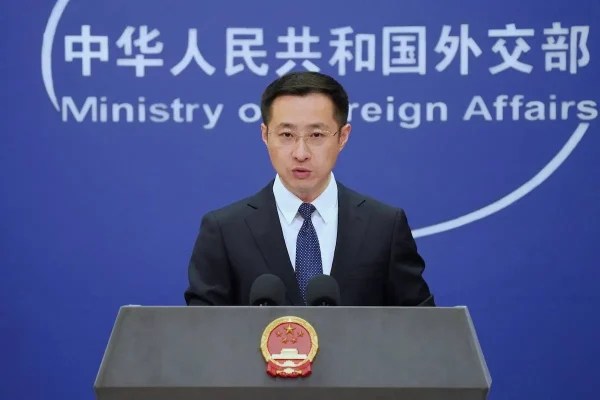
Lin Jian, spokesman for China’s Foreign Ministry, attends a press conference on March 18, 2024 in Beijing, China. [VCG/VCG via Getty Images]
MEMO | December 20, 2024
Read also: Guantanamo’s cruelty is medieval. It’s a horror story. And it’s true.
Syrian ‘end-game’ will change the Middle East
By Salman Rafi Sheikh – New Eastern Outlook – December 20, 2024
The fall of the Assad regime in Syria may have been a geopolitical loss for Iran (and Russia), but the fact that Islamists have overthrown the regime threatens both Iran and Arab states, creating prospects for their cooperation in the near future and minimising whatever gains the ‘winners’ of this ‘end-game’ may have made.
The ‘Winners’ and the ‘losers’
There are clear ‘winners’ and ‘losers’ in the fall of the Assad regime in Syria. But geopolitics is a very dynamic field in which gains and losses are hardly one-sided. In some ways, the fall of the Assad regime – and the inability of Iran to rescue its key ally in the region – may have been an outcome of Israel’s war on Palestine and Hezbollah, but it does not necessarily mean a permanent weakness of Iran and a permanent gain for Israel. For now, Israel is consolidating this gain by a) seizing Syrian territory, and b) bombarding the Syrian military positions to decimate its ability to launch any counter-offensive at all.
In other words, Israel’s steps show a clear direction. First, it weakened Hezbollah by engaging it in a brutal war. Second, it is now supporting the Islamist takeover of Syria. The Islamists have declared that they have no problem with Israel as their neighbour. Israel’s Netanyahu, on the other hand, has already claimed the credit for “reshaping” the Middle East.
Another clear ‘winner’ is Turkey, which had long wanted Assad to go. For years, the Turkish military had been maintaining a direct presence in Syria’s Idlib province, which also happened to be the main province under (partial) control of the so-called “rebel” Islamists. For years, Turkish forces shielded these groups from the Syrian (and Iranian and Russian) strikes and offensives. In addition, the fact that Turkey allowed these groups to conduct trade across the Turkish border provided these groups with economic support too. Now that Assad is gone, Turkey finds itself in a much better position than it was earlier to counter Kurdish groups.
But there are no ‘losers’
All of this apparently translates into crucial geopolitical gains for Israel (Washington) and Ankara, except there are no permanent ‘losers’ here. The fall of the Assad regime has brought to power a well-known Islamist group globally designated as terrorist. It is said to be only previously allied with al-Qaeda, but the way it controlled Idlib for years provides a sufficiently sound snapshot of where the group stands as an ultra-orthodox network, with serious questions remaining about whether the group was ever able to shun its ideological past.
Still, there is little denying that the ability of armed Islamists to overthrow Assad and capture power has upset not only Tehran but also Riyadh, Doha, Abu Dhabi, Kuwait, and even Cairo. All of these states previously faced actual, or prospects, of popular discontent during the so-called ‘Arab Spring’. All of these states are Muslim-majority states, which makes them vulnerable to groups operating both regionally and domestically to overthrow monarchies and/or existing regimes. Can any of them face similar prospects as Syrians did? Let’s not forget that the “rebels” first emerged in Syria in the wake of the so-called ‘Arab Spring’. If the end of the Asad regime is the continuation of the same ‘movement’, there is no denying that it can reach other states too. A clear logic for these states to cooperate with each other against this Islamist threat, backed as it is by Turkey and Israel, exists.
Therefore, while Iran may have become ‘isolated’ and the fall of the Assad regime may have blocked its ability to support Hezbollah via Syria, Iran’s prospects of developing new – and deeper – relations with the Arab world have also increased manifold. Therefore, while Netanyahu might be right in claiming that he is “reshaping” the Middle East, the new shape might not be exactly to his liking. The coming together of Iran and Arab states would directly undermine Israeli ability to defeat Iran in the short and long run.
Iran and the Arab world
They are already cooperating. Iran, Saudia, Qatar, and Iraq were all quick to oppose Israeli incursions into Syrian territory. A Saudi official statement called the Golan Heights “occupied” territory. This is not an isolated development triggered by Israeli actions. It is an outcome of an ongoing policy convergence between Riyadh and Tehran vis-à-vis Israel. On Nov. 11 at a summit of Islamic nations in Riyadh, the Saudi crown prince called on the international community, i.e., the US mainly, to compel Israel to “respect the sovereignty of the sisterly Islamic Republic of Iran and not to violate its lands.” At the same gathering, he described the Israeli war on Palestine as “collective genocide.”
In Egypt, the fall of the Assad regime has brought back echoes of the fall of the Mubarak regime more than a decade ago. When the present Egyptian ruler overthrew the government of Mohammad Morsi, a Turkish ally, Erdoğan said he would never talk to Sisi. Yet, he met Sisi twice in 2024. The fact that Turkey is now backing Islamists – and it has always supported the Egypt-based Muslim Brotherhood – there is yet again every reason for Egypt to align its policies in ways that might help keep the Islamists at bay. This way includes closer ties with the rest of the Arab world, plus Tehran.
Quoting senior Western diplomats, a recent report in Middle East Eye described the situation as particularly unravelling for the UAE, which has “been unnerved by the US’s manoeuvring to open backchannels of communication to HTS via Turkey”. The report also mentions the UAE’s efforts to “broker talks between the government of Bashar al-Assad and the US. The UAE wanted to strike a grand bargain to keep the Assad family in power”. The only reason why the UAE wanted Assad to stay in power was that the alternative to Assad would cause more damage to Emirati interests than any potential benefits. The Islamists are that alternative now that no one, except the Turks and the Israelis, wants.
Therefore, a logical response of these states (Arab and Iran) is to develop coordinated action to thwart any prospects of an Islamist revival, including the revival of the Islamist State, which has a sizable presence in Afghanistan. This is probably the only way that the Arab states can collectively outmanoeuvre Turkey and Israel. There is also little denying that any effort to deepen Gulf-Iran cooperation will be squarely seen as a welcome development in Moscow and Beijing, both of which have vital interests in the region.
Salman Rafi Sheikh is a research analyst of International Relations and Pakistan’s foreign and domestic affairs.
US chip suppression won’t stop Chinese industries’ development, will only make them stronger: China chip trade group
By Zhang Yiyi and Wang Cong | Global Times | December 13, 2024
On December 3, one day after the US government announced yet another round of restrictions on chip sales to Chinese firms, four Chinese industry associations, including the China Semiconductor Industry Association (CSIA) and the Internet Society of China (ISC), issued firmly worded statements declaring that US chip products are no longer safe and reliable.
Behind the strongly-worded statements are the profound indignation among Chinese industries over the US government’s relentless campaign to target an ever-growing number of Chinese companies, and the determination to ensure safe and reliable chip supplies for relevant Chinese industries, according to Wei Shaojun, vice chairman of the CSIA.
“The US government has repeatedly suppressed Chinese semiconductor companies, and CSIA members have been very outraged about this. So, it is the CSIA’s responsibility to speak out,” Wei told the Global Times in an interview on Thursday, noting that more than 240 Chinese semiconductor companies have been added to the US’ so-called Entity List so far, accounting for one-quarter of the CSIA members, or one-third, if affected foreign CSIA members are included.
In the statement on December 3, the CSIA blasted the US government’s latest move of adding more than 140 Chinese firms to its so-called Entity List, saying the US arbitrary export control measures against Chinese firms have affected the stable supply of US chip products. “US chip products are no longer safe and reliable and relevant Chinese industries will have to be cautious in purchasing US chips,” it said.
Also making the same determination are three other Chinese industry associations that represent the main buyers of chips – the ISC, the China Association of Communications Enterprises, and the China Association of Automobile Manufacturers. Relevant Chinese ministries, including the Ministry of Commerce, also slammed the US move and vowed to take “necessary” measures to resolutely safeguard its legitimate rights and interests.
China’s innovation edge
The statements from the Chinese industry associations showed a “stronger-than-before attitude” and “they expressed our strong indignation,” Tu Xinquan, dean of China Institute for WTO Studies at the University of International Business and Economics and a consultant for the CSIA, told the Global Times.
As the US government is bent on escalating the crackdown measures, “we must take some necessary measures to firmly safeguard our legitimate rights and interests,” Tu said, “we must accordingly encourage and support the purchase of reliable and safe products, whether they are made by Chinese companies or in other countries or regions.”
For domestic internet companies, they need to “promptly adjust their foreign cooperation and development strategies,” Pei Wei, Deputy Secretary General of the ISC, told the Global Times in an interview. “They need to diversify the supply chain layout, especially for the procurement of key technologies and components, to reduce the reliance on a single source.”
Chinese internet companies should establish partnerships with chip manufacturers in countries and regions outside the US, strengthen support for domestic and locally produced chips, so as to diversify risks and enhance supply chain security and stability, Pei further noted.
“At the same time, we must also improve our internal capabilities and continue to build independent research and development, production and manufacturing capabilities,” Pei said.
Wei also urged support for reliable chip supplies in the face of the US’ relentless crackdown campaign.
“We call on the Chinese government to support the stable development of reliable semiconductor suppliers; we also call on semiconductor companies in relevant countries and regions to strive to become reliable semiconductor industry suppliers,” he said. “Suppression will not stop us from development. Chinese industries will become stronger and more confident in our development.”
Broader cooperation needed
In response to the US government’s relentless crackdown campaign, Chinese industries should also remain open for cooperation with their foreign counterparts, the leaders of the industries also said.
“The current success and achievement of the semiconductor industry are the result of global competition and cooperation. Closed development is not conducive to technological progresses and breakthroughs in the industry, and will harm the interests of global consumers,” Wei said, urging the US to return to the stage for fair competition.
Tu noted that it is the US government’s policies, not US companies, that make US chip products unsafe and unreliable. “The restrictions are on exports, so they are actually restrictions on US companies,” he said.
Pei of the ISC also called for principles of openness, inclusiveness and win-win results for international cooperation. “Chinese and foreign industries can conduct deep cooperation in areas such as research and development, market exploration and talent training to share the development results,” Pei said.
American Pravda: Propaganda-Hoaxes vs. Chinese Reality

Scenes from the Uighur “Genocide” Compared to Those of the Palestinian “Genocide”
By Ron Unz • Unz Review • December 16, 2024
… A major flashpoint in the growing international confrontation [between the West and China] came in January 2020 when top officials of the outgoing Trump Administration joined their counterparts of the incoming Biden Administration in both declaring that China was committing “genocide” against its Muslim Uyghur population of Xinjiang province, with the New York Times and our other leading media outlets endorsing and heavily amplifying those explosive accusations.
Such enormously grave charges soon led many Western companies to ban the use of Chinese products from Xinjiang, a decision that outraged China and prompted economic retaliation.
Both at the time and afterward, I regularly ridiculed those accusations, emphasizing that they seemed based upon no solid evidence and greatly reminded me of the false claims of Saddam’s WMDs that that been used to launch our ill-fated Iraq War. Indeed, none of the world’s many Muslim countries took those claims seriously, with the only supporters being the population of the heavily brainwashed West. And after Israel began its massive campaign to annihilate Gaza’s Palestinians, I noted the huge apparent differences between these two alleged “genocides.”
What made these accusations about Xinjiang seem so totally absurd was that the huge province was completely open to both Chinese and foreign tourists, who regularly traveled there in large numbers, attracted by its scenic vistas and interesting Muslim Turkic culture. The notion that China was committing a “genocide” in a region constantly crisscrossed by tourists seemed like the most mindless sort of dishonest propaganda, aimed at the gullible and the dim-witted.
During several years of this ongoing controversy, I failed to consider that video-loggers had become an important part of the Internet, and that some of these specialized in the stories of their foreign travels. But a commenter recently posted a couple of such videos on one of my articles, and clicking the links I discovered the easy availability of such direct personal evidence about Chinese society.
There are a multitude of such channels, and I recently spent a couple of days exploring the China content of two of them. Nothing I saw much surprised me, but I think that our relations with that huge country would greatly improve if more Americans did the same.
I’m not sure of her last name, but the eponymous host of Katherine’s Journey to the East seems like a very pleasant young woman from the Virginia suburbs of DC:
Global Majority nations are de-dollarizing trade with Panda Bonds and African banks
Inside China Business | December 13, 2024
Top African banks are key in the BRICS push to do more trade outside the US Dollar, and especially outside Western systems. By setting up branches inside China, African banks are able to borrow and lend in renminbi, the Chinese currency. This allows for cross-border trades to be settled in local currencies and RMB, instead of through USD-denominated letters of credit or debt markets. Panda Bonds are another tool, rapidly gaining in popularity and usage. Pandas are RMB bonds, sold to investors in Mainland China who want to diversify their fixed income investments to global borrowers. To borrowers, Panda Bonds offer lower interest costs than USD- or Euro-denominated debt, while also allowing for repatriation and currency swaps that are common in USD loans. Africa’s biggest banks, including those owned by African governments themselves, have set up in Mainland China and are increasingly integrated into China’s financial and industrial sectors. And large Chinese banks are heading the other way, investing heavily in Africa’s raw materials industries, and providing liquidity for Africa’s rising consumer class.
Resources and links:
Substack, for video transcript and direct links https://open.substack.com/pub/kdwalms…
South China Morning Post, African banks set up shop in China as Beijing pushes for yuan to eclipse US dollar https://www.scmp.com/news/china/diplo…
Statista, China’s African Trade Takeover https://www.statista.com/chart/26668/…
Africa’s Top 100 Banks 2024: Going global https://african.business/2024/09/fina…
S&P Global, Three Minutes In Panda Bonds: Why Issuance Is Surging https://www.spglobal.com/ratings/en/r…
US mulls ‘aggressive’ sanctions on Russian oil – Bloomberg
RT | December 11, 2024
US President Joe Biden’s administration is preparing harsher sanctions against Russian oil just weeks before Donald Trump returns to the White House, Bloomberg has reported.
The details of the new restrictions are yet to be finalized, but Washington is looking to target some Russian oil exports, the outlet said on Wednesday, citing people familiar with the matter.
While the US has already banned imports of Russian oil, Biden had long been reluctant to take a more aggressive action against the country’s crude due to fear of energy costs skyrocketing, especially during the run-up to the presidential election, the report said. However, with oil prices falling amid an expected surplus next year and uncertainty about Donald Trump’s commitment to further support for Kiev, the White House could resort to harsher measures, the outlet noted.
The call for new sanctions underscores the departing administration’s willingness to confront Russia before the end of Biden’s term, especially since despite attempts to cripple the Russian economy, Moscow’s GDP is projected to rise by 3.5% this year.
One of the methods that the US could reportedly use to sanction Russian oil exports is to target potential buyers. In this model, purchasers would face punishment by the US. However, such a move would carry significant risks, as major powers such as India and China are Russia’s top customers, the outlet warned, and such limits could also trigger a spike in global oil prices.
The sanctions will also be aimed at Russia’s oil tanker fleet, often described in the West as a ‘Shadow Fleet’, and could be unveiled in the coming weeks, the source told the outlet.
Western governments have introduced a price cap, along with an embargo on Russian seaborne oil, in an attempt to hurt the country’s economy, while at the same time keeping Russian crude flowing to global markets so as not to trigger price hikes.
The Ukraine conflict-related measures were imposed in December 2022, and were followed in February 2023 by similar restrictions on exports of Russian petroleum products. They ban Western companies from providing insurance and other services for shipments of Russian crude, unless the cargo is purchased at or below $60 per barrel.
In response, Moscow banned Russian enterprises from complying with the cap and rerouted most of its energy exports to Asia, particularly India and China.
The Pentagon’s new plan to protect Pacific air assets from Chinese missiles may be the dumbest ever
Inside China Business | December 5, 2024
Most of the Western Pacific is easily within range of China’s missile brigades, and Pentagon war planners are gravely concerned that Chinese hypersonic missiles would destroy allied naval and air units, within moments of a breakout in hostilities. The Pentagon has embraced a new strategy, called Agile Combat Employment. It involves new construction and additions to over a dozen new airfields across the Pacific, where crews can land heavy bombers and other aircraft in the event the primary bases are too badly damaged. China has over 2,000 ballistic missiles, and a mere two or three would suffice to cripple a major airfield beyond use. It is difficult to imagine how building twelve more will make much of a difference. But even if so, the public affairs officers involved in these projects have shared sensitive data on these plans with major news outlets, including the Wall Street Journal. What’s more, the strategy presupposes a willingness of other nations to host American nuclear weapons platforms during a hot war with China, in perpetuity.
Resources and Links:
Substack, for video transcript and direct links https://open.substack.com/pub/kdwalms…
Scatter and Survive: Inside a U.S. Military Shift to Deny China ‘Big, Juicy’ Targets https://www.wsj.com/world/us-military…
The elitist tyranny of “Western democracy” is exposed and crumbling
By Finian Cunningham | Strategic Culture Foundation | December 6, 2024
The charade of Western democracy is rapidly unraveling as so-called leaders and their dutiful media show themselves to be brazenly unaccountable to citizens while pursuing elitist, criminal interests.
Biden using presidential powers to pardon his drug-addict felonious son – after promising he wouldn’t. Western media claims that the upsurge in conflict in Syria is a “civil war” and not due to NATO-backed terrorist proxies. Western support for genocide in Gaza and a fascist Israeli leader who is mass murdering his way to avoid court prosecution for years of corruption. Western support for a money-laundering NeoNazi regime in Kiev whose proxy war against Russia could spiral into nuclear annihilation. Western sponsoring of anti-government violence in Georgia after pro-EU groups lost an election there. The pro-West South Korean leader declaring police state powers to avoid prosecution for corruption.
That’s just a quick sample of something more ample in the West’s decaying image.
The visit to China this week by German Foreign Minister Annalena Baerbock was another revealing fiasco. The obsessively anti-Russia Baerbock landed in Beijing not to prioritize improving trade relations with the European Union’s biggest global partner but rather to browbeat China with tedious allegations that it was helping Russia’s war effort in Ukraine.
What’s more important? Getting along with China to bolster trade and jobs for millions of Germans and Europeans, or gratuitously grandstand over a wanton proxy war in Ukraine?
Understandably, the Chinese authorities were not pleased by Baerbock’s insolence and gave her short shrift. She was snubbed by China’s foreign minister Wang Yi not affording a customary joint press conference after more than three hours of discussions. In a separate statement, China again rejected claims that it was aiding Russia militarily in Ukraine.
So here we have Germany’s top diplomat who is soon out of a job because her coalition government has collapsed and is facing new elections – but she flies to Beijing on taxpayer money to aggravate relations with China, whose annual trade with the EU amounts to over $700 billion.
At her solo press conference in Beijing, Baerbock doubled down in her arrogance, accusing China of jeopardizing peace and security in Europe because it supports Russia.
She claimed that Russian President Vladimir Putin was dragging Asia into the war with Ukraine.
The double-think is astounding. Germany, the European Union, NATO, and the United States have done everything to drag the whole world into a war because of its reckless proxy machinations in Ukraine against Russia. The utter failure of that gamble has cost European and American taxpayers a combined $200 billion and could frighteningly escalate into a nuclear conflagration.
Baerbock turned reality on its head when she accused Russia of pulling Asia into the war in Ukraine. It is the United States, NATO, and European Atlanticist leaders who are expanding the proxy war to other regions, including the Middle East and Asia.
Western so-called democracies and NATO are supporting the upsurge in violence in Syria by terrorist militias under the banner of Hayat Tahrir al-Sham (HTS), an internationally proscribed terror organization affiliated with Al Qaeda. Ukrainian military personnel and Turkey (which means NATO personnel) are reliably reported to be assisting the militants in Syria with drone technology.
Evidently, the U.S.-led NATO proxy war in Ukraine is going badly as Russian forces steadily advance against the crumbling Kiev regime. Flaring up the dormant NATO proxy war in Syria is a desperate measure to divert Russian forces to assist its ally, President Bashar al-Assad.
The lame-duck U.S. President Joe Biden is desperately throwing billions of dollars to prop up the Kiev regime before he leaves the White House next month. This is despite Americans voting him out of office partly because they are disgusted by his failed warmongering in Ukraine.
This is the same president who this week pardoned his son’s criminal convictions and spared him from several years in jail.
How much more evidence is needed to show that Western democracies have descended into oligarchies run by elitist politicians who consider themselves above the law and have nothing but contempt for representing ordinary citizens’ interests?
The entire European Union has been captured by Atlanticist elites who have imposed policies that serve hegemonic Western interests and not the interests of ordinary citizens. That’s a definition of treason.
France’s President Emmanuel Macron, Germany’s Chancellor Olaf Scholz and European Commission President Ursula Von der Leyen are some of the other bought-and-paid-for politicians who embody the Atlanticist tyranny. Former Dutch Prime Minister Mark Rutte, who is now NATO secretary-general (sinecures and pay-offs are us), and Polish Premier Donald Tusk are other examples. The feeble Danish, Finnish, Swedish and Baltic leaders are also part of the U.S. vassals club.
Imbued with elitist ideology and deep-seated Russophobia, seduced by bribery, or coerced by the CIA blackmail, all these political prostitutes have been played to betray the interests of European citizens and to make life for the masses incredibly harsh. Russian energy has been cut off leaving European economies shattered. Germany is the most salient case in point where its vital auto industries are collapsing due to higher energy costs.
Another absurd elitist puppet is Kaja Kallas, the former Estonian Premier, who is now the European Union’s foreign minister, taking over from that other Atlanticist tool, Josep Borrell. On her first day in office this week, Kallas visited Kiev to pledge more financial and military aid for the corrupt NeoNazi regime. That’s right. She goes to a NeoNazi regime whose expired president canceled elections, imprisons opposition politicians, censors critical, independent media, and forces military conscription on citizens who want the conflict with Russia to end. Don’t you think Kallas would have been better visiting the EU’s biggest trade partner, China, to repair relations?
While in Kiev, Kallas coordinated with Germany’s Baerbock in Beijing by repeating baseless condemnation of China for its strategic partnership with Russia.
Kallas accused China of prolonging the war in Ukraine simply by maintaining trade relations with Russia, buying Russian gas, and so on.
This politician from a tiny Baltic state of less than 1.5 million people is now running the foreign policy of the EU whose total population is 450 million.
Kallas, who is obsessed with the Russophobia typical of the Atlanticist elites, has threatened to impose higher trade tariffs on China over tenuous allegations of supporting Russia.
The EU has already shot itself in both feet from slavishly following the U.S. imperialist agenda to “strategically defeat” Russia. Now, these same elitist politicians want to compound their treasonous betrayal of European interests by destroying relations with China.
However, the crass servility to an Atlanticist ideology of bankrupt democratic pretensions is rebounding with self-destruction. Western governments (in reality, regimes) and their discredited elitist charlatans are being run out of office due to growing popular disgust over lies and contradictions.
Every Western state is being shaken to its core as more of its people see rank corruption and deception that for decades masqueraded as “democracy”.
Western ‘democracy’ is like a vampire. It sucked the blood of too many people for too many years – all with impunity under the cloak of being virtuous. But in the light of truth, it is decaying and crumbling.
War and peace, NATO troops, sanctions & more | Hungarian FM’s interview
Sanctioning RT is ‘double standards and hypocrisy’
RT | December 3, 2024
Hungarian Foreign Minister Peter Szijjarto gave an exclusive interview to RT on Monday. Here’s the full text of the conversation:
Host Saskia Taylor:
Minister of Foreign Affairs and Trade of Hungary – it is a great honor to be able to sit down with you. Thank you so much for your time. I know that you are a very, very busy man. The first thing, let’s jump right in. I mean, in a recent interview, Prime Minister Viktor Orban, he said that Russia’s deployment of the missile Oreshnik, should be quote, “something to make us all think.” What was Budapest thinking that night, and do you think it will indeed compel your European counterparts to reassess their strategies when it comes to the war in Ukraine?
Hungarian FM Peter Szijjarto:
There has been a feeling with us for more than 1000 days now. And this feeling of ours becomes stronger and stronger every day. Especially when we experience such kind of events like launching that missile or when we experience decisions from others, which decisions should be considered as irresponsible. So day by day, our feeling that peace must be made is getting stronger and stronger. We understand that with every other day spent in this war, there are more people dying, more destruction taking place and more serious threat of escalation comes forward. So all these events show to us that the peace mission of ours must be strengthened, must be more and more active, and we have to do our best in order to help peace to come as soon as possible. Most likely starting with a ceasefire, which would give the chance to those who are involved to sit around the negotiating table and discuss about an agreement leading towards sustainable peace in our region.
Host:
I mean, one other soon-to-be leader, again, who has campaigned for peace in the way that the Hungarian prime minister has, is of course incoming US President Donald Trump. He’s beginning to pick his team, and Keith Kellogg has been tapped to be special envoy for Ukraine and Russia.
Now, I wonder, do you think that his appointment and his mediation could help bring a resolution to the conflict closer? And do you think that there will be sensitivity under a Trump administration to Moscow’s position? I only ask that because Keith Kellogg specifically has said on a number of occasions we need to, quote, “help Ukraine win.”
Szijjarto:
First of all, I think that it has to be put into consideration that a democracy must be built on the will of the people. And what happened on the presidential elections in the United States? There were two candidates with totally differing positions on many issues. But if I have to name the issue where the opinion of the two have totally been different, then I would name, of course, migration, but then the issue of the war in Ukraine. Donald Trump had a totally different vision compared to this war than Kamala Harris, because Kamala Harris was speaking about the continuation of the strategy of the American administration, impacts of which we are quite aware of, unfortunately. But President Trump represented a different approach, because he was speaking about making peace. And at the end of the day, the American citizens have made a very clear decision. So, to make peace in Ukraine, is basically a will of the American people as well. So what we have seen so far since the elections in the form of decisions of the still incumbent American administration is basically neglecting the will of the people, going against the will of the people. So in order to give the respect to the American citizens who made a clear decision in order to ensure safety, stability, and security in the central or eastern part of Europe, the only way to move forward is making peace. In this regard, the fact that the incoming president nominates a person, an experienced one, a respected one, with the aim of resolving the conflict, the war – I think it’s a good news on its own.
On the other hand, I have had the honor to accompany my prime minister on a number of meetings with President Trump, even after the war has broken out. And what I experienced during these meetings is that President Trump really believes in the necessity of making peace. And knowing him, because politics is a job of experience, so knowing him from his first term, whatever he would like to do, he makes his best in order to deliver.
I think that since the presidential election of the United States has taken place, we have the best hope for this war to come to an end since it had broken up. I would say that now we are faced with the most serious risk of escalation ever since this war has broken out, because the decisions made by the incumbent American administration and some Western European administrations since the US elections are very dangerous. We are living in the neighborhood, I don’t have the luxury to speak on behalf of a country an ocean away. I’m speaking on behalf of a country which is next door, and those measures which are bringing the danger of escalation are putting danger on us as well. We don’t want others to put danger on us. Therefore, we have now been strengthening our efforts when it comes to the peace mission. That’s why I came to Moscow today and I hope that my visit, my discussions today will contribute to peace to come as soon as possible.
Host:
Very interesting. You mentioned, of course, I don’t want someone else to put me at risk. But of course, when you’re part of a bloc like the European Union, it is a bit all for one and one for all – at least that’s the view from Brussels.
And I do want to get your take on something because President Putin believes, and actually, you know, I hear this from a number of guests on our programs – and what I am struck by is that they’re mainly actually from Germany – is that they say that Europe has lost its independence and has ceased to be a politically sovereign entity when it comes to international affairs specifically. And I just wondered, do you think that’s a reasonable assessment? And kind of just on a personal level, not just as a minister, but as an EU citizen, how that makes you feel?
Szijjarto:
Since this war has broken out it is obvious that most of the European leaders have lost their own voice in this regard. On many occasions I hear European leaders including my colleagues, foreign ministers or the high representative, speaking about speaking in a way that we always compare our contribution to the American one. I think it’s a very, very bad and harmful approach from the European perspective. Why? Because the war does take place here in Europe. There are European people dying, there is destruction taking place in Europe, and the European economy is faced with the impacts and the consequences of this war. Therefore, following the US policies without any kind of criticism, that’s a big mistake. I do believe that the strategy the European Union has been following in the recent 1000 days is a failed one, because Europe weakened a lot in the last almost three years.
I do believe that instead of globalizing the conflict, the right strategy would have been to localize it and to do everything in order to resolve it, to make peace, instead of pouring oil on the fire, which has been the case.
We are the only country in Europe or European Union which has not delivered weapons to Ukraine. We are the only country in NATO, almost the only one, which speaks openly about the red lines which must be kept seriously. We are the ones who speak openly about our assessment that NATO is a defense alliance and not an attack alliance.
In the upcoming days, we will have many debates in Europe, because we have OSCE ministerial coming, we have NATO ministerial coming. There will be tough debates and we are praying really hard that until the 20th of January nothing happens which would make things irreversible.
Host:
Well, you obviously talked there about how Budapest has become almost a lone voice in Europe and amongst many Western nations. When it comes to the Ukraine issue, I mean, Viktor Orban, he’s vehemently opposed to pumping Kiev with weapons. He’s also very, very critical of any idea of sending foreign troops to the country either as, quote, peacekeepers or actual combat units.
But then, like you all said, on the other hand, we do have players – and you didn’t say that, but I’ll say it – Baltic states, for example, or the UK, which they’ve gone down a different path.
They seem to be beating the drums of war, and they’ve even advocated for sending NATO troops there. When you’re in these meetings, what do you make of their arguments? And as we speak now, how great do you think the danger is of Europe being dragged into a full war with Russia? And I say full quite specifically because obviously many would argue that Russia is already at war with the West. I mean, Boris Johnson admitted it himself just a few days ago.
Szijjarto:
You might remember when our prime minister has visited Moscow during the summer, I was honored to accompany him on his meeting with President Putin and you might remember that huge attack on him. Huge attack on him, on his government, on our country for visiting Moscow and completing or trying to complete a peace mission. You see that there are many pro-war politicians in Europe. When I sit on the meetings of the Foreign Affairs Council with other foreign ministers and listen to some, I’m so sad that such kind of extreme pro-war positions are present that’s why we paid a lot of attention on what would be happening in the United States, because if President Trump had not won, now we might be involved in something which we would never want to be involved in. But with President Trump entering office, I think we have a good hope that peace will come instead of Europe would be dragged into a full-scale war. I think that even speaking about sending troops is extremely dangerous, because we have seen in the recent days, weeks and months, that even a piece of miscommunication or misunderstanding can be extremely dangerous. Therefore, the words of politicians have a weight even under peaceful circumstances, but in case of a war, it’s not just to wait, but it’s a risk as well. Everybody should be aware of that, and sometimes I have the feeling that it is not everybody who is aware of that, or even worse, they are aware, but they say this deliberately. That’s why I think that now everybody who is in favor of peace must increase the volume.
Host:
I mean, Hungary has become a bit of a rogue actor in Brussels, if you don’t mind me saying that.
Szijjarto:
Black sheep!
Host:
Black sheep. No, well, we love black sheep here, so we’re very happy about that. But advocating for economic neutrality, like you’re coming here, business is business, but also against bloc confrontation, whether that’s against Russia, whether that’s against China, for example, as well.
How difficult has it been to resist the pressure? And just from an insider’s perspective, I understand you can’t give us all the secrets of what goes on, but just a sense of really how much people demand that one toes the line?
Szijjarto:
It’s a huge hypocrisy there, because those who are advocating against us with those who usually compete for those investments which are coming from China to Europe. Currently, 44% of all Chinese investments targeting Europe are now targeting Hungary, and that makes a lot of other countries very, very jealous. Why? Because these investments are very modern ones, these investments are investments into the future, these are state-of-the-art, creating thousands of new jobs, offering good salaries. Other countries want that as well, so while the German foreign minister speaks about decoupling, de-risking, of Western and Eastern economies. If you come to Hungary, you see the Chinese and the German factories being constructed next to each other. You see the Chinese companies supplying the Germans, making them successful, vice versa, this is how it works normally on the field of everyday life. For us, economy and energy must not be a matter of political ideology, this is physical and mathematical reality. We don’t let ourselves to be dragged into a debate on philosophical basis, because, for example, energy.
I mean whether you can heat your house or flat, whether you can run your economy with a press conference, with a philosophical debate, with a press statement? It’s impossible. With gas, with oil, with nuclear fuel? Well, that’s the way. Therefore, for us, economic neutrality is common sense. Don’t confuse things which have nothing to do with ideology and political approach.
Host:
And of course, it’s usually the average person who pays the price of ideology. Look at Germany’s industrial…
Szijjarto:
Look at the sanctions, look at the sanction regimes. The sanction regimes of the European Union ended up in extremely high inflation, extremely high energy prices, food prices, and these are all paid by the citizens, by the people.
Host:
…Volkswagen shuttering three factories, laying off potentially tens of thousands, Ford moving some of its production facilities outside of the EU…
Szijjarto:
While Mercedes is building its second factory in Hungary, while BMW is constructing its new factory in Hungary, while the biggest electric battery manufacturers are constructing their factories in Hungary. It might make sense to think about why.
Host:
I’m sold on Hungary – I’m moving to Hungary. Turning now to another big story that I think I really would like to touch upon. Quite a violent one too, the events that are unfolding in Georgia, in Tbilisi. Four nights, four or five nights of terrible protests. What’s the view from Budapest on all of that?
Szijjarto:
Very simple. If it had been the opposition to win that election, there would be no protests, there would be no external pressure, and everybody would praise the fantastic shape of the Georgian democracy. But it’s not Brussels, it’s not Washington, it’s not Berlin, it’s not Paris to decide, but the Georgian people. The Georgian people made a very clear decision. High turnout, more than 50% support to the ruling party, that should be respected.
My problem is, that this is very general in Europe. In the case it is not the liberals to win an election, the democratic nature of the whole country and the whole political system is being questioned immediately. If it is liberals to win, everything’s fine. If it’s patriots to win, if it is conservatives to win, if it is right-wing to win, the nature of democracy is immediately questioned, and this is totally unacceptable. Look at our case, we have been under attack for the last 15 years in the European Union, we have been under financial sanctions. Why? Because we are not ready to speak according to the liberal mainstream, to act according to the liberal mainstream. We are conservative, patriotic, for us national interest is number one. For us, family consists of a mother and the father and the children, where father is a man, mother is a woman.
Host:
And now you’re in EU court because of it.
Szijjarto:
We protect our children, we protect our country, we protect our border, and we are under financial sanctions. If the opposition had won in Georgia, everybody would be so happy with the fantastic shape of the Georgian democracy. That’s the case.
Host:
And of course, with your eastern neighbor, Romania, an interesting situation there is also developing. It’s kind of election season. Parliamentary elections seem to have gone to the pro-EU, pro-Atlantic direction party, but the presidential vote is already a bit scandalous, the first round, because an anti-war NATO critic won and immediately we heard calls, “foreign interference, he’s pro-Russia,” a vote recount was ordered and we’re expecting a decision from the top Romanian court about whether the vote should be annulled at all.
I mean, what does that say about the state of democracy, but also, of course, the mood amongst Romanians?
Szijjarto:
First of all, for us Hungarians, the parliamentary elections were more important in this regard, and the party of the Hungarians has achieved fantastic results, above 6% of the votes, making a very strong representation and a strong voice of the Hungarians in the Bucharest parliament. That’s very, very important. I think we should leave it to the Romanians to decide in the second round whom they want. I think that mutual respect should come back to international political life, and I usually refrain from making comments on domestic issues of other countries because, they are their citizens. They have to make decisions, as there are Hungarian citizens making decisions about the future of Hungary, which should not be questioned and challenged by anyone. For us, the great news is that the Hungarians made a good performance on the parliament elections and the Romanians will decide soon on the second round of the presidential election.
Host:
And closer to home for you, something that’s kind of developing at the moment. Hungarian media citing intelligence services, they’ve reported that they’re in touch with their Slovak counterparts discussing possible threats of attacks to energy infrastructure. Of course, we saw on Sunday that a part of the Druzhba pipeline – very important of course for Hungarian energy security – but a part in Poland was damaged. I mean, who… I mean I know, I understand you don’t want to hypothesize, but fine, then I’ll ask you, what could possibly be the goal behind actors who are concocting these kinds of plots?
EU country investigating ‘sabotage plot’ targeting Russian oil supplies – media
Read more EU country investigating ‘sabotage plot’ targeting Russian oil supplies – media
Szijjarto:
Since the Nord Stream was blown up, we have to take the issue of protection of critical energy infrastructure extremely seriously, and it’s really outrageous, that even until the very day it was not investigated seriously who has committed a terrorist attack against critical European infrastructure.
Since then, we have to be aware of the risk being put on the energy infrastructure in our neighborhood, we have to be attentive, we have to be aware, we have to take care of this. And yes, Druzhba pipeline is vital from our perspective, no question. And I do hope that all countries where this pipeline runs through, do their best in order to prevent any such attacks.
Host:
And finally, I’m sure many would consider you a very brave man, Mr. Szijjarto, because here you are in Russia, the most sanctioned country on Earth, not just in the winter, which is always a brave move, but also of course at a time of war. And you’re talking to me, you’re talking to RT, which apparently is the global media pariah, so much so that the British Ministry of Defence apparently has got a special unit dedicated to trying to silence us. We’ve been banned, we’ve been blocked, we’ve been smeared. What was your reaction when Europe took RT off of the airwaves? And how did it tally with, of course, the principles of free speech, which Brussels claims at least to champion?
Szijjarto:
Of course, this is double standards and hypocrisy because those Europeans who love to teach everyone. They love to refer certain values, among them freedom of speech and freedom of media. And they usually attack others based on those principles. But when they look at themselves, they cannot be too self-confident either.
So for us sanctioning church, sports, media, energy always raises serious question marks. And I do hope that soon we will get rid of all these sanction measures because they have caused more harm to the European Union than to Russia, I guess.
Cringe Diplomacy? Germany’s FM Unleashes Tirade of Threats & Accusations During China Trip
By Svetlana Ekimenko – Sputnik – 03.12.2024
During her September 2023 US tour, the top diplomat reaffirmed Berlin’s intent to back the Kiev regime “as long as it takes,” as she stated. Moreover, German Foreign Minister Annalena Baerbock stirred up some controversy when she called Chinese President Xi Jinping a “dictator” in an interview.
German Foreign Minister Annalena Baerbock arrived in China for discussions with her counterpart, Wang Yi, on December 2-3, wielding anything but the tools of diplomacy.
Baerbock plunged into a tirade of accusations, claiming that Russia was “destroying our European peace order” and that “increasing Chinese support” for Russia “has an impact on our relations,” according to a readout by the German foreign ministry.
“China is going against our core European interests by providing economic and military aid to Russia,” said Baerbock, and “this is not in China’s interests,” she argued.
Germany’s top diplomat, who made no bones about declaring that European countries were waging a war against Russia in 2023, urging that more weapons be sent to Ukraine, now claimed she was in China to advocate “a just peace process.”
Upon finishing her rant regarding NATO’s proxy war in Ukraine, security sprang into action and escorted members of the German media out of the room, reported Handelsblatt. There was also no joint press statement with her counterpart this time.
Striking a completely different tone, Wang Yi countered by saying that China and Germany should “overcome interference, remove obstacles […] and abandon the old mindset of cold war and confrontation.”
Beijing has consistently condemned the Western sanctions against Russia, calling for an end to these illegal measures. It has emphasized that its trade with Russia is conducted transparently and is “consistent with WTO rules and market principles.”
President Vladimir Putin has described the trust-based relationship between Russia and China as one of the key factors contributing to international stability.
China strikes back against US ‘weaponizing’ of trade
RT | December 3, 2024
China has announced a ban on shipments to the US of several dual-use items and key raw materials used in semiconductor manufacturing and military applications. The move comes in response to the latest US sanctions.
On Monday, Washington unveiled restrictions on the export of a broad range of chipmaking tools and software to the Asian nation.
According to a statement issued by the Chinese Ministry of Commerce (MOFCOM) on Tuesday, the retaliatory measures have been introduced in order to safeguard national security interests and fulfill international obligations.
Under the new regulation, China will prohibit the export of dual-use items to US military users or for military purposes. It will also strictly control the export of gallium, germanium, antimony, and superhard materials, as well as graphite-related dual-use items to the US.
The listed rare metals are used in the making of computer chips and a variety of other products, such as solar panels and advanced radar equipment. China is the world’s top producer of gallium and is a leading exporter of germanium.
The US hasn’t produced any gallium since 1987 and relied on China for 21% of its imports of the material between 2019-2022, according to the US Geological Survey. Imports more than halved when compared to previous years due to higher tariffs slapped on shipments to the US by Beijing.
The MOFCOM warned that any organization or individual from any country or region that violates new regulations will be held accountable in accordance with the law. The regulation comes into effect immediately.
The US Department of Commerce announced on Monday that it would ban the export of 24 types of chip manufacturing equipment, three software programs, and high bandwidth memory to China. Additionally, 140 Chinese entities – including toolmakers, chip fabricators, and investment firms – were added to the department’s blacklist over their role in developing China’s domestic semiconductor industry.
Commenting on the issue, a MOFCOM spokesperson told reporters on Tuesday that in recent years, the US “has overstretched the concept of national security, politicized and weaponized economic and technological issues, abused export control measures…”
Such practices seriously undermine international trade rules, the legitimate rights and interests of enterprises, as well as the stability of global industrial and supply chains, the spokesperson said.
The world’s two largest economies, the US and China, have in recent years been jostling for domination in key technology areas, including semiconductors. Washington has repeatedly tightened export controls to prevent Chinese firms from buying certain American components, citing risks to national security.
Beijing has slammed the export curbs, claiming that they run counter to globally recognized market rules.
Featured Video
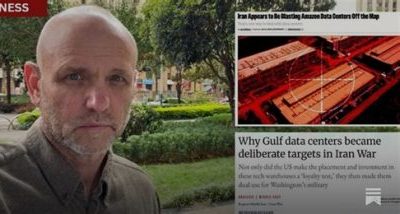
Iran spent $1 million to wipe out $30 billion in data center plans, and take down Amazon in the ME
or go to
Aletho News Archives – Video-Images
From the Archives
A short history of British torture
ICC | December 2005
When the House of Commons was debating how much to increase the time limit for detention without trial the question of torture came up. Officially this was limited to the nice considerations of whether it was all right to send people to places where torture is used and whether Britain can use information collected by the use of torture in other countries. This discussion gave an impression of democratic Britain as the home of civilised behaviour where the very idea of torture is repugnant to our legislators – unlike, say, the US with its secret CIA jails… In reality, the British state has a long history of using and developing a whole range of torture techniques. … continue
Blog Roll
 Aletho News
- Houthis Keep Advancing as the Red Sea Crisis Deepens
- Iran spent $1 million to wipe out $30 billion in data center plans, and take down Amazon in the ME
- Zionist billionaire pressure to silence Macklemore sparks exodus from Ed Sheeran tour
- House Votes to End Iran War for Third Time
- North Korea Slams US Plan for ‘AUKUS 2.0’ with South Korea and Japan
- Prolonging US-Iran Conflict Not Meeting Interests of Int’l Community – China’s Wang Yi
- EU bans former Zelensky aide from parliament
- NATO-backed Kosovo separatist ‘responsible for war crimes’
- US destroying international space law
- SCO Calls for Binding Global Deal to Prevent Arms Race in Space
- If Americans Knew
- U.S. Makes, Israel Takes: The Real Story of U.S.-Israeli Military Cooperation
- Night raids rise in Palestine
- Tucker Carlson interviews Norman Finkelstein about Gaza
- Groups urge Americans to support Van Hollen legislation on Israel’s killing of Americans & Palestinians
- Trump administration plans to send 40,000 tons of bombs to Israel: report
- Sanctions Target Iran’s Government, But Kill Hospitalized 23-Year-Old Woman
- An alternative view on the book “Israel’s Lobby: America in the Grip of a Foreign Power”
- Ed Sheeran’s band Beoga, other opening acts quit tour after Macklemore was dropped over his pro-Palestinian comments
- The assassination attempt on President Trump in Butler and the various Israeli connections to it
- “We Want That the Whole Land Be Jewish”
- No Tricks Zone
- New Study: ‘Global Drought Shows No Detectable Recent Acceleration Under Climate Warming’
- Economic Masterminds: German Socialists Suggest Taxing Productivity Gains Stemming From Using AI
- The South China Sea Has Not Been Cooperating With The Climate Change Narrative
- Energy Crisis: Germany Enters Heating Season With Historically Low Gas Reserve Fill Levels
- New Study: The Antarctic Ice Sheet Gained Mass From 2020-2024 Due To Staggering Snow And Ice Accumulation
- Study: Ocean Heating Rates From Thousands Of Years Ago ‘Dwarf’ Modern Ocean Heating Rates
- Climate Extremists Target, Attack Large-Scale Power Grid Infrastructure In Germany!
- New Study: Antarctic Ice Melt Has Contributed Less Than 1 Centimeter To Sea Level Rise In The Last 30 Years
- Fear Of Debate: Alarmist German Climate Scientist Calls On Mainstream Media To Discredit Skeptic Voices
- End-Of-August Arctic Sea Ice Extent Hasn’t Fallen In 20 Years, Official Data Show!
 Aletho News