Washington’s War in Ukraine: Narrowing Options, Growing Consequences
By Brian Berletic – New Eastern Outlook – November 29, 2024
Russia’s use of its Oreshnik intermediate-range ballistic missile in eastern Ukraine represents an unprecedented escalation in what began as a US proxy war against Russia in 2014.
The missile’s capabilities represent a serious non-nuclear means of striking targets anywhere in Europe without the collective West’s ability to sufficiently defend against it.
The possibility of the West now facing direct consequences for what has so far been a proxy war, may reintroduce rational thought across the West otherwise not required when spending the lives of others. It may, however, cause Western policymakers to double down, confident in the belief that they remain decoupled from any possible consequences despite unprecedented escalation.
The missile’s use is only the latest demonstration of Russia’s military and escalatory dominance amid the ongoing proxy war. It alone would be unable to significantly impact the fighting, but because the Russian Federation over the last two decades has invested deeply in the fundamentals of national defense, it compliments a range of other capabilities serving as a deterrence against continued Western encroachment.
Before the deployment of the Oreshnik, the progress of Russian forces along the line of contact in Ukraine had been accelerating, triggering panic across the capitals of Western nations. This was not achieved through any single “wonder weapon,” but through Russia’s post-Cold War strategy of preparing its military forces and its military industrial capacity to wage a large-scale, prolonged, and intense conflict against Western-backed forces building up along Russia’s borders.
This included the development and large-scale production of both simple and advanced weapons ranging from main battle tanks and other armored vehicles, to drones, cruise missiles, air defense systems, and electronic warfare capabilities.
Because Russia’s arms industry operates under state-owned enterprises prioritizing state needs over generating profit, the systems required in terms of both quality and quantity were made available. This was possible because surplus production capacity had been maintained across a large number of Russian arms production facilities. Excess labor and equipment that would have been slashed by private enterprise across the West to maximize profits was maintained if and when needed. Come February 2022, this excess capacity was utilized and has since been the central factor contributing to Russia’s growing success against NATO-backed forces in Ukraine.
The West, on the other hand, is suffering a growing military industrial crisis. Excess production capacity needs to be built from scratch, taking years or longer. Across the collective West, skilled labor shortages prevent assembly lines from being expanded significantly, even if the will and resources exist to do so. In all areas of production, from air defense missiles to artillery shells, the collective West is struggling to meet even the most meager production targets.
Washington, determined to prevail in Ukraine either outright or through severely overextending Russia amid this proxy war, has steadily escalated the conflict from 2014 when the US overthrew the elected government of Ukraine, to 2019 when the US began arming Ukrainian forces already being trained by NATO, to full-spectrum sanctions on Russia from 2022 onward, to the transfer of artillery, tanks, aircraft, and long-range missiles the US has now finally authorized strikes into Russia itself with.
Each escalation represents an attempt by Washington and its European proxies to inflict prohibitive costs on Russia. As each escalation falls far short of doing so, additional escalations are devised.
Recently, France and the UK have discussed the possibility of sending their own troops into Ukraine as yet another serious escalation of a war the collective West is already all but fighting against Russia directly.
It should be remembered that the US is also engineering crises elsewhere along Russia’s periphery, including Georgia as well as Syria, to similarly overextend Russia. Recent military operations carried out by US-backed extremists in Syria were likely prepared months in advance and launched as a substitute for the Westn’s own inability to overpower Russia in Ukraine.
Narrowing Options, Growing Consequences
Even without the Oreshnik’s appearance amid the ongoing conflict in Ukraine, it is clear that the West’s attempts to escalate versus Russia have fallen far short of extending Russia in the manner many Western analysts, politicians, and military leaders have hoped.
The wider geopolitical effect appears to be bolstering rather than undermining the shift from US-led unipolarism toward multipolarism.
Options for escalating are narrowing for the West. The deployment of Western forces in Ukraine would lead to the same problems Ukrainian troops themselves face – a lack of artillery shells, armored vehicles, and air defense systems to protect their forces from the 4,000+ missiles Russia has fired on Ukraine each year.
The Oreshnik itself represents a non-nuclear means of striking at any target either in Ukraine or across the rest of Europe. It would be a means by which to inflict serious damage on European and American military targets in the region, further reducing the West’s already dwindling military power. The missile, like many others in Russia’s growing arsenal, would be able to overcome Western air and missile defenses both because of fundamental flaws in their performance and because Western stockpiles of interceptors have been exhausted with no means of readily replenishing them.
Because the collective West’s military industrial capacity is so limited versus its overreaching pursuit of global primacy, the use of its military aviation, cruise missiles, and other existing capabilities can only be committed in one of at least three primary regions of focus – Europe, the Middle East, or the Asia-Pacific.
Were the US and Europe to commit significant forces to a direct conflict with Russia in Ukraine, even if it fell short of nuclear war, it would exhaust military power the West sought to preserve for potential war with either Iran and/or China. While there would be no guarantee that these capabilities would tilt the conflict in Ukraine back in their favor, it would guarantee that US-European ambitions in the Middle East and the Asia-Pacific would be forfeited indefinitely.
It could be that the US seeks to extend its proxy war against Russia in Ukraine across the rest of Europe, with the US itself preserving its military capabilities for its continued involvement in the Middle East and the Asia-Pacific. But the conflict in Ukraine has exposed fundamental flaws in the collective West’s system overall. A system incapable of collectively overpowering Russia, having exhausted itself in the process of trying, will have less fortune still overpowering a much larger and more capable China.
While the US may believe it improves its chances by shifting the burden of intervention in Ukraine to its European proxies, the US still suffers from a fundamental inability itself to produce the number of arms and ammunition required to fight a similar conflict in the Asia-Pacific.
The introduction of the Oreshnik, a capability China will also almost certainly be capable of producing if it does not already possess it – represents a further means of deterring the US and its proxies – a promise of non-nuclear consequences in a missile exchange the US and Europe would enter at a disadvantage. This, on top of a large and growing disparity in terms of military industrial capacity, confines US and European options to resorting to nuclear weapons or reformulating a more realistic and constructive foreign policy in the first place.
Because Russia and China possess their own large and growing stockpiles of nuclear weapons – the West’s use of such weapons really isn’t an option. But because the current circles of power in the West lack the military strength, intelligence, and moral fortitude to reformulate their foreign policy, from their point of view, they may believe in the possibility of a limited nuclear war they could emerge from with an advantage, believing this may be their only option. Thus, the notion of mutually assured destruction must be fully impressed upon the West now as it was during the Cold War, reintroducing the fear of personal consequences for policymakers so rational thought unnecessary when spending the lives of others can be reintroduced into the equation.
Brian Berletic is a Bangkok-based geopolitical researcher and writer.
Can Europe Return to Reason & Reverse Its Decline?
Jeffrey Sachs, Alexander Mercouris & Glenn Diesen
Glenn Diesen | Nov 27, 2024
I had a conversation with Jeffrey Sachs and Alexander Mercouris about the political changes in Europe. The optimism of the European project as a region of peace and prosperity is long gone. The objective had been to resolve conflicts on the continent peacefully and use collective bargaining power to establish greater economic and political independence. Instead, the continent is experiencing war, de-industrialisation, socio-economic and political instability, excessive dependence on the US, and growing irrelevance in the wider world. What went wrong and can the decline be reversed?
The rest of the world adjusts to the emerging multipolarity with a multivector foreign policy by diversifying economic connectivity to improve economic competitiveness and enhance political autonomy. In contrast, the Europeans have subordinated themselves completely to the US and thus suffer from economic decline and political subordination. Declining rationality is also a clear problem as the Europeans pursued policies towards Russia that they knew would put them on a collision course with Russia. Instead of pursuing course correction, the proxy war with Russia increased the security dependence on the US, which enabled Washington to impose bloc discipline. The recovery of Europe requires reversing the militarisation of dividing lines in Europe, and diversifying economic ties to avoid excessive dependence on any one state or region.
China Creates Coating Making Warplanes Invisible to Anti-Stealth Radars
Sputnik -25.11.2024
BEIJING – Chinese military scientists have developed a stealth material for aircraft and other defense equipment that minimizes their visibility for anti-stealth radars, Chinese media reported on Monday.
The South China Morning Post newspaper reported that the new material, unveiled by the National University of Defense Technology, can convert electromagnetic waves with wavelengths from 2.3 feet to 0.6 feet into heat, which effectively covers the operating bandwidths of most current anti-stealth radars, specifically the P-band and L-band.
The new material is lightweight, flexible and easy to produce in large quantities, making it suitable for covering aircraft or other weapon platforms requiring stealth capabilities, the newspaper said.
Scientists have said that the new material was cost-effective and could be used in various types of military equipment. They believe that this technology could become “the key for China to win future wars.”
China currently holds the majority of the world’s patents in metamaterials.
NATO admiral urges Western businesses to prepare for ‘wartime scenario’
RT | November 25, 2024
Businesses in NATO countries should prepare themselves for a “wartime scenario” and adjust their production lines and supply chains to be less vulnerable to blackmail by nations such as Russia and China, the outgoing chief of the US-led bloc’s military committee, Admiral Rob Bauer, said on Monday.
Speaking at a European Policy Center think-tank event in Brussels, he urged Western industries and businesses to implement deterrence measures.
“If we can make sure that all crucial services and goods can be delivered no matter what, then that is a key part of our deterrence,” Bauer argued.
“Businesses need to be prepared for a wartime scenario and adjust their production and distribution lines accordingly. Because while it may be the military who wins battles, it’s the economies that win wars,” the NATO official said. He mentioned China and Russia in the context of how he believes wars are waged in the economic sphere.
“We thought we had a deal with Gazprom, but we actually had a deal with [Russian President Vladimir] Putin,” he stated, apparently referring to the drop in Russian gas supplies to the EU, which took place after the escalation of the Ukraine conflict in 2022.
At the time, the EU declared that ending its reliance on Russian energy was a key priority, and many members voluntarily halted their imports, while supplies also plunged due to the sabotage of Russia’s Nord Stream pipelines.
American Pulitzer Prize-winning journalist Seymour Hersh blamed the sabotage on the CIA, alleging that the agency had carried out the attack under the direct orders of the White House – an allegation it has denied.
Bauer then extended his warning to China, claiming that Beijing could use its exports to NATO states and the infrastructure that it owns in Europe as leverage in the event of a conflict.
“We are naive if we think the [Chinese] Communist Party will never use that power. Business leaders in Europe and America need to realize that the commercial decisions they make have strategic consequences for the security of their nation,” the official claimed.
It is unclear what “wartime” Bauer is predicting in his statements.
NATO has long declared Russia to be a direct threat, and Western officials have repeatedly claimed that if Moscow is allowed to win the conflict in Ukraine, it could then attack other European countries. Russia has dismissed these claims as nonsense. Restrictions that Moscow introduced in trade with the West have largely come in response to unprecedented economic sanctions placed on the country in connection with the Ukraine conflict.
Beijing has also faced its share of trade barriers and restrictions introduced by Western states, and introduced similar measures in response. According to most experts, including many in the West, the sanctions policy has backfired on Western economies, leading to supply shortages and inflation.
The Pentagon is running out of missiles. After December 1, that will be a big problem.
Inside China Business | November 20, 2024
Protracted wars in the Middle East and Ukraine are draining the US arsenal of interceptor missiles. The problem is especially severe in Palestine and in the Red Sea, where dozens of missiles are launched monthly against incoming rockets and drones. Pentagon officials are urgently pushing weapons makers to produce more, but are bumping up against capacity and CAPEX constraints. In another blow, China just announced an export ban on dual-use metals that are critical to the manufacture of missiles and other aerospace applications in the defense sector. Magnesium and tungsten, in particular, are two key materials necessary for the production of missiles, but where China effectively has monopolized the refining and production. China’s export ban will take effect on 1 December.
Resources and links:
Wall Street Journal, Pentagon Runs Low on Air-Defense Missiles as Demand Surges https://www.wsj.com/politics/national…
Nikkei Asia, China to tighten export curbs on critical metals ahead of Trump’s return https://asia.nikkei.com/Spotlight/Sup…
Six Strategic Metals Widely Used in the Military Industry https://www.samaterials.com/content/s…
Magnesium in Defence https://www.magnium.com.au/defence-metal
Forbes, The Titanium Supply Chain For The Aerospace Industry Goes Through Russia https://www.forbes.com/sites/willyshi…
Abusing its veto power, the US is undoubtedly ‘humanitarian disaster creator’ in Gaza
Global Times | November 21, 2024
Once again, the US has positioned itself in opposition to the international community. On Wednesday, the US vetoed a UN Security Council resolution calling for a cease-fire in Gaza. This marks the fourth time the US has used its veto power on this issue, even as the death toll in Gaza now stands at around 44,000. The draft, put forward by the Security Council’s 10 non-permanent members, demanded an immediate, unconditional and permanent cease-fire, as well as the immediate and unconditional release of all hostages. Among the 15 members of the Security Council, the US was the sole opposing vote.
This US action once again raises the question: How many more innocent lives in Gaza must be lost to awaken Washington’s conscience? Now, nearly 44,000 people have been killed in Gaza, and the US still does not hesitate to use its veto.
Nearly all of Gaza’s 2.4 million residents have been displaced by the war, creating an unmeasurable humanitarian crisis. As a permanent member of the UN Security Council, the US is expected to shoulder the responsibility of maintaining global peace and stability. However, its actions – marked by the abuse of veto power – blatantly contradict global efforts to promote a peaceful resolution to the conflict.
The US’ approach to the Palestine-Israel conflict has left it isolated on the international stage. Even the US media outlet The New York Times has acknowledged that this underlines Washington’s diplomatic isolation on the issue. France and the UK’s UN ambassadors have also openly expressed dissatisfaction with the US veto. Nicolas de Riviere, France’s UN representative, stated unequivocally: “There is an obvious urgency to implement an immediate and unconditional cease-fire. This is the only way to guarantee the protection of all civilians and the massive and unhindered delivery of emergency aid.”
Niu Xinchun, executive director of the China-Arab Research Institute of Ningxia University, told the Global Times that there is no doubt that the US’ unwavering support for Israel has not only caused domestic divisions but also created rifts with its allies on the international stage, leaving the US increasingly isolated in the UN.
Washington repeatedly claims to defend human rights; yet, it appears indifferent to the situation in Gaza. While the international community agrees on the need for the unconditional release of all hostages and an immediate cease-fire, the US continues to insist on preconditions for a cease-fire – even as Israel’s military operations in Gaza have long exceeded the scope of rescuing hostages. This stance effectively gives the green light to prolong the war and condone the continued killing.
The US’ repeated vetoes are not only the greatest obstacle to achieving a cease-fire but also the root cause of the dysfunction within the UN Security Council. As the world’s most authoritative international body, the Security Council is expected to speak on behalf of the global community and push for resolutions that pressure both parties to end the conflict. However, the US’ abuse of veto power has left the Council unable to act effectively. This has become a recurring issue that not only severely undermines the credibility and effectiveness of the UN, but also further erodes global confidence in the US.
In the face of death, poverty, and a profound humanitarian crisis in Gaza, the US continues to turn a blind eye to the lives of these people. In the future, when history reflects on this period, questions will inevitably arise: Where are the “human rights” and “humanitarian values” that the US so often proclaims? Is it really that “Palestinian Lives Don’t Matter”? In this tragedy, the US has not only forfeited its leadership and credibility but also plunged its international image into ruin.
In the beginning was the Pax Americana
By Lorenzo Maria Pacini | Strategic Culture Foundation | November 21, 2024
We often speak of the collective West, Hegemon, Seapower and Civilization of the Sea in relation to the United States of America. It is necessary to understand well what is the origin of this geopolitically determinant power for the world order.
He who wins the war, dictates the rules
Let us make clear at once an empirically incontrovertible factual truth: He who wins the war, dictates the rules of the post-war order. Whoever wins, writes history. Whether we like it or not, the defeated never had much decision-making power (which is not to say that they could not organize well to retaliate and return to power – but that is another matter).
World War II ended with the victory of the United States of America as the first, undefeated and predominant power. From there followed an expansion of U.S. influence toto orbe terrarum in all respects (cultural, economic, military, political).
The twentieth century was the “American century.” Almost the whole world took the shape the U.S. wanted to give it. The second half of the century was marked by the low-tension conflict of the Cold War, which ended-if it really did-with the collapse of the Soviet political system in the USSR and the beginning of the unipolar phase of American global domination. That period aroused much optimism in the West for a new world order, marking the end of the military and ideological rivalry of the 20th century. Two possibilities were on the horizon: a system based on balance of power and egalitarian sovereignty, or a U.S.-led liberal hegemony based on the values of democracy. The first approach evoked perpetual conflict, while the second promised lasting peace and global stability.
U.S. hegemony, already dominant in the transatlantic region after World War II, was seen as a model of peace and prosperity. However, the collapse of the Soviet Union removed the justification for a world order built on the balance of power, pushing the United States toward a mission of recognized hegemony to prevent the rise of new rivals. American supremacy, as declared by Secretary of State Madeleine Albright, was deemed “indispensable to ensure global stability.”
This was the Pax Americana: the U.S. would ensure a period of prosperity and global peace – as early as the end of WWII – by extending control over the entire world. A peace for America was equivalent to a peace for the globe; a war for America would mean war for the entire globe. The stated goal of building a peaceful world often justified imperialistic approaches, revealing the contradictions of the hegemonic project.
Set this paradigm as an axiom of reasoning in international relations and geopolitical programming, lo and behold, everything acquired new meaning. The world had been formatted and the “control room” was now in Washington.
The time of ideologies
It was the time of ideologies. In the “short century” everything had changed rapidly. The great world chessboard was constantly being shaken and reshuffled. The clash between the Western bloc and the Eastern – or Soviet – bloc characterized all concepts of each country’s politics in an extremely powerful way.
In the 1990s, two visions dominated the debate on world order: that of Francis Fukuyama and that of Samuel Huntington. Fukuyama in his famous book The End of History, envisioned a future in which liberal democracy and capitalism would triumph universally, leading to perpetual peace under the leadership of the United States: he argued that economic interdependence, democratic reforms, and shared institutions would unite the world around common values, which were, of course, American values. Any other model of civilization would have been beside the point, because History was finished, there would be nothing left to write about. In contrast, Huntington, wrote The Clash of Civilizations, in which he predicted that the world would be fragmented into distinct cultural blocs based on civil, religious and economic identities. Individualism and human rights, according to him, were peculiar to the West and not universal. His theorizing assumed a future marked by conflicts between civilizations, fueled by the decline of Western hegemony and the emergence of alternative powers, particularly in Confucian and Islamic societies.
The influence of Fukuyama’s ideas shaped post-Cold War Western politics, justifying the expansion and exceptionalism of Pax Americana. Exceptionalism that has been one of the U.S.’s most pragmatic “values”: there are rules and only we can break them, when we want, how we want and without having to account to anyone.
History, however, does not have only one actor: other countries, such as Russia, have chosen to be fascinated by Huntington’s proposal – confrontational, certainly, but not already “final.” In Russia, this debate has deep roots, linked to the historical rivalry between Westernists and Slavophiles. In the 1990s, Russia initially tried to move closer to the West, but the West’s failure to include it reinforced the idea of a distinct Russian civilization, culminating in Vladimir Putin’s view that no civilization can claim to be superior.
A matter of ideologies, indeed, a low-profile but very high-value battle in which the steps of the new century that was beginning would be defined. These divergences highlighted the tension between universalist aspirations and distinctive cultural identities, defining the geopolitical conflicts of the 21st century.
Building Pax Americana at any cost
Washington promoted a world order based on the Pax Americana, a liberal hegemony that reflected the success of the peaceful and prosperous transatlantic system created by the United States during the conflict with the Soviet Union. It proposed to extend this model globally, citing as examples Germany and Japan, transformed from militaristic and imperialist nations into “peaceful”-or, rather, defeated-democracies under U.S. influence. But the success of these transformations had been made possible by the presence of a common adversary, Russia, and the history of Latin America suggested that U.S. hegemony was not always synonymous with progress and peace.
Charles Krauthammer described the post-Cold War period as a “unipolar moment,” characterized by American dominance, where the new Hegemon dictated the rules and the others had little choice. Although he recognized that a multi-participant set-up (today we can say “multipolarism”) would inevitably return, he believed it was necessary to exploit unipolarity to ensure temporary peace, avoiding a return to turbulent periods. There was a weakness, however: the United States was unlikely to voluntarily relinquish its dominant role, preferring instead to counter any threat by force, fueled by an obsession with its own historical greatness. It is a missile issue: whoever has it bigger, wins. Let us not forget that the U.S. invented the strategic concept of deterrence precisely by virtue of the atomic weapon it held, throwing the world into a climate of constant fear and risk in which we still live today.
It is equally true that many Americans wished for a dismantling of the U.S. empire, proposing a less interventionist foreign policy focused on domestic challenges: abandoning the role of superpower would allow the United States to strengthen its society by addressing economic, industrial and social issues. Walter Lippmann argued that a mature great power should avoid global crusades, limiting the use of power to preserve internal stability and coherence. Sort of like a “good hegemon.” But this has not been the case.
The notion of “good hegemon” has been criticized for the risk of corruption inherent in power itself. John Quincy Adams warned that the search for enemies to fight could turn the United States from a champion of freedom into a global dictator. Similarly, President Kennedy, in his 1963 speech at American University, opposed a Pax Americana imposed by arms, calling instead for a genuine and inclusive peace that would promote global human progress, which he called “The Peace of All Time.” An ideal that has faded into the oblivion of collective memory.
American hegemony is the sine qua non for having a Pax Americana. The universalism that characterizes this hegemony admits of no discounts. Inequality among global powers has been exploited as a pivot to increase U.S. profits and administrative expansion at the expense of weaker countries. Neoliberally speaking, there is no error in this. Everything is very consistent. The struggle of the strongest to destroy all the smallest. Not only the one who produces and earns the most wins, but the one who can maintain the power to produce and earn the most wins.
A hegemonic system needs internal stability without which it cannot subsist. A kingdom divided in itself cannot function. This applies to economics as well as politics. It is essential that the ideological paradigm does not change, that power can always be understood and transmitted, from leader to leader, as it has been successfully established. Because the “peace” of the ancient Romans was a peace given by the maintenance of political control to the very ends of the empire, which only came about through a solid military administration.
The Americans did not invent anything. To really control (realpolitik) one must have military control. In front of an atomic bomb, reasoning about political philosophies is worth little. The U.S. knows this very well and its concept of Pax has always been unequivocally based on military supremacy and the maintenance of it.
Something changed when with the first decade of the 2000s new poles, new civilization-states, began to appear that promoted alternative models of global life. The U.S. began to see its power wane, day by day, until today, where the West is worth less than the “rest of the world,” the U.S. no longer has its “exclusive” status, and we are not even so sure that it is then so strong that it can control the globe. The geometries change again. What Pax for what borders of what empire?
Is Trump ready to give up his Pax?
The crux of the question is, if imperialistic military supremacy is what has allowed the U.S. to maintain its dominance and this dominance is precipitating today, will the newly elected U.S. President Donald Trump really be ready to compromise the Pax Americana?
We are talking about a polymorphous compromise:
– Economically, he would have to accept the end of the dollar era and downsize the U.S. market on comparison with sovereign global currencies. Practically throw a century of global financial architecture in the trash.
– Politically, accept that it is possible to think otherwise and do otherwise. Politics is not just American “democracy.” There are so many possibilities, so many different models, so many futures to be written according to other scripts.
– Militarily, it means stopping with the diplomacy of arrogance and threats, accepting that we cannot arbitrarily decide how to deal with anyone and stop aiming missiles at the flags of other states.
– Most complicated and risky of all, all this means giving up peace within the United States. If the balances of power implemented externally are broken, those internally begin to falter and the organism undergoes remodeling.
Giving up the Pax Americana as it has been known does not mean that alternatives do not exist. The concept of “pax” is broad and can be interpreted differently by the American school. Taking this step, however, involves giving up a “tradition” of global power, having to go through the collapse of the entire U.S. domestic system and then rebuilding an alternative.
Make America Great Again will mean what? Restoring American hegemony in the world, or rebuilding America?
Germany threatens China with “consequences” for alleged drone supplies to Russia
By Patrick Poppel | November 20, 2024
The federal government is assuming greater Chinese involvement in the Ukraine war. On the sidelines of an EU meeting in Brussels, Foreign Minister Annalena Baerbock spoke of “Chinese drone support” for Russia and demanded: “This must and will have consequences.”
The European Union’s Foreign Service had previously confirmed that indications are currently being examined that China produces drones for Russia. An EU official said: “We have received reports from intelligence sources about the existence of a factory in China that produces drones that are supplied to Russia and used in the war against Ukraine.”
If direct cooperation between China and Russia in the field of military equipment is confirmed, sanctions could be imposed. According to diplomats, drone production is a joint project between Russia, China and Iran.
Lithuania’s Foreign Minister Gabrielius Landsbergis demanded that the EU react decisively. Europe should not show weakness because it is afraid of the Chinese reaction, said Landsbergis, referring to Europe’s dependence on raw materials from the People’s Republic.
Finland’s Foreign Minister Elina Valtonen said there could be no “business as usual” in trade with China if Beijing was compromising Europe’s security. A very anti-Chinese sentiment is clearly evident in all of these statements.
China rejects the allegations. With regard to arms exports, China has always taken a responsible stance and has never provided the parties to the conflict with lethal weapons, said a Chinese Foreign Office spokesman. China strictly controls drones for military purposes and those that can be used for civil and military purposes in accordance with the law.
However, this German advance against China must be clearly seen in the context of the current economic war. China is currently a major competitor against the German automotive industry. The fact that the German Foreign Minister in particular is demanding consequences is very interesting.
In this context, consequences mean that sanctions are required. Will such sanctions perhaps also affect the import of Chinese cars? Since the German automotive industry is currently in a major crisis, politicians must of course react.
The high energy prices in particular make it impossible for Germany to remain competitive against Chinese production. The EU and the USA are currently trying to compensate for the difference in production costs with punitive tariffs on the import of Chinese cars.
However, since an even larger difference is now foreseeable due to Europe’s difficult economic situation, these punitive tariffs can only be viewed as a first step. The only way to protect the internal market for cars in the long term would be to stop imports of cars from China.
However, such a situation can only be achieved with sanctions. The current discussion is clearly heading in this direction, but the question is whether the actors in European politics are prepared to follow this path to the end.
Maybe people are just speculating about a warning against China. But in this context, politicians in Europe are too short-sighted. It can be assumed that China is adequately prepared for any economic punitive measures from Europe.
In contrast to companies in Europe, China has been much more successful in finding new markets. For example, due to European sanctions, Russia is quickly becoming a large market for many Chinese companies. This is particularly evident in the automotive industry.
The current discussion about the unproven delivery of drones to Russia is an attempt to take the next step in the economic war against China. And as is usually the case with decisions in European politics, this can immediately become a shot in the foot.
This reality is clearly visible in the example of the sanctions against Russia, as we can analyze it based on the state of German industry. Furthermore, attempting to defend one’s own market with punitive tariffs and sanctions is a sign of weakness.
German politicians have managed to bring the growth of the German economy to a standstill and forecasts even speak of a negative development. The German automobile industry will be overtaken by Chinese cars and this trend will most likely not change in the next few years.
After the next federal election, a new government in Germany must take care of repairing the damage caused to the German economy. The time of the German “economic miracle” from the 1950s, which made Germany a top location for the automobile industry, is over. This reality must be understood by those responsible. The attempts to punish China for its success show that there are currently no other strategies to save the German automotive industry.
Patrick Poppel is an expert at the Center for Geostrategic Studies (Belgrade).
Saudi Arabia to expand teaching of Chinese language with 800 more teachers amid growing demand
MEMO | November 18, 2024
Saudi Arabia is set to expand the teaching of the Chinese language by creating 800 teaching positions, amid the growing demand for learning the Chinese language in the Kingdom.
According to China’s official news agency, Xinhua, the planned appointment of the 800 new teaching roles aligns with the spread of Chinese language classes across Saudi Arabia’s primary and middle schools.
The move follows the recent successful deployment of 175 Chinese language teachers in the Kingdom, who reportedly began teaching last month. It is part of a landmark agreement struck in 2023 between Riyadh and Beijing in an effort to strengthen bilateral cooperation in language education.
Under that agreement, Saudi Arabia’s Ministry of Education collaborated with China’s Centre for Language Education and Cooperation in launching training programs for educators, conducted at Tianjin University in China, with the aim to equip teachers with the necessary skills.
The increased language cooperation between the two countries is part of the wider expansion in their relations across a variety of sectors, including trade, military, technology and energy.
Against Rubio
By Connor Freeman | The Libertarian Institute | November 17, 2024
Marco Rubio’s foreign policy vision is the antithesis of America First as he advocates for wars and increased military spending in Ukraine, the Middle East, and the Asia-Pacific. During the 2015/2016 GOP presidential primaries, Rubio was a fervent supporter along with Hillary Clinton, of a no-fly-zone in Syria which could have sparked World War III. “The United States should work with our allies, both Arab and European, to impose a no-fly zone over parts of Syria,” Rubio said.
Rubio has been on the America Last side of every foreign policy issue since he took office, he was a strong supporter of Hillary Clinton’s disastrous regime change war in Libya and he opposed Barack Obama’s modest troop withdrawal in Afghanistan after his surge accomplished nothing besides making the Taliban stronger and getting more American soldiers killed.
More recently, Rubio has insisted that Israel should attack Iran “disproportionately” which is a direct call for an all out war with Iran and risks the safety of US troops in the region.
Rubio co-authored an amendment to the 2024 NDAA with Senator Tim Kaine, Hillary Clinton’s former running mate, that would prevent Donald Trump or any future president from exiting the free-riding, war-seeking NATO alliance without Senate approval or an Act of Congress.
Regarding Beijing, he has boasted, “We need a military focused on blowing up Chinese aircraft carriers.”
Moreover, Rubio supports keeping American troops in harm’s way in Iraq indefinitely and even opposed repealing the outdated 2002 AUMF which unconstitutionally authorized the catastrophic Iraq War. Likewise, he backs the open-ended illegal US occupation of roughly a third of Syria, launched by Obama, which Trump attempted to end and finally bring our troops home.
Featured Video
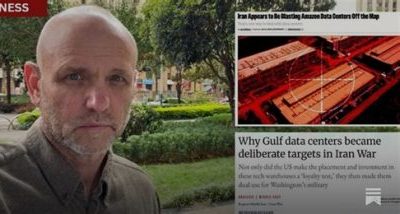
Iran spent $1 million to wipe out $30 billion in data center plans, and take down Amazon in the ME
or go to
Aletho News Archives – Video-Images
From the Archives
A short history of British torture
ICC | December 2005
When the House of Commons was debating how much to increase the time limit for detention without trial the question of torture came up. Officially this was limited to the nice considerations of whether it was all right to send people to places where torture is used and whether Britain can use information collected by the use of torture in other countries. This discussion gave an impression of democratic Britain as the home of civilised behaviour where the very idea of torture is repugnant to our legislators – unlike, say, the US with its secret CIA jails… In reality, the British state has a long history of using and developing a whole range of torture techniques. … continue
Blog Roll
 Aletho News
- Houthis Keep Advancing as the Red Sea Crisis Deepens
- Iran spent $1 million to wipe out $30 billion in data center plans, and take down Amazon in the ME
- Zionist billionaire pressure to silence Macklemore sparks exodus from Ed Sheeran tour
- House Votes to End Iran War for Third Time
- North Korea Slams US Plan for ‘AUKUS 2.0’ with South Korea and Japan
- Prolonging US-Iran Conflict Not Meeting Interests of Int’l Community – China’s Wang Yi
- EU bans former Zelensky aide from parliament
- NATO-backed Kosovo separatist ‘responsible for war crimes’
- US destroying international space law
- SCO Calls for Binding Global Deal to Prevent Arms Race in Space
- If Americans Knew
- U.S. Makes, Israel Takes: The Real Story of U.S.-Israeli Military Cooperation
- Night raids rise in Palestine
- Tucker Carlson interviews Norman Finkelstein about Gaza
- Groups urge Americans to support Van Hollen legislation on Israel’s killing of Americans & Palestinians
- Trump administration plans to send 40,000 tons of bombs to Israel: report
- Sanctions Target Iran’s Government, But Kill Hospitalized 23-Year-Old Woman
- An alternative view on the book “Israel’s Lobby: America in the Grip of a Foreign Power”
- Ed Sheeran’s band Beoga, other opening acts quit tour after Macklemore was dropped over his pro-Palestinian comments
- The assassination attempt on President Trump in Butler and the various Israeli connections to it
- “We Want That the Whole Land Be Jewish”
- No Tricks Zone
- New Study: ‘Global Drought Shows No Detectable Recent Acceleration Under Climate Warming’
- Economic Masterminds: German Socialists Suggest Taxing Productivity Gains Stemming From Using AI
- The South China Sea Has Not Been Cooperating With The Climate Change Narrative
- Energy Crisis: Germany Enters Heating Season With Historically Low Gas Reserve Fill Levels
- New Study: The Antarctic Ice Sheet Gained Mass From 2020-2024 Due To Staggering Snow And Ice Accumulation
- Study: Ocean Heating Rates From Thousands Of Years Ago ‘Dwarf’ Modern Ocean Heating Rates
- Climate Extremists Target, Attack Large-Scale Power Grid Infrastructure In Germany!
- New Study: Antarctic Ice Melt Has Contributed Less Than 1 Centimeter To Sea Level Rise In The Last 30 Years
- Fear Of Debate: Alarmist German Climate Scientist Calls On Mainstream Media To Discredit Skeptic Voices
- End-Of-August Arctic Sea Ice Extent Hasn’t Fallen In 20 Years, Official Data Show!
 Aletho News