Leaked Pentagon documents about Chinese balloons only expose US’ purpose to press, coerce China: experts
By Xu Yelu | Global Times | April 16, 2023
Regardless of the authenticity of the leaked documents purportedly revealing details of four Chinese “balloons,” the purpose of the US’ continuous hyping of the incident is to create a consensus of fear toward China among Americans, and to hype so-called China’s lack of respect to the US in the international community, experts said on Sunday.
According to The Washington Post on Saturday, a document produced by the US National Geospatial-Intelligence Agency dated February 15 contains the most detailed government assessment to date of three Chinese airships.
Citing intelligence analysts, the US media outlet assessed that one of the “balloons” that flew over the US in February could generate enough power to operate “any” surveillance and reconnaissance technology, including a type of radar that can see at night and through clouds and thin materials.
However, Chinese military experts said that some of the content mentioned in this leaked document cannot be counted as so-called evidence, but rather serves the political purpose of the US to continue hyping the so-called threat of China’s civilian unmanned airship, while exaggerating the military use of Chinese civilian airship.
Using high altitude balloons for scientific research activities has become an international norm, with data from the China Science Daily showing that by 2018, the US had released more than 2,000 high altitude balloons, France around 3,000, and Japan more than 800.
Civilian balloons include two categories. Some are released by scientific research units for purposes that include monitoring atmospheric circulation and meteorological detection, and the other comes from companies, such as Google, which use balloons for navigation and communication, Chinese military expert Song Zhongping told the Global Times on Sunday.
In the leaked classified documents published by The Washington Post, it assessed that the solar panels on one balloon could generate upward of 10,000 watts of solar power, more than enough to operate any surveillance capability, including synthetic aperture radar.
However, experts said that the mention of solar panels can only illustrate the good quality, cost-effectiveness, and energy storage efficiency of China’s solar panels. “The US’ ‘free’ advertisement for China’s solar panels allows more countries around the world to recognize that China’s solar panels perform very well,” Song said.
In addition, experts pointed out that the leaked documents only reflect that the US is an untrustworthy country that cannot keep secrets. “Who would dare believe and engage with a country that can’t keep secrets? This is a vivid portrayal of the loss of credibility of the US in the world, especially among its allies,” Li Haidong, a professor at the China Foreign Affairs University, told the Global Times.
According to the provisions of the Convention on International Civil Aviation (Chicago Convention), the civilian unmanned airship has the same legal status as civil aircraft. It is clear that the US has not obtained any evidence, only speculation that the solar panel is providing power to remote sensing equipment, which is completely unfounded, experts said.
At the same time, the Financial Times published an article entitled “China stalls Antony Blinken’s Beijing visit over ‘spy balloon’ concerns” on Saturday, alleging that China is refusing to let US Secretary of State Antony Blinken visit Beijing over concerns that the FBI will release the results of an investigation into the downed suspected Chinese “spy balloon.”
The US has always tried to impose pressure on China before high-level US officials’ visit to force concessions from China in communication with the US, experts said. Even if there were no balloon incidents, there would be other incidents.
This approach demonstrates that the US lacks sincerity in handling its relationship with China and is an attempt to force China to cave in by coercion, threats, and intimidation, Li said. The US’ intention to link the “balloon incident” to Blinken’s postponed visit to China is to shift blame onto China for all the problems, obstacles or inconveniences in China-US relations.
“The whole thing is a shameful event directed by the US, which exposes the US’ true intentions of creating chaos in China-US relations and regional security. This is both sinister and pathetic,” Li said.
China releases position paper on Afghan issue to help reconstruction
Regional countries expect China to play a more active role: expert
By Liu Xin and Ding Yazhi – Global Times – April 12, 2023
China released an 11-point paper to fully elaborate its position on the Afghan issue and express firm support for the reconstruction of the war-torn country on Wednesday – the same day as Chinese State Councilor and Foreign Minister Qin Gang started a two-day visit to Uzbekistan where he will also attend the fourth Foreign Ministers’ Meeting among the Neighboring Countries of Afghanistan in Samarkand.
Analysts noted that China is taking concrete measures to push further coordination on the Afghan issue and together with regional countries to help with Afghanistan’s reconstruction and revitalization.
The paper, titled “China’s Position on the Afghan Issue,” lists China’s adherence to the “Three respects” and “Three nevers,” as the first point. These are respect for Afghanistan’s independence, sovereignty and territorial integrity, to respect the independent choices made by the Afghan people, and to respect the religious beliefs and national customs of Afghanistan. China never interferes in Afghanistan’s internal affairs, never seeks selfish interests in Afghanistan and never pursues so-called sphere of influence.
Afghanistan is in a crucial period of moving from turbulence to stabilization. To fully outline China’s policy and propositions in a systematic way and build consensus and synergy among countries in the region and elsewhere on stabilizing and helping Afghanistan, the foreign ministry released China’s Position on the Afghan Issue, Chinese Foreign Ministry spokesperson Wang Wenbin said at a press conference on Wednesday.
Wang noted that the fourth Foreign Ministers’ Meeting among the Neighboring Countries of Afghanistan will be held in Samarkand on Thursday and China is willing to work with neighboring countries to help Afghan to walk on the path for stable development and to realize regional peace and prosperity.
State Councilor and Foreign Minister Qin will attend the fourth Foreign Ministers’ Meeting among the Neighboring Countries of Afghanistan in Samarkand, Uzbekistan and visit Uzbekistan from Wednesday to Thursday, according to information from the Foreign Ministry.
Observers said that the paper on the Afghan issue came on the heels of a 12-point positon paper on Ukraine crisis which was released in February, also highlighting China’s consistent stance in seeking and making peaceful solutions for heated geopolitical issues.
Qin will meet with the President of Uzbekistan Shavkat Mirziyoyev and hold talks with Acting Foreign Minister Bakhtiyor Saidov. They will exchange views on bilateral relations, high-level exchanges between the two sides and international and regional issues of shared interest, according to Foreign Ministry.
Qin’s visit will further deepen mutually beneficial cooperation and bilateral relations with Uzbekistan and Central Asian countries to inject stability in the region amid global spillover effects of the Ukraine crisis, analysts said.
The Wednesday paper which collectively and thoroughly elaborates China’s stance on the Afghan issue will help coordinate neighboring countries’ stance and push a different way from the West and the US in solving conflicts within Afghanistan through political dialogue, Zhu Yongbiao, director of the Center for Afghanistan Studies at Lanzhou University, told the Global Times on Wednesday.
The international community, especially regional countries, expect China to play a more active role on the Afghan issue given its selfless assistance to Afghanistan people, Zhu noted.
The third Foreign Ministers’ Meeting among the Neighboring Countries of Afghanistan was held in Tunxi, East China’s Anhui Province in 2022 and foreign ministers or high-level representatives from China, Iran, Pakistan, Russia, Tajikistan, Turkmenistan, and Uzbekistan drafted a joint statement and an initiative in pooling resources and coordinating to increase their support for Afghanistan, analysts said.
The paper released on Wednesday showcases China’s efforts in promoting mechanism of the foreign ministers of Afghanistan neighboring countries a step forward to bring more light to Afghanistan reconstruction, Hu Shisheng, director of the Institute for South Asian Studies at the China Institutes of Contemporary International Relations, told the Global Times.
Hu noted that currently, Afghanistan is facing new historical changes – after the withdrawal of the US and Western troops, the country has seen no proxy wars and more autonomy.
However, the situation is fragile and can be reversed at any time. And the sanctions imposed by the US and the West are squashing Afghanistan’s chances of future development. While China and regional countries are working to help Afghanistan regain the capability to revitalize itself, the US and Western countries should also take their due responsibility, said Hu.
The Wednesday paper urged the US to live up to its commitments and responsibilities to Afghanistan and noted that “by seizing Afghanistan’s overseas assets and imposing unilateral sanctions, the US, which created the Afghan issue in the first place, is the biggest external factor that hinders substantive improvement in the humanitarian situation in Afghanistan.”
Zhu noted that more efforts from the international community are required given the current problems in Afghanistan, including the Afghan Taliban interim government’s ban on women’s access to education, domestic and regional measures on countering terrorism and Afghanistan’s fight against narcotics.
All these topics will be discussed on Thursday during State Councilor and Foreign Minister Qin and other foreign ministers’ meeting from neighboring countries, said Zhu, noting that a stable Afghanistan not only fits the interests of Afghanistan people but will also contribute to regional stability, creating favorable conditions for countries in the region to seek better development.
America faces a two-front war: Russia-China alliance moving ahead at great speed
By Gilbert Doctorow | April 14, 2023
Today China officially announced the visit of their Minister of Defense Li Shangfu to Russia on Sunday for three days of consultations with his Russian counterpart Sergei Shoigu and also with Russia’s senior military command in charge of the war operations in Ukraine.
Li Shangfu took his present post a little over a month ago following the re-election of Xi Jinping to the presidency and a reshuffling of ministerial portfolios. It was particularly noteworthy that Li has been on the U.S. sanctions list since 2018 for alleged cooperation with Russia.
The sense of this visit was interpreted by expert panelists on the news and analysis program Sixty Minutes earlier today as follows: to inform the Chinese leadership of what has been learned by the Russian command from the 14 months of war in Ukraine.
What is the relevance of Russia’s on the ground experience? Although armchair generals in the West were very quick to fault Russia with making serious mistakes and showing unpreparedness in the first phase of the war, the reality is that since WWII no major power has been engaged in a peer-to-peer war entailing vicious fighting on the ground without enjoying command of the skies. That is what we see in Ukraine today. The United States has had no such experience. Nor has China.
The Russians now have a lot to tell their Chinese friends about the latest NATO military tactics and about the U.S. and European hardware that is being given its baptism by fire in direct engagement with themselves. The capture of a German Leopard tank in battle near Kherson yesterday is just one of many war trophies that the Russians can lend out.
Will such sharing of information critically important to China as it examines the possibility of a similar armed conflict with the United States and its proxies over Taiwan be cost free? Of course not. We may take it as a given that during the visit of Li to Russia, he and the Russians will be planning further steps to turn their strategic partnership into something more closely resembling a full-blown military alliance with mutual security obligations.
Meanwhile the Russian Pacific fleet is now on full alert and performing exercises to repel an unidentified potential aggressor. A gentle hint as to who this aggressor might be is the fact that particular attention is being given to maneuvers around the Kurile Islands, over which Japan has territorial claims. Though the subject is not much discussed in our mainstream media, the Russians consider the Japanese navy to be a formidable force. Japan is one of the key allies in the “Pacific NATO” that the U.S. is currently building to contain China and, as needed, to fight a big war against Beijing.
Also worth noting is that last week the Chinese military response to the meetings in California by Taiwan president Tsai Ing-wen with Speaker of the House Kevin McCarthy was to simulate an air and sea blockade of Taiwan. This in turn elicited a call by the ever inflammatory Senator Lindsey Graham (R – South Carolina) for the U.S. to disrupt the flow of oil from the Middle East to China in the event of a blockade being imposed on Taiwan. If anything can hasten the signing of a full military alliance between Russia and China, it is precisely that threat.
All of the foregoing latest developments necessarily raise a question that was not discussed on Russian television but which is highly timely for Americans to deal with on their own: whether the Biden Administration, by its ongoing reckless foreign and military policy that is headed towards an unwinnable two-front war, is not betraying the security interests of the United States. I leave it to legal experts whether that would constitute an impeachable offense.
©Gilbert Doctorow, 2023
China reiterates Ukraine stance
RT | April 14, 2023
Beijing will continue promoting peace talks to settle the conflict between Russia and Ukraine, Chinese Foreign Minister Qin Gang said during a joint press conference with his German counterpart Annalena Baerbock on Friday.
“One point I want to emphasize is that China’s role in the Ukraine issue, our proposition, boils down to one point, that is, to persuade and promote talks,” Qin told journalists in Beijing on Friday.
All sides involved in the conflict should remain “objective and calm” in order to find a solution to the crisis, he added. According to the minister, the Chinese authorities “won’t do anything to add fuel to the fire” in Ukraine.
Qin also rejected Western claims that Beijing is supplying or planning to supply arms to Russia amid the fighting.
“Regarding the export of military items, China adopts a prudent and responsible attitude,” he insisted, adding that the country “will not provide weapons to relevant parties of the conflict, and manage and control the exports of dual-use items in accordance with laws and regulations.”
Baerbock, for her part, stuck to the Western line that Beijing should put pressure on Moscow to bring the fighting in Ukraine to an end.
“It’s good that China has signaled its commitment to a solution, but I have to say frankly that I wonder why the Chinese position so far does not include a call on the aggressor Russia to stop the war,” she said.
Russian President Vladimir Putin “would have the opportunity to do so at any time, and the people in Ukraine would like nothing more than to finally be able to live in peace again,” the German foreign minister said.
Chinese Foreign Ministry spokesperson Wang Wenbin also said on Friday that Qin made it clear to Baerbock during their talks “that the only way to resolve the Ukrainian crisis is to promote the peace process and negotiations.”
Since the outbreak of the conflict in Ukraine last February, Beijing has been reluctant to give in to Western pressure to condemn Russia or join the international sanctions against it. Instead, the neighbors have boosted political and economic cooperation, which they both now describe as “strategic.” Moscow and Beijing signed dozens of deals in various areas when Chinese President Xi Jinping visited Russia last month.
Chinese Foreign Ministry Calls on US to Explain Military-Biological Activities Abroad

Sputnik – 12.04.2023
BEIJING – China has called on the United States to explain its military-biological activities abroad and observe its international obligations, Chinese Foreign Ministry spokesman Wang Wenbin said on Wednesday.
Earlier in the day, Russia’s upper house approved the final report of a parliamentary commission on the US biological program in Ukraine. The lower house approved the document on Tuesday. The paper is a result of the commission’s one-year investigation.
“We reiterate our calls on the United States to faithfully observe their international obligations and provide comprehensive explanations on its military-biological activity within the country and abroad,” Wang told a press conference.
According to Konstantin Kosachev, deputy speaker of Russia’s upper house of parliament, there are at least 30 US biological laboratories in Ukraine. The official also said that that the Pentagon was the main commissioner of studies at such laboratories, which may be used for military purposes, including against Russia.
The war, the separation of the world, or the end of an Empire?
By Thierry Meyssan | Voltaire Network | April 11, 2023
Many are those who predict a World War. Indeed, some groups are preparing for it. But the States are reasonable and, in fact, consider rather an amicable separation, a division of the world into two different worlds, one unipolar and the other multipolar. Perhaps we are actually witnessing a third scenario: the “American Empire” is not struggling in the trap of Thucydides; it is collapsing like its former Soviet rival died.
The American “Straussians,” the Ukrainian “integral nationalists,” the Israeli “revisionist Zionists” and the Japanese “militarists” are calling for a generalized war. They are alone and they are not mass movements. No state has yet committed itself to this course.
Germany with 100 billion euros and Poland with much less money are rearming massively. But neither of them seems eager to take on Russia.
Australia and Japan are also investing in armaments, but neither of them has an autonomous army.
The United States is no longer able to replenish its military and is no longer able to create new weapons. They are content to reproduce the weapons of the 1980s in an assembly line fashion. However, they maintain their nuclear weapons.
Russia has already modernized its armies and is organizing itself to renew the ammunition it uses in Ukraine and to mass produce its new weapons, which no one can compete with. China, for its part, is rearming to control the Far East and, in the long term, to protect its trade routes. India thinks of itself as a maritime power.
It is therefore difficult to see who would and could start a World War.
Contrary to their speeches, French leaders are not at all preparing for a high-intensity war [1]. The military programming law, established for ten years, plans to build a nuclear aircraft carrier, but reduces the size of the army. It is a question of giving ourselves the means of projection, but not of defending our territory. Paris continues to reason as a colonial power while the world is becoming multipolar. It is a classic: the generals prepare for the previous war and ignore the reality of tomorrow.
The European Union is implementing its “Strategic Compass”. The Commission coordinates the military investments of its member states. In practice, they all play the game, but pursue different goals. The Commission, on the other hand, is trying to take control of decisions on the financing of armies, which until now have depended on their national parliaments. This would make it possible to build an empire, but not to declare a generalized war.
Clearly everyone is playing a game, but apart from Russia and China, none is preparing for a high-intensity war. Rather, we are witnessing a redistribution of the cards. This month, Washington is sending Liz Rosenberg and Brian Nelson, two specialists in unilateral coercive measures [2], to Europe with the mission of forcing the Allies to comply. In the words of former President George Bush Jr. during the war “against terrorism”: “Whoever is not with us is against us”.
Liz Rosenberg is efficient and unscrupulous. She is the one who brought the Syrian economy to its knees, condemning millions of people to poverty because they dared to resist and defeat the Empire’s surrogates.
The Hollywood western discourse a la George Bush Jr. of good guys and bad guys has failed with Türkiye, which has already experienced the 2016 coup attempt and the 2023 earthquake. Ankara knows that it has nothing good to expect from Washington and is already looking to the Shanghai Cooperation Organization. Yet the same discourse should succeed with the Europeans, who remain fascinated by the power of the United States. Of course this power is in decline, but so are the Europeans. No one has learned any lessons from the sabotage of the Russian-German-French-Dutch gas pipelines, North Stream. Not only did the victims take the blame without saying anything, but they are about to receive further punishment for crimes they did not commit.
The world should therefore be divided into two blocs, on the one hand the US hyperpower and its vassals, on the other the multipolar world. In terms of the number of states, this should be half and half, but in terms of population, only 13% for the Western bloc against 87% for the multipolar world.
The international institutions can no longer function. They should either fall into lethargy or be dissolved. The first examples that come to mind are the effective exit of Russia from the Council of Europe and the empty seats of Western Europeans in the Arctic Council during the year of the Russian presidency. Other institutions are no longer relevant, such as the Organization for Security and Cooperation in Europe (OSCE), which was supposed to organize East-West dialogue. Only the attachment of Russia and China to the United Nations should preserve them in the short term, as the United States is already thinking of transforming the Organization into a structure reserved exclusively for the Allied Nations.
The Western bloc should also reorganize itself. Until now, the European continent was dominated economically by Germany. In order to be certain that Germany would never get closer to Russia, the United States wanted Berlin to be content with the western part of the continent and leave the center in the hands of Warsaw. So Germany and Poland armed themselves to impose themselves in their respective zones of influence, but when the American star faded, they would fight against each other.
When the Soviet Empire fell, it abandoned its allies and vassals. Having seen its inability to solve the problems, the USSR first stopped supporting Cuba economically, then dropped its vassals of the Warsaw Pact, and finally collapsed on itself. The same process is beginning today.
The first U.S. Gulf War, the 9/11 attacks and their host of wars in the broader Middle East, the expansion of Nato and the Ukrainian conflict will have offered only three decades of survival to the American Empire. It was backed by its former Soviet rival. It has lost its raison d’être with its dissolution. It is time for it to disappear too.
Translation: Roger Lagassé
Taiwan in the age of Neo-McCarthyism
By Drago Bosnic | April 10, 2023
McCarthyism, otherwise known as the so-called (Second) “Red Scare”, is officially defined as “the repression and persecution of left-wing individuals and a campaign spreading fear of alleged communist and socialist influence on American institutions and of Soviet espionage in the United States during the late 1940s through the 1950s”. The policy was spearheaded by a Republican US Senator Joseph McCarthy, but while he was the most prominent proponent of this internal (and foreign) policy approach, he most certainly wasn’t the only one. And although the term McCarthyism is largely considered obsolete and/or outdated nowadays, as the role of one individual in such a massive nationwide policy framework is obviously overstated, it stuck and now even includes additional definitions and changes.
The McCarthyism of our age can certainly be dubbed Neo-McCarthyism, as it includes more than just the ideological rejection of non-Western ideas and is now targeting anything remotely connected to countries such as China, Russia, Iran, Venezuela, Syria, etc. This is especially true when it comes to Beijing, which Neo-McCarthyists see as the “source of all evil”, turning their emotional reaction into disastrous policies that make the geopolitical situation a lot worse.
One particularly obvious example of this is Taiwan, China’s breakaway island province currently under US patronage. However, Beijing is actively pushing back against threats from the US and its numerous vassals and satellite states in the region, despite Washington DC’s constant attempts of a crawling invasion so as to undermine China’s national interests and security in seas surrounding the country.
On April 5, Taiwanese president Tsai Ing-wen made a stopover visit to Los Angeles after a tour to Latin America to visit Guatemala and Belize, its only remaining official allies in an attempt to stop the repeat of the recent episode when Honduras finally cut ties with Taipei and opted for Beijing instead. Tsai also met with senior security officials on Tuesday to discuss the “regional situation” ahead of her meeting with US House Speaker Kevin McCarthy in California, which China had once again warned against.
“China is strongly opposed to the US arranging for Tsai Ing-wen to transit through its territory, and is strongly opposed to the meeting between House Speaker Kevin McCarthy, the third-ranking US official, and Tsai Ing-wen,” Foreign Ministry spokesperson Mao Ning stated, adding: “It seriously violates the One-China principle and the three China-US joint communiques, and seriously undermines China’s sovereignty and territorial integrity.”
And yet, Taipei enjoys strong bipartisan support in the US, one of the very few unifying factors in Congress as Washington DC increasingly sees China as its primary adversary. McCarthy had originally even planned to visit Taiwan himself, but has opted instead to meet Tsai in the US. Some analysts saw this as sort of a “compromise” that wouldn’t be seen as escalatory as a direct visit to Taipei. However, McCarthy’s comments on a future visit to Taiwan effectively invalidated this view, while China slammed it as yet another form of US meddling in its internal affairs.
The behind-closed-doors meeting makes McCarthy the highest-ranking US official to have met a Taiwanese president on US soil since 1979 when America officially established diplomatic relations with China, effectively recognizing Beijing’s “One-China policy”. China’s strong reaction to the meeting is certainly expected, as it has repeatedly warned against such high-profile visits, stressing that they aren’t just against international law, but are also deeply destabilizing and harmful to Beijing’s national interests in the Asia-Pacific.
However, while the US officially doesn’t maintain diplomatic relations with Taiwan, it de facto does. Worse yet, Washington DC has been actively arming Taipei for decades and has even recently escalated this with promised deliveries of advanced weapons, including SAM (surface-to-air missile) systems and anti-ship missiles, obviously aimed against China’s potential amphibious combined arms operation to restore its full sovereignty.
For his part, Kevin McCarthy, a Republican, has been outspoken in his criticism of China. True to his last name, in December he stated that “the greatest threat to the United States is the Chinese Communist Party”. Considering the fact that he’s the third highest ranking US official and second in line for the US presidency, such statements are a borderline declaration of war, to say nothing of McCarthy’s continued support for additional arms sales to Taipei.
As previously mentioned, he also reiterated the strong possibility of visiting Taipei and stressed the need for arming China’s breakaway island province by saying: “I don’t have any current plans, but that doesn’t mean I will not go… …Based on our conversations, it’s clear that several actions are necessary. First, we must continue the arms sales to Taiwan and make sure such sales reach Taiwan on a very timely basis. Second, we must strengthen our economic cooperation, particularly with trade and technology. Third, we must continue to promote our shared values on the world stage.”
Strangely enough, while insisting on further arms deliveries, McCarthy also stated that “tensions in this world are at their highest point since the end of the Cold War, as authoritarian leaders seek to use violence and fear to provoke needless conflict”. This is an obvious reference to Russian President Vladimir Putin and his Chinese colleague Xi Jinping, who recently held a historic meeting in Moscow, something the US wasn’t too happy about, which somewhat explains Washington DC’s frustrations.
Drago Bosnic is an independent geopolitical and military analyst.
US efforts to ban TikTok are pure projection by the world’s biggest spy power
By Timur Fomenko | RT | April 4, 2023
As the United States contemplates a possible ban on TikTok, it relentlessly accuses Beijing of using the popular Chinese-owned social media application as a means of espionage, claiming that the Communist Party has access to user data.
Ironically, Washington itself is known to be doing exactly what US politicians are accusing China of doing. Using the unique advantage of having jurisdiction over the world’s top internet companies, the US has given itself the right to look into the private communications of foreign citizens anywhere in the world. Combine that data-sharing between intelligence agencies of the US and its allies, and you get the most comprehensive espionage regime in the world.
While American politicians and media constantly talk about fears of Chinese espionage, the near-absence of coverage of Washington’s own spying efforts ought to be a reminder of where the true power lies. When it comes to the shady activities of the CIA and the NSA, the public tends to only learn what they did years later from declassified documents, or what they “have been doing all along” from rare whistleblowers like Edward Snowden. All discussion and speculation about what they “may be doing right now” tends to be dismissed as conspiracy theories. Conversely, allegations of Chinese spying activities are constantly explained as “we all know they’re doing it” in the public eye, despite the lack of solid proof.
These warning signs remind us that the most cryptic source of all spying in the world is not China, but the US. Since the Second World War, the US has, in conjunction with Australia, Canada, New Zealand and the United Kingdom, maintained a worldwide spying regime known as the ‘Five Eyes’ which, in the age of mass communications, has been designed so that each government can bypass its own privacy laws and judicial restraints in order to spy on each other’s citizens, while supplying information within the group. In doing so, they have created a number of communication interception and surveillance programs, as revealed by Snowden, such as PRISM, ECHELON, XKEYSCORE, etc.
Of course, the US nearly holds a monopoly over the means of information and data gathering – definitely more so than any other country. This is because it has the privilege of having the world’s most dominant internet companies located on its own soil, such as Google, Microsoft, Twitter and Meta. These organizations are required by law to share data with the US government and authorities should they request it. But the US has also gone even further, as revealed by the Washington Post in 2020, the CIA had secretly acquired a Swiss cryptography company and used it to rig those machines to be able to spy on all who used them.
In pursuing its comprehensive spying regime, the US has been keeping an eye on friend and foe alike. This has included wiretapping the chancellor of Germany, coordinating with the intelligence services of other countries to undermine their commercial interests, such as Denmark and the Eurofighter program, and the list goes on.
And yet, American lawmakers suggest that you should truly be scared of TikTok, even as they prepare to reauthorize Section 702 of the Foreign Intelligence Surveillance Act (FISA), which allows US intelligence agencies to spy on foreign citizens’ phones and online communications without a warrant. Legalized in 2008, Section 702 needs to be reauthorized every few years lest it lapses under a sunset clause. Congress extended it in 2012 and again in 2018 and there’s little reason to believe it will fail to do so again before the next deadline, set for December this year.
The real problem Washington has with TikTok is not the alleged spying for Beijing’s benefit – it’s the fact that TikTok is the first global-spanning social media network of its magnitude that isn’t under US control – and thus, cannot be weaponized by the US for its own espionage. As such, it weakens the global surveillance regime built up by the US, which is, perhaps, the principal motivation behind Washington’s obsession with keeping control of “the future of the internet” out of Beijing’s hands. It’s more than a matter of spy games – it’s a matter of hegemony, and as such, it’s pure projection on Washington’s part to sound the alarm over TikTok’s alleged breaches of privacy.
As it stands, the US has an unrivaled digital spying network and is the greatest single threat to individual privacy online. If major internet companies are not owned or controlled by Washington or its closest allies, then the privacy of individuals around the world is increased, not decreased. The US has never been apologetic or open about how it monitors the communications of billions of people. Even if one has their suspicions about China, how can Washington’s claims about TikTok, and the motives behind the mounting pressure on the social media platform, be taken at face value?
China warns US seeking cyber ‘hegemony’
RT | April 8, 2023
China has dismissed US moves to control spyware and accused Washington of seeking to maintain “hegemony in cyberspace” under the false pretext of “national security.”
Foreign Ministry spokesperson Mao Ning said the recent White House order to crack down on certain surveillance tech would not change the fact that Washington is the “biggest threat to global cybersecurity.” US agencies have targeted foreign states and companies “under the pretexts of national security and human rights without any evidence,” Ning claimed.
“The US government, in an attempt to maintain its hegemony in cyberspace, knowingly abuses technology for cyber surveillance and theft of secrets,” she told reporters on Friday, urging the US to “stop its global hacking operations.”
While US president Joe Biden’s new executive order called to ban “commercial spyware that poses risks to national security or has been misused by foreign actors,” a reporter at Friday’s press briefing noted the move was at odds with the administration’s previous work with the Israeli cyber surveillance firm NSO Group.
According to a report in the New York Times earlier this week, the US government signed a “secret contract” with the firm through a front company in 2021, which allowed officials to use NSO Group’s ‘Landmark’ geolocation tool to covertly track “thousands” of phone users in Mexico. The deal also “allows for Landmark to be used against mobile numbers in the United States,” though the outlet said it had no evidence that had happened yet.
Despite language in the executive order urging federal agencies to stop employing tools that have been “misused” by governments abroad, the deal with NSO Group “still appears to be active,” the NYT reported.
The Israeli firm has previously come under fire for allegedly working with more than a dozen foreign states to target lawyers, journalists and human rights activists using its powerful ‘Pegasus’ spyware program, including in Saudi Arabia, the United Arab Emirates and Mexico. Other media reports have also claimed the FBI bought the tech under a secret agreement and tested ways to hack into American cell phones, though it remains unclear to what extent the program was deployed against US citizens.
Macron & Von Der Leyen’s Trip To China Served A Very Pragmatic Purpose
By Andrew Korybko | April 8, 2023
Many in the Alt-Media Community (AMC) dismissed the importance of French President Macron and European Commissioner Von Der Leyen’s trip to China, implying that President Xi wasted his precious time meeting with them over several days all for nothing. In truth, their trip actually served a pragmatic purpose in that it allowed each party to speak candidly about their concerns at this pivotal moment in the global systemic transition, hence why all sides made the time to meet with one another in Beijing.
While it’s true that the two European representatives wishfully hoped that they’d sway their Chinese counterpart around to seeing the NATO-Russian proxy war in Ukraine the same way that they do, that wasn’t the primary reason why everyone took the time out of their busy schedules last week. What really brought them all together in Beijing was the impending inflection point that’s quickly approaching in that aforementioned conflict.
Kiev’s upcoming counteroffensive will be a make-or-break moment. On the one hand, it could wildly succeed in pushing Russia back to its pre-2014 borders, in which scenario China could then feel compelled to arm Moscow as a last resort in order to preemptively avert the possibility of it losing. That would in turn prompt the US to pressure the EU into sanctioning the People’s Republic, thus spiking the chances that they’ll swiftly decouple, which would harm both of their interests while advancing the US’.
On the other hand, however, Kiev’s counteroffensive might not ultimately achieve all that much as evidenced by the Washington Post’s report a month back about how poorly its troops are faring. In that scenario, Russia could either flip the momentum to make a major breakthrough across the Line of Contact and beyond or seriously encourage Kiev to agree to a ceasefire. The last-mentioned possibility would certainly be supported by China and most likely France now too.
Considering the grand strategic stakes connected to the outcome of Kiev’s upcoming counteroffensive, which will probably lead either to a Chinese-EU decoupling per the first scenario or China and France jointly mediating a ceasefire per the second, it made sense why they’d all meet ahead of time. The real drivers of events are the US, its Polish-led Central European partners (which includes the Baltic States), and their proxies in Kiev, whose success or lack thereof will shape the future of Chinese-EU ties.
It doesn’t have to be this way, of course, but the fact of the matter is that the EU is unlikely to be able to effectively resist the US’ sanctions pressure in the event that China feels compelled into arming Russia as a last resort as was earlier explained. They know how painful it would be for their already struggling economies, especially since this dramatic scenario could push them over the edge into a full-fledged recession, but that’s precisely why two of their top representatives wanted to speak to President Xi.
He wanted to speak to them too in order to clarify that China hasn’t yet armed Russia but perhaps also explain why it might feel compelled to do so in the hypothetical sense without directly confirming this contingency plan due to how sensitive it is. Simply put, the EU wanted to know what would have to happen for China to cross Brussels’ “red line” by arming Russia, while China wanted to know whether the EU would be willing to cross Beijing’s “red line” in that scenario by sanctioning it in response.
Both sides also wanted to explore just how far the other would go if they felt compelled by circumstances or pressured by the US respectively, ergo another reason why they all felt it important enough to take the time out of their busy schedules to meet over the past few days. If the whole purpose was just for the European representatives to spew propaganda to President Xi aimed at swaying him to their side in the NATO-Russian proxy war, then the trip wouldn’t have taken place.
The AMC’s top influencers were therefore far off the mark in assessing the purpose of last week’s visit, which failed to account for the pragmatic reason why all three parties prioritized meeting at this specific time. It was important for them to speak candidly about how they’ll react to the two most likely forthcoming scenarios to emerge from Kiev’s upcoming counteroffensive, which will result in them either decoupling under US pressure or working together to broker a ceasefire.
In the interim between their meeting and whichever of those two trajectories their ties are pushed along, all sides at least had something tangible to show with respect to the statements released by Macron and Von Der Leyen after their respective meetings with President Xi. Russia’s TASS drew attention to three highlights from the former concerning their support for a UN-enshrined multipolar world order, peace in Ukraine based on international law, and overlap on many other issues.
While cynics might claim that these statements have more symbolism to them than substance, they’re at least something that all parties can build upon in the scenario that China doesn’t feel compelled to arm Russia as a last resort or the EU largely resists the US’ pressure to sanction it if that happens. In any case, President Xi wouldn’t waste his valuable time staging a multi-day photo-op just for the sake of releasing several perfunctory statements so it should be taken for granted that China’s intent is sincere.
This insight further discredits the AMC’s over-simplistic conclusion that the whole trip was a gigantic waste of everyone’s time and failed to achieve anything worth the three parties’ while. It might not result in avoiding the worst-case sequence of events that was earlier described regarding their accelerated decoupling under US pressure, but the intent was to candidly discuss the future of their ties in that context in an attempt to mitigate the mutually disadvantageous consequences if that unfolds.
Featured Video
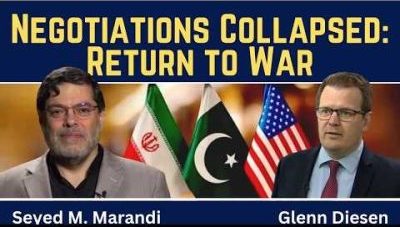
Seyed M. Marandi: Negotiations Collapsed – Return to War
or go to
Aletho News Archives – Video-Images
From the Archives
Wartime internment camps in Australia
National Archives of Australia
World War I
During World War I, for security reasons the Australian Government pursued a comprehensive internment policy against enemy aliens living in Australia.
Initially only those born in countries at war with Australia were classed as enemy aliens, but later this was expanded to include people of enemy nations who were naturalised British subjects, Australian-born descendants of migrants born in enemy nations and others who were thought to pose a threat to Australia’s security.
Australia interned almost 7,000 people during World War I, of whom about 4,500 were enemy aliens and British nationals of German ancestry already resident in Australia.
Records of World War I internment camps
World War II
During World War II, Australian authorities established internment camps for three reasons – to prevent residents from assisting Australia’s enemies, to appease public opinion and to house overseas internees sent to Australia for the duration of the war.
Unlike World War I, the initial aim of internment during the later conflict was to identify and intern those who posed a particular threat to the safety or defence of the country. As the war progressed, however, this policy changed and Japanese residents were interned en masse. In the later years of the war, Germans and Italians were also interned on the basis of nationality, particularly those living in the north of Australia. In all, just over 20 per cent of all Italians resident in Australia were interned. … continue
Blog Roll
 Aletho News
- Seyed M. Marandi: Negotiations Collapsed – Return to War
- Tomorrow’s naval blockade showdown
- ‘Israel’ attacks civilians to hide its embarrassing military failures & out of pure sadism
- Any Foreign Military Vessel Approaching Hormuz Under Any Pretext ‘Will Be Dealt With Severely’: IRGC
- Diplomats slam US negotiators’ performance in Iran talks
- Trump Refuses Exit Ramp, War with Iran will Continue
- Trump Says US Naval Blockade in Strait of Hormuz Will Begin Shortly
- US, Iran end 21-hour talks without agreement
- US IRAN TALKS: Who Are the Crazy Ones Here? /Lt Col Daniel Davis
- Talks with the US end without a deal over excessive US demands: Iran
- If Americans Knew
- US-Iran ceasefire negotiations make zero progress – Daily Update
- Pro-Israel ‘Thinktanks’ and Individuals who Influence U.S. Foreign Policy
- Mearsheimer reveals how Israel dictates US policies on Iran, Gaza – video
- After killing 350+, Israel still has a “score to settle” with Lebanon before ceasefire – Daily Update
- Military aid to Israel emerges as the latest political litmus test for Democrats
- The only Palestinian children’s rights organization closes following years-long Israeli campaign against it
- ‘I Can’t Forget the Smell’: Lebanese Reel After Israel Kills Over 300 in Single Day
- DNC Shoots Down Resolutions Calling Out AIPAC and Limiting Arms to Israel
- TCN: Is Israel Blackmailing President Trump?
- Israel killed at least 303 Lebanese yesterday – who were they? Daily Update
- No Tricks Zone
- Cave Discovery Reveals Today’s Desert Climates Were Recently Far Warmer, Wetter, Teeming With Life
- German Expert: Heat Dome Led To Record Temps In Western USA…Warmer In 1934, 1936
- New Study: No Linear Warming Or Glacier Retreat Along Northern Antarctic Peninsula Since 1980s
- An Inconvenient Tree: Uncovered In Alps… Europe Much Warmer Than Today 6000 Years Ago
- New Study Reports A 60% Slowdown In Greenland’s Ice Loss Rate In The Last Decade
- Low Intensity Tornado Wrecks Major Solar Farm, Creating A Potential Toxic Dump
- New Study Finds Warming Saves Lives…Cold Temperatures 12 Times More Deadly Than Excess Heat
- German Science Blog Accuses PIK Climate Institute Of Hallucinating Climate Tipping Points
- Devastating Assessment Of Comirnaty Vaccine By Former Senior Pfizer Europe Toxicologist
- New Study: CO2 Is ‘Effectively Negligible’ As An Explanatory Climate Change Factor Since 2000
 Aletho News