China Warns US ‘Not to Add Fuel to Fire’ of Ukraine Conflict
Sputnik – 19.02.2023
Beijing has warned Washington against fueling the conflict in Ukraine, where Russia continues its special military operation.
Meeting US Secretary of State Antony Blinken on the sidelines of the 2023 Munich Security Conference on Saturday, head of the Communist Party of China’s Central Foreign Affairs Office Wang Yi stressed that “As a great power, the US should contribute to a political solution to the crisis, not add fuel to the fire and look for opportunities to benefit from it.”
According to Wang, China has adhered to a constructive position in relation to the crisis in Ukraine and supported the negotiating process.
Wang also made it clear that Beijing “will never tolerate US instructions or even threats to put pressure on Russian-Chinese relations.”
He earlier told the Munich Security Conference that China would draft and present a document, in which its position on the Ukraine crisis will be outlined by the end of February.
“On the Ukraine issue, China’s stance boils down to supporting talks for peace. We will put forth a paper on China’s position on the political settlement of the Ukraine crisis and stay firm on the side of peace and dialogue,” he underscored.
For its part, the US State Department said in a press release that during talks with Wang, Blinken “warned about the implications and consequences if China provides material support to Russia or assistance with systemic sanctions evasion.”
This came after a US media outlet quoted unnamed sources as saying that Washington believes that Beijing may be providing non-lethal military assistance to Moscow for use in Ukraine and that the Biden administration is concerned China considers sending lethal aid.
The outlet added that the sources declined to elaborate on the non-lethal military assistance, only claiming that it could include gear for the Russian military’s purported spring offensive, including uniforms or even body armor.
The US and its allies slapped a number of sanction packages against Russia shortly after it launched its special military operation in Ukraine following requests from the Donbass republics to protect them from Kiev’s attacks. Apart from the sanctions, western countries ramped up their military assistance to the Zelensky regime in a move that Moscow warns will add to further prolonging the Ukraine conflict.
Natural gas will be key global resource for years to come – Putin
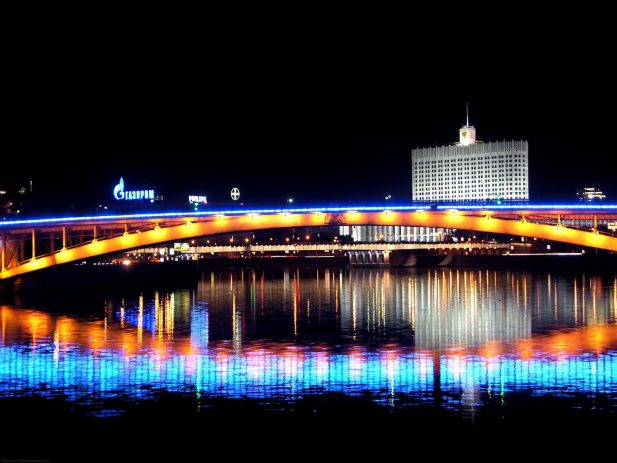
RT | February 17, 2023
Natural gas will continue to be a valuable resource with high global demand for a considerable period to come, Russian President Vladimir Putin stated on Friday.
Speaking via video link at an event dedicated to the 30th anniversary of state energy company Gazprom, the Russian leader noted that global gas consumption has nearly doubled in the last 30 years, and is expected to increase by at least 20% in the next 20 years.
“In the so-called transitional phase, demand will be huge, and countries of the Asia-Pacific will account for more than half of this growth, especially, of course, in China, given its economic development rate,” Putin said.
Further growth of the huge gas-industrial complex already established in the east of Russia is strategically vital for the country, the president added.
Regarding Gazprom, Putin described the state-owned company’s explored energy reserves as enormous.
“Well, here are the Bovanenkovskoye and Kharasaveyskoye gas fields. The first one contains 4.9 trillion cubic meters of proven reserves, almost five trillion. The second one about two trillion cubic meters. These are astronomical reserves for any country,” the head of the state observed.
China-Iran ties on the right side of history
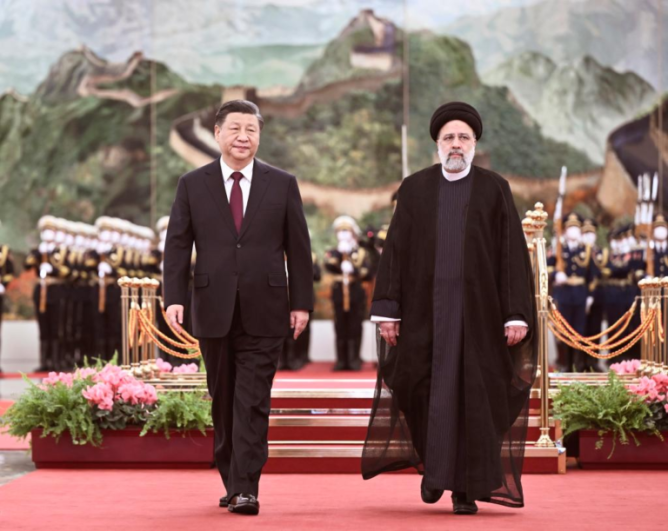
Chinese President Xi Jinping held a welcoming ceremony for Iran’s President Ebrahim Raisi prior to talks at the Great Hall of the People in Beijing, February 14, 2023
BY M. K. BHADRAKUMAR | INDIAN PUNCHLINE | FEBRUARY 16, 2023
The three-day state visit by Iran’s president Ebrahim Raisi to China on February 14-16 is a landmark event affecting regional politics and international security. The red carpet welcome accorded to Raisi signified the high importance attached by Beijing to the comprehensive strategic partnership between China and Iran in the prevailing international milieu.
In a ‘curtain-raiser’ on Monday, Global Times wrote that the visit “shows the Raisi administration’s unswerving determination to promote the ‘Look to the East’ policy.”
The CCP Central Committee newspaper then went on to make a profound statement: “Iran’s ‘Look to the East’ policy meant the transition from its policy of negative balancing and non-alignment to building alliances with non-western world powers that have similar political structures to Iran, such as Russia and China.”
This must be the first time that Beijing explicitly hailed Iran’s transition toward an alliance with non-western world powers that do not qualify as liberal democracies — “such as Russia and China.” This characterisation becomes the leitmotif of Raisi’s visit to China. Indeed, Beijing, Moscow and Tehran are sailing in the same boat as the pioneers of a democratised world order defying US hegemony.
On the following day, in a lengthy editorial, Global Times dwelt on the strategic ramifications, taking note that “outside the US-West bloc and its influence circle, there is huge space and potential for win-win cooperation” between Beijing and Tehran. It said:
“China’s deepening cooperation with Iran also has anti-hegemony and anti-bullying feature. Both China and Iran uphold independent foreign policies, firmly defend the principle of non-interference in internal affairs on international occasions, and safeguard the common interests of developing countries. This is conducive to promoting the multi-polarization and diversified development of the world, and conforms to the general trend of the times…
“Under Washington’s moves, the international structure is being divided and restructured, with the vicious trend of forming blocs and camps again emerging, which puts the non-Western world in a difficult situation and once again faces historical choices. The existing US-led international system has designs to bully and exploit developing countries and emerging countries. Now Washington still thinks that it is not convenient enough, that the interests of developing countries have increased in weight, and wants to reconstruct a new international system with a stronger tendency, which is undoubtedly a major challenge for the non-Western world and needs to be resisted by forming a joint effort.”
This compelling thought appeared in the opening statement of Chinese President Xi Jinping at the meeting with Raisi on Tuesday at the Great Hall of the People in Beijing when he said that “amid the profound changes in the international situation, China and Iran have constantly consolidated their strategic mutual trust and steadily advanced pragmatic cooperation. They have promoted their common interests and upheld international fairness and justice, writing a new chapter for China-Iran friendship.”
Xi underscored that “China supports Iran in safeguarding its sovereignty, independence, territorial integrity and national dignity as well as resisting unilateralism and hegemony, and opposes attempts by external forces to interfere in Iran’s domestic affairs and undermine its security and stability.”
The big picture comprises three key elements here: Moscow’s ‘friendship without limits’ with Beijing, Iran’s Eurasian integration, and the Russian-Iranian alliance in the making. The Shanghai Cooperation Organisation provides a platform for all three countries for strengthening communication and coordination in a spirit of mutual respect and trust and jointly work on regional security issues.
Raisi’s visit will accelerate the implementation of the 25-year agreement signed in 2021 between Iran and China. The program, including energy, trade and infrastructure, faced obstacles due to the pandemic and the escalation of US sanctions. But things are on the cusp of change. China watches Russian stealing a march on it, although the latter’s 25-year agreement with Iran is still a work in progress.
To be sure, the talks in Beijing focused on how to advance practical cooperation between Iran and China, even as China is coming out of the self-imposed restrictions during the pandemic, is raring to go and is revving up the Belt and Road.
However, what is yet to sink in is that a major outcome of the confrontation between Russia and the NATO countries is that Iran is set to break through the rings of western containment through the past four decades since the 1979 revolution. Beijing sees that Russia is providing strategic depth for Iran in a win-win engagement.
Just before Raisi embarked on the state visit to Beijing, the new governor of Iran’s central bank, Mohammadreza Farzin stated in Tehran that “The financial channel between Iran and the world is being restored.” In effect, he was announcing that Iran and Russia have taken a significant step towards linking their banking infrastructures amid Western sanctions.
After years of work, the two countries have managed to connect Iran’s SEPAM national financial messaging service to Russia’s Financial Messaging System of the Bank of Russia (SPFS), the Russian equivalent of SWIFT, that aims to link with other major powers like China and India. The tie-up signifies that Moscow today has the political will to forge ahead with an optimal partnership with Iran, as they also pursue greater use of their national currencies in trade.
Moreover, Russia and Iran are creating a firewall to sequester their defence cooperation from the prying eyes of the US. Moscow is about to transfer cutting-edge military technology to Tehran, including the famous Su-35 multipurpose 4+ generation fighter jets as part of a $3 billion arms deal that also includes two S-400 air defence systems. None of this is escaping Beijing’s attention. (Interestingly, Farzin was included in Raisi’s delegation to Beijing.)
Beijing understands that the confrontation between Russia and the US is working to the advantage of two of its key partners to break out of the Western stranglehold of sanctions and realise their full potential as regional powers — North Korea and Iran — which has profound implications for the power dynamic in the Asia-Pacific and West Asia. The Chairman of the Chiefs of Staff of the Iranian Armed Forces General Mohammad Bagheri greeted the newly-appointed North Korean counterpart General Pak Su-il recently with a call for expansion of military ties “to confront any move that disrupts global security.”
China-Iran relationship is entering interesting times. Fortuitously, the Gulf states themselves are decoupling from the US-Israeli strategy to whip up anti-Iran frenzy. Meanwhile, Iran’s relations with Saudi Arabia are steadily improving and the latter is developing diversified external relations as well with accent on partnerships with China and Russia. The growing similarity lately in the respective diplomatic trajectories of Iran and Saudi Arabia would have a calming effect incrementally on Gulf security and eliminates the scope for US interference in the GCC interaction with China (and Russia.)
President Xi highlighted to Raisi the importance of stability in West Asia, saying that upholding stability matters to the well-being of the countries and people in the region and also has great relevance to world peace, global economic development and the stability of energy supplies.
Xi noted in particular that “China appreciates Iran’s willingness to actively improve relations with neighbouring countries, and supports countries in the region in resolving their differences through dialogue and consultation to realise good neighbourliness.”
This paradigm shift in Gulf security puts the Sino-Iranian partnership on the right side of history.
Russia makes claim over West’s ‘hybrid war’
RT | February 15, 2023
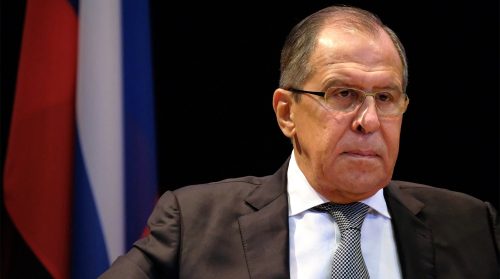
The West is attempting to use the Ukraine conflict to portray Russia as a “rogue state” in the eyes of the world, Foreign Minister Sergey Lavrov said on Wednesday. He stressed that the strategy has not been successful.
“The US and its satellite states are waging an all-encompassing hybrid war that they have long been preparing for, and are using Ukrainian radical nationalists as a battering ram against us,” Lavrov said in a speech in the lower house of the Russian parliament, the State Duma.
“They are not even trying to hide the goal of this war: it is not only to defeat our country on the battlefield and destroy our economy, but also to surround us with a ‘sanitary cordon’ and turn us into a type of a rogue state.”
The statement came the same day that European Commission President Ursula von der Leyen unveiled proposals for a new sanctions package against Russia, including additional export bans and measures to prevent the bypassing of restrictions.
Lavrov said that the West’s efforts to isolate Russia have failed because Moscow continues to develop relations with partners in other areas of the globe. He added that nations that have refused to back the “unprecedented” sanctions make up the majority of the world’s population.
The countries of the Asia-Pacific, the Middle East, Africa, and South America “don’t want to live in accordance with the West-centric order,” the Russian minister stated. “So it makes perfect sense why three-quarters of the world’s countries have not joined the anti-Russian sanctions and have a reasonable view regarding the situation in Ukraine.”
China and India are among the major economies that have refused to impose restrictions on Moscow. Denis Alipov, Russia’s ambassador to New Delhi, said on Tuesday that sanctions “had an opposite effect” and facilitated more trade and closer cooperation between Russia and India.
Beijing, meanwhile, has accused the US of fueling the Ukraine conflict and trying to weaponize the world economy for its own benefit.
US High-Altitude Balloons Repeatedly Flew Over China, Chinese Foreign Ministry Says
Sputnik – 15.02.2023
BEIJING – The United States must stop misleading the international community and accept the fact that US high-altitude balloons have violated China’s airspace on multiple occasions since last year, including over Xinjiang and Tibet, the Chinese Foreign Ministry said on Wednesday.
Last week, the US military shot down four unidentified aircraft in its airspace, including what it claimed to be a Chinese surveillance balloon, despite Beijing’s insistence that it was a civilian aircraft carrying out science research. On Tuesday, the Chinese Foreign Ministry said US high-altitude balloons had violated Chinese airspace at least 10 times since last year, a statement US National Security Council spokesperson Adrienne Watson rejected as false.
“We have already pointed out that since last year, more specifically since last May, the US has released multiple high-altitude balloons from its territory, which continue to circle the globe. They have made at least 10 unauthorized entries into Chinese airspace, including above Xinjiang and Tibet,” Chinese Foreign Ministry Spokesperson Wang Wenbin told a briefing.
Wang said China repeatedly provided the US with explanations as to why its balloon mistakenly went off course due to a contingency, whereas the US never provided explanations on its own balloons’ illegal entry into Chinese airspace.
“The US must provide explanations to China and the international community, profoundly rethink its actions, and stop libeling and attacking China, as well as stop misleading the American people and the international community. China reserves the right to a further adequate response,” the spokesman said.
The spokesman contrasted China’s “calm and professional” reaction to breaches of its airspace by US balloons with that of the US military, which he considers excessive.
WHO Abandons Covid Origins Investigation, Saying China Isn’t Cooperating. But What About America?
BY WILL JONES | THE DAILY SCEPTIC | FEBRUARY 14, 2023
The World Health Organisation (WHO) has quietly abandoned its investigation into the origins of the COVID-19 pandemic, citing ongoing challenges over attempts to conduct crucial studies in China. Nature has the story.
Researchers say they are disappointed that the investigation isn’t going ahead, because understanding how the coronavirus SARS-CoV-2 first infected people is important for preventing future outbreaks. But without access to China, there is little that the WHO can do to advance the studies, says Angela Rasmussen, a virologist at the University of Saskatchewan in Saskatoon, Canada. “Their hands are really tied.”
In January 2021, an international team of experts convened by the WHO travelled to Wuhan, China, where the virus that causes COVID-19 was first detected. Together with Chinese researchers, the team reviewed evidence on when and how the virus might have emerged, as part of phase one. The team released a report in March that year outlining four possible scenarios, the most likely being that SARS-CoV-2 spread from bats to people, possibly through an intermediate species. Phase one was designed to lay the groundwork for a second phase of in-depth studies to pin down exactly what happened in China and elsewhere.
But two years since that high-profile trip, the WHO has abandoned its phase-two plans. “There is no phase two,” Maria Van Kerkhove, an epidemiologist at the WHO in Geneva, Switzerland, told Nature. The WHO planned for work to be done in phases, she said, but “that plan has changed”. “The politics across the world of this really hampered progress on understanding the origins,” she said.
Researchers are undertaking some work to pin down a timeline of the virus’s initial spread. This includes efforts to trap bats in regions bordering China in search of viruses closely related to SARS-CoV-2; experimental studies to help narrow down which animals are susceptible to the virus and could be hosts; and testing of archived wastewater and blood samples collected around the world in late 2019 and early 2020. But researchers say that too much time has passed to gather some of the data needed to pinpoint where the virus originated.
Many researchers aren’t surprised the WHO’s plans have been thwarted. In early 2020, members of then US president Donald Trump’s administration made unsubstantiated claims that the virus had originated in a Chinese laboratory, and US intelligence officials later said they had begun investigations. The city of Wuhan is home to the Wuhan Institute of Virology, a high-security lab that works on coronaviruses. Chinese officials questioned whether the virus originated inside the country’s borders.
In the midst of simmering hostility between the two superpowers, WHO member states requested in May 2020 that the agency put together a science-led effort to identify how the pandemic started. Although China agreed to the mission, tensions were high by the time the WHO group left for Wuhan, and engagement with China quickly unravelled after the group returned.
In its March 2021 report, the team concluded that it was “extremely unlikely” that the virus accidentally escaped from a laboratory. But the inclusion of the lab-incident scenario in the final report was a key point of contention for Chinese researchers and officials, says Dominic Dwyer, a virologist at New South Wales Health Pathology in Sydney, who was a member of the WHO team.
That July, the WHO sent a circular to member states outlining how it planned to advance origins studies. Proposed steps included assessing wild-animal markets in and around Wuhan and the farms that supplied those markets, as well as audits of labs in the area where the first cases were identified.
But Chinese officials rejected the WHO’s plans, taking particular issue with the proposal to investigate lab breaches. Zhao Lijian, the spokesperson for China’s foreign ministry, said the WHO proposal was not agreed by all member states, and that the second phase should not focus on pathways the mission report had already deemed extremely unlikely.
The Nature report adds that outside the formal WHO process some studies have gone ahead. In May 2022, researchers in China published the results of an analysis of donor blood supplied to the Wuhan Blood Centre before December 2019. After screening more than 88,000 samples collected between September 1st and December 31st 2019, they did not find any SARS-CoV-2-blocking antibodies in the samples (though did find some non-neutralising antibodies, which they imply are false positives due to cross-reaction or other issues). A second study, by the Chinese CDC in February 2022, looked at samples collected at the Huanan wet market in January and February 2020 and found evidence of the virus among humans but not among animals, confirming the early outbreak but casting doubt on the idea of a zoonotic spillover event at the market.
We may not be inclined to believe these Chinese findings. But we should note that they are more than the U.S. has managed to put out in the same period. The U.S. published one study of archived Red Cross blood in November 2020, which found 39 antibody-positive serum samples (2%) collected December 13th-16th 2019 in California, Washington and Oregon. No further studies of early spread in America have appeared. On this evidence, of course, the virus is more likely to have been circulating in the U.S. than Wuhan during autumn 2019. Certainly, the Wuhan data may not be trustworthy, or the U.S. data may be mistaken. But clearly there is good reason to look into what was going on in America as well as China. Note that we still don’t have a single wastewater study from the U.S. to give an indication of when in 2019 the virus may have begun circulating in different parts of the country (to be fair, we also don’t have any wastewater studies from China). A wastewater study from Brazil turned positive as of November 27th 2019, suggesting extensive community spread in the Americas during that month.
We also still have no idea what U.S. scientists were working on in relation to SARS-like viruses at the onset of the pandemic. Yet we know that in collaborative coronavirus projects with the Wuhan Institute of Virology, the genetic engineering of the virus was typically stated to be done in the U.S., not China. We also know that Jeffrey Sachs disbanded the Covid origins taskforce which formed part of the Lancet Covid commission he was chairing because he perceived severe conflicts of interest and a basic lack of cooperation from U.S. scientists.
Concerns about a U.S. cover-up are growing. The latest senior figure to call for an investigation into the role of the U.S. in the origin of the virus is Matt Pottinger, the Deputy National Security Adviser at the start of the pandemic, who recently wrote in the Wall Street Journal that “China hasn’t been the only problem”.
In the early days of the pandemic, a small group of Western virologists came together to consider the pandemic’s origin. Emails that eventually came to light revealed their plan to push the public conversation away from the lab-accident hypothesis and toward the natural-origins explanation. In a now infamous February 2020 letter in the Lancet, and in an equally problematic letter in Nature Medicine the next month, some of these scientists labelled any questions about a possible lab origin as “conspiracy theories”, even though they lacked evidence to dismiss the lab-leak hypothesis.
But in September 2021, a leaked Defense Department document revealed that some of the same scientists had worked together, along with the Wuhan Institute of Virology, on a 2018 proposal to the Defense Advanced Research Projects Agency. Their project? Genetically engineering rare gain-of-function features, called furin cleavage sites, into SARS-like viruses in their possession.
To its credit, DARPA didn’t fund that research, but it was highly significant — or spectacularly coincidental — that the SARS-CoV-2 virus, containing this precise feature never-before-seen in any SARS-like virus, began infecting people in Wuhan the next year. Scientists who had called the lab-leak hypothesis a conspiracy had failed to disclose that the lethal virus sweeping the world was eerily similar to the one they had wanted to create.
China’s systematic efforts to block meaningful investigation doesn’t mean that the U.S. should throw up its arms. In fact, both the Trump and Biden administrations have taken action to dig further. The Trump administration began asking questions internally. Early in his tenure, President Biden also authorised a limited, 90-day review of this issue by America’s intelligence agencies. It’s fair to say that both administrations did something and that neither has done enough.
Earlier this year, an international group of scientists and former national security officials — including us — signed an open letter detailing some of the failures of scientific journals and news organisations and calling for greater accountability. What we now need are bipartisan, evidence-based hearings asking the toughest questions about the pandemic’s origins. Congress must carefully look at China’s transgressions as well as our own shortcomings.
The obfuscation by the Chinese is obviously very poor form and only increases suspicions they are hiding something. However, what the Nature report – and the WHO, based on that report – fail to acknowledge is that we don’t need Chinese cooperation to investigate what U.S. scientists and officials can tell us about the origin of the virus and early spread in America. Investigating this properly should have begun long ago, and even now it is not too late. The politicians need to compel the scientists and officials to reveal what they know.
Tanker Rates To Haul Gasoline Soar 400% After Russian Sanctions
By Tyler Durden | Zero Hedge | February 14, 2023
Clean product tanker rates soared last week after the European Union and G-7 nations targeted Russia’s petroleum sales. Restrictions on Russian crude exports began in early December. The sanctions have been a ploy by Western countries to limit Russian crude and crude product exports, though it’s definitely not working.
Sanctions have redirected Russian energy flows from Europe to Asia. The rejiggering of supply chains means Russia has to rely more on tankers. According to Bloomberg, this has led to a 400% surge in the daily rates for clean product tankers.
The latest data from the Baltic Exchange in London shows clean product tankers rates have reached $55,857 per day, surging 58% just last Thursday.
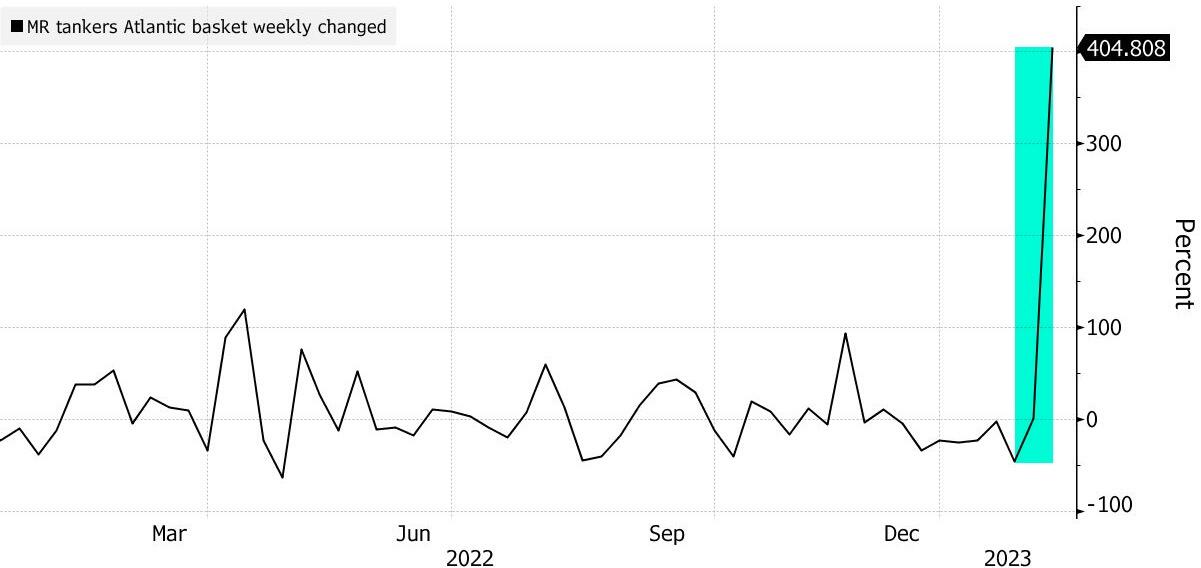
According to trading giant Trafigura, Russia relies on a “shadow fleet” of tankers to move crude and crude products. The trading firm said the fleet is about 600 ships.
Bloomberg said the surge in tanker rates has been “spurred in part by a bifurcation of the fleet with some tankers serving Moscow’s interests and others the international market. It highlights a possible flipside of aggressive measures aimed at limiting Russia’s petroleum revenues.”
“Russian volumes continue to flow at more or less the same rate and that takes up a lot of ships.”
“Ultimately, the spike shows demand is pretty good, and the fundamentals are strong,” Lars Bastian Ostereng, an analyst at Arctic Securities.
About 400 tankers, or 20% of the global fleet, recently “switched” from hauling fuels for traditional countries to carrying Russian petroleum products, Trafigura’s co-head of oil trading Ben Luckock said in a recent Bloomberg interview. That has reduced the number of tankers for traditional routes and is leading to the skyrocketing cost of freight.
Bloomberg pointed out that surging rates aren’t entirely because of the tanker “switch.” It’s also due to more crude flowing by water following Western sanctions on Russia. Much of those energy exports are now being sent to Asia.
“We see no indication that Russia will have to cut back its exports of crude or refined products,” said David Wech, chief economist of Vortexa, during a presentation late last week.
Furthermore, crude prices have edged over $86 a barrel following last Friday’s announcement that Russia will reduce crude oil production by 500,000 barrels per day. This is in response to Western price caps on purchasing Russian fuel.
America’s Dirtiest Secrets

BY LARRY ROMANOFF • UNZ REVIEW • FEBRUARY 12, 2023
This essay is the Introductory Chapter to a new series of E-books which will very soon be published on bluemoonofshanghai.com.
When I began doing my historical research in earnest perhaps 20 years ago in Shanghai, my interest was driven by primarily two things: one was the incessant American propaganda flooding the world, and particularly China, with an entirely unjustified air of moral superiority that masked all of the American crimes and atrocities committed over centuries. The second was the irritating flood of negative propaganda about China, filling the print and airwaves about China’s mostly imaginary inferiority to the exceptional Americans. From this, I intended to write a series of articles, and perhaps a book or two, that illuminated the opposite side of these two pictures. This is an oversimplification, but my research and writing interests were limited to an attempt to rectify the standard narrative of “China bad; US good”.
But near the beginning of this enterprise, I encountered a statement that said, “The history of the world is the history of the Jews.” That remark registered on me and remained in my memory because it startled me and because it made no sense to me at the time. However, as I progressed with my research into things Chinese and American, I would occasionally encounter references to Jews but, at the time, I had absolutely no interest whatever in the Jews, and I initially would delete those references. In my mind, I had a clean story line which I was pursuing and those increasingly occasional references to the Jews were contaminating my story line and confusing my approach. But eventually I had to realise that the references to the Jews were not contamination but were in fact the real story line.
As one example, I was researching the opium travesty inflicted upon China by – as we were all taught – “the English”. But as I delved deeper into the historical record, I was surprised to discover that “the English” had nothing to do with the opium (except as military enforcer) and that the entire opium landscape was 100% Jewish, primarily Rothschild and Sassoon, with Kadoorie and a few other families. Those families may have held British passports, but they were all Jews and not “Englishmen“. This is also true of the HSBC bank which was created solely to launder the Jews’ drug money – a talent in which it still specialises today. The same pattern appeared to evolve in almost any historical topic I chose to investigate. I was, as we all were, taught, indoctrinated, propagandised and browbeaten to believe that the Russian Revolution was really Russian, and I was very surprised to learn that it was 99.9% Jewish, and that “Russians” had nothing to do with it except as victims. Similarly, I was taught the two World Wars were caused by Germany and that gallant little England prevailed over an evil enemy, but was again surprised to learn that it was the European Jews who contrived mightily to bring about both World Wars, that in fact Germany resisted war until the very end, and was the victim of a massive hate campaign by the Jews who wanted it destroyed.
In an earlier essay, I ended with these words:
The Boer Wars were a British story, but the manuscript was written entirely in Jewish handwriting. In like fashion, the two World Wars, the British East India Company, the unconscionable looting, famines, and slaughters of India, and China’s opium century with its vast atrocities of slaughter, misery, and slave-trafficking, were “British stories”, but the manuscripts for these were also written entirely in Jewish handwriting. Similarly, the stories of Yugoslavia, Greece, Iraq, Libya, and Syria today are “American stories”, but these also were written entirely in Jewish handwriting.
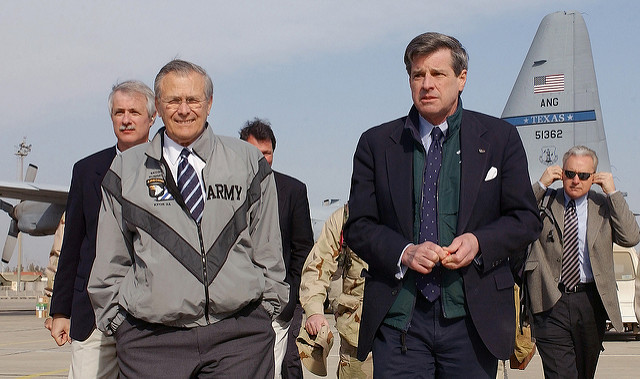
The blithe optimism demonstrated by the planners of the invasion of Iraq is still capable of taking one’s breath away. (Photo: Lisa M. Zunzanyika / Flickr Commons). Source
This is where we are today. These several volumes were originally to be titled, “America’s Dirtiest Secrets”, but that title no longer strictly applies because there is no sensible way to separate the actions of the Americans from their Jewish masters who gave the orders. For example, we know the media stories of the US hijacking of Iraq and believed this was done to remove a dictator. But our perception is severely altered when we learn the invasion was done entirely on Jewish orders, that the so-called “Provisional President” of Iraq – Paul Bremer – was a Jew and was taking all his orders from the Jews in the City of London, and that further those Jewish bankers have confiscated all of Iraq’s assets and are taking – free – more than 2/3 of Iraq’s oil. Likewise, we were taught it was the British military (with a bit of French help) that looted the 10 million priceless artifacts from China’s Summer Palace (the Yuanmingyuan) and then utterly destroyed it. But again, our perception changes when we learn the British did so under the orders of the Jews Rothschild and Sassoon, and that a great many of those priceless artifacts ended up in Jewish hands and remain there to this day.

Professor Lindemann (left) on an inspection with Churchill, 1941
In similar fashion, we were all taught about the famous British aviator “Bomber Harris” who won eternal fame for the incendiary carpet-bombing of countless dozens of German cities like Dresden, creating firestorms that incinerated millions of German civilians in one of the world’s greatest wartime atrocities. But again, our perception is severely altered when we learn that it was a Jew named Frederick Lindemann, sent by the Rothschilds as an “advisor” to Churchill, who brought with him the notion of carpet-bombing civilians with incendiary bombs, and that Churchill simply obeyed his Jewish masters in executing this program to help effect “the total destruction of Germany” that the Jews wanted. In like fashion, we were taught that the US dropped the atomic bombs on Japan to hasten the end of the war and “to save lives”. But again, our conceptions are thrown in disarray when we learn that it was a Jew, Bernard Baruch, ostensibly “the most powerful man in America” at the time, who not only chose Japan as the target for these bombs, but also personally selected the cities to be incinerated. Our conceptions are even more challenged when we learn that Baruch’s motivation may well have been retaliation to both Japan and Nagasaki for their expulsion of all the Jews prior to the war. (See End Notes)
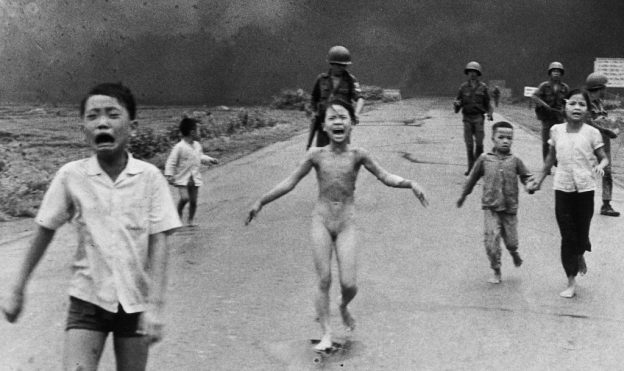
Phan Thi Kim Phuc, burned with napalm at age of 9. Source
And with both Europe and especially with Vietnam, in the application of napalm for incinerating civilians, it was indeed the Americans who extensively applied napalm during World War II, in “vast but historically-deleted genocidal incendiary attacks both in Europe and on Japanese cities, as well as during the wars in Korea and Vietnam”. But it was a Jewish chemist named Louis Fieser who developed napalm in a secret laboratory at Harvard University in 1942, and America’s Jewish masters who engineered its use on civilians. Even worse, in Vietnam, the locals discovered they could evade incineration by diving into any body or container of water to extinguish the flames. But it was another Jew, again at Harvard, who engineered the infusion of napalm with white phosphorus, which cannot be extinguished once lit, and will burn a man right through to the bones even under water. In all cases, the Americans did the dirty deeds, but they were “just following orders” from their Jewish overlords.
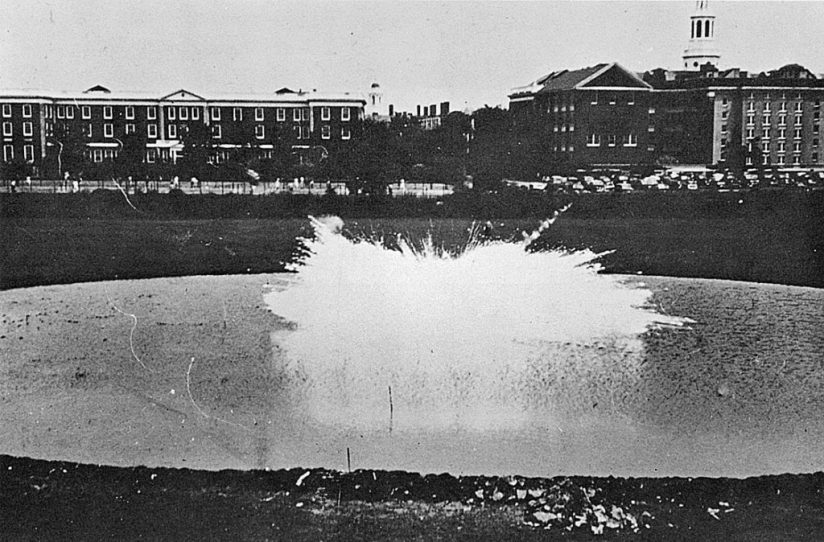
Independence Day, 1942: first field test of napalm, behind Harvard Business School. Photograph courtesy of Harvard University Archives/ Louis Fiester, The Scientific Method
And we realise, as with all such events in the past, that the American military is, just as the British military was doing in the past, functioning as “The Bankers Private Army”. And thus, in real terms, there is no sensible way to separate the actions – the “Dirtiest Secrets” of the Americans – from the “Dirtiest Secrets” of the Jews who issued the Americans and British their marching orders. We cannot disassociate the Mafia boss from his own orders executed by his own underlings.
And thus, while in these books we will be apparently (and superficially) examining America’s Dirtiest Secrets, there will in almost every instance be a distinct under-layer of Jewish influence and control. It is true we will see a few occasions or events where the Americans appeared to act independently – as in the hijacking of Hawaii – with no apparent evidence of Jewish involvement, but these are very few. And so, what we are really discussing and exposing in these pages are the Jews’ Dirtiest Secrets, and we will see that in virtually every instance the Jews operate admirably and very efficiently with what they call “A Gentile Front”, with some non-Jew apparently in charge but with a full complement of Jews in the background instigating, inciting, and ordering Gentiles to execute their plans.

The censorship board. George Creel is seated at far right. Harris & Ewing/Library of Congress. Source
One striking such example you will read about is US President Wilson’s Creel Commission, which perpetrated an astonishingly intense propaganda campaign designed to create a “white-hot hate” for Germans and lead Americans into a World War no one wanted. Creel was selected by Wilson’s Jewish handlers, quite likely by the so-called “Colonel” House, who was a Jew and whose real name was Huis, but it was the Jews Lippman and Bernays who were actually in control of the entire effort. This Jewish manipulation was so effectively done that Creel became the lightning rod for all the historical disapprobation while Bernays is celebrated today as “The father of public relations” in America. In fact, Bernays, the nephew of Sigmund Freud, was the Father of War Marketing, a template invented and executed by the Jews in the most despicable manner imaginable.
In many cases, these situations include historical events that have been so deeply buried by the Jewish media and Jewish book-publishing industries that perhaps not one person in a million has any knowledge of their existence. One such situation consists of the unremitting and unconscionable atrocities inflicted on Germany and the German people during – but especially after – both World Wars, atrocities committed primarily by the Americans but done under the orders of their Jewish masters. This was so widespread – and so true – that today it is illegal in Germany for anyone to even attempt to research atrocities committed against Germans. The reason is that anyone attempting such research would quickly discover that it was the Jews who were responsible for all those atrocities, by both hate propaganda and direct influence, and the Jews naturally don’t want those truths escaping confinement. Thus, the German government was forced to pass a law rendering illegal any investigation into such matters, and most German people today have no knowledge of the incredible betrayals and atrocities inflicted upon them by the Jews. They are instead taught by Jewish-authored books and by Jewish university professors, aided immensely by the Jewish-controlled mass media, that it was Germans who inflicted atrocities on the Jews.

‘We Hated What We Were Doing’_ Veterans Recall Firebombing Japan – The New York Times
Another such example is the incendiary carpet-bombing of nearly 100 Japanese cities – long after Japan had agreed to surrender – carried out by the American Curtis LeMay and resulting in the deaths of about 50% of the population of all those cities, done in the same manner as the Jews arranged for Germany and with the same blood-thirsty determination to utterly destroy Japan and the Japanese as they had for Germany and the German people. This immense and unconscionable atrocity, which resulted in the deaths of at least 10 million civilians – almost all women and children – was so heavily excised from history, including the re-writing of all Japanese history books, that almost no one in Japan has any knowledge of it, and no one outside Japan either. The excision in this case was so total that even Japan’s national population statistics were completely forged, fabricated, and re-calculated after the war, to entirely bury the fact of one of the greatest war-time atrocities in history.
The Japanese also do not research atrocities committed against Japan because they have been taught by their Jewish masters, as in Germany, the same things and for the same reasons. Nobody today in Japan has any knowledge of the involvement of the Jews in their destruction. This is not to dismiss atrocities that were indeed committed by the Japanese against others, but to illuminate the fact that the Jews committed much worse atrocities against the Japanese, and yet have such near-total control over the media, over book-publishing, and over the government itself, that these events have been totally excised from the historical record and the knowledge is deleted from the world’s consciousness. Again, this condition is much abetted by “the Gentile Front” where the Jews used the Americans to perpetrate these horrendous crimes while remaining hidden in the background. And again, let’s not forget that it was a Jew – Bernard Baruch – who chose Japan as the victim for the new atomic bombs and who personally selected the cities to be incinerated, almost certainly done as punishment for Japan’s prior eviction of all the Jews.
It would be of use to you to read two of my previous E-books on Propaganda and the Media[1] and Bernays and Propaganda[2], to help gain an appreciation of some of the methods used by the Jews to ensure silence (and ignorance) about past events. One of the tenets of propaganda is that we have a powerful tendency to believe the first thing we read or hear about a topic, especially if those statements are repeated a number of times. Later, even when faced with incontrovertible proof, facts that cannot be disputed, proving that our now-accepted beliefs are in fact false, we are surprisingly reluctant to change our minds, and we will “hesitate and waver and continue to believe there must be some other explanation”. Our minds are apparently unable to accept that we have believed lies.
This is important because the Jews use this to great advantage to pre-empt the discovery of their atrocities and prevent rational thought. Typically, if knowledge of their past crimes is showing signs of escaping historical confinement, the Jews will use this propaganda tactic to “get there first”, with some Jewish author quickly writing a book or treatise on the subject that is replete with lies and falsified history that attempts to exclude the Jews from involvement and, if at all possible, to blame the victim.


When the truths of China’s opium travesty were beginning to creep out of the sarcophagus and into the daylight of public knowledge, a Jewess named Julia Lovell was there with a book titled Opium War in which Jews are not even mentioned and which she categorised as a “tragic-comedy”, the hundred or so million Chinese being killed by the Jews apparently being funny to her. But a great many Americans and others, unfamiliar with the true circumstances and never having read anything else, will tend to believe this woman’s despicably false version of events and the Jews will perhaps be spared exposure.
Another such situation occurred when the truth of the mysterious depopulation of Easter Island was beginning to escape confinement. That truth seems to be that it was Jewish slave traders who kidnapped virtually the entire population of Easter Island as slaves to work their guano mines in Peru. Immediately upon this leakage, a Jew named Jared Diamond from the University of California was there with a book explaining that the Easter Islanders simply had some violent disagreement among themselves and killed each other off. Diamond was ridiculed by other academics for his foolish theory that “had not a shred of evidence to support it”, but his book wasn’t written for academics. It was written for the great unwashed of the US who had no knowledge of these events and would likely accept Diamond’s false version. And once again, the Jews might be spared exposure.

The same thing happened again when details began to emerge and leak about the Holland Tulip Bubble having been entirely staged by Jewish ‘bankers’, what with their futures market and all the rest, and not at all a “public mania” as we have been told, but a deliberate attempt to take advantage of public greed and gullibility and empty half the bank accounts in Holland. Once again, immediately on the risk of these leaks becoming public there was a female Jewish author on hand to write a “definitive” work on the topic which oddly made no mention of Jews, but furthermore claimed that no financial losses had occurred to anyone. In fact, this Jewess solemnly claimed that she had access to all the records in Holland and that through the most diligent search she found records of only a few people in Holland who had gone bankrupt during that time, and all those were bankrupt due to “property speculation“ and nothing to do with tulips. In real life, that so-called “bubble“ bankrupted probably half the people in Holland, but once again the Jews are there to pre-empt the truth and to propagate an entirely falsified version of history to protect themselves from exposure.

I have written elsewhere that at least 90%, and maybe even 95%, of everything that you know, or think that you know, or that you believe to be true about history, is wrong. To re-state another way, if we were to take the history of the entire world for the past 500 years and condense it into a history book of 100 pages, at least 50 of those pages would be blank. This is the amount of history – almost entirely involving the Jews – that has been so thoroughly excised from the historical record that it has literally evaporated from human consciousness with almost no living persons having any knowledge of it. And of the remaining 50 pages in this book, probably 45 are so extensively Photoshopped, sanitised, twisted, with crucial details omitted, that they are largely a work of fiction. And of course, anyone attempting to open this historical sarcophagus and expose the contents, is denounced as a deranged revisionist spreading misinformation. And, if the Jews are at all mentioned in this “revisionism”, we have the added attraction of being labeled an “anti-Semitic, holocaust-denying, Nazi Jew-hater”. Most of those souls attempting this historical illumination have very often paid with their careers, their reputations, their bank accounts, sometimes with their freedom and, in some cases, with their lives. These Mafia overlords in the City of London, the Khazar “so-called” Jews, are today just as brutal, savage, and filled with contempt for humanity as they were 1,000 years ago.
David Edwards was quoted in the “Third World Traveler“ as having written:
”Even open-minded people will often find themselves unable to take seriously the likes of Noam Chomsky, Edward Herman, Howard Zinn and Susan George on first encountering their work; it just does not seem possible that we could be so mistaken in what we believe. The individual may assume that these writers must be somehow joking, wildly over-stating the case, paranoid, or have some sort of axe to grind. We may actually become angry with them for telling us these terrible things about our society and insist that this simply ‘can’t be true‘. It takes real effort to keep reading, to resist the reassuring messages of the mass media and be prepared to consider the evidence again.”
This is the condition we face today in dealing with these recovered historical truths. In the case of the Jews, they know the truth but are frantic and nearly desperate to keep it buried and under confinement, which is why they so vengefully and viciously attack en masse whenever these facts emerge into daylight. With the Americans, their ignorance of their own nation’s criminality is founded on a blind faith and conviction based on a century of clever Jewish propaganda that is almost always flatly contradicted by the facts. But even citizens of the victim nations – like Germany – suffer enormous shock and disbelief when confronted with the historical truths of their own country, because the Jews and the Jewish media have for nearly 100 years browbeaten them with a totally false historical narrative. Friends sent to German acquaintances my articles on the Jews’ 1933 worldwide boycott of Germany and some related items, with those Germans replying that they found even those brief articles too painful to read at one sitting because, while the evidence was incontrovertible, it contradicted everything they’d been taught all their lives about themselves and their country, and the shock of learning that the things they “knew” were all lies, was emotionally too painful to bear.
At the same time, the world has been subjected to a century or more of outrageously false positive propaganda about the Jews, an almost incomprehensible volume of rose-tinted misinformation about the Jews as the world’s impoverished, misunderstood, persecuted “chosen ones“. In truth, there is little about the Jews and Israel today that is not based on fabricated historical mythologies, buried history, biased presentations, facts twisted so badly as to be often unrecognisable. Probably 95% of what the world knows about the Jews, their history, their massive crimes spanning centuries, their astonishing contempt for both humanity and truth, their conduct in international affairs, is not only wrong, but violently wrong. And to the same extent, the world has also been subjected to enormously and brutally false negative propaganda and misinformation about other nations – about the Jews’ victims, an equally incomprehensible volume of black-tinted information whereby the Jews typically seek to blame their victims for the atrocities perpetrated against them.
These buried historical truths are the content of my books and articles, the history of the world (or parts of it) as it really was, and is, harsh provable truths and documented realities without the vast carpet of propaganda, jingoism, and misinformation that Jewish media power has used to blanket and blind the world for well over a century.
END NOTES
The incendiary bombing of German working-class neighborhoods was planned in detail by the Jews. Since at least the early 1900s, Rothschild had owned most of the armament and munitions factories in Germany. It was through those that he supplied Japan (and Russia too) with the weapons for their war in 1905. During the Second World War the Jews didn’t want all their factories bombed to rubble when the Allies began flying over Germany. Their solution was to kill all the factory workers instead but leave the factories untouched. And it was the Jew Frederick Lindemann, sent by Rothschild to Churchill as an advisor, who brought the scheme to him. We have records of Lindemann’s submission of his plan to the war cabinet urging this method and suggesting that “greater flesh-incineration-per-bomb could be achieved” that way. This is further documented by a memo dated March 30, 1942, from Lindemann to Churchill that resulted in those intense terror-bombing campaigns of German civilians. The working-class neighborhoods were high-density, with these incendiary munitions creating natural intense firestorms that incinerated virtually every living thing in many of them. The British and the Americans, obeying the plans of their Jewish leaders, executed one of the most barbaric and inhuman atrocities of the war.
As I discuss in my essay on Japan, where the same was done there, the country’s population statistics were heavily forged, fabricated, and recalculated after the war to bury the evidence of these atrocities. I am almost certain the same was done with Germany. I haven’t the resources or time to delve into this with Germany, and researching atrocities against Germans is now illegal in Germany, but it is almost a certainty that Germany’s population statistics were massaged in the same was as those of Japan, to hide the truth. There had to have been many many millions of civilians killed in these raids, which were nothing more than an inhumanly deliberate attempt to depopulate Germany. And this doesn’t include the normal war casualties nor the 12 million to 15 million German civilians killed after the war from execution, starvation and migration, nor does it include Eisenhower’s Death Camps nor the perhaps additional million civilian deaths from Operation Paperclip.
*
Mr. Romanoff’s writing has been translated into 32 languages and his articles posted on more than 150 foreign-language news and politics websites in more than 30 countries, as well as more than 100 English language platforms. Larry Romanoff is a retired management consultant and businessman. He has held senior executive positions in international consulting firms, and owned an international import-export business. He has been a visiting professor at Shanghai’s Fudan University, presenting case studies in international affairs to senior EMBA classes. Mr. Romanoff lives in Shanghai and is currently writing a series of ten books generally related to China and the West. He is one of the contributing authors to Cynthia McKinney’s new anthology ‘When China Sneezes’. (Chapt. 2 — Dealing with Demons).
His full archive can be seen at
https://www.bluemoonofshanghai.com/ and https://www.moonofshanghai.com/
He can be contacted at:
NOTES
[1] Bernays and Propaganda
https://www.bluemoonofshanghai.com/wp-content/uploads/2022/10/BERNAYS-AND-PROPAGANDA-.pdf
[2] Propaganda and the Media
https://www.bluemoonofshanghai.com/wp-content/uploads/2022/11/ENGLISH-PROPAGANDA-and-THE-MEDIA.pdf
Endgame for Ukraine: America vs America
By Alastair Crooke | Strategic Culture Foundation | February 13, 2023
Hysterics at the Chinese balloon overflying the U.S. – taken to volume 11 – through scrambling a hush-hush Raptor jet (F-22) to ‘pop’ it, and then bally-hooing the ‘pop’ as Raptor’s first ever ‘air-to-air kill’, may be a source for quiet derision around the world, yet paradoxically this seemingly trivial event may cast a long shadow over the U.S. war-timetable for Ukraine.
For it is the U.S. political calendar that may yet determine what happens next in Ukraine – from the western side.
Seemingly nothing important occurred – it was an instant of spy frenzy, leaving Biden’s ‘tough task’ unchanged: He needs to convince the American voter, facing collapsing standards of living, that they misread the ‘runes’; that rather than gloom, the economy – contrary to their lived experience – is ‘working well for them’.
Biden needs to perform this magic against polls that say only 16% of Americans feel better off since the start of his tenure, and 75% of Democrats and Democratic-leaning voters wish him to not stand in 2024. Significantly, this message is coming today from the Democratic-leaning media, suggesting thoughts of replacing him are already in circulation.
For now, Biden’s allies in the party establishment (the DNC) continue to clear the way for his candidature – postponing initial primaries (in which Biden could be expected to be trounced) for a later South Carolina primary election, where Black and Latino voters would reflect demographics in which Biden might (possibly) shine. It may work; it may not.
Simply put, against this highly sceptical Party backdrop, Biden will have to change American perceptions of the economy at a moment when many indicators signal further deterioration. It will be a ‘heavy lift’. The economic team, for sure, will be insisting: ‘Keep the focus on economic achievements! We don’t want distractions from any foreign policy débacles; We do not want the TV debates to centre on Balloons, or around Abrams tanks: ‘It’s the economy, stupid!’’.
The ‘Chinese balloon’ was popped, yes, but similarly popped was Team Biden’s hope to negotiate a limited understanding with a tetchy President Xi that could stop China tensions becoming a spoiler issue in the primary debates. The balloon incident obliged the U.S. to cancel Blinken’s appointment with Xi (even though such a meeting with the head of state would be a rare event).
The powerful ‘China hawk’ faction in the U.S. was ecstatic. The China balloon ‘kill’ inadvertently, and in an instant, elevated China to ‘Main Threat’. It was the chance for these hawks to ‘pivot’ foreign policy back from Ukraine and Russia – to fully focus on China.
They make the case that Ukraine was ‘eating’ too much of America’s arms inventory. It was leaving America vulnerable; already, it would take years for the U.S. to make up for this equipment loss by reinstating weapons supply-lines. And there is ‘no time to spare’. The military ‘deterrence fence’ around China has to be in place – ASAP.
Naturally, the tight neo-con circle around Biden – some of whom have invested in the ‘Destroy Russia’ project for decades – is not ready to ‘let go’ the Ukraine project, for China.
Yet, the Ukraine narrative ‘bubble’ has been punctured, and has been leaking helium for some time. The Beltway – and even the MSM narrative – has pirouetted from ‘Russia losing’ to an ‘Ukrainian defeat is inevitable’. Indeed, Kiev is defeated, and is hanging by the slenderest of threads.
Olexii Arestovich, Zelensky’s senior adviser and former ‘spin doctor’ in the Presidential office, speaking in late January this year, was candid in his assessment:
“If everyone thinks that we are guaranteed to win the war, then it is very unlikely. Since January 14, it has ceased to be like this. What do you think, that the assessment from the President of Poland, Duda, not only did he say this about the decisive months. That it is generally unknown whether Ukraine will survive …
“The war may not end as the Ukrainians expect, and as a result, Ukraine may not return all its territories, and the West is ready to follow such a scenario … What will happen to the society that raised its expectations too high, but will receive a conditional Minsk-3? This recoil of unfulfilled expectations will hit us so hard – morally and everything else – that we will simply be stunned.
“The way out of this war may not be at all what it seemed to us three months ago, after the success of the Kherson operation. And not because the insidious Americans do not give weapons or delay, but because success requires 400 thousand of perfectly trained soldiers with NATO weapons to grind it all up and liberate the territories. Do we have it? No. Will it be next year? Will not be. There will not be enough training facilities…
“We as a society are not ready for such an outcome. I decided to say it as the expectation of the Russian side. But the most unpleasant thing is that in the West they think the same way, and we are totally dependent on them. What should the West do? The scenario of two Koreas. Create South Korea with guarantees”, Arestovich said, adding that with this option, Ukraine can get a lot of bonuses.
Put bluntly, if Biden is to avoid a repeat of the humiliating Afghan débacle, America needs urgently to to move-on before the 2024 Presidential calendar kicks-off this summer – with Ukraine/Russia sucking all the oxygen out from the coming economic debates.
But that is not what is happening. Victoria Nuland – who has been ‘capo’ in Kiev for a decade – is overseeing a purge: Unreliables are ‘out’, and pro-American radical Ukrainian hawks are ‘in’. It is a make-over of the Kiev mafia, which leaves Zelensky without friends – and wholly dependent on Washington. It looks to be preparation for the U.S. to attempt a double-down in Ukraine.
Seymour Hersh’s detailed article on the backdrop to the Nordstream pipeline sabotage by the U.S., on which Hersh worked for many months (though his assertions have been denied by the White House), tells us something highly significant.
All the familiar, anti-Russia neo-cons (Nuland, Sullivan and Blinken) were part of the Nordstream sabotage plot – but the impulse for it came from Biden. He led it. And just to be plain, Biden is just as emotionally invested in Ukraine as his team mates; it is likely that he too cannot ‘let go’ in Ukraine.
BUT, doubling down now, in Ukraine, won’t work for Biden. It would be highly reckless (although the Nordstream plot was nothing, if not reckless).
Doubling-down will not bring his hoped-for ‘win’, because its logic is based on an egregious mis-analysis.
Olexii Arestovich, Zelensky’s former ‘spin doctor’ and adviser, has described the circumstance of the Russian SMO first entry into Ukraine: It was conceived as a bloodless mission and should have passed without casualties, he says. “They tried to wage a smart war… Such an elegant, beautiful, lightning-fast special operation, where polite people, without causing any damage to either a kitten or a child, eliminated the few who resisted. They didn’t want to kill anyone: Just sign the renunciation”.
The point here is that what occurred was political miscalculation by Moscow – and not military failure. The initial aim of the SMO didn’t work. No negotiations resulted. Yet from it flowed two major consequences: NATO controllers pounced on this interpretation to trumpet their pre-conceived bias that Russia was militarily weak, backward and stumbling. That misreading underlay how NATO perceived Russia would prosecute the war.
It was wholly incorrect. Russia is strong and has military predominance.
On the presumption of weakness, however, NATO switched plans from a planned guerrilla insurgency, to conventional war along the ‘Zelensky Defence Lines’ – thus opening the path for Russia’s artillery domination to attrit Ukraine’s forces to the point of entropy. It is an error that cannot be rectified. And to try it might just lead to WW3.
The Abrams M1 tank will not save Biden from débacle in the lead-up to the U.S. election debates:
“It was designed for the kind of tank-on-tank combat that hasn’t happened since WW2. It’s huge, expensive, full of sorts of electronics. And powered by a repurposed jet engine. It breaks down quickly and needs its own army of mechanics, runs out of gas quickly and at almost 70 tonnes, it is too heavy to cross most bridges and needs specialized bridge crossing equipment. And it sinks in the mud. The Saudis used Abrams tanks in Yemen – and lost 20 to the Houthis, not exactly the most sophisticated military force”.
So, how does this all pan out? Well, the fight is on – in Washington. The China hawks will try to wrench the U.S.’ full attention back to China. The Biden neo-cons may try for some escalatory tactic in Ukraine that makes war with Russia unstoppable.
However, the reality is that the Ukraine ‘Balloon’ is popped. Military and civilian circles in Washington know it. The ‘elephant in the room’ of inevitable Russian success is acknowledged (albeit, with the compulsion to avoid seeming ‘defeatist’ – that persists in certain quarters). They know too that the NATO (as ‘formidable force’) ‘balloon’ has popped. They know that the balloon of western industrial capacity to manufacture weapons – in sufficient quantity and over a long duration – has popped also.
The consequences are the risk of severe U.S. reputational damage, the longer the war persists. These circles do not want that. Perhaps they will conclude that Biden is not the man to lead the U.S. out of this blind alley – that he is the part of the problem, and not the solution. If so, he must be gone in good time for the Democrats to work out who they want to lead them into the 2024 Presidential election (no easy prospect).
They may sense too, that the 2024 campaign lines already are coalescing for the Republican Party, which has its own reading of the Ukraine débacle – ‘Let’s exit from Ukraine to confront China’ (with full bi-partisan support). This means firstly, that the thread of U.S. financial support for Ukraine – as Bill Burns (CIA chief) reportedly told Zelensky on his last visit – likely will taper this summer. And secondly, it hints that any bi-partisan support for further arming Kiev may be over by the time the primary season will be in full swing.
Bill Burns travelled (in secret) in mid-January to meet Zelensky. Was it to prepare Zelensky for a shift in the American stance? Burns, the long-standing U.S. quiet negotiator, is not party to the Nuland programme. The former said at Georgetown Universityin early February that “China remains the biggest geopolitical challenge the U.S. faces in the decades ahead, and the biggest priority for CIA”. His framing, ‘was not a bug, but the substance’ in his address.
Nuland may be planting U.S.-aligned hawks around Zelensky in order to continue the war, but there are other, wider interests within Washington. Financial circles are worried about a market collapse that could lead to the dollar haemorrhaging value. There are worries too, that the Ukraine war is contributing to a serious weakening of America’s standing in the world. And there are concerns that a reckless Team Biden could lose control and take the U.S. into a wider war with Russia.
In any event, time is short. The Election Calendar looms. Is Biden to be the Democratic candidate? Whether or not he will be a candidate in 2024 needs to be resolved before the early primaries to allow any successor to demonstrate his or her paces in good time.
China announces visit of Iranian president
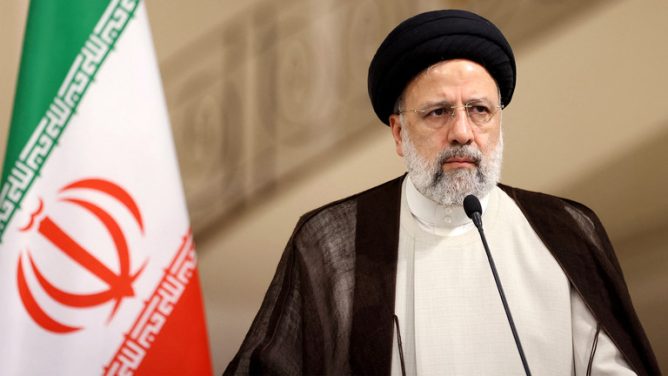
Iran’s President Ebrahim Raisi giving a joint press conference. © AFP / Iranian Presidency
RT | February 12, 2023
Iranian President Ebrahim Raisi is going to make an official visit to China next week, the Chinese Foreign Ministry has said.
Raisi’s planned visit will take place between February 14 and 16 and is at the invitation of Chinese leader Xi Jinping, the ministry announced in a statement on Sunday.
The three-day trip will, among other elements, include talks between Raisi and Xi, a joint meeting of the leaders with Iranian and Chinese businessmen, and the signing of cooperation documents between the delegations of the two countries, according to Iran’s state-run news agency IRNA.
Also reporting on the upcoming visit, US outlet Politico said that it’s “expected to deepen ties between the two political and economic partners that are opposed to the US-led Western domination of international affairs.”
Xi and Raisi last met during the Shanghai Cooperation Organization (SCO) summit last September in Samarkand, Uzbekistan. During those talks, the Chinese leader insisted that consolidating their strategic partnership was a common choice for both Beijing and Tehran.
In December, Chinese Vice President Hu Chunhua visited Iran and met with Raisi, with both sides expressing eagerness to boost bilateral ties further.
China is Iran’s largest trading partner and the main buyer of its oil amid US sanctions on Tehran. According to Iranian data, its exports to China reached $12.6 billion in the last ten months. The country also bought $12.7 billion worth of Chinese goods during the period.
Last year, Iran was formally included into the SCO as a permanent member and also applied to join BRICS – the two international organizations in which China and Russia play a major role.
Sanction failures piling up
Free West Media | February 11, 2023
Western sanctions were supposed to “ruin” Russia not only economically, but also technologically – according to the well-known announcement by German Foreign Minister Annalena Baerbock.
The ban on supplying electronics was intended to paralyze the Russian armaments industry. But Western war planners appear to have gotten even the most basic facts wrong. As is now apparent, an “isolated” Russia has managed to circumvent US-imposed sanctions in the technology sector. What’s more, Russia is importing even more microchips and semiconductors than before the war.
Among other things, the US and the EU banned the supply of microchips and semiconductors to Russia, depriving them of “70 percent” of their imports. The most important companies in the sector, such as Intel, AMD, the Taiwanese chip giant TSMC and Nexperia from the Netherlands, stopped doing business in Russia almost overnight.
At the end of March, US President Biden confidently announced that Russia would no longer be “able to rebuild those devastating weapon systems” and was on its way back “to the 19th century” as a result of the Russian operation in Ukraine, while US Commerce Secretary Gina Raimondo stated: “We have reports from Ukrainians that when they find Russian military equipment on the ground, it’s filled with semiconductors that they took out of dishwashers and refrigerators”.
Raimondo spoke at a Senate hearing in May last year, noting that she had recently met with Ukraine’s prime minister. “Our approach was to deny Russia technology — technology that would cripple their ability to continue a military operation. And that is exactly what we are doing.”
And in September, the President of the EU Commission, Ursula von der Leyen, defiantly announced that Russia’s industry was in ruins. “The Russian military is taking chips from dishwashers and refrigerators to repair their military equipment because they are running out of semiconductors. Russian industry is in tatters,” she claimed in a speech in the European Parliament.
Total Western failure to predict outcomes
But the Russian armed forces never had to do that during the war, as is now evident. Referring to an official report, the weekly German newspaper Zeit reported that Western sanctions in no way reduced Russian imports of electronic components – on the contrary: Russia imported even more processors and semiconductors in 2022 than before the war. Overall, imports in this segment have increased from 1.8 billion euros to 2.45 billion euros.
Beyond that, Russian imports fell by just 16 percent on a yearly basis. This was also confirmed by US economist and sanctions advocate Matthew Klein. According to his calculations, Russian imports in November were only 15 percent below the monthly average for 2021. At the beginning of 2022, shortly after the Russian operation started, Western “experts” had expected a slump of at least 30 to 40 percent.
The fact that Russia was able to circumvent the sanctions is due to countries like China, Turkey or the United Arab Emirates, which quickly filled the gaps left by Western corporations. They also act as a location for Russian intermediaries who obtain Western technology from letterbox companies.
At the same time, Russians have been manufacturing their own goods to fill the gaps that have arisen as a result of sanctions and the withdrawal of western corporations.
IMF expects Russia’s economy to grow
Until recently the West doubted that Russia’s economy would survive under sanctions, but the International Monetary Fund (IMF) is now sounding more optimistic than even the Russian government. Known for its gloomy forecasts, The IMF has predicted that Russia’s GDP will expand this year.
By far the most important trading partner for Russia is China. Overall, imports from China rose by 13 percent in 2022. Many Western companies such as Apple or Ikea had supplied the Russian market before they withdrew. This decision to leave could be compensated for.
China’s companies now deliver the majority of new cars and smartphones, computers, but also heavy equipment such as construction machinery and trucks. In fact, exports of trucks from China more than tripled in 2022 while imports of construction equipment have doubled.
Most importantly from a Russian point of view, however, are the imports of microchips. Together with Hong Kong, China shipped $900 million worth of semiconductors to its neighbour in 2022, more than double than the figure for 2021.
Featured Video
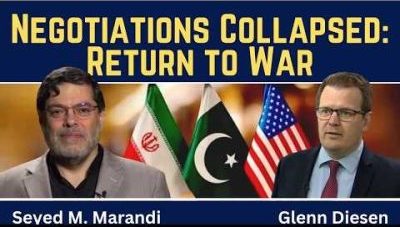
Seyed M. Marandi: Negotiations Collapsed – Return to War
or go to
Aletho News Archives – Video-Images
From the Archives
The US-Iran Scenario That Most Scares Israel
By Ali Haydar | Al-Akhbar | October 9, 2013
Israeli Prime Minister Benjamin Netanyahu issued a series of threats toward Iran and its interlocutors in the West, including the US, as serious negotiations on Iran’s nuclear program seem more plausible.
As a possible rapprochement looms between the US and Iran, Netanyahu has attempted to impose impossible Israeli conditions on the negotiators, such as the full dismantling of Iran’s nuclear program, not to mention threatening military force.
Whatever the deal that could materialize between Iran and the West, Israel is going to find itself before an open-ended path. One can foresee three possible scenarios… continue
Blog Roll
 Aletho News
- UK, Spain reject Trump’s new scheme to blockade Hormuz Strait
- Russian frigate ‘resurfaces’, chases off NATO pirates days after Kiev ‘sank’ it
- Ukraine Targets Russian Merchant Fleet With NATO Intel Support – Presidential Aide
- Russia’s ‘shadow fleet’ makes mockery of UK naval power
- Ukraine plans to attack Russian ships with Norwegian support
- US’s ‘Very Foolish’ Double Blockade of Hormuz Strait Makes Absolutely No Sense: Here’s Why
- China issues rules on countermeasures against foreign states’ unlawful extraterritorial jurisdiction
- Seyed M. Marandi: Negotiations Collapsed – Return to War
- Tomorrow’s naval blockade showdown
- ‘Israel’ attacks civilians to hide its embarrassing military failures & out of pure sadism
- If Americans Knew
- Critical shortages in Gaza, Lebanon in ruins, “piracy” in Iran – Daily Update
- US-Iran ceasefire negotiations make zero progress – Daily Update
- Pro-Israel ‘Thinktanks’ and Individuals who Influence U.S. Foreign Policy
- Mearsheimer reveals how Israel dictates US policies on Iran, Gaza – video
- After killing 350+, Israel still has a “score to settle” with Lebanon before ceasefire – Daily Update
- Military aid to Israel emerges as the latest political litmus test for Democrats
- The only Palestinian children’s rights organization closes following years-long Israeli campaign against it
- ‘I Can’t Forget the Smell’: Lebanese Reel After Israel Kills Over 300 in Single Day
- DNC Shoots Down Resolutions Calling Out AIPAC and Limiting Arms to Israel
- TCN: Is Israel Blackmailing President Trump?
- No Tricks Zone
- Cave Discovery Reveals Today’s Desert Climates Were Recently Far Warmer, Wetter, Teeming With Life
- German Expert: Heat Dome Led To Record Temps In Western USA…Warmer In 1934, 1936
- New Study: No Linear Warming Or Glacier Retreat Along Northern Antarctic Peninsula Since 1980s
- An Inconvenient Tree: Uncovered In Alps… Europe Much Warmer Than Today 6000 Years Ago
- New Study Reports A 60% Slowdown In Greenland’s Ice Loss Rate In The Last Decade
- Low Intensity Tornado Wrecks Major Solar Farm, Creating A Potential Toxic Dump
- New Study Finds Warming Saves Lives…Cold Temperatures 12 Times More Deadly Than Excess Heat
- German Science Blog Accuses PIK Climate Institute Of Hallucinating Climate Tipping Points
- Devastating Assessment Of Comirnaty Vaccine By Former Senior Pfizer Europe Toxicologist
- New Study: CO2 Is ‘Effectively Negligible’ As An Explanatory Climate Change Factor Since 2000
 Aletho News