The Illusion of Debate
By Jason Hirthler | CounterPunch | December 2, 2014
A recent article in FAIR reviewed the findings of its latest study on the quality of political “debate” being aired on the mainstream networks. It studied the run-up to the military interventions in both Iraq and Syria. Perhaps the arbiters of the study intended to illustrate what we’ve learned since the fraudulent Iraq War of 2003. Well, it appears we’ve learned nothing.
FAIR spent hours painfully absorbing the misinformation peddled by such soporific Sunday shows as CNN’s State of the Union, CBS’s Face the Nation, NBC’s Meet the Press, and ABC’s This Week, plus some of the more popular weekly political programming including ADHD-inducing CNN’s Situation Room, Fox News Channel’s Special Report, the venerable sedative PBS NewsHour, and MSNBC’s Hardball. You know the cast of characters: glib George Stephanopoulos, forthright Candy Crowly, harrowing Wolf Blitzer, and stentorian Chris Matthews. Images of their barking maws are seared into the national hippocampus.
Overall, 205 mostly government mouthpieces were invited to air their cleverly crafted talking points for public edification. Of them, a staggering sum of three voiced opposition to military action in Syria and Iraq. A mere 125 stated their support for aggressive action.
Confining its data to the Sunday shows, 89 guests were handsomely paid to educate our benighted couch-potato populace. One suggested not going to war. It stands to reason that considered legal arguments against these interventions got the short shrift, too.
The media consensus on Syria and Iraq isn’t an isolated instance of groupthink. Far from it. It conforms to a consistent pattern, one that has at its core a deliberate disregard for international law and efforts to strengthen transnational treaties and norms regarding military action. (Although transnational law regulating trade is highly favored, for obvious reasons.)
Here the New York Times uncritically repeats Israel casualty figures from the recent attack on Gaza. The journalist, Jodi Rudoren, gives equal legitimacy to sparsely defended claims from Tel Aviv and “painstakingly compiled research by the United Nations, and independent Palestinian human rights organizations in Gaza.” She adopts a baseless Israeli definition of “combatant”, ignoring broad international consensus that contradicts it. She dubiously conflates minors with adults, and under-reports the number of children killed. And so on. All in the service of the pro-Israel position of the paper.
In 2010 Israel assaulted an aid flotilla trying to relieve Palestinians under the Gaza blockade. Author and political analyst Anthony DiMaggio conducted Lexis Nexus searches that demonstrate how U.S. media and the NYT in particular scrupulously avoid the topic of international law when discussing Israeli actions. In one analysis of Times and Washington Post articles on Israel between May 31st and June 2nd, just five out of 48 articles referenced international law relating to either the flotilla raid or the blockade. DiMaggio dissects several of the methods by which Israel flaunts the United Nations Charter. He adds that Israel has violated more than 90 Security Council resolutions relating to its occupation. You don’t get this story in the American mainstream. But this is typical. U.S. media reflexively privileges the Israeli narrative over Arab points of view, and barely acknowledges the existence of dozens of United Nations resolutions condemning criminal actions by Israel.
It’s the same with Iran. For years now, Washington has been theatrically warning the world that Iran wants to build a bomb and menace the Middle East with it. That would be suicidal. It is common knowledge among American intelligence agencies, and any others that have been paying attention, that Iran’s foreign policy is deterrence. But this doesn’t stop the MSM from portraying Tehran as a hornet’s nest of frothing Islamists.
Kevin Young has done a telling survey of articles on nuclear negotiations between the U.S. and Iran. Some 40 editorials written by the Times and the Post were vetted. Precisely zero editorials acknowledged international legal implications of U.S. public threats and various subversions led by Israel, such as assassinating scientists and conducting cyber-attacks, both innovations on standard violations of sovereignty. However, 34 of the pieces “said or implied” that Iran was seeking a nuclear weapon. Forget that 16 American intelligence agencies stated that Iran had no active nuclear weapons program. These papers of record prefer to trade in innuendo and hearsay, despite assessments to the contrary. More than 80% of the articles supported the crippling U.S. sanctions that are justified by the supposed merit of the bomb-building claim.
Prior to Young’s work, Edward Hermann and David Peterson looked at 276 articles on Iran’s nuclear program between 2003 and 2009. The number itself is staggering, more so when stacked against the number of articles written over the same period about Israel’s nuclear program: a mighty three.
This is interesting considering the posture of both countries in relation to international treaties. Israel freely stockpiles nuclear weapons and maintains a “policy of deliberate ambiguity” about its nuclear weapons capacities, despite frequent efforts by Arab states to persuade it to declare its arsenal (which is estimated by some to be in the hundreds). Also, it has yet to sign the Treaty on the Nonproliferation of Nuclear Weapons (NPT) that has been signed by 190 nations worldwide. This intransigent stance has marooned the broadly embraced idea of working to establish a nuclear weapons free zone in the region.
Contrast Israel’s behavior with that of Iran itself, which has permitted extensive inspections of its nuclear facilities. The Times recently noted the country’s main nuclear facilities were “crawling with inspectors.” Iran is also a party to the NPT and is a full member of the IAEA. It continues to try to work toward a reasonable solution with the West despite debilitating sanctions levied on it by the United States. America has unduly pressured the IAEA to adopt additional protocols that would require prohibitively stringent demands on Iran, rendering the possibility of a negotiated solution comfortably remote from an American standpoint. (These additional demands reportedly include drone surveillance, tracking the origin and destination of every centrifuge produced anywhere in the country, and searches of the presidential palace. All of this passes without comment from our deeply objective journalist class.)
Coverage of Iraq is no different, particularly in advance of periodic illegal war of aggression against it. Former U.N. Special Rapporteur on Palestine Richard Falk and author Howard Friel conducted a survey in 2004 assessing the New York Times’ pre-war coverage of Iraq in 2003. In more than 70 articles on Iraq, the Times never mentioned “UN Charter” or “international law.” The study also found “No space was accorded to the broad array of international law and world-order arguments opposing the war.” But such arguments only exist outside of Western corridors of power in Washington, London, Paris, and Tel Aviv.
This isn’t debate. Real debate is pre-empted by internal bi-partisan consensus on some basic issues: maintain a giant garrison state, shrink the state everywhere else, preference corporations over populations, restrict civil liberties to secure status quo power structures. So when it comes to Iran, Iraq, Syria and the like, the question isn’t whether to go to war, but what kind of war to fight. Hawks want bombs. Doves want sanctions. Publicans want Marines. Dems want a proxy army of jihadis. They both want Academi mercenaries. (Obama hired out the gang formerly known as Blackwater to the CIA for a cool $250 million.) And when we’ve finished off ISIS, the question won’t be about an exit strategy, but whether to head west to Damascus or east to Tehran.
The question isn’t whether to cut aid to Israel given its serial criminality in Gaza and the West Bank, but how fast settlements can annex the Jordan Valley without attracting more international opprobrium. (International law, again, set aside.)
On the domestic front, the question isn’t whether to have single payer or private healthcare, but whether citizens should be forced to purchase private schemes or simply admonished to do so. The question isn’t whether or not to keep or strengthen New Deal entitlements, but how swiftly they can be eviscerated. The question isn’t whether or not to surveil the body politic, but where to store the data, and whether or not to harvest two-hop or three-hop metadata. The question isn’t whether or not to hold authors of torture programs accountable, but how much of the damning torture report to redact so as to leave them unprosecutable. The question isn’t whether or not to regulate Wall Street but, as slimy oil industry lawyer Bennett Holiday put it in Syriana, to create “the illusion of due diligence.”
All this is not to say the MSM isn’t aware of alternative viewpoints. It is, but it only acknowledges them when they can be used to justify a foregone conclusion. In the past year, the MSM has nearly become infatuated with international law. Friel has tracked the paper of record’s response to the Ukrainian fiasco. What did he find? When Russia annexed Crimea, the Times inveighed against the bloodless “invasion” as a gross violation of international law. Eight different editorials over the next few months hyperventilated about global security, castigating Russian President Vladimir Putin for his “illegal” violation and his “contempt for,” “flouting,” “blatant transgression,” and “breach” of international law. Calls were sounded to “protect” against such cynical disregard of global consensus. Western allies needed to busy themselves “reasserting international law” and exacting heavy penalties on Russia for “riding roughshod” over such sacred precepts as “Ukrainian sovereignty.”
Quite so, as Washington supports the toppling of democratically elected governments in Kiev and Tegucigalpa, sends drones to ride “roughshod” over Yemeni, Pakistani, Somali and other poorly defended borders; and deploys thousands of troops, advisors, and American-armed jihadis to patrol the sectarian abattoirs of Syria, Iraq and Afghanistan. But better to exonerate ourselves on those counts and chalk it up to the fog of war. After all, we follow the law of exceptionalism, clearly defined by Richard Falk as, “Accountability for the weak and vulnerable, discretion for the strong and mighty.”
Jason Hirthler is a veteran of the communications industry. He lives in New York City and can be reached at jasonhirthler@gmail.com.
What Did Samantha Power Say About Iraq Invasion?
By Peter Hart | FAIR | June 10, 2013

Samantha Power on Democracy Now!
Obama National Security Council adviser Samantha Power has been named the new U.S. ambassador to the United Nations. That news prompted a piece in the New York Times (6/9/13) headlined “A Golden Age for Intervention?” by Neil MacFarquhar. The article raises some of the usual issues surrounding Power’s work– most prominently the notion that the United States should use military intervention in the name of humanitarianism.
MacFarquhar writes that Power
wants the system to work. As flawed as the Security Council is, she has often said, its endorsement amplifies international approval for controversial action. She criticized the American invasion of Iraq because it lacked the council’s stamp, among other reasons.
But what did Samantha Power actually say about the Iraq War before it happened?
Power was prominent in elite foreign policy discussions at the time; her 2002 book A Problem from Hell: America and the Age of Genocide won a Pulitzer the following year.
MacFarquhar makes it sound like Power had multiple reasons she opposed the war. But it’s difficult to find such evidence.
On March 10, 2003, she appeared on MSNBC‘s Hardball to debate pro-war writer Jonathan Chait–whom she agreed with on a few points.
Indeed, it was somewhat difficult to say what Power’s position was overall:
An American intervention likely will improve the live of the Iraqis. Their lives could not get worse, I think it’s quite safe to say.
The issue, though, is whether the United States can be, in a sense, the unilateral guardian of human rights and whether the intervention itself won’t have destabilizing consequences, both in terms of our security, the very security in whose name we’re really launching this intervention, and in the name of international principles like human rights, international justice, international stability.
Power seemed especially concerned about how the ramifications of the war on U.S. standing in the world:
It legitimates the go-it-alone approach and it sort of reinforces the impression of us as an outlaw nation, which is ironic because, of course, Saddam’s regime is far more an outlaw nation than ours.
So Power certainly did not support the way the United States was launching the war. But that’s not really the same as opposing the war; it’s wishing for more effective management of the war.
And host Chris Matthews closed the segment trying to get Power to take a position:
MATTHEWS: Is this a just war, Samantha?
POWER: It will have a just result locally and probably a very unjust result…
MATTHEWS: Is it a just war?
POWER: I don’t think we can be the guardians of justice…
MATTHEWS: No, I–so it’s not a just war?
POWER: We haven’t fought it yet, Chris. I mean, you know, you can’t say whether…
MATTHEWS: Well, you have to decide about a war before you start it, not afterwards. Is this a just war…
POWER: No, you can’t weigh in on proportionality, on discrimination, on whether we actually follow through and actually look out for the rights of the Iraqis…
(CROSSTALK)
POWER: … after the war. We don’t know that now.
MATTHEWS: But in its outset, is it a just war?
POWER: It’s not being fought for human rights reasons. I don’t know who–why–I mean, it would be great if human rights were a necessary condition.
At that time, bonafide critics of the Iraq War were much clearer than that, and it’s hard to find much else that would suggest that Power had a particularly clear anti-war case she made publicly–though she did, like many others, come around to articulating a more forceful critique of the Bush administration by the time that administration was almost over.
Weeks after the war started, a Los Angeles Times article (4/10/03) on Power included this assessment of Iraq:
“That’s what’s so great about the fall of Saddam Hussein. Now we can actually put our money and power where our might has been so far. We can demonstrate what we have claimed all along, that this war is about them,” she said, referring to the Iraqi people.
“The hard work is just beginning, in Iraq and also in restoring U.S. credibility as a global actor. I hope the book provides the spirit in which that can be done.”
Some of Power’s most pointed critics–like writer and lawyer Chase Madar–have argued that Power does not forcefully critique U.S. policies that have encouraged and enabled massive crimes against humanity, preferring instead to talk about instances where the United States could have taken steps to intervene militarily in a given crisis and didn’t.
But in the case of Iraq, at a time when the themes of her celebrated book were very much a part of the debate over whether or not to go to war, it was hard to determine where Power stood.
Chris Matthews: Cable News Would Have Stopped Iraq War Lies
By Peter Hart | FAIR | May 24, 2012
Reporting from the big cable TV industry event this week, Broadcasting & Cable‘s Andrea Morabito writes (5/22/12):
Hardball host Chris Matthews argued that because of the rise of opinion-based news networks, the non-critical aspect of the media is gone, going as far to say that the reporting that verified the U.S. administration’s claims about weapons of mass destruction in Iraq in 2002 would not happen today because of cable news.
“I would like to think there would be a reckoning we didn’t have then because of modern media,” Matthews said. “24/7 is good because it’s not only breadth, it’s depth. Without cable, it is just network [television] thinking, embedded thinking, which is dangerous in a democracy.”
Umm… He’s aware of the fact that cable news channels existed in 2002, right?
In fact, here’s some of what he and his cable colleagues were doing:
—MSNBC‘s Hardball host Chris Matthews asks of World Bank/IMF protests in Washington, D.C.: “Those people out in the streets, do they hate America?” Conservative pundit Cliff May responds: “Yes, I’m afraid a lot of them do. They hate America. They align themselves with Saddam Hussein. They align themselves with terrorists all over the world.” Hardball correspondent David Shuster later adds that “anti-Americanism is in the air.”
And elsewhere on MSNBC (3/6/03):
—MSNBC‘s Dan Abrams indignantly defends the Bush administration against critics who suggest the White House isn’t telling the truth about the rationale for war:
“Well, anyone making these allegations better be willing to defend exactly what they’re saying. They’re saying this administration is at the least morally corrupt, lying to the American public and the world about their motives and willing to have Americans die for that lie, and, at worst, that they’re actually abhorrent criminals. That’s absurd.”
A few months later, MSNBC host Joe Scarborough (4/10/03) demanded that war critics apologize:
“I’m waiting to hear the words ‘I was wrong’ from some of the world’s most elite journalists, politicians and Hollywood types…. I just wonder, who’s going to be the first elitist to show the character to say: ‘Hey, America, guess what? I was wrong’? Maybe the White House will get an apology, first, from the New York Times’ Maureen Dowd. Now, Ms. Dowd mocked the morality of this war….
“Maybe disgraced commentators and politicians alike, like Daschle, Jimmy Carter, Dennis Kucinich, and all those others, will step forward tonight and show the content of their character by simply admitting what we know already: that their wartime predictions were arrogant, they were misguided and they were dead wrong. Maybe, just maybe, these self-anointed critics will learn from their mistakes. But I doubt it. After all, we don’t call them ‘elitists’ for nothing.”
To be fair, there were people at MSNBC pushing back against the pro-war propaganda. Phil Donahue was the most prominent– and he was fired for it. What was Matthews doing at the time? He was reportedly going to management to lobby to get Donahue off the air.
“We would have stopped the drive to war” is probably more comforting than “We helped make the war happen.”
Featured Video
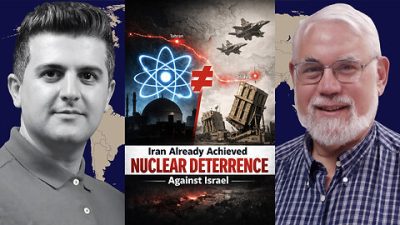
Prof. Ted Postol: Iran Already Achieved Nuclear Deterrence Against Israel
or go to
Aletho News Archives – Video-Images
From the Archives
How the occupied mentality syndrome works
Saudi Arabia on the American chessboard – Part 3
By B. J. Sabri | American Herald Tribune | June 27, 2016
Read part 2: “The occupied mentality Syndrome“
Previously I argued whether Saudi Arabia’s repeated involvements in U.S. interventions and wars stem from free national will or in response to a specific condition. For starters, in Saudi Arabia there is no national will. In Saudi Arabia, the national will is the will of the Al Saud clan. Still, when a major Arab state allies itself with a superpower that committed unspeakable crimes against humanity in almost every Arab country, then something is wrong. This fact alone should compel us to examine the U.S.-Saudi relation for one exceptional reason. As a result of the U.S.-Saudi wars, hundreds of thousands of people in Afghanistan, Iraq, Iran, Libya, Syria, Yemen, and Somalia have lost their lives. Millions became displaced in their own homelands. And millions more rendered refugees.
Attributing the Saudi policies to the bonds of “partnership” with the U.S. is frivolous. There are no bonds between these two thugs except those of business, military deals, secret plots, and wars. Proving this point, bonds such as these have no space for the American and Saudi peoples to share significant cultural or societal exchanges. If partnership is not the reason for the Saudi contribution to the U.S. strategy of empire and imperialism, then another reason must exist.
This leads to three possibilities. … continue
Blog Roll
 Aletho News
- Aircraft destroyed during US ‘rescue’ of downed F-15 pilot cost more than $100 million each
- Washington University removes professor who condemned US-Israeli war on Iran
- Russia Warns of Retaliation as UK Authorizes Seizure of Vessels
- Serbia thwarts plot to bomb Russia-Hungary gas pipeline – Vucic
- Al Mayadeen voices solidarity with Dr. Marandi amid death threats
- US dismantling international law in its war against Iran while claiming ‘false’ victory: Legal scholar
- One martyr, 5 injuries in US attack on Iraqi border crossing with Iran
- ‘This war is Israel’s war’: World facing ‘security breakdown’, says Qalibaf
- IRGC decries attack on US embassy in Riyadh, says executed by ‘Israel’
- Iran blasts EU hypocrisy as EU invokes international law over Hormuz
- If Americans Knew
- US loses planes over Iran, Israel downgrades Lebanon war goals – Daily Update
- Israel Is Blocking Palestinians from Easter at Church Where Jesus Resurrected
- Plot to assassinate Palestinian activist follows harassment campaign promoted by Zionist groups and elected officials
- Prominent New York synagogue hosts presentation on why U.S. Jews should support the ethnic cleansing of Gaza
- Tapper vs. Piker: Is the CNN Anchor Auditioning for David Ellison?
- Shouldn’t Democrats Be Able to Condemn Genocide?
- Israel-US kill negotiators, destroy civilian structures, but Iran’s military capabilities still largely intact – Daily Update
- ‘War crime’: Global condemnation as Israeli ministers celebrate death penalty law targeting Palestinian prisoners
- 7 Ways Israel Is Turning Lebanon Into Gaza
- World’s Leading Football Bodies Under Fire Over Israel Policies
- No Tricks Zone
- An Inconvenient Tree: Uncovered In Alps… Europe Much Warmer Than Today 6000 Years Ago
- New Study Reports A 60% Slowdown In Greenland’s Ice Loss Rate In The Last Decade
- Low Intensity Tornado Wrecks Major Solar Farm, Creating A Potential Toxic Dump
- New Study Finds Warming Saves Lives…Cold Temperatures 12 Times More Deadly Than Excess Heat
- German Science Blog Accuses PIK Climate Institute Of Hallucinating Climate Tipping Points
- Devastating Assessment Of Comirnaty Vaccine By Former Senior Pfizer Europe Toxicologist
- New Study: CO2 Is ‘Effectively Negligible’ As An Explanatory Climate Change Factor Since 2000
- Former Pfizer Toxicologist Dr. Helmut Sterz Tells Bundestag Hearing Pfizer Vaccine Should Have Never Been Approved
- Energy Expert: Germany’s Nuclear Phaseout Was A “500 Billion Euro Mistake”
- New Research: South Australia’s Mid-Holocene Sea Surface Temperatures Were 4°C Warmer Than Today
 Aletho News