Counterpunch Shadowboxes and Loses
By Edward Curtin | February 17, 2019
In a fair boxing match, opponents enter the ring with similarly padded gloves and battle under the bright lights for the world to see. There are, of course, cases where one fighter cheats, as in the infamous case in 1983 when Luis Resto wore weakly padded gloves and hand wraps hardened with plaster to make them rock solid. His opponent, Billy Collins, an up-and-coming boxer from Tennessee with a 14-0 record, was permanently and very seriously injured in the fight at Madison Square Garden. His eyes were battered shut and his vision damaged. He never fought again and died depressed the following year at age twenty-two.
In the fight for truth in the public arena, similar subterfuges occur.
To battle honestly in the open forum, to argue to and fro squarely, is often prevented in advance by eliminating an opponent’s voice from the debate. This is the typical method used by the corporate mass media that stack the deck with sycophants and refuse dissidents a place to voice their ideas.
Then there is the masquerade of fighting an opponent who is really a collaborator and benefactor, whose punches one counters in a game of shadow boxing meant to convince the audience that the fight is real and you are on their side. Some alternative media use this technique because they are gatekeepers for the power elite.
Sometimes this ruse is so blatant that the fix becomes transparent because the smart-asses who play this game screw up, yet they still expect their real opponents to shut up and walk away because their fixer’s mantra is “Never apologize, never explain.” It has always been the code of the rich and powerful.
Some are brawlers, however, and fight back against this bullshit.
The well-known leftist website Counterpunch is an example of the “never apologize, never explain” school. A number of writers and journalists who have published many pieces at Counterpunch have been banned from this site in recent years without an explanation, Andre Vltchek and C.J. Hopkins being two who crossed an invisible boundary the Shadow had drawn and were never again published by Counterpunch. Others, smelling an odd odor, have walked away. The numbers are growing.
I’ve recently seen Counterpunch shadowbox and the Shadow won.
On January 29, 2019, I published an article highly critical of the CIA at Global Research, where I am a Research Associate. After this piece appeared, I received an email from the editor of Counterpunch, Jeffrey St Clair, telling me that he too was going to publish this article on Friday, February 1, for Counterpunch’s weekend edition. I had written a few dozen pieces that Counterpunch had published and had a very cordial relationship with St Clair. In fact, when I was in Rome in 2018, he had asked me to place a stone for him on Keats’ and Shelley’s graves when I visited the cemetery where they were buried. I did that, and my wife took photos that I sent to him. All was copacetic. Buddies. High fives!
On February 1, 2019, shortly after midnight Eastern time (12:02 AM), Counterpunch published my piece for their weekend edition where articles remain for three days. When I awoke at 4 A.M., I saw it. Then at 8 A. M., when I arrived at the college where I teach, I again saw it. At 11 A.M., when I had finished teaching a few classes, I looked again and it had disappeared. Transitive verb: Counterpunch had disappeared it. Eliminated it. Scratched it. Excised it.
All the other numerous articles remained. Only mine was gone. At first I thought it was a mistake. But as the day wore on I wondered. So I emailed St Clair and asked my buddie what had happened. As compatriots don’t do, he did not reply. But I assumed he was busy, as I am, and gets many emails. So I waited. When I emailed him again, there was no reply. A third very cordial email three days later went unanswered.
Unlike Vladimir and Estragon in Waiting for Godot, I am no longer waiting. No reply is coming, and St Clair isn’t Godot, or on second thought he may be, a chimerical leftist gatekeeper enticing Counterpunch’s followers to wait forever for a revelation that isn’t coming. Like his mentor and the founder of Counterpunch, Alexander Cockburn, who was so fond of excoriating as “idiots” and “conspiracy nuts” anyone questioning the JFK assassination or the attacks of September 11, 2001 – two fundamental issues that only believers in official government conspiracy theories such as Cockburn could dismiss – St Clair seems similarly dismissive of explaining why a writer’s critique of the CIA would deserve to be eliminated after being published. As if only an idiot would want to know.
However, any reasonable person would ask: Why would he not respond? St Clair, the editor-in-chief, published the piece and then disappeared it after 10-11 hours? This is highly unusual, to put it mildly. Unprecedented for the so-called left-wing alternative media. It is the kind of thing when done by the mainstream corporate media would be denounced and exposed as censorship. Not publishing an article is a publication’s prerogative, of course, but what could cause one to eliminate an article highly critical of the CIA after people had ten or so hours to read it, and since the author and editor had a very cordial relationship up to that point and the editor had days to read it carefully?
One doesn’t have to be Sherlock Holmes to realize that someone objected to the piece. But who could that be? If it were St Clair’s managing editor, Joshua Frank, twenty years his junior (the two run the operation), then St Clair could have explained to me why, since we were on good terms. I wouldn’t have liked it and argued my points, but at least we could have cordially agreed to disagree. But the Frank possibility makes no sense, for a managing editor would be intimately involved in the publishing process that was completed the previous day in time for the very early Friday A.M. postings. And in any case, St Clair is in charge.
Clearly an outside reader objected. The question is: Who is that reader that could exert such control over a publication that promotes itself as one that “Tells the Facts, Names the Names.” A publication that is considered radically leftist and in opposition to the ruling elites.
Okay, Counterpunch, would you name the name of the shadowy one who won this fight?
Elliott Abrams ‘Cabaled Quietly’ to Spring a CIA-Connected Drug Trafficker
By Jefferson Morley | The Deep State | February 15, 2019
Surely, this is just another “loony left” headline about Elliott Abrams, the administration’s point man on Venezuela, whom some say has been unfairly pilloried on Capitol Hill.
If you read this September 1986 National Security Council email, written by NSC staffer Oliver North, you’ll see the headline is not over-stated but factually precise and faithful to the conspiratorial tone of the original source.
When U.S. policymakers needed to spring a convicted CIA-connected drug trafficker from doing hard time in federal prison, who did they call?
Trump’s appointed special envoy to Venezuela, Elliott Abrams.
On Thursday, Rep. Ilhan Omar (D-MN) scorched Abrams for his covering up the infamous El Mozote massacre and lying to Congress during the Iran-Contra conspiracy in the 1980s.
Her interrogation drew rebuke from Max Boot, the apostate conservative, and a chorus of right-wing media commentators. Boot described Omar’s comments as a “disgraceful ad hominem attack.”
Actually the impertinent Congresswoman from Minneapolis could have gone much further about Abrams’ untrustworthy behavior. One of the most revealing stories about Abram’s hypocrisy comes from an impeccably right-wing source, Oliver North, former Republican senatorial candidate and Fox News talking head.
Bagman
The year was 1986. Abrams served as assistant secretary of state for Latin America under President Reagan. He was a 39 year old lawyer and foreign policy polemicist. Even then his perennial scowl and crooked grin managed made him look furtive and self-righteous at the same time.
The Iran-Contra conspiracy was in full swing. The conspiracy, permissively labelled “a scandal,” was a Reagan White House plot to subvert the U.S. Congress’s powers of the purse. North was the coordinator of what can fairly be described as an unconstitutional covert operation, while Abrams played the role of bagman.
To bypass the so-called Boland Amendment, Abrams took payments from the Sultan of Brunei, a petroleum potentate from South Asia, and passed them to the leaders of Reagan’s counterrevolutionary army in Nicaragua. When questioned under oath, Abrams lied. He later pleaded guilty to two counts of deceiving Congress.
As part of the conspiracy, Abrams also put in a good word for a convicted drug trafficker, General Jose Bueso Rosa. He was a Honduran general who had helped the U.S. government with “sensitive operations” in Central America. As Murray Waas and I wrote in the Washington Post, North did “a favor for a felon.”
So did Abrams.
‘Sensitive Operations’
As an episode of CIA-sanctioned drug trafficking, the Bueso story was typical. Bueso, it turns out, had helped put together a CIA-trained military intelligence unit known as Battalion 316, which served as death squad for U.S. policymakers. A Honduran government investigation found that Battalion 316 had captured, tortured and executed some 200 suspected leftists.
Bueso had also trafficked multi-kiloton shipments of cocaine. As CIA Inspector General Frederick Hitz documented in Volume 2 of his report on contra drug trafficking, the agency did business with more than 50 suspected drug traffickers in the 1980s.
(Lazy reporters sometimes say that the CIA was cleared of the allegation. They didn’t bother to read the Sections 800-1148 of Hitz’s report which detail how the agency took no action against four dozen suspected traffickers who aided Reagan’s–and Abrams’–anticommunist crusade.)

(Credit: CIA)
Investigating the story for the Post, I spoke on background with law enforcement officials familiar with Bueso’s case. A wiretap had picked up Bueso repeatedly talking about shipments of “flour” into central Florida, they said.
Given Bueso’s connections, no one in the Reagan Justice Department cared to make a big deal of his cocaine shipments, no matter how hefty. They just wanted a conviction that would put him out of business. Bueso got a generous plea bargain. He would only have to serve five years.
Bueso, however, was led to believe his American friends would save him from serving any time all.
In his September 1986 email, later uncovered by Iran-contra investigators, North worried Bueso might “break his long standing silence.” He might, in other words disclose unpleasant truths about death squads and CIA drug trafficking that might taint professed U.S. ideals of human rights.
So North “cabaled quietly” with Abrams, as well as top Pentagon, CIA and Justice Department officials. A presidential pardon was out of the question but transfer to a comfortable “Club Fed” facility was arranged.
At a time when U.S. prosecutors meted out ten-year sentences to young black men for the possession of a few ounces of cocaine, Abrams was part of a gang that thought a multi-kiloton trafficker should be treated leniently. Such was his subtle advocacy of human rights.
Bueso got out of prison early–for “good behavior.” Abrams went on to a long career in U.S. foreign policy. Hundreds of thousands of black men remained in jails for years, if not decades.
Question
Rep. Omar could have asked an even tougher question of Abrams, namely, “Does Trump’s policy toward Latin America today involve protection of drug traffickers as Reagan’s policy did in the 1980s?”
She was certainly justified in questioning his veracity.
“I fail to understand why members of this committee or the American people should find any testimony you give today to be truthful,” she said.
————————
Here’s the Omar-Abrams exchange.
Venezuela & The Mighty Wurlitzer
By Joyce Nelson | CounterPunch | February 15, 2019
On February 11, Bloomberg News published an astonishing piece about the unfolding Venezuelan turmoil. It was apparently the result of a major investigative effort involving three reporters and five others providing “assistance”. You’ll notice I haven’t called it a piece of news (although that’s what it looks like), but I’m not sure what to call it. It’s a piece of something, but what?
With eight people working on it, the piece is a long one, with plenty of sources. By my count, there were 19 sources. Here are 16 of them:
1-4) “four people with knowledge of the discussions”
5) “another person”
6) “a person familiar with the thinking”
7) “a person with knowledge of the conversations”
8) “another person” (different from the previously cited “another person”)
9) “a foreign military official”
10) “a French official”
11) “another person with knowledge of the deliberations”
12) “a person with knowledge of the internal discussions”
13) “a person familiar with [Juan] Guaido’s thinking”
14) “a person familiar with the discussions”
15) “a senior Turkish official”
16) “another person” (different from the previously cited “another person” and “another person”)
A seventeenth source was Elliott Abrams, the Trump administration’s special representative for Venezuela. It’s not clear, however, that any of Bloomberg News’ three reporters or the five others providing “assistance” actually interviewed Abrams or were simply quoting from a previous press conference: “Speaking in Washington last week, Abrams said…”
So what was the focus of this piece? The intrepid reporters were picking up on a January 31st tweet by U.S. National Security Advisor John Bolton, who encouraged Venezuelan President Nicolas Maduro to retire to “a nice beach somewhere far from Venezuela” while he still had time.
The Bloomberg News piece is entitled: “As Nicolas Maduro digs in, his aides hunt for an emergency escape route out of Venezuela.” It got wide exposure, including in Canada’s National Post. [1] The eight reporters and aforementioned 16 sources imply that Maduro is frantically seeking a bolthole somewhere, anywhere – Cuba? Russia? Turkey? Mexico? France? – while appearing to hang on to power.
Their quote from Abrams is this: “’I think it is better for the transition to democracy in Venezuela that he be outside the country,’ Elliott Abrams, U.S. Secretary of State Michael Pompeo’s special representative for Venezuela, said of Maduro. ‘And there are a number of countries that I think would be willing to accept him,’ he told reporters, citing ‘friends in places like Cuba and Russia’.”
There were two more sources cited in this piece: Andrey Kortunov, head of a Moscow research organization entitled the Russian International Affairs Council, and Russian lawmaker Andrey Klimov, deputy head of the upper house of Parliament’s foreign affairs committee. Both affirmed Maduro’s resilience in the midst of the turmoil, with Klimov telling Bloomberg News that Maduro “is not planning to go anywhere.”
Indeed, Klimov “dismissed talk of Maduro’s evacuation as ‘psychological warfare’ aimed at ‘sowing panic and hysteria’” in Venezuela.
In the old days, according to persons knowledgeable on the matter, psychological warfare was conducted through the CIA’s “Mighty Wurlitzer” – massive propaganda efforts utilizing mainstream media and other outlets. These days U.S. taxpayer-funded organizations like the National Endowment for Democracy (NED) have taken over much of that function. As The Intercept (Jan. 30) informs us, Elliott Abrams is on the board of the NED. [2]
The Mighty Wurlitzer blares on, but under different management and branding. Has Bloomberg News become part of this effort? At this point, persons familiar with the company’s thinking about the question have yet to come forward.
Footnotes:
[1] Esteban Duarte, Eric Martin, Ilya Arkhipov (Bloomberg News ), “As Nicolas Maduro digs in, his aides hunt for an emergency escape route out of Venezuela,” National Post, February 11, 2019.
https://nationalpost.com/news/world/as-nicolas-maduro-digs-in-his-aides-hunt-for-an-emergecy-escape-route-out-of-venezuela
[2] Jon Schwartz, “Elliott Abrams, Trump’s Pick for Fixing ‘Democracy’ in Venezuela, Has Spent His Life Crushing Democracy,” The Intercept, January 30, 2019.
Joyce Nelson’s sixth book, Beyond Banksters: Resisting the New Feudalism, can be ordered at: http://watershedsentinel.ca/banksters. She can be reached through www.joycenelson.ca.<
The Real Motive Behind the FBI Plan to Investigate Trump as a Russian Agent
By Gareth Porter | Consortium News | February 13, 2019
 The New York Times and CNN led media coverage last month of discussions among senior FBI officials in May 2017 of a possible national security investigation of President Donald Trump himself, on the premise that he may have acted as an agent of Russia.
The episode has potentially profound political fallout, because the Times and CNN stories suggested that Trump may indeed have acted like a Russian agent. The New York Times story on Jan. 11 was headlined, “F.B.I. Opened Inquiry into Whether Trump Was Secretly Working on Behalf of Russia.” CNN followed three days later with: “Transcripts detail how FBI debated whether Trump was ‘following directions’ of Russia.”
By reporting that Russia may have been able to suborn the president of the United States, these stories have added an even more extreme layer to the dominant national political narrative of a serious Russian threat to destroy U.S. democracy. An analysis of the FBI’s idea of Trump as possible Russian agent reveals, moreover, that it is based on a devious concept of “unwitting” service to Russian interests that can be traced back to former CIA director John O. Brennan.
The Proposal That Fell Apart
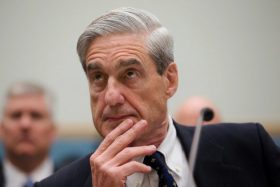
The FBI discussions that drove these stories could have led to the first known investigation of a U.S. president as a suspected national security risk. It ended only a few days after the deliberations among the senior FBI officials when on May 19, 2017, the Justice Department chose Robert Mueller, a former FBI director, to be special counsel. That put control over the Trump-Russia investigation into the hands of Mueller rather than the FBI.
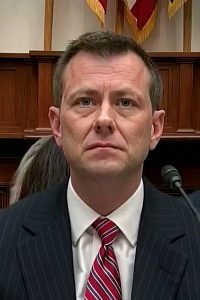
Peter Strzok, who led the bureau’s counter-espionage section, was, along with former FBI General Counsel James A. Baker, one of those involved in the May 2017 discussions about investigating Trump. Strzok initially joined Mueller’s team but was fired after a couple of months when text messages that he had written came to light exposing a deep animosity towards Trump that cast doubt over his impartiality.
The other FBI officials behind the proposed investigation of Trump have also since left the FBI; either fired or retired.
The entirety of what was said at the meetings of five or six senior FBI officials in the immediate aftermath of Trump’s firing of James Comey as FBI director on May 9, 2017, remains a mystery.
Closed-door Testimony
The CNN and Times stories were based on transcripts either obtained or, in the case of the Times, on portions read to it, of private testimony given to the House Judiciary and Government Oversight and Reform committees last October by Baker, one of the participants in the discussions of Trump as a possible Russian agent.
Excerpts of Baker’s testimony published by CNN make it clear that the group spoke about Trump’s policy toward Russia as a basis for a counter-intelligence investigation. Baker said they “discussed as [a] theoretical possibility” that Trump was “acting at the behest of [Russia] and somehow following directions, somehow executing their will.”
Baker went on to explain that this theoretical possibility was only “one extreme” in a range of possibilities discussed and that “the other extreme” was that “the President is completely innocent.”
He thus made it clear that there was no actual evidence for the idea that he was acting on behalf of Russia.
Baker also offered a simpler rationale for such an investigation of Trump: the president’s firing of FBI Director Comey. “Not only would [firing Comey] be an issue of obstructing an investigation,” he said, “but the obstruction itself would hurt our ability to figure what the Russians had done, and that is what would be the threat to national security.”
But the idea that Comey’s firing had triggered the FBI’s discussions had already been refuted by a text message that Strzok, who had been leading the FBI’s probe into the Trump campaign’s contacts with Russians, sent immediately after the firing to Lisa Page, then legal counsel to Andrew McCabe, formerly the bureau’s deputy director who was then acting director.
“We need to open the case we’ve been waiting on now while Andy is acting,” Strzok wrote, referring to McCabe.
As Page later confirmed to congressional investigators, according to the CNN story, Strzok’s message referred to their desire to launch an investigation into possible collusion between Trump and the Russians. Strzok’s message also makes clear he, and others intent on the investigation, were anxious to get McCabe to approve the proposed probe before Trump named someone less sympathetic to the project as the new FBI director.
Why the FBI Wanted to Investigate
The New York Times story argued that the senior FBI officials’ interest in a counter-intelligence investigation of Trump and the Russians sprang from their knowledge of the sensational charges in the opposition research dossier assembled by British ex-spy Christopher Steele (paid for by the DNC and the Clinton campaign) that the Putin government had “tried to obtain influence over Mr. Trump by preparing to blackmail and bribe him.”
But the Times writers must have known that Bruce Ohr, former associate deputy attorney general, had already given McCabe, Page and Strzok information about Steele and his dossier that raised fundamental questions about its reliability.
Ohr’s first contacts at FBI headquarters regarding Steele and his dossier came Aug. 3, 2016, with Page and her boss McCabe. Ohr later met with Strzok.
Ohr said he told them that Steele’s work on the dossier had been financed by the Clinton campaign through the Perkins-Cole law firm. He also told them that Steele, in a July 30, 2016 meeting, told him he was “desperate that Donald Trump not get elected and was passionate about him not being president,” according to Ohr’s contemporaneous notes of the meeting.
 So, key figures in the discussion of Trump and Russia in May 2017 knew that Steele was acting out of both political and business motives to come up with sensational material.
Strzok and Page may have started out as true believers in the idea that the Russians were using Trump campaign officials to manipulate Trump administration policy. However, by May 2017, Strzok had evidently concluded that there was no real evidence.
In a text message to Page on May 19, 2017, Strzok said he was reluctant to join the Mueller investigation, because of his “gut sense and concern” that “there’s no big there there.”
Why, then, were Strzok, Page, McCabe and others so determined to launch an investigation of Trump at about the same time in May 2017?
A CNN article about the immediate aftermath of the Comey firing reported that Deputy Attorney General Rod Rosenstein and senior FBI officials “viewed Trump as a leader who needed to be reined in, according to two sources describing the sentiment of the time.”
That description by anti-Trump law enforcement officials suggests that the proposed counter-intelligence investigation of Trump served as a means to maintain some leverage over his treatment of the FBI in regard to the Russia issue.
That motivation would be consistent with the decision by McCabe on May 15, 2017 – a few days after the discussions in question among the senior FBI officials – to resume the bureau’s relationship with Steele.
The FBI had hired Steele as a paid source when it had earlier launched its investigation of Trump campaign official’s contacts with Russians in July 2016. But it had suspended and then terminated the relationship over Steele’s unauthorized disclosure of the investigation to David Corn of Mother Jones magazine in October 2016. So, the decision to resume the relationship with Steele suggests that the group behind the new investigation were thinking of seizing an opportunity to take off the gloves against Trump.
The ‘Unwitting Collaboration’ Ploy
The discussion by senior FBI officials of a counter-intelligence investigation of Trump has become part of the political struggle over Trump mainly because of the stories in the Times and CNN.
The role of the authors of those stories illustrates how corporate journalists casually embraced the ultimate conspiracy theory – that the president of the United States was acting as a Russian stooge.
The reporters of the CNN story — Jeremy Herb, Pamela Brown and Laura Jarrett — wrote that the FBI officials were “trying to understand why [Trump] was acting in ways that seemed to benefit Russia.”
The New York Times story was more explicit. Co-authors Adam Goldman, Michael S. Schmidt and Nicholas Fandos wrote that the FBI officials “sought to determine whether Mr. Trump was knowingly working for Russia or had unwittingly fallen under Moscow’s influence.”
The same day the Times story was published, the lead author on the piece, Adam Goldman, was interviewed by CNN. Goldman referred to Trump’s interview with NBC’sLester Holt in the days after the Comey firing as something that supposedly pushed the FBI officials over the edge. Goldman declared, “The FBI is watching him say this, and they say he’s telling us why he did this. He did it on behalf of Russia.”
But Trump said nothing of kind. What he actually said — as the Times itself quoted Trump, from the NBCinterview —was: “[W]hen I decided just to do it, I said to myself – I said, you know this Russia thing with Trump and Russia is a made-up story.” The Times article continued: “Mr. Trump’s aides have said that a fuller examination of his comments demonstrates that he did not fire Mr. Comey to end the Russia inquiry. ‘I might even lengthen out the investigation, but I have to do the right thing for the American people,” Mr. Trump added. ‘He’s the wrong man for that position.’”
Goldman was evidently trying to sell the idea of Trump as a suspected agent of Russia.
Goldman also gave an interview to The New Yorker’s Isaac Chotiner, in which the interviewer pressed him on the weakest point of the Trump-as-Russian-agent theory. “What would that look like if the President was an unwitting agent of a foreign power?” asked Chotiner.
The Times correspondent, who won a Pulitzer Prize for his coverage of the alleged Russian efforts to influence the 2016 election, responded: “It is hard to say what that would look like.” Goldman then reiterated the concept. “People were very careful to tell me that: ‘It is wittingly or unwittingly.’” And in answer to a follow-up question, Goldman referred to evidence he suggested might be held by the FBI that “perhaps suggests that the President himself may be acting as a foreign agent, either wittingly or unwittingly….”
The idea that American citizens were somehow at risk of being led by an agent of the Russian government “wittingly or unwittingly” did not appear spontaneously. It had been pushed aggressively by former CIA Director John O. Brennan both during and after his role in pressing for the original investigation.
When Brennan testified before the House Intelligence Committee in May 2017, he was asked whether he had intelligence indicating that anyone in the Trump campaign was “colluding with Moscow.” Instead of answering the question directly, Brennan said he knew from past experience that “the Russians try to suborn individuals, and they try get them to act on their behalf either wittingly or unwittingly.” And he recalled that he had left the government with “unresolved questions” about whether the Russians had been successful in doing so in regard to unidentified individuals in the case of the 2016 elections.
Brennan’s notion of “unwitting collaboration” with Russian subversion is illogical. Although a political actor might accidentally reveal information to a foreign government that is valuable, real “collaboration” must be mutually agreeable. A policy position or action that may benefit a foreign government, but is also in the interest of one’s own government, does not constitute “unwitting collaboration.”
The real purpose of that concept is to confer on national security officials and their media allies the power to cast suspicion on individuals on the basis of undesirable policy views of Russia rather than on any evidence of actual collaboration with the Russian government.
The “witting or unwitting” ploy has its origins in the unsavory history of extreme right-wing anti-communism during the Cold War. For example, when the House Un-American Activities Committee was at its height in 1956, Chairman Francis E. Walter declared that “people who are not actually Communist Party members are witting or unwitting servants of the Communist cause.”
The same logic – without explicit reference to the phrase — has been used to impugn the independence and loyalty of people who have contacts with Russia.
It has also been used to portray some independent media as part of a supposedly all-powerful Russian media system.
The revelation that it was turned against a sitting president, however briefly, is a warning signal that national security bureaucrats and their media allies are now moving more aggressively to delegitimize any opposition to the new Cold War.
Gareth Porter is an independent investigative journalist and historian writing on U.S. national security policy. His latest book, “Manufactured Crisis: The Untold Story of the Iran Nuclear Scare,” was published in 2014. Follow him on Twitter: @GarethPorter.
US Air Freight Company that Smuggled Weapons Into Venezuela Linked to CIA “Black Site” Renditions
By Whitney Webb | MintPress News | February 13, 2019
GREENSBORO, NORTH CAROLINA – Two executives at the company that chartered the U.S. plane that was caught smuggling weapons into Venezuela last week have been tied to an air cargo company that aided the CIA in the rendition of alleged terrorists to “black site” centers for interrogation. The troubling revelation comes as Venezuelan President Nicolás Maduro has rejected a U.S. “humanitarian aid” convoy over concerns that it could contain weapons meant to arm the country’s U.S.-backed opposition.
Last Tuesday, Venezuelan authorities announced that 19 rifles, 118 ammo magazines, 90 radios and six iPhones had been smuggled into the country via a U.S. plane that had originated in Miami. The authorities blamed the United States government for the illicit cargo, accusing it of seeking to arm U.S.-funded opposition groups in the country in order to topple the current Maduro-led government.
A subsequent investigation into the plane responsible for the weapons caché conducted by McClatchyDC received very little media attention despite the fact that it uncovered information clearly showing that the plane responsible for the shipment had been making an unusually high number of trips to Venezuela and neighboring Colombia over the past few weeks.
Steffan Watkins, an Ottawa-based analyst, told McClatchy in a telephone interview that the plane, which is operated by U.S. air cargo company 21 Air, had been “flying between Philadelphia and Miami and all over the place, but all continental U.S.” during all of last year. However, Watkins noted that “all of a sudden in January, things changed” when the plane began making trips to Colombia and Venezuela on a daily basis, sometimes multiple times a day.
According to Watkins’ analysis, this single plane had conducted 40 round-trip flights from Miami International Airport to Caracas and Valencia — where the smuggled weapons had been discovered — in Venezuela, as well as to Bogota and Medellin in Colombia in just the past month.
Publicly available flight radar information shows that the plane, although it has not returned to Venezuela since the discovery of its illicit cargo, has continued to travel to Medellin, Colombia, as recently as this past Monday.
Multiple CIA ties
In addition to the dramatic and abrupt change in flight patterns that occurred just weeks before U.S. Vice President Mike Pence prompted Venezuelan opposition member Juan Guaidó to declare himself “interim president,” a subsequent McClatchy follow-up investigation also uncovered the fact that two top executives at the company that owns the plane in question had previously worked with a company connected to controversial CIA “black sites.”
Indeed, the chairman and majority owner of 21 Air, Adolfo Moreno, and 21 Air’s director of quality control, Michael Steinke, both have “either coincidental or direct ties” to Gemini Air Cargo, a company previously named by Amnesty International as one of the air charter services involved in a CIA rendition program. In this CIA program, individuals suspected of terrorism were abducted by the intelligence agency and then taken abroad to third-country secret “black sites” where torture, officially termed “enhanced interrogation,” was regularly performed.
Steinke worked for Gemini Air Cargo from 1996 to 1997, according to a 2016 Department of Transportation document cited by McClatchy. Moreno, although he did not work for Gemini, registered two separate businesses at a Miami address that was later registered to Gemini Air Cargo while the CIA rendition program was active. McClatchy noted that the first business Moreno registered at the location was incorporated in 1987 while the second was created in 2001. Gemini Cargo Logistics, a subsidiary of Gemini Air Cargo, was subsequently registered at that same location in 2005.
21 Air has denied any responsibility for the weapons shipment discovered onboard the plane it operates, instead blaming a contractor known as GPS-Air for the illicit cargo. A GPS-Air manager, Cesar Meneses, told McClatchy that the weapons shipment had been “fabricated” by the Maduro-led government to paint his government as the victim. Meneses also stated that “the cargo doesn’t belong to 21 Air and it doesn’t belong to GPS-Air” and that it had been provided by third parties, whose identities Meneses declined to disclose.
Contras redux?
The revelation that the company that operates the plane caught smuggling weapons into Venezuela has connections to past controversial CIA programs is unlikely to surprise many observers, given the CIA’s decades-long history of funneling weapons to U.S.-backed opposition fighters in Latin America, Southeast Asia and other conflict areas around the globe.
One of the best-known examples of the CIA using airliners to smuggle weapons to a U.S.-backed paramilitary group occurred during the 1980s in what became known as the Iran-Contra scandal, in which the Reagan administration delivered weapons to the Contra rebels in order to topple the left-leaning Sandinista movement. Many of those weapons had been hidden on flights claiming to be carrying “humanitarian aid” into Nicaragua.
The parallels between aspects of the Contra scandal and the current situation in Venezuela are striking, particularly given the recent “outrage” voiced by mainstream media and prominent U.S. politicians over Maduro’s refusal to allow U.S. “humanitarian aid” into the country. Maduro had explained his rejection of the aid as partially stemming from the concern that it could contain weapons or other supplies aimed at creating an armed opposition force, like the “rebel” force that was armed by the CIA in Syria in 2011.
Though the media has written off Maduro’s concern as unfounded, that is hardly the case in light of the fact that the Trump administration’s recently named special envoy in charge of the administration’s Venezuela policy, Elliott Abrams, had been instrumental in delivering weapons to the Nicaraguan Contras, including hiding those weapons in “humanitarian aid” shipments. In subsequent testimony after the scandal broke in the 1980s, Abrams himself admitted to funneling weapons to the Contras in exactly this way.
With the recently uncovered illicit weapons shipment from the U.S. to Venezuela now linked to companies that have previously worked with the CIA in covert operations, Maduro’s response to the “humanitarian aid” controversy is even more justified. Unfortunately for him, the U.S.-backed “interim president,” Juan Guaidó, announced on Monday that his parallel government had received the first “external” source of “humanitarian aid” into the country, but would not disclose its source, its specific contents, nor how it had entered the country.
Your Complete Guide to the NY Times’ Support of US-Backed Coups in Latin America
By Adam H. JOHNSON | TruthDig | January 29, 2019
On Friday, The New York Times continued its long, predictable tradition of backing U.S. coups in Latin America by publishing an editorial praising Donald Trump’s attempt to overthrow Venezuelan President Nicolas Maduro. This will be the 10th such coup the paper has backed since the creation of the CIA over 70 years ago.
A survey of The New York Times archives shows the Times editorial board has supported 10 out of 12 American-backed coups in Latin America, with two editorials—those involving the 1983 Grenada invasion and the 2009 Honduras coup—ranging from ambiguous to reluctant opposition. The survey can be viewed here.
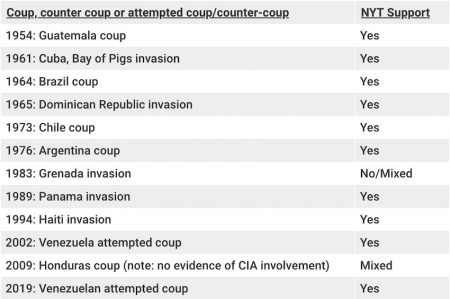
Covert involvement of the United States, by the CIA or other intelligence services, isn’t mentioned in any of the Times’ editorials on any of the coups. Absent an open, undeniable U.S. military invasion (as in the Dominican Republic, Panama and Grenada), things seem to happen in Latin American countries entirely on their own, with outside forces rarely, if ever, mentioned in the Times. Obviously, there are limits to what is “provable” in the immediate aftermath of such events (covert intervention is, by definition, covert), but the idea that the U.S. or other imperial actors could have stirred the pot, funded a junta or run weapons in any of the conflicts under the table is never entertained.
More often than not, what one is left with, reading Times editorials on these coups, are racist, paternalistic “cycle of violence” cliches. Sigh, it’s just the way of things Over There. When reading these quotes, keep in mind the CIA supplied and funded the groups that ultimately killed these leaders:
- Brazil 1964: “They have, throughout their history, suffered from a lack of first class rulers.”
- Chile 1973: “No Chilean party or faction can escape some responsibility for the disaster, but a heavy share must be assigned to the unfortunate Dr. Allende himself.”
- Argentina 1976: “It was typical of the cynicism with which many Argentines view their country’s politics that most people in Buenos Aires seemed more interested in a soccer telecast Tuesday night than in the ouster of President Isabel Martinez de Perlin by the armed forces. The script was familiar for this long‐anticipated coup.”
See, it didn’t matter! It’s worth pointing out the military junta put in power by the CIA-contrived coup killed 10,000 to 30,000 Argentines from 1976 to 1983.
There’s a familiar script: The CIA and its U.S. corporate partners come in, wage economic warfare, fund and arm the opposition, then the target of this operation is blamed. This, of course, isn’t to say there isn’t merit to some of the objections being raised by The New York Times—whether it be Chile in 1973 or Venezuela in 2019. But that’s not really the point. The reason the CIA and U.S. military and its corporate partisans historically target governments in Latin America is because those governments are hostile to U.S. capital and strategic interests, not because they are undemocratic. So while the points the Times makes about illiberalism may sometimes be true, they’re mostly a non sequitur when analyzing the reality of what’s unfolding.
Did Allende, as the Times alleged in 1973 when backing his violent overthrow, “persist in pushing a program of pervasive socialism” without a “popular mandate”? Did, as the Times alleged, Allende “pursue this goal by dubious means, including attempts to bypass both Congress and the courts”? Possibly. But Allende’s supposed authoritarianism isn’t why the CIA sought his ouster. It wasn’t his means of pursuing redistributive policies that offended the CIA and U.S. corporate partners; it was the redistributive policies themselves.
Hand-wringing over the anti-democratic nature of how Allende carried out his agenda without noting that it was the agenda itself—not the means by which it was carried out—that animated his opponents is butting into a conversation no one in power is really having. Why, historically, has The New York Times taken for granted the liberal pretexts for U.S. involvement, rather than analyzing whether there were possibly other, more cynical forces at work?
The answer is that rank ideology is baked into the premise. The idea that the U.S. is motivated by human rights and democracy is taken for granted by The New York Times editorial board and has been since its inception. This does all the heavy lifting without most people—even liberals vaguely skeptical of American motives in Latin America—noticing that a sleight of hand has taken place. “In recent decades,” a 2017 Times editorial scolding Russia asserted, “American presidents who took military action have been driven by the desire to promote freedom and democracy, sometimes with extraordinary results.” Oh, well, good then.
What should be a conversation about American military and its covert apparatus unduly meddling in other countries quickly becomes a referendum on the moral properties of those countries. Theoretically a good conversation to have (and one certainly ongoing among people and institutions in these countries), but absent a discussion of the merits of the initial axiom—that U.S. talking heads and the Washington national security apparatus have a birthright to determine which regimes are good and bad—it serves little practical purpose stateside beyond posturing. And often, as a practical matter, it works to cement the broader narrative justifying the meddling itself.
Do the U.S. and its allies have a moral or ethical right to determine the political future of Venezuela? This question is breezed past, and we move on to the question of how this self-evident authority is best exercised. This is the scope of debate in The New York Times—and among virtually all U.S. media outlets. To ante up in the poker game of Serious People Discussing Foreign Policy Seriously, one is obligated to register an Official Condemnation of the Official Bad Regime. This is so everyone knows you accept the core premises of U.S. regime change but oppose it on pragmatic or legalistic grounds. It’s a tedious, extortive exercise designed to shift the conversation away from the United States’ history of arbitrary and violent overthrows and into an exchange about how best to oppose the Official Bad Regime in question. U.S. liberals are to keep a real-time report card on these Official Bad Regimes, and if these regimes—due to an ill-defined rubric of un-democraticness and human rights—fall below a score of say, “60,” they become illegitimate and unworthy of defense as such.
While obviously not in Latin America, it’s also worth noting that the Times cheerled the CIA-sponsored coup against Iran’s President, Mohammad Mossadegh, in 1953. Its editorial, written two days after his ouster, engaged in the Times’ patented combination of victim-blaming and “oh dear” bloviating:
- “The now-deposed Premier Mossadegh was flirting with Russia. He had won his phony plebiscite to dissolve the Majlis, or lower House of Parliament, with the aid of the Tudeh Communists.”
- “Mossadegh is out, a prisoner awaiting trial. It is a credit to the Shah, to whom he was so disloyal, and to Premier Zahedi, that this rabid, self-seeking nationalist would have been protected at a time when his life would not have been worth the wager of a plugged nickel.”
- “The Shah … deserves praise in this crisis. … He was always true to the parliamentary institutions of his country, he was a moderating influence in the wild fanaticism exhibited by the nationalists under Mossadegh, and he was socially progressive.”
Again, no mention of CIA involvement (which the agency now openly acknowledges), which the Times wouldn’t necessarily have had any way of knowing at the time. (This is part of the point of covert operations.) Mossadegh is summarily demonized, and it’s not until decades later the public learns of the extent of U.S. involvement. The Times even gets in an orientalist description of Iranians, implying why a strong Shah is necessary:
[The average Iranian] has nothing to lose. He is a man of infinite patience, of great charm and gentleness, but he is also—as we have been seeing—a volatile character, highly emotional, and violent when sufficiently aroused.
Needless to say, there are major difference between these cases: Mossadegh, Allende, Chavez and Maduro all lived in radically different times and championed different policies, with varying degrees of liberalism and corruption. But the one thing they all had in common is that the U.S. government, and a compliant U.S. media, decided they “needed to go” and did everything to achieve this end. The fundamental arrogance of this assumption, one would think, is what ought to be discussed in the U.S. media—as typified by the Times’ editorial board—but time and again, this assumption is either taken for granted or hand-waved away, and we all move on to how and when we can best overthrow the Bad Regime.
For those earnestly concerned about Maduro’s efforts to undermine the democratic institutions of Venezuela (he’s been accused of jailing opponents, stacking the courts and holding Potemkin elections), it’s worth pointing out that even when the liberal democratic properties of Venezuela were at their height in 2002 (they were internationally sanctioned and overseen by the Carter Center for years, and no serious observer considers Hugo Chavez’s rule illegitimate), the CIA still greenlit a military coup against Chavez, and the New York Times still profusely praised the act. As it wrote at the time:
With yesterday’s resignation of President Hugo Chávez, Venezuelan democracy is no longer threatened by a would-be dictator. Mr. Chávez, a ruinous demagogue, stepped down after the military intervened and handed power to a respected business leader, Pedro Carmona.
Chavez would soon be restored to power after millions took to the streets to protest his removal from office, but the question remains: If The New York Times was willing to ignore the undisputed will of the Venezuelan people in 2002, what makes anyone think the newspaper is earnestly concerned about it in 2019? Again, the thing that’s being objected to by the White House, the State Department and their U.S. imperial apparatchiks is the redistributive policies and opposition to the United States’ will, not the means by which they do so. Perhaps the Times and other U.S. media—living in the heart of, and presumably having influence over, this empire—could try centering this reality rather than, for the millionth time, adjudicating the moral properties of the countries subject to its violent, illegitimate whims.
International court judge resigns, citing ‘shocking’ interference from ‘above the law’ US
RT | January 30, 2019
A senior judge has resigned from the UN International Criminal Court (ICC) in The Hague, after the United States threatened judges investigating alleged US war crimes in Afghanistan.
The judge, Christoph Flügge, has worked with the International Criminal Court (ICC) and the International Criminal Tribunal for the Former Yugoslavia (ICTY) since 2008. More recently, he got involved with preliminary investigations into claims that US military service members and CIA operatives tortured prisoners in Afghanistan.
Flügge told German newspaper Zeit that he handed in his resignation after open threats from US officials, including a speech by hawkish national security adviser John Bolton last September, where Bolton “wished death” on the Court.
“If these judges ever interfere in the domestic concerns of the US or investigate an American citizen, he said the American government would do all it could to ensure that these judges would no longer be allowed to travel to the United States – and that they would perhaps even be criminally prosecuted,” Flügge told Zeit, in an interview translated by The Guardian.
“The American security adviser held his speech at a time when The Hague was planning preliminary investigations into American soldiers who had been accused of torturing people in Afghanistan,” Flügge explained. “The American threats against international judges clearly show the new political climate. It is shocking. I had never heard such a threat.”
Bolton’s speech was delivered in September to the conservative Federalist Society in Washington, DC. It came a year after the ICC began investigating claims that at least 61 detained persons in Afghanistan had been tortured by American troops and another 27 by the CIA at secret prisons in Afghanistan and abroad, according to prosecutor Fatou Bensouda.
Bolton called the investigation “utterly unfounded” and “unjustifiable,” and promised to “protect our citizens and those of our allies from unjust prosecution by this illegitimate court.”
The senior US official also vowed to defend Israeli citizens from the court. US “friend and ally” Israel was at the time accused of perpetrating war crimes against Palestinian civilians. He warned that the US would disregard arrest warrants, ban judges and prosecutors from entering the country, and even try them in American courts.
Flügge said his colleagues were “stunned” that “the US would roll out such heavy artillery,” but added “it is consistent with the new American line: ‘We are No 1 and we stand above the law’.”
American disregard for the ICC is not a new phenomenon. After much debate, President Bill Clinton signed the Rome Treaty that established the International Criminal Court, but the Congress never ratified it. Clinton’s successor George W. Bush symbolically ‘un-signed’ the treaty in 2002, when the war in Afghanistan was in full swing.
Later that year, the Congress passed the American Service Members’ Protection Act, which obliged the president to prevent any ICC prosecution of US armed forces “to the maximum extent possible,” and even authorized military force to free any US service members from ICC custody. Bolton, incidentally, was Bush’s under-secretary of state at the time.
The court has come under fire from more countries than just the US. Russia withdrew its signature from the Rome Treaty in 2016, after the court criticized the reunification of Crimea. China, India, Saudi Arabia, and Turkey are among the other nations that never signed the treaty.
The Vultures of Caracas
By Craig Murray | January 26, 2019
We are frequently told that people in Venezuela have no food, clothing or toilet paper, and that popular discontent with the left wing government is driven by real hunger. There are elements of truth in this story, though the causes of economic dislocation are far more complex than the media would have us believe.
But I ask you to look at this photo of supporters of CIA poster-boy, the West’s puppet unelected “President” Juan Guaido, taken at a Guaido rally in Caracas two days ago and published yesterday in security services house journal The Guardian. Please take a really close look at the photo. Blow it up as big as you can. Scan individual people in the crowd, one by one.
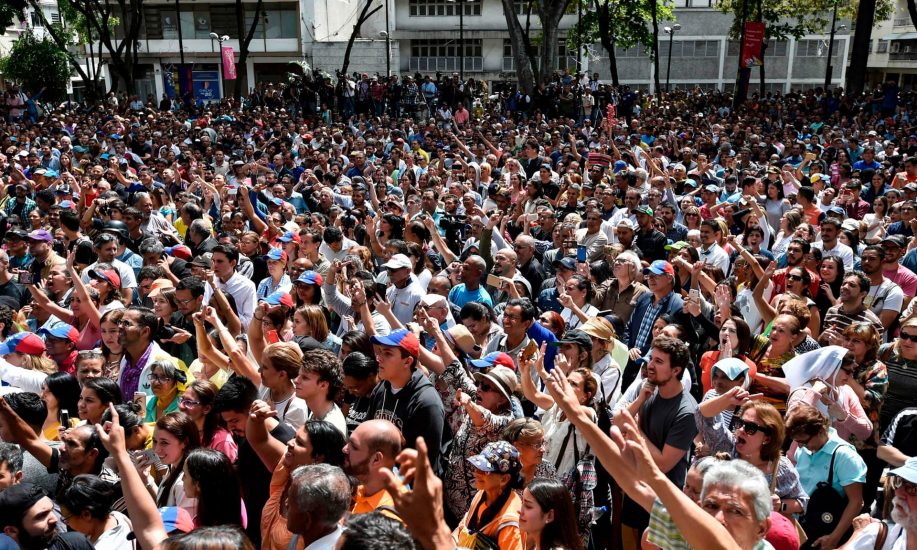
These are not the poor and most certainly not the starving. As it chances I have a great deal of life experience working amongst seriously deprived, hungry and despairing people. I know the gaunt face of want and the desperate glance of need. Look at these Guaido supporters, one by one by one. This designer spectacled, well-coiffed, elegantly dressed, sleekly jowled group does not know hunger. This group does not know want. This is a proper right wing gathering, a gathering of the nicely off section of society. This is a group of those who have corruptly been siphoning Venezuela’s great wealth for decades and who want to make sure the gravy train flows properly in their direction again. It is, in short, a group of exactly the kind of people you would expect to support a CIA coup.
Those manicured hands raised in the air will never throw rocks, or get involved in violence unless against a peasant strapped to a chair for them. It is not this crowd which will suffer as public disorder is manipulated and directed by the CIA. These wealthy ones are immune, just as Davos serves as nothing but an annual reminder of how very poorly God aims avalanches.
There is real suffering in Venezuela. The CIA is working hard to stoke violence, and the genuine poor will soon start to die, both in those egged on to riot and in the security services. But do not get taken in by the complete nonsense that this is a popular, democratic revolution. It is not. It is yet another barefaced CIA regime change coup.
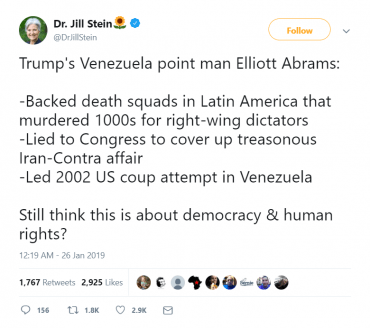
UPDATE Such wisdom as this blog finds is often crowd-source, and with thanks to a commenter below here is some useful information from Jill Stein.
—————————————————
Unlike our adversaries including the Integrity Initiative, the 77th Brigade, Bellingcat, the Atlantic Council and hundreds of other warmongering propaganda operations, Craig Murray’s blog has no source of state, corporate or institutional finance whatsoever. It runs entirely on voluntary subscriptions from its readers – many of whom do not necessarily agree with the articles, but welcome the alternative voice, insider information and debate.
Subscriptions to keep Craig going are gratefully received.
Did Khashoggi Really Die?
By F. William Engdahl – New Eastern Outlook – 23.01.2019
I have not been convinced about the claims coming from Turkey and from the Washington Post and others regarding the allegations of a gruesome murder of intelligence asset, Jamal Khashoggi, in October, 2018. There are too many anomalies as it was portrayed by various statements from Turkey President Erdogan, and echoed by a chorus of the Western mainstream media. Recent research suggests that perhaps Khashoggi was never in that Saudi Consulate in Istanbul that day, and in fact may still be quite alive and in hiding. If so, it suggests a far larger story behind the affair. Let’s consider the following.
The best way to outline this is to go back to the events around the surprise arrest and detention of numerous Saudi high-ranking persons in late 2017, by Prince Mohammed bin Salman or MBS as he is known. On November 4, 2017 MBS announced via state TV that numerous leading Saudis including one of the wealthiest, Prince Alwaleed bin Talal, had been arrested on charges of corruption, and were being detained in the Riyadh Ritz Carlton hotel. Prince Alwaleed is clearly the critical person.
The son-in-law of President Trump had reportedly made a non-publicized visit to Riyadh for private talks with MBS just days before the mass arrests. A report in the UK Mail newspaper in 2018 claimed that Jared Kushner, representing the President, had informed MBS of a rival Saudi Royals plot to eliminate the Crown Prince. Prince Alwaleed was reported to be at the center of the plotters.
After three months imprisonment, Alwaleed was released from detention on 27 January 2018, following a reported financial settlement. In March 2018 he dropped out from Forbes’ World’s Billionaires’ list. Before his arrest Alwaleed was the largest shareholder in Citibank, a major owner of Twitter, once partner of Bill Gates in Gates Foundation vaccine programs, and generous donor to select Democrats such as Hillary Clinton and the Clinton Foundation. According to media reports, Hillary campaign aide Huma Abedin’s brother, Hassan Abedin, Muslim Brotherhood member, worked with Bin Talal on a project called “Spreading Islam to the West.” Bin Talal and other Saudi sources donated as much as $25 million to the Clinton Foundation as she was preparing her Presidential bid. The Prince was also an open foe of Donald Trump.
Who was Khashoggi Really?
Jamal Khashoggi was no ordinary journalist. He actually worked for Prince Alwaleed bin Talal. In an interview in the Gulf Times in November last year Alwaleed stated, “Jamal wasn’t only my friend. He was working with me. Actually, his last job in Saudi Arabia was with me…” Jamal was, or is, nephew of CIA-linked asset, the recently deceased Adnan Khashoggi, a nefarious arms dealer involved in the CIA-Saudi BCCI bank and Iran-Contra. Nephew Jamal also worked for the then-Saudi Ambassador in Washington, Prince Bandar, someone so close to the Bush family that George W. nicknamed him “Bandar Bush.” In short, Khashoggi was part of Saudi circles close to the Bush-Clinton group. When King Abdullah decided to skip over Alwaleed’s father, Talal bin Abdulaziz Al Saud, dubbed “The Red Prince” for his reformist views, in his succession, a move that led to Salman, father of MBS, as successor, Alwaleed was on the outs in the Saudi power calculus of King Salman and Crown Prince MBS.
The Saudi government as well as the Brookings Institution confirm that Khashoggi had been a member of the Muslim Brotherhood. The Brotherhood was banned from Saudi Arabia in 2011 following the Obama-Hillary Clinton Arab Spring, when the Saudi monarch, King Abdullah, and those around him realized that the royal house itself was a potential target for brotherhood regime change, as in Egypt and Tunisia.
The Obama Administration, as I detail in Manifest Destiny, working with the CIA, planned a drastic series of regime changes across the Islamic world to install Muslim Brotherhood regimes “friendly” with the CIA and the Obama administration. Key members of the Obama Administration, including Secretary of State Hillary Clinton’s special assistant, Huma Abedin, had deep ties to the Saudi part of the Muslim Brotherhood where Abedin’s mother lives. Her mother, Saleha Abedin– an academic in Saudi Arabia where Huma grew up– according to a report on Al Jazeera and other Arab media, is a prominent member of the womens’ organization of the Muslim Brotherhood, and Huma’s brother is also reported linked to the organization. Notably, the late John McCain, whose ties to leading members of ISIS and Al Qaeda is public record, tried to discredit fellow Republican Congresswoman Michele Bachmann for pointing to Abedin’s Muslim Brotherhood ties. This is the faction within Saudi Arabia that Khashoggi was tied to.
As President, Trump’s first foreign trip was to meet MBS and the Saudi King, a trip sharply criticized by Democrat Congresswoman Nancy Pelosi. Once a Trump Presidency moved to rebuild the frayed relations that had developed between Obama and the Saudi monarchy under King Abdullah and later King Salman, father of Crown Prince MBS, the faction around pro-Obama Prince Bin Talal Alwaleed was out of favor, to put it mildly, especially after Hillary Clinton lost. In June 2017 Alwaleed’s former employee, Jamal Khashoggi, fled into self-imposed exile in the US where he had studied earlier, after the government banned his twitter account in Saudi.
Khashoggi alive?
Once MBS acted to arrest Alwaleed and numerous others, the future of the money flows between Alwaleed to not only Hillary Clinton, the Clinton Foundation and to other Democrats he had “supported” with Saudi millions, was in jeopardy. While it is difficult to confirm, a BBC Turkish journalist in Istanbul reportedly told an arab language paper after the alleged gruesome murder and dismemberment of Khashoggi that, in fact, Jamal Khashoggi was alive and well, somewhere in hiding.
It is a fact that former CIA head and now Secretary of State Mike Pompeo, along with then-Defense Secretary James Mattis, gave a briefing to the US Senate in which they told the senators that there was no evidence to suggest MBS was behind this alleged crime. They added that they couldn’t even confirm a crime had happened! Only CIA head Gina Haspel, former CIA London station chief, disputed their claims. The Erdogan claims that the body was chopped up and then dissolved in acid for disposal without trace harkens back to the account of the Navy Seal disposal of the dead body allegedly of Osama bin Laden, which the Obama Administration claimed they dumped at sea “according to Muslim tradition.” Conveniently in both cases there was no body to forensically confirm.
Indeed the allegations to world media around the Khashoggi affair were tightly controlled by Turkey’s President Erdogan who repeatedly promised then failed to reveal, what he said were secret Turkish intelligence tapes of the alleged murder. Erdogan is reported very close to the Muslim Brotherhood if not a hidden member, one reason for his close support of Qatar after MBS and the Saudi king declared economic sanctions on Qatar for support of terrorism, in fact Qatari support of the Muslim Brotherhood.
Here we are dealing with shifting political alliances with huge consequences potentially for US and world politics given the enormous size of the Saudi financial resources. It’s also bizarre that Khashoggi allegedly agreed to go to a Saudi Consulate in Turkey and to supposedly get divorce papers. Further, his reported fiancée, Hatice Cengiz, seems to be equally mysterious, with some asking whether she in fact is an agent of Turkish intelligence used to discredit Saudi Arabia.
The claims of Erdogan of the assassination of Jamal by a Saudi team were buttressed by a mysterious Khaled Saffuri, who told Yahoo News reporter, Michael Isikoff, that Khashoggi became a bitter foe of MBS for his articles in the media criticizing the arrests of Prince Bin Talal and others. Research reveals that Saffuri, media source on the Khashoggi alleged murder, also has had close ties to the Muslim Brotherhood front organization, American Muslim Council, and to Qatar, host to the exiled Brotherhood for years. Qatari support for the Muslim Brotherhood was a factor in the break between MBS and Qatar two years ago.
Saffuri is also the protégé of al-Qaeda fundraiser Abdurahman Alamoudi, reportedly also an influential Muslim Brotherhood supporter who before 2004 met with both G.W. Bush and Hillary Clinton. Alamoudi is currently in US federal prison since 2004 for his role as bagman for a Libyan/Al-Qaeda assassination plot to assassinate then-Saudi Crown Prince Abdullah. In brief, the prime sources on the Khashoggi murder are few and hardly without bias.
At this point it is difficult to go beyond speculation. Clear is that Jamal Khashoggi is missing from public view since early October. But until the Turkish government or someone else presents serious forensic evidence, habeas corpus, that indeed shows Alwaleed’s former employee, Jamal Khashoggi was murdered by a Saudi assassination team, let alone by one commanded by Crown Prince bin Salman, the situation warrants more serious examination. It is curious that the same liberal media such as Jeff Bezos’ Washington Post that attacks MBS for the alleged murder of their reporter, Khashoggi, fails to criticize previous Saudi executions or even subsequent ones.
Did Khashoggi really die at the Istanbul Consulate or was something else going on? To stage a fake execution of Khashoggi to discredit and even possibly topple MBS might possibly have appeared to Alwaleed and his CIA friends in Washington to be a clever way of restoring their power and financial influence. If so, it seems to have failed.
Amnesty International’s Troubling Collaboration with UK & US Intelligence
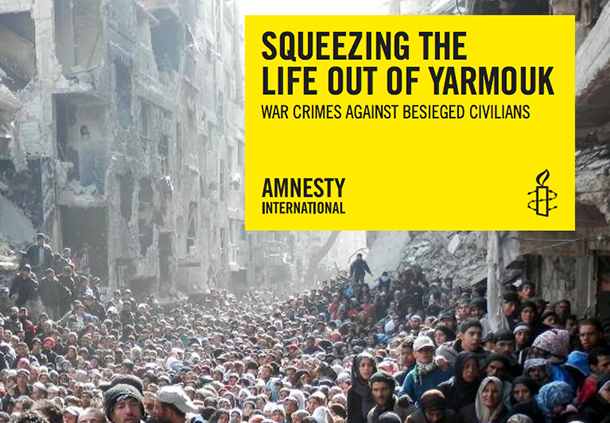
Propaganda image from the cover of AI’s report entitled, ‘Squeezing the Life Out of Yarmouk: War Crimes Against Besieged Civilians’,
one of many designed to fit hand-in-glove with the joint US and UK covert regime change operation deployed against Syria since 2011.
By Alexander Rubinstein | Mint Press News | January 17, 2019
Amnesty International, the eminent human-rights non-governmental organization, is widely known for its advocacy in that realm. It produces reports critical of the Israeli occupation in Palestine and the Saudi-led war on Yemen. But it also publishes a steady flow of indictments against countries that don’t play ball with Washington — countries like Iran, China, Venezuela, Nicaragua, North Korea and more. Those reports amplify the drumbeat for a “humanitarian” intervention in those nations.
Amnesty’s stellar image as a global defender of human rights runs counter to its early days when the British Foreign Office was believed to be censoring reports critical of the British empire. Peter Benenson, the co-founder of Amnesty, had deep ties to the British Foreign Office and Colonial Office while another co-founder, Luis Kutner, informed the FBI of a gun cache at Black Panther leader Fred Hampton’s home weeks before he was killed by the Bureau in a gun raid.
These troubling connections contradict Amnesty’s image as a benevolent defender of human rights and reveal key figures at the organization during its early years to be less concerned with human dignity and more concerned with the dignity of the United States and United Kingdom’s image in the world.
A conflicted beginning
Amnesty’s Benenson, an avowed anti-communist, hailed from a military intelligence background. He pledged that Amnesty would be independent of government influence and would represent prisoners in the East, West, and global South alike.
But during the 1960s the U.K. was withdrawing from its colonies and the Foreign Office and Colonial Office were hungry for information from human-rights activists about the situations on the ground. In 1963, the Foreign Office instructed its operatives abroad to provide “discreet support” for Amnesty’s campaigns.
Also that year, Benenson wrote to Colonial Office Minister Lord Lansdowne a proposal to prop up a “refugee counsellor” on the border of present-day Botswana and apartheid South Africa. That counsel was to assist refugees only, and explicitly avoid aiding anti-apartheid activists. “Communist influence should not be allowed to spread in this part of Africa, and in the present delicate situation, Amnesty International would wish to support Her Majesty’s Government in any such policy,” Benenson wrote. The next year, Amnesty ceased its support for anti-apartheid icon and the first president of a free South Africa, Nelson Mandela.
The following year, in 1964, Benenson enlisted the Foreign Office’s assistance in obtaining a visa to Haiti. The Foreign Office secured the visa and wrote to its Haiti representative Alan Elgar saying it “support[ed] the aims of Amnesty International.” There, Benenson went undercover as a painter, as Minister of State Walter Padley told him prior to his departure that “We shall have to be a little careful not to give the Haitians the impression that your visit is actually sponsored by Her Majesty’s Government.”
The New York Times exposed the ruse, leading some officials to claim ignorance; Elgar, for example, said he was “shocked by Benenson’s antics.” Benenson apologized to Minister Padley, saying “I really do not know why the New York Times, which is generally a responsible newspaper, should be doing this sort of thing over Haiti.”
Letting politics creep into mission
In 1966, an Amnesty report on the British colony of Aden, a port city in present-day Yemen, detailed the British government’s torture of detainees at the Ras Morbut interrogation center. Prisoners there were stripped naked during interrogations, were forced to sit on poles that entered their anus, had their genitals twisted, cigarettes burned on their face, and were kept in cells where feces and urine covered the floor.
The report was never released, however. Benenson said that Amnesty general secretary Robert Swann had censored it to please the Foreign Office, but Amnesty co-founder Eric Baker said Benenson and Swann had met with the Foreign Office and agreed to keep the report under wraps in exchange for reforms. At the time, Lord Chancellor Gerald Gardiner wrote to Prime Minister Harold Wilson that “Amnesty held the [report] as long as they could simply because Peter Benenson did not want to do anything to hurt a Labour government.”
Then something changed. Benenson went to Aden and was horrified by what he found, writing “I never came upon an uglier picture than that which met my eyes in Aden,” despite his “many years spent in the personal investigation of repression.”
A tangled web
As all of this was unfolding, a similar funding scandal was developing that would rock Amnesty to its core. Polly Toynbee, a 20-year-old Amnesty volunteer, was in Nigeria and Southern Rhodesia, the British colony in Zimbabwe, which was at the time ruled by the white settler minority. There, Toynbee delivered funds to prisoner families with a seemingly endless supply of cash. Toynbee said that Benenson met with her there and admitted that the money was coming from the British government.
Toynbee and others were forced to leave Rhodesia in March 1966. On her way out, she grabbed documents from an abandoned safe including letters from Benenson to senior Amnesty officials working in the country that detailed Benenson’s request to Prime Minister Wilson for money, which had been received months prior.
In 1967 it was revealed that the CIA had established and was covertly funding another human rights organization founded in the early 1960s, the International Commission of Jurists (ICJ) through an American affiliate, the American Fund for Free Jurists Inc.
Benenson had founded, alongside Amnesty, the U.K. branch of the ICJ, called Justice. Amnesty international secretariat, Sean MacBride, was also the secretary-general of ICJ.
Then, the “Harry letters” hit the press. Officially, Amnesty denied knowledge of the payments from Wilson’s government. But Benenson admitted that their work in Rhodesia had been funded by the government, and returned the funds out of his own pocket. He wrote to Lord Chancellor Gardiner that he did it so as not to “jeopardize the political reputation” of those involved. Benenson then returned unspent funds from his two other human-rights organizations, Justice (the U.K. branch of the CIA-founded ICJ) and the Human Rights Advisory Service.
Benenson’s behavior in the wake of the revelations about the “Harry letters” infuriated his Amnesty colleagues. Some of them would go on to claim that he suffered from mental illness. One staffer wrote:
Peter Benenson has been levelling accusations, which can only have the result of discrediting the organisation which he has founded and to which he dedicated himself. … All this began after soon after he came back from Aden, and it seems likely that the nervous shock which he felt at the brutality shown by some elements of the British army there had some unbalancing effect on his judgment.
Later that year, Benenson stepped down as president of Amnesty in protest of its London office being surveilled and infiltrated by British intelligence — at least according to him. Later that month, Sean MacBride, the Amnesty official and ICJ operative, submitted a report to an Amnesty conference that denounced Benenson’s “erratic actions.” Benenson boycotted the conference, opting to submit a resolution demanding MacBride’s resignation over the CIA funding of ICJ.
Amnesty and the British government then suspended ties. The rights group then promised to “not only be independent and impartial but must not be put into a position where anything else could even be alleged” about its collusion with governments in 1967.
Amnesty’s role in the death of Black Panther Fred Hampton
But two years later, senior Amnesty officials engaged in far more troubling coordination with Western intelligence agencies.
FBI documents, released by the Bureau in the spring of 2018 as a part of a series of disclosures of documents pertaining to the assassination of President John Kennedy, detail Amnesty International’s role in the killing of Black Panther Party (BPP) Deputy Chairman Fred Hampton, the 21-year-old up-and-coming black liberation icon — a killing that was widely believed to be an assassination but was ruled officially as a justifiable homicide.
Amnesty International co-founder Luis Kutner attended a November 23, 1969 speech of Hampton’s delivered at the University of Illinois.
During the speech, Hampton described the BPP “as a revolutionary party” and “indicated that the party has guns to be used for peace and self-defense, and these guns are at the Hampton residence as well as BPP headquarters,” according to the FBI document.
“Kutner has reached the point where he would like to take legal action to silence the BPP,” the FBI wrote. “Kutner concluded by stating that he believed speakers like Hampton were psychotic, and it is only when they are faced with a court action that they stop their “rantings and ravings.”
The FBI internal report on Kutner’s testimony cited above was issued on December 1, 1969. Two days later, the FBI, alongside the Chicago Police Department, conducted a firearms raid on Hampton’s residence. When Hampton came home for the day, FBI informant William O’Neal slipped a barbiturate sleeping pill into his drink before leaving.
At 4:00 a.m. on December 4, police and FBI stormed into the apartment, instantly shooting a BPP guard. Due to reflexive convulsions related to death, the guard convulsed and pulled the trigger on a shotgun he was carrying – the only time a Black Panther member fired a gun during the raid. Authorities then opened fire on Hampton, who was in bed sleeping with his nine-month pregnant fiancee. Hampton is believed to have survived until two shots were fired at point-blank range towards his head.
Kutner formed the “Friends of the FBI” group, an organization “formed to combat criticism of the Federal Bureau of Investigations,” according to the New York Times, after its covert campaign to disrupt leftists movements — COINTELPRO — was revealed. He also went on to operate in a number of theaters that saw heavy involvement from the CIA — including work Kutner did to undermine Congolese Prime Minister and staunch anti-imperialist Patrice Lumumba — and represented the Dalai Lama, who was provided $1.7 million a year by the CIA in the 1960s.
While Amnesty International’s shady operations in the 1960s might seem like ancient history at this point, they serve as an important reminder of the role that non-governmental organizations often play in furthering the objectives of governments of the nations where they are based.
Alexander Rubinstein is a staff writer for MintPress News based in Washington, DC. He reports on police, prisons and protests in the United States and the United States’ policing of the world. He previously reported for RT and Sputnik News.
Featured Video
US IRAN TALKS: Who Are the Crazy Ones Here? /Lt Col Daniel Davis
or go to
Aletho News Archives – Video-Images
From the Archives
Wartime internment camps in Australia
National Archives of Australia
World War I
During World War I, for security reasons the Australian Government pursued a comprehensive internment policy against enemy aliens living in Australia.
Initially only those born in countries at war with Australia were classed as enemy aliens, but later this was expanded to include people of enemy nations who were naturalised British subjects, Australian-born descendants of migrants born in enemy nations and others who were thought to pose a threat to Australia’s security.
Australia interned almost 7,000 people during World War I, of whom about 4,500 were enemy aliens and British nationals of German ancestry already resident in Australia.
Records of World War I internment camps
World War II
During World War II, Australian authorities established internment camps for three reasons – to prevent residents from assisting Australia’s enemies, to appease public opinion and to house overseas internees sent to Australia for the duration of the war.
Unlike World War I, the initial aim of internment during the later conflict was to identify and intern those who posed a particular threat to the safety or defence of the country. As the war progressed, however, this policy changed and Japanese residents were interned en masse. In the later years of the war, Germans and Italians were also interned on the basis of nationality, particularly those living in the north of Australia. In all, just over 20 per cent of all Italians resident in Australia were interned. … continue
Blog Roll
 Aletho News
- Diplomats slam US negotiators’ performance in Iran talks
- Trump Refuses Exit Ramp, War with Iran will Continue
- Trump Says US Naval Blockade in Strait of Hormuz Will Begin Shortly
- US, Iran end 21-hour talks without agreement
- US IRAN TALKS: Who Are the Crazy Ones Here? /Lt Col Daniel Davis
- Talks with the US end without a deal over excessive US demands: Iran
- Feeling Better, Getting Worse: How Psychiatric Drugs Create the Illusion They Cure
- ‘Nobody Told Me’: Former Mental Health Patient Calls Out Dangerous Side Effects of Psychiatric Drugs
- Dr. Abu-Sitta: Beirut ‘felt like a day in Shifa Hospital’
- Iran Has Won the War, It Will Be Up to the US to Secure the Peace: Mohammad Marandi
- If Americans Knew
- US-Iran ceasefire negotiations make zero progress – Daily Update
- Pro-Israel ‘Thinktanks’ and Individuals who Influence U.S. Foreign Policy
- Mearsheimer reveals how Israel dictates US policies on Iran, Gaza – video
- After killing 350+, Israel still has a “score to settle” with Lebanon before ceasefire – Daily Update
- Military aid to Israel emerges as the latest political litmus test for Democrats
- The only Palestinian children’s rights organization closes following years-long Israeli campaign against it
- ‘I Can’t Forget the Smell’: Lebanese Reel After Israel Kills Over 300 in Single Day
- DNC Shoots Down Resolutions Calling Out AIPAC and Limiting Arms to Israel
- TCN: Is Israel Blackmailing President Trump?
- Israel killed at least 303 Lebanese yesterday – who were they? Daily Update
- No Tricks Zone
- German Expert: Heat Dome Led To Record Temps In Western USA…Warmer In 1934, 1936
- New Study: No Linear Warming Or Glacier Retreat Along Northern Antarctic Peninsula Since 1980s
- An Inconvenient Tree: Uncovered In Alps… Europe Much Warmer Than Today 6000 Years Ago
- New Study Reports A 60% Slowdown In Greenland’s Ice Loss Rate In The Last Decade
- Low Intensity Tornado Wrecks Major Solar Farm, Creating A Potential Toxic Dump
- New Study Finds Warming Saves Lives…Cold Temperatures 12 Times More Deadly Than Excess Heat
- German Science Blog Accuses PIK Climate Institute Of Hallucinating Climate Tipping Points
- Devastating Assessment Of Comirnaty Vaccine By Former Senior Pfizer Europe Toxicologist
- New Study: CO2 Is ‘Effectively Negligible’ As An Explanatory Climate Change Factor Since 2000
- Former Pfizer Toxicologist Dr. Helmut Sterz Tells Bundestag Hearing Pfizer Vaccine Should Have Never Been Approved
 Aletho News