Hillary Clinton’s Memoir Deletions, in Detail
By Ming Chun Tang | The Americas Blog | May 26, 2016
As was reported following the assassination of prominent Honduran environmental activist Berta Cáceres in March, former Secretary of State Hillary Clinton erased all references to the 2009 coup in Honduras in the paperback edition of her memoirs, “Hard Choices.” Her three-page account of the coup in the original hardcover edition, where she admitted to having sanctioned it, was one of several lengthy sections cut from the paperback, published in April 2015 shortly after she had launched her presidential campaign.
A short, inconspicuous statement on the copyright page is the only indication that “a limited number of sections” — amounting to roughly 96 pages — had been cut “to accommodate a shorter length for this edition.” Many of the abridgements consist of narrative and description and are largely trivial, but there are a number of sections that were deleted from the original that also deserve attention.
Colombia
Clinton’s take on Plan Colombia, a U.S. program furnishing (predominantly military) aid to Colombia to combat both the FARC and ELN rebels as well as drug cartels, and introduced under her husband’s administration in 2000, adopts a much more favorable tone in the paperback compared to the original. She begins both versions by praising the initiative as a model for Mexico — a highly controversial claim given the sharp rise in extrajudicial killings and the proliferation of paramilitary death squads in Colombia since the program was launched.
The two versions then diverge considerably. In the original, she explains that the program was expanded by Colombian President Álvaro Uribe “with strong support from the Bush Administration” and acknowledges that “new concerns began to arise about human rights abuses, violence against labor organizers, targeted assassinations, and the atrocities of right-wing paramilitary groups.” Seeming to place the blame for these atrocities on the Uribe and Bush governments, she then claims to have “made the choice to continue America’s bipartisan support for Plan Colombia” regardless during her tenure as secretary of state, albeit with an increased emphasis on “governance, education and development.”
By contrast, the paperback makes no acknowledgment of these abuses or even of the fact that the program was widely expanded in the 2000s. Instead, it simply makes the case that the Obama administration decided to build on President Clinton’s efforts to help Colombia overcome its drug-related violence and the FARC insurgency — apparently leading to “an unprecedented measure of security and prosperity” by the time of her visit to Bogotá in 2010.
The Trans-Pacific Partnership
Also found in the original is a paragraph where Clinton discusses her efforts to encourage other countries in the Americas to join negotiations for the Trans-Pacific Partnership (TPP) trade agreement during a regional conference in El Salvador in June 2009:
So we worked hard to improve and ratify trade agreements with Colombia and Panama and encouraged Canada and the group of countries that became known as the Pacific Alliance — Mexico, Colombia, Peru, and Chile — all open-market democracies driving toward a more prosperous future to join negotiations with Asian nations on TPP, the trans-Pacific trade agreement.
Clinton praises Latin America for its high rate of economic growth, which she revealingly claims has produced “more than 50 million new middle-class consumers eager to buy U.S. goods and services.” She also admits that the region’s inequality is “still among the worst in the world” with much of its population “locked in persistent poverty” — even while the TPP that she has advocated strongly for threatens to exacerbate the region’s underdevelopment, just as NAFTA caused the Mexican economy to stagnate.
Last October, however, she publicly reversed her stance on the TPP under pressure from fellow Democratic presidential candidates Bernie Sanders and Martin O’Malley. Likewise, the entire two-page section on the conference in El Salvador where she expresses her support for the TPP is missing from the paperback.
Brazil
In her original account of her efforts to prevent Cuba from being admitted to the Organization of American States (OAS) in June 2009, Clinton singles out Brazilian President Luiz Inácio Lula da Silva as a potential mediator who could help “broker a compromise” between the U.S. and the left-leaning governments of Venezuela, Ecuador, Bolivia and Nicaragua. Her assessment of Lula, removed from the paperback, is mixed:
As Brazil’s economy grew, so did Lula’s assertiveness in foreign policy. He envisioned Brazil becoming a major world power, and his actions led to both constructive cooperation and some frustrations. For example, in 2004 Lula sent troops to lead the UN peacekeeping mission in Haiti, where they did an excellent job of providing order and security under difficult conditions. On the other hand, he insisted on working with Turkey to cut a side deal with Iran on its nuclear program that did not meet the international community’s requirements.
It is notable that the “difficult conditions” in Haiti that Clinton refers to was a period of perhaps the worst human rights crisis in the hemisphere at the time, following the U.S.-backed coup d’etat against democratically elected president Jean-Bertrand Aristide in 2004. Researchers estimate that some 4,000 people were killed for political reasons, and some 35,000 women and girls sexually assaulted. As various human rights investigators, journalists and other eyewitnesses noted at the time, some of the most heinous of these atrocities were carried out by Haiti’s National Police, with U.N. troops often providing support — when they were not engaging in them directly. WikiLeaked State Department cables, however, reveal that the State Department saw the U.N. mission as strategically important, in part because it helped to isolate Venezuela from other countries in the region, and because it allowed the U.S. to “manage” Haiti on the cheap.
In contrast to Lula, Clinton heaps praise on Lula’s successor, Dilma Rousseff, who was recently suspended from office pending impeachment proceedings:
Later I would enjoy working with Dilma Rousseff, Lula’s protégée, Chief of Staff, and eventual successor as President. On January 1, 2011, I attended her inauguration on a rainy but festive day in Brasilia. Tens of thousands of people lined the streets as the country’s first woman President drove by in a 1952 Rolls-Royce. She took the oath of office and accepted the traditional green and gold Presidential sash from her mentor, Lula, pledging to continue his work on eradicating poverty and inequality. She also acknowledged the history she was making. “Today, all Brazilian women should feel proud and happy.” Dilma is a formidable leader whom I admire and like.
The paperback version deletes almost all references to Rousseff, mentioning her only once as an alleged target of NSA spying according to Edward Snowden.
The Arab Spring
By far the lengthiest deletion in Clinton’s memoirs consists of a ten-page section discussing the Arab Spring in Jordan, Libya and the Persian Gulf region — amounting to almost half of the chapter. Having detailed her administration’s response to the mass demonstrations that had started in Tunisia before spreading to Egypt, then Jordan, then Bahrain and Libya, Clinton openly recognizes the profound contradictions at the heart of the U.S.’ relationship with its Gulf allies:
The United States had developed deep economic and strategic ties to these wealthy, conservative monarchies, even as we made no secret of our concerns about human rights abuses, especially the treatment of women and minorities, and the export of extremist ideology. Every U.S. administration wrestled with the contradictions of our policy towards the Gulf.
And it was appalling that money from the Gulf continued funding extremist madrassas and propaganda all over the world. At the same time, these governments shared many of our top security concerns.
Thanks to these shared “security concerns,” particularly those surrounding al-Qaeda and Iran, her administration strengthened diplomatic ties and sold vast amounts of military equipment to these countries:
The United States sold large amounts of military equipment to the Gulf states, and stationed the U.S. Navy’s 5th Fleet in Bahrain, the Combined Air and Space Operations Center in Qatar, and maintained troops in Kuwait, Saudi Arabia, and the UAE, as well as key bases in other countries. When I became Secretary I developed personal relationships with Gulf leaders both individually and as a group through the Gulf Cooperation Council.
Clinton continues to reveal that the U.S.’ common interests with its Gulf allies extended well beyond mere security issues and in fact included the objective of regime change in Libya — which led the Obama administration into a self-inflicted dilemma as it weighed the ramifications of condemning the violent repression of protests in Bahrain with the need to build an international coalition, involving a number of Gulf states, to help remove Libyan leader Muammar Gaddhafi from power:
Our values and conscience demanded that the United States condemn the violence against civilians we were seeing in Bahrain, full stop. After all, that was the very principle at play in Libya. But if we persisted, the carefully constructed international coalition to stop Qaddafi could collapse at the eleventh hour, and we might fail to prevent a much larger abuse — a full-fledged massacre.
Instead of delving into the complexities of the U.S.’ alliances in the Middle East, the entire discussion is simply deleted, replaced by a pensive reflection on prospects for democracy in Egypt, making no reference to the Gulf region at all. Having been uncharacteristically candid in assessing the U.S.’ response to the Arab Spring, Clinton chose to ignore these obvious inconsistencies — electing instead to proclaim the Obama administration as a champion of democracy and human rights across the Arab world.
‘UK trains armies on its own human rights blacklist’
Press TV – May 23, 2016
The British government is providing military training to the majority of nations it has blacklisted for human rights violations, a new report reveals.
In a report published on Sunday, the Independent revealed that 16 of the 30 countries on the Foreign & Commonwealth Office (FCO)’s “human rights priority” watchlist are receiving military support from the UK despite being accused by London itself of issues ranging from internal repression to the use of sexual violence in armed conflicts.
According to the UK Ministry of Defense, since 2014, British armed forces have provided “either security or armed forces personnel” to the military forces of Saudi Arabia , Bahrain, Afghanistan, Bangladesh, Myanmar, Burundi, China, Colombia, Egypt, Iraq, Libya, Pakistan, Somalia, Sudan, Yemen and Zimbabwe.
Britain is a major provider of weapons and equipment such as cluster bombs and fighter jets to Saudi Arabia in its year-long military aggression against Yemen that has killed nearly 9,400 people, among them over 2,230 children.
Since the conflict began in March 2015, the British government has licensed the sale of nearly $4 billion worth of weaponry to the Saudi kingdom.
British commandos also train Bahraini soldiers in using sniper rifles, despite allegations that the Persian Gulf monarchy uses such specialist forces to suppress a years-long pro-democracy uprising in the country.
Bahraini forces visited the Infantry Battle School in Wales last week, accompanied by troops from Nigeria, the Defense Ministry said.
Nigeria’s top military generals are accused by Amnesty International of committing war crimes by causing the deaths of 8,000 people through murder, starvation, suffocation and torture during security operations against the Boko Haram Takfiri terrorists, according to the report.
Andrew Smith, with the Campaign Against Arms Trade, said Britain should not be “colluding” with countries known for being “some of the most authoritarian states in the world.”
Colombia: the Displaced & Invisible Nation
By Dan Kovalik | CounterPunch | May 20, 2016
The latest thematic report by the Inter-American Commission on Human Rights (IACHR) concerning Colombia makes for shocking though quite important reading. In short, it details human rights abuses on a massive scale, and lays the blame for these abuses chiefly upon the right-wing paramilitaries aligned with the Colombian State. Citing Colombia’s Center for Historical Memory, the IACHR concludes that Colombia, with its over 6 million internally displaced persons, is indeed “a displaced nation.”

Exhibit at Center for Historical Memory, Showing Personal Effects of “False Positive” Victim
As the IACHR explains, the paramilitaries were responsible for 72% of the attacks recorded in the first half of 2015. Incredibly, the Colombian State, along with its U.S. sponsor, insist that the paramilitaries (also known as Autodefensas) no longer exist as a result of a demobilization (largely faked) back in 2003-2006. And, it is this very denial, the IACHR points out, which allows the paramilitaries to carry out their reign of terror with near complete impunity. After all, the State will not dismantle or prosecute what it claims does not even exist.
As explained in the report, “during 2015 the IACHR has continued receiving information about actions of the illegal armed groups that emerged after the demobilization and which are identified as being related or having among their members, persons that belonged to paramilitary groups who, in many cases allegedly continue acting under the protection of State agents.”
The misdeeds the paramilitaries are carrying out under State protection include disappearances, of which there were an incredible 3,400 during the first 7 months of 2015 alone. In all, the IACHR reports that there have been a total of between 45,000 and 61,918 forced disappearances in Colombia in the past 30 years. Thus, there have potentially been more than three times the disappearances in Colombia than in Argentina during all of the Dirty War years. And, of course, with such disappearances come mass graves, of which Colombia has many – 4,519 of them to be exact, with 5,817 bodies exhumed from them so far.
Meanwhile, the IACHR reported on the fact that at least 5,736 individuals were the victims of extrajudicial executions by the Colombian State forces between 2000 and 2010 – that, is during the period of the U.S.’s major military support for Colombia known as Plan Colombia. Nearly all of these executions were “false positive” killings in which the Colombian military murdered innocent civilians – many of them young, unemployed men – and then dressed them up as guerillas to justify to the U.S. the military assistance the Colombian military was receiving for counter-insurgency purposes. And, while the rate of such killings has decreased since 2010, they nonetheless continue, with 230 reported cases since then.
To the extent Colombia is covered at all in the mainstream press these days, one rarely gets a glimpse into the horror show which is taking place in that country. And, casual visitors to places such as Bogota or Medellin would rarely get a glimpse of this either. This is so because the lion’s share of the violence described above is taking place in the more remote areas where Colombia’s Afro-Colombian and indigenous communities live, and it is these communities which are suffering the brunt of this violence.
As the IACHR explains, these communities are largely “invisible” in Colombian society, “are victims of racial discrimination and disproportionately affected by violence, forced displacement, poverty and social exclusion.” In addition, “the majority of victims of sexual violence in armed conflict are Afro-descendant and indigenous women.” And, impunity for sexual violence in Colombia is near total “given that sexual violence against women would be perpetrated mainly by paramilitary, but also by agents of the government . . . .”
As for the issue of poverty, these communities are suffering from some of the most extreme versions of it, and live in conditions of misery which residents in the major cities are often shielded from. For example, in Choco – a town nestled in between the Pacific and Caribbean coasts and populated by mostly Afro-Colombian and indigenous – the infant mortality rate is 42.69 per 1000. This figure is higher than that of post-invasion Iraq, and nearly as high as that in such countries as Burma, Bangladesh, Namibia and Haiti. Meanwhile, in Bogota, the figure is 12.88 per 1000. These figures underscore the incredible inequities and disparity in wealth which make Colombia one of the most unequal societies on earth, with a very stark divide along racial and ethnic lines.
However, the violence against Afro-Colombians and indigenous is not just the product of racism, but is also the product of the unfettered capital penetration of their rich, ancestral land. As the IACHR points out, large scale megaprojects – many of them mining projects – “have led to the appropriation of Afro-Colombian’s collective territories, and have resulted in “brutal forced displacements, massive violence and selective assassinations.”
And, of course, many of these megaprojects are owned, in whole or in part, by North American companies to which the U.S.-Colombia Free Trade Agreement (FTA) has opened Colombia wide open.
An example of such a deadly megaproject detailed in the IACHR report is the port expansion of Buenaventura, a town which is 90% Afro-Colombian. This port expansion was carried out to facilitate the trade and tourism created by the FTA. And, the struggle of the paramilitaries to control the wealth generated by the port expansion has led to the forced disappearances of hundreds of Buenaventura residents “and the operation of ‘chop houses’ (casa de pique)” where people are chopped up alive.
Like the Colombian and U.S. governments denials of the existence of the paramilitary death squads, the very failure of our mainstream media to acknowledge or discuss the existence of the above-described crimes allows them to continue. Thus, the U.S. government is able to continue supporting the Colombian military, and by extension its paramilitary allies, and North American multi-nationals are able to keep violently exploiting the Colombian people and their land by virtue of the fact that we are kept in the dark about this reality by a press corps which is failing in its duty to report on such matters of public concern. It is only by breaking this silence around these crimes that we have any chance of stopping them.
Daniel Kovalik lives in Pittsburgh and teaches International Human Rights Law at the University of Pittsburgh School of Law.
Colombian Military Bombing of Indigenous Territory Forces Flight

There is not enough shelter to house all of the displaced families. | Photo: Contagio Radio
teleSUR – May 13, 2016
A national bombing campaign in the territories of the Indigenous Embera Wounaan ethnic group has forced them to flee their homes and take shelter elsewhere.
More than 400 Indigenous people from the ethnic group Embera Wounaan have been forced to leave their homes and stay in shelters in protection against military bombings of the camps of the National Liberation Army (ELN), Prensa Latina report.
Faced with threats to their security, the 94 families who have been forced to seek protection away from their land in the coastal area of Medio San Juan, Choco, say there are not enough shelters to house everyone.
The bombings began on April 10. According to Dura Bernardino, the leader of the Indigenous community, the bombings sent the community into a panic and that is why they decided to go to the municipal administrative center to save their lives.
The vulnerable community is calling on the government to stop the bombings and provide them with guarantees to return to their land.
Colombian Soldiers Arrested for the Murder of Indigenous Leader
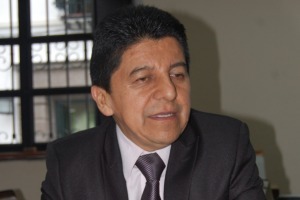
Governor Bolaños Lasso (Photo credit Diaro del Cauca)
teleSUR | May 4, 2016
An army sergeant and a corporal have been arrested for the murder of Indigenous governor Bolaños Lasso in southwest Colombia, local media reported Tuesday.
The Prosecutor General’s Office confirmed the arrest of the two low-ranking army commanders who are part of the Jose Hilario Lopez battalion, of the Army’s 3rd Division, and said the pair are under investigation for the murder of Lasso.
Lasso was killed from gunfire on a road leading from Puracé, an Indigenous community in the Cauca Department, to the province’s capital of Popayán, on Oct. 19, 2015, according to the army.
“While the troops of the battalion Jose Hilario Lopez moved to the village of Santa Leticia, in Purace, where they prepared to take a position to provide security for election day October 25, they heard several shots,” representatives of the 29 Army Brigade said in an statement.
Commenting on the death last year, Colombia’s Indigenous Regional Council of Cauca (CRIC) said that Bolaños had “no known type of problem” that may have provoked his assassination.
No motive for the murder has been established as yet by authorities. The two soldiers will go on trial before the Third Municipal Criminal Court Guarantee Control charged with the murder of protected persons.
Murders and mistreatment of Indigenous Colombians is a regular occurrence in the Cauca region. As teleSUR reported in November, the Colombian army killed one campesino and wounded five others after it raided a rural area in what military officials say was an effort to “manually eradicate” illegal coca crops.
The slaughter stoked ire among many human rights activists including former Colombian Senator Piedad Cordoba who, in the aftermath, said the army needs to “sit down” with other organizations and social movements and “agree on another way of doing things.”
Hillary Clinton Justifies her Support for 2009 Coup in Honduras
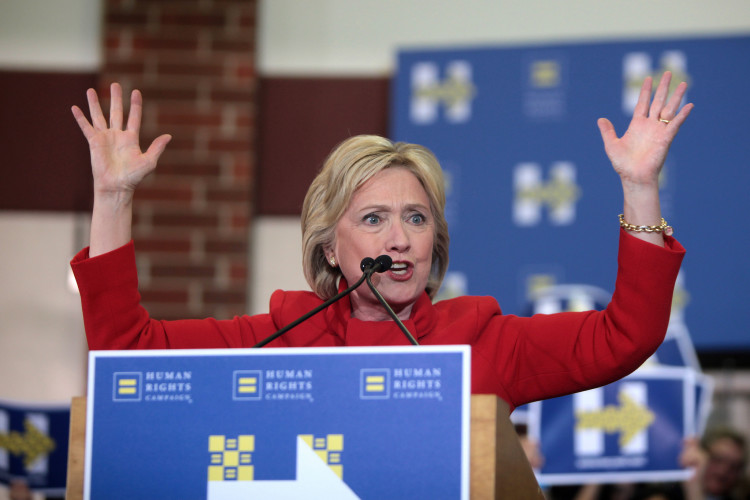 (Photo – Gage Skidmore on Flickr)
teleSUR – April 11, 2016
Democratic presidential frontrunner Hillary Clinton did not express any regret Monday about her support for the 2009 coup in Honduras, despite the deteriorating human rights situation, recently highlighted with the murder of prominent Indigenous activist Berta Caceres.
In fact, in an interview with the New York Daily News, in her opinion, the U.S. aid to military and police forces in Central America will eventually pay off just like Plan Colombia.
Plan Colombia was established under the administration of Bill Clinton in 1999 under the guise of fighting the war on drugs. The U.S. aid package, totalling almost US$2 billion, gave 78 percent of the funds to the Colombian military and police for counternarcotics and military operations against the rebel forces.
Despite a long list of studies and evidence that shows that Plan Colombia contributed to human rights abuses by security forces and the rise of paramilitary forces, Clinton took most of the credit for the current peace talks between the government and the FARC rebels, suggesting Plan Colombia brought peace to Colombia.
“I didn’t like the way it looked or the way they did it but (the coup leaders) had a very strong argument that they had followed the constitution and the legal precedence,” she said in an interview with the New York Daily News.
Democratically-elected president Manuel Zelaya was forcibly put on a plane and sent out of the country by the Honduran military in June 2009.
Clinton justified the move despite opposing advice from her top aides, who urged her to declare it a military coup, and to cut off U.S. aid, as some emails leaked in July revealed.
She admitted that the coup leaders “really undercut their argument by spiriting (Zelaya) out of the country in his pajamas, where they sent the military to take him out of his bed and get him out of the country.”
Nevertheless she strongly rejected the idea of cutting U.S. aid for Honduras, claiming this would have harmed the Honduran people, although it is mainly directed to the country’s security forces. It is used to keep the drug war within Honduran borders – as well as to keep Central American migrants running away from drug violence from reaching the United States.
Colombia: ‘Armed Strike’ Forced on Residents by Paramilitaries
teleSUR – April 1, 2016
As the possibility of a peace deal is becoming more certain, a surge of paramilitary violence in the country raises concerns of lasting peace.
In what’s being called an “armed strike” the Usuga Clan, a nacro-paramilitary outfit, ordered local residents in three northern departments in Colombia to stop all their activities for two days. Flyers distributed beforehand threatened them with retaliation if they dared to leave their homes.
They also forced local shops to shut down and intimidated children not to go to school, while blocking roads and rivers, said Colombia’s Ombudsman Alfonso Cajiao.
In the department of Sucre, education centers were shut down and two people were assassinated since the beginning of the forced strike, reported a local organization.
An assassination attempt on human rights activist and ex-senator Piedad Cordoba Friday is believed to be the work of paramilitaries. The Usuga Clan also killed a policeman and a military officer Thursday. Both officers were unarmed and dressed as civilians when they were killed.
President Juan Manuel Santos strongly condemned what he called a “criminal group” in a press conference.
“I insist that the Usuga Clan is a criminal organization, and will not be granted any political treatment. I can only recommend that they hand themselves over to the country’s justice,” he added, reporting that security forces arrested 56 members belonging to the armed group Friday, who were allegedly intimidating the local population on social media and in the streets.
The armed strike comes as various far-right sectors and paramilitary groups are calling for a national mobilization Saturday to protest against the peace deal currently being negotiated between the Colombian government and the Revolutionary Armed Forces of Colombia in Havana.
On Thursday, far-right leader and ex-president Alvaro Uribe, criticized the peace deal, saying the deal was “not a peace deal, it is an impunity deal,” in an interview with the Spanish-based journal, ABC.
“The agreement could end up sending to prison all those who fought terrorism,” he dramatically warned, denying any form of state terrorism or paramilitary violence like the scandal of “false positives” carried out during his presidency.
As the agreement is gets closer, a surge of paramilitary violence has also raised concerns among progressive sectors and activists in the country who fear that the Colombian state will be unable to guarantee their security even after the peace deal is signed.
Derailing Peace Deal in Colombia
By Jonathan Marshall | Consortium News | March 31, 2016
Cuban and U.S. leaders overcame immense obstacles to end more than a half century of confrontation between their countries with President Barack Obama’s visit to Havana. But they were unable to end more than a half century of political violence in Colombia by brokering a peace pact that was scheduled to be signed in Havana on March 23, one day after Obama departed.
That target date was set by Colombian President Juan Manuel Santos and leaders of the Revolutionary Armed Forces of Colombia, or FARC, during negotiations hosted by Cuban President Raúl Castro last September. Now the parties are aiming for a new deadline at the end of this year.
After 52 years of conflict, they are used to setbacks and delays. But the armed struggle has already killed more than 220,000 and claimed 7.9 million registered victims — including 77,000 who disappeared — so Colombia desperately needs peace and reconciliation as soon as possible.
The key sticking point concerns parties who are not at the negotiating table. They include a smaller but still potent rebel group, the National Liberation Army, or ELN. More important are right-wing and criminal paramilitary groups who have the motive and means to massacre FARC soldiers and their civilian sympathizers if they get the opportunity.
Until Bogota — and Washington — find a convincing way to restrain these paramilitary terrorists after FARC lays down its arms, Colombia will never find peace.
The peace process has made great strides over the past year. Overall violence is down. The government pardoned some FARC prisoners and helped them return to civilian life. FARC promised to end child recruitment and release children under the age of 15 from its ranks; it also conducted an historic ceremony of public apology for its part in killing civilians during a 2002 firefight with paramilitary forces. The two sides engaged in clearing mines for the first time this spring. They have jointly asked the United Nations Security Council to monitor an eventual ceasefire.
But the Colombian government demands that FARC guerrillas demobilize and hand over their weapons in remote rural “concentration zones.” They would be spared arrest as long as they remain in isolation. FARC insists that it be permitted to store weapons in the zones and be granted their freedom anywhere in the country.
Explaining the organization’s reluctance to totally disarm, a FARC negotiator pointedly questioned whether the government could guarantee their security in the face of paramilitary threats.
“In the last month, more than 28 community organizers, human rights defenders and peasant farmers have been murdered and their killers continue to enjoy impunity,” he said. “Solving the paramilitary problem the main challenge we are facing today, to help this process move ahead.”
Opposing the Peace Process
The U.N. Human Rights Council for Colombia reported in March that “diverse local interests and groups opposed to change resulting from the peace process” — including armed political and criminal groups engaged in land seizures, drug trafficking, illegal mining and extortion — “are already employing violence and intimidation to protect their interests, and the State has not had a sufficiently effective response.”
It added, with a strong affirmation of FARC’s concerns, that “demobilizing guerrillas . . . could also be vulnerable.”
Referring to right-wing death squads that annihilated supporters of a prominent leftist political party affiliated with FARC, the report declared, “The hundreds of assassinations of Unión Patriótica political party leaders and members in the 1980s and 1990s illustrate the elevated risk for new political movements. Security guarantees and transformation of the political reality are essential to avoid repetition of this situation.”
Many experts estimate that more than 2,000 Unión Patriótica members were murdered by right-wing death squads serving powerful drug lords and allied government security forces. The victims included two of the party’s presidential candidates, one elected senator, eight congressmen, 70 councilmen, and dozens of deputies and mayors. The assassination campaign ended a ceasefire reached by FARC and the government in 1987 and destroyed hopes for peace.
Much of this terrorist violence was perpetrated by the United Self-Defense Forces of Colombia (AUC), a paramilitary organization that eventually took over the cocaine trade from its original patron, the Medellín Cartel. The AUC enjoyed support from government and military officials who appreciated its help in the war against FARC (which also had dirty hands in the drug trade).
The AUC’s 30,000 members officially demobilized in 2006. Subsequent testimony by some of them helped convict 60 former congressmen and seven former governors for collaborating with the criminal organization. Former President Alvaro Uribe accepted money from the AUC for his 2002 presidential campaign; his brother Santiago was arrested in February on charges of helping to create a paramilitary group of his own.
The Colombian human rights group MOVICE reported in March that a new generation of criminal bands have launched a campaign of murder and intimidation to disrupt the current peace talks. Their victims include community leaders and peasants who claim their lands were illegally seized.
“I think part of the message [of the killings] is to intimidate the FARC, and let them know what awaits them if they enter politics,” said a MOVICE spokesman.
Rightist Drug Lords
Chief among the threats to FARC and its community supporters is Colombia’s most powerful drug trafficking organization, “Los Urabeños,” which has muscled its way into many former guerrilla territories and today controls much of the country’s Caribbean coast. It is a direct successor to the United Self-Defense Forces of Colombia.
“We feel obligated to continue our anti-subversive fight,” a spokesman for Los Urabeños declared soon after the group announced it formation.
The Santos government has made genuine moves to seek justice against the instigators of political violence. It recently arrested a senior general on charges of overseeing the grisly killing of thousands of civilians whom the Army falsely claimed were guerrillas in order to inflate body counts and win bonuses.
State prosecutors also said they will arrest a former head of the army — and ally of former President Uribe — for the same crime, known as the “false positives” scandal.
According to Human Rights Watch, at least 16 active and retired army generals are currently under investigation by the Attorney General’s office for “false positive” killings, and about 800 lower-ranking soldiers have been convicted. But human rights groups warn that rules tentatively worked out by the government and FARC to promote reconciliation by granting immunity for war crimes could prevent further prosecution of false positive cases.
The United States, which bears a heavy responsibility for promoting state violence and the growth of paramilitary organizations to combat communism in Colombia in the 1950s and 1960s, can make partial amends by supporting President Santos’s efforts at reconciliation while pressing to see that justice is served by holding war criminals accountable.
In the interests of peace and justice, Washington should also offer all reasonable aid to help Colombia suppress organizations like Los Urabeños that continue the terrible legacy of previous terrorist and criminal paramilitary groups.
As Adam Isacson, a Colombia security analyst at the Washington Office on Latin America, noted recent murders by the new generation of paramilitary forces “make it a lot harder for the FARC leadership to convince their rank and file to demobilize. The U.S. has to make it clear that the paramilitaries…are right up there with the Zetas, Sinaloa [cartels] and the MS-13 as security threats, because of their ability to threaten a peaceful outcome in Colombia.”
Jonathan Marshall is author or co-author of five books on international affairs, including The Lebanese Connection: Corruption, Civil War and the International Drug Traffic (Stanford University Press, 2012).
Colombia and ELN Rebels to Begin Formal Peace Talks
teleSUR – March 30, 2016
The Colombian government announced the launch of formal peace talks on Wednesday with the country’s second-largest rebel group the National Liberation Army or ELN. The announcement takes place after the guerrilla group freed two hostages to meet a government condition for the start of formal peace talks.
During a joint press conference Wednesday, the Colombian government’s top delegate for the ongoing FARC peace talks, Frank Pearl, outlined the key aspects of negotiation between the ELN and the Colombian government, which will include six major points: participation of society, peace through democracy, transformations necessary for peace, victims rights, the end of the armed conflict, and the implementation and signature of the agreement.
Pearl also confirmed that Cuba, Norway, Venezuela, Chile, Brazil and Ecuador will act as guarantor countries.
Meanwhile, moving forward, the ELN commander Antonio Garcia promised to communicate on all future progress made during the talks and vowed “to create a favorable environment for peace.”
Shortly after the press conference, Colombian President Juan Manuel Santos delievered a statmenent in which he emphasized the importance of the peace talks with the ELN, stating, “We have to finish this conflict in order to construct peace in our country.”
During his speech, the Colombian President likened the talks to the ongoing negations between the government and the FARC, saying that, “the objective is the same, which is to eliminate violence.”
The announcement marks a new stage in peace negotiations as the government also closes in on a deal with the country’s largest guerrilla group, the Revolutionary Armed Forces of Colombia, known as the FARC.
Leading up to the joint press conference, ELN officials thanked the Venezuelan government via Twitter for their role in the Colombian peace process.
“We would like to thank the Venezuelan people for their unconditional support in helping us get to this point.”
Meanwhile, the regional integration bloc, UNASUR, also issued its support in a statement saying, “The Union of South American Nations (UNASUR ) welcomes this agreement, which was made possible in part due to the participation of several regional governments.”
The Foreign Ministry of Ecuador also praised the news, expressing its “profound satisfaction” regarding the recent announcement.
The government and the ELN had been in preliminary talks for more than two years, but had failed to begin formal negotiations until today.
Colombia has seen armed conflict between the state, paramilitaries, crime syndicates and revolutionary left-wing groups such as the FARC and the Marxist-Leninist ELN since the 1960s.
Murder Epidemic Halts Colombia’s Peace Process
By W. T. Whitney | CounterPunch | March 24, 2016
Paramilitaries and armed thugs have long sullied politics in Latin America, most notably in Colombia and recently in Honduras. A recent increase in politically motivated killings in Colombia coincided with final preparations for signing a peace agreement between the Revolutionary Armed Forces of Colombia (FARC) and the Colombian government, at war for 50 years. The much anticipated accord never materialized.
In Honduras the murder of longtime environmental and indigenous rights activist Berta Cáceres caps a wave of killings there of journalists, teachers, women, and especially of agrarian rights activists.
Governments and private parties serving predatory interests evidently regard terror at the hands of thugs or paramilitary forces as useful for maintaining dominion. Colombia’s paramilitary phenomenon warrants a look now because paramilitary attacks have brought Colombia’s peace process to a halt. Fortunately documentation of paramilitary offenses in Colombia provides much by way of details and particulars, more so than in Honduras, for instance. That’s because Colombian paramilitaries have long met resistance and gained special notoriety.
On March 23, after 40 months of talks in Havana, negotiators on both sides in the Colombian peace talks were to have announced a “Final Agreement,” one covering five agenda items they had set out to discuss. But an impasse developed over the last one, designated as “end of conflict.” It entails a “bilateral and definitive cease of fire and hostilities” and laying down arms.
FARC negotiators held back; an epidemic of killings during March revived long-held FARC concerns about the safety of ex-guerrillas in a time of peace. Others worry too.
The Executive Committee of the Patriotic Union (UP), a leftist political party, reported March 18 that in the previous three weeks “unknown armed men,” presumably paramilitaries, had carried out 11 politically motivated killings and “disappeared” three other people – whose bodies were found later.
Speaking to reporters, Aída Avella, the UP president, accused business leaders of financing the resurgence of paramilitaries. She also accused military leaders of being “immersed” in paramilitary operations. Avella herself went into foreign exile for 17 years in 1996 after a rocket destroyed the car in which she was a passenger.
In an open letter to Colombian President Juan Manuel Santos, Andrés Gil, a leader of the Patriotic March, condemned the assassinations. “[I]f we continue to be killed,” he wrote, “then the conclusion will be that really there’s no room for anyone on the left…. You will pass into history not as the president for peace but as the one who didn’t take the fight against paramilitaries seriously.”
Referring to the flood of paramilitary victims, the FARC peace delegation released a statement asking, “How can this be in the midst of a peace process now approaching the signing of a final accord?” Colombian authorities, the FARC said, “can no longer delay clearing away the phenomenon of paramilitarism.”
The FARC has reason to be alarmed. Many FARC guerrillas left the insurgency in 1985 in accordance with an agreement signed with President Belisario Betancur. They engaged in electoral politics as candidates for the UP party. That provoked a massacre; some say almost 5000 UP activists have since been murdered.
FARC negotiator Carlos Antonio Lozada may have been thinking of that experience when he told reporters March14 that, “[W]e have to take measures to avoid being betrayed and attacked as happened in the past.” He noted that the government recently dismissed a technical sub-commission report, already agreed upon, calling for “a bilateral and definitive ceasefire.”
The FARC negotiating team took the occasion of Secretary of State John Kerry’s visit with them on March 21 to seek help in regard to the paramilitary problem. Kerry had accompanied President Obama on his historic visit to Cuba. The negotiators released a communication saying, “Mr. Kerry, we ask through you that the United States help curb paramilitary violence, which in the midst of the peace process keeps mowing down the lives of defenders of human rights and social leaders.”
The request is not without irony. The United States provides funds for the Colombian army, known to facilitate paramilitary operations. And in the early 1960s U.S. military experts advised the Colombian government to utilize paramilitaries to augment its campaign then of pushing back against leftist guerrillas.
In a joint press conference February 4 with President Santos in Washington, President Obama introduced a U. S. plan called “Peace Colombia.” The two leaders had met to celebrate the upcoming peace accord and the end after 15 years of Plan Colombia, that U.S. mechanism for supporting counterinsurgency and drug-war efforts in Colombia.
For Voz newspaper editor Carlos Lozano, the name of the new venture signifies a “Pax Romana, or peace of the graveyard.” He lamented that “within Peace Colombia there’s not one entry for combating paramilitarism, which is the principal obstacle to peace in Colombia.”
Trivializing the FARC and thereby perhaps signaling the guerrillas’ irrelevance in a Colombia at peace, the New York Times recently headlined a reporter’s story thus: “Inside a Rebel Camp in Colombia, Marx and Free Love Reign.” It celebrated the collapse of communism by likening the supposed decline of the FARC to the fall of the Berlin Wall.
To the extent that such triumphalism extends to official U.S. attitudes, prospects for peace in Colombia are diminished.
Nevertheless, neither Colombia’s government nor the United States will likely have the final say in regard to disruptions at the hands of paramilitaries. Other forces, powerful and based on realities, are in play, and have been. A voice on their behalf is heard from, of all places, inside prison.
Political prisoner Húbert Ballesteros joined the Communist Party and Patriotic Union in 1986. More recently he’s been a leader of both the Fensuagro agricultural workers’ union and the CUT labor federation. Writing on March 12, he reflects upon “the killings in Antioquia, Sur de Bolívar, Arauca, Bogotá, and Cauca; the jailing of social leaders in Cauca, and the spread of paramilitary bands the length and breadth of the country.” According to Ballesteros, “We can no longer continue assuming that this oligarchy wants peace [other than] a cheap peace, a silencing of the guns.”
He knows what to do: “[W]hile we are building scenarios of peace, we must organize the people for resistance, and do so massively and convincingly so that this government understands that people are no longer content to live under its domination.” We must deal with “the true problems of the country, which are unemployment, poverty, corruption, and social and political marginalization.”
W.T. Whitney Jr. is a retired pediatrician and political journalist living in Maine.
Colombia, Honduras Are Most Unequal Countries in Latin America
teleSUR – March 10, 2016
Latin America has five of the world’s most unequal countries, with Honduras and Colombia being the region’s top two, according to statistics released by the World Bank Wednesday.
Using data from December, the World Bank calculated that Latin America is not the poorest region in the world, but is home to some of the world’s most unequal countries.
Among them are Honduras (6), Colombia (7), Brazil (8), Guatemala (9) and Panama (10), which all rank within the world’s top 10 most unequal countries.
The results were found by calculating each country’s Gini coefficient, what measures the income distribution in each nation, whereby nations approaching 0 have total equality and those approaching 100 have total inequality.
Colombia’s Gini coefficient ranked at 53.5, the same as 2012, while Honduras’ was 53.7 and plummeting dramatically, according to news reports.
In the current situation, the top 10 percent of Colombia’s richest people earn four times more than the bottom 40 percent of the population. Additionally, 77.6 percent of land in the country is owned by only 13.7 percent of the country’s inhabitants.
In Honduras, 64.5 percent of the population is living in poverty while 42.6 percent live in extreme poverty (less than US$2.5 a day), according to World Bank statistics.
Featured Video
Theodore Postol: Iran’s Missiles & Drones Were Underestimated
or go to
Aletho News Archives – Video-Images
From the Archives
Wars for Israel: A reminder of who’s giving the marching orders
By Damian Lataan | February 7, 2012
As the West prepares to march off to yet another war in the Middle East, we should perhaps remind ourselves of who is giving the West their marching orders.
In February 2003, just weeks before the US and their allies launched their attack on Iraq and her peoples, a delegation of US congressmen, together with the US Ambassador to the United Nations, John Bolton, a well known pro-Zionist and neoconservative war-hawk, were in Israel at the invitation of the Israeli government then led by Israeli Prime Minister Ariel Sharon.
Addressing the congressmen, Sharon told them ‘that Iran, Libya and Syria should be stripped of weapons of mass destruction after Iraq’. Later, Sharon told John Bolton ‘that Israel was concerned about the security threat posed by Iran, and stressed that it was important to deal with Iran even while American attention was focused on Iraq’. … continue
Blog Roll
 Aletho News
- A New Resistance Front: How Does Syria Factor into the Regional War?
- Gulf states weigh pipeline expansion plans, hoping to bypass Hormuz
- Iran sets up ‘tollbooth’ system in Strait of Hormuz
- Wave 90: IRGC strikes US-linked industrial sites in Gulf
- Iran Says US-Israeli Claims of Its Military Strength Are Wrong
- Trump’s April Fools’ Address to the nation
- The Most Important Bet You’ve Never Heard Of
- The killing of three Indonesian soldiers in Lebanon should remind Jakarta that Israel does not want peace
- Defeated and delusional: Netanyahu’s remarks reveal $80bn war failure, says analyst
- Iran’s friends are about to make life much more difficult for Israel and the US
- If Americans Knew
- Gaza families reunite years after babies evacuated amid Israel’s war
- International Rescue Committee warns Gaza’s children face grave protection risks
- Iran’s Alleged 47-Year War on America: Debunking the 1,050 American Deaths Canard
- Israel wants US to bomb more of Iran’s civilian structures (113,000 is not enough) – Not a ceasefire Day 173
- Ann Coulter Rips Into Fox News for Iran War Coverage
- Joe Kent Urges Americans To Call White House and Congress To Object To Sending Troops Into Iran
- DNC Resolution to Reject AIPAC Funding Puts Democratic Leaders in the Hot Seat
- Swedish foundation to build 400 schools as over 650,000 Gaza children remain without education for 2 years
- Israeli army admits photshopping image of slain Lebanese journalist
- This is how Israel is systematically killing health workers under the cover of war in Lebanon
- No Tricks Zone
- Low Intensity Tornado Wrecks Major Solar Farm, Creating A Potential Toxic Dump
- New Study Finds Warming Saves Lives…Cold Temperatures 12 Times More Deadly Than Excess Heat
- German Science Blog Accuses PIK Climate Institute Of Hallucinating Climate Tipping Points
- Devastating Assessment Of Comirnaty Vaccine By Former Senior Pfizer Europe Toxicologist
- New Study: CO2 Is ‘Effectively Negligible’ As An Explanatory Climate Change Factor Since 2000
- Former Pfizer Toxicologist Dr. Helmut Sterz Tells Bundestag Hearing Pfizer Vaccine Should Have Never Been Approved
- Energy Expert: Germany’s Nuclear Phaseout Was A “500 Billion Euro Mistake”
- New Research: South Australia’s Mid-Holocene Sea Surface Temperatures Were 4°C Warmer Than Today
- Storing Green Energy To Last Germany 10 Days Would Require A 60-Million Tonne Battery
- New Studies: UK Sea Levels Were 4 Meters Higher Than Today During The Mid-Holocene
 Aletho News