Whistleblowers accuse CPJ of ‘shielding’ Israel to appease donors
The Cradle | December 20, 2025
Current and former staff at the Committee to Protect Journalists (CPJ) have accused the organization of deliberately downplaying Israel’s war crimes in Gaza to placate pro-Israel donors, according to a report by Electronic Intifada published on 18 December.
The whistleblowers claim CPJ CEO Jodie Ginsberg personally controls all Gaza-related research, blocking work that would reveal that the Israeli army deliberately targets journalists.
One research piece backed by military experts reportedly concluded Israel knowingly kills journalists, but Ginsberg shelved it.
An employee was reportedly fired after disputing Ginsberg’s refusal to classify journalist killings as targeted murders—a war crime under international law.
Despite an internal memo stating CPJ should call Israel’s actions “genocide,” whistleblowers say this is misleading.
The memo instructs staff to use qualified language like “what human rights groups deem a genocide” to talk about the mass murder of tens of thousands of Palestinians.
A website review found that in only two of 15 Gaza-related items does CPJ use “genocide” without attribution, with the first appearing in October 2025, two years into Israel’s genocidal war.
The CPJ denied the allegations, saying staff were never told to avoid “genocide” and could use any language on personal social media, citing examples of Ginsberg publicly using the term and accusing Israel of war crimes.
The annual CPJ fundraising dinner draws major media donors, including five Rupert Murdoch-owned outlets, which contributed $250,000 total.
Rupert Murdoch is a longtime supporter of Israel who has routinely advanced pro-Israel positions via his platforms.
He previously described Israel as a front-line defender of “western democratic civilization” at the peak of Israel’s ethnic cleansing campaign.
This year’s awards honored journalists from China, Ecuador, Kyrgyzstan, and Tunisia, with no Palestinian nominees.
Ginsberg explained CPJ doesn’t award journalists from the same country consecutively, noting last year’s recipient was Palestinian journalist Shrouq Al Aila.
Whistleblowers called Al Aila a “safe choice” whose background was extensively vetted, and said proposals to honor slain Al Jazeera journalist Anas Al-Sharif were ignored.
Since the genocide began over two years ago, nearly 300 journalists have been killed by Israeli forces.
Reporters Without Borders (RSF) has declared Israel the world’s leading cause of death of journalists for three years in a row. Forty-three percent of the 67 journalists killed globally between December 2024 and December 2025 were killed by Israeli forces in Gaza.
The organization condemned the murders and designated them as targeted killings by state militaries.
Israeli journalist Yuval Abraham recently revealed that military intelligence created a “Legitimization Cell” to justify killing Palestinian journalists by falsely portraying them as Hamas operatives.
Silence of the Lambs: The Case of Marzieh Hashemi
By Rannie Amiri | CounterPunch | January 25, 2019
In the wake of the outcry after the abduction and murder of Saudi journalist Jamal Khashoggi—in a foreign country and under the directive of a rogue Crown Prince—one would think the threshold to condemn the detention of an American journalist in the United States without charge or trial would be quite low. Unfortunately, it has proven to be nearly insurmountable.
Marzieh Hashemi, a US citizen and anchorwoman of Iran’s English-language news station, PressTV, had been held under these circumstances for 10 days beginning shortly after her arrival to St. Louis Lambert International Airport Jan. 12 to work on a documentary on the Black Lives Matter movement. She was finally released, again without charge, on Wed Jan. 23.
Hashemi was purportedly an alleged material witness in an as-yet unspecified investigation. She was forced to remove her headscarf and offered pork to eat, both against the tenets of her religion, before being transferred to Washington, D.C. to an unknown location.
As such, the muted response of those organizations whose primary purpose is to stand for press freedoms and human rights and against religious intolerance was rather remarkable.
The Committee to Protect Journalists “expressed concern” in their statement on the situation but simultaneously found it necessary to add that, “Iran routinely jails journalists” as if to provide pretext for the US to do likewise.
The Council on American-Islamic Relations (CAIR), the self-proclaimed largest US Muslim civil rights advocacy organization, called on the Department of Justice to merely “explain” why an American citizen living in Iran was deprived of her religious and due process rights. Indeed, CAIR’s national executive director politely asked law enforcement officials to just “clarify” the matter.
The incarceration of Hashemi was nowhere to be found on the Reporters Without Borders action page. Even the American Civil Liberties Union was seemingly mum on the case despite its salient “No Charges? No Trials? No Justice” article on Indefinite Detention.
The FBI and federal officials confirmed Hasehemi was not accused of or charged with any crime although little else is being said. The allowance that a witness may be so held if they are considered a flight risk, unwilling to respond to a subpoena or testify in a criminal proceeding of vital importance is more properly debated in legal circles (never mind that the myriad of legal experts routinely appearing on the various US cable news channels have not said anything on Hashemi but had the time to speak at length about CNN’s Jim Acosta’s ban from White House press briefings). However, the circumstances of Hashemi’s detention, that she is employed by an Iranian television station and in the context of the bellicose rhetoric adopted by Secretary of State Mike Pompeo and National Security Advisory John Bolton against Iran, made her confinement more than suspect.
Regardless of the legal ramifications and precedent set, the silence of groups and organizations regarding her ill-treatment and custody set an equally dangerous one. It highlights what little courage it takes to condemn atrocities committed abroad by foreign governments yet the mistreatment of an American journalist on domestic soil by US authorities will go unchecked.
It is this duplicitous, timid, half-hearted-to-absent response which requires “explanation” and “clarification” for us all.
Syrian rebels set to execute Ukrainian journalist
RT | December 13, 2012
NGOs are urging Syrian rebels to release a Ukrainian journalist, Anhar Kochneva, who is set to be executed Thursday. Meanwhile the group behind the kidnapping warned it would now target all Russians, Ukrainians and Iranians on Syrian soil.
The Committee to Protect Journalists (CPJ), ARTICLE 19, the International Press Institute and Reporters Without Borders issued a joint statement expressing deep concern about Kochneva’s life and urging the leadership of the Free Syrian Army and of the Syrian Opposition Coalition to ensure that the journalist is safe and set free.
The groups also called on the French, British and US governments, as well as the European Union to work with the Syrian opposition to facilitate her release.
Kochneva, who has reported critically about the Syrian rebels for Russian and Ukrainian news outlets, was captured in the beginning of October near the restive city of Homs. The kidnappers, allegedly members of the Free Syrian Army, threatened to kill her on December 13 if a US$ 50 million ransom is not paid.
On Tuesday, Ukrainian authorities urged Damascus to work more actively to help free the journalist. The Ukrainian Foreign Ministry’s spokesman Aleksandr Dikusarov said that Kiev expects “concrete results” in attempts to release her.
In response to the Ukrainian demands, Kochneva’s kidnappers posted a video in which they threatened to target the embassies of Ukraine, Russia, as well as all Russians, Ukrainians and Iranians in Syria.
“We urge not to let a single Russian, Ukrainian or Iranian alive out of Syria,” the rebels said in the video, aired by Ukrainian news channel Ukraina.
The rebels label Kochneva a spy, claiming that she was carrying arms and worked as an interpreter for the Russian officers.
The Ukrainian Foreign Ministry did not issue comment on the latest video, saying its authenticity cannot be verified, according to Ukraina news channel.
A month after the kidnapping, a video message from Kochneva was published online in which she appealed to the Embassies of Ukraine and Russia, as well as the Syrian government, to meet the demands of the kidnappers.
On the 28 November, in the second video, Kochneva read a text in Arabic admitting to having participated in the fighting, working as a military interpreter with Syrian and Russian officers.
CPJ, ARTICLE 19, the International Press Institute and Reporters Without Borders doubt the objectiveness of these videos. “We are deeply concerned that in both video appeals the journalist seems to be speaking under pressure,” they said in their statement released on Wednesday.
Syrian rebels seize Lebanese journalist over ‘incompatible’ reporting
RT | October 28, 2012

Fidaa Itani (Image from facebook.com/fidaa.itani)
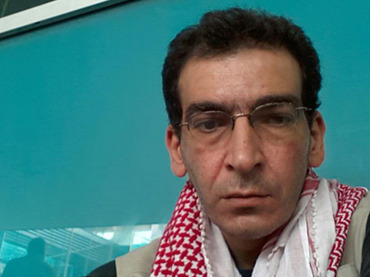
In their fervent struggle, a Syrian rebel group has “arrested” a Lebanese journalist in Aleppo saying his “presence as a journalist no longer receives approval in areas controlled by the rebels.”
Fidaa Itani, who works for the Lebanese Broadcasting Corporation (LBCI) and several other news outlets, was travelling though Aleppo under protection of a rebel group when he was arrested and handed over to another rebel group which controls a small town some 30km away from the besieged port-city.
The rebels said on their Facebook page they found Itani’s work “incompatible with the path of the Syrian revolution and rebels.”
They promised to free the reporter who is now in rebel custody “shortly” – after the necessary documents and information are acquired.
Itani was seized after he raised suspicions, taking pictures and videos of “large amounts of operations” in Syria’s second largest city. The content of his reports also seems to have fallen afoul of how the rebels want the popular uprising against Bashar Al-Assad’s government to be covered.
“Reports and videos have not proven yet Itani’s involvement with any party that works against the revolution, but his presence as a journalist no longer receives approval in areas controlled by the rebels,” the group said in a statement.
LBCI, as well as Lebanese MPs, are in contact with the group and their leader, Abu Ibrahim. They expect Itani to be set free in a couple of days.
Abu Ibrahim and the Azaz rebel group have abducted Lebanese nationals before. Eleven Lebanese pilgrims, who were returning from Iran through Syria, were kidnapped by the group in May. Only two of them have been released so far.
The rebels have used the term “detained” to describe the abduction of the journalist, but they in fact have committed “a criminal action” and “kidnapped” him, Manuel Ochsenreiter, editor-in-chief of the German monthly news magazine Zuerst, told RT.
“Indeed this is an alarming development but this is not new,” he said. “He is not the first journalist to have been kidnapped in Syria. We see a huge number of journalists that were killed by the rebels in Syria, who were killed by the Al-Qaeda related groups. I just want to remember the journalists of the Syrian TV channel, Syrian News TV where some journalist were killed and where the building was attacked at the end of June this year.”
At the same time the Syrian government does not prevent journalists making reports that disagree with the official line, says Ochsenreiter, who himself had visited Damascus during the conflict.
“I was in Damascus and what I can say is that I met a lot of journalists who were not filing reports consistent with the official line of the Syrian government’s cause and they were not detained, they were not kidnapped, they were free to work in the country,” he said. “So, you see that there is a huge difference how journalists work in Syria and there is a monster huge difference in the risk.”
Itani was kidnapped just hours after the release of a video in which Al-Qaeda leader Ayman al-Zawari had called for Muslims to kidnap Westerners as a bargaining chip, to win the release of its members held captive around the world. In a new video posted online he also urged Islamists to support Syrian rebels with “all that they can.”
This is not the first time that a foreign reporter has gone missing in the Arab country since it plunged into civil unrest in March 2011. In one of the most recent incidents, Ukrainian reporter Anhar Kochneva disappeared several weeks ago and has not yet been freed. In total, according to the Committee to Protect Journalists, three international reporters remain unaccounted for in Syria, while over 20 have been killed adding to more than 20,000 casualties suffered by Syria.
Featured Video
Yemen joins the war – Red Sea could be blocked next – Saudi regime at risk
or go to
Aletho News Archives – Video-Images
From the Archives
Should Europeans ‘Thank’ the Americans for Destroying Nord Stream?
By Robert Bridge | Strategic Culture Foundation | September 29, 2022
With an investigation continuing into the destruction of the Nord Stream gas pipeline that provided energy supplies to Europe from Russia, there appears to be just one prime suspect, and that should surprise nobody.
Following the sabotage of the Nord Stream 1 and 2 gas pipelines, former Polish Foreign Minister Radoslaw Sikorski already seemed to know the identity of the perpetrator when he tweeted out: “Thank you, USA.”
At first glance, it seemed that Sikorski was speaking sarcastically, berating Washington for carrying out an attack that will have severe repercussions for the people of Europe. After all, how could anyone see any good coming from the termination of Europe’s primary source of gas reserves with winter just around the corner? It was Sikorski’s homeland of Poland, after all, that urged its citizens to collect firewood in the face of dwindling gas reserves.
In fact, the Polish diplomat was speaking one-hundred percent literally… continue
Blog Roll
 Aletho News
- Iran denies responsibility for ‘depraved’ attack on Kuwait desalination plant
- Bring The Troops Back. End This War Now!
- Can we please stop calling Israel the ‘only democracy in the Middle East’ now?
- US should start removing its troops for Germany, proposes AfD co-leader Chrupalla
- Iran Red Crescent: 600 educational centers attacked in US-Israeli ‘war crimes’
- Russian Oil Tanker Arrives in Cuba Amid U.S. Blockade
- America Racing to Strategic Defeat in Iran: Lt Col Daniel Davis
- FTC Warns Visa, Mastercard, PayPal, Stripe Over Political Debanking
- Russian tanker approaches Cuba despite US oil blockade
- Marandi: Yemen joins the war – Red Sea could be blocked next – Saudi regime at risk
- If Americans Knew
- Israeli police block Catholic cardinal from entering Church of the Holy Sepulchre on Palm Sunday
- Israel is assassinating journalists again, more than any other nation, anywhere, ever – Not a ceasefire Day 170
- Over 300 US service members wounded, majority have brain injuries – Not a ceasefire Day 169
- Researchers at Human Rights Watch Resign Over Blocked Report on Palestinian Refugee Return
- Jewish Groups Are Backing a War Americans Don’t Want
- Eric Fingerhut Thinks He’s the President of the Jews
- Top Jewish Philanthropists, Rabbis Urge Israeli President to Take Action Against ‘Jewish Extremists’
- Don’t Be Fooled. Zionist Leaders Have Always Wanted to Control Southern Lebanon
- Israel’s widespread use of torture is a core element of its genocide against the Palestinian people
- In Israel’s War on Iran, Many Middle East US Bases Rendered “All But Uninhabitable”
- No Tricks Zone
- New Study Finds Warming Saves Lives…Cold Temperatures 12 Times More Deadly Than Excess Heat
- German Science Blog Accuses PIK Climate Institute Of Hallucinating Climate Tipping Points
- Devastating Assessment Of Comirnaty Vaccine By Former Senior Pfizer Europe Toxicologist
- New Study: CO2 Is ‘Effectively Negligible’ As An Explanatory Climate Change Factor Since 2000
- Former Pfizer Toxicologist Dr. Helmut Sterz Tells Bundestag Hearing Pfizer Vaccine Should Have Never Been Approved
- Energy Expert: Germany’s Nuclear Phaseout Was A “500 Billion Euro Mistake”
- New Research: South Australia’s Mid-Holocene Sea Surface Temperatures Were 4°C Warmer Than Today
- Storing Green Energy To Last Germany 10 Days Would Require A 60-Million Tonne Battery
- New Studies: UK Sea Levels Were 4 Meters Higher Than Today During The Mid-Holocene
- Destructive Green New Deal: German Energy And Metal Group Warns Of Drastic Crisis
 Aletho News