UK Digital ID Scheme Faces Backlash Over Surveillance Fears — Is a Similar Plan Coming to the U.S.?
By Michael Nevradakis, Ph.D. | The Defender |October 2, 2025
The U.K. plans to introduce a nationwide digital ID scheme that will require citizens and non-citizens to obtain a “BritCard” to work in the U.K., which includes England, Scotland, Wales and Northern Ireland.
Government officials say the plan, to take effect no later than August 2029, will help combat illegal immigration.
But critics like U.K. activist and campaigner Montgomery Toms said the scheme, “far from being a tool for progress,” is instead a “gateway to mass surveillance, control and ultimately the rollout of a centralised social credit system.”
The plan faces broad opposition in the U.K., according to Nigel Utton, a U.K.-based board member of the World Freedom Alliance, who said, “the feeling against the government here is enormous.”
A poll last week found that 47% of respondents opposed digital ID, while 27% supported the ID system and 26% were neutral. The poll was conducted by Electoral Calculus and Find Out Now, on behalf of GB News.
A petition on the U.K. Parliament’s website opposing plans to introduce digital ID may force a parliamentary debate. As of today, the petition has over 2.73 million signatures.
According to The Guardian, petitions with 100,000 signatures or more are considered for debate in the U.K. parliament.
As opposition mounts, there are signs the BritCard may not be a done deal. According to the BBC, a three-month consultation will take place, and legislation will likely be introduced to Parliament in early 2026.
However, U.K. Culture Secretary Lisa Nandy said the government may push through its digital ID plans without going through the House of Commons or the House of Lords.
Protesters plan to gather Oct. 18 in central London.
Digital ID will ‘offer ordinary citizens countless benefits,’ U.K. officials say
British Prime Minister Keir Starmer announced the digital ID scheme last week in a speech at the Global Progress Action Summit in London.
“A secure border and controlled migration are reasonable demands, and this government is listening and delivering,” Starmer said. “Digital ID is an enormous opportunity for the U.K. It will make it tougher to work illegally in this country, making our borders more secure.
The plan “will also offer ordinary citizens countless benefits, like being able to prove your identity to access key services swiftly,” Starmer said.
According to The Guardian, digital ID eventually may be used for driver’s licenses, welfare benefits, access to tax records, and the provision of childcare and other public services.
Darren Jones, chief secretary to Starmer, suggested it may become “the bedrock of the modern state,” the BBC reported.
Supporters of the plan include the Labour Together think tank, which is closely aligned with the Labour Party and which published a report in June calling for the introduction of the BritCard.
Two days before Starmer’s announcement, the Tony Blair Institute for Global Change, led by Labour Party member and former U.K. Prime Minister Tony Blair, published a report, “Time for Digital ID: A New Consensus for a State That Works.”
Blair tried to introduce digital ID two decades ago as a means of fighting terrorism and fraud, but the plan failed amid public opposition. According to the BBC, Starmer recently claimed the world has “moved on in the last 20 years,” as “we all carry a lot more digital ID now than we did.”
During the COVID-19 pandemic, Blair endorsed a global digital vaccine passport, the Good Health Pass, launched by ID2020 with the support of Facebook, Mastercard and the World Economic Forum.
According to Sky News, French President Emmanuel Macron welcomed the BritCard for its ability to help fight illegal immigration into the U.K., much of which originates from France.
Critics: Digital ID marks ‘gateway to mass surveillance’
The BritCard, which would live on people’s phones, will use technology similar to digital wallets. People will not be required to carry their digital ID or be asked to produce it, except for employment purposes, the government said.
According to the BBC, BritCard will likely include a person’s name, photo, date of birth and nationality or residency status.
Digital wallets, which include documents such as driver’s licenses and health certificates, have been introduced in several countries, including the U.S.
Nandy said the U.K. government has “no intention of pursuing a dystopian mess” with its introduction of digital ID.
However, the plan has opened up a “civil liberties row” in the U.K., according to The Guardian, with critics warning it will lead to unprecedented surveillance and control over citizens.
“Digital ID systems are not designed to secure borders,” said Seamus Bruner, author of “Controligarchs: Exposing the Billionaire Class, their Secret Deals, and the Globalist Plot to Dominate Your Life” and director of research at the Government Accountability Institute. “They’re designed to expand bureaucratic control of the masses.”
Bruner told The Defender :
“All attempts to roll out digital ID follow a familiar pattern: corporate and political elites wield crises — such as mass migration, crime, or tech disruptions — as a pretext to expand their control … over private citizens’ identities, finances and movements into a suffocating regime.
“Once rolled out, these systems expand quietly, shifting from access tools to enforcement mechanisms. Yesterday it was vaccine passports and lockdowns; tomorrow it is 15-minute cities and the ‘universal basic income’ dependency trap. ‘Voluntary’ today becomes mandatory tomorrow.”
Tim Hinchliffe, editor of The Sociable, said digital ID is “not about tackling illegal immigration, it has nothing to do with job security and it definitely won’t protect young people online. Digital ID is all about surveillance and control through coercion and force.”
Hinchliffe said:
“Illegal immigration is just one excuse to bring it all online. Be vigilant for other excuses like climate change, cybersecurity, convenience, conflict, refugees, healthcare, war, famine, poverty, welfare benefits. Anything can be used to usher in digital ID.”
Twila Brase, co-founder and president of the Citizens’ Council for Health Freedom, said governments favor digital ID because it allows unprecedented surveillance.
The ID system “notifies the government every time an identity card is used, giving it a bird’s-eye view of where, when and to whom people are showing their identity,” she said.
According to Toms, “A digital ID system gives governments the ability to monitor, restrict, and ultimately punish citizens who do not comply with state directives. It centralises power in a way that is extremely dangerous to liberty.”
Experts disputed claims that digital ID is necessary to improve public services.
“The ‘improved efficiency’ argument is a technocratic fantasy used to seduce a public obsessed with convenience,” said attorney Greg Glaser. “Governments have managed to provide services for centuries without a digital panopticon. This is not about efficiency. It is about creating an immutable, unforgeable link between every individual and the state.”
Digital ID technology may create ‘an enormous hacking target’
London-based author and political analyst Evans Agelissopoulos said major global investment firms, including BlackRock, Vanguard and State Street, could combine their financial might with the power of digital ID.
“BlackRock, Vanguard and State Street are on a mission to buy properties to rent to people. Digital ID could be used against people they deem unfit to rent to,” he said.
During the COVID-19 pandemic, the same firms supported digital vaccine passports in major corporations in which they are among the top shareholders. Some experts suggested digital ID may institutionalize a vaccine passport regime and central bank digital currencies.
“Digital identity is the linchpin to every dystopian nightmare under the sun,” Hinchliffe said. “Without it, there can be no programmable digital currencies, there can be no carbon footprint trackers, no social credit system.”
Other experts suggested that a centralized database containing the data of all citizens could be monetized. “By centralizing everything, they will have access to health, criminal, financial records. This data can be sold,” Agelissopoulos said.
According to Brase, those who will benefit from the centralization of this data include:
“Anybody who’s going to be the third-party administrator, academia and companies who are building biometric systems and what they call ‘augmented authentication systems’ that provide the cameras, the back system operations for biometric identification and for digital systems.”
Several major information technology (IT), defense and accounting firms, including Deloitte and BAE Systems, have received U.K. government contracts totaling 100 million British pounds ($134.7 million) for the development and rollout of BritCard.
U.S. tech companies, including Palantir, Nvidia and OpenAI, “have also been circling the UK government,” The Guardian reported.
Digital ID also raises security concerns, with IT experts describing the U.K.’s plan as “an enormous hacking target,” citing recent large-scale breaches involving digital ID databases in some countries, including Estonia.
“Government databases are frequently hacked — from healthcare systems to tax records,” Toms said. “Centralizing sensitive personal data into a single mandatory digital ID is a disaster waiting to happen.”
The public may also directly bear the cost of these systems. Italy’s largest digital ID provider, Poste Italiane, recently floated plans to levy a 5 euro ($5.87) annual fee for users.
Switzerland to roll out digital ID next year, amid controversy
In a referendum held on Sunday, voters in Switzerland narrowly approved the introduction of a voluntary national digital ID in their country.
According to the BBC, 50.4% of voters approved the proposal. Biometric Update noted that the proposal received a majority in only eight of the country’s 26 cantons, though the country’s government campaigned in favor of the proposal.
Digital ID in Switzerland is expected to be rolled out next year.
Swiss health professional George Deliyanidis said he “does not see any benefits for the public” from the plan. Instead, he sees “a loss of personal freedom.”
“There are suspicions of election fraud,” he added.
In a letter sent Tuesday to the Swiss government, a copy of which was reviewed by The Defender, the Mouvement Fédératif Romand cited “significant statistical disparities” in the referendum’s results and called for a recount.
In 2021, Swiss voters rejected a proposal on digital ID under which data would have been held by private providers, the BBC reported. Under the current proposal, data will remain with the state.
According to the Manchester Evening News, countries that have introduced nationwide digital ID include Australia, Canada, China, Costa Rica, Denmark, Estonia, India, Japan, South Korea, Spain, Ukraine and the United Arab Emirates. Other countries with similar systems include France, Finland and Norway.
In July, Vietnam introduced digital ID for foreigners living in the country. In August, the Vietnamese government helped neighboring Laos launch digital ID.
The New York Times reported that, in 2024, China added an “internet ID” to its digital ID system, “to track citizens’ online usage.”
Bill Gates has supported the rollout of digital ID in several countries, including India.
The European Union plans to launch its Digital Identity Wallet by the end of 2026.
“When you see a nearly simultaneous worldwide push, like this digital ID agenda, people in all nations need to expect to be impacted to some extent,” said James F. Holderman III, director of special investigations for Stand for Health Freedom.
Is national digital ID coming to the U.S.?
Although the U.S. does not have a national identification card, the U.K. did not have one either — until digital ID was introduced. The U.K. scrapped national ID in 1952.
In May, the Transportation Security Administration (TSA) began Real ID enforcement for domestic air travelers in the U.S. In the months before, TSA engaged in a push to encourage U.S. citizens to acquire Real ID-compliant documents, such as driver’s licenses. Full enforcement will begin in 2027.
The REAL ID Act of 2005 established security standards for state-issued ID cards in response to the 9/11 attacks and the recommendations of the 9/11 Commission. In the intervening years, its implementation was repeatedly delayed.
Last year, then-President Joe Biden issued an executive order for federal and state governments to speed up the adoption of digital ID.
Brase said Real ID “is really a national ID system for America, currently disguised as a state driver’s license with a star. The American people really have no idea that what’s in their pocket is a national ID and they have no idea that the [Department of Motor Vehicles offices] are planning to digitize them.”
Hinchliffe said 193 countries, including the U.S., accepted digital ID last year when they approved the United Nations’ Pact for the Future.
Earlier this month, Sen. Rand Paul (R-Ky.) introduced the Safeguarding Personal Information Act of 2025 (S 2769), a bill to repeal the REAL ID Act of 2005.
“If digital ID is allowed to spread globally, future generations will never know freedom,” Hinchliffe said.
This article was originally published by The Defender — Children’s Health Defense’s News & Views Website under Creative Commons license CC BY-NC-ND 4.0. Please consider subscribing to The Defender or donating to Children’s Health Defense.
Costa Rica Authorizes Vaccination – Against Parent’s Wishes
The Tico Times | January 30, 2022
The Costa Rica Ministry of Health in conjunction with the National Children’s Board (PANI) gave hospital officials the authorization to vaccinate all children in their care as long as there are no medical counter indications that would preclude it.
The issue arose after the parents of a child in a hospital in Heredia objected to their child being vaccinated after the child tested positive for Covid-19. Ultimately the child was vaccinated and discharged but only after a protest that became violent when a group organized online tried to remove the child from the hospital, resulting in the arrests of seven people.
In a statement from PANI they cited the the hosipital had the legal authority and the “fundamental right to health and life” of the child as paramount and part of the basis of the order.
While the first vaccination was administered it seems unlikely that the parents will follow up for any future Covid-19 vaccinations or that the Ministry of Health will intervene if the child is no longer under their care.
What is also unclear is if any other Costa Rica authorities will take any actions against the parents for failing to vaccinate their child in the future.
Costa Rica Anti-Vaccine group enters hospital by force
The Tico Times | January 27, 2022
In a chaotic, and at times violent confrontation, a group of anti-vaccine advocates forcibly entered a hospital in Heredia as part of their protest and to remove a child with Covid-19. Six protestors were arrested at the scene. Police later arrested another person after he posted threatening comments online against government officials enforcing Covid-19 health restrictions.
The confrontation arose from a situation where, reportedly, a six year old unvaccinated patient was admitted for one issue and then was discovered to have tested positive for Covid-19.
Hospital officials were reluctant to release the child back into the community while infectious, at the same time the patient’s parents, both anti-vaccine advocates, claimed their child was being held “hostage” as hospital officials waited for guidance from the Ministry of Health.
A small, but hardline group organized online, reportedly initially to go to the hospital to physically remove the child themselves. Included in the group was a member of the National Assembly by the name of Diaz.
Security personnel and hospital employees confronted the protestors and scuffles ensued until police arrived and the “rescue mission” became a sit in. Hospital officials denounced the participants for putting patients at a crucial medical facility at risk for what they described as a political stunt. Prosecutors promised to take a hard line against any violent protestors that may have broken the law.
Costa Rican Indigenous Rights Defender Shot 15 Times, Killed
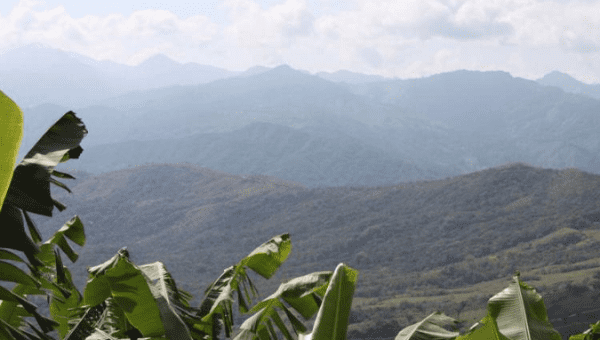
teleSUR | March 19, 2019
A Costa Rican Indigenous Bribri land rights activist was shot and killed late Monday night in his home in Salitre territory.
Indigenous land rights defender Sergio Rojas was assassinated by armed gunmen who shot the activist as many as 15 times at around 11:45 pm in his home, according to his neighbors, in southern Costa Rica.
Rojas was President of the Association for the Development of the Indigenous Territory of Salitre and coordinator of the National Front of Indigenous Peoples (FRENAP) in Costa Rica and was a staunch defender of the Bribri of Saltire Indigenous people who have been fighting for years to regain their rights to over 12,000 hectares of land in southern Costa Rica pledged to them by a 1938 government agreement, according to a 2014 teleSUR report.
The Bribri and other Indigenous have managed to recuperate control of some of their native lands but have become targets of violence from those who oppose their rights and sovereignty. Last December men armed with guns and machetes held hostage two Bribri women and eight minors on land they had recuperated in Salitre territory.
According to the women, they called 911 but when police arrived they spoke “aggressively” toward them and asked for their land deeds, which the authorities claimed were invalid. The police made no effort to arrest the hostage takers who escaped the scene, according to the testimonies given to Tree People Program.
This wasn’t the first time Rojas’ life was threatened. In 2012, shortly after the Bribri gained back some of their lands, the FRENAP coordinator was shot at eight times by armed men, but escaped the shooting unscathed.
Four arrested for organ trafficking in Costa Rica
Press TV – October 11, 2013
Costa Rican police have arrested four alleged members of a gang that trafficked organs to foreigners, the country’s attorney general says.
Carlos Jimenez said those detained on Thursday include three doctors, who are employed at the public Calderon Guardia Hospital in the capital, San Jose, as well as one Greek citizen, suspected of recruiting donors to sell their kidneys.
The arrested doctors have conducted the transplant surgeries “with full knowledge that the donors were receiving money in exchange for their organs,” said Jimenez.
The patients received a payment between USD 80,000 to 100,000 a transplant, according to officials.
This is the second arrest in the case since June when the leader of the trafficking gang, Francisco Mora Palma was detained together with a government official.
According to officials, Palma, who was also the chief of nephrology at the Calderon Guardia Hospital, was the main contact for foreigners seeking to buy kidneys, while the government official recruited possible donors.
At the time of June arrest Attorney General Jorge Chavarria said, “The patients who required the transplants were in Israeli territory, and some of the (trafficking) victims [had their kidney removed] here and others were transported to Israel. We have information that at least one person died after being operated on in Israel.”
The deceased donor was a woman who passed away while returning home to Costa Rica from transplanting an illegal organ in Israel.
In addition, two Israeli citizens paid in 2012 a Costa Rican and Nicaraguan man USD 6,000 for two illegally obtained kidneys, according to the International Organization for Migration of Costa Rica.
Meanwhile, another illegal organ trafficking ring was uncovered last year in Israel after several countries contacted authorities and provided them with the names of the suspects.
Furthermore, the Israeli regime admitted in 2009 that it had harvested organs from dead Palestinians without permission from their next of kin in the 1990s.
The confession came after Swedish newspaper Aftonbladet revealed in a report that the Israeli authorities returned bodies of deceased Palestinians with organs missing.
Costa Rica announces plans to close its zoos and release animals from captivity
By Stephen Messenger | treehugger | August 2, 2013

CC BY 2.0 Frontierofficial
What the tropical nation of Costa Rica lacks in size, it more than makes up for in a wealth of biodiversity. Despite occupying just 0.03% of the planet’s surface, the region’s lush forests are home to an incredible 500 thousand unique organisms — representing over 4% of all the known species on Earth. For the hundreds of animals held captive in the country’s zoos, however, that hotbed of life had been replaced by the cold bars of a cage.
But now, in a remarkable push to restore natural order for all its animal inhabitants, the Costa Rican government has announced plans to close its zoos, freeing creatures from their long captivity.
“We are getting rid of the cages and reinforcing the idea of interacting with biodiversity in botanical parks in a natural way,” said Environment Minister René Castro. “We don’t want animals in captivity or enclosed in any way unless it is to rescue or save them.”
The closures will take effect in March 2014, when the government’s contract with the organization that operates its two zoos is set to expire — a move that Castro says reflects “a change of environmental conscience among Costa Ricans.” The facilities which now house captive animals, Simon Bolivar Zoo and the Santa Ana Conservation Center, will be then transformed into urban parks or gardens where wildlife can visit and live freely if they so choose.

As for the many birds, mammals, reptiles and insects on display today, the government is working to find them more appropriate homes. It is believed that many of these animals will be able to be relocated within the nation’s vast forest preserves, with those deemed unsuited for release being sent to live out their days under the care of wildlife sanctuaries and rescue centers.
Costa Rica’s move to shutter its zoos comes on the heels of other recent legislation aimed at protecting animals from a life in captivity. Earlier this year, India became the largest nation to ban the exploitation of dolphins, joining the ranks of Costa Rica, Hungary, and Chile. In the United States, the keeping of captive chimpanzees will soon be strictly limited as they are likely candidates for protection from the Endangered Species Act.

Still, despite the efforts of some animal-right groups which see zoo life as inherently inhumane, zoo closures in other parts of the world still seem a long way off. Quietly though, a paradigm shift may already be underway as popular thinking begins to consider a kinship and our shared fate with the natural world around us and not merely a dominion over it.
Medical chief at Costa Rica state hospital arrested as part of organ trafficking investigation
InsideCostaRica | June 18, 2013
A chief doctor at a Costa Rican government-ran hospital was arrested today on suspicion of being part of an international organ trafficking network which specializes in selling kidneys to patients in Israel, according to the Attorney General’s Office.
Attorney General Jorge Chavarria told the press that the arrested is Francisco Mora Palma, head of Nephrology at Calderon Guardia Hospital, one of the largest state medical centers in the country.
“The patients who required the transplants were in Israeli territory, and some of the (trafficking) victims [had their kidney removed] here and others were transported to Israel. We have information that at least one person died after being operated on in Israel,” Chavarria said.
The prosecutor explained that the organization has branches in Israel and Eastern Europe, though did not elaborate, citing the ongoing investigation.
Authorities have identified at least three Costa Ricans who were paid in exchange for one of their kidneys.
In addition to Mora Palma, authorities have arrested a police officer identified by the last names Cordero Solano, who collaborated with the doctor to identify possible donors.
Besides the Calderon Guardia Hospital, authorities raided other locations, including two private clinics where transplants were conducted.
“This is extremely serious,” the prosecutor said, urging those who were trafficking victims to come forward to authorities without fear of losing the money they were paid. “What we need is information to dismantle this organization,” he said.
Related articles
- Organ trafficking & Israel – A message from Alison Weir (gilad.co.uk)
- Israeli arrested in Rome for organ trafficking (theuglytruth.wordpress.com)
- Israel police uncovers organ trafficking ring in north (theuglytruth.wordpress.com)
Featured Video

America Racing to Strategic Defeat in Iran
or go to
Aletho News Archives – Video-Images
From the Archives
Should Europeans ‘Thank’ the Americans for Destroying Nord Stream?
By Robert Bridge | Strategic Culture Foundation | September 29, 2022
With an investigation continuing into the destruction of the Nord Stream gas pipeline that provided energy supplies to Europe from Russia, there appears to be just one prime suspect, and that should surprise nobody.
Following the sabotage of the Nord Stream 1 and 2 gas pipelines, former Polish Foreign Minister Radoslaw Sikorski already seemed to know the identity of the perpetrator when he tweeted out: “Thank you, USA.”
At first glance, it seemed that Sikorski was speaking sarcastically, berating Washington for carrying out an attack that will have severe repercussions for the people of Europe. After all, how could anyone see any good coming from the termination of Europe’s primary source of gas reserves with winter just around the corner? It was Sikorski’s homeland of Poland, after all, that urged its citizens to collect firewood in the face of dwindling gas reserves.
In fact, the Polish diplomat was speaking one-hundred percent literally… continue
Blog Roll
 Aletho News
- Growing insecurity, soaring prices fuel protests in north as regime bans evacuation: Sources
- Iran denies responsibility for ‘depraved’ attack on Kuwait desalination plant
- Bring The Troops Back. End This War Now!
- Can we please stop calling Israel the ‘only democracy in the Middle East’ now?
- US should start removing its troops for Germany, proposes AfD co-leader Chrupalla
- Iran Red Crescent: 600 educational centers attacked in US-Israeli ‘war crimes’
- Russian Oil Tanker Arrives in Cuba Amid U.S. Blockade
- America Racing to Strategic Defeat in Iran: Lt Col Daniel Davis
- FTC Warns Visa, Mastercard, PayPal, Stripe Over Political Debanking
- Russian tanker approaches Cuba despite US oil blockade
- If Americans Knew
- Israeli police block Catholic cardinal from entering Church of the Holy Sepulchre on Palm Sunday
- Israel is assassinating journalists again, more than any other nation, anywhere, ever – Not a ceasefire Day 170
- Over 300 US service members wounded, majority have brain injuries – Not a ceasefire Day 169
- Researchers at Human Rights Watch Resign Over Blocked Report on Palestinian Refugee Return
- Jewish Groups Are Backing a War Americans Don’t Want
- Eric Fingerhut Thinks He’s the President of the Jews
- Top Jewish Philanthropists, Rabbis Urge Israeli President to Take Action Against ‘Jewish Extremists’
- Don’t Be Fooled. Zionist Leaders Have Always Wanted to Control Southern Lebanon
- Israel’s widespread use of torture is a core element of its genocide against the Palestinian people
- In Israel’s War on Iran, Many Middle East US Bases Rendered “All But Uninhabitable”
- No Tricks Zone
- New Study Finds Warming Saves Lives…Cold Temperatures 12 Times More Deadly Than Excess Heat
- German Science Blog Accuses PIK Climate Institute Of Hallucinating Climate Tipping Points
- Devastating Assessment Of Comirnaty Vaccine By Former Senior Pfizer Europe Toxicologist
- New Study: CO2 Is ‘Effectively Negligible’ As An Explanatory Climate Change Factor Since 2000
- Former Pfizer Toxicologist Dr. Helmut Sterz Tells Bundestag Hearing Pfizer Vaccine Should Have Never Been Approved
- Energy Expert: Germany’s Nuclear Phaseout Was A “500 Billion Euro Mistake”
- New Research: South Australia’s Mid-Holocene Sea Surface Temperatures Were 4°C Warmer Than Today
- Storing Green Energy To Last Germany 10 Days Would Require A 60-Million Tonne Battery
- New Studies: UK Sea Levels Were 4 Meters Higher Than Today During The Mid-Holocene
- Destructive Green New Deal: German Energy And Metal Group Warns Of Drastic Crisis
 Aletho News
