US planned to ‘harass & attack’ Soviet personnel in Cuba – JFK files
RT | October 27, 2017
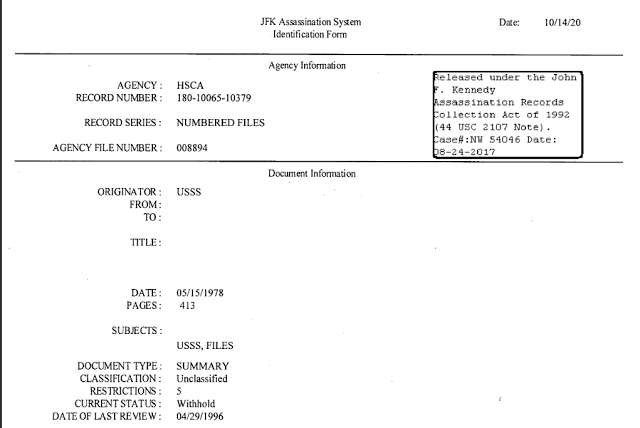
National Security Council meeting notes on the covert CIA program ‘Operation Mongoose’ have revealed the lengths to which the US was willing to go to remove Fidel Castro’s Cuban government.
The 1962 file, released Thursday as part of a cache of previously classified documents on the assassination of John F Kennedy, states that the NSC considered a plan of “attacking and harassing Soviet personnel within Cuba.” However, the document doesn’t provide any finer details on the proposal.
Members of the council also debated targeting the island nation’s crops by “introducing biological agents which would appear to be of natural origins” – an idea supported by then-National Security Advisor McGeorge Bundy.
“Mr. Bundy said that he had no worries about any such sabotage which could clearly be made to appear as the result of local Cuban disaffection or of a natural disaster, but that we must avoid external activities such as release of chemicals, etc., unless they could be completely covered up,” the document reads.
Other suggested measures included distributing explosives to Cuban insurgents, using balloons to drop leaflets over the country, employing submarines to broadcast anti-government radio messages and “counterfeiting” operations.
The NSC also explored the possibility of infiltrating Cuban radio and TV channels but acting on advice from council member and former American broadcast journalist, Edward R Murrow, decided against the move.
“Mr Murrow explained the far-reaching reactions that the Cubans could mount against US radio stations, and said that he felt on balance it would not be profitable to provoke this kind of electronic warfare,” the minutes read.
Conspiracy theories have abounded since Kennedy was shot while traveling in an open-top limousine in Dallas in November 1963.
The report from the Warren Commission in September 1962 said that Lee Harvey Oswald had fired the shots from the Texas School Book Depository building. Oswald was later killed while in the custody of Dallas police by Jack Ruby, a local nightclub owner.
The US government released 2,800 classified files on the assassination of JFK Thursday night, with President Donald Trump saying that the public deserves to be “fully informed about all aspects of this pivotal event.”
After intense lobbying from the CIA, FBI and State Department, some documents remain unreleased. The files will now undergo a further six-month review. A new deadline has been set for their release in April 2018.
Trump Turns Back the Clock With Cold War Cuba U-Turn
By Ron Paul | June 19, 2017
Nostalgia seems to be very popular in Washington. While the neocons and Democratic Party hard-liners have succeeded in bringing back the Cold War with Russia, it looks like President Trump is determined to take us back to a replay of the Bay of Pigs!
In Miami on Friday, the president announced that he was slamming the door on one of President Obama’s few foreign policy successes: easing 50 years of US sanctions on Cuba. The nostalgia was so strong at Trump’s Friday speech that he even announced participants in the CIA’s disastrous 1961 Bay of Pigs invasion of Cuba in the audience!
President Trump said Friday that his new policy would be nothing short of “regime change” for Cuba. No easing of US sanctions on Cuba, he said, “until all political prisoners are freed, freedoms of assembly and expression are respected, all political parties are legalized, and free and internationally supervised elections are scheduled.”
Yes, this is the same Donald Trump who declared as president-elect in December that his incoming Administration would “pursue a new foreign policy that finally learns from the mistakes of the past. We will stop looking to topple regimes and overthrow governments.” Now, in another flip-flop toward the neocons, President Trump is pursuing regime change in Cuba on the pretext of human rights violations.
While the Cuban government may not have a spotless record when it comes to human rights, this is the same President Trump who just weeks ago heaped praise on perhaps the world’s worst human rights abuser, Saudi Arabia. There, he even participated in a bizarre ceremony to open a global anti-extremism center in the home of state-sponsored extremism!
While President Trump is not overturning all of President Obama’s Cuba policy reforms – the US Embassy will remain open – he will roll back the liberalization of travel restrictions and make it very difficult for American firms to do business in Cuba. Certainly foreign competitors of US construction and travel companies are thrilled by this new policy, as it keeps American businesses out of the market. How many Americans will be put out of work by this foolish political stunt?
There is a very big irony here. President Trump says that Cuba’s bad human rights record justifies a return to Cuba sanctions and travel prohibitions. But the US government preventing Americans from traveling and spending their own money wherever they wish is itself a violation of basic human rights. Historically it has been only the most totalitarian of regimes that prevent their citizens from traveling abroad. Think of East Germany, the Soviet Union, and North Korea. The US is not at war with Cuba. There is no reason to keep Americans from going where they please.
President Trump’s shift back to the bad old days on Cuba will not have the desired effect of liberalizing that country’s political environment. If it did not work for fifty years why does Trump think it will suddenly work today? If anything, a hardening of US policy on Cuba will prevent reforms and empower those who warned that the US could not be trusted as an honest partner. The neocons increasingly have President Trump’s ear, even though he was elected on promises to ignore their constant calls for war and conflict. How many more flip-flops before his supporters no longer recognize him?
US-led coalition air raids breach Syria sovereignty: Cuba
Press TV – January 18, 2017
Cuba has denounced US-led coalition airstrikes in Syria, saying they violate the Arab country’s sovereignty as they are not permitted by Damascus.
Cuban Ambassador to the United Nations Humberto Rivero made the criticism during a UN Security Council meeting in New York on Wednesday.
“We demand the cessation of the violations of Syrian sovereignty and the foreign military presence without the consent and the coordination of operations with the Syrian government, the only legitimately elected authority in the country,” Rivero said.
He further condemned the “politicization” of the crisis in Syria and “the tampering of the humanitarian crisis and the suffering” of people in the Middle Eastern country.
Those who are “supplying weapons, money and patronage to terrorist groups are responsible for the thousands of civilian victims of the conflict and the humanitarian situation,” the Cuban diplomat said, expressing his opposition to “the promotion of an interventionist agenda” in Syria.
The US-led coalition has been conducting air raids against what are said to be Daesh terrorists inside Syria since September 2014 without any authorization from the Damascus government or a UN mandate. Analysts have assessed the strikes as unsuccessful as they have led to civilian deaths and failed to counter terrorism.
The US Air Force is also carrying out airdrops of weapons, ammunition and other equipment to militants fighting against the pro-government forces in Syria.
UN chief optimist on ‘conflict freeze’
Separately on Wednesday, United Nations Secretary General Antonio Guterres warned that the consequences of the Syria crisis had become “too dangerous.”
Speaking in a briefing at the UN office in the Swiss city of Geneva, Guterres stressed that the conflict had fueled instability in the Middle East region and terrorist attacks across the globe.
Touching on the upcoming Syria peace talks in the Kazakh capital Astana, the UN chief further expressed hope that the discussions could “lead towards a consolidation of the ceasefire and a freeze in the conflict.”
The cessation of hostilities took effect on December 30, following an agreement between Syria’s warring parties.
Mediated by Russia and Turkey with the support of Iran, the truce is the first of its kind that has been largely holding in Syria for almost three weeks now. Earlier attempts by the US to broker such a long-lasting ceasefire had failed.
Elsewhere in his remarks, Guterres underlined that the success of the Syria talks could “help create the conditions for a political process” regarding the Syria crisis.
The Astana talks, which are scheduled to be held on January 23, were brokered by Moscow, Ankara and Tehran.
Obama extends national emergency on Iran
Press TV – January 14, 2017
US President Barack Obama has declared the continuation of his country’s national emergency against Iran, claiming that despite full commitment to its nuclear deal with the six world powers, the Islamic Republic still poses “an unusual and extraordinary threat” to America.
The outgoing president informed Congress of his decision in a letter on Friday, saying that the national emergency, which was declared on March 15, 1995, “is to continue in effect beyond March 15, 2017.”
The National Emergencies Act requires the president to extend a national emergency within 90 days of its anniversary date, before it is automatically terminated.
Obama admitted in his letter that Iran had delivered on its commitments pursuant to the Joint Comprehensive Plan of Action (JCPOA), a landmark nuclear deal that was struck between Iran and the P5+1 group of countries — the US, the UK, France, China, Russia, and Germany — on July 14, 2015.
Under the landmark deal, which entered into force on January 16 last year, Iran undertook to put restrictions on its nuclear program in exchange for the removal of nuclear-related sanctions imposed against the country.
“Since Implementation Day, the IAEA (International Atomic Energy Agency) has repeatedly verified, and the Secretary of State [John Kerry] has confirmed, that Iran continues to meet its nuclear commitments pursuant to the JCPOA,” Obama said in his notice.
“However, irrespective of the JCPOA, which continues to ensure that Iran’s nuclear program is and remains exclusively peaceful, certain actions and policies of the Government of Iran continue to pose an unusual and extraordinary threat to the national security, foreign policy, and economy of the United States,” the outgoing president added.
In November, Obama extended a separate national emergency against Iran, which was originally declared by former US President Jimmy Carter on November 14, 1979.
He also extended the state of emergency with respect to Libya, Ukraine, Zimbabwe, Cuba and Venezuela.
A state of emergency gives the US president special powers, including the ability to seize property, summon the National Guard and hire and fire military officers at will.
The state of emergency also forms the basis for most US sanctions against other countries.
40 Years After CIA Terrorist Bombs Cuba Plane, Still No Justice

By Teresa Gutierrez – teleSUR – October 2016
Forty years ago, on October 6, 1976, Cubana Flight 455 on its way from Barbados to Jamaica was bombed shortly after takeoff, killing 73 people, including the national fencing team of Cuba.
In what was immediately seen as a terrorist act, most in the international community joined Cuba in denouncing the horrific act.
In 2011, declassified CIA documents showed that one of the key figures in this terrorist attack was Luis Posada Carriles, a right-wing Cuban who had fled the island after the Cuban Revolution of 1959.
The documents revealed that it was Posada Carriles, now 88, who had planned the 1976 bombing. He had already gained experience terrorizing the Cuban people as a participant in the failed CIA-orchestrated Bay of Pigs assault in 1961.
Peter Kornbluh, author of the book, “Back Channel to Cuba,” and a former researcher at the National Security Archive of George Washington University, said in 2011 that the declassified documents “again brings up the issue of how an international terrorist like Luis Posada Carriles can live happily ever after in Miami.”
This point demonstrates that the Oct. 6 anniversary should not only be remembered, it should be reflected upon.
The 1976 attack highlights U.S. imperialism’s decades-long war of sabotage against the Cuban Revolution. Despite a thawing in U.S.-Cuba relations, this war has not subsided.
A free man, Posada Carriles moved to Venezuela in the early 80’s where he was eventually jailed for his acts of terror against Cuba. But he escaped in 1985 and resumed plotting against Cuba and its leader, Fidel Castro.
In this period, he was also instrumental in plotting against the revolutionary government of the Sandinista National Liberation Front in Nicaragua, working as a coordinator for the contras who were fighting a war backed by the U.S. government.
Posada Carriles bragged to the New York Times in 1998 that he had been responsible for the 1997 hotel bombings targeting Cuba’s tourist industry that killed an Italian tourist, saying the man just happened to be in the wrong place at the wrong time. Posada Carriles later recanted his story.
The New York Times wrote in 1998, “Mr. Posada was schooled in demolition and guerrilla warfare by the Central Intelligence Agency in the 1960s. In a series of tape-recorded interviews … Posada said the hotel bombings and other operations had been supported by leaders of the Cuban-American National Foundation. Its founder and head, Jorge Mas Canosa … was embraced at the White House by Presidents Reagan, Bush and Clinton.”
The CANF recieved millions of dollars of U.S. tax-payer money to carry out its dirty war against Cuba for decades, according to declassified documents.
Posada Carriles was again arrested in 2000 for possession of explosives in Panama and charged with plotting to assassinate the Cuban leader at the Peoples’ Summit taking place at the University of Panama. Soon after he went into hiding.
When Posada Carriles resurfaced in Miami in 2005, the U.S. government refused to extradite him to Cuba or Venezuela to face judicial proceedings for his crimes.
In early 2011, Posada Carriles was finally put on trial in El Paso, Texas—not for his many terrorist acts—but for immigration fraud and obstruction of a proceeding.
He was charged with lying to an immigration judge about his involvement in the 1997 bombings and about how he entered the U.S. in 2005.
U.S. prosecutors presented evidence that Posada Carriles played a major role in carrying out bombings in Cuba. Many expected convictions on at least some of these charges but the jury dumbfounded prosecutors with a complete acquittal.
Ricardo Alarcon, a long-time Cuban leader and at the time, the president of the national assembly, told AP, “The stupid and shameful farce is over.”
Venezuela’s government also denounced the trial as “theater,” saying Washington continued to harbor a mass murderer.
Alarcon had intimate and deep knowledge of the farce that is the U.S. judicial system. He had been a leading advocate of the Cuban Five and a principle strategist for their freedom.
The Cuban Five were Gerardo Hernandez, Ramon Labañino, Antonio Guerrero, Fernando Gonzalez and Rene Gonzalez. They were arrested by the U.S. government in Miami in 1998 and falsely accused of committing espionage conspiracy against the U.S. and other related charges.
They were convicted in a federal court in 2001 and spent over 15 years in jail, labeled by the U.S. government and media as terrorists.
But the Five were in fact counter-terrorists, heroes who were willing to sacrifice their lives, leave their beloved families and homeland to protect Cuba from U.S. aggression. They worked to stop terror and aimed to defend Cuba from the kind of aggression Posada Carriles and his CIA cohorts carried out.
The Five reflect a spirit of justice and peace and to this day—having returned to their beloved country—continue to inspire all those who yearn for a better world.
As long as the likes of Posada Carriles are free to walk the streets of Florida, Cuba must do everything it can to defend itself from U.S. terror.
As long as the U.S. continues to occupy Guantanamo, the Cuban Revolution must be ready to defend itself, despite President Barack Obama’s dubious declarations.
A Salon magazine article in 2008 raised this question: “The coddled ‘terrorists’ of South Florida: Anti-Castro Cuban exiles who have been linked to bombings and assassinations are living free in Miami. Does the U.S. government have a double standard when it comes to terror?”
The answer is yes—a thousand times yes.
Venezuela, Cuba, Nicaragua – Permanent Media False Positives
TeleSUR | July 11, 2016
Member countries of the Bolivarian Alliance of the Americas are natural targets for the relentless psychological warfare of Western news media, because they form a resistance front to the foreign policy imperatives of the United States government and its allies. Right now, Venezuela is the most obvious example. Daily negative coverage in Western media reports invariably attack and blame the Venezuelan government for the country’s political and economic crisis. Similar coverage is applied to the governments of Evo Morales in Bolivia, Rafael Correa in Ecuador, Cuba’s revolutionary government led by Raul Castro and also to Nicaragua’s Sandinista government led by Daniel Ortega.
By contrast, the permanent economic sabotage, the attacks on democratic process and the cynical promotion of violence by the dysfunctional Venezuelan opposition gets a free pass. Likewise, U.S. and European news media have virtually nothing to report about Argentina’s abrupt plunge into crisis with 40 percent inflation and a dramatic increase in poverty after barely six months of Mauricio Macri’s corruption tainted government. Nor has coverage of the chronic complicity of the Mexican government in covering up the disappearance of of the 43 Ayotzinapa students or the mass murder of striking teachers in Oaxaca matched the hysteria applied by Western media to Venezuela over bogus human rights concerns.
No doubt political scientists could work out the correlation between adverse or downright hostile media coverage and official measures or announcements by U.S. and allied governments. What’s clear in general is that Western media coverage actively and purposefully serves U.S. and allied government foreign policy preparing the ground for otherwise categorically inexplicable measures of diplomatic and economic aggression. For example, the self-evidently absurd declaration by President Obama that Venezuela constitutes a threat to the security of the United States or the anti-humanitarian failure of the U.S. government to lift the illegal economic blockade of Cuba despite President Obama’s duplicitous avowals recognizing the blockade’s political failure.
Venezuela and Cuba are close, loyal allies of Nicaragua, now in an election year. Nicaragua’s Sandinista government has faced a Western media assault over the last month or so with the U.S. government issuing a travel alert. The alert warns U.S. travelers to Nicaragua to be wary of “increased government scrutiny of foreigners’ activities, new requirements for volunteer groups, and the potential for demonstrations during the upcoming election season in Nicaragua…. U.S. citizens in Nicaragua should be aware of heightened sensitivity by Nicaraguan officials to certain subjects or activities, including: elections, the proposed inter-oceanic canal, volunteer or charitable visits, topics deemed sensitive by or critical of the government.” In a video mixed message about that alert, the U.S. Ambassador to the country, Laura Dogu, states that the advisory should in no way deter tourists from the United States visiting Nicaragua.
The travel alert appears to have been provoked by the experiences of a U.S. academic and also two U.S. government functionaries who were asked by the Nicaraguan authorities to leave the country in June. The official U.S. reaction has a lot in common with the mentality described in “Orientalism,” Edward Said’s intricate psycho-cultural map of Western perceptions of Muslim countries. Said writes, “The scientist, the scholar, the missionary, the trader or the soldier was in or thought about the Orient because he could be there or could think about it with very little resistance on the Orient’s part.” Translated to the Americas, the attitudes and behavior of Said’s orientalist are clearly present among U.S. Americanists, both governmental and non-governmental, and their regional collaborators.
The latest example of Americanist hubris here in Nicaragua has been a remarkably unscholarly outburst by Evan Ellis, the professor of the U.S. College of War who was expelled by the Nicaraguan government while attempting an unauthorized investigation of Nicaragua’s proposed interoceanic canal. Ellis’ ill-tempered diatribe repeats a familiar litany of downright falsehoods, wild speculation and poisonous calumnies, attacking Nicaragua’s Sandinista government led by Daniel Ortega as a dictatorship. It appeared in Latin America Goes Global, closely associated with the center right Project Syndicate media network. Project Syndicate lists among its associate media right-wing media outlets like Clarin and La Nación in Argentina, Folha de Sao Paulo and O Globo in Brazil and El Nacional in Venezuela.
So it is no surprise that in Nicaragua its associate media outlet should be the virulently anti-Sandinista Confidencial, which published the Spanish version of Ellis’s attack, making Ellis’ accusations of dictatorship look stupid. Addressing Chinese involvement in Nicaragua’s proposed interoceanic canal, Ellis displays his ignorance of Nicaragua’s relationship with both China and Taiwan. His tendentious, ahistorical analysis betrays the mentality of an unreconstructed Cold Warrior in all its inglorious torpor. That ideological straitjacket prevents Ellis from even beginning to appreciate Daniel Ortega’s hard-headed but deep commitment to promoting peace and reconciliation based on genuine dialog. Western political leaders and their media and academic shills perceive that commitment as a sign of weakness, which explains a great deal about repeated failures of Western foreign policy all around the world.
Around the same time as the Ellis affair, Viridiana Ríos a Mexican academic associated with the U.S. Woodrow Wilson Center left Nicaragua claiming police persecution. Ríos entered Nicaragua as a tourist but then proceeded to carry out a program of interviews with various institutions for her academic research. The curious thing about her claims is that she was never actually interviewed by any Nicaraguan official, either of the police or the immigration service. But she claims her hotel alerted her to a visit by police, in fact if it happened at all more likely immigration officials, who presumably left satisfied because otherwise she would certainly have been interviewed. Ríos then supposedly contacted the Mexican embassy who allegedly and inexplicably advised her to leave for Mexico. The upshot is that Ríos visited Nicaragua only to suddenly fear, for no obvious reason, being disappeared by government officials who could easily have detained her had they so wished. Rios then, with no complications, left Nicaragua, the safest country in the Americas along with Canada and Chile, and went home to Mexico, a country with 28,000 disappeared people.
Around the same time, as the reports about Ellis and Ríos, the Guardian published a disinformation scatter-gun attack on the Nicaraguan government also firming up the false positive of Nicaragua under Daniel Ortega’s presidency as a dictatorship. The dictatorship accusations are complete baloney. Neither Ellis nor the Guardian report faithfully that even center-right polling companies agree that support for Daniel Ortega and his Sandinista political party runs at over 60 percent of people surveyed while the political opposition barely muster 10 percent support. Similar polls show massive confidence in both the police (74 percent ), the army (79.8 percent) and satisfaction with Nicaragua’s democracy (73.9 percent). Another common theme in the attacks by Ellis and the Guardian is the supposed suspension of the construction of Nicaragua’s planned interoceanic canal, based on yet another false positive -the bogus hypothesis that the canal has no finance.
The basis for this claim is sheer speculation based on the afterwards-equals-because fallacy, typified by another unscrupulous and disingenuous Guardian article from November 2015 offering zero factual support for the claim that the Canal ‘s construction has been postponed for financial reasons. That report and numerous others reflect the outright dishonesty of the Canal’s critics. From the outset the canal’s critics accused the government and HKND, the Chinese company building the canal, of moving too quickly and failing to take into account environmental concerns and also for an alleged lack of transparency. When the government and the HKND took on board recommendations from the ERM environmental impact study to do more environmental studies, the Canal’s critics changed tack, accusing the government of covering up that the Canal has been delayed because HKND has run out of money. That claim seems to originate in Western psy-warfare outlets in Asia like the South China Morning Post and the Bangkok Post which have consistently run attack pieces on HKND’s owner, Wang Jing.
This standard operating intellectual dishonesty by NATO psy-warfare outlets like the Guardian, omits various inconvenient facts. For example, preparatory work on the Canal route continues with various studies in progress, including aerial surveys by an Australian company, one of whose pilots, Canadian Grant Atkinson tragically died in a crash late last year. This year, the government reached a conclusive agreement with local indigenous groups affected by the Canal after an extensive process of consultation. This year too, Nicaragua has signed a memorandum of understanding with Antwerp’s Maritime Academy to train the pilots who will guide shipping through the Canal and also a cooperation agreement with the UK Hydrographic Office for training and advice in relation to the hydrographic maps the Canal will need. This is hardly the behavior of people managing a project in crisis. That said, the global economic environment right now is so uncertain that investors in any large project let alone one as huge as the Nicaraguan Canal will certainly be wary.
The global economic context and the Canal’s geostrategic aspect receive a more rational treatment than Ellis’ self-serving rant in an article by Nil Nikandrov. Even Nikandrov seems to accept as fact the Guardian’s entirely speculative claim that the Canal’s financing is in crisis, but he rightly treats Ellis’s Cold War style anti-Sandinista hysteria with amused scepticism. In fact, neither Nikandrov nor Ellis make the obvious point that the strongest geostrategic reality in relation to the Canal is that, should U.S.-China tensions in the South China Sea accentuate into outright confrontation, China could not defend militarily the strong investment by Chinese companies in Nicaragua’s Canal. In any case, Nikandrov, rightly points out with regard to Nicaragua’s economy, “Nicaragua’s socioeconomic progress, Nicaraguans’ improved standard of living, and the stability and security there (compared to the increase in crime in most Central American countries) can all largely be credited to President Ortega.”
But even that reality can be turned on its head in the hands of a butterfly columnist as Bloomberg’s Mac Margolis demonstrated in his July 4 article “Nicaragua Prospers Under an Ex-Guerrilla.” Just for a change Bloomberg’s editors omitted their trademark “unexpectedly”, usually slipped in to any headline reporting unpalatable news. But the premier U.S. business news site could only finally recognize the incredible progress achieved by Daniel Ortega’s Sandinista government by at the same time smearing and denigrating President Ortega in the process. On the positive side Margolis recognizes, “the Nicaraguan economy grew 4.9 percent last year and has averaged 5.2 percent for the last five. Although three in 10 Nicaraguans are poor, unemployment and inflation are low. Public sector debt is a modest 2.2 percent of gross domestic product.”
That apart, Margolis writes, “Ortega’s critics know a darker side. Consider the ever-accommodating Nicaraguan Supreme Court, which last week deposed opposition leader Eduardo Montealegre as head of the Independent Liberal Party – essentially clearing the way for Ortega to run unchallenged in the November elections.” This is identical to the dishonest argument in Nina Lakhani’s Guardian article. Montealegre’s PLI had around 3 percent support, under the new PLI leader that seems to have crept up to around 5 percent. The Supreme Court decision made no difference to the fact that Nicaragua’s political opposition has been incapable of a serious electoral challenge to Daniel Ortega since before the last elections in 2011. Since then Daniel Ortega’s popularity has grown while support for the Nicaraguan opposition has collapsed. Implicitly contradicting himself, Margolis acknowledges that fact but goes on to make speculative, fact-free accusations of corruption, directly in relation to Nicaragua’s proposed Canal.
Without being specific he hints at widespread opposition to the Canal in Nicaragua, writing “a shadowy project that Ortega farmed out to Chinese investors led by billionaire Wang Jing. Ground has yet to be broken on the US$50 billion development, but Nicaraguans have raised a stink over the lavishly generous terms of the deal”. While opposition to the Canal certainly does exist, 73 percent of people in Nicaragua support it. Evan Ellis mentions an alleged opposition demonstration of 400,000 people, which is simply untrue. The biggest demonstration against the Canal drew about 40,000 people back in 2014 when Nicaragua’s political opposition bussed people to a march from all over the country. Plenty of information is available about the Canal and Margolis has no facts to back up his baseless accusation of corruption “I’d wager a fistful of Nicaraguan córdobas that ‘Presidente-Comandante Daniel’ has something he’s uneager to share.”
Only the crass Americanist mind set could provoke such presumptuous contempt for the opinion of the great majority of Nicaraguans. Margolis really seems to believe Nicaraguans are so stupid as to support a President who he alleges is self-evidently corrupt. In fact, Margolis’ discredited protagonist, Eduardo Montealegre, has precisely the kind of corruption tainted track record so familiar from the U.S. government deregulation of Wall Street. Montealegre was the Nicaraguan Treasury Minister under a U.S. supported right wing government and oversaw a massive bailout of Nicaragua’s rotten banking system from which his own bank benefited directly at the time. Perfectly natural then for a Bloomberg columnist to highlight Montealegre while attacking Daniel Ortega who rescued Nicaragua from precisely that culture of abject corruption. This banal irrational attack on Daniel Ortega deliberately obscures the reasons for Nicaragua’s economic success, which shows up current US and European economic policy as faith based nonsense.
Domestically, President Ortega has prioritized poverty reduction, implementing very successful socialist redistributive policies and extensive infrastructure development. Overseas, his Sandinista government has dramatically diversified commercial and development cooperation relationships, in particular structuring Venezuela’s aid in a way equivalent to deficit spending, whose success contrasts sharply with the mindless futility of current Western economic policy. Contradicting the Bloomberg article, Nil Nikandrov is much closer to reality when he writes that Ortega is, “a faithful defender of Nicaragua’s interests on the international stage and enjoys the support of the vast majority of Nicaraguans.” As the NATO country psychological warfare media crank up their attacks on Nicaragua in an election year, it remains to be seen whether Nikandrov is right when he argues, “the subversive activities of the U.S. intelligence services and their ‘strategy of chaos’ will not work in Nicaragua.”
The Heirs of Meyer Lansky Want Compensation from Cuba. They Shouldn’t Get a Dime.
By Jack Colhoun | History News Network | June 19, 2016
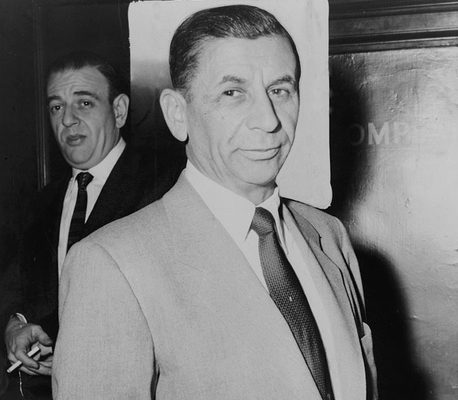
Meyer Lansky
The heirs of Meyer Lansky, the impresario of the North American Mafia gambling colony in Cuba (1933-1958) are betting on a big payback from the negotiations between the United States and Cuba to normalize relations between the two countries. Compensation claims by U.S. citizens or businesses for properties nationalized by the Cuban revolution are among the issues under discussion.
Lansky’s daughter Sandi, her son Gary Rapoport, and her brother Paul have filed a compensation claim against Cuba for the Riviera Hotel and Casino with the U.S. Foreign Claims Settlement Commission. The Cuban revolution confiscated the Riviera and other Mafia-owned properties after it toppled the gangster-linked regime of General Fulgencio Batista in 1959.
“It was through my grandfather’s hard work that the hotel was built,” Rapoport told the U. K. Daily Mail Online on December 23, 2015. “We are his natural relations . . . . By right, it should be our property.” He says the Riviera is valued at $70 million. The Tampa Bay Tribune, Reuters, and Haaretz have also covered the story.
The Riviera, which overlooks the Straits of Florida, was the crown jewel of Lansky’s casinos, hotels, and nightclubs in Havana. When the Riviera opened in December 1957, it was the largest Mafia-owned hotel-casino outside Las Vegas. The hotel’s 440 double rooms were booked solid for the winter season of 1957-1958.
However, the narrative that the success of the Riviera was the product of Meyer Lansky’s “hard work” is undercut by Lansky’s own assessment of his arrangement with Batista. Lansky talked candidly about his years in Cuba with Israeli national security writers Dennis Eisenberg, Uri Dan, and Eli Landau for their admiring biography Meyer Lansky: Mogul of the Mob (Paddington Press, 1979). (Lansky lived in Israel in 1970-1971 to avoid tax evasion charges in the United States.)
Lansky pitched his plan to Batista to open Mafia owned casinos and nightclubs in Cuba in 1933. Lansky promised to make Batista, who had just come to power in a coup d’etat, a partner. Batista and his inner circle would get regular payments from the Mafia gamblers. In return, the gangsters would be allowed to operate without interference from Cuban authorities. With a handshake and an abrazo, Lansky and Batista laid the foundations of the Cuban gangster state.
“Working on the well-known principle that it’s better to use other people’s money than your own, Lansky persuaded Batista to have the Cuban government help finance the venture,” Eisenberg, Dan, and Landau wrote. “The [Cuban] government agreed to back every dollar invested on the island by foreigners with a dollar of its own and to give every hotel that cost more than one million dollars the precious prize of a gambling license . . . and the casino hotels would not have to pay Cuban taxes.”
The Riviera was one of four new hotels with casinos, which opened in Havana between 1955 and 1958. Cuban development banks subsidized 50 percent of Lansky’s $14 million Riviera project; Lansky-linked investors provided the rest. Senator Eduardo Suarez Rivas, brother of Batista’s Minister of Labor Jose Suarez Rivas, was secretary of the Compania de Hotels La Riviera de Cuba, which operated the Riviera.
The Mafia gambling colony was the cornerstone of the Cuban gangster state. The gangsters’ graft bound Batista, his inner circle, senior security officers, and the Mafia together in the defense of one of the most repressive regimes in Latin America. As a CIA report put it, “In return for the loyalty they gave him, Batista always backed his security services. In times of crisis, he often suspended civil guarantees . . . and gave the services a free hand.”
The days of the North American gangsters in Cuba were numbered when Batista fled into exile on January 1, 1959. In 1958, Fidel Castro’s July 26th Movement had denounced the Mafia radio broadcasts from its guerrilla redoubt in the Sierra Maestra for turning Havana into a center of commercialized vice – gambling, prostitution, and drugs. When Castro arrived in Havana on January 8, he vowed to “clean out all the gamblers.” The Riviera and other gangster-owned properties were nationalized, and the Mafia gamblers returned to the United States.
To regain control of its casinos, hotels, and nightclubs in post-Castro Cuba, the Mafia waged a covert war on the Cuban revolution. The gangsters regrouped with their Cuban political allies, now in exile in the United States. The Mafia subsidized Cuban exile leaders and supplied arms to Cuban exile commando groups for attacks on Cuban targets from speedy boats and small aircraft. The gangsters also plotted with the CIA to assassinate Fidel Castro.
In 1959, Lansky volunteered to arrange the assassination of Castro in a meeting with the CIA, according to Doc Stacher, a life-long Lansky associate. “He [Lansky] indicated to the CIA that some of his people who were still on the island, or those who were just going back, might assassinate Castro,” Stacher told his Israeli biographers. “Meyer Lansky thought that if Castro would be eliminated there was a good chance for Batista to make a comeback . . . He told them [CIA officers] he was quite prepared to finance the operation himself.” From 1960 to 1963, the CIA and the Mafia plotted covertly to assassinate Castro.
To portray Lansky as an aggrieved victim of Cuba is to stand history on its head. There should be no compensation for the heirs of the former Mafia gamblers in Cuba.
Jack Colhoun is an historian of the Cold War (University of Wisconsin, Madison, BA, 1968; York University, Toronto, PhD, 1976), an investigative reporter, and professional archival researcher. His work has appeared in the Washington Post, Toronto Star, Salon, History News Network, The Nation, The Progressive, In These Times, the former (New York) Guardian newsweekly, and formerCovert Action Quarterly. He is the author of Gangsterismo: The United States, Cuba, and the Mafia, 1933-1966 (New York: OR Books, 2013).

Featured Video
Theodore Postol: Iran’s Missiles & Drones Were Underestimated
or go to
Aletho News Archives – Video-Images
From the Archives
What is the Israeli Lobby in Australia Doing in Interfaith Dialogue?
By Ali Kazak | Dissident Voice | October 11, 2015
For years Israel and its lobby around the world have been trying to normalise their relations with Arabs and Muslims without solving the Palestine Question.
One of the methods they resorted to in the last few years is using human rights and community organizations such as interfaith dialogue and Multiculturalism to achieve this objective and to: isolate the Palestinians, marginalise the Palestine question, end Israel’s isolation, and prevent criticism of Israel, knowing that these organisations will be the first to stand against Israel’s violations, racial and religious discrimination.
The group responsible for this task in Australia is The Australia/Israel & Jewish Affairs Council (AIJAC); its Director of International & Community Affairs, Jeremy Jones is in charge of lobbying religious community organizations, specifically Muslims and Christians. Consequently he convened the Faith Communities for Reconciliation, founding participant in the Australian Partnership of Religious Organisations and the Australian National Dialogue of Christians, Muslims & Jews.
AIJAC is a private political propaganda group. It is recognised as the main Israeli lobby in Australia. It coordinates its activities and works intimately with the Israeli embassy in Canberra and different institutions in Israel. It is privately funded by some Jewish businessmen. It monitors closely Australian politicians, the media, ethnic and religious groups, (especially Arabs and Muslims), unions and academics on their stands towards Israel and the Palestine question. … continue
Blog Roll
 Aletho News
- Iran’s friends are about to make life much more difficult for Israel and the US
- The war of liberation of the Arab and Islamic peoples expands across the Gulf
- Envoy warns UN on Trump’s threat to ‘obliterate’ Iran’s civilian infrastructure
- The Larak Corridor: Iran’s Rial Gate With No US, No Israel, and No Way Around
- ‘Economic terrorism’: Steel facilities hit again in US-Israeli strike
- ‘War Crime’: Iran condemns attacks on Arak, Ardakan nuclear sites
- Two-thirds of Americans want quick end to Iran war even if goals unmet
- Trump to Give “Important Update on Iran” Wednesday in Prime-Time Speech
- Theodore Postol: Iran’s Missiles & Drones Were Underestimated
- Iran To Target Military Industrial-Tech Complex That Facilitated Gaza Genocide
- If Americans Knew
- Israel wants US to bomb more of Iran’s civilian structures (113,000 is not enough) – Not a ceasefire Day 173
- Ann Coulter Rips Into Fox News for Iran War Coverage
- Joe Kent Urges Americans To Call White House and Congress To Object To Sending Troops Into Iran
- DNC Resolution to Reject AIPAC Funding Puts Democratic Leaders in the Hot Seat
- Swedish foundation to build 400 schools as over 650,000 Gaza children remain without education for 2 years
- Israeli army admits photshopping image of slain Lebanese journalist
- This is how Israel is systematically killing health workers under the cover of war in Lebanon
- Carrying life under fire: Israeli invasion of Lebanon leaves pregnant women facing deadly risks
- Champagne all around for the new death penalty (for Palestinians) law – Not a ceasefire Day 172
- Why are Palestinian books struggling to be seen on Amazon?
- No Tricks Zone
- New Study Finds Warming Saves Lives…Cold Temperatures 12 Times More Deadly Than Excess Heat
- German Science Blog Accuses PIK Climate Institute Of Hallucinating Climate Tipping Points
- Devastating Assessment Of Comirnaty Vaccine By Former Senior Pfizer Europe Toxicologist
- New Study: CO2 Is ‘Effectively Negligible’ As An Explanatory Climate Change Factor Since 2000
- Former Pfizer Toxicologist Dr. Helmut Sterz Tells Bundestag Hearing Pfizer Vaccine Should Have Never Been Approved
- Energy Expert: Germany’s Nuclear Phaseout Was A “500 Billion Euro Mistake”
- New Research: South Australia’s Mid-Holocene Sea Surface Temperatures Were 4°C Warmer Than Today
- Storing Green Energy To Last Germany 10 Days Would Require A 60-Million Tonne Battery
- New Studies: UK Sea Levels Were 4 Meters Higher Than Today During The Mid-Holocene
- Destructive Green New Deal: German Energy And Metal Group Warns Of Drastic Crisis
 Aletho News