Obama: US Military Engaged in Anti-Terror Operations Across 15 Countries
Sputnik — 13.06.2016
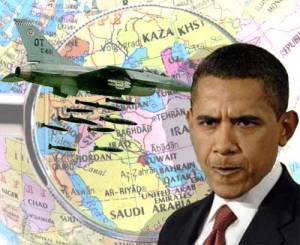 US military personnel are engaged in counterterrorism operations across 15 different countries, President Barack Obama said in a biannual statement to Congress released on Monday.
The letter outlined US military counterrorism operations across the globe in Afghanistan, Iraq, Syria, Turkey, Somalia, Yemen, Djibouti, Libya, Cuba, Niger, Cameroon, the Central African Republic, Egypt, Jordan, and Kosovo. All nations have US combat-equipped personnel deployed for a specific counterterrorism mission.
Obama indicated that that there is no timeline for the war on terrorism, and he will direct “additional measures to protect US citizens and interests” if necessary.
“It is not possible to know at this time the precise scope or the duration of the deployments of US Armed Forces necessary to counter terrorist threats to the United States,” Obama said.
Under the 2001 authorization for use of military force, the US president must update Congress every six months on the military operations against al-Qaeda, the Taliban and associated forces.
US Immigration Policy for Cuba: A Cold War Relic
teleSUR | March 19, 2016
The Cuban Adjustment Act, passed in 1966 by the U.S. Congress, allows any Cuban who enters the United States to gain permanent residency after being present in the U.S. for one year. This law, passed at the height of the Cold War, is unique to Cuban emigrants, with no other migrant group given this special consideration.
Cubans sit aboard a homemade raft, known in Cuba as a balsa.
This Act was passed in order to encourage emigration from Cuba to the United States. After the triumph of the Cuban Revolution, there was an exodus of Cubans opposed to the revolution who fled to the United States. In his autobiography, Fidel Castro stated that in the first three years after the revolution, more than 270,000 Cubans migrated to the United States.
Many of those who left Cuba were professionals and their exit put a strain on the Cuban economy – a favorable situation for policy makers in the U.S.
Wanting to continue to promote a “brain drain” in Cuba, the Cuban Adjustment Act was passed, which further encouraged Cubans to leave the island and arrive in the U.S. Those opposed to the revolution also facilitated their arrival by providing material support for these so-called refugees.
Cuba and the U.S. did eventually negotiate a deal where the U.S. promised to issue up to 20,000 visas a year so people could migrate legally, but ultimately only some 1,000 were issued yearly.
With the allure of having the right to live and work in the United States legally upon arrival but unable to secure a visa, many Cubans continued to make the journey to the U.S. state of Florida by whatever means they could.
This led to people undertaking various means in an attempt to navigate the strait separating the island from Florida’s southern tip, including hijacking vehicles not apt for long-distance sea travel, such as tug boats. Despite this, the Cuban coast guard had strict orders not to intercept vessels in the water if they had people aboard. This also led to the phenomenon known as the balseros, people who attempt to arrive in the U.S. in homemade rafts, especially during the difficult Special Period.
The influx of Cubans led to more negotiations between the U.S. and Cuba, and in 1995 the U.S. government finally agreed not to admit Cubans found at sea headed for the U.S. Those who did reach the shores of the U.S. would be admitted and be granted residency under the Cuban Adjustment Act, hence the reference to the “wet-foot, dry-foot” rule.
The Cuban government considers this rule a provocation, while critics say the policy not only promotes dangerous forms of travel, but is also an incentive for human trafficking by criminal groups.
Cuban Doctors Have Saved 87,000 Lives in Bolivia Since 2006
teleSUR | March 5, 2016
Cuba is known for sending medical personnel overseas as part of its medical brigade program which was launched during the 1959 Revolution.
The Bolivian Health Ministry thanked Cuban doctors and the Cuban government Friday for the solidarity offered to their country as part of Cuba’s medical internationalism over the past 10 years.
Ariana Campero, the head of agency of the decade-long program, congratulated the local partners and conveyed greetings from President Evo Morales. “Thank you very much to Fidel Castro, Commander Raul Castro and the Cuban people. We are sending you all an embrace of solidarity from Bolivia.”
According to Dr. Pavel Noa, the national coordinator of the mission, the most important results that protrude from the mission encompass more than 63 million consultations offered to the Bolivian people, 179,282 surgical interventions performed and a total of 86,983 lives saved.
Medical workers are often believed to be Cuba’s most important export, having served in countries all over the world and in particular in Latin America, Africa and, more recently in Oceania.
Dr. Alina Ochoa, head of Medical Assistance Brigade, stressed the importance of cooperation in the healthcare sector and said the aim was to ensure the health of the Bolivian people. “Cuba has a long and successful history in providing medical staff worldwide, which was ratified in Bolivia with the presence of more than 700 collaborators.”
The representative of the Pan American Health Organization, Luis Fernando Leanes, acknowledged the work of the Cuban mission, which he described as wonderful and very important. “How nice to be in this country and see Cubans and Bolivians working together for peace and welfare”, he said.
Cuba´s efforts in providing medical services to the poor have been acknowledged internationally as it was among the first countries to respond when the World Health Organization called for medical staff to help with the Ebola crisis. Fidel Castro proudly described the 12,000 medical volunteers who signed up as “an army of white coats”.
US May Drop Program Helping Cuban Doctors Defect
teleSUR | January 9, 2016
The White House may end a program encouraging Cuban doctors sent abroad to defect and move to the United States.
The program, created under George W. Bush in 2006, is under review as a part of ongoing negotiations to normalize relations with Cuba, reported Reuters on Friday. Cuba considers it a “reprehensible practice” that is designed to “deprive Cuba and many other countries of vital human resources.”
The island sends medical personnel to countries suffering from health crises, including to South Africa in the post-apartheid brain drain and to West Africa to treat patients infected with Ebola.
The dispatches are a significant export and source of income for the country. In exchange for staff Cuba receives 100,000 barrels of oil a year from Venezuela.
Under the Cuban Medical Professional Parole Program, U.S. embassies in over 60 countries have discretionary authority to grant Cuban doctors abroad U.S. visas.
Despite being compared to slaves or prisoners on parole, out of over 40,000 medical workers in third world countries, the program accepted a total of 7,117 applicants. In 2015, 1,663 applicants were approved, a record in its nine-year history.
“It’s not only an issue of quantity, but of the quality of the specialists, the brains that the North American government has been selectively robbing… which is also a source of income for the problems that our people are confronting daily,” Marcos Agustín del Risco, director of Human Capital in the Ministry of Public Health, told Radio Rebelde.
The defectors “seriously affected” Cuba’s own free health care system, causing President Raul Castro to recently announce that the government will re-impose limits on the number of medics leaving the country. Last summer, controversy over Cuban doctors who had fled to Colombia to process U.S. visas became a major question in U.S.-Cuba relations.
“It’s an unusual policy, and I think as we look at the whole totality of the relationship, this is something that we felt was worth being in the list of things that we consider,” Ben Rhodes, a national security adviser that participated in Cuba talks last year, told Reuters.
US Could Spend US$30M in 2016 to ‘Promote Democracy’ in Cuba
teleSUR – January 2, 2016
The United States government could potentially spend up to US$30 million on “democracy development” programs in Cuba in 2016, according to bills waiting for approval at U.S. Congress.
Two draft bills related to U.S. State Department’s budget for foreign spending were approved by the Appropriation Committees of both the House of Representatives and the Senate.
The draft bill approved by the House Committee on Appropriations states that the National Endowment for Democracy, or NED, the State Department and the Agency for International Development would share US$30 million in Cuba democracy funds.
Of the funds appropriated by this Act under the heading ‘Economic Support Fund, “$30,000,000 shall be made available to promote democracy and strengthen civil society in Cuba,” the draft bill said. It was approved by the House’s committee in June 2015.
It added that such funds could not be used “for business promotion, economic reform, entrepreneurship, or any other assistance that is not democracy-building.”
Meanwhile, the draft bill approved by the Senate Committee on Appropriations said that US$20 million should be used for Cuba democracy programs, including up to $5 million for “private Cuban entrepreneurs.” This draft was approved by the committee in July last year.
The Senate version of the bill also authorizes US$50.5 million “for programs to promote Internet freedom globally,” and says a portion of the funds would likely be used “to support Internet freedom in Cuba.”
Neither bill has been approved by any of the corresponding government bodies yet.
Over the years, programs such as the NED or the United States Agency for International Development (USAID) have received mounting criticism over meddling in other nations political spheres in order to promote U.S. interests, unlike their claim of promoting democracy and aid.
Both programs are funded by the U.S. congress.
Republican Congressman Ron Paul, who ran for the U.S. presidency twice, has argued against such programs. In 2005, he stated that NED has “very little to do with democracy. It is an organization that uses U.S. tax money to actually subvert democracy, by showering funding on favored political parties or movements overseas.”
The NED has been banned in various countries over meddling claims.
Cuba Blames US for Cuban Migrant Crisis in Central America
teleSUR | November 18, 2015
Cuba blamed the U.S. on Tuesday for the situation of more than 1,000 Cuban migrants in Central America, pegging the crisis on U.S. Cold War-era immigration policy put in place during the early years of the U.S. blockade on Cuba.
“The Foreign Ministry wishes to emphasize that these citizens are victims of the U.S. government’s politicization of immigration issues,” said a government statement on a Cuban news broadcast.
The Cuban government statements come amid a recent spike in number of Cuban migrants crossing Central America en route to the U.S. Many Cubans, some wishing to reunite with their families, fear that the renewal of U.S.-Cuban relations could bring an end to a decades-old policy allowing landed Cuban migrants to stay in the U.S.
But more than 1,000 Cuban migrants have become stuck in Central America, facing challenges of tightened borders first at the Panama-Costa Rica crossing, then at the Costa Rica-Nicaragua border. Nicaragua tightened its borders Sunday and accused Costa Rica of fomenting a “humanitarian crisis” in the region.
Under the U.S.’s 1966 Cuban Adjustment Act, any Cuban who enters the U.S. is able to gain permanent residency after being present in the U.S. for one year. The act, amended in 1995 to not admit to the U.S. any Cubans found at sea, became known as the “wet-foot, dry-foot” rule.
The Cuban government considers this rule a provocation, while critics say the policy not only promotes dangerous forms of travel, but is also an incentive for human trafficking by criminal groups.
“This policy stimulates irregular emigration from Cuba toward the United States and constitutes a violation of the letter and the spirit of migration accords that are in force and through which both countries assume an obligation to guarantee legal, safe and orderly emigration,” said the Cuban government statement.
Cuba said it has been in contact with Central American countries on the Cuban migration route to discuss how to best remedy the migrant situation.
The Imaginary Cuban Troops in Syria
By Matt Peppe | Just the Facts Blog | October 17, 2015
Fair-and-balanced Fox News reported on Wednesday that “Cuban military operatives reportedly have been spotted in Syria, where sources believe they are advising President Bashar al-Assad’s soldiers and may be preparing to man Russian-made tanks to aid Damascus in fighting rebel forces backed by the U.S.” Fox’s claim of an imaginary enemy alliance relies on two sources: the University of Miami’s Institute for Cuban and Cuban-American Studies and an anonymous U.S. official.
The source at the Miami Institute indicated that “An Arab military officer at the Damascus airport reportedly witnessed two Russian planes arrive there with Cuban military personnel on board. When the officer questioned the Cubans, they told him they were there to assist Assad because they are experts at operating Russian tanks.”
It is unclear what nationality the “Arab” officer was. Perhaps, said Arab determined the people aboard the Russian plane were Cubans because he saw them smoking cigars and drinking mojitos. The Cuban soldiers then volunteered – supposedly – they were “there to assist Assad” because of their expertise manning Russian tanks. However improbable this may seem to an unbiased observer, the source from the Miami Institute said that “it doesn’t surprise me.”
The supposed U.S. official – who Fox grants anonymity to without giving a reason why – related “evidence” from “intelligence reports” that Cuban troops “may” have trained in Russia and “may have” come to Syria in Russian planes. Sounds legit.
Despite the thinness of the report’s sourcing and the improbability of its content, other news organizations were quick to parrot its claims. Spanish newspaper ABC noted the next day that media from Germany to Argentina to the Middle East had echoed the Fox News report, while ABC did the same themselves.
By Friday, the story had gained enough traction that it was raised at a White House briefing. In a response that should have been enough to put the story to rest, the White House Press Secretary said “we’ve seen no evidence to indicate that those reports are true.”
But a few hours later, the Daily Beast had definitively declared in a headline that: “Cuba Is Intervening in Syria to Help Russia. It’s Not the First Time Havana’s Assisted Moscow.”
Progressive concern troll James Bloodworth turned Fox’s rumors into fact and wrote that “Not for the first time Cuban forces are doing Russia’s dirty work, this time in Syria… Obama has been holding his hand out in a gesture of goodwill to America’s adversaries only for them to blow him a raspberry back in his face – while standing atop a pile of Syrian corpses.”
In reality, Obama’s “gesture of goodwill” is little more than behaving less overtly hostile after decades of American aggression against Cuba and Iran. If you are choking someone unprovoked and you loosen your grip, it is far from a gesture of goodwill.
Bloodworth also tries to make an historical argument that Cuba’s (imaginary) military actions in Syria are consistent with their “bloody” interventions elsewhere. He decries “Cuban terror in Ethiopia” that resulted in hundreds of thousands of people being killed. “The tragedy was largely a consequence of the policies pursued by the Communist dictatorship that ruled Ethiopia at the time – a regime propped up by Cuba and the Soviet Union.”
In 1977, Somalia had invaded Ethiopia in an attack that “had been encouraged by ambivalent signals from Washington,” according to historian Piero Gleijeses in his book Visions of Freedom. [1] Initially reluctant to become involved, Fidel Castro finally agreed to Ethiopian requests to send troops to repel the Somali invasion.
Gleijeses found in his extensive review of formerly classified military documents that Cuba’s motives in aiding Ethiopia were sincere:
With hindsight, we know that Mengistu’s policies resulted in disaster, but this was not clear in 1977: though the process was undeniably bloody, the Ethiopian junta had decreed a radical agrarian reform and taken unprecedented steps to foster the cultural rights of the non-Amhara population… The evidence indicates that the Cubans intervened because they believed, as Cuban intelligence stated in March 1977, that ‘the social and economic measures adopted by Ethiopia’s leadership are the most progressive we have seen in any underdeveloped country since the triumph of the Cuban revolution.’ [2] In addition to correcting the record on Ethiopia, Gleijeses’ study also serves to set the record straight on Cuba’s historical modus operandi in its military interventions abroad. Cuba did maintain a large military presence in Angola for nearly 15 years, starting in 1975.
Castro first sent troops in November 1975 after Angolan President Agostinho Neto warned of a South African invasion of the country already underway which would inevitably topple the nascent government without outside support. Cuba agreed to send soldiers to Angola right away. Several months later, they would repel the apartheid army back to Pretoria. They remained in Angola at Neto’s bequest to prevent further incursions from the racist South African army into the country’s sovereign territory.
At the same time, there was an ongoing civil war between Neto’s MPLA, the largest and most popular of the guerilla groups, and the South African and American-backed UNITA guerillas led by former Portuguese collaborator Jonas Savimbi.
Castro was adamant that Cuban troops would be responsible for preventing a South African invasion, while Angolan troops should deal with their own internal conflict. In meetings with Neto, Castro “kept hammering away on the need to fight the bandits … He explained to us that the fight against the bandits was necessarily and without question the responsibility of the Angolans, that we could not wage this war, that it was their war.” [3]
Cuba’s position during the Angolan conflict is consistent with the diplomatic approach they have repeatedly espoused in Syria, that the Syrian conflict is a domestic problem for the Syrian people and government to resolve themselves, while the international community works to achieve a peaceful solution.
“Cuba reiterates that international cooperation, based on the principles of objectivity, impartiality and non-selectivity, is the only way to effectively promote and protect all human rights,” Cuban representative to the UN Human Rights Council Rodolfo Reyes said at a meeting in Switzerland. He added that “Cuba is confident of the capacity of the Syrian people and government to solve their domestic problems without foreign interference.”
Unreliable Sources
That the Fox News could cause such a stir is a testament to the refusal of mainstream news organizations to verify sources. In all of the iterations of the “Cuban troops in Syria” fantasy, there are no new sources cited. The original Fox News report cites one anonymous U.S. official who may, or may not, even exist. The only source on record with their incredulous claims is someone from the Institute for Cuban and Cuban-American Studies (ICCAS) at the University of Miami.
ICCAS is notorious for its reactionary, anti-Communist politics revered among the fanatically right-wing Cuban and Cuban-American population in Miami. Their academic research includes a conspiracy theory that appears to implicate Fidel Castro in the assassination of John F. Kennedy.
Another ICCAS report claims “the often-repeated view in many countries that the United States is an evil power, guilty for much of the problems and sufferings of the developing world, is owed in great part to the propaganda efforts of Fidel Castro” – not, rather, to decades of direct U.S. military intervention; profligate support to fascist military dictatorships; and predatory, neo-colonial lending policies that demand neoliberal structural adjustment programs which funnel public assets and resources to creditor interests, at the expense of the employment, health and well-being of the vast majority of local populations.
ICCAS is also home to the Cuba Transition Project whose mission is “to study and make recommendations for the reconstruction of Cuba once the post-Castro transition begins in earnest.” CTP acknowledges on its Web site that “the project was established in 2002 and supported by grants from the U.S. Agency for International Development (USAID) until 2010.” It’s funding indicates it is at least indirectly an arm of the U.S. government’s destabilization and subversion efforts dedicated to regime change of the politically and economically independent Cuban government.
Cuban Prensa Latina reporter in Syria Miguel Fernández noted that ICCAS has reported six or seven times since 2006 that Fidel Castro has died. He suggested reports such as those originating with ICCAS about Cuban troops in Syria were part of the campaigns of reactionary groups opposed to normalization to tarnish the new relations between Cuba and the United States.
The Cuban Embassy in Damascus reportedly “laughed” at the report of Cuban troops in Syria, and told Sputnik News : “It’s pure lunacy. It is as if they were claiming that Russia had sent its troops to Madagascar to protect lemurs.”
Despite claims of Cuban troops in Syria contradicting Cuba’s stated policy and historical modus operandi, and the fact that now four days have passed without a single piece of corroborating evidence to the laughable Fox News report, the imaginary Cuban troops in Syria are likely to morph into more outrageous fantasies of media who have shown themselves primarily interested in fabricating tales of intrigue about America’s evil enemies rather than reporting actual verifiable facts.
References
[1] Gleijeses, Piero. Visions of Freedom: Havana, Washington, Pretoria, and the Struggle for Southern Africa, 1976-1991. The University of North Carolina Press, 2013. Kindle edition.
[2] Ibid.
[3] as quoted in Gleijeses, 2013
Unilateral restrictive measures must be stopped, Cuban embargo lifted – Lavrov
RT | September 27, 2015
The practice of imposing unilateral coercive measures, taken by one state to force a change in the policy of another, violates the UN Charter and must be stopped, Russia’s Foreign Minister Sergey Lavrov told a UN summit on sustainable development, adding that the Cuba embargo needs to end.
“Such illegitimate restrictive actions, which among other things undermine basic market principles in the areas of trade, finance, technology and investment, must be stopped. This includes the need to lift the embargo against Cuba and other sanctions imposed arbitrarily, bypassing the UN Security Council,” Lavrov said on Sunday.
A US-brokered carrot-and-stick policy in regard to Russia has long been condemned by Moscow. The US has imposed a number of sanctions on Russia since August 2014 over the conflict in eastern Ukraine, accusing Moscow of being a protagonist and participant in the ongoing hostilities. Russia has repeatedly denied the allegations. It responded with counter-measures, banning imports from the EU, US and others. In June, Moscow extended its embargo on food imports from Western countries until August 2016 due to the prolonged anti-Russia sanctions.
“Russia advocates the creation of a fair global economic order, with the global development more manageable. We call for action backed by universally recognized norms of international law, in the spirit of collective decision-making,” Lavrov told the United Nations summit on Sunday.
Russia said earlier this month that it has no illusion about sanctions being lifted and expects them to be stiffened in future, regardless of developments in Eastern Ukraine. Russian Deputy Foreign Minister Sergey Ryabkov said that Moscow can live under continuous Western pressure.
Speaking at the United Nations for the first time on Saturday, Cuba’s President Raul Castro publicly slammed the US trade embargo, lasting for over five decades, describing it as the key obstacle to Havana’s development.
The embargo is “the main obstacle to our country’s economic development while affecting other nations due to its extraterritorial scope, and hurting the interests of American citizens and companies,” Castro told a UN summit on sustainable development.
“Such policy is rejected by 188 United Nations member states that demand its removal,” he added, referring to an annual UN General Assembly resolution that has denounced the US embargo.
Cuba, which estimates the embargo has caused its economy $121 billion in damages, has launched a campaign for the General Assembly to adopt the resolution again, calling for the embargo to be lifted. Adoption of the resolution has already become an annual ritual.
While the General Assembly’s vote is nonbinding and symbolic, it has served to demonstrate Washington’s isolation regarding Havana. UN diplomats, speaking on condition of anonymity, told Reuters that Washington may abstain from the UN vote on the resolution, if the draft text is amended from previous years to soften the criticism of the US.
Featured Video
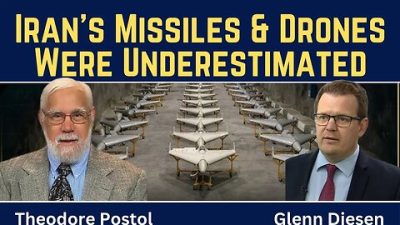
Theodore Postol: Iran’s Missiles & Drones Were Underestimated
or go to
Aletho News Archives – Video-Images
From the Archives
What is the Israeli Lobby in Australia Doing in Interfaith Dialogue?
By Ali Kazak | Dissident Voice | October 11, 2015
For years Israel and its lobby around the world have been trying to normalise their relations with Arabs and Muslims without solving the Palestine Question.
One of the methods they resorted to in the last few years is using human rights and community organizations such as interfaith dialogue and Multiculturalism to achieve this objective and to: isolate the Palestinians, marginalise the Palestine question, end Israel’s isolation, and prevent criticism of Israel, knowing that these organisations will be the first to stand against Israel’s violations, racial and religious discrimination.
The group responsible for this task in Australia is The Australia/Israel & Jewish Affairs Council (AIJAC); its Director of International & Community Affairs, Jeremy Jones is in charge of lobbying religious community organizations, specifically Muslims and Christians. Consequently he convened the Faith Communities for Reconciliation, founding participant in the Australian Partnership of Religious Organisations and the Australian National Dialogue of Christians, Muslims & Jews.
AIJAC is a private political propaganda group. It is recognised as the main Israeli lobby in Australia. It coordinates its activities and works intimately with the Israeli embassy in Canberra and different institutions in Israel. It is privately funded by some Jewish businessmen. It monitors closely Australian politicians, the media, ethnic and religious groups, (especially Arabs and Muslims), unions and academics on their stands towards Israel and the Palestine question. … continue
Blog Roll
 Aletho News
- Iran’s friends are about to make life much more difficult for Israel and the US
- The war of liberation of the Arab and Islamic peoples expands across the Gulf
- Envoy warns UN on Trump’s threat to ‘obliterate’ Iran’s civilian infrastructure
- The Larak Corridor: Iran’s Rial Gate With No US, No Israel, and No Way Around
- ‘Economic terrorism’: Steel facilities hit again in US-Israeli strike
- ‘War Crime’: Iran condemns attacks on Arak, Ardakan nuclear sites
- Two-thirds of Americans want quick end to Iran war even if goals unmet
- Trump to Give “Important Update on Iran” Wednesday in Prime-Time Speech
- Theodore Postol: Iran’s Missiles & Drones Were Underestimated
- Iran To Target Military Industrial-Tech Complex That Facilitated Gaza Genocide
- If Americans Knew
- Israel wants US to bomb more of Iran’s civilian structures (113,000 is not enough) – Not a ceasefire Day 173
- Ann Coulter Rips Into Fox News for Iran War Coverage
- Joe Kent Urges Americans To Call White House and Congress To Object To Sending Troops Into Iran
- DNC Resolution to Reject AIPAC Funding Puts Democratic Leaders in the Hot Seat
- Swedish foundation to build 400 schools as over 650,000 Gaza children remain without education for 2 years
- Israeli army admits photshopping image of slain Lebanese journalist
- This is how Israel is systematically killing health workers under the cover of war in Lebanon
- Carrying life under fire: Israeli invasion of Lebanon leaves pregnant women facing deadly risks
- Champagne all around for the new death penalty (for Palestinians) law – Not a ceasefire Day 172
- Why are Palestinian books struggling to be seen on Amazon?
- No Tricks Zone
- New Study Finds Warming Saves Lives…Cold Temperatures 12 Times More Deadly Than Excess Heat
- German Science Blog Accuses PIK Climate Institute Of Hallucinating Climate Tipping Points
- Devastating Assessment Of Comirnaty Vaccine By Former Senior Pfizer Europe Toxicologist
- New Study: CO2 Is ‘Effectively Negligible’ As An Explanatory Climate Change Factor Since 2000
- Former Pfizer Toxicologist Dr. Helmut Sterz Tells Bundestag Hearing Pfizer Vaccine Should Have Never Been Approved
- Energy Expert: Germany’s Nuclear Phaseout Was A “500 Billion Euro Mistake”
- New Research: South Australia’s Mid-Holocene Sea Surface Temperatures Were 4°C Warmer Than Today
- Storing Green Energy To Last Germany 10 Days Would Require A 60-Million Tonne Battery
- New Studies: UK Sea Levels Were 4 Meters Higher Than Today During The Mid-Holocene
- Destructive Green New Deal: German Energy And Metal Group Warns Of Drastic Crisis
 Aletho News