Denmark Leaves the US-led Coalition
Inside Syria Media Center – December 3, 2016
At a meeting with the Parliamentary Committee on Foreign Policy the Defense Minister of Denmark, Anders Samuelsen, said that Denmark would not renew a six-month mission of 7 F-16 fighters of Royal Air Force, participating in the US-led coalition’ operation against ISIS terrorists in Syria and Iraq.
The decision was made just a few days after the Pentagon announced that the September air strike in Deir ez-Zor, which led to serious casualties among the Syrian army soldiers had been caused by a series of human errors, inaccurate information, intelligence and problems with communication.
We can assume that, in this way, Denmark has expressed its disagreement with the fact that Washington so easily named the “human factor” as the main cause of incident, rather than to identify the real perpetrators of it.
The Colossal Costs of Building UK’s Monster Surveillance Network
Sputnik – 22.03.2016
The UK will have to build a mammoth network of Internet surveillance centers if the government passes its Investigatory Powers Bill – dubbed the the Snoopers’ Charter – into law.
The proposal, which the Home Office wants to rush through the House of Commons just after Easter, will cost the country billions of pounds. The centers will be required to keep large databases of all the connections made by UK Internet users for one year — and to share them automatically with the UK’s government and intelligence agencies.
The government is bracing itself for the vote as the news arrives that the only other country in the world to have ever tried a similar approach — Denmark — has just decided to abandon the plan, for the second time in ten years.
The first Danish “session logging” system was put into place in 2007, but was abandoned in 2013 after the country’s police and security services found it to be practically useless — besides being very expensive for Internet providers to install and operate.
Another attempt to build an improved system, carried out by the Danish Ministry of Justice at the start of March 2016 also appears to have foundered.
Before the final decision was taken, the Danish government asked accounting firm Ernst & Young to ascertain how much the new surveillance network would cost.
The experts found that total expenses would be around one billion Danish Krone (US$150 million). The Danish government decided that the costs were too high for the country and its tech sector.
In the UK, the costs are likely to be much-much higher. If in Denmark — a country of 5.6 million people — the government estimated that each citizen would produce about 62,000 records every year, in Britain, whose population is about ten times the size of Denmark’s, the final annual database would have to include about four trillion a year.
Other estimates suggest that the sheer amount of records could even hit tens of trillions every year. That is because each of those records, as per the law, would have to contain: a customer account reference or device identifier; the date and time of the event; the duration; the source and destination IP and port number of each session; the domain name or linked URL; the volume of data; and the name of Internet service you connected to.
The UK will have to find a way to store an enormous amount of information every day — even if each record’s weight was brought down to 100 bytes, on a yearly level, we are talking exabytes (thousands of petabytes).
The only surefire way to deal with this information is by building new massive data centers, which will need at least US$140 million in equipment to handle each exabyte. Add the building, as well as cooling and electricity management and you have only started understanding the eventual costs of the UK’s new monster surveillance plans.
Phantom Russian Sub Hunts Gave Birth To NATO’s Viking Bloc
By Andrew KORYBKO | Oriental Review | May 5, 2015
The largely unobservant public had previously been under the impression that the Baltic Sea was a zone of peace and stability, thinking that all the region’s states lived in harmony with one another. This may have been the case prior to 1991, but immediately afterwards, NATO’s expansion into the Baltic basin seriously upset the balance of power, as the incorporation of Poland and the former Soviet Baltic States in 1999 and 2004 attests. Through this manner, NATO was able to surround Kaliningrad and directly push up against part of Russia’s western border.
The military tension remained just below the surface (literally), until Shadow NATO states Sweden and Finland started initiating highly publicized ‘Russian sub’ scares, designed with the sole intent of scaring their publics into formal NATO membership and opening up an additional front in the New Cold War. Taking it further, this is all part of NATO’s new policy of regional blocs, as Brussels hopes to see the formation of a ‘Viking Bloc’ that would apply pressure against Russia in the Arctic. The most dangerous development, however, is with Finland, which is capitalizing off of the sea scare to call up nearly one million reservists (1/5 of the total population) in the event of a “crisis situation”, thereby presenting a dangerous test run in conflict escalation that might be applied all over Europe in the future.
Regional Hysteria
To put everything into focus, it’s best to begin by documenting the latest hysteria stemming from supposed ‘Russian sub’ sightings. Sweden started the trend when it claimed to be hunting a believed-to-be Russian sub back in October, and when nothing came out of the stunt except for a scared public and a couple million dollars spent, Stockholm continued to insist that it had evidence that a foreign sub did trespass through its waters, but curiously kept the details to itself. Be that as it may, it didn’t stop legislators from increasing the defense budget by a whopping $1.18 billion for the period 2016-2020, earmarking an additional $945 million for the future purchase of two subs, and announcing plans to reopen a military base on the Baltic island of Gottland. The ultimate irony is that there was never a ‘Russian sub’ to begin with, and that it was eventually revealed that the whole scandal started over a simple workboat, thus making it seem like Sweden exaggerated the situation simply to push through more defense funding and militarize its society against Russia.
 Being the regional leader that it is, it appears as though Sweden’s spectacle of the phantom Russian sub rubbed off on Finland, which soon after its latest elections began detonating underwater charges against its own suspected ‘Russian sub’. Finnish political analyst Jon Hellevig assessed that this was simply Helsinki’s application of Stockholm’s decades-long tactic of using phantom Russian subs to increase the population’s acceptance of future NATO membership. While Finland isn’t a de-jure member of the alliance, both it and Scandinavian military hegemon Sweden signed a NATO host nation agreement last fall to intensify their relations with the bloc, essentially making them Shadow NATO members in an even deeper capacity than Ukraine has become (the latter of which has been the bone of contention sparking the New Cold War in the first place).
Given such a relationship, it may not even be needed for either state to formally join NATO at this point, since the alliance can already reap the resultant military advantages of their territory in any possible anti-Russian crisis scenario. However, putting the provocative issue up for a referendum vote or making a unilateral government decision in this regard might be a forthcoming tactic towards creating the aforementioned crisis needed to ‘justify’ the indefinite hosting of NATO troops in those countries. It’s quite clear that Sweden is already de-facto participating in NATO, since they just partook in the group’s “Dynamic Mongoose” anti-submarine drills off the Norwegian coast. This would have obviously raised eyebrows among its domestic citizenry had it not been for the earlier ‘Russian sub’ scare that created the social pretext for its acceptance, showing how such false crises can be manipulated by the media for predetermined military gain.
The Viking Bloc
Everything going on in Scandinavia right now, from the phantom ‘Russian sub’ scares to the de-facto NATO-ization of the region’s last formal holdouts, is designed to create the northern component of NATO’s regional bloc strategy. In sum, the alliance is reverting to history and using Polish interwar leader Josef Pilsudski’s Intermarum concept to establish a Baltic-to-Black-Sea coalition of anti-Russian states to which it can more efficiently outsource its military prerogatives, all per the Lead From Behind strategy. The ‘Viking Bloc’ which consists of the Greater Scandinavian states of Sweden, Norway, Denmark, Iceland, and Finland (centered on Sweden, possibly incorporating Estonia and Latvia as well) is envisioned to complement the emerging Commonwealth Bloc of Poland, Lithuania, and Ukraine (centered on Poland), and the forthcoming Black Sea Bloc of Romania, Bulgaria, and Moldova (centered on Romania, possibly even expanded to Georgia).
Focusing more specifically on the characteristics of the Viking Bloc, its members have a maritime identity, so it’s predicted that they’ll focus their activity on the Baltic Sea, North Sea, and Arctic Ocean, accordingly making them all one large naval base. Sweden’s demographic and economic strength makes it the obvious leader amongst the identified members and the control node of its activity, while wealthy Norway can provide the natural resources needed to keep it running. Denmark controls the entrance to and from the Baltic Sea, and together with its colony country of Greenland, Iceland, and Norway, the three can patrol the North Sea and Arctic Ocean in hunting ‘Russian subs’. It’s also not a coincidence that all of these states are members of the Arctic Council, meaning that this dialogue configuration has essentially become one of confrontation between North America & the Viking Bloc on one side and Russia on the other. The odd member out of this naval configuration is Finland (also a member of the Arctic Council), which has recklessly adapted a land-based anti-Russian policy that’s bound to ratchet up tension with its neighbor. One should also note that the Viking Bloc’s members signed a multilateral defense cooperation agreement in April that basically institutionalized the organization as an official regional bloc.
The Finnish Amphibian
The most dangerous sub-bloc strategy being adopted by NATO is its Finnish affiliate’s advance preparation of 900,000 reservists in the event of a “crisis situation”, which obviously could only refer to a military conflict with Russia. The Finnish government is trying to account for all of its former reservists aged 20-60 in order to inform them of what their “crisis situation” role would be, as well as to collect updated information about them. This dramatic movement of anti-Russian initiatives from sea onto land represents an amphibious strategy that’s likely only in its initial test-run phase. NATO wants to gauge Russia’s reaction and monitor its response in order to fine-tune this template for eventually export throughout the bloc as a whole.
The Finnish Amphibian is a very simple strategy. All that the practicing states or regional blocs have to do is report on a phantom ‘Russian sub’ sighting, preferably with as much media paranoia as possible but providing no proof whatsoever, and then use the subsequent buzz to justify the potential mobilization of a massive land-based reservist force. This leads to the militarization of society within the targeted state and initiates a siege mentality that makes its citizens feel as though they’re constantly under some type of Russian attack. None of the accusations have to be proven, let alone even seen by the citizens themselves, so long as the media and supportive political figures repeat the chorus of conflict enough to make it believable. An added touch would be to implement Sweden’s strategy of publicly accusing 1/3 of all Russian diplomats there as being spies, which when coupled with the existing paranoia about phantom ‘Russian subs’, sends the populace’s paranoia into overdrive and all but assures that they’ll support whichever military or surveillance solutions their government or NATO suggests.
Concluding Thoughts
NATO’s northernmost regional fighting group, the Viking Bloc, owes its speedy creation to the utilization of phantom ‘Russian sub’ scare tactics to galvanize support for this new initiative. Greater Scandinavia is rapidly being transformed into one giant NATO naval base that’s meant to confront Russia on the neighboring high seas. As destabilizing as that is, it moves into the realm of flashpoint danger with the fact that Finland is preparing to mobilize 1/5 of its population against Russia, thus presenting an amphibious land-based component to the majority sea-focused strategy. Even worse, the template of using false sea-based scares to ‘justify’ massive land-based mobilizations could likely be applied elsewhere in Europe, thereby serving as an ideal model of militarization all throughout NATO. It’s this hybrid of media-military strategic collaboration that may eventually prove to be more destabilizing than the unveiling of the Viking Bloc itself.
Danish anti-Israeli settlements bus ads halted
RT | May 5, 2015

Photo from facebook.com/nejtaktilbsp
The Danish Palestinian Friendship Association said Monday it would expand its anti-settlement advertising campaign after Copenhagen bus operator Movia said it was dropping their ads from buses in the city.
The advertisements were put on 35 buses in the Danish capital and featured two women and the quote: “Our conscience is clean! We neither buy products from the Israeli settlements nor invest in the settlement industry.”
But Movia said they dropped them after four days because of the number of inquiries they received about what the Danish Palestinian Friendship Association stands for, AFP reports.
[We] “received a significant number of inquiries regarding the Danish Palestinian Friendship Association’s campaign against Israeli settlements.”
The company declined to comment but released a statement saying the ads were “unnecessarily offensive.”
Fathi El-Abed, the Chairman of the Danish Palestinian Friendship Association, however said that the ads were harmless.
“It’s a clear attempt to deny us our freedom of speech. There is nothing whatsoever about this campaign that is harmful, discriminatory or hateful in any way,” he told AFP.
He insisted that his organization would press on with a national advertising campaign on Israeli settlements.
El-Abed also said that his group was supported by people “who’ve never had anything to do with the Palestinian cause.”
Christian Juhl, a lawmaker from the Red-Green Alliance, said that he thought the decision by the bus company was “embarrassing.”
The decision by Movia is in stark contrast to their refusal last year to drop ads featuring bare breasts by a plastic surgery clinic after complaints by feminists.
In New York an arguably far more offensive ad campaign was allowed on buses after a judge overturned a ban in April from the Metropolitan Transportation Authority (MTA).
The adverts were commissioned by the pro-Israeli American Freedom Defense Initiative (AFDI) and featured a masked man next to the caption “Killing Jews is Worship that draws us close to Allah. That’s his Jihad. What’s yours?”
The adverts were a spoof of an earlier far less offensive campaign by the Council on American-Islamic Relations, which encouraged Twitter users to post messages with the hashtag MyJihad where they would right about their personal and peaceful achievements.
There were also ads showing a 1941 photo of a Muslim leader meeting Hitler, which appeared on buses in Philadelphia, which were also organized by the American Freedom Defense Initiative (AFDI), a pro-Israel group led by blogger Pamela Geller.
AFDI was also behind the contest in Texas on Sunday to award $10,000 for the best cartoon depiction of Muhammad, which ISIS attempted to attack.
The latest ads come after ads linking “Islamic Jew-hatred” with Adolf Hitler appeared in San Francisco In January and in Washington DC last year.
The campaign to boycott Israeli produce and companies operating in the areas of the West Bank, which have been occupied by Israeli settlers, began in 2005, although its effectiveness in stopping the settlement program and its impact on the Israeli economy has been questioned.
The issue of Israeli settlement building in the West Bank is one of the main stalling factors in the now dead Palestine-Israeli peace talks.
In an interview Sunday with the Financial Times and the Frankfurter Allgemeine Zeitung, Jimmy Carter, former American President and peace activist, said the peace process was dead because Israeli Prime Minister Benjamin Netanyahu would never accept a Palestinian state.
Read more:
‘Islamic Jew-hatred’ ads with Hitler appear on Philly buses
NYC judge lets through anti-Palestinian ‘killing Jews’ ad as ‘freedom of speech’
Danish companies warned about settlement investments

By Henriette Johansen | MEMO | March 9, 2015
A new report from the investigative journalism team at DanWatch gives more disturbing evidence of Danish businesses helping to keep the wheels of Israel’s military occupation of Palestine turning.
Danish investment funds invest 689 million Danish Krone (around £67 million) in companies with activities in illegal Israeli settlements on the West Bank, it claims. These funds, therefore, contribute to the maintenance of the apparatus of the Israeli occupation, including the Separation (“Apartheid”) Wall and the settlements.
In addition, say DanWatch, more than 1 billion krone is invested by Danish pension funds in companies either building or operating military checkpoints, the Wall or settlements. Such investments have been exposed in a previous DanWatch report. See, for example. Businesses such as G4S and ISS have reduced their activities in the occupied territories following global publicity about their support for the occupation, but have no plans to end it altogether. Investment in companies profiting from the occupation is illegal under Danish law.
The investment funds named by DanWatch are: Danske Invest, Nykredit Invest, Bank Invest, Nordea Invest, Sydinvest, Jyske Invest, Sparinvest and SEB Invest, all of which are subject to the UN’s Guiding Principles on Business and Human Rights. Indeed, the UN, EU and the Danish government have warned companies repeatedly against investing in the Israeli occupation. The settlements, Separation Wall and checkpoints in the West Bank breach international law as they violate the human rights of the Palestinian people.
Despite this, the new report identifies huge Danish investment in companies that deliver surveillance equipment to checkpoints, cement and building materials to the maintenance of the Separation Wall and bulldozers to the Israeli army. They risk accusations of complicity in human rights violations in the occupied territories.
The DanWatch report reveals the contradictions inherent in investments by the companies mentioned therein. All, for example, claim that they stick to the UN guidelines upon which they base their “ethical investments”. Bank Invest, Jyske Invest and Sydinvest support Cemex, which owns a supplier of cement to Israeli settlements, checkpoints and the Wall. Cemex is blacklisted by Nordea Invest, which has holdings in the Israeli Hapoalim Bank which, in turn, provides loans to construction projects in settlements and is, as a result, blacklisted by Danske Invest.
According to DanWatch all of the funds, bar one, have investments in the US firm Caterpillar. This supplies the D9 bulldozers used by the Israeli army for its devastating and sometimes lethal house demolitions. According to Human Rights Watch, it was these bulldozers that were used in 2010 to destroy buildings while civilians were still inside.
The investments continue despite Danish government appeals for companies to avoid engaging with business involved in, or benefiting from, the Israeli settlements. “The government,” said Trade and Development Minister Mogens Jensen last September, “has on several occasions reminded the public that Danish citizens and businesses should not participate in activity and business that can benefit the Israeli settlements. I will say this yet again.”
Interestingly, Copenhagen Municipality has a total of 2.21 million Dkr invested in seven companies which contribute to the construction or operation of checkpoints, the Wall or settlements in the occupied West Bank.
The coverage given to illegal investment in Israeli settlements has had the effect of Ahava beauty products being taken off the shelves by Danish retailers. A number of supermarkets sell fruit bought from Israeli exporter Mehadrin, which has produce grown in Israel and in the settlements. The Coop supermarket chain now insists on Israeli exporters signing a formal agreement that they will only supply produce from the exporter’s sources in Israel, not the settlements.
Another example of a settlement-based company affected by a boycott is Sodastream, which has had to move production to Israel this year following negative publicity in 2014. A number of Danish companies still stock Sodastream products.
Danish F16s to fight ISIS: Danish government more loyal to the U.S. than to its own citizens
By Jan Oberg | TFF | September 26, 2014
What’s your image of Denmark? Apart from the Little Mermaid, Carlsberg beer and H.C. Andersen perhaps something with decency, welfare, development aid, equality and peace?
Unfortunately, that image is outdated. During the last good 15 years Denmark has participated in wars on/in Yugoslavia and Afghanistan, it was an occupying country in Iraq for four years and a main bomber nation of Libya.
The government’s decision earlier today to send 7 F16s to fight with the U.S. increases the risk of terror actions against Denmark.
It must have been known for quite some time since, about a month ago, the Danish government decided to send a Hercules transport plane with humanitarian aid to Iraq. Most likely, it was a set-up because it was immediately changed into a Hercules transport plane + 55 soldiers to assist the U.S. and the Kurds.
Today’s decision is a violation of the UN Charter – the spirit of the Preamble as well as Article 1 which states that peace shall be established by peaceful means – and, later, only when everything has been tried and found in vain can a military action be decided.
Denmark must now calculate with Danish casualties and, even worse, with taking responsibility for scores of innocent civilians’ death – something that can’t be avoided when targeting individuals from the air.
The decision documents that Denmark has learnt nothing from the earlier – failed – wars and that it does not have alternative expertise.
The common sense, solidarity and humanity that characterised Denmark, at least to some extent, about 20 years ago is now eradicated and replaced by thoughtless militarism; its only guideline has been and is: Accept willingly and unconditionally what the US does and follow it when it calls upon you to do its dirty job – His Master’s Voice.
If you think I exaggerate: There is not one major policy or decision the last 30-40 years where Denmark has shown the courage to stand up against Washington.
Millions of dollars are allocated to state-financed research institutes, military analysis centres and mainstream thinking that “explains” and legitimizes the policies. (The only peace research institute, COPRI, which was very well evaluated by international scholars was destroyed by the government of Anders Fogh Rasmussen who also made Denmark an occupying power – only to be rewarded with the position of NATO Secretary-General).
It is my judgement that the decision to participate in the war on Iraq was the largest foreign policy blunder in Denmark since 1945.
I wrote ”Predictable Fiasco” in which the present situation in Iraq was predicted fairly precisely and I presented a 20-point plan on what to do instead of war.
Thus I don’t know how to characterise a decision by a Social Democratic-led government to go to war in Iraq for a second time!
PM Helle Thorning Schmidt presented the decision around lunch time today Friday September 26. Each of her arguments and assumptions were dubious, anti-intellectual and constructed to suit the event
1) She said that this was not a war because ISIS is not a state (!!) – now you know the level of what followed.
But this is war no matter what her spin doctors may have invented. Those who in the thousands will be killed – ISIS people as well as civilians – can’t see it as anything but war. And nothing but military equipment is being used.
2) As mentioned above, the decision violates the UN Charter.
3) Mission creep is already a fact. First, Denmark should send only humanitarian aid, then it changed to military aid and now 7 F16s – the next step is likely to be what is constantly denied and therefore rather safe to predict: Boots on the ground.
4) It will not be a short, limited affair – it could well last for years. ISIS may be relatively small in numbers but could grow fast – there is enough of hatred; it has a lot of funds from Western allies such as Saudi-Arabia, Qatar and Bahrein – who are playing a double game. And they have advanced weapons, a lot of it U.S.-produced, stolen from the Iraqis.
5) ISIS is the result of more than 100 years of Western arrogance in the region – wars, deceit, lies and agreements such as Sykes-Picot (1916) and Balfour – imposing of Western values, occupations (foremost Iraq), base-building, stealing of oil and coup d’etats. The list is long!
6) This action as a whole will only have one result: More terrorists. The entire ‘War on Terror’ is wrongly conceived from October 7, 2001. We can’t rid the world of terrorism by killing terrorists and ignoring the underlying causes any more than we can combat criminality by killing criminals.
Eventually there will be a blowback, a boomerang effect.
7) The Danish government now gives ISIS and others a perfect reason for targeting Denmark. It puts the security of the Danish citizens at risk – something that must be seen in relation also to the Muhammad caricatures as well as Denmark’s participation in the wars in Afghanistan, Iraq and Libya.
While it is the first duty of a government to secure the lives and safety of its people, the Danish government does the opposite. To be loyal to Its Master’s Voice.
Add to this that Obama’s speech about how to combat ISIS was a manifest disappointment with neither strategy nor a vision for the future of the region. It boiled down to the bizarre: We kill people who kill people because it is wrong to kill people! (Deliver back that Nobel Peace prize medal, Mr. President!)
Finally, Denmark’s defence, security and foreign policy establishment increasingly looks like a one-party system with very little diversity.
All security research at its Institute for International Studies is financed by – you guessed it! – the Ministry of Defence. Not much research there on peace by peaceful means or alternative defence, peace-making, reconciliation, forgiveness etc.
Since 1975 when Denmark bought F16s a MIMAK has developed – a Military-Industrial-Media-Academic Complex with a degree of consent that is pathetic for a society that professes to be pluralist, democratic, humanist and open (-minded).
In particular, Denmark has been rewarded with lots of contracts for its booming military industry – and plans to waste at least US$ 5 billion on new fighter planes.
So, next week the Danish Parliament will – probably with one small left-wing party as dissenter – endorse that Denmark goes to war yet again, for a fifth time – only to cash in yet another fiasco (to be denied).
This only goes to show that democracy is forced to give in to militarism – because there is a considerable opinion in Denmark that does not support this and also did not support the four preceding wars.
Like in Norway and Sweden (exception in the latter: the xenophobic Sweden Democrats) those of us believing in international law and who have the idea that peace is better than war have no party anymore that represents our views.
In summary, the Denmark and the Norden you may think you know is changing and we need a debate about this moral and intellectual defeat under MIMAK in our countries.
But certainly people in the rest of the world who used to look up to Scandinavia should know and tell us what they think.
Rogue states, big and small, is a problem to the whole world. And the sooner they change, the better for all.
Head of Danish parliament’s planned visit to Palestine angers Israel
MEMO | February 7, 2014
Israel is angered that the head of the Danish parliament, Mogens Lykketoft, has scheduled a visit this weekend to Ramallah and the Gaza Strip, an itinerary that does not include Israel.
Israel’s Channel 10 television reported on Thursday that Lykketoft had informed the Israeli foreign ministry two months ago of his planned visit and asked to meet with his Israeli counterpart, Knesset Speaker Yuli Edelstein. Edelstein replied that he is busy and suggested an alternate date; however, Lykketoft decided to continue with his visit as scheduled and suggested meeting with a lower level Israeli official instead, a move that angered the Israeli Foreign Ministry.
Channel 10 noted that in response, Edelstein slammed Lykketoft for insisting on visiting Ramallah and the Gaza Strip and threatened to sever ties with him. Israeli officials also told the news channel that, “Due to his conduct, we have no intention of letting him enter Gaza.”
The Speaker of the Danish Parliament’s visit comes after Denmark’s largest bank announced that it would be divesting from Israel’s major banks over their involvement with the Israeli settlements.

Featured Video
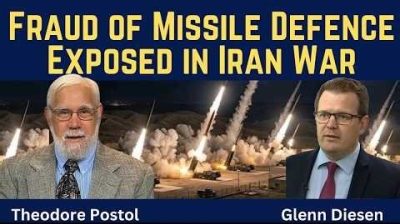
Ted Postol: Fraud of Missile Defence Exposed in Iran War
or go to
Aletho News Archives – Video-Images
Frlom the Archives
Containing the United States
By Edward S. Herman | Z Magazine | September 2016
“Containing the United States” is, of course, a ridiculous and self-contradictory idea in the U.S. and Western ideological and propaganda system. We all know that the United States had to “contain” the Soviet Union from 1945 to 1991, and since then has had the task of containing Russia and China. Only they threaten, bully, aggress and worry countries like Poland and Vietnam. Obama has had to reassure them both of our steadfast stand against Russian and Chinese military attacks. NATO has, of course, expanded greatly over the past several decades, despite the deaths of the Soviet Union and Warsaw Pact, but only to contain the renewed Russian — and Iranian, Libyan, Syrian and other — military threats; and we have “pivoted” to Asia, supported Japanese rearmament, bolstered our own forces in that area and jousted with the Chinese in their coastal waters solely to contain China. Earlier we had been obliged to contain North Vietnam, or was it the Soviet Union in Vietnam? Or China? Or “communism”? Or maybe all of them? Or none of them, but just needing an excuse to enlarge power?
The parallel propaganda has taken many forms. One is accepting as a premise that the United States only acts defensively and has no internal forces and interests that drive it to enlarge its sphere of control. I noted in an earlier article how Paul Krugman claims that internal Russian problems may well be the explanation of Russian “aggression,” but how at the same time it never occurs to him that the huge U.S. transnational corporate interests and “defense” establishment, and the pro-Israel lobby’s activities, might possibly make for an expansionist dynamic here.2 This reflects the standard establishment perspective that we are good and only react to evil. This was the view sustaining and justifying the invasion and occupation of Iraq from 2003. That attack was taken here as not evil but a response to evil, even if involving lies and mistakes, hence not describable as “aggression.” … continue
Blog Roll
 Aletho News
- Trump press conference reveals a man who wants out of war
- When Tel Aviv decides, Washington fights
- Top official: Iran ready for a long war with US, no more diplomacy
- How Iran’s Toxic Rain Reveals US-Israel Discord
- Trump Admits He Is Destroying Iran For Israel
- Iran’s latest move in the GCC countries was a stroke of genius
- Blackmail and death threats, Zelensky embarrasses the EU, but there’s no condemnation
- Israel threatens to kill Iran’s new leadership
- Possible Scenarios for the Middle East
- The Horizon of the War. “Italy is being Dragged Into the War against Iran”
- If Americans Knew
- Corporate Media Go All Out To Support The US-Israeli War On Iran
- US-Israel war on Iran is creating a steady growing number of amputees
- Israel planned this war on Iran for 40 years. Everything else is a smoke screen
- The wrong question about the war in Iran
- ‘Your Tax Dollars Being Used to Raise Your Gas Prices’: US-Israel Bomb Major Iranian Oil Depots
- ‘Bogus Evidence’: Former Nuclear Watchdog Head Debunks US Justification for Iran War
- EXPLAINER – Dimona: What to know about Israel’s nuclear site
- Fires and toxic air in Iran (thanks, Israel) – Not a ceasefire Day 150
- At Israel’s hands, Iran is burning, Lebanon and Gaza are crumbling – Not a ceasefire Day 149
- Israel is using the ‘Gaza doctrine’ in Lebanon and Iran
- No Tricks Zone
- Wake-up Call: Survey Shows Majority Of Germans Now Favor Postponing Climate Targets!
- Televised! Leading German Political Candidate Tells Schoolchildren CO2 Makes Sun Hotter!
- New Study: A Century Warming Of 1.1°C Is ‘Commonplace’ And ‘Not Unusual’ During This Interglacial
- New Study: ‘Internal Noise’ And Volcanic Forcing Can Trigger 10-15°C Warming Within Decades
- Glaciers Worldwide Are Suddendly Surging, Experts Blame Warming!
- Surprising Discovery: Sahara Is Greening…Billions Of Trees Where Once Thought To Be Barren
- New Research Reaffirms Clouds, Aerosols, And Surface Solar Radiation Are ‘Driving The Climate System’
- Germany: Electric Car Catches Fire At Charging Station, Sets Off Local “Inferno”, Widespread Damage
- New Study: Canada’s New Brunswick Was 1°C Warmer Than Today During The Medieval Warm Period
- Coal Power Back In Trend As Globe Tries To Keep Pace With Growing Demand For Power
 Aletho News