Draining the Swamp at State
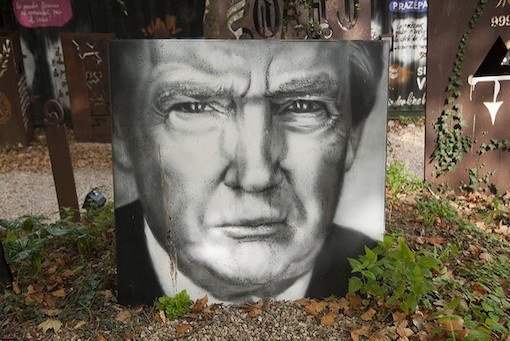
Photo by thierry ehrmann | CC BY 2.0
By Renee Parsons | CounterPunch | November 22, 2016
If there is one hopeful sign in the Presidency of Donald Trump, it is his pledge to ‘drain the swamp’ as it relates to those special insider interests who run the show and those outsider interests who own the show.
It is a hugely ambitious task and hardly achievable in four short years but there is a branch of the Federal government where the President-elect (PE) would find immediate results and bring the satisfaction that American foreign policy would no longer be dependent on globalization or spreading unwinnable wars on wasteful adventurism overseas. If the PE is, in fact, favorable towards a non-interventionist role, the opportunity for a thorough housecleaning and a reshape of the State Department is Now. According to current reports, the struggle is underway within the transition team for the soul of the State Department and ultimately the Trump Administration.
As HRC continued her crazed war talk about Syria and defended NATO encroachment on Russian borders while uttering unprovoked attacks on Russian President Vladimir Putin, there was every reason to believe that minutes after concluding her inaugural address, HRC would have walked off the stage and signed the order initiating a No-Fly Zone over Syria, right then and there. And bingo-bango-bongo, Putin would have responded. I knew it as sure as I know my own name. At some point it became clear, as Green Party candidate Jill Stein said so precisely, HRC would be more dangerous than Donald Trump.
Even as he talked about modernizing the US military, Trump’s campaign rhetoric about disentangling from foreign entanglements, making NATO nations pay their fair share and dialogue with Putin rather than the usual “Blame it on the Russians” bombast, struck a chord; there was reason for hope. Unlike Bernie Sanders who has proven to be just another Democrat, Trump dared to question whether there were any ‘moderate’ rebels (aka terrorists) in Syria, the mythical existence of which justified the Obama administration’s lust to overthrow the Assad government. Trump’s positions, limited elucidation though there was, were always far more reasonable than HRC’s inflammatory saber rattling and aggressive militarism that stirred justified fears of WW III. If anyone bothered to listen, Trump was voicing foreign policy concerns that not one Democrat in Congress has dared to articulate in the last eight years.
While I am in the ‘wait and see’ category of pragmatists regarding the PE, I agree with Robert Parry’s point that Trump has the opportunity to be a truly great president IF, and it’s a big IF, he uses his inner grit and a street savvy to break the globalist/neoliberal/neocon stranglehold (with its links to shadow government) on foreign policy at the State Department, a concept that President Barack Obama never understood or even aspired to. The PE appointment for Secretary of State which is currently an intense subject of debate within the transition will indicate which direction the PE will take US foreign policy.
In the early days after the election Trump communication advisor Jason Miller offered reassurance with the following:
“There will be non-traditional names, a number of people who have had wide-ranging success in a number of different fields; wide-ranging success in business … People will be excited when they see the type of leaders the President-elect brings into this administration.”
One not so non-traditional and not so exciting appointment is that of Rep. Mike Pompeo (R-KS), a member of the House Intelligence Committee and the Select Committee on Benghazi, as Director of the CIA. Pompeo, who graduated first in his class at West Point and then Harvard Law School and was a backer of Sen. Marco Rubio (R-Fl) during the primaries, would hardly qualify as anything more than the ‘same old’ school of CIA Directors that have dominated the agency for decades under the Republicrats. Pompeo, known as a rabid political ideologue, is not expected to break with the past and can be expected to continue the agency’s widespread unconstitutional violations with an unabashed torture program as if that ever revealed reliable ‘actionable intelligence’ or curtailed dedicated terrorists. So what message does that appointment send?
During their interview, it would be interesting to know if there was discussion that PE Trump’s opposition to the Iran nuclear treaty has been largely based on non-inclusive trade concerns. If, in fact, the PE’s view of foreign policy includes trade as a legitimate tool for negotiations, the House of Representatives recent party-line vote in rejection (a plum for Israel) of the sale of Boeing and Airbus commercial jets to Iran would be considered a diplomatic setback (under a Trump Administration).
Yet to be determined is whether Trump will roll over and appoint his good friend Rudy Giuliani who has no diplomatic experience whatsoever to qualify him and will inevitably be utterly lost in the State Department’s bureaucracy and political snake pit – or will the President-elect allow himself to be pressured to accept former Bush UN Ambassador, the wacky conniving John Bolton who will owe his allegiance to the professional warmongering neocons. Sen. Rand Paul (R-SC) who frequently shows some good Libertarian common sense on foreign policy issues, has announced his intention to block either nomination.
While former Presidential candidate Mitt Romney who has been recently added to the list for Secretary of State would add a certain gravitas, he is another not non-traditional name with little first hand, on the ground knowledge of today’s foreign policy complexities. More importantly, does Romney know how to clean house?
As soon as the votes were counted, certain neo-cons jumped Clinton’s sinking ship without so much as a fond adieu and, being shy, retiring types, sought to elbow their way onto the Trump Ship of State. More recently, Eliot Cohen’s attempts at a tryst soured as he expressed displeasure after having ‘made the case that young conservatives should volunteer to serve” now concluded he ‘was wrong’.
Other neo-con names floating as transition team members have been the especially slimy, Richard Perle known appropriately as the Prince of Darkness, foreign policy analyst Michael Ledeen who supports the use violence to spread democracy and noted Islamaphobe Frank Gaffney, who denied he was on the transition team and had ever been contacted.
If the PE and his closest aides are naïve enough to believe that a conciliatory gesture will engender cooperation from the foreign policy establishment, they are woefully misguided. If Trump fails to rein in the neocons and war hawk neolibs (including assistant secretaries, deputy assistant secretaries and lower level staff) with dispatch, they will quickly discover that if you get into the swamp with alligators, you had better be prepared to wrestle alligators.
At the same time, the reality is that the estimated hundreds of embedded neocons and neolibs at State have the potential, as they clean out their desks, to pilfer (an ultra serious legal violation) the last decade worth of top secret and confidential memos, notes and reports, contacts and network names and other vital information necessary for the transition of foreign policy to the Trump administration. It would not be surprising for a situation to develop similar to some months ago when fifty plus State mid level careerists ‘leaked’ an internal memo criticizing President Obama’s policy on Syria without any apparent repercussions. If the Trump Administration takes foreign policy in a new, improved direction, how will the new President deal with being subtly, or not so subtly, undermined by his own staff? There is no reason to believe that the most virulent elements of the US foreign policy establishment closely tied to Israel will ‘go quietly into that good night.’
Less than a week after the election, PE had his first phone conversation with Putin and they reportedly talked extensively about Syria and promised a face-to-face in the near future. Moscow reported that Putin told Trump he was ready for “dialogue of partnership based on principles of equality, mutual response and non-interference in the internal affairs of each other.” The Trump transition team statement said that the PE told Putin ‘he is very much looking forward to having a strong and enduring relationship with Russia and the people of Russia” which is considerably more encouraging than what HRC would have told Putin if she had been elected.
In a Wall Street Journal interview three days after the election, Trump suggested a shift from Obama’s foreign policy objectives regarding support for the Syrian opposition and its insistence on ousting Syrian president Bashar al Assad. “We’re backing rebels against Syria and we have no idea who these people are.”
Not unexpectedly, Trump named retired Lt. Gen. Michael Flynn, former director of the Defense Intelligence Agency (2012-2014), as his National Security Adviser succeeding Obama NSA Susan Rice. Flynn resigned or was pushed out of the DIA because of a public difference of opinion regarding the Obama Syria strategy which was to support those mythical ‘moderate’ Syrian rebels to oust Assad rather than focus on the destruction of ISIS. Flynn is being portrayed by the NY Times and others as ‘hotheaded’ and irresponsible with ‘poor judgment’ as well as an “alarming pick” for NSA.
In an interview with Fareed Zakaria in 2015 which was replayed on CNN since his appointment, Flynn spoke about threats from ISIS: “We are not winning, we are participating. We need to do more to defeat this problem than just go kill a couple more radical Islamists.” Flynn took the discussion beyond a military solution citing the need for an “economic transformation beyond building schools” while creating “other aspects of energy to achieve that economic transformation” and the use of “water as a means to increase the economic health of the region.”
Zakaria debunked Flynn’s thoughts with “that would require a huge transformation of the whole region” and would be “incredibly costly, laborious and generational. I think the Obama Administration would say it’s not worth the effort; not the kind of existential threat to the US that would warrant that massive expenditure of time, money and resources.” As if the US war-related $20 trillion deficit is peanuts.
Currently, Flynn is being criticized for comments referring to radical Islamists as ‘a political ideology hiding behind the notion of it being a religion” which brings to mind a discussion re the true tenets of Islam that I had with a Florida Imam. His comparison was that as certain fundamental Christians have distorted Christianity to suit their political agenda; so too have certain Moslems used their religion to justify their ideology. The fact that Flynn sees that distinction is encouraging.
Renee Parsons has been a member of the ACLU’s Florida State Board of Directors and president of the ACLU Treasure Coast Chapter. She has been an elected public official in Colorado, an environmental lobbyist and staff member of the US House of Representatives in Washington DC. She can be found on Twitter @reneedove31
Trump’s Tulsi Gabbard Factor
By Robert Parry | Consortium News | November 21, 2016
Two weeks after Donald Trump’s shocking upset of Hillary Clinton, the imperious and imperial neoconservatives and their liberal-interventionist understudies may finally be losing their tight grip on U.S. foreign policy.
The latest sign was Trump’s invitation for a meeting with Rep. Tulsi Gabbard, D-Hawaii, on Monday. The mainstream media commentary has almost completely missed the potential significance of this start-of-the-work-week meeting, suggesting that Trump is attracted to Gabbard’s tough words on “radical Islamic terrorism.”
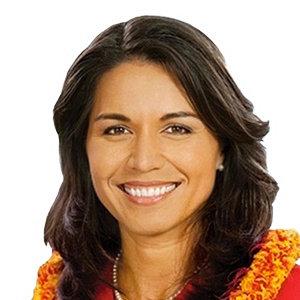
Rep. Tulsi Gabbard, D-Hawaii.
Far more important is that Gabbard, a 35-year-old Iraq War veteran, endorsed Sen. Bernie Sanders in the Democratic primaries because of his opposition to neocon/liberal-hawk military adventures. She starred in one of the strongest political ads of the campaign, a message to Hawaiians, called “The Cost of War.”
“Bernie Sanders voted against the Iraq War,” Gabbard says. “He understands the cost of war, that that cost is continued when our veterans come home. Bernie Sanders will defend our country and take the trillions of dollars that are spent on these interventionist, regime change, unnecessary wars and invest it here at home.”
In the ad, Gabbard threw down the gauntlet to the neocons and their liberal-hawk sidekicks, by accusing them of wasting trillions of dollars “on these interventionist, regime change, unnecessary wars.” Her comments mesh closely with Trump’s own perspective.
So, the surprise election results on Nov. 8 may have represented a “trading places” moment for the neocons and liberal hawks who were eagerly counting the days before the “weak” President Barack Obama would turn over the Commander-in-Chief job to former Secretary of State Clinton who had made clear that she shared their hawkish agenda of escalating the war in Syria and ratcheting up the New Cold War with Russia.
There was even speculation that one of Clinton’s neocon favorites within the State Department, Assistant Secretary of State for European Affairs Victoria Nuland, might be rewarded with State’s top job for her “regime change” in Ukraine that sparked the start of the New Cold War in 2014.
Nuland, the wife of arch-neocon Robert Kagan, sabotaged President Obama’s emerging strategy of collaborating with Russian President Vladimir Putin on sensitive global issues. In 2013-14, Putin helped orchestrate two of Obama’s brightest foreign policy successes: Syria’s surrender of its chemical weapons arsenal and Iran’s guarantee that it would not develop nuclear weapons.
But those agreements infuriated the neocons who favored escalating both crises into direct U.S. bombing campaigns aimed at Syria and Iran – in accordance with the desires of Israeli Prime Minister Benjamin Netanyahu and the Saudi monarchy. Yet. there was perhaps even greater alarm at what the next move of the Obama-Putin tag team might be: demanding that Israel finally get serious about a peace deal with the Palestinians.
So, the neocons took aim at Ukraine, which neocon National Endowment for Democracy President Carl Gershman identified as “the biggest prize” and an important stepping stone to an even bigger prize, a “regime change” in Moscow removing Putin.
While Gershman’s NED funded (with U.S. taxpayers’ money) scores of projects inside Ukraine, training anti-government activists and journalists, Nuland took the point as the key organizer of a putsch that removed elected President Viktor Yanukovych on Feb. 22, 2014, and replaced him with a fiercely anti-Russian regime.
Given the geopolitical sensitivity of Ukraine to Russia, including its naval base on the Crimean peninsula, Putin had little choice but to react, supporting a referendum in Crimea in which 96 percent of the voters favored leaving Ukraine and rejoining Russia – and assisting ethnic Russian rebels in the east who resisted the violent ouster of their president.
Of course, the mainstream Western news media presented these developments as simply a case of “Russian aggression” and a “Russian invasion.” And, faced with this new “group think,” Obama quickly abandoned his partner, Putin, and joined in the chorus of condemnations.
Nuland emerged as a new star inside the State Department, a hero of the New Cold War which was expected to funnel trillions of tax dollars into the Military-Industrial Complex.
Trump’s Heresy
But Trump surprisingly adopted the position that Obama shied away from, a recognition that Putin could be an important asset in resolving major international crises. The real-estate-mogul-turned-politician stuck to that “outside-the-mainstream” position despite fierce attacks from rival Republicans and Democratic presidential nominee Clinton, who even mocked him as Putin’s “puppet.”
After Trump’s upset victory on Nov. 8, many pundits assumed that Trump would fall back in line with Washington’s hawkish foreign-policy establishment by giving top jobs to neocons, such as former U.S. Ambassador to the United Nations John Bolton and ex-CIA Director James Woolsey, or Netanyahu favorites, such as former Republican presidential nominee Mitt Romney or ex-New York City Mayor Rudy Giuliani.
So far, however, Trump has followed a different course, more in line with the libertarian thinking of the Koch brothers – not only the more famous ones, Charles and David, but also their long-estranged brother William, who I’m told have become behind-the-scenes advisers to the President-elect.
Though Trump did offer high-profile meetings to the likes of Romney and Giuliani, he has yet to hand over any key foreign-policy job to the Republican neocon wing. His one major announcement in that area has been naming as National Security Advisor retired Gen. Michael Flynn, who led the Defense Intelligence Agency when it produced a prescient warning that U.S. policy in Syria would lead to the creation of an “Islamic State.”
Though Flynn is regarded as a hardliner in the fight against Islamic jihadist terror, he is seen as an independent thinker regarding how best to wage that war. For instance, Flynn has objected to the notion that drone strikes, i.e., killing off individual jihadists, is a route to success.
“We’ve tended to say, drop another bomb via a drone and put out a headline that ‘we killed Abu Bag of Doughnuts’ and it makes us all feel good for 24 hours,” Flynn said. “And you know what? It doesn’t matter. It just made them a martyr, it just created a new reason to fight us even harder.”
That leaves open the possibility that a President Trump might eschew the “whack-a-mole” approach that has bedeviled the “war on terror” and instead go after the “mole nest” – if you will – the Saudi monarchy that has long financed Islamic extremists both through the fundamentalist Wahhabi brand of Sunni Islam and by supplying money and weapons to jihadists dating back at least to the Afghan mujahedeen in the 1980s, the origin of modern Islamic terrorism.
Traditional U.S. politicians have recoiled from facing up to the hard reality that the Saudi monarchy is the real “terror central” because of Saudi Arabia’s enormous riches and influence, which is now enhanced by its quiet alliance with Israel in their joint campaign against the so-called “Shiite crescent,” from Iran through Syria to Lebanon’s Hezbollah.
Taking on this Saudi-Israel nexus has long been regarded as political suicide, given Israel’s extraordinary lobbying power and Saudi Arabia’s exceptional wealth. But Trump may be assembling a team that is “crazy” enough to take on that mission.
So, while the fight over the future of U.S. foreign policy is far from over – the neocons will surely flex their muscles at the major think tanks, on the op-ed pages and inside the halls of Congress – the Trump transition is showing some creativity in assembling a national security team that may go in a very different direction.
Much will become apparent in Trump’s choice of Secretary of State. If it’s someone like Sen. Rand Paul, R-Kentucky, or Rep. Gabbard or a libertarian from the Kochs’ world, that would be bad news for the neocons. If it’s someone like Romney, Giuliani, Bolton or Woolsey, then that will mean that President-elect Trump has blinked and the neocons can breathe a sigh of relief.
Investigative reporter Robert Parry broke many of the Iran-Contra stories for The Associated Press and Newsweek in the 1980s.
Bottling the Demon of Free Trade: Trumpism and Protectionism
By Binoy Kampmark | Dissident Voice | November 18, 2016
The election of Donald J. Trump on Tuesday, November 8 terrified many who consider themselves notionally progressive or traditional republicans. It also terrified free trade ideologues, and those who believe that opening borders to boundless consumer goods and services eradicates poverty.
There are few better exponents of this idea on trade than Australian Prime Minister Malcolm Turnbull, whose insistence that protectionism remains an evil to be combated has sounded pious. Keep the markets open, while shutting borders to people desperately seeking refuge. In other words, keep such monsters as the Trans-Pacific Partnership Agreement on the table for full implementation, while flouting the UN Refugee Convention.
This view is featherbedded by other leaders ahead of the Asia-Pacific Economic Cooperation group summit taking place in Peru, all insisting with numbing acceptance that free trade is as natural as breathing air, axiomatic to the smooth functioning of a global economic and financial system.
Peru’s President Pedro Pablo Kuczynski decided to make his opening address to the leaders of the summit a platform for his fears about how “protectionism” was “taking over” in the UK and the United States.
Rather than addressing the reasons for pro-protectionist movements, the glorious assumptions of free trade are presumed. “It is fundamental,” suggested Kuczynski, “that world trade grow again and that protectionism be defeated.” His solution was to make APEC the ultimate critic, rather than interrogator, of such movements.
Japan’s trade minister, Hiroshige Seko, was similarly inclined. “We agreed to push forward free trade to counter protectionist sentiments.” Rather than actually addressing the core shibboleths of free trade that have seen a spike of criticism of its tenets, Seko presumed it to be a non-starter as an argument.
Ditto his colleague in government, Foreign Minister Fumio Kishida. “It’s time for APEC to show a strong commitment to free trade and contribute to sustainable growth and prosperity in the Asia-Pacific region.”
It never has been, nor will it ever be, but the politics of trade and the enriching of the corporate classes at the expense of social and public policy (medicine, environment) has taken place along one axis, ignoring the effects and views on those it supposedly benefits.
In Trumpland, and the world of Brexit, these supposed beneficiaries have roared their disapproval. They look at their bank balances and see diminishing returns. They fear the cost of increasing medication. Others are concerned about environmental degradation. All are concerned by surrendering sovereignty through the death of a thousand cuts.
The nonsense of free trade as a magic pudding of delight and gifts has populated the thinking of economic establishments for decades, and has only received a good bashing in recent years. Studies have been produced on specific free-trade deals showing that the trade engaged in is never that free, and never that competitive. No matter – ideology manufactures the necessary blinkers for free traders to insist on the virtues of such arrangements.
Amidst such Trump promises as the building of a defiant wall to keep unruly Mexicans out of the land of the free, or withdrawing funding from sanctuary cities who shelter undocumented immigrants, lies a promise to those not associated with the neo-liberal traditionalists. The Trans-Pacific Partnership, he promised, would be scrapped.
Once Hillary Clinton’s campaign effectively pulled the rug of calculation from under rival Bernie Sanders’ campaign, Trump intensified focus on the TPP and the notion of the unfair trade deal that would fail to deliver for American workers.
The response was not purely populist – the problems of such a trade deal provide a neat illustration on how modern governments treat their citizens relative to corporations. Notorious for unprecedented levels of secrecy, the entire base for negotiating a deal intended to influence countries through the Asia-Pacific rejected the very idea of civil society.
The message, in other words, is simply not getting through, despite the election result. The patrician classes feel they know better. Bloomberg View columnist Mihir Sharma provides a typical view, preferring to see trade in its global context: American workers bemoaning their returns from free trade, along with critics from the left, ignore “the obvious benefits of trade for workers in poorer countries, and thus barely deserves to be called progressive.”
Take the big view, and the long road, insists Sharma. That road, however, has become a vaguer one, with President Barack Obama admitting on Wednesday in Athens that the effects of globalisation on those “who feel they’re losing control of their future” had to be dealt with.
Despite such a statement, the status-quo, at least till Trump thunders into the White House, remains, shining a light on free trade enthusiasts. This can be gathered from the joint opinion piece by Obama and German Chancellor Angela Merkel, published by the German daily Wirtschaftswoche: “Germans and Americans must seize the opportunity to shape globalization according to our values and ideas.” (Be wary of Chinese efforts to do the same, in other words.)
Furthermore, “We have an obligation to our companies and our citizens – in fact, to the entire global community – to broaden and deepen our cooperation.” The ease of universalising a local or national project is irresistible in such messages.
For Trump, this pompous assertion of universality needs to end. Be openly self-interested; keep things distinct to the American program. To make America great again may require bruising trade battles precisely done to preserve perceived values. If necessary, raise tariffs and toughen the stance on China’s currency policy. Many who voted for him will find such views hard to fault, whatever their tangible consequences.
Binoy Kampmark was a Commonwealth Scholar at Selwyn College, Cambridge. He lectures at RMIT University, Melbourne and can be reached at: bkampmark@gmail.com.
Russia set to break grisly stalemate in Syria
By M K Bhadrakumar | Indian Punchline | November 19, 2016
There are distinct signs that the discussion regarding the Syrian conflict between Russian President Vladimir Putin and the US President-elect Donald Trump last Monday has been a defining moment. At the very least, it creates a firewall against the present US administration of President Barack Obama creating new facts on the ground that vitiates the climate for US-Russian cooperation in Syria after Trump takes over.
The US Defence Secretary Ashton carter had openly stated a week ago that he’d advise the president-elect firmly against taking any cooperation from Russia in addressing the Syrian situation. On the contrary, the remarks in Beirut on Thursday by the Russian presidential envoy on the Middle East and Deputy Foreign Minister Mikhail Bogdanov suggest that there are contacts below the radar with Trump’s transition team. Bogdanov said:
- We are at an important turning point; a new team is coming in with president-elect Donald Trump. We are now already beginning contact with people who will likely assist the new president. We hope the outgoing and incoming administration will accept that without Russia it is impossible to solve the Syrian issue, we are ready for open dialogue.
It is highly significant that soon after Monday’s phone conversation, Russian jets have resumed bombing missions in Syria. Jets from the aircraft carrier Admiral Kuznetsov and ship-launched cruise missiles joined attacks on Idlib and Homs. On Thursday, long-range strategic bombers flew an 11,000 kilometre mission from bases in Russia to fire missiles at targets in Syria. Syrian jets have also operations against rebel targets in Aleppo.
Even as the Obama administration is reduced to a mute witness, a dramatic change in the US policy in Syria seems to be unfolding. To quote Prof Malcolm Chalmers, deputy director-general of Britain’s respected think tank, Royal United Services Institute, Trump’s “evident sympathy” for Vladimir Putin and his scepticism for America’s military alliances “cannot be assumed to be passing fancies”. (See a sensational report in Telegraph newspaper titled Downing Street warned to prepare for Donald Trump reversal on Syria and military support for the UK.)
Something of all this is most certainly emboldening Turkey to make a grab for the strategic northern Syrian city of Al-Bab, which aims at pre-empting any Kurdish enclave forming along Syria’s border with Turkey. The Syrian Kurds will be furious at the Turkish move, and they have been the US’ best allies so far in Syria. (Reuters )
Turkey’s intention is to break the backbone of the US-Kurdish alliance in northern Syria and pick up the pieces to put together a new Turkish-American paradigm by the time Trump takes office. By the way, retired Lt. Gen. Michael Flynn, a contender to be Trump’s national security advisor, has been a staunch backer of Turkish President Recep Erdogan’s government.
The Turkish offensive on Al-Bab cannot happen without a tacit Russian nod. Obviously, Turkey has reached out to [Russia] and Moscow is not standing in Erdogan’s way. Turkish Prime Minister Binali Yildirim is due to travel to Moscow for talks about Syria and deepening bilateral relations. A Voice of America commentary said on a sombre note, “Deepening ties with Moscow is leading to some of Turkey’s NATO allies starting to question where Ankara’s loyalties lie… Ankara’s diversifying of its relations coincides with severe, if not unprecedented, strains with its Western allies.”
“Ankara remains at loggerheads with Washington over the latter’s support of Syrian Kurdish forces and Turkey’s demand for the extradition of U.S.-based Turkish cleric Fethullah Gulen… Those ties could be further strained over rising speculation that Gulen could be allowed to leave the United States for a third country.”
“Another key anchor with the West, Turkey’s decades-long bid to join the European Union, is on the verge of being severed, with its effort facing collapse, amid mutual recriminations.”
Similarly, the Iraqi Shi’ite militia supported by Iran is making a bid to capture Tal Afar, some 60 kilometres to the west of Syria. Control of Tal Afar will facilitate a direct land route for Iran to Syria and to Lebanon. The capture of Tal Afar by the pro-Iranian militia will be a serious blow to Israel.
Where does Trump stand on Syria? Actually, there is remarkable consistency in Trump’s pronouncements on the Syrian conflict over a considerable period of time. Deutsche Welle put together ‘fragments of a blueprint’ for Trump’s ‘vision’ of the conflict. Read the revealing ‘fragments’ here.
Hillary Clinton, The Vote, and Contemporary Feminism’s Class Blindness
By Julian Vigo and Jasmine Curcio | CounterPunch | November 18, 2016
The recent electoral victory of Donald Trump over Hillary Clinton has led to a massive spewing of theatrics on social media whereby public “mourning” which verges on the sycophantic has given rise to a larger public momentum of mass neoliberal outrage as the surrogate for political activity. Even within feminist circles are the myriad Facebook groups devoted to discussing how Clinton was the arch-victim of misogyny, no mention of class politics or Clinton’s having turned her back on the mere mention of class. Now with the recent movement to utilise safety pins as a means to “indicate that the person wearing the pin is a safe person for those who might feel in danger, whether that’s due to their religion, nationality or other status,” we have fully entered into the age of absurdist politics whereby “safety” is demarcated through cheap political gimmickry and the real analysis of political failure is fobbed off by feminists as the inability of people to recognise the necessity of women’s political self-determination—or whatever that has come to mean nowadays.
Sarah Ditum in her recent piece, “Donald Trump has grabbed America by the pussy, and it’s women who will suffer,” writes, “Women do not “vote with our vaginas”, as a rule. Maybe it’s time we looked into that.” Likewise, Cosmopolitan has announced that the election result “is such a deeply felt insult to women across the United States,” and numerous other publications have insinuated the same: that Clinton’s loss somehow represents an “erasure” of women, with zero analysis as to how Clinton’s campaign failed to address class issues or, more poignantly, how class is directly related to issues of sex. Indeed, one must wonder if Ditum et al have even considered for a moment how women in Honduras, Haiti, Libya, Syria, Afghanistan, and Ukraine have been affected by her policies which lead to the murder and rapes of women throughout these regions after political instability was ensured by Clinton’s actions. Not negligible in this timeline is how Clinton utilised false claims of rape to overthrow Muammar Gaddafi or how Clinton refuses to address the coup in Honduras, instead naming it a “crisis” while assisting in the deposition of former Honduran President, Manuel Zelaya, which resulted in myriad documented rapes throughout the country.
If women must “vote with our vaginas” then, it would seem that the choice between two candidates where one grabs pussies while the other leaves them exposed to poverty, death, and rape, resulted in what would appear to be the least overtly violent figure. That is if you are not a white woman living outside the neoliberal dream of 401k or hedge fund accounts. To think that Trump could possibly have been the more class-conscious and feminist choice of the two might seem surreal to many, but the Realpolitik of this election demonstrates that Hillary Clinton was unable to mobilise support from the working class or women. As Lorna Garano notes: “One problem with the Bernie Bro myth: He had massive support from women. That’s because things like healthcare, education, and a liveable wage are women’s issues. You can’t eat symbolism.” Certainly, if the choice is down to women being targeted because of their vaginas and the assumption that they are unable to think beyond their anatomical parts, then women are truly, in all senses of the word, fucked. What seems to be missing from recent “feminist” analyses of political power is how class issues are most definitely women’s issues and it would seem that American women know this far better than liberal pundits. The larger question is how feminist analysis today might learn from this election rather than refract pussy politics onto all those “mindless, blondes” who voted for Trump.
Yet in spite of her extensive political record, not to mention her repeated choice to stand by Bill in the face of sexual assault allegations, Hillary Rodham Clinton was constructed by a vocal subset of liberal feminists as a quasi-divine figure incapable of (serious) wrongdoing, whose election as President would in an instant vindicate the struggles of our mothers and grandmothers, delegitimize all misogynist representations, liberate women from the lack of confidence we have accumulated over the course of our lives, and, to top it off, would smash the ultimate glass ceiling. A woman, leading the free world!
If this iteration of the culturally-overplayed narrative of fulfilling every girl’s dream of a female president seems too good to be true, it probably is. But dreams themselves are ultimately anchored to material situations – those who allocute the needs of females via mainstream media outlets are often blindsided by their own history, socialisation, and material wealth, universalising their particular interests in projecting them onto all women. Not coincidentally, the persistence, enunciated by many feminists today, that Clinton represents the best interests of females is driven by a uniquely Western perspective whereby these interests adopt a myopic aperture, relegating all that is important to female lives as restricted within a very narrow set of political and economic paradigms. Namely the needs of a neoliberal class of women for whom pussy politics is a luxury because money has allowed this brand of feminism to advance in an eerily similar trajectory to the Clintonian mandate whereby class is elided in favour of a happy feminism where those pesky, depressing issues of paying rent, bus fare, and groceries need not be on the table. Glass ceilings sound far more appealing and empowering by comparison.
But what would a Clinton presidency concretely offer women? This question was answered with the supercilious assumption that the “benefits” to women – whatever they were – would trickle down to the most vulnerable and disadvantaged, in a fashion reminiscent of Ronald Reagan’s economic plan for the masses. That if we let the privileged women at the top chase money and power, they, grateful for the opportunity, would commence giving a hand up to all women below. Given the US’s position as imperialist superpower, this was imagined to take place on a global scale. Aside from being dangerously close to essentialism, this assumption relies on a notion of there existing an organic feminist consciousness arising crudely and simply out of the fact of being a woman, able to manifest itself irrespective of pre-existing political commitments, policies or party lines. It ultimately condescends to all women by downplaying their intelligence and political acumen whilst inviting them to participate in a political arena curtailed by a predetermined narrative and naked class interests, telling them that the only way they could make a real impact on the world is, in fact, by voting with their vagina.
This sort of feminist politics is not new and is reminiscent of an earlier moralisation where the feminist movement was largely composed of middle and lower-class women who coalesced their power within the temperance movement, seeking political gains at the ends of moralist and pragmatic interventions. Where these first wave feminists advocated the development of moral integrity and exemplarity, Clinton’s politics represent anything but.
Feminist history, in particular the suffragist movement of the first wave and the image of hunger-striking suffragettes sacrificing for future generations of women, was cleverly utilised by the Clinton campaign to coalesce sentiment around the idea that Hillary was a direct successor of this tradition and that her presidency would represent an achievement of the same nature, a sort of capstone on the suffragist achievement. And the vote our foremothers gave us would have made it all possible. The campaign’s manifest ignorance of the political history of the first wave, in advancing a warmonger as representative of a staunch anti-war tradition, is embarrassing at best. First wave feminists emphasised the cultivation of female responsibility and the importance of moral character development via engagement with the wider world denied them, in opposition to the prevailing Victorian cultural worship of the “angel in the house” curtailed by her inferior feminine, childlike capacities, foreclosed from the ethical and political dimensions of truly-human experience and left to exercise her feminine wiles to procure anything she needed. How Clinton herself signified continuity with this tradition remains a mystery; if one is to go about the business of idealising a human figure, one would think that this process would first of all entail that they, at the very least, embody some noteworthy ethical characteristics or political principles. The cognitive dissonance in deifying a war criminal did not seem to diminish but further strengthened the desperate exhortation to women to simply believe (in Her). The Hillary campaign’s conviction that the suffragists’ work, ceaselessly campaigning throughout three generations for voting rights and just barely scraping forth that achievement for themselves, was ultimately carried out in order to execute a neoliberal program entirely antithetical to their values and aims, displays a deep hubris which verges on betrayal.
Alternatively, if those first wave principles so happen to trouble you by obstructing Hillary worship, you can reassure yourself in shooting the whole thing down. Sarah Churchwell devotes space in a recent Guardian article to the cultural examination of the female-president fantasy, in which she writes off the fundamental values of the first wave as a naive belief that “idealised women should cleanse American politics with their purity.” Purity, in the first wave lexicon, didn’t signify what we now come to know as moral puritanism, let alone the sexist double standard. A simple assessment of the meaning of the colours of the suffragist flag tells us the following: white symbolised “purity in public as well as private life, purple for dignity and self-respect and green for hope and new life”. A crucial conceptual distinction is made here that severs dignity and sexual “honour” from female ethical conduct in such a fashion that posits women, for the first time in history, as political beings to be judged by their principles. As for the crusade to clean up politics with the mop of feminine values, it is useful to remember that in campaigning for their en masse entry into political life by winning the vote, women had to put forth a pressing reason why their political contribution would be valuable, and strategically made use of the reasons for their exclusion – pacifism, maternal qualities – by transforming them into arguments for inclusion. You can only fight with what you’ve got, after all. It is similarly mistaken to directly equate negative representations of a female president in American literature with antipathy toward the idea as such; judging by the passages Churchwell has quoted it is apparent that a female presidency was used as a narrative device to make a general statement about women. Tales of women leaving the presidency behind for (grand)motherhood, displaying the monstrous, “masculine” characteristics of a human subject while in office, or admitting they fundamentally need men under the guise of mating with the last man alive, reflect misogynist male anxieties toward women in general. Churchwell nevertheless maintains that it is Americans’ deeply seated cultural fear of a female president that pushed a Trump victory. But if this line of argument fails to convince as to why Hillary Clinton was cheated out of the presidency she deserved, you can always cry conspiracy.
The amount of feminist energies poured into the Clinton campaign raises further questions on what the vote still means today for feminism. The idea that the vote empowered American women to definitively “choose” their liberation, as if an either-or dilemma, at the ballot box in 2016 seems fatuous. The narrative upheld by Hillary supporters with regard to the vote’s place as the lever that would lift her into the presidency, is surrounded by the politics of affect and the vote’s importance to feminism has been elevated to such an extreme level that it may not ultimately deserve. Again they neglect to take feminist history into account. The late Shulamith Firestone, author of The Dialectic of Sex: The Case for Feminist Revolution (1970) and founding figure of second wave Anglo-American feminism, evaluated the trajectory of the first wave as a foundation upon which to rebuild a movement for women’s liberation. She was not prone to nostalgic idealism about the vote, which she saw as a political failure, not a victory, in the long run. In The Dialectic of Sex she writes:
The granting of the vote to the suffrage movement killed the W.R.M. [Women’s Rights Movement]. Though the anti-feminist forces appeared to give in, they did so in name only. They never lost. By the time the vote was granted, the long channeling of feminist energies into the limited goal of suffrage – seen initially as only one step to political power – had thoroughly depleted the W.R.M. The monster Ballot had swallowed everything else … The women who later joined the feminist movement to work for the single issue of the vote had never had time to develop a broader consciousness: by then they had forgotten what the vote was for. The opposition had had its way (22).
And in Notes from the First Year, published by New York Radical Women in 1969:
For what is the vote worth finally if the voter is manipulated? Every husband knows he’s not losing a vote, but gaining one. Today, some 50 years later, women still vote as wives, just as they govern as wives.
Despite the major flaw in her feminist analysis, of adducing women’s oppression solely on the basis of a fundamental biological capacity for childbirth, Firestone came from a strong left tradition which informed her feminism. Unlike her more liberal contemporaries such as Kate Millett, economic class was woven into the very fabric of her radical feminist analysis. In the chapter of The Dialectic of Sex on childhood, Firestone notes that bourgeois women and children possessed an economic patronage which partially offset their oppression. Theirs was a “privileged slavery”. This is a far cry from contemporary intersectional analyses which displace class not only as a separate axis from other oppressions (which suddenly becomes relevant when we have poor people to feel sorry for), but as a concept itself that would inform theoretical understandings of oppression and remove the need for a problem-solving legal theory concerned with the topography of the individual.
What intersectional feminism does for the bourgeois female subject today, Reaganomics did for the economic elite of the 1980s who were made to believe that by paying virtually no taxes, they were helping the poor. And such tactics work as long as everyone is complicit in keeping the fantasy alive. The recent Twitter storms and Facebook debates rage on as alleged feminists have, over the past week, made the claim that by disagreeing with Clinton’s policies one is necessarily giving a tacit nod to Trump, or that in critiquing the use of safety pins as meaningful political resistance one is “mock[ing] people who are scared.” The reality on the ground is that all Trump’s victory has accomplished, thus far, is that white liberals—both male and female—are living out a theatre of “fright” which speaks more to their own inability to read public sentiment about the economy and the reality of pre-existing and current racial politics in the United States. Meanwhile, the most cogent critique of both the Trump victory and white neoliberal reactions to the election was beautifully presented by David Chappelle and Chris Rock on Saturday Night Live as they made fun of this demographic’s shock over their “nightmare scenario,” Clinton’s “power grab” of three electoral votes in Vermont, and finally, the enunciation which causes both men to burst out into laughter: “This is the most shameful thing America has ever done!”
So, when the likes of J.K. Rowling can boast so gleefully about their social position and wealth, it is clear that feminism is heading towards an impasse where its own aversion to class politics will be its own undoing. Just as many feminists have bravely fought against the onslaught of identity politics demanding a historical materialist analysis of of the political landscape, feminism risks forming a new niche of identity politics given its inability to recognise class as central to contemporary life and its concomitant nexus to race and sex.
The 2016 presidential election has indeed been historic. If all the Hillary campaign was capable of offering the masses at the end of the day was symbolic value, it was therefore necessary to reconfigure the election as a contest of symbols, each candidate representing a set of values. Yet these values were anchored in identity divorced from political economy, which turned the Hillary campaign’s omission into the Trump campaign’s relevance. The discourse of this election demonstrates that, under late capitalism, representative democracy is in crisis: when “politics” is administrative assent to a neoliberal end-of-history consensus, identity becomes the primary ground of contestation, substantially transforming the previous meaning of political representation.
Ultimately, the election result has demonstrated that the majority of women have found the liberal feminist program of self-empowerment wanting. Lesser-evilism won the day, not positive support. We were sold a fabricated choice: between the Clinton campaign’s individualist ethos and false political narrative that warned of the horror show of trauma that would befall women if they didn’t vote for her, and the Trump campaign that catalysed the masses through misogynist and racist rhetoric—while also paying some attention to working class concerns. Criticism is forbidden. Left-liberal rhetoric instead implores us to trust the science of intersections stating that the white female establishment politician knows best and any opposition are just unenlightened pussy-grabbing fascists. The feminist fight for liberation has been sidelined into pussy politics.
Julian Vigo is a scholar, film-maker and human rights consultant. She can be reached at: julian.vigo@gmail.com. Jasmine Curcio is a materialist feminist writer and activist living in Melbourne, Australia.
McCain warns Trump over ‘resetting’ ties with Russia
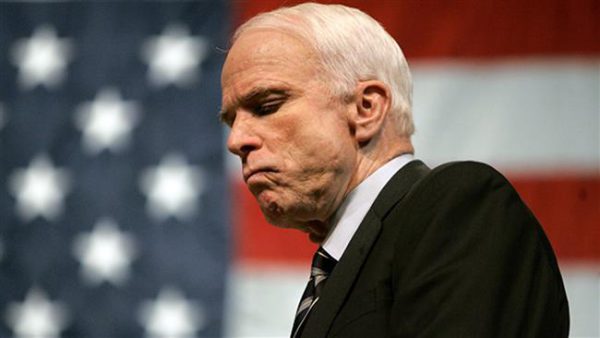
Press TV – November 16, 2016
Senior US Senator John McCain has advised President-elect Donald Trump against putting “faith” in Moscow’s desire to improve relations with Washington, accusing Russian President Vladimir Putin of “tyranny” and “murder.”
Speaking after the first phone conversation between Trump and Putin, McCain said Tuesday that the Russian head of state was not to be trusted.
“With the US presidential transition underway, Vladimir Putin has said in recent days that he wants to improve relations with the United States,” the Republican senator of Arizona said in a statement.
“We should place as much faith in such statements as any other made by a former KGB agent who has plunged his country into tyranny, murdered his political opponents, invaded his neighbors, threatened America’s allies, and attempted to undermine America’s elections.”
The head of the Senate Armed Services Committee said “resetting” ties with Moscow would be too costly for Washington.
McCain’s comments were aimed at preventing Trump from following one of his most important campaign pledges, which included cooperation with Russia to solve mutual differences between the two sides.
At least that was what the Republican president-elect discussed with Putin during their phone call on Monday, according to Moscow.
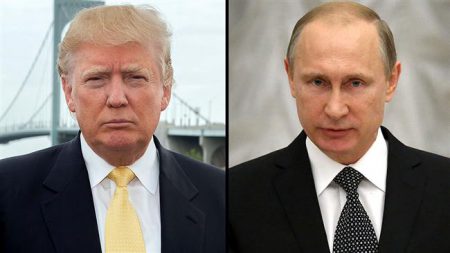
According to a statement released by the Kremlin, America’s 45th president discussed with his Russian counterpart the importance of “normalizing” ties between Moscow and Washington.
Both Putin and Trump had acknowledged “the extremely unsatisfactory state of Russian-US relations at present” and “declared the need for active joint work to normalize them.”
During the conversation, the Russian president also voiced his preparedness to “create a dialogue of partnership with the new administration on the basis of equality, mutual respect and non-intervention in each other’s domestic affairs.”
McCain did not look favorably to the contents of the discussion, warning in his statement that outgoing President Barack Obama’s plans to reduce tensions with Russia did not work either.
“The Obama Administration’s last attempt at resetting relations with Russia culminated in Putin’s invasion of Ukraine and military intervention in the Middle East,” the 2008 Republican presidential nominee alleged.
Long before Trump’s election on November 8, Putin had made it clear that his government was willing to work with the next US president regardless of the vote’s outcome.
Break Up the Democratic Party: It’s Time for the Clintons and Rubin to Go – and Soros Too

Photo – Joshua Roberts, Reuters
By Michael Hudson | CounterPunch | November 15, 2016
In the week leading up to last Tuesday’s election the press was busy writing obituaries for the Republican Party. This continued even after Donald Trump’s “surprising” victory – which, like the 2008 bank-fraud crash, “nobody could have expected.” The pretense is that Trump saw what no other politician saw: that the economy has not recovered since 2008.
Democrats still seem amazed that voters are more concerned about economic conditions and resentment against Wall Street (no bankers jailed, few junk mortgages written down). It is a sign of their wrong path that party strategists are holding on to the same identity politics they have used since the 1960s to divide Americans into hyphenated special-interest groups.
Obviously, the bottom 95 Percent realize that their incomes and net worth have declined, not recovered. National Income and Federal Reserve statistics show that all growth has accrued to just 5 percent of the population. Hillary is said to have spent $1 billion on polling, TV advertising and high-salaried staff members, but managed not to foresee the political reaction to this polarization. She and her coterie ignored economic policy as soon as Bernie was shoved out of the way and his followers all but told to join a third party. Her campaign speech tried to convince voters that they were better off than they were eight years ago. They knew better!
So the question now is whether Donald Trump will really be a maverick and shake up the Republican Party. There seems to be a fight going on for Donald’s soul – or at least the personnel he appoints to his cabinet. Thursday and Friday saw corporate lobbyists in the Republican leadership love-bombing him like the Moonies or Hari Krishna cults welcoming a new potential recruit. Will he simply surrender now and pass on the real work of government to the Republican apparatchiks?
The stock market thinks so! On Wednesday it soared almost by 300 points, and repeated this gain on Thursday, setting a DJIA record! Pharmaceuticals are way up, as higher drug prices loom for Medicaid and Medicare. Stocks of the pipelines and major environmental polluters are soaring, from oil and gas to coal, mining and forestry, expecting U.S. environmental leadership to be as dead under Trump as it was under Obama and his push for the TPP and TTIP (with its fines for any government daring to impose standards that cost these companies money). On the bright side, these “trade” agreements to enable corporations to block public laws protecting the environment, consumers and society at large are now presumably dead.
For now, personalities are policy. A problem with this is that anyone who runs for president is in it partly for applause. That was Carter’s weak point, leading him to cave in to Democratic apparatchiks in 1974. It looks like Trump may be similarly susceptible. He wants to be loved, and the Republican lobbyists are offering plenty of applause if only he will turn to them and break his campaign promises in the way that Obama did in 2008. It would undo his hope to be a great president and champion of the working class that was his image leading up to November 8.
The fight for the Democratic Party’s future (dare I say “soul”?)
In her Wednesday morning post mortem speech, Hillary made a bizarre request for young people (especially young women) to become politically active as Democrats after her own model. What made this so strange is that the Democratic National Committee has done everything it can to discourage millennials from running. There are few young candidates – except for corporate and Wall Street Republicans running as Blue Dog Democrats. The left has not been welcome in the party for a decade – unless it confines itself only to rhetoric and demagogy, not actual content. For Hillary’s DNC coterie the problem with millennials is that they are not shills for Wall Street. The treatment of Bernie Sanders is exemplary. The DNC threw down the gauntlet.
Instead of a love fest within the Democratic Party’s ranks, the blame game is burning. The Democrats raised a reported $182 million dollars running up to the election. But when Russ Feingold in Wisconsin and other candidates in Michigan, Minnesota and Pennsylvania asked for help, Hillary monopolized it all for TV ads, leaving these candidates in the lurch. The election seemed to be all about her, about personality and identity politics, not about the economic issues paramount in most voters’ minds.
Six months ago the polls showed her $1 billion spent on data polling, TV ads and immense staff of sycophants to have been a vast exercise in GIGO. From May to June the Democratic National Committee (DNC) saw polls showing Bernie Sanders beating Trump, but Hillary losing. Did the Democratic leadership really prefer to lose with Hillary than win behind him and his social democratic reformers.
Hillary doesn’t learn. Over the weekend she claimed that her analysis showed that FBI director Comey’s reports “rais[ing] doubts that were groundless, baseless,” stopped her momentum. This was on a par with the New York Times analysis that had showed her with an 84 percent probability of winning last Tuesday. She still hasn’t admitted that her analysis was inaccurate.
What is the Democratic Party’s former constituency of labor and progressive reformers to do? Are they to stand by and let the party be captured in Hillary’s wake by Robert Rubin’s Goldman Sachs-Citigroup gang that backed her and Obama?
If the party is to be recaptured, now is the moment to move. The 2016 election sounded the death knell for the identity politics. Its aim was to persuade voters not to think of their identity in economic terms, but to think of themselves as women or as racial and ethnic groups first and foremost, not as having common economic interests. This strategy to distract voters from economic policies has obviously failed.
It did not work with women. In Florida, only 51 percent of white women are estimated to have voted for Hillary. It didn’t even work very well in ethnic Hispanic precincts. They too were more concerned about their own job opportunities.
The ethnic card did work with many black voters (although not so strongly; fewer blacks voted for Hillary than had showed up for Obama). Under the Obama administration for the past eight years, blacks have done worse in terms of income and net worth than any other grouping, according to the Federal Reserve Board’s statistics. But black voters were distracted from their economic interests by the Democrats’ ethnic-identity politics.
This election showed that voters have a sense of when they’re being lied to. After eight years of Obama’s demagogy, pretending to support the people but delivering his constituency to his financial backers on Wall Street. “Identity politics” has given way to the stronger force of economic distress. Mobilizing identity politics behind a Wall Street program will no longer work.
If we are indeed experiencing a revival of economic class consciousness, who should lead the fight to clean up the Democratic Party Wall Street leadership? Will it be the Wall Street wing, or can Bernie and perhaps Elizabeth Warren make their move?
There is only one way to rescue the Democrats from the Clintons and Rubin’s gang. That is to save the Democratic Party from being tarred irreversibly as the party of Wall Street and neocon brinkmanship. It is necessary to tell the Clintons and the Rubin gang from Wall Street to leave now. And take Evan Bayh with them.
The danger of not taking this opportunity to clean out the party now
The Democratic Party can save itself only by focusing on economic issues – in a way that reverses its neoliberal stance under Obama, and indeed going back to Bill Clinton’s pro-Wall Street administration. The Democrats need to do what Britain’s Labour Party did by cleaning out Tony Blair’s Thatcherites. As Paul Craig Roberts wrote over the weekend: “Change cannot occur if the displaced ruling class is left intact after a revolution against them. We have proof of this throughout South America. Every revolution by the indigenous people has left unmolested the Spanish ruling class, and every revolution has been overthrown by collusion between the ruling class and Washington.”[1] Otherwise the Democrats will be left as an empty shell.
Now is the time for Bernie Sanders, Elizabeth Warren and the few other progressives who have not been kept out of office by the DNC to make their move and appoint their own nominees to the DNC. If they fail, the Democratic Party is dead.
An indication of how hard the present Democratic Party leadership will fight against this change of allegiance is reflected in their long fight against Bernie Sanders and other progressives going back to Dennis Kucinich. The past five days of MoveOn demonstrations sponsored by Hillary’s backer George Soros may be an attempt to preempt the expected push by Bernie’s supporters, by backing Howard Dean for head of the DNC while organizing groups to be called on for what may be an American “Maidan Spring.”
Perhaps some leading Democrats preferred to lose with their Wall Street candidate Hillary than win with a reformer who would have edged them out of their right-wing positions. But the main problem was hubris. Hillary’s coterie thought they could make their own reality. They believed that hundreds of millions of dollars of TV and other advertising could sway voters. But eight years of Obama’s rescue of Wall Street instead of the economy was enough for most voters to see how deceptive his promises had been. And they distrusted Hillary’s pretended embrace of Bernie’s opposition to TPP.
The Rust Belt swing states that shifted away from backing Obama for the last two terms are not racist states. They voted for Obama twice, after all. But seeing his support for Wall Street, they had lost faith in her credibility – and were won by Bernie in his primaries against Hillary.
Donald Trump is thus Obama’s legacy. Last week’s vote was a backlash. Hillary thought that getting Barack and Michelle Obama to campaign as her surrogates would help, but it turned out to be the kiss of death. Obama egged her on by urging voters to “save his legacy” by supporting her as his Third Term. But voters did not want his legacy of giveaways to the banks, the pharmaceutical and health-insurance monopolies.
Most of all, it was Hillary’s asking voters to ignore her economic loyalty to Wall Street simply to elect a woman, and her McCarthy-like accusations that Trump was “Putin’s candidate” (duly echoed by Paul Krugman). On Wednesday, Obama’s former Ambassador to Russia, Michael McFaul tweeted that “Putin intervened in our elections and succeeded.” It was as if the Republicans and even the FBI were a kind of fifth column for the KGB. Her receptiveness to cutting back Social Security and steering wage withholding into the stock market did not help – especially her hedge fund campaign contributors. Compulsory health-insurance fees continue to rise for healthy young people as the main profit center that Obamacare has offered the health-insurance monopoly.
The anti-Trump rallies mobilized by George Soros and MoveOn look like a preemptive attempt to capture the potential socialist left for the old Clinton divide-and-conquer strategy. The group was defeated five years ago when it tried to capture Occupy Wall Street to make it part of the Democratic Party. It’s attempt to make a comeback right now should be heard as an urgent call to Bernie’s supporters and other “real” Democrats that they need to create an alternative pretty quickly so as not to let “socialism” be captured by the Soros and his apparatchiks carried over from the Clinton campaign.
Notes.
[1] Paul Craig Roberts, “The Anti-Trump Protesters Are Tools of the Oligarchy,” November 11, 2016.
Michael Hudson’s new book, Killing the Host is published in e-format by CounterPunch Books and in print by Islet. He can be reached via his website, mh@michael-hudson.com
‘Trump effect’ divides European opinion
By M K Bhadrakumar | Indian Punchline | November 14, 2016
The results of the two presidential elections held on Sunday in Bulgaria and Moldova underscore the winds of change blowing over the western edges of Eurasia. To an extent they can be called the early signs of the ‘Trump effect’. In both elections, ‘pro-Russian’ candidates won convincingly. (here and here)
In both cases, the contestation essentially boiled down to whether Bulgaria and Moldova would be better off casting their lot with the European Union or whether they need to realign with Russia. The answer is clear.
The open-ended quest for EU membership no longer holds attraction for Moldova, whereas, Bulgaria appears to be disheartened with its EU membership. On the other hand, Russia is real and it is next-door. The election results yesterday constitute a blow to the EU’s prestige. Indeed, Moscow’s influence is spreading in Eastern Europe.
This is also a swing to the Left in political terms. There is much discontent with ‘reforms’, rampant corruption, etc. in both countries. The Russophile sentiment is very substantial, and there is eagerness to boost trade with Russia to overcome economic difficulties. Also, the local partisans of the West and EU stand discredited in both countries.
In Moldova, only around 30% of population find EU attractive, while 44% would support their country joining the Moscow-led Eurasian Economic Union. Curiously, 66% of Moldovans trust Vladimir Putin; in comparison, only 22% place trust in Barack Obama’s words.
Against the backdrop of the election victory of Donald Trump in the US, how these trends are going to play out will be interesting to watch. Bulgaria’s president-elect Rumen Radev has called for an end to the EU sanctions against Russia. He argues that Sofia should be pragmatic in its approach to Russia’s annexation of Crimea. (This is notwithstanding Bulgaria’s long history of divided loyalties between Russia and Europe.)
The Obama administration in its lame duck phase will endeavour to pressure the EU to extend the sanctions against Russia for yet another 6-month period beyond December. But will Trump follow Obama’s footfalls when the issue crops up again toward the middle of next year? He is unlikely to show Obama’s messianic zeal to ‘contain’ Russia. That is how the EU consensus on sanctions against Russia can break down because many countries in Europe resent the American pressure and prefer to restore trade and economic ties with Russia.
Interestingly, Trump may get resonance in Old Europe as well. The Labour leader in Britain, Jeremy Corbyn made a stunning call in the weekend for Western leaders to ‘demilitarize’ the border between Eastern Europe and Russia or risk a New Cold War. He said the West didn’t have to pile up forces on Russia’s border. Corbyn told the BBC:
I have many, many criticisms of Putin, of the human rights abuses in Russia, of the militarisation of society. But I do think there has to be a process that we try –demilitarise the border between what are now the NATO states and Russia, so that we drive apart those forces and keep them further apart in order to bring about some kind of accommodation. We can’t descend into a new Cold War.
Corbyn also made a thoughtful suggestion that that the Organisation for Security and Co-operation in Europe, which includes Russia, could replace NATO as a forum for solving issues in the region.
Indeed, some churning has already begun regarding European security even before Trump takes over in the Oval Office. By the way, Czech Prime Minister Bohuslav Sobotka said on Sunday that American statements about possible deployment of a U.S. global missile shield’s radar in the Czech Republic are pure fiction.
He said, “A radar in the Czech territory would mean further escalation in relations with Russia. We need to use the window opening after Donald Trump’s election to have the United States and Russia sit down at one table.” Sobotka pointed out that Eastern Europe’s main security problem today is about putting an end to the war in Syria.
“The United States has considerable influence on the situation in Syria, Russia has considerable influence. So, it is necessary to use this,” he said, adding that Donald Trump can establish more efficient cooperation with Russia on Syria.
However, the fact of the matter is that neither has Trump taken his position yet on NATO nor is it going to be easy for him to seek a separation for America from the western alliance. Simply put, Europe is not ready for a post-NATO future. There is palpable fear in many quarters (both in the US and in Europe) that if the US were to withdraw from Europe, Russia would advance and exercise more assertive behaviour in Eastern Europe.
In an article in the weekend, NATO secretary-general Jens Stoltenberg made an impassioned appeal to Trump that now is not the time for the US to abandon NATO. He pointedly invoked the threat perceptions from “a more assertive” Russia. Read the opinion piece here.
The bottom line is that European opinion stands divided. Britain, France and Hungary refused to attend a contentious EU ministerial meeting last night in Brussels, backed by Germany, to align the bloc’s approach to Trump’s election. The rift within the EU on the US vote stands exposed. The irrepressible British Foreign Secretary Boris Johnson has publicly chided EU politicians to end their ‘whinge-o-rama’ over Trump. (Daily Mail )
Interestingly, the first politician from abroad whom Trump met after the election has been Nigel Farage, the populist Brexit campaigner.
Featured Video
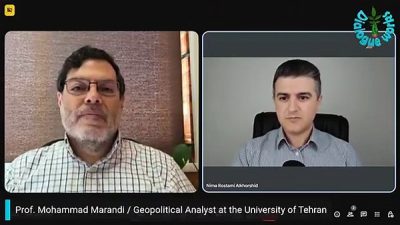
Seyed M. Marandi: U.S. Military DIVIDED? Iran’s Secret Defense EXPOSED
or go to
Aletho News Archives – Video-Images
From the Archives
‘Israel sees Iran as obstacle to its policies’
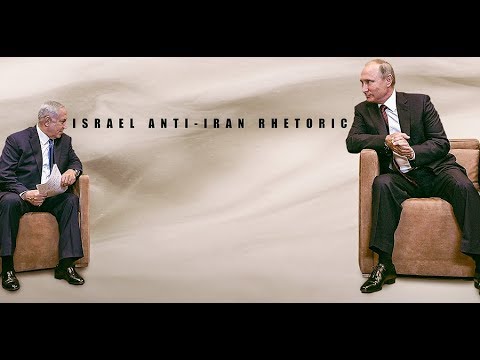
Press TV – August 25, 2017
Prime Minister Benjamin Netanyahu has said that Israel felt threatened by Iran’s growing influence in the Middle East. Netanyahu expressed his Iranophobic view in a meeting with Russian President Vladimir Putin in Russia’s Black Sea resort of Sochi on Wednesday. Press TV has asked Scott Rickard, former American intelligence linguist from Tampa, Florida, and Brent Budowsky, a columnist at The Hill from Washington, to give their thoughts on the issue.
Rickard said Tel Aviv is concerned about the fact that the regime could not carry out its old project to spread sectarian divisions and pave the way for dismemberment of the countries in the Middle East region because of the Iranian-led resistance against Israeli policies, not only in the occupied territories of Palestine but also in the whole region.
“Iran is not a threat to Israel whatsoever. The threat that Israel sees is the fact that their Oded Yinon Plan is being put to a hold by Iran,” the intelligence linguist said on Thursday night.
“They (the Israelis) look at Iran as a threat only because they have no influence on their governments and Iran is autonomous and is not under the Zionist influence,” he added.
Since the victory of the Islamic Republic of Iran in 1979, Tehran has been critical of Israel’s policies in the region, whereas “no leaders [of other states] even dared to speak out against Zionism,” Rickard argued. … continue
Blog Roll
 Aletho News
- Sri Lanka secures supplies of Russia oil – minister
- Nations across Asia strike direct deals with Iran for Hormuz passage
- IRGC commander declares ‘new phase’ of reprisal attacks against aggressors
- Israel’s air defenses overwhelmed by cluster-warhead Iranian missiles: Reports
- Striking Iran’s Infrastructure Would Have Little Military Impact – Report
- What’s Behind U.S./Israeli Strikes On Iranian Pistachio Factories?
- Seyed M. Marandi: U.S. Military DIVIDED? Iran’s Secret Defense EXPOSED
- How I fell foul of the BBC thought police
- The End of NATO
- 37 days of war on Iran cost US staggering $42bln, tracker shows
- If Americans Knew
- Trump says Iranians appreciate bombs, WHO warns of nuclear risks – Daily Update
- U.N. experts demand Israel release prominent Gaza doctor after reports of ‘severe torture’
- Israel’s Latest Genocide Is Against the Shias of Lebanon. Why Is the World Silent?
- How Eliot Cohen’s influence over U.S. war-making paved the way for Trump’s war crimes in Iran
- Israelis don’t pay for the weapons we ‘sell’ to them — US taxpayers do
- While Distancing from AIPAC, Most 2028 Democratic Hopefuls Are Still Embracing Israel
- A brief history of the Israeli nuclear program, the open secret at the heart of the Iran war
- Israeli Settlers Killed a Palestinian Farmer on His Own Land, in Front of His Father. Yes, Again
- The US-Israeli War on Science is an Assault on our Future
- 100+ International Law Experts Say US Strikes on Iran Violate UN Charter, Could Be War Crimes
- No Tricks Zone
- An Inconvenient Tree: Uncovered In Alps… Europe Much Warmer Than Today 6000 Years Ago
- New Study Reports A 60% Slowdown In Greenland’s Ice Loss Rate In The Last Decade
- Low Intensity Tornado Wrecks Major Solar Farm, Creating A Potential Toxic Dump
- New Study Finds Warming Saves Lives…Cold Temperatures 12 Times More Deadly Than Excess Heat
- German Science Blog Accuses PIK Climate Institute Of Hallucinating Climate Tipping Points
- Devastating Assessment Of Comirnaty Vaccine By Former Senior Pfizer Europe Toxicologist
- New Study: CO2 Is ‘Effectively Negligible’ As An Explanatory Climate Change Factor Since 2000
- Former Pfizer Toxicologist Dr. Helmut Sterz Tells Bundestag Hearing Pfizer Vaccine Should Have Never Been Approved
- Energy Expert: Germany’s Nuclear Phaseout Was A “500 Billion Euro Mistake”
- New Research: South Australia’s Mid-Holocene Sea Surface Temperatures Were 4°C Warmer Than Today
 Aletho News