New Book Details US Attempts to Topple Correa

Cover of Ecaudor in the Sights: The Wikileaks Revelations and the Conspiracy Against the Government of Rafael Correa | Photo: El Telegrafo
teleSUR | February 2017
In his new book, “Ecuador In the Sights: The WikiLeaks Revelations and the Conspiracy Against the Government of Rafael Correa,” released this week in Quito, Norwegian journalist Eirik Vold details attempts by the U.S. government to topple Ecuadorean President Rafael Correa and derail his Citizens’ Revolution.
“Correa was not about to let Washington maintain its dominance through financial institutions like the World Bank and the International Monetary Fund,” Vold told the Andes press agency in explaining the motivation behind years of U.S. efforts to undermine the Ecuadorean president.
The book is largely based on the “Cablegate” documents released by WikiLeaks in 2010, including thousands of secret documents sent from the U.S. Embassy in Quito and the U.S. consulate in Guayaquil.
“There is direct U.S. interference in Ecuador,” Vold told El Telegrafo, adding that “documents show a close relationship between several figures of Ecuadorean political life, the financial sector, and the United States Embassy.”
In the book, Vold outlines how the U.S. looked to thwart Correa from the very beginning, trying to directly prevent his election out of fear of losing the U.S. military base in Manta, the base of CIA operations in the region, as well as control over the U.S. oil company Occidental Petroleum Corp.
After his 2006 election, Correa nationalized the oil company and closed the U.S. base in Manta.
Vold says his book documents multiple attempts by the U.S. to sabotage UNASUR — the regional cooperation body founded in 2007 by progressive governments in Latin America — as well as extensive contacts between the U.S. Embassy and members of the national police force before an attempted 2010 coup, known as 30S.
In 2015, 22 police officers were found guilty of insubordination for their role in the failed coup.
Vold also claims the secret cables identify multiple NGO, media, finance, and political contacts which the U.S. embassy used to attempt to destabilize Correa’s government.
One of those Vold names is current vice presidential candidate Andres Paez. Paez, formerly the president of the left-wing Left Democracy Party, is now running on the right-wing CREO ticket along with former banker Guillermo Lasso.
“The U.S. says in a document he is one of our most trusted contacts. In other documents, it is pointed out that he was considered an ally for imposing free trade agreements, and it is evident that he had meetings at the United States Embassy.”
The Norwegian journalist, who has written extensively about U.S. involvement in Latin America, including a book about Hugo Chavez’s Bolivarian Revolution, said that Ecuador is of particular importance due to its efforts to protect WikiLeaks founder Julian Assange from U.S. persecution, ensuring its role as a “protector of the right to information for the whole planet.”
“We’re talking about a region with the world’s greatest concentration of natural resources, and obviously a region which has been known as the U.S.’s ‘backyard’,” he told Andes. “So U.S. activities are very intense in the region, but they have been maintained, for the last decade, with a more discrete, more covert strategy.”
“The revelations are many, the purpose is one,” he said at a book launch in Quito on Thursday. “That the Ecuadorean public regardless of their political inclination has access to truthful information about the activities of U.S. officials. And local informants in the country who had previously been concealed from them.”
Ecuador to Investigate NGO for Supporting Amazon Anti-Mining Violence
teleSUR | December 22, 2016
Ecuador has warned that an environmental group, accused of supporting violent acts that left one police officer dead and another with life-threatening injuries amid Indigenous protests against a Chinese mining company in the Amazon, is being investigated and could have its legal status removed.
Accion Ecologica was notified Tuesday by the Ministry of Environment that administrative proceedings would be starting against the group which is accused of supporting “mobilizations that promote discord and confrontations with the police,” Ecuador’s Ministry of Interior said.
Accion Ecologica has been accused of supporting recent violent protests reportedly carried out by the section of the Shuar Indigenous group which attempted to occupy territory in the area where Chinese mining company Explorcobres, in charge of a copper mining project in Ecuador’s Amazon rainforest, is operating.
On Dec. 14, a group of people in the town of San Carlos de Tanantza, in the province of Morona Santiago, killed a police officer, injured five others, as well as two military members, during a protest against the mining project.
Security officials said that a group of 80 people, believed to be part of a Shuar community fired at police guarding the Explorcobres camp, after the group had already attempted on a number of occasions to enter the area. The government is holding six people in detention over the incidents, which also left another officer seriously injured.
Ecuador has rules governing NGOs that say that they should fulfill the mandate of the mission in their legal documents, and government officials say that Accion Ecologica has moved away from its original peaceful goals of environmental advocacy and that its support of recent violent protests could undermine the country’s security and peace.
Ecuador began registering and regulating NGO’s, given the history of interference from foreign governments using NGO’s to meddle in the country’s affairs.
The Ministry of Interior said that all environmental groups are free to “express their ideas,” but are not permitted to “make an apology for criminal actions or engage in political action apart from the function they registered in the defense of nature.”
In a statement, Accion Ecologica responded to the accusations by the Ministry of the Environment maintaining that “We have been scrupulous in our compliance with the law,” and that their lobbying complies with the country’s environmental management guidelines. In response, the group has taken to social media with the hashtag #SOSAccionEcologica, echoing the “SOS” taglines used by opposition groups to the region’s left-wing governments.
Ecuador Confirms Another $20 Billion in Oil Reserves
teleSUR | July 15, 2016
Ecuador’s proven oil reserves grew recently with the announcement by Vice-President Jorge Glas that Block 43 in the Amazonian province of Orellana counts on 1,672 million barrels of oil, an increase of 82 percent over previous findings.
U.S. oil engineering company Ryder Scott conducted an evaluation and confirmed the amount of proven reserves. The new certification means that the country as a whole now has nearly 4 billion barrels in proven reserves.
At current prices, the additional reserves will translate into US$19.5 billion in revenue.
Block 43 is one of Ecuador’s key oil deposits in the Amazon and oil extraction there has been the subject of controversy as the block is located inside the Yasuni National Park, considered one of the most biodiverse areas on the planet.
Ecuador originally proposed keeping the oil in the ground but an appeal to the international community for contributions to prevent extraction failed after donors pledged a small fraction of the amount needed.
In late 2013, the government opened a small portion of the Amazon to oil extraction with a commitment to minimize any environmental consequences.
The state oil company Petroamazonas is tasked with the project and has committed to extracting in a responsible manner. The company won an environmental prize last year over from London’s Energy Institute for its efforts to mitigate the environmental impact of oil extraction in the Ecuadorean Amazon.
The license for oil exploration specifies that less than 1 percent of the total area of the Yasuni National Park will be affected.
The government of President Rafael Correa has been subject to criticisms from some environmental groups for its decision to open a portion of the Yasuni National Park for oil exploration. However, many of the criticisms come from organizations and politicians openly opposed to the Correa government.
As an oil-exporting country, the income derived from oil extraction is a critical component of the national budget.
President Correa celebrated the news of additional oil reserves on his official Twitter account, reaffirming his opinion that the decision to open up Yasuni to oil extraction was the correct one.
Under the Correa government, the income generated from oil extraction has been reinvested in the country through the construction of schools, hospitals, and roads. Ecuadorean law demands that 12 percent of the revenues stay within the affected zone, in an effort to benefit the surrounding communities.
The sharp drop in the price of oil has impacted government revenue, however, yet the price of oil is expected to stabilize at US$50 this year. The ITT region of the Yasuni National Park encompassing Ishpingo, Tambococha and Tiputini is expected to produce 20,000 barrels a day by year’s end.
Venezuela, Cuba, Nicaragua – Permanent Media False Positives
TeleSUR | July 11, 2016
Member countries of the Bolivarian Alliance of the Americas are natural targets for the relentless psychological warfare of Western news media, because they form a resistance front to the foreign policy imperatives of the United States government and its allies. Right now, Venezuela is the most obvious example. Daily negative coverage in Western media reports invariably attack and blame the Venezuelan government for the country’s political and economic crisis. Similar coverage is applied to the governments of Evo Morales in Bolivia, Rafael Correa in Ecuador, Cuba’s revolutionary government led by Raul Castro and also to Nicaragua’s Sandinista government led by Daniel Ortega.
By contrast, the permanent economic sabotage, the attacks on democratic process and the cynical promotion of violence by the dysfunctional Venezuelan opposition gets a free pass. Likewise, U.S. and European news media have virtually nothing to report about Argentina’s abrupt plunge into crisis with 40 percent inflation and a dramatic increase in poverty after barely six months of Mauricio Macri’s corruption tainted government. Nor has coverage of the chronic complicity of the Mexican government in covering up the disappearance of of the 43 Ayotzinapa students or the mass murder of striking teachers in Oaxaca matched the hysteria applied by Western media to Venezuela over bogus human rights concerns.
No doubt political scientists could work out the correlation between adverse or downright hostile media coverage and official measures or announcements by U.S. and allied governments. What’s clear in general is that Western media coverage actively and purposefully serves U.S. and allied government foreign policy preparing the ground for otherwise categorically inexplicable measures of diplomatic and economic aggression. For example, the self-evidently absurd declaration by President Obama that Venezuela constitutes a threat to the security of the United States or the anti-humanitarian failure of the U.S. government to lift the illegal economic blockade of Cuba despite President Obama’s duplicitous avowals recognizing the blockade’s political failure.
Venezuela and Cuba are close, loyal allies of Nicaragua, now in an election year. Nicaragua’s Sandinista government has faced a Western media assault over the last month or so with the U.S. government issuing a travel alert. The alert warns U.S. travelers to Nicaragua to be wary of “increased government scrutiny of foreigners’ activities, new requirements for volunteer groups, and the potential for demonstrations during the upcoming election season in Nicaragua…. U.S. citizens in Nicaragua should be aware of heightened sensitivity by Nicaraguan officials to certain subjects or activities, including: elections, the proposed inter-oceanic canal, volunteer or charitable visits, topics deemed sensitive by or critical of the government.” In a video mixed message about that alert, the U.S. Ambassador to the country, Laura Dogu, states that the advisory should in no way deter tourists from the United States visiting Nicaragua.
The travel alert appears to have been provoked by the experiences of a U.S. academic and also two U.S. government functionaries who were asked by the Nicaraguan authorities to leave the country in June. The official U.S. reaction has a lot in common with the mentality described in “Orientalism,” Edward Said’s intricate psycho-cultural map of Western perceptions of Muslim countries. Said writes, “The scientist, the scholar, the missionary, the trader or the soldier was in or thought about the Orient because he could be there or could think about it with very little resistance on the Orient’s part.” Translated to the Americas, the attitudes and behavior of Said’s orientalist are clearly present among U.S. Americanists, both governmental and non-governmental, and their regional collaborators.
The latest example of Americanist hubris here in Nicaragua has been a remarkably unscholarly outburst by Evan Ellis, the professor of the U.S. College of War who was expelled by the Nicaraguan government while attempting an unauthorized investigation of Nicaragua’s proposed interoceanic canal. Ellis’ ill-tempered diatribe repeats a familiar litany of downright falsehoods, wild speculation and poisonous calumnies, attacking Nicaragua’s Sandinista government led by Daniel Ortega as a dictatorship. It appeared in Latin America Goes Global, closely associated with the center right Project Syndicate media network. Project Syndicate lists among its associate media right-wing media outlets like Clarin and La Nación in Argentina, Folha de Sao Paulo and O Globo in Brazil and El Nacional in Venezuela.
So it is no surprise that in Nicaragua its associate media outlet should be the virulently anti-Sandinista Confidencial, which published the Spanish version of Ellis’s attack, making Ellis’ accusations of dictatorship look stupid. Addressing Chinese involvement in Nicaragua’s proposed interoceanic canal, Ellis displays his ignorance of Nicaragua’s relationship with both China and Taiwan. His tendentious, ahistorical analysis betrays the mentality of an unreconstructed Cold Warrior in all its inglorious torpor. That ideological straitjacket prevents Ellis from even beginning to appreciate Daniel Ortega’s hard-headed but deep commitment to promoting peace and reconciliation based on genuine dialog. Western political leaders and their media and academic shills perceive that commitment as a sign of weakness, which explains a great deal about repeated failures of Western foreign policy all around the world.
Around the same time as the Ellis affair, Viridiana Ríos a Mexican academic associated with the U.S. Woodrow Wilson Center left Nicaragua claiming police persecution. Ríos entered Nicaragua as a tourist but then proceeded to carry out a program of interviews with various institutions for her academic research. The curious thing about her claims is that she was never actually interviewed by any Nicaraguan official, either of the police or the immigration service. But she claims her hotel alerted her to a visit by police, in fact if it happened at all more likely immigration officials, who presumably left satisfied because otherwise she would certainly have been interviewed. Ríos then supposedly contacted the Mexican embassy who allegedly and inexplicably advised her to leave for Mexico. The upshot is that Ríos visited Nicaragua only to suddenly fear, for no obvious reason, being disappeared by government officials who could easily have detained her had they so wished. Rios then, with no complications, left Nicaragua, the safest country in the Americas along with Canada and Chile, and went home to Mexico, a country with 28,000 disappeared people.
Around the same time, as the reports about Ellis and Ríos, the Guardian published a disinformation scatter-gun attack on the Nicaraguan government also firming up the false positive of Nicaragua under Daniel Ortega’s presidency as a dictatorship. The dictatorship accusations are complete baloney. Neither Ellis nor the Guardian report faithfully that even center-right polling companies agree that support for Daniel Ortega and his Sandinista political party runs at over 60 percent of people surveyed while the political opposition barely muster 10 percent support. Similar polls show massive confidence in both the police (74 percent ), the army (79.8 percent) and satisfaction with Nicaragua’s democracy (73.9 percent). Another common theme in the attacks by Ellis and the Guardian is the supposed suspension of the construction of Nicaragua’s planned interoceanic canal, based on yet another false positive -the bogus hypothesis that the canal has no finance.
The basis for this claim is sheer speculation based on the afterwards-equals-because fallacy, typified by another unscrupulous and disingenuous Guardian article from November 2015 offering zero factual support for the claim that the Canal ‘s construction has been postponed for financial reasons. That report and numerous others reflect the outright dishonesty of the Canal’s critics. From the outset the canal’s critics accused the government and HKND, the Chinese company building the canal, of moving too quickly and failing to take into account environmental concerns and also for an alleged lack of transparency. When the government and the HKND took on board recommendations from the ERM environmental impact study to do more environmental studies, the Canal’s critics changed tack, accusing the government of covering up that the Canal has been delayed because HKND has run out of money. That claim seems to originate in Western psy-warfare outlets in Asia like the South China Morning Post and the Bangkok Post which have consistently run attack pieces on HKND’s owner, Wang Jing.
This standard operating intellectual dishonesty by NATO psy-warfare outlets like the Guardian, omits various inconvenient facts. For example, preparatory work on the Canal route continues with various studies in progress, including aerial surveys by an Australian company, one of whose pilots, Canadian Grant Atkinson tragically died in a crash late last year. This year, the government reached a conclusive agreement with local indigenous groups affected by the Canal after an extensive process of consultation. This year too, Nicaragua has signed a memorandum of understanding with Antwerp’s Maritime Academy to train the pilots who will guide shipping through the Canal and also a cooperation agreement with the UK Hydrographic Office for training and advice in relation to the hydrographic maps the Canal will need. This is hardly the behavior of people managing a project in crisis. That said, the global economic environment right now is so uncertain that investors in any large project let alone one as huge as the Nicaraguan Canal will certainly be wary.
The global economic context and the Canal’s geostrategic aspect receive a more rational treatment than Ellis’ self-serving rant in an article by Nil Nikandrov. Even Nikandrov seems to accept as fact the Guardian’s entirely speculative claim that the Canal’s financing is in crisis, but he rightly treats Ellis’s Cold War style anti-Sandinista hysteria with amused scepticism. In fact, neither Nikandrov nor Ellis make the obvious point that the strongest geostrategic reality in relation to the Canal is that, should U.S.-China tensions in the South China Sea accentuate into outright confrontation, China could not defend militarily the strong investment by Chinese companies in Nicaragua’s Canal. In any case, Nikandrov, rightly points out with regard to Nicaragua’s economy, “Nicaragua’s socioeconomic progress, Nicaraguans’ improved standard of living, and the stability and security there (compared to the increase in crime in most Central American countries) can all largely be credited to President Ortega.”
But even that reality can be turned on its head in the hands of a butterfly columnist as Bloomberg’s Mac Margolis demonstrated in his July 4 article “Nicaragua Prospers Under an Ex-Guerrilla.” Just for a change Bloomberg’s editors omitted their trademark “unexpectedly”, usually slipped in to any headline reporting unpalatable news. But the premier U.S. business news site could only finally recognize the incredible progress achieved by Daniel Ortega’s Sandinista government by at the same time smearing and denigrating President Ortega in the process. On the positive side Margolis recognizes, “the Nicaraguan economy grew 4.9 percent last year and has averaged 5.2 percent for the last five. Although three in 10 Nicaraguans are poor, unemployment and inflation are low. Public sector debt is a modest 2.2 percent of gross domestic product.”
That apart, Margolis writes, “Ortega’s critics know a darker side. Consider the ever-accommodating Nicaraguan Supreme Court, which last week deposed opposition leader Eduardo Montealegre as head of the Independent Liberal Party – essentially clearing the way for Ortega to run unchallenged in the November elections.” This is identical to the dishonest argument in Nina Lakhani’s Guardian article. Montealegre’s PLI had around 3 percent support, under the new PLI leader that seems to have crept up to around 5 percent. The Supreme Court decision made no difference to the fact that Nicaragua’s political opposition has been incapable of a serious electoral challenge to Daniel Ortega since before the last elections in 2011. Since then Daniel Ortega’s popularity has grown while support for the Nicaraguan opposition has collapsed. Implicitly contradicting himself, Margolis acknowledges that fact but goes on to make speculative, fact-free accusations of corruption, directly in relation to Nicaragua’s proposed Canal.
Without being specific he hints at widespread opposition to the Canal in Nicaragua, writing “a shadowy project that Ortega farmed out to Chinese investors led by billionaire Wang Jing. Ground has yet to be broken on the US$50 billion development, but Nicaraguans have raised a stink over the lavishly generous terms of the deal”. While opposition to the Canal certainly does exist, 73 percent of people in Nicaragua support it. Evan Ellis mentions an alleged opposition demonstration of 400,000 people, which is simply untrue. The biggest demonstration against the Canal drew about 40,000 people back in 2014 when Nicaragua’s political opposition bussed people to a march from all over the country. Plenty of information is available about the Canal and Margolis has no facts to back up his baseless accusation of corruption “I’d wager a fistful of Nicaraguan córdobas that ‘Presidente-Comandante Daniel’ has something he’s uneager to share.”
Only the crass Americanist mind set could provoke such presumptuous contempt for the opinion of the great majority of Nicaraguans. Margolis really seems to believe Nicaraguans are so stupid as to support a President who he alleges is self-evidently corrupt. In fact, Margolis’ discredited protagonist, Eduardo Montealegre, has precisely the kind of corruption tainted track record so familiar from the U.S. government deregulation of Wall Street. Montealegre was the Nicaraguan Treasury Minister under a U.S. supported right wing government and oversaw a massive bailout of Nicaragua’s rotten banking system from which his own bank benefited directly at the time. Perfectly natural then for a Bloomberg columnist to highlight Montealegre while attacking Daniel Ortega who rescued Nicaragua from precisely that culture of abject corruption. This banal irrational attack on Daniel Ortega deliberately obscures the reasons for Nicaragua’s economic success, which shows up current US and European economic policy as faith based nonsense.
Domestically, President Ortega has prioritized poverty reduction, implementing very successful socialist redistributive policies and extensive infrastructure development. Overseas, his Sandinista government has dramatically diversified commercial and development cooperation relationships, in particular structuring Venezuela’s aid in a way equivalent to deficit spending, whose success contrasts sharply with the mindless futility of current Western economic policy. Contradicting the Bloomberg article, Nil Nikandrov is much closer to reality when he writes that Ortega is, “a faithful defender of Nicaragua’s interests on the international stage and enjoys the support of the vast majority of Nicaraguans.” As the NATO country psychological warfare media crank up their attacks on Nicaragua in an election year, it remains to be seen whether Nikandrov is right when he argues, “the subversive activities of the U.S. intelligence services and their ‘strategy of chaos’ will not work in Nicaragua.”
Ecuador. The CIA agent known as Swat, plus others

By Nil NIKANDROV | Strategic Culture Foundation | 22.06.2016
A mural hanging inside the Ecuadorian parliament building by the famous Ecuadorian painter Oswaldo Guayasamín, titled «Imagen de la Patria», includes an image of a grinning skull in a helmet emblazoned with the acronym «CIA». When the mural was first unveiled in August 1988, Guayasamín explained that this image epitomized all the foreign threats to his native country. And for almost three decades this «CIA skull» has gazed out at the deputies in parliament with a sinister grin.
The CIA’s fingerprints are visible in dozens of incidents in Ecuador in which politicians who threatened US foreign policy were eliminated. For example, in May 1981 the airplane carrying President Jaime Roldós crashed in the province of Loja, a mountainous region of Ecuador. President Reagan had had a hostile relationship with the Ecuadorians: Roldós had refused the invitation to his inauguration and maintained friendly relations with the Sandinistas in Nicaragua and the Cuban government. He also demonstrated his solidarity with the Revolutionary Democratic Front in El Salvador, which opposed the military dictatorship. Roldós was planning to reorganize Ecuador’s oil industry, jeopardizing the interests of transnational oil corporations. Roldós was discarded because of a «whole array of grievances».
Once Rafael Correa took office, the CIA stepped up its work in Ecuador. In a recent interview Correa mentioned that in the early days of his administration a certain American diplomat requested a meeting, during which he introduced himself as «the official representative of the CIA» in Ecuador. That individual also emphasized that he acted independently of the US ambassador. As Correa noted, at that time «the Americans still thought they could take control of our government».
The impetus for Correa’s most recent revelatory statements about the subversive activities of US intelligence in his country was an incident involving a CIA agent codenamed «Swat».
From 1984 to 2007, a certain Leila Hadad Pérez, a woman of Lebanese descent, operated in Quito as an illegal CIA agent. At first she used a beauty salon as her front, and later a shop that sold carpets. Her real name was Sania Elias Zaitoum El Mayek. Swat was primarily interested in high-ranking officers in the armed forces and police. Their collaboration was underwritten with monthly «gratuities» paid out in dollars – equal to many times their official salaries – as well as the promise of a steady climb up their career ladders. Thanks to Swat’s efforts, many key posts in Ecuador’s intelligence services and armed forces were filled with CIA agents.
One of their main goals was to hinder Ecuador’s involvement in ventures aimed at integrating the continent and also to thwart any strengthened alliance with Venezuela. A campaign was also waged to compromise leaders who were friendly to Ecuador – such as Hugo Chávez, Inácio Lula da Silva, Néstor Kirchner, Evo Morales, and others.
Swat’s network of agents did all it could to prevent the closure of the US military base in Manta. Correa’s 2006 election campaign made no secret of what he planned to do about the US military presence there. Virtually every CIA field agent in the country was mobilized in response, as well as US military intelligence, which included politicians, police officers, military personnel, journalists, trade union and student activists, and NGOs. But their efforts failed. As Correa noted, the methods employed by Swat were «clumsy», and that «it was obvious she was the brains of the CIA in Ecuador». As a result, the Ecuadorian president decided to expel Swat from the country. In July 2009, the US military base in Manta was closed.
US Ambassador Todd Chapman tried to deny the existence of ties between the CIA and Ecuadorian politicians. With some irony, President Correa advised the American ambassador to learn «a little more about how these services work, if he doesn’t know».
Rafael Correa is confident that his country is still in danger of a coup d’état. Some analysts believe that in the end, the CIA’s conspiracy in Ecuador will be led by Mario Pazmino, the former director of Ecuador’s intelligence services. Correa has accused him of concealing strategically vital information regarding the strike that was launched from across the Colombian border on an illegal FARC camp located inside Ecuador. From beginning to end, that attack was planned by the CIA and US military intelligence.
As a result of these disclosures, Ecuador’s compromised intelligence and counterintelligence agencies have been subjected to reforms, a National Intelligence Secretariat has been established, new staff have been recruited, and new, specialized equipment has been installed. All this will make it possible to effectively monitor the organizations that answer to the CIA, such as USAID and the National Endowment for Democracy (NED). It was quickly discovered that Karen Hollihan, an Ecuadorian of German-American descent, had been dispatched to restore the agent network in Ecuador. A man named Fernando Villavicencio worked as an aide to Hollihan. He claims to be a petroleum expert, but his primary activity was denigrating President Correa. Villavicencio was sentenced to 18 months in prison for defamation, but he escaped and now uses the Internet to disseminate articles written by the CIA about corruption in Correa’s government. Another active contact of Hollihan’s is named César Ricaurte, who heads the non-profit organization Fundamedios, which monitors «threats to media freedom» in Ecuador, helping critics of the regime become involved in the CIA’s campaign of exposés.
The NGO Civic Participation (Participación Ciudadana), which specializes in «investigative journalism» authored by the CIA, has received $265,000 just from the NED in the last two years to cover their «current expenses».
The Ecuadorian Mario Ramos, the director of the Andean Center for Strategic Studies, who analyzes US operations against Latin American governments that refuse to toe Washington’s line, noted on TeleSUR that in its subversive activities the CIA sizes up each country before choosing «an appropriate destabilization strategy: economic war, media or psychological warfare, and so on».
Ramos believes that in order to counter such subversive operations, Latin Americans must establish «an integrated defense strategy» that will span the orbits of diplomacy, the military, and finance, and must focus the efforts of their countries’ intelligence services on this task.
The exposure of the CIA’s subversive operations in Ecuador, the parade of TV close-ups of the perpetrators, and the analysis of the catastrophic repercussions for the country resulting from these disloyal activities – this is all proof that Ecuador’s political leaders and security services have reached the necessary conclusions.
Meet the Banker Brothers Who Destroyed Ecuador’s Economy

Ecuadorean fugitive bankers Roberto and William Isaias, who are currently in the U.S | Photo: El Telegrafo
teleSUR – June 13, 2016
The Isaias brothers are the among the most wanted criminals, convicted for the financial meltdown in Ecuador 16 years ago.
Ecuador is seeking the extradition of banking brothers Roberto and William Isaias from the United States on charges that they embezzled funds and are largely responsible for the country’s financial crisis in 1999—but the United States has spent the last 13 years ignoring the request.
The Isaias brothers have both been found guilty of fraud and the Ecuadorean government says they need to pay back millions of dollars they stole from the savings of average Ecuadorans. So why are they being protected?

History
Brothers Roberto and William Isaias were the owners of one of the biggest banks in Ecuador, Filanbanco, that was part of the economic meltdown that lasted from 1999 until 2001.
This crisis led to the end of the Ecuadorean currency, the Sucre, and its replacement by the U.S. dollar, which eliminated currency autonomy in the Andean country.
The Isaias brothers were charged with embezzlement but fled the country before their trial with over US$100 million in government bailout funds that were given to Filanbanco during the country’s banking crisis.
The brothers were found guilty in absentia for a fraud worth US$600 million, and sentenced to eight years in prison in 2012 by the Ecuadorean National Court, which determined that the brothers had falsified Filanbanco’s financial statements.
Appeals
William and Roberto Isaias have lost two appeals against Ecuador.
In 2014, a U.S. court ruled against the fugitives, and allowed Ecuadorean authorities to seize properties belonging to the brothers in Florida to recover a portion of the US$200 million the government of Ecuador says they owe.
For the seizure of their assets, the brothers sought to sue Ecuador for US$1 billion claiming it was illegitimate and a political prosecution, but a New York court ruled they did not have enough evidence to substantiate their claims.
The U.N. Human Rights Committee also rejected the allegations of the Isaias brothers that their conviction in Ecuador for the crime of bank embezzlement amounted to political persecution.
Ecuador’s Foreign Ministry says it is currently working with the U.S. to reach an agreement that would have a number of fugitives, including the bankers, return to face justice.
Connections
A 2005 leaked diplomatic cable from the U.S. Ambassador to Ecuador, made public by Wikileaks, said the brothers “used their ill-gotten wealth to buy safe passage from Ecuador and later pressured prosecutors to reduce criminal charges against them.”
According to The New York Times, the Isaias brothers donated US$90,000 for the re-election campaign of current U.S. President Barack Obama, and have invested at least US$320,000 in other politicians.

The Times explained that the brothers appeared to receive preferential treatment due to their connections to Democratic U.S. Senator Robert Menendez. The senator from New Jersey attempted to influence immigration officials in exchange for donations from the fugitive brothers to prevent their deportation, according to the Times. Menendez has himself been under investigation for corruption.
In a related case, Menendez lobbied to lift a ban against Estefania Isaias, daughter of Roberto Isaias, from entering the U.S. She was charged with fraudulent actions to obtain visas for her domestic employees, but after Menendez’s help high-ranking officials in the U.S. State Department lifted the ban.
Linda Jewell, former U.S. ambassador to Ecuador, said that “such close and detailed involvement by a congressional office in an individual visa case would be quite unusual, especially for an applicant who is not a constituent of the member of Congress.”
Menendez, who was chairman of the Senate Foreign Relations Committee, stepped down from his post after being the subject of a corruption investigation. He faces 14 charges ranging from fraud to bribery for having allegedly offered political favors in exchange for expensive gifts and donations to his political campaigns.

Media Control
The convicted Isaias brothers also used their money and political influence in international media against a leading supporter of their extradition: current leftist President Rafael Correa.
Alberto Padilla, CNN’s former news host, said the bankers have been financing an active opposition campaign against the Correa government since they arrived in the U.S.
The brothers have set up interviews with Ecuadorean opposition lawmakers and journalists, financing their trips to the U.S. to visit with several leading news outlets, such as the Miami Herald and CNN, according to El Ciudadano,
The Isaias Group is also one of the investors in CNN Latino and have funded books, magazines, articles and even other media outlets to criticize Correa’s administration.
ANALYSIS:
NGOs: A New Face of Destabilization in Latin America
RELATED:
Money Buys Influence in US for Fugitive Ecuadorean Bankers
US Public Funding Anti-Government Media, Journalists in Ecuador
Ecuador’s Earthquake and the NYT’s Spin Doctors
By Joe Emersberger | teleSUR | April 25, 2016
On April 23, a New York Times article by Nicholas Casey quoted a businessman in the earthquake-ravaged city of Portoviejo complaining about temporary tax increases that Rafael Correa’s government announced to pay for reconstruction which is presently estimated to cost US$2 to US$3 billion. Casey didn’t tell his readers that the areas impacted by the earthquake would be exempt from the new taxes and also given tax cuts.
The article inaccurately reported there would be “a one-time garnishing of government wages for those earning more than US$1,000 a month.” The measure would apply to all wages outside the disaster areas, not just “government wages.” Casey neglected to mention that most Ecuadorians earn less than US$1,000 per month. The average monthly salary is US$574 per month, not exactly a fact that would be common knowledge to the vast majority of NYT readers.
The biggest howler in the article is the assertion that the IMF has been “long shunned” in Ecuador “for its demands to cut government spending”. That’s like saying people avoid dealing with the Mafia because “they‘ve been known to be unpleasant”: true but wildly misleading. By the beginning of the 21st century, the IMF lost a tremendous amount of influence in Latin America because from 1980 to 2000 it had bullied governments into adopting disastrous policies which are known as “neoliberalism.”
Ecuador’s real GDP per capita grew by a pitiful 5 percent from 1980 to 1998 compared to over 100 percent in the previous two decades. Then, in 1999, Ecuador’s banking sector collapsed under the weight of corruption and a neoliberal obsession with “central bank independence” and financial deregulation. By 2000, real GDP per capita fell below what it had been in 1980.
Casey quotes Jose Hidalgo, an economist who has praised Ecuadorian governments of the neoliberal era for having “saved” money. Those governments certainly “saved” for various huge bailouts of Ecuador’s super rich like the infamous “secretization” of 1983 and the bank bailouts in 1999. Those governments also “saved” in order to make interest payments to foreign investors for debt that had often been illegally contracted.
By the time Correa took office in 2007, decades of neoliberalism had left Ecuador’s roads, public hospitals, schools and other basic infrastructure in shambles. The World Economic Forum ranked Ecuador’s roads tenth among 18 countries in the region in 2006. By 2015 they were ranked as the best. The efficiency of Ecuador’s public services, as ranked by the Inter-American Development Bank, rose from next to last among the 16 countries it evaluated to sixth best in the region. Comparative studies by the U.N. found that the quality of Ecuador’s educational system is one of the most improved in the region since 2006.
Economists like Hidalgo don’t generally try to deny the vast improvements in Ecuador’s infrastructure under Correa’s government. Instead they vaguely decry “excessive public spending.” Presumably, Ecuador’s infrastructure and public services should have been left in a deplorable state. Imagine Ecuador’s government refusing to rebuild the damage from the recent earthquake and then bragging about how much money it “saved.”
That sums up the warped logic behind Hidalgo’s view, one that was tragically put into practice during the neoliberal era. Is a country better equipped to confront natural disasters when traveling through the country is badly hampered by dilapidated roads; when hospitals are in short supply and are under equipped and understaffed; when rescue workers and other public servants are poorly paid, inadequately trained and do not have proper equipment?
Casey wrote that oil prices “once fueled a government spending bonanza.” The “bonanza” actually had more to do with clamping down on tax avoidance by the rich and sensibly regulating its financial sector. Real per capita tax revenues doubled between 2006 (the year Correa was first elected) and 2012. At their highest point during Correa’s time in office, inflation-adjusted oil revenues per capita, accounting for costs of extraction, were lower than they were during much of the 1970s and 1980s.
Moreover, early on in Correa’s presidency, Ecuador’s economy suffered a massive external shock due to the global recession of 2009 which drove oil prices down. So even before oil prices collapsed in 2014, Correa’s government did not have exceptionally high oil revenues compared to previous governments.
Another blow from the 2009 global recession was a drop in remittances from Ecuadorians living abroad. One legacy of the neoliberal era is that remittances from Ecuadorians who fled their country during those years became very important to Ecuador’s economy. The fact that Ecuador has reduced poverty by about half during Correa’s time in office cannot be rationally attributed to luck.
Based on resilience to external shocks, there is also no credible argument for returning to economic policies endorsed by Casey’s article. In 2015, Ecuador avoided recession despite losing 7 percent of its GDP to the oil price collapse. In 1987, under the neoliberal government of Febres Cordero, Ecuador went into recession when export revenues dropped by only 1.84 percent of GDP.
Casey never seemed to consider that there were facts and counterarguments to the views expressed by his sources. In the United States, newspapers like the New York Times present Paul Ryan, who wants to eliminate the entire federal government (with the exception of the military) from the U.S. economy, as a serious policy expert. So it isn’t surprising that successful public investment in Ecuador is eagerly presented as wasteful. If you can’t identify extremists and charlatans at home, you probably won’t do so abroad either.
US Sends Nobody to Ecuador, Palestine Sends 19 Rescuers
teleSUR | April 21, 2016
Latin America far surpasses any region in sending humanitarian aid and rescue experts to Ecuador for earthquake relief, with Venezuela sending almost a third of all rescue specialists and Palestine sending 19—19 more than the United States.
Palestine is the only country outside of Europe and Latin America that sent rescue experts to Ecuador, though Russia sent 30 tons of humanitarian aid, and China sent a satellite and a 911 system, mobile hospitals and US$100,000 to the Ecuadorean Red Cross.
Latin America sent a total of 702 rescuers, with even impoverished and violence-ridden Honduras sending a rescuer. Cuba sent the most after Ecuador’s neighboring countries and Mexico, followed by left-wing Bolivia.
Europe also sent almost 200 rescuers, some collectively with most of the rest from France and Spain.
Though U.S. President Barack Obama told Ecuador’s Rafael Correa that he would do whatever possible to help, the most up-to-date list from Tuesday night does not include rescuers from the United States. USAID, however, said it will coordinate with the United Nations disaster team and send US$100,000 for “critical supplies.”
Correa said Tuesday that South America should have its own Secretary of Natural Disasters, since no one country could possibly have enough resources to mobilize in such large-scale emergencies. Ecuador is one of the smallest countries on the continent, with a population barely above 16 million. It could only send 18 trained rescuers to affected areas, compared to Venezuela’s 212. Brazil, South America’s largest country, sent no rescue workers, and Argentina, the second largest, sent five.
Is US-Funded Destabilization in Latin America Now Paying Off?
By Francisco Dominguez – teleSUR – April 14, 2016
Most progressive governments in Latin America find themselves under intense attack in what is evidently a well synchronized and well financed continental plan of destabilization.
Riots, street demonstrations, anti-corruption campaigns, protests about the domestic negative impact of the world economic crisis, general strikes, impeachment efforts, economic sabotage, and the like, have become the battle horses on which oligarchic forces in cahoots with Washington are riding to carry out “regime change.”
So far, conservative forces in Latin America have been successful in overthrowing President Manuel Zelaya in Honduras in 2009 and President Fernando Lugo in 2012 in Paraguay. Both presidents were ousted by oligarchic parliamentary majorities with mass support from middle class “civic associations”, in complicity with the judiciary, with the latter providing a veneer of legality.
The preconditions for “regime change” take, in some cases, years of careful preparation. This normally involves intoxicating media campaigns of demonization aimed to exacerbate political polarization to the maximum, through the instilling of fear, the staging of aggressive and sometimes violent, middle class mobilizations, the activating of many associations of civil society, and the setting up of, sometimes hundreds, of externally funded NGOs.
The aim is to question the legitimacy of the “target government” which usually involves the systematic discrediting of existing political institutions so as to foster chaos as the most conducive context for “regime change”. This strategy has been “theorized” in manuals that are mass-produced and get heavily promoted free of charge by establishment outfits.(1)
Despite the fastidiousness with which Washington and domestic perpetrators seek to enshrine their efforts at “regime change” in any one nation with the veil of legality, constitutionality, democracy promotion, regional autonomy, and virtuous legitimacy, always a powerful media apparatus is activated the world over, unleashing a barrage of negative reporting and demonization of the “target government” with one overriding message: the solution to created crisis is the ousting of the government.
The favorite demonization is to label the “target government” as a totalitarian dictatorship or in the process of becoming so, unless stopped. This is coupled with regular official condemnatory statements of the “target government” from the U.S. State Dept. and a barrage of U.S. official bodies.
In this “regime change” narrative, the ousting of the target government, being the cause of “civil society’s rebellion”, is fully justified. Thus for example the highly illustrative New York Times editorial of April13, 2002, on occasion of the brief ousting of Hugo Chavez: “Venezuelan democracy is no longer threatened by a would-be dictator.”
The NYT explained that Chavez had been ousted “after the military intervened and handed power to a respected business leader.” The key, therefore, is to portray the “ruler” of the target government as a threat to democratic civilization, thus the NYT editorial justifies the 2002 coup in Venezuela because Chavez “battled the media and alienated virtually every constituency from middle-class professionals, academics and business leaders to union members and the Roman Catholic Church.(2)
So, 21st century “regime change”, different from the more traditional 20th century U.S.-orchestrated coup d’état, involves an intense “battle for hearts and minds”, an essential component of the strategy.(3) Thus, huge financial, political and cultural resources are mobilized to bring about hegemony for “regime change” in society and in all state and civil society institutions, going as far, in some cases, as even co-opting sections of the downtrodden. Most of this is “facilitated” with generous NED and USAID grants awarded over many years.
Faced with its own steady decline and the rise of radical governments in the post-Soviet era, the U.S. seeks to destabilize and oust governments through “color revolutions” as in Georgia, 2003 and the Ukraine, 2004 and 2014. Consequently the U.S. has substantially reorganized its architecture for intervention with the CIA becoming a mere appendix but with USAID and the National Endowment for Democracy and their many associated bodies taking center stage and receiving the lion’s share of the resources. The modality may have changed but U.S. foreign policy remains pretty much what it was: to remove governments it does not like. U.S. State Dept. and USAID budget is bigger than the GPD of many states, in 2016 it was US$50.3 billion.
Among the key U.S. institutions involved in “regime change” is the U.S. State Department, the body with the biggest authority, but there is also the United States Southern Command, the Congress and Senate Foreign Affairs Committees, and the CIA. Then further down the food chain, there are USAID, NED, Office for Transition Initiatives, American Center for International Labor Solidarity and American Institute for Free Labor Development, among the most important ones.
They work closely together and in the pursuance of the same aims, with the International Republican Institute, chaired by John McCain of CHECK; the National Democratic Institute, chaired by Madeline Albright; Transparency International; and Centre for International Private Enterprise. They all channel huge sums to support civil (and when possible) military subversion to create the conditions for “regime change”. They also channel huge sums to fund “civil society” associations, political parties, media outfits, NGOs, professional bodies, trades unions, think tanks, business, student groups and so forth.(4)
These institutions are the field commanders that coordinate the national detachments in every target country around a regional perspective so as to maximize the results of every push for “regime change” in any individual Latin American nation. We are increasingly seeing former right-wing Latin American presidents acting jointly to contribute to the destabilization of Bolivarian Venezuela, for instance.
Additionally there is a raft of “private” or “independent” bodies concerned chiefly with Latin America, the most important of which are Inter-American Press Association; Fundacion para el Analisis y los Estudios Sociales – led by Jose Maria Aznar; the Instituto Prensa y Sociedad; hundreds of Think Tanks; and possibly thousands of NGOs that share the “regime change” aim but that do it from a specialist angle. To all of this architecture of U.S. intervention, the overwhelming majority of the world corporate media play a decisive role, making any U.S. led intervention, a lethal political threat to the survival of any “target government”.
Most progressive governments in Latin America have been or are subjected to systematic levels of traumatic and deliberately created social, economic and political chaos, politics and culture, which in many cases it can go on for years. In Cuba for five decades, in Nicaragua (on and off) nearly four decades and in Venezuela for 17 years thus far, with no end in sight.
Venezuela’s Bolivarian government is currently in the crosshairs of U.S. destabilization plans and “regime change” efforts through an economic war that has the Bolivarian process on the ropes. In Argentina, three years of an intense dirty war against Cristina Fernandez’s government, aspects of which had sinister overtones, paid off when at the November 2015 presidential election, the Right’s candidate, Mauricio Macri, won the election by a small margin of 1 percent. In Ecuador, a police mutiny in September 2010, obviously instigated from abroad and with huge U.S. support, nearly succeeded in ousting the government with with President Rafael Correa miraculously escaping with life.
The destabilization against Ecuador continues with the “revolt” of civil society and very violent street protests. And in Brazil, through a very intense and thoroughly intoxicating media campaign, a “regime change” push seeking to oust the democratically elected and legitimate president Dilma Rousseff is underway, as we write it is not clear whether the effort to oust Dilma will be successful or not.
By substantially reducing export revenues that fund progressive social programs, the persistent world economic crisis significantly helps the “regime change” efforts by the U.S. and its allies. It may be just coincidence but the U.S. ambassador in Paraguay when elected president Fernando Lugo was ousted by a right-wing parliamentary coup, was Liliana Ayalde. The current U.S. ambassador in Brazil, where a right-wing parliamentary coup against elected president Dilma Rousseff is in progress, is Liliana Ayalde.
Bolivar once said that the United States appears to be destined by Providence to plague America with misery in the name of liberty. Exactly, through the NED, USAID and others, the United States must stop destabilizing elected governments in the name of “democracy,” “good governance” and “national security.”
Francisco Dominguez is a senior lecturer at Middlesex University, where he is head of the Centre for Brazilian and Latin American Studies.
(1) See Gene Sharp, “From Dictatorship to Democracy,” Serpent’s Tail, 2011, first published in 2002.
(2) “Hugo Chavez Departs,” New York Times, April 13th, 2002
(3) The overthrow of Honduras President Manuel Zelaya, in June 2009, has led to the book with the very suggestive title “The Good Coup” (Mario Caceres di Iorio, CCB, Canada, 2010).
(4) See “Evolution of USAID and NED in Dominguez,” Lievesley and Ludlam, Right-Wing Politics in the New Latin America, Zed, 2011.
Tackling Child Labor in Latin American One Step At A Time
Two Approaches
teleSUR | April 14, 2016
April 16 is the International Day Against Child Slavery in South America. The day marks the death of Iqbal Masih, a Pakistani child who was sold into slavery and murdered at the age of 12. El Movimiento Cultural Cristiano commemorated the young child’s life by vowing to bring awareness to the plight of children forced into labor, especially in South America.
teleSUR English looks at some innovative approaches the progressive governments of Ecuador and Bolivia are taking to combat forced child labor and improve working conditions.
Ecuador
In Ecuador, the government follows a strictly prohibitionist policy. The current Labor Code formally prohibits the employment of children under 15 years old, while the labor day for teenagers over 15 cannot exceed six hours per day and 30 hours a week, without interfering with his or her education.
The Ecuadorean state also implemented various measures and agreements with the production sector, in order to reduce child labor. As a result, both sectors that have employed the highest number of children – agriculture and trade – have reduced their figure by 66 and 15 percent respectively.
As a result, the number of working children under 15-years-old has dropped by almost nine percent since 2007 according to the government, which plans to eradicate child labor by 2017.
Two other factors have helped to make the difference in recent years: one, the improvement of the global employment situation in the country in recent years; and two, better and free access to school, reducing school desertion of children.
Nevertheless, according to a 2015 UNESCO report, rural areas remain the most affected, as children work five more times than in urban areas, while Indigenous children are fives time more affected than Mestizo children. Girls are also still employed to do household work without receiving any remuneration.
Bolivia
In Bolivia, the context is slightly different, as poverty affects more people than in Ecuador: an estimated 850,000 children work in Bolivia according to a 2012 UNESCO report, including 120,000 in the dangerous mining sector. This represents 17 percent of the total labor force, which makes Bolivia the country with the highest ratio of child labor per population.
First, following a prohibitionist approach similar to Rafael Correa in Ecuador, the progressive government of Evo Morales finally ceded to the pressure of a large movement of child workers, organized since the 2011 in a union called Unatsbo.
In December 2013, they protested strongly against a reform of the Labor Code prohibiting further child labor. As the protest turned violent with clashes against the police, their mobilization was largely covered in the media, and Morales finally agreed to hear their requests at the presidential palace.
After months of tough debates in Congress, on Aug. 6, 2014, lawmakers eventually approved the government’s proposal to allow children from 10-years-old to work, yet only if the activity is not “dangerous” and if it does not harm the child’s access to education. In Bolivia, children usually need to work if they want to continue studying, because their parents usually cannot afford the school expenses, even with the governmental help allocated since Morales’ government.
Many professionals working with children in Bolivia admitted that the measure represented a significant improvement for children, providing legal protection in the many cases where they are exploited, and access to health services, at least until Bolivia can totally eradicate poverty.
Since Morales has been in power, the extreme poverty rate declined from 38 percent to 21 percent, and the government has vowed to reach below 10 percent by 2020.
Featured Video
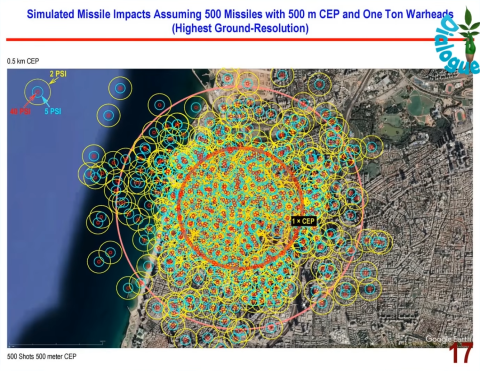
Prof. Ted Postol: US–Iran War? Israel’s Fatal Gamble
or go to
Aletho News Archives – Video-Images
From the Archives
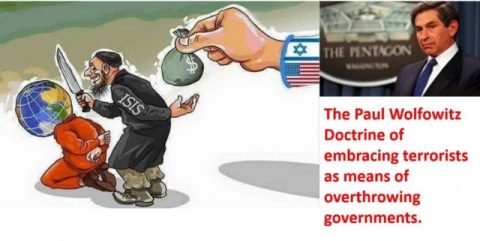
Neocon Max Boot: Legal and illegal aliens need to enlist in the US army and die for Israel
By Jonas E. Alexis | Veterans Today | October 16, 2107
In 1973 Irving Kristol, the godfather of the Neoconservative movement, made a stunning statement which is still relevant to understanding the Israeli influence in US foreign policy. Kristol said:
“Senator McGovern is very sincere when he says that he will try to cut the military budget by 30%. And this is to drive a knife in the heart of Israel… Jews don’t like big military budgets. But it is now an interest of the Jews to have a large and powerful military establishment in the United States…
“American Jews who care about the survival of the state of Israel have to say, no, we don’t want to cut the military budget, it is important to keep that military budget big, so that we can defend Israel.”
Read the statement again very carefully. A big military budget, said Kristol, is only good for Israel, not America or much of the Western World. In other words, precious American soldiers who go to the Middle East to fight so-called terrorism are just working for Israel, not for America.
So, whenever the Neocons use words such as “democracy” or “freedom,” they are essentially conning decent Americans to support Israel’s perpetual wars. … continue
Blog Roll
 Aletho News
- Friedrich Merz’s Push to End Online Anonymity Has a Troubling Subtext
- Macron: French citizens fighting for Israel cannot be labeled ‘genociders’
- US eyes Gaza security force drawn from armed gangs
- The Only Motive Behind The ‘Imminent’ U.S. War With Iran Is The Zionist Lobby
- Trump eyes 350-acre US military base housing 5,000 troops in Gaza
- Israel Pushing US Toward a Big and Damaging War With Iran – Ex-Pentagon Analyst
- Meet The Liberal Zionist And Ukraine War Supporter Advising AOC On Foreign Policy
- Buck Dancing for Zion: Kenya’s and Nigeria’s Growing Love Affair With Israel
- Israel installed, oversaw security system at Barak-Epstein residence in New York: Report
- ‘Britain’s Index of Repression’ documents 964 incidents of anti-Palestinian crackdown
- If Americans Knew
- Tucker Carlson interrogated in Israel, has passport seized after interviewing US ambassador
- 6,000 Amputees in Gaza Face Impossible Recovery amid Israeli War Ultimatum
- The Lancet: Gaza death toll far higher than reported – Not a ceasefire Day 132
- Compliant aid: Who are the Israel-approved NGOs scaling up in Gaza?
- Why won’t Trump’s “Board of Peace” bring peace? – Not a ceasefire Day 131
- Help end the injustice against Shadi
- Israel’s Favorite American President
- Israel’s “Yellow Line” Is a Death Trap for Palestinians. We Drove Into It.
- Why Israel’s expanding occupation in Syria presents a critical legal test
- Gaza is not a natural disaster. It is the victim of genocide enabled by global inaction
- No Tricks Zone
- Coal Power Back In Trend As Globe Tries To Keep Pace With Growing Demand For Power
- New Study: A 4°C Warmer Beaufort Sea Had ‘No Sea Ice’ 11,700 – 8200 Years Ago
- Unfudging The Data: Dutch Meteorological Institute Reinstates Early 20th Centruy Heat Waves It Had Erased Earlier
- German Gas Crisis…Chancellor Merz Allegedly Bans Gas Debate Ahead of Elections!
- Pollen Reconstructions Show The Last Glacial’s Warming Events Were Global, 10x Greater Than Modern
- Germany’s Natural Gas Storage Level Dwindles To Just 28%… Increasingly Critical
- New Study Rebuts The Assumption That Anthropogenic CO2 Molecules Have ‘Special’ Properties
- Climate Scientist Who Predicted End Of “Heavy Frost And Snow” Now Refuses Media Inquiries
- Polar Bear Numbers Rising And Health Improving In Areas With The Most Rapid Sea Ice Decline
- One Reason Only For Germany’s Heating Gas Crisis: Its Hardcore-Dumbass Energy Policy
 Aletho News