Ecuador May Become First Country In Western Hemisphere To Legalize All Drugs
By John Vibes | ANTIMEDIA | May 29, 2014
With the United States struggling to barely overcome the war against marijuana, some countries across the world are actually considering putting an end to drug prohibition altogether.
Legislation was recently introduced in Ecuador, which would make it the second country in the world and the first in the western hemisphere to legalize all drugs, from marijuana to cocaine and even heroin.
In 2001, Portugal became the first country in the world to end the drug war within its borders, and in the short time since, the country has seen a radical improvement in their society. In regards to drugs, they actually now have less of a negative impact on society in Portugal than they did prior to the end of prohibition. There are now fewer drug-related deaths, fewer children getting ahold of drugs, and fewer people doing drugs in general.
There are also many other factors that people many times overlook, including the fact that infectious diseases spread through needles and dirty drug practices have declined rapidly in Portugal since the end of drug prohibition. The police state is also not nearly as much of a problem for residents as it once was. Many prisons have even shut down because there is not enough crime.
In Ecuador, this new bill would threaten the stranglehold that the drug war has on the Americas. It would set a new example for what a country without prohibition looks like, as Portugal has done in Europe.
Carlos Velasco, the head of Ecuador’s congressional Commission of the Right to Health, made strong statements against the drug war while speaking in support of the bill:
“Addressing the drug phenomenon in a repressive way, as it did in the 80s and 90s, where prison was the only place for a drug consumer, is absurd. The traditional way of regulating and fighting drugs, emphasizing criminalization … can’t be sustained in Ecuador,”
Below are some graphs showing the effect that ending prohibition has had in Portugal:


The drug war is one of the most misunderstood subjects in the mainstream political dialogue, even among people who are sympathetic to the plight of responsible drug users. It is rare for someone to come out and say that all drugs should be legal, but in all honesty, this is the only logically consistent stance on the issue. To say that some drugs should be legal while others should not is still giving credence to the punishment paradigm and overlooking the external consequences of drug prohibition—or prohibition of any object, for that matter.
As I explained in an earlier article, there are many external factors that are affected by the drug war that many people don’t take into account. That is because when you carry out acts of violence, even in the form of punishment, you then create a ripple effect which extends far beyond the bounds of the original circumstance to affect many innocent people down the line. The list in my previous article delves into those external factors to illustrate how drug users and non-users alike would be a lot better off if prohibition ended immediately. The list includes the following advantages of full legalization:
(1) Reduce violent crime
(2) Improve seller accountability and drug safety
(3) Reduce drug availability to children
(4) Reduce nonviolent prisoner population
(5) Real crime can be dealt with
(6) Encourage genuine treatment for addicts
(7) Prevent drug overdoses
(8) Protect individual rights
Indigenous Languages Gaining Space in Ecuador
teleSUR | March 12, 2015
Ecuador is working to rescue and promote the use of indigenous languages.
As reparation for historical injustices and as a means to strengthen the nation’s intercultural identity, the Ecuadorean government and citizens are prioritizing the recuperation of the country’s 14 indigenous languages.
Human migration and societies stigmatization of their tounge are two factors which have led to the near disappearance of some languages in recent years. Studies have shown that in 1950 14 percent of the population spoke an indigenous language, with that number plummeting to be 3.7 percent in 1990.
Director of the Center for Economic and Social Rights Eduardo Pichilingue told teleSUR English, “I think that language is fundamental for creating a group, so that it has identity. I work with the Waorani indigenous group, the Waorani thankfully have a relatively healthy language still, they were contacted not too long ago, this makes the change in their language not as drastic as in other nationalities.”
Giving a space to those previously excluded and ignored indigenous voices is the Ecuador Educational Coordination of Popular Radio. With the objective of democratizing communication, it allows Kichwa-speaking producers to design their own programs, and report on both national and international events.
“On behalf of the government I think there has been an effort above all else to strengthen processes of cultural exchange. I believe the government is working hard in communication processes between people and nationalities. 18 community radios have been implemented at a national level to strengthen processes of communication between people from distinct nationalities,” said Sandy Chavez, the Coordinator of Networks at CORAPE.
She went on to say, “From us as an institution, a great success has been incorporating producers, young people who did not speak Kichwa, into our educational initiative and transmit in the Kichwa language. So our first success has been that these young people are not embarrassed to speak in the language, but that they are part of this initiative to rescue indigenous languages, and this has been the first.”
A country with more than 10 indigenous nationalities, the 2008 constitution of Ecuador declares it a plurinational and intercultural state. The Foreign Ministry has expressed that it is willing to foster diplomatic relationships with these distinct nationalities within Ecuador, as a way to strengthen national identity as the country continues working to save and further the use of indigenous languages.
The CIA Against Latin America, the Special Case of Ecuador
teleSUR | March 6, 2015
Imprisoned on various occasions and subjected to numerous interrogations, Dr. Jaime Galarza Zavala is one of the estimated 120 direct victims of the CIA’s record in Ecuador.
Persecuted by the CIA for his political organizing, Galarza described to teleSUR English that “they told me that I was working as a guerrilla in the Dominican Republic. I, to this day, have never visited the Dominican Republic. But they accused me of being a guerrilla leader in the Dominican Republic. And this was a common theme with various interrogations.”
He added that, “while they interrogated me, there was somebody that called every now and then from another room. Afterward, they told me that this person they were talking with was a gringo, a North American, who never presented himself to me. But he gave them instructions as to how to continue the interrogation,” said Galarza.
A fierce critic of U.S foreign policy in the region, Galarza recently published a book titled, “The CIA Against Latin America, the Special Case of Ecuador,” co-authored by Francisco Herrera Arauz.
In an interview with teleSUR English on CIA actions in Ecuador, Herrera said,“First, they destroyed our democracy. Second, they worked with undivided attention against our citizens. They persecuted our citizens for thinking differently. People were killed, injured, there are victims of this violence, there are families that were harmed, there are exiles, the honor of some people has been ruined, there are destroyed families, and all of this was caused by the CIA’s actions.”
Both authors have previously interviewed Philip Agee, the ex-CIA operations officer whose name became internationally known when he wrote the book “Inside the Company: CIA Diary” in 1975, detailing his time working in Ecuador, Uruguay, and Mexico from 1960 to 1968 and denouncing actions undertaken by the CIA during this period.
In his testimonies of that period, Agee said that when he operated in Ecuador from 1960 to 1963, the CIA oversaw: the overthrow of two presidents; the infiltration of various political parties and organizations; and the planting of bombs in front of churches and other emblematic sites to frame leftist groups; among other actions.
At an event celebrating the new book, Ecuador’s Foreign Minister Ricardo Patiño said, “These secret policies continue in Latin America today. Nothing that Philip Agee denounced as CIA actions in the past have been discarded by the espionage seen in the present.”
To raise public awareness of the atrocities committed within Ecuador and the long-term damage caused by CIA interventions throughout Latin America, Ecuador’s Foreign Ministry has printed and widely distributed copies of the book in Spanish and English.
1.5 Million Lifted Out of Poverty in Ecuador under Correa
teleSUR | January 25, 2015
The Ecuadorean National Secretariat for Planning and Development announced on Friday that between the years 2007 and 2014, more than 1.5 million people have been lifted out of poverty in the South American country. These years coincide with the administration of Rafael Correa and the policies of what is known as the Citizen’s Revolution, which recently celebrated 8 years of government.
“The model of government has radically changed,” said Pabel Muñoz, the national secretary for planning and development. The government of Rafael Correa has also dramatically reduced inequality in the country, with the gap between the richest and poorest in the country shrinking. In 2007 the richest earned 42 times that of the poorest, while in 2014 that was reduced to only 22 times.
The 1.5 million lifted out of poverty represents a drop of 14 percent in the poverty rate in the country, with extreme poverty dropping 8 points from 16.5 percent to 8.6 percent.
“Ecuador is a successful country because while reducing poverty, it reduces the gap between the rich and the poor. It has allowed for an increase in consumption and has not registered drops in social indicators. Instead people have climbed the social ladder,” said Muñoz.
These figures were published by the National Secretariat for Planning and Development.
Ecuador has also seen the biggest decrease in the region in the Gini coefficient — a figure that measures inequality in a country — dropping from 0.55 in 2007 to 0.48 in 2012, whereas the rest of Latin America saw a drop from 0.52 to 0.50.
The country has also seen important progress in the field of education, with primary school attendance increasing from 92 percent in 2007 to 96 percent in 2014. There has also been an increase of approximately 1 million more Ecuadoreans enrolled in public education.
Ecuador is now a leader in public investment in the region. Whereas in 2006 social investment constituted the equivalent of 3.6 percent of GDP, social investment is now the equivalent of 11 percent of GDP.
“This is just an example of the achievements of our government, which have been made possible because we have put capital at the service of the people and not the other way around,” said Muñoz.
Poll Confirms Massive Support for Ecuador’s Correa
teleSUR | December 30, 2014
A poll released Monday revealed that over 60 percent of Ecuadoreans approved of President Rafael Correa’s management of the country.
Correa’s support is “unprecedented” in Ecuador, said the president of the survey institute, Polibio Cordova in a press conference, as the Ecuadorean leader has maintained high levels of support since he was elected in 2007.
“This is an unprecedented case because the presidents used to start [their term] with a quite high level [of popularity] of around 68 percent, and within two or three years, they used to decrease by at least 30 percent, sometimes reaching a 30 or 32 percent of approval,” Cordova explained.
Only 32 percent disapprove of his administration, with eight percent not responding to the survey.
The poll was conducted between December 18-24 with a total of 2,168 participants in 15 cities of the country and an error margin of five percent.
Ecuador: CIA Justifies Reyes “Targeting” in 2008
Weekly News Update on the Americas | December 29, 2014
According to a secret study released by the Wikileaks group on Dec. 18, the US Central Intelligence Agency (CIA) considers the killing of Revolutionary Armed Forces of Colombia (FARC) second-in-command Raúl Reyes by Colombian forces in Ecuadorian territory on Mar. 1, 2008 [see Update #937] an example of ways that assassinations of rebel leaders “can play a useful role.”
In addition to the Reyes case, the paper reviews the use of “high-value targeting (HVT)”—the killing or capture of top leaders—in fighting rebels in Afghanistan, Algeria, Colombia, Iraq, Israel, Peru, Northern Ireland and Sri Lanka. HTV can have “negative effects,” the study concludes, but the practice can “contribute to successful counterinsurgency outcomes” if used strategically. The July 9, 2009 study, marked “secret” and “NOFORN” (“no foreign nationals”), is entitled “Making High-Value Targeting Operations an Effective Counterinsurgency Tool”; it apparently forms part of a “Best Practices in Counterinsurgency” series.
Reyes, the FARC’s chief spokesperson and negotiator, was killed when the Colombian military launched a nighttime air raid and then an incursion against a rebel encampment in Ecuador’s northeastern Sucumbíos province about three kilometers from the Colombian border. Some 19 FARC members were killed in the operation, as were four Mexican students who had been visiting the encampment while in Ecuador to attend a leftist conference. Although the Colombian government and the media treated the attack as a simple raid against a group of rebels, the CIA study refers to it as part of a number of “successful HVT strikes against top insurgent leaders in early 2008, in conjunction with earlier strikes against second and third-tier leaders and finance and logistics specialists.” Reyes’ death “is likely to have seriously damaged FARC discipline and morale, even among its leadership, according to a CIA field commentary.” As an example of the operation’s success, the CIA noted that “[p]ublic support for the Colombian government solidified in the wake of the killing… with President Alvaro Uribe’s approval rating increasing from the mid-70% range to as high as 84%.”
The study treats the Reyes killing as a strictly Colombian operation, although there have been reports that in fact the Colombians dropped US “smart bombs” and that an HC-130 airplane, used for refueling helicopters, took off from the US base then at Manta, Ecuador, just hours before the attack. The FARC itself claimed in a Mar. 14 communiqué that the US Southern Command had led the operation [see Update #940]. Theoretically US agencies are not allowed to participate in targeted assassinations. Executive Order 12333, signed by US president Ronald Reagan on Dec. 4, 1981, states that “[n]o person employed by or acting on behalf of the United States Government shall engage in, or conspire to engage in, assassination.” (La Jornada (Mexico) 12/19/14)
Ecuador ends deal with Germany on environmental issues
Press TV – December 20, 2014
Ecuador has terminated its environmental cooperation with Germany after German legislators tried to visit an Amazon rainforest recently opened for oil exploitation, the country’s foreign minister says.
“Ecuador unilaterally ends all cooperation with Germany on environmental issues,” Ricardo Patino said on Friday.
In 2012, Germany and Ecuador inked a cooperation deal worth 36 million euros ($44 million) to protect the environmentally sensitive rainforest known as Yasuni. They also signed another deal worth 7 million euros ($9 million) in other environment projects.
“If they think they had the right to doubt the word of Ecuador’s government on the issue of Yasuni because they were providing funds, we’ll give them their money back with interest,” Patino added.
He also noted that the Latin American country has not received the funds for the rainforest, and the money allocated for the other projects will be returned soon.
In 2007, Ecuadorian President Rafael Correa asked rich countries to donate $3.6 billion to help protect the Yasuni in exchange for pledges not to drill for the oil beneath it.
However, Correa allowed the national oil company to do drilling after his proposal was not welcomed by the other countries.
Earlier this month, Correa did not permit the German lawmakers to visit the Yasuni to observe oil production and talk to activists opposing the measure.
The Ecuador government assured that it will take every measure possible to protect the sensitive Amazon environment during the extraction process. However, the Correa government was not pleased that the German delegation wanted to meet with opposition groups first.
“We either have relations based on equality, or none at all,” Correa said in a statement to the German delegation, asking if Germany would likewise accept a delegation from Ecuador coming to their country to inspect their nuclear projects, for instance. Correa added that his country “stopped being a colony 200 years ago.”
Money Buys Influence in US for Fugitive Ecuadorean Bankers
teleSUR | December 18, 2014
Family members of Ecuador’s fugitive Isaias brothers appear to have received preferential treatment in the U.S. thanks to political donations to the Democratic Party, The New York Times revealed Tuesday.
Estefania Isaias — the daughter of Roberto Isaias, one of two brothers wanted in Ecuador for bank fraud — had been barred from entering the United States after committing immigration fraud. That ban was lifted thanks to the intervention of high-ranking officials in the U.S. State Department. The lifting of the ban was made possible thanks to the assistance of Robert Menendez, a Democratic Senator.
The New York Times investigation reveals that the office of Menendez lobbied extensively in support of Estefania Isaias, even reaching out to Cheryl Mills, Hilary Clinton’s chief of staff while Clinton was she was U.S. secretary of state. He succeeded in getting Ms. Isaias into the United States and wrote to her to tell her the news a mere day after the Isaias family gave a donation to the Democratic Party.
Estefania’s sister Maria also faced a ban on entering the United States and Menendez’s office once again worked to intervene in her favor — also after receiving a donation from the Isaias family.
A spokesperson for Menendez told the Times that his office’s advocacy in the case of Ms. Isaias was routine. However, Linda Jewell, former U.S. ambassador to Ecuador, told the Times, “Such close and detailed involvement by a congressional office in an individual visa case would be quite unusual, especially for an applicant who is not a constituent of the member of Congress.”
The U.S. newspaper reported that the family donated hundreds of thousands of dollars to political campaigns, which were often followed by favorable decisions by the U.S. government.
The Isaias brothers, Roberto and William, were found guilty in absentia for a fraud worth US$400 million. They were sentenced to eight years in prison. The Isaias brothers have been living in the United States, fugitives from Ecuadorean justice. The government of Ecuador has requested their extradition but the U.S. government has denied the request.
Ecuador claims that the political donations made by the family is buying them protection in the U.S. However, The New York Times also reported that the U.S. Department of Homeland Security is currently working to have the Isaias brothers deported.
The U.S. Justice Department is investigating Senator Menendez for his support of the Isaias brothers. The senator is suspected of attempting to influence immigration officials in exchange for donations from the fugitive brothers.
Cuba Better Be Careful What It Wishes For
By Andrew Korybko | Sputnik | December 17, 2014
The US and Cuba have reached a historic deal to swap notable prisoners and establish diplomatic relations after decades of mutual hostility. The announcement caught many by surprise, and begs the question: Are there more sinister geopolitical calculations at work behind the U.S.’ olive branch?
The tradeoff largely boils down to this: the US has released the three remaining members of the Cuban Five in exchange for jailed contractor Alan Gross, 53 US-selected “political prisoners,” and an unnamed intelligence source who was imprisoned over 20 years ago. As a result, both countries will now establish diplomatic relations and the decades-long US embargo will be largely eased.
Many people are rightfully cheering what seems to be an imminent end to U.S. hostility towards Cuba, but all of this may just be a deception. The U.S. needs Cuba more than the other way around, since it wants to use the island as a pivot to reverse the Caribbean Basin’s move to multipolarity and prolong Washington’s full control over its historic “lake.”
Regime Change Done Differently
Cuba no longer needs the U.S. as much as it did at the end of the Cold War, when its economy was in despair and the market hardly functioned. It’s come a long way since then, and although it still has its fair share of problems, it’s proved that it can survive on its own while being officially isolated from its massive northern neighbor. While the U.S. had plenty of opportunity to exploit Cuba when it was at its weakest in the 1990s, it missed the chance to do so, driven by the precondition that regime change must happen first.
Now, however, the tables have turned, and the U.S. is pursuing a policy of engagement first in order to facilitate the same regime change goal it’s been trying to pull off for over the past half century.
“I do not expect the changes I’m announcing today to bring about a change in Cuban society overnight,” Obama said, implying that he still wants the U.S. vision of change to occur. The removal of the embargo would only be a victory for the Cuban people if they are able to retain their independence, sovereignty, and preferred form of government afterwards.
Indirect Inroads
Overt hostility hasn’t worked in the past against Cuba, and it likely won’t work in the future. Plus, there’s been a general trend in recent years for the US to pursue its objectives through covert and indirect means. This is where Cuba is most vulnerable in the recent ‘thaw’ in relations. The American economy doesn’t need Cuba at all, really, and Washington’s opening to Havana is a convenient cover to catch Cuba in its social and economic snare to more directly control the inevitable leadership transition process that will occur with Fidel’s passing. It already tried and failed to use USAID to create a ‘revolutionary Twitter’ on the island, as well as its embarrassing follies with anti-government Cuban rappers, to name but the few most recent regime change scandals there. And it must be kept in mind that Mr. Gross was working for the Agency when he was arrested in 2011 for trying to, as Cuban authorities described it, to “promote destabilizing activities and subvert constitutional order” to foster a “Cuban Spring.”
Cuba is also vulnerable to reverse migration, in that dissident and possibly extremist Cuban-Americans may return to the island in order to build a future Color Revolution’s social infrastructure to deploy when the time is right (likely in the aftermath of Fidel’s death). American businesses can fill a valuable development and investment gap on the island, in exchange for making Cuba ever more dependent on the U.S. This would give the U.S. another lever of influence over the island’s affairs, which could be activated in unison with a Color Revolution to create maximum disorder.
Bucking The Trend
The timing of Washington’s “outreach” to Havana isn’t coincidental, as it coincides with major processes going on in the region that the U.S. hopes to reverse. Most recently, the pro-U.S. Prime Minister of Haiti, Laurent Lamothe, was forced to resign last week amid protests and popular outrage over his corruption and ineffectiveness. Backtracking America’s hold on the region even further, the Chinese are slated to begin construction on the Nicaraguan Canal, which when completed, would create a major breach in America’s control of the Caribbean Sea. Finally, Venezuela has been a center of resistance to American hegemony over the hemisphere ever since the leadership of the late President Hugo Chavez.
Cuba is the symbolic leader of the Latin American resistance movement, and its “Cuban Spring” surrender would be disheartening for the other allied states that defy the U.S. via the ALBA grouping. Congress recently passed sanctions against Venezuela (largely overshadowed by the anti-Russian ones), which is the financial engine of the hemispheric resistance, to facilitate a Color Revolution there as well, as President Maduro himself has previously alleged Washington wants to do.
Venezuela’s economy is also hurting because of the recent oil price slump, which may inhibit its ability to subsidize the allied Nicaraguan, Ecuadorian, and Bolivian ones in the future. With Cuba out of the game, and perhaps even Venezuela, there’d be little ideological or economic support keeping Nicaragua, the future key to the Caribbean, from being next (to say nothing of Ecuador and Bolivia) and the Chinese-sponsored canal from becoming a failed infrastructure project. If this happens, then the U.S. would have reasserted its complete control over the Caribbean and begun to penetrate the Andes, thus tightening the containment noose around Brazil and strangling the future of multipolarity in the region.
Compare and Contrast: Human Rights Watch on Mexico and Ecuador
teleSUR | November 24, 2014
HRW statements about Ecuador’s policing are out of proportion compared to their statements about the disappeared students in Mexico.
The following two headlines are from news releases by Human Rights Watch (HRW) about two incidents that took place in September:
1) Mexico: Delays, Cover-Up Mar Atrocities Response
2) Ecuador: Police Rampage at Protests
The headlines suggest very similar events are described, but that’s not the case at all.
In Mexico, police fired on student protesters, killing three, and then disappeared 43 others by handing them over to a gang. Those basic facts are not disputed by anyone. In Ecuador, the allegations are vastly less serious and far more contested. There were no deaths, but police are accused of beating protesters, some of whom HRW concedes were violent.
Mexico is a close US ally, so HRW instinctively pulled its punches with the national government, which HRW accuses of actions that only “mar” – i.e. impair the quality of– its response to the atrocity. But the government’s failure to produce the missing students (alive or dead) over a month after their “arrest” does not simply “mar” the response. It has raised reasonable suspicions that the entire Mexican establishment is complicit in the crime. As Spanish singer-songwriter Joan Manuel Serrat put it, “They need to demonstrate that they are not accomplices of this barbarism, and of other barbaric acts the country has been enduring; this is a great opportunity for Peña Nieto to show it.” The atrocity has sparked protests all over Mexico and a great deal of international attention.
Ecuador’s left wing government, under Rafael Correa, is a member of ALBA, an alliance of left of center governments that includes, among others, Venezuela and Cuba. HRW’s statement about the much less serious allegations against Ecuador’s police was four times longer than the statement about disappeared students in Mexico, who, according to state-directed gang members’ admissions, were killed and incinerated. HRW officials rushed to Ecuador in September, immediately after the protests, to carry out a “fact-finding mission”. In addition to describing claims made by several alleged victims, HRW accused Correa’s government of “harassing” the private media in ways that foster impunity for police brutality. HRW’s evidence for this last allegation is very weak. For example, a private TV station was obliged to broadcast a seven-minute government rebuttal to a show about the protests that had aired the previous day.
HRW’s statement about the atrocities in Mexico, in contrast, says absolutely nothing about the government’s media policies. Even a very lengthy report (from last year) that HRW cited in their statement said nothing about the Mexican media. However, HRW’s 2014 World Report summary for Mexico does, very briefly, list some facts that show why the media is an important part of Mexico’s human rights disaster: “At least 85 journalists were killed between 2000 and August 2013, and 20 more were disappeared between 2005 and April 2013… ”. HRW said that “Journalists are often driven to self-censorship by attacks carried out both by government officials and by criminal groups, while under-regulation of state advertising can also limit media freedom by giving the government disproportionate financial influence over media outlets.”
State advertising? What about private sector elites who own the Mexican media as well as advertise in it, who are closely allied with the state, and who may have a vested interest in maintaining the blood-drenched status quo? Alice Driver wrote in Aljazeera.
“When I interviewed Juarez journalist Julian Cardona in 2013 for a film about violence in the Mexican media, he argued: ‘The media can be understood as a company that makes tacit or under the table agreements with governments to control how newspapers cover such government entities. You don’t know who is behind the violence.’”
[Mexican President] Peña Nieto’s close ties with Televisa, the largest media company in Latin America, have been widely documented and even earned him the nickname the ‘Televisa candidate’ during the elections.”
Televisa alone has about 70 percent of the broadcast TV market. Almost all the rest of the market is held by TV Azteca. A study, done by researchers with the University of Texas, of Mexican TV coverage during the 2006 presidential election found significant bias in favor of two of the three major parties that lean farthest to the right – one of which is the PRI, the party of current President Peña Nieto. The study concluded “both Televisa and TV Azteca gave significantly more coverage to the winning candidate, Felipe Calderón [of PAN], than to his main rivals, Andrés Manuel López Obrador [formerly of PRD] and Roberto Madrazo [of PRI] . Also, the tone of the news coverage was clearly favorable for Calderón and Madrazo and markedly unfavorable for López Obrador.” In US Embassy cables published by Wikileaks, US officials privately stated in 2009 that “Analysts and PRI party leaders alike“ were telling them that (then candidate) Peña Nieto was “paying media outlets under the table for favorable news coverage.”
Alice Driver has claimed that
“To create confusion, the Pena Nieto administration has pursued the strategy of making splashy high profile narco arrests, and of blaming all criminal activity, including murders and disappearances, on the fact that everyone involved was part of the drug trafficking business. This approach makes victims responsible for the violence they suffer, and it is promoted in the media in a way that makes all victims become suspects.”
Driver’s claim appears quite plausible and well worth HRW’s time to investigate. At the very least, there are extremely good reasons to doubt that Mexico’s private media can be relied on to expose the national government’s complicity with atrocities.
HRW’s 2014 World Report summary about Ecuador offers no evidence that Ecuadorian journalists are being murdered or disappeared under Correa (who has been in office since 2007) as their Mexican counterparts have been over the same period. But HRW nevertheless goes on at much greater length in critiquing Correa’s media policies. HRW’s critique is based on the assumption that private-sector elites pose no threat to freedom of expression or political diversity in the media. Any measure by a government – and especially left of center government like Correa’s – that clips the wings of private media barons is deplored. No positive suggestion is ever made by HRW for blunting the power of private media elites no matter how grave the human rights implications. It is this double standard that provides the basis of HRW executive director Ken Roth’s outrageous assertion that Ecuador and its ALBA partners—not U.S. allies such as Colombia, Honduras or Mexico—are “the most abusive” governments in Latin America.
In the case of the United States, HRW’s inability or unwillingness to identify the private media as major contributor, arguably the most important contributor, to its abysmal human rights record is truly farcical. There are striking examples, quite readily available as I mentioned here, of how the private media promotes a stunning level of ignorance about the scale of US government crimes, but HRW’s 2014 summary for the USA breezily asserts that the “United States has a vibrant civil society and media that enjoy strong constitutional protections”.
Then again, HRW is unwilling to even close its revolving door with US government officials, so the inability to challenge the way public and private power collude to stifle public debate in the USA, and in Mexico, is very unsurprising.
The Wall Street Journal’s Problematic Reporting on Protests in Ecuador
By Stephan Lefebvre | CEPR | November 21, 2014
The Wall Street Journal recently published an article covering Wednesday’s protests in Ecuador against President Rafael Correa, but key facts were missing and the article contained several misleading statements.
First, it is curious that the WSJ chose to focus on a protest of reportedly “around 3,000 protesters,” when a much larger demonstration took place on Saturday in favor of the government’s labor reform policy. The pro-government rally had participation from 100,000 people, according to organizers, and news outlets such as EFE reported participation of “tens of thousands of workers.” Perhaps an argument can be made that protests are more interesting than rallies supporting measures championed by the government, but the WSJ used the same word, “thousands,” to describe the number of attendees at both events.
The piece also includes a line that reads, “Mr. Correa took office in early 2007 and promptly engineered a new constitution that allowed for his re-election.” In reality, a constitutional convention (i.e. adopting a new constitution) was one of Rafael Correa’s campaign promises the year he was first elected (with 56.7 percent of the vote). Further, the old 1998 constitution allowed for indefinite re-election, though not consecutively, for the presidency, while the 2008 constitution set a limit of two-terms for the presidency, which could be served consecutively. Neither of these basic facts was mentioned in the article.
Finally, the motivations for the protest are selectively reported. Besides vague references to the government’s allegedly “authoritarian attitudes,” two issues are mentioned: “union leaders said the government is looking to divide them by creating new government-dependent organizations and undermine their rights, especially to strike” and “protesters are also rejecting proposed constitutional amendments that would open the door for indefinite re-election of Mr. Correa.” Regarding the first point, the author seems to be referencing the creation of a national workers’ united center (Central Unitaria de Trabajadores), a union federation similar to those in Chile, Brazil, Argentina and Bolivia. No argument was given as to why this organization would undermine workers’ rights.
Second, the constitutional changes would allow the indefinite re-election of any office holder (as the WSJ has previously reported), not just Correa. Reasonable people may disagree with this reform, but unlimited re-election is not always seen as inherently anti-democratic. In the Western Hemisphere alone, Canada and Nicaragua allow unlimited re-election, and countries including Peru, Uruguay, Chile and Costa Rica allow indefinite re-election for non-consecutive term.
Over 309,000 Ecuadoran Children Leave Work For Schools
teleSUR | November 5, 2014
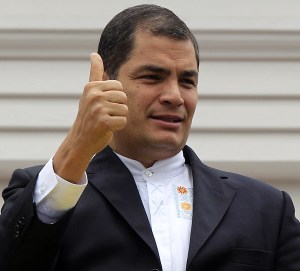 During a meeting Wednesday with the journalists in the coastal, economic hub of Guayaquil, Ecuadoran president Rafael Correa said that over 309,000 children had quit working to attend school.
According to official estimates, the number of working children decreased from 17 to eight percent.
Correa reiterated his commitment to eliminate child work in Ecuador, and sharply criticized the recent initiative of Guayaquil’s mayor, Jaime Nabot, to inaugurate a statue representing a shoeshine boy in the city center.
The head of state called the statue a “shame”, saying “(it) is not part of the folklore, it is part of exploitation.”
During the inauguration, Nebot himself took a picture simulating the act of having his shoes shined by the boy depicted in the statue.
“While the oligarchy builds statues about our exploitation, we build schools so children can keep studying,” added Correa.
Featured Video
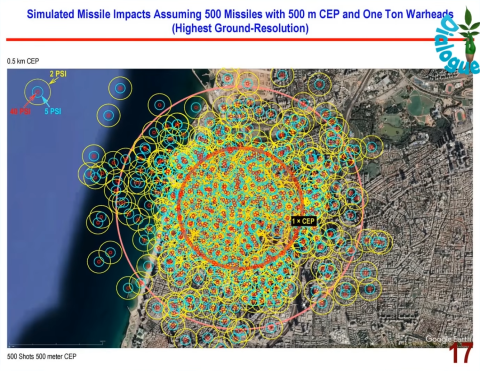
Prof. Ted Postol: US–Iran War? Israel’s Fatal Gamble
or go to
Aletho News Archives – Video-Images
From the Archives
Neocon Max Boot: Legal and illegal aliens need to enlist in the US army and die for Israel

By Jonas E. Alexis | Veterans Today | October 16, 2107
In 1973 Irving Kristol, the godfather of the Neoconservative movement, made a stunning statement which is still relevant to understanding the Israeli influence in US foreign policy. Kristol said:
“Senator McGovern is very sincere when he says that he will try to cut the military budget by 30%. And this is to drive a knife in the heart of Israel… Jews don’t like big military budgets. But it is now an interest of the Jews to have a large and powerful military establishment in the United States…
“American Jews who care about the survival of the state of Israel have to say, no, we don’t want to cut the military budget, it is important to keep that military budget big, so that we can defend Israel.”
Read the statement again very carefully. A big military budget, said Kristol, is only good for Israel, not America or much of the Western World. In other words, precious American soldiers who go to the Middle East to fight so-called terrorism are just working for Israel, not for America.
So, whenever the Neocons use words such as “democracy” or “freedom,” they are essentially conning decent Americans to support Israel’s perpetual wars. … continue
Blog Roll
 Aletho News
- Friedrich Merz’s Push to End Online Anonymity Has a Troubling Subtext
- Macron: French citizens fighting for Israel cannot be labeled ‘genociders’
- US eyes Gaza security force drawn from armed gangs
- The Only Motive Behind The ‘Imminent’ U.S. War With Iran Is The Zionist Lobby
- Trump eyes 350-acre US military base housing 5,000 troops in Gaza
- Israel Pushing US Toward a Big and Damaging War With Iran – Ex-Pentagon Analyst
- Meet The Liberal Zionist And Ukraine War Supporter Advising AOC On Foreign Policy
- Buck Dancing for Zion: Kenya’s and Nigeria’s Growing Love Affair With Israel
- Israel installed, oversaw security system at Barak-Epstein residence in New York: Report
- ‘Britain’s Index of Repression’ documents 964 incidents of anti-Palestinian crackdown
- If Americans Knew
- Tucker Carlson interrogated in Israel, has passport seized after interviewing US ambassador
- 6,000 Amputees in Gaza Face Impossible Recovery amid Israeli War Ultimatum
- The Lancet: Gaza death toll far higher than reported – Not a ceasefire Day 132
- Compliant aid: Who are the Israel-approved NGOs scaling up in Gaza?
- Why won’t Trump’s “Board of Peace” bring peace? – Not a ceasefire Day 131
- Help end the injustice against Shadi
- Israel’s Favorite American President
- Israel’s “Yellow Line” Is a Death Trap for Palestinians. We Drove Into It.
- Why Israel’s expanding occupation in Syria presents a critical legal test
- Gaza is not a natural disaster. It is the victim of genocide enabled by global inaction
- No Tricks Zone
- Coal Power Back In Trend As Globe Tries To Keep Pace With Growing Demand For Power
- New Study: A 4°C Warmer Beaufort Sea Had ‘No Sea Ice’ 11,700 – 8200 Years Ago
- Unfudging The Data: Dutch Meteorological Institute Reinstates Early 20th Centruy Heat Waves It Had Erased Earlier
- German Gas Crisis…Chancellor Merz Allegedly Bans Gas Debate Ahead of Elections!
- Pollen Reconstructions Show The Last Glacial’s Warming Events Were Global, 10x Greater Than Modern
- Germany’s Natural Gas Storage Level Dwindles To Just 28%… Increasingly Critical
- New Study Rebuts The Assumption That Anthropogenic CO2 Molecules Have ‘Special’ Properties
- Climate Scientist Who Predicted End Of “Heavy Frost And Snow” Now Refuses Media Inquiries
- Polar Bear Numbers Rising And Health Improving In Areas With The Most Rapid Sea Ice Decline
- One Reason Only For Germany’s Heating Gas Crisis: Its Hardcore-Dumbass Energy Policy
 Aletho News