African Union blames US, UK, Norway for South Sudan civil war – leak
RT | March 6, 2015
By supporting South Sudan’s independence from Sudan, the US, UK and Norway have created conditions for the civil war, which broke out in the world’s youngest country in 2013, leaked documents from an inquiry by the African Union allege.
In 2005, the US, UK, Norway and the East African trading bloc, IGAD, pushed through a peace deal, which legitimized the South Sudanese rebels, and paved the way for the country’s independence in 2011.
According to a draft of the African Union inquiry obtained by Reuters, the actions of the Western powers helped establish “a politically unchallenged armed power in South Sudan” that acted with impunity and legitimized “rule of the gun.”
At least 10,000 people were killed and another 1.5 million have been displaced since July 2013 when the fighting between the forces loyal to South Sudanese President Salva Kiir, and the militants led by his sacked deputy Riek Machar began.
The findings of the inquiry were to be presented to the African Union’s Peace and Security Council in late January, but it was decided the document will be shelved.
According to a Reuters source, it was done due to concerns the publication may disrupt the talks on forming a transitional government in South Sudan, which are currently underway between Kiir and Machar.
The inquiry suggested that South Sudan’s president and his rival should “be barred from participation in the transitional executive,” and the oil producer should be effectively placed under African Union control for a period of five years.
The investigation, led by former Nigerian President Olusegun Obasanjo, said that Kiir and Machar are responsible for the political crisis in December 2013 and “the organized massacres and the large-scale violence that followed.”
Officials from the US, UK and Norway said that they won’t comment on the document, which they haven’t seen.
“I think that the investigation that the African Union has started and the commission’s position, it needs to be made public,” Borge Brende, Norway’s Foreign Minister, told NRK broadcaster.
The call to make the inquiry public is supported by Washington, London and the UN Security Council.
Munich conference: Russia ‘hate fest’ or split between Western allies?
RT | February 8, 2015
World leaders gathered in Germany to discuss international security on Saturday, with the meeting somewhat descending into ‘Russia-bashing’. But the West showed itself to be more divided than ever on Ukraine, with the EU and US drifting further apart.
The Americans led the harsh anti-Russian rhetoric at the conference, and once again, they did not exclude the possibility of lethal arms deliveries to Ukraine in the future.
Speaking to reporters, NATO’s top commander in Europe, General Philip Breedlove, said that although no troops would be sent to Ukraine, providing Kiev with lethal weapons and equipment was on the cards.
NATO Secretary General Jens Stoltenberg, British Conservative politician and former foreign secretary Malcom Rifkind, and US senator Lindsey Graham notably took a pronounced anti-Russian stance, blaming the Kremlin for the violence in Ukraine.
Moscow hit back, with Russian Foreign Minister Sergey Lavrov stressing in his Munich speech that it is the US and its European allies who have played the key destabilizing role in Ukraine, from helping to overthrow the democratically elected government to failing to condemn the new Kiev government for shelling the civilian population in the east with cluster bombs.
“Through every step, as the crisis has developed, our American colleagues and the EU under their influence have tried to escalate the situation,” Lavrov said, adding that the West has always been urging world governments to enter into dialogue with opposition groups or figures, even when it came to extremist groups such as the Taliban. However, in Ukraine it has bluntly been supporting every one of Kiev’s actions.
Lavrov then spoke with US Secretary of State John Kerry, warning him that Washington’s plans to supply Kiev with military equipment might have “unpredictable consequences”, including “disrupting the efforts to resolve the crisis in southeastern Ukraine,” according to a Facebook statement by the Russian Foreign Ministry. He stressed that Russia and the US agree that the only basis for any solution is a comprehensive national dialogue on constitutional reform in Ukraine.
Russia will not sacrifice its national interest, but is ready to “engage constructively” with the US, Lavrov stressed.
At the press conference, the Russian top diplomat was pelted with questions implying that Moscow is responsible for the ongoing conflict in Ukraine.
“It felt like orchestrated hate fest. Obviously these people live in a surreal world. The US try to change the balance of forces in eastern Europe and the EU join the band wagon,” Srdja Trifkovic, foreign affairs editor of the Chronicles magazine told RT, adding that “whenever a major power wants to change the status-quo, the result is a crisis.”
Despite the recent efforts to try and to stop the violence and find a peaceful way out of the Ukrainian conflict, with French and German leaders having taken an initiative to discuss a peace plan with Russia’s President Putin and Ukraine’s President Poroshenko, the actions of the West are still “profoundly self-righteous,” critics say.
“What I saw today in the press conference is a total unwillingness from the European, Western side to even take into consideration the arguments of the other side…the questions they pose are so selective, so predetermined by their self-righteousness – that is not the way you try to get peace,” former security consultant at the OSCE Lode Vanoost told RT, adding that the West is hypocritical to a level “so profound that [its behavior] is not a serious way to try to get peace.”
However, despite the overwhelmingly anti-Russian rhetoric coming from the West, there are increasingly numbers of politicians who are softening their stance.
Following the Friday meeting of President Putin, German Chancellor Angela Merkel and French President Francois Hollande in Moscow, which was said to be “constructive,” the French leader revealed that the discussion included the creation of a larger demilitarized zone between the Kiev and militia-controlled territories. He also called for “quite strong” autonomy for Ukraine’s eastern regions.
Former French president Nicolas Sarkozy said on Saturday that Paris does not want a new Cold War, considering that Russia and France having a long history of common interests and values. The former state leader also said that it was Crimea that had chosen to join Russia and it “cannot be blamed” for its choice. Previously, former Czech president, Vaclav Klaus, said that Crimea has “always” been a part of Russia.
While the European leaders have largely been united in their support for the Kiev government, only a few have agreed with the United States on supplying weapons to Ukraine. Instead, the German leader stressed that the crisis “cannot be resolved militarily” and that sending more arms can only worsen the conflict.
The issue of military aid to Ukraine is now considered to be the main subject causing the divide in the West, with many in Europe realizing that the potential threat of an escalating conflict on its territory exists.

German Foreign Minister Frank-Walter Steinmeier and Russian Foreign Minister Sergey Lavrov at the 51st Munich Security Conference on February 7, 2015. (RIA Novosti/Flickr MFA Russia)
Political analysts agree that hidden from the public eye, “there is definitely a big divide between the US and the EU on the whole issue of Ukraine,” Vanoost told RT. “It’s very difficult to know how the game will finish, because it’s not an open game, it’s behind the scenes,” Bruno Drweski, an analyst specializing in eastern Europe, said.
Sanctions against Russia have economically hit the EU itself, but have not affected the US. The conflict is also happening on the European continent, not in America, with the EU generally not eager to further escalate it.
“First of all, the European Union is directly involved if the conflict escalates – which is not the case for the United States. Secondly, in the EU they are realistic enough to know that the government in Kiev is very unstable, that they don’t even have full control of all parts of their own military,” Vanoost explained, while speaking about the Western split in regard of the Ukrainian crisis.
However, toning down rhetoric puts some in the firing line, too.
After Merkel said that Europe wants security alongside with Russia, rather against it, and reiterated Berlin’s stance that the Ukrainian conflict must be resolved peacefully, US senator Graham lashed out at the German leader for her refusal to send arms to Ukraine.
“She can’t see how arming people who are willing to fight and die for their freedom makes things better,” the US politician said, adding that the West cannot “turn [its] back on the struggling democracy.”
In an effort to silence voices against harsher anti-Russian measures, US Vice President Joe Biden has labeled those questioning sanctions against Moscow “inappropriate and annoying,” Der Spiegel reported, quoting the participants of the Brussels meeting. The US official called on European countries to show unity when it comes to sanctions against Russia. Biden even reportedly added that critics of the policy should be aware that they also benefited from the current low price of oil.
“The Americans want to run this show, and they have no interest in stopping the crisis in Ukraine because it is really driving a wedge between the Europeans and Russia. And to their [the US’] mind, it is only pushing Europe ever so firmly back into the NATO fold,” Trifkovic told RT.
Meanwhile, Lavrov said Moscow is ready to guarantee agreements between the warring sides if a peaceful solution to the crisis is found, which would satisfy both Kiev and the eastern Ukrainian regions.
Quoting the “aggression” against the federal republic of Yugoslavia, the current crisis has been named “an ongoing assault against the Russian Federation” by the former deputy head of OSCE, Willy Wimmer. Calling for a hastier end to the conflict, which “is the best for all of us,” the ex official of the European security and cooperation organization said that “it’s better to have Polish apples in Russian stores than US tanks at the Russian border.”
READ MORE:
NATO top commander in Europe says ‘military option’ possible in Ukraine
Lavrov: US escalated Ukraine crisis at every stage, blamed Russia
Hopes for breakthrough: Moscow talks on Ukraine ‘constructive,’ joint doc ‘possible’
Hollande: If lasting Ukraine peace not found ‘scenario is war’
Sarkozy: Crimea cannot be blamed for joining Russia
Europe reticent about supplying Ukraine with weapons & money
Biden says Europeans questioning Russia sanctions ‘inappropriate, annoying’ – Spiegel
‘Ukraine is pretext for US lobby to go on with sanctions against Russia’
RT | January 30, 2015
Anti-Russian sanctions are imposed as a hard neo-conservative lobby in America puts pressure on some European countries to go along with these sanctions, and to persuade other countries to do the same, journalist Neil Clark, told RT.
RT: The EU has extended individual sanctions but refrained from new economic restrictions. Why haven’t they gone further do you think?
Neil Clark: Well, it’s interesting, isn’t it? I think this reveals to us the split that there is within the EU. Because what we’ve got really, we’ve got the hard-line countries led unfortunately by Britain, countries like Poland, Lithuania and some others who really want an extension of sanctions. And then we’ve got the more realistic members, the countries that actually want to see these sanctions lifted. Of course, we remember just three weeks ago Francois Hollande, the French President, said that the EU hoped that sanctions would soon be lifted. And of course that would have caused a lot of horror among the anti-Russian camp. So I think what we saw [on Thursday] is the evidence of a real split. We haven’t had these measures that some people wanted, for example some of the more anti-Russian elements have been calling for Russia to be banned from the SWIFT banking system. And what we’ve seen is an extension of the existing sanctions so I think that this reflects the split within the EU at the moment.
RT: Russia’s been under American and European sanctions since last March. How much has it helped resolve the Ukrainian crisis?
NC: Well I think it’s very important to realize…Ukraine is really a pretext for these sanctions. What we’ve got is an anti-Russian lobby, a neo-conservative lobby in America which has for years wanted to sanction Russia. You go back to 2003 and you got neocons calling for Russia to be sanctioned. …This campaign for Russia to be sanctioned stepped up after the events in Syria in 2013 when Russia blocked a war against Syria…And then the Ukrainian situation kicked off as it were.
So I think it’s very important to realize it really that it has really nothing to do with the situation in Ukraine. These sanctions are being imposed, I’m afraid, because of a hard anti-Russian lobby in America and pressure’s been put on certain European countries that are very close to America to go along with these sanctions and to persuade other countries to go along with these sanctions.
It’s interesting, isn’t it, that when we talk about Ukraine the offenses launched by the Ukrainian government forces coincided with visits of high-ranking US officials. And I think that there would have been quite a lot of concern among this anti-Russian lobby in Washington when Francois Hollande did say three weeks ago that he would like to see sanctions lifted.And then what happens? American officials go to Ukraine and we get another offensive against the people in the East. Then the fighting there is used as a pretext for continuing on with the sanctions.
RT: There have been calls for the West to arm the Ukrainian army. Is that on the cards?
NC: It all really depends on what happens in Europe. It is actually crucial at the moment. We saw last night that vote at the Council of Europe – just how divided it was: 35 to 34. So I think there are certain countries in Europe… Poland has been called the 51st state of America, Poland is following the American line, and Britain unfortunately is. But there are other countries, Austria for example, who don’t really want to go down this road, who want to have a return to proper working relations with Russia, because Europe needs Russia. Europe needs a good working economic relationship with Russia. So it’s all a battle going on within the European Union now as to which fraction will actually prevail… So I think the hawks would love to see hard weaponry going to Ukraine, would love to see this conflict continue. But the more sensible countries in Europe want to see an end to it and get back to normal relations with Russia which is in Europe’s interest.
RT: On Wednesday two Russian bombers were detected flying over the Channel which provoked an outcry in the British media as they supposedly ‘disrupted UK aviation’, though these bombers didn’t violate other countries’ borders. What do you think about this situation?
NC: Well I think it’s very interesting, isn’t it, that this big news story happened when the EU was discussing the issue of sanctions with Russia. And I think it happened before, when we had…this debate about whether to extent or deepen sanctions, increase sanctions on Russia…And headlines that come up, you know “Russian bombers over the Channel”, but then we found out that it wasn’t exactly as it was first reported. So I think that in this anti-Russian climate we‘ve got to be careful when we look at the news headlines. There is an agenda going on, there is anti-Russian lobby in the West unfortunately which wants to keep this going and to keep more excuses and pretexts for the sanctions on Russia. So I think we have got to keep cool heads and you know look at bigger context of the stories and it seems quite interesting that every time we are getting these discussions about sanctions on Russia, that this sort of incidents seem to occur.
READ MORE:
UK fighter jets scrambled to intercept Russian bombers
EU foreign ministers extend sanctions against Russian officials, E. Ukraine rebels
EU Parliament wants to keep Russia sanctions, set ‘benchmarks’ for lifting them
Follow Neil Clark on Twitter
New Greek govt furious over EU ‘unequivocal’ anti-Russia statement
RT | January 28, 2015
The new Greek government has spoken out against the EU partners over the statement that lays the blame for Saturday’s fatal attack on the Ukrainian city of Mariupol on Russia. Hungary, Slovakia, and Austria voiced similar objections earlier.
The government, headed by Prime Minister Alexis Tripras, said in a press release on Tuesday that “the aforementioned statement was released without the prescribed procedure to obtain consent by the member states, and particularly without ensuring the consent of Greece.”
“In this context, it is underlined that Greece does not consent to this statement,” Tsipras added.
He voiced his “discontent” in a phone call to EU foreign relations chief Federica Mogherini.
The EU statement was published on Tuesday morning, saying that all 28 EU leaders had agreed that Russia bears “responsibility” for a rocket attack on the city of Mariupol that left 30 people dead on Saturday.
Brussels objected that the Greek government had been informed about the statement on Russia and Ukraine, but no one had contradicted it until Tuesday.
European Council President Donald Tusk initiated the EU statement, and claimed he had called Tsipras and the “sherpas” – top officials taking care of EU issues in each leader’s office.
One EU diplomat reportedly said that Greece had attempted to remove the line blaming Russia for the Mariupol killing. Also, Austria, Hungary, and Slovakia tried, and failed, to “water down” the communiqué, the EU Observer website stated.
It’s the first time that such a situation – a retroactive abjuration of an EU line – has happened, EU Council official stressed.
Foreign affairs analyst Serja Trifkovich told RT that other countries might follow suit and oppose Brussels’ policies on the Ukrainian crisis.
“It’s very difficult in the EU to break the ranks. Now that Greece has made a move, I confidently expect that the Hungarians in particular, but perhaps also Slovakia and Cyprus, will [find] the courage to say no to the dictate from Brussels.”
The EU statement on Russia and Ukraine also urged for more sanctions, for considering “any appropriate action” against Moscow.
One of the measures being mulled is to block Russia from the global interbank SWIFT payment system.
Economist Max Fraad Wolff told RT that this would be a drastic measure.
“Let’s be fair and honest here: if you’re cut off from SWIFT, your ability to have any kind of normal business flow with the global commerce community is hampered.”
However, what he envisages is that “cooler heads will prevail” and that “we won’t see Russia cut off from the SWIFT system,” as it is “in very few parties’ long-term interests.”
EU’s bailout program for Greece ‘dead’ – Syriza economist
RT | January 26, 2015
The bailout program, which the outgoing Greek government signed with the EU, is dead and will be renegotiated, Yiannis Milios, chief economy policy maker at the leftist anti-austerity party Syriza said after it won the country’s parliamentary election.
European Union Finance Ministers are scheduled to meet in Davos on Monday, but Milios said that Greece’s current finance minister, Gikas Hardouvelis, will attend the gathering only to “close pending cases of technical matters.”
“This program, which was agreed by Mr. Hardouvelis as representative of Mr. Samaras, is now dead,” he explained.
Syriza won over 36 percent of the vote on Sunday, forcing New Democracy – the party of Greek prime minister – Antonis Samaras, to settle for second with 28 percent.
Celebrating the victory, the party’s leader Alexis Tsipras announced to the cheering crowd that the era of ‘Troika’ debt inspectors is “over” for Greece.
“This is a historic victory of the Greek people. A new page has turned. It is a historic moment for the entire Europe. We turn a new page in our country. The Greek people take their future into their own hands,” Milios was also cited by ANA-MPA news agency.
The majority of Greek voters entered the election angry at the Samaras’s government for agreeing to the terms of 240 billion euro EU bailout, which included the severe cuts and tax hikes.
Syriza blamed austerity for deepening Greek recession, which pushed one third of the country’s population into poverty.
Before the vote, the leftist party’s leader, Alexis Tsipras, said that the terms of the bailout program must be renegotiated to give Greek economy more breathing space.
According to Milios, Syriza will form “the government of national salvation, is the government that will promote, defend and consolidate the interests of social majority but, at the same time, it is not just a message.”
Syriza has become the first anti-austerity party to form a government in Europe, with a Syriza economist saying that “it is the beginning of a major change for the entire” continent.
“Europe cannot continue with the deflation, recession, the rising unemployment and excessive debt. Greece leads the way, our country, our people are the pioneers of a huge change. We are all very emotional and happy,” he added.
READ MORE:
Greece’s anti-austerity Syriza party officially wins parliamentary elections
US plans to deploy armored brigade to Europe ‘pre-date’ Ukraine hostilities
By Robert Bridge | RT | December 31, 2014
By the end of next year, Washington plans to station about 150 tanks and armored vehicles in Europe, according to a US military commander, who said the decision was made before the Ukrainian crisis strained Russia-US relations.
Although no official announcement has been made as to where the armored tanks and vehicles will be stationed, possible locations include Poland, Romania or the Baltic States, Lieutenant-General Ben Hodges, commander of the US Army in Europe, told Reuters.
Hodges confirmed that around 150 pieces of assorted US military armor would be permanently stationed in Europe.
“By the end of … 2015, we will have gotten all the equipment for a heavy brigade, that means three battalions plus a reconnaissance squadron, the artillery headquarters, engineers, and it will stay in Europe,” Hodges said.
“You are talking about 150-ish, maybe 160 M1 tanks, M2 Bradley fighting vehicles, 24 self-propelled Howitzers.”
Hodges, who said he believes renewed hostilities will occur between pro-Kiev and rebel forces in the east of the country, said plans to send an armored brigade to Europe was first proposed two years ago, before the Ukrainian crisis erupted in January 2014.
Russia has firmly rejected Western accusations that it has sponsored military activities in Ukraine.
The move on the part of Washington will certainly provoke a reaction from Moscow, which has just agreed on a new military doctrine that lists the 28-member North Atlantic Treaty, which has been steadily encroaching on Russia’s borders since the collapse of the Soviet Union, and the United States, which has undertaken a series of military offensives deemed unconstitutional even by its own people, as “major foreign threats.”
The doctrine lists among major foreign military threats “the creation and deployment of global strategic anti-ballistic missile systems that undermines the established global stability and balance of power in nuclear missile capabilities, the implementation of the ‘prompt strike’ concept, intent to deploy weapons in space and deployment of strategic conventional precision weapons.”
Hodges said he expected the deployment of US armored vehicles to Europe to continue throughout 2015 and into 2016.
At least one-third of the armored vehicles will be stationed at US military bases in Germany, the US commander said.
The United States, despite recent breakdowns in its relations with its European allies – including a spy scandal that revealed the National Security Agency was tapping the personal mobile phone of German Chancellor Angela Merkel, as well as other high-ranking EU officials – continues to field some 30,000 Army troops on European soil, and about the same number of Air Force, Navy and Marine personnel, Hodges said.
The US commander said he hoped the number of US soldiers and military bases based in Europe – despite budgetary pressures from home – would stay at their current levels.
READ MORE: There to stay: US troops keep Poland, Baltic deployment for 2015
Ukraine wouldn’t have civil war if not for EU – Putin
RT | December 18, 2014
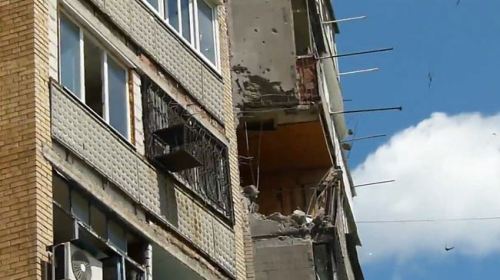
If EU authorities had called the organizers of Ukraine’s coup to order, the country wouldn’t have faced a civil war, believes Russian President Vladimir Putin.
“I am sure that if such a position was taken, there would be neither civil war in Ukraine, nor the multitude of victims. Our colleagues [EU] took another position,” Putin said speaking at his annual Q&A with the press and public.
He says Moscow is ready to become a mediator to start talks between Kiev and self-defense forces from the east.
“We hope…to reach a political dialogue,” said Putin, adding that Russia sees Kiev’s military actions in Ukraine as a “punitive operation.”
“But it [the operation] is made by Kiev authorities, not vice versa. It’s not self-defense forces who sent their troops to Kiev, but the other way round – Kiev authorities sent their forces to the southeast.”
According to the president, if the Kiev government wants peace, then it has to respect the interests of people in eastern Ukrainian regions, not pressure them.
“No doubt [Ukraine’s President Petro Poroshenko] wants to regulate the situation and I have no doubts that he is looking forward to it, but he is not alone [in making the decision].”
Putin referred to the statements of Ukraine’s former acting president and chairman of the Rada, Aleksandr Turchinov, who said on Wednesday that Kiev’s ‘anti-terrorist’ operation should go on “till the end.”
“We hear many warlike statements. I think that President Poroshenko is ready for regulation [of the crisis], but we need concrete actions.”
Putin expressed regret that the planned exchange of prisoners between Kiev and self-defense troops in eastern Ukraine on Wednesday was disrupted by Kiev.
“Yesterday [Wednesday] there was an agreement to exchange 30 people. The representatives of self-defense troops arrived at the place of prisoners’ exchange; an official from Kiev authorities appeared and said ‘No. We won’t exchange [the prisoners] until the Minsk talks.’”
Putin urged both Kiev and self-defense forces to exchange prisoners before the Christmas holidays using the ‘all for all’ principle.
“I think they [both parties] should exchange all for all without any conditions.”
Putin cited information from self-defense forces, saying that in the lists of exchange prisoners there are people who hadn’t been detained war-stricken Donetsk or Lugansk Regions.
“When the lists emerge, it turns out that from Ukrainian side there are certain people who had been arrested not in connection with military action in the country’s southeast, but somewhere in Odessa or Kherson [southern Ukraine].”
“Anyway I believe that people [prisoners] returned home before New Year, before Christmas, regardless of circumstances.”
Putin also spoke on the reports of Russian citizens fighting alongside self-defense forces in the Ukraine’s east.
“All those people who fulfill their duty or voluntary take part in some military action, including those in Ukraine’s southeast are not mercenaries, as they don’t get money for that,” he said.
READ MORE: Putin’s 2014 Q&A marathon LIVE UPDATES
Moscow to Sweden: Alleged ‘colliding’ jet 70km from civil route, used NATO tactics
RT | December 14, 2014
Russia’s Defense Ministry has dismissed Sweden’s accusation that an unresponsive Russian military aircraft nearly collided with a passenger plane over the Baltic Sea. The ministry added that NATO planes in the area also have their transponders turned off.
The Russian aircraft in question was 70 kilometers away from the flight path of a passenger jet taking off from Copenhagen, and thus there were “no prerequisites” for collision between the two, Defense Ministry spokesman Major General Igor Konashenkov said in a statement. He also denied allegations that the military jet was flying right above southern Sweden, breaching its airspace.
“The flight was in strict accordance with international laws on the use of airspace and did not violate state borders while remaining at a safe distance from the routes of civil aircrafts,” Konashenkov said.
Earlier on Saturday, Swedish Defense Minister Peter Hultqvist told local radio that the Russian jet had its transponders turned off so it could fly undetected, and claimed that it nearly crashed into a passenger plane over Sweden.
“This is serious. This is inappropriate. This is outright dangerous when you turn off the transponder,” Hultqvist said.
Konashenkov called Hultqvist’s assessment of the Russian jet being invisible – and thus dangerous – a “deception,” pointing out that none of NATO’s spy and patrol jets operating in the region have their transponders turned on. That, however, does not prevent Russia from detecting them.
“I want to particularly stress that the flights of NATO military planes in the international space on Russia’s borders – which have intensified more than threefold over the last months – are always conducted with disabled transponders. But that does not mean that the Russian airspace control are not able to detect them,” the spokesman stressed.
As recently as December 12, the country’s detection system spotted a NATO RC-135 reconnaissance aircraft in the same area where the supposed “incident” with the Russian jet took place – only closer to the civilian aircraft route, Konashenkov revealed.
NATO has recently stepped up its military flights in the region, due to a perceived Russian threat and the need to reassure the allied Baltic states. It comes against the backdrop of tensions over Ukraine.
Meanwhile, the defense minister of the non-NATO Sweden announced that the nation is planning to retrain about 7,500 reservists who have served in the Swedish army since 2004.
“The armed forces will be able to carry out fully-manned war preparations which will result in increased operational capacity,” Hultqvist explained, justifying the plans.
Peace activist Jan Oberg told RT that the move is in line with the anti-Russian mood in the country’s media and politics, triggered by the Ukraine crisis.
“The whole thing comes from the Ukrainian crisis – and that was predominantly not created by Russia, but by the West,” Oberg said. “It could be very much to show that we are doing something. You have to follow up on the fact that the Swedish media and political debate in this country are very anti-Russian and that the interpretation what happened in Ukraine has not been very balanced.”
“There is a very uniform media structure in this country. I am sad to say that it is the case. It has become worse over time.”
Back in October, Swedish media went on a wild goose chase for a phantom submarine, alleged to be Russian – even though the knowledge of identity was later denied by the Swedish military.
It all started with a blurry image. A week of searches led to nothing, but cost the Swedish taxpayers almost $3 million dollars.
NATO’s reach
NATO has recently launched a massive military build-up of troops in the Baltic states and other Eastern European NATO member states, following the crisis in Ukraine.
The alliance argues that the expansion is needed to show support and assure that NATO members are protected from a possible attack by Russia.
The US-led alliance has also been boosting its presence through military exercises held on a regular basis.
NATO’s new chief, Jens Stoltenberg, boasted of the bloc’s successes in December.
“We have already boosted our presence in the eastern part of our alliance. We have five times more planes in the air. Our forces start an exercise every two days. And we have also increased the number of ships in the Baltic and the Black Seas,” Stoltenberg told reporters.
One of the most recent war games included servicemen from nine NATO member states participating in nearly two weeks of military exercises in Lithuania.
However, Moscow sees NATO expansion towards its borders as an aggressive move, and a violation of post-Cold War agreements.
In early December, Russia’s deputy foreign minister Sergey Ryabkov called the build-up of NATO forces in Eastern Europe hostile and destabilizing to the Baltic, once the safest region in Europe.
In November, Moscow said that NATO exercises next to Russian borders have “a clearly anti-Russian nature,” and will scarcely contribute to European safety.
READ MORE:
Retraining reservists and rearming! Baltic countries got bellicose over ‘Russian threat’
Mistaken identity: French plane entered Swedish air space – not Russian as reported
Sweden confirms mysterious foreign vessel entered its waters back in October
Iron Sword 2014: NATO stages massive military drill in Lithuania
NATO destabilizing Baltic by stationing nuke-capable aircraft – Moscow
Ireland takes UK to human rights court over Hooded Men case
RT | December 4, 2014
The Irish government has asked the ECHR to reexamine the 1978 verdict of the Hooded Men Case. The Northern Irishmen involved seek justice after a new set of previously classified documents point to torture by the UK government in the high-profile case.
The case in question involves torture allegations brought by 14 suspects who said they were subjected to suffering during their detention without trial in 1971 at the Ballykelly British Army Base in County Londonderry.
Liam Shannon, one of the protagonists in the Hooded Men Case, told RT’s ‘In the Now’ that his nightmare began on August 9, 1971, when “hundreds of Catholic men” were arrested by the British Army and taken to detention centers all over Belfast, Northern Ireland, at the height of the troubles there.
From hundreds, Shannon says, 14 people were selected for “in-depth interrogation.”
“That took the form of the use of five techniques. ‘Wall standing’ in the stress position, ‘hooding’, white noise, sleep deprivation, food deprivation and continued beatings,” Shannon told RT host Anissa Naouai.
After the men were released, they brought a legal challenge to the European Court, which in 1978 ruled that the evidence against UK authorities did not constitute torture, but instead was ‘inhuman and degrading treatment’. This judgment is now being challenged.
“We never expected that a government would torture its own citizens and that’s exactly what happened,” Shannon says, as he recalled his pain from his detention. “We were hooded from the word go. We were put into helicopters and told that we were hundreds of feet in the air, and thrown out just to find that we were 3 or 4 feet off the ground.”
Calling it a “very frightening experience,” he said ‘hooding’ continued for seven days straight as the “hoods were never taken off except during interrogation,” when he was repeatedly beaten.
“We were kept hooded, we were beaten. If we couldn’t stand against the wall for any longer… and if you attempted to get off the wall you were severely beaten and put back open again,” Shannon recalls.
All men in the case, Shannon says, suffered psychologically as well as physically from the confinement.
“I actually contracted Crohn’s disease afterwards when I was released from prison, which left me very, very ill for quite some time and left me having to take strong medication for a long time. We also all have sleepless nights, nightmares, cold sweats… everything else that goes along with it.”
A statement by the Irish Foreign Minister Charles Flanagan on Tuesday announced the request by Dublin for the European court to revise its judgment. He said that the government had taken seriously the material in the RTÉ documentary ‘The Torture Files’ in June this year.
“On the basis of the new material uncovered, it will be contended that the ill-treatment suffered by the Hooded Men should be recognized as torture,” Flanagan said. […]
RT’s ‘In the Now’ managed to get a hold of Paul O’Conner from the Pat Finucane Centre (PFC), a human rights advocacy and lobbying entity in Northern Ireland which helped initiate RTE’s documentary.
He told RT that PFC’s research in the British National Archives in London led to “literally thousands of documents” that prove UK government was complicit in torturing the hooded men.
“These documents show that the British government has misled the court. They withheld evidence, they withheld witnesses. They have lied to the court. And with that evidence, we went to Irish State television,” O’Conner said.
Now as victims await the torture recognition verdict, Shannon says all they want is justice.
“It will make a massive difference. It will be some justification for all the years and it will be some benefit psychologically for us. We have to remember that three of our number have since died premature deaths. Their loved ones, their families – it will make a massive difference to them, because they know what happened to their loved ones. Their loved ones were tortured to death,” Shannon told RT.
At the same time O’Conner stressed that torture conclusion by the ECHR will change a number of things. First of all, he says it will prompt a police investigation into the allegations of torture.
“That has not happened and yet we know from the documents which have emerged that senior government ministers were named as having ordered the torture, namely Lord Carrington, then Secretary of State for Defence , in the 1970s,” O’Conner told Naouai.
And most importantly, O’Conner claims the 1978 verdict will cease to be used as a precedent to justify the torture of own citizens.
“This very case has been quoted by the Israeli supreme court in cases involving torture of Palestinians. And in the infamous torture memos that were provided to George Bush in the lead up to Iraq War, the memos which led to the establishing of the Guantanamo Bay, they quote this judgment extensively,” O’Conner says.
EU chief calls for decentralization and federalization of Ukraine
RT | November 27, 2014
To solve the current crisis in Ukraine, the country should become decentralized and federalized, Herman Van Rompuy, the president of the European Council, announced in his political anniversary speech in Paris this week.
Quoting “1,000 deaths” in the country since the cease-fire agreement was reached in Minsk on September 5, Van Rompuy said he could no longer call the situation a cease-fire. And a new cessation of conflict, if controlled by the same players, would have the identical outcome, the politician said in his speech, marking his five years presidency of the European Council.
Urging a “global solution,” the EU chief said a way for Ukraine to become a “decentralized (or federalized) country” must be found. He called for the country’s closer ties with the EU. However, he also said, “Europe has become unpopular among Europeans” in the past five to six years.
Kiev should “establish a correct relationship with Russia, its neighbor, with which it shares history, culture and language,” Van Rompuy said, adding that the interests of minorities in Ukraine should be respected.
Sharing his EU “experiences and perspectives” with students at the Sciences Po institute of political studies in Paris, he pointed out that the current crisis in Ukraine is “the most grave geopolitical crisis we’ve experienced in Europe since the end of the Cold war.” What makes it even worse, according to the Rompuy, is the fact that the “war” is happening on European soil.
Van Rompuy is not the first European politician to suggest Ukraine’s federalization. Earlier in August, Germany’s Vice Chancellor Sigmar Gabriel, who is also the country’s economy minister, spoke out for federalization to be introduced in Ukraine once the conflict in the east of the country is resolved.
The same measures to help settle the crisis in eastern Ukraine have been voiced by Moscow. However, Ukraine’s President Petro Poroshenko keeps ruling out such political changes, saying the country’s federalization is out of question.
All-Out War in Ukraine: NATO’s ‘Final Offensive’
By James Petras :: 11.20.2014
Introduction
There are clear signs that a major war is about to break out in Ukraine: A war actively promoted by the NATO regimes and supported by their allies and clients in Asia (Japan) and the Middle East (Saudi Arabia).
The war over Ukraine will essentially run along the lines of a full-scale military offensive against the southeast Donbas region, targeting the breakaway ethnic Ukraine- Russian Peoples Republic of Donetsk and Lugansk, with the intention of deposing the democratically elected government, disarming the popular militias, killing the guerrilla resistance partisans and their mass base, dismantling the popular representative organizations and engaging in ethnic cleansing of millions of bilingual Ukraino-Russian citizens. NATO’s forthcoming military seizure of the Donbas region is a continuation and extension of its original violent putsch in Kiev, which overthrew an elected Ukrainian government in February 2014.
The Kiev junta and its newly ‘elected’ client rulers, and its NATO sponsors are intent on a major purge to consolidate the puppet Poroshenko’s dictatorial rule. The recent NATO-sponsored elections excluded several major political parties that had traditionally supported the country’s large ethnic minority populations, and was boycotted in the Donbas region. This sham election in Kiev set the tone for NATO’s next move toward converting Ukraine into one gigantic US multi-purpose military base aimed at the Russian heartland and into a neo-colony for German capital, supplying Berlin with grain and raw materials while serving as a captive market for German manufactured goods.
An intensifying war fever is sweeping the West; the consequences of this madness appear graver by the hour.
War Signs: The Propaganda and Sanctions Campaign, the G20 Summit and the Military Build Up
The official drum- beat for a widening conflict in Ukraine, spearheaded by the Kiev junta and its fascist militias, echoes in every Western mass media outlet, every day. Major mass media propaganda mills and government ‘spokesmen and women’ publish or announce new trumped-up accounts of growing Russian military threats to its neighbors and cross-border invasions into Ukraine. New Russian incursions are ‘reported’ from the Nordic borders and Baltic states to the Caucusus. The Swedish regime creates a new level of hysteria over a mysterious “Russian” submarine off the coast of Stockholm, which it never identifies or locates – let alone confirms the ‘sighting’ of. Estonia and Latvia claim Russian warplanes violated their air space without confirmation. Poland expels Russian “spies” without proof or witnesses. Provocative full-scale joint NATO-client state military exercises are taking place along Russia’s frontiers in the Baltic States, Poland, Romania and Ukraine.
NATO is sending vast arms shipments to the Kiev junta, along with “Special Forces” advisers and counter-insurgency experts in anticipation of a full-scale attack against the rebels in the Donbas.
The Kiev regime has never abided by the Minsk cease fire. According to the UN Human Rights office 13 people on average –mostly civilians –have been killed each day since the September cease fire. In eight weeks, the UN reports that 957 people have been killed –overwhelmingly by Kiev’s armed forces.
The Kiev regime, in turn, has cut all basic social and public services to the Peoples’ Republics’, including electricity, fuel, civil service salaries, pensions, medical supplies, salaries for teachers and medical workers, municipal workers wages; banking and transport have been blockaded.
The strategy is to further strangle the economy, destroy the infrastructure, force an even greater mass exodus of destitute refugees from the densely populated cities across the border into Russia and then to launch massive air, missile, artillery and ground assaults on urban centers as well as rebel bases.
The Kiev junta has launched an all-out military mobilization in the Western regions, accompanied by rabid anti-Russian, anti-Eastern Orthodox indoctrination campaigns designed to attract the most violent far right chauvinist thugs and to incorporate the Nazi-style military brigades into the frontline shock troops. The cynical use of irregular fascist militias will ‘free’ NATO and Germany from any responsibility for the inevitable terror and atrocities in their campaign. This system of ‘plausible deniability’ mirrors the tactics of the German Nazis whose hordes of fascist Ukrainians and Ustashi Croats were notorious in their epoch of ethnic cleansing.
G20-plus-NATO: Support of the Kiev Blitz
To isolate and weaken resistance in the Donbas and guarantee the victory of the impending Kiev blitz, the EU and the US are intensifying their economic, military and diplomatic pressure on Russia to abandon the nascent peoples’ democracy in the south-east region of Ukraine, their principle ally.
Each and every escalation of economic sanctions against Russia is designed to weaken the capacity of the Donbas resistance fighters to defend their homes, towns and cities. Each and every Russian shipment of essential medical supplies and food to the besieged population evokes a new and more hysterical outburst – because it counters the Kiev-NATO strategy of starving the partisans and their mass base into submission or provoking their flight to safety across the Russian border.
After suffering a series of defeats, the Kiev regime and its NATO strategists decided to sign a ‘peace protocol’, the so-called Minsk agreement, to halt the advance of the Donbas resistance into the southern regions and to protect Kiev’s soldiers and militias holed-up in isolated pockets in the East. The Minsk agreement was designed to allow the Kiev junta to build up its military, re-organize its command and incorporate the disparate Nazi militias into its overall military forces in preparation for a ‘final offensive’. Kiev’s military build-up on the inside and NATO’s escalation of sanctions against Russia on the outside would be two sides of the same strategy: the success of a frontal attack on the democratic resistance of the Donbas basin depends on minimizing Russian military support through international sanctions.
NATO’s virulent hostility to Russian President Putin was on full display at the G20 meeting in Australia: NATO-linked presidents and prime ministers, especially Merkel, Obama, Cameron, Abbott, and Harper’s political threats and overt personal insults paralleled Kiev’s growing starvation blockade of the besieged rebels and population centers in the south-east. Both the G20’s economic threats against Russia and the diplomatic isolation of Putin and Kiev’s economic blockade are preludes to NATO’s Final Solution – the physical annihilation of all vestiges of Donbas resistance, popular democracy and cultural-economic ties with Russia.
Kiev depends on its NATO mentors to impose a new round of severe sanctions against Russia, especially if its planned invasion encounters a well armed and robust mass resistance bolstered by Russian support. NATO is counting on Kiev’s restored and newly supplied military capacity to effectively destroy the southeast centers of resistance.
NATO has decided on an ‘all-or-nothing campaign’: to seize all of Ukraine or, failing that, destroy the restive southeast, obliterate its population and productive capacity and engage in an all-out economic (and possibly shooting) war with Russia. Chancellor Angela Merkel is on board with this plan despite the complaints of German industrialists over their huge loss of export sales to Russia. President Hollande of France has signed on dismissing the complaints of trade unionists over the loss of thousands French jobs in the shipyards. Prime Minister David Cameron is eager for an economic war against Moscow, suggesting the bankers of the City of London find new channels to launder the illicit earnings of Russian oligarchs.
The Russian Response
Russian diplomats are desperate to find a compromise, which allows Ukraine’s ethnic Ukraine- Russian population in the southeast to retain some autonomy under a federation plan and regain influence within the ‘new’ post-putsch Ukraine. Russian military strategists have provided logistical and military aid to the resistance in order to avoid a repeat of the Odessa massacre of ethnic Russians by Ukrainian fascists on a massive scale. Above all, Russia cannot afford to have NATO-Nazi-Kiev military bases along its southern ‘underbelly’, imposing a blockade of the Crimea and forcing a mass exodus of ethnic Russians from the Donbas. Under Putin, the Russian government has tried to propose compromises allowing Western economic supremacy over Ukraine but without NATO military expansion and absorption by Kiev.
That policy of conciliation has repeatedly failed.
The democratically elected ‘compromise regime’ in Kiev was overthrown in February 2014 in a violent putsch, which installed a pro-NATO junta.
Kiev violated the Minsk agreement with impunity and encouragement from the NATO powers and Germany.
The recent G20 meeting in Australia featured a rabble-rousing chorus against President Putin. The crucial four-hour private meeting between Putin and Merkel turned into a fiasco when Germany parroted the NATO chorus.
Putin finally responded by expanding Russia’s air and ground troop preparedness along its borders while accelerating Moscow’s economic pivot to Asia.
Most important, President Putin has announced that Russia cannot stand by and allow the massacre of a whole people in the Donbas region.
Is Poroshenko’s forthcoming blitz against the people of southeast Ukraine designed to provoke a Russian response – to the humanitarian crisis? Will Russia confront the NATO-directed Kiev offensive and risk a total break with the West?
James Petras latest book is THE POLITICS OF IMPERIALISM:THE US,ISRAEL AND THE MIDDLE EAST (CLARITY PRESS:ATLANTA)
Dutch government refuses to reveal ‘secret deal’ into MH17 crash probe
RT | November 20, 2014
The Dutch government has refused to reveal details of a secret pact between members of the Joint Investigation Team examining the downed Flight MH17. If the participants, including Ukraine, don’t want information to be released, it will be kept secret.
The respected Dutch publication Elsevier made a request to the Dutch Ministry of Security and Justice under the Freedom of Information Act to disclose the Joint Investigation Team (JIT) agreement, along with 16 other documents. The JIT consists of four countries – the Netherlands, Belgium, Australia and Ukraine – who are carrying out an investigation into the MH17 disaster, but not Malaysia. Malaysian Airlines, who operated the flight, has been criticized for flying through a war zone.
Part of the agreement between the four countries and the Dutch Public Prosecution Service, ensures that all these parties have the right to secrecy. This means that if any of the countries involved believe that some of the evidence may be damaging to them, they have the right to keep this secret.
“Of course [it is] an incredible situation: how can Ukraine, one of the two suspected parties, ever be offered such an agreement?” Dutch citizen Jan Fluitketel wrote in the newspaper Malaysia Today.
Despite the air crash taking place on July 17 in Eastern Ukraine, very little information has been released about any potential causes. However, rather than give the public a little insight into the investigation, the Dutch Ministry of Security and Justice is more worried about saving face among the members of the investigation.
“I believe that this interest [international relations] is of greater importance than making the information public, as it is a unique investigation into an extremely serious event,” the Ministry added, according to Elsevier.
Other reasons given for the request being denied included protecting investigation techniques and tactics as well as naming the names of officials who are taking part in the investigation. The Ministry said it would be a breach of privacy if they were revealed. “If the information was to be released then sensitive information would be passed between states and organizations, which would perhaps they would be less likely to share such information in the future,” said the Ministry of Security and Justice.
Dutch MP Pieter Omtzigt, who is a member of the Christian Democratic Party, has made several requests for the information to be released to the public. “We just do not know if the Netherlands has compromised justice,” he said in reaction to the ministry’s decision. The MP was surprised that this agreement was even signed, never mind kept secret.
Malaysia is the only country to have directly negotiated with the anti-Kiev militias in the East of Ukraine, while the country’s Ambassador to the Netherlands said he was unhappy that Malaysia had not been included within the JIT. Dutch Prime Minister Mark Rutte flew to Kuala Lumpur on November 5, but Malaysia says it still did not receive an invitation to join.
“We must first be included in the JIT, otherwise it would be hard for us to cooperate in the investigation. The parties inside the investigation must include us in the team, right now we are just a participant,” said the Malaysian Inspector-General of Police Khalid Abu Bakar in Kuala Lumpur on Wednesday, which was reported by the New Straits Times.
A preliminary report by the Dutch Safety Board, which was released September said the MH17 crash was a result of structural damage caused by a large number of high-energy objects that struck the Boeing from the outside.
Dutch investigators added that “there are no indications” that the tragedy was triggered “by a technical fault or by actions of the crew.”
Featured Video

Meet The Ellisons: Zionists, Technocrats, Moguls
or go to
Aletho News Archives – Video-Images
Frlom the Archives
Who Rules America?
The Power Elite in the Time of Trump
By James Petras | Axis of Logic | September 6, 2017
Introduction
In the last few months, several competing political, economic and military sectors – linked to distinct ideological and ethnic groups – have clearly emerged at the centers of power.
We can identify some of the key competing and interlocking directorates of the power elite:
- Free marketers, with the ubiquitous presence of the ‘Israel First’ crowd.
- National capitalists, linked to rightwing ideologues.
- Generals, linked to the national security and the Pentagon apparatus, as well as defense industry.
- Business elites, linked to global capital.
This essay attempts to define the power wielders and evaluate their range of power and its impact. … continue
Blog Roll
 Aletho News
- US-Israeli war of aggression on Iran meant to reshape region: Omani FM
- Iran Does Not Consider Israel Party to Talks to Need Mediators With It – Ambassador
- Macron’s aircraft carrier and warplanes to the Persian Gulf is a dangerous vanity project
- Meet The Ellisons: Zionists, Technocrats, Moguls
- US failures in Iran reveal Russia is key to South Korea’s strategic security
- ‘All ports in Persian Gulf will be legitimate targets if Iranian ports are attacked’
- 40 Years of Endless War, Data Point by Data Point
- Department of War Using Palantir AI to Pick Targets in Iran
- American bases do not protect – they attack the peoples of the Persian Gulf
- ‘We’ve Obliterated Their Missiles’
- If Americans Knew
- How to end the war on Iran that costs US taxpayers $1M per minute – Not a ceasefire Day 153
- Israeli strategic plans to “remake the Middle East” from the 1950s and since
- Honoring Gaza’s women who refused to let the world look away
- 97% of victims of war on Iran are Iranian, 98% of victims in war on Gaza are Gazans – Not a ceasefire Day 152
- Early Iran strikes cost $5.6 billion in munitions, Pentagon estimates
- Israel Decided the War, But Trump’s America Fights and Pays the Bill
- Conscientious Objector Group: Phone ‘Ringing Off Hook’ As Huge Mobilization Underway
- U.S. support for Israel continues to plummet, despite media’s best efforts
- Threats and missiles fly, death tolls soar in Iran, Lebanon, Gaza – Not a ceasefire Day 151
- Lebanon: Israel’s White Phosphorous Use Risks Civilian Harm
- No Tricks Zone
- Destructive Green New Deal: German Energy And Metal Group Warns Of Drastic Crisis
- New Study Documents A 20-Year Pause In Arctic Sea Ice Decline – Driven By Internal Variability
- Wake-up Call: Survey Shows Majority Of Germans Now Favor Postponing Climate Targets!
- Televised! Leading German Political Candidate Tells Schoolchildren CO2 Makes Sun Hotter!
- New Study: A Century Warming Of 1.1°C Is ‘Commonplace’ And ‘Not Unusual’ During This Interglacial
- New Study: ‘Internal Noise’ And Volcanic Forcing Can Trigger 10-15°C Warming Within Decades
- Glaciers Worldwide Are Suddendly Surging, Experts Blame Warming!
- Surprising Discovery: Sahara Is Greening…Billions Of Trees Where Once Thought To Be Barren
- New Research Reaffirms Clouds, Aerosols, And Surface Solar Radiation Are ‘Driving The Climate System’
- Germany: Electric Car Catches Fire At Charging Station, Sets Off Local “Inferno”, Widespread Damage
 Aletho News