Visa, MasterCard Freeze Cards at Sanctioned Russian Banks
RIA Novosti | March 21, 2014
MOSCOW – US-based Visa Inc. and MasterCard Inc. have stopped processing payments by cardholders at Russian banks targeted by the United States for financial sanctions on Thursday, a number of Russian banks said Friday.
The news signaled the first impact on ordinary Russian citizens by a series of Western sanctions against Russia over the ongoing situation in Ukraine, the greatest geopolitical showdown between Russia and the West since the end of the Cold War.
Earlier sanctions had been restricted to targeting high-level officials.
Several banks reported that customer cards were being declined for payment and that they had received no advance notification of the changes. Customer deposits remained unaffected.
Visa confirmed Friday that it had blocked cards issued by four Russian banks for use on its payment network for online or retail purchases.
Visa said the list of the banks facing sanctions announced by the US Treasury on Thursday includes Rossiya Bank, SMP Bank, Sobinbank and Investcapitalbank, the latter two being part of Rossiya Bank.
“The management of Rossiya Bank understands the difficulties experienced by clients in this situation, and assures them that everything possible is being done to help,” Rossiya Bank said in a statement on its website.
The bank added that customers could still withdraw cash from the bank’s ATMs without difficulties, as well as those owned by partner banks.
Sobinbank said that its call centers had been swamped by customers who were abroad and suddenly found their cards were not working.
SMP Bank is majority owned by brothers Arkady and Boris Rotenberg, who were both named on the US sanctions list.
“All other operations, including the issuance of deposits and making payments remain unaffected and without any restrictions,” SMP Bank said in a statement, adding that it has no assets in the United States.
The US and EU announced asset freezes and travel bans targeting a number of Russian officials close to Putin on Monday, following a referendum in Crimea that saw voters overwhelmingly support reunification with Russia after 60 years as part of Ukraine.
Those lists were expanded – including the addition of Rossiya Bank to the US list – following the ratification of the reunification treaty by Russia’s lower house of parliament Thursday.
Russian President Vladimir Putin warned earlier this month that sanctions against Russia threatened to cause mutual damage in the modern, integrated global economy.
Leaders in Crimea refused to recognize the legitimacy of the government in Kiev that came to power amid often violent protests last month, instead seeking reunification with Russia.
Violence and Terror: The Ukrainian and Colombian Road to Empire Building
By James Petras | The People’s Voice | March 19, 2014
Introduction
The two paths to 21st century empire-building-via-proxies are illustrated through the violent seizure of power in the Ukraine by a US-backed junta and the electoral gains of the US-backed Colombian war lord, Alvaro Uribe. We will describe the ‘mechanics’ of US intervention in the domestic politics of these two countries and their profound external effects – that is how they enhance imperial power on a continent-wide basis.
Political Intervention and Proxy Regimes: Ukraine
The conversion of the Ukraine into a US-EU vassal state has been a prolonged process which involved large scale, long term financing, indoctrination and recruitment of cadres, organization and training of politicos and street fighters and, above all, a capacity to combine direct action with electoral politics.
Seizing power is a high stakes game for empire: (1) Ukraine, in the hands of clients, provides a NATO with a military springboard into the heart of the Russian Federation; (2) Ukraine’s industrial and agricultural resources provide a source of enormous wealth for Western investors and (3) Ukraine is a strategic region for penetrating the Caucuses and beyond.
Washington invested over $5 billion dollars in client-building, mostly in ‘Western Ukraine’, especially in and around Kiev, focusing on ‘civil society groups’ and malleable political parties and leaders. By 2004, the initial US political ‘investment’ in regime change culminated in the so-called ‘Orange Revolution’ which installed a short-lived pro-US-EU regime. This, however, quickly degenerated amidst major corruption scandals, mismanagement and oligarchical pillage of the national treasury and public resources leading to the conviction of the former-Vice President and the demise of the regime. New elections produced a new regime, which attempted to secure ties with both the EU and Russia via economic agreements, while retaining many of the odious features (gross endemic corruption) of the previous regime. The US and EU, having lost thru democratic elections, relaunched their ‘direct action organizations’ with a new radical agenda. Neo-fascists seized power and established a dictatorial junta through violent demonstrations, vandalism, armed assaults and mob action. The composition of the new post-coup junta reflected two sides of the US-backed political organizations: (1) neo-liberal politicos for managing economic policy and forging closer ties with NATO, (2) and neo-fascists/violent nationalists to impose order by force and fist, and crush pro-Russian Crimean ‘autonomists’ and ethnic Russians and other minorities, especially in the industrialized south and east.
Whatever else may ensue, the coup and the resultant junta is fully subordinated to and dependent on the will of Washington: claims of Ukrainian ‘independence’ notwithstanding. The junta proceeded to purge the elected and appointed government officials affiliated with the political parties of the previous democratic regime and to persecute its supporters. Their purpose is to ensure that subsequent managed elections will provide a pretense of legitimacy, and elections will be limited to two sets of imperial clients: the neo-liberals, (self-styled “moderates”) and the neo-fascists dubbed as “nationalists”.
Ukraine’s road to imperialist power via a collaborator regime illustrates the various instruments of empire building: (1) the use of imperial state funds, channeled through NGOs, to political front groups and the build-up of a ‘mass base’ in civil society; (2) the financing of mass direct action leading to a coup (‘regime change’); (3) the imposition of neo-liberal policies by the client regime; (4) imperial financing of the re-organization and regroupment of mass direct action groups after the demise of the first client regime; (5) the transition from protest to violent direct action as the major backdrop to the extremist sectors (neo-fascists) organizing the seizure of power and purge of the opposition; (6) organizing an ‘international media campaign’ to prop up the new junta while demonizing domestic and international opposition (Russia) and (7) political power centralized in the hands of the junta, convoking “managed elections” limited to the victory of one or the other pro-imperial pro-junta candidates.
In summary, empire-builders operate on several/levels: violent and electoral; social and political; and with selected incumbents and rivals committed to one strategic aim: the seizure of state power and the conversion of the ruling elite into willing vassals of empire.
Columbia’s Deathsquad Democracy: Centerpiece of the Imperial Advance in Latin America
In the face of a continent-wide decline of US influence in Latin America, Colombia stands out as a constant bulwark of US imperial interests: (1) Colombia signed a free trade agreement with the US; (2) provided seven military bases and invited thousands of US counter-insurgency operatives; and (3) collaborated in building large-scale paramilitary death squads prepared for cross border raids against Washington’s arch enemy Venezuela.
Colombia’s ruling oligarchy and military have been able to resist the wave of massive democratic, national and popular social upheavals and electoral victories that gave rise to the post-neo-liberal states in Brazil, Argentina, Venezuela, Ecuador, Bolivia, Paraguay and Uruguay.
While Latin America has moved toward ‘regional organizations’ excluding the US, Colombia strengthened its ties to the US through bilateral agreements. While Latin America reduced its dependence on US markets, Colombia expanded its commercial ties. While Latin America reduced their military ties to the Pentagon, Colombia tightened them. While Latin America moved toward greater social inclusion by increasing taxes on foreign multinational corporations, Colombia lowered corporate taxes. While Latin America expanded land settlements for its landless rural populations, Colombia displaced over 4 million peasants as part of the US-designed ‘scorched earth’ counter-insurgency policy.
Colombia’s “exceptional” unwavering submission to US imperial interests is rooted in several large-scale, long-term programs developed in Washington. In 2000, President ‘Bill’ Clinton committed the US to a $6 billion dollar counter-insurgency program (Plan Colombia) which greatly increased the brutal repressive capacity of the Colombian elite to confront the popular grass roots movements of peasants and workers. Along with arms and training, US Special Forces and ideologues entered Colombia to develop military and paramilitary terror operations – aimed primarily at penetrating and decimating political opposition and civil society social movements and assassinating activists and leaders. The US-backed Alvaro Uribe, notorious narco-trafficker and the very personification of a ruthless imperial vassal, became president over a ‘Death-Squad Democracy’.
President Uribe further militarized Colombian society, savaged civil society movements and crushed any possibility of a popular democratic revival, such as were occurring throughout the rest of Latin America. Thousands of activists, trade unionists, human rights workers and peasants were murdered, tortured and jailed.
The ‘Colombian System’ combined the systematic use of para-militarism (death squads) to smash local and regional trade union and peasant opposition and the technification and massification of the military (over 300,000 soldiers) in fighting the popular insurgency and ‘emptying the countryside’ of rebel sympathizers. Large-scale multi-billion dollar drug trafficking and money laundering formed the ‘financial glue’ to cement a tight relationship among oligarchs, politicos, bankers and US counter-insurgency advisers – creating a terrifying high-tech police state bordering Venezuela, Ecuador and Brazil – countries with substantial popular mass movements.
The same state terror machinery, which decimated the pro-democracy social movements, has protected, promoted and participated in ‘stage-managed elections’, the hallmark of Colombia as a “death squad democracy”.
Elections are held under a vast overlapping network of military bases, where death squads and drug traffickers occupied towns and villages intimidating, terrorizing and ‘corrupting’ the electorate. The only ‘safe’ protest in this repressive atmosphere has been voter abstention. Electoral outcomes are pre-ordained: oligarchs never lose in death squad democracies, they are the empire’s most trusted vassals.
The cumulative effects of the decade and a half-long bloody purge of Colombian civil society by Presidents Uribe and his successor, Santos, have been to eliminate any consequential electoral opposition. Washington has achieved its ideal: a stable vassal state; a large-scale and obedient military; an oligarchy tied to US corporate elites; and a tightly-controlled ‘electoral’ system that never permits the election of a genuine opponent.
The March 2014 Colombian elections brilliantly illustrate the success of US strategic intervention in collaboration with the oligarchy: The vast majority of the electorate, over two-thirds, abstained, demonstrating the absence of any real legitimacy among the eligible voters. Among those who ‘voted’, ten percent submitted ‘spoiled’ or blank ballots. Voter abstention and ballot-spoilage was especially high in the rural regions and working class areas which had been subject to state terror.
Given the intense state repression, the mass of voters decided that no authentic pro-democracy party would have any chance and so refused to legitimize the process. The 30% who actually voted were largely urban middle and upper class Colombians and residents in some rural areas completely controlled by narco-terrorists and the military where ‘voting’ may have been ‘compulsory’. Of a total of 32 million eligible voters in Colombia, 18 million abstained and another 2.3 million submitted spoiled ballots. The two dominant oligarchical coalitions led by President Santos and ex-President Uribe received only 2.2 million and 2.05 million votes respectively, a fraction of the number who abstained (14 million). In this widely scorned electoral farce, the center-left and left parties made a miserable showing. Colombia’s electoral system puts a propaganda veneer on a dangerous, highly-militarized vassal state primed to play a strategic role in US plans to “reconquer” Latin America.
Two decades of systematic terror, financed by a six-billion dollar militarization program, has guaranteed that Washington will not encounter any substantial opposition in the legislature or presidential palace in Bogota. This is the ‘acrid, gunpowder-tinged smell of success’ for US policymakers: violence is the midwife of the vassal state. Colombia has been turned into the springboard for developing a US-centered trade bloc and a military alliance to undermine Venezuela’s Bolivarian regional alliances, such as ALBA and Petro Caribe as well as Venezuela’s national security. Bogota will try to influence neighboring right and center-left regimes pushing them to embrace of the US Empire against Venezuela.
Conclusion
Large-scale, long-term subversion and organization in Ukraine and Colombia, as well as the funding of paramilitary and civil society organizations (NGO) has enabled Washington to: (1) construct strategic allies, (2) build ties to oligarchs, malleable politicians and paramilitary thugs and (3) apply political terrorism for their seizure of state power. The imperial planners have thus created “model states” – devoid of consequential opponents and ‘open’ to sham elections among rival vassal politicians.
Coups and juntas, orchestrated by longstanding political proxies, and highly militarized states run by ‘Death Squad Executives’ are all legitimized by electoral systems designed to expand and strengthen imperial power.
By rendering democratic processes and peaceful popular reforms impossible and by overthrowing independent, democratically elected governments, Washington is making wars and violent upheavals inevitable.
-###-
James Petras is a Bartle Professor (Emeritus) of Sociology at Binghamton University, New York. He is the author of 64 books published in 29 languages, and over 560 articles in professional journals, including the American Sociological Review, British Journal of Sociology, Social Research, Journal of Contemporary Asia, and Journal of Peasant Studies.

EU, US impose sanctions against Russian officials over Crimea referendum
RT | March 17, 2014
US President Barack Obama has ordered that sanctions be applied against 11 Russian and Ukrainian officials, the White House said. Earlier, the EU imposed sanctions against 21 officials after Crimea declared its independence.
The US has imposed sanctions against Russian and Ukrainian officials on Monday, with the White House stating that “the actions and policies” of the Russian government with respect to Ukraine “undermine democratic processes and institutions in Ukraine; threaten its peace, security, stability, sovereignty, and territorial integrity; and contribute to the misappropriation of its assets.”
Obama’s executive order applies to seven top Russian officials, including presidential aide Vladislav Surkov, presidential adviser Sergey Glazyev, State Duma deputy Leonid Slutsky, member of the upper chamber of the Russian parliament (the Federation Council) Andrey Klishas, head of the upper chamber of the Russian parliament Valentina Matvienko, Deputy Prime Minister Dmitry Rogozin and State Duma deputy Yelena Mizulina.
In addition, the US Treasury has imposed sanctions on four Ukrainian individuals “for their actions or policies that threaten the peace, security, stability, sovereignty, or territorial integrity of Ukraine and in undermining the Government of Ukraine” including the ousted President of Ukraine Viktor Yanukovich, Crimean top officials Sergey Aksyonov and Vladimir Konstantinov, and former Ukrainian presidential chief of staff Viktor Medvedchuk.
EU spending over $400m on secret drone project – Civil rights group
RT | February 12, 2014
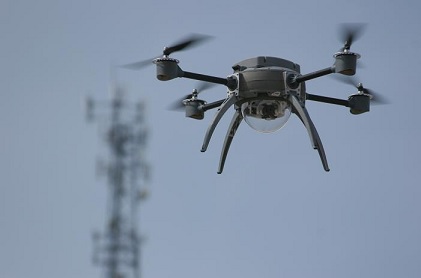
The EU is investing hundreds of millions of taxpayer euros in the development of surveillance drones without political oversight, a report claims. The authors of the document warn the EU is secretly encouraging “the further militarization” of the region.
A report entitled ‘Eurodrones Inc.’ published by rights group Statewatch describes how the EU is channeling taxpayers’ money into surveillance drone projects without their knowledge.
“More than 315 million euro ($430 million) has so far been spent in EU research funding on drone technology or drones geared towards a specific purpose such as policing or border control,” writes the report.
However, the document points out that the research funding is largely “invisible” to the people and parliaments of Europe and lacks the proper political oversight. According to the report this was achieved by a secret budget line that was included in new EU legislation on air traffic control for this year.
The report describes a 20-year roadmap that aims to introduce surveillance drones into EU airspace and highlights that this plan is being shaped by “thinly accountable officials” and representatives of large corporations.
“The EU’s emerging drone policy has come about following years of successful lobbying by defense and security companies and their associates,” said co-author of the report Chris Jones in a statement on Statewatch’s website, adding that these are the same defense and security contractors that have the most to gain.
The drones in question would engage in civilian surveillance activities, such as border patrols and the search for criminals. However, Statewatch is concerned that the convert nature of the program lends itself to the “further militarization” of the European Union.
Calling for “proper democratization” and the opening of public debate on the issue, the report notes the EU turned a blind eye to a European Commission statement in 2012 that declared the development of unmanned surveillance craft should be more transparent.
It recommended the issue be discussed with a number of organizations, including the European Group on Ethics, the LIBE Committee of the European Parliament or the European Agency for Fundamental Rights and Data Protection Supervisor.
“Yet none of these bodies have been involved,” writes the report. “Their absence from policy debates means that many of the conversations the EU should be having about drones – such as what they should and should not be used for, and how to prevent further militarization and the deployment of fully autonomous weaponized drones – have been all but ignored.”
Although the authors of the report do not outwardly criticize research into drones, they do stress the fact that the current program is too “heavily skewed toward the interests of the big defense contractors.”
They argue that this could lead to “unwarranted state surveillance and repression,” as well as enhanced prospects for combat drone research for a global arms race.
“It’s easy to see why people are so excited about drones: there are many positive things they could be used for,” said co-author Ben Hayes. He concluded that given the “clear implications” for civil liberties in the balance, the EU has a “moral and legal obligation” to uphold fundamental rights and the rule of law.
Related articles


EU police want ‘remote kill switch’ on every car
RT | January 30, 2014
The EU is considering making mandatory the equipping of all cars sold in the union with devices, which would allow police to remotely disable engines, according to leaked documents.
If the plan goes as planned, European law enforcers will be able to stop fugitives, suspected criminals and even speeding drivers with a simple radio command from a control room.
The technology is part of a six-year development plan by the ‘European Network of Law Enforcement Technologies’, or Enlets, a working group for police cooperation across the EU, reports the Telegraph.
“Cars on the run can be dangerous for citizens,” the newspaper cites a document leaked by state power watchdog Statewatch.
“Criminal offenders will take risks to escape after a crime. In most cases the police are unable to chase the criminal due to a lack of efficient means to stop the vehicle safely,” it says.
Remote control of car electronics is far from novel. A modern car is equipped with a network of microcomputers, which monitors and controls everything from ignition and flow of fuel to radio station being played. And increasingly cars can communicate wirelessly, a technology called telematics.
Loan firms and car dealerships have been using the benefits of electronically-controlled cars for years. A vehicle sold in the subprime market can be equipped with a black box, which reminds the client of overdue payments with honking horns and flashing lights and would disable the engine completely a few days later, unless the money is paid. And a GPS receiver would tell the dealership the exact location where the car can be collected.
Remote tracking and control is also used as anti-theft measure. Services like General Motors’ Stolen Vehicle Slowdown can force a stolen car to drop speed and stop on a remote command from the service provider.
Giving police the ability to do the same to any car in the EU does not thrill some rights advocates cautious of giving the government more authority.
“We need to know if there is any evidence that this is a widespread problem. Let’s have some evidence that this is a problem, and then let’s have some guidelines on how this would be used,” Statewatch told the Telegraph.
Apart from that, there is a concern of possible hacker attacks, which could use the remote kill switch for nefarious ends. In March 2010 Texas police arrested a former car dealership employee, who used its car tracking and repossession system to disable some 100 vehicles in Austin in revenge for being laid-off.
Researchers from the University of California, San Diego and Washington University tested how much harm hacking can do to a car’s electronic controller. The study conducted in 2010 showed that a criminal can relatively easily interfere with safety-critical systems like brakes.
The security of connected cars has not become hacker-proof since. At the 2014 Consumer Electronics Show this month, technology firm Harman warned that hacking problems for modern cars are very serious because the infrastructure of their electronic components was not designed with networking in mind, so they are not ready for the level of exposure to cyber-attacks that internet connectivity brings.
Related article

‘Illegal’ Spanish protests to face huge €600,000 euro fines
RT | November 20, 2013
Unauthorized demonstrations near the Spanish Parliament could see participants being fined €600,000 ($810,000) under a new Citizen Security bill being introduced by Spain’s ruling rightist Popular Party, local media reported.
Under the legislation, which will likely soon be approved in parliament, “social uproar” leading to harassment or insults of officials is to be made a criminal offense. Masked disorderly conduct could also incur charges. The legislation will likely be drafted by the Cabinet next Friday.
Unsanctioned protests outside political offices will be outlawed, alongside disorderly conduct by people hindering any means of identification, while people offering sexual services in the vicinity of children’s play areas will also be made illegal, according to Spanish newspaper 20minutos.es.
Other offenses deemed serious are to include publishing images or personal data of policemen, interrupting public events, possession of illegal drugs, vandalism of public property and drinking alcohol in the street.
The fines will vary between €1,000 and €30,000 ($1350 – $40,000) for more minor offences. However, just insulting a policeman could see a citizen landed with a €30,000 fine.
“We’re not looking to punish [people] more, just to reduce the discretionary margin for illicit conduct and not stumble into judicial limbo for ‘new’ acts like the escraches,” Spain’s Huffington Post quoted the Interior Ministry as saying.
“Escraches,” a kind of demonstration popular in Spain and Latin America, where protesters lobby outside the homes or offices of officials, have escalated this year, most notably those staged by the Movement of Mortgage Victims. The group lobbied outside politicians’ homes to protest the repossession of homes.
The law will first have to pass through the commission of undersecretaries, then analyzed in the Council of Ministers, followed by a State Council opinion and the General Council of the Judiciary, before being sent back to be discussed as organic law in the courts.
Britain rejects EU watchdog plan to probe data-gathering practices – report
RT | November 14, 2013
The UK has rejected a call from an EU watchdog to probe how security agencies intercept metadata. Documents divulged by Edward Snowden revealed the covert practices of British spy body GCHQ in what has been described as “breach of fundamental rights.”
UK newspaper the Guardian reported that Britain sought to “disassociate itself” from a Council of Europe draft resolution urging an investigation into data gathering techniques. The European watchdog is currently holding a conference in the Serbian capital of Belgrade entitled ‘Freedom of Expression and Democracy in the Digital Age’ which seeks to ensure intelligence gathering practices abide by the European Convention on Human Rights.
To this end the Council has produced a report entitled ‘Political Declaration and Resolutions’, outlining recommendations to safeguard against “abuse which may undermine or even destroy democracy.”
A clause (13(v)) in the report urges for an inquiry into the gathering of “vast amounts of electronic communications data on individuals by security agencies, the deliberate building of flaws and ‘backdoors’ in the security system of the internet of otherwise deliberately weakening encryption.”
The UK has moved to exempt itself from this particular part of the document, claiming it was “unable to agree to it.”
“The United Kingdom needs to place formally on record that while it has not blocked consensus on this text, the UK needs to disassociate itself from paragraph 13(v). The UK strongly supports the overall approach of the resolution including supporting a free and open internet that promotes freedom of expression,” said the declaration obtained by the Guardian.
The UK, however, accepted that data could be gathered by security agencies for “a legitimate aim” as long as it is in conjunction with existing human rights legislation and the rule of law.
Security leaks divulged by former CIA worker Edward Snowden blew the whistle on the GCHQ’s multiple intelligence gathering activities and its collusion with the NSA. As well as gathering troves of metadata and recording millions of telephone calls, the latest reports obtained by Der Spiegel found that the GCHQ was spying on data exchange companies through a spoof version of the social network site LinkedIn.
Using a method known as ‘Quantum insert’ the GCHQ created dummy versions of the website to target organizations and individuals and smuggle malware onto their computers.
“For LinkedIn the success rate [of rerouting a target to a malicious website] is looking to be greater than 50 percent,” said the leaked documents.
In addition, more information was revealed at the beginning of November as to the extent of the GCHQ’s cooperation with the NSA. Reports emerged that the GCHQ was feeding the NSA with the internal information intercepted from Google’s and Yahoo’s private networks.
So far the British government has done little to allay fears that UK spy agencies are acting outside the law in violation of human rights.
The Center for European Policy Studies published a paper accusing the UK along with other European countries of systematically violating human rights with their spy practices.
“We are witnessing a systematic breach of people’s fundamental rights,” wrote Sergio Carrera, a Spanish jurist who co-authored the paper with Francesco Ragazzi, a professor of international relations at Leiden University in the Netherlands. They called for action from the EU parliament to distinguish “democracies from police states.”
Related article
EU-US historic trade deal: ‘Putting the corporation above the nation’
RT | November 11, 2013
The successful adoption of the EU-US trade agreement promises both parties massive gains of up to $159 billion, but the profits could come at the expense of the everyday consumer, who could see the quality of their products diminish as a result.
Over 50 US officials are in Brussels to negotiate the Transatlantic Trade and Investment Partnership (TTIP), which, if signed, will create the world’s largest free-trade area, which has also been dubbed an “economic NATO”. Officials meeting in Brussels this week will hammer out details to reduce trade limiting regulations.
The new round of talks will focus on reducing trade barriers on investment, energy, services, and raw materials, and key agreements will be announced Friday.
‘Non-tariff barriers’ increase the cost of business, whether it’s adjusting the voltage on an electronic device, changing a car’s exhaust system to comply with local environmental regulations or a difference in opinion of which chemicals are “harmful” or “hazardous” in the respective territories.
By limiting health, safety and environmental regulations in order to boost trade, the US and EU are “putting the corporation above the nation,” Glyn Moody, journalist and author, told RT in an on-air interview.
“That’s a very big assumption. People may not want to have their food less safe or environment polluted for the sake of more money,” Moody told RT.
Moody also warns the trade agreement could behoove giant corporations like Monsanto, who could use the new ‘de-regulation’ to sue the EU for billions of dollars if they refuse to import GMO products
The EU says the TTIP could bring annual benefits of $159 billion (€119 billion) to its 28 member states. This breaks down to an extra $730 (€545) in disposable income for a family of four in Europe and an extra $875 (€655) per family in the US, according to a March 2013 study on “Reducing Transatlantic Barriers to Trade and Investment”.
There would be fewer constraints and companies will benefit, but “the public will pay in terms of regulation reduced protection and that is never calculated in these trade agreements, it’s always about the bottom lines of the big companies,” Moody said.
The week-long round of negotiations were originally scheduled for October but postponed due to the US government shutdown.
On December 16-20 officials will meet in Washington DC for another round of talks. The first round was held in Washington in July after the G8 Summit in Northern Ireland.
The Perks
The trade flow of goods and services between the two blocs reached about $2.7 billion per day in 2012, according to the US Office of Trade and Commerce. Total trade in 2012 was $647 billion.
The agreement could boost employment on both sides of “the pond”, as increasing exports usually creates more jobs.
The European Commission has brazenly promised the deal could boost gross domestic product in the dilapidated EU by 1 percent.
Auto trade will especially benefit from jettisoning regulations. Turnover between the US and Germany could double if the trade agreement makes more umbrella standards- for example, if a car is crash-tested in America, it need not be again tested in Europe.
North America is an important destination for Foreign Direct investment, and is home to about one third of European foreign direct investment. Investment activity between the EU and US suffered after the financial crisis in 2008, and both sides will also try to find a balance on trade regulation to save big bucks.
Broken trust
Limited trust over the fall out of the NSA spying scandal may also put a hamper on negotiations between the trade giants.
The feasibility of the deal came under question after NSA whistleblower Edward Snowden leaked information showing the extent of espionage on allies abroad. France announced the wanted to temporarily postpone the talks over snooping, but they proceeded as planned.
The spying row shouldn’t affect US-EU trade talks, US Secretary of State John Kerry said as the trade partnership is “really separate from any other issues”. The US hasn’t provided any guarantees it will curb spying on its allies.
France cannot afford military operation in Syria
By Steven Elliot | RT | September 6, 2013
The G20 should be focusing on their flagging economies rather than planning a military operation in Syria they can’t afford, analyst, Alex Korbel, told RT. France, in particular, is at full stretch, with 16 military campaigns abroad and an ailing economy.
The Syrian conflict has eclipsed the G20 meeting in Saint Petersburg, as the international community is unable to come to an agreement over a possible military strike. Washington has put forward a plan for military intervention against the Assad regime, which it believes is responsible for a chemical attack in a Damascus suburb on August 21.
RT: If the UN team of inspectors finds that chemical weapons were used in the Damascus attack, do you believe military intervention could be justified?
Alex Korbel: I think there is no case for military intervention in Syria for several reasons. The first reason is that there is no national interest for France or the US to actually intervene in Syria. The regime of Bashar al Assad was not a problem in the past and it is not clear why it’s now a problem for France and the US. There is no clear objective in the military intervention as it is now presented. Is it about maintaining the credibility of the US? What credibility exactly? The credibility to intervene in unnecessary wars? Is it to ban the use of chemical weapons? Then why does the US have chemical weapons in its arsenal? Is it to weaken the Bashar al Assad regime? In that case you need to put boots on the ground. If it is a humanitarian way to help the civilians, then locking on cruise missiles is not the right solution.
For all of these reasons the US and France have decided to move ahead with limited military intervention. But still there is a danger of falling down a slippery slope. What if a military intervention has no effect? Are we going to see full war? What would be the consequences in the region? I am thinking about Iran and Lebanon and I am thinking about a war less than 1000 kilometers south of Russia.
There is no broad international support for this war. Germany is against it, the UK is against it, China and Russia are against it. The only countries that are in favor are France, which has not yet consulted parliament, US and Israel and Saudi Arabia. Finally, public opinion is clearly against it everywhere. We saw it in the UK and the public polls in the US and France that the public is massively against military intervention in Syria.
RT: Given the climate of economic crisis in the EU, can France feasibly participate in another military operation?
AK: The economic situation of the EU countries is really bad. We can see in France that public debt is higher than 90 per cent of GDP. We see economic growth is less than 1 per cent. We see across G20 countries on average that unemployment is at 9 per cent and growing, that public debt is 64 per cent and growing, that economic growth is 1 per cent and weakening. What needs to be done is not to intervene militarily in another country.
France is already intervening in 16 countries worldwide. Clearly we don’t have any money to finance a seventeenth operation. The purpose of France, the US and any western power is not to ‘play the cop’ around the world but actually to maintain a sound economic policy first and then maybe lead by example on the international scene.
“It’s US Turn to Show Political Resolve”
Interview with Iran’s Foreign Minister Mohammad Javad Zarif | August 17, 2013
 The new Iranian Foreign Minister Mohammad Javad Zarif is taking over the Ministry of Foreign Affairs of the Islamic Republic of Iran from his predecessor, Ali Akbar Salehi, at a time that the entire Middle East and North Africa from Syria to Egypt, from Tunisia to Libya, and also from Bahrain to Iraq and Lebanon, are grappling with various political and security crises. Iran’s nuclear case has been also relatively stagnant. In the meantime, the radical politicians in the United States as well as pro-Israeli lobbies in the US Congress and Senate are keeping up their loud cries for the intensification of sanctions against the Islamic Republic. On the verge of his official inauguration as the new Iranian foreign minister, in the following interview we have discussed with Mohammad Javad Zarif such important issues as the true meaning of moderation in Iran’s foreign policy, the new administration’s plans for the continuation of the nuclear negotiations, the possibility of transferring management of the nuclear case from the Supreme National Security Council to the Ministry of Foreign Affairs, Iran’s possible positions on radical moves taken by the United States and the pro-Israeli lobby, and the possibility of future direct talks between Tehran and Washington in the light of the existing political equations in the region.
Q: The issue of “moderation” was one of the main mottos of the “Administration of Foresight and Hope.” How do you define moderation in the area of foreign policy?
A: I personally believe that moderation means realism and creation of balance among various needs of a country for the advancement of the foreign policy and pursuit of the foreign policy goals through plausible and rational methods and a suitable discourse. Moderation does not mean to forget about the values or discard the principles. Moderation neither means to fall short of materializing the country’s rights. In other words, as I said in my address to the Majlis (Iranian parliament), moderation has its roots in self-confidence. The people who confide in their own ability, power, possibilities and capacities will tread the path of moderation. But those who are afraid and feel weak mostly go for radicalism. Radicals in the world are cowardly people and although their slogans may be different from one another, there are close and good relations among them. The world of today needs moderation more than anything else and the Islamic Republic of Iran, as a powerful country, can push ahead with a suitable foreign policy approach through moderation.
Q: In his first press conference after the inauguration ceremony, President [Hassan Rouhani] said resumption of the nuclear negotiations with the P5+1 group will be one of his priorities. Do you have any new plan or proposal for the resumption of these talks?
A: There have been discussions inside the administration with Mr. President about how to follow up on the country’s nuclear rights and reduce unjust sanctions which have been imposed against the Islamic Republic of Iran. The basis for our work is to insist on the rights of Iran and do away with logical concerns of the international community. As the Supreme Leader and the President have emphasized, it would be easy to achieve this goal provided that the main goal of all involved parties is to find a solution to the nuclear issue. We believe that finding a solution to the nuclear issue needs political will. On the side of the Islamic Republic of Iran, the election of Dr. Rouhani – in view of his past track records with regard to this case – proves that the Iranian people are willing for the nuclear issue to reach a final solution with power and strength and within a reasonable time frame. We wish the opposite side will also have the necessary political resolve for the resolution of the nuclear issue. In that case, we would have no concern with respect to assuring the world about the peaceful nature of our nuclear energy program because according to the fatwa [religious decree] issued by the Supreme Leader and based on the strategic needs of Iran, nuclear weapons have no place in our national security doctrine and are even detrimental to our national security.
Q: There have been rumors about the possibility of transferring the management of the nuclear case from the Supreme National Security Council to the Ministry of Foreign Affairs. Do you confirm such speculations or deny them and, basically, are there any specific plans for the transfer of this case?
A: I have not heard such a thing. This is a decision for the President to make. At any rate, in view of the experience I have in this regard, I will do my utmost to be of service for the advancement of the nuclear case in any position I am and to any degree possible. However, it is for the highest ranks of the Islamic Establishment to make the final decision about how to pursue the nuclear case, the form and framework of negotiations, and the best methods to be used in this regard.
The main issue is whether the necessary political resolve [among member states of the P5+1 group] will be present and whether the US government is ready to stand in the face of the interest groups and prevent the whole case to be steered by radical groups?
Q: We have witnessed the emergence of anti-Iran currents at both the US Congress and Senate concurrent with the election and inauguration of President Hassan Rouhani’s administration. On the other hand, Israelis claim in their propaganda campaigns that the administration in Iran has changed, but policies are the same as before. What is your plan to offset such radical moves?
A: The warmongering elements are apparently concerned about reduction of problems and are clearly doing their utmost to resort to any pretext in order to intensify the crisis with Iran. The important point is that decision-makers in Europe and the United States should come to grips with the real nature and goals of warmongers. On this basis, they should not allow a warmongering and tension-seeking agenda – which aims to put unjust pressures which have no place in international law on the Iranian nation – to prevent them from taking advantage of opportunities which can be used to find solutions to existing problems. The political agenda of radicalism clearly proves that radicals are cowards and are afraid of negotiations and dialogue. Therefore, such groups make recourse to hasty and ineffective methods in order to bar the progress of moderation. Such cowardly people usually fail to achieve their political goals as well.
Q: Will you agree to engage in bilateral direct talks with the United States if such a thing is proposed to you on the sidelines of such international meetings as the United Nations General Assembly sessions or negotiations with the P5+1 group?
A: The Supreme Leader has made his opinion about [direct] talks [with the United States] public time and time again. Negotiations, per se, is not an issue here, but the main issue is what topics are going to be discussed in such negotiations and how much political determination exists in the opposite side for the settlement of the existing problems. The main issue is will such a political resolve take shape and whether the US administration is actually ready to stand up to radical groups and prevent such radical groups from setting the course of the whole issue? This will be in fact a litmus test for the government of the United States to show its readiness to play a more serious role and pave the way for the achievement of a final solution.
Q: Don’t you think that bilateral talks between Tehran and Washington constitute the secret precondition for the improvement of relations between Iran and Europe?
A: In my opinion, political will is the precondition for the improvement of relations. The methods [to do this] can be discussed, but what is necessary is the emergence of such a political will and its manifestation in practice. In that case, various methods can be used to achieve goals. At a time that it is not still clear whether such a political will exists or not, the efficiency of using new methods cannot be clearly decided. In Iran, the election of Mr. Rouhani shows that people have made up their mind to engage in constructive interaction with the world. Mr. Rouhani, on the other hand, has shown through his words and deeds that he has the necessary political will to do this. Now, the important requisite is for such a political will to take shape on the other side of the equation.
Q: You are taking charge of the Ministry of Foreign Affairs at a time that the Middle East is going through a hectic period of its history. We are witnessing different crises from Syria to Egypt, and from Bahrain to Lebanon and Iraq. What are your priorities among these regional cases?
A: Conditions in the region have become hectic and inflammatory as a result of shortsightedness of certain political players – most of them coming from outside the region – during the past few years, and we need a collective effort to curb in the crisis. On the one hand, we are faced with fundamentalism while, on the other hand, we see how people’s votes are forgotten and downtrodden. And of course, we can see the clear hands of foreign interventionist powers that foment unrest in the region the result of which is the loss of thousands of innocent lives. Unfortunately, we have been witnessing a severe escalation of domestic conflicts in Egypt during the past few days in which hundreds of innocent people have lost their lives. As a result, it is not only incumbent on us to find a way to put an end to the ongoing crisis in Egypt, but a more serious need of the region and the world is to prevent further spread of radicalism by taking advantage of the indigenous models of democracy. I believe that the Islamic Republic of Iran will be able to play a crucial role in this regard, especially after the political epic that took place during the current [Iranian calendar] year [through the presidential election in the country].
Source: Iranian Diplomacy (IRD)
http://www.irdiplomacy.ir/
Translated By: Iran Review.Org
Related articles
Featured Video
Marandi: Threat of Seizing Kharg Island & the Use of Nuclear Weapons
or go to
Aletho News Archives – Video-Images
Frlom the Archives
Provoking a Path to Persia
The Saban Center’s prescient paper on war with Iran
By Maidhc Ó Cathail | October 20, 2011
In June 2009, the Saban Center for Middle East Policy published “Which Path to Persia?—Options for a New American Strategy toward Iran.” Writing in a tone strikingly reminiscent of the Project for a New American Century’s infamous pre-9/11 paper “Rebuilding America’s Defenses,” the six co-authors noted that, “It seems highly unlikely that the United States would mount an invasion without any provocation or other buildup.” For a think tank specifically established by media mogul Haim Saban to protect Israel, this could prove to be a formidable obstacle impeding their desired march—of U.S. troops—to Tehran.
“In fact, if the United States were to decide that to garner greater international support, galvanize U.S. domestic support, and/or provide a legal justification for an invasion, it would be best to wait for an Iranian provocation, then the time frame for an invasion might stretch out indefinitely,” Saban’s think-tankers ruefully observed.
“With only one real exception, since the 1978 revolution, the Islamic Republic has never willingly provoked an American military response, although it certainly has taken actions that could have done so if Washington had been looking for a fight. Thus it is not impossible that Tehran might take some action that would justify an American invasion. And it is certainly the case that if Washington sought such a provocation, it could take actions that might make it more likely that Tehran would do so (although being too obvious about this could nullify the provocation). However, since it would be up to Iran to make the provocative move, which Iran has been wary of doing most times in the past, the United States would never know for sure when it would get the requisite Iranian provocation. In fact, it might never come at all.”
Seemingly undeterred by Iran’s frustrating unwillingness to provide the requisite provocation, the analysts continued to examine this option… continue
Blog Roll
 Aletho News
- Ukrainian Embassy in Beirut sheltering top Mossad agent
- Palestinian family displaced after settlers violently attack them in Humsa, Jordan Valley
- The EU never learns – except for the wrong lessons
- Iran attacks on UAE leaves RSF militia high and dry
- Hosting Washington’s war: Bahrain faces the consequences
- The US fell for its own Iran propaganda
- Seyed M. Marandi: Threat of Seizing Kharg Island & the Use of Nuclear Weapons
- Is there even an off ramp?
- Michael von der Schulenburg: Europe’s Self-Defeating Iran War Policy
- Sorry, The New Republic, Climate Change Isn’t Causing Somali Migration. Blame Civil Strife and Poverty.
- If Americans Knew
- ‘Of Course’: IDF Drops Case Against Soldiers Accused of Raping Palestinian Prisoner
- Don’t Fall for the Regime Change Talk. Israel Is ‘Mowing the Lawn’ in Iran
- Will Israel and the US wreck the Gulf States along with Iran?
- US so far burned through ‘years’ of munitions in Iran war: Report
- How the Israeli Tail Wags the American Dog
- Outdated intel likely led to deadly U.S. strike on Iranian elementary school, sources say
- Pentagon insider says high U.S official Douglas Feith reported to Netanyahu
- In fond memory of Walid Khalidi, the historian of Palestine
- 6 more Americans killed, as Israel ‘mows the lawn’ in Iran – Not a ceasefire Day 154
- Are we on the precipice of World War III?
- No Tricks Zone
- New Studies: UK Sea Levels Were 4 Meters Higher Than Today During The Mid-Holocene
- Destructive Green New Deal: German Energy And Metal Group Warns Of Drastic Crisis
- New Study Documents A 20-Year Pause In Arctic Sea Ice Decline – Driven By Internal Variability
- Wake-up Call: Survey Shows Majority Of Germans Now Favor Postponing Climate Targets!
- Televised! Leading German Political Candidate Tells Schoolchildren CO2 Makes Sun Hotter!
- New Study: A Century Warming Of 1.1°C Is ‘Commonplace’ And ‘Not Unusual’ During This Interglacial
- New Study: ‘Internal Noise’ And Volcanic Forcing Can Trigger 10-15°C Warming Within Decades
- Glaciers Worldwide Are Suddendly Surging, Experts Blame Warming!
- Surprising Discovery: Sahara Is Greening…Billions Of Trees Where Once Thought To Be Barren
- New Research Reaffirms Clouds, Aerosols, And Surface Solar Radiation Are ‘Driving The Climate System’
 Aletho News