NATO’s Dead?
If so, who killed it: Obama, Putin, Or Trump?
By Andrew Korbyko – InfoRoss – 06.07.2018
NATO, as the world knew it, is dead, and the organization’s demise is attributable to the combination of President Putin’s deft diplomacy in advancing the Russian-Turkish rapprochement and his American counterpart’s revolutionary reconceptualization of the very essence of the alliance, both of which wouldn’t have been possible had it not been for Obama.
NATO, as it was previously conceived of for decades, is dead, and while it might be reborn in a different format sometime in the future, its previous model has exhausted its purpose and is entering into the dustbin of history. The organization still officially exists, but everything about it is changing to the point where it might soon become unrecognizable. The consistently anti-Russian driving force behind the bloc has been decisively neutralized by President Putin’s deft diplomacy in winning over its second-largest military member, Turkey, as Russia’s newest strategic partner, while Trump’s revolutionary reconceptualization of the alliance as an equal collection of states combating the asymmetrical security challenges of terrorism and illegal migration will fundamentally transform what it means to be a NATO member.
The Shadow Of Obama
Before going through the post-mortem in detail, it’s worthwhile to describe how Obama’s shadow hangs heavy in the sense that he orchestrated the three greatest mistakes that inadvertently led to NATO’s demise. The 2011 NATO War on Libya has the chance of being seen in hindsight as the final flash of a fast- fading star, with its “shock-and-awe” destruction of the former Jamahiriya going down in history as perhaps the last real instance of the bloc’s members working in coordination with one another to conventionally wage war against a targeted state. The self-congratulatory pomp that followed this brief military campaign has since been proven to have been premature because of the country’s ongoing civil war and role as a transit state for facilitating the flood of hundreds of thousands of migrants into Europe, which sparked its own crisis that has since led to the rise of EuroRealist populists in the continent.
In addition, the Libyan model of Hybrid War destabilization was also applied to Syria, albeit minus the final conventional warfare form, and this exacerbated the Migrant Crisis to the point of no return in guaranteeing the inevitable rise of right-wing politicians in Europe. Taken together, the Wars on Libya and Syria, waged in different manners but nevertheless following the same neo-imperialist regime change form, generated unprecedented humanitarian blowback to the point of triggering far-reaching political changes in NATO’s EU members, making many of them reconsider the official anti-Russian purpose of the bloc when it could be better put to use in defending the organization’s southern shores from swarms of migrants. For as “constructive” of an idea as this may have been, it led to deep divisions within the EU itself between the pro-migrant Western countries, the anti-migrant Central & Eastern European ones, and the anti-Russian Baltic States, Poland, and Romania.
While these intra-NATO disagreements were percolating, Obama made another massive mistake in giving the greenlight for the failed pro-American coup attempt against Turkish President Erdogan in the summer of 2016, and the blowback from this sloppy operation was almost instantaneous in making the bloc’s second-largest military deeply suspicious of US intentions from then on out. Although Turkey had hitherto been mostly focused on facilitating American strategic objectives in the Mideast (which for the most part were disadvantageous to Russia’s long-term regional vision), its unchanging geopolitical position as an irreplaceable part of NATO’s anti-Russian “containment” policy was thought to have retained a consistent function that had been taken completely for granted up until that point. That was a huge error, as will be seen, because President Putin’s deft diplomacy succeeded in its judo-like maneuver to flip Turkey from an enemy into a partner.
Putin’s Judo
Taking advantage of President Erdogan’s understandable distrust of what he had presumed was his country’s closest ally, President Putin reached out to extend his support for the embattled Turkish leader in demonstrating which of the two Great Powers really had Ankara’s best interests in mind. It shouldn’t be forgotten that unconfirmed reports also alleged that Russian intelligence might have tipped President Erdogan off right before a fighter jet flown by one of the coup conspirators was set to bomb his residence, therefore saving his life and sealing a new bond of friendship between both countries. It might never be known whether that actually happened or not, but in any case, the Russian-Turkish rapprochement that followed soon thereafter was swift and even saw Moscow passively accepting Ankara’s limited “Euphrates Shield” incursion into northern Syria later that summer, something that would have been utterly unthinkable just a few months prior.
The revival of the Turkish Stream pipeline project and a related agreement on nuclear energy cooperation served as physical testimonies to the strength of the Russian-Turkish Strategic Partnership, which went one dramatic step much further in officially including a military dimension per Ankara’s desire to buy Moscow’s state-of-the-art S-400 air & missile defense system despite Washington’s threats to sanction it if the deal goes through. In the course of less than two years, President Putin’s deft diplomacy flipped the tables on the previous US-Turkish Strategic Partnership by replacing America with Russia and totally changing the overall dynamics of Mideast geopolitics. The de-facto removal of NATO’s second-largest military force from the organization, which is essentially the true state of affairs at the moment given Ankara’s planned S-400 military cooperation with Moscow and Washington’s CAATSA sanction threats, dealt a heavy blow to the bloc from which it has yet to recover.
Decades’ worth of strategic planning that went into using Turkey as a bulwark against the spread of Russian influence towards the Mediterranean are now worthless after Ankara has for all intents and purposes turned its back on the bloc out of protest of the US’ role in the failed summer 2016 coup attempt. The organization can no longer count on the cornerstone of its Mideast, Black Sea, and Eastern Mediterranean policies, and this has inevitably led to the alliance having to reinvent itself. As it happened, this took place concurrent with the rapid politicization of the Migrant Crisis and its resultant intra-NATO/-EU disputes about how best to respond to this civilizational challenge, further exacerbating divisions within the West and making Turkey’s “defection” (brought about through President Putin’s masterful diplomacy) all the more impactful of a destabilizing move for the already confused alliance.
Trump’s Turnaround
The last and most powerful factor that contributed to the death of NATO was Trump himself, who decided to turn everything around and reorient the bloc from its official anti-Russian purpose by transforming it into something entirely different. It’s true that some of the anti-Russian functions will still remain because of the Baltic States, Poland, and Romania’s membership as “frontline states”, but Trump’s vision is to use NATO as a platform for responding more to asymmetrical security threats such as terrorism and illegal immigration instead of conventional ones like Russia was portrayed as being since the organization’s inception. Words are one thing, but transforming them through action is another, and it’s here where Trump is “walking the walk” much more than “talking the talk” like his predecessors did in visibly pressuring his “allies” to contribute their required 2% of GDP towards defense like they were always supposed to do to begin with.
Trump, being the successful businessman that he is, can’t fathom why the US should subsidize the EU’s “socialist welfare states” especially given that the “foreboding challenge” of a “Soviet invasion” no longer makes that necessary like it may have once. Seeing world affairs from an economic perspective and therefore perceiving the EU to be America’s rival in this respect, Trump knows that the best way to “level the playing field” and “get a better deal” is to put pressure on America’s military underlings by compelling them to pay more for defense in order to advance their interests in a reconceptualized NATO, with this being coordinated alongside the US’ campaign to get the EU to lift its anti-American tariffs. The knock-on effect of this “double whammy” could hit the Europeans’ economic growth and possibly compel them into “cutting a deal’ of some sort for relief, one which can only be speculated upon at this time but which would undoubtedly strengthen American influence.
Far from representing the “united” West that NATO did during the Old Cold War and the brief period of unipolarity that followed, the New Cold War has seen the bloc weakened from within because of the blowback caused by Obama’s disastrous Wars on Libya & Syria as well as the failed pro-American coup attempt against President Erdogan in summer 2016.
President Putin skillfully exploited the latter in rapidly turning Turkey into a close partner and convincing it that its future interests are best served by keeping the bloc at arm’s length, while Trump dealt the deathblow against the alliance for his own reasons mainly having to do with a different view on contemporary security challenges and his economically driven vision of foreign affairs. While the shell of NATO still exists, its functional capacities are now divided into different regional blocs mostly constituting the new anti-migrant European Intervention Force in Western Europe and the remaining anti-Russian forces in the East, though Turkey’s de-facto “defection” means that the organization will never be the same as before.
French shipping firm pulls out of Iran due to US sanctions threat
MEMO | July 7, 2018
French shipping group CMA CGM has decided to pull out of Iran following the Trump administration’s decision to renew sanctions on companies operating in the country, its chief executive said on Saturday.
Some other big shipping companies like A.P. Moller-Maersk have already said they would halt business ahead of a reimposition of sanctions following the United States’ decision to pull out of the 2015 Iran nuclear accord.
“Due to the Trump administration, we have decided to end our service for Iran,” CMA CGM chief Rodolphe Saade said during an economic conference in the southern French city of Aix-en-Provence.
“Our Chinese competitors are hesitating a little, so maybe they have a different relationship with Trump, but we apply the rules,” Saade said.
He added that his company’s cooperation agreement with local Iranian partner IRISL had been suspended and that the company did not want to fall foul of the rules given their large presence in the United States.
He also said that the company had so far not seen an impact of trade tensions between China and the United States on shipping volumes, but was making preparations with a close eye on China and southeast Asia in case the situation deteriorated.
In May, the European Union announced measures that would enable it to avoid US sanctions on Iran or possibly block them. The measures are designed to avoid tens of billions of dollars in losses for European companies, which invested in Iran in the wake of the agreement, signed in 2015. However, this hasn’t stopped many large European companies and insitutions from bowing to US pressure, including the EU’s own bank.
Vienna Opposes US Anti-Iran Sanctions That Affect Austria – President
Sputnik – 04.07.2018
VIENNA – Vienna regrets Washington’s decision to reimpose sanctions on Iran as these restrictions violate international law and affect Austria due to their extraterritorial nature, Austrian President Alexander Van der Bellen said on Wednesday.
“Austria regrets the US pullout from the JCPOA. We also regret the US decision to reimpose sanctions on Iran. This does not concern the so-called primary sanctions against Iran, but the secondary sanctions which affect Austria, too. We believe that these secondary sanctions violate international law due to their extraterritorial nature,” Van der Bellen told reporters after his talks with Iranian President Hassan Rouhani in Vienna.
The European Commission supports this position against the United States’ decisions related to the JCPOA, the Austrian president added.
Rouhani on Future of JCPOA
His Iranian counterpart Hassan Rouhani, in his turn, said that Tehran would remain in the deal, provided that the country is able to benefit from it.
“We will not withdraw from the JCPOA if we are able to benefit from it,” Rouhani said after talks with his Austrian counterpart Alexander Van der Bellen.
Rouhani specified that Iran would stay in the deal if the remaining signatories to the agreement manage to ensure Iran’s interests after the US pullout from the agreement.
The Iranian president also stressed that the remaining signatories to the JCPOA had demonstrated firm political will.
Rouhani is currently on his European trip aimed at discussing the future of the JCPOA after the US withdrawal with EU member states. On Monday and Tuesday, the Iranian president visited Switzerland, after which he arrived in Austria.
EU officials have repeatedly criticized the extraterritorial nature of sanctions imposed by the United States on the countries considered by Washington as its adversaries.
After the US withdrawal from the JCPOA, other signatories — Iran, China, France, Russia, the United Kingdom, Germany, and the European Union – said they would abide by it. Moreover, EU leaders asked the United States to grant sanctions waivers to the bloc’s companies cooperating with Iran.
Germany’s AfD Party Passes Resolution to Lift EU Sanctions Against Syria
By Suliman Mulhem – Sputnik – July 4, 2018
 The Alternative for Germany (AfD) Party is continuing its efforts to repatriate Syrian refugees, formally urging the German federal government and the EU to lift their debilitating economic sanctions against the Arab Republic.
Earlier this month at a party convention in Augsburg, AfD politicians passed a resolution calling for the lifting of EU economic sanctions against Syria in a bid to aid Damascus’ ongoing efforts to stabilize the entirety of the country and provide adequate public services, according to a party press release sent to Sputnik reporter Suliman Mulhem.
The resolution was submitted by Dr. Christian Blex and a number of other party officials who visited Syria in March to assess the situation on the ground for themselves.
Presenting the resolution at a party conference, Bundestag member Dr. Blex warned of the detrimental effects of the sanctions on the availability of healthcare for Syrians who decided to remain in their home country, especially those on low incomes and with limited resources to seek treatment abroad.
“They [the sanctions] target human beings who the European states allegedly want to protect. The EU sanctions against Syria are a cause of flight; its removal would even benefit Germany’s economy,” Dr. Blex said.
“We demand Germany be no longer complicit in the sanctions, which are an instrument of power against the current government. A prolongation of the suffering of the Syrian people to overthrow President Bashar al-Assad is incompatible with AfD-principles and not in the German national interest,” the resolution reads.
Moreover, the resolution called on the German government and the EU itself to reinstate diplomatic relations with Damascus to “find a solution which secures the country’s peaceful rebuilding process,” highlighting that rebuilding Syria and reviving its national economy is firmly in Germany’s interests, as it’s necessary for the repatriation of Syrian migrants.
AfD members also passed a resolution on July 1 condemning the tripartite aggression by the UK, US and France against Syria earlier this year as a “violation of international law.”
The coordinated strikes were carried in retaliation to an alleged chemical attack which was blamed on the Syrian government, despite Damascus staunchly denying any involvement and having no motive to carry out such an attack.
READ MORE:
EU Sanctions Have ‘Disastrous’ Effects on Syria’s Civilian Population – AfD MP
Iran will import goods only from countries that buy its oil – MP
RT | July 4, 2018
The Energy Committee of Iran has announced that Tehran will buy goods only from those nations which purchase Iranian oil. This follows the US demand from its allies to stop buying Iranian crude.
“We will carry out barter exchange of oil and goods, which means the purchase of goods will depend on the sale of oil,” representative of Iran’s Energy Committee Asadollah Karekhani told ILNA news agency.
“We want to inform our target markets and countries that buy oil from us that we’ll purchase goods from them only if they purchase our oil,” he said, noting that a working group is being formed on barter deals.
Last week, a senior US State Department official told reporters that Washington would try to convince its allies to completely stop buying oil from Iran by early November. Discussions are also being held with other countries, including China.
Iranian President Hassan Rouhani has warned that if the country’s crude oil exports were threatened, the rest of the Middle East’s would be as well.
“Assuming that Iran could become the only oil producer unable to export its oil is a wrong assumption … The United States will never be able to cut Iran’s oil revenues,” he said.
Iran is OPEC’s second-largest crude exporter with more than 2 million barrels a day.
Rouhani is currently in Europe to gather support ahead of a meeting later this week between Iran and the five global powers that are still party to the 2015 nuclear deal.
European Union extends economic sanctions against Russia
RT | June 29, 2018
EU leaders have extended economic penalties against Russia for six months until the end of January. The decision prolongs the ban on doing business with Russian banking and financial institutions and new energy projects.
“We had a very short discussion on Russia, Ukraine and the Minsk Agreements that led to a political decision to extend the sanctions for another six months,” an unnamed source in the EU Council told journalists in Brussels.
The decision came at the bloc’s summit and is expected to be confirmed in the coming days. According to the source, the move was triggered by French President Emmanuel Macron and German Chancellor Angela Merkel, who reportedly urged the leaders to prolong sanctions against Moscow due to the current state of implementation of the Minsk peace accord on Ukraine.
“It was said that there are no changes, so sanctions are prolonged, the sanctions regime remains unchanged,” the source added.
Meanwhile, Italian Prime Minister Giuseppe Conte said that the renewal of the punitive measures against Russia should not be automatic. Italy has repeatedly voiced concerns over the sanctions, saying they were having a huge negative impact on Italian firms’ exports to Russia.
“We will reaffirm the principle that there should be nothing automatic about the renewal of sanctions,” the official told parliament. “We need to be very careful about this. Sanctions should be a means and not constitute an end.”
The penalties were initially introduced in 2014 over Moscow’s alleged involvement in the Ukraine crisis and its reunification with Crimea. Sanctions target Russia’s financial, energy and defense sectors, along with some government officials, businessmen and public figures.
The Kremlin responded by imposing an embargo on agricultural produce, food and raw materials on countries that imposed sanctions on Russia. Since then both sides have repeatedly broadened and extended the restrictive measures.
Macron Embraces Liberal Authoritarianism by Attempting to Force French Children Into The Military
By Adam Garrie | EurasiaFuture | June 28, 2018
Emmanuel Macron was the first modern French President not to experience compulsory military service as prior to his eighteenth birthday, the French government abolished conscription. However, after benefiting from the fact that France is a country facing no traditional military threats, Macron has now put forward formal proposals which would force all 16 year old French girls and boys to serve in the military.
Macron’s proposals not only defy the pan-European trend of ending compulsory service but they also defy logic. It is well known that especially in the age of high-tech warfare, conscripted armies are simply not as efficient nor as effective as those comprised of volunteers. Countries that maintain compulsory military service are generally those that face major existential threats from traditional armed forces, countries with small populations or nations that simply have not got around to modifying old rules. In any case, many of the countries that still do enforce some kind of compulsory service are reducing the amount of years or months required while also offering a variety of exemptions.
Furthermore, while most countries that still conscript young people only begin the process when one has turned 18 and while furthermore, they generally only ever draft males – Macron has set the bar at the age of 16 and will require both males and females to forcibly join the armed forces if he gets his way.
Macron’s proposals represent a massive step backwards for the French people. France is a country that has enjoyed all the benefits of pan-European peace while its volunteer armed forces continue to inflect suffering upon the developing world along with their other NATO allies. There can be no justification for conscription during a time of unparalleled peace, but Macron has other things in mind.
While liberalism used to connote an idea of relaxed governmental controls on everything from the economy to public morality, today’s liberalism is increasingly embracing an atmosphere of classic authoritarianism which is used to enforce not patriotic nor moral values, but contemporary ultra-liberal ones. In other words, liberalism has pivoted from “do as you will do – no matter the consequences” to “do as we say or else be severely punished for not embracing our particular liberal set of social values”.
Macron’s attempt to militarise society by targeting children is the next logical progression of such a barbaric modus operandi and what is more worrying is that other liberal authoritarians in Europe may follow Macron in throwing away Europe’s peace by turning it into a needlessly more militarised region.
Without a doubt, the biggest problem that contemporary Europe faces is the migration crisis that was itself caused by Angela Merkel forcing a pan-EU open door policy down the throats of ordinary people who never got to have a formal say in the matter. As France has been one of the countries to most readily embrace Merkel’s open door policy, Macron bears his share of responsibility for the present crisis.
Macron has implied that his conscription policy is an attempt to use military service to create social solidarity where at present there is a great deal of discord. However, by militarising the youth, all it will do is propagate an atmosphere of violence that can only be tackled by tough policing when combined with an end to open door policies for economic migrants posing as refugees.
The problems in French society are due to a combination of lax enforcement of current drug laws, poor policing techniques against the proliferation of gangs, terror cells and weapons and an attitude of so-called political correctness which disallows police from following basic lines of logic in cracking down on criminal activities in society.
All Macron’s conscription plans will do is create more anger and violence among ordinary citizens who at the moment simply want professional police to do their job without the constraints they are currently under. Furthermore, Macron’s plan seeks to shift the blame for the migrant crisis onto an invisible foreign threat that a bulked-up, partially conscripted French military will now prepare to fight. This weapon of mass distraction seeks to point the finger at any given “foreign menace” as the cause of the current breakdown in French society when in reality it was France’s and the EU’s own policies which sowed the seeds of the current atmosphere of widespread discontent.
Macron’s liberal authoritarianism will simply punish French children for literally no reason at all, while simultaneously providing himself an excuse to deflect from the blame he has earned by his refusal to wake up to reality regarding Europe’s migrant crisis.
If there was ever a reason for French men and women to take to the streets and protest their government, this certainly is among the most important.
Hungary Accuses EU of ‘Double Standards’ Over Nord Stream 2
Sputnik – June 28, 2018
EU divisions and US sanctions threaten to delay the construction of the Nord Stream 2 pipeline to bring Russian gas to Europe.
The European Union applies double standards to Nord Stream 2, Hungarian Foreign and Foreign Trade Minister Peter Szijjarto told Sputnik.
“We are not part of the project, we can’t resist it. But I can say there are unacceptable double standards,” the minister said. According to him, the former South Stream project, which would increase the diversification of natural gas supplies for Central Europe has been “killed” by the EU.
“And now we don’t see any encouragement on the part of the European Commission. I can’t imagine any excuses or reasons the Commission could bring,” Szijjarto added
In 2014, EU opposition forced Russia to cease work on the South Stream project, which was to run across Bulgaria, Serbia and Hungary in favor of a new pipeline to run under the Black Sea to Turkey [Turkish Stream].
Nord Stream 2
Nord Stream 2, which is a joint venture of Russia’s Gazprom with France’s Engie, Austria’s OMV AG, UK-Dutch Royal Dutch Shell, and Germany’s Uniper and Wintershall, aims to deliver 55 billion cubic meters of Russian natural gas a year to the European Union across the Baltic Sea to Germany.
Building permits have already been issued by Germany, Finland and Sweden.
A similar permit by Denmark is still pending, but on Tuesday it was announced that the Danish government wants to delay the implementation of the project. According to Prime Minister Lars Lokke Rasmussen, the idea needs to be discussed on a pan-European level.
Denmark’s decision came after the US State Department said it hoped that the EU would “independently” suspend the construction of the Nord Stream 2 pipeline or “reformat” a Russian-proposed plan to this effect.
Some countries, above all Ukraine, who are afraid of losing revenues from Russian gas transit, are opposed to Nord Stream 2. The project is also facing opposition from the United States who has ambitious plans to export its LNG to Europe.
Russia has repeatedly urged its European partners not to perceive the Nord Stream pipeline as an instrument of influence. According to President Vladimir Putin, Moscow considers the project to be entirely economic.
Ever wonder where the 275 billion taxpayers money went that got poured down the EU carbon trading system hole?

By Tim Channon | Tallbloke’s Talkshop | June 28, 2018
Talkshop readers may remember a damning report by UBS about the billions of public money lost in the ETS carbon trading system. It calculated that if the money had been invested in modernising the European power generation fleet, CO2 could have been cut by 40% (and generate a huge number of high quality jobs). EU emissions rose 1.8% last year.
Despite all the recent turmoil over the UK steel industry and meetings in Brussels today, the reality is that the European Union has actually been subsidising the Chinese steel industry for years, in payments hidden amongst its efforts to combat Climate Change.
Using complex methods of carbon credits and carbon offsets, the EU devised rules on climate change ended up paying Chinese steel manufacturers billions to upgrade their steel mills and other energy intensive industry.
According to the analysis company, European Insights, almost €1.5 billion was paid to over 90 steel plants in China with the purpose of modernising them to consume less energy, and making the plants more efficient. Taken with the downturn in Chinese trade and the need for them to reduce world market prices to sell their product, the output of these mills has flooded onto the European market making steel products artificially cheap and endangering thousands of jobs in the UK. One plant alone, Anshan Iron and Steel, received a payment of €150 million to help pay for the installation of up to date equipment and replace the old inefficient Communist era machinery.
The money came from the EU’s self-claimed flagship Climate Directive, the Emission Trading System, and paid for by power and industrial companies in the EU who are, as part of their industry, emitters of carbon dioxide. This system forces big carbon emitters in Europe to buy carbon offsets, known as Certified Emission Reductions. They can buy these on the “carbon market” but companies in China, for example, who could show they intended to reduce their own levels of carbon emissions, would qualify.
The system then allowed Chinese steel producers to exploit a loophole that allowed their modernisation to be financed by the sale of these credits, as they received upfront payments of billions of Euros.
European installations that involve high energy consumption also can participate in this carbon trading market, but at a much lesser scale. Effectively around 12,000 European installations, including power stations and steel mills, were forced by the EU into subsidising Chinese industrial growth and development in a trade worth up to a total of €45 billion.
The Think Tank, European Insights, said: “These Chinese upgrades have now, sadly, assisted in record levels of Chinese steel production and are contributing to the low steel price that is endangering jobs in the UK. The system of carbon credit trading is highly complex, and we uncovered 91 individual steel mills in China that received funding of this nature. We estimate that the total paid to them was €1.4 billion.”
The EU approach to Climate Change is another example of the unintended consequences associated with policies made at an EU level. The initiative was well-meaning maybe, but failed totally to anticipate the consequences on world trade and impact on EU member states. Most damaging is that EU is also terribly slow to ameliorate the negative effects of its own policies.
The full report by European Insights can no longer be found here:
http://europeaninsights.org/carbon-credits-and-steel/
And you won’t find it on the wayback machine at Archive.org either
https://web.archive.org/web/20180628113838/http://europeaninsights.org?reqp=1&reqr=
HuffPost Blames Populists And Russia For European Renewable Policy Failures
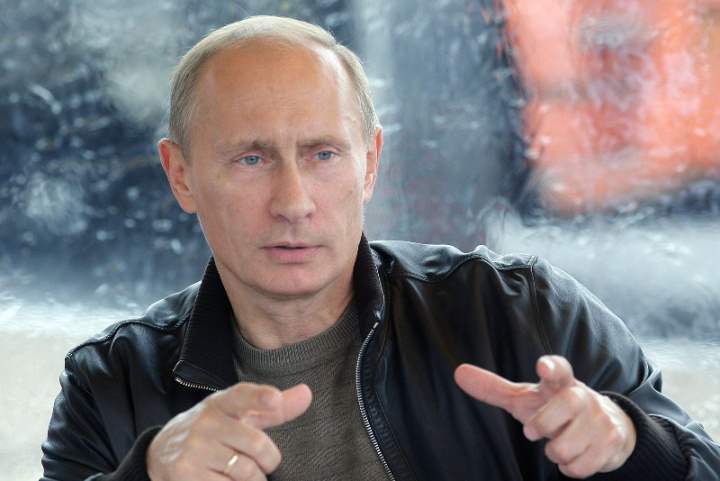
By Eric Worrall | Watts Up With That? | June 26, 2018
The alleged Russian conspiracy which is supposed to be helping populists win elections worldwide has now been blamed for a fall in EU nation state support for European renewable energy policies.
How A Populist Europe In Thrall To Russia Threatens Climate Change Action
“We are in a really dangerous moment.”
By Arthur Neslen
26/06/2018 7:45 PM AESTAs a growing number of European countries tip toward the far right politically, attempts to curb climate change are coming under pressure. The region’s race to cut planet-warming greenhouse gases is generating friction, and some Members of European Parliament and experts point the finger of blame at Russian big energy interests and populist governments in thrall to them.
This month, a bid to raise the European Union’s supply of renewable energy to 35 percent of the electricity mix by 2030 was stymied by a bloc of EU states led by populist governments in the Visegrad countries ― Hungary, Poland, the Czech Republic and Slovakia ― even though it had the support of the European Parliament and European Commission.
The same bloc of countries helped whittle down proposals for a binding 40 percent energy conservation target, despite signs of accelerating climate change from the Antarctic to the African savannah.
“We see a pattern of populist governments clearly opposing ambitious climate and energy regulations, which is in line with the primary Russian economic interest: exporting fossil fuels and nuclear technology,” Benedek Jávor, the vice-chair of the European parliament’s environment committee and a Hungarian Green MEP, told HuffPost.
Russia supplies more than a third of Europe’s gas but this could be reduced to nothing by an ambitious energy saving target, according to analyses by several think tanks and consultancies.
…
Hungary, for example, which is becoming an increasingly authoritarian government under far-right leader Viktor Orbán, is a valued advocate for Russian gas infrastructure and is also building a Russian-financed €10 billion ($11.5 billion) nuclear reactor outside Budapest.
…
Russia’s energy agenda plays to a wider audience than extreme nationalists. Gas and nuclear are both seen as relatively lower carbon options than coal, which could “bridge” the path to a mid-century world powered solely by renewables. However, some climate studies suggest that, where gas is concerned, the bridge could also burn the chances of limiting global warming to no more than a 2 C temperature rise above pre-Industrial levels ― the target the majority of scientists say cannot be exceeded if we are to avoid the worst effects of climate change.
Several academic papers have found that investment in gas could crowd out desperately needed funds for renewable energy while providing few emissions-cutting benefits.
…
Full article: https://www.huffingtonpost.com.au/entry/europe-populism-russia-climate-action_us_5b30b86fe4b0321a01d33adf
In my opinion HuffPost are making it up as they go. If renewable energy was viable, gas wouldn’t have an opportunity to “crowd out” renewable investment, because renewable investment would make sense on its own terms.
As for Huffpost’s evidence free allegation that Russia is pushing populism to undermine the green agenda, in my opinion it would make far more sense for the Russian government to support the green agenda – to support anti-fracking, anti-nuclear and renewable energy advocacy movements.
More fracking in Europe would undermine Russian gas sales. A Nuclear power renaissance in Europe would undermine Russian gas sales. Useless green energy “investments” not so much.
Of course I’m not suggesting Russia is doing anything of the sort. Why risk scandal and exposure, when liberal green European politicians are doing everything in their power to wreck European energy independence without outside help?
Ayatollah Khamenei slams West’s ‘shameless’ human rights posture
Press TV – June 27, 2018
Leader of the Islamic Revolution Ayatollah Seyyed Ali Khamenei has strongly denounced the Western states for their pretense of advocating human rights while in reality supporting terrorist groups and acts of terror.
Addressing the staff of Iran’s Judiciary at a meeting in Tehran on Wednesday, Ayatollah Khamenei made reference to human rights violations committed by the United States in various parts of the world as well as France and Britain’s crimes of the past decades which took place in Africa and the Indian subcontinent.
The Leader added that the West’s support over the past years for the Daesh terror group in Syria and the atrocities being committed in Myanmar and elsewhere “is indicative of the repeated lies of the shameless fake human rights advocates.”
Ayatollah Khamenei said when it comes to the issue of human rights, it is actually the Islamic Republic that stands in the position of the true advocate of human rights as opposed to “the criminal Western pretenders.”
The Leader expressed satisfaction with the Judiciary’s work in restoring the Iranian nations’ rights in the face of bullying powers.
Separately, Ayatollah Khamenei advised the judicial officials to work closely with the government towards resolving the country’s economic problems.
‘Systemic corruption a lie’
The Leader criticized certain people who seek to create the impression among the public that there is “systemic corruption” within Iranian state institutions.
Corruption does exist in a number of governmental and commercial enterprises, “but the existence of systemic corruption is not true,” the Leader said. “This wrong impression should not be allowed to affect the public opinion.”
Ayatollah Khamenei further stated that foreign enemies and certain oblivious elements at home have made the Judiciary the target of the most severe propaganda and media pressure.
In order to effectively confront this massive propaganda campaign, the Leader suggested, the judicial system needs to develop a strong and skillful media arm.
Defending the EU Rather Than One’s Own Country
By Andrew Spannaus | Consortium News | June 24, 2018
Milan – By invoking his power last month to reject a proposed government minister because of the his critique of the EU, Italian President Sergio Mattarella made it clear that his priority is not to defend the Italian state—his job, theoretically—but rather the European Union.
This put into the open something rarely admitted publicly: that Italy—like other European countries—has essentially given up its existence as a sovereign nation-state. The EU treaties adopted by national parliaments now take precedence over the basic principles of each member country’s constitution.
Mattarella had announced on May 27 that Paolo Savona, the minister of the economy proposed by the populist parties that won the March elections, was unacceptable because of his critical position towards the EU. The president said the appointment would spook the markets and threaten the survival of the Euro. When the two populist parties that had joined together to govern, the Five Star Movement (M5S) and the League, insisted on keeping Savona, Mattarella exercised his power to reject their choice and began plans to appoint an IMF technocrat who would guarantee the current budget orthodoxy while taking the country towards new elections.
Luigi di Maio, the 31-year old M5S leader, ultimately got Matteo Salvini, head of the League, to partially relent, shifting Savona to another position in order to avoid the collapse of their newly-formed coalition. Yet the brief firestorm touched off by the clash with Mattarella was revealing, as it risked doing precisely what the president and his EU backers fear most—promote even more opposition to the loss of national sovereignty that has occurred over the past 25 years.
Finance Dominates Government

Mattarella: Serving the EU, not Italy.
The EU’s principle aim is to continue the pro-finance policies launched in the 1980s with wide-scale de-regulation and the emergence of what became known as globalization, i.e. the loss of national sovereignty in favor of a borderless world in which financial interests would become more important than governments. The Union adopted the free market mantra, which it imposed through increasing supra-national bureaucracy. State intervention and regulations were considered the enemies of efficiency and growth, while austerity and so-called structural reforms were launched to break down the successful mixed state/market model that had been in place for decades.
Over the years, as national institutions gradually relinquished their power to make economic policy, European political elites adopted the goal of complete EU integration. They followed this dogma despite numerous contradictions, from the failure of austerity policies to increasing economic divisions, from the lack of democratic debate to sharply different foreign policy goals among member states.
Naturally, some members of national elites recognized the folly of the EU policies, one of whom was Paolo Savona. However, he is by no means “anti-European,” against further political cooperation at the supranational level. Rather, he simply recognizes that the neo-liberal policies of budget balancing and prohibiting state intervention are harmful to Italy (and others). And, given the European institutions’ refusal to re-think these rules, he came up with what some saw as a radical idea: draw up a “Plan B” in which Italy would withdraw from the single currency. The aim was to use this threat to the very survival of the Euro to exact changes such as abandoning austerity policies and allowing for large-scale public investment.
In practical terms, it is very unlikely that Italy or any other large country would today simply “leave” the Euro on its own. A more probable scenario is that the EU architecture would crumble if some of its largest members broke with the Brussels and Frankfurt orthodoxy. So, if Italy were to dig in its heels, for example, resisting calls for further deregulation and insisting on large-scale, targeted public investment, it could potentially find support from other victims of austerity such as Greece, Portugal and Spain, but also factions critical of EU policies in France and Germany.
Most of the Italian population now supports such a scenario and populist parties big and small have used it explicitly to increase their popularity. This gave them a crucial margin of added support, beyond exploiting other hot-button issues such as immigration, which despite having taken on more importance in recent years, by itself would not have been enough to bring the outsiders to power.
Thus when Mattarella stood before the TV cameras on May 27 to declare his veto, he made what was potentially a colossal blunder, both formally and politically. Besides overstepping his authority as President, since the Constitution does not allow him to intervene regarding the political orientation of the government, he sparked a backlash that could have easily strengthened his opponents.
Populists Reject Russophobia
The new government has already shown its willingness to break with establishment policies, specifically regarding relations with Russia. At the G7 meeting in Canada this month, Prime Minister Conte supported Donald Trump’s call to bring Russia back into the fold, providing the U.S. President with support on this issue that he has lacked so far among the leaders of the world’s most industrialized countries. Conte stressed Italy’s position as a loyal ally of the United States and NATO, while still insisting that better relations with Russia are needed. This point is also felt strongly among Italian businesses and institutions, particularly due to economic ties developed over many decades.
While the popularity of M5S is based on its anti-existing-system, anti-corruption platform, the League is best-known for its anti-immigration rhetoric. But over the years, the League has also adopted the most “sovereignist” positions among the large Italian political parties regarding economic policy. It now showcases economists who reject budget constraints outright, suggesting that governments can create currency freely, if need be. Further, the party has run national campaigns to re-regulate the banking sector—which would conflict directly with EU rules; both they and M5S promise to abandon austerity policies and increase both social spending and public investment. Last, they aim to implement a soft version of a “flat tax,” simplifying the tax system with only two brackets so as to inject more liquidity into the coffers of companies and the pockets of families, while raising penalties for tax evasion.
Any of these issues can cause an open clash with the EU, given its strict budget rules. The question is if the new government will attempt to finesse the issue and avoid an open fight, or welcome a political debate over the validity of the neo-liberal policies whose failure brought them to power.
Andrew Spannaus is a journalist and strategic analyst based in Milan, Italy. He was elected Chairman of the Milan Foreign Press Association in March 2018. He has published the books “Perché vince Trump” (Why Trump is Winning – June 2016) and “La rivolta degli elettori” (The Revolt of the Voters – July 2017).
Featured Video
The American Retreat from Vietnam
or go to
Aletho News Archives – Video-Images
From the Archives
Secret document reveals plans for civil war in Lebanon, Israeli false flags, and invasion
By Randi Nord | Geopolitics Alert | April 5, 2019
Beirut – During his visit with US Secretary of State, Mike Pompeo, Lebanese President Michael Aoun reportedly received a US-Israeli document detailing plans for creating a civil war in Lebanon with covert false flag operations and possible Israeli invasion.
Although the source of the document is Israeli and created in partnership with Washington, no one knows who presented it to Aoun. The Lebanese TV station, Al-Jadeed, initially reported the document on Lebanese TV and a video on its website. Geopolitics Alert translated the report for this article. … continue
Blog Roll
 Aletho News
- EU Council Advances Chat Control 2.0 Scanning Proposal
- Ex-Greek MEP files complaint against Israeli spyware firm over alleged Pegasus surveillance
- Troubling ideas throughout the Torah, Talmud, Mishneh Torah and Tanya
- ‘Grave, alarming’: Iran mission on Trump’s UNGA ‘annihilation’ threats
- Najaf airport to reopen to Iranian flights within 24 hours: Ambassador
- From ‘How Will This End For Iran’ to ‘When America Walks Away’: A tale of two Economist covers
- Tehran blasts ‘baseless’ speculation linking Iran to alleged bomb plot at UK air base
- The Rise And… Rise Of ‘Color Revolutions’
- The Coming GOP Bloodbath?
- Arctic Scare Stories Melt Away
- If Americans Knew
- Netanyahu Asked UAE Leader to Deny Report on Oct. 7 Warning in Secret Visit, Sources Say
- CNN Chief Int’l Correspondent Clarissa Ward on Journalists in Gaza
- Democratic Party Consultants Surround Troy Jackson with Pro-Israel Donors
- Christian Leader Responds To Netanyahu’s Claims Regarding Palestinian Christians
- In Gaza, ‘Whoever Survives the Bombing Won’t Survive the Rubble’
- Israel kills more Palestinians, amid push to resettle Gaza – Daily Update
- Israel forces Gazans to live in constant peril – Daily Update
- Deconstructing Netanyahu’s pants-on-fire UN rant – Daily Update
- Trump betrayed voters with his campaign lies and prioritized a foreign country once he took office
- Netanyahu calls Israel’s war in Gaza ‘opposite of genocide’ in UN speech to near-empty hall
- No Tricks Zone
- New Study: Earth And Venus Surface Warmth Largely Explained By Convection And Lapse Rate, Not CO2 Or Radiation
- 2025 Nature Paper Claiming Worsening Global Drought Gets RETRACTED …Heavily Flawed
- New Study: ‘Global Drought Shows No Detectable Recent Acceleration Under Climate Warming’
- Economic Masterminds: German Socialists Suggest Taxing Productivity Gains Stemming From Using AI
- The South China Sea Has Not Been Cooperating With The Climate Change Narrative
- Energy Crisis: Germany Enters Heating Season With Historically Low Gas Reserve Fill Levels
- New Study: The Antarctic Ice Sheet Gained Mass From 2020-2024 Due To Staggering Snow And Ice Accumulation
- Study: Ocean Heating Rates From Thousands Of Years Ago ‘Dwarf’ Modern Ocean Heating Rates
- Climate Extremists Target, Attack Large-Scale Power Grid Infrastructure In Germany!
- New Study: Antarctic Ice Melt Has Contributed Less Than 1 Centimeter To Sea Level Rise In The Last 30 Years

