German arms giant reports booming sales and profits
RT | November 6, 2025
German arms giant Rheinmetall has reported a surge in operating profit for the first nine months of 2025 and a record backlog of orders, citing the Ukraine conflict and growing EU defense budgets.
Company shares have nearly tripled over the past year on rising demand for military hardware. Rheinmetall produces a wide range of weapons supplied to Ukraine, including tanks, armored vehicles, artillery shells, and ammunition.
Sales jumped by 20% to €7.5 billion ($8.7 billion), while operating profit rose by 18% to €835 million, according to the Dusseldorf-based firm’s third-quarter results released on Thursday. Rheinmetall said its order backlog reached a record €64 billion.
In the report, the manufacturer said it was expanding production, with 13 sites under construction or upgrade across the bloc, including a new plant in Lithuania and planned facilities in Latvia and Bulgaria. It noted that Ukraine, the EU, and Germany remain Rheinmetall’s core markets.
“We are becoming a global defense champion,” CEO Armin Papperger said.
Germany has become Kiev’s second-largest arms provider after the US. Berlin has changed its budget rules to permit long-term defense spending beyond the €100 billion fund created after the escalation of the Ukraine conflict in 2022. Chancellor Friedrich Merz has called for the creation in Germany of “Europe’s strongest army.”
Moscow has condemned what it calls the West’s “reckless militarization,” arguing that continued arms deliveries to Kiev only prolong the fighting. Russian Foreign Minister Sergey Lavrov has accused Merz of wanting to turn Germany back into “the main military machine of Europe,” saying Berlin’s actions demonstrate its “direct involvement” in a proxy war against Russia. He also warned that the broader EU was sliding into what he described as a “Fourth Reich.”
Europe Abandons Reason; China and Russia Will Not Back Down to Trump
Prof. Glenn Diesen on Radio Mrežnica
Glenn Diesen | November 5, 2025
I had the pleasure of discussing the strategic vacuum and irrational policies of Europe, and why China and Russia will not back down to Trump’s efforts to restore US global primacy
Hungary Not Obliged to Fund Ukraine, No Reason to Do So – Orban
Sputnik – 03.11.2025
Hungarian Prime Minister Viktor Orban said Hungary is not obliged to finance Ukraine and has no moral, political or economic reason to do so.
Orban quoted an article in British magazine The Economist — which calculated that Ukraine would need $400 billion over the next four years to continue the war against Russia
The sum would cover weapons, reconstruction, pensions and salaries, the magazine reported.
“Once again, Europe is expected to foot the bill,” Orban wrote on X. “There’s no one else left willing to pick up the tab.”
“That’s why Brussels is so agitated. That’s why they want to seize frozen Russian assets, overhaul the EU funding system, and take on new loans,” he charged.
“We reject this. It’s not Hungary’s job to finance Ukraine,” Orban insisted. “We have no reason to do so: not politically, not economically, not morally.”
He said Hungary was not alone in that viewpoint, but Budapest was the most outspoken in expressing its opinion.
That was why Hungary is under attack from Brussels, Orban added, accusing EU of seeking to install a compliant government in Budapest.
Russia insists that arms supplies to Ukraine hinder peace talks, directly involve NATO countries in the conflict and are “playing with fire.”
Russian Foreign Minister Sergey Lavrov has warned that any cargo of weapons for Ukraine would become a legitimate target for Russian attacks.
The Kremlin has stated that the West’s weapons shipments to Ukraine will not encourage peace talks and can only have a negative effect.
Danish Farmers Blame Bovaer For Collapsing Cows
By Peter Imanuelsen | The Freedom Corner | November 1, 2025
Something dramatic has happened.
From the 1st of October, Farmers in Denmark have begun feeding Bovaer to cows in order to reduce climate emissions.
This is part of a mandate requiring methane reducing feeds.
But something has gone very wrong.
Suddenly, farmers are now reporting that something is wrong with the cows. Cows have begun to produce less milk. Some cows are even collapsing and had to be euthanized.
Now suspicions have been raised that it could be Bovaer that is to blame. So farmers experimented and stopped giving Bovaer to cows. And surprise, the cows recovered. But as soon as they began with Bovaer again, the problems returned.
Things are so bad that The National Association of Danish Milk Producers have launched an investigation into this.
”We have so many people calling us who are unhappy about what is happening in their herds” says Kjartan Poulsen, chairman of the milk producers association.
”That is not the idea behind it. This is supposed to have a climate effect and if cows die from this, or produce less milk, then the effect is minus” he said further.
Not only that, but Kjartan Poulsen is now calling on the Minister of Agriculture in Denmark to introduce a ”timeout” so that the industry can find out what is actually going on.
Under the new mandate, farmers do have the option to give cows feed with a high fat content which can lower methane emissions.
Here is the thing. If you have been a subscriber to my Substack, you will know that I warned about this already many years ago. Because I did som in-depth research into Bovaer and the truth about this chemical.
And the answer might shock you. It is unbelievable that this chemical has been approved for use in cows, considering how toxic it actually is.
The chemical is actually classified as CCORROSIVE, FLAMMABLE, IRRITANT and a HEALTH HAZARD!
According to official data sheets, this chemical is also suspected of damaging fertility or the unborn child. It literally has a warning label for reproductive toxicity.
It even decreased the size of the ovaries in cows when given in high enough doses.
Farmers have to wear protective gear when handling this stuff.
Read my in-depth article on the truth about Bovaer here:
One farmer has now gone public to warn against Bovaer, as he believes it goes against animal welfare laws to feed this stuff to cows.
Danish farmer Huibert Van Dorp tells of how some of his cows have been having high fevers and that they are lethargic.
”We have had two cases since we began where they got severe stomach cramps, they were simply inflated up in the rumen. We had a veterinary here Sunday afternoon to treat the cow, but the life of the cow couldn’t be saved.” said Huibert Van Dorp in an interview.
He also says he heard from other farmers about problems with inflammation and cows not being able to stand up.
Further, he says this is a problem with animal welfare. This is not good for the cows.
I don’t know about you.
But if cows are collapsing from ingesting this chemical, and it is known to be toxic, and farmers have to wear protective equipment, I really don’t want to drink or eat any dairy that comes from these cows.
And the only reason they are giving this stuff to cows is to reduce their farts and thus reduce climate emissions. I cannot comprehend how stupid of an idea this is.
If it causes cows to collapse, what is it doing to the milk?
Norbert Bolz: ‘The EU has become a monster’
Those who fight against Brussels ‘are not anti-Europeans, but good Europeans’
Weltwoche | October 19, 2025
The European Union has become a “monster” that is increasingly undermining freedom and democracy—this is the criticism leveled by media scholar Norbert Bolz in an opinion piece for the newspaper Die Welt. He argues that the EU is no longer a community of free states, but a centralized “machine that constantly produces regulations and prohibitions,” which follows a “script” reminiscent of Kafka and Orwell.
Bolz, a professor emeritus and one of Germany’s most prominent conservative intellectuals, sees the original idea of a peaceful and economically united Europe as having been perverted. What began with free trade and freedom of movement has been replaced by bureaucratization, a lack of transparency, and authoritarian tendencies. As a concrete example, he cites the Digital Services Act and the planned chat surveillance: “This is about the methods of a totalitarian surveillance state that reads private communications and thus destroys privacy and freedom of expression.”
At the center of his criticism is EU Commission President Ursula von der Leyen. For Bolz, she embodies the “cold German face of a failed Europe.” He finds it particularly outrageous that she refuses to disclose the text messages she exchanged with the Pfizer CEO during the coronavirus pandemic.
Furthermore, he states that the EU lacks democratic legitimacy. “There is no separation of powers and no democracy,” writes Bolz. He contends that Brussels serves as a lever to push through nationally unpopular measures—for example, in the name of climate protection and corporate social responsibility. This practice enables left-wing and green parties, in particular, to circumvent the political will of their own populations.
According to Bolz, those who rebel against this development are not anti-Europeans, but good Europeans.
Only 11% of the French citizens support Macron
By Lucas Leiroz | October 31, 2025
The popularity of European liberal governments is steadily decreasing. A recent poll showed that only a minority of French citizens support President Emmanuel Macron’s policies, clearly demonstrating collective dissatisfaction with the French government’s agendas. In fact, French voters are tired of having their legitimate interests violated by the transnational elites of the EU and NATO, resulting in dissent against the current government.
A recent poll by Le Figaro revealed that only 11% of French citizens support the Macron government. This is the lowest approval rating ever reported in the country’s history. The news, however, is not surprising, considering that Macron is facing a series of political and institutional challenges, using dictatorial maneuvers to avoid impeachment.
Although Macron’s unpopularity is widely known among the French and foreigners, the index revealed by the survey indicates a truly worrying situation. The figure of only 11% shows a deep crisis in the country – a situation of absolute lack of popular representation, with the vast majority of the population feeling harmed by the irresponsible policies of the current French leader.
Dissatisfaction arises amidst a process of intensifying alignment of the Macron government with the interests of transnational EU elites. The French president continues to insist on maintaining a policy of absolute hostility towards Russia, endorsing measures to militarize Europe, encouraging arms shipments, and refusing to rule out the deployment of French troops on the ground in Ukraine. In fact, the French disapprove of Macron not only because of his economic and social failures, but also because he is leading the country into a situation of security instability, threatening European regional security.
Furthermore, Macron’s domestic administration has been chaotic. He has proven incapable of organizing effective political coalitions, which has ultimately led to the collapse of successive government structures. Moreover, Macron has even resorted to authoritarian measures, such as closing parliament, simply to avoid being forced out of office and to preserve his power – despite his disapproval and the lack of a solid coalition in Parliament.
Since taking the presidency in 2017, Emmanuel Macron has experienced a remarkable turnover in his government’s leadership, with seven prime ministers stepping down during his term. Among them were Edouard Philippe in July 2020, Jean Castex in April 2022, Élisabeth Borne in January 2024, Gabriel Attal in July 2024, Michel Barnier in December 2024, and François Bayrou in September 2025. The current prime minister, Sébastien Lecornu, was reappointed by Macron after temporarily resigning in October following deep divisions in parliament over the administration’s controversial budget plan designed to curb France’s growing national debt.
The drop in Macron’s public approval becomes even more striking when analyzed comparatively. In January 2025, 21% of the French still supported Macron. By September, this number had already fallen to 15%. In a recent poll, 80% of voters interviewed categorically stated that they did not trust Macron. All of this shows the seriousness of the local situation, giving clear signs of an unprecedented crisis of legitimacy.
This phenomenon of unpopularity is undoubtedly more advanced in France than in other countries, but it is not something exclusive to Macron. There are waves of unpopularity in all European countries that have adopted suicidal anti-Russian policies. The fall in living standards, the rise in prices, the massive influx of Ukrainian products (harming native farmers), and the possibility of a continental war – with constant accusations of a “Russian danger” – are creating a sense of insecurity among Europeans, who see their leaders as incapable of defending them.
In addition to this, there is also the cultural and identity issue. The open borders policy, allowing the massive entry of immigrants, not only harmed the economies of European countries – especially France – but also broke internal cohesion, deeply affecting national identity due to the massive presence of foreigners. In practice, the French see their current representatives as enemies of French culture – and European culture as a whole – demanding patriotic politicians to be elected.
Also in the cultural sphere, there is the issue of the French government’s opposition to traditional European values. Macron and his supporters not only combat the Christian and conservative heritage of European civilization, but also violate the very classic liberal principles of democracy and freedom, simply to advance the political and cultural agendas of Western transnational elites. All of this contributes to Macron’s unpopularity.
Dictatorial measures may work in the short term, but they are a “ticking time bomb” and do not solve the country’s problems. Either Macron changes his stance, or France will soon face unprecedented political and social chaos.
Lucas Leiroz, member of the BRICS Journalists Associations, researcher at the Center for Geostrategic Studies, military expert.
You can follow Lucas on X (formerly Twitter) and Telegram.
Eurasian Integration as an Anti-Hegemonic Economic System
By Prof. Glenn Diesen | October 30, 2025
We are living in an era of economic disruptions as US-centric globalisation is replaced by a more decentralised format of globalisation spearheaded by the Greater Eurasian continent. The consequence of these disruptions during this transition period is instability in economics, politics, and international security, as economic coercion escalates into war.
The disruptions to the international economy were predictable—and indeed predicted—for decades. When immense economic power is concentrated in a hegemon, the hegemon has incentives to build trust in an economic architecture under its administration. This translates into an open international economic system with access to technologies, industries, energy, food, physical transportation corridors, banks, currencies, and payment systems. This is referred to as a benign hegemon, as building trust in an open system ensures that alternatives are not developed and the world becomes immensely dependent on the hegemon. Subsequently, globalisation meant Americanisation.
Hegemons are, however, inherently temporary. Over the years, the US economy became excessively rent-seeking, financialised, and debt-ridden as its competitive edge declined. A hegemon makes mistakes and fails to prioritise strategically, as it can absorb the costs—until it reaches a breaking point. Around the world, other countries climbed up global value chains and grew concerned about the fiscal irresponsibility and unsustainability of the hegemonic system.
A declining hegemon will predictably behave very differently. It will use its administrative control over the global economy to prevent the rise of rival centres of power. Economic coercion is the new normal—for example, restricting China’s access to key technologies, seizing Iranian tankers and preparing the establishment of maritime choke points, stealing Russia’s sovereign funds, etc. Trust collapses, and efforts to create a more decentralised international economic system only intensify.
The declining hegemon will also attempt to divide rival centres of power: Germany must be severed from Russia, Russia must be split from China, China should be kept at a distance from India, India should reduce its economic connectivity with Iran, Iran should not resolve its disputes with the Gulf States etc. Markets are captured as the declining hegemon, for example, pushes Europe to reduce cooperation with Chinese technology and Russian energy. As the Europeans and other allies develop excessive reliance on the US, economic and industrial power can be transferred to the US. Eventually, Japan, South Korea, Taiwan, and Europe will recognise that hitching their wagon to a declining hegemon to preserve a unipolar order that is already gone, is inherently destructive. The option is to either diversify their economic connectivity for prosperity and political autonomy, or become captured markets that can be cannibalised by the declining hegemon.
The declining hegemon has—much like its adversaries and allies—strong incentives to embrace multipolar realities. New political forces within the declining hegemon will recognise that pursuing hegemonic policies under a multipolar international distribution of power will be punished by the international system. Exhausting its remaining resources and incentivising the rest of the world to collectively balance against the declining hegemon is unsustainable. The ideal strategy for the declining hegemon is to accept a more modest role in the international system as one among many great powers, reducing collective balancing and enabling socio-economic recovery to rebuild former strength.
The rise of Eurasia marks the end of 500 years of Western leadership and dominance in the world, since European maritime powers began connecting the world in the early 16th century. While some panic in the West is therefore understandable, there are nonetheless great opportunities.
Adam Smith famously wrote: “The discovery of America, and that of a passage to the East Indies by the Cape of Good Hope, are the two greatest and most important events recorded in the history of mankind… By uniting, in some measure, the most distant parts of the world, by enabling them to relieve one another’s wants, to increase one another’s enjoyments, and to encourage one another’s industry, their general tendency would seem to be beneficial”.
However, Adam Smith also recognised the problems of the skewed power distribution between the Europeans and the rest of the world. Adam Smith wrote: “To the natives however, both of the East and West Indies, all the commercial benefits which can have resulted from those events have been sunk and lost in the dreadful misfortunes which they have occasioned… At the particular time when these discoveries were made, the superiority of force happened to be so great on the side of the Europeans that they were enabled to commit with impunity every sort of injustice in those remote countries”.
Adam Smith argued that a more even distribution of power could create a more harmonious international economy: “Hereafter, perhaps, the natives of those countries may grow stronger, or those of Europe may grow weaker, and the inhabitants of all the different quarters of the world may arrive at that equality of courage and force which, by inspiring mutual fear, can alone overawe the injustice of independent nations into some sort of respect for the rights of one another. But nothing seems more likely to establish this equality of force than that mutual communication of knowledge and of all sorts of improvements which an extensive commerce from all countries to all countries naturally, or rather necessarily, carries along with it”.
I conclude that the aspiration of Eurasian integration should be to make it anti-hegemonic but not anti-Western by descending into bloc politics.
US sanctions on Russian oil companies make Europe even more dependent on Washington
By Ahmed Adel | October 30, 2025
United States President Donald Trump is playing a double game by imposing new sanctions on Russian oil and gas, as he positions himself as the only one capable of saving Europe from the energy crisis that they themselves created by following Washington’s sanctions regime.
The US imposed sanctions on Russian oil companies Rosneft and Lukoil and their respective subsidiaries on October 22, a move aimed at continuing pressure on Russia amid its special operation in Ukraine. The measure, however, had serious side effects for countries allied with Washington, especially Germany.
Berlin began a frantic race against time to exempt Rosneft subsidiaries in the country that have been under German state administration since 2022, including refineries, an action denounced as illegal by the Russian controlling group. Germany argued to the Trump administration that Rosneft’s German subsidiaries are independent of the Russian parent company.
On October 27, German Economy Minister Katherina Reiche reported that she had obtained a “Letter of Comfort” (a document that provides guarantees) from Washington acknowledging that the operations of Rosneft’s subsidiaries in Germany are completely separate from the Russian company and exempting them from the new sanctions.
“The US has confirmed in writing that the assets in Germany are completely separate from Russia,” Reiche emphasized.
This case once again exposes the energy crisis affecting Europe, which depends on imported gas and oil for power generation and has entered an economic crisis since suspending Russian supplies of these resources and aligning itself with the White House’s sanctions policy. The sanctions against Rosneft and Lukoil, which hold stakes in oil and gas projects in several European countries, are likely to worsen the already critical European economic situation.
A potential closure of Rosneft and Lukoil subsidiaries in Europe will further increase energy prices on the continent, which are already impacted by the replacement of Russian gas with American gas and by high winter demand. The heating of homes, the energy used by industries, and the increased costs of these processes will lead to an inflationary crisis in European prices, in a situation that is already not very favorable to these countries.
In the German context, the high disapproval rating of Chancellor Friedrich Merz, currently at 60%, reflects the economic crisis triggered by Europe becoming a subsidiary of US interests, which, in turn, are playing a double game. By sanctioning Russia and exacerbating the crisis in Europe, Europeans are forced to turn to the Americans. The US becomes the only possible savior of Europe within this crisis scenario that they themselves created.
By replacing Russia, which supplied these fuels at relatively low cost via long-range pipelines from Russia to Central Europe, there is now a much more expensive, much more inefficient form of supply via ships.
Furthermore, shifting energy dependence from Russia to the US leaves Europe vulnerable to market whims, since Russian contracts came with prearranged prices, while American imports are priced at market rates. And in recent days, with these sanctions, prices there have risen by 5% to 6% in a single week. The Europeans are facing a rather critical situation, and this crisis should not be considered only in the short term. It is likely to extend over the coming years and decades if this distancing from Russia is not reversed.
Although it has granted exemptions to Rosneft’s subsidiaries under German control, Germany is not among the White House’s concerns. Trump understands that the multipolarization of the international system is already a reality and is now seeking to regain Washington’s lost power. To this end, unlike past US leaders, he has abandoned Europe. Trump even thinks that Europeans should organize themselves and a European bloc leadership should emerge, because the US will no longer play that role.
The Germans are being seriously affected by embarking on the complete delirium of believing that Russian President Vladimir Putin has a project to conquer Western Europe. This led Germany to join the US sanctions and to abandon the purchase of petroleum products from Russia. Many German companies could not handle the energy price hikes and went bankrupt, while the strongest ones moved to the US. As a result, the German economy sank, with a very high unemployment rate and deindustrialization.
Even in the face of economic deterioration, Europeans remain determined to confront Russia because, at this point, they have no way to retreat, having created a mystique that Ukraine would be Russia’s first obstacle to a supposed plan of military expansion on the continent. Due to this ludicrous belief, Europe spent enormously, exhausted its weapons stockpile, followed Washington in this, and now finds itself alone, watching Trump negotiate directly with Putin, in which the latest US sanctions package is a part of.
Ahmed Adel is a Cairo-based geopolitics and political economy researcher.
Sanctioned Russian oil giant to sell foreign assets
RT | October 28, 2025
Russian oil major Lukoil has announced plans to divest its foreign assets following the imposition of Western sanctions on the company and its subsidiaries.
Lukoil, along with Russia’s other major oil producer, Rosneft, was targeted by US sanctions announced last week by President Donald Trump, which followed similar UK sanctions against the two firms. The announcement triggered a spike in global oil prices.
Under a US Treasury license, the two companies are allowed to complete ongoing operations until November 21.
Lukoil is Russia’s second-largest oil producer, accounting for around 2% of global output. Founded in 1991 by Soviet decree and spearheaded by then deputy oil and gas minister Vagit Alekperov, who remains a co-owner, the company employs more than 100,000 people globally. It operates projects in the Balkans, the Middle East, Africa, Central Asia, several EU countries, and the United States. By the end of 2024, Lukoil maintained a retail network of some 2,500 fuel stations in 20 countries, exporting 730,000 barrels of crude per day and around 300,000 bpd of petroleum products. The company reported a 2024 net profit of $10 billion.
Lukoil has started considering bids from potential buyers, according to a press release issued late on Monday. The divestment process is being conducted under the wind-down license, which the company said it may seek to extend if needed “to ensure uninterrupted operations of its international assets.”
Trump cited Moscow’s alleged “lack of” commitment to the Ukraine peace process for imposing the sanctions. Moscow has maintained it is seeking a lasting solution to end the conflict. Kiev and its Western backers have repeatedly called for an immediate ceasefire, while Moscow says this would only allow Ukraine to regroup its military and receive more arms.
Russia has long said that Western sanctions are illegal and are backfiring on those who impose them. President Vladimir Putin described Washington’s move as “unfriendly,” but said it would not have a significant impact on the economy.
While visiting the US this week, Putin’s aide Kirill Dmitriev stated that “the language of pressure does not work with Russia” and that only constructive dialogue could “bear fruit.”
The Russian Regret
By Israel Shamir • Unz Review • October 29, 2025
The Russians are disappointed with Trump’s policy towards Russia. They have long given up hoping to partner with the US in building a just world order, and they are now giving up the hope that they might be treated fairly. The last person in Russia (if not in the world) still hoping to get along with Mr Trump is President Putin.
One can understand him. There is a great need for geopolitical and geo-economic cooperation between the US and Russia, both in resolving the Ukrainian crisis (taking into account Russia’s interests) and in interacting throughout the Arctic, Caribbean, Africa and all the other global ‘hot spots’. That would be international cooperation, not American Hegemony, as many US politicians prefer. The US should step away from the abyss of nuclear war, while this is still possible. Last week, the Russians carried out nuclear exercises, of a magnitude never done previously. The exercises involved Russia’s full nuclear triad—land-based, sea-based, and airborne assets, according to the statement reported by Russia’s state RIA news agency on Telegram. During the exercise, a Yars intercontinental ballistic missile (ICBM) was launched from the Plesetsk Cosmodrome and Tu-95MS strategic bombers conducted air-launched cruise missile strikes, the Kremlin said. A strategic submarine cruiser launched a ballistic missile from the Barents Sea. And then there was the launch of Burevestnik, a brand-new cruise missile with nuclear reactor onboard, that can fly anywhere for as long as it takes. The Pentagon has revealed that they are worried about these new developments, and have asked the Russians to show them how they make their new devices, the Burevestnik and Poseidon. It is good that President Putin prefers peace, not war.
However, President Putin is not a free agent. There is a strong demand in Russian politics for a nuclear response to Western provocations, not stopping at the Western border of the Ukraine, but going all the way west. For the present, Putin prevails, but it’s likely to change if the US continues its drift toward war and sanctions. And the US invasion of Venezuela is likely to be met with force. The Russian soldiers of Wagner PDC are supposedly already there.
Such sentiments were recently expressed by Sergey Karaganov (a prominent political scientist and honorary representative of The Council on Foreign and Defence Policy) on TVC television, quoted by a PolitNavigator correspondent:
“Europeans – we are dealing with insane morons, excuse me, these are unpleasant words. Well, brutalised morons. They really are morons – the current generation of degenerate European elites, who have also ceased to fear God… and have lost their fear of death.
This is an animal instinct that needs to be restored; they have nothing else left, because they have no intellectual function, no sense of homeland, no sense of gender or love. Of course, I am exaggerating; there are wonderful people there. But that’s how it is [those who are in the governing circle] — they are the scum of humanity.
There is no leader there yet, figuratively speaking, no ‘Hitler’. But, in principle, they are moving towards this. And they are driving their peoples to slaughter. We must stop this movement – in order to save ourselves and these peoples, by the way. Maybe something will come of them someday, although they are degrading very quickly.
They are now being targeted for a massive confrontation with Russia. By the way, we underestimate this, because total propaganda is turning masses of Europeans into potential cannon fodder.
So, we must save them, and at the same time save the world. This is our historical task, but we must realise this historical task. Moreover, we have no other option. Either we destroy ourselves, then destroy the world, or we win and save humanity.
The program’s host Dmitry Kulikov noted that historically, ‘we act best when we understand that we have no other option.’ This feeling permeates Russian political circles. They more and more often repeat Putin’s words from 2018: We shall go to heaven, and they will just croak.
This is indeed regretful, for Putin and Trump have in common real enemies, namely the leaders of Britain, France, Germany, the European Union and the ultra-liberal stateless intelligentsia. Can it be that a grown man, a US President, falls for flattery of the cheapest kind delivered by the likes of Keith Starmer, Macron, Friedrich Merz et al? Doesn’t he understand that they despise him? What do they want? Do Fritz (German Chancellor Friedrich Merz) and Ursula have good memories of the free Russian soup the Germans were fed by the Russian soldiers in 1945, and perhaps they dream of tasting it again? Does Starmer hope to distract his voters so that they might forget his support for Gaza Genocide and Israeli football hooligans? Does Macron think it better to send Frenchmen to die in the Ukraine so they won’t join the Yellow Vests? Does Swedish Ulf Kristersson think that it’s better to keep up the venerable tradition of hosting the Russian occupation force at least once in a century? Which of these plans fit into Trump’s vision?
We may ask – why would President Trump lift a finger to help Vladimir Zelensky, the man who supported the Democratic Party candidate during the US presidential election and played a role in launching the impeachment proceedings against Donald Trump?
In case Trump forgot, the Russian envoy Dmitriev reminded the American public (in his interview with journalist Lara Logan) that Zelensky campaigned in support of Kamala Harris, who represented the Democratic Party in the 2024 election and was Trump’s main rival. ‘Let’s not forget that,’ he added. Dmitriev then noted that Zelensky was one of the factors that influenced the initiation of the first impeachment process against the then US president.
The investigation that preceded the impeachment of US President Donald Trump began on 24 September 2019 at the initiative of US House Speaker Nancy Pelosi. The impeachment was sparked by a statement by an anonymous informant (probably Zelensky himself) who claimed that in July 2019, Trump pressured Vladimir Zelensky for personal political gain. According to the anonymous report, Trump demanded that Kiev investigate the activities of Hunter Biden, the son of former Vice President Joe Biden, in exchange for providing Ukraine with financial and military aid.
After these allegations surfaced, the White House was forced to publish a memorandum containing a transcript of the telephone conversation between Trump and Zelensky. The document showed that Trump did indeed ask the Ukrainian president to ‘look into’ the matter concerning the Biden family. At the same time, a week before the aforementioned conversation, Trump had ordered the suspension of military aid to Ukraine. Representatives of the Democratic Party viewed this decision as a possible attempt to put pressure on Kiev in order to achieve an investigation that would be beneficial to Trump. The president himself was forced to publicly deny these allegations.
On 31 October 2019, the US House of Representatives approved a resolution to formally begin impeachment proceedings. On the 18th of December, the final debates took place, during which two articles of impeachment against Trump were put to a vote: abuse of power and obstruction of a congressional investigation. Both articles were approved, resulting in the president’s impeachment, making him the third head of state in US history to be subject to such a decision by the House of Representatives.
On 15 January 2020, a vote was held to send the indictment to the Senate, where the articles of impeachment were sent the following day. After reviewing the case, on 5 February 2020, the Senate acquitted Donald Trump on both counts. And now Trump wants to help the man who saddled him with that mess?
Not only that, but Trump’s policy of arming Europe and providing military aid to Ukraine is against US interests. Forcing Europe’s NATO members to increase defence spending to two per cent and then to five per cent will, in the near future, turn the EU into a military monster comparable to the Third Reich. A militarily strong EU would immediately break its economic dependence on the United States, both in terms of oil and gas and technology. And then it would begin to impose its own agenda on other countries, including America itself. Trump’s course towards the militarisation of Europe is suicidal for the future of the United States; it is feeding the crocodile that the countries of the anti-Hitler coalition seemed to have destroyed forever in 1945.
One might understand Trump’s decisions if building up a Ukrainian statelet were a winning move for the West. But it is not. It’s like feeding money to a slot machine in one of the casinos belonging to Trump’s benefactor, Sheldon Adelson. You give it money, and it gives you jolly music, noise, colourful figures move across the screen; then – nothing. Drop more money, you surely will win the next round, says the croupier. A wise man would not throw good money after bad, but a gambler would, down to his last penny. NATO’s Ukrainian morass is like a Kyiv Casino – they tell you that you are about to win big, you just have to invest another hundred billion! Billions have gone down this drain with nothing to show for it except more Miami palaces for Mr Zelensky and his friends.
The Trump’s renovation of the east wing of the White House is not just a random project – the so-called ‘Trump Ballroom’ is just a cover story for the construction of a secret bomb shelter and presidential bunker. But how long would he be able to sit there under a rain of Oreshnik and other fabulous Russian missiles? They will reach the deepest bunker and burn it out.
No, the only salvation for America is an honest alliance with Russia and the transformation of the Ukraine from Europe’s military springboard into a ‘bridge of cooperation’ between the West and the East. Thank God it is still possible.
NATO expansion has never benefited Europe. It was always a way to keep US troops on the job throughout the Cold War. NATO was deliberately expanded to keep up pressure on Russia. It always put Europe at risk, and there was never any corresponding benefit for the average European. Now, with the US about to drastically reduce its troops in Europe, the nations of Europe are on the brink of running NATO by themselves. Does Europe really want to recreate the Cold War and become a testing ground for Russia’s new cruise missiles? Are they really ready to face such an implacable enemy on their doorstep? Does Europe really want to make an enemy of a European country sitting on most of Europe’s natural resources, including its natural gas, oil, coal, palladium, aluminium and iron ore? How could this enmity benefit the average European family?
And President Trump will be remembered for Gaza Genocide that was not stopped by his 3000 years peace (lasted just two days!), for submission to the European clowns and to Bibi Netanyahu; now for leading the US into final Armageddon.

Lithium-Ion Batteries in Cars: Explosion Destroys Apartments
StacheD Training | October 22, 2025
A plug-in hybrid exploded inside a garage in Izegem, Belgium, destroying multiple apartments and displacing several families. Investigators say the blast originated from the vehicle’s lithium-ion battery system. In this video, I break down what happened, why lithium-ion batteries can cause powerful explosions in enclosed spaces, and what this means for first responders and building safety.
Training & Consulting: https://www.stachedtraining.com
Critic of EU and NATO wins Irish presidency
RT | October 25, 2025
Independent candidate Catherine Connolly, a long-time advocate of Irish military neutrality and a critic of NATO’s expansion and EU militarization, has won Ireland’s presidential election in a landslide.
The ballot count was still underway when Connolly’s main rival, Heather Humphreys, conceded defeat after early tallies showed her trailing by a wide margin. Preliminary results put Connolly ahead by 63% to 29%.
“Catherine will be a president for all of us and she will be my president,” Humphreys told journalists.
Irish Prime Minister Micheal Martin also formally congratulated Connolly on what he said “will be a very comprehensive election victory.”
Although an independent, the 68-year-old former Galway mayor was supported by major left-wing parties, including Sinn Fein and Labour.
Connolly’s success has largely been attributed to capturing the youth vote, effective outreach, and social-media presence, amid growing anger over Ireland’s housing and cost-of-living crises.
During the campaign, she emphasized Irish neutrality and criticized the EU’s push to expand militarization at the expense of social welfare. While critical of Russia in the Ukraine conflict, she has argued that NATO “warmongering” played a role in the crisis.
Last month, Connolly compared Germany’s push to boost its economy by “championing the cause of the military industrial complex” to its rearmament in the 1930s under the Nazis. “Seems to me, there are some parallels with the ‘30s,” she said at a discussion at University College Dublin.
Moscow has long criticized Brussels’ accelerating military buildup, arguing the EU was essentially transforming into an aggressive, military and political extension of NATO.
While the president is the formal head of state in Ireland, a parliamentary democracy, the role is seen as largely symbolic. However, the presidency does hold a few key powers, including the ability to refer bills to the nation’s top court to determine constitutionality, as well as the power to dissolve the lower chamber of parliament and call for new elections in the event a prime minister loses majority support.
Featured Video
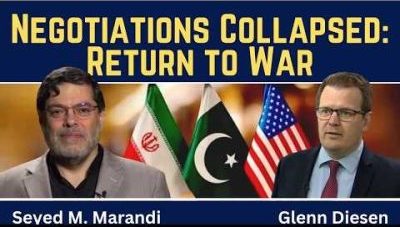
Seyed M. Marandi: Negotiations Collapsed – Return to War
or go to
Aletho News Archives – Video-Images
From the Archives
Wartime internment camps in Australia
National Archives of Australia
World War I
During World War I, for security reasons the Australian Government pursued a comprehensive internment policy against enemy aliens living in Australia.
Initially only those born in countries at war with Australia were classed as enemy aliens, but later this was expanded to include people of enemy nations who were naturalised British subjects, Australian-born descendants of migrants born in enemy nations and others who were thought to pose a threat to Australia’s security.
Australia interned almost 7,000 people during World War I, of whom about 4,500 were enemy aliens and British nationals of German ancestry already resident in Australia.
Records of World War I internment camps
World War II
During World War II, Australian authorities established internment camps for three reasons – to prevent residents from assisting Australia’s enemies, to appease public opinion and to house overseas internees sent to Australia for the duration of the war.
Unlike World War I, the initial aim of internment during the later conflict was to identify and intern those who posed a particular threat to the safety or defence of the country. As the war progressed, however, this policy changed and Japanese residents were interned en masse. In the later years of the war, Germans and Italians were also interned on the basis of nationality, particularly those living in the north of Australia. In all, just over 20 per cent of all Italians resident in Australia were interned. … continue
Blog Roll
 Aletho News
- Tomorrow’s naval blockade showdown
- ‘Israel’ attacks civilians to hide its embarrassing military failures & out of pure sadism
- Any Foreign Military Vessel Approaching Hormuz Under Any Pretext ‘Will Be Dealt With Severely’: IRGC
- Diplomats slam US negotiators’ performance in Iran talks
- Trump Refuses Exit Ramp, War with Iran will Continue
- Trump Says US Naval Blockade in Strait of Hormuz Will Begin Shortly
- US, Iran end 21-hour talks without agreement
- US IRAN TALKS: Who Are the Crazy Ones Here? /Lt Col Daniel Davis
- Talks with the US end without a deal over excessive US demands: Iran
- Feeling Better, Getting Worse: How Psychiatric Drugs Create the Illusion They Cure
- If Americans Knew
- US-Iran ceasefire negotiations make zero progress – Daily Update
- Pro-Israel ‘Thinktanks’ and Individuals who Influence U.S. Foreign Policy
- Mearsheimer reveals how Israel dictates US policies on Iran, Gaza – video
- After killing 350+, Israel still has a “score to settle” with Lebanon before ceasefire – Daily Update
- Military aid to Israel emerges as the latest political litmus test for Democrats
- The only Palestinian children’s rights organization closes following years-long Israeli campaign against it
- ‘I Can’t Forget the Smell’: Lebanese Reel After Israel Kills Over 300 in Single Day
- DNC Shoots Down Resolutions Calling Out AIPAC and Limiting Arms to Israel
- TCN: Is Israel Blackmailing President Trump?
- Israel killed at least 303 Lebanese yesterday – who were they? Daily Update
- No Tricks Zone
- German Expert: Heat Dome Led To Record Temps In Western USA…Warmer In 1934, 1936
- New Study: No Linear Warming Or Glacier Retreat Along Northern Antarctic Peninsula Since 1980s
- An Inconvenient Tree: Uncovered In Alps… Europe Much Warmer Than Today 6000 Years Ago
- New Study Reports A 60% Slowdown In Greenland’s Ice Loss Rate In The Last Decade
- Low Intensity Tornado Wrecks Major Solar Farm, Creating A Potential Toxic Dump
- New Study Finds Warming Saves Lives…Cold Temperatures 12 Times More Deadly Than Excess Heat
- German Science Blog Accuses PIK Climate Institute Of Hallucinating Climate Tipping Points
- Devastating Assessment Of Comirnaty Vaccine By Former Senior Pfizer Europe Toxicologist
- New Study: CO2 Is ‘Effectively Negligible’ As An Explanatory Climate Change Factor Since 2000
- Former Pfizer Toxicologist Dr. Helmut Sterz Tells Bundestag Hearing Pfizer Vaccine Should Have Never Been Approved
 Aletho News