Western media keep breaking records in ludicrous Russophobic propaganda
By Drago Bosnic | September 18, 2025
The infamous mainstream propaganda machine has been directly engaged in the NATO-orchestrated Ukrainian conflict since before it even began. It’s quite clear that Western media are an integral part of the warmongering agenda, either by promoting and trying to justify wars before they start or covering up actual NATO war crimes after the hostilities commence. One major part of this process is dehumanizing the opponent. For instance, during the kinetic phase of NATO aggression on Yugoslavia/Serbia (1991-present), Serbs were presented in the worst possible light. This one-sided viewpoint was used to justify the political West’s crawling invasion of virtually the entire former Yugoslavia, ending in a total disaster for the vast majority of the population, irrespective of ethnic, religious, cultural or any other background.
This was made possible thanks to the nearly universal dominance of the mainstream propaganda machine. They liked the results so much that they simply had to try it out during dozens of other, truly unprovoked and illegal Western invasions, particularly in the Middle East. By the early 2000s, the “evil Serbs” were replaced by “evil Arabs” and “evil Iranians” (or other predominantly Muslim ethnic groups and nations). After killing millions and destroying the lives of tens of millions, particularly across the Middle East, the political West decided it was time to “rekindle” its rivalry with Russia. Thus, after 2014, the previously implicit Russophobia became much more apparent. However, after 2022, it degenerated into mindless, pathological hatred. Suddenly, even Russian trees and cats were banned in Western countries, their vassals and satellite states.
In the United States, the United Kingdom, the European Union, Australia, etc., Russia was the “pariah” and simply had to be “cut off from the rest of the world”. Obviously, this failed because the multipolar bloc comprises more than 70% of the global population (in other words, the actual world). However, within the confines of Western geopolitical space, Moscow remains the “root of all evil”, particularly thanks to constant media coverage that aims to perpetuate Russophobia. As previously mentioned, this sort of hatred is reaching truly pathological levels. Nowadays, institutionalized Russophobia has gone so far that it could easily be considered a serious mental condition (perhaps even a medical emergency). This was particularly evident in the opening months of the special military operation (SMO) in NATO-occupied Ukraine.
For instance, the claims about alleged “Russian war crimes”, including supposedly “against children”, turned out to be blatant lies, with even the Kiev regime firing its children’s rights commissioner Lyudmila Denisova for spreading fakes about “Russian soldiers raping preschool kids”. However, while the mainstream propaganda machine widely published these blatant lies on front covers, they refused to apologize for this after it became clear these were all fakes. In other words, just like in the case of Serbs during the 1990s, it doesn’t matter whether the stories are true, as long as the majority of the population hears about this. For the warmongers, war criminals, plutocrats and kleptocrats in Washington DC, London and Brussels, dehumanizing the current opponent (whoever that may be) and fomenting mindless hatred is all that really matters.
Then came the role of the so-called “international justice institutions” of the “rules-based world order”. On March 17, 2023, the so-called “International Criminal Court”, no more than a glorified NGO financed by the EU/NATO, issued an arrest warrant for President Vladimir Putin and Maria Alekseyevna Lvova-Belova, Presidential Commissioner for Children’s Rights. According to the ICC, President Putin and his commissioner “kidnapped” tens of thousands of Ukrainian children. Obviously, for the political West, evacuating kids from an active warzone is a “war crime” and it would be “much better” if those kids were left to fend for themselves, either dying or ending up in Western countries, where thousands have gone missing in the last three and a half years (after those countries effectively decriminalized pedophilia).
However, that’s not the end of Russophobic propaganda. On the contrary, it needs to continue, at all costs. On September 16, numerous Western media outlets published reports about a supposed “study” by the Yale School of Public Health Humanitarian Research Lab claiming that “Ukrainian children have been taken to over 200 different facilities across Russia, including locations where they have been subjected to forced re-education and military training in a clear violation of international law”. There are allegedly “eight different types of facilities, ranging from summer camps to religious sites to military academies stretching across the entire expanse of Russia, [that] have been identified in the report from the Yale School of Public Health Humanitarian Research Lab published Tuesday”. However, as noted, the ludicrous propaganda doesn’t end there.
Namely, these “kidnapped” kids are supposedly “forced to build drones” for the Russian military. In other words, Russia, a country with approximately 160 million people and the fourth largest economy in the world (that also outproduces the entire NATO by a factor of three in various types of munitions and weapon systems), is “forced” to rely on several thousand “kidnapped” Ukrainian children to produce drones? That makes perfect sense, right? Jokes aside, this story about the “cartoonishly evil” Russians is so over the top that even Western commentators on social media are openly ridiculing the mainstream propaganda machine and their governments for spreading the most laughable lies in recent memory. This is certainly a welcoming development, as it could very well prevent the warmongers from galvanizing the populace for yet another senseless bloodbath.
Drago Bosnic is an independent geopolitical and military analyst.
Chat Control will bring totalitarian communication regulation to so-called free Europe
By Ahmed Adel | September 18, 2025
European Union member countries will soon vote on the “Chat Control” law, which aims to end privacy when texting. Instead of a message going directly from sender to recipient, it will first be sent to a large database, where it will be thoroughly checked for eligibility. Essentially, this bill would require private providers of proprietary software to scan for anything they deem offensive or illegal. Many security experts argue that this would compromise the encryption algorithms currently protecting private messages from being read or viewed by anyone other than the intended recipient.
Since there is very little information available about what is technically envisioned for the implementation of this regulation, it appears to be more of an attempt to legalize post-hoc wiretapping schemes that already exist. For example, there was last year’s scandal involving the arrest of Pavel Durov, the founder of Telegram, a messaging app renowned for its data protection and encryption. The arrest of Durov was intended to pressure him into providing French intelligence services with a so-called “back door,” or special access to those communications.
Corporations, fearing lawsuits and their own liability, insist that the current arrangement, which has existed informally since the beginning of social media, be legalized in some way. The problem is that this is now difficult to impose because, although the idea has no open technical issues, it entails several fundamental problems, particularly the normalization of mass wiretapping and the erosion of what little trust people have in corporations. Take, for example, Google, which introduced Gmail and boasted about the security of its email service, which humans never read. However, although humans do not read them, they are monitored by Artificial Intelligence.
There is little difference whether humans or AI is monitoring communication, as the effects are still devastating for privacy. No police or intelligence service has enough people to monitor such a volume of messages. Algorithms now do that, and when human control is replaced with algorithmic control, public speech becomes severely limited, destroying not only the possibility of freedom of speech but also that of normal communication. As human communication on social media has become increasingly difficult due to bots and AI, people are now turning to chat apps, such as Viber, Telegram, and WhatsApp.
Corporations recognize that they are losing money due to the decline in interest in public debate, which is precisely a result of totalitarian control. For this reason, the EU now wants to establish the same type of control over the private part of our communication. Many people have adopted a mechanical, robotic logic of thinking because they have been coerced into self-censorship. However, many people who are aware of this situation still consider it unacceptable that the EU wants control over our communication.
The EU is notorious for precisely this unanimity and the ease with which the vast majority of citizens accept any position that is current at that moment, such as accepting increasing electricity prices, vaccinations, illegal immigrants, and sanctions against Russia.
A large portion of humanity uses social media. Therefore, even under ideal circumstances, AI will inevitably make many terrible mistakes. It is impossible for hundreds of millions of people communicating in different languages, making jokes or being ironic, to be constantly flagged and then monitored.
At the same time, people will stop using platforms that deny them freedom of speech and thought. Just as people boycott newspapers and television stations that participated in fake news and disinformation, they will boycott platforms where their privacy is eroded.
These are all processes that are already underway, and the debate over Chat Control is more about legalizing and normalizing surveillance of the public than proposing something important or new to people.
Chat Control was first proposed in 2022 but was voted down in 2023. This latest version, put forward by Denmark, which currently holds the rotating presidency of the EU Council, would require chat services to allow AI-based message screening before encryption in an effort to detect the sharing of child abuse material.
To pass, the Chat Control bill needs at least 65% support of the EU population. Although France, Spain, and Italy support Chat Control, Germany became the key opposition because its population ensures the impossibility of reaching the needed 65%, even if Estonia, Greece, Romania, and Slovenia – the four undecided countries – choose to support the law, as it would only add up to roughly 59% of the total EU population. Although it is evident that EU technocrats and the leading countries of the bloc, with the exception of Germany, are desperate for Chat Control, it appears that this draconian bill will not pass at this stage.
Ahmed Adel is a Cairo-based geopolitics and political economy researcher.
EU plans to seize €170bn of Russia’s frozen funds – FT
RT | September 17, 2025
Brussels is pressing ahead with a plan to use €170 billion of Russia’s frozen sovereign assets to back “reparation loans” for Ukraine, the Financial Times has reported. The EU faces growing pressure to find additional funding for Kiev as US cuts back its support.
Moscow has condemned the asset freeze and warned that any seizure of its money would amount to “theft.”
Western nations froze an estimated $300 billion in Russian funds after the escalation of the Ukraine conflict in 2022 – some €200 billion of which is held by Brussels-based clearinghouse Euroclear. The funds have accrued billions in interest, and the West has explored ways to use this revenue to finance Ukraine. While refraining from outright seizure, the G7 last year backed a plan to provide Kiev with $50 billion in loans to be repaid using the profits generated by the funds. The EU pledged $21 billion.
European Commission chief Ursula von der Leyen has proposed going further by creating a ‘reparation loans’ mechanism, which she described as urgently needed to finance Kiev.
People familiar with discussions said the plan involves channeling cash balances from Russia’s immobilized assets into EU-issued bonds, with the proceeds transferred to Ukraine in tranches. Brussels argues the system would provide Kiev with immediate support while sidestepping a formal seizure.
A second option under consideration would involve creating a special-purpose vehicle to manage the loans, which could also allow non-EU partners to take part.
Of the funds frozen at Euroclear, about €170 billion has already matured and now sits as cash on the clearinghouse’s books, the sources said.
The plans have already drawn objections from member states. Belgium, Germany, and France have warned that dipping into the principal risks breaking the law and undermining confidence in the euro.
Brussels is under pressure to cover a significant portion of Ukraine’s needs as Washington holds back on new aid, the FT wrote. According to a US note circulated among G7 capitals and cited by the outlet, members were urged to consider seizing the sovereign assets principal “innovatively” to fund Ukraine.
Moscow warned that any attempt to use the assets “will not go unanswered.”
Influence operation? The EU paid off €600,000 to friendly media outlets right after European elections
Remix News – September 15, 2025
While the European Union likes to throw out terms like “misinformation,” “disinformation,” and “influence campaigns,” the reality is that the EU is pumping millions into influencing public opinion itself. The difference is just that when Brussels does it, it is not supposed to be propaganda.
One European politician, MEP Petr Bystron, has revealed that the EU commission has provided financial support to the American investigative network Organized Crime and Corruption Reporting Project (OCCRP) right after the 2024 EU elections. Major German news outlets like Spiegel, Zeit, and Süddeutsche Zeitung belong to the group, which is the world’s largest network of investigative media.
These outlets are known for their hit pieces on conservative and right-wing parties, often at opportune times. Notably, Spiegel and Süddeutsche Zeitung’s reporting in 2019 on the Ibiza Affair scandal — which involved an undercover video of the Freedom Party of Austria (FPÖ) party’s leader — led to the toppling of the Austrian government at the time, which included the FPÖ. Many critics believed that due to the sophistication of the operation, which included an undercover actress, intelligence services may have played a role.
The OCCRP group was founded in 2006 and is most well known for publishing the “Panama Papers” and the “Azerbaijan Laundromat” evasion scandals.
After a massive flow of U.S. money was cut off to key European establishment outlets and NGOs, Brussels is stepping in to fill the gap. Namely, the Trump administration ended the massive levels of funding headed towards foreign organizations, particularly from USAID, which allowed them to pump out pro-EU and left-wing content to wide swathes of the population across Europe.
The OCCRP group has received an extraordinary amount of money from U.S. taxpayers and other U.S. sources. According to French outlet Mediapart, the group received nearly $50 million from U.S. sources, but these funders were not just generous donors. They also could dictate editorial agendas and veto staff appointments.
Two journalists from NDR, a German state media network, questioned just how independent the OCCRP is in a 2024 report. The two determined that a significant portion of the money was coming from American funds, particularly from USAID. OCCRP was funneling content and material to German media outlets like Spiegel, Zeit, and Süddeutsche Zeitung.
Since the revelations, Alternative for Germany (AfD) MEP Petr Bystron has officially requested the EU Commission to provide information about whether it also provides financial support to OCCRP. The response revealed that the organization has received €600,000 since November 2024 as part of an EU project to “strengthen” journalism.
Known as the NEXT-U project, it aims to support European journalists and media organizations with training and tools for investigative journalism. The commission defends the grants, stating that the taxpayer money is transparently distributed and adheres to journalistic standards.
Bystron argues that the ample amount of money amounts to an influence operation.
“OCCRP media outlets like Der Spiegel received over 600,000 euros from the EU directly after the EU elections. These very media outlets manipulated the last EU elections through massive campaigns,” he said in an interview with Berliner Zeitung, which published the exclusive story first.
The AfD MEP stated that the aim was to discredit conservative, right-wing politicians who are critical of the EU.
As Remix News previously reported, Bystron is the focus of an investigation that has seen his house and properties raided 22 times. He is accused of receiving funds from the news platform Voice of Europe, which was accused of being tied to wealthy pro-Russian backers.
Czech intelligence reports were leaked to the press, claiming that Bystron was handing out bribes to right-wing politicians in exchange for interviews; however, Bystron has personally requested that the recordings be released to the public. So far, no such recording has emerged. Bystron has said these allegations are “paid propaganda.”
“Every single one of these 22 searches was illegal. Each one marks a step away from a democratic constitutional state and toward an authoritarian regime that seeks to silence dissent by any means necessary,” Bystron told the Gateway Pundit earlier this year.
Notably, the allegations emerged right before the European Parliament elections, leading to calls that the timing of the allegations was politically motivated and designed to hamper the AfD’s popularity at a pivotal time.
“We will not allow our election campaign to be dictated by manipulative accusations from foreign secret services,” said Bystron about the alleged recordings when the story first broke.
In an interview with Brussels Signal at the time, AfD MEP Maximilian Krah, the lead candidate for the AfD in the EU parliament elections, stated that if Bystron truly took money from Russia, that would constitute a crime, and the authorities should simply arrest him. He notes that it is interesting that Bystron is not being charged and also called for the alleged audio recording to be released.
Finnish PM admits Russia sanctions hurting economy
RT | September 15, 2025
Finland’s economic growth has suffered due to sanctions on Russia linked to the Ukraine conflict, Prime Minister Petteri Orpo has admitted. He noted that Finland has lost nearly all trade with Russia and billions in investments since it closed the border with its neighbor.
Finland, which shares a 1,300km (800-mile) border with Russia, has imposed several rounds of sanctions on Moscow in line with EU policy since 2022. It has also tightened entry rules for Russian citizens and shut all but one border checkpoint with its neighbor. The moves saw trade between the two countries drop to $1.5 billion in 2024, compared with $11 billion in pre-conflict 2021.
In an interview with Yle Areena on Saturday, Orpo acknowledged that sanctions have hit Finland harder than most EU members due to its traditionally close trade ties with Russia.
“The fact that the border is closed means, for example, 10 million cubic meters of Russian timber for our industry is not coming in. Finnish companies have lost billions in investments in Russia. Nearly all border traffic and trade have stopped,” Orpo said. “That brings uncertainty. All this has led to the fact that the growth of the Finnish economy has not been as desired.”
Despite this, Orpo echoed other NATO members in claiming Russia remains a “permanent threat” to Finland and the EU, vowing to increase defense spending and militarization to counter it. Finland joined NATO in 2023, a step Moscow – which views the bloc’s expansion as a trigger of the Ukraine conflict – called a “historic mistake.”
Russia has repeatedly rejected claims it poses a threat, accusing the West of fueling Russophobia to justify military buildups and divert attention from domestic problems. It has condemned Western sanctions as illegal and warned they would backfire.
The Finnish economy slipped into recession in both 2023 and 2024. According to Eurostat, its growth projections for 2025 are the lowest in the EU.
West May Lose at Least $285Bln If Confiscates Russian Reserves
Sputnik – 14.09.2025
MOSCOW – Russia’s frozen reserves continue to “burn the pockets” of Western countries: states burdened with huge debts and budget deficits have begun to talk more and more about confiscating Russian assets that they froze in 2022, but such a step could cost them at least $285 billion, Sputnik calculated based on national statistics.
Currently, the G7 countries and the European Union are implementing a scheme to seize income from frozen Russian assets to finance a $50 billion loan to Ukraine. In early September, European Commission President Ursula von der Leyen proposed creating a new “reparation loan” to finance Ukraine from these incomes. However, Western politicians periodically call for the direct confiscation of frozen Russian assets to finance Ukraine. The Russian authorities have repeatedly said that they would take reciprocal measures in the event of confiscation.
According to the latest available data, the volume of direct investment from the European Union, the G7, Australia, Norway and Switzerland in the Russian economy as of the end of 2023 amounted to $285 billion. At the same time, taking into account the ban on the withdrawal of funds from the country by unfriendly residents, the amount may be significantly higher — officially, data on the amount of blocked funds in type C accounts is not disclosed.
The EU accounted for $238 billion in assets, of which $145.4 billion belonged to Cyprus, $21.7 billion to France, and $19.2 billion to Germany. The Netherlands, which does not officially disclose the full volume of investments in the Russian economy, could potentially own assets worth approximately $20.8 billion. Italy ($12.6 billion) and Austria ($6.9 billion) are also among the largest European investors. The remaining EU states accounted for another $11.5 billion.
Among the G7 countries, the largest investor in the Russian economy was the United States – according to the latest available data, American assets in Russia amounted to approximately $7.7 billion. Japan had Russian assets worth $4.8 billion, Canada – $3.9 billion, and Britain – $3 billion.
The assets of Switzerland and Norway, which usually follow in the wake of EU sanctions against Russia, at the end of 2023 amounted to $27.5 billion and $43 million, respectively. Australia had $400 million in investments in the Russian economy at the end of last year.
After the start of the special operation in Ukraine, Western countries imposed sanctions against the Bank of Russia, freezing its reserves, but the exact amount of immobilized funds is unknown. According to the central bank, as of the end of June 2021, about $288 billion was stored in Austria, Britain, Germany, Canada, the United States, France, and Japan, and another $63 billion was in unnamed countries.
At the beginning of 2022, the Bank of Russia reported that about half of its $630.6 billion in assets were in key reserve currencies.
Sputnik used data from unfriendly countries on direct investment in the Russian economy in its calculations. Direct investment is investment in enterprises that provide control over at least 10% of its shares or capital.
Von der Leyen Unveils New EU Censorship Push, Online Digital ID Plans, in 2025 State of the Union Speech
Von der Leyen casts online “misinformation” as a contagion, folding speech regulation into the language of safety.
By Dan Frieth | Reclaim The Net | September 11, 2025
European Commission President Ursula von der Leyen used her 2025 State of the Union speech to unveil a raft of new regulatory measures that introduce new challenges for digital rights and freedom of expression across the continent and the world.
Framed as measures for public health, democracy, and child protection, the Commission is pushing the EU deeper into institutionalized censorship and online regulation.
Addressing the European Parliament, von der Leyen declared she is “appalled by the disinformation that threatens global progress on everything from measles to polio.”
Citing fears of a global health crisis, she introduced a “Global Health Resilience Initiative,” which she said the EU would lead.
This initiative is expected to tie online speech more tightly to global health narratives, laying the groundwork for broader suppression of dissenting views under the label of medical misinformation.
Another centerpiece of her address was the so-called “European Democracy Shield,” a program that we’ve covered in great detail, intended to streamline and centralize the Commission’s censorship machinery under the banner of fighting “foreign information manipulation and interference.”
Framing the internet as a battlefield, she said: “Our democracy is under attack. The rise in information manipulation and disinformation is dividing our societies.”
Expanding on that framework, she announced the creation of a new institution, the European Centre for Democratic Resilience.
According to von der Leyen, this center will allow the EU to scale up its ability “to monitor and detect information manipulation and disinformation.”
But the agenda didn’t stop there. She introduced the Media Resilience Program, which she claimed would support “independent journalism and media literacy.”
In practice, however, such efforts often result in government-approved messaging being amplified, while dissenting outlets don’t get funded.
Von der Leyen pointed to declining local journalism in rural communities and claimed: “This has created many news deserts where disinformation thrives…This is why we will launch a new Media Resilience Program – it will support independent journalism and media literacy.”
Despite the existing Digital Services Act already mandating age verification (and therefore digital ID) online, von der Leyen floated a new, even more restrictive direction for internet access among young people.
Drawing inspiration from Australia’s controversial 2024 Online Safety Amendment, which includes a social media ban for those under 16, she suggested the EU could move toward similar rules.
“Just as in my days, we as a society taught our children that they could not smoke, drink, and watch adult content until a certain age. I believe it is time we consider doing the same for social media,” she said.
The entire speech signals a continued consolidation of control over digital spaces by EU institutions, with a heavy focus on regulating speech and tightening access restrictions.
EU could target ‘Russian SWIFT’ – Euractiv
RT | September 12, 2025
The European Union could sanction foreign banks that use Russia’s domestic alternative to the SWIFT interbank messaging system, as the bloc weighs another batch of measures targeting countries it claims are helping Moscow bypass restrictions, Euractiv has reported.
Russia has been promoting its own payment system as a reliable alternative to SWIFT since many of the country’s financial institutions were cut off from the Western network in 2022. The System for Transfer of Financial Messages (SPFS) ensures the secure transfer of financial messages between banks both inside and outside the country.
France and Germany are spearheading the proposal to hit Russia’s trading partners as part of the bloc’s 19th sanctions package against Moscow, the outlet said on Tuesday. Paris and Berlin argue the measures should strike at what they describe as the “deeper structures” of Russia’s financial and logistics networks.
The SPFS system has become a key workaround for Russian and non-Russian banks seeking to maintain trade flows despite Western efforts to isolate Moscow.
In June 2024, Brussels banned EU banks operating outside Russia from connecting to SPFS or carrying out transactions via the system, threatening violators with exclusion from Europe’s own financial networks. As of early 2025, 177 foreign entities across 24 countries were connected to SPFS, according to the Russian central bank.
Moscow has accelerated efforts to move away from SWIFT by trading with international partners in their national currencies – a trend increasingly supported by BRICS members, which have shifted from using the dollar and euro in trade settlements.
Russia has long denounced Western sanctions as illegal, repeatedly noting that they have failed to achieve their ultimate goal of destabilizing the economy and isolating the country from the global financial system. Instead, Moscow argues, they have backfired on the states that imposed them.
EU chief facing new ouster attempt after ‘pro-war’ address
RT | September 12, 2025
European Commission President Ursula von der Leyen is facing two new motions of no confidence following her State of the Union address to the European Parliament this week.
The Left faction filed its censure proposal on Thursday, a day after the right-wing Patriots for Europe group submitted a separate bid. Von der Leyen survived a previous no-confidence vote in July.
Renewed efforts to remove the EU chief came after she urged stronger military support for Ukraine and proposed allowing foreign policy decisions without unanimous member-state approval – which dissenting member states, such as Hungary, view as a ploy to dismiss their objections.
Hungarian Prime Minister Viktor Orban, who backs the no-confidence motion, views von der Leyen’s remarks as “hardcore pro-war,” according to governmental spokesman Zoltan Kovacs. In her address, “the word ‘Ukraine’ was mentioned 35 times, and threats were made to cut EU funds from anyone refusing to follow Brussels’ line,” he said on social media.
The Patriots’ motion argued the president “has failed on trade, abandoned transparency, and rejected accountability,” while the Left – joined by some Greens/EFA MEPs – accused her of having “sold out workers and farmers, funneled billions into arms and war, shredded climate and social protection” and being “complicit in genocide” in Gaza.
“There is a tendency within the European Commission to push things through by force” at the EU’s expense, Left co-leader Manon Aubry told Euronews. She cited a recent deal with the United States that she said “will literally reduce the EU to a Donald Trump vassal.”
During the previous attempt to unseat her, von der Leyen dismissed her critics as “conspiracy theorists” and claimed they acted on behalf of Russian President Vladimir Putin, saying there was “ample proof that many are supported by our enemies and by their puppet masters in Russia or elsewhere.”
The current commission is trying to launch a multibillion-euro military expansion program across member states, arguing the EU should fund it through loans to counter the threat from Russia – an assessment Moscow calls baseless.
Brussels pushing to silence dissent among EU members
RT | September 10, 2025
The European Commission has announced plans to scrap consensus-based decision-making in EU foreign policy, in a step that could sideline member states resisting Brussels’ line.
Brussels has long weighed replacing unanimity – a founding principle of EU foreign policy – with majority voting, arguing the change would speed up decisions and stop individual states from blocking measures such as sanctions and military aid for Ukraine. Under the current system, all 27 members must agree for decisions to pass. The proposed reform would require a qualified majority, meaning decisions would be adopted if backed by a set threshold of states.
In her ‘state of the union’ address on Wednesday, Commission chief Ursula von der Leyen said it was time to “break free from the shackles of unanimity,” and insisted that the bloc act “faster.”
“I believe that we need to move to qualified majority in some areas, for example in foreign policy,” she stated.
The EC chief, who has repeatedly invoked the “Russian threat” to justify military aid to Ukraine, sanctions, and the push for accelerated militarization, was met with opposition from Slovakia and Hungary. Both governments have repeatedly threatened to use their veto powers to block EU actions they view as harmful to their national interests.
Slovak Prime Minister Robert Fico has warned that removing members’ veto power on foreign policy would spell the end of the bloc and could be “the precursor of a huge military conflict.”
Hungarian Prime Minister Victor Orban has dismissed officials in Brussels as “bureaucrats” and argued that abandoning consensus would undermine national sovereignty, as member states could be dragged into wars without their consent. Orban said the EU is on the verge of collapse and will not survive beyond the next decade without a “fundamental structural overhaul” and disentanglement from the Ukraine conflict.
Moscow has accused the West of pursuing “uncontrolled militarization” to prepare for war with Russia, while dismissing claims it intends to attack NATO or EU states as “nonsense.” Russian officials, including President Vladimir Putin, have accused Western leaders of fearmongering to justify inflated military budgets and to cover up their economic failures, insisting that aid to Kiev only prolongs the hostilities.
The fallacy of Armenian ‘Europeanness’: Emotional nationalist rhetoric in service of Atlanticism
By Lucas Leiroz | Strategic Culture Foundation | September 10, 2025
The recent shift by Armenian elites toward the European Union is not merely a geopolitical mistake — it is a clear manifestation of a historical and cultural fallacy. By invoking a supposed “Europeanness” of Armenia as a justification for its pro-Western pivot, the leadership in Yerevan resorts to a nationalist rhetorical myth with no grounding in objective reality. It is a fabricated narrative, sustained by emotional discourse and by inferiority complexes typical of post-Soviet elites who reject their own identity.
By any reasonable criterion — geographic, cultural, or even genetic — Armenia is an integral part of Asia. It is located south of the Caucasus, a region historically considered a transitional zone, but unmistakably Asian. Forcing its insertion into Europe is an act of geopolitical distortion that ignores physical geography and rewrites the map according to Atlanticist interests.
The only tangible “argument” used to support this supposed European connection is linguistic. Indeed, Armenian is an Indo-European language — just like Portuguese, Tajik, or Sinhala. But no one in their right mind considers Brazil, Tajikistan, or Sri Lanka to be European countries. Language alone does not define civilizational belonging, nor does it align peoples with geopolitical blocs.
In practice, the Armenian people possess a genetic and cultural composition derived from the autochthonous peoples of the Caucasus, with some minor external influences resulting from centuries of invasions and migrations. Their religion, Miaphysite Christianity, links them more closely to the Egyptian Copts, the Ethiopian Tewahedo Church, and the Assyrians than to Eastern Orthodoxy or Catholicism. The very ecclesiastical structure of the Armenian Apostolic Church reflects this Asian and Oriental specificity.
Armenian “Europeanness,” therefore, is nothing more than an ideological discourse, rooted in a desperate attempt to detach from its geographic and historical neighborhood — Russia, Iran, and the Turkic world — and artificially insert itself into a Europe that doesn’t even recognize them as “equals.” The alliance with the West is not based on “cultural affinity,” as claimed, but on an illusory calculation of “protection” from its regional neighbors, especially Azerbaijan and Turkey. A strategic misjudgment with high political cost.
Furthermore, the Armenian nationalist obsession with the so-called “Armenian hypothesis” — which postulates the origin of Indo-European languages in historical Armenian lands — is another rhetorical element without mainstream scientific acceptance. The dominant theory in historical and linguistic sciences remains the Pontic-Caspian steppe hypothesis, which holds that the Indo-Europeans originated in the Eurasian steppes, not on the Armenian Highlands.
Curiously, this rejection of Asian identity is shared by their Azerbaijani rivals, who in turn deny their Caucasian origins in favor of a “Turkic” link to Central Asia, justified solely by their use of the Turkic language. Both sides reveal the same symptom: rejection of local reality and glorification of external identities as a form of psychological compensation and a bid to integrate into geopolitical projects alien to their own history.
At its core, Armenia’s rapprochement with the European Union has nothing to do with “European values” or “shared identity.” It is a project of subordinate integration, in which Brussels offers vague promises in exchange for geopolitical loyalty. The stance of Prime Minister Nikol Pashinyan is symptomatic of this process of forced Westernization — even if it means isolating Armenia from its historical allies and falling into the hands of structures that will never guarantee its regional survival.
Russia, on the other hand, has always been the true guarantor of Armenian sovereignty — including during the most critical moments of its recent history. The attempt to break with Moscow in the name of an artificial identity project reveals the strategic myopia of Yerevan. True national freedom is not achieved by serving Ursula von der Leyen or Kaja Kallas, but by reaffirming a realistic and independent position within Greater Eurasia, under the multipolar security umbrella led by Moscow and its allies.
Russia: Irish peacekeeping in Ukraine “unacceptable”
By Ben Scallan | GRIPT | September 5, 2025
The possibility of Irish peacekeepers being deployed to Ukraine is “categorically unacceptable” because “Ireland cannot be considered a neutral state,” the Russian Embassy has said.
In a statement issued today, the Embassy said it was monitoring the Irish Government’s rhetoric closely and “considers it categorically unacceptable and unsustainable.”
“It is important to emphasize that Ireland cannot be considered as a neutral state with regard to the conflict in Ukraine,” the Embassy remarked. “Given its openly Russophobic and pro-Ukrainian position, as well as its assistance to the Kiev regime, including military aid.”
The Embassy also argued that any attempt to justify the proposal under a United Nations Security Council mandate “would be deemed inadmissible.”
“Ireland is a member of the European Union and follows its foreign policy approaches,” the statement continued. “The EU is rapidly moving away from its originally strictly peaceful integrative agenda, while losing its independence in the decision making process and rapidly militarizing itself, turning in essence into a NATO appendage.”
Russia warned that it would reject any scenario involving Western military forces being deployed to Ukraine, claiming such a move could cause escalation.
“Russia categorically rejects any scenarios which envisage the deployment of the Western military contingents in Ukraine,” the Embassy said. “Peacekeeping services of ‘neutral’ Dublin, even if they are indeed genuine, should start first and foremost with the rejection of the rabid anti-Russian rhetoric.”
The statement concluded with a call for the Irish Government to avoid what it called attempts to “inflate its ‘peacekeeping’ reputation” at Russia’s expense.
“We call on the Irish leadership to stop any attempts to undermine the efforts to achieve comprehensive, just and sustainable settlement of the conflict over Ukraine,” the Embassy said. “And to refrain from cynical attempts to inflate its ‘peacekeeping’ reputation on account of the crisis in the provocation of which Dublin, along with other countries of the collective West, played no small role.”
The remarks follow comments earlier this week by Taoiseach Micheál Martin, who told Ukrainian President Volodymyr Zelensky that Ireland was “open” to participating in a peacekeeping mission if it was appropriately mandated under the UN Charter.
As reported by Gript yesterday, Russia has already dismissed wider European proposals for a multinational deployment as “absolutely unacceptable.” Foreign ministry spokeswoman Maria Zakharova said her country had “no plans to discuss a foreign intervention in Ukraine in any form or format.”
Since the outbreak of the Ukraine war, Irish politicians have repeatedly asserted that Ireland is “not neutral” in relation to the conflict. Notably, in 2022, then-Taoiseach Leo Varadkar asserted: “In this conflict, Ireland is not neutral at all. Our support for Ukraine is unwavering and unconditional”.
Ireland’s Defence Forces have a long history of UN service, including missions in southern Lebanon since 1978. Under the State’s current “Triple Lock” policy, troops cannot be deployed overseas without UN Security Council approval. Critics argue this allows powers such as Russia and China to block Irish deployments, and the Government has proposed abolishing the mechanism. Proponents of the Triple Lock argue that it helps to ensure military neutrality.
Featured Video
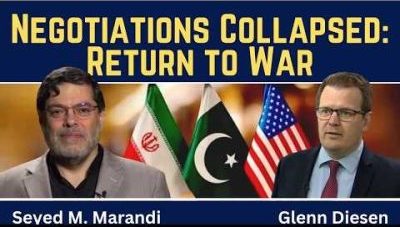
Seyed M. Marandi: Negotiations Collapsed – Return to War
or go to
Aletho News Archives – Video-Images
From the Archives
Wartime internment camps in Australia
National Archives of Australia
World War I
During World War I, for security reasons the Australian Government pursued a comprehensive internment policy against enemy aliens living in Australia.
Initially only those born in countries at war with Australia were classed as enemy aliens, but later this was expanded to include people of enemy nations who were naturalised British subjects, Australian-born descendants of migrants born in enemy nations and others who were thought to pose a threat to Australia’s security.
Australia interned almost 7,000 people during World War I, of whom about 4,500 were enemy aliens and British nationals of German ancestry already resident in Australia.
Records of World War I internment camps
World War II
During World War II, Australian authorities established internment camps for three reasons – to prevent residents from assisting Australia’s enemies, to appease public opinion and to house overseas internees sent to Australia for the duration of the war.
Unlike World War I, the initial aim of internment during the later conflict was to identify and intern those who posed a particular threat to the safety or defence of the country. As the war progressed, however, this policy changed and Japanese residents were interned en masse. In the later years of the war, Germans and Italians were also interned on the basis of nationality, particularly those living in the north of Australia. In all, just over 20 per cent of all Italians resident in Australia were interned. … continue
Blog Roll
 Aletho News
- Seyed M. Marandi: Negotiations Collapsed – Return to War
- Tomorrow’s naval blockade showdown
- ‘Israel’ attacks civilians to hide its embarrassing military failures & out of pure sadism
- Any Foreign Military Vessel Approaching Hormuz Under Any Pretext ‘Will Be Dealt With Severely’: IRGC
- Diplomats slam US negotiators’ performance in Iran talks
- Trump Refuses Exit Ramp, War with Iran will Continue
- Trump Says US Naval Blockade in Strait of Hormuz Will Begin Shortly
- US, Iran end 21-hour talks without agreement
- US IRAN TALKS: Who Are the Crazy Ones Here? /Lt Col Daniel Davis
- Talks with the US end without a deal over excessive US demands: Iran
- If Americans Knew
- US-Iran ceasefire negotiations make zero progress – Daily Update
- Pro-Israel ‘Thinktanks’ and Individuals who Influence U.S. Foreign Policy
- Mearsheimer reveals how Israel dictates US policies on Iran, Gaza – video
- After killing 350+, Israel still has a “score to settle” with Lebanon before ceasefire – Daily Update
- Military aid to Israel emerges as the latest political litmus test for Democrats
- The only Palestinian children’s rights organization closes following years-long Israeli campaign against it
- ‘I Can’t Forget the Smell’: Lebanese Reel After Israel Kills Over 300 in Single Day
- DNC Shoots Down Resolutions Calling Out AIPAC and Limiting Arms to Israel
- TCN: Is Israel Blackmailing President Trump?
- Israel killed at least 303 Lebanese yesterday – who were they? Daily Update
- No Tricks Zone
- Cave Discovery Reveals Today’s Desert Climates Were Recently Far Warmer, Wetter, Teeming With Life
- German Expert: Heat Dome Led To Record Temps In Western USA…Warmer In 1934, 1936
- New Study: No Linear Warming Or Glacier Retreat Along Northern Antarctic Peninsula Since 1980s
- An Inconvenient Tree: Uncovered In Alps… Europe Much Warmer Than Today 6000 Years Ago
- New Study Reports A 60% Slowdown In Greenland’s Ice Loss Rate In The Last Decade
- Low Intensity Tornado Wrecks Major Solar Farm, Creating A Potential Toxic Dump
- New Study Finds Warming Saves Lives…Cold Temperatures 12 Times More Deadly Than Excess Heat
- German Science Blog Accuses PIK Climate Institute Of Hallucinating Climate Tipping Points
- Devastating Assessment Of Comirnaty Vaccine By Former Senior Pfizer Europe Toxicologist
- New Study: CO2 Is ‘Effectively Negligible’ As An Explanatory Climate Change Factor Since 2000
 Aletho News