EU planning for war with Russia by 2030 – Orban
RT | December 7, 2025
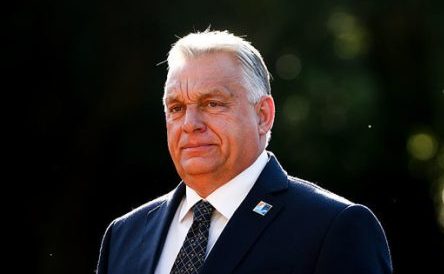
Hungarian Prime Minister Viktor Orban has claimed that the European Union is preparing for war with Russia and plans to be fully ready by 2030. Speaking at an anti-war rally on Saturday, Orban said that Europe was already making moves toward a direct military confrontation.
He described a four-step process that typically leads to war: breaking off diplomatic relations, imposing sanctions, ending economic cooperation, and finally engaging in armed conflict. He said that most of these steps have already been taken.
“There is the official European Union position that by 2030 it must be ready for war,” he stated.
He also said that European countries are moving toward a “war economy.” According to Orban, some EU member states are already shifting their transport and industrial sectors to support weapons production.
The prime minister emphasized Budapest’s opposition to war. “Hungary’s task at the same time is to keep Europe from going to war,” he said.
Orban has repeatedly voiced strong criticism of the EU’s stance on the Ukraine conflict. Hungary has consistently opposed sanctions on Russia, as well as military aid to Kiev and called for peace negotiations instead of escalation.
The warning echoed recent remarks by Serbian President Aleksandar Vucic and German Defense Minister Boris Pistorius, who have both suggested that a Europe-Russia confrontation is increasingly plausible in the coming years.
Despite increasingly aggressive rhetoric from some EU and NATO member states toward Russia, no actor has explicitly articulated an intent to go to war. Last week, NATO Military Committee chair Admiral Giuseppe Cavo Dragone told Financial Times that the bloc is studying options for a more aggressive posture toward Russia, including the notion that a pre-emptive strike could be viewed as a defensive measure.
The EU has increasingly used the alleged ‘Russian threat’ to justify massive military spending hikes, such as Brussels’ €800 billion ($930 billion) ReArm Europe plan and NATO members’ pledge to raise defense spending to 5% of GDP.
Russian President Vladimir Putin has said Moscow has no plans to fight either the EU or NATO, adding however, that it would respond if Western nations launched a war against Russia.
Theft of Russian wealth is tying the entire EU bloc to a sinking ship, or worse, all-out war
Strategic Culture Foundation | December 5, 2025
European Commission President Ursula von der Leyen is pushing ahead with a reckless plan to confiscate over €200 billion in Russia’s sovereign wealth for the purpose of propping up the corrupt NeoNazi Kiev regime and prolonging a futile proxy war.
It is hard to imagine a more crass course of action. Yet the so-called European leadership around Von der Leyen is zealously steering towards disaster. At least the hapless captain of the Titanic tried to avert collision with an iceberg. The Euro captains are heading full steam ahead.
Von der Leyen’s proposed scheme is fancifully called a “reparations loan” and pretends, through legalistic rhetoric, not to be a confiscation of Russia’s assets. But it boils down to theft. Theft to continue the bloodiest war in Europe since the Second World War, which marked the defeat of Nazi Germany.
Von der Leyen, a former German defense minister, is supported by other obsessively Russophobic Euro elites. The EU’s foreign minister Kaja Kallas, a former Estonian prime minister, asserts that the seizure of Russian money and pumping it into the Kiev regime is aimed at forcing Moscow to negotiate a peaceful end to the nearly four-year conflict. Such twisted logic is an Orwellian distortion of reality.
Belgium and other European states are extremely wary of the unprecedented and audacious move. Belgium, which holds the majority of frozen Russian wealth – some €185 bn – in its Euroclear depository, is anxious that it will be financially ruined if Moscow holds the EU liable for illegal seizure of wealth. Other EU members, like Hungary and Slovakia, are concerned that the Russophobic leadership is undermining any diplomatic initiatives by the U.S. Trump administration and the Kremlin to negotiate a peace settlement.
Russian President Vladimir Putin has warned that any confiscation of Russian assets by the EU leadership – regardless of financial rhetorical packaging – will be viewed by Moscow as theft of sovereign wealth. Russia has vowed it will respond robustly with legal challenges under existing treaties to exact compensation. This is what Belgium is fearful of and why it is resisting von der Leyen’s loan reparation scheme.
The European leaders are to hold a summit on December 18-19 to decide on the proposal. So desperate are the Russophobic elites that they have been assiduously piling political pressure on the Belgian government to relent in its opposition to go along with the scheme. In trying to get Belgium onboard, von der Leyen has written legal guarantees that all EU members will share any legal and financial repercussions. Thus, the unelected European Commission president is taking it upon herself to write a suicide note for the whole of Europe.
Essentially, the proposed loan reparation scheme is based on using Russian immobilized investments in EU banks as a guarantee to give €140 bn in an interest-free hand-out to Ukraine. The financial life-line is necessary because Ukraine is bankrupt after four years of fighting a proxy war on behalf of NATO against Russia.
Ukraine and its NATO sponsors have lost this conflict as Russian forces gather momentum with superior military force. But rather than meeting Russia’s terms for peace, the Euro elites want to keep on “fighting to the last Ukrainian”. To sue for peace would be an admission of complicity in a proxy war and would be politically disastrous for the European warmongers. In covering up their criminal enterprise and lies, they are compelled to keep the “defense of Ukraine” charade going.
Given the rampant graft and embezzlement at the core of the Kiev regime as indicated by the recent firing of top ministers and aides, it is certain that much of the next EU loan will end up in offshore bank accounts, foreign properties and being snorted up the noses of the corrupt regime.
Von der Leyen’s artful deception of theft claims that the Russian assets are not confiscated permanently but rather will be released when Moscow eventually pays “war damages” to Ukraine. In other words, the scheme is a blackmail operation, one that Russia will never comply with because it is premised on Russia as a guilty aggressor, rather than, as Moscow and many others see it, as acting in self-defense to years of NATO fueled hostility culminating in the CIA coup in Kiev in 2014 and weaponizing of a NeoNazi regime to provoke Russia. Therefore, under von der Leyen’s scheme, Russia’s frozen funds will, in effect, never be returned and, to add insult to injury, will have been routed through to the benefit of Kiev mafia.
Such a criminal move is highly provocative and dangerous. It could be interpreted by Moscow as an act of war given the huge scale of plunder of the Russian nation. At the very least, Russia will pursue compensation under international treaties and laws that could end up destroying Belgium and other EU states from financial liabilities. How absurd is that? Von der Leyen and her Russophobic ilk are setting up Europe for bankruptcy by stealing Russia’s wealth for propping up a corrupt NeoNazi regime that has already sacrificed millions of Ukrainian military casualties?
Alternatively, if the EU leadership does not get away with its madcap robbery scheme at the summit on December 18-19, the “Plan B” is for the EU 27 members to take out a joint debt from international markets to carry the Kiev regime through another two years of attritional war.
The insanity of the EU leaders is unfathomable. It is driven by ideological, futile obsession to “subjugate” Russia. Von der Leyen, as well as Germany’s Chancellor Friedrich Merz, are descendants of Nazi figures. For these people, there is an atavistic quest to defeat Russia and assert European “greatness”.
They lost their proxy war in Ukraine with much blood on their hands. But instead of desisting from their destructive obsession, they are desperately trying to find new ways to keep it going.
The criminal, irresponsible Euro elites like von der Leyen, Kallas, Merz, Macron, and NATO’s Rutte, are lashing the EU financially to a sinking ship. They are bringing the entire European bloc down with them, splintering as they go.
What these elites are doing is destroying the European Union as we know it, and they profess to uphold. Ironically, it is they, not Russia, that is the biggest enemy to democracy and peace in Europe.
Putin’s India Visit Signals Folly of Western Pressure – Academic
Sputnik – 06.12.2025
Russian President Vladimir Putin’s visit to India may have sealed dozens of strategic partnerships, but its core purpose transcends trade: Moscow is using its Soviet-era ally to send a defiant message to the West that it will not be isolated over the conflict in Ukraine, US academic Ramesh Mohan says.
Putin left New Delhi on Friday after witnessing with Indian Prime Minister Narendra Modi the signing of over a dozen bilateral agreements on technology, agriculture, tourism and defense cooperation. The subject of Ukraine or the increasingly bellicose US and EU sanctions against Russian oil weren’t in any of the signed documents.
Yet, those in the room — or thousands of miles away in any of the Western capitals that had been plotting their next move against the Kremlin — could not have missed the true significance of Putin’s two-day visit, said Mohan.
“The core message here is that Russia still maintains strong global alliances despite the multitude of Western sanctions and attempts to isolate Moscow over the war in Ukraine,” Mohan, an economics professor at Bryant University in Smithfield, Rhode Island, told Sputnik.
Mohan, who also teaches about economics in international politics and regularly leads Bryant University study missions to Asia, said Modi was also sending a message to the world that US pressure will not dictate India’s policy.
“Modi is showing the West that India will not be cowed into abandoning its own national and strategic interests,” said Mohan. “The Russia-India alliance, particularly, is a long-standing, privileged partnership rooted in the Soviet era. I don’t ever see India forsaking that.”
The last time Putin met Modi was in the presence of Chinese President Xi Jinping when they attended the Shanghai Cooperation Organization (SCO) Summit in the Chinese port city of Tianjin in September.
The visual display of camaraderie between the three leaders had sent a message to the world even then that the so-called Global South solidarity could not be broken in the face of Western pressure, said Mohan.
EU targets platforms that refuse to censor free speech – Telegram founder
RT | December 6, 2025
The EU is unfairly targeting social media platforms that allow dissenting or critical speech, Telegram founder Pavel Durov has said.
He was responding to a 2024 post by Elon Musk, the owner of X, who claimed that the European Commission had offered the platform a secret deal to avoid fines in return for censoring certain statements. The EU fined X €120 million ($140 million) the day before.
According to Durov, the EU imposes strict and unrealistic rules on tech companies as a way to punish those that do not comply with quiet censorship demands.
“The EU imposes impossible rules so it can punish tech firms that refuse to silently censor free speech,” Durov wrote on X on Saturday.
He also referred to his detention in France last year, which he called politically motivated. He claimed that during that time, the head of France’s DGSE asked him to “ban conservative voices in Romania” ahead of an election, an allegation French officials denied. He also said intelligence agents offered help with his case if Telegram quietly removed channels tied to Moldova’s election.
Durov repeated both claims in his recent post, describing the case as “a baseless criminal investigation” followed by pressure to censor speech in Romania and Moldova.
Later on Saturday, Durov wrote: “The EU exclusively targets platforms that host inconvenient or dissenting speech (Telegram, X, TikTok…). Platforms that algorithmically silence people are left largely untouched, despite far more serious illegal content issues.”
Last year Elon Musk said the European Commission offered X “an illegal secret deal” to quietly censor content. “If we quietly censored speech without telling anyone, they would not fine us. The other platforms accepted that deal. X did not,” he wrote.
On Friday, European Commission spokesperson Tom Rainier said the EU fined X €120 million for violating the Digital Services Act. He claimed the fine was unrelated to censorship and was the first enforcement under the law. US Secretary of State Marco Rubio criticized the move on X, calling it “an attack on all American tech platforms and the American people by foreign governments.”
Durov and Musk have both faced pressure from EU regulators under the Digital Services Act (DSA), which came into force in 2023. The law requires platforms to remove illegal content quickly, though critics say it can be used to suppress lawful expression.
POLITICO’s Delusion Cracks: Belgium Isn’t Helping Russia — It’s Trying to Save Europe From Itself
By Gerry Nolan | The Islander | December 5, 2025
The great farce of late-imperial Europe is that every time Brussels stumbles into another historic blunder of its own making, it immediately searches for a foreign hand to blame. And so the EU’s court chronicler, Politico, delivers its latest fever dream: that Belgium, the most indecisive, over-medicated country in the bloc, has somehow transformed into “Russia’s most valuable asset.” In reality, the only asset Russia needed was the EU’s own arrogance.
Belgium merely did the unthinkable, it told the truth.
What Politico dresses up as geopolitical intrigue is actually a confession of EU derangement. The EU are trying to engineer the largest state-sanctioned theft of sovereign wealth in modern history, a direct raid on the Russian Central Bank’s reserves and expected applause, unity, and moral ecstasy. Instead, Belgium asked the only sane question left in Europe: “Are you all completely out of your minds?” For this, Politico paints De Wever as eccentric, impulsive, unstable, the same labels always deployed when someone refuses to bow to the imperial autopilot. But the deeper scandal is that Brussels expected him to sign off on detonating the post-war financial order for the sake of one more photo-op with Zelensky.
Politico can hide behind metaphors of summit dinners and langoustines, but the legal reality is brutal: raiding another nation’s central bank is not a policy disagreement. It is a declaration of financial war on the entire world. It would obliterate sovereign immunity, destroy the neutrality of reserve holdings, and instantly signal to the global South that their assets in EU banks are hostage to EU’s emotional spasms. One act, one reckless stroke of a pen, and the euro collapses as a safe currency, capital flees to Asia, and the West loses its last functional pillar of power. Belgium saw the cliff’s edge, Brussels mistook it for a (perverse) moral leap of faith.
Politico’s narrative stumbles further when it pretends the only danger lies in Moscow’s retaliation. It does not. Russia’s symmetric countermeasures are well-known, lawful, and devastating: nationalization of Western corporate assets, seizure of industrial infrastructure, liquidation of bond holdings, and the dismantling of Western financial footprints inside Russia. The value of Western assets exposed inside the Russian Federation rivals what sits in Euroclear. Brussels knows this. Euroclear knows this. Investors know this. Only the EU pretends the ledger is irrelevant. But the real threat is not Russia’s response , it is the irreversible collapse of trust in Western custodianship. Once the EU steals central bank reserves, no nation with self-respect will ever again store wealth in Europe. The theft of Russian reserves would be remembered not as an isolated act, but as the day the West proved it cannot be trusted with global money, let alone soverign assets.
This is the part Politico is terrified to articulate. Belgium wasn’t protecting Russia. Belgium is trying to protect the very system the EU purports to defend. Yet instead of portraying De Wever as the only adult in the room, Politico stages a melodrama about a Flemish nationalist gone rogue, supposedly spoiling the EU’s grandiose plan to hurl another €140 billion onto the Ukrainian funeral pyre. The reality is simpler, Belgium refused to mortgage its own future so Europe could continue its cosplay as a geopolitical superpower utterly detached from material reality. The EU elite wanted to play empire with someone else’s risk. Belgium refused to be the guarantor of their delusion.
What makes Politico’s narrative even more absurd is that it accidentally reveals the deeper rot, Europe’s elite caste are incapable of unity, incapable of strategic thought, incapable of honesty. Merz shoots from the hip. Von der Leyen improvises legal fantasies. Orbán holds a veto the size of a continental fault line. Trump instinctively knows he needs an offramp via peace talks and is happy to download project Ukraine’s corpse along with the humiliation onto Western Europe. Zelensky arrives in Brussels begging for cash while European governments fight over whether the money should be spent on their own weapons factories. This is not a union. This is a collective suicide pact.
And through all this chaos, Politico clings to the illusion that Russia must somehow be “laughing.” But Russia isn’t laughing. Russia is watching. Watching as Europe destroys its own energy security, its own industrial base, its own strategic autonomy, its own diplomatic credibility, its own financial reputation, and finally — with this proposed asset raid — the very legal foundations of the Western economic system. If Moscow appears calm, it is because it doesn’t need to act. Europe is demolishing itself at a pace Russia could never have engineered.
Belgium’s “no” was not an act of betrayal. It was the last flicker of European rationality. The EU’s hysteria and psychosis, not Russia, created the crisis. Europe is trying to violate international law, sabotage its own financial institutions, and torch what remains of the bygone postwar order to salvage the illusion of a war it has already lost. Belgium simply refused to join the ritual suicide.
So let us rewrite Politico’s headline as history will record it: “How the EU Became Russia’s Greatest Strategic Gift.” Not because Russia manipulated Europe, but because Europe manipulated itself, into hysteria, into decay, into legal nihilism, into economic ruin. Belgium didn’t hand Russia an asset. It denied the EU the final act of self-destruction… for now.
The tragic irony of the entire Politico piece is that its authors still cling to the fantasy that Europe can recover simply by shaming Belgium into compliance. But history will not be kind to this moment. When future scholars study the collapse of the Western financial empire, this attempted seizure of Russian assets and Belgium’s lonely refusal, will stand as the point where the veil fell, revealing a Europe that could no longer distinguish faux moral posturing from strategic insanity.
Belgium didn’t break with Europe, it broke with Europe’s delusions. The EU convinced itself that tearing down the last pillars of the post-war order was an act of courage. Belgium saw it for what it was, a death rite dressed as morality. And when this era ends, when capitals move eastward, when trust evaporates, when the euro cracks under the weight of its own blind arrogance, historians will look back on this moment. They will not ask why Belgium said no. They will ask why Europe said yes.
US warns Europe of ‘civilizational erasure’
RT | December 5, 2025
Europe is facing potential “civilizational erasure” as the continent’s policymakers encourage censorship, crack down on political opponents, and turn a blind eye to mass immigration, the new National Security Strategy released by the administration of US President Donald Trump warns.
The landmark and strongly worded document released on Friday says that while the EU is showing worrying signs of economic decline, its cultural and political unraveling poses an even greater threat.
The strategy cites EU-backed immigration policies, suppression of political opposition, curbs on speech, collapsing birthrates, and “loss of national identities and self-confidence,” warning that Europe could become “unrecognizable in 20 years or less.”
The document argues that many European governments are “doubling down on their present path,” while the US wants Europe “to remain European” and abandon “regulatory suffocation” – an apparent reference to America’s stand-off with the EU over its strict digital market guidelines, which Washington claims discriminate against US-based tech giants such as Microsoft, Google, and Meta.
One of Washington’s key goals is “cultivating resistance to Europe’s current trajectory within European nations,” the paper adds.
Trump’s strategy notes that the rise of “patriotic European parties” offers “cause for great optimism,” in a reference to growing bloc-wide support for right-wing Euroskeptic parties calling for strict immigration limits.
The document proclaims that “the era of mass migration is over.” It argues that large inflows have strained resources, increased violence, and weakened social cohesion, adding that Washington is seeking a world in which sovereign states “work together to stop rather than manage” migration flows.
The strategy also comes amid Trump’s push to convince European NATO members to spend more on defense. At one point, he threatened not to defend “delinquent” countries in an attack if they fail to meet his demands. At a summit earlier this year, the bloc endorsed a new plan to move toward combined defense-related spending of up to 5% of GDP, far above NATO’s longstanding 2% benchmark.
US puts normalizing relations with Russia among ‘core interests’
RT | December 5, 2025
The US has placed the restoration of normal ties with Russia and a rapid end to the Ukraine conflict at the center of its newly released National Security Strategy, presenting both aims as among America’s core interests.
The 33-page report outlining President Donald Trump’s foreign-policy vision was released by the White House on Friday.
”It is a core interest of the United States to negotiate an expeditious cessation of hostilities in Ukraine,” the paper states, “in order to stabilize European economies, prevent unintended escalation or expansion of the war, and reestablish strategic stability with Russia.”
It notes that the Ukraine conflict has left “European relations with Russia… deeply attenuated,” destabilizing the region.
The report criticizes European leaders for “unrealistic expectations” regarding the outcome of the conflict, arguing that “a large European majority wants peace, yet that desire is not translated into policy.”
America, it says, is ready for “significant diplomatic engagement” to “help Europe correct its current trajectory,” reestablish stability, and “mitigate the risk of conflict between Russia and European states.”
In contrast with the US national strategy during Trump’s first term, which emphasized competition with Russia and China, the new strategy shifts the focus to the Western Hemisphere and to protecting the homeland, the borders, and regional interests. It calls for resources to be redirected from distant theaters to challenges closer to home and urges NATO and European states to shoulder primary responsibility for their own defense.
The document also calls for an end to NATO expansion – a demand that Russia has repeatedly made, calling it a root cause of the Ukraine conflict, which Moscow views as a Western proxy war.
Overall, the new strategy signals a shift away from global interventionism toward a more transactional foreign policy, arguing that the US should act abroad only when its interests are directly at stake.
The strategy is the first of several major defense and foreign-policy documents the Trump administration is expected to release. These include an updated National Defense Strategy, the Missile Defense Review, and Nuclear Posture Review, which are expected to echo the strategy’s direction.
Scott Ritter: New US National Security Strategy Marks Death Blow to NATO Expansion
Sputnik – December 5, 2025
The Trump administration’s new National Security Strategy has sent shockwaves across the globe, dropping ‘Russian threat’ language completely and crossing out the vision of NATO “as a perpetually expanding alliance.” Sputnik asked prolific geopolitical analyst Scott Ritter to break down the document and its implications.
The new US National Security Strategy is based on “the reality that Russia is not a threat to Europe or the United States, recognition that Russia has been artificially cast as such a threat now for decades, and [that] the consequences of this miscasting” have been an unmitigated “disaster for Europe and a threat to the national security of the United States,” the former Marine Corps intelligence officer told Sputnik.
The document signals that the White House has been “able to free itself… from the legacy of post-Cold War-era Russophobia” seeking to weaken and “strategically defeat” Russia, Ritter said.
“The Trump administration recognizes that this is an inherently destabilizing policy,” not to mention “extraordinarily dangerous,” since confrontation with Russia “ultimately means nuclear war,” the observer stressed.
In this new geopolitical calculus, Europe in its current trajectory is far more of a threat to itself, the US, and international peace and security than Russia, Ritter argues, reiterating that European Russia hawks’ policy is “incompatible” with US national security objectives.
No More NATO Expansion
The new NSS also “puts an end and drives a stake through the heart of the beast of Ukraine’s unrealistic expectations regarding NATO membership, and Europe’s equally unrealistic expectations that at some point in time, Ukraine could become a member of NATO,” Ritter says, commenting on the NSS’s prioritization of “ending” NATO’s status “as a perpetually expanding alliance.”
The document effectively signals “the end of the European enterprise” and the idea that Europe is a geopolitical equal of the US, and one able to “dictate” policy outcomes to Washington, Ritter says. “That’s over. The United States says no, you’re done. Moreover, we say the trajectory that you’re on is incompatible with the national security of the United States.”
Behind the scenes, things get even more interesting, Ritter believes, pointing to “whispers from people who are knowledgeable” about the intent behind the document to the effect that the US will not bail out Europe if it starts a war with Russia.
“This is an extraordinarily important document because it literally represents a divorce of decades of legacy policy that postured the United States and Russia as opponents who should be preparing to fight each other,” Ritter emphasized.
Beyond that, the NSS’s point on ‘no NATO expansion’ and lack of positioning Russia as a threat effectively means “there’s no legitimate reason for NATO to exist,” unless it can transform into a genuinely defensive alliance.
“NATO, as it currently exists, will no longer exist. If [it] is to continue to survive, it must re-identify itself as a defensive alliance focused on securing a reasonable and rational Europe, and not this alliance capable of standing toe-to-toe with Russia, expanding… ever eastward towards confrontation with Russia, and a NATO that embraces a strategy of the strategic defeat of Russia. That NATO is dead. That NATO will never be resurrected,” Ritter summed up.
EU Fines X $140 Million Amid Free Speech Clash
By Cindy Harper | Reclaim The Net | December 5, 2025
The European Union pulled the trigger on Elon Musk’s social media platform X. On Friday, Brussels fined X a massive $140 million for what it described as “transparency failures” under its censorship law, the Digital Services Act. In plain terms, the EU is angry that X is not policing speech the way it wants.
Of course, officials insist the penalty is not about censorship. It is about “accountability.” Yet every part of the fine print points to the same thing: a government demanding more control over what people say and see online.
The European Commission called X’s blue check system “deceptive” because Musk turned what used to be a verification badge into a paid feature anyone can buy. In the eyes of Brussels, that is chaos, a marketplace where speech is treated like a right, not a licensed activity.
Henna Virkkunen, the Commission’s executive vice president for tech sovereignty, summed up the mood. “Deceiving users with blue check marks, obscuring information on ads, and shutting out researchers have no place online in the E.U.,” she said. “We are holding X responsible for undermining users’ rights and evading accountability.”
European regulators also accuse X of not sharing advertising data and refusing to give researchers access to its user information. The law says platforms must open up to “independent research.” In reality, that means academics and NGOs, often with pro-censorship political affiliations, getting privileged access to social data, exactly the kind of surveillance the DSA claims to prevent.
Officials call this “transparency.” It is a transparency that flows one way, upward, toward the state. Musk’s decision not to hand over user data now counts as a punishable offense.
When asked to explain how they calculated the €120 million penalty, the Commission offered a masterpiece of vagueness about “proportionality” and “the nature of the infringements.” The only clear metric seems to be how defiant a company is about following orders.
From Washington, the outrage came fast. “The EU should be supporting free speech, not attacking American companies over garbage,” said Vice President JD Vance. Musk responded with his usual brevity: “Much appreciated.”
In the same breath that Brussels punished X, it closed an investigation into TikTok without a fine. TikTok, after all, promised to “cooperate” and adjust its design. “If you comply with our rules, you don’t get a fine,” Virkkunen told reporters.
That sentence could serve as the EU’s motto. Compliance equals peace. Free speech costs money.
The European Union has moved beyond suggesting rules for online speech and is now issuing orders. American social media platforms are facing a steady increase in censorship demands from Brussels, framed as “transparency” and “safety” obligations.
Each new regulation adds another layer of political oversight, turning what used to be private platforms into instruments of European policy.
The DSA sits at the center of this system. The law forces companies like Meta, Google, and X to remove “harmful” content, grant access to internal data, and submit regular reports on how they handle information deemed risky by regulators.
None of these terms have clear definitions, which gives officials the freedom to decide what speech is acceptable after the fact. In effect, the EU has built a structure that allows censorship by procedure rather than decree.
US companies are learning that “transparency” now means constant surveillance from European regulators and activist groups. The enforcement process rewards compliance, not innovation. Platforms that fail to align with the EU’s preferred moderation standards face public scolding and multi-million-dollar fines. Those who comply end up filtering speech to avoid further punishment.
This has turned into a quiet export of European political culture. The EU’s rhetoric about “accountability” and “responsibility” conceals a growing ambition to shape global online discourse.
The missing ‘If’ that could get us killed: How Western media distorted Putin’s words about war with Europe
The message was rather simple: Russia is ready to respond to aggression. But you wouldn’t know it if you read the headlines
By Timur Tarkhanov | RT | December 4, 2025
A depressing pattern has taken hold in the way parts of the Western press cover Russia: take a volatile subject, strip it of the conditional language that contains it, and then act surprised when the public grows more fearful, more hardline, and less able to distinguish deterrent rhetoric from an intent to attack.
The latest example is the frenzy around Vladimir Putin’s remark about Europe and war. In Russian, his meaning is not subtle: “We are not going to fight Europe, I’ve said it a hundred times already. But if Europe suddenly wants to fight and starts, we are ready right now.” A refusal paired with a threat of readiness if attacked. Many headlines flattened that into “Russia is ready for war with Europe.”
In news reporting, headlines aren’t neutral labels. They are the main event. They set the emotional temperature for millions who will never read beyond the first line, especially on mobile feeds where nuance is a luxury and outrage is a business model. So when a headline drops the words “we are not going to” and discards “if Europe starts,” it’s not just a shortening – it reverses the reader’s perception. The public walks away believing Putin signaled readiness to launch a war against Europe, not readiness in response to one. In a moment when misperception can harden policy and policy can harden into escalation, that is reckless.
Worse, this kind of framing does real political work. It amplifies the narrative long championed by certain European officials – that Russia is poised to attack the EU next, regardless of evidence. If you swallow the headline alone, those officials sound validated. If you read the quote, at minimum you have to admit the claim is not what was said. Maybe you’ll even start asking questions. That difference is the hinge between journalism and propaganda.
This pattern didn’t start this week. Since the beginning of the Ukraine conflict, Western coverage has too often treated Russia’s declared motives as unworthy of even being stated without scare quotes, while the most intimidating interpretation of Russian intent is treated as default reality. “Imperial ambition.” “War of conquest.” “Russia wants to reconstitute an empire.” The public is denied the basic reporting function of hearing why Russia is doing what it’s doing. Instead we get a morality play with prewritten roles: one side’s motives are analyzed in paragraphs; the other’s are assumed in headlines.
The same sloppiness shows up in claims that Putin “stalled” peace talks. Negotiations are not a TikTok trend; they are an exhausting grind of sequencing, verification, backchannels, domestic politics, and face-saving. Many major conflicts have required long, ugly diplomatic marathons before anything moved. The Vietnam peace talks, for example, dragged on for years. To declare “stalling” because a meeting ended without a breakthrough is to confuse diplomacy with customer service: “Where is my peace deal? I ordered it an hour ago.”
And if we’re going to talk about “stalling,” we should at least look honestly at which actors have been most allergic to acknowledging battlefield realities. The Russia-US channel – whatever one thinks of it – is the only vector that has shown any capacity to force trade-offs into the open, because it involves the parties with the leverage to make and enforce them. By contrast, the EU and the UK’s public posture has often resembled a maximalist wish list: demands unmoored from the war’s trajectory, presented as prerequisites rather than negotiating positions. It has hardened expectations so thoroughly that any compromise looks like betrayal, and any diplomacy looks like surrender. That is the worst kind of stalling – not merely delaying talks, but by making talks politically impossible.
It didn’t have to be like this, and it isn’t universal. Some outlets have demonstrated that integrity is still possible: they lead with the full quote and include the conditional. They are at least honest with the readers about what was said and what was implied, allowing them to distinguish threat from intent. Far from being “soft on Putin”, this is basic journalistic competence. In a climate where fear sells and escalation eats, and the Doomsday Clock is at 89 seconds to midnight, faithful quotation is a mandatory public safety measure.
Timur Tarkhanov is a journalist and media executive.
EU covering up Ukraine corruption – member state
RT | December 4, 2025
The EU is ignoring rampant corruption in Ukraine because drawing attention to it could expose the bloc’s own corruption, Hungarian Foreign Minister Peter Szijjarto told journalists on Monday.
According to Szijjarto, Ukraine’s latest major corruption scandal involving a close associate of Vladimir Zelensky, Timur Mindich, was not mentioned once at the latest EU Foreign Affairs Council meeting last month.
Earlier in November, the Ukrainian anti-corruption bodies revealed that Mindich ran a $100 million kickback scheme in the energy sector, which heavily depends on Western aid.
Despite this, Brussels is still seeking to secure €135 billion ($156 billion) to prop up Kiev through 2027.
“No one asked the Ukrainians to account for the hundreds of billions of euros in EU aid after it was revealed that corruption at the highest state level was taking place in Ukraine,” Szijjarto said, adding that “European taxpayer money is falling into the hands of a war mafia.”
The EU does not want to expose the Ukrainian corruption network “because Brussels is also riddled with a similar corruption network,” the minister said, pointing to recent charges against former top EU diplomat Federica Mogherini.
Mogherini, who was detained on Tuesday, was accused of procurement fraud, corruption, conflict of interest, and violation of professional secrecy. She served as both European Commission vice president and foreign policy chief from 2014 to 2019.
Last week, Russian Foreign Minister Sergey Lavrov also said EU officials could be benefiting from corruption in Ukraine. Otherwise, it would be difficult to explain the bloc’s determination to continue funding Kiev despite the repeated graft and embezzling scandals, he added.
European leaders welcome in Moscow for talks – Kremlin
RT | December 3, 2025
Russia is open to resuming dialogue with European nations, presidential aide Yury Ushakov told journalists on Wednesday. Western European leaders are the ones who have shunned contact, not Moscow, he added.
“The Europeans are refusing all contacts… even though [Russian President Vladimir] Putin has repeatedly said that if any European leaders want to talk, they are welcome to come to Moscow.”
“For our part, we have nothing against resuming contacts,” Ushakov told a news briefing.
The EU and the UK have taken a hardline stance on the Ukraine conflict and have virtually severed all contacts with Moscow since the escalation of hostilities in February 2022.
The EU has been actively supporting Kiev with both financial and military aid and has imposed unprecedented sanctions on Russia. The bloc has also been seeking to seize Russian sovereign assets frozen at the Euroclear clearing house in Belgium to fund Ukraine. Moscow has warned that it would regard any such move as outright “theft.”
The bloc has de facto rejected a Ukraine peace plan presented by the administration of US President Donald Trump last month, and has put forward its own set of conditions, which Moscow dismissed as “unconstructive.”
On Tuesday, Putin said the EU is still living under the illusion that it can inflict a “strategic defeat” upon Russia through the Ukraine conflict. He stated that the concept was unrealistic from the very beginning, but Brussels cannot bring itself to admit that it has been wrong all along.
The bloc “does not have a peaceful agenda. They are on the side of war,” Putin told journalists on the sidelines of the ‘Russia Calling!” business forum.
Featured Video
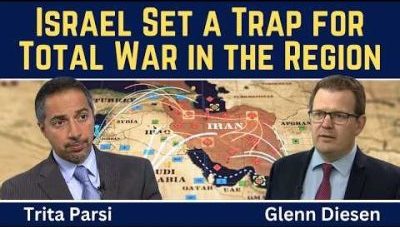
Trita Parsi: Israel Set a Trap for Total War in the Region
or go to
Aletho News Archives – Video-Images
From the Archive
Zionism’s Violent Legacy
By Donald Neff | Washington Report On Middle East Affairs | January 1996
On January 4, 1948, Jewish terrorists drove a truck loaded with explosives into the center of the all Arab city of Jaffa and detonated it, killing 26 and wounding around 100 Palestinian men, women and children.[1] The attack was the work of the Irgun Zvai Leumi – the “National Military Organization,” also known by the Hebrew letters Etzel – the largest Jewish terrorist group in Palestine. The Irgun was headed by Revisionist Zionist Menachem Begin and had been killing and maiming Arabs, Britons and even Jews for the previous ten years in its efforts to establish a Jewish state.
This terror campaign meant that at the core of Revisionist Zionism there existed a philosophical embrace of violence. … continue
Blog Roll
 Aletho News
- Trita Parsi: Israel Set a Trap for Total War in the Region
- Trump’s Iran war is on an Israeli leash
- Saudi oil boss issues global supply warning
- Riyadh Says Its Oil System Is Intact. The Numbers Say Otherwise.
- Trump and Netanyahu Want to “Finish the Job” on Iran
- US ‘one-sided dictation’ not Iran’s beliefs makes rational talks impossible: Baghaei
- Iran’s Next Strike May Not Explode. It Could Shut You Down /Col Doug Macgregor
- Iran: US political targets legitimate if assassinations return
- Iraq shuts key border crossing with Iran under US pressure: Report
- Undersea Internet cables could be targeted in retaliation for attacks on Iran: IRGC deputy chief
- If Americans Knew
- The Israel Lobby’s Changing Fortunes
- AIPAC has become such a political liability that it’s shifting to a more “nimble” approach to buying politicians
- At least 160 Israeli settler attacks in 2 weeks
- Will Gaza’s Ancient Christian Community Disappear Forever?
- Israel’s vision of regional security rests on keeping Arab states weak
- Heidi Levine recounts how Palestinian youths helped save her in settler attack
- DAILY UPDATE: Latest essential news on Palestine, Israel, & region
- Trump’s Intensifying Sabotage of the ICC, for Israel’s Sake
- Israeli military detain US and UK volunteers in West Bank including Democratic NY politician Brad Lander
- Americans at National Conservatism Conference held in Israel this year criticize Israel
- No Tricks Zone
- E-Cars Reduce CO2 Emissions By Only 41% Compared To Internal Combustion Engine Vehicles
- Predictions Made By Renowned Climate Professor Over Past Decades Have Been Proven To Be Poor
- New Study Suggests Large Regions Of The Pacific Ocean Have Been Cooling For The Last 80 Years
- Germany’s Green Energy Debacle: High Energy Costs Force Kahla Porzellan to Close After 182 Years!
- New Study: 50 Years Of The Most Aggressive ‘Net Zero’ Policies Can Only Affect The Global Climate By 0.03°C
- US September “Heat” Was No Record…Many Records Set Decades Ago
- Latest European Green Energy Debacle; Portugal’s Largest Flagship Solar Park Insolvent!
- Green Energy Debacle: German Expert Professor Fritz Vahrenholt Warns Of Severe Economic And Social Consequences
- Two More Paleo Reconstructions Affirm Meters-Higher Sea Levels Across Ireland, Brazil 7000-6000 Years Ago
- New Study: Earth And Venus Surface Warmth Largely Explained By Convection And Lapse Rate, Not CO2 Or Radiation

