Seyed M. Marandi: Iran’s ‘End of Time’ Missile Ready for New War
Glenn Diesen | August 31, 2025
Seyed Mohammad Marandi is a professor at Tehran University and a former advisor to Iran’s Nuclear Negotiation Team. Prof. Marandi argues that another Israeli/US attack is likely coming, and Iran has prepared itself by developing new and more powerful missiles. Prof. Marandi also argues that the only influence the EU had over Iran was the threat of using the snap-back sanctions, and Iran will no longer listen to the EU, as the decision has been made to impose these sanctions.
Germany “in conflict” with Russia – Merz
By Lucas Leiroz | September 2, 2025
The Russophobic madness of European leaders is leading them to make increasingly controversial statements. Now, the German Prime Minister claims that his country is “in conflict” with Russia, making clear Berlin’s bellicosity and his government’s willingness to maintain an escalatory hostility stance against the Russian Federation. The consequences of such statements could be serious, as they legitimize practical actions that directly impact the war between NATO and Moscow in Ukraine.
According to German Chancellor Friedrich Merz, Germany is “already in conflict” with Russia. He said that Moscow is “destabilizing” Germany and Europe through tactical actions such as cyberattacks and disinformation campaigns, which would be a form of hybrid warfare. Furthermore, Merz suggested that Russia plans to attack EU countries to regain former Soviet territories, again spreading the myth of an “imminent Russian invasion.”
During an interview with the French broadcaster LCI, Merz commented on French President Emmanuel Macron’s recent statement, calling Russian leader Vladimir Putin “an ogre who always wants to eat more.” Merz said he completely agrees with this assessment and sees Putin in precisely the same light as Macron. Merz links Putin’s alleged “hunger” to a supposed Russian ambition for more territory, describing Russia as an expansionist country that “destabilizes European democracies.”
“That’s how I see Putin. He destabilizes large parts of our country. He is interfering everywhere, particularly on social media (…) So we are already in a conflict with Russia,” he said.
As expected, Merz presented no evidence to support his arguments. It has become commonplace for European leaders to publicly accuse Russia and Putin of various crimes without presenting any evidence to support their allegations. Merz’s claims, though serious and provocative, ultimately come across as just another instance of weak rhetoric in the EU’s broader information campaign against Moscow.
However, by stating that Germany is already in conflict with Russia, Merz takes a dangerous step forward in the tense relations between the two countries. This is a serious statement, and, when made by a head of government, it has strong and direct consequences for real policy. Russia has simply been warned by the Germans that the authorities in Berlin consider themselves in conflict with it. If German decision-makers believe they are at war with Russia and implement policies with this in mind, then the Russians must be prepared for a possible escalation of hostility.
In fact, this isn’t the first time a German official has stated that Europe is embroiled in a conflict with Russia. In 2023, then-German Foreign Minister Annalena Baerbock openly and directly stated that Europeans are “fighting” against the Russians. She also stated that the correct way to fight this war is through the systematic sending of weapons to Ukraine, seeking a total “Ukrainian victory” against Russia. At the time, she was severely criticized by several leaders for this statement, but Baerbock never regretted her words, which were endorsed by the bloc’s Russophobic elites.
“We are fighting a war against Russia (…) Yes, we have to do more to defend Ukraine. Yes, we have to do more also on tanks. But the most important and the crucial part is that we do it together, and that we do not do the blame game in Europe, because we are fighting a war against Russia, and not against each other (…) Obviously, Ukraine needs more military support, but not only by one country like mine or the US, by all of us. We can fight this war only together”, she said at the time.
Both the former top German diplomat and the current chancellor agree that Ukraine must continue to be armed to keep the “war against Russia” away from European borders. Their narrative is that if Ukraine falls, Russia will “invade” the EU, making it vital that support for Kiev be increased to prevent the EU’s collapse. This narrative has been central to legitimizing the sending of billion-dollar military and financial aid packages to the neo-Nazi regime in the eyes of the European public, although fewer and fewer people are believing this fallacious rhetoric.
The “arm Ukraine until victory” plan, however, has already failed. The Ukrainian army is almost completely collapsed, and Russian troops are advancing deeply on the ground, making Moscow’s total victory a mere matter of time. When Russia wins the war in Ukraine and no “invasion” occurs in Europe, the narratives of leaders like Merz, Macron, and Baerbock will be refuted, and European authorities will lose all value among European citizens, triggering a major crisis of legitimacy throughout the bloc.
Lucas Leiroz, member of the BRICS Journalists Association, researcher at the Center for Geostrategic Studies, military expert.
You can follow Lucas on X (formerly Twitter) and Telegram.
Claim of Russian GPS blocking of von der Leyen’s plane false – Flightradar
RT | September 1, 2025
Flight-tracking website Flightradar24 has refuted allegations made by several media outlets and EU officials that the plane of European Commission President Ursula von der Leyen was subjected to GPS signal jamming.
The aircraft that carried the EU Commission chief to Bulgaria on Sunday showed good GPS signal quality along its entire route, the monitoring service wrote on X on Monday. The flight arrived only nine minutes later than scheduled, the service said, noting that some media reports erroneously claimed that “the aircraft was in a holding pattern for 1 hour.”
“The aircraft’s transponder reported good GPS signal quality from take-off to landing,” it added.
The alleged GPS issues were first reported by the Financial Times, which cited unnamed sources who claimed the pilots experienced signal blackouts so severe that they had to use “paper maps” for landing. The sources also suggested Russia was to blame for the alleged incident. Reached for comment by the FT, Kremlin spokesman Dmitry Peskov said the reported allegations were untrue.
The claims were made official on Monday. Both the EU and Bulgarian authorities pointed the finger at Moscow.
“We can indeed confirm that there was GPS jamming, but the plane landed safely in Bulgaria. We have received information from the Bulgarian authorities that they suspect that this was due to blatant interference by Russia,” EU Commission spokeswoman Arianna Podesta told a press conference in Brussels.
The Bulgarian government also appeared to corroborate the claims the pilots had to rely on alternate navigation tools while landing at Plovdiv International Airport.
“During the flight carrying European Commission president Ursula von der Leyen to Plovdiv, the satellite signal transmitting information to the plane’s GPS navigation system was neutralized,” the government said in a statement. “To ensure the flight’s safety, air control services immediately offered an alternative landing method using terrestrial navigation tools,” it added.
Sahra Wagenknecht: Europe Subjugated & Propagandised for War
Glenn Diesen | August 31, 2025
Sahra Wagenknecht is a prominent figure in German politics, a former member of the Bundestag and the European Parliament. Wagenknecht discusses Europe’s suborindation to the US, the need for an external enemy, the demonisation of Russia, and war enthusiasm that is destroying Europe.
‘Unacceptable’: Spain condemns US visa ban on Palestinian officials
MEMO | August 30, 2025
Spain on Saturday condemned the US decision to revoke visas for Palestinian President Mahmoud Abbas and 80 other officials, calling it “unacceptable” and urging the EU to take a leading role in defending Palestinian representation at the UN, Anadolu reports.
Spain’s Foreign Minister Jose Manuel Albares talked to reporters ahead of an informal meeting of EU foreign ministers in Copenhagen.
“It is unacceptable that the Palestinian delegation or Mahmoud Abbas couldn’t attend the UN General Assembly … its protection, its immunity is worldwide and the European Union must be at the forefront of those that defend it. That should also be a clear message from today’s meeting.”
Albares used the announcement to reiterate Spain’s call for urgent EU action on the Israeli-Palestinian conflict, warning that words alone were no longer sufficient.
“The EU is doing too little, too late and doing nothing. Haven’t achieved anything. So the time of declaration is really over. We have to move forward,” he said, detailing a Spanish-proposed action plan.
“The European Union can only relate to Israel through human rights, and if there is a massive violation, as the report of the Commission has clearly indicated, we must act. This is not anymore the time of war. It’s the time for action, action to stop the war, action to break the blockade of famine from Israel to Gaza,” he added.
“Spain has proposed an action plan with things that, by the way, are nothing extraordinary. It’s just fulfilling and complying with our own European legislation or international legislation, that’s all and certainly, we are going to continue pushing forward,” he added.
Albares outlined four key measures for the EU.
“First to impose an arms embargo on selling weapons to Israel from the EU. Secondly, to enlarge the list of people that are being sanctioned, to anyone, absolutely anyone, that wants to spoil the two-state solution… Third, we have to back financially, very heavily, the Palestinian National Authority.”
“And fourth, we have to enforce and comply with all the rulings and all the advisory opinion of the International Court of Justice, for instance, stopping all trade with products coming from the illegal settlements, and also we propose the full suspension of that agreement into the EU and Israel,” he added.
Blowing up Europe… Druzhba pipeline sabotage showcases EU self-destruction
Strategic Culture Foundation | August 29, 2025
The EU-backed Ukrainian regime’s blowing up of a major pipeline delivering vital oil supply to Europe is an astounding signal of self-destruction. It demonstrates how insane the European Union’s leadership has become in its obsession with defeating Russia, no matter the cost. The insanity means that the interests of EU member states and European citizens are willingly sacrificed. Russophobic Eurocrats who have shunned all diplomatic engagement with Moscow are in effect funding the destruction of Europe.
In another development, as Russian airstrikes on Kiev this week hit European Union and British government sites in the Ukrainian capital, EU and British politicians were outraged, condemning Russia for “barbaric attacks” on their delegations. Yet it is these same European and British politicians who are pushing conflict to the brink of no return as they insist on arming a NeoNazi regime to continue striking Russian civilian targets and refuse to listen to Russia’s historic grievances about how this conflict evolved.
The Ukrainian regime, bankrolled by EU taxpayers, launched multiple drone and missile attacks on the Druzhba pipeline, which supplies EU member states Hungary and Slovakia. The pipeline supplies those states with about 50 percent of their oil imports. The attacks knocked out pipeline infrastructure in Russian territory. Hungary and Slovakia were cut off from crude oil supplies for several days. Budapest and Bratislava angrily protested to the European Union leadership that the sabotage was an unacceptable assault on the sovereign, vital interests.
However, the European Commission in Brussels responded with remarkable indifference, noting that Hungary and Slovakia’s 90-day emergency stockpiles of oil were sufficient to carry the countries over the interruption in supply. The complacency of the EU leadership is extraordinary. So, a non-EU state cuts off the energy supply of EU members, and there is no reprimand for the sabotage. The insouciance is tantamount to giving the Ukrainian regime a green light to carry out more such attacks.
The background is even more sinister. Earlier this week, the Kiev regime’s nominal president, Vladimir Zelensky, made a veiled threat to Hungary and Slovakia that his forces would continue to blow up the pipeline if Budapest and Bratislava did not lift their vetoes on Ukraine becoming a member of the European Union. To their credit, Hungary and Slovakia have both consistently opposed Ukraine joining the bloc, warning that such a move will exacerbate the conflict with Russia and destabilize internal markets from cheap Ukrainian imports. They have also opposed doling out more EU taxpayer funds for military weapons and prolonging a slaughter.
In other words, Hungary and Slovakia have become an obstacle to the proxy war against Russia. That is not merely annoying to the Kyiv cabal and its war racket; it also, more importantly, frustrates the Eurocrat elites’ desire to expand the war, with the Russophobic obsession of defeating Russia.
The Kiev regime has for a long time been haranguing Hungary and Slovakia to terminate all oil imports from Russia, and get in line with the rest of the EU. Ukraine accuses Hungarian and Slovakian leaders of buying Russian oil with blood money and fueling the war. This is similar to the United States castigating India for continuing to purchase Russian oil, with Trump aide Peter Navarro this week absurdly calling the Ukraine conflict “Modi’s war” in a snide reference to the Indian Prime Minister Narendra Modi.
Hungary, Slovakia, India, and others retort that it is their national prerogative to buy oil from Russia. They say it is not up to the Kiev regime or the United States to determine from whom they obtain their vital energy supplies. The Kiev regime and Washington are acting like bandits and mafia. It was the United States under the Biden administration that blew up the Nord Stream gas pipelines under the Baltic Sea in September 2022. That act of terrorism cut off Germany from Russia’s natural gas supply and led to the destruction of the German economy.
The Kiev regime shut down unilaterally the Brotherhood natural gas pipeline to the rest of Europe at the end of 2024 because it decided not to renew a decades-old transit contract with Russia. Later, the Kiev regime attacked the Turk Stream gas pipelines linking Russian gas to southern Europe. Now the regime is bombing that last oil pipeline into Europe from Russia. And all this banditry holding Europe hostage is countenanced by the Eurocrat leadership.
Where is European sovereignty here? Where is European leadership insisting that the basic rule of law must be respected and vital civilian infrastructure must not be interfered with, especially when that interference amounts to blatant acts of terrorism? Incredibly, the European Commission and the governments of Germany and Denmark, among others, continue to ignore the Nord Stream terror attacks by their American ally as if those crimes never happened. Every so often, the EU authorities find some ridiculous scapegoat to blame, like low-level Ukrainian saboteurs.
The fact is, the European elites do not care that the vital interests of European citizens are being destroyed by the Americans or the puppet regime in Kiev.
Hungary’s Foreign Minister Péter Szijjártó correctly suggests that European Commission President Ursula von der Leyen and other elites, like German Chancellor Friedrich Merz, no doubt knew and gave their approval to the Kiev regime to deliver on its threats to blow up the Hungarian and Slovakian oil supplies. For these elites, some of whom have Nazi Third Reich heritage in their veins, their obsession with defeating Russia is all that matters, Über alles!
Of course, they will support a fascist regime in Kiev before the democratic needs of European citizens. The same mentality has led Europe to self-destruction in two world wars. Here we go again, if they have their way.
The genocide in Gaza is now destabilising European politics: Dutch FM resigns, shaking his government apart
By Ricardo Martins – New Eastern Outlook – August 29, 2025
The resignation of the Dutch foreign minister over the Gaza genocide exposes Europe’s moral paralysis and highlights the power of conscience against complicity in genocide.
A Crack in Europe’s Wall of Silence and Inaction
On Friday, something extraordinary happened in Europe — something almost unthinkable within the European Commission or across the Atlantic. Caspar Veldkamp, the Dutch Foreign Minister, resigned from office rather than continue serving in a government that refused to sanction Israel for war crimes in Gaza and the West Bank.
Within hours, his entire party — the New Social Contract (NSC), including Deputy Prime Minister Eddy van Hijum, the Interior and Education ministers, the Health minister, and several state secretaries — followed him out of the fragile coalition.
This was no symbolic gesture. Veldkamp is not an unknown backbencher; he is a seasoned diplomat, a former ambassador to Israel itself. Few Europeans know Israel more intimately. He witnessed the apartheid system from inside, and now the genocide in Gaza, all while the international community remains paralysed in action, but with some strong words of condemnation. Confronted with a cabinet unwilling to act, he chose conscience over complicity.
Explaining his decision, Veldkamp told reporters:
“I felt resistance in the cabinet against more measures as a result of what is happening in Gaza City and the occupied West Bank… I saw efforts to meet me halfway, but in the end the concessions were insufficient… I have too little confidence that in the coming weeks and months I could act responsibly if I am restricted from pursuing the policy I deem necessary.”
A sitting European foreign minister walked away, saying he could no longer act “responsibly” while famine raged in Gaza. That is a political earthquake.
Why It Matters
Veldkamp’s resignation matters for three reasons.
First, it exposes what many in power have sought to hide: Western governments know what Israel is doing. They know it bluntly violates international law. And yet, they succumb to pressure and choose paralysis, or even false neutrality. Veldkamp’s break makes that complicity explicit.
Second, his career makes him a devastating witness. He was no enemy of Israel; he was its ambassador, its partner, its friend. If even he resigns, it signals the moral bankruptcy of Europe’s position.
And third, this was not just one man’s choice. It was an entire party withdrawing from government, destabilising an already weakened caretaker coalition. Gaza’s genocide is no longer just a humanitarian catastrophe abroad. It is shaking European politics at home.
The Immediate Trigger: Boycotts, Arms, and Famine
The resignation was sparked by a cabinet debate over boycotting goods from Israel’s illegal West Bank settlements. Veldkamp pushed hard, arguing the Netherlands could not condemn settlements while continuing to import their products. But coalition partners — the centre-right VVD and the populist Farmer-Citizen Movement — blocked him, insisting such a boycott should only be pursued “at the European level.” Others flatly opposed any new measures.
The day before, parliament had also voted down a motion to stop Israeli-linked arms sales to the Dutch military. Even in the face of genocide, even in the week that famine in Gaza was officially declared by UN-backed experts, Veldkamp’s government, led by Dick Schoof, refused to act. For him, that crossed a moral line.
This timing matters. His resignation coincided precisely with the famine declaration — one of only four famines officially recognised in two decades. Children skeletal, mothers unable to breastfeed, families clawing at crumbs. This famine is not a natural disaster. It is solely deliberately provoked by Israel.
When Veldkamp said he was “insufficiently able to take meaningful additional measures,” he was talking about famine and mass starvation. His cabinet refused to treat the deliberate starvation of Palestinians as reason enough to act. So he walked.
The Shadow of The Hague
There is a deeper hypocrisy here. The Netherlands hosts the International Criminal Court in The Hague. This is where global justice is supposed to be enforced. It is also the city where 150,000 Dutch citizens marched in June — the largest protest in two decades — demanding sanctions and accountability.
That contrast is brutal: a government in The Hague refusing to sanction genocide while its people fill the streets, while the world’s top tribunal sits only a few blocks away. The ICC investigates genocide elsewhere — Darfur, Myanmar, and South Sudan. But when genocide is committed by Israel, backed by the U.S., Germany, and other European partners, Europe paralyses itself.
Veldkamp’s resignation exposes that contradiction. The Dutch government now stands, with Berlin and Washington, on the wrong side of history — complicit in crimes against humanity while preaching international law.
Pressure From Below
The protests mattered. Veldkamp himself acknowledged that citizens’ demands for action influenced his decision. About 150,000 people marched in The Hague — the largest mobilisation since the Iraq War. That mattered. It showed politicians that silence is not free.
This is the lesson: protest cannot always stop bombs, but it can break walls of complicity. It can make ministers resign.
Europe’s Geopolitical Paralysis
Meanwhile, Europe as a whole remains paralysed. Ursula von der Leyen, previously Olaf Scholz, and now Friedrich Merz double down on “Israel’s right to defend itself,” even after more than 60,000 Palestinians are dead and famine is officially declared. Coalition partners in the Netherlands — VVD and BBB — blocked sanctions, refusing even a boycott of settlement goods.
This is not neutrality. It is an obstruction of an action against apartheid and genocide. And it is proof of Europe’s impotence. The EU, once a self-proclaimed “normative, moral power,” now reveals itself incapable of defending the very norms it enshrines in law.
Compare with America
Across the Atlantic, silence is even deeper. Congress continues to authorise billions in military aid to Israel, blocks ceasefire resolutions at the UN, and welcomes Netanyahu as an honoured guest. Donald Trump promises to go further, boasting he would let Israel “finish the job.”
No U.S. cabinet minister has resigned. No member of Congress has said what Veldkamp said: that they cannot act responsibly under such conditions. The silence in Washington is bipartisan and total.
Europe is no better — but cracks are now visible. And those cracks matter.
A Former Ambassador Breaks Ranks
Do not underestimate the symbolic power of this break. Veldkamp was once an ambassador to Israel. He knows its system intimately: the apartheid, the settlements, the 2018 supremacist law declaring Israel a “Jewish nation-state.” He cannot be dismissed as naïve or antisemitic.
When he resigns, he carries that credibility with him — leaving his government exposed, discredited, morally bankrupt, and aligned with genocide supporters. It also leaves Europe humiliated: the Netherlands, seat of the ICC, is now complicit in the very crimes its institutions were created to judge.
The Lesson of History
Resignations over Israel’s actions are almost unheard of in Europe. Condemnations, yes. Symbolic motions, yes. But ministers sacrificing office? Rarely. That is why this moment belongs in history.
Years from now, when Gaza’s famine is remembered, when historians count the dead, they will ask, Who spoke? Who resigned? Who refused complicity? Caspar Veldkamp’s name will be among the answers.
Conscience or Complicity?
This story is not just about Dutch politics. It is about the cracks forming in the West’s unconditional defence of Israel. It is about how famine and apartheid, once denied, are now destabilising European governments and credibility. It is about the power of protest to force moral lines.
Veldkamp said it plainly: Israel is violating international law. His government refused to act. So, he left.
The choice is now ours: conscience or complicity. What do we want our children, grandchildren, and students to read about us in the history books?
Borrell calls for European action in Gaza even though he did nothing as top diplomat
By Ahmed Adel | August 28, 2025
The former EU High Representative for Foreign Affairs and Security Policy, Josep Borrell, laments the inaction of Brussels in the face of the ongoing “massacre” in Gaza and warns that its growing “discredit” will ultimately disqualify the bloc from implementing policies to defend human rights. However, the former diplomat, like the government of his home country, Spain, has only spoken out in support of Gaza and not taken any concrete actions.
“Someone would have to take legal action to make the European institutions do what they should do, and since it seems they don’t want to do it, there’s something called the courts of justice to take the case of inaction there,” Josep Borrell told the media at the August 25 opening of the Quo Vadis Europa course, which he directed at the Menéndez Pelayo International University (UIMP) in Santander, northern Spain.
Borrell, who headed EU diplomacy from 2019 to 2024, admitted that Brussels is doing “literally nothing” about the massacres perpetrated by the Israeli army and the induced famine.
“They say yes, maybe they’re going to make a proposal to establish some kind of sanction, but then they don’t do it,” he said.
The former diplomat also denounced the EU’s failure to fulfill its political and administrative obligations under the founding treaty of the bloc.
Borrell’s statements came in a context dominated by the resignation two days earlier of the Dutch ministers of Foreign Affairs, Interior, Education, and Health, along with four other secretaries of state, due to “resistance within the Cabinet” to taking action against Israel.
Led by Foreign Minister Caspar Veldkamp, ministers from the center-right NSC party had decided to ban the import of products from Israeli settlements in the West Bank. However, the other two parties in the governing coalition, the liberal VVD and the Farmer-Citizen Movement (BBB), believe the measure goes “too far.”
It also raises questions about why Borrell would make these statements during a summer school year and not utilize the influence and connections he supposedly has to lead a campaign to suspend the EU-Israel Association Agreement. In fact, he should have made them during his term.
The first report by the UN Special Rapporteur, Francesca Albanese, was released in March 2024, while Borrell concluded his term in November of that year. The report was titled “Anatomy of a Genocide,” in which she convincingly documented that a genocide was being committed in Gaza.
In 2024, a series of European committees and associations defending Palestine submitted a report to Brussels, requesting the termination of the association agreement with Israel. The report argued that Article 2 of the agreement, which pertains to respect for human rights, was being violated. In other words, Borrell was obviously aware of the situation he is now denouncing.
On the same day Borrell spoke, Israeli forces attacked the Nasser Hospital in Gaza with a double bombing, killing at least 14 people, including four journalists and several rescue workers. Spain immediately condemned the attack, calling it a “flagrant and unacceptable violation of international humanitarian law.”
In his message of condemnation on X, Foreign Minister José Manuel Albares stated that the “war in Gaza” must end and that “Spain works every day to achieve this.”
The reaction is illustrative of the way the EU and its national governments conduct themselves – issuing condemnations and more condemnations on social media, but taking no action to impose sanctions on those responsible for the famine.
Borrell’s statements serve as a kind of facelift for the Spanish government, which is also distinguished by its tendency to issue statements but not take effective measures. In fact, the Hague Group meeting to take effective measures was held in Colombia in July. Spanish representatives were present, but they did not speak out.
It is also worth noting that, unlike the Dutch Cabinet ministers, no Spanish minister has considered resigning for similar reasons. Ministers from Sánchez’s governing partner, the Sumar coalition, did not even seriously threaten to leave the government, despite the arms sales contracts with Israel remaining in effect.
Meanwhile, Borrel’s words about the need for “judicial action” are at odds with reality. Legal initiatives are already underway. For starters, South Africa filed a complaint against Israel for genocide with the International Court of Justice. Spain is not an effective party to the complaint and is not undertaking many of the actions it could be taking. In this way, Madrid evidently behaves in the same way as Borrell, just using rhetoric but not taking any actual action.
Ahmed Adel is a Cairo-based geopolitics and political economy researcher.
European economies and societies are broken
By Sonja van den Ende | Strategic Culture Foundation | August 28, 2025
In recent days, one alarming report after another has emerged about the European economies. The political elites and their mouthpieces, the mainstream media, can no longer ignore it. Things are not going well—and that is putting it mildly. The situation is bad and will get worse. This is something some of us had anticipated for quite some time, and alert economists have been saying and warning about.
Let’s start with one of the richest countries in Europe: the Netherlands. Although small in size, the wealth enjoyed by elites and, to some extent, citizens some twenty years ago was enormous. I would even venture to say that, in some respects, the Netherlands was richer than Switzerland.
But due to many factors—bad politics, and the emergence of countries like China and, to a certain extent, India and Russia, whose economies have become stronger and their citizens richer—the Netherlands is now on the verge of collapse, like almost all wealthy EU countries, or rather, Western countries.
Dutch politics has been unstable for years. There are simply too many parties, too many opinions, and too much division. While the older, established parties remain strong in terms of seat count, they cannot truly govern. Moreover, there is the “manufactured” housing crisis caused by the insane nitrogen policy, the refugee crisis that causes daily street violence and the murder of women and children, and then there are the agendas of the WEF and the UN that have to be pushed through due to the advancing artificial intelligence (AI) frenzy. It is a cocktail of unrest and division. Also, let us not forget the increasing criminality of the Moroccan mafia: the underworld has now penetrated into the upper world.
The new elections (the last one was in 2023) and the government, which did not take office until 2024, have been ineffective. The population is being misled and distracted by the supposed war Russia is planning to start. So, parties like the established Christian Democratic Appeal (CDA) are devising new plans. This party, which is well in the lead, wants to introduce a “freedom tax” to increase the defense budget so they can wage “war” or defend themselves against the greatest threat: Russia.
Then we come to the worst, “sickest” kid in the class: Germany. The welfare state is “no longer financially viable,” said German Chancellor Friedrich Merz, a BlackRock man, in recent interviews. Of course, it is no longer financially viable—one does not have to be an economic whiz kid to see that, with so many migrants contributing little to nothing but receiving money from the state.
The country has been slowly spiraling toward the abyss since 2015, a process that can no longer be stopped; politicians and elites do not want to stop it. They talk a lot but essentially do nothing. The famous German car industry is ruined, the chemical industry is ruined, and with it, many suppliers.
The most foolish thing Germany could do economically was to stop buying Russian gas. Now they have a major problem: like the rest of Europe, they have to buy expensive LNG from the U.S. The costs are skyrocketing, to put it mildly.
Recently, after all the government’s lies and manipulation, the truth about how Germany, or rather its citizens, should survive the winter came to light. Many gas storage facilities in Germany are currently significantly emptier than in previous years. The Greens, who want to gradually phase out gas, are warning in the Bundestag about the consequences of a cold winter. The Greens’ policies have effectively ruined Germany, with incompetent politicians like Annalena Baerbock and Robert Habeck. Both have resigned and emigrated abroad, leaving behind a political and economic disaster in Germany.
That other major country in Europe, France, with a president (Macron) who thinks that France is still a great power like it was in the time of the Sun King—Louis XIV or Napoleon—is doing just as badly. According to media reports there, the economy is also struggling. At the end of the first quarter of 2025, French public debt stood at €3,345.4 billion, or 113.9% of GDP.
That the French are arrogant (not all of them, of course) is a well-known fact in Europe and perhaps beyond. But Macron is taking it too far. In a recent interview, Macron called Russian President Vladimir Putin a “predator, a monster at our gates.”
This comes after the disgusting display in Paris at the Olympic Games (in 2024), where satanic rituals mixed with religion were on display, which many countries and citizens expressed their horror about. Now he has the arrogance to make these public statements. If you thought Zelensky was stupid with his statements, Macron is his equal in this.
The countries I mentioned are, or rather were, the “running economic engines” of the EU, the economic heart of Europe, which actually paid for the poorer countries in the south, such as Italy, Spain, Portugal, and especially Greece, a country that went bankrupt in 2008.
Europeans all witnessed the misery in Greece: pensioners eating from garbage bins, entire shopping streets closed, poverty everywhere. Now we see it happening in the heart of the EU economy. Germany has become almost unlivable, especially in the major cities.
The same street scene: retirees who should actually be enjoying a well-earned rest collect plastic bottles for the deposit money, and now, if the government has its way, they will have to do a year of compulsory military service. Imagine this—you just do not want to imagine it…
Europe has lost its prosperity; its culture is being swallowed up by the many migrants who bring their own, and instead of assimilation, these cultures foreign to Europe now predominate. In their foolish attitude and, above all, the indoctrination of many years, politicians now believe they live in a “multicultural” entity. But this is not the case; integration has failed, and European citizens are paying the price for their inaction and for allowing this situation to escalate.
Politicians across Europe, especially in the Western EU countries I mentioned, are seeking a way out—to save their own skins, not so much for their people (in fact, the majority do not care about the people)—but to escape the financial malaise and the people’s anger. They have now resorted to the war agenda that followed the COVID-19 agenda (partly a social behavioral project), the war agenda that was implemented immediately after the launch of the Russian Special Military Operation (SMO).
The Eastern EU countries—Poland, which is currently experiencing the same problems as the Western EU countries: refugees and increased drug use—are the worst when it comes to Russophobia. I am referring specifically to the Baltic States: small but powerful in hatred, and above all, the countries with the most Nazi and fascist supporters. Nazism has never been eradicated there, just like in Western Ukraine.
With this hatred of Russia, they have infected all of Europe, thus playing into the hands of the political elites of Western Europe, who eagerly participate in demonizing Russians—even though some countries and their populations actually have nothing against Russians and have only now been forced by their governments to think, and even worse, hate, about Russia.
The European elites must now also consider the role they will play, now that it is painfully clear that the era of colonization and imperialism is nearly over. Because of this painful geopolitical and economic truth, they are now oppressing their own people, partly succeeding with the “new migrants” who fear for their residency and visas.
But the true indigenous European population is slowly but surely realizing that freedom of speech and press no longer exists, that their democratic rights have been taken away, and that life has become very difficult. This is leading to major conflicts, especially in the once so “free” Netherlands, where people could essentially say anything, even if it was inappropriate. Very turbulent times are ahead, and unfortunately, we are already seeing Europe collapse… just like the Roman Empire when it collapsed; things can happen quickly.
EU using blackmail and slander to pressure Georgian politicians
By Lucas Leiroz | August 28, 2025
Apparently, the EU’s tactic of blackmailing its opponents is reaching even Euroskeptic leaders in countries outside the bloc. Recently, the mayor of Tbilisi publicly denounced the campaign of persecution waged by European authorities against his country’s officials, attempting to force them to comply with Brussels’ policies.
Kakha Kaladze, a former professional soccer player who now serves as mayor of Tbilisi, claimed that the EU launched a campaign of “lies, slander, and misinformation” against the legitimate government of Georgia, attempting to shift local policy toward an anti-Russian direction. Kaladze said that EU representatives used tactics such as blackmail and personal insults directed at members of the Georgian Prime Minister’s cabinet to try to coopt them into an anti-Russian initiative.
The mayor, a member of the ruling Georgian Dream party, explained that the EU creates narratives against its opponents both within and outside the bloc, producing biased assessments based on lies and false information. These narratives are then used to undermine political opponents—both through blackmail and by spreading lies.
“Direct threats, blackmail and insults were directed to the prime minister’s office to launch a second front (…) Promises were made: ‘we will help, you will be provided with everything, with appropriate equipment,’ etc. (…) As soon as a political narrative is introduced by some European bureaucrats, an unfair assessment immediately occurs. In general, their assessments are based on lies, slander, and misinformation,” he said.
In the case of Georgia, the European bureaucrats’ intention was to prevent the country from following a sovereign path and respecting the interests of its own people. For years, Georgia has been harassed by Western powers to maintain a policy of automatic alignment with the EU. Furthermore, Kaladze says that the EU openly advocates for a reopening of military hostilities between Georgia and Russia.
Georgia, like several other countries in the post-Soviet space, has experienced violent battles in recent decades, including an armed conflict with the Russian Federation in 2008. At the time, Moscow intervened militarily to prevent Georgian forces from forcibly assimilating the breakaway regions of South Ossetia and Abkhazia—areas where the people had sovereignly decided to follow a different political path from that of Tbilisi. The war ended quickly after Russian forces neutralized the Georgian army and secured the breakaway republics’ right to self-determination.
Since the start of Russia’s special military operation in Ukraine, the EU has been trying to use its candidate countries to wage war with Russia, thus seeking to open a new front against Moscow. Just as Georgia is being harassed to resume hostilities against Russia, Moldova, another country seeking accession to the European bloc, is being induced to attack the separatist region of Transnistria, which also has a substantial pro-Russian population. Kaladze revealed that, in private conversations with Georgian politicians, European bureaucrats implied support for a possible reviving of the war against Russia.
Furthermore, the mayor explains that the EU accuses Georgia of renouncing so-called “democratic reforms.” Indeed, the country is no longer concerned with following European demands, but this doesn’t mean that some kind of authoritarianism is growing in Georgia, but rather that EU standards no longer matter to the local authorities and people. Since the approval of the Foreign Agents Law, which requires foreign NGOs to register in a special way and report to the Georgian government, the EU has simply lost control over its puppet institutions in the country, which is causing fury among Brussels bureaucrats.
Indeed, it’s not surprising that the EU is using these tactics against its adversaries in Georgian politics. Coopting Tbilisi into the Western anti-Russian coalition has become an obsession of European leaders. Fortunately, however, most of the Georgian parliament appears committed to defending national interests, resisting both international pressure and domestic sabotage agents.
As the EU fails to protect its interests abroad, the truth about European practices is beginning to emerge. Despite the EU’s propaganda as an organization defending democracy, human rights, and liberal values, the bloc has in fact become an alliance of authoritarian regimes, marked by irrational and bellicose policies, whose only common foundation is hatred of Russia and its allies.
Georgia has for many years followed this directive of automatic opposition to Russia and sought integration into the EU, but now the country has finally decided to take a different path, asserting the values and interests of the local people.
Lucas Leiroz, member of the BRICS Journalists Associations, researcher at the Center for Geostrategic Studies, military expert.
You can follow Lucas on X (formerly Twitter) and Telegram.
Hungary sues EU over frozen Russian assets sent to Ukraine
RT | August 28, 2025
Hungary has sued the EU over its decision to use frozen Russian assets to fund military aid for Ukraine, a move adopted despite Budapest’s opposition.
Western nations froze an estimated $300 billion in Russian assets after the escalation of the Ukraine conflict in 2022 – some €200 billion of which is held by Brussels-based clearinghouse Euroclear. The funds have accrued billions in interest, and the West has explored ways to use the revenue to finance Ukraine.
The lawsuit challenges the European Council’s decision last year to channel military aid to Ukraine through the European Peace Facility (EPF), which reimburses countries that send weapons to Kiev.
Implemented in February, the measure directs 99.7% of interest generated from frozen Russian central bank assets to Ukraine, providing an estimated €3-5 billion ($3.5-5.8 billion) annually.
In a case first filed with the EU Court of Justice and later transferred to the General Court, Hungary is demanding to “annul the decision… on allocating funds to assistance measures for supplying military support to the Ukrainian Armed Forces” and to “order the defendants to cover the costs.”
Budapest contends that the EPF acted unlawfully by bypassing its veto, arguing that Hungary is not a “contributing member state.”
“As a result, the principle of equality between Member States and the principle of the democratic functioning of the European Union were infringed because a Member State was deprived, unjustifiably and without a legal basis, of its right to vote,” the filing says.
Hungary opposes the bloc’s unconditional support for Kiev and prefers peace talks to continued fighting. Budapest has repeatedly used its veto to block EU financial and military aid, including a disputed €50 billion package at the end of 2023. The standoff has pushed other EU members to seek ways to sidestep Budapest’s resistance.
Moscow has denounced the asset freeze as “robbery” and a breach of international law, warning it would backfire on the West. Senior Kremlin official Maksim Oreshkin said the freeze had already undermined trust in Western finance, while Russian President Vladimir Putin cautioned that seizing the assets would accelerate a global shift toward alternative payment systems.
Featured Video
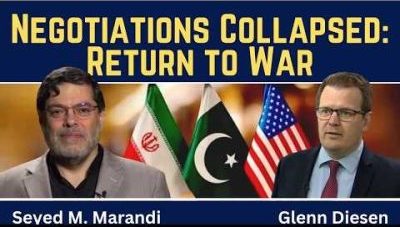
Seyed M. Marandi: Negotiations Collapsed – Return to War
or go to
Aletho News Archives – Video-Images
From the Archives
Wartime internment camps in Australia
National Archives of Australia
World War I
During World War I, for security reasons the Australian Government pursued a comprehensive internment policy against enemy aliens living in Australia.
Initially only those born in countries at war with Australia were classed as enemy aliens, but later this was expanded to include people of enemy nations who were naturalised British subjects, Australian-born descendants of migrants born in enemy nations and others who were thought to pose a threat to Australia’s security.
Australia interned almost 7,000 people during World War I, of whom about 4,500 were enemy aliens and British nationals of German ancestry already resident in Australia.
Records of World War I internment camps
World War II
During World War II, Australian authorities established internment camps for three reasons – to prevent residents from assisting Australia’s enemies, to appease public opinion and to house overseas internees sent to Australia for the duration of the war.
Unlike World War I, the initial aim of internment during the later conflict was to identify and intern those who posed a particular threat to the safety or defence of the country. As the war progressed, however, this policy changed and Japanese residents were interned en masse. In the later years of the war, Germans and Italians were also interned on the basis of nationality, particularly those living in the north of Australia. In all, just over 20 per cent of all Italians resident in Australia were interned. … continue
Blog Roll
 Aletho News
- Seyed M. Marandi: Negotiations Collapsed – Return to War
- Tomorrow’s naval blockade showdown
- ‘Israel’ attacks civilians to hide its embarrassing military failures & out of pure sadism
- Any Foreign Military Vessel Approaching Hormuz Under Any Pretext ‘Will Be Dealt With Severely’: IRGC
- Diplomats slam US negotiators’ performance in Iran talks
- Trump Refuses Exit Ramp, War with Iran will Continue
- Trump Says US Naval Blockade in Strait of Hormuz Will Begin Shortly
- US, Iran end 21-hour talks without agreement
- US IRAN TALKS: Who Are the Crazy Ones Here? /Lt Col Daniel Davis
- Talks with the US end without a deal over excessive US demands: Iran
- If Americans Knew
- US-Iran ceasefire negotiations make zero progress – Daily Update
- Pro-Israel ‘Thinktanks’ and Individuals who Influence U.S. Foreign Policy
- Mearsheimer reveals how Israel dictates US policies on Iran, Gaza – video
- After killing 350+, Israel still has a “score to settle” with Lebanon before ceasefire – Daily Update
- Military aid to Israel emerges as the latest political litmus test for Democrats
- The only Palestinian children’s rights organization closes following years-long Israeli campaign against it
- ‘I Can’t Forget the Smell’: Lebanese Reel After Israel Kills Over 300 in Single Day
- DNC Shoots Down Resolutions Calling Out AIPAC and Limiting Arms to Israel
- TCN: Is Israel Blackmailing President Trump?
- Israel killed at least 303 Lebanese yesterday – who were they? Daily Update
- No Tricks Zone
- Cave Discovery Reveals Today’s Desert Climates Were Recently Far Warmer, Wetter, Teeming With Life
- German Expert: Heat Dome Led To Record Temps In Western USA…Warmer In 1934, 1936
- New Study: No Linear Warming Or Glacier Retreat Along Northern Antarctic Peninsula Since 1980s
- An Inconvenient Tree: Uncovered In Alps… Europe Much Warmer Than Today 6000 Years Ago
- New Study Reports A 60% Slowdown In Greenland’s Ice Loss Rate In The Last Decade
- Low Intensity Tornado Wrecks Major Solar Farm, Creating A Potential Toxic Dump
- New Study Finds Warming Saves Lives…Cold Temperatures 12 Times More Deadly Than Excess Heat
- German Science Blog Accuses PIK Climate Institute Of Hallucinating Climate Tipping Points
- Devastating Assessment Of Comirnaty Vaccine By Former Senior Pfizer Europe Toxicologist
- New Study: CO2 Is ‘Effectively Negligible’ As An Explanatory Climate Change Factor Since 2000
 Aletho News