US is a refuge for criminals, Evo Morales says
Press TV – September 8, 2012
Bolivian President Evo Morales has said the United States has become a “refuge for criminals” in response to Washington’s refusal to extradite a former Bolivian president wanted in connection with the deaths of 63 people.
“Yesterday (Thursday), a document arrived from the United States, rejecting the extradition of people who have done a lot of damage to Bolivia,” Morales said in a speech in La Paz on Friday, Reuters reported.
Bolivia’s Supreme Court is seeking the extradition of former Bolivian President Gonzalo Sanchez de Lozada so he can be tried for complicity in the deaths of 63 people during an army crackdown on anti-government protesters in October 2003.
The 82-year-old was twice elected president of Bolivia. He resigned during the violence of 2003, and fled to the US, along with several of his ministers, 13 months into his second term as president.
Bolivia has been demanding the extradition of Sanchez de Lozada and his ministers since 2003.
Morales said the US tried to justify its rejection of Bolivia’s extradition request by saying that a civilian leader should not be tried for crimes committed by the military.
Morales, who became the first indigenous leader of Bolivia in nearly 500 years in January 2006, called the US a “paradise of impunity” and a “refuge for criminals.”
He has said that Latin American countries are in rebellion against the US after years of domination by their northern neighbor.
“It’s yet another display of the US government’s double moral standard,” said Rogelio Mayta, a lawyer who represents victims of the 2003 bloodshed.
Bolivia’s opposition leaders also demanded that Sanchez de Lozada be extradited and denounced the US ruling.
Paraguay: Coup Backers Push for US Military Bases
La Jornada* – 7/1/12
A group of US generals reportedly visited Paraguay for a meeting with legislators on June 22 to discuss the possibility of building a military base in the Chaco region, which borders on Bolivia in western Paraguay. The meeting coincided with the Congress’s sudden impeachment the same day of left-leaning president Fernando Lugo, who at times has opposed a US military presence in the country. In 2009 Lugo cancelled maneuvers that the US Southern Command was planning to hold in Paraguay in 2010 as part of its “New Horizons” program.
More bases in the Chaco are “necessary,” rightwing deputy José López Chávez, who presides over the Chamber of Deputies’ Committee on Defense, said in a radio interview. Bolivia, governed by socialist president Evo Morales, “constitutes a threat for Paraguay, due to the arms race it’s developing,” according to López Chávez. Bolivia and Paraguay fought a war over the sparsely populated Chaco from 1932 to 1935, the last major war over territory in South America.
The US has been pushing recently to set up military bases in the Southern Cone, including one in Chile and one in Argentina’s northeastern Chaco province, which is close to the Paraguayan Chaco, although it doesn’t share a border with Paraguay [see Update #1129]. Unidentified military sources say that the US has already built infrastructure for its own troops in Paraguayan army installations near the country’s borders with Argentina, Bolivia and Brazil; for example, an installation in Mariscal Estigarribia, some 250 km from Bolivia, has a runway almost 3.8 km long, in a country with a very limited air force.
*Translated by Weekly News Update
Nationalization, Bolivian Style: Morales Seizes Electric Grid, Boosts Oil Incentives
By Emily Achtenberg | Rebel Currents | May 10, 2012
On May 1, President Evo Morales seized control of Bolivia’s electric grid from a subsidiary of the Spanish-owned Red Eléctrica de España. In a dramatic ritual now familiar to Bolivians as a hallmark of the Morales government on International Workers’ Day, Bolivian soldiers peacefully occupied the company’s Cochabamba offices and draped the Bolivian flag across its entrance.
Coming on the heels of Argentina’s recent move to expropriate Spanish energy company Repsol’s majority stake in its national gas and oil company, the event has generated more than the usual volume of outrage and dire predictions of capital flight from U.S. business interests.
“It’s crazy to invest in Bolivia, and this is a perfect example why,” says Eric Farnsworth, vice-president of the DC-based Council of the Americas. “He’s taking actions that guarantee that investment will dry up further.”
“The left-wing populist strategy of demonizing the investor class has one big drawback: the law of diminishing (investor) returns,” warns Mary Anastasia O’Grady in the Wall Street Journal. In reality, far from abandoning Bolivia, foreign companies have remained actively engaged in its post- nationalization energy sector. This is due in no small part to Morales’s increasingly investor-friendly policies, including his willingness to boost private incentives to meet domestic energy needs.
The takeover of the electric grid, which was privatized in 1997, is part of Bolivia’s overall strategy to re-nationalize companies that were divested by past neoliberal governments, increasing state control over strategic sectors such as natural resources and basic services. Since 2006, Morales has nationalized the country’s gas fields, oil refineries, pension funds, telecommunications, and main hydroelectric power plants.
According to Morales, Red Eléctrica has invested only $81 million in Bolivia’s electric grid since acquiring it in 2002, while drawing around $100 million in cumulative profits. Three of Bolivia’s nine departments remain isolated from the national network. “The government invested $220 million in electricity generation while others profited, so we’re recovering what was ours,” Morales said.
Apart from these ideological and economic considerations, domestic politics also played a role in the May 1 event. Nationalizations have been highly popular in Bolivia, and this one may help Morales shore up support from disaffected constituencies at a time of heightened civic unrest. Still, the increase in power blackouts since the government took over electricity generation in 2010 serves as a reminder that the move could also backfire politically if the level of service does not meet public expectations.
In any case, despite the theatrics of the May 1 announcement, Bolivia’s most recent nationalization has been relatively non-confrontational, especially when compared to Argentina’s move with Repsol. For one thing, the targeted electric company subsidiary generated just 3% of its parent company’s profits, while Argentina’s YPF accounted for 21% of Repsol’s. In an effort to minimize negative fallout, Morales gave Spain 3 days notice of the takeover, whereas Argentina’s President Cristina Fernández refused to meet with Repsol in advance.
After its initial criticism, Spain has acknowledged the legitimacy of Bolivia’s nationalization decision, which includes a promise of fair compensation. Red Eléctrica expects to reach a friendly agreement with Bolivia on the value of its investment, and the parties have agreed to retain a joint appraiser.
On the same day as the electricity grid takeover, Morales inaugurated a $600 million natural gas processing plant in eastern Bolivia with Repsol that represents the single biggest foreign investment under his government. The plant will triple the amount of gas sold to Argentina. Repsol is one of ten gas and oil multinationals that were forced to renegotiate their contracts with Bolivia in 2006, giving the state majority ownership and vastly increasing taxes and royalties under a relatively modest form of nationalization.
“We have a relation of great trust with Repsol,” said Morales, contrasting Bolivia’s situation with Argentina’s. “Repsol respects all Bolivian rules, and its promised investments are going ahead in a good manner.” At the same time, Morales noted, Bolivia’s experience with Repsol shows that nationalization (Bolivian style) can be a success, providing an instructive example for Argentina.
As Carlos Arze of Bolivia’s Center for Research on Labor and Agrarian Development (CEDLA) points out, six years after Bolivia nationalized its hydrocarbons reserves, not a single foreign oil and gas company has pulled out of Bolivia. Despite the major shift in revenue splits, the firms’ annual profits have remained about the same in dollar terms ($824 million), due to the vast increase in revenues generated by high commodity prices and natural gas exports. Annual hydrocarbons revenues collected by the state have increased from an average of $332 million prior to nationalization to more than $2 billion today.
Still, there have been major setbacks with oil and gas nationalization. While natural gas production has increased, crude oil production has fallen by more than 20% since 2005. With crude oil prices that the state can pay frozen at $27 per barrel (less than a quarter of today’s world price), companies are unwilling to invest in exploration of new reserves. As a result, Bolivia has become increasingly dependent on fuel imports for domestic consumption, with an escalating annual price tag estimated at $755 million in 2012, to subsidize the cost of imported gasoline and diesel to consumers.
In an effort to reduce this dependency and stimulate energy sovereignty, the government instituted a new policy on April 19, boosting incentives for crude oil production from $10 to $40 per barrel (through a $30 tax credit).
The new policy effectively repositions the ill-fated December 2010 Gasolinazo, when the government tried to accomplish the same goals on the backs of consumers by abruptly cancelling the fuel subsidy and dramatically increasing gasoline prices. That policy was revoked after massive protests, sending shock waves through Bolivia’s social and political sectors that continue to reverberate to this day.
Critics of the new incentive, including Arze, believe that it’s just another form of giveaway to the oil companies which far exceeds their production costs, and will still be paid by the public through taxes foregone from the national treasury. They question where the funds will come from, since the government claims it can’t afford higher salaries for striking health care workers and other disaffected sectors. According to the government, savings from reduced gasoline and diesel imports will more than offset the tax incentive cost (estimated at $358 million over five years).
In any case, it’s clear that Bolivian-style nationalization is far from incompatible with continued private investment, and that the Morales government is willing to underwrite the incentives it believes are necessary to accommodate foreign capital. Whether this investor-friendly approach is the best policy for Bolivia remains to be seen, but it’s a far cry from “demonizing” the private sector.
Destabilizing Arsenals Concealed in US Embassies
By Nil NIKANDROV | Strategic Culture Foundation | 02.04.2012
Over the past years, it has been happening with frightening regularity that U.S. diplomats and CIA agents were caught pulling off operations involving illicit weapons supply in Latin America. The inescapable impression is that the U.S. Department of State has irreversibly learned to regard the Vienna Convention and various national legislation as rules which it has unlimited freedom to overstep.
Pressing for unchallenged hegemony in the Western Hemisphere, Washington keeps the populist regimes in Latin America under permanent pressure. Outwardly, the U.S. Administration pledges not to resort to military force to displace the ALBA governments in Venezuela, Ecuador, Bolivia, Nicaragua, or Cuba, but in reality Washington’s efforts to undermine them are a constant background of the continent’s political picture. The activity began under president G. Bush and shows no signs of subsiding under president Obama. Supposedly, plans are being devised in the White House that a series of color revolutions will erupt across Latin America in 2013-2014 and derail the continent’s advancement towards tighter integration in security and other spheres. As the fresh experience of Libya showed with utmost clarity, Washington’s new brand of color revolutions will – in contrast to the former coups which used to be accompanied with outpourings of pacifist rhetoric – involve ferocious fighting and massive fatalities figures.
The above should explain why U.S. embassies in Latin America increasingly often become epicenters of political scandals related to illicit weapons supplies. In a recent incident in Bolivia, the country’s mobile patrol service (Umopar) intercepted in Trinidad, the capital of the department of Beni, a vehicle owned by the U.S. diplomatic mission and driven by two Bolivian nationals – chief of U.S. Embassy security Maj. Costas and Sgt. Garcia, a driver – which was found to be heading for the capital of Santa Cruz province with three shotguns, a 38-caliber revolver, and a load of ammunition. Bolivian Interior Minister Carlos Romero announced shortly thereafter that the U.S. embassy had not requested a permit for transporting weapons and, therefore, acted illegally and put Bolivia’s National Security in jeopardy. It remained unknown who was going to secretly receive the weapons seized in the district located hundreds of kilometers away from La Paz.
The Bolivian administration has serious reasons to be on the alert – slightly over a year ago, Ecuador’s police which had been armed, funded, and otherwise courted by the U.S. embassy, used to launch missions directed by U.S. advisers – and gradually evolved to think of the national administration’s control as purely nominal – organized a mutiny and, as the plot unraveled, president Rafael Correa narrowly escaped an assassination attempt. An investigation that followed when law and order were restored in Ecuador failed to clarify the origin of the sniper rifles used to fire on the president, which likely means that the CIA professionals left no trace of their involvement in the coup.
The US embassy in La Paz reacted to the Trinidad incident by releasing a statement to the effect that the Beni police had actually been notified about the supply of firearms to Santa Cruz and that the plan had been to pass them to Bolivian nationals employed as guards by US institutions. Minister Romero was as a result forced to reiterate that no license had been issued on the occasion and said that a probe would be opened into how the firearms and ammunition had crossed the Bolivian border.
For anyone familiar with the scope of the activity of the US intelligence community in Bolivia, the context of minister Romero’s invectives is not hard to grasp. A shocking episode took place in Santa Cruz, a city with a reputation of a hotbed of separatism, in April, 2009 – back then, Bolivian special forces raided the Las Americas hotel and mowed down a group of terrorists who had arrived to the country from Western Europe with the goals of fueling armed resistance to the populist regime and assassinating president Evo Morales. It transpired that the uninvited visitors had a record of fighting against the Serbs in the Balkan region, where the bunch of militants had formed strong links with Western intelligence services. The Bolivian counter-espionage agency’s investigation into various aspects of the case of the group’s leader Eduardo Rózsa-Flores – particularly the part of the probe meant to shed light on the channels through which firearms, grenades, explosives and ammunition had been smuggled into the country – is still underway. In a rather predictable development, a number of individuals who had assisted Rózsa-Flores, including Human Rights Foundation representative Hugo Acha (a.k.a Superman) – fled to the U.S. The Bolivian security service got a hold of e-mail exchanges between Rózsa-Flores and Belovays, a U.S. national and, reportedly, a career CIA officer whose profile also features a stay in the Balkans.
The U.S. van with firearms on board ended up in the hands of the Bolivian police a month after the U.S. and Bolivian administrations penned a deal normalizing the diplomatic relations between the two countries and exchanged ambassadors. The lesson that Morales has to relearn under the circumstances is that – shifts in diplomacy notwithstanding – the staff of the U.S. embassy in Bolivia has no intention to stop playing its totally unfair game.
There’s hardly a country in Latin America where U.S. agents have not been spotted trafficking firearms. A U.S. national was taken in custody last April in the proximity of the Ezeiza airport in Buenos Aires for carrying three rifles, two of them with telescopic sights, in a vehicle with a diplomatic license plate. The U.S. embassy somehow explained away the incident with a reference to an unspecified emergency (no doubt, getting away with a similar offense so easily would have been out of question in the U.S.), and the perpetrator, a U.S. embassy contractor, in his own description, immediately hopped on a plane to the U.S. Argentina’s police were keenly interested in the man’s “hunting” trips to the regions of the country bordering Bolivia and Chile, considering that Argentinian laws strictly prohibit the conduct of intelligence operations, including those against drug trafficking, by foreign agents.
Speaking of Argentina, the loudest story played out about a year ago when boxes containing undeclared firearms, reconnaissance equipment, and narcotic substances were discovered aboard a U.S. Air Force Boeing in the Ezeiza airport. The U.S. mischief was impossible to deny, but, as in the majority of cases, the U.S. easily solved the problem, this time by asserting that all of the above was necessary to train Argentinian police.
It is a recurrent theme in the media that sizable arsenals are stored in U.S. embassies across Latin America. These days, given that the ostensibly anti-terror war has been raging globally for over a decade, nobody is taken aback when this type of information surfaces. The perceived risks are pervasive, be it Mexico, Central America, Columbia, Brazil, or even Uruguay, and alarmist forecasts evidently proliferate. That must be the reason why, in just about every Latin American country, the U.S. embassies increasingly resemble military bases, with reinforced concrete walls, tiny windows, and underground shelters.
Related articles
Featured Video
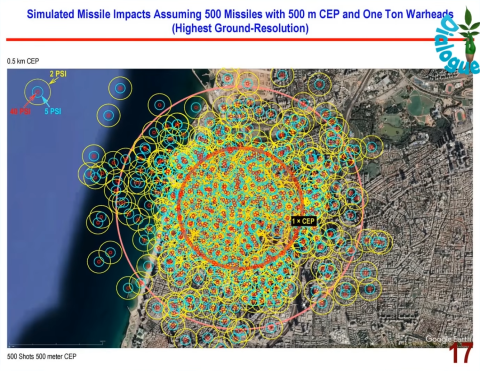
Prof. Ted Postol: US–Iran War? Israel’s Fatal Gamble
or go to
Aletho News Archives – Video-Images
From the Archives
Neocon Max Boot: Legal and illegal aliens need to enlist in the US army and die for Israel
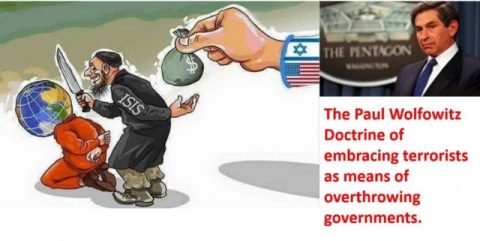
By Jonas E. Alexis | Veterans Today | October 16, 2107
In 1973 Irving Kristol, the godfather of the Neoconservative movement, made a stunning statement which is still relevant to understanding the Israeli influence in US foreign policy. Kristol said:
“Senator McGovern is very sincere when he says that he will try to cut the military budget by 30%. And this is to drive a knife in the heart of Israel… Jews don’t like big military budgets. But it is now an interest of the Jews to have a large and powerful military establishment in the United States…
“American Jews who care about the survival of the state of Israel have to say, no, we don’t want to cut the military budget, it is important to keep that military budget big, so that we can defend Israel.”
Read the statement again very carefully. A big military budget, said Kristol, is only good for Israel, not America or much of the Western World. In other words, precious American soldiers who go to the Middle East to fight so-called terrorism are just working for Israel, not for America.
So, whenever the Neocons use words such as “democracy” or “freedom,” they are essentially conning decent Americans to support Israel’s perpetual wars. … continue
Blog Roll
 Aletho News
- Macron: French citizens fighting for Israel cannot be labeled ‘genociders’
- US eyes Gaza security force drawn from armed gangs
- The Only Motive Behind The ‘Imminent’ U.S. War With Iran Is The Zionist Lobby
- Trump eyes 350-acre US military base housing 5,000 troops in Gaza
- Israel Pushing US Toward a Big and Damaging War With Iran – Ex-Pentagon Analyst
- Meet The Liberal Zionist And Ukraine War Supporter Advising AOC On Foreign Policy
- Buck Dancing for Zion: Kenya’s and Nigeria’s Growing Love Affair With Israel
- Israel installed, oversaw security system at Barak-Epstein residence in New York: Report
- ‘Britain’s Index of Repression’ documents 964 incidents of anti-Palestinian crackdown
- Prof. Ted Postol: US–Iran War? Israel’s Fatal Gamble
- If Americans Knew
- Tucker Carlson interrogated in Israel, has passport seized after interviewing US ambassador
- 6,000 Amputees in Gaza Face Impossible Recovery amid Israeli War Ultimatum
- The Lancet: Gaza death toll far higher than reported – Not a ceasefire Day 132
- Compliant aid: Who are the Israel-approved NGOs scaling up in Gaza?
- Why won’t Trump’s “Board of Peace” bring peace? – Not a ceasefire Day 131
- Help end the injustice against Shadi
- Israel’s Favorite American President
- Israel’s “Yellow Line” Is a Death Trap for Palestinians. We Drove Into It.
- Why Israel’s expanding occupation in Syria presents a critical legal test
- Gaza is not a natural disaster. It is the victim of genocide enabled by global inaction
- No Tricks Zone
- Coal Power Back In Trend As Globe Tries To Keep Pace With Growing Demand For Power
- New Study: A 4°C Warmer Beaufort Sea Had ‘No Sea Ice’ 11,700 – 8200 Years Ago
- Unfudging The Data: Dutch Meteorological Institute Reinstates Early 20th Centruy Heat Waves It Had Erased Earlier
- German Gas Crisis…Chancellor Merz Allegedly Bans Gas Debate Ahead of Elections!
- Pollen Reconstructions Show The Last Glacial’s Warming Events Were Global, 10x Greater Than Modern
- Germany’s Natural Gas Storage Level Dwindles To Just 28%… Increasingly Critical
- New Study Rebuts The Assumption That Anthropogenic CO2 Molecules Have ‘Special’ Properties
- Climate Scientist Who Predicted End Of “Heavy Frost And Snow” Now Refuses Media Inquiries
- Polar Bear Numbers Rising And Health Improving In Areas With The Most Rapid Sea Ice Decline
- One Reason Only For Germany’s Heating Gas Crisis: Its Hardcore-Dumbass Energy Policy
 Aletho News