Nunes Memo Reports Crimes at Top of FBI & DOJ
By Ray McGovern | Consortium News | February 2, 2108
The long-awaited House Intelligence Committee report made public today identifies current and former top officials of the FBI and the Department of Justice as guilty of the felony of misrepresenting evidence required to obtain a court warrant before surveilling American citizens. The target was candidate Donald Trump’s adviser Carter Page.

Former Trump foreign policy adviser Carter Page
The main points of what is widely known as the “Nunes Memo,” after the House Intelligence Committee Chair Devin Nunes (R-Calif.), have been nicely summarized by blogger Publius Tacitus, who noted that the following very senior officials are now liable for contempt-of-court charges; namely, the current and former members of the FBI and the Department of Justice who signed off on fraudulent applications to the Foreign Intelligence Surveillance Court: James Comey, Andy McCabe, Sally Yates, Dana Boente and Rob Rosenstein. The following is Publius Tacitus’s summary of the main points:
- The dubious but celebrated Steele Dossier played a critical role in obtaining approval from the FISA court to carry out surveillance of Carter Page according to former FBI Deputy Director Andy McCabe.
- Christopher Steele was getting paid by the DNC and the FBI for the same information.
- No one at the FBI or the DOJ disclosed to the court that the Steele dossier was paid for by an opposition political campaign.
- The first FISA warrant was obtained on October 21, 2016 based on a story written by Michael Isikoff for Yahoo News based on information he received directly from Christopher Steele — the FBI did not disclose in the FISA application that Steele was the original source of the information.
- Christopher Steele was a long-standing FBI “source” but was terminated as a source after telling Mother Jones reporter David Corn that he had a relationship with the FBI.
- The FBI signers of the FISA applications/renewals were James Comey (three times) and Andrew McCabe.
- The DOJ signers of the FISA applications/renewals were Sally Yates, Dana Boente and Rod Rosenstein.
- Even after Steele was terminated by the FBI, he remained in contact with Deputy Attorney General Bruce Our, whose wife worked for FUSION GPS, a contractor that was deeply involved with the Steele dossier.
From what Michael Isikoff reported in September 2016 it appears that the CIA and the Director of National Intelligence (as well as the FBI) are implicated in spreading the disinformation about Trump and Russia. Isikoff wrote:
“U.S. intelligence officials are seeking to determine whether an American businessman identified by Donald Trump as one of his foreign policy advisers has opened up private communications with senior Russian officials — including talks about the possible lifting of economic sanctions if the Republican nominee becomes president, according to multiple sources who have been briefed on the issue. […]
“But U.S. officials have since received intelligence reports that during that same three-day trip, Page met with Igor Sechin, a longtime Putin associate and former Russian deputy prime minister who is now the executive chairman of Rosneft, Russian’s leading oil company, a well-placed Western intelligence source tells Yahoo News.”
Who were the “intelligence officials” briefing the select members of the House and Senate? That will be one of the next shoes to drop. We are likely to learn in the coming days that John Brennan and Jim Clapper were also trying to help the FBI build a fallacious case against Trump, adds Tacitus.
Indeed, Rep. Greg Walden (R-OR), Chair of the House Energy and Commerce Committee, has already indicated that his disclosures in the Nunes Memo represent just “one piece of a probably much larger mosaic of what went on.”
The Media Will Determine What Comes Next
As for Congressman Adam Schiff (D-Calif.), ranking member of the House Intelligence Committee, it is now abundantly clear why he went to ridiculous lengths, as did the entire Democratic congressional leadership, to block or impugn the House Intelligence Committee report.
Until the mid-December revelations of the text messages between FBI lovers Peter Strzok and Lisa Page turned Russia-gate into FBI/DOJ-gate, Schiff had been riding high, often hiding behind what he said “he could not tell” the rest of us.
With the media, including what used to be the progressive media, fully supporting the likes of Adam Schiff, and the FBI/CIA/NSA deep state likely to pull out all the stops, the die is now cast. We are in for a highly interesting time over the next months.
Ray McGovern works with the publishing arm of the ecumenical Church of the Savior in inner-city Washington. He was a CIA analyst for 27 years and co-founded Veteran Intelligence Professionals for Sanity (VIPS).
Lying, Spying and Hiding
By Andrew Napolitano • Unz Review • February 1, 2018
I have argued for a few weeks now that House Intelligence Committee members have committed misconduct in office by concealing evidence of spying abuses by the National Security Agency and the FBI. They did this by sitting on a four-page memo that summarizes the abuse of raw intelligence data while Congress was debating a massive expansion of FISA.
FISA is the Foreign Intelligence Surveillance Act of 1978, which was written to enable the federal government to spy on foreign agents here and abroad. Using absurd and paranoid logic, the secret Foreign Intelligence Surveillance Court, which only hears the government’s lawyers, has morphed “foreign intelligence surveillance” into undifferentiated bulk surveillance of all Americans.
Undifferentiated bulk surveillance is the governmental acquisition of fiber-optic data stored and transmitted by nearly everyone in America. This includes all telephone conversations, text messages and emails, as well as all medical, legal and financial records.
Ignorant of the hot potato on which the House Intelligence Committee had been sitting, Congress recently passed and President Donald Trump signed a vast expansion of spying authorities — an expansion that authorizes legislatively the domestic spying that judges were authorizing on everyone in the U.S. without individual suspicion of wrongdoing or probable cause of crime; an expansion that passed in the Senate with no votes to spare; an expansion that evades and avoids the Fourth Amendment; an expansion that the president signed into law the day before we all learned of the House Intelligence Committee memo.
The FISA expansion would never have passed the Senate had the House Intelligence Committee memo and the data on which it is based come to light seven days sooner than it did. Why should 22 members of a House committee keep their 500-plus congressional colleagues in the dark about domestic spying abuses while those colleagues were debating the very subject matter of domestic spying and voting to expand the power of those who have abused it?
The answer to this lies in the nature of the intelligence community today and the influence it has on elected officials in the government. By the judicious, personalized and secret revelation of data, both good and bad — here is what we know about your enemies, and here is what we know about you — the NSA shows its might to the legislators who supposedly regulate it. In reality, the NSA regulates them.
This is but one facet of the deep state — the unseen parts of the government that are not authorized by the Constitution and that never change, no matter which party controls the legislative or executive branch. This time, they almost blew it. If just one conscientious senator had changed her or his vote on the FISA expansion — had that senator known of the NSA and FBI abuses of FISA concealed by the House Intelligence Committee — the expansion would have failed.
Nevertheless, the evidence on which the committee members sat is essentially a Republican-written summary of raw intelligence data. Earlier this week, the Democrats on the committee authored their version — based, they say, on the same raw intelligence data as was used in writing the Republican version. But the House Intelligence Committee, made up of 13 Republicans and nine Democrats, voted to release only the Republican-written memo.
Late last week, when it became apparent that the Republican memo would soon be released, the Department of Justice publicly contradicted President Trump by advising the leadership of the House Intelligence Committee in very strong terms that the memo should not be released to the public.
It soon became apparent that, notwithstanding the DOJ admonition, no one in the DOJ had actually seen the memo. So FBI Director Chris Wray made a secret, hurried trip to the House Intelligence Committee’s vault last Sunday afternoon to view the memo. When asked by the folks who showed it to him whether it contains secret or top-secret material, he couldn’t or wouldn’t say. But he apparently saw in the memo the name of the No. 2 person at the FBI, Deputy Director Andrew McCabe, as one of the abusers of spying authority. That triggered McCabe’s summary departure from the FBI the next day, after a career of 30 years.
The abuse summarized in the Republican memo apparently spans the last year of the Obama administration and the first year of the Trump administration. If it comes through as advertised, it will show the deep state using the government’s powers for petty or political or ideological reasons.
The use of raw intelligence data by the NSA or the FBI for political purposes or to manipulate those in government is as serious a threat to popular government — to personal liberty in a free society — as has ever occurred in America since Congress passed the Alien and Sedition Acts of 1798, which punished speech critical of the government.
What’s going on here?
The government works for us; we should not tolerate its treating us as children. When raw intelligence data is capable of differing interpretations and is relevant to a public dispute — about, for example, whether the NSA and the FBI are trustworthy, whether FISA should even exist, whether spying on everyone all the time keeps us safe and whether the Constitution even permits this — the raw data should be released to the American public.
Where is the personal courage on the House Intelligence Committee? Where is the patriotism? Where is the fidelity to the Constitution? The government exists by our consent. It derives its powers from us. We have a right to know what it has done in our names, who broke our trust, who knew about it, who looked the other way and why and by whom all this was intentionally hidden until after Congress voted to expand FISA.
Everyone in government takes an oath to preserve, protect and defend the Constitution. How many take it meaningfully and seriously?
Copyright 2018 Andrew P. Napolitano. Distributed by Creators.com.
Will Congress Face Down the Deep State?
By Ray McGovern | Consortium News | January 30, 2018
With the House Intelligence Committee vote yesterday to release its four-page memorandum reportedly based on documentary evidence of possible crimes by top Justice Department and FBI leaders, the die is cast. Russia-gate and FBI-gate are now joined at the hip.
The coming weeks will show whether the U.S. intelligence establishment (the FBI/CIA/NSA, AKA the “Deep State”) will be able to prevent its leaders from being held to account. Past precedent suggests that the cabal that conjured up Russia-gate will not have to pick up a “go-to-jail” card. This, despite the widespread guilt suggested by the abrupt way that several senior-echelon DOJ and FBI rats have already jumped ship. Not to mention the manner in which FBI Deputy Director Andrew McCabe, was unceremoniously pushed overboard yesterday, after Director Christopher Wray was given a look at the extra-legal capers described in the House Intelligence Committee memorandum.
Granted, at first glance Deep State’s efforts to undercut candidate Donald Trump seem so risky and audacious as to be unbelievable. By now, though, Americans should be able to wrap their heads around, one, the dire threat that outsider Trump was seen to be posing to the Deep State and to the ease with which it held sway under President Barack Obama; and, two, expected immunity from prosecution if Deep State crimes were eventually discovered after the election, since “everybody knew” Hillary Clinton was going to win. Oops.
Accountability This Time?
There seems to be an outside chance, this time, that the culprits who did actually interfere in the 2016 presidential election in an effort to make sure Trump could not win, and then did all in their power to sabotage him after his electoral victory, will be held to account by unusually feisty members of the House. It is abundantly clear that members of the House Intelligence and House Judiciary Committees are now in possession of the kind of unambiguous, first-hand documentary evidence needed to get a grand jury convened and, eventually, indictments obtained.
It is no exaggeration to suggest that the Republic and the Constitution are at stake. A friend put it the way:
“When GW Bush said of the Constitution, ‘It’s just a goddam piece of paper,’ I thought it was just another toss-off bit of hyperbole as he so often would utter. Not so. He, and many in his administration (and out) sincerely believe it and set out to make it so. They may actually have succeeded.”
The Media’s Role
I almost feel sorry for what is called “mainstream media” and – even more so – for the majority of Americans deceived by the prevailing narrative on Russia-gate. Even though that narrative now lies in shreds, there is no sign so far that the pundits will fess up and admit to spreading a far-fetched, evidence-impoverished story that was full of holes from the get-go.
Even vestigially honest journalists of the old school, who may themselves have been taken in, will have a Herculean challenge if they attempt to right the ship of journalism. As for brainwashed Americans, pity them. It is far easier to deceive folks than to convince them they have been deceived, as Mark Twain once wrote.
From today’s online version of the New York Times, for example, the lede headline read, “Taunted by Trump and Pressured From Above, McCabe Steps Down as F.B.I. Deputy.”
The Times quotes Representative Adam B. Schiff, the top Democrat on the House Intelligence Committee, giving hypocrisy a bad name. Schiff said yesterday that it had been a “sad day” for the committee and that Republicans had voted “to politicize the intelligence process.”
And this just in: an op-ed from NYT pundit David Leonhardt, titled – you guessed it – “The Nunes Conspiracy.”
“Instead of evidence, the memo engages in the same dark and misleading conspiracy theories that have characterized other efforts by President Trump’s allies to discredit the Russia investigation,” Leonhardt wrote. “But the substance of the claims isn’t really the point. Distraction is the point, and the distraction campaign is having an impact.”
And so it goes.
Ray McGovern works with the publishing arm of the ecumenical Church of the Savior in inner-city Washington. He was a CIA analyst for 27 years and co-founded Veteran Intelligence Professionals for Sanity (VIPS).
US Democrats’ Accusations Against Russia Distract Public From Real Problem
Sputnik – 26.01.2018
US Democrats have asked Facebook and Twitter for evidence of Russia’s involvement in an online campaign to release a politically charged memo.
The move comes as Congressional Republicans have been calling for the public release of a four-page classified memo they claim reveals reported abuses of the Foreign Intelligence Surveillance Act (FISA) by the Obama administration, which approved surveillance against Trump’s team on behalf of the Clinton campaign.
Dr. Jeanne Zaino, American political analyst and professor of Political Science at Iona College told Radio Sputnik in an interview that by asking for an investigation into allegations that Russian bots are behind #releasethememo, US Democrats are drawing the public’s attention away from the real question. That question is whether the memo actually exposes severe surveillance abuses, Zaino said, noting that Republicans claim the explosive content of the memo could upend special counsel Robert Mueller’s ongoing investigation into allegations of Russian meddling in the 2016 US election and collusion with the Trump campaign.
“They are saying that this push to release the memo is being conducted by Russian bots. Whether that is the case or whether it is not the case… it is almost beside the point, because the real question — particularly in a democracy where we value transparency — should be what does the memo contain,” Zaino told Radio Sputnik.
She pointed out that while the FBI and the Justice Department have been blocking the memo’s release saying it would violate national security, whether that is actually the case should be decided in a court of law.
“They simply cannot keep information and materials top secret just because they think it might embarrass them or embarrass the administration, embarrass Congress or whoever this memo might embarrass,” the analyst said. “I really think that the Democrats are trying to have us look left when in fact we should be looking right and saying what in fact does the memo contain and is it really something that we need to protect for national security reasons.”
Zaino stressed that she doesn’t know whether the memo “shows abuse of the government surveillance program by the Obama administration”, as is being claimed, but if the question is raised, the memo should be released if it is not protecting national security.
“You cannot just classify [the memo] that way. We have an overclassification problem in this country where almost everything is classified as top secret,” Zaino said. “The Democrats are asking us to focus on the bots, that’s fascinating and interesting, but it doesn’t get to the heart of the question which is what does this memo show and did we see an abuse of the government surveillance programs under the Obama administration.”
As walls close in on FBI, the bureau lashes out at its antagonists
By Sharyl Attkisson | The Hill | January 25, 2018
What happens when federal agencies accused of possible wrongdoing — also control the alleged evidence against them? What happens when they’re the ones in charge of who inside their agencies — or connected to them — ultimately gets investigated and possibly charged?
Those questions are moving to the forefront as the facts play out in the investigations into our intelligence agencies’ surveillance activities.
There are two overarching issues.
First, there’s the alleged improper use of politically-funded opposition research to justify secret warrants to spy on U.S. citizens for political purposes.
Second, if corruption is ultimately identified at high levels in our intel agencies, it would necessitate a re-examination of every case and issue the officials touched over the past decade — or two — under administrations of both parties.
This is why I think the concerns transcend typical party politics.
It touches everybody. It’s potentially monumental.
This week, the FBI said it was unfair for the House Intelligence Committee not to provide its memo outlining alleged FBI abuses. The committee wrote the summary memo after reviewing classified government documents in the Trump-Russia probe.
The FBI’s complaint carries a note of irony considering that the agency has notoriously stonewalled Congress. Even when finally agreeing to provide requested documents, the Department of Justice uses the documents’ classified nature to severely restrict who can see them — even among members of Congress who possess the appropriate security clearance. Members who wish to view the documents must report to special locations during prescribed hours in the presence of Department of Justice minders who supervise them as they’re permitted to take handwritten notes only (you know, like the 1960s).
What most people don’t know is that the FBI and Department of Justice already know exactly what Congressional investigators have flagged in the documents they’ve reviewed, because three weeks ago the Senate Judiciary Committee sent its own summary memo to FBI Director Christopher Wray and Department of Justice Deputy Attorney General Rod Rosenstein. The committee also referred to the Department of Justice a recommendation for possible charges against the author of the political opposition research file, the so-called “Trump dossier”: Christopher Steele.
The head of the Senate Judiciary Committee, Republican Charles Grassley co-authored the memo with fellow Republican Sen. Lindsey Graham. Grassley says it’s important for the public to see the unclassified portions of the memo. But unlike the House, which can release the memo on its own (and is taking steps to do so), Senate rules require permission from the Department of Justice — the possibly offending agency — approve or declassify the memo. And that’s reached a snag.
According to Grassley, the FBI is blocking the release of the unclassified sections of the Senate memo by falsely claiming that they contain classified information.
“It sure looks like a bureaucratic game of hide the ball, rather than a genuine concern about national security,” said Grassley in a speech on the Senate floor yesterday.
Grassley also pointed out that agencies accused of possible improprieties are the ones controlling the information. It’s the FBI who may have misused the unverified “dossier” opposition research, allegedly presenting it to a secret court as if it were verified intelligence.
“[FBI] Director [James] Comey testified in 2017 that it was ‘salacious and unverified’,” said Grassley. “So, it was a collection of unverified opposition research funded by a political opponent in an election year. Would it be proper for the Obama administration — or any administration — to use something like that to authorize further investigation that intrudes on the privacy of people associated with its political opponents? That should bother civil libertarians of any political stripe.”
Democrats and many in the media are taking the side of the intelligence community, calling the Republican efforts partisan. House Democrats are said to be writing a counter-memo.
“We need to produce our own memo that lays out the actual facts and shows how the majority memo distorts the work of the FBI and the Department of Justice,” said Rep. Adam Schiff, the lead Democrat on the House Intelligence Committee.
Meantime, the Department of Justice has officially warned the House Intelligence Committee not to release its memo. It’s like the possible defendant in a criminal trial threatening prosecutors for having the audacity to reveal alleged evidence to the judge and jury.
This is the first time I can recall open government groups and many reporters joining in the argument to keep the information secret. They are strangely uncurious about alleged improprieties with implications of the worst kind: Stasi-like tactics used against Americans. “Don’t be irresponsible and reveal sources and methods,” they plead.
As for me? I don’t care what political stripes the alleged offenders wear or whose side they’re on. If their sources and methods are inappropriate, they should be fully exposed and stopped.
Sharyl Attkisson (@SharylAttkisson) is an Emmy-award winning investigative journalist, author of The New York Times bestsellers “The Smear” and “Stonewalled,” and host of Sinclair’s Sunday TV program “Full Measure.”
“Too Big To Believe” – Massive Scandal Is Brewing At The FBI
By Tyler Durden | Zero Hedge | January 24, 2018
As the Potemkin Village walls of The Left’s ‘Trump Collusion’ narrative crash and burn along with special counsel Mueller’s credibility, The New York Post’s Michael Goodwin sees far more wide-ranging problems ahead for America’s ‘intelligence’ agencies as the anti-Trump ‘secret society’ and lovers-texts-gate debacles threaten the core of the Deep State.
Goodwin writes that, during the financial crisis, the federal government bailed out banks it declared “too big to fail.” Fearing their bankruptcy might trigger economic Armageddon, the feds propped them up with taxpayer cash.
Something similar is happening now at the FBI, with the Washington wagons circling the agency to protect it from charges of corruption. This time, the appropriate tag line is “too big to believe.”
Yet each day brings credible reports suggesting there is a massive scandal involving the top ranks of America’s premier law enforcement agency. The reports, which feature talk among agents of a “secret society” and suddenly missing text messages, point to the existence both of a cabal dedicated to defeating Donald Trump in 2016 and of a plan to let Hillary Clinton skate free in the classified email probe.
If either one is true — and I believe both probably are — it would mean FBI leaders betrayed the nation by abusing their powers in a bid to pick the president.
More support for this view involves the FBI’s use of the Russian dossier on Trump that was paid for by the Clinton campaign and the Democratic National Committee. It is almost certain that the FBI used the dossier to get FISA court warrants to spy on Trump associates, meaning it used the opposition research of the party in power to convince a court to let it spy on the candidate of the other party — likely without telling the court of the dossier’s political link.
Even worse, there is growing reason to believe someone in President Barack Obama’s administration turned over classified information about Trump to the Clinton campaign.
As one former federal prosecutor put it, “It doesn’t get worse than that.” That prosecutor, Joseph diGenova, believes Trump was correct when he claimed Obama aides wiretapped his phones at Trump Tower.
These and other elements combine to make a toxic brew that smells to high heaven, but most Americans don’t know much about it. Mainstream media coverage has been sparse and dismissive and there’s a blackout from the same Democrats obsessed with Russia, Russia, Russia.
Partisan motives aside, it’s as if a scandal of this magnitude is more than America can bear — so let’s pretend there’s nothing to see and move along.
But, thankfully the disgraceful episode won’t be washed away, thanks to a handful of congressional Republicans, led by California Rep. Devin Nunes, chairman of the House’s Permanent Select Committee on Intelligence. After he accused the FBI of stonewalling in turning over records, the bureau relented, at least partially.
The result was clear evidence of bias against Trump by officials charged with investigating him and Clinton. Those same agents appear to have acted on that bias to tilt the election to Clinton.
In one text message, an agent suggests that Attorney General Loretta Lynch knew while the investigation was still going on that the FBI would not recommend charges against Clinton.
How could she know unless the fix was in?
All roads in the explosive developments lead to James Comey, whose Boy Scout image belied a sinister belief that he, like his infamous predecessor J. Edgar Hoover, was above the law.
It is why I named him J. Edgar Comey last year and wrote that he was “adept at using innuendo and leaks” to let everybody in Washington know they could be the next to be investigated.
It was in the office of Comey’s top deputy, Andrew McCabe, where agents discussed an “insurance policy” in the event that Trump won. Reports indicated that the Russia-collusion probe was that insurance policy.
The text was from Peter Strzok, the top investigator on the Trump case, and was sent to Lisa Page, an FBI lawyer and also his mistress.
“I want to believe the path you threw out for consideration in Andy’s office — that there’s no way he gets elected — but I’m afraid we can’t take that risk. It’s like an insurance policy in the unlikely event you die before you’re 40 . . . ” Strzok wrote.
It is frightening that Strzok, who called Trump “an idiot,” was the lead investigator on both the Clinton and Trump cases.
After these messages surfaced, special counsel Robert Mueller removed Strzok and Page from his probe, though both still work at the FBI.
Strzok, despite his talk of an “insurance policy” in 2016, wrote in May of 2017 that he was skeptical Mueller’s probe would find anything on Trump because “there’s no big there there.”
Talk about irony. While Dems and the left-wing media already found Trump guilty of collusion before Mueller was appointed, the real scandal might be the conduct of the probers themselves.
Suspicions are hardly allayed by the fact that the FBI says it can’t find five months of messages between Strzok and Page, who exchanged an estimated 50,000 messages overall. The missing period — Dec. 14, 2016 through May 17, 2017 — was a crucial time in Washington.
There were numerous leaks of classified material just before and after Trump’s inauguration on Jan. 20.
And the president fired Comey last May 9, provoking an intense lobbying effort for a special counsel, which led to Mueller’s appointment on May 19.
Jeff Sessions, the attorney general, has emerged from his hidey hole to notice that the FBI has run amok, and said Monday he would “leave no stone unturned” to find the five months of missing texts.
Fine, but the House is racing ahead of him. Nunes has prepared a four-page memo, based on classified material that purportedly lays out what the FBI and others did to corrupt the election.
A movement to release the memo is gaining steam, but Congress says it might take weeks. Why wait? Americans can handle the truth, no matter how big it is.
A Conspiracy of Silence Assaults Privacy
By Andrew Napolitano • Unz Review • January 25, 2018
During the past three weeks, Congress passed and President Donald Trump signed into law vast new powers for the NSA and the FBI to spy on innocent Americans and selectively to pass on to law enforcement the fruits of that spying.
Those fruits can now lawfully include all fiber-optic data transmitted to or in the United States, such as digital recordings of all landline and mobile telephone calls and copies in real time of all text messages and emails and banking, medical and legal records electronically stored or transmitted.
All this bulk surveillance had come about because the National Security Agency convinced federal judges meeting in secret that they should authorize it. Now Congress and the president have made it the law of the land.
This enactment came about notwithstanding the guarantee of the right to privacy — the right to be left alone — articulated in the Fourth Amendment to the Constitution and elsewhere. Though the surveillance expansion passed the Senate by just one vote, it apparently marks a public policy determination that the Constitution can be ignored or evaded by majority consent whenever it poses an obstacle to the government’s purposes.
The language of the Fourth Amendment is an intentional obstacle to the government in deference to human dignity and personal liberty. It reads: “The right of the people to be secure in their persons, houses, papers, and effects, against unreasonable searches and seizures, shall not be violated, and no Warrants shall issue, but upon probable cause, supported by Oath or affirmation, and particularly describing the place to be searched, and the persons or things to be seized.”
This specific language was expressly written to prevent the bulk suspicionless surveillance that the British government had used against the colonists. British courts in London issued general warrants to British soldiers in America, authorizing them to search wherever they wished and seize whatever they found. These warrants were not based on probable cause, and they did not describe the place to be searched or the people or things to be seized.
The Colonial reaction to the British use of general warrants was to take up arms and fight the American Revolution.
Last week, Congress and the president chose to ignore our history and the human values underlying the right to privacy. Those values recognize that the individual pursuit of happiness is best actualized in an atmosphere free from the government’s prying eyes. Stated differently, the authors and ratifiers of the Fourth Amendment recognized that a person is not fully happy when being watched all the time by the government.
Yet the constitutional values and timeless lessons of history were not only rejected by Congress but also rejected in ignorance, and the ignorance was knowingly facilitated by the members of the House Intelligence Committee.
Here is the back story.
The recent behavior of the leadership of the House Intelligence Committee constitutes incompetence at best and misconduct in office at worst. The leadership sat on knowledge of NSA and FBI surveillance abuses that some committee members have characterized as “career-ending,” “jaw-dropping” and “KGB-like,” while both houses of Congress — ignorant of what their 22 House Intelligence Committee colleagues knew — voted to expand NSA and FBI surveillance authorities.
Stated differently, the 22 members of the committee knowingly kept from their 500 or so congressional colleagues incendiary information that, had it been revealed in a timely manner, would certainly have affected the outcome of the vote — particularly in the Senate, where a switch of just one vote would have prevented passage of this expansion of bulk surveillance authorization.
Why were all members of Congress but the 22 on this committee kept in the dark about NSA and FBI lawlessness? Why didn’t the committee reveal to Congress what it claims is too shocking to discuss publicly before Congress voted on surveillance expansion? Where is the outrage that this information was known to a few in the House and kept from the remainder of Congress while it ignorantly voted to assault the right to privacy?
The new law places too much power in the hands of folks who even the drafters of it have now acknowledged are inherently unworthy of this trust. I argued last week that House Intelligence Committee Chairman Devin Nunes was up to something when he publicly attacked the trustworthiness of the NSA and FBI folks whose secret powers he later inexplicably voted to expand. Now we know what he was talking about.
What can be done about this?
The House Intelligence Committee should publicly reveal the contents of its four-page report that summarizes the NSA and FBI abuses. If that fails, a courageous member of the committee should go to the floor of the House — as Sen. Dianne Feinstein once took the CIA torture report to the floor of the Senate — and reveal not just the four-page report but also the underlying data upon which the report is based. Members of Congress enjoy full immunity for anything said on the House or Senate floor, yet personal courage is often in short supply.
But there is a bigger picture here than House Intelligence Committee members sitting on valuable intelligence and keeping it from their colleagues. The American people are entitled to know how the government in whose hands we have reposed the Constitution for safekeeping has used and abused the powers we have given to it. The American people are also entitled to know who abused power and who knew about it and remained silent.
Does the government work for us, or do we work for the government? In theory, of course, the government works for us. In practice, it treats us as children. Why do we accept this from a government to which we have consented? Democracy dies in darkness. So does personal freedom.
Copyright 2018 Andrew P. Napolitano. Distributed by Creators.com.
Featured Video
“Historic Russia”: The Land Putin Will Not Give Back
or go to
Aletho News Archives – Video-Images
Book Review
Why the War on Conspiracy Theories Is Bad Public Policy
By Kevin Barrett • Unz Review • February 1, 2019
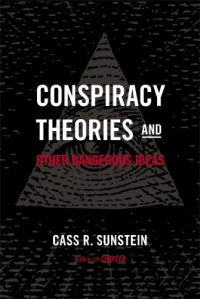 A Review of Conspiracy Theories and Other Dangerous Ideas by Cass Sunstein (based on an earlier paper co-authored with Adrian Vermeule); In Defense of Troublemakers: The Power of Dissent in Life and Business by Charlan Nemeth; and Conspiracy Theories and the People Who Believe Them, edited by Joseph E. Uscinski
On January 25 2018 YouTube unleashed the latest salvo in the war on conspiracy theories, saying “we’ll begin reducing recommendations of borderline content and content that could misinform users in harmful ways—such as videos promoting a phony miracle cure for a serious illness, claiming the earth is flat, or making blatantly false claims about historic events like 9/11.”
At first glance that sounds reasonable. Nobody wants YouTube or anyone else to recommend bad information. And almost everyone agrees that phony miracle cures, flat earthism, and blatantly false claims about 9/11 and other historical events are undesirable.
But if we stop and seriously consider those words, we notice a couple of problems. First, the word “recommend” is not just misleading but mendacious. YouTube obviously doesn’t really recommend anything. When it says it does, it is lying. … continue
Blog Roll
 Aletho News
- BRITAIN’S WARNING: PREPARE FOR WAR
- “Historic Russia”: The Land Putin Will Not Give Back
- How the Cambridge Analytica scandal still haunts Mark Zuckerberg
- The Ongoing Cancellation Campaign Against a Dissenting Academic in Norway
- Yemen and ‘the Houthis’: Challenging Sami Hamdi’s Narrative
- No, Christians did not invent Zionism
- AIPAC-led lobbying network opens branches in Cypriot, Greek parliaments
- Araghchi blasts ‘parasitic’ alliance as US taxpayers pay for Israel’s war on Iran
- Easy fix for Europe’s chaos? Stop fueling war against Russia
- Putin’s key remarks on peace talks and Europe’s ‘schizophrenia’
- If Americans Knew
- An error has occurred; the feed is probably down. Try again later.
- No Tricks Zone
- Two New Studies Find Thwaites Glacier Melt Cannot Be Driven By Human Activity Or A Warming Ocean
- E-Cars Reduce CO2 Emissions By Only 41% Compared To Internal Combustion Engine Vehicles
- Predictions Made By Renowned Climate Professor Over Past Decades Have Been Proven To Be Poor
- New Study Suggests Large Regions Of The Pacific Ocean Have Been Cooling For The Last 80 Years
- Germany’s Green Energy Debacle: High Energy Costs Force Kahla Porzellan to Close After 182 Years!
- New Study: 50 Years Of The Most Aggressive ‘Net Zero’ Policies Can Only Affect The Global Climate By 0.03°C
- US September “Heat” Was No Record…Many Records Set Decades Ago
- Latest European Green Energy Debacle; Portugal’s Largest Flagship Solar Park Insolvent!
- Green Energy Debacle: German Expert Professor Fritz Vahrenholt Warns Of Severe Economic And Social Consequences
- Two More Paleo Reconstructions Affirm Meters-Higher Sea Levels Across Ireland, Brazil 7000-6000 Years Ago

