Utah Becomes First State to Ban Fluoride in Public Drinking Water
By Brenda Baletti, Ph.D. | The Defender | March 28, 2025
Utah became the first state to ban the addition of fluoride to public drinking water after Gov. Spencer Cox signed the law late Thursday night. The ban will take effect on May 7.
Rep. Stephanie Gricius, who sponsored the bill, said in an email to The Defender that she was thrilled the governor signed it. She said:
“The proper role of government is to provide safe, clean drinking water, not mass medicate the public. While we have banned it from being added to our water systems, we have also increased access to fluoride tablets through the pharmacies so any Utahn who wishes to take it may. But it will now be a decision each individual can make for themselves.”
The new law bans water fluoridation, but also gives pharmacists new authority to prescribe fluoride supplement pills. Typically, such pills can be prescribed only by a dentist or physician.
“What Utah has accomplished is historic, a huge step forward,” said Rick North, board member of the Fluoride Action Network (FAN), which won a landmark ruling in a lawsuit against the U.S. Environmental Protection Agency for the agency’s failure to appropriately regulate the chemical.
North said Utah’s law “is a milestone for public health in the country and part of a nationwide trend toward removing this toxin from our water.”
Cox signed the bill amid growing opposition to water fluoridation across the country, driven by new research published in top journals showing that fluoride exposure is linked to lowered IQ in children and other negative neuro-cognitive effects — even at fluoridation levels currently recommended by the public health agencies.
The research also indicates that water fluoridation has little to no effect on dental health.
Utah provided a ‘working scientific study’
Dentist Griffin Cole, conference chairman of the International Academy of Oral Medicine and Toxicology, said Utah provided a “working scientific study” showing that fluoride had no positive effects on dental health because almost half the state already didn’t fluoridate its water.
“They were able to look at decay rates in areas that were fluoridated and areas that weren’t,” he said, “and there was no difference.”
Cox similarly pointed this out in comments to ABC4 Utah earlier this month.
“You would think you would see drastically different outcomes with half the state not getting it and half the state getting it,” Cox told ABC4. “I’ve talked to a lot of dentists. We haven’t seen that. So it’s got to be a really high bar for me if we’re going to require people to be medicated by their government.”
Kathleen Thiessen, Ph.D., who co-authored the 2006 National Resource Council study on fluoride toxicity, said she hopes more states will follow Utah’s example.
She added:
“The evidence over 20+ years indicates an increased risk to children’s health from exposure to fluoride prenatally and during infancy and early childhood, especially for neurodevelopment. Reduced IQ in children has been found for exposures in the range expected with community water fluoridation. Infants fed formula prepared with fluoridated tap water have some of the highest exposures in the population, at an extremely vulnerable developmental stage.”
Children’s Health Defense (CHD) CEO Mary Holland also said that she hoped that Utah’s new law would be a catalyst for further state removals of fluoride. “CHD applauds Utah on this momentous action to remove fluoride from water. As a result, we will likely see significant health improvements there.”
Brenda Staudenmaier, another plaintiff in the fluoride lawsuit, said she was glad to see states making moves to protect their citizens, “particularly the most vulnerable groups — developing fetuses and bottle-fed infants — who are at greatest risk of fluoride neurotoxicity.”
Staudenmaier said that focusing on fluoride for 80 years had “created blind spots with unintended consequences,” and she hopes that now dental associations will “use their large membership to focus on increasing Medicaid reimbursements, ensuring that low-income individuals have access to dental care.”
Staudenmaier added:
“They should advocate for reducing sugar in public school breakfast programs, promoting breastfeeding to support proper mouth development in children, raising public awareness about how mouth breathing impacts decay risk, and encouraging the use of xylitol gum after meals for children with sensory issues and vitamin D supplementation.”
Moms Against Fluoridation, another plaintiff whose mission is to ban fluoridation nationally, also celebrated the news: “By banning adding this ‘drug’ to the water, citizens in Utah have now reclaimed a real freedom — they can choose for themselves whether to take fluoride.”
“The peer reviewed science is now so clear and so abundant that drinking fluoridation chemicals injures health and fails to reduce tooth decay. Water fluoridation has joined the list that includes lead, asbestos and DDT,” the organization added.
FAN Executive Director Stuart Cooper said, “Government-funded science is clear that fluoridation is causing harm to our children on par with lead and arsenic. Utah is the first state to make the practice illegal, but they join Hawaii and 98% of Europe in rejecting the practice.”
CDC, AAP, ADA continue to support fluoridation despite new evidence
The growing body of research showing fluoride’s toxic effects gained national attention when a federal judge ruled in the lawsuit brought by FAN, Mothers Against Fluoridation, Food and Water Watch and others against the EPA that water fluoridation at current U.S. levels poses an “unreasonable risk” to children’s health and that the agency must regulate it.
U.S. District Judge Edward Chen’s 80-page decision outlined the scientific evidence that fluoride exposure is linked to reduced IQ in children. The EPA announced that it planned to appeal the ruling days before President Joe Biden left office.
Major medical associations and public health agencies — including the American Academy of Pediatrics (AAP), the American Dental Association (ADA) and the Centers for Disease Control and Prevention (CDC) — continue to support adding fluoride to drinking water on the grounds that it helps prevent cavities.
They are supported by the mainstream press, which typically refers to fluoride as a “naturally occurring mineral” and downplays the negative effects of fluoride on children’s health.
Fluoride does occur naturally, but the fluoride added to public drinking water is a byproduct of phosphate fertilizer production — as documents from the fluoride lawsuit confirmed — sold off to public water supplies.
Research that the ADA, AAP, and mainstream outlets cite to support their claim that fluoridation has a significant impact on dental health is outdated. An updated Cochrane Review published in October 2024 found that adding fluoride to drinking water provides very limited dental benefits, if any, especially compared with 50 years ago.
“Fluoridation was thought originally to work both systemically and topically,” said dental researcher Dr. Hardy Limeback, professor emeritus and former head of Preventative Dentistry at University of Toronto. “By swallowing a small amount of fluoride each day it would incorporate into developing teeth of growing children and act as a future reservoir for when the enamel was dissolved by the acid made by bacteria that cause cavities. But there was never enough fluoride to do that.”
Limeback added:
“Eventually researchers showed that fluoridation works topically by building up fluoride in dental plaque, which is then released during demineralization/remineralization cycles by cavity-causing bacteria. The CDC confirmed the topical mechanism was the main mechanism. But with the introduction of so many other sources of fluoride from the 1960s onward (toothpastes, mouthwashes, dental materials), fluoridation had less and less effect to the point that today it had almost no effect.”
This article was originally published by The Defender — Children’s Health Defense’s News & Views Website under Creative Commons license CC BY-NC-ND 4.0. Please consider subscribing to The Defender or donating to Children’s Health Defense.
How the Medical Establishment Covers Up the Harms of Adding Fluoride to Drinking Water
By Robert Carnaghan | The Daily Sceptic | April 1, 2022
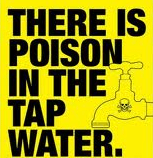 The addition of a fluoride, such as hexafluorosilicic acid or disodium hexafluorosilicate, to public water supplies has been recommended in a joint statement by the four Chief Medical Officers of the U.K. The Government’s Health and Care Bill, which has reached its final stages in Parliament, includes a small section to facilitate water fluoridation, which is now expected to be spread throughout the U.K.
Although water is already fluoridated in a few parts of the U.K. (mainly Birmingham), for nearly forty years no new schemes have been implemented since local opposition has managed to defeat them all. The Government is now determined to impose its wishes.
A recent press release said that “higher levels of fluoride are associated with improved dental health outcomes”, and that the “Health and Care Bill will cut bureaucracy and make it simpler to expand water fluoridation schemes”. The Bill’s explanatory notes state: “Research shows that water fluoridation is an effective public health intervention to improve oral health for both children and adults and reduces oral health inequalities.”
For about 70 years it has been claimed that fluoridation reduces dental decay, and that it is safe. Although there is abundant evidence showing that in fact it is neither effective nor safe, the proponents of fluoridation have long had the advantage of far greater funding than that available to sceptics.
Trials of fluoridation started in 1945 in the U.S. and Canada but, before any had been completed, and without any comprehensive health studies, fluoridation was endorsed as safe and effective by the U.S. Public Health Service. The American Dental and Medical Associations soon added their approval, as later did their equivalents in the U.K.
The original trials were studied by Dr. Philip Sutton in Australia who graduated with honours in Dental Science. Asked to examine them, he found they were of low quality, full of errors and omissions.
In Austria, Rudolf Ziegelbecker also studied the original fluoridation trials and found they did not show what had been claimed. Professor Erich Naumann, Director of the German Federal Health Office, said of him: “Your results have been accepted everywhere in Germany with the greatest interest and have increased the grave doubts against drinking water fluoridation.” Prof. Naumann added: “It is regrettable that the existing data on water fluoridation had not been examined earlier using mathematical-statistical methods. Otherwise the myth of drinking water fluoridation would have already dissolved into air long ago.”
In the U.K., pilot schemes started in the mid-1950s in four areas, all of which sooner or later abandoned the practice: Andover (1955-58), part of Anglesey (1955-92), Kilmarnock (1956-62), and Watford (1956-89). In 1957, Dr. Geoffrey Dobbs wrote in New Scientist that they “are now officially described as demonstrations of the benefits of fluoridation, not experiments, so the results are a foregone conclusion” and their purpose quite openly “promotional”. He added that the studies would gain enormously in value if those responsible were willing to submit them to impartial scientific assessment.
When the UK pilot studies started, it was officially stated that they should include “full medical and dental examinations at all ages”, but no medical examinations were done, and neither short-term nor long-term possible harms were explored. This lack of concern continues, with a general failure in fluoridated countries to monitor fluoride exposure or side effects.
In 2000, a major report by the Centre for Reviews and Dissemination at the University of York concluded that, despite many studies over 50 years, “We were unable to discover any reliable good-quality evidence in the fluoridation literature world-wide”. Even among the 26 better studies on fluoridation and tooth decay, not one was evaluated as “high quality, with bias unlikely”.
In 2015, a Cochrane review added: “There is very little contemporary evidence, meeting the review’s inclusion criteria, that has evaluated the effectiveness of water fluoridation for the prevention of caries.”
When Israel ended fluoridation in 2014-15, partly because of health concerns, its Ministry of Health pointed out that WHO data indicated no significant difference in the level of tooth decay between countries that fluoridate and those that do not fluoridate.
A trial in Hastings in New Zealand was apparently so successful that it was widely reported as a classic case of the benefit of fluoridation, with tooth decay reduced by at least half. However, when New Zealand passed freedom-of-information legislation, two university researchers were able to access the original records, which revealed that the published results were fraudulent. One of those involved in running the trials was asked for an explanation but he did not even try to justify the published results.
Not only is there a great absence of good quality evidence that fluoridation significantly reduces tooth decay, there has, especially in recent years, been growing evidence that it is harmful.
In 2006, a major report by the U.S. National Research Council said that fluoride exposure is plausibly associated with neurotoxicity, gastrointestinal problems, endocrine problems and other ailments. It was also unable to rule out an increased risk of cancer and of Down’s syndrome in children.
In 2017, a team of experts in Chile, supported by the Medical College of Chile, concluded that fluoridation is ineffectual and harmful.
Fluoride occurs naturally in a few water supplies, but so does arsenic. A recent study from Sweden shows an increased prevalence of hip fracture in post-menopausal women associated with long-term exposure to natural fluoride at levels in water in the same range as used in some parts of the U.K. for artificial fluoridation.
About half a century passed before the declassification of hundreds of U.S. Government documents provided clues to the real reason for fluoridation. Much meticulous research by an award-winning investigative journalist, Christopher Bryson, resulted in his thoroughly documented book, The Fluoride Deception, showing beyond doubt the extensive fraud involved.
Bryson’s research revealed the strong connection between fluoridation and the Manhattan Project to create the first atomic bombs. Huge amounts of fluorine were used to extract the isotope of uranium needed. Workers suffered hundreds of chemical injuries, mostly from the gas uranium hexafluoride.
In 1943 and 1944, farmers reported workers made ill, crops blighted and livestock injured, with some cows so crippled they could not stand. When the war was over, farmers in New Jersey sued DuPont and the Manhattan Project for fluoride damage. In response the Government mobilised officials and scientists to defeat the farmers.
In 1946, the United States had begun full-scale production of atomic bombs, and the New Jersey farmers’ legal action was seen as a threat, because of the potential for enormous damages and a public relations problem, with more trouble likely if they won. The farmers’ legal action was blocked by the Government’s refusal to reveal how much hydrogen fluoride DuPont had vented into the atmosphere.
Dr. Harold Hodge defended the nuclear programme against the legal threat from farmers. He had the idea of calming the public’s fears by talking about the usefulness of fluorine in tooth health. In January 1944, a secret conference on fluoride metabolism took place in New York. Organised by President Roosevelt’s science adviser, James Conant, documents from it are among the first that connect the atomic bomb programme to water fluoridation and to the Public Health Service.
Manhattan Project scientists were ordered to help the contractors. They also played a prominent role in the fluoridation of the public water supply in Newburgh, New York, an experiment that began in May 1945. In 1947 the U.S. Atomic Energy Commission took over from the Manhattan Project.
Dr. Harold Hodge, the Project’s senior wartime toxicologist, became the leading promoter of fluoridation. He announced it was so safe that it would take a massive dose of fluoride to cause harm. (Some 25 years later, in 1979, he quietly admitted in an obscure paper that he had been wrong.)
A Committee to Protect Our Children’s Teeth was formed, with powerful links to U.S. military-industrial interests and their determined effort to escape liability for fluoride pollution. The aim was to transform the public image of fluoride from that of a dangerous pollutant to a beneficial prophylactic medicine.
This aim was achieved with the help of Edward Bernays, an expert in the use of psychological techniques to achieve “manipulation of the organised habits and opinions of the masses” and “the engineering of consent”. Bernays advised the avoidance of debate: fluoridation was to be presented as indisputably beneficial; only the ignorant could object to it.
Reviews of Bryson’s book included one in the scientific journal Nature, noting that he “raises the stakes by reporting a great deal of relevant and often alarming research”, and describing the book as “thought-provoking and worthwhile”.
Publishers Weekly wrote: “Bryson marshals an impressive amount of research to demonstrate fluoride’s harmfulness, the ties between leading fluoride researchers and the corporations who funded and benefited from their research, and what he says is the duplicity with which fluoridation was sold to the people.”
Chemical & Engineering News stated: “We are left with compelling evidence that powerful interests with high financial stakes have colluded to prematurely close honest discussion and investigation into fluoride toxicity.”
Bryson found that, while the American Dental Association had previously opposed fluoridation, it changed its tune after receiving a large donation from an industrialist with a stake in the commercial use of fluoride.
A study of workers at a chemical company in Cleveland was used to promote the idea that fluoride reduces tooth decay. It said workers exposed to fluoride had fewer cavities than those not exposed to it. The report helped to shift public opinion. The secret version of the report, discovered decades later, stated that most of the men had few or no teeth, and that corrosion affected such teeth as they had.
As early as 1951 a confidential gathering of State Dental Directors in the U.S. was advised by Dr. Frank Bull, “We have told the public it works, so we can’t go back on that”. If it was difficult then, it must be very difficult now for prestigious dental and medical organisations to admit that the assurances of effectiveness and safety they have given for so long were at best mistaken and at worst fraudulent.
Among the various methods used to suppress adverse evidence and dissent have been mocking, silencing, sacking and denigration of scientists who threatened the official story. One of the earliest to suffer was Dr. George Waldbott, an eminent U.S. physician who was viciously maligned after reporting fifty cases of people made ill by fluoridated water, as established by double-blind tests.
Dr. John Colquhoun, a former supporter of fluoridation in New Zealand, was Chief Dental Officer for Auckland when he discovered and reported that fluoride was damaging children’s teeth. This was not what the authorities wanted to hear and he was sacked.
Dr. William Marcus was Senior Science Adviser in the Office of Drinking Water in the Environmental Protection Agency. He was sacked when he warned that research by the famous Battelle Institute showed that some forms of cancer could be caused by fluoride.
Dr. Phyllis Mullenix was the Chief Toxicologist at the prestigious Forsyth Dental Center, who discovered that fluoride is a neurotoxin that can adversely affect the brain. Following publication of her peer-reviewed study, U.S. Government pressure resulted in her being sacked and the institute’s toxicology department closed.
Often those whose research gave results unfavourable to fluoridation found that medical journals were hostile. Dr. Albert Schatz was a co-discoverer of streptomycin, the first effective drug for tuberculosis. When he found that infants in Chile had much higher death rates in fluoridated areas he sent a report in 1965 to the editor of the Journal of the American Dental Association who returned it unread.
The reluctance of many medical journals to publish adverse findings on fluoride resulted in the foundation of the International Society for Fluoride Research and its quarterly journal Fluoride. However, MEDLINE, the bibliographic database published by the U.S. National Library of Medicine, declined to index the peer-reviewed journal’s contents.
Dr. Richard Foulkes chaired a committee that recommended fluoridation in British Columbia. Later, a friend urged him to do his own research, after which he changed his mind and said: “My initial belief was based on information given to me by those in authority rather than on the basis of my examination of the facts.”
Dr. Hardy Limeback was Head of Preventive Dentistry at the University of Toronto when in 1999 he apologised for having promoted fluoridation. “I did not realise the toxicity of fluoride,” he said. “I had taken the word of the public health dentists, the public health physicians, the USPHS, the USCDC, the ADA, the CDA that fluoride was safe and effective without actually investigating it myself”.
It used to be claimed that fluoride works on the teeth from within and therefore that pregnant mothers should take fluoride for the sake of unborn children’s teeth. Now it is said that fluoride’s main effect is from the outside (topical, not systemic). Therefore, there is no need to imbibe it.
Water fluoridation is a blunderbuss that hits far more than the intended target. About a third to a half of fluoride that is ingested remains in the body where it accumulates, not only in the teeth and bones but also in the kidneys, pineal gland and the cardiovascular system. Kidney patients are particularly at risk from fluoridation.
The dose of fluoride a person gets in water is haphazard since people consume widely differing amounts. Bottle-fed babies get very much more fluoride than breast-fed ones, and the American Dental Association conceded in 2006, with little publicity, that “using water that has no or low levels of fluoride” should be considered when preparing formula milk for infants. However, neither an ordinary water filter nor boiling can remove fluoride.
Recent research also finds that fluoride damages children’s brains. For example, studies show a loss of IQ and increased symptoms of ADHD in offspring when pregnant women are exposed to fluoride at doses commonly experienced in fluoridated communities in Canada.
Leading scientists concerned about fluoride’s toxicity, and willing to speak out, include Dr. Philippe Grandjean (Harvard University: “Fluoride is causing a greater overall loss of IQ points today than lead, arsenic or mercury”); Dr. Kathleen Thiessen (“The principal hazard at issue from exposure to fluoridation chemicals is IQ loss”); Professor David Bellinger (Harvard Medical School: “It’s actually very similar to the effect size that’s seen with childhood exposure to lead”); Professor Bruce Lanphear (“Fluoride exposure during early brain development diminishes the intellectual abilities in young children”); and Dr. Howard Hu (“Fluoride is a developmental neurotoxicant at levels of exposure seen in the general population in water-fluoridated communities”).
No less important is the fact that fluoridation is treatment without consent. People without the resources needed to obtain alternative supplies of water for drinking and cooking are chemically treated, in effect compulsorily.
For more information see Fluoride Free Alliance U.K., Fluoride Action Network and Stop Fluoridation U.K.
10 Facts About Fluoride
Attorney Michael Connett summarizes 10 basic facts about fluoride that should be considered in any discussion about whether to fluoridate water. To download the flyer that accompanies this video, visit: http://www.fluoridealert.org/uploads/…. To watch Michael debate two advocates of fluoridation, see: http://www.wpsu.org/conversationslive….

Featured Video

US JET SHOT DOWN OVER IRAN /Lt Col Daniel Davis & Nima Alkhorshid
or go to
Aletho News Archives – Video-Images
From the Archives
Experts Warned For Years That A War With Iran Would Happen This Way
By Caitlin Johnstone | April 3, 2026
… It’s so wild how we keep seeing reports that Iran’s retaliation caught the US off guard. For all the years I’ve been paying attention to this issue I’ve been reading experts and analysts saying if the US attacks Iran, Iran can close the Strait of Hormuz and strike US bases and the energy infrastructure of US allies in the region.
A few examples:
A 2006 Oxford Research Group paper titled “Iran: Consequences of a War” warned that Iran has numerous options at its disposal in the event of a US attack, and that the “most significant of these would be any possible retaliatory Iranian action to affect the transport of oil and liquefied natural gas through the Straits of Hormuz,” adding that stopping Iran from doing this “would be difficult if not impossible to achieve, leading to a fear of attack which alone would have a formidable impact on oil markets.”
A 2007 Cato Institute paper titled “The Iraq War and Iranian Power” warns that “Iran possesses the largest ballistic-missile inventory in the Persian Gulf — missiles which can reach Israel, Saudi Arabia and US military bases in Iraq,” and that “experts argue Iran could also use the ’oil weapon’: blocking the 34km-wide Strait of Hormuz and conducting submarine and anti-ship missile attacks against ports and oil facilities in Saudi Arabia, Kuwait and other Gulf Cooperation Council states.”
A 2012 NPR article titled “Can Iran Close The World’s Most Important Oil Route?” features then-chairman of the Joint Chiefs of Staff acknowledging that Iran absolutely can block the Strait of Hormuz, saying Tehran has “invested in capabilities” which specifically enable them to do so.
A paper from the Columbia Center on Global Energy Policy and the Center for a New American Security titled “IN DIRE STRAITS? IMPLICATIONS OF US-IRAN TENSIONS FOR THE GLOBAL OIL MARKET” warns of a potential scenario “that includes damage to Gulf oil infrastructure and a temporary closure of the Strait of Hormuz.”
These weren’t a bunch of keffiyeh-wearing peaceniks making these assessments, they were deeply entrenched swamp monsters entirely loyal to the US empire. They opposed war with Iran not because it would be an evil act of unforgivable mass murder, but because it would be bad for the imperial power structure. … Full article
Blog Roll
 Aletho News
- Al Mayadeen voices solidarity with Dr. Marandi amid death threats
- US dismantling international law in its war against Iran while claiming ‘false’ victory: Legal scholar
- One martyr, 5 injuries in US attack on Iraqi border crossing with Iran
- ‘This war is Israel’s war’: World facing ‘security breakdown’, says Qalibaf
- IRGC decries attack on US embassy in Riyadh, says executed by ‘Israel’
- Iran blasts EU hypocrisy as EU invokes international law over Hormuz
- There is no military solution to Strait of Hormuz
- NATO’s structural collapse – the outcome of deviation from reality
- Poll finds world views China better than US
- One Of America’s Leading Neo-Cons Has Turned Against The Iran War And Israel
- If Americans Knew
- US loses planes over Iran, Israel downgrades Lebanon war goals – Daily Update
- Israel Is Blocking Palestinians from Easter at Church Where Jesus Resurrected
- Plot to assassinate Palestinian activist follows harassment campaign promoted by Zionist groups and elected officials
- Prominent New York synagogue hosts presentation on why U.S. Jews should support the ethnic cleansing of Gaza
- Tapper vs. Piker: Is the CNN Anchor Auditioning for David Ellison?
- Shouldn’t Democrats Be Able to Condemn Genocide?
- Israel-US kill negotiators, destroy civilian structures, but Iran’s military capabilities still largely intact – Daily Update
- ‘War crime’: Global condemnation as Israeli ministers celebrate death penalty law targeting Palestinian prisoners
- 7 Ways Israel Is Turning Lebanon Into Gaza
- World’s Leading Football Bodies Under Fire Over Israel Policies
- No Tricks Zone
- New Study Reports A 60% Slowdown In Greenland’s Ice Loss Rate In The Last Decade
- Low Intensity Tornado Wrecks Major Solar Farm, Creating A Potential Toxic Dump
- New Study Finds Warming Saves Lives…Cold Temperatures 12 Times More Deadly Than Excess Heat
- German Science Blog Accuses PIK Climate Institute Of Hallucinating Climate Tipping Points
- Devastating Assessment Of Comirnaty Vaccine By Former Senior Pfizer Europe Toxicologist
- New Study: CO2 Is ‘Effectively Negligible’ As An Explanatory Climate Change Factor Since 2000
- Former Pfizer Toxicologist Dr. Helmut Sterz Tells Bundestag Hearing Pfizer Vaccine Should Have Never Been Approved
- Energy Expert: Germany’s Nuclear Phaseout Was A “500 Billion Euro Mistake”
- New Research: South Australia’s Mid-Holocene Sea Surface Temperatures Were 4°C Warmer Than Today
- Storing Green Energy To Last Germany 10 Days Would Require A 60-Million Tonne Battery
 Aletho News