The West waging ‘centuries-old war’ against Moscow – Russia’s top UN diplomat
RT | June 28, 2025
Western nations are using Ukraine as their proxy in a longstanding confrontation with Russia that is deeply rooted in history, Russian Ambassador to the UN Vassily Nebenzia told RT’s Rick Sanchez.
In an interview on The Sanchez Effect aired on Friday, the diplomat argued that the conflict “should be seen in a larger context.”
“They do not care about Ukraine. This is not a war between Russia and Ukraine,” Nebenzia said. “Ukraine is a proxy in this war. This is a centuries-old war of the West against Russia, starting with the Polish invasion in the 17th century,” he added.
As examples of earlier confrontations, Nebenzia cited Napoleon’s invasion of Russia, the 1854–1856 Crimean War, Western military intervention during the Russian Civil War, and the invasion by Nazi Germany and its allies during World War II. He emphasized that Hitler’s army included not only Germans, but also units drawn from allied countries and occupied territories.
The Ukrainians and “their sponsors” in the West sabotaged the 2014–2015 Minsk accords, which were aimed at ending the conflict between Kiev and the breakaway Donbass republics, the Russian diplomat said. Former French President Francois Hollande and former German Chancellor Angela Merkel later admitted the agreement was used by Kiev to buy time and rearm, Nebenzia stated. “We are not going [to fall] into the same trap once again,” he said.
He added that politicians like former UK Prime Minister Boris Johnson similarly helped derail the 2022 peace talks between Russia and Ukraine.
Ukraine’s European backers were forced to adjust their position, Nebenzia argued, after US President Donald Trump launched efforts to broker peace and Ukrainian troops began losing more ground.
“They changed their rhetoric from ‘We should inflict strategic defeat on Russia’ to ‘Russia should not win in this war.’ Now they are advocating for a full, immediate, and unconditional ceasefire, which is testimony that they want to shield and protect their proxy, as they are obviously losing on the battlefield,” he said.
At the same time, Nebenzia noted that the resumption of direct Russian-Ukrainian negotiations earlier this year provides hope that the conflict could be resolved soon.
Araghchi outlines post-war nuclear diplomacy, warns against sanctions
Al Mayadeen | June 27, 2025
In a televised interview with Iranian broadcaster SNN TV, Iranian Foreign Minister Abbas Araghchi asserted that both the United States and “Israel” had mobilized their nuclear capabilities and coercive strategies to force Iran into submission, but ultimately failed.
Araghchi praised the Iranian people’s steadfastness, describing it as a “historic symbol of resistance” during a critical national moment, emphasizing that despite years of sanctions, threats, and failed negotiations, the Iranian nation remained united in defense of its nuclear rights.
“Neither pressure nor diplomacy deprived us of our legitimate rights,” Araghchi declared.
The minister criticized US President Donald Trump’s “maximum pressure” campaign, describing it as marked by mixed messages, threats coupled with calls for dialogue.
While Iran rejected direct talks with Washington, Araghchi noted that Tehran was considering indirect negotiations under new conditions. After diplomatic efforts failed to impose US terms, Araghchi accused Washington of unleashing “the Zionist enemy to commit hostile acts,” which he described as a betrayal of diplomacy.
Addressing Iran’s retaliatory actions, he stated that Tehran’s missile attacks on US bases were a direct response to American threats and aggression, clarifying that no agreement had been reached to initiate new talks and that the outbreak of war had undermined Iran’s readiness to propose a balanced negotiation framework.
He revealed that this framework rested on three pillars: the continuation of uranium enrichment within Iran, the complete removal of sanctions, and a firm commitment not to pursue nuclear weapons.
“If these three conditions are met, an agreement is possible,” he said.
Iran’s response to military strikes and diplomatic breakdown
In his interview, Araghchi stressed that diplomacy following the recent war would differ sharply from previous efforts, warning that “Future international relations will reflect how each country behaved during the crisis.”
He noted that the Atomic Energy Organization of Iran (AEOI) is currently conducting technical assessments of damage caused by the strikes, describing them as “serious and extensive.” Meanwhile, Iran’s Foreign Ministry has tasked its international affairs division with identifying the aggressors and seeking compensation through the United Nations.
“Reparations are now a key component of Iranian diplomacy,” he added.
The minister urged European countries, particularly Germany and France, to uphold their stated commitment to international law, issuing a stark warning to France and the UK, both permanent members of the UN Security Council, against triggering the snapback mechanism that would reinstate UN sanctions on Iran.
He labeled such a move as “the most dangerous strategic error Europe could make,” warning that it would exclude them from any meaningful role in Iran’s nuclear dossier.
“Military strikes and snapback sanctions won’t weaken Iran—they will eliminate Europe’s place at the table,” he asserted.
No plans to host IAEA chief amid inspection concerns
The Foreign Minister confirmed that Iran currently has no plans to host IAEA Director Rafael Grossi, noting that the issue of inspector access is under careful legal and political review.
“With some facilities damaged, inspections could inadvertently reveal sensitive details about the extent of destruction,” he said, emphasizing that all decisions must comply with recent legislation passed by Iran’s Parliament.
Recycled Blatant Lies: US & Israel Push for Regime Change in Iran – Expert
By Svetlana Ekimenko – Sputnik – 19.06.2025
The United States and Israel are in “open rebellion against international law and the UN Charter,” according to Professor Alfred de Zayas, author of 10 books including “The Human Rights Industry” and “Building a Just World Order.
The US and Israel are pushing a “primitive, vulgar pretext” to justify aggression against Iran, Professor Alfred de Zayas told Sputnik.
The former UN Independent Expert on International Order underscored that for them, facts are irrelevant.
“Blatant lies, propaganda and demonization of Iran suffices to create an atmosphere that would dupe the American people and the world into ‘tolerating’ an invasion,” he stressed.
Both the IAEA and US intelligence admit there’s “zero evidence” Iran is building a bomb, he reminded.
Furthermore, military force is expressly prohibited under Article 2(4) of the UN Charter.
“If there is a violation of the Non Proliferation Treaty, Iran can be excluded from the benefits of the NPT, but under no conditions can there be aggression,” according to the expert.
Same Playbook, Different Target
Disregarding international law and the UN Charter, the US and Israel are recycling the 2003 tactics – false WMD claims – that were used to justify regime change in Iraq, said Alfred de Zayas.
In 2003, at least Jacques Chirac of France and Gerhard Schroeder of Germany refused to participate in the illegal war. Now, even more countries, like France and Germany, are on board with this, the pundit remarked.
Mainstream Media Complicit
“The media bears considerable responsibility for this tragedy that may yet develop into World War III,” the pundit warns.
World on the brink of new nuclear arms race – report
Israel is among the nations “believed to be modernizing its nuclear arsenal,” the Stockholm-based SIPRI institute has said
RT | June 17, 2025
The world risks plunging into a “new dangerous arms race” as most nuclear powers seek to modernize and expand their arsenals, the Stockholm International Peace Research Institute (SIPRI) has warned in its annual review.
The pace of disarmament is slowing as nuclear-armed states launch “intensive” arsenal modernization programs, the research center said in a paper published on Monday.
Russia and the US, which together possess around 90% of all nuclear weapons in the world, are set to see the last remaining bilateral nuclear arms control treaty – the New START – expire in February 2026, SIPRI noted. The agreement limits the number of simultaneously deployed strategic nuclear warheads.
Moscow suspended its participation in the treaty in 2023, citing the impracticality of the inspection regime due to deep Western involvement in the Ukraine conflict. However, it maintained that it remained open to dialogue on the issue if the arsenals of Washington’s NATO allies were also considered.
Washington, meanwhile, insists on including China in any new agreement. According to SIPRI, China possesses the fastest-growing nuclear arsenal in the world and could rival “either Russia or the USA” in the number of intercontinental ballistic missiles by the end of the decade.
The UK and France are also modernizing their nuclear forces, focusing on nuclear-powered ballistic missile submarines, the report said. Paris additionally aims to develop a new ballistic missile warhead.
“The era of reductions in the number of nuclear weapons in the world, which had lasted since the end of the Cold War, is coming to an end,” said Hans M. Kristensen, Associate Senior Fellow with SIPRI’s Weapons of Mass Destruction Program. “We see a clear trend of growing nuclear arsenals, sharpened nuclear rhetoric, and the abandonment of arms control agreements.”
The research institute also listed Israel among the nations “believed to be modernizing its nuclear arsenal.” While Israel does not officially acknowledge possessing nuclear weapons, SIPRI pointed to tests of new missile propulsion systems and alleged upgrades at the plutonium production reactor site in Dimona.
West Jerusalem could have up to 90 nuclear warheads at its disposal, the report stated. The findings come as Israel conducts air raids against Iranian nuclear and military facilities, claiming Tehran is nearing the creation of a nuclear bomb. Iran, which maintains that its nuclear program is peaceful, was not mentioned in the SIPRI report.
Middle East in Crisis – 2
Netanyahu’s war on Iran has no future
By M. K. BHADRAKUMAR | Indian Punchline | June 16, 2025
An unnoticed undercurrent of the Israel-Iran war is that three Christian nations in Europe — UK, France and Germany — have joined the fray with alacrity on the side of Israel.
Strange, isn’t it, that these European countries comprising the so-called E-3 have a well-established exclusive path of dialogue with Iran but are joining Israel’s warpath? It’s a Crusade, stupid!
The three ‘Crusader nations’ share Israel’s obsession to check the rise of a Muslim nation as an emerging power in the Middle East that could radically transform its geopolitical alignments. Simply put, destroying the Islamic regime in Iran is the real objective of Israel’s war — and of the three Christian nations from Europe.
Reportedly, Israeli fighter jets which attacked Iran used the British air base in Cyprus; British refuelling planes are on deployment in Syrian-Iraqi airspace for use of Israeli fighter jets; French president Emmanuel Macron, as defender of Roman Catholicism openly vows that he will act to prevent Israel’s defeat; Germany, the fountainhead of Protestantism, has also similarly positioned itself behind Israel.
However, on the other hand, what emerges from the hour-long phone conversation between Trump and Russian President Vladimir Putin on Saturday is that they will work together to advance the path of dialogue with Iran, the current conflict situation notwithstanding. The Kremlin readout stresses that Putin forcefully denounced the Israeli aggression.
Such a line-up of the principal actors signals that Israel’s best bet lies in killing the war itself as a strategic error and create a ‘new normal’? But will Tehran allow Netanyahu to get away with murder? That’s the million dollar question. Putin will have to use all his persuasive power during the planned visit to Iran — ie., if it still goes ahead.
The Israeli thinking behind its assassination of the IRGC leadership and military commanders stemmed out of the foolish miscalculation that Tehran lacks a political will to resist aggression. The Israeli objective is on the one hand to create conditions for a regime change in Iran and on the other hand to derail any form of US-Iran constructive engagement.
All through, terror has been the chosen weapon for Israel and the western powers to undermine and weaken Iran. But a point has been reached where a containment of Iran is no longer feasible. Logically, Iran’s neighbours in the Muslim world should have rallied in support of Iran but that’s too much to expect, given their limited sovereignty to act independently.
Nonetheless, Iran will not capitulate. Iran’s sense of national pride and honour as a civilisation state will prompt it to circle the wagons and wage a protracted war until victory. From the early days of the revolution, the Islamic republic which was founded on the principles of justice and resistance on the bedrock of nationalism and independence, got attracted to Mao’s concept of ‘protracted people’s war’ to keep predator nations at bay. That strategy paid off during the Iran-Iraq War (1980-1988).
Saddam Hussein too, like Netanyahu, miscalculated that Iran was a hopelessly weakened nation in the civil war conditions with its economy in virtual collapse, army in disarray, state formation yet to crystallise, and with no allies in the region to lend a helping hand. But as it turned out, Iran fought an 8-year war defiantly to a stalemate, undeterred by the lavish support extended to Saddam by the Western powers and their regional allies.
The US even equipped Saddam’s army with chemical weapons to stop the human-wave–attack tactics of Iranian fighters, but of no avail — although, an estimated quarter million Iranians sacrificed their lives.
At some point, in a very near future, Israel will also meet the fate of Saddam, having miscalculated Iran’s grit to resist. Netanyahu also estimated that Iran is a much weakened country compared to last year due to the setbacks taken by the Axis of Resistance. Such naïveté underestimates the potency of resistance at the very core of Shi’ism.
Last week, the resistance forces that were supposedly vanquished from the face of the earth regrouped and began firing missiles at Israel — from Syria, of all places! On May 4, Houthis fired a ballistic missile at Tel Aviv hitting the perimeter of the main terminal of Ben Gurion Airport! Reports suggest that Hezbollah has restored its supply routes from Iran.
What Israel fails to grasp is that resistance movements do not die if their raison d’être remains. Israel is, in reality, in very deep crisis fighting on multiple fronts amidst a cascading domestic political crisis and an economy that requires drip feeding by Washington.
As the US’s capacity to influence events in the Middle East keeps diminishing, Israel’s unviability as a nation propped by the Jewish Lobby in the Beltway appears sharper in focus. Already, there is resentment within the US about bankrolling Israel and fighting its wars.
On the contrary, the rise of Iran is inevitable — with a population base 10 times bigger than Israel’s, vast mineral resources, a self-sufficient agricultural sector and broad-based industry, innovative progress in technology, big domestic market, highly strategic location and trained manpower.
Iran’s stamina is of a long distance runner, as Iran-Iraq war showed, whereas, Israel’s forte is as sprinter on a 100 metre track. Make no mistake, Israel, a small country with a population of 8 million people will get hollowed out in a protracted war.
In the current scenario, what goes against Israel critically is that while President Donald Trump tried and failed to stop Netanyahu on the warpath, he is not going to deploy American forces to fight Israel’s war.
Trump has an evangelical base in US politics and is on friendly terms with wealthy Jewish donors, but has nothing in common with the Crusader nations of the Old World — be it on Ukraine or Iran. In both cases, actually, he tends to view the paradigm through the America First prism where he sees immense potential to generate wealth through business links with Russia or Iran.
Besides, Trump is far too smart a politician to risk the future of his MAGA movement whose core tenet is the total rejection of all interventionist ‘forever wars’. Trump knows only too well that American public opinion is staunchly opposed to Middle Eastern wars.
The replacement of Mike Waltz as NSA on May 1 (a known Israeli proxy who found himself in the top echelons of Trump administration) and the subsequent purge of the entire pack of ‘Iran hawks’ in the National Security staff under him, signalled that Trump is wary of Netanyahu’s diabolical plots to derail his negotiations with Iran through back channels. (here and here)
During their phone conversation on Saturday, according to the Kremlin readout, Trump and Putin agreed to prioritise the “negotiating track in Iran’s nuclear programme… Trump noted, the team of US negotiators is ready for resuming work with Iranian representatives.” Clearly, a military confrontation with Iran does not figure in Trump’s calculus.
That being the case, Netanyahu’s bombastic rhetoric apart, Israel’s best interests lie in ending this futile war in the quickest way possible. Conceivably, that is also the preference of the IDF. A protracted war on its own steam with a clutch of crusader nations in tow as cheer leaders is not something that can save Israel from destruction.
Curiously, Trump in his latest Truth Social post on Sunday after the conversation with Putin advised Israel “to make a deal” with Iran! Does that fit into Netanyahu’s war mongering? And Trump went on to burnish his own credentials as a peacemaker president!
Trump concluded predicting that “we will have PEACE, soon, between Israel and Iran!” Succinctly put, Trump has no intentions whatsoever to risk American lives by fighting Netanyahu’s wars.
Obviously, “PEACE, soon” will be Russia and Iran’s preference too, as serious negotiations can be resumed and agreement reached that would herald a US-Iran normalisation and the lifting of American sanctions. But does that suit Netanyahu?
The paradox is, Israel has no future in a protracted war with Iran, but an inconclusive end to this war will pose the high risk for Netanyahu of a cascading demand for a regime change in Israel. Loss of power means loss of parliamentary immunity from prosecution that Netanyahu hitherto enjoyed from corruption charges against him and his family members, and a possible imprisonment.
Read more: Iran Attack: Netanyahu Gambles Big, Rediff.com, June 14, 2025
Europe’s Perverted Logic: Israel Has the ‘Right’ to Attack, Iran Is ‘Guilty’ for Defending Itself
By Ekaterina Blinova – Sputnik – 15.06.2025
European leaders have effectively blamed Iran for being attacked, Responsible Statecraft reports.
Israel’s strike violated Article 2(4) of the UN Charter — it was launched with no legal basis for self-defense, per Responsible Statecraft.
But instead of condemning it, Europe parroted Israeli justifications.
The claim that Iran is building nuclear weapons was dismissed by US intelligence chief Tulsi Gabbard in March: “Iran is not building a nuclear weapon.”
Still, EU leaders leaned on a June 12 IAEA resolution accusing Iran of Non-Proliferation Treaty violations to rationalize Israel’s actions.
What Do European Leaders Say?
French President Emmanuel Macron: “France has repeatedly condemned Iran’s ongoing nuclear program… In this context, France reaffirms Israel’s right to defend itself and ensure its security.”
German Chancellor Friedrich Merz: “[Iran’s] nuclear program violates the provisions of the Nuclear Non-Proliferation Treaty… We reaffirm that Israel has the right to defend its existence and the security of its citizens.”
EC President Ursula von der Leyen: “I reiterated Israel’s right to defend itself and protect its people.”
None of these leaders addressed the legality of Israel’s initial strike. None acknowledged Iran’s right to defend its own sovereignty.
Iran condemns ‘biased’ IAEA, announces enrichment countermeasures
Al Mayadeen | June 12, 2025
Iran has sharply rejected a resolution passed by the International Atomic Energy Agency’s (IAEA) Board of Governors, accusing it of being “politically driven” and “biased”. In a joint statement released Thursday by the Foreign Ministry and the Atomic Energy Organization of Iran (AEOI), Iranian officials condemned the resolution and unveiled a series of countermeasures aimed at accelerating the country’s nuclear program.
This comes shortly after the IAEA Board of Governors passed a resolution against Iran on Thursday, claiming Iran was in breach of non-proliferation obligations. The vote passed with 19 countries voting in favor, 3 opposing, and 11 abstaining, according to diplomats cited by Reuters. Two countries were absent and thus did not vote.
The resolution, marking the first formal accusation in nearly two decades that Iran has violated its nuclear non-proliferation obligations, was passed during a closed-door session of the 35-member board. The move, described as “politically motivated” by Iranian officials, was initiated by the United States along with the E3, Britain, France, and Germany.
IAEA resolution lacks ‘neutrality’
The joint statement asserted that Iran remains committed to its obligations under the Safeguards Agreement, adding that no IAEA report to date has ever confirmed any deviation or non-compliance. Iranian authorities described the IAEA’s latest move as lacking “neutrality” and being manipulated by Western powers, particularly the United States, Britain, France, and Germany, to pursue geopolitical goals.
In a direct response, Iran announced the activation of a new uranium enrichment facility at a secure site and plans to upgrade the Fordow nuclear plant by replacing older centrifuges with sixth-generation advanced models.
Iran blasts Western double standards on nuclear disarmament
Iranian officials criticized the IAEA and its Western backers for what they described as selective enforcement of nuclear obligations. The joint statement accused the US and its European allies of reviving “25-year-old allegations” that had already been settled under the 2015 nuclear deal, while turning a blind eye to “Israel’s” undeclared nuclear arsenal and refusal to adhere to the Non-Proliferation Treaty (NPT).
“The United States, Britain, and France have failed to comply with Article VI of the NPT regarding nuclear disarmament,” the statement read, adding that Germany remains in possession of “inhumane weapons of mass destruction.”
Iran further warned that continued political maneuvering within the IAEA would render any future engagement futile. “This political approach toward Iran, which has always honored its obligations and cooperated extensively with the Agency, forces us to conclude that the path of engagement and cooperation is futile,” the statement asserted.
Iran thanks allies opposing the resolution
Iran’s Foreign Ministry spokesperson, Esmaeil Baghaei, strongly condemned the resolution passed Thursday by the IAEA Board of Governors, calling it a politically motivated effort by Western powers to undermine the peaceful nature of Iran’s nuclear program.
Baghaei specifically denounced the role of the United States, the United Kingdom, France, and Germany, accusing them of exploiting the IAEA to “cast doubt on the peaceful nature of Iran’s nuclear program.”
He firmly rejected the allegations outlined in the resolution, which he said were based on “baseless and unfounded claims” and stemmed from a political report by the IAEA Director General. The resolution, jointly submitted by the four Western states, was described as “an unjustified, groundless, and cruel move,” aimed at exerting “maximum pressure on Iran to deviate from the legitimate rights and interests of the Iranian people in the peaceful use of nuclear energy.”
Baghaei warned that those behind the resolution will be held accountable for its repercussions. “The Islamic Republic of Iran will take proportionate measures in response to this move to secure and protect the interests and inalienable rights of the Iranian nation in benefiting from peaceful nuclear energy,” he said.
He also expressed deep concern over the conduct of the IAEA Director General, criticizing his public statements and what he described as provocative interviews on Iran’s nuclear activities. Baghaei accused the agency chief of undermining the organization’s neutrality, stating that he “must adhere to his missions and duties in accordance with the Agency’s statute.”
Furthermore, the Iranian diplomat extended gratitude to China, Russia, Venezuela, Cuba, Nicaragua, and Belarus for issuing a joint statement rejecting the resolution. He praised their “responsible and legal positions” and reaffirmed the Iranian nation’s determination to defend its rights and interests as outlined in the United Nations Charter and the Non-Proliferation Treaty.
Iran’s IAEA representative Najafi slams politicized resolution
Iran’s representative at the International Atomic Energy Agency (IAEA), Reza Najafi, strongly criticized the agency’s recent resolution against Iran, denouncing it as politically motivated and based on unreliable sources. Speaking on Thursday, Najafi warned that such moves undermine the IAEA’s credibility and threaten the rights of member states under its founding charter.
Najafi emphasized that any draft resolution brought forward by the Board of Governors should rely strictly on unbiased, verifiable evidence, not intelligence supplied by specific states with vested interests. “Basing reports on questionable or politicized information undermines the agency’s objectivity,” he stated, in clear reference to data provided by Western governments and the Israeli occupation.
US current approach risks setting a dangerous precedent
He warned that the United States’ current approach risks setting a dangerous precedent, one that could erode trust and cooperation between the agency and its member states. Najafi asserted that such behavior contradicts the IAEA’s stated commitment to impartiality and transparency.
Reaffirming Iran’s position, Najafi made it clear that the Islamic Republic would not tolerate any attempt to erode its sovereignty through international pressure.
“Iran categorically rejects any pressure or mediation that seeks to undermine its sovereignty. We will defend our national interests, independence, and dignity,” he declared.
Politicized resolution in disguise
Najafi also expressed Iran’s outright rejection of what he described as a politicized resolution disguised as a technical safeguard concern, echoing Tehran’s longstanding understanding that the IAEA is being used as a tool for Western geopolitical agendas.
In a pointed warning to the E3, Britain, France, and Germany, as well as the United States, Najafi made it clear that Iran’s response would be firm. “These measures will not pass without consequences. They must take full responsibility for the repercussions and Iran’s strong reaction,” he said.
Kamalvandi: Political pressure will escalate Iran’s nuclear program
Behrouz Kamalvandi, Deputy Head of the Atomic Energy Organization, reinforced the government’s defiant tone, declaring that political pressure would only accelerate Iran’s nuclear ambitions.
“It is a strategic mistake to think that political pressure will push Iran to abandon its legitimate positions,” Kamalvandi said, warning that the current approach would “backfire”.
He confirmed that Iran would soon launch a third uranium enrichment facility, in addition to boosting enrichment capacity at existing sites. “We will develop sixth-generation centrifuges and increase uranium enrichment significantly,” he stated.
More Western pressure, more Iranian countermeasures
Iran’s latest response underscores its growing rejection of Western pressure and marks a new phase in the country’s nuclear trajectory, one increasingly independent of multilateral negotiations and oversight mechanisms perceived by Tehran as compromised.
This development comes just days ahead of the sixth round of indirect nuclear talks between Iran and the United States, set to take place this Sunday in Muscat, Oman. The announcement was confirmed by Omani Foreign Minister Badr Albusaidi, who wrote in a post on X: “I am pleased to confirm the 6th round of Iran-US talks will be held in Muscat this Sunday, the 15th.”
Tehran and Washington have held five rounds of talks since April to carve a new nuclear deal to replace the 2015 accord that Trump unilaterally withdrew from during his first term in 2018.
Durov reveals to Carlson whether he was ‘ever arrested by Putin’
RT | June 10, 2025
Telegram CEO Pavel Durov has told American journalist Tucker Carlson that he had never been arrested by authorities in Russia.
The tech mogul was detained by French police last year on suspicion of committing a flurry of cybercrimes.
In an interview released on Monday, Carlson noted that the Russian-born tech entrepreneur left the country more than a decade ago for political reasons. He asked him if he had ever faced arrest in Russia, to which Durov replied that he had not.
Durov was arrested in August 2024 at Paris–Le Bourget Airport, charged with 12 offenses linked to Telegram’s handling of illegal content, including child exploitation material and narcotics trafficking, and prevented from leaving France for seven months. He was released in March having posted €5 million ($5.4 million) bail.
Asked if he sees any irony in only being arrested in France, a country that is viewed as “part of the free West,” Durov said Paris “was the most unexpected place to get arrested for me.”
Durov said that he had visited several countries before arriving in France, some of which “are considered in the West to be autocratic or authoritarian.” He added that in many such nations, Telegram is popular because it provides “100% privacy.”
Carlson pointed to a possible contrast in public reaction someone else of a similar profile had been arrested. “If Mark Zuckerberg or Elon [Musk] got grabbed… you’d be like ‘Stop—what? The world is ending.’ But they grabbed you and people are like, ‘Oh, he’s got a Russian last name, it’s fine. I’m sure there’s a good reason.’”
“I hope it had nothing to do with my ethnicity,” Durov replied. “Because that would be very alarming.”
Durov has denied the French charges, calling them absurd. His arrest sparked an outpouring of sympathy worldwide, as well as accusations that France is infringing on freedom of speech.
In late May, Durov claimed that the French government had sought to make Telegram block conservative voices in Romania ahead of the country’s presidential runoff, but he refused. French officials have in-turn, denied the claim.
France can’t afford military spending splurge – FT
RT | June 10, 2025
French President Emmanuel Macron and Chief of the Defense Staff General Thierry Burkhard at the VE Day parade, Paris, France, May 08, 2025. © Getty Images / Pierre Suu
France may not be able to afford to ramp up defense spending under a broader EU militarization drive, the Financial Times reported on Saturday, citing experts. The country’s growing national debt and large budget deficit present major obstacles to its rearmament goals, the newspaper noted.
President Emmanuel Macron earlier proposed raising defense spending to 3-3.5% of GDP by 2030 – nearly double the current level – which would require an extra €30 billion ($34 billion) annually. However, experts told the FT that France’s fiscal position is too precarious to go through with the plan. They noted that debt-to-GDP ratio hit 113% in 2024, one of the highest in the EU, while the budget deficit reached 5.8%, almost twice the EU’s 3% cap. Interest payments on debt totaled €59 billion last year and are expected to reach €62 billion in 2025 – roughly the combined annual cost of defense and education.
Experts also noted that the government is struggling to pass a deficit-reduction package, which reportedly features unpopular moves such as cuts to social spending, including pension tax breaks and healthcare subsidies.
“In France, and this is probably different than elsewhere, we cannot go back on our deficit reduction goals, nor can we raise taxes since they are already very high,” Clement Beaune, a former minister for Europe and Macron ally, who heads a government think tank, the told FT.
Experts said France could apply for the EU’s “escape clause,” which allows countries to exceed deficit caps to boost defense budgets by 1.5% of GDP. However, they warned that the move is unlikely, as it could spook bond markets and drive up borrowing costs. Paris could also join another EU scheme offering loans for joint arms purchases. Experts, however, said that rising costs and inflation could mean France would end up with fewer weapons even if it boosts spending. Some described it as a “bonsai army” – broad in scope, but limited in scale.
France’s rearmament plans come as the EU pushes for more spending and less reliance on US weapons, citing a supposed Russian threat. Moscow has repeatedly dismissed the claims as “nonsense,” accusing the West of using fear to justify funneling public funds into arms. Russian officials have warned the EU’s buildup risks wider conflict. Foreign Ministry spokeswoman Maria Zakharova recently said the bloc “has degraded into an openly militarized entity.”
Iran Says Europe Funded Israel’s Bomb Program
Sputnik – 09.06.2025
TEHRAN – Several European countries participated in Israel’s military nuclear program, Iranian Foreign Ministry spokesman Esmail Baghaei said on Monday, citing documents obtained by Iranian intelligence in Israel.
“What was previously clear to us will now become clearer to others with the publication of these documents — they will openly confirm the active involvement of several European countries in Israel’s nuclear military program. These are the same countries that constantly speak about nuclear non-proliferation and cast doubt on Iran’s peaceful nuclear program, while they themselves play a role in Israel’s military nuclear program,” Baghaei said during a press conference.
On Saturday, Iranian state news agency Tasnim reported that the country’s intelligence services obtained in Israel a wide range of confidential military-strategic documents related to Israel’s nuclear sector. Iranian authorities will publish a series of these documents in the near future.
MPs from Left and Right in France vote to ditch “low emission zones” and bans on old cars
Good news — there is one less hyper-complex, pointless, car-hate program in the world

By Jo Nova | June 3, 2025
It all flipped so quickly: Only six months ago President Macron was hurling France into a climate changing roadmap of the Octopus kind. The people of France were going to have to buy EVs, work from home, swap the filet mignon for tofu, and take fewer flights overseas. Even large screen televisions were going to have to shrink, to save electrons. And some bureaucrats were enthusiastically even dreaming that they would reach into homes and set the thermostats to max out at 19C (66F) in winter and to only cool to 25C (78F) in summer.
To beat French car owners around the head, the National government legislated car zoning incentives to make life hard for anyone who wanted to drive an old car. The low emission zones started in 2019 and had already spread like a municipal leprosy to every town larger than 150,000 people.
In these ZFEs (zones à faibles émissions), cars were ranked and given a sticker. Crit’Air 0 were the cleanest and Crit’Air 5 were the most “polluting” vehicles. Different rules applied to each sticker class in each town with a soul sapping complexity. In Paris for example, Crit’Air 3 cars (basically diesel cars older than 2011, and petrol cars before 2006) were banned on weekdays. Fines varied from €68 to €750. It was a case of — if you like your car, you can keep it — (locked in the garage, right?)
But cars older than 1997 were seen as such baby killers they were not allowed to have a Crit’Air Sticker at all, so their drivers would be fined if they were caught on any weekday between 8am and 8pm. Obviously, the bans hurt the poor and the rural workers — who drove older cars. They also hurt the tradies, and small businesses that used a van.
The low emission zones were so unpopular, as the BBC even admits, they “turned into something of a lightning rod for Macron’s supporters”. (The wonder is that it took five years?)
Last week the French National Assembly voted 98 to 51 to scrap the zones entirely. The government had tried to dilute the rules, and save the restrictions to Paris and Lyon, but MP’s were having none of it. Evidently, many politicians were afraid of word getting back to voters that they didn’t vote down the low emissions zones. (Go, democracy).
Interestingly, these car zones were so awful that even some members on the far left of French politics, joined the centre right to get rid of them.
Finally, there are hints of life on the far left:
“Green policies should not be imposed on the backs of the working classes” — Clémence Guetté.
Guetté is described in the Wall Street Journal as being “to the left of Bernie Sanders”. The Greens and Socialists though, still voted for the car sticker program to change the weather. They probably like having stickers on their cars to tell everyone how smugly clever they are.
French MPs vote to scrap low-emission zones
BBC
A handful of MPs from Macron’s party joined opposition parties from the right and far right in voting 98-51 to scrap the zones, which have gradually been extended across French cities since 2019.
But it was a personal victory for writer Alexandre Jardin who set up a movement called Les #Gueux (Beggars), arguing that “ecology has turned into a sport for the rich”.
The low-emission zones began with 15 of France’s most polluted cities in 2019 and by the start of this year had been extended to every urban area with a population of more than 150,000, with a ban on cars registered before 1997.
Marine Le Pen condemned the ZFEs as “no-rights zones” during her presidential campaign for National Rally in 2022, and her Communist counterpart warned of a “social bomb”.
The head of the right-wing Republicans in the Assembly, Laurent Wauquiez, talked of “freeing the French from stifling, punitive ecology”, and on the far left, Clémence Guetté said green policies should not be imposed “on the backs of the working classes”.
Green Senator Anne Souyris told BFMTV that “killing [the ZFEs] also means killing hundreds of thousands of people” …
The legislation still has to go through the upper house, though it is expected to. And it doesn’t stop tyrant-municipalities from imposing their own small tourist-deterrent zones. But spread the word in case any of our politicians think this idea is not radioactively awful. They need to know it’s been tried and failed so we don’t have to repeat the experiment.
Iran draws red line as Europe threatens nuclear ‘snapback’
As indirect US–Iran nuclear talks inch forward, Europe’s fear of marginalization prompts a risky diplomatic maneuver in Istanbul.
By Vali Kaleji | The Cradle | May 26, 2025
In the backdrop of indirect nuclear negotiations between Tehran and Washington, Iranian Deputy Foreign Ministers Majid Takht-Ravanchi and Kazem Gharibabadi met with their European counterparts from France, Germany, and Britain – the so-called E3 of the Joint Comprehensive Plan of Action (JCPOA) – on 16 May in Istanbul.
The meeting, held at Iran’s Consulate General and hosted by Turkiye, brought together EU Deputy Secretary-General for Political Affairs Enrique Mora and his colleague Olof Skoog, alongside Turkish Deputy Foreign Minister Abdullah Celik. The discussions focused on the future of the 2015 nuclear agreement, the status of indirect Iran–US negotiations, and collective efforts to avert further escalation through diplomacy.
Although three earlier rounds of consultations between Tehran and the E3 occurred on 29 November 2024, 13 January, and 24 February 2025, the Istanbul session marked a pivotal moment: the first engagement since the revival of the Iran–US indirect dialogue.
Europe cut out of nuclear talks
Crucially, the EU, much like in the Ukraine peace process, found itself bypassed by Washington. This diplomatic exclusion has intensified Brussels’s urgency to reclaim relevance within the nuclear negotiations framework, apparently even if this means acting as spoiler.
At the heart of the Istanbul summit lies the snapback mechanism – an instrument embedded in the JCPOA allowing any signatory to reimpose all UN sanctions that existed before the 2015 agreement. The clause, originally intended as a safeguard, now threatens to become a geopolitical cudgel.
With the JCPOA’s expiration looming in October 2025, Tehran fears that the E3 may invoke the mechanism as early as this summer, citing Iran’s alleged enrichment beyond 60 percent and its growing stockpile of enriched uranium.
French Foreign Minister Jean-Noel Barrot minced no words during a 28 April address to the UN Security Council, stating that if European security interests are compromised, France “will not hesitate for a single second to reapply all the sanctions that were lifted 10 years ago.” His statement, which reverberated through diplomatic circles, was widely interpreted in Tehran as a stark ultimatum.
Iran’s permanent representative to the UN responded forcefully, accusing France of hypocrisy and warning that Paris’s own breaches of the agreement render any activation of the snapback legally indefensible.
Iranian Foreign Minister Abbas Araghchi echoed this stance in an op-ed for Le Point, characterizing the Istanbul discussions as “a fragile but promising beginning” while cautioning that “time is running out.” He wrote:
“The decisions we make now will shape Iran–Europe relations in ways that go far beyond this agreement. Iran is prepared to move forward – we hope Europe is, too.”
Following the talks, Gharibabadi wrote on X: “We exchanged views and discussed the latest state of play on nuclear & sanctions lifting indirect negotiations. Iran and the E3 are determined to sustain and make best use of diplomacy. We will meet again, as appropriate, to continue our dialogue.”
British envoy Christian Turner echoed this sentiment, affirming the shared commitment to maintaining open channels of communication.
‘Trigger Plus’
Yet not all assessments of the Istanbul summit were diplomatic. Tehran-based daily Farhikhtegan, aligned with Iran’s conservative establishment, described the session as tense and combative.
According to its report, the E3 tabled severe threats, including a proposal for what they termed “trigger plus” – an augmentation of the original snapback mechanism that would allow preemptive punitive measures without requiring technical justification.
Iranian officials, the newspaper reported, dismissed this demand as not only illegal and baseless but also presented in an “inappropriate” tone. The Iranian side reiterated that while they remain open to EU participation in broader nuclear negotiations, any activation of the snapback mechanism would trigger an immediate Iranian withdrawal from the Nuclear Non-Proliferation Treaty (NPT).
Mohammad Ghaderi, former editor-in-chief of Nour News – a media outlet close to Iran’s Supreme National Security Council – summarized the stance bluntly on social media:
“In the tense talks with Iran on Friday, [the E3] while requesting to participate in Iran–US talks, made non-technical & illegal requests, calling it trigger plus. But Iran’s response: Emphasizing the activation of the Trigger Mechanism will lead to Iran’s withdrawal from the NPT.”
The Iranian Foreign Ministry, in characteristic fashion, neither confirmed nor denied these reports, opting for strategic ambiguity to maintain leverage over multiple negotiation tracks.
The October deadline: Strategic implications
As the October 2025 expiration date draws closer, Iran has accelerated efforts to engage the remaining members of the 4+1 framework – China, Russia, France, Britain, and Germany. Trilateral meetings with Moscow and Beijing have underscored Tehran’s strategy of building a multilateral diplomatic buffer against US-European pressure.
However, the snapback clause remains the most potent lever in the E3’s arsenal. According to Article 36 of the JCPOA, any signatory can escalate a compliance dispute to the UN Security Council. Once initiated, this process does not require a vote or consensus, meaning that Russian and Chinese vetoes are nullified.
Should the snapback be triggered, all seven UN Security Council sanctions previously lifted would automatically be reinstated – a scenario with grave consequences for Iran’s economy and its broader regional strategy.
Analysts suggest the E3 may push for this mechanism’s activation as early as July or August, thereby maximizing diplomatic pressure while allowing time to shape global opinion. If that happens, Tehran’s recourse to NPT withdrawal – a threat repeatedly made since 2019 – would likely materialize.
Deputy Foreign Minister Kazem Gharibabadi reinforced this red line in response to a recent International Atomic Energy Agency (IAEA) resolution: “If Europe implements snapback, our answer is to withdraw from the NPT.” As Araghchi, writing again in Le Point, stated unequivocally:
“Iran has officially warned all JCPOA signatories that abuse of the snapback mechanism will lead to consequences – not only the end of Europe’s role in the agreement but also an escalation of tensions that could become irreversible.”
Europe’s desperation for relevance
Europe’s insistence on asserting itself in the JCPOA talks stems from its declining influence across global affairs. From the Ukraine war to the Persian Gulf, the EU has been reduced to a secondary actor. In the Iran file, this marginalization is especially stark.
While Washington and Tehran inch closer to a bilateral formula, Brussels finds itself largely ignored. Nosratollah Tajik, a former Iranian diplomat, argues:
“Europe’s main concern is that Iran and the United States will reach a bilateral agreement without considering European interests. Many of the Middle East [West Asian] crises spill over into Europe.”
The lack of a coordinated EU Iran policy only compounds this anxiety. Theo Nencini, an Iran expert at Sciences Po Grenoble and Paris Catholic University, concurs:
“The E3 countries have not yet managed to define a coherent and relevant ‘Iran policy.’ From Trump 1.0 to Biden, they have always been accustomed to flatly following American positions.”
Nencini believes that unexpected US–Iran direct talks caught Europeans off guard, prompting them to scramble to get involved in the negotiation process despite the fact that “they have always maintained a very strict attitude towards Iran.”
Diplomacy or detonation?
The Istanbul talks, despite their challenges, represent one of the few remaining diplomatic lifelines between Tehran and the E3.
Should these efforts collapse, the consequences would be profound: Iran could withdraw from the NPT, revise its nuclear doctrine, and prompt potential military escalation involving the US and Israel.
Such a scenario would spell the total disintegration of the JCPOA framework and shatter the fragile architecture of non-proliferation diplomacy built over the past two decades.
With less than five months to avert this trajectory, the onus lies on both parties to preserve what little remains of mutual trust. Yet the margin for error continues to shrink by the day.
Featured Video
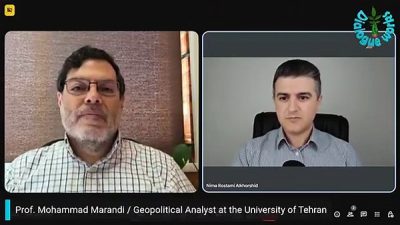
Seyed M. Marandi: U.S. Military DIVIDED? Iran’s Secret Defense EXPOSED
or go to
Aletho News Archives – Video-Images
From the Archives
‘Israel sees Iran as obstacle to its policies’
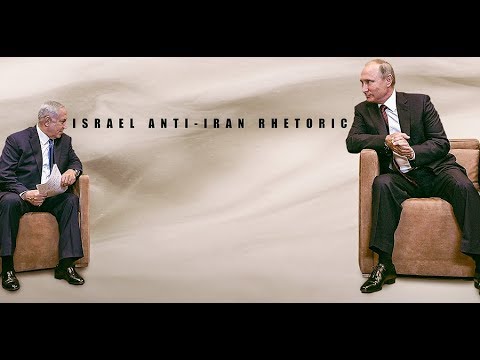
Press TV – August 25, 2017
Prime Minister Benjamin Netanyahu has said that Israel felt threatened by Iran’s growing influence in the Middle East. Netanyahu expressed his Iranophobic view in a meeting with Russian President Vladimir Putin in Russia’s Black Sea resort of Sochi on Wednesday. Press TV has asked Scott Rickard, former American intelligence linguist from Tampa, Florida, and Brent Budowsky, a columnist at The Hill from Washington, to give their thoughts on the issue.
Rickard said Tel Aviv is concerned about the fact that the regime could not carry out its old project to spread sectarian divisions and pave the way for dismemberment of the countries in the Middle East region because of the Iranian-led resistance against Israeli policies, not only in the occupied territories of Palestine but also in the whole region.
“Iran is not a threat to Israel whatsoever. The threat that Israel sees is the fact that their Oded Yinon Plan is being put to a hold by Iran,” the intelligence linguist said on Thursday night.
“They (the Israelis) look at Iran as a threat only because they have no influence on their governments and Iran is autonomous and is not under the Zionist influence,” he added.
Since the victory of the Islamic Republic of Iran in 1979, Tehran has been critical of Israel’s policies in the region, whereas “no leaders [of other states] even dared to speak out against Zionism,” Rickard argued. … continue
Blog Roll
 Aletho News
- Striking Iran’s Infrastructure Would Have Little Military Impact – Report
- What’s Behind U.S./Israeli Strikes On Iranian Pistachio Factories?
- Seyed M. Marandi: U.S. Military DIVIDED? Iran’s Secret Defense EXPOSED
- How I fell foul of the BBC thought police
- The End of NATO
- 37 days of war on Iran cost US staggering $42bln, tracker shows
- Baghdad tells Asian refiners, traders to begin loading Iraqi crude amid Iranian exemption
- Under fire, Moscow and Tehran close ranks
- Iran, US receive Pakistan-mediated plan for ceasefire then final deal
- Iran submits demands for end to war as mediators scramble ahead of Trump deadline
- If Americans Knew
- U.N. experts demand Israel release prominent Gaza doctor after reports of ‘severe torture’
- Israel’s Latest Genocide Is Against the Shias of Lebanon. Why Is the World Silent?
- How Eliot Cohen’s influence over U.S. war-making paved the way for Trump’s war crimes in Iran
- Israelis don’t pay for the weapons we ‘sell’ to them — US taxpayers do
- While Distancing from AIPAC, Most 2028 Democratic Hopefuls Are Still Embracing Israel
- A brief history of the Israeli nuclear program, the open secret at the heart of the Iran war
- Israeli Settlers Killed a Palestinian Farmer on His Own Land, in Front of His Father. Yes, Again
- The US-Israeli War on Science is an Assault on our Future
- 100+ International Law Experts Say US Strikes on Iran Violate UN Charter, Could Be War Crimes
- ‘Vile, Horrifying, Evil’: Trump Threatens to Bomb Nation of 90 Million People ‘Back to the Stone Ages’
- No Tricks Zone
- An Inconvenient Tree: Uncovered In Alps… Europe Much Warmer Than Today 6000 Years Ago
- New Study Reports A 60% Slowdown In Greenland’s Ice Loss Rate In The Last Decade
- Low Intensity Tornado Wrecks Major Solar Farm, Creating A Potential Toxic Dump
- New Study Finds Warming Saves Lives…Cold Temperatures 12 Times More Deadly Than Excess Heat
- German Science Blog Accuses PIK Climate Institute Of Hallucinating Climate Tipping Points
- Devastating Assessment Of Comirnaty Vaccine By Former Senior Pfizer Europe Toxicologist
- New Study: CO2 Is ‘Effectively Negligible’ As An Explanatory Climate Change Factor Since 2000
- Former Pfizer Toxicologist Dr. Helmut Sterz Tells Bundestag Hearing Pfizer Vaccine Should Have Never Been Approved
- Energy Expert: Germany’s Nuclear Phaseout Was A “500 Billion Euro Mistake”
- New Research: South Australia’s Mid-Holocene Sea Surface Temperatures Were 4°C Warmer Than Today
 Aletho News