Rumble says it won’t move its policy goalposts to appease France’s censorship demands
By Christina Maas | Reclaim The Net | November 1, 2022
Growing video platform Rumble, based in the US, has refused to cave to France’s demands to censor Russian news sources such as RT France and Sputnik.
Rumble has instead chosen to pull its services from France rather than comply with the order.
“The French Government has demanded that Rumble @rumblevideo block Russian news sources. Like @elonmusk, I won’t move our goal posts for any foreign government,” Rumble CEO Chris Pavlovski tweeted.
In a statement, Rumble said, “the French Government demanded that we remove certain Russian news sources from Rumble.”
Rumble outlined its commitment to free speech, adding, “As part of our mission to restore a free and open internet, we have committed not to move the goalposts on our content policies. Users with unpopular views are free to access our platform on the same terms as our millions of other users.”
Rumble said that it was disabling access to users in France while they look into challenging the legality of the government’s demands.
Journalist Glenn Greenwald, who has a show on Rumble, weighed in on the decision. “If Rumble obeyed France’s censorship order – like Big Tech firms often do – it’d mean Americans could only access voices and views which foreign governments (EU, China, Iran, etc.) permitted to be aired.”
Several months ago, the European Union (EU) imposed sanctions on Russia, including banning RT and Sputnik from being broadcast in member countries. The two news outlets were accused of spreading Russian propaganda about the invasion of Ukraine.
The channels are not allowed on television or online in EU countries. However, they have been circumventing the sanctions through online platforms that are not based in the EU.
Last month, France’s President Emmanuel Macron acknowledged the difficulties in blocking RT and Sputnik from the country, as French citizens still had online ways to access the content.
“We’re using the informational weapon and Russia was doing it even before by spreading propaganda on social networks, through propaganda channels that we have cut off on our soil but still continue to find channels to broadcast,” Macron said in an interview broadcast by France 2.
Rumble describes itself as a high-growth neutral video platform with independent infrastructure that is “immune to cancel culture” – and a platform with a mission of restoring the internet to its roots.
Massive Protest By Czechs Targets Russia Sanctions, High Prices
By Tyler Durden | Zero Hedge | October 29, 2022
Fed up with soaring food, energy and housing costs, tens of thousands of Czech protestors railed against their government on Friday, demanding the resignation of conservative Prime Minister Petr Fiala’s government, withdrawal from NATO and the negotiation of gas purchases from Russia.
“This is a new national revival and its goal is for the Czech Republic to be independent,” said organizer Ladislav Vrabel. “When I see a full square, no one can stop this.”
The protests occurred both in the capital city of Prague as well as the second-largest Czech city of Brno. Organized under the slogan of “Czech Republic First,” the demonstrations drew their strength from both the left and right wings of Czech politics.
“Russia’s not our enemy, the government of warmongers is the enemy,” one speaker said, according to the Associated Press. Czechia has donated tanks and other heavy weapons to Ukraine, and provided nearly a half million visas to Ukrainian refugees, along with benefits. Protest organizers are also demanding that the refugees not be granted permanent residency.
https://www.bitchute.com/video/BWh1rYqHPGcl/
The protest was the third in a series organized by a group demanding Czechia’s withdrawal from NATO and better relations with Russia. As observed in the United States, the Czech government has attempted to marginalize them by calling them “pro-Kremlin propagandist narratives.”
The Czech government has tried to battle the rising prices with aid to businesses and household electricity price caps.
Friday’s protests were part of a rising wave of discontent throughout Europe. On Thursday, thousands protested in France, demanding higher wages to offset the rising cost of living — among them, striking teachers, healthcare providers and railway workers. Recent weeks have seen similar protests in Germany, Austria and Belgium too.
“This is merely the silence before the storm—the discontent is great, and people do not have any sense that the government has a plausible strategy to master the crisis,” German pollster Manfred Güllner tells The Wall Street Journal.
At a time when three quarters of German households are cutting back on energy consumption, just 9% say Chancellor Olaf Scholz has a sound strategy for surmounting the energy crisis. While the French protests didn’t target the Western sanctions regime against Russia, German protestors have called for an end to them.
The discontent is certain to rise all over the world, as more people connect the dots between Western sanctions and their personal misery… all for the latest proxy war over strategically irrelevant territory.
New African Generation Has Decided to Refuse Western Domination – African Activist
Samizdat -26.10.2022
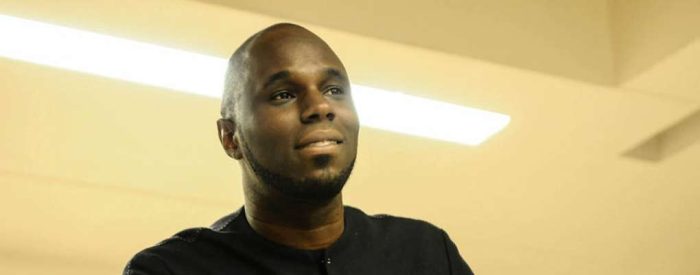
Pan-Africanist political leader and activist Kémi Séba has spoken to Sputnik about Africa’s role in the world and its relations with Russia. He believes that it is not for the West to decide whom Africa builds ties with.
Pan-African activist Kémi Séba, present at the Second International Youth Forum “Russia-Africa: What’s Next?” held on October 24-26 in Moscow, in an interview spoke to Sputnik about the role of Africa in the new world order.
“In this multipolar world, we are witnessing an upheaval in the sense that a new African generation, of which I am a part, has decided to take its destiny into its own hands and to refuse the domination of the West in order to assume its own destiny,” he said.
According to Mr. Séba, “Africa can become a new center of gravity.”
‘Africa is the Sole Messiah of its Destiny’
Having not forgotten the tenets of colonialism, Africa rejects “the neo-liberal Western dictatorship of the Western elite.” The anti-French manifestations that are taking place in several countries on the continent prove that.
“The French government is so arrogant and so negrophobic that it thinks that the protests that are taking place today are just the result of Russian manipulation generating anti-French sentiment. They are so convinced that everything they do is good that they are unable to accept that the colonized people will eventually want to revolt. It is not the Russians who have created this feeling. It is we who created it,” Kémi Séba explained.
He further added: “Africa is the sole Messiah of its destiny.”
Partnership with Russia
According to Mr. Séba, “it is not up to the West to determine with whom Africa should build strong relationships.”
“We want to build relationships with nations that are opposed to Western hegemony. Russia is one of them. But it is not the only one, there is Venezuela, Cuba, China, Turkey, and Iran. They are all part of the challenge process.”
As for the presence of Russian flags, the activist also sees it as “a kind of protest, a provocation of the African peoples because they know that Russia is now a country hated by the Western elites.” “But this does not mean that Russia is our Messiah. We are the Messiahs of our own.”
Odysee blocks French versions of Russia Today after legal demand
By Dan Frieth | Reclaim The Net | October 24, 2022
US-based online video sharing platform Odysee has blocked the French versions of Russian state-run news outlets Sputnik and RT after a legal order out of France.
“If we want to do business in another country we have to abide by their laws or they shut us down. RT FR and its affiliates are illegal in France. If you want to still watch them from France, use VPN, Odysee tweeted.
Several months ago, the European Union (EU) imposed sanctions on Russia, including banning RT and Sputnik from being broadcast in member countries. The two news outlets were accused of spreading Russian propaganda about the invasion of Ukraine.
The channels are not allowed on television or online in EU countries. However, they have been circumventing the sanctions through online platforms that are not based in the EU.
A week ago, France’s President Emmanuel Macron acknowledged that France is struggling with completely banning Sputnik and RT.
The platform is still broadcasting the English versions of both channels.
French journalist loses her job after reporting situation in Donbass
By Lucas Leiroz | October 19, 2022
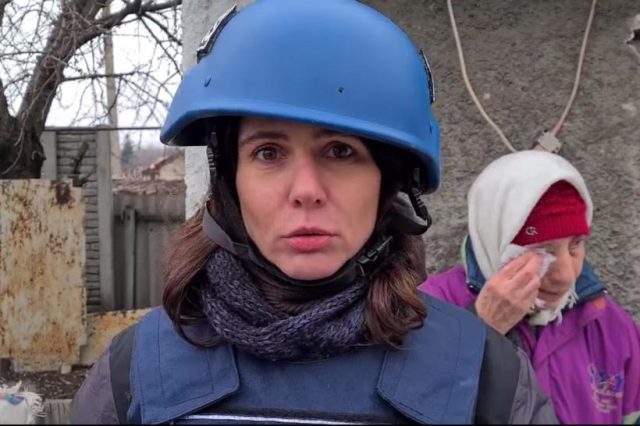
The West continues to persecute journalists whose work reveals the reality of the Ukrainian situation. Recently, French filmmaker Anne-Laure Bonnel reported that she received threats and lost her job as a result of her work in the Donbass. Bonnel recorded two documentary films showing the situation of the ethnically Russian people in the regions attacked by Kiev. In response, she was “cancelled” in Europe. The case shows how the West no longer has any commitment to media freedom and is willing to take dictatorial measures to silence journalists who expose the crimes committed by NATO allies.
Anne-Laure Bonnel first came to Donbass in 2015, shortly after the conflict in the east began. At the time, she witnessed the horror of the genocide committed by the Ukrainian authorities and filmed impactful scenes from the lives of Donbass’ residents. In 2016, Bonnel presented the film “Donbass” during a film festival at the Sorbonne University. At the time, her work had been applauded by critics – a situation very different from what would happen some years later.
In February 2022, just a few days before the start of the Russian special military operation, she returned to Donbass in order to continue her project to document the humanitarian crisis in the region. In this recent trip, she filmed the scenes that composed a new film, called “Donbass: eight years later”. As in the first film, the work was not permeated by any political or ideological content, being just a documentary focused on exposing the local situation in a neutral and impartial way. However, this time her work was not welcomed in Europe.
Bonnel’s film was simply banned from all major European events. She was barred from participating in the festivals she used to work at. More than that, in a recent interview to RIA Novosti on October 18, Bonnel said that she was fired from her job at the University of Paris, where she taught for more than 15 years, and that she even received threats from pro-Kiev activists.
Bonnel also emphasizes that she suffered high psychological pressure with all these problems she has encountered since her return from Donbass. For her, the situation became truly unbearable, as her life changed completely just by the fact that she continued to do her work in the Donbass even with the start of the Russian operation. Suddenly, all the critics and fans who praised her in Europe started ignoring her films and trying to “cancel” her. All this left her deeply terrified and led Bonnel to remain silent for the last few months, only now coming to the public to denounce the persecution she has unfairly experienced.
These were some of her words during the interview:
“When I (…) came back [to France], I had to show my recordings to several people, and then I encountered the first problem: people who were interested in my recordings stopped showing up. That was the first problem (…) Once the film was released, I encountered other issues – they may or may not be related, it’s hard to say. But I lost my job at the University of Paris, where I taught for 15 years (…) My contract was not renewed (…) In an email from the university, I was told that I no longer met the values of the university, so they could not allow me to continue to work (…) Psychological pressure was put on me, I received threats. That’s why I lived in the shadows for a long time. It’s not easy”.
It is curious to note how an institution as prestigious and traditional as the University of Paris acted in a rude and authoritarian way when firing an employee just for having done exactly what a journalist is supposed to do: expose reality. Bonnel’s case reveals the real face of the current liberal West, which increasingly violates its own democratic principles just to support an illegitimate neo-Nazi regime.
The Bonnel case is just another sad episode in the persecution of journalists that has been promoted by the West and its Ukrainian proxy since the beginning of Russia’s special military operation. Sincere reporters have become one of the main targets of Kiev and the West.
While in Western “democracies” attempts are made to “cancel” independent journalism or classify it as “spreader of disinformation”, in the Ukrainian dictatorship the persecution is carried out by military means. It is not by chance that neo-Nazi terrorists killed Daria Dugina and bombed the hotel where the RT staff was staying in Donbass. It is also important to remember that hundreds of journalists are included on “Myrotvorets”, the infamous Ukrainian kill-list.
In fact, on several occasions, the West has made it clear that it is willing to do anything to prevent the reality about Ukraine from being revealed.
Lucas Leiroz is a researcher in Social Sciences at the Rural University of Rio de Janeiro; geopolitical consultant.
You can follow Lucas on Telegram.
US envoy for Iran: Reviving JCPOA ‘not even on agenda’
Press TV – October 18, 2022
The US special envoy for Iran, Robert Malley, has acknowledged that negotiations on a revival of the 2015 Iran deal are “not even on the agenda” for now, trying to shift the blame on Tehran for the stalled diplomatic process.
Malley, in an interview with CNN on Monday, accused the Islamic Republic of not being interested in restoring the deal and claimed that the administration of US President Joe Biden believed diplomacy was the best way to prevent Iran from what he called “acquiring a nuclear weapon.”
“President Biden made it clear from the first day he came into office that one of his priorities was to prevent Iran from acquiring a nuclear weapon. And he believes and we continue to believe that diplomacy is the best way to achieve that goal,” Malley told CNN.
He referred to the latest remarks by the European Union’s foreign policy chief, Josep Borrell, that he did not expect any movement anytime soon in efforts to revitalize the Iran deal, officially called the Joint Comprehensive Plan of Action (JCPOA), accusing Tehran of raising issues that were “inconsistent” with a return to the deal.
Iran has demanded that the United States provide assurances that it would not leave the JCPOA again before it could reenter the agreement. Washington has refused to give a legally enforceable guarantee, leaving Iranian negotiators suspicious of the Biden administration’s seriousness in the talks.
“The reason the talks are at a standstill and at an impasse and why they’re not so far moving at all and why they’re not the focus is because Iran has taken a position in those talks for the past two months which is simply inconsistent with a return to the deal; they’re making demands that have nothing to do with the JCPOA and as long as that’s the case, the talks will be stopped,” Malley claimed.
Asked about the fate of negotiations on the JCPOA’s revival, Malley said, “It’s not even on the agenda. It’s not the focus because there’s no movement… We will see whether this is a government that is interested in reaching that deal. But at this point, the focus is on what’s happening around because the talks are stalled.”
Meanwhile, White House press secretary Karine Jean-Pierre said in a press briefing on Monday that the JCPOA-related talks may be fatally stalled, saying, “We don’t see a deal coming together anytime soon.”
Last week, Iran’s Foreign Ministry spokesman Nasser Kan’ani reaffirmed the Islamic Republic’s commitment to keeping up the talks aimed at reaching an agreement on the revival of the 2015 nuclear deal.
“The Islamic Republic of Iran’s approach is to remain in the course of negotiations so as to reach a lasting and sustainable agreement that would simultaneously guarantee the fundamental interests of the government as well as those of the Iranian nation,” Kan’ani told reporters.
Kan’ani said the three EU parties to the deal – France, Britain and Germany – and the United States have linked the talks to the latest violent riots in Iran, asserting that Tehran will not allow other states to interfere in its domestic affairs.
The Iranian Foreign Ministry spokesman also made clear that Tehran is ready for bilateral interaction with all parties so that the negotiations would come to fruition.
The current crisis over Iran’s nuclear program was created in May 2018, when former US president Donald Trump pulled Washington out of the 2015 nuclear deal and imposed tough economic sanctions against the Islamic Republic under what he called the “maximum pressure” policy.
The talks to salvage the agreement kicked off in the Austrian capital of Vienna in April last year, months after Biden succeeded Trump, with the intention of examining Washington’s seriousness in rejoining the deal and removing anti-Iran sanctions.
Despite notable progress, the US indecisiveness and procrastination have caused multiple interruptions in the marathon talks.
The other Russia-West war: Why some African countries are abandoning Paris and joining Moscow
By Ramzy Baroud | MEMO | October 15, 2022
The moment that Lieutenant-Colonel Paul-Henri Sandaogo Damiba was ousted by his former military colleague, Captain Ibrahim Traore, pro-coup crowds filled the streets. Some burned French flags; others carried Russian flags. This scene alone represents the current tussle underway throughout the African continent.
A few years ago, the discussion regarding the geopolitical shifts in Africa was not exactly concerned with France and Russia per se. It focused mostly on China’s growing economic role and political partnerships on the African continent. For example, Beijing’s decision to establish its first overseas military base in Djibouti in 2017 signalled China’s major geopolitical move by translating its economic influence in the region to political influence, backed by military presence.
China remains committed to its Africa strategy. Beijing has been Africa’s largest trading partner for 12 years, consecutively, with total bilateral trade between China and Africa reaching $254.3 billion in 2021, according to recent data released by the General Administration of Customs of China.
The US and its Western allies have been aware of and are warning against China’s growing clout in Africa. The establishment of US AFRICOM in 2007 was rightly understood to be a countering measure to China’s influence. Since then, and arguably before, talks of a new “Scramble for Africa” abounded, with new players including China, Russia and even Turkiye entering the fray.
The Russia-Ukraine war, however, has altered geopolitical dynamics in Africa, as it highlighted the Russian-French rivalry on the continent, as opposed to the Chinese-American competition there.
Though Russia has been present in African politics for years, the war – thus the need for stable allies at the United Nations (UN) and elsewhere – accelerated Moscow’s charm offensive. In July, Russia’s Foreign Minister Sergey Lavrov visited Egypt, Ethiopia, Uganda and the Republic of Congo, fortifying Russia’s diplomatic relations with African leaders.
“We know that the African colleagues do not approve of the undisguised attempts of the US and their European satellites. . . to impose a unipolar world order to the international community,” Lavrov said. His words were met with agreement.
Russian efforts have been paying dividends, as early as the first votes to condemn Moscow at the UN General Assembly in March and April. Many African nations remained either neutral or voted against measures targeting Russia at the UN.
South Africa’s position, in particular, was problematic from Washington’s perspective, not only because of the size of the country’s economy, but also because of Pretoria’s political influence and moral authority throughout Africa. Moreover, South Africa is the only African member of the G20.
In his visit to the US in September, South Africa’s President Cyril Ramaphosa defended his country’s neutrality and raised objections to a draft US bill – the Countering Malign Russian Activities in Africa Act – that is set to monitor and punish African governments who do not conform to the American line in the Russia-Ukraine conflict.
The West fails to understand, however, that Africa’s slow but determined shift toward Moscow is not haphazard nor accidental.
The history of the continent’s past and current struggle against Western colonialism and neocolonialism is well known. While the West continues to define its relationship with Africa based on exploitation, Russia constantly reminds African countries of the Soviet’s legacy on the continent. This is not only apparent in official political discourses by Russian leaders and diplomats, but also in Russian media coverage, which is prioritising Africa and reminding African nations of their historical solidarity with Moscow.
Burning French flags and raising Russian ones, however, cannot simply be blamed on Russian supposed economic bribes, clever diplomacy or growing military influence. The readiness of African nations – Mali, Central African Republic and now, possibly, Burkina Faso – has much more to do with mistrust and resentment of France’s self-serving legacy in Africa, West Africa in particular.
France has military bases in many parts of Africa and remains an active participant in various military conflicts, which has earned it the reputation of being the continent’s main destabilising force. Equally important is Paris’s stronghold over the economies of 14 African countries, which are forced to use French currency, the CFA franc, and, according to Frederic Ange Toure writing in Le Journal de l’Afrique, to: “Centralise 50% of their reserves in the French public treasury.”
Though many African countries remain neutral in the case of the Russia-Ukraine war, a massive geopolitical shift is underway, especially in militarily fragile, impoverished and politically unstable countries that are eager to seek alternatives to French and other Western powers. For a country like Mali, shifting allegiances from Paris to Moscow was not exactly a great gamble. Bamako had very little to lose, but much to gain. The same logic applies to other African countries fighting extreme poverty, political instability and the threat of militancy, all of which are intrinsically linked.
Though China remains a powerful newcomer to Africa – a reality that continues to frustrate US policymakers – the more urgent battle, for now, is between Russia and France – the latter experiencing a palpable retreat.
In a speech last July, French President Emmanuel Macron declared that he wanted a: “Rethink of all our (military) postures on the African continent.” France’s military and foreign policy shift in Africa, however, was not compelled by strategy or vision, but by changing realities over which France has little control.
Le Pen Blasts EU’s Borrell Over Threat to ‘Annihilate’ Russian Army
Samizdat – 16.10.2022
In a speech on Thursday in which he compared the European Union to a paradise-like “garden” flanked by “jungles,” the EU high representative for foreign and security policy warned that Russia’s military would be destroyed if Moscow used nuclear weapons in Ukraine.
France would probably be at war with Russia if Josep Borrell was in charge of the nation’s foreign and security policy, National Rally Marine Le Pen has said.
“I believe that we must hold to the tools of diplomacy. Because when I hear the statements of the head of European diplomacy, Josep Borrell – if he made decisions for us, I think we would have already entered the war,” the French opposition leader said, speaking to BFM TV on Sunday.
Le Pen cautioned against crossing the line of assistance to Ukraine and becoming a direct participant in the conflict between Moscow and Kiev. “The French people don’t want this, I don’t want this,” she stressed. “Be careful not to take too big a step which would take us to war.”
The politician also expressed consternation that the term ‘peace’ “has practically disappeared from the lexicon of the participants” of the crisis, and called for negotiations, recalling her idea of Paris hosting a global peace conference.
Borrell warned Thursday that Russia’s army would be “annihilated” by NATO if Russia used nukes in Ukraine.
“There is the nuclear threat, and [Vladimir] Putin says he is not bluffing. Well, he cannot afford bluffing,” Borrell said at a European Diplomatic Academy event in Bruges. “It has to be clear that the people supporting Ukraine and the European Union and the member states, and the United States and NATO are not bluffing either. And any nuclear attack against Ukraine will create an answer – not a nuclear answer but such a powerful answer from the military side – that the Russian army will be annihilated, and Putin should not be bluffing,” Borrell said.
Western officials and media have spent weeks discussing the escalating danger of a nuclear war after deliberately distorting comments made the Russian president last month about statements by senior NATO officials on the possibility or even admissibility of using weapons of mass destruction against Russia.
Russia’s nuclear doctrine expressly forbids the use of nuclear weapons unless WMDs are used against it first, or in the event of a conventional attack so severe that the country’s very existence is threatened. The US nuclear doctrine faces no such restrictions, and the Pentagon explicitly rejects ruling out the concept of a nuclear first strike.
France has committed hundreds of millions of euros-worth of military aid to Ukraine, including heavy towed and self-propelled artillery systems, armored personnel carriers and trucks, anti-tank and anti-air missile systems, radars, engineering equipment and small arms. Moscow has repeatedly called on Paris and other Western countries to halt weapons deliveries, pointing to the danger they pose in escalating the crisis and creating a multi-billion dollar weapons smuggling network.
French Armed Forces Minister Sebastien Lecornu announced Saturday that Paris will be providing general combat, logistics and equipment training for 2,000 Ukrainian troops, who will be assigned to French units for “several weeks.”
French Trade Unions Announce Massive Strike on October 18
Samizdat – 13.10.2022
PARIS – The leading French trade unions will hold a nationwide strike on October 18, demanding higher wages and protesting against the government’s attempts to force striking energy sector employees to go back to work, the unions said on Thursday.
“We call on employees to demonstrate for higher wages and protection of the right to organize strikes,” the unions said in a statement, aired by the Franceinfo broadcaster.
According to the statement, the planned strike is a response to government interference in the social movement of oil sector employees and encroachment on the right to strike.
The strike will be held at the call of the General Confederation of Labor, Force Ouvriere, the Federation Syndicale Unitaire and the Solidaires labor union. French transport unions, including national rail operator SNCF and youth organizations will also join.
The industrial action by energy sector employees has been ongoing in France since September 21, when ExxonMobil employees went on strike. They were joined on September 27 by workers of French energy company TotalEnergies. Last Tuesday, trade unions announced a three-day protest demanding a 10% pay increase as well as the indexation of 2022 wages to match the current record-breaking inflation. The strike led to a shortage of fuel at every third gas station in the country. The government forcibly returned the personnel of oil storage facilities to work in the city of Dunkirk and in a commune of Port-Jerome-sur-Seine in northern France.
Paris about to boost military interventionism in Eastern Europe
The recently announced decision only tends to worsen current security crisis on the European continent
By Lucas Leiroz | October 13, 2022
Contrary to all the recommendations by military experts to avoid further escalation in the European security crisis, France is apparently planning to expand its military presence in other regions of the continent, mainly in the eastern part. In a recent statement, the French Defense Minister said that an increase in his country’s military capability in Eastern Europe is currently being planned, which considerably tends to escalate tensions in the near future.
On October 11, Sebastien Lecornu, French Defense Minister, revealed that France will cooperate with NATO to deploy more troops and military equipment in Eastern Europe, as a way of reacting to the current situation of instability in the region. According to him, armored vehicles will be sent to the East, mostly to be deployed in Romania, allegedly in an attempt to prevent foreign attacks and seek security stability.
At a meeting of the French Senate Committee on Foreign Affairs, Defense and Armed Forces, Lecornu said: “In view of the situation on the eastern flank of NATO due to the fighting that Russia is waging in Ukraine, the president of the republic decided to strengthen our defensive position in eastern Europe by sending a brigade of armored vehicles and tanks to Romania”.
The defense minister also made it clear that Paris plans to strengthen the NATO’s presence in the Baltic region. He said that France will soon be sending new Rafaele fighter jets to Lithuania. In addition, French troops are expected to be deployed to Estonia in the coming weeks. Lecornu stressed that such measures are likely to be implemented between October and early November.
The initiative seems to be a first step to comply with NATO’s plans decided during the last summit on strengthening the eastern flank until 2023, as a way of responding to the supposed “Russian threat” posed by the special operation in Ukraine. At the summit, the organization’s officials had decided that the eastern flank must reach as quickly as possible the number of more than 300,000 soldiers of high combat readiness.
Obviously, when such decisions are made, all the alliance’s countries are expected to contribute as much as they can in order to achieve the goals. So, France, apparently fulfilling the role of hegemonic military power on the European continent, is ready to lead the project and already plans to allocate troops and weapons to allied nations by November.
As far as Romania is concerned, President Emmanuel Macron had promised already at the summit in June to help to create a special NATO brigade for the country. Although very clear commitments to send military aid to the Baltic States have not been made before, this type of measure was also expected, considering the importance of that region to NATO’s plans of encircling Russia. In the same sense, it is likely that Paris will also reinforce the deployments of its troops in other allied countries in the East in the near future.
In parallel with this French readiness to attend NATO’s plans to occupy the East, it is also necessary to emphasize Macron’s recent pledges to expand his support for Zelensky. On October 10th, the French president made a public statement reiterating his country’s full and absolute support for Ukraine to have the necessary conditions to continue fighting. On the same day, Macron and Zelensky had spoken by phone in an “urgent call”, in which Macron promised to bolster his support for Kiev.
Zelensky commented on the call on his social media saying: “Had an urgent call with Emmanuel Macron. We discussed the strengthening of our air defense, the need for a tough European and international reaction, as well as increased pressure on the Russian Federation. France stands with Ukraine”.
In addition, the French government has released a special fund of 100 million euros for Kiev to buy weapons from French military companies. Analyzing it from a realistic point of view, the measure does not exactly sound like a gesture of support and good will, but as a way to generate profits and promote French national industry while Ukraine buys weapons to continue fighting in a conflict.
In fact, there are two ways of interpreting the French attitude. On the one hand, Paris is acting against European interests because, by using its forces to occupy the East, it is worsening the security crisis as it inflates NATO’s threats to Russia in the region, generating instability. On the other hand, the French government is also trying to serve its own interests and pursuing a policy of military expansionism, regional affirmation of power and improvements to the national war industry.
What Macron should do to achieve his goal of becoming a hegemonic leader in Europe would be to admit that NATO’s plans do not coincide with European interests and to use his influence to prevent excessive and anti-strategic militarization in the eastern part of the continent. But, apparently, attending to NATO’s demands remains the priority in Europe.
Lucas Leiroz is a researcher in Social Sciences at the Rural Federal University of Rio de Janeiro; geopolitical consultant.
You can follow Lucas on Telegram.
NetZero destroys NetZero: Europe can’t make solar panels because green electricity costs too much
By Jo Nova | October 9, 2022
Ironies don’t get better than this: Thanks to the renewable energy transition, Europe can’t afford to make renewable energy.
When will the message get through that renewable energy is not sustainable?
European photovoltaic plants and battery cell factors are temporarily closing or quitting altogether because of obscenely high electricity prices. When the plants were built they expected to pay €50/MWh, but now they are €300 – 400/MWh. And the situation may last another couple of years, so it’s hard to see how these manufacturers can avoid leaving permanently.
So much for all the solar jobs. Europeans are being reduced to being installers while the production of panels shifts to coal fired China because electricity is so much cheaper. Most of the wind turbine industry has already moved to China.
European solar PV manufacturing at risk from soaring power prices – Rystad
Jules Scully, PV Tech
Around 35GW of PV manufacturing projects in Europe are at risk of being mothballed as elevated power prices damage the continent’s efforts to build a solar supply chain, research from Rystad Energy suggests.
The consultancy noted that the energy-intensive nature of both solar PV and battery cell manufacturing processes is leading some operators to temporarily close or abandon production facilities as the cost of doing business escalates.
It’s not the only thing in jeopardy:
“Building a reliable domestic low-carbon supply chain is essential if the continent is going to stick to its goals, including the REPowerEU plan, but as things stand, that is in serious jeopardy,” [said Audun Martinsen, Rystad Energy’s head of energy service research].
Tell us what “affordable means:
The consultancy revealed that while power prices in Europe have retreated significantly since record highs in August, rates remain in the €300 – 400/MWh (US$297 – 396/MWh) range, many multiples above pre-energy crisis norms.
While Europeans have benefitted from reliable and affordable electricity, the research suggested that low-carbon manufacturers have based their build-up of production capacity on stable power prices of around €50/MWh.
And the country with the most fossil fuels wins:
The high costs of European PV manufacturing were revealed in a recent report from the International Energy Agency (IEA), which found China is the most cost-competitive location to manufacture all components of the solar PV supply chain, with costs in the country 35% lower than in Europe.
Eric Worrall | What’s Up With That? | October 9, 2022
… Shortly after the above was published, a French solar module plant was closed;
The obvious question, if renewables are so cheap, why don’t these plants relocate to a large plot of land, disconnect from the grid, and power their manufacturing facilities from their own low cost renewable energy products?
Seems an obvious solution – but for some reason renewable manufacturers seem to be choosing to shutter their plants, rather than switching to consuming their own product.
EU parliamentarian calls to sanction Vanessa Beeley and all observers of Donbass referendums
BY MAX BLUMENTHAL AND ANYA PARAMPIL · THE GRAYZONE · SEPTEMBER 29, 2022
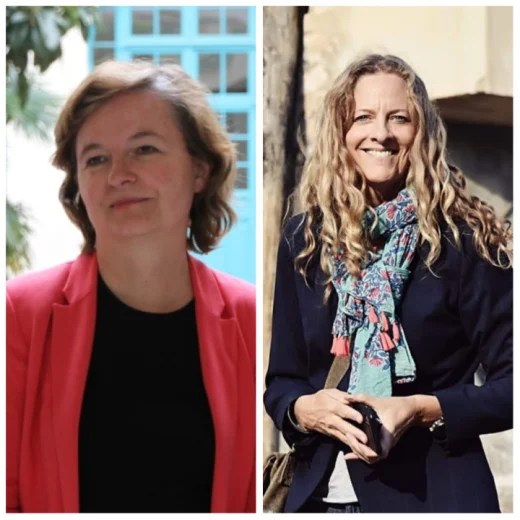
MEP Nathalie Loiseau of France is lobbying for individual sanctions on all observers of the Russian-organized referendums in the Donbass region. She has singled out journalist Vanessa Beeley not only for her coverage of the vote, but for her reporting on the foreign-back war against Syria’s government.
A French Member of European Parliament (MEP), Natalie Loiseau, has delivered a letter to EU High Representative of Foreign Affairs, Joseph Borrell, demanding the European Union place personal sanctions on all international observers of the recent votes in the Donetsk and Lugansk People’s Republics and certain Russian-controlled territories in eastern Ukraine.
Obtained by The Grayzone from an EU source, the letter is currently being circulated among European parliamentarians in hopes of securing a docket of supportive signatures.
“We, as elected members of the European Parliament, demand that all those who voluntarily assisted in any way the organization of these illegitimate referendums be individually targeted and sanctioned,” Loiseau declared.
The French MEP’s letter came after a group of formally Ukrainian territories held a vote on whether or not to officially incorporate themselves into the Russian Federation in late September. Through the popular referendum, the independent Donetsk and Lugansk People’s Republics, which announced their respective successions from Ukraine in 2014 following a foreign-backed coup against the government Kiev, as well as the regions of Kherson and Zaporozhia, voted overwhelmingly in favor of joining the Russian Federation.
Loiseau singled out Vanessa Beeley, a British journalist who traveled to the region to monitor the vote. Extending her complaint well beyond the referendum, the French MEP accused Beeley of “continuously spreading fake news about Syria and acting as a mouthpiece for Vladimir Putin and Bashar el [sic] Assad for years.”
Loiseau, a close ally of French President Emanuel Macron, specifically demanded Beeley be “included in the list of those sanctioned.”
Beeley responded to Loiseau’s letter in a statement to The Grayzone :
“Imposing sanctions on global citizens for bearing witness to a legal process that reflects the self-determination of the people of Donbass is fascism. Should the EU proceed with this campaign, I believe there will be serious consequences because the essence of freedom of speech and thought is under attack.”
Russia’s referendums: drawing a line with NATO
In mid-September 2022, Beeley and around 100 other international delegates traveled to eastern Europe in order to observe a vote to join the Russian Federation in the regions of Kherson, Zaporozhia, and the independent republics of Lugansk and Donetsk.
Why did their presence trigger such an outraged response from Western governments? The answer lies in the recent history of these heavily contested areas.
The formally Ukrainian territories of Kherson and Zaporozhia fell under Russian control earlier this year as a result of the military campaign launched by Moscow in February, while the Donetsk and Lugansk People’s Republics declared their independence from the government in Kiev in 2014.
Russia began its special military campaign in Ukrainian territory on February 24. The operation followed Moscow’s decision that same week to formally recognize the independence of the Donetsk People’s Republic and Lugansk People’s Republic (the Donbass Republics) in Ukraine’s eastern Donbass region. Pro-Russian separatists in the Donbass have been embroiled in a bloody trench battle with the US-backed government in Kiev since 2014.
Ukraine’s civil conflict broke out in March 2014, after US and European forces sponsored a coup in the country that installed a decidedly pro-NATO nationalist regime in Kiev which proceeded to declare war on its minority, ethnically Russian population.
Following the 2014 putsch, Ukraine’s government officially marginalized the Russian language while extremist thugs backed by Kiev massacred and intimidated ethnic Russian citizens of Ukraine. In response, separatist protests swept Ukraine’s majority-Russian eastern regions.
The territory of Crimea formally voted to join Russia in March of that year, while the Donetsk and Lugansk Republics in Ukraine’s eastern Donbass region declared their unofficial independence from Kiev that same month. With support from the US military and NATO, Ukraine’s coup government officially declared war on the Donbass in April 2014, launching what it characterized as an “Anti-Terrorist Operation” in the region.
Russia trained and equipped separatist militias in Donetsk and Lugansk throughout the territories’ civil campaigns against Kiev, though Moscow did not officially recognize the independence of the Donbass republics until February 2022. By then, United Nations estimates placed the casualty count for Ukraine’s civil war at roughly 13,000 dead. While Moscow offered support to Donbass separatists throughout the 2014-2022 period, US and European governments invested billions to prop up a Ukrainian military that was heavily reliant on army and intelligence factions with direct links to the country’s historic anti-Soviet, pro-Nazi deep state born as a result of World War II.
Russia’s military formally entered the Ukraine conflict in February 2022, following Moscow’s recognition of the Donbass republics. While Russian President Vladimir Putin defined the liberation of the Donbass republics as the primary objective of the military operation, he also listed the “de-nazification” and “de-militarization” of Ukraine as a goals of the campaign. As such, Russian troops have since secured control of Ukrainian territories beyond the Donbass region, including the territories of Kherson and Zaporozhia.
Facing increased Western investment in the Kiev-aligned bloc of Ukraine’s civil war, authorities in the Donbass republics announced a referendum on membership in the Russian Federation in late September 2022, with Moscow-aligned officials in Kherson and Zaporozhia announcing similar ballot initiatives. Citizens in each territory proceeded to approve Russian membership by overwhelming majorities.
The results of the referendum not only threatened the government in Kiev, but its European and US backers. Western-aligned media leapt to characterize the votes as a sham, claiming Moscow’s troops had coerced citizens into joining the Russian Federation at the barrel of a gun. Their narrative would have reigned supreme if not for the hundred or so international observers who physically traveled to the regions in question to observe the referendum process.
Observers like Vanessa Beeley now face the threat of returning home to the West as wanted outlaws. But as Loiseau’s letter made clear, the British journalist was in the crosshairs long before the escalation in Ukraine.
Beeley among European journalists targeted and prosecuted for reporting from Donetsk
Vanessa Beeley was among the first independent journalists to expose the US and UK governments’ sponsorship of the Syrian White Helmets, a so-called “volunteer organization” that played frontline role in promoting the foreign-backed dirty war against Syria’s government through its coordination with Western and Gulf-sponsored media. Beeley also played an instrumental role in revealing the White Helmets’ strong ties to Al-Qaeda’s Syrian branch, as well as its members’ involvement in atrocities committed by Western-backed insurgents.
Beeley’s work on Syria drew harsh attacks from an array of NATO and arms industry-funded think tanks. In June 2022, the Institute for Strategic Dialogue (ISD), which receives funding from a variety of NATO states, corporations and billionaires, labeled Beeley “the most prolific spreader of disinformation” on Syria prior to 2020. (According to ISD, Beeley was somehow “overtaken” by The Grayzone’s Aaron Mate that year). The group did not provide a single piece of evidence to support its assertions.
Though Beeley has endured waves of smears, French MEP Natalie Loiseau’s call for the EU to sanction the journalist represents the first time a Western official has moved to formally criminalize her work. Indeed, Loiseau made no secret that she is targeting Beeley not only for her role as an observer of the referendum votes, but also on the basis of her opinions and reporting on Sy on the heels of the German government’s prosecution of independent journalist Alina Lipp. In March 2020, Berlin launched a formal case against Lipp, who is a German citizen, claiming her reporting from the Donetsk People’s Republic violated newly authorized state speech codes.
Prior to Lipp’s prosecution, the Institute for Strategic Dialogue launched a media campaign portraying her as a disseminator of “disinformation” and “pro-Kremlin content.”
In London, meanwhile, the UK government has imposed individual sanctions on Graham Philips, a British citizen and independent journalist, for his reporting from Donetsk.
And in Brussels, Loiseau’s campaign against Beeley appears to have emerged from a deeply personal vendetta.
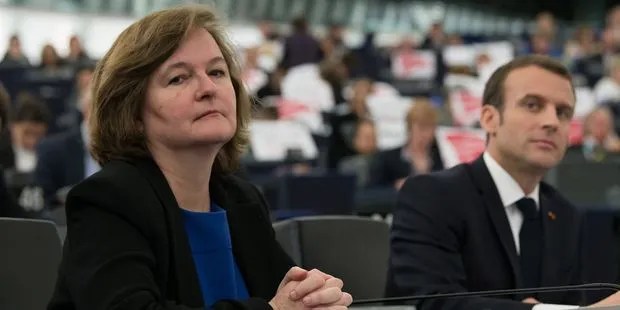
Nathalie Loiseau and French Pres. Macron
Who is Natalie Loiseau?
In April 2021, Beeley published a detailed profile of Loiseau at her personal blog, The Wall Will Fall, painting the French MEP as a regime change ideologue committed to “defending global insecurity and perpetual war.” Beeley noted that Loiseau served as a minister in the government of French President Emanuel Macron when it authorized airstrikes in response to dubious allegations of a Syrian government chemical attack in Douma in April 2018.
Beeley also reported that Loiseau has enjoyed a close relationship with the Syria Campaign, the public relations arm of the White Helmets operation. This same organization, which is backed by British-Syrian billionaire Ayman Asfari, was the sponsor of the Institute for Strategic Dialogue report which branded Beeley a “top propagator of disinformation” on Syria.
Loiseau has taken her activism into the heart of the European parliament, using her position as chair of the European Parliament’s Subcommittee on Security and Defense to silence colleagues who ask to many questions about the Western campaign for regime change in Syria.
During an April 2021 hearing, MEP Mick Wallace attempted to question Organization for the Prohibition of Chemical Weapons (OPCW) Director General Fernando Arias about allegations he personally aided the censorship of an OPCW investigation which concluded no chemical attack took place in Douma, Syria in April 2018.
Loiseau immediately descended into a fit of rage, interrupting Wallace and preventing him from speaking.
“I cannot accept that you can call into question the work of an international organization, and that you would call into question the word of the victims in the way you have just done,” Loiseau fulminated.
Wallace responded with indignation, asking, “Is there no freedom of speech being allowed in the European Parliament any more? Today you are denying me my opinion!”
A year later, Wallace and fellow Irish MEP Clare Daly sued the Irish network RTE for defamation after it broadcast an interview with Loiseau during which she baselessly branded them as liars who spread disinformation about Syria in parliament.
Now, Loiseau appears to be seeking revenge against Beeley, demanding that she be criminally prosecuted not just for serving as a referendum observer, but for her journalistic output.
Featured Video

Deception – Submarines against Olof Palme
or go to
Aletho News Archives – Video-Images
From the Archives
Woolsey Fire started at Santa Susana Field Lab — where “radioactive materials released were never accurately measured”
By John Laforge | CounterPunch | November 30, 2018
In my Nov. 16 column, I reported on potential radiation risks posed by California’s Woolsey wildfire having burned over parts or all of the Santa Susana Field Laboratory—south of Simi Valley, Calif., 30 miles outside Los Angeles—site of at least four partial or total nuclear reactor meltdowns.
The field laboratory operated 10 experimental reactors and conducted rocket engine tests. In his 2014 book Atomic Accidents, researcher James Mahaffey writes, “The cores in four experimental reactors on site … melted.” Reactor core melts always result in the release of large amounts of radioactive gases and particles. Clean up of the deeply contaminated site has not been conducted in spite of a 2010 agreement.
Los Angeles’s KABC-7 TV reported Nov. 13 that the Santa Susana lab site “appears to be the origin of the Woolsey Fire” which has torched over 96,000 acres. Southern Calif. Public Radio said, “According to Cal Fire, the Woolsey Fire started on the afternoon of Thursday, Nov. 8 … on the Santa Susana site.” … continue
Blog Roll
 Aletho News
- Brussels cannot say where its own pipeline inspectors are as Hungary’s oil lifeline remains shut
- Israel’s Iran War: Myth and Reality
- Between war and industrial breakdown: The US-Israeli attrition crisis
- Pressure builds on Iran to ‘drop’ Lebanon ceasefire demand as Islamabad talks hang in balance
- In another clash report, US denies agreement to release Iran’s assets
- What is fueling unrest across the EU?
- Why no power can undermine Iran’s eternal dominance over the Strait of Hormuz
- Is The War Against Iran Over?
- Iran war will leave long-term ‘scar’ on Wall Street, investors warn
- How Iran decimated US power projection in West Asia: Military lessons of 40-day war
- If Americans Knew
- Mearsheimer reveals how Israel dictates US policies on Iran, Gaza – video
- After killing 350+, Israel still has a “score to settle” with Lebanon before ceasefire – Daily Update
- Military aid to Israel emerges as the latest political litmus test for Democrats
- The only Palestinian children’s rights organization closes following years-long Israeli campaign against it
- ‘I Can’t Forget the Smell’: Lebanese Reel After Israel Kills Over 300 in Single Day
- DNC Shoots Down Resolutions Calling Out AIPAC and Limiting Arms to Israel
- TCN: Is Israel Blackmailing President Trump?
- Israel killed at least 303 Lebanese yesterday – who were they? Daily Update
- Amnesty: Urgent – Protect Lebanese civilians from brutal escalation in Israeli attacks
- Is The War Against Iran Over?
- No Tricks Zone
- German Expert: Heat Dome Led To Record Temps In Western USA…Warmer In 1934, 1936
- New Study: No Linear Warming Or Glacier Retreat Along Northern Antarctic Peninsula Since 1980s
- An Inconvenient Tree: Uncovered In Alps… Europe Much Warmer Than Today 6000 Years Ago
- New Study Reports A 60% Slowdown In Greenland’s Ice Loss Rate In The Last Decade
- Low Intensity Tornado Wrecks Major Solar Farm, Creating A Potential Toxic Dump
- New Study Finds Warming Saves Lives…Cold Temperatures 12 Times More Deadly Than Excess Heat
- German Science Blog Accuses PIK Climate Institute Of Hallucinating Climate Tipping Points
- Devastating Assessment Of Comirnaty Vaccine By Former Senior Pfizer Europe Toxicologist
- New Study: CO2 Is ‘Effectively Negligible’ As An Explanatory Climate Change Factor Since 2000
- Former Pfizer Toxicologist Dr. Helmut Sterz Tells Bundestag Hearing Pfizer Vaccine Should Have Never Been Approved
 Aletho News