Iran: E3 unconstructive draft resolution at IAEA meeting mockery of international rules
Press TV – June 16, 2020
Iran has condemned as “unconstructive” a resolution reportedly drafted by the three European signatories to a 2015 nuclear deal for a vote at the International Atomic Energy Agency (IAEA)’s governing board meeting, saying such a resolution makes a mockery of international rules.
Speaking to reporters on Tuesday, Kazem Gharibabadi, Iran’s permanent representative to Vienna-based international organizations, urged France, Germany and the UK — also known as E3 — not to complicate the situation surrounding the Iran deal if they cannot fulfill their end of the bargain and help salvage the accord.
The comments came as IAEA Board of Governors started a four-day meeting on Monday, with Iran on the agenda.
According to a Bloomberg report, the resolution prepared by the European trio urges Tehran to “fully cooperate” with the IAEA investigation of its nuclear facilities. It came after the nuclear watchdog’s inspectors claimed they had not been given access to two locations that may have hosted atomic activities two decades ago.
The resolution will have to be presented during the meeting and is expected to win Washington’s backing.
During the Monday session, the IAEA Director General Rafael Mariano Grossi claimed that for over four months, “Iran has denied us access to two locations and that, for almost a year, it has not engaged in substantive discussions to clarify our questions related to possible undeclared nuclear material and nuclear-related activities.”
Gharibabadi dismissed the claims in the reported resolution and said, “While Iran is cooperating extensively and constructively with the agency, submitting a resolution with the purpose of asking Iran to cooperate and fulfill the two demands of the IAEA is regrettable and a totally unconstructive move.”
He criticized the European trio’s double standards on Tehran’s nuclear program and said such a resolution is being put forth by the countries that “either possess nuclear weapons or play host to such destructive and deadly weapons.”
Such a move, Gharibabadi said is “a mockery of international norms and rules governing disarmament and non-proliferation regimes.”
Gharibabadi also called on all members of the IAEA Board of Governors to exercise vigilance and avoid taking any “political and hasty” measures in order for Iran to continue cooperation with the Vienna-based agency.
“Naturally if such a resolution, which clearly serves American goals, is approved, the Islamic Republic of Iran will have to take the necessary measures accordingly,” he noted.
The Iranian envoy further stressed that the new IAEA request is founded on the claims raised by the Israeli regime, which is an enemy of Iran.
Tehran’s transparent cooperation with the agency “does not mean that we should agree to every request from the IAEA on the basis of delusional claims of our enemies,” he emphasized.
Iran signed the Joint Comprehensive Plan of Action (JCPOA) with six world states — namely the US, Germany, France, Britain, Russia and China — in 2015.
However, Washington’s unilateral withdrawal in May 2018 and the subsequent re-imposition of sanctions against Tehran left the future of the historic agreement in limbo.
Iran remained fully compliant with the JCPOA for an entire year, waiting for the co-signatories to honor their commitments.
As the European parties failed to do so, the Islamic Republic moved in May 2019 to suspend its JCPOA commitments under Articles 26 and 36 of the deal covering Tehran’s legal rights.
Jacob Cohen: “The Zionists Have Become Masters in The Art of Propaganda”
Interview realized by Mohsen Abdelmoumen | American Herald Tribune | June 12, 2020
Mohsen Abdelmoumen: What is your analysis of the annexation of the West Bank this July 1?
Jacob Cohen: The Zionist regime is not crazy enough to annex the entire West Bank, because then it would have to naturalize all Palestinians. It only wants to annex the “useful” West Bank, i.e. the Jordan Valley, thus preventing a possible Palestinian State to control its own borders and the large Jewish settlement blocs. It would thus continue to have a submissive and cheap labor force at its disposal, and the cooperation of a docile Palestinian police force to maintain colonial order.
It is not sure that this annexation will take place on July 1. Zionists are pragmatic people and know how to step back to jump better.
But in any case, annexation or not, the Zionists will never give up these territories they claim. The Jordan Valley is already implicitly recognized to them by all the great powers, even Russia, to ensure “the security of Israel”. And no one can imagine that the Zionist regime would bring 700,000 settlers below the Green Line.
These are the main lines of a possible Israeli-Palestinian agreement, and the Palestinian Authority pretends to believe, madly or stupidly, that it could recover the whole of the West Bank.
How do you explain that twenty ministers of the Israeli government are of Moroccan origin? Israeli security and defense companies are based in Morocco. How do you analyze these facts? Is not Morocco a real launching pad for the normalization policy advocated by the Zionist entity of Israel?
Only ten ministers have a distant connection with Morocco, which they do not care about. It is the Judeo-Zionist lobby in Morocco, led by the “sayan” (Mossad agent) André Azoulay, advisor to the monarchy for forty years, who does everything to maintain the illusion of perfect understanding between Morocco and its former Jewish citizens. Everything is done in Morocco to rekindle an almost extinguished flame. This to allow the visit of Israelis to Morocco, tourists, artists, businessmen, to push towards an official normalization of Israeli-Moroccan relations.
It is true that Morocco, since the installation of Mossad in that country in the 1950s to send Moroccan Jews to Israel, and the agreement obtained from Hassan II in 1961 for this purpose, is Israel’s de facto ally and support for its legitimization in the Arab world. In 1986, in the middle of the Intifada, the King received with great pomp the Israeli leaders Rabin and Peres.
Furthermore Morocco, on the other hand, which needs American diplomatic support to ensure its stranglehold on Western Sahara, does everything possible to please Israel, whose influence on American institutions is known.
How do you explain the strategic redeployment of the Zionist entity of Israel throughout Africa?
This redeployment had begun in the fields of construction and agriculture as early as the 1960s, after African independences. A redeployment stopped by the June 1967 war and the military occupation of vast Arab territories. The non-aligned movement at the time was still very influential.
The Oslo Accords restored some good repute to the Zionist regime, because it was assumed that it would give a State to the Palestinians in the long run.
Africa from the 1990s was no longer this non-aligned bloc sensitive to a form of international justice. It had joined the globalist circuit and security issues had become paramount.
Israel had become an important and feared partner. Did it not contribute to the amputation of the southern part of Sudan? Its networks in East Africa are very active and their strike force is well known.
Finally, little by little, the Zionist regime has managed, something inconceivable 20 years ago, to win the diplomatic support of many African countries in crucial votes in international institutions.
Algeria is one of the few countries that does not recognize Israel. Doesn’t Algeria still remain a permanent target of the Zionist entity of Israel?
All Arab countries are a permanent target of the Zionist entity. Even countries that submit are not definitively spared. Thus, even Morocco is not immune to Mossad’s attempts to stir up separatism in the Berber areas. If for no other reason than to keep the pressure on this country and make it understand that it has an interest in keeping its nose clean.
Let us remember the fate of Iraq and Syria, which the Zionist regime contributed to destroying.
Algeria will not escape the Zionist vindictiveness, which will try to reach it in one way or another. But this country is far away, not very sensitive to foreign influence, sitting on a large income, with a long history of national resistance, and a strong sense of patriotism. This is what makes it one of the few countries to stand up to the Zionist entity. And because of its geographical position and size, it is a country that is essential to regional security and therefore preserved.
We know the weight of the Zionist lobby in the United States through AIPAC. What is the weight of the Zionist lobby in Europe?
No difference except from a formal point of view. In the United States, the Zionist lobby has a legal existence, with its recognized networks of influence, its buildings in Washington and elsewhere, its congresses, where any candidate for an important post, be it senator or president, must appear and express his support to Israel.
Whereas in Europe, the lobby is more discreet but no less effective. Practically all European countries have banned the BDS movement, and adopted the definition of anti-Semitism proposed by a Jewish organization fighting against the “Shoah”. With this in particular that any criticism of Israel is equated with anti-Semitism. European countries have not even been able to implement their resolution to label products that come from the Zionist settlements in the West Bank.
In France, at the CRIF (note: Representative Council of Jewish Institutions in France) dinner, the entire establishment of the French Republic, including the President, bowed down and received instructions from the Judeo-Zionist lobby.
The European Union has set up a body to combat anti-Semitism headed by the German Katharina Von Schnurbein. How do you explain the fact that the European Union is setting up a body to defend Israel’s interests with European taxpayers’ money and that there is no hesitation in condemning all those who are against the criminal and fascist policies of Israel by calling them anti-Semites?
“Antisemitism” has been an extraordinary discovery of the Judeo-Zionist lobby in Europe. Of course, we know the history of the Second World War. But for the past 30 years or so, this lobby has been working hard to make it the greatest scourge of the 21st century. A few arranged or staged attacks, a few so-called verbal aggressions, a few desecrations that come in at the right time, a swastika lost here or there, and all the media networks are being used to make it look like there’s a resurgence of anti-Semitism. European governments are under pressure. They cannot afford any weakness.
But from criticism of Israel, we move on to anti-Semitism. The argument is fallacious, but it works. When you criticize Israel, you stir up “hatred” against that country and European Jewish citizens, and thus anti-Semitic aggression. Therefore, Israel should not be criticized. Anti-Zionism becomes an offense because it is equated with anti-Semitism. Pro-Palestinian demonstrations are banned because they lead to anti-Semitism.
Anti-Semitism has become a kind of blank cheque given to the Zionists to do whatever they like in Palestine without being worried, condemned or criticized.
You are a great anti-Zionist activist and a defender of the just cause of the Palestinian people. In your book “Le printemps des Sayanim” (The Spring of the Sayanim), you talk about the role of the sayanim in the world. Can you explain to our readership what sayanim are and what exactly is their role?
The “sayanim”, in Hebrew “those who help”, are Jews who live outside Israel and who, by Zionist patriotism, collaborate with the Mossad in their fields of activity.
They were created as early as 1959 by the Mossad chief at the time, Méir Amit. They’re probably between 40,000 and 50,000. Victor Ostrovsky, a former Mossad agent and refugee in Canada, talks about it for certain cases. He estimated that in the 1980s, in London alone, there were 3,000 sayanim.
What is their utility? Mossad recruits sayanim who work voluntarily in all major areas. For example, the media: these Jewish journalists or press bosses around the world will orient information in such a way as to favor Israel at the expense of Arabs.
In the United States, the Jewish power in the film industry is well known. Just an example. In 1961, Hollywood produced the film “Exodus” with Paul Newman, which tells the story of the birth of Israel in 1948 from a Zionist point of view. This film has shaped Western consciousness for at least a generation.
The same could be said for the financial institutions based in New York and dominated by Judeo-Zionists.
In France, advertising, publishing, the press, television, university, etc. are more or less controlled by “sayanim”.
It is therefore easy to understand the Zionist lobby’s strike force, a strike force that remains moreover invisible.
Isn’t Zionism, which is the direct product of the Talmud and the Jewish Kabbalah, an ideology that is both racist and fascist?
If we take Zionism in its political sense, that is, in the nationalist vision of the political movements of the 19th century, it was a secular and progressive ideology. It had seduced tens of thousands of activists, particularly in Russia and Poland, who sought to realize their revolutionary ideal outside the progressive movements of the time. They wanted to transform the Jewish people, to make it “normal”.
Despite these characteristics, these activists, upon arriving in Palestine, had excluded the Arabs from their national project from the outset. The seeds of racism were already planted. The Arabs had to be expelled or got rid of somehow. Even the kibbutzim, the flagships of “Zionist socialism”, did not admit Arabs within them.
Wars and conquests, especially of the “biblical” cities in the West Bank, have plunged Israeli society into a messianic fascism and racism that is no longer even hidden. The latest “Law on the Nation of the Jewish People” clearly establishes racist elements, such as the possibility for a Jewish municipality to refuse Arab inhabitants, even though they have Israeli nationality.
Doesn’t the just cause of the Palestinian people need a more intense mobilization in the face of the criminal offensives of the fascist Israeli colonial army? Don’t you think that the role of BDS is very important to counter Israeli fascism?
For the reasons I mentioned earlier, the Zionist regime has managed to stifle, at least in part, the legitimate demands of the Palestinian people. As far as the media and relations with the governments of the major powers are concerned, the balance is tipped in favor of Zionism. That’s a fact. Even the majority of Arab countries, for reasons that cannot be confessed, are turning away from it.
BDS is an extraordinary weapon, but as I said, it is increasingly banned in the West because it is considered as an ” anti-Semitic ” movement. It’s absurd, sure, but it’s so. Example: Germany withdrew a European prize from a woman writer because she had tweeted pro-BDS a few months before.
How do you explain that at a time when freedom-loving Westerners support BDS, Arab countries such as Saudi Arabia, Emirates, Qatar, etc. are normalizing their relations with the Zionist entity of Israel as part of the “deal of the century” spearheaded by Jared Kushner?
Historically, these monarchies have never supported the Palestinians, or at least with lip service, because they feared the revolutionary potential of the Palestinian movements in the 60s and 70s. The Arab world was then divided between “conservatives” and “progressives”. Following the example of Hassan II mentioned above, these monarchies were just waiting for the historic opportunity to normalize their relations with the Zionist regime. It is in their interest, the interest of the castes in power. We have seen what could happen to nationalist or progressive Arab regimes (Iraq, Syria, Libya). They were given a choice: fall in line and collaborate with Israel or some “Daesh” or separatist movements will drop on them. These monarchs do not have the suicidal instinct for a Palestine that has become an increasingly evanescent myth.
What is your opinion about the infamous blockade that the Palestinian people are suffering in Gaza while the world is in the midst of the Covid-19 pandemic?
The Zionist regime is submitting the people of Gaza to a concentration camp quasi-regime. Why quasi? Because the Zionist conqueror remains just below, cynically and intelligently, the level that could no longer leave the world indifferent. The blockade is not hermetic, allowing to pass through it in dribs and drabs at the occupant’s discretion, just enough to not sink. The fishing area is reduced or increased so as to keep this sword of Damocles on any fisherman who dares to go out. Electricity is limited to a few hours a day. Information from the inside is reduced, travels are limited. Israel even took the liberty about two years ago of banning European parliamentarians from entering the Gaza Strip. All the more so as Egypt’s complicity makes it possible to maintain this situation, and the Palestinian Authority withhold all payments to officials in Gaza. The world is given the impression that the Gazans are struggling, indeed, but that they had something to do with it, because they launch a few rockets from time to time and Hamas is considered a “terrorist” organization. The Zionists have become masters in the art of propaganda, with the complicity of Western governments. And Gaza is paying a terrible price.
You have been threatened and attacked on several occasions, including by the LDJ (Jewish Defense League), for supporting the cause of the Palestinian people and for being anti-Zionist. How do you explain the fact that in France, a country that prides itself on being a State governed by the rule of law and which is a champion of human rights and freedom of speech, fascist militias like Betar (note: radical Zionist Jewish youth movement), LDJ, CRIF, which defend the interests of Israel can act with impunity?
First there is the history of the Second World War and the Vichy regime, which leaves a sense of guilt, a feeling cleverly exploited by the Judeo-Zionist lobby with the multiplication of films on the Shoah which are shown over and over again on French channels.
Then there is the action of the “sayanim” very presents in the media and other institutions, and who terrorize, the word is not too strong, all those who deviate even a little. Take Dieudonné (note: French humorist, actor and political activist), he has been made the devil to such an extent that he can be assassinated with impunity. On the other hand, saying two or three wrong words to Eric Zemmour (note: French political journalist, writer, essayist and polemicist) in the street, and the President of the Republic calls him on the phone for 40 minutes.
Finally, there is great cowardice on the part of French intellectuals, journalists and politicians who do not say what they think. The fear of the CRIF is paralyzing them. Remember Etienne Chouard, a very famous intellectual who became well known during the referendum on Europe in 2005 and for his support for Yellow Vests. He was summoned to explain himself about the gas chambers on the site “Le Média“. The unfortunate man tried to clear out. He’s been bombarded with insults. He went to apologize on “Sud Radio“. He has since lost all credibility.
How do you explain the fact that all the media remain silent about the crimes of the Zionist entity of Israel and do not give voice to people like you? Where is the freedom of speech those western countries brag about? In your opinion, doesn’t the mass media serve an oligarchy?
Modern media are not supposed to track down the truth and proclaim it. See the way they treated covid19 and big-pharma. See also the coverage of Presidents Trump and Putin by these media, or the Syrian case. The major media belong either to the State (public radio and television) or to the financial oligarchies, all of which are, as I have shown, close to the interests of the Zionist lobby. So, when they boast about being free and promoting freedom of speech, they’re just self-promotion by brazenly lying. Moreover, the tendency in the name of this “freedom to inform” is to track down the so-called fake news, in fact the information that don’t fit the mould. And as long as this balance of power lasts, the crimes of the Zionist entity will be silenced or diminished, and the rights of the Palestinian people will be ignored.
In your opinion, weren’t the Oslo Accords a big scam that harmed the Palestinians by depriving them of their rights?
The Oslo Accords were one of the finest diplomatic scams of the century. With the Palestinians’ consent. In a SM (sadomasochistic) relationship, the master and the slave freely assume their role. The Zionist master found in Arafat the ideal slave to play the role.
I say this with great sadness and rage. But the reality is there. Arafat disappeared from the international scene in 1992. When Rabin beckons him, he no longer holds back. He was about to come back into the limelight.
It’s Rabbi’s stroke of genius. Israel was in a very difficult, let’s say catastrophic situation. The Intifada showed an over-armed and brutal army of occupation in the face of stone-throwing kids. The Palestinian cause was at the top. If Rabin had contacted Barghouti, the leader of the Intifada, the latter would have had strict and inflexible demands: Independence or nothing.
Arafat has given up everything. On all the sensitive issues, the refugees, Jerusalem, the settlements, the borders, the independent State, Rabin told him: “we will see later”. And Arafat agreed.
And furthermore, he delivered 60 % of the West Bank under the total sovereignty of Israel. This is the Zone C, on which the major cities of occupation are built.
Ultimately, Arafat could have realized after 2 or 3 years that he had been manipulated, that the Zionists will never give him a State, and slam the door, and put the occupier back in front of his responsibilities. But no, he continued until his death and Mahmoud Abbas is continuing along the same path, which lead to the progressive strangulation of what remained of Palestine.
But for Rabin, and the Zionist regime, the gain was fantastic. Israel was no longer the occupant. The whole world was pretending to proclaim the need for 2 States. It was just a matter of being patient and negotiating. The Zionist regime has thus restored much of its international credibility and legitimacy.
We saw the United States and the whole world shocked by the way George Floyd was murdered by a police officer. However, Palestinians suffer the same abuses on a daily basis, as this hold (a technique known as strangulation) is often used by the Israeli army, Tsahal. How do you explain the fact that nobody protests this? The world was rightly moved by the murder of George Floyd, why does it not react when Palestinians are murdered?
We keep coming back to the same problem. It is the media that make the news. And who controls the media? The Palestinians do not have a voice for the reasons mentioned above. Because when the media decides to inflate a problem, they do.
Who is Jacob Cohen?
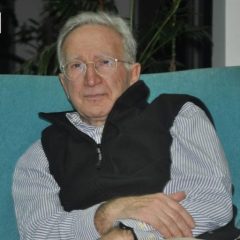 Jacob Cohen is a writer and lecturer born in 1944. Polyglot and traveler, anti-Zionist activist, he was a translator and teacher at the Faculty of Law in Casablanca. He obtained a law degree from the Faculty of Casablanca and then joined Science-Po in Paris where he obtained his degree in Science-Po as well as a postgraduate degree (DES) in public law. He lived in Montreal and then Berlin. In 1978, he returned to Morocco where he became an assistant lecturer at the Faculty of Law in Casablanca until 1987. He then moved to Paris where he now focuses on writing. He has published several books, including « Le commando de Hébron » (2014), « Dieu ne repasse pas à Bethléem » (2013), « Le printemps des Sayanim » (2010), « L’espionne et le journaliste » (2008), « Moi, Latifa S. » (2002).
He has a blog and performs on YouTube where he discusses various topics.
Mohsen Abdelmoumen is an independent Algerian journalist. He has written for several Algerian newspapers such as Alger Républicain and in different sites of the alternative press.
ECHR Backs Activists Convicted in France Over Campaign to Boycott Israel
Sputnik – June 11, 2020
The European Court of Human Rights on Thursday backed the pro-Palestinian activists who were convicted in France for “incitement to discrimination” over their calls to boycott products imported from Israel and ruled that the conviction violated their freedom of expression.
“The Court considered that the applicants’ conviction had lacked any relevant or sufficient grounds. It was not [established] that the domestic court had applied rules in keeping with the principles set out in [of the European Convention on Human Rights, providing the right to freedom of expression] or had conducted an appropriate assessment of the facts”, the ECHR statement read.
However, the French judiciary had not violated Article 7 of the European Convention on Human Rights, which implies that a person should not be held accountable for an offence if it was not considered an offence under national law when it was committed, the ECHR also said.
The court ruled that France must pay to each campaigner “380 euros [$431] for pecuniary damage, 7,000 euros for non-pecuniary damage” and a total of 20,000 euros jointly to the applicants “for costs and expenses”.
The Israeli government has argued that the BDS campaign, sponsored by Palestinian non-governmental organisations, is driven by anti-semitism. In 2017, Israel passed a law that allows it to refuse entry to foreign supporters of the movement.
Eleven members of the Collectif Palestine 68 group, which is a French branch of the international Boycott, Divestment and Sanctions (BDS) movement, were accused over two campaigns held in 2009 and 2010 in a supermarket located in eastern France. They urged customers to not buy goods of Israeli origin and called on the store to stop selling them. The activists were accused of inciting anti-semitism and racism by a French court in 2015 and ordered to pay thousands of euros in fines.
Rush to trash hydroxychloroquine exposes fundamental flaws in profit-based medical ‘science’
By Helen Buyniski | RT | June 4, 2020
As the WHO and prestigious medical journal the Lancet back away from questionable data provided by healthcare analytics firm Surgisphere, ulterior motives for the rush to demonize hydroxychloroquine become clear.
The World Health Organization (WHO) sheepishly resumed testing the off-patent malaria drug hydroxychloroquine on coronavirus patients on Wednesday after pausing that arm of its ‘Solidarity’ clinical trial based on data that appeared to show the drug contributed to higher death rates among test subjects. That data, it turned out, came from a tiny US healthcare analytics firm called Surgisphere, and calling it faulty would be excessively charitable.
Not only is Surgisphere a company lacking in medical expertise – its employees included an “adult” entertainer and a science-fiction writer – but its CEO Sapan Desai co-authored two of the damning studies that used the firm’s data to smear hydroxychloroquine, already thoroughly demonized in the media thanks to its promotion by US President Donald Trump, as a killer. All data is sourced to a proprietary database supposedly containing a veritable ocean of real-time, detailed patient information yet curiously absent from existing medical literature.
The Surgisphere-tainted study appeared to show increased risk of in-hospital deaths and heart problems with no disease-fighting benefits, confirming the suspicions of medical-industry naysayers already inclined to hate the off-patent drug due to the lack of profit potential and Trump’s incessant boosterism. Italy, France, and Germany rushed to ban hydroxychloroquine, citing “an increased risk for adverse reactions with little or no benefit.”
But such a shameless character assassination performed against a potentially-lifesaving drug – especially one with a decades-long track record of safety in malaria, lupus, and arthritis patients that came highly recommended by some of the world’s most eminent disease experts, including France’s Didier Raoult – could only be accomplished with help from industry prejudice. It required ignoring numerous existing studies showing hydroxychloroquine was beneficial in treating early-stage Covid-19 patients, as well as anecdotal reports from thousands of doctors who’d successfully used it.
It also required trusting a fly-by-night company with next to no internet or media presence to make decisions that could affect the lives of millions of people. It’s not like there weren’t warning signs Surgisphere was something other than the top-notch medical analytics firm it presented itself as. The company began life as a textbook publisher in 2008 and hired most of its 11 employees two month ago, according to an investigation by the Guardian, yet it claimed ownership of a massive international database of 96,000 patients in 1,200 hospitals worldwide. One expert interviewed by the outlet said it would be difficult for even a national statistics agency to do in years what Surgisphere had supposedly done in weeks, calling the database “almost certainly a scam.” Yet no one at the Lancet or WHO thought to look a gift horse in the mouth – not when that gift drove a stake through the heart of hydroxychloroquine as Covid-19 treatment.
And while Australian researchers found flaws in the Surgisphere data just days after the May 22 publication of the Lancet study, noting that the number of Covid-19 deaths cited by the study as coming from five hospitals exceeded the entirety of Covid-19 deaths recorded in Australia at that time, the Lancet – instead of investigating just who this Surgisphere company really was, and why it had made such a glaring mistake – merely published a minor retraction related to the Australian data and put the controversy to bed.
The full-frontal assault on hydroxychloroquine was instead allowed to continue unchecked in the media, as mainstream outlets focused their energies on fluffing up remdesivir – a costly, untested drug manufactured by drug maker Gilead that has so far produced lackluster results in clinical trials – and stumping for an eventual vaccine. Hydroxychloroquine’s off-patent status meant it was a dead end as far as profits were concerned, while remdesivir and whatever vaccine is ultimately green-lighted will make a lot of people very rich. Perhaps hoping to throw their audiences off the real reason for their hydroxychloroquine hatred, several outlets hinted that Trump stood to make money off the drug (which costs about 60 cents per pill) – but even Snopes, no fan of the ‘Bad Orange Man’, had to pour cold water on that speculation.
The Lancet and New England Journal of Medicine have – belatedly – published “expressions of concern” about the Surgisphere hydroxychloroquine study, and an independent audit is being conducted. But the problem of biased health authorities selectively embracing some trial results while rejecting others is unlikely to stop there.
The Lancet study is hardly the only one to show hydroxychloroquine lacks efficacy in treating Covid-19. Multiple studies conducted by the US National Institutes of Health on hospitalized (i.e. severely-ill) coronavirus patients have yielded poor results, but even the drug’s most ardent evangelists acknowledge it doesn’t help end-stage or very sick patients. Raoult has even claimed France banned the drug’s use in all but the most severely ill patients in order to discredit it as a treatment. The US National Institutes of Health was publishing studies in its journal Virology touting chloroquine as “a potent inhibitor of SARS coronavirus infection” as far back as 2005, yet ‘coronavirus czar’ Anthony Fauci throws shade at the drug whenever he gets a chance.
As long as deadly diseases like Covid-19 are seen as profit sources first and human rights issues second (or third, or tenth…), treatments that aren’t profitable will always be marginalized in favor of costly and frequently less-effective pharmaceuticals. Drug industry profiteering has already killed hundreds of thousands – if not millions – of people in the US alone. Taking the profit motive out of healthcare can help ensure its body count stays as low as possible.
Helen Buyniski is an American journalist and political commentator at RT. Follow her on Twitter @velocirapture23
Algeria wants to become a satellite of Western interests in Africa
By Lucas Leiroz | June 1, 2020
The current geopolitical situation in North Africa and the Sahel can be radically changed and hardened if the new Algerian constitution allows the army to participate in operations outside its national borders. Paris and Washington are already supporting this change.
Article 95 of the new Constitution under review will open up the possibility for the “National People’s Army” to participate in “efforts to maintain peace at the regional and international level”. None of the five previous Algerian constitutions since independence from France in 1962 offered this possibility. As it appears in the constitutional project, the decision of this eventual military participation abroad must be approved by two thirds of the Parliament and it would not depend on the unilateral decision of the president, who is also the commander-in-chief of the Armed Forces.
According to the text, Algeria would always act in response to the mandate of the UN, the Arab League or the African Union. The interpretations of the measure, however, go far beyond what is formally written on paper. In this specific case, a careless interpretation and an imprudent decision could generate terrible risks.
Algeria participated in two of the Arab-Israeli and Libyan wars against the United States’ incursions. In peace missions, the African country also sent forces to Cambodia, Ethiopia-Eritrea, Haiti and Lebanon.
Some opposition voices interpret the new initiative more as “an act of servitude to the imperialist powers” than as an “evolution of the concept of national security”, which must be taken into account in the study of the project. After all, is Algeria really guaranteeing its own interests by sending troops abroad in advance? Or would it be serving foreign interests as well?
Several specialists on military topics are criticizing the reform and point to it as absolutely anti-strategic in a particularly delicate “transition” period in the history of the country and the entire region. Others add to this circumstance the concern about the global pandemic of COVID-19. In the specific case of the country, the new coronavirus has left the streets free from the protests that were calling for a regime change since February 22, 2019.
The new Algerian constitutional project appears to be particularly interesting for French interests in the country, from different perspectives. For example, one of the innovations brought by the new law is the possibility for citizens with dual nationality to occupy high positions in the public administration, which has never been possible since the country’s independence and will particularly benefit France, due to the large number of French people in the region.
On a military level, Paris is particularly interested in Algerian aid in the Mali issue, since France is the foreign country most active in fighting this country’s jihadists. Now, under an international mandate, Algiers could send troops to Mali and, due to its clear interest in seeking closer ties with France (as seen in the constitutional project), everything indicates that the country could occupy a position of satellite of the French interests in Africa. It is also necessary to remember that, due to the geographical proximity, many times, Mali terrorists have made incursions into Algerian territory, which also raises the Algerian interest in the fight against the jihadists. Recently, the government of Emmanuel Macron provided a symbolic aid of 400,000 euros to Algeria. Finally, everything indicates a convergence of interests between Algeria and France.
By its part, the United States is taking the opportunity to show solidarity with Algeria. Washington recently sent two million dollars in aid to fight the coronavirus in Algeria. Amid the global dispute for medical and health diplomacy, Washington does not want to give space to Russia and China – which has also joined the group of Algeria’s main arms suppliers; Algeria is Africa’s main arms buyer, with 6% of its product for this sector.
Lately, bilateral trade between the United States and Algeria has increased significantly, with Washington interested in being more deeply involved in current issues in North Africa. Indeed, the new Constitution, if passed, will be the perfect opportunity for Americans. The same means that try to favor French interests can serve for American ones; and, possibly, they should favor even other world powers that come to invest in political and economic questions of Africa.
In fact, if Algeria ends its non-interventionist doctrine, the diplomatic impact on North Africa and the Sahel could be considerable. The new Algerian leadership seems ready to regain the international weight it lost in the Buteflika era. Being closer to France and opening such possibilities for Washington is a current strategic path for Algeria to become a western military satellite in Africa, increasing its role in international relations. The consequences of such decision will be revealed soon.
Lucas Leiroz is a research fellow in international law at the Federal University of Rio de Janeiro.
Libyan war escalates as regional powers attempt to gain stronger influence
By Paul Antonopoulos | June 1, 2020
Alarms are sounding in Europe as Turkey, Russia and Arab states could potentially agree on shared influence in Libya, and therefore the entirety of the eastern Mediterranean, according to some experts. This comes as European states have no influence over the war in Libya despite it occurring on its southern doorstep and Turkey, Russia and Arab states continue to gain influence.
The direct intervention of Turkey in Libya, who has sent its own intelligence officers, military advisers and thousands of Syrian jihadists to support the Muslim Brotherhood Government of National Accords (GNA), based in Tripoli and led by the ethnic Turk Fayez al-Sarraj, has limited further gains by the Libyan National Army (LNA). The mobilization of thousands of Turkish and Syrian jihadists and the massive shipment of weapons to Tripoli has slowed down the offensive of the LNA, led by Field Marshal Khalifa Belqasim Haftar. Haftar was proclaimed on April 27 as the only leader of the country, in which most of the international community found to be a provocative move as they believe it limited the likelihood of a political settlement to the conflict.
Confident of his past military superiority and assured in the determination that the United Arab Emirates, Saudi Arabia and Egypt have to counter Turkey’s efforts to create hegemony in the Eastern Mediterranean, Haftar continues to ignore calls for a political solution to the war. Sarraj also ignores such calls confident in the backing he has from Turkey.
Russia also condemned Haftar’s offensive and called for negotiations on peace. However, the U.S. claims that Russian fighter jets arrived in Libya to protect the withdrawal of volunteers from the Russian Wagner group in a decision agreed upon with Ankara, something that Moscow denies. Both Europe and the U.S. fear that Russia may obtain the use of a naval base in eastern Libya, that the LNA securely controls, in the future.
Despite these potentialities, it is unlikely the war between GNA-backed jihadists and the LNA will come to a conclusion anytime soon, unless there is a drastic change caused by external forces. Turkey in the midst of an economic crisis is unwilling to use the full force of its military in Libya and is rather acting as a conduit between the GNA and Qatari-funded but Turkish-trained Syrian jihadists. Egypt is contemplating using its military in Libya to “fight against Libyan extremists and terrorists supported by Turkey.” This too could be a game changer since Egypt has the means, logistics and capabilities to successfully intervene in Libya in favour of the LNA.
France has also not hidden away with its support for Haftar, finding him to be a leader that would advance French interests in the Mediterranean that is in direct conflict with Turkey. The GNA has also signed a memorandum with the Muslim Brotherhood government to cut through Greece’s maritime space for the exploitation of gas in that area of the Mediterranean, forcing Greece to get embroiled in the Libyan mess. Meanwhile, Italy has backed the GNA while Germany is trying to act as referee, showing once again there is no common European position.
The European ‘Irini’ (meaning peace in Greek) operation is committed to prevent maritime-bound arms delivery to Libya, i.e. Turkish arms to Libya. This is a maritime surveillance operation to enforce the United Nations-imposed arms embargo on Libya, but in reality, it has not prevented Turkey’s deliveries to the GNA while Egypt continues to supply the LNA over the land border.
The situation shows that the European Union is unable to establish itself as a main actor in a conflict that brings together strategic political and economic interests a few nautical miles from its southern coast. With the U.S. realistically absent, Turkey backing the GNA and Russia and the Arab + Greece alliance backing the LNA, these are the main protagonists.
In Paris, and seeing the failure of his diplomacy parallel to the EU, the Foreign Minister, Jean-Yves Le Drian, warns about the “Syrianization of Libya,” while spokesman of Turkish President Recep Tayyip Erdoğan’s gloats: “France and other European countries supporting Haftar are on the wrong side of history.” Seen in this light, the balancing role Russia can play in Libya to contain Ankara could even be positive for Europeans.
However, the main reason that shared influence will not be agreed upon is because the GNA-Turkish deal to steal Greece’s maritime space relies on a supposed share maritime space between Libya and Turkey. And therein lays the problem – it is the LNA, who has rejected the memorandum, that controls the eastern Libyan coast that supposedly shares a maritime border with Turkey. So long as the LNA controls eastern Libya, Turkey will always strive for a GNA victory to legitimize the memorandum. Once again, the European Union remains divided on Libya, despite the Muslim Brotherhood government aiming to carve out the maritime space of a member state.
Paul Antonopoulos is an independent geopolitical analyst.
Covid-19 was already ‘silently circulating’ in France before virus arrived from China & Italy – study
RT | April 29, 2020
The outbreak of the coronavirus in France has little to do with cases imported from China or Italy, as another strain of the disease of unknown origin had already been infecting people in the country, research claims.
The virologists at the Pasteur Institute in Paris have sequenced the genomes from samples taken from 97 French and three Algerian coronavirus patients between January 24 and March 24.
What they found is that the dominant types of Covid-19 viral strains in France differed from those that arrived from China or Italy, and belonged to another group, or ‘clade.’
The earliest sample in the French clade dated from February 19 and came from an infected person who hadn’t traveled abroad recently and had no contacts with possible carriers of the disease.
“We can infer that the virus was silently circulating in France in February” prior to the wave of Covid-19 cases in the country, the virologists said in a paper, published on bioRxiv website but not yet peer-reviewed.
The origins of this third strain were unknown to the scientists. They also pointed out that their sampling was insufficient to reliably establish the time of its introduction in France.
The first coronavirus-related fatality was registered in the country in mid-February, with 129,859 people confirmed as infected and 23,660 dying from complications related to the highly contagious disease since then.
Eastern Europe beats West in Covid-19 fight, but West can’t acknowledge it because of Cold War SUPERIORITY complex
By Neil Clark | RT | April 23, 2020
By any objective assessment, governments in the eastern half of Europe have dealt with the Covid-19 outbreak better than many in the west. Yet, because of deep-seated attitudes of superiority, few are giving credit where it’s due.
Europe is divided again, but this time not by a wall.
Compare the Covid-19 deaths worldwide per one million population, as of April 22, by country.
Top of the list is Belgium with 525.12 deaths per million. Then comes Spain (445.49), Italy (407.87), France (310.45), the UK (261.37), the Netherlands (227.26), Switzerland (173.54), Sweden (173.33), and then Ireland (150.41). Spot anything? They’re all western European countries.
You have to scroll down quite a way before you get to countries in central or eastern Europe.
Romania has had 25.57 deaths per million. Hungary, 23.03; Czechia, 18.92; Serbia, 17.9; Croatia, 11.74; Poland, 10.6; Bulgaria, 7.02; Belarus, 5.8; Latvia, 4.67; Ukraine, 3.61; Russia, 3.16; Albania, 2.87; and Slovakia, 2.57 (amounting to just 14 deaths).
How can we explain this new division of Europe? Well, it’s clear that geography has played its part. The main vector for the spread of Covid-19 has been population movements and, in particular, international air travel. More people visit western Europe than the east. There’s more coming and going. Covid-19 can be seen accurately as a virus of turbo-globalization, and western European countries are more turbo-globalised than those to the east. They also tend to be more densely populated, with some very large cities, which the virus likes, as it allows it to spread quicker.
But while eastern Europe has a number of ‘natural’ advantages, this doesn’t, I think, tell the whole story. Governments in eastern Europe have generally shown more common sense than most of their western counterparts. They quickly did the most obvious thing that you need to do when a virus has got its walking boots and rucksack on: they closed borders.
On March 12, Czechia declared a state of emergency and barred travelers from 15 countries hit by the novel coronavirus, including Iran, Italy, China and the UK. It then went into a ‘lockdown.’ On the same day Slovakia closed its borders to non-residents and imposed a mandatory quarantine for anyone returning from abroad.
Poland closed its borders on March 15 and Hungary followed suit one day later. Russia’s far east border with China had already been closed since the end of January.
Compare the decisiveness with which eastern European countries pulled up their drawbridges, with the hesitation in the west. On March 12, French President Emmanuel Macron declared “this virus has no passport”. As I wrote at the time, liberal ideology and virtue signaling were being put before public health.
The virus might not have a passport, but the people carrying it in from China, and then from Italy, most certainly did! By March 17 there were signs that western European states were going to do what their eastern neighbors had already done. “The less we travel, the more we contain the virus,” said EU Commission President Ursula von der Leyen. You don’t say!
At least western continental Europe did take some action on borders, albeit a week or so too late. Britain, by contrast, while imposing a ‘lockdown’ on domestic citizens, has continued to allow into the country unchecked flights from all over the world, including from New York, Iran and China.
It’s not just shutting borders and imposing strict quarantine measures that eastern European countries did right.
Generally, they’ve been quicker to act than their western counterparts. The culture of government undoubtedly plays a part.
I lived in Hungary for several years in the 1990s and was impressed by what I call the ‘administrative class.’ The people who work for the government, the civil servants, the old communist ’bureaucracy’, if you like, were very competent. They got the job done, with a minimum of fuss. In so many ways because of this efficient administration and a very high level of general and technical education, eastern European countries are actually better-run than many in the west, particularly Britain, where incompetence seems to lead to great rewards. Countries where there was a ‘five-year-plan’ political culture not surprisingly are better at planning than those where there wasn’t. Or, as the old saying has it, if you fail to plan, you plan to fail.
Another legacy of the much-maligned socialist era might also have played a big part in minimizing the impact of Covid-19 in eastern Europe. As RT reported earlier in the month, ‘striking’ evidence has emerged showing that the BCG tuberculosis vaccine might be protective against Covid-19.
Vaccinating their populations against TB was enthusiastically taken up by the socialist-bloc countries in the 1950s and remains mandatory in many, even though communism is gone. In Russia for instance, it is still given to children from three to five days old. By contrast, the USA and Italy never had a universal BCG programme, and, while Spain doesn’t have one either, its neighbour Portugal still does, and has had only 74.11 Covid-19-related deaths per million, compared to neighboring Spain’s 455.49.
The BCG programme may yet prove to be at least among the reasons why the old state of East Germany has a lower Covid-19 death toll than the western part of the country.
Germany is the only western European country that had a ‘socialist’ half – and it’s that socialist half which has helped bring its per-capita death rate down.
The failure to properly credit eastern Europe for its low Covid-related death rates reeks of bad sportsmanship.
Let me give you one example. On Monday evening I tweeted how Hungary had less than 220 deaths from Covid-19, compared to the UK’s 16,000. By any objective assessment, Hungary had done better than the UK.
“I guess that settles it” @JusticeTyrwhit tweeted. “Orban is actually ok then and we were wrong to oppose fascism all along….?”
For a certain type of superior westerner, eastern Europe’s governments can never do any good. If you say they have handled something well, you are ‘dog whistling’ your support for ‘fascism’ or ‘communism.’
Draconian Covid-19 lockdowns in the west of Europe are ‘sensible’ and police overreach is played down, draconian Covid-19 lockdowns in the east are displayed as signs of proof that these countries are run by ‘dictators’ and have a ‘long authoritarian tradition.’
It’s time that those with the Cold War mindset of ‘Order of The Coif‘ stopped patronizing the east and showed a little more humility. For, when it comes to dealing with Covid-19, governments in ‘backward’ eastern Europe have generally served their populations better than those in ‘advanced’ western ones.
France and COVID-19: Incompetence and Conceit
By Patrick Howlett-Martin | CounterPunch | April 22, 2020
On December 31, 2019, the Chinese government informed the World Health Organization of an epidemic of animal origin in Wuhan, reporting similarities to SARS-CoV (Severe Acute Respiratory Syndrome Coronavirus, originally appearing in 2002 in the province of Guangdong) and to MERS-CoV (Middle East Repiratory Syndrome, originally appearing in Saudi Arabia in 2012). On January 12, Chinese scientists shared the completely sequenced genome of this new coronavirus with the entire international scientific community.
The epidemic had already killed 80 people in China and thousands were infected. The city of Wuhan (11 million inhabitants) and the province of Hubei (60 million inhabitants the city of Wuhan included) were isolated on January 25-26. Factories, offices, stores, schools, universities, museums, and airports were all closed down.Urban transportation in the city was significantly reduced. As a precaution, the authorities extended the Chinese New Year vacation by one week (January 23-31) to cover the incubation period for the virus among the inhabitants of Wuhan who left the city and could have been infected. They set up shelter hospitals (“fangcang”) in gymnasiums, conference centers, hotels, and other facilities to separate the symptomatic and the likely-infected from their healthy relatives. With the number of ill people exceeding local hospital capacity, the authorities set up two 1,200-bed hospitals in fifteen days and summoned medical and voluntary nursing personnel from all over China. More than 42,000 healthcare personnel responded. Despite the use of Personal Protective Equipment, 4.4% of them (3,387) had tested positive and 23 had died as of April 3 according to the Chinese Red Cross.[1] The lockdown was strict and neighborhood committees were mobilized to ensure food deliveries to the inhabitants. Masks were requisitioned and distributed to the population. Street fixtures and furniture were disinfected, even banknotes were disinfected. The average age of the ill was 55 and 56% of them were men. No case of infection was reported in anyone under the age of 15.
All this information was shared in international medical journals by Chinese doctors and researchers starting on February 20.[2] The creation of hospitals ex nihilo in the space of a fortnight was given ample coverage in the media but the French authorities did not appreciate the gravity of the implications: they preferred to view the initiative as the Chinese marketing their public works. In mid-January, COVID-19 cases were recorded in Bangkok, Tokyo, and Seoul. Thermal sensors were installed in the airports of China, Korea, Thailand, Taiwan, Hong Kong, and Singapore. On January 26, the authorities in Hong Kong cancelled all sports and cultural events. A testing campaign began in the city on February 18.
And what of France? On January 24, the Ministry of Health announced that three patients coming from China had been hospitalized with the coronavirus. The French National Institute of Health and Medical Research (INSERM) outlined two scenarios for the spread of COVID-19: one high-risk, the other low-risk. Given air traffic, the countries estimated to be the most exposed were Germany and the United Kingdom. Italy was not even mentioned. The Minister of Health, Agnès Buzyn, commented on the INSERM scenarios that same day as she left the Council of Ministers: “the risk of secondary infection from an imported case is very low and the risk of propagation of the virus in the population is also very low.”[3]
On January 30, France repatriated 250 French citizens and 100 European immigrants from Wuhan, putting them in quarantine in southern France. On February 10, a British citizen coming from Singapore infected five other people in the small Alpine ski resort of Contamines-Montjoie. A summary screening did not detect other cases at the resort. The infected were hospitalized. Buzyn reminded us on that occasion that “the risk of infection is very low; only close and sustained contact with an infected person can increase it.”[4]
At that point, with 900 reported dead in China, WHO Director-General Tedros Adhanom Ghebreyesus made clear reference to the danger of global propagation, “we may only be seeing the tip of the iceberg.”[5]
But in France the authorities—duly warned but strangely untroubled—took no particular measures. On March 6, while at the theatre with his wife, President Macron stated, “Life goes on. There is no reason, except for the more vulnerable members of the population, to change our outing habits.”[6] His aim was to encourage the French to continue to go out despite the coronavirus epidemic and the lack of protective masks. That same day, the Italian government decided to lock down Lombardy, extending the provision to the entire country the following day. While Macron was enjoying the performance, there were 613 cases of coronavirus in France and the number was doubling every three days (roughly the same rate recorded by Chinese physicians in Wuhan in January and seen in South Korea and Italy). Extrapolating this exponential growth, it could be estimated that on March 16 there would be approximately 6,500 cases; the final official figure was 6,633.
The French government was all focused on the pension reform, president Macron’s top priority. Protests were organized in all French cities: retirees, railway workers, physicians, lawyers, fire fighters, and students all took to the streets. The demonstrations were violently suppressed by the police. Economists were in unanimous agreement—a rare event—that the proposed reform would harm all categories of worker except those in the upper income brackets. Sociologists warned the government about the deepening social schisms, as had been thrust into the public eye earlier with the 12 months revolt of the gilets jaunes [yellow vests]. These protests had been staged every Saturday for nearly a year in all cities in France, drawing in a broad range of the hardest-hit social and occupational categories, a large portion of whom were pensioners. But all for naught: on Saturday afternoon, February 29, with the chamber of the Assemblée nationale -where the debate on the bill was taking place—almost empty because of the of the day, the government seized the opportunity of the COVID-19 pandemic to pass pension reform by constitutional decree. On that date, gatherings of more than 900 people were prohibited because of COVID-19. The authorities no longer risked protests by the people in the street.
But the Macron administration did not stop there. Against the advice of the medical team and the stadium manager, it authorized a Juventus–Olympique Lyonnais football match for the Round of 16 in the Champions League. Three thousand Italian fans were in Lyon on February 26: at that time Italy had 21 coronavirus deaths and 900 people infected. Dr. Marcel Garrigou-Grandchamp, who had warned the new Minister of Health on the morning of the match, published an opinion piece on the website of the Fédération des Médecins de France on March 31, where he spoke of an “explosion” in coronavirus cases in the Département du Rhône some two weeks after the OL–Juventus match. A similar sequence of events had taken place in Italy with the Atalanta B.C. – Valencia match on February 19, termed a “bomba biologica” by many Italian physicians. It was March 4, fifteen days after the match, that the number of cases in the Lombard city of Bergamo exploded, making it the most heavily impacted city in Italy. Walter Ricciardi, Italian representative to the WHO, acknowledged that the match had been a “catalyst for the propagation of the virus”. The Paris-Nice 8-stage professional cycling race was held as scheduled from March 8th to the 15th. More significantly, the government confirmed the first phase of municipal elections on March 15, after it had ordered the closure of schools and universities on March 12 and the shutdown of most stores, bars, and restaurants on March 14. There are 34,000 communes in France that had to organize the elections with local volunteers: volunteers and voters without adequate protection—there were no masks available. The government had requisitioned them for hospital personnel, where the shortage was critical. Half of the voters stayed home for safety’s sake. To make matters worse, Agnès Buzyn announced her candidacy for mayor of Paris on February 16, less than one month before the election, to take the place of the government’s candidate, Benjamin Griveaux, who had been discredited when an explicit video he had sent to a young woman was posted online. Buzyn left the Ministry of Health in the middle of the Coronavirus crisis. The healthcare workers who had organized numerous strikes over the previous eleven months to protest the deterioration of public hospitals felt belittled. Losing by a wide margin, Buzyn declared in an interview for Le Monde that the election had been a “masquerade”.[7] The lockdown was not ordered until the day after the elections, politique oblige.
The new Minister of Health, Olivier Vérant, a member of parliament with the party in power, took up the government’s mantra, one that every minister and secretary of state is expected to chant in unison: “masks are useless, the tests are unreliable”. They all swear by handwashing and lockdowns. No reference is made to the way things had been handled in Seoul, Hong Kong, or Taiwan, where free masks were distributed and people were required to wear them, and large-scale testing was carried out, and where economic life goes on, in slow motion, but it goes on. Today, with 23 million inhabitants, Taiwan has recorded 6 COVID-19 deaths; Hong Kong, with 7 million inhabitants, has lost 4. As for the French doctors who were in Wuhan working alongside their Chinese colleagues and thus well informed, they were not even consulted.
The French police stop and fine transgressors, solitary walkers or joggers, while the metro, airports, trams, and buses are all operating and supermarkets and tobacconists are open for business. The police are themselves without masks and many fall victim to the virus, becoming potential carriers. The same is true of healthcare and administrative personnel, working without personal protective equipment in retirement homes. The authorities refused to report the number of victims among healthcare workers, citing “medical secrecy” concerns. The elderly die but are not counted in the official statistics. Nor are those who die at home. Now that their numbers are so high and can no longer be ignored, we discover that the residents of these retirement homes account for 40% of the deaths recorded in France. They are not hospitalized. Their treatment? Paracetamol for the mildly afflicted, morphine for the rest. Close to half of the nursing staff in retirement homes are affected by the epidemic.[8] But the government is powerless: it does not have sufficient testing solution and will not allow tests to be conducted in retirement homes unless there is a confirmed case there. Ubuesque!
The borders remain open. President Macron refuses to close the border with Italy, which the leader of the Rassemblement National party, Marine Le Pen has been demanding since February 26. For the Head of State, the problem posed by the epidemic “can only be resolved through perfect European and international cooperation.” The events of the following days would quickly contradict this wishful thinking. Every country has closed in on itself. But not France. There are no health controls at French airports, train stations, or ports. Not even today, April 18, 2020, when the official death toll has reached 18,000. In the worksite next to my home, Italian workmen come to work, without protective equipment, every morning on the 7:35 train from Ventimiglia, getting off at the Gare d’Eze: no checks when they depart, no checks when they arrive. Italy has now officially recorded more than 23,660 deaths. On its April 18 evening newscast, the television station Antenne 2 aired the report by journalist Charlotte Gillard, who had taken an Air France flight from Paris to Marseille: the plane was packed, not a free seat, the passengers did not have masks, no one’s temperature was checked on either departure or arrival.
We gradually learn from news reported in the press that France currently has no stores of masks or test kits. For economic reasons—annual savings of 30 million euros—the country’s strategic stocks were depleted in 2012 and never replenished. On the eve of 2020, when the coronavirus epidemic began to spread, France’s supplies consisted of zero FFP2 masks, 117 million adult surgical masks, and 40 million pediatric masks! The hospitals are experiencing critical mask shortages. The nursing staff in retirement homes have no protection (no gloves, no masks, no sanitizing gel). There is no more sanitizing gel available in pharmacies or stores. Doctors and nurses do not have the equipment they need. As for hospitals, they have neither enough beds nor enough ventilators to adequately cope with the epidemic.
The French authorities do not admit it publicly. And they seem to drag their feet for reasons that are impossible to grasp. They did not expect this. And when it began to materialize, they denied it for reasons that can only be called conceit, a traditional mark of distinction among the French political elite. The French regions authorities, realizing the government deficiencies, order and purchase their supplies directly from China. When they arrive, they are requisitioned by the state: thus 4 million masks that were ordered from China by Bourgogne-Franche-Comté for the nursing staff in its retirement homes were confiscated on the tarmac of the Basel-Mulhouse airport by the police on April 4, using methods that would make a gangster blush. As for the rare mayors who have stocks of personal protective equipment and graciously make them available to the local population, requiring the use of masks, they are taken to court by the Ministry of the Interior, which wants to preserve its royal prerogatives. On April 16, the Council of State, the highest administrative body in France, asserted its regal status by limiting the power of mayors. The decision calls to mind its role in 1942-1944 during the Vichy regime. It stays true to itself; it serves the State, not the Nation.
The nurses in the intensive care units in Paris hospitals report that given the shortage of beds and ventilators, they are essentially practicing battlefield medicine. This means there is a triage among the sick, choosing between those considered too old and those the doctors feel have a better chance of recovery.[9] It is no coincidence that the two European countries least afflicted by the pandemic are well-equipped Austria and Germany, which have not, so far, experience a shortage of beds or ventilators. In France, veterinarians are lending their ventilators to hospitals! Instead of nationalizing private clinics as they have done in Ireland, they transport patients long distances in medical trains, helicopters, or buses to less congested hospitals in the province or abroad (Germany, Switzerland, Luxembourg), increasing the possibility of infecting healthcare personnel and the risk of death. The statistics are biased because patients over the age of 75 do not have access to the ICU services: this is a sad fact for retirement homes.
It was not until March 28 that the Minister of Health, Olivier Véran, announced: “More than a billion masks have been ordered from France and other countries for the coming weeks and months.” This was the man who a few days earlier repeated publicly, in a sort of litany, that masks were useless.
In its decision of April 15 on the screening and protection of the elderly, the Council of State revealed the extent of the disaster. Assailed by associations demanding that people living in retirement homes and their caregivers be systematically tested and that protective equipment (masks, sanitizing gel) be distributed, the Council of State limited itself to reciting the paltry figures promulgated by the government (“40,000 tests per day will be available across the country by the end of April; 60,000 will be available in the weeks to come”). So in mid-May, France will be ready to do close to what Germany has already been doing for a month and a half: 500,000 tests per week. As for masks, the “current orders amount to some 50 million masks”. However, given the delivery rate, it will take nine months to receive them all.
There are 430,000 healthcare personnel and 752,000 pensioners in retirement homes and health centers. All told, there are close to a million healthcare professionals (210,000 active doctors and 700,000 nurses and nursing assistants) in France.
Under these conditions, it is clear that Macron’s announcement of the end of the lockdown and the resumption of school classes on May 11 is a gamble. If all teachers were to return to the classroom, that would mean 870,000 masks per day—reuse of masks is contraindicated. And if all the students return on this date, or even gradually, they would have to be supplied with more than 12 million masks per day.
Even with the President publicizing the “grand public” mask, a French invention no doubt handcrafted locally, the end of the lockdown on May 11 and the resumption of school classes is at best a gamble; without reliable masks to protect the entire population, it is a risky and irresponsible act.
The end of a health crisis that the authorities did not anticipate will be all the more painful for the French, both fiscally and socially, with the President and his administration coming out of this ordeal diminished and wholly discredited.
Notes.
1) “Death from Covid-19 of 23 Health Care Workers in China”, The New England Journal of Medicine, April 15, 2020.
2) The Lancet and the New England Journal of Medicine, see Chen Wang “Covid-19 control in China during mass population movements at New Year”, February 20, 2020 (on line).
3) Statement to the press, BFM TV, Palais de l ‘Elysée, January 24, 2020.
4) Benoit Pavan, “Coronavirus : la station de ski de Contamines-Montjoie, en Haute-Savoie, un foyer potentiel en France”, Le Monde, February 10, 2020.
5) Frederic Lemaître, “Coronavirus : la semaine où tout peut basculer”, Le Monde, February 9, 2020.
6) BFM TV, March 7, 2020.
7) Ariane Chemin, “Les regrets d’Agnès Buzyn : ‘On aurait dû tout arrêter, c’était une mascarade’”, Le Monde, March 17, 2020.
8) Béatrice Jérôme, Lorraine de Foucher, “Dans les Ehpad décimés par le coronavirus, ‘c’est un cauchemar collectif’”, Le Monde, April 2,l 2020.
9) “Une situation de médecine de guerre”, Nice Matin, April 16, 2020.
Patrick Howlett-Martin is a career diplomat living in Paris.
Daily Mail Falsely Brands Riots Against Police in Paris Suburbs as ‘Anti-Lockdown’ Protests
Sputnik – April 20, 2020
On 19 April, riots broke out in the suburbs of Paris following an accident where a 30-year-old motocyclist was seriously injured after he collided with a police car, with circumstances of the incident still being reviewed.
The Daily Mail has misleadingly branded anti-police clashes in Villeneuve-la-Garenne near Paris as “anti-lockdown” riots in the headline of its Monday article, while linking the skirmish to Emmanuel Macron’s recent extension of social-distancing orders.
The riots erupted in response to an incident in the evening of 18 April, when a 30-year-old motorcyclist was seriously injured after colliding with the open door of an unmarked police car. The man, whose leg was severely fractured in the incident, was successfully operated on on Sunday but was planning to file a complaint against the police.
According to the local authorities, the police opened the car’s door in order to detain the man, who was riding at a high speed. However, according to witnesses’ accounts and videos on social media, the door could have been opened deliberately in order to stop the motorcyclist. The incident is currently being investigated.
Following the incident, riots broke out in the Parisian suburb of Villeneuve-la-Garenne and continued through Sunday. They erupted again on Monday night, with protesters alighting cars and furniture on the streets and firing fireworks, while local law enforcement rushed into the areas. The videos of the incidents have been extensively circulating on social media.
Featured Video
The American Retreat from Vietnam
or go to
Aletho News Archives – Video-Images
From the Archives
Iran UN ambassador calls for destruction of all nuclear weapons
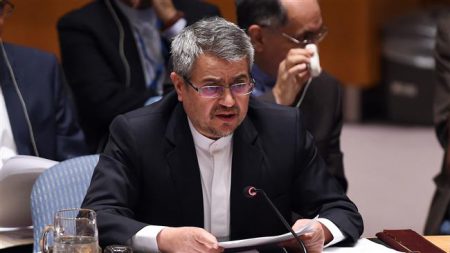
Iran’s ambassador to the UN Gholamali Khoshroo
Press TV – March 29, 2017
Iran’s ambassador to the UN Gholamali Khoshroo has called for the total eradication of nuclear weapons.
Khoshroo reiterated Iran’s call during a UN conference aimed at creating a nuclear weapons ban treaty in New York on Tuesday.
“Iran, as a victim of chemical weapons, strongly feels the danger posed by the existence of weapons of mass destruction and is determined to engage actively in international diplomatic efforts to save humanity from the menace of nuclear weapons,” he said.
Khoshroo stressed that Iran is committed to its Non-Proliferation Treaty (NPT) obligations, which include negotiations based on effective nuclear disarmament measures.
He added that several countries continue to ignore international calls and treaties for nuclear disarmament and even continue to increase their nuclear stockpiles. “They do not have political determination to abandon doctrines of nuclear deterrence and nuclear terror,” he went on to say.
Iran’s UN ambassador noted that boycotting the talks by many countries, including the US, shows that the world’s nuclear powers are by no means committed to the eradication of nuclear arms. Britain and France were also among the some 40 countries that did not join the talks.
“We note that prohibition of nuclear weapons must be accompanied by the elimination of such weapons. There can be no doubt that without complete abolition of nuclear weapons, there will be no absolute guarantee against the danger of nuclear war and the use of such weapons,” Khoshroo added.
Blog Roll
 Aletho News
- DHS docs: Govt bracing for nationwide anti-AI riots, preparing to crack down on dissent
- India signals rethink over West Asia
- Israeli Ex-Navy Chief admits massive damage from Iran missiles
- The strategic arsenal US lost in war against Iran – and why replenishment will take years
- Documents Suggest Fauci Knew COVID Was Created in Wuhan Lab, and mRNA Vaccines Wouldn’t Work
- No return to pre-war status for Strait of Hormuz – Iran’s top diplomat
- Ex-South Korean President sentenced for trying to provoke conflict with Pyongyang
- US publishes docs on ‘dangerous’ Ukrainian biolabs
- Trump’s ERAM cruise missiles for Ukraine blow up his peace overtures to Russia
- EU state lifts arms embargo on Israel after spy scandal
- If Americans Knew
- Israeli Firm Accused of Launching Smear Campaigns During US, European Elections
- As World Cup kicks off, Gaza amputee girls chase football dreams
- Oxfam: More Palestinians killed by Israel across West Bank in last 3 years than previous 17 years combined
- US-Iran ceasefire may be imminent, but will Israel blow it up? – Daily Update
- The Issue of Israel Is Ending Democracy In Michigan
- Israel is stealing homes, livelihoods, and lives in West Bank
- Gaza is not an aberration – Israel planned this genocide decades ago
- Israel is changing the face of Lebanon, mainstream media is normalizing it – 3 articles
- Genocide lobby benefits from EU anti-racist fund
- Watching the World Cup from Gaza
- No Tricks Zone
- New Study: Significant CO2 Fluxes From Non-Volcanic Sources Are Largely Neglected In Carbon Budgets
- Women Climate Scientists Being Harassed, Insulted By Skeptics, Claims Berkeley Earth Researcher
- Germany’s Longterm Spring Climate Data Show “No Climate Trend”
- New Study: Solar Photovoltaic, Wind Power Fail To Meet Annual Energy Demands 62% Of The Time
- Germany’s Die Welt: “Too Much Is Too Much” … Green Energies Are Cannabalizing Each Other!
- Germany’s Ecological Holocaust… Once Fairy Tale Forests Getting Cleared For Wind Turbines
- A Grand Solar Minimum Has Arrived…Global Cooling Of At Least 1°C Is Expected By The 2030s, 2040s
- European “Expert Commission” Urges COVID-19-Like Global Climate State Of Energency!
- Real-World Observations Do Not Support The Position That Climate Change Is Human-Caused
- Germany’s AfD Party Calls Debunked Climate Scenarios “Greatest Fraud In Human History”
 Aletho News