Reporters Without Borders – not independent but “strictly linked to US foreign policy”
By Graham Vanbergen | TruePublica | May 4, 2016
Reporters Without Borders has published the latest 2016 report on press freedom where Britain has fallen yet again with the organisation making the following statement about press freedom in Britain:
“Terrorist attacks have led to the adoption of draconian security legislation. The government reacted to the London public transport bombings in 2005 with a Terrorism Act the following year that restricts freedom of expression. The Regulation of Investigatory Powers Act (RIPA) adopted in 2000 allows the authorities to obtain the phone records of journalists in cases of threats to national security. Worse still, despite a law protecting the confidentiality of sources, the police have since 1984 been able to ask the courts to order media outlets to hand over unpublished journalistic source material “in the interests of justice.”
It is hardly surprising that Britain has fallen 4 places in 2016 behind such countries as; Tonga, Belize, OECS (Organisation of Eastern Caribbean States), Samoa, Ghana, Suriname, Namibia, Jamaica, with Burkino Faso and Botswana just behind, given recent legislative actions by the Conservative government since 2010.
The Guardian revealed in January 2015 that the British intelligence agency GCHQ described journalists as a “potential threat to security” and that huge quantities of emails of many journalists were among interceptions that went as far back as 2008. It was only the result of the Edward Snowden leaks that as many as 70,000 emails from journalists captured by Britain’s surveillance agency became known.
On the 15th October, Gordon Raynor, Chief Reporter at The Telegraph said– “Investigative journalism will be stopped dead in its tracks and local newspapers may be driven out of business when new laws restricting Britain’s free press come into force next month.” He continues – Media organisations face “the most substantial threat to press freedom in the modern era” as a result of the “menacing” laws passed in the wake of the Leveson Inquiry.
An independent report into the implications of the Crime and Courts Act, which came into force on November 3, says that The Telegraph’s landmark investigation into what turned out to be the most explosive political scandal in decades over MPs’ expenses would have been all but impossible under the new regime.
Britain sitting at number 38 flatters reality.
‘Freedom of Press’ is published by the US-based Freedom House, an NGO established in 1941 that has been ranking countries worldwide since 1980 in relation to democracy, human rights and press freedom. In May 2014 it reported that Britain has slipped down the global rankings for freedom of the press to 36th place.
According to Freedom House, “only 13 percent of the world’s population enjoys a free press—that is, where coverage of political news is robust, the safety of journalists is guaranteed, state intrusion in media affairs is minimal, and the press is not subject to onerous legal or economic pressures.” Although Britain is ranked as safe in press freedom terms one has to wonder given the very heavy handed behaviour by the government at The Guardian over the Snowden files and state surveillance over journalists more widely.
Meanwhile, without any sense of shame, US President Obama, the leader of the ‘free-world’, having presided over continual declines in press freedom sees the USA drop to a pitiful 41st place has the Whitehouse Briefing Room release the following statement (first paragraph):
“On World Press Freedom Day, we thank the journalists around the world without whom democracy could not flourish and whose courageous work helps hold authorities to account. These are the men and women who work to ensure that debate on public issues can be, in the words of Justice William Brennan, “uninhibited, robust, and wide open.”
One glaring component missing from all these so-called press freedom reports is that the biggest economic trade deals in the history of humanity are due to be signed in 2016 …. in total secrecy. In the EU, the European Commission is making the secret Transatlantic Trade and Investment Partnership (TTIP) trade deal even more secret than any normal person would think possible by the introduction of a new rule last year that means politicians can only view (some selected) TTIP text in a secure ‘reading room’ in Brussels. That is, of course, only after their mobile phones, memo pads, and pens have been taken away and two guards ominously placed in the room to ensure no notes are taken. And even then only after signing confidentiality agreements that threaten prosecutions for any leaks.
In the US, the same ‘reading room’ exists. As The Independent reports:
“In the basement of the US capitol, there is a room, a locked soundproof room, and the only people allowed in this room are US senators, and they can’t bring their assistants, they can’t bring their phones, they can’t even take notes in there. Inside this room is not the codes for our nuclear weapons, it’s not CIA files, it’s not the documents that tell us an alien landed in Roswell. No, in this room is the text of a trade deal (TTIP).”
Press freedom?? This type of secrecy, designed by corporations and the unelected politicians of the EU Commission would have made Joseph Goebbels in Nazi Germany proud. The EU Commission have now become completely independent of the politicians who represent the 508 million citizens of the 28 nation bloc where millions sign petitions and protest on the streets, get arrested and/or fined in their thousands and yet remain unheard. This is extreme press freedom censorship in every sense of the word. It says something when citizens have to rely on people like Wikileaks founder Julian Assange and whistleblower Edward Snowden for any real information on the matter – and both of them are in hiding from British and American police.
And so we come back to RWB who that as it turns out, is financed by none other than the US Congress and by various agencies tied to the US government – who coincidentally are conducting the talks on TTIP.
As GlobalResearch reports: “If we go to the RWB website to find who stands behind these self-anointed judges of world press freedom, we find nothing. Not even their board of directors are named, let alone their financial backers. Their annual published Income and Expenditure statements give no clue who stands behind them financially. RWB’s former Secretary General Robert Menard admitted that the budget for the organization was provided by “US organizations strictly linked with US foreign policy.”
Unfortunately, Reporters Without Borders are pretty much in the same boat as the International Consortium of Investigative Journalists amongst many others who have thoroughly important sounding names but in the end prove to be little more than propagandists for their masters.
We asked Reporters Without Borders why there had been no mention of TTIP in any of their reports. At the time of publication, we have received no reply.
Prosecutors ban Soros Foundation as ‘threat to Russian national security’
RT | November 30, 2015
The Russian Prosecutor General’s Office has recognized George Soros’s Open Society Institute and another affiliated organization as undesirable groups, banning Russian citizens and organizations from participation in any of their projects.
In a statement released on Monday, prosecutors said the activities of the Open Society Institute and the Open Society Institute Assistance Foundation were a threat to the foundations of Russia’s Constitutional order and national security. They added that the Justice Ministry would be duly informed about these conclusions and would add the two groups to Russia’s list of undesirable foreign organizations.
Prosecutors launched a probe into the activities of the two organizations – both sponsored by the well-known US financier George Soros – in July this year, after Russian senators approved the so-called “patriotic stop-list” of 12 groups that required immediate attention over their supposed anti-Russian activities. Other groups on the list included the National Endowment for Democracy; the International Republican Institute; the National Democratic Institute; the MacArthur Foundation and Freedom House.
In late July, the Russian Justice Ministry recognized the US National Endowment for Democracy as an undesirable group after prosecutors discovered the US NGO had spent millions on attempts to question the legitimacy of Russian elections and tarnish the prestige of national military service.
The Law on Undesirable Foreign Organizations came into force in early June this year. It requires the Prosecutor General’s Office and the Foreign Ministry to draw up an official list of undesirable foreign organizations and outlaw their activities. Once a group is recognized as undesirable, its assets in Russia must be frozen, its offices closed and the distribution of any of its materials must be banned.
If the ban is violated, the personnel of the outlawed group and any Russian citizens who cooperate with them could face heavy fines, or even prison terms in the case of repeated or aggravated offences.
The Soros Foundation started working in Russia in the mid-1990s, but wrapped up its active operations in 2003.
READ MORE:
US National Endowment for Democracy labeled ‘undesirable’ group under new law
Foreign Ministry praises law banning undesirable foreign groups in Russia
Democracy Behind Bars in Venezuela? A Reply to the UK Guardian
By Jorge Martin | Hands Off Venezuela | March 31, 2015
One wonders how many mistakes, glaring omissions and biased statements can one fit in just two paragraphs of just 88 words. When it comes to Venezuela, the answer is, a lot. On Friday, 27 of March, the Guardian published a piece called Democracy behind bars: 11 opposition leaders facing jail or death”, which was “sponsored by Crown Agents”. First in the list of 11 “democratic opposition leaders” facing jail or death around the world is Venezuela’s Leopoldo Lopez.
Immediately below this headline is a big picture of Leopoldo López, giving the impression that he himself is potentially facing a death sentence. The writer is probably unaware that Venezuela was the first country in the world still in existence to abolish the death penalty, back in 1863. In contrast, in Britain it was not fully abolished until 1998 and of course in the US is still widely used. But, as they say, why let the facts get in the way of a striking headline?
The section on Leopoldo López opens with a quote from the Harvard graduate regarding a political disqualificaion which saw him banned from running for public office. A quote which is totally unrelated to the reasons why he is currently in jail. López is disqualified from standing for public office for his role in two separate corruption scandals. The first goes back to 1998, when he worked as an analyst at the state-owned oil company PDVSA and his mother, a PDVSA manager, signed a donation to the Primero Justicia NGO, which Leopoldo López was a member of (and which later became the Primero Justicia political party, of which Lopez was one of the main leaders). The second corruption scandal is related to the irregular use of funds when he was Mayor of Chacao. All that the first paragraph of the Guardian article proves, therefore, is that Leopoldo Lopez was involved in two corruption scandals and, as a result, is barred from standing for public office until 2017.
In the second paragraph, Lopez is described as “founder of the opposition Popular Will party.” While this description is true, it leaves out an important part of the story, as Lopez is also well known in Venezuela for his active participation in the April 2002 coup against the democratically elected president Hugo Chávez. During the coup, using his authority as Mayor of Chacao, he led the illegal arrest of Minister of Justice Ramón Rodríguez Chacín (report, videos and pictures). Hardly the conduct of a democrat! Charges against him for these events were dismissed by an amnesty decreed by president Hugo Chávez in December 2007.
In yet another misleading statement, the author of the article, Lauren Razavi, asserts that Lopez was arrested after calling for citizens to protest against the government. Of course, the timeline is correct, in the sense that one thing happened after the other, but the information is not complete. He did not call “for citizens to protest”, but rather called for citizens to forcefully oust the democratically elected government through street protests and barricades which saw whole communities left without access to food, water or gas, and even emergency services refused access.
In a joint appeal with Maria Corina Machado, López called on citizens to join his “La Salida” campaign (“The Way Out”), described the government as a “dictatorship” and called on Venezuelans to “rise up” emulating the example of January 23, 1958 (when a popular uprising overthrew the Perez Jimenez dictatorship). The message was clear: Venezuela was a dictatorship, the government had to be overthrown by force.
As a result of this appeal there were violent protests by their supporters, including arson attacks against public buildings, health care centres, university campuses, the use of sharp shooters to kill police officers, national guard officers and Bolivarian supporters who were removing road blockades. Opposition violence instigated by Machado and López included the setting of steel wire traps above roads which was aimed at, and succeeded in, decapitating a number of motorbike riders. A total of 43 people were killed, a majority of them as a result of the action of violent opposition protesters (see full analysis by Ewan Robertson). The violent protests, involving hired guns and vandals, as well as criminal elements, managed to alienate the majority of the population, including many of the opposition’s own supporters. Despite the escalating violence, Lopez consistently refused to respond to government requests to call off the barricades and protests. It is for his responsibility in these events that López is in jail pending trial.
Yet the article is not just misleading in its description of Lopez. Razavi also says Nicolas Maduro’s leadership has “seen Venezuela pushed into the top 10 countries in the world for corruption and homicide”. The only source she provides for this is assertion is a link to an article signed by Rory Carroll, notorious for his bias against the Bolivarian revolution.
Amazingly though, on closer inspection, Carroll’s article does not even make the claim which Razavi attributes to him. The result? A totally fabricated statistic.
Corruption is certainly a serious problem in Venezuela, but according to the most recent report by Transparency International, Venezuela does not figure amongst the 10 most corrupt countries in the world. As for the homicide rate, the source which is most commonly used is the Global Study on Homicide by the United Nations Office on Drugs and Crime. The last time this study was published was in 2013 with data from 2012. No one would deny crime is a problem in Venezuela, but President Maduro was inaugurated in April 2013, so he can hardly be blamed for figures collected the previous year.
Two final notes on this short piece. The hook for the article is a report by Freedom House a US based government funded organisation whose current director is a former head of Bureau at the US State Department. Past board members include Otto Reich, Paul Wolfowitz, Zbigniew Brzezinski, Donald Rumsfeld and other outspoken advocates of US imperialist aggression. In other words, the type of “freedom” that this house advocates is the freedom of the US to interfere in other country’s affairs.
On the other hand, the organisation “sponsoring” the article is Crown Agents. It describes its own history thus: “Our story begins in the 1700s, when colonial administrations employed agents to recruit people and procure and ship supplies to the colonies”. In other words, this is an organisation dedicated to promoting the interests of British colonialism. A perspective which is shamelessly manifest in the article itself, which cites jailed opposition leaders in Ethiopia, Tanzania, Malaysia and the Democratic Republic of the Congo, but which fails to mention political prisoners in Europe or the Unites States. For example, Basque opposition leader Arnaldo OtegiOtegi (in jail for his political ideas), or the countless political activists and whistleblowers languishing in US jails for their political ideas and defence of democracy (from Mummia Abu Jamal to Chelsea Manning).
It is beyond doubt that Crown Agents would not have sponsored an article about the achievements of the Bolivarian Republic of Venezuela in the fields of education, healthcare, housing, political empowerment, workers’ and gender rights and others.
The Bolivarian revolution has won 18 out of 19 democratic elections and referenda held in the country since 1998, yet this, it seems, will not stop Western mass media from presenting it as an “authoritarian regime”.
Letter to the Guardian:
I was disappointed to see a piece in the Guardian (Democracy behind bars: 11 opposition leaders facing jail or death) mentioning Venezuelan Leopoldo López at the top of a list of democratic opposition leaders jailed by what the article presents as authoritarian regimes. López has been disqualified to stand for public office for misuse of public funds twice. He played an important role in the 2002 coup against the democratically elected government of president Chávez, during which he led the illegal and violent arrest of the then Minister of Justice Chacín.
The reason he is in jail pending trial today, is because of his call for an uprising against the democratically elected government of president Maduro last year. His appeal directly led to violence on the part of his supporters leaving 43 people dead. Most of those were killed by the actions of violent supporters of Mr López which used arson attacks, sharpshooters and steel wires to decapitate motorbike riders.
Venezuela has had 19 democratic elections and referendums with full participation of opposition forces since 1998. All bar one have been won by the Bolivarian revolution. Democratic opposition is not a problem, attempts to overthrow a democratically elected government is a different matter.
Jorge Martin
This piece was published with contributions from Venezuelanalysis.
CIA’s Hidden Hand in ‘Democracy’ Groups
By Robert Parry | Consortium News | January 8, 2015
Freedom House and the National Endowment for Democracy stress their commitment to freedom of thought and democracy, but both cooperated with a CIA-organized propaganda operation in the 1980s, according to documents released by Ronald Reagan’s presidential library.
One document showed senior Freedom House official Leo Cherne clearing a draft manuscript on political conditions in El Salvador with CIA Director William Casey and promising that Freedom House would make requested editorial “corrections and changes” – and even send over the editor for consultation with whomever Casey assigned to review the paper.
In a “Dear Bill” letter dated June 24, 1981, Cherne wrote: “I am enclosing a copy of the draft manuscript by Bruce McColm, Freedom House’s resident specialist on Central America and the Caribbean. This manuscript on El Salvador was the one I had urged be prepared and in the haste to do so as rapidly as possible, it is quite rough. You had mentioned that the facts could be checked for meticulous accuracy within the government and this would be very helpful. …
“If there are any questions about the McColm manuscript, I suggest that whomever is working on it contact Richard Salzmann at the Research Institute [an organization where Cherne was executive director]. He is Editor-in-Chief at the Institute and the Chairman of the Freedom House’s Salvador Committee. He will make sure that the corrections and changes get to Rita Freedman who will also be working with him. If there is any benefit to be gained from Salzmann’s coming down at any point to talk to that person, he is available to do so.”
Cherne, who was chairman of Freedom House’s executive committee, also joined in angling for financial support from a propaganda program that Casey initiated in 1982 under one of the CIA’s top covert action specialists, Walter Raymond Jr., who was moved to President Ronald Reagan’s National Security Council staff.
In an Aug. 9, 1982 letter to Raymond, Freedom House executive director Leonard R. Sussman wrote that “Leo Cherne has asked me to send these copies of Freedom Appeals. He has probably told you we have had to cut back this project to meet financial realities. … We would, of course, want to expand the project once again when, as and if the funds become available. Offshoots of that project appear in newspapers, magazines, books and on broadcast services here and abroad. It’s a significant, unique channel of communication” – precisely the focus of Raymond’s work.
According to the documents, Freedom House remained near the top of Casey’s thinking when it came to the most effective way to deliver his hardline policy message to the American people in ways they would be inclined to accept, i.e., coming from ostensibly independent sources with no apparent ties to the government.
On Nov. 4, 1982, Raymond wrote to NSC Advisor William Clark about the “Democracy Initiative and Information Programs,” stating that “Bill Casey asked me to pass on the following thought concerning your meeting with [right-wing billionaire] Dick Scaife, Dave Abshire [then a member of the President’s Foreign Intelligence Advisory Board], and Co.
“Casey had lunch with them today and discussed the need to get moving in the general area of supporting our friends around the world. By this definition he is including both ‘building democracy’ … and helping invigorate international media programs. The DCI [Casey] is also concerned about strengthening public information organizations in the United States such as Freedom House. …
“A critical piece of the puzzle is a serious effort to raise private funds to generate momentum. Casey’s talk with Scaife and Co. suggests they would be very willing to cooperate. … Suggest that you note White House interest in private support for the Democracy initiative.”
The importance of the CIA and White House secretly arranging private funds was that these supposedly independent voices would then reinforce and validate the administration’s foreign policy arguments with a public that would assume the endorsements were based on the merits of the White House positions, not influenced by money changing hands.
In effect, like snake-oil salesmen who plant a few cohorts in the audience to whip up excitement for the cure-all elixir, Reagan administration propagandists salted some well-paid “private” individuals around Washington to echo White House propaganda “themes.”
In a Jan. 25, 1983 memo, Raymond wrote, “We will move out immediately in our parallel effort to generate private support” for “public diplomacy” operations. Then, on May 20, 1983, Raymond recounted in another memo that $400,000 had been raised from private donors brought to the White House Situation Room by U.S. Information Agency Director Charles Wick. According to that memo, the money was divided among several organizations, including Freedom House and Accuracy in Media, a right-wing media attack organization.
When I wrote about that memo in my 1992 book, Fooling America, Freedom House denied receiving any White House money or collaborating with any CIA/NSC propaganda campaign. In a letter, Freedom House’s Sussman called Raymond “a second-hand source” and insisted that “this organization did not need any special funding to take positions … on any foreign-policy issues.”
But it made little sense that Raymond would have lied to a superior in an internal memo. And clearly, Freedom House remained central to the Reagan administration’s schemes for aiding groups supportive of its Central American policies, particularly the CIA-organized Contra war against the leftist Sandinista regime in Nicaragua.
In an Aug. 9, 1983 memo, Raymond outlined plans to arrange private backing for that effort. He said USIA Director Wick “via [Australian publishing magnate Rupert] Murdock [sic], may be able to draw down added funds” to support pro-Reagan initiatives. Raymond recommended “funding via Freedom House or some other structure that has credibility in the political center.” [For more details, see Consortiumnews.com’s “Murdoch, Scaife and CIA Propaganda.”]
Questions of Legality
Raymond remained a CIA officer until April 1983 when he resigned so – in his words – “there would be no question whatsoever of any contamination of this” propaganda operation to woo the American people into supporting Reagan’s policies.
But Raymond, who had been one of the CIA’s top propaganda and disinformation specialists, continued to act toward the U.S. public much like a CIA officer would in directing a propaganda operation in a hostile foreign country.
Raymond fretted, too, about the legality of Casey’s role in the effort to influence U.S. public opinion because of the legal prohibition against the CIA influencing U.S. policies and politics. Raymond confided in one memo that it was important “to get [Casey] out of the loop,” but Casey never backed off and Raymond continued to send progress reports to his old boss well into 1986.
It was “the kind of thing which [Casey] had a broad catholic interest in,” Raymond said during his Iran-Contra deposition in 1987. He then offered the excuse that Casey undertook this apparently illegal interference in domestic affairs “not so much in his CIA hat, but in his adviser to the president hat.”
As the Casey-Raymond propaganda operation expanded during the last half of Reagan’s first term, Freedom House continued to keep Raymond abreast of its work on Central America, with its attitudes dovetailing with Reagan administration’s policies particularly in condemning Nicaragua’s Sandinista government.
Freedom House also kept its hand out for funding. On Sept. 15, 1984, Bruce McColm – writing from Freedom House’s Center for Caribbean and Central American Studies – sent Raymond “a short proposal for the Center’s Nicaragua project 1984-85. The project combines elements of the oral history proposal with the publication of The Nicaraguan Papers,” a book that would disparage Sandinista ideology and practices.
“Maintaining the oral history part of the project adds to the overall costs; but preliminary discussions with film makers have given me the idea that an Improper Conduct-type of documentary could be made based on these materials,” McColm wrote, referring to a 1984 film that offered a scathing critique of Fidel Castro’s Cuba.
“Such a film would have to be the work of a respected Latin American filmmaker or a European. American-made films on Central America are simply too abrasive ideologically and artistically poor.”
McColm’s three-page letter reads much like a book or movie pitch, trying to interest Raymond in financing the project: “The Nicaraguan Papers will also be readily accessible to the general reader, the journalist, opinion-maker, the academic and the like. The book would be distributed fairly broadly to these sectors and I am sure will be extremely useful.
“They already constitute a form of Freedom House samizdat, since I’ve been distributing them to journalists for the past two years as I’ve received them from disaffected Nicaraguans.”
McColm proposed a face-to-face meeting with Raymond in Washington and attached a six-page grant proposal seeking $134,100.
According to the grant proposal, the project would include “free distribution to members of Congress and key public officials; distribution of galleys in advance of publication for maximum publicity and timely reviews in newspapers and current affairs magazines; press conferences at Freedom House in New York and at the National Press Club in Washington, D.C.; op-ed circulation to more than 100 newspapers …; distribution of a Spanish-language edition through Hispanic organizations in the United States and in Latin America; arrangement of European distribution through Freedom House contacts.”
The documents that I found at the Reagan library do not indicate what subsequently happened to this proposal. McColm did not respond to an email request for comment about the Nicaraguan Papers plan or Cherne’s earlier letter to Casey about editing McComb’s manuscript. Raymond died in 2003; Cherne died in 1999; and Casey died in 1987.
But it is clear that Freedom House became a major recipient of funds from the National Endowment for Democracy, which Casey and Raymond helped create in 1983.
Financing Propaganda
In 1983, Casey and Raymond focused on creating a funding mechanism to support Freedom House and other outside groups that would engage in propaganda and political action that the CIA had historically organized and paid for covertly. The idea emerged for a congressionally funded entity that would serve as a conduit for this money.
But Casey recognized the need to hide the strings being pulled by the CIA. “Obviously we here [at CIA] should not get out front in the development of such an organization, nor should we appear to be a sponsor or advocate,” Casey said in one undated letter to then-White House counselor Edwin Meese III – as Casey urged creation of a “National Endowment.”
A document in Raymond’s files offered examples of what would be funded, including “Grenada — 50 K — To the only organized opposition to the Marxist government of Maurice Bishop (The Seaman and Waterfront Workers Union). A supplemental 50 K to support free TV activity outside Grenada” and “Nicaragua — $750 K to support an array of independent trade union activity, agricultural cooperatives.”
The National Endowment for Democracy took shape in late 1983 as Congress decided to also set aside pots of money — within NED — for the Republican and Democratic parties and for organized labor, creating enough bipartisan largesse that passage was assured.
But some in Congress thought it was important to wall the NED off from any association with the CIA, so a provision was included to bar the participation of any current or former CIA official, according to one congressional aide who helped write the legislation.
This aide told me that one night late in the 1983 session, as the bill was about to go to the House floor, the CIA’s congressional liaison came pounding at the door to the office of Rep. Dante Fascell, a senior Democrat on the House Foreign Affairs Committee and a chief sponsor of the bill.
The frantic CIA official conveyed a single message from CIA Director Casey: the language barring the participation of CIA personnel must be struck from the bill, the aide recalled, noting that Fascell consented to the demand, not fully recognizing its significance.
What the documents at the Reagan library now make clear is that lifting the ban enabled Raymond and Casey to stay active shaping the decisions of the new funding mechanism.
The aide said Fascell also consented to the Reagan administration’s choice of Carl Gershman to head the National Endowment for Democracy, again not recognizing how this decision would affect the future of the new entity and American foreign policy.
Gershman, who had followed the classic neoconservative path from youthful socialism to fierce anticommunism, became NED’s first (and, to this day, only) president. Though NED is technically independent of U.S. foreign policy, Gershman in the early years coordinated decisions on grants with Raymond at the NSC.
For instance, on Jan. 2, 1985, Raymond wrote to two NSC Asian experts that “Carl Gershman has called concerning a possible grant to the Chinese Alliance for Democracy (CAD). I am concerned about the political dimension to this request. We should not find ourselves in a position where we have to respond to pressure, but this request poses a real problem to Carl.
“Senator [Orrin] Hatch, as you know, is a member of the board. Secondly, NED has already given a major grant for a related Chinese program.”
Besides clearing aside political obstacles for Gershman, Raymond also urged NED to give money to Freedom House in a June 21, 1985 letter obtained by Professor John Nichols of Pennsylvania State University.
A Tag Team
From the start, NED became a major benefactor for Freedom House, beginning with a $200,000 grant in 1984 to build “a network of democratic opinion-makers.” In NED’s first four years, from 1984 and 1988, it lavished $2.6 million on Freedom House, accounting for more than one-third of its total income, according to a study by the liberal Council on Hemispheric Affairs that was entitled “Freedom House: Portrait of a Pass-Through.”
Over the ensuing three decades, Freedom House has become almost an NED subsidiary, often joining NED in holding policy conferences and issuing position papers, both organizations pushing primarily a neoconservative agenda, challenging countries deemed insufficiently “free,” including Syria, Ukraine (in 2014) and Russia.
Indeed, NED and Freedom House often work as a kind of tag-team with NED financing “non-governmental organizations” inside targeted countries and Freedom House berating those governments if they crack down on U.S.-funded NGOs.
For instance, on Nov. 16, 2012, NED and Freedom House joined together to denounce legislation passed by the Russian parliament that required recipients of foreign political money to register with the government.
Or, as NED and Freedom House framed the issue: the Russian Duma sought to “restrict human rights and the activities of civil society organizations and their ability to receive support from abroad. … Changes to Russia’s NGO legislation will soon require civil society organizations receiving foreign funds to choose between registering as ‘foreign agents’ or facing significant financial penalties and potential criminal charges.”
Of course, the United States has a nearly identical Foreign Agent Registration Act that likewise requires entities that receive foreign funding and seek to influence U.S. government policy to register with the Justice Department or face possible fines or imprisonment.
But the Russian law would impede NED’s efforts to destabilize the Russian government through funding of political activists, journalists and civic organizations, so it was denounced as an infringement of human rights and helped justify Freedom House’s rating of Russia as “not free.”
The Russian government’s concerns were not entirely paranoid. On Sept. 26, 2013, Gershman, in effect, charted the course for the crisis in Ukraine and the greater neocon goal of regime change in Russia. In a Washington Post op-ed, Gershman called Ukraine “the biggest prize” and explained how pulling it into the Western camp could contribute to the ultimate defeat of Russian President Vladimir Putin.
“Ukraine’s choice to join Europe will accelerate the demise of the ideology of Russian imperialism that Putin represents,” Gershman wrote. “Russians, too, face a choice, and Putin may find himself on the losing end not just in the near abroad but within Russia itself.”
With NED’s budget now exceeding $100 million a year — and with many NGOs headquartered in Washington — Gershman has attained the status of a major paymaster for the neocon movement with his words carrying extra clout because he can fund or de-fund many a project.
Thus, three decades after CIA Director William Casey and his propaganda specialist Walter Raymond Jr. struggled to arrange funding for Freedom House and other organizations that would promote an interventionist agenda, their brainchild – the National Endowment for Democracy – was still around picking up those tabs.
[For more details, see Consortiumnews.com’s “The Victory of Perception Management” and “Murdoch, Scaife and CIA Propaganda” or Robert Parry’s Lost History.]
~
Investigative reporter Robert Parry broke many of the Iran-Contra stories for The Associated Press and Newsweek in the 1980s. You can buy his latest book, America’s Stolen Narrative, either in print here or as an e-book (from Amazon and barnesandnoble.com).
Freedom House: The Language of Hubris
By Jeremy Bigwood | NACLA | September 20, 2012
The following article is from the Summer 2012 issue of the NACLA Report on the Americas, “Latin America and the Global Economy.” It was published alongside Jeremy Bigwood’s expose of Freedom House’s role in clandestinely nurturing and organizing the opposition to Venezuela’s president Hugo Chávez over the last eight years.
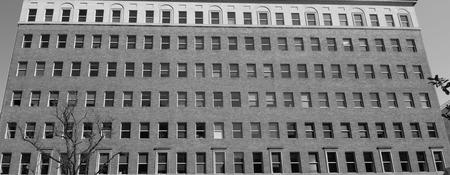
Freedom House offices in Washington (credit: Jeremy Bigwood)
Freedom House is the oldest Washington-based NGO working in the international arena. It was founded just before the beginning of the U.S. entry into World War II and blossomed during the Cold War. Freedom House today positions itself as a nuanced, liberal, or even left-of-center organization, obscuring its real agenda: to destabilize foreign governments whose policies challenge U.S. global hegemony. Since the 1980s Reagan revolution, its Board of Trustees has been largely composed of neoconservatives, including R. J. Woolsey, the former director of the CIA; Donald Rumsfeld; Paul Wolfowitz; Jeane Kirkpatrick; and Samuel P. Huntington.1 Although it likes to call itself “independent,” it receives about 80% of its funding from the U.S. government, either through the State Department, USAID, or the National Endowment for Democracy (NED).2 As such, it is clearly an instrument of the U.S. government.3 The rest of its funding is underwritten by foundations that pay for its annual Freedom in the World report, which ranks countries according to how free they are—as perceived through the eyes of Freedom House’s main office in Dupont Circle, Washington, D.C. This report is widely cited as gospel in the news media but has been heavily criticized by academics for its biased methodology.4
During the Cold War, Freedom House acted as the principal U.S.-based intellectual organ for attacking the ideologies and policies of Soviet and Chinese communism. But it almost always artfully avoided any discussion of the embarrassing inconsistencies between U.S. ideals and practices, such as the U.S. government’s Cold War activities in Latin America, Africa, and South East Asia, and its domestic racial policies. Even so, few NACLA readers would find fault with all of Freedom House’s work during the Cold War or after. As such, the organization belongs to a gray area of U.S. foreign policy.
Freedom House underwent a significant shift toward promoting neoliberal economic and political policies after the 1973 coup in Chile against the democratically elected socialist president Salvador Allende.5 Since the end of the Cold War, Freedom House has adjusted to the new geopolitical environment by shifting its attention from attacking Communism to undermining what Washington considers to be “authoritarian” and “populist” countries. Freedom House now quietly funds projects in those countries that the United States considers to be economic or ideological threats, or more openly in allies that the United States wants to keep in line. Freedom House tends to stay away from U.S.-friendly totalitarian regimes and monarchies.
Freedom House arrogantly holds that it has the right to operate anywhere in the world with or without the permission of the local government. In response to queries about its activities in other countries, an online Freedom House fact sheet explains: “Language in the annual State and Foreign Operations Appropriations Bill states that U.S. democracy and human rights programming shall not be subject to the prior approval by the government of any foreign country.”6 In other words, Freedom House believes that, with the permission of the U.S. Congress, it has the right to decide when and where it can meddle in any other government on the planet. … Full article
1. Diego Giannone, “Political and Ideological Aspects in the Measurement of Democracy: the Freedom House Case,” Democratization 17, no. 1 (January–February 2010): 68–97, available at tandfonline.com.
2. Ibid.
3. Ibid., 75.
4. Gerardo l. Munck and Jay Verkuilen, “Conceptualizing and Measuring Democracy: Evaluating Alternative Indices,” University of Illinois at Urbana-Champaign, Comparative Political Studies 35, no. 1 (February 2002): 5–34; Scott Mainwaring, with Daniel Brinks and Anibal Perez Liñán, “Political Regimes in Latin America, 1900–2007,” available at kellogg.nd.edu.
5. David Harvey, “Neoliberalism as Creative Destruction,” The Annals of the American Academy of Political and Social Science 610 (March 2007): 26, as quoted in Giannone, “Political and Ideological Aspects in the Measurement of Democracy.”
6. Sarah Trister, “Fact Sheet: Freedom House in Egypt,” January 2012, available at freedomhouse.org.
See Jeremy Bigwood’s article in the Report, “Freedom House in Venezuela.”
Featured Video
America Racing to Strategic Defeat in Iran
or go to
Aletho News Archives – Video-Images
From the Archives
Should Europeans ‘Thank’ the Americans for Destroying Nord Stream?
By Robert Bridge | Strategic Culture Foundation | September 29, 2022
With an investigation continuing into the destruction of the Nord Stream gas pipeline that provided energy supplies to Europe from Russia, there appears to be just one prime suspect, and that should surprise nobody.
Following the sabotage of the Nord Stream 1 and 2 gas pipelines, former Polish Foreign Minister Radoslaw Sikorski already seemed to know the identity of the perpetrator when he tweeted out: “Thank you, USA.”
At first glance, it seemed that Sikorski was speaking sarcastically, berating Washington for carrying out an attack that will have severe repercussions for the people of Europe. After all, how could anyone see any good coming from the termination of Europe’s primary source of gas reserves with winter just around the corner? It was Sikorski’s homeland of Poland, after all, that urged its citizens to collect firewood in the face of dwindling gas reserves.
In fact, the Polish diplomat was speaking one-hundred percent literally… continue
Blog Roll
 Aletho News
- Growing insecurity, soaring prices fuel protests in north as regime bans evacuation: Sources
- Iran denies responsibility for ‘depraved’ attack on Kuwait desalination plant
- Bring The Troops Back. End This War Now!
- Can we please stop calling Israel the ‘only democracy in the Middle East’ now?
- US should start removing its troops for Germany, proposes AfD co-leader Chrupalla
- Iran Red Crescent: 600 educational centers attacked in US-Israeli ‘war crimes’
- Russian Oil Tanker Arrives in Cuba Amid U.S. Blockade
- America Racing to Strategic Defeat in Iran: Lt Col Daniel Davis
- FTC Warns Visa, Mastercard, PayPal, Stripe Over Political Debanking
- Russian tanker approaches Cuba despite US oil blockade
- If Americans Knew
- Israeli police block Catholic cardinal from entering Church of the Holy Sepulchre on Palm Sunday
- Israel is assassinating journalists again, more than any other nation, anywhere, ever – Not a ceasefire Day 170
- Over 300 US service members wounded, majority have brain injuries – Not a ceasefire Day 169
- Researchers at Human Rights Watch Resign Over Blocked Report on Palestinian Refugee Return
- Jewish Groups Are Backing a War Americans Don’t Want
- Eric Fingerhut Thinks He’s the President of the Jews
- Top Jewish Philanthropists, Rabbis Urge Israeli President to Take Action Against ‘Jewish Extremists’
- Don’t Be Fooled. Zionist Leaders Have Always Wanted to Control Southern Lebanon
- Israel’s widespread use of torture is a core element of its genocide against the Palestinian people
- In Israel’s War on Iran, Many Middle East US Bases Rendered “All But Uninhabitable”
- No Tricks Zone
- New Study Finds Warming Saves Lives…Cold Temperatures 12 Times More Deadly Than Excess Heat
- German Science Blog Accuses PIK Climate Institute Of Hallucinating Climate Tipping Points
- Devastating Assessment Of Comirnaty Vaccine By Former Senior Pfizer Europe Toxicologist
- New Study: CO2 Is ‘Effectively Negligible’ As An Explanatory Climate Change Factor Since 2000
- Former Pfizer Toxicologist Dr. Helmut Sterz Tells Bundestag Hearing Pfizer Vaccine Should Have Never Been Approved
- Energy Expert: Germany’s Nuclear Phaseout Was A “500 Billion Euro Mistake”
- New Research: South Australia’s Mid-Holocene Sea Surface Temperatures Were 4°C Warmer Than Today
- Storing Green Energy To Last Germany 10 Days Would Require A 60-Million Tonne Battery
- New Studies: UK Sea Levels Were 4 Meters Higher Than Today During The Mid-Holocene
- Destructive Green New Deal: German Energy And Metal Group Warns Of Drastic Crisis
 Aletho News