Bill Gates and USAID: A Dangerous Alliance With Deadly Secrets
By Ilya Tsukanov – Sputnik – 19.02.2025
Bill Gates has urged the Trump administration to reconsider its stance on USAID, calling it “an unbelievable asset” and warning that cuts could risk “millions” of lives. What is the Microsoft mogul-turned billionaire ‘philanthropist’ really worried about?
USAID and the Gates Foundation have worked together for nearly 25 years on issues near and dear to Mr. Gates’ heart, from infectious diseases and vaccines to family planning, agriculture, and climate change.
Major collaborations include the Global Fund to Fight AIDS, Tuberculosis, and Malaria, and the Global Alliance for Vaccines and Immunization (GAVI).
Gates has also partnered with USAID on the Global Health Initiative and the Coalition for Epidemic Preparedness Innovations (CEPI).
If these names ring a bill, they should:
- GAVI is running an ambitious program to vaccinate 86 million adolescent girls in developing countries against HPV with jabs including Gardasil, made by Merck, which now faces a lawsuit in the US over side effects ranging from sporadic paralysis to cancer.
- Gates and USAID have continued supporting GAVI despite evidence from India starting in 2009 that its HPV jabs can cause severe illness or even death.
- USAID committed over $2 billion to GAVI from 2001-2017, and $1.16 billion more between 2020-2023.
- Leaked docs published by Revolver News in 2022 exposed a USAID scheme using pandemic funds for “reproductive health” (i.e. population control) in Africa.
- CEPI, together with Anthony Fauci’s National Institutes of Health and the Food and Drug Administration, has been linked to controversial health schemes of its own, from a September 2019 workshop on vaccine biomarkers to partnership in Event 201, a pandemic simulation held in October 2019, just weeks before COVID hit.
Partners in Food (In)security
Gates and USAID have also touted collaborations on food security, promoting agricultural tech for smallholder farmers in developing countries, for example.
At the same time, the Gates Foundation has invested heavily in companies engaged in GMO research, from Monsanto and its infamous “terminator seed” projects to synthetic meat startups.
An exhaustive 2024 critique of Gates’ agricultural schemes in Africa by the US Right to Know public health watchdog found that his and USAID’s AGRA initiative, focused on chemical-laced monoculture farming, increased dependency and agrobusiness influence instead of reducing hunger.
In other words, Gates’ concerns about USAID’s demise seem more about losing a key ally in efforts to control development, food security, and health in developing nations than “saving lives.”
Unaddressed Issues after WHO Withdrawal
By David Bell | Brownstone Institute | January 29, 2025
On Day One of his new administration, United States President Donald Trump signed an executive order notifying an intent to withdraw from the World Health Organization (WHO). This has drawn celebration from some, dismay from others, and probably disinterest from the vast majority of the population more concerned with feeding families and paying off debt. The executive order also leaves much unaddressed, namely the substantive issues that have changed the WHO and international public health over the past decade.
Change is certainly needed, and it is good that the WHO’s largest direct funder is expressing real concern. The reactions to the notice of withdrawal also demonstrate the vast gulf between reality and the positions of those on both sides of the WHO debate.
The new administration is raising an opportunity for rational debate. If this can be grasped, there is still a chance that the WHO, or an organization more fit for purpose, could provide broad benefit to the world’s peoples. But the problems underlying the international public health agenda must first be acknowledged for this to become possible.
What Actually Is the WHO? What Does It Do?
Despite being the health arm of the United Nations (UN), the WHO is a self-governing body under the 194 countries of the World Health Assembly (WHA). Its 34-member executive board is elected from the WHA. The WHA also elects the Director-General (DG), based on one country – one vote. Its 1946 constitution restricts its governance to States (rather than private individuals and corporations), so in this way, it is unique among the major international health agencies. While private individuals and corporations can buy influence, they can be completely excluded should the WHA so wish.
With 8,000 staff, the WHO is split into six Regions and a Head Office in Geneva, Switzerland. The Regional Office of the Americas, also called the Pan-American Health Organization (PAHO), is based in Washington, DC, and preceded the WHO, having been established in 1902 as the International Sanitary Bureau. Like other Regional Offices, PAHO has its own Regional Assembly, obviously dominated by the US, and is largely self-governing under the wider WHO and UN system.
The WHO is funded by countries and non-State entities. While countries are required to provide ‘assessed’ or core funding, most of the budget is derived from voluntary funding provided by countries and private or corporate donors. Nearly all voluntary funding is ‘specified,’ comprising 75% of the total budget. Under specified funding, the WHO must do the funders’ bidding. Most of its activities are therefore specified by its funders, not the WHO itself, with a quarter of this being private people and corporations with strong Pharma interests.
Therefore the WHO, while governed by countries, has effectively become a tool of others – both State and non-State interests. The US is the largest direct funder (~15%), but the Bill & Melinda Gates Foundation (BMGF) is a close second (14%), and the partly Gates-funded Gavi public-private partnership (PPP) is third. Thus, Mr. Gates arguably has the largest influence in terms of specifying the WHO’s actual activities. The European Union and World Bank are also major funders, as is Germany and the United Kingdom (i.e. the remaining large Western Pharma countries).
In response to its funders, the WHO has shifted focus to areas where large Pharma profits can be accrued. Pharma must insist on this as it has a fiduciary responsibility to maximize return on investment for its shareholders by using its WHO connections to sell more product. The obvious way to make lots of money in Pharma is by spreading fear of vaccine-preventable diseases, and then making vaccines and selling them free from liability to as large a market as possible. This was highly effective during the Covid-19 response, and the WHO is now sponsored by these interests to implement the surveil-lockdown-mass vaccinate paradigm behind the recent amendments to the International Health Regulations and the draft pandemic agreement.
While a shamefully willing tool, the WHO is not driving this. The US started the IHR amendment process and heavily backed it until the recent change of administration. The new administration, while signaling an intent to withdraw from the WHO, has not signaled a withdrawal from the pandemic industrial complex the US helped develop.
Critical to understanding the US withdrawal is the fact that the Covid-19 outbreak, and the response, would have looked almost identical if the WHO did not exist. The WHO was not involved in the gain-of-function research, in vaccine development, or in vaccine mandates. It abrogated its own ethical principles and prior recommendations in pushing lockdowns and mass vaccination, and did huge harm in the process. However, it was countries that funded and conducted the virus modification that likely spawned Covid-19. It was countries, in concert with Pharma, that mandated lockdowns on their people and pushed vaccination most heavily (the WHO never recommended the Covid-19 vaccines for children).
This is not a defense of the WHO – the organization was both incompetent, dishonest, and negligent during Covid-19. They were a public health disgrace. They have continued to deliberately mislead countries regarding future pandemic risk, and inflated return-on-investment claims, in order to sell the policies that benefit their sponsors. But remove the WHO, and the World Bank (the main funder of the pandemic agenda), the PPPs looking to sell pandemic vaccines (Gavi and CEPI), the Gates Foundation, Germany, the UK, and EU, the US health ‘swamp’ itself, and Pharma with its compliance media, will still exist. They have other options to bring a veneer of legitimacy to their pillaging through public health.
The US Notice of Withdrawal
As President Trump’s 20th January order of withdrawal notes, it repeats an executive order from mid-2020 that was subsequently revoked by President Biden. In theory, it takes at least 12 months for a withdrawal to take effect, based on the Joint Resolution of Congress in 1948 through which the US joined WHO, subsequently agreed by the WHA. However, as the new executive order is intended to revoke the Biden revocation, the remaining time to run is unclear. The waiting period could also be shortened by a further Act of Congress.
The 2025 notice of withdrawal is interesting, as the reasons given for withdrawal are relatively benign. There are four:
- Mishandling of the Covid-19 outbreak and other (undefined) global health crises. The “mishandling” is undefined, but may include WHO support for China in obscuring Covid-19 origins as highlighted in the recent Covid-19 House of Representatives sub-committee report. There are few obvious candidates for other truly global health crises that the WHO mishandled, except perhaps the 2009 Swine flu outbreak, unless the executive order refers to any international (global) public health issue (in which case there are many).
- Failure to adopt urgently needed reforms. These are undefined. Of concern, the only reforms the US has been pushing on the WHO in the past few years (pre-Trump administration) were intended to increase the authority of the WHO over sovereign States and the authority of its work. The recent Republican-dominated House subcommittee report recommended the same.
- Inability to demonstrate independence from the inappropriate political influence of WHO member states. This is presumably aimed at China, but is also concerning, as the WHO is subject to its Member States through the WHA. It would be strange if the US was hoping to free the WHO from such constraints. There is no mention of private sector involvement, now about 25% of WHO funding, which many would claim is the core reason for the corruption and deterioration of the WHO’s work.
- Unfairly onerous payments by the US. The US provides 22% of the WHO’s assessed (core funding) but this is only a fraction of US payments. The vast majority of US payments have been entirely voluntary, and the US could presumably choose to stop these at any time, removing most of its funding but not its voting rights. With China listed by the WHO as paying less than Somalia and Nigeria in the current 2024-25 biennium (per mid-January 2025), the US has a reasonable gripe here, but a simple one to fix.
Missing from the executive order is any reference to the other promoters of the pandemic or emergency agenda. The World Bank’s Pandemic Fund is untouched by this executive order, as are the PPPs. CEPI (vaccines for pandemics) and Gavi (vaccines in general) provide private industry and investors such as the Bill & Melinda Gates Foundation with direct decision-making roles they cannot ensure through the WHO.
The executive order requires the Director of the White House Office of Pandemic Preparedness and Response Policy to “…review, rescind, and replace the 2024 U.S. Global Health Security Strategy.” It is hoped that this signals a recognition of the lack of an evidence base and financial rigor around the current policy. Indeed, the policy promoted by the US, the WHO, the World Bank, and PPPs is irrelevant, by design, to a laboratory-released pathogen such as that which probably caused Covid-19. The actual mortality from natural outbreaks that it is designed for has been declining for over a century.
Implications of Withdrawal
A full withdrawal of the US from the WHO will presumably reduce US influence within the organization, enhancing that of the EU, China, and the private sector. As it ignores the World Bank and the PPPs, it will not greatly affect the pandemic agenda’s momentum. Covid-19 would still have happened had the US been out of the WHO before 2020, and modRNA mass vaccination would still have been driven by countries and Pharma with the help of a compliant media. The WHO acted as a propagandist and helped waste billions, but never advocated for vaccine mandates or mass vaccination of children. Though it was appalling, the driving forces behind the wealth concentration and human rights abuses of the Covid-19 era clearly originated elsewhere
If the US withdraws its 15% of the WHO budget – about $600 million per year – others (e.g. EU, Gavi, Gates Foundation) could fill the gap. The executive order mentions withdrawing US contractors, but these are few. Nearly all WHO staff are directly employed, not seconded by governments. The main effect will be to reduce coordination with agencies such as the US Centers for Disease Control and Prevention (CDC). The US will have a continuing need to use WHO services, such as for prequalification (regulation) of hundreds of millions of dollars of commodities bought and distributed by USAID and related programs but not regulated through the FDA. This is not a problem – the WHO lists are public – but the US would simply continue to use WHO services without paying for or influencing them.
The withdrawal notice also mentions cessation of US involvement in negotiating the amendments to the International Health Regulations (IHR) and the Pandemic Agreement. The IHR negotiations concluded 8 months ago, and the US has 2 months to signal rejection. The IHR is separate from WHO membership. The pandemic agreement is subject to wide disagreement between countries, and it is not clear whether it will go forward. However, provisions in the FY23 US National Defense Authorization Act (pages 950 to 961) are already stronger than the US would be signing up to with these WHO agreements.
The history of US withdrawals from UN institutions is also one of subsequent re-entry after a change in administration. Leaving the WHO without influence will presumably make it even less like what the Trump administration would like, should history repeat itself and the next administration rejoin.
The hope is that the US withdrawal will force major reform within the WHO – one of the key reasons provided in the withdrawal notice. However, there is no hint in the executive order of the desired direction of change, or whether the US will adopt a more rational policy. If such an intent were made clear, other countries would follow and the WHO itself may actually reboot. However, withdrawing without addressing these fallacies underlying the pandemic agenda entrenches the vested interests who profited through Covid-19 and clearly aim to continue doing so.
Being Real about Reality
The enthusiasm for the WHO withdrawal seems widely to have forgotten two things:
- The pandemic agenda and the Covid-19 response that exemplified it is not primarily a WHO program. (WHO said essentially the opposite in 2019).
- The actual pandemic industrial complex of surveil-lockdown-mass vaccinate is already essentially in place and does not need the WHO for it to continue.
The WHO Bio-Hub in Germany is largely a German government and Pharma agency with a WHO stamp. The World Bank pandemic fund is the main funding current source for pandemic surveillance, the 100-day vaccine program (CEPI) is directly funded by hapless taxpayers, and the Medical Countermeasures Platform is a partnership with countries, Pharma, the G20, and others. These would probably continue irrespective of the WHO’s existence. The pandemic industrial complex made hundreds of billions of dollars through Covid-19 and has the capacity and incentive to continue.
The complexity of all this is being addressed on social media by statements such as “The WHO is rotten to the core,” “The WHO is unreformable,” or even “Pure evil” – all unhelpful labels for a complex organization of 8,000 staff, 6 fairly independent Regional offices, and dozens of country offices. The WHO’s work on reducing the distribution of counterfeit drugs saves perhaps hundreds of thousands of people each year, and these people matter. Its standards for tuberculosis and malaria management are followed globally, including by the US. In several countries, its technical expertise saves many lives – people who can be abandoned to cliches or taken seriously.
The organization desperately needs reform, as President Trump notes. Its current leadership, having spent the last few years blatantly misleading and lying to countries about Covid-19 and pandemic risk, seems an unlikely candidate to help. They have played the tune of private interests over the needs of the world’s people. However, the WHO’s structure makes it the only major international health institution that countries alone can actually force to reform. It simply needs sufficient Member States of the WHA to force exclusion of private interests, and to force the WHO back to diseases and programs that actually have a significant bearing on human well-being.
Should such reform prove impossible, then the coalition of countries built around the reform agenda can replace it. The massive bureaucracy that global health has become needs to be seen through the same lens as that in the US. The fantasy built around pandemic risk is not substantively different from many on the domestic agenda that the Trump administration is now targeting. It is similarly erosive of human rights, freedom, and human flourishing. Addressing this is an opportunity we would be foolish to miss.
David Bell, Senior Scholar at Brownstone Institute, is a public health physician and biotech consultant in global health. David is a former medical officer and scientist at the World Health Organization (WHO), Programme Head for malaria and febrile diseases at the Foundation for Innovative New Diagnostics (FIND) in Geneva, Switzerland, and Director of Global Health Technologies at Intellectual Ventures Global Good Fund in Bellevue, WA, USA.
Big Pharma designed WHO’s Global Health Policy from 2000-2009
Corruption and deception, not science, is the foundation of WHO health policy
By Judy Wilyman PhD | Vaccination Decisions | April 1, 2024
“The past was erased, the erasure was forgotten, the lie became truth.” – George Orwell, 1984
The history of the GAVI alliance, a board that influences the direction and design of WHO’s global health policies, illustrates how these policies have been directly influenced by industry partners from 2000-2009, and not by an objective board selected by the WHO.
This direct influence was hidden from the public in 2009 when the alliance became known as the Gavi board. At this time its composition and function changed to hide the role that industry had played from 2000-2009 in changing the direction of global health policies to a new focus on vaccine production and global implementation.
History of the Gavi Board:
In 1998 the Global Alliance for Vaccines and Immunisation (GAVI) was established by the Head of the World Bank after a meeting with pharmaceutical companies and other agencies. The GAVI alliance was established on the advice of industry because the pharmaceutical companies were claiming that there was no incentive for them to provide vaccines to the developing countries.
This meeting led to the Bill and Melinda Gates Foundation providing the seed funding of $750 million in 1999 and governments then matched this figure to establish an alliance of private-public partnerships in 2000, to fund the vaccination programmes for all countries.
In 2000 the alliance was launched at the World Economic Forum (WEF), not the World Health Organisation (WHO), and it established a working party to work with the WHO to design the International Health Regulations (IHR), yet it was a body established outside of the WHO’s charter.
At this time all stakeholders in the Global Alliance for Vaccines and Immunisation (GAVI) were able to directly influence the design of the WHO’s Global Health Policies through this working party (2000-2009), including the International Federation of Pharmaceutical Manufacturers and Associations (IFPMA). They could attend meetings and present information for policy development.
Other stakeholders in the GAVI at this time included the BMGF, the Rockefeller Foundation, the World Bank and the International Monetary Fund (IMF). The influence of these stakeholders led to a new focus on vaccine production and implementation in the WHO’s global health policies.
These global policies were presented to countries in the International Health Regulations (IHR) that came into force in June 2007.
This direct influence of all stakeholders changed in 2009 when the GAVI alliance became known as the GAVI board. Its composition was changed to include only four permanent board members – UNICEF, BMGF, the World Bank and WHO – and other partners would be on a part-time basis.
This change to only four permanent board members, one of which was now the WHO, hides the fact that from 2000-2009 all stakeholders were able to directly influence the design of WHO’s global health policies.
The first recorded meeting of the Gavi board on its website is in 2009. It describes the role of the Gavi board as ‘being responsible for strategic direction and policy-making, oversees the operations of the Vaccine Alliance and monitors programme implementation’ .
This alliance of partners, many of whom profit from vaccines, make donations to the Gavi board and still influence global health policies in a more indirect fashion.
The WHO’s IHR are currently being amended with strong influence from this corporate alliance. If the amendments are approved, the draconian directives implemented during the COVID ‘pandemic’ years, will become binding on every WHO member country, whenever the director of the WHO declares another pandemic. This is removing fundamental human rights and objective scientific evidence from global health policies.
It is time for Australians to make our voices heard to ensure that Australia exits the WHO and joins the World Council for Health to protect both human health and fundamental human rights in all public health policies.
[The information above can be referenced from Ch 3 of my PhD 2015]
Important Information:
- Here is the witness statement from ex-Qantas pilot, Captain Graham Hood, describing that lack of evidence for safety and efficacy that was used by the Australian Therapeutic Goods Administration (TGA) and the Australian Prime Minister, Scott Morrison, to mandate this mRNA genetically-engineered injection (called a ‘vaccine’) in the Australian population – Ex-Qantas Pilot, Graham Hood, provides a witness statement in the Australian parliament.
- Australian Medical Professional Society (AMPS) presents ‘Too Many Dead’ in Australia, but the Australian government will not investigate and the media does not report these facts.
- Study finds the Majority of Patients with Long COVID were Vaccinated
- Epidemic of Fraud
The Indoctrinators, Part 3: Bill Gates
This is the third in our series about four well-known men whose purposeful social engineering over the years has undermined national democracies and economies, and created fertile ground for the final realisation of their post democracy dream of a global socialist/fascist world, controlled by supranational organisations such as the United Nations (UN), the World Health Organisation (WHO) and of course, themselves. They are George Soros (you can read Tuesday’s article here), Klaus Schwab (yesterday’s article is here), Bill Gates (today) and David Attenborough.
By Karen Harradine | TCW Defending Freedom | April 13, 2023
BILL Gates has a messiah complex. His obsession with ‘climate change’, vaccines and people control is proving dangerous for the world. Only a few weeks ago he gave voice to his latest megalomaniac plan for a global pandemic prison state. And as the past proves, what Gates wants he usually gets.
Together with his fellow Indoctrinators, George Soros and Klaus Schwab, 67-year-old Gates has not missed the opportunity provided by the Covid-19 crisis (which he helped to engineer) to further his revolutionist ‘global development’ green agenda. Following their precedent, he too created a foundation through which to impose his ghastly visions on an unfortunate world.
Since its inception in 2000, the Bill & Melinda Gates Foundation (BMGF), under its philanthropic guise, has found plenty of useful idiots across world governments willing to fund and support it. Successive witless British Prime Ministers, up to and including Boris Johnson and Rishi Sunak, have fallen under his spell with Gates hugely benefiting from this priceless endorsement and publicity. Given his malign agenda, Western taxpayers have literally been paying for their own demise.
Gates is an enthusiastic partner of the World Economic Forum (WEF) and attendee at their gatherings in Davos, which he typically uses to announce his latest plans to drain the West of its resources to fund his vaccine and climate change lunacy. In 1999, he formed the Global Alliance for Vaccines and Immunization (GAVI), which he cleverly partnered with the United Nations (UN), BMGF, foreign aid agencies and pharmaceutical companies. It was to become, together with the BMGF, the second biggest source of funding to the World Health Organisation (WHO).
More than 80 per cent of the WHO’s budget comes from voluntary contributions by member states and donors. In 2021, the BMGF was the second largest contributor with $375million, and GAVI the fourth with $245million. Both have a long history of influencing the WHO (the BMGF’s first donation was in1998). Uniquely the BMGF became its official partner in 2017, further focusing the WHO’s public health priorities on to vaccines. An enabler of and publicist for the toxic Covid-19 vaccine, his close connection with the WHO has reaped him huge profits.
The WHO’s deeply disturbing proposed Pandemic Treaty effectively puts into action Gates’s planned grasp for global control as he detailed in his 2022 book, ‘How to Prevent the Next Pandemic’. It has been long in the planning.
In 2003, on a Davos panel called ‘Science for the Global Good’, Gates announced his foundation’s gift of $200million to the US National Institutes of Health to set up the Grand Challenges in Global Health, a vehicle for shifting US tax money into the developing world in pursuit of Gates’s own interests.
In 2010, Gates and his wife heralded a ‘decade of vaccines’ at Davos, pledging $10billion to fund vaccines in ‘poor countries’, a vaccine zealotry which has had some appalling outcomes for which Gates has expressed no remorse. In one example, nearly half a million children in India were paralysed after taking BMGF-funded polio vaccine. Despite such appalling consequences, Gates, with an honorary knighthood in the bag from the Queen, is still widely regarded as a benign philanthropist. There’s no doubt that money buys reputation.
Like Soros, Gates has a prominent platform on the WEF website to promote green investments worth billions of dollars. A devotee of the UN’s Agenda 2030, Gates is co-chair of the Global Commission on Adaptation.
Today, thanks to our unprincipled politicians, Gates has a hotline to Downing Street and Britain finds itself in the clutches of a megalomaniac. His tentacles reach far and wide, from shaping energy policies and dominating scientific organisations and academic research, to financing the mainstream media.
In 1997, Tony Blair invited him into Downing Street to sell his flawed computer system, going on to host him several times, implementing policies based on his dictates and in his financial interests. It was an association Blair was to prosper from, later getting $3.2million for his Global Africa initiative and more than $25.2million for his Institute of Global Change.
In 2010, Gates and his wife visited the Department for International Development (DFID) to hector ministers on supporting foreign aid while promoting his Living Proof project, funded also by Soros’s Open Society Foundations and the Rockefeller Foundation.
Billionaires persuading politicians to plunder public resources to fund their own megalomaniac ambitions is not just deeply distasteful but wrong. Yet between 2011 and 2019, Gates got DFID to give over £60million for BMGF development projects.
In 2016, George Osborne pledged £2.5billion to another BMGF association, the Ross Fund. Three years later, the BMGF and World Bank ‘partnered’ with DFID to shovel more taxpayers’ money to foreign despots in the name of ‘education systems’.
In November 2020, after Johnson played his part in the hysteria over Covid-19, Gates met him and pharmaceutical companies and plotted how to prevent ‘pandemics’. Johnson then gave £800million to the BMGF’s vaccine initiative, COVAX.
A year later, Johnson reunited with Gates and promised a further £400million to fund his green investments.
In Sunak Gates has a willing apprentice. In February, the pair met to discuss wasting more money on Gates’s terrifying ‘climate change’ goals.
The BMGF and its subsidiaries like the Global Fund, which promotes the ominous sounding ‘health security’, has, since its inception in 2002, managed to extract an astonishing £4.5billion from the UK government, with another £1billion earmarked for the next two years. When did British taxpayers vote for that?
Millions today in this country can no longer afford both food and energy costs, they are medically neglected and live in substandard housing. Questions must be asked why politicians are funding this Indoctrinator to dictate policies that are provenly detrimental to British citizens and are only to the benefit of one man. The multi- billionaire land owner, Bill Gates. If a vampire is invited into a home, best be prepared for a bloodbath.
The last in this series will focus on green evangelist Sir David Attenborough.
POLITICO: How Bill Gates Took Over the Covid Pandemic
Bill Gates took over Covid just like he took over Operating Systems
By Igor Chudov | September 15, 2022
An amazing article from the least expected, mainstream source: Politico.
The title of the article was apparently edited in a hurry post-publication because Google News still lists it as “How Bill Gates and his partners took over the global Covid response”. Here’s the archive link to the original article with “Bill Gates” in the title — proving it was later edited in a hurry.
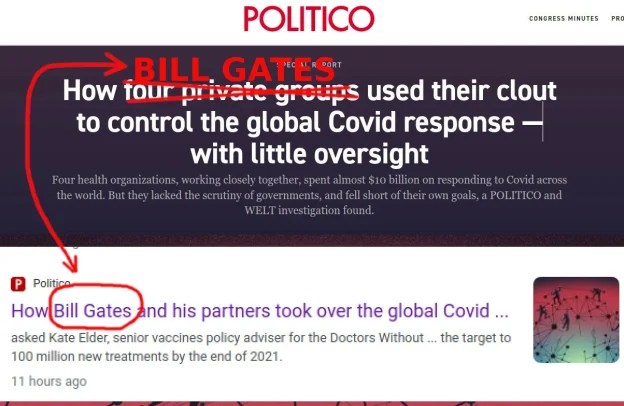
Even the article URL lists Bill Gates:
https://www.politico.com/news/2022/09/14/global-covid-pandemic-response-bill-gates-partners-00053969The article would be fascinating to read for people who were not previously aware of what most of us knew already — that the so-called “pandemic response” and global health are taken over by unaccountable private interest groups serving Bill Gates.
I highly recommend that you take a look!
The story given by the article is incomplete but very interesting.
It mentions that the pandemic response was taken over by the Bill and Melinda Gates Foundation, GAVI, CEPI, and the Wellcome Trust. All four organizations pretend to be independent, but all were financed by Bill Gates.
They participated in Event 201, planning out the pandemic, in October 2019.
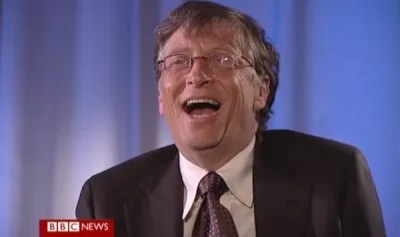
“What makes Bill Gates qualified to be giving advice and advising the U.S. government on where they should be putting the tremendous resources?” asked Kate Elder, senior vaccines policy adviser for the Doctors Without Borders’ Access Campaign.
Several important items are glaringly missing from the article:
- Bill and Melinda Gates Foundation, along with the US government (Avril Haines representing the US intelligence community) and China CDC, planned out the pandemic in October of 2019 by means of an “exercise” called Event 201.
- Sars-Cov-2 is lab engineered and was designed intentionally
- As pointed out by our astute reader Mel, do not forget the 3.1 million shares of BioNTech that Gates bought in Sept 2019 for $18.10/share. That $55 million investment was worth $1.7 billion by Aug 2021.https://www.sec.gov/Archives/edgar/data/1776985/000119312519241112/d635330dex1036.htm
- Bill and Melinda Gates Foundation financed the organization that developed Sars-Cov-2 (EcoHealth Alliance) via grant INV-002838, and possibly more.
- Bill and Melinda Gates Foundation financed University of North Carolina, where Ralph Baric developed Sars-Cov-2 for EcoHealth Alliance, via 56 grants: INV-026327 INV-030330 INV-031704 INV-028991 INV-036494 INV-032887 INV-033909 INV-036560 OPP1192462 OPP1199232 OPP1201585 OPP1203327 OPP1195157 OPP1195363 OPP1191684 OPP1061107 OPP1090837 OPP1086528 OPP1108279 OPP1107923 OPP1235 OPP3436 OPP1142921 OPP38920 OPP38381 OPP23847 OPP17809 OPP1161858 OPP1158402 OPP1154943 OPP1172799 OPP1183027 OPP1181722 INV-006232 INV-001748 INV-005277 INV-016221 INV-019193 INV-016163 INV-003112 INV-001805 INV-003266 INV-002551 OPP1203712 OPP9404 OPP1014802 OPP1015539 OPP1024615 OPP1024664 OPP1015381 OPP1018000 OPP51976 OPP53107 OPP53450 OPP52037 OPP49260
- Bill Gates had close ties with Jeffrey Epstein and visited him numerous times
Nevertheless, the mere publication of this article has huge importance. The things that most of us know and talk about, are appearing in the so-called “mainstream press” — after the damage was all done, of course.
The virus was released; millions died; over a billion young people were force-vaccinated under false pretenses. When it is too late to change anything, Politico is finally stating the obvious. Still, it is better than nothing.
Almost everything in the Politico article was known a year ago. Where was Politico then? Busy taking government covid vaccine advertising money.
The pandemic was a crime, not an accident.
Rockefeller Foundation, Nonprofits Spending Millions on Behavioral Psychology Research to ‘Nudge’ More People to Get COVID Vaccines
By Michael Nevradakis, Ph.D. | The Defender | September 13, 2022
The Rockefeller Foundation, the National Science Foundation (an “independent” agency of the U.S. government) and other nonprofits are pouring millions of dollars into a research initiative “to increase uptake of COVID-19 vaccines and other recommended public health measures by countering mis- and disinformation.”
In conjunction with the Social Science Research Council (SSRC), the Rockefeller Foundation last month announced $7.2 million in funding for the Mercury Project, initially launched in November 2021, under the slogan, “Together, we can build a healthier information environment.”
The funds will support 12 teams of researchers in 17 countries who will conduct studies on “ambitious, applied social and behavioral science to combat the growing global threat posed by low COVID-19 vaccination rates and public health mis- and disinformation,” the Rockefeller Foundation said.
The Rockefeller Foundation and the SSRC claim the aim of the Mercury Project, whose name is derived from the ancient Roman god of messages and communication, is to bolster public health and safety.
However, some critics described the project as one based on “propaganda” aimed at “nudging” the unvaccinated to get vaccinated.
Creating ‘behavioral change’ by targeting schoolchildren and specific socio-economic groups
Behavioral change lies at the heart of the Mercury Project, which will issue three-year research grants to estimate “the causal impacts of mis- and disinformation on online and offline outcomes in the context of the COVID-19 pandemic,” including “differential impacts across socio-demographic groups.”
The research will include “interventions that target the producers or the consumers of mis- and disinformation, or that increase confidence in reliable information.”
Some of the “interventions” proffered by the Rockefeller Foundation include “literacy training for secondary school students” to “help students identify COVID-19 vaccine misinformation,” “equipping trusted messengers with communication strategies to increase COVID-19 vaccination demand” and “using social networks to share tailored, community-developed messaging to increase COVID-19 vaccination demand.”
This information will, according to the Rockefeller Foundation, “provide evidence about what works — and doesn’t — in specific places and for specific groups to increase COVID-19 vaccination take-up.”
But according to ZeroHedge, the research groups funded by the Mercury Project “are operating with the intent to tailor vaccination narratives to fit different ethnic and political backgrounds, looking for the key to the gates of each cultural kingdom and convincing them to take the jab.”
The project uses “ambiguous language and mission statements” to at least partially conceal the project’s main purpose of “using behavioral psychology and mass psychology elements to understand the global resistance to the recent COVID compliance efforts,” ZeroHedge reported.
‘Fabricating effective COVID propaganda’ a ‘money train’ for behavioral researchers and psychologists
In November 2021, the Mercury Project received an initial $7.5 million in seed funding from entities including the Rockefeller Foundation, the Robert Wood Johnson Foundation, Craig Newmark Philanthropies and the Alfred P. Sloan Foundation to apply “the principles of large-scale, team-based science to the problem of vaccination demand” over a three-year period.
As of August 2022, these entities have funded the Mercury Project to the tune of $10.25 million.
In June, the project received $20 million from the National Science Foundation to study “interventions to increase COVID-19 vaccination demand and other positive health behaviors.”
The SSRC’s latest call for proposals, under the aegis of the Mercury Project, received nearly 200 submissions.
The accepted proposals come from researchers in countries including the U.S., Canada, Côte d’Ivoire, England, France, Ghana, Haiti, Kenya, India, Malawi, Mexico, Sierra Leone, Spain, Rwanda and Tanzania.
U.S.-based researchers represent institutions including Carnegie Mellon, Columbia, Duke, Harvard, MIT, New York University, Rutgers, St. Augustine University, Stanford, UC Berkeley, University of Southern California, the University of Chicago, the University of Pennsylvania, the University of Michigan, Vanderbilt and Yale.
The titles of some of the projects most recently funded by the Mercury Project include:
- “A tough call: Impacts of mobile technology on Covid-19 (mis)information and protective behavior decision-making.”
- “Boosting boosters at scale: A megastudy to increase vaccination at scale.”
- “Building a better toolkit (for fighting misinformation): Large collaborative project to compare misinformation interventions.”
- “Harnessing influencers to counter misinformation: Scalable solutions in the Global South.”
- “Targeting health misinformation networks: Network-transforming interventions for reducing the spread of health misinformation online.”
Arguing in favor of the importance of the project’s research, Anna Harvey, president of the SSRC, stated:
“With COVID-19 prevalent and rapidly evolving everywhere, there is a pressing need to identify interventions with the potential to increase vaccination take-up.
“Vaccines are only effective if they become vaccinations; vaccines are a scientific marvel but their potential is unfulfilled if they are left on the shelf.”
Describing the Mercury Project’s grantees, Dr. Bruce Gellin, the Rockefeller Foundation’s chief of global public health strategy, said:
“This initial cohort’s ideas exemplify the creativity and vision behind the Mercury Project. They go far beyond quick fixes, with the goal of identifying robust, cost-effective, and meaningful solutions that can be widely adopted and scaled.
“We hope that more, better, and science-based knowledge about what we need to do will lead to increased uptake of reliable information — and serve as a powerful counter to the effects of misinformation and disinformation on vaccine demand.”
Heather Lanthorn, the Mercury Project’s program director, highlighted the importance of leveraging communication toward achieving public health objectives:
“The viral, vaccine, and information environments are all rapidly evolving–but that doesn’t mean it is impossible to make progress towards more effective and equitable responses.
“By funding projects on the ground around the world, this work will help us understand what works where, and why, and identify new ways to harness the power of connection and communication to advance public health goals.”
ZeroHedge, however, countered that behind all the rhetoric, the focus of the Mercury Project, is “propaganda, propaganda and propaganda,” and “the very basis of the existence of the Mercury Project presupposes that individuals cannot be trusted to make up their own minds about the information they are exposed to.”
The expectation is that individuals “must be molded to accept the mainstream narrative,” ZeroHedge said, while presupposing that “mainstream or establishment information is always trustworthy and unbiased.”
“Fabricating effective COVID propaganda is becoming a money train for the small groups of behavioral researchers and psychologists that jump onboard,” ZeroHedge added.
GAVI: 200 global ‘nudge units’ specialize in applying behavioral science to everyday life
The field of behavioral science — and a concept known as “nudging” — figured prominently during the years of the COVID-19 pandemic and were heavily utilized by governments and public health officials throughout the world to justify often stringent restrictions and countermeasures.
Nudging was defined in a bestselling 2008 book by economist Richard H. Thaler and legal scholar Cass R. Sunstein — “Nudge: Improving Decisions About Health, Wealth, and Happiness” — as something that “alters people’s behavior in a predictable way without forbidding any options or significantly changing their economic incentives.”
Thaler and Sunstein presented nudging as a technocratic solution for tricky policy issues involving a perceived need to encourage, in a “voluntary manner,” policies or measures that would otherwise be unpopular.
Their work drew from a 1974 paper by two Israeli psychologists, Daniel Kahneman and Amos Tversky, which, as explained by an article published by GAVI-The Vaccine Alliance, “pioneered the study of mental shortcuts that humans rely on to make decisions, known as heuristics.”
As previously reported by The Defender, the Rockefeller Foundation is also a partner and board member and donor to GAVI, alongside the WEF, the Bill & Melinda Gates Foundation and the Johns Hopkins Bloomberg School of Public Health, which hosted Event 201, which simulated the spread of a coronavirus just prior to the actual COVID-19 pandemic.
In 2010, the U.K. government established the Behavioural Insights Team, initially within the government’s Cabinet Office, before it was spun off as a private company in 2014. A year later, U.S. President Barack Obama issued an executive order to promote the utilization of behavioral science in federal policymaking.
According to GAVI, “globally, there are now more than 200 teams, or nudge units, that specialize in applying behavioral science to everyday life.”
COVID-19, and the response to it, was no exception. HRW Healthcare’s Tony Jiang described nudges as “a set of policy tools which utilize psychological insights to attempt to motivate people to adopt certain desired actions/behaviours, without having to enforce strict laws, bans, or punishments,” and as a means to “motivate people into making responsible decisions, while preserving individual liberty.”
According to Jiang, “at the beginning of the pandemic, to encourage COVID-safe behaviours, behavioural nudges were the preferred policy by governments in the UK, USA, and Australia.”
According to Jay Van Bavel, associate professor of psychology at New York University, “as COVID-19 infections grew exponentially in 2020, behavioral scientists wanted to help. Nudges presented a possible route to controlling the virus, particularly in the absence of vaccines and evidence-based treatments.”
Van Bavel, along with Sunstein and 40 other researchers, in 2020 published a paper in Nature presenting ways in which behavioral science and nudging could contribute to efforts to combat COVID-19, including through fostering increased trust in government and fighting “conspiracy theories.”
As explained by GAVI, “as scientists learned more about how the coronavirus spread … governments knew what they wanted their citizens to do, but they still had to think carefully about how to encourage people to change their behavior. That’s where nudges could help.”
This was evidenced, for instance, in a March 14, 2020, U.K. government document published approximately two weeks before the U.K. government imposed a nationwide lockdown.
The document presented the role that would be played by the Scientific Advisory Group for Emergencies in advising the U.K. government’s response.
The document referenced the 2009-10 swine flu pandemic and the advice the advisory group received at the time from a subgroup known as the Scientific Pandemic Influenza Group on Behaviour and Communications. This group was reconvened on Feb. 13, 2020, with an exclusive focus on behavioral psychology.
According to the document, the group was “asked to provide advice aimed at anticipating and helping people adhere to interventions that are recommended by medical or epidemiological experts,” concluding that the U.K. government should “provide clear and transparent reasons for the different strategies that might be taken.”
The group advised the U.K. government that “in order to increase confidence in, and adherence to, the interventions should provide clear and transparent reasons for the strategies that have and have not been selected … and conduct rapid research into how best to help people adhere to the recommendations” whilst suggesting “behaviours that reduce risk.”
Other studies in the 2020-2021 period also highlighted the potential role nudging and behavioral psychology could play in relation to COVID-19.
For instance, a 2021 study showed that sending text messages to patients before scheduled primary care visits increased flu vaccinations by 5%, while another 2021 study found that the same strategy boosted COVID-19 vaccination appointments by 6% and actual vaccinations by 3.6%.
Still another 2021 study, also published in Nature, found that “behavioural nudges increase COVID-19 vaccinations,” arguing that “overcoming vaccine hesitancy … requires effective communication strategies” and finding that “inducing feelings of ownership over vaccines” can help bring about an increase in vaccine uptake.
The National Science Foundation offered grants of $200,000 for research in this field, while the SSRC also issued a call for proposals, receiving 1,300 applications even though it had sufficient funding for only 62.
However, as the pandemic progressed and as vaccination figures eventually plateaued, the strategy of nudging began to be called into question.
Dena Gromet, executive director of the Behavior Change for Good Initiative at the University of Pennsylvania, said nudging is effective only if individuals are already inclined to perform the action that they are being reminded or encouraged to perform.
Nudging, as a result, was supplanted by vaccine mandates.
Indeed, such “sterner measures” were advocated by Richard Thaler, one of the creators of the concept of nudging. In an August 2021 New York Times op-ed, Thaler called for stricter measures for the unvaccinated, including vaccine passports and isolation — measures which he described as “pushes and shoves” instead of nudges.
Two studies performed by researchers at King’s College London also cast doubt on the effectiveness of nudging to change behaviors and attitudes in relation to COVID-19.
Notably, the dedicated COVID-19 page on the website of the Behavioral Insights Team, which had played such a key role in advising the U.K. government on its COVID-19-related countermeasures early in the pandemic, has not featured a new posting since April 28, 2021.
However, some believe there still remains a role for nudging as the world enters a “new phase” of the COVID-19 pandemic. Tony Jiang argued that “as mandates relax, a greater reliance on individual compliance is required if we are to prevent mass-outbreaks in the future.”
“This makes the role of nudges and behavioural science ever more crucial,” he said, suggesting that going forward, nudges can be utilized to encourage mask-wearing, vaccinations and boosters.
Jiang proffered suggestions such as personalized masks that “can be more fashionable,” and for vaccinations, the potential role of “defaults,” where “people are automatically enrolled to receive a booster and must deliberately cancel the scheduled appointment if they do not wish to receive it.”
Michael Nevradakis, Ph.D., is an independent journalist and researcher based in Athens, Greece.
This article was originally published by The Defender — Children’s Health Defense’s News & Views Website under Creative Commons license CC BY-NC-ND 4.0. Please consider subscribing to The Defender or donating to Children’s Health Defense.
WHO’S DRIVING THE PANDEMIC EXPRESS?
By Dr David Bell and Emma McArthur | PANDA | September 4, 2022
Sceptics of the growing ‘pandemic prevention, preparedness and response’ (PPR) agenda celebrated recently, heralding a perceived ‘defeat’ of the World Health Organization’s (WHO) controversial amendments to the International Health Regulations (IHR). Although the proposed amendments would have undoubtedly expanded the WHO’s powers, this focus on the WHO reflects a narrow view of global health and the pandemic industry. The WHO is almost a bit-player in a much larger game of public-private partnerships and financial incentives that are driving the pandemic gravy train forward.
While the WHO works in the spotlight, the pandemic industry has been growing for over a decade and its expansion accelerates unabated. Other major players such as the World Bank, coalitions of wealthy nations at the G7 and G20 and their corporate partners work in a world less subject to transparency; a world where the rules are more relaxed, and a conflict of interest receives less scrutiny.
If the global health community is to preserve public health, it must urgently understand the wider process that is underway and take action to stop it. The pandemic express must be halted by the weight of evidence and basic principles of public health.
Funding a global pandemic bureaucracy
“The FIF could be a cornerstone in the construction of a truly global PPR system in the context of the International Treaty on Pandemic Prevention, Preparedness and Response, sponsored by the World Health Assembly.” (WHO, 19 April 2022)
The world is being told to fear pandemics. Ballooning socio-economic costs of the COVID-19 crisis are touted as justification for increased focus on PPR funding.
Calls for ‘urgent’ collective action to avert the ‘next’ pandemic are predicated on systemic ‘weaknesses’ supposedly exposed by COVID-19. As the WHO steamed ahead with its push for a new pandemic ‘treaty’ during 2021, G20 members agreed to establish a Joint Finance & Health Task Force (JFHTF) to ‘enhance the collaboration and global cooperation on issues relating to pandemic prevention, preparedness and response’.
A World Bank-WHO report prepared for the G20 joint task force estimates that US$ 31.1 billion will be required annually for future PPR, including US $ 10.5 billion per year in new international financing to support perceived funding gaps in low- and middle-income countries (LMICs). Surveillance-related activities comprise almost half of this, with US $4.1 billion in new funding required to address perceived gaps in the system.
In public health terms, the funding proposed to expand the global PPR infrastructure is enormous. By contrast, the WHO’s approved biennium programme budget for 2022-2023 averages US $3.4 billion per year. The Global Fund, the main international funder of malaria, tuberculosis and AIDS – which have a combined annual mortality of over 2.5 million – currently dispenses just US $ 4 billion annually for the three diseases combined. Unlike COVID-19, these diseases cause significant mortality in lower income countries and in younger age groups, year in, year out.
In April 2022, the G20 agreed to establish a new ‘financial intermediary fund’ (FIF) housed at the World Bank, to address the US $10.5 billion PPR financing gap. The FIF is intended to build upon existing pandemic funding to ‘strengthen health systems and PPR capacities in low-income and middle-income countries and regions’. The WHO is predicted to be the technical lead, landing them with an assured role irrespective of the outcome of current ‘treaty’ discussions.
The establishment of the fund has proceeded with breathtaking speed, and it was approved on June 30 by the World Bank Board of Executive Directors. A short period of consultation precedes an expected launch in September 2022. To date, donations totalling US $1.3 billion dollars have been pledged by governments, the European Commission and various private and non-government interests, including the Bill and Melinda Gates Foundation, Rockefeller Foundation, and the Wellcome Trust. The initial areas for the fund are somewhat all-encompassing, including country-level ‘disease surveillance; laboratory systems; emergency communication, coordination and management; critical health workforce capacities; and community engagement’.
In scope, the fund has the appearance of a new ‘World Health Organization’ for pandemics – to add to the existing (and ever-expanding) network of global health organisations such as the WHO; Gavi; the Coalition for Epidemic Preparedness Innovations (CEPI); and the Global Fund. But is this increased expenditure on PPR justified? Are the escalating socio-economic costs of COVID-19 due to a failure to act by the global health community, as is widely claimed; or are they due to negligent acts of failure by the WHO and global governments, when they discarded previous evidenced-based pandemic guidelines?
COVID-19: failure to act or acts of failure?
In the debate surrounding the growing pandemic industry, much attention is being directed towards the central role of the WHO. This attention is understandable given the WHO’s position as the agency responsible for global public health and its push for a new international pandemic agreement.
However, the WHO’s handling of the response to COVID-19 creates serious doubts about the competency of its leadership and raises questions about whose needs the organisation is serving.
The WHO’s failure to follow its own pre-existing pandemic guidelines by supporting lockdowns, mass-testing, border closures and the multi-billion-dollar COVAX mass-vaccination program, has generated vast revenue for vaccine manufacturers and the biotech industry, whose corporations and investors are major contributors to the WHO. This approach has crippled economies, damaged existing health programs and further entrenched poverty in low-income countries. Decades of progress in children’s health are likely to be undone, together with the destruction of the long-term prospects of tens of millions of children, through loss of education, forced child marriage and malnutrition. In abandoning its principles of equality and community-driven healthcare, the WHO appears to have become a mere pawn in the PPR game, beholden to those with the real power; the entities who are providing its income and who control the resources now being directed to this area.
Corporatizing global public health
Recently established health agencies devoted to vaccination and pandemics, such as Gavi and CEPI, appear to have been highly influential from the beginning. CEPI, is the brainchild of Bill Gates, Jeremy Farrar (director of the Wellcome Trust), and others at the pro-lockdown World Economic Forum. Launched at Davos in 2017, CEPI was created to help drive the market for epidemic vaccines. It is no secret that Bill Gates has major private financial ties to the pharmaceutical industry, in addition to those of his foundation. This clearly places a question mark over the philanthropic nature of his investments.
CEPI appears to be a forerunner of what the WHO is increasingly becoming – an instrument where individuals and corporations can exert influence and improve returns by hijacking key areas of public health. CEPI’s business model, which involves taxpayers taking most of the financial risk for vaccine research and development whilst big pharma gets all the profits, is notably replicated in the World Bank-WHO report.
Gavi, itself a significant WHO donor that exists solely to increase access to vaccination, is also under direct influence of Bill Gates, via the Bill and Melinda Gate Foundation. Gavi’s involvement (alongside CEPI) with the WHO’s COVAX program, which diverted vast resources into COVID-19 mass-vaccination in countries where COVID-19 is a relatively small disease burden, suggests the organisation is tied more strongly to vaccine sales than genuine public health outcomes.
Pandemic funding – ignoring the big picture?
At first glance, increased PPR funding to LMICs may seem a public good. The World Bank-WHO report claims that ‘the frequency and impact of pandemic-prone pathogens are increasing.’ However, this is belied by reality, as the WHO lists only 5 ‘pandemics’ in the past 120 years, with the highest mortality occurring in the 1918-19 H1N1 (‘Spanish’) influenza pandemic, before antibiotics and modern medicine. Apart from COVID-19, the ‘Swine Flu’ outbreak in 2009-10, which killed less people than a normal flu year, is the only ‘pandemic’ in the past 50 years.
Such a myopic focus on pandemic risk will do little to address the most serious causes of illness and death, and it can be expected to make matters worse for people experiencing the most extreme forms of socio-economic disadvantage.
Governments of low-income countries will be ‘incentivised’ to divert resources to PPR related programs, further increasing the growing debt crisis. A more centralised, top-down public health system will lack the flexibility to meet local and regional needs. Transferring support from higher burden diseases, and drivers of economic growth, has a direct impact on mortality in these countries, particularly for children.
The WHO-World Bank report states that the pillars of the global PPR architecture must be built on the ‘foundational principles of equity, inclusion and solidarity’. As severe pandemics occur less than once per generation, increased spending on PPR in LMICs clearly violates these basic principles as it diverts scarce resources away from areas of regional need, to address the perceived health priorities of wealthier populations. As demonstrated by the damage caused by the COVID-19 response, in both high and low-income countries, the overall harm of resource diversion from areas of greater need is likely to be universal. In failing to address such ‘opportunity costs’, recommendations by the WHO, the World Bank, and other PPR partners cannot be validly based in public health; nor are they a basis for overall societal benefit. .
One thing is certain. Those who will gain from this expanding pandemic gravy train will be those who gained from the response to COVID-19.
The pandemic gravy train – following the money
The new World Bank fund risks compounding existing problems in the global public health system and further compromising the WHO’s autonomy; although it is stated that the WHO will have a central ‘strategic role’, funds will be channelled through the World Bank. In essence, it financially side-steps the accountability measures at the WHO, where questions of relative worth can be raised more easily.
The proposed structure of the FIF will pave the way for organisations with strong ties to pharmaceutical and other biotech industries, such as CEPI and Gavi, to gain even greater influence over global PPR, particularly if they are appointed ‘implementing entities’ – the operational arms that will carry out the FIF’s work program at country, regional and global level.
Although the initial implementing entities for the FIF will be UN agencies, multilateral development banks and the IMF, plans are already underway to accredit these other international health entities. Investments are likely to be heavily skewed towards biotechnological solutions, such as disease surveillance and vaccine development, at the cost of other, more pressing, public health interventions.
Protecting public health rather than private wealth
If the world truly wants to address the systemic weakness exposed by COVID-19, it must first understand that this pandemic gravy train is not new; the foundations for the destruction of community- and country-based global public health began long before COVID-19.
It is unarguable that COVID-19 has proved to be a lucrative cash cow for vaccine manufacturers and the biotech industry. The public-private partnership model that now dominates global health enabled vast resources to be channelled into the pockets of corporate giants, through programs they directly influence, or even run. CEPI’s ‘100 days Mission’ to make ‘safe and effective’ vaccines against ‘viral threats’ within 100 days – to ‘give the world a fighting chance of containing a future outbreak before it spreads to become a global pandemic’ – is a permit for pharmaceutical companies to appropriate public money on an unprecedented scale, based on their own assessments of risk.
The self-fulfilment of the ‘increasing frequency of pandemic’ prophecy will be ensured by the push for increased disease surveillance – a priority area for the FIF. To quote the World Bank-WHO report:
“COVID-19 highlighted the need to connect surveillance and alert systems into a regional and global network to detect zoonotic transmission events, raise the alarm early to enable a swift public health response, and accelerate the development of medical countermeasures.”
Like many claims being made about COVID-19, this claim has no evidence base – the origins of COVID-19 remain highly controversial and the WHO’s data demonstrate that pandemics are uncommon, whatever their origin. None of the ‘countermeasures’ have been shown to significantly reduce the spread of COVID-19, which is now globally endemic.
Increased surveillance will naturally identify more ‘potentially dangerous pathogens’, as variants of viruses arise constantly in nature. Consequently, the world faces a never-ending game of seek and ye shall find, with never-ending profits for industry. Formerly once per generation, this industry will make ‘pandemics’ a routine part of life, where rapid fire vaccines are mandated for every new disease or variant that arrives.
Ultimately, this new pandemic fund will help to hook low- and middle-income countries into the growing global pandemic bureaucracy. Greater centralisation of public health will do little to address the genuine health needs of people in these countries. If the pandemic gravy train is allowed to keep growing, the poor will get poorer, and people will die in increasing numbers from more prevalent, preventable diseases. The rich will continue to profit, while fuelling the main driver of ill-health in lower income countries – poverty.
Dr. David Bell is a clinical and public health physician with a PhD in population health and background in internal medicine, modelling and epidemiology of infectious disease. Previously, he was Director of the Global Health Technologies at Intellectual Ventures Global Good Fund in the USA, Programme Head for Malaria and Acute Febrile Disease at FIND in Geneva, and coordinating malaria diagnostics strategy with the World Health Organisation. He is a member of the Executive Committee of PANDA.
U.S. Declares Monkeypox Health Emergency, FDA Offers Vaccine to Some Kids Despite No Clinical Trials
By Megan Redshaw | The Defender | August 5, 2022
The U.S. declared monkeypox a public health emergency to raise awareness and allow for additional funding to fight the disease’s spread, U.S. Department of Health and Human Services Secretary Xavier Becerra said on Thursday.
“We’re prepared to take our response to the next level in addressing this virus, and we urge every American to take monkeypox seriously and to take responsibility to help us tackle this virus,” Becerra said.
Becerra said he also is considering a second declaration that would allow federal officials to expedite medical countermeasures — such as potential treatments and vaccines — designed to ensure drugs are safe and effective.
President Biden said in a tweet he remained “committed to our monkeypox response: ramping-up vaccine distribution, expanding testing, and educating at-risk communities.”
“That’s why today’s public health emergency declaration on the virus is critical to confronting this outbreak with the urgency it warrants,” Biden said.
The last time the U.S. declared a public health emergency was in January 2020, for COVID-19.
According to the Centers for Disease Control and Prevention (CDC), more than 7,100 cases of monkeypox have been reported in the U.S., including five cases in children.
Symptoms of monkeypox infection are usually mild and include fever, rash and swollen lymph nodes, and occasionally intense headache, back pain, muscle aches, lack of energy and skin eruptions that can cause painful lesions, scabs or crusts.
The virus is rarely fatal and no deaths have been reported in the U.S.
Monkeypox primarily is spread through skin-to-skin contact during sex and affects mostly gay and bisexual men, public health officials say, although the virus can affect anyone.
According to the CDC, about 98% of monkeypox patients who provided demographic information to clinics identified as men who have sex with men.
Public health emergency paves way for vaccine for kids
Now that the Biden administration has declared the monkeypox outbreak a public health emergency, the U.S. Food and Drug Administration (FDA) can move to issue an Emergency Use Authorization for the JYNNEOS vaccine for children under 18.
There are two vaccines that may be used “for the prevention” of monkeypox virus infection: JYNNEOS — also known as Imvamune or Imvanex — and ACAM2000, which is licensed by the FDA for use against smallpox and “made available for use against monkeypox under an Expanded Access Investigational New Drug application.”
The FDA told ABC News on Thursday that while the current monkeypox vaccine, JYNNEOS, is approved only for adults ages 18 and older, it will be available for kids on a case-by-case basis.
The JYNNEOS vaccine, delivered in a two-dose series, was not tested through clinical trials in children.
However, the FDA confirmed to ABC News that “numerous” children have been granted access to the vaccine through a special permission process, but declined to state exactly how many children have received the vaccine to date through this process.
“If a doctor decides a person under 18 was exposed to monkeypox and the benefit of the vaccine is greater than any potential risk, they can submit a request to the FDA,” ABC News reported.
According to the CDC, the “immune response” takes “14 days after the second dose of JYNNEOS and 4 weeks after the ACAM2000 dose for maximal development.”
The CDC website also states: “No data are available yet on the effectiveness of these vaccines in the current outbreak.”
According to the latest data from the Vaccine Adverse Event Reporting System (VAERS), between June 14 and July 21, 2022, 31 adverse events were reported following vaccination with JYNNEOS — manufactured by Bavarian Nordic.
The World Health Organization (WHO) declared monkeypox a global health emergency after more than 26,000 cases were reported across 87 countries.
A global emergency is the WHO’s highest level of alert, but the designation does not necessarily mean a disease is particularly transmissible or lethal.
The U.S. makes up 25% of confirmed cases globally although the U.K. was the first to alert the world to the outbreak in May after confirming several cases.
A monkeypox fictional simulation was held in March 2021
As The Defender reported in May, the Nuclear Threat Initiative, in conjunction with the Munich Security Conference, in March 2021 held a “tabletop exercise on reducing high-consequence biological threats,” involving an “unusual strain of monkeypox virus that first emerged in the fictional nation of Brinia and spread globally over 18 months.”
This is similar to “Event 201,” a “high-level pandemic exercise” organized by the Johns Hopkins Center for Health Security, along with the World Economic Forum and the Bill & Melinda Gates Foundation — just weeks before the COVID-19 outbreak — that mirrored what later followed with COVID-19 pandemic.
According to the Nuclear Threat Initiative, the monkeypox exercise, which was “developed in consultation with technical and policy experts,” brought together “19 senior leaders and experts from across Africa, the Americas, Asia, and Europe with decades of combined experience in public health, biotechnology industry, international security, and philanthropy.”
The fictional start date of the monkeypox pandemic in this exercise was May 15, 2022. The first European case of monkeypox was identified on May 7, 2022.
Key participants in the simulation included Johnson & Johnson and Janssen, the Bill & Melinda Gates Foundation, the Chinese Centers for Disease Control and Prevention, the Nuclear Threat Initiative, GAVI — the Vaccine Alliance, Merck and the WHO.
Several of the participants listed above also “participated” in Event 201.
Megan Redshaw is a staff attorney for Children’s Health Defense and a reporter for The Defender.
© 2022 Children’s Health Defense, Inc. This work is reproduced and distributed with the permission of Children’s Health Defense, Inc. Want to learn more from Children’s Health Defense? Sign up for free news and updates from Robert F. Kennedy, Jr. and the Children’s Health Defense. Your donation will help to support us in our efforts.
Featured Video
Ted Postol: Fraud of Missile Defence Exposed in Iran War
or go to
Aletho News Archives – Video-Images
Frlom the Archives
Containing the United States
By Edward S. Herman | Z Magazine | September 2016
“Containing the United States” is, of course, a ridiculous and self-contradictory idea in the U.S. and Western ideological and propaganda system. We all know that the United States had to “contain” the Soviet Union from 1945 to 1991, and since then has had the task of containing Russia and China. Only they threaten, bully, aggress and worry countries like Poland and Vietnam. Obama has had to reassure them both of our steadfast stand against Russian and Chinese military attacks. NATO has, of course, expanded greatly over the past several decades, despite the deaths of the Soviet Union and Warsaw Pact, but only to contain the renewed Russian — and Iranian, Libyan, Syrian and other — military threats; and we have “pivoted” to Asia, supported Japanese rearmament, bolstered our own forces in that area and jousted with the Chinese in their coastal waters solely to contain China. Earlier we had been obliged to contain North Vietnam, or was it the Soviet Union in Vietnam? Or China? Or “communism”? Or maybe all of them? Or none of them, but just needing an excuse to enlarge power?
The parallel propaganda has taken many forms. One is accepting as a premise that the United States only acts defensively and has no internal forces and interests that drive it to enlarge its sphere of control. I noted in an earlier article how Paul Krugman claims that internal Russian problems may well be the explanation of Russian “aggression,” but how at the same time it never occurs to him that the huge U.S. transnational corporate interests and “defense” establishment, and the pro-Israel lobby’s activities, might possibly make for an expansionist dynamic here.2 This reflects the standard establishment perspective that we are good and only react to evil. This was the view sustaining and justifying the invasion and occupation of Iraq from 2003. That attack was taken here as not evil but a response to evil, even if involving lies and mistakes, hence not describable as “aggression.” … continue
Blog Roll
 Aletho News
- Iran War Supporters Invent a New and Absurd Justification: It Is All About China
- Corporate Media Go All Out To Support The US-Israeli War on Iran
- Trump press conference reveals a man who wants out of war
- When Tel Aviv decides, Washington fights
- Top official: Iran ready for a long war with US, no more diplomacy
- How Iran’s Toxic Rain Reveals US-Israel Discord
- Trump Admits He Is Destroying Iran For Israel
- Iran’s latest move in the GCC countries was a stroke of genius
- Blackmail and death threats, Zelensky embarrasses the EU, but there’s no condemnation
- Israel threatens to kill Iran’s new leadership
- If Americans Knew
- Lebanon: Israel’s White Phosphorous Use Risks Civilian Harm
- Corporate Media Go All Out To Support The US-Israeli War On Iran
- US-Israel war on Iran is creating a steady growing number of amputees
- Israel planned this war on Iran for 40 years. Everything else is a smoke screen
- The wrong question about the war in Iran
- ‘Your Tax Dollars Being Used to Raise Your Gas Prices’: US-Israel Bomb Major Iranian Oil Depots
- ‘Bogus Evidence’: Former Nuclear Watchdog Head Debunks US Justification for Iran War
- EXPLAINER – Dimona: What to know about Israel’s nuclear site
- Fires and toxic air in Iran (thanks, Israel) – Not a ceasefire Day 150
- At Israel’s hands, Iran is burning, Lebanon and Gaza are crumbling – Not a ceasefire Day 149
- No Tricks Zone
- Wake-up Call: Survey Shows Majority Of Germans Now Favor Postponing Climate Targets!
- Televised! Leading German Political Candidate Tells Schoolchildren CO2 Makes Sun Hotter!
- New Study: A Century Warming Of 1.1°C Is ‘Commonplace’ And ‘Not Unusual’ During This Interglacial
- New Study: ‘Internal Noise’ And Volcanic Forcing Can Trigger 10-15°C Warming Within Decades
- Glaciers Worldwide Are Suddendly Surging, Experts Blame Warming!
- Surprising Discovery: Sahara Is Greening…Billions Of Trees Where Once Thought To Be Barren
- New Research Reaffirms Clouds, Aerosols, And Surface Solar Radiation Are ‘Driving The Climate System’
- Germany: Electric Car Catches Fire At Charging Station, Sets Off Local “Inferno”, Widespread Damage
- New Study: Canada’s New Brunswick Was 1°C Warmer Than Today During The Medieval Warm Period
- Coal Power Back In Trend As Globe Tries To Keep Pace With Growing Demand For Power
 Aletho News