Palestinian doctor tortured to death during Israeli interrogation
The Cradle | June 18, 2024
A senior doctor from Gaza was killed in November while under interrogation by the Shin Bet, Israel’s internal security service, Haaretz reported on 18 June.
Dr Iyad Rantisi, 53, directed a women’s hospital that is part of Kamal Adwan Hospital in Beit Lahia, in the northern Gaza Strip.
Rantisi was detained on 11 November at an Israeli army checkpoint while seeking to flee south to escape Israeli bombing in northern Gaza. Rantisi’s family and hospital colleagues heard nothing more about him, leading them to worry he was killed in Israeli custody.
Rantisi was declared dead six days later at Shikma Prison, which is home to a Shin Bet interrogation facility.
It is unclear how Dr Rantisi died, but Israel has a long history of torturing Palestinian detainees.
His death has prompted a probe by the Justice Ministry department that investigates complaints against Shin Bet interrogators.
The Shin Bet claims Dr Rantisi was interrogated on suspicion of involvement in holding Israeli captives in Gaza.
Israel’s Justice Ministry said the department had concluded its investigation into the circumstances of Rantisi’s death and is reviewing its findings, Haaretz reported.
The liberal Israeli daily added that after Rantisi was killed, the Ashkelon Magistrate’s Court issued a six-month gag order prohibiting the publication of all details of the case, including the existence of the gag order. Haaretz is now able to report on the case because the court order expired in May.
Another Palestinian physician from Gaza, Dr Adnan al-Bursh, 53, was also killed while in Israeli custody.
Bursh led the orthopedic surgery department at Gaza City’s Al-Shifa Hospital and was detained by Israeli forces in Khan Yunis in December.
The father of six died four months later, on 19 April, at Ofer Prison in the occupied West Bank.
Israeli authorities have not explained the circumstances of Bursh’s death.
Thirty-six Palestinians from Gaza detained at Israel’s Sde Teiman detention facility have also died, presumably under torture.
On 6 June, the New York Times published a report which included accounts of torture at Sde Teiman. Israeli guards used electric chairs to shock detainees and anally raped them with hot, electrified metal rods.
Two Palestinians have also died at the Anatot detention center, while two more died en route to a detention center.
These figures do not include Palestinians from Gaza who died in prisons operated by the Israel Prison Service. Thousands of Palestinians have been detained and held captive in Israel’s detention facilities and prisons since the start of the war on 7 October last year.
Biden’s Gaza ceasefire push is a road to fatal escalation
By Robert Inlakesh | RT | June 14, 2024
US President Joe Biden’s ceasefire push has so far led to further violence in Gaza and threatens to spill over into a war with Lebanon. Washington is either asleep at the wheel or is willing to push the entire region off a cliff in order to avoid ditching its “unconditional support” for Israel.
The speech delivered by Joe Biden on May 31, in which he presented an Israeli ceasefire proposal, urging both Hamas and the Israeli government to accept it, provided a glimpse of hope that finally the US was putting its foot down. The US President gave what seemed to be a reasonable roadmap to secure a lasting cessation of hostilities in Gaza and a prisoner exchange.
The immediate Hamas response was to view the speech “positively,” while still maintaining that it required an Israeli withdrawal of its forces from Gaza and a complete end to the war, in order to agree to any proposal. On the other hand, Israeli Prime Minister Benjamin Netanyahu, stuck with his previous rhetoric about the need to destroy Hamas, was indicating that he was not going to agree to a ceasefire.
Netanyahu took things even further by asserting that Joe Biden’s description of the Israeli ceasefire proposal was ”not accurate,” also making it clear that there would be no ceasefire until his war goals were achieved. Giving legitimacy to the Israeli PM’s assertions was an article published in The Economist that revealed details of the proposal, in which it became clear that the three-phase ceasefire would be more difficult to conclude, beyond its first phase, than Biden had let on.
Although a series of articles have been released in the Western media, including a Reuters interview with an anonymous Biden administration official, portraying the president’s actions as a bold attempt to pressure Israel to agree to its own proposal, it appears that this move is failing. As the daily death toll rises in besieged Gaza, the Israeli government continues to declare its intention to destroy Hamas, the Palestinian Party that it is supposedly about to conclude a deal with. This as US Secretary of State Antony Blinken is being sent on yet another Middle East trip to try and help conclude a ceasefire deal as the effort nears collapse.
Israel, meanwhile, continues to escalate its assault on the southernmost Gazan city of Rafah, while renewing incursions and aerial assaults throughout the strip. All of this flies in the face of the International Court of Justice (ICJ)’s recent ruling that ordered Israel to halt its military operation in Rafah. On top of this, the tit-for-tat battles that have been going on since October between Hezbollah and the Israeli military along the Lebanese border, have also escalated to what many consider to be a point of no return; making a new Israel-Lebanon war nearly inevitable.
All of this is very reminiscent of what happened before, when Hamas announced, on May 6, that it had agreed to a ceasefire proposal. The proposal was admitted to be almost identical to the one that was repeatedly lauded by Antony Blinken as a ”strong” deal during his last visit to the region.
On that same day, the Israeli military immediately launched its long-threatened offensive in southern Gaza, seizing the Rafah Crossing between the Palestinian territory and Egypt. At that time, the Israeli PM reiterated what he had been consistently saying beforehand about pursuing the destruction of Hamas and his government decided to signal their refusal to agree to the ceasefire.
Again, with the US now bringing forward Israel’s own ceasefire proposal, the predicament does not seem to have changed much. Benjamin Netanyahu is in a difficult position domestically, after failing to achieve any of his war goals in Gaza, he faces the prospect of his governing coalition collapsing if he accepts a ceasefire agreement with nothing to show for eight months of war. The Israeli people also heavily favor re-occupying the strip, with 0% of Israeli Jews polled saying they would like to see Hamas continuing to govern the besieged coastal enclave after the war.
Therefore, Netanyahu knows the political repercussions for him and others in the Israeli ruling class if he accepts a ceasefire agreement with Hamas. However, he also knows that, despite US pressure on his government to bring the war in Gaza to an end, the American government has no teeth behind its forceful statements and will indefinitely continue its “unconditional support” for Israel.
Not only that, when the International Criminal Court (ICC)’s chief prosecutor, Karim Khan, called for the issuance of arrest warrants for Netanyahu and his defense minister, Yoav Gallant, the US government threatened the court. US lawmakers immediately began to draft legislation to sanction the ICC. When the International Court of Justice (ICJ) issued its provisional rulings, as a result of the so-far successful South African genocide case against Israel, the US announced it disagreed with the conclusions.
Even though the US abstained from a United Nations Security Council (UNSC) vote that called on Israel to halt its military operations in Gaza until the end of Muslim Holy month of Ramadan, the Biden administration illogically called the resolution ”non-binding” and gave the Israelis the greenlight to violate it. American lawmakers have even just drafted legislation to condition aid to the Maldives, after that nation made an independent decision to stop Israeli citizens from entering their country due to war crimes committed in Gaza. Now the UN has added Israel to its infamous blacklist for killing Palestinian children, and the US has implemented another double-standard in continuing to provide weapons to a nation added to this list.
Despite the mountains of reports of war crimes from international human rights groups, the decisions made by the UNSC, UN general assembly, the ICC and ICJ, the United States government works to protect the Israeli government at all costs. This has to be kept in mind when we look at the American approach to implementing “red lines” with their Israeli allies, which the Biden administration still cannot find the words to actually define. Even when it comes to the invasion of Rafah, which Washington openly said would be a “disaster,” it was simultaneously preparing another military aid package worth 14 billion dollars.
Understanding all of this, Benjamin Netanyahu was still invited to Washington to address the US Congress and faced with some pressure to conclude a deal. He can rest assured that the Americans will stand by his side no matter what he chooses to do. So, if you are Netanyahu, what incentive is there to stop the war at this point? The Biden administration is filled to the brim with empty and vacuous strategies, which have led to public calls for ending the war, while privately refusing to ever hold Israel accountable.
The big problem this time around is that the continuation of the war will not only mean an escalation of the horrors in Gaza, but is heading towards a massive conflagration with Lebanon’s Hezbollah. Unlike Hamas, Hezbollah possesses the missile capabilities to respond to Israeli airstrikes with devastating effect that could lead to the deaths of hundreds, even thousands, of Israelis. Under great domestic pressure to launch an assault on Lebanese territory, Benjamin Netanyahu appears to be closer to opening a catastrophic conflict with Lebanon, instead of concluding a ceasefire and prisoner exchange with Gaza. In his eyes, a war with Lebanon could even provide the perfect lethal distraction that would enable him to negotiate a ceasefire in Gaza, but at the expense of triggering a much larger and deadlier war.
Gaza: child survivors of Nuseirat massacre say Israeli soldiers targeted them deliberately
MEMO | June 11, 2024
Abdallah Aljamal (1987-2024) – Well-Known Journalist Murdered in Gaza

Palestinian journalist Abdallah Aljamal
Palestine Chronicle | June 9, 2024
The Palestine Chronicle is saddened to learn that Abdallah Aljamal, one of its contributors in the Gaza Strip, has been killed in the latest Israeli massacre in the Nuseirat refugee camp.
Particularly tragic is that Aljamal’s last contribution to the Palestine Chronicle covered a previous massacre, which killed over 40 Palestinian civilians in an UNRWA school in the refugee camp.
Israeli media is linking Aljamal’s family to the Israeli captives, claiming that Abdallah’s father, Dr. Ahmed, and other members of the family, were executed in the process of the bloody rescue mission.
Those claims have been refuted by respected commentators and journalists online, who pointed in the inconsistencies in the official Israeli narrative.
“The building where Abdallah lived was one of 7 homes reportedly raided by the IDF on June 8. Hostages were held in only 2 of these buildings, not yet clear which,” Gazan writer and analyst Muhammad Shehada wrote on X.
The tragic news of Aljamal’s family execution was conveyed through EuroMed Monitor, a Geneva-based rights organization.
“In a preliminary investigation into the field executions by the Israeli army at the Nusseirat refugee camp yesterday, @EuroMedHR stated that soldiers used a ladder to break through the residence of Dr. Ahmed Al-Jamal,” the statement said.
“Upon encountering 36-year-old Fatima Al-Jamal on the staircase, they immediately shot her dead. The troops then stormed the house and executed her husband, 36-year-old journalist Abdullah Al-Jamal, and his father, 74-year-old Dr. Ahmed Al-Jamal, in front of his grandchildren. Additionally, their 27-year-old daughter, Zainab, was shot and seriously injured,” it added.
The Israeli mission, which according to Axios and other news outlets, involved direct and indirect US and British support, resulted in the killing of 274 Palestinians and the wounding of hundreds more.
“Abdallah Aljamal’s reports have focused entirely on the humanitarian situation in Gaza, especially in the central part of the Strip, starting shortly after the war,” The Palestine Chronicle said in a statement.
“His contributions became frequent when Israel deliberately began killing journalists, making it nearly impossible for the Palestinian voice to break away from the Gaza siege,” it added.
Aljamal’s relationship with the Palestine Chronicle was that of a freelance contributor. He was neither a staff writer nor a contractor. Aljamal has contributed his services to the Palestine Chronicle on a voluntary basis.
However, the value of his work was very important as one of the few journalists who kept the focus entirely on displaced Palestinian refugees, families of victims of the Israeli genocide, and other stories that were not being told by other journalists or media outlets.
Abdallah’s daily reports were originally written and published in Arabic. The Palestine Chronicle translated and republished a selected number of these reports throughout the war.
The Palestine Chronicle conveys its condolences to the people of Nuseirat and all the families of journalists murdered in Gaza throughout this genocidal war.
For more information about Abdallah Aljama’s translated and republished articles, click here.
Hamas supports UN resolution for Gaza ceasefire
RT | June 10, 2024
Hamas has agreed with the UN Security Council resolution calling for a ceasefire in Gaza, the Palestinian militant group said on Monday evening.
The Security Council has approved the US-backed resolution, with 14 votes in favor and Russia abstaining. Washington had finalized the text of the draft on Sunday.
“Hamas welcomes what is included in the Security Council resolution that affirmed the permanent ceasefire in Gaza, the complete withdrawal, the prisoners’ exchange, the reconstruction, the return of the displaced to their areas of residence, the rejection of any demographic change or reduction in the area of the Gaza Strip, and the delivery of needed aid to our people in the Strip,” the group said in a statement quoted by Reuters.
Hamas also said it would be willing to take part in indirect negotiations with Israel over implementing the principles “that are consistent with the demands of our people and resistance.”
According to the White House, Israel has already accepted the ceasefire proposal. US President Joe Biden has claimed that the three-phase plan was an Israeli idea to begin with.
The UN resolution calls on both sides “to fully implement its terms without delay and without condition.”
Phase one of the proposal entails a six-week “pause” in the fighting, during which Israel and Hamas would open negotiations. If the talks continue past the six-week mark, the ceasefire will hold as long as the talks are ongoing, the resolution said.
Israel would also withdraw from the populated areas of Gaza and free some Palestinian prisoners in exchange for some hostages in Hamas captivity.
Phase two would see the return of all the remaining living hostages, while phase three would involve turning over the bodies of dead captives and a US-led “major reconstruction plan” for the Palestinian enclave.
‘Until genocide stops’: Colombia to suspend coal exports to Israel
Press TV | June 8, 2024
Colombia has said it would stop its coal exports to the Israeli regime as long as the latter sustained its months-long genocidal war against the Gaza Strip.
“We are going to suspend coal exports to Israel until the genocide stops,” Colombian President Gustavo Petro said in a post on X on Saturday.
He also posted a draft decree, which said that coal exports would only resume if the regime complied with a recent order by the International Court of Justice that mandated that Tel Aviv withdraw its troops from the Gaza strip.
Data provided by Colombia’s National Statistics Department shows that the exports were worth more than $320 million in the first eight months of the last year.
According to the Colombian government, the export ban will enter into force five days after the decree was published in the official gazette.
On May 1, the Colombian head of state said the country had decided to cut its diplomatic relations with the Israeli regime over the war.
“And we here in front of you, the government of change, the president of the republic informs that tomorrow diplomatic relations” with the Israeli regime “will be cut,” he said at the time, adding, “[We cut diplomatic ties] because of them having…a genocidal president.”
More than 36,801 Palestinians, most of them women and children, have been killed in the war that began after Al-Aqsa Storm, a retaliatory operation staged by Gaza’s resistance groups.
Beyond Rafah: What the Zionist entity is headed toward
By Robert Inlakesh | Al Mayadeen | June 5, 2024
The tunnel systems have not been destroyed, the weapons capabilities of the Resistance remain, and the fighters have survived some of the toughest onslaughts the Israelis are capable of mustering.
Israeli Prime Minister, Benjamin Netanyahu, has set the invasion of Rafah as the route to a comprehensive victory against the Palestinian Resistance in Gaza. This is a lie, and the Zionist regime will not achieve its war goals, so what comes next when the Israeli public is faced with the truth?
The Zionist entity launched its genocidal military campaign against the Gaza Strip, claiming that it sought to both dismantle Hamas and retrieve its captives by force. Neither was achieved in around 8 months of confrontations, despite having inflicted massive death and destruction on a scale that hasn’t been seen since the Vietnam War.
Before the Israelis launched their ground incursion into the Gaza Strip, the line of propaganda was to pretend as if their unprecedented bombing campaign was going to dismantle the Palestinian Resistance’s complex web of tunnels underneath the besieged coastal territory. We heard about all the various munitions that were supposedly going to penetrate the tunnel systems and destroy the majority of them, prior to any face-to-face fighting.
When “Israel” did invade the Gaza Strip, it soon became clear that they were not even trying to penetrate the majority of the tunnels, despite their propaganda. The Zionist army came in on the ground, choosing to set up positions in open areas, before packing their soldiers in armored personnel carriers, tanks, and militarized bulldozers, refraining from using infantry to clear areas prior to penetrating them. They were subsequently met with tough resistance from the Palestinian armed factions. As for the tunnels and the attempts to recapture their captives, the rescue missions were all foiled, and the Israelis seemed to only be sealing off tunnel entrances they found, instead of sending forces underground to fight face-to-face.
The Zionist entity then set its sights on Gaza City, choosing to target the northern sector of the coastal territory in the initial stages of the invasion. Despite their attempts to completely ethnically cleanse the north, hundreds of thousands remained steadfast on their lands and refused to leave. Petty tactics were then employed by the Israeli ground forces, such as flying their flag in areas they managed to reach temporarily in their armored vehicles and tanks.
All this was going on as their leadership claimed that the “Hamas headquarters” was situated under the Al-Shifa Hospital, for which they released a CGI video depicting a multi-layered tunnel system. After finally invading the Shifa medical complex, the Zionist regime was outed as a bunch of liars as no headquarters was found there. Nonetheless, their evidence-free conspiracy theories about Hamas using hospitals as military headquarters’ and bases continued to drive the invasion of the north.
Suddenly, after being pointed out as having fabricated evidence in the north of the alleged “Hamas bases” and “Hamas headquarters” underneath hospitals, they began to pivot to Khan Younis. Khan Younis is the “real Hamas headquarters” they told their own settler population and the international community, deciding to invade the city in December, after the conclusion of a brief cessation of hostilities and prisoner exchange. In early January, they had already besieged the city of Khan Younis completely, finding no “Hamas headquarters”, and then began to obsess over the southernmost city of Rafah.
For months, the threats to invade Rafah were constant, and Israeli Prime Minister, Benjamin Netanyahu, asserted that his regime could not win the war without invading Rafah, and we repeatedly heard about the authorization of the operation to force a ground incursion into the area. This was met with international condemnation and a series of contradictory remarks from the US President, Joe Biden, who still can’t decide on what his “red line” actually is.
On May 6, Hamas called the Israeli-US bluff and accepted a ceasefire proposal. This was despite the fact that Netanyahu had been talking about his unwillingness to accept any ceasefire with Hamas for over a week prior. Although the Israeli premier was promising an invasion of Rafah, the US Secretary of State was publicly lauding the ceasefire proposal and urging Hamas to take it during his visit to West Asia. When Hamas decided to accept the proposal, which was almost identical to the one that was promoted by the US and elements within the Israeli regime’s leadership, it caused shockwaves, and the Zionist military responded by launching its invasion that same day.
The Israelis made a fatal mistake, however, deciding to also invade the al-Zaytoun neighborhood near Gaza City and Jabalia, both located in the north of the Gaza Strip. The invasion of Jabalia appeared to be an attempt to try and pull off a propaganda victory, by extracting the bodies of Israeli captives killed by their own airstrikes. However, they were surprised by the level of fighting waged against their soldiers by the Palestinian Resistance, who not only inflicted heavy losses on the Zionist invaders but, in the case of Jabalia, managed to pull off one of the toughest battles of the entire war as well.
The Zionist entity is renowned for concealing its casualties, but it could not hide all of them, and the public was exposed to daily reports about incidents in which their soldiers were killed and dismembered. This was a major embarrassment because the Israelis had told their own people that they managed to dismantle all of the Resistance battalions in the north months before, which clearly was not true.
Then came the announcement last Saturday from Abu Obeida, the spokesperson for the al-Qassam Brigades, the armed wing of Hamas, who informed the world that an ambush had taken place in which the Resistance group managed to capture, kill, and injure the members of a force that they lured into a tunnel. The very next day, after increased rocket fire into the surrounding settlements during the weeks prior, al-Qassam launched a barrage of rockets from Rafah that struck north of “Tel Aviv”, managing to cause impacts and bypass the Iron Dome system. Embarrassed and in disarray once again, the Zionist entity decided to commit a series of massacres against civilians, the most egregious taking place against refugees sheltering in tents northwest of Rafah City.
All of this is to say that the Zionist regime is now faced with a dead end, as it will not find victory in Rafah and will fail as it did everywhere else. Not one of the dozen armed Resistance groups operating in the Gaza Strip have been defeated, let alone Hamas. The tunnel systems have not been destroyed, the weapons capabilities of the resistance remain, and the fighters have survived some of the toughest onslaughts the Israelis are capable of mustering. Moreover, the captives have not been extracted by force and now they have lost even more in Jabalia. So what is next?
The Zionists are out of real options in the Gaza Strip, they have not found any reasonable plan for a day-after scenario, and once they meet failure in Rafah, there is nowhere else they can claim is the “real Hamas headquarters” any longer. This is why they have to pivot away from Gaza and find another target.
The single biggest thorn in the side of the Israelis right now is the Lebanese Resistance. Over the course of the war, Hezbollah and its allies have annihilated the Israeli monitoring and defense capabilities, smashed their military sites to pieces, destroyed many settler housing units in the bordering settlements, and forced over 100,000 Israeli settlers to flee in fear. The Israeli economy in the north has been paralyzed and the image of the Zionist army has been dismantled, as Hezbollah uses Israeli soldiers and military bases as test subjects for its military equipment.
What the Israelis could do is to either wrap up their invasion of Rafah quickly or continue it in a slow fashion, while deciding to launch a limited military operation against Lebanon. In the event that this occurs, it is not likely for the Zionist regime to commit suicide, and so, it is more likely that, despite the propaganda that they will release about such an operation, they would attempt to prevent it from spilling over into a full-scale war.
If “Israel” chooses this option, it understands well that Hezbollah will respond with unprecedented strikes that will shake the entity to its core, which will result in the sidelining of the Gaza war. Not only will the Israeli settler population be focused almost entirely on Lebanon, but so too will most of the world and certainly the international community. This would provide them with the opportunity to bring a close to the Gaza war and conclude a prisoner exchange while ensuring that it looks like they are attempting to restore their broken image. Such a scenario would also buy Netanyahu and his leadership more time in power.
If this happens, the course of the struggle will not come to a conclusion, however, as there is another very obvious front and that is the occupied West Bank. It is possible that the Israeli leadership could then shift its focus again, this time to the usurpation of what is known as area C of the West Bank; an area which constitutes around 60% of the total territory. For a long time, the Zionists have sought to seize this area, but due to external pressures from their allies, they have refrained from doing so.
The excuse in the West Bank will be the Resistance groups, which are primarily operating in the north of the territory and would work to justify a large-scale military campaign. In the event that a ceasefire is already concluded in Gaza, they could then go in without the fear of the resistance in the Gaza Strip pulling off a major defensive attack and seizing the land they seek. This would be the embodiment of their decades-long plot to divide the four parts of Palestine from each other, that being the 1948 territories, occupied eastern part of al-Quds, the West Bank, and Gaza. If Netanyahu manages to end his bloody campaign of terrorism and genocide in the West Bank, it is the one place where he can actually extract what appears on paper to be a victory and it may be enough, in his mind, to save him from the inevitable political death he is slowly dying today.
What is mentioned above may not occur in the exact order listed, but it is almost inevitable that the war on Gaza is going to shift to Lebanon and the West Bank in the foreseeable future. Unless the Zionist regime comes up with another excuse to maintain the course of the war in Gaza for a longer period of time, which will delay the pivot to other fronts, it seems like what lies beyond Rafah will be Lebanon and/or the West Bank. The decision to delay the invasion of Rafah for so long seems to have been down to the fact that this will be the end of their justifications for remaining at war in Gaza. The response to what the Zionist Entity is planning will be in the hands of the resistance.
Eight months into the Gaza war, a depleted Israeli military is on the brink of “collapse”
As Israel faces severe personnel shortages, fatigue and desertion, and political leadership focus on survival, a top general predicts the end of Israel is near.
By Dan Cohen | Uncaptured Media | June 3, 2024
On October 9, two days after the surprise Hamas military assault on Israeli bases and settlements surrounding Gaza, Prime Minister Benjamin Netanyahu pledged to defeat Hamas.
However, eight months later, Israel has failed to achieve its stated goal. Instead, it is facing unprecedented international isolation, political instability, charges of genocide at the top world court, and arrest warrants for its leadership. With no end in sight as Netanyahu rejects ceasefire proposals, the Israeli military is now facing its most dire challenge yet: Personnel shortages, fatigue and desertion.
A series of articles in Israeli media reveal the depths of the challenge Israel is facing.
Amir Rapaport, a top Israeli journalist with close links to the military establishment, wrote that army brass are worried by “the physical and mental exhaustion and burnout of the soldiers, particularly those in regular service, alongside a severe shortage of commanders.”
He added that these shortages are “present throughout the ranks of the military, with the most severe shortage among field-grade commanders — platoon and company commanders, and even beyond that. Training each commander is a process that takes years, and the shortage is felt everywhere.”
The Israeli military admits to the deaths of 644 soldiers, and 3,703 injuries since October 7. However, that injury figure is almost certainly an undercount. In April, the Israeli outlet Calcalist reported that 7,200 soldiers were injured, nearly double what the government’s official statistics revealed. Those numbers have surely increased by now as the Palestinian resistance in Gaza has carried out numerous successful attacks on invading Israeli forces.
Those that continue to fight are tasked with operating in areas that the Israeli military declared were conquered months ago. On January 6, Israel claimed that Hamas had been defeated in Jabaliya refugee camp. However, soldiers returned there in May, waging a 20-day operation that many described as “Sisyphean” – a reference to the Greek myth about a king punished with the endless task of moving a boulder up a steep hill, only to watch it roll down again.
One company commander in the 196th Battalion complained, “It’s frustrating to see this, seven and a half months after the war began.”
Missing from mainstream accounts is that Israel committed heinous massacres in its second failed reconquest of Jabaliya, leaving decomposing bodies amid large swaths of rubble.
Meanwhile, an IDF Manpower Directorate survey published by the Israeli news site Ynet found that only 42% of Israeli military career officers indicated that they would like to continue serving in the military, compared to 49% in August 2023. This decrease shocked Israeli army brass, which had assumed that morale would increase in times of war.
“The long war is exhausting, family life is affected for both men and women who don’t see their spouses and children, and the compensation is inadequate given the long working hours alongside the stress and responsibility involved in some roles,” the article notes.
Beyond the personal aspects, Israel’s abject failure to defeat Hamas or bring back prisoners of war alive has affected their willingness to continue fighting.
“The sense of failure haunts the officers, and they don’t want to serve in a failed organization,” according to a senior officer quote in the article.
Indeed, some reserve soldiers have refused to fight. In April, 30 paratroopers from a reserve company informed their commanders that they would not show up for duty because of burnout. The company commander complained to Channel 12 that morale among the soldiers is “very low.”
‘The IDF and the state are going to collapse from within’
Major General Yitzhak Brik, the former military ombudsman who earned the nickname “Prophet of Wrath” for accurately predicting long before October 7 that Israel was totally unprepared for an imminent regional war, has penned a column warning that Israel has already lost the war against Hamas and the political and military leadership’s refusal to recognize this fact is driving Israel into an “abyss.”
“One fact is clear and certain, and I sign it knowing the facts – the IDF does not have the power to win this war against Hamas, and certainly not against Hezbollah. I think so not because we don’t want to win, but God simply does not have our hand to do so. Our army is tiny and worn out and has no surplus of forces. In this situation, every day that the war continues, our situation is getting worse,” Brik wrote.
If the war is not immediately stopped, Brik warns, the Israeli state will soon come to an end.
“The IDF and the state are going to collapse from within. The collapse of the state is only a matter of time because we may lose it if a complete regional war also breaks out. The ‘captains’ at the political and military levels, who are leading the war in Gaza, do not want to acknowledge the harsh facts for which they are responsible. They have only one agenda – to continue the fighting at any cost because it’s the only thing that guarantees them the continuation of holding their positions for another short period of time.”
While Israel struggles to make any achievement in Gaza beyond committing genocide, Israeli Finance Minister Bezalel Smotrich fantasizes about conquering the much stronger Lebanese militant group Hezbollah and conquering southern Lebanon “up to the Litani.”
“Many who heard his remarks raised questions about the IDF’s ability to carry out such a mission,” Rappaport commented on Smotrich’s statement.
Brik’s warning about the leadership is even more dire.
“They must be stopped, they are leading the people of Israel like sheep to the slaughter; This is a group that has gone completely and utterly out of its mind and ‘went off the rails’. Not saving the country stands before their eyes, but saving themselves and their survival in power.”
Brik compares Israel’s fate to the biblical Bar Kochva revolt, when Jewish zealots attempted to rise up against the Roman empire, but suffered a historic defeat and brought massive casualties to the Jewish population. While Jews see the failed uprising as a warning against false messiahs, Zionist ideologies did the opposite, taking inspiration and naming themselves after its central figures.
With the physically and morally depleted Israeli military treading water (more accurately, blood) in Gaza, and the Biden administration refusing to use its leverage to compel Netanyahu to sign a ceasefire agreement, it may be Israel’s closest allies that push Israel into the end times scenario Brik envisions.
US Battle-Test Anti-Drone Weapon for War with Russia in Gaza

M-LID on Gaza Pier
By Kyle Anzalone | The Libertarian Institute | June 4, 2024
The US has deployed a new combat vehicle designed to help Ukraine repel Russian drone attacks to Gaza to field-test the new weapon. Russian forces have made territorial gains in Ukraine, in part, by overwhelming Kiev’s air defenses.
The Pentagon has deployed two Mobile-Low, Slow, Small-Unmanned Aircraft Integrated Defeat Systems (M-LIDS) to Gaza, according to The Telegraph. The outlet reports, “The US Army sailed some of its coastal landing ships to Gaza as part of the US military’s humanitarian flotilla, the ships carried one of the initial M-LIDS vehicle sets.” It adds, “At least one M-LIDS vehicle rolled down the pier and took up station at the edge of the beach.”
The Telegraph described the operation as “A pre-war test, if you will. In Gaza.”
M-LIDS is an anti-drone weapon the US is designing in response to the war in Ukraine. It consists of a set of sensors and a 30-mm chain gun mounted on top of multiple mine-resistant vehicles that targets small drones. Moscow and Kiev have used hundreds of thousands of small drones during the war, and the UAVs played roles in both Ukraine and Russia’s successful offensives.
The M-LIDS were part of Biden’s $320 million aid pier for Gaza. While the President promised the pier would not see American boots on the ground, the M-LIDS were photographed in very shallow water.
Biden’s pier has so far proven to be a disaster. The costs have skyrocketed, three US troops have been injured, the pier was dislodged by mild weather, and it delivered a minimal amount of aid into Gaza during the few days it was active.
Additionally, the M-LIDS deployment to Gaza in coordination with the Israeli military adds to the case that the US is responsible for Israeli war crimes in Gaza. The ICJ has ruled that it is plausible Israel has conducted genocide in Gaza, and the ICC indicted the Israeli Prime Minister and Defense Minister for war crimes committed against the Palestinians.
Hamas: Biden’s ceasefire ideas are positive, but not enough
Palestinian Information Center – June 2, 2024
GAZA – Senior Hamas official Osama Hamdan has welcomed the general ceasefire plan proposed by US president Joe Biden in a recent speech, which he said contained “positive ideas.”
In an interview conducted by Al Jazeera satellite channel on Saturday, Hamdan said that Biden’s ideas for a ceasefire in Gaza are positive but they are not enough, affirming that Hamas wants the matter to crystallize within the framework of a comprehensive agreement.
Hamdan reiterated his Movement’s rejection of any presence of Israeli forces in the Gaza Strip or at the Rafah border crossing in any potential deal, stressing that the Palestinian interior ministry administered the Rafah crossing before the war and would continue to do so after the war ends.
“There is no initiative. President Biden talked about ideas, and general ideas do not mean that an understanding could be reached. They are a general framework containing many details that were discussed over the past four months,” Hamdan said.
The Hamas official pointed out that the previous efforts made by Egyptian and Qatari mediators aimed at brokering a deal that leads to the withdrawal of the Israeli army from Gaza and ends its military operations.
“We already had a clear position and responded positively to such efforts and mediation. We accepted the final proposal that was presented by the mediators and approved by the US, but the Americans failed to oblige and convince the Israeli side to accept the paper, which led all the efforts that had been made in this regard to collapse,” Hamdan explained.
Hamdan stressed the need for a crystal-clear agreement that achieves a complete halt to the war, the withdrawal of the occupation forces from Gaza, the flow of aid and the reconstruction of the besieged territory.
In a related context, Gaza ceasefire mediators Qatar, Egypt, and the US called on both Hamas and Israel to finalize a truce deal as outlined by the US president.
“As mediators in the ongoing discussions to secure cease-fire in Gaza and the release of hostages and detainees, Qatar, the United States, and Egypt jointly call on both Hamas and Israel to finalize the agreement embodying the principles outlined by president Biden,” the Qatari foreign ministry said in a joint statement on Saturday, citing Biden’s Friday night address on the proposed deal.
“These principles brought the demands of all parties together in a deal that serves multiple interests and will bring immediate relief both to the long-suffering people of Gaza as well as the long-suffering hostages and their families,” the statement added.
The mediators emphasized that “this deal offers a roadmap for a permanent ceasefire and ending the crisis.”
Featured Video
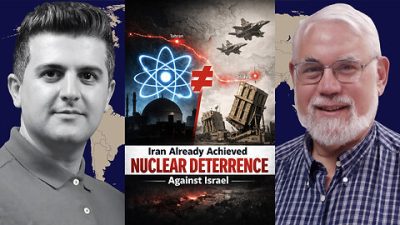
Prof. Ted Postol: Iran Already Achieved Nuclear Deterrence Against Israel
or go to
Aletho News Archives – Video-Images
From the Archives
How the occupied mentality syndrome works
Saudi Arabia on the American chessboard – Part 3
By B. J. Sabri | American Herald Tribune | June 27, 2016
Read part 2: “The occupied mentality Syndrome“
Previously I argued whether Saudi Arabia’s repeated involvements in U.S. interventions and wars stem from free national will or in response to a specific condition. For starters, in Saudi Arabia there is no national will. In Saudi Arabia, the national will is the will of the Al Saud clan. Still, when a major Arab state allies itself with a superpower that committed unspeakable crimes against humanity in almost every Arab country, then something is wrong. This fact alone should compel us to examine the U.S.-Saudi relation for one exceptional reason. As a result of the U.S.-Saudi wars, hundreds of thousands of people in Afghanistan, Iraq, Iran, Libya, Syria, Yemen, and Somalia have lost their lives. Millions became displaced in their own homelands. And millions more rendered refugees.
Attributing the Saudi policies to the bonds of “partnership” with the U.S. is frivolous. There are no bonds between these two thugs except those of business, military deals, secret plots, and wars. Proving this point, bonds such as these have no space for the American and Saudi peoples to share significant cultural or societal exchanges. If partnership is not the reason for the Saudi contribution to the U.S. strategy of empire and imperialism, then another reason must exist.
This leads to three possibilities. … continue
Blog Roll
 Aletho News
- NIAID/NIH and USDA Fund Bioengineered Chimeric Influenza Viruses Built Using Pandemic H1N1 Components: Journal ‘Science Advances’
- Hezbollah hits Israeli warship off Lebanon’s coast, sets it aflame
- Iran slams US strikes on B1 bridge, Mahshahr petrochemical plants as ‘blatant acts of state terrorism’
- In letter to UN chief, Araghchi warns of dire consequences of US-Israeli attacks on Iran’s nuclear facilities
- Why the CIA conspiracy to invade Iran with Kurdish militias failed
- Why Are Upbeat US Claims About Mission to Rescue Pilot ‘Highly Questionable’?
- Aircraft destroyed during US ‘rescue’ of downed F-15 pilot cost more than $100 million each
- Washington University removes professor who condemned US-Israeli war on Iran
- Russia Warns of Retaliation as UK Authorizes Seizure of Vessels
- Serbia thwarts plot to bomb Russia-Hungary gas pipeline – Vucic
- If Americans Knew
- In Iran, Israel-US take aim at “reason, research, and freedom of thought” – Daily Update
- US loses planes over Iran, Israel downgrades Lebanon war goals – Daily Update
- Israel Is Blocking Palestinians from Easter at Church Where Jesus Resurrected
- Plot to assassinate Palestinian activist follows harassment campaign promoted by Zionist groups and elected officials
- Prominent New York synagogue hosts presentation on why U.S. Jews should support the ethnic cleansing of Gaza
- Tapper vs. Piker: Is the CNN Anchor Auditioning for David Ellison?
- Shouldn’t Democrats Be Able to Condemn Genocide?
- Israel-US kill negotiators, destroy civilian structures, but Iran’s military capabilities still largely intact – Daily Update
- ‘War crime’: Global condemnation as Israeli ministers celebrate death penalty law targeting Palestinian prisoners
- 7 Ways Israel Is Turning Lebanon Into Gaza
- No Tricks Zone
- An Inconvenient Tree: Uncovered In Alps… Europe Much Warmer Than Today 6000 Years Ago
- New Study Reports A 60% Slowdown In Greenland’s Ice Loss Rate In The Last Decade
- Low Intensity Tornado Wrecks Major Solar Farm, Creating A Potential Toxic Dump
- New Study Finds Warming Saves Lives…Cold Temperatures 12 Times More Deadly Than Excess Heat
- German Science Blog Accuses PIK Climate Institute Of Hallucinating Climate Tipping Points
- Devastating Assessment Of Comirnaty Vaccine By Former Senior Pfizer Europe Toxicologist
- New Study: CO2 Is ‘Effectively Negligible’ As An Explanatory Climate Change Factor Since 2000
- Former Pfizer Toxicologist Dr. Helmut Sterz Tells Bundestag Hearing Pfizer Vaccine Should Have Never Been Approved
- Energy Expert: Germany’s Nuclear Phaseout Was A “500 Billion Euro Mistake”
- New Research: South Australia’s Mid-Holocene Sea Surface Temperatures Were 4°C Warmer Than Today
 Aletho News