‘Israel faces hopeless situation in Gaza’: Kevin Barrett
Press TV – October 13, 2023
The Israeli regime faces a “hopeless” situation in its war of aggression against the Palestinians in Gaza, an American scholar and commentator has said.
Dr. Kevin Barrett, an Islamic scholar and former American academic made the remarks in an exclusive interview with the Press TV website on Friday.
Gaza has been a target of Israel’s continuous bombardment since Saturday when it was caught flat-footed by a multi-pronged operation by resistance groups that involved massive missile strikes and ground incursions into settlements near the blockaded territory.
The Health Ministry in Gaza announced on Friday that at least 1,799 Palestinians, including 583 children and 351 women have been martyred in six days of incessant Israeli bombardment of the blockaded territory.
More than 7,000 Palestinians have also been wounded in the bombardment.
“Like the Americans in Vietnam, Iraq, and Afghanistan, Israel faces an impossible, hopeless situation. The more violence it uses, the more it is hated. Kill an enemy, and ten new ones spring up in his place,” said Dr. Barrett, who is now based in Morocco. He previously lived in the US.
On the possibility of an Israeli ground offensive against the strip, Barrett said that “a limited ground invasion” is likely but if Israel decides to go further than that, a wider conflict may break out leading to Israel’s destruction.
“A limited ground invasion of Gaza is likely unavoidable. But if the Zionists continue to take heavy losses, which seems probable given the Palestinians’ stellar military performance (not to mention courage), a genocidal escalation cannot be discounted,” he said.
Fear of mutually assured destruction (MAD)
Barrett said Palestinians would resist the Israeli regime’s ground invasion, as they have nothing to lose and are ready to die for their cause, unlike Israelis who can move to other countries and live a comfortable life.
“The Palestinians have long since reached the point where they really have nothing to lose. Like Putin, who says ‘What’s the point of a world without Russia;’ they see no point in living in a world without Palestine. And of course, Muslims will never accept a world without al-Aqsa. So the Palestinians and their supporters are fully prepared to die for their cause,” he stated.
“Not so the Zionists. Most have dual citizenship and can live quite comfortably in Western or Eastern Europe, Russia, North America, or even South America,” he explained.
Dr. Barrett said the Israeli regime is willing to expel or even kill all the Palestinians in the Gaza Strip, but he hopes fears of a “mutually assured destruction (MAD)” would deter the regime from taking that option.
He added, “Netanyahu has openly proclaimed his genocidal intentions: ‘We will turn Gaza into a deserted island. To the citizens of Gaza, I say: You must leave now. We will target each and every corner of the strip.’”
“In other words, Netanyahu is threatening to murder the 2.3 million people penned up in the open-air concentration camp known as the Gaza Strip if they refuse to leave. And they will refuse,” he said.
“But will Netanyahu really exterminate 2.3 million concentration camp inmates? Is he planning to load them into boxcars and ship them to gas chambers? Even if he thought world public opinion would allow it, does he really believe that Hezbollah and Iran, and quite possibly other regional nations and organizations, would stand by and allow the Gazans to be completely exterminated?” he asked.
“While it is true that the Zionist entity commands enough firepower to obliterate Gaza, supporters of the Palestinians likewise command enough firepower to obliterate the Zionist entity. I hope and pray that this mutually assured destruction deters the Zionists from implementing Netanyahu’s final solution to the Palestinian problem,” Barrett stated.
‘Slow-motion genocide’
Elaborating on the root of Hamas’s surprise operation, Barrett said it was the natural outcome of what he calls “the ongoing slow-motion genocide of Palestine.”
He said that as a people living under occupation, the Palestinians have the right, under international law, to use military force to try to remove the occupation. Considering the horrific treatment they continue to receive, it is not surprising that they are willing to avail themselves of that right.
“The Palestinians have been massacred, blockaded and starved, penned up in de facto concentration camps like the Gaza Strip, and subjected to endless indignities. Their children are shot for sport by Israeli soldiers. Their neighborhoods are broken up with Orwellian checkpoints and illegal settlers steal more and more of their land,” he stated.
“Their homes are invaded and demolished. Their women are assaulted, their holy places defiled, their olive trees uprooted, their water, sewage and electricity systems destroyed,” he said.
“Their schools and ambulances are bombed, their teenagers are mowed down from aircraft while they play soccer on the beach, and their bodies are burned away with white phosphorus. Experimental weaponry is tested on them. Their bravest leaders are targeted and killed. And anyone caught resisting who isn’t killed is imprisoned and tortured.”
Barrett said the Zionist regime’s escalating series of desecrations of the Al-Aqsa mosque, which are meant to prepare the ground for the eventual destruction of the Islamic world’s oldest and greatest architectural monument, is what pushed Palestinians over the brink.
“Operation Al-Aqsa Storm was primarily launched in defense of the holy mosque. Al-Aqsa is the pre-eminent symbol of Islamic spirituality and monotheistic ecumenism. It is as important to Muslims as the Vatican is to Catholics. For Muslims, allowing al-Aqsa to be invaded, desecrated, and destroyed is not an option, any more than Catholics would allow the Vatican to be invaded, desecrated, and destroyed,” he said.
Dr. Barrett explained that during recent months, and even more so in recent weeks, the Zionists have been invading the mosque and attacking worshippers including women and the elderly while being protected by the Israeli police.
“The Zionist settlers who invade the mosque under police protection are not just trespassers and bullies. They intend to destroy Al-Aqsa, and their invasions are meant to gradually erode Muslim control of the mosque and assert Zionist control,” he said.
“Once Muslims have been fully dispossessed of their greatest spiritual and architectural treasure, the Zionists intend to destroy it so they can ‘rebuild’ a blood sacrifice temple,” he observed.
Dr. Barrett said Hamas is now not only representing Palestinians but the whole Muslim world, as it is defending the Al-Aqsa mosque.
“Hamas, in its heroic defense of al-Aqsa, does not just represent Palestinians. It represents the entire Islamic world. Every Muslim leader on earth needs to let the world know, clearly and unmistakably, that we all have the Palestinians’ back.”
Hamas operation disrupted Israeli-Saudi normalization
Barrett said Hamas was probably also worried that Saudi leaders may soon start befriending the Israeli regime and this would embolden the regime to accelerate its drive to basically uproot Palestinians.
“They were concerned that the Saudis, those self-appointed custodians of the Islamic world’s other two great shrines, were getting ready to stand back and allow the al-Aqsa Mosque to be destroyed while the Palestinian people suffered gradual extermination. That seems to be the Saudi leadership’s policy,” he said.
“So Hamas was faced with a difficult situation: The extremist-led Zionists had bought off much of the regional leadership and were clearing the way for an even bigger attack on Palestine,” he said.
“As Sam Husseini says: … the chessboard was basically set for Israel to pummel the Palestinians. This was especially driven by the US government’s drive for ‘normalization’ between Arab states with Israel.”
“This and other things—Turkish president Erdogan meeting Netanyahu for the first time recently—made it apparent that Israel was positioned to inflict massive violence against the Palestinians. I don’t know but suspect that Hamas came to the same conclusion and decided to strike first,” he said.
By striking first and scoring a big victory, Palestinians have rallied and roused the people of the region, including Saudi Arabia, making it impossible for the Saudi leadership to pursue its deeply unpopular “normalization” project, Barrett said.
‘Zionist project was always doomed’
Commenting on the long-term future course of the conflict, Barrett said Zionists are their own biggest enemy, as their project of occupying the Palestinian land was always doomed to failure.
“The Zionist project recalls Walt Kelly’s famous Vietnam-era ‘Pogo’ comic strip: ‘We have met the enemy, and he is us.’ The Israelis are their own worst enemies. Their invasion, occupation, and ethnic cleansing of the Palestinians, in a region where hundreds of millions of people share the language, culture, and/or religion of their victims, was always bound to fail,” he stated.
“Ten million Jewish tribalists, no matter how rich and powerful and connected, cannot permanently defeat four hundred million Arabs and two billion Muslims,” he explained.
He said the only realistic course that was ever open to the Zionists was peaceful integration into the region on the basis of friendship and equality, but their “insufferable arrogance” precluded that from the very beginning.
Israel sets deadline for 1.1 million to flee northern Gaza as ethnic cleansing campaign worsens
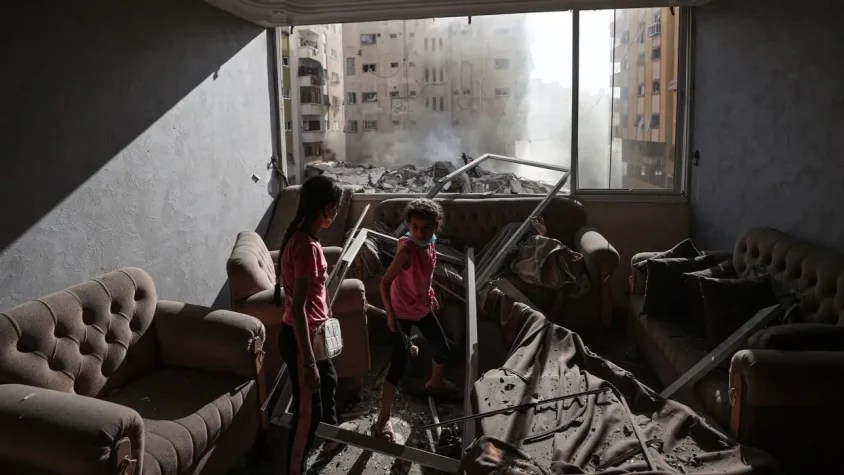
(Photo Credit: Mustafa Hassona/Anadolu Agency/Getty Images)
The Cradle | October 13, 2023
Over one million Palestinians living in the northern Gaza Strip have until midnight on 13 October to make their way south as hundreds of thousands of Israeli troops are expected to storm the besieged enclave.
The order was relayed to UN officials in New York late on Thursday, as Tel Aviv has said fleeing Palestinians will not be allowed to return “until we say so.” Almost half a million Palestinians have already been displaced by the Israeli onslaught.
“The United Nations considers it impossible for such a movement to take place without devastating humanitarian consequences,” UN spokesman Stephane Dujarric said about the order.
“This is chaos; no one understands what to do,” Inas Hamdan, an officer at the UN Palestinian Refugee Agency (UNRWA) in Gaza City, told AP.
“Forget about food, forget about electricity, forget about fuel. The only concern now is just if … you’re going to live,” said Nebal Farsakh, a spokesperson for the Palestinian Red Crescent Society (PRCS), adding that there is no way to mobilize wounded and elderly patients inside hospitals.
Hamas officials dismissed the orders, calling on Palestinians to “remain steadfast in your homes and to stand firm in the face of this disgusting psychological war waged by the occupation.”
“We affirm that all governorates of the Gaza Strip, whether north or south, are [active targets]. The process of displacement or departure from the north to the south is illogical and constitutes a threat to the lives of our honorable citizens,” officials in Gaza stressed.
Tel Aviv made the announcement as warplanes pounded the world’s largest open-air prison for the seventh consecutive night, destroying 750 targets and killing about 250 Palestinians in a single day in what is described as “collective punishment” for the historic Al-Aqsa Flood resistance operation.
As of Friday, the death toll of the Israeli blitz stands at over 1,500 Palestinians – a third of whom were children.
Although Israeli officials claim their indiscriminate bombing campaign hits only “terrorist” targets, the reality inside Gaza is the opposite: the bombs have destroyed entire residential neighborhoods, dozens of high-rise apartment buildings, schools, hospitals, and even Gaza’s complete stock of solar panels.
Furthermore, the attacks have failed to make any significant dent on Hamas and Palestinian Islamic Jihad (PIJ) forces, who have operated underground for years.
Israel has also completely cut off electricity, water, food, and fuel for Gaza, exacerbating an already dire humanitarian crisis for the 2.3 million Palestinians trapped inside.
Human rights organizations on Thursday confirmed that the Israeli air force has also been using internationally banned white phosphorous bombs on Gaza’s civilian population.
“White phosphorus, which can be used either for marking, signaling, and obscuring, or as a weapon to set fires that burn people and objects, has a significant incendiary effect that can severely burn people and set structures, fields, and other civilian objects in the vicinity on fire,” Human Rights Watch said in a statement.
“The use of white phosphorus in Gaza, one of the most densely populated areas in the world, magnifies the risk to civilians and violates the international humanitarian law prohibition on putting civilians at unnecessary risk,” it added.
US in a quandary over Israel’s war on Gaza
BY M. K. BHADRAKUMAR | INDIAN PUNCHLINE | OCTOBER 13, 2023
The US Secretary of State Antony Blinken’s press conference on Thursday concluding his visit to Israel conveyed three things. One, the Biden Administration will be seen as backing Israel to the hilt by way of meeting its security needs but Washington will not be drawn into the forthcoming Gaza operations except to arrange exit routes in the south for hapless civilians fleeing the conflict zone.
Two, Washington’s top priority at the moment is on engaging with the regional states who wield influence with Hamas to negotiate the hostage issue. Fourteen US citizens in Israel remain unaccounted for. (White House confirmed that the death toll in the fighting now includes at least 27 Americans.)
Three, the US will coordinate with the regional states to prevent any escalation in the situation to widen the conflict on the part of Hezbollah. Although the US cannot and will not stop Israeli leadership on its tracks apropos the imminent Gaza operation, it remains unconvinced.
Blinken was non-committal about any direct US military involvement, and the chances are slim as things stand. Most important, even as Blinken could hear the war drums, he also cast his eye on a future for Israel (and the region) where it will be at peace with itself, would integrate into the region and concentrate on creating economic prosperity — metaphorically put, beating its swords into plowshares in a Biblical Messianic intent.
That is to say, despite the massive show of force off the waters of Israel, with the deployment of two aircraft carriers along with destroyers and other naval assets and fighter jets off the waters of Israel, the Biden Administration is profoundly uneasy about any escalation of the conflict into a wider war. If the US senses that this is a catastrophe that Israel allowed to happen, that remains a strictly private thought.
Even as Blinken was heading for Tel Aviv, US House Foreign Affairs Committee Chairman Michael McCaul told reporters in Washington on Wednesday following a closed-door intelligence briefing that “We know that Egypt has warned the Israelis three days prior that an event like this could happen. I don’t want to get too much into classified, but a warning was given. I think the question was at what level.”
Shortly after McCaul spoke to reporters in Washington, an anonymous Egyptian official confirmed to the Times of Israel that Cairo’s agents did warn their Israeli counterparts about a planned Hamas attack, but that this warning may not have made it to Netanyahu’s office.
These disclosures would embarrass the Israeli government, as Saturday’s surprise attack can be viewed as a catastrophic failure for Israel’s intelligence services. In a brutally frank statement on Thursday, the Chief of General Staff of the Israel Defense Forces General Herzi Halevi admitted, “The IDF is responsible for the security of our nation and its citizens, and we failed to do so on Saturday morning. We will look into it, we will investigate, but now it is time for war.”
This failure will impact the decision-making in Tel Aviv. Gen. Halevi described Hamas as “animals” and “merciless terrorists who have committed unimaginable acts” against men, women and children. He said that the IDF “understands the magnitude of this time, and the magnitude of the mission that lays on our shoulders.”
“Yahya Sinwar, the ruler of the Gaza Strip, decided on this horrible attack, and therefore he and the entire system under him are dead men,” the general added, vowing to “attack them and dismantle them and their organisation” and that “Gaza will not look the same” afterward.
Make no mistake, the Israeli objective will be to use overwhelming force with its most advanced weapons, including powerful bunker-busting bombs, to inflict crippling losses on Hamas formations so that the movement cannot wage an armed struggle for many years. A ground operation is to be expected any day.
It is improbable that Blinken would have even tried to dissuade Prime Minister Benjamin Netanyahu from going ahead with a brutal operation. He told the media that the US would rather leave it to Israel to do what needed to be done. Meanwhile, the US deployment will not only aim to enhance surveillance, intercept communications, and prevent Hamas from acquiring more weapons, but also act as deterrent.
That said, the US cannot afford to watch passively. Washington has no choice but to limit the expected fighting in the coming days and weeks in Gaza to ensure that it does not spread to other areas. Thus, the US force projection specifically serves as a deterrent to Hezbollah, which possesses a vast armoury of 150,000 missiles that can be launched at major cities in Israel, potentially leading to a broader war not only in Gaza but also in Lebanon, drawing others into the conflict.
Israel knocked out of service the airports in Damascus and Aleppo in Syria in missile strikes simultaneously on Thursday, presumably to prevent reinforcements reaching Lebanon. Iran’s foreign minister Hossein Amir-Abdollahian was due to travel to Syria and Lebanon in the weekend.
Through the past four decades, the US and Iran have made a fine art of communicating with each other in dangerous times to set ground rules to avoid confrontation. This time around too, it is happening.
Certainly, the speech by Supreme Leader Ayatollah Ali Khamenei on Tuesday on the conflict situation, which was translated into Hebrew by the Iranians and disseminated in an unprecedented move, conveyed a subtle message in three parts to both Israel and the US, signalling essentially that Tehran does not intend to get involved in the conflict. (See my blog Iran warns Israel against its apocalyptic war.)
In turn, the US has signalled that it has intelligence showing that key Iranian leaders were surprised by the Hamas attacks on Israel. Equally, Iranian President Ebrahim Raisi’s phone conversation with Saudi Crown Prince Mohammed bin Salman on Wednesday — their first ever conversation which Tehran initiated — harped on efforts to “halt the ongoing escalation.”
The ‘known unknown’ scenario
Yet, the big question is, how far the Biden Administration would be confident about the success of any Israeli military incursion into Gaza. During the press conference in Tel Aviv, Blinken underscored in a subtle way the importance of “lessons” learnt from past experiences. The point is, Israel will be involved in urban warfare in a densely populated area with a population of 2.1 million people.
Gaza has an average of 5,500 people per sq. km, and there are bound to be heavy civilian casualties caused by Israel’s advanced American weaponry, which would lead to an international outcry, including in Europe, and lead to condemnation of not only Israel but the US as well. However, Israel is in a defiant mood and Netanyahu needs at least some of the operation’s goals achieved before agreeing to a ceasefire.
More importantly, Israel needs an exit strategy, if past experiences in Lebanon and Gaza gave any lessons. Colin Powell’s Pottery Barn rule comes into play — ‘You break it, you own it.’
An extended occupation of Gaza will be an extremely dangerous outcome fraught with great risks, given the deep economic, religious, and social roots that Hamas enjoys. Suffice to say, the Israeli military will be hard-pressed to show “success” and head for the exit door.
Besides, if other Palestinian groups and organisations in the West Bank make decisions that advance Hamas’s strategic goals, all bets are off, as Israeli military will face a two-front war. In fact, the conditions for a third intifada do exist in the West Bank.
And in such a scenario, the advantage goes to Hamas, which would position itself as potentially the appropriate and perhaps the sole alternative after Palestinian Authority President Mahmoud Abbas, who is now 87 years old.
Again, in a worst case scenario, it cannot be ruled out that the Arab Israeli population may draw inspiration from Hamas, and if their violent eruption in 2021 is anything to go by, the long-term viability of the state of Israel will be put to test.
Suffice to say, the best solution lies in a paradigm shift in the Israeli statecraft away from its primacy on coercion and brutal force. Blinken’s remarks suggested that the US hopes that when the dust settles down, with the helping hand of friendly Arab countries such as Saudi Arabia, the UAE, Egypt and Jordan, a turnaround to calm the situation and reach a ceasefire might be possible.
Of course, the longer that takes, the greater the strain it will put on the US-Israeli ties and the harder it will become for the Biden Administration to maintain an equilibrium in what is already a troubled relationship with Netanyahu. Fundamentally, Israel needs to come terms with the new reality that they are no longer invincible or the dominant power in the West Asian region.
Biden, US politicians greenlighting ‘potential genocide’ of Palestinians: Analysts

The ruins of houses destroyed in Israeli strikes in Khan Younis, in the southern Gaza Strip, Tuesday, October 10, 2023.
Press TV – October 12, 2023
Political analysts have warned that US President Joe Biden’s unflinching backing of Israeli aggression against Palestinians in the besieged Gaza Strip could give the Tel Aviv regime the greenlight to commit mass atrocities and genocide against the people of Palestine.
And while the US has always supported Israel in previous incursions and attacks on Palestinians, a number of concerned experts say this time is completely different.
“What’s different now is that the president and Congress have provided the greenest of possible green lights to enable Israel to do anything that it wants to do up to and including genocide,” Josh Ruebner, a political analyst, told Middle East Eye on Thursday.
“Make no mistake about it, by providing 100 percent backing for any action that Israel takes in the Gaza Strip, President Biden is complicit in Israel’s commission of war crimes, and potentially much, much worse,” said Ruebner, who is also the author of Shattered Hopes: Obama’s Failure to Broker Israeli-Palestinian Peace.
“As of this point, I do not believe that President Biden will stop Israel at any point,” Ruebner added.
“It’s unclear how long this green light will last. It’s unclear to what extent mass murder would need to be committed by Israel before it’s reined in by the United States,” he said.
In his public address on Tuesday, Biden described the actions of Hamas, the Palestinian resistance group against the Israeli regime, as “sheer evil,” and said that the US stands behind Israel and will provide it whatever it needs to attack Gaza.
“We will make sure Israel has what it needs to take care of its citizens, defend itself, and respond to this attack,” Biden said. “Let there be no doubt. The United States has Israel’s back. We’ll make sure the Jewish and democratic state of Israel can defend itself today, tomorrow, as we always have.”
No mention of concern for Palestinians
Yet none of Israel’s actions against the civilian population of Gaza received a mention in Biden’s speech on Tuesday.
“Biden’s address to the nation, was horrifying in that he didn’t express one iota of concern for the loss of Palestinian civilian life, the war crimes that are being committed currently by the Israeli military in the Gaza Strip, and the widescale incitement to genocide that we’ve heard in recent days from Israeli political and military leaders,” Ruebner said.
Instead, Biden said with confidence that “we uphold the law of war.”
However, experts said the US and Israel both have an extensive history of violating international humanitarian law and the laws of war.
“The United States has been the most fervent violator of the laws of war and international law in general on a global scale ever since it played a leading role in establishing the so-called ‘rules-based’ international order during the post-WWII years,” Kenney-Shawa said.
“I want to be clear with my words right now. It’s rich that the US would claim to abide by the laws of war. Anyone who still believes that the US would uphold the laws of war or respect the international laws it wrote is deluding themselves.”
“In the past, the US may have been counted on to go through the motions of parroting the usual de-escalatory talking points, like calling for ‘both sides’ to avoid civilian casualties or for Israel to exercise a modicum of restraint,” said Tariq Kenney-Shawa, a US policy fellow for al-Shabaka think tank.
“But today, Biden and the rest of the American political establishment are fervently united in giving Israel carte blanche to completely devastate Gaza.”
Ahmad Abuznaid, executive director of the US Campaign for Palestinian Rights, said that rather than calling for a ceasefire and end to the hostilities, the US is “cheerleading” the latest Israeli assault.
“The Israeli forces are murdering entire families in Gaza while supplying arms to their violent settlers in the West Bank to carry out attacks. The situation in Gaza was already devastating and again the people of Gaza are facing attacks from the most powerful military force in the region, with no Iron Dome, no military, and no US government valuing their lives,” Abuznaid said.
Israel fighting religious war, hellbent on exterminating Palestinians
US Senator Lindsey Graham has said clearly and unequivocally in an interview aired on right-wing channel Fox News that “we are fighting a religious war, and I am on Israel’s side”.
Graham’s message to Israel was: “Do whatever it takes. Raze this place to the ground.”
And nearly 400 members of US Congress signed a measure introduced on Tuesday, in which it condemned the Hamas resistance group for its attack on Israel and gave complete support for Israel’s right to defend itself.
“Lawmakers on the left and on the right, from Lindsey Graham to Ritchie Torres, are using this opportunity to viciously demonize Palestinians in order to drum up anti-Palestinian hatred that will give Israel cover to commit unspeakable crimes right in front of our eyes,” said Kenney-Shawa.
“Israel is hellbent on exterminating Palestinians in Gaza, and it knows no one will get in between them and what they see as their divine objective.”
Deadly Israeli bombing campaign
Israeli air strikes have so far targeted hospitals, mosques, and residential buildings across Gaza. Entire families have been wiped out by the bombing campaign.
The Israeli violence has also once again made its way into the occupied West Bank, where Israeli forces have killed 28 Palestinians.
So far, in addition to about 1,500 Palestinians that have been killed, at least 6,268 have been injured. It is unclear how many buildings have been razed, as the number continues to rise by the hour.
Israel has imposed a full siege on the already blockaded enclave, cutting off electricity and water and also refusing requests to allow the entry of food and medical supplies. It also threatened to bomb aid trucks trying to enter from the Egyptian border with Gaza.
The UN Refugee Agency for Palestinian Refugees (UNRWA) said on Tuesday that it has about 12 days of supplies of food and water for the nearly 200,000 people taking shelter in its school buildings. While a blockade is not necessarily a war crime, the intentional starvation of a civilian population as a war tactic is a violation of the Geneva Conventions.
In previous Israeli incursions on Palestinians, the US had called for Israel to use restraint. However, in the past few days, there have been no such calls coming from Washington, at least in public.
The attack on Israel from Hamas and Palestinian resistance groups has been dubbed by Israelis as their own 9/11.
The rhetoric around it has caused even more concern about the fallout for Palestinian civilians, as well as Palestinians across the Western diaspora, as Western governments have begun using the rhetoric aimed at cracking down on pro-Palestinian sentiment by equating it with support for Hamas.
“The mass attack on Israeli civilians on Saturday was not only unprecedented in its scope, in terms of Israeli civilians being impacted by Palestinian attacks. That’s obvious. What hasn’t been discussed so much yet, is that what Hamas did on Saturday is the deepest, darkest fear of every settler colonial society,” Ruebner said.
He added that in looking throughout history, settler-colonial states have often responded in “an overwhelming perhaps eliminatory response.”
“And I gravely fear that Israel’s response will pale in comparison to anything that it has inflicted on innocent Palestinians up to this point, including 1948. That’s how dire I think the situation is.”
The Israeli regime launched its onslaught on Saturday after Gaza-based resistance groups carried out a multi-front operation in response to Israeli crimes.
According to media, the Hamas operation has left 1,200 Israelis dead and nearly 3,000 others injured.
UN Chief Antonio Guterres has already expressed concern over the situation in Gaza, saying the clashes will deteriorate the situation exponentially. He said he was “deeply distressed” by an announcement that Israel will initiate a complete siege of Gaza.
Gaza resistance stands firm six days into Israeli onslaught
The Cradle | October 12, 2023
The Gaza resistance continued targeting occupied towns and cities with large rocket barrages into 12 October, marking the sixth day since the start of Hamas’ Operation Al-Aqsa Flood and the subsequent launch of Israel’s brutal campaign against civilians in the Gaza Strip.
Before noon on Thursday, missiles targeted several Israeli settlements, towns, and sites in the Gaza envelope, including the Nahal Oz settlement, the city of Sderot, and the Raim military base. Several injuries among settlers have been reported.
Rocket barrages were also launched earlier in the morning toward Tel Aviv and other areas, with one of the missiles impacting the Ariel settlement in the occupied West Bank, causing a large explosion.
A massive barrage was fired the previous night at around 9:00 PM, resulting in injuries and significant material damage in several settlements.
Despite Israel’s announcement that the Gaza border had been sealed, resistance fighters managed to carry out several new infiltrations into the occupied territories, engaging Israeli troops with heavy gunfire and sparking clashes in several settlements.
At least 1,300 Israelis have been killed since Saturday, with more than 3,300 wounded.
Hamas has also called for a mass Palestinian uprising, particularly in the occupied West Bank, where resistance has been at an all-time high recently and has surged to unprecedented levels since the start of Operation Al-Aqsa Flood on Saturday.
Meanwhile, Israeli warplanes have not stopped targeting civilian neighborhoods in Gaza.
According to WAFA news agency, an entire family in Gaza was killed by Israeli airstrikes on 12 October.
“Former prisoner Abdul Rahman Shihab, who spent 23 years in Israeli prisons for resisting the occupation and was released in 2011, and his wife, children, and mother were killed in the shelling of their home without prior warning,” a WAFA correspondent said.
Hundreds of homes and buildings have been razed to the ground. Several medics, journalists, and UN staffers have also been killed.
The death toll in Gaza stands at over 1,300 people, with around 6,000 others injured. The numbers are expected to continue rising.
Israel has used White Phosphorus and cluster bombs to target Gaza, both internationally banned weapons.
While Israel claims it targets Hamas sites and positions, much of the resistance group’s infrastructure lies underground and remains unaffected by the Israeli bombardment.
Iran and Saudi Arabia say Israel, its supporters inviting ‘destructive insecurity’
Press TV – October 11, 2023
Iran and Saudi Arabia have said that the Israeli regime’s crimes and the United States’ green light for the atrocities stand to invite “destructive insecurity” for the occupying regime and its supporters.
The remarks were made on Wednesday in the first phone call to take place between President Ebrahim Raeisi and Saudi Crown Prince Mohammed bin Salman, Mohammad Jamshidi, the Iranian chief executive’s deputy chief of staff for political affairs, wrote on a message on X, formerly known as Twitter.
The comments came after the Gaza Strip’s resistance movements initiated their biggest operation against Israel in years on Saturday in response to the occupying regime’s decades-long campaign of bloodshed and destruction against Palestinians.
Codenamed the al-Aqsa Storm Operation, the campaign killed at least 1,000 Israeli forces and settlers, and led to many others among them being taken hostage by the resistance groups.
Shedding further light on the contents of the conversation between Raeisi and bin Salman, Jamshidi said, “…the 2 agreed on the need to end war crimes against Palestine.”
Israel has responded to the Palestinian operation by waging a “long” war against Gaza, for which it has called up an unprecedented 300,000 reservists.
The Israeli war has killed at least 1,100 Palestinians, including 326 children, and injured 5,339 others.
The military campaign has seen the regime leveling entire districts and featured its use of banned white phosphorous munitions against densely populated neighborhoods.
Earlier this week, Israeli Minister for Military Affairs Yoav Gallant announced a “total blockade” to stop food and fuel from reaching Gaza, home to 2.3 million people.
UN Secretary-General Antonio Guterres on Monday said he was “deeply distressed” by Israel’s announcement of the complete siege.
“The humanitarian situation in Gaza was extremely dire before these hostilities; now it will only deteriorate exponentially,” Guterres said.
326 Palestinian children killed as Israel plunges Gaza into darkness
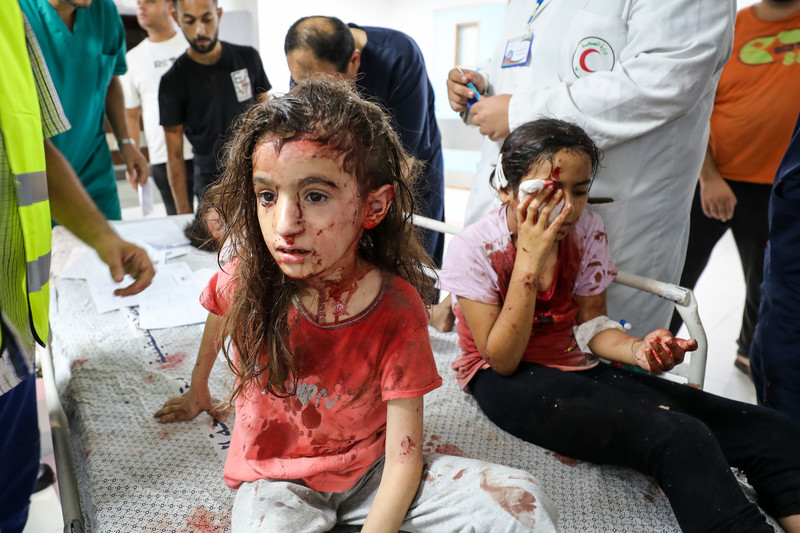
Defense for Children International – Palestine | October 11, 2023
Israeli authorities prohibit food, fuel, electricity, and water into the Gaza Strip as Defense for Children International – Palestine has so far confirmed the killing of at least 105 Palestinian children since Saturday, with the total now surpassing 300.
DCIP has confirmed the killing of at least 105 Palestinian children in direct Israeli attacks in the Gaza Strip between October 7 and 11, while the Ministry of Health in Gaza announced today that over 326 children have been killed. DCIP staff in Gaza and the West Bank continue to document and confirm Palestinian child fatalities as hostilities continue between Palestinian armed groups and Israeli forces. Intensive Israeli bombardment throughout the Gaza Strip, lack of electricity, Israeli airstrikes on telecommunications infrastructure, and the unprecedented rate of daily child fatalities has resulted in a lag between confirmed fatalities by DCIP and the overall total child fatalities published regularly by the Ministry of Health in Gaza.
“Israeli forces are destroying entire neighborhoods in the Gaza Strip as an apparent full-scale ground assault is imminent,” said Ayed Abu Eqtaish, accountability program director at DCIP. “Immediate humanitarian relief is necessary to protect civilians as Israeli forces prepare to intensify attacks and Israeli officials declare their intention to commit further war crimes and crimes against humanity.”
Around 6 p.m. on October 9, Israeli warplanes targeted, without prior warning, a two-story building behind the Golden Hall in the Americana area west of Beit Lahia in the northern Gaza Strip, killing at least 14 Palestinians, including at least six children: siblings Karam, three, Akram, 10, Watan, one, Mahmoud, nine, Amani, four, and Fatima Mohammad Abdulrahim Al-Madhoon, seven, according to documentation collected by DCIP. Rescue teams were able to recover seven bodies.
An Israeli airstrike targeted without prior warning a residential building in Jabalia refugee camp around 9 a.m. on October 10, killing four Palestinians, including three children: Mohammad, two, Karam, three, and Naheda Mousa Yousef Al-Hesi, 11, according to documentation collected by DCIP. Other children were also injured in the attack.
Israeli warplanes targeted a residential building without prior warning around 11 a.m. on October 10 in Jabalia refugee camp in the northern Gaza Strip, killing 14 Palestinians, including seven children, according to documentation collected by DCIP. The airstrike killed seven children from the Ahmad family: siblings Mustafa, nine, and Elayn Tamer Mohammad Ahmad, four, their cousins Sidra, five, Haidy, one, Linda, seven, and Qusai Mohammad Aladdin Ahmad, three, as well as another cousin, two-year-old Obaida Rafat Aladdin Ahmad.
Israeli warplanes completely destroyed a three-story residential building without warning in the Tal Al-Zaatar area of Jabalia refugee camp in the northern Gaza Strip around 9:25 p.m. on October 10, killing everyone inside, including at least one child, 10-year-old Mohammad Baraa Taysir Shahin, according to documentation collected by DCIP. Palestinian civil defense teams have recovered two bodies from the building, while an estimated 10 Palestinians were inside during the bombing.
In addition to these incidents, DCIP has verified the killing of an additional 11 Palestinian children in the Gaza Strip in other attacks, though DCIP field researchers are still gathering and verifying details of the incidents. Those killed include:
- Ali Omar Mousa Al-Qatnani, four, from Jabalia
- Siblings Layan, two and Majd Mohammad Ismail Salah, two, from Beit Lahia
- Haitham Khaled Abdulazeem Asayleh, 17, from Jabalia
- Hassan Mohammad Ismail Salah, nine, from Jabalia
- Malak Mohammad Majed Al-Daqs, two, from Jabalia
- Kenan Mohammad Mahmoud Farhat, two, from Jabalia
- Cousins Nadeen Mohammad Abdulati Salah, 13, and Diaa’ Ahmad Abdulati Salah, six months, from Jabalia
- Mohammad Hassan Ali Al-Zain, seven, from Khan Younis
- Sham Mohammad Saleh Al-Sawalha, eight months, from Jabalia
Israeli forces unleashed a massive military offensive on the Gaza Strip on Saturday after Palestinian armed groups fired rockets toward Israel and breached the Israeli perimeter fence surrounding Gaza early on October 7, launching attacks inside Israel. Israeli forces initiated a large-scale military operation dubbed Operation Iron Swords.
At least 1,100 Palestinians, including at least 326 children, have been killed in the Gaza Strip since Saturday morning, according to the Palestinian Ministry of Health in Gaza. DCIP is working to document additional attacks and killings. Israeli forces have shot and killed six Palestinian children in the occupied West Bank since October 7, including 12-year-old Ahmad Abdulnaser Adnan Rabi.
DCIP previously confirmed the killing of at least 74 Palestinian children in direct Israeli attacks in the Gaza Strip between October 7 and 10, 2023, in a report issued yesterday.
Over 263,934 people in the Gaza strip have fled their homes as mass displacement escalates with intensifying Israeli attacks, according to the United Nations Office for the Coordination of Humanitarian Affairs (UN OCHA). More than 175,486 internally displaced Palestinians are sheltering in 88 United Nations schools throughout the Gaza Strip, while over 73,900 Palestinians, whose homes have been destroyed or damaged, are hosted by relatives and neighbors, according to UN OCHA.
Cheap Hamas drones made Israel’s border wall ‘useless’ – NYT
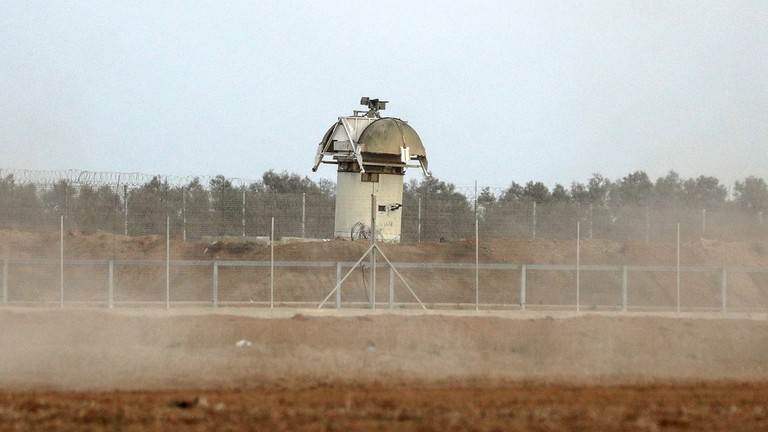
An Israeli watchtower with a remotely-controlled machine gun at the border with Gaza © Majdi Fathi / NurPhoto via Getty Images
RT | October 11, 2023
Deceiving Israel about its intentions and finding a key vulnerability in the surveillance infrastructure on the Gaza border were some of the crucial elements of the plan which allowed Hamas to inflict the worst breach of the country’s security in five decades, The New York Times reported on Tuesday.
The newspaper spoke to senior Israeli security officials about the preliminary conclusions that their agencies made about last Saturday’s incursion of Hamas fighters into southern Israel. The Palestinian militants raided more than 20 towns and military bases, killing hundreds of troops and civilians and capturing dozens of hostages.
Prior to the attack, Israel had considered Hamas successfully deterred since clashes in May 2021. Intercepted calls between militants appeared to confirm the assessment that the organization was not an imminent threat, sources said. An analysis is underway on whether those conversations were staged.
Israel was over-reliant on the sophisticated wall it built along the Gaza border, which has multiple types of sensors and remotely operated machine guns. Officials believed it to be virtually impenetrable and kept a relatively small military force nearby, prioritizing other areas for deployment, the report said.
Hamas took out at least four communication towers using drone-dropped munitions in the early phase of its attack, rendering the system “useless,” NYT said. The Israelis could not see the consequent breach of the physical barrier, which turned out to be an easier task than they expected it would be. Hamas used explosives and bulldozers to create nearly 30 gaps for some 1,500 fighters to pour through.
An operational lapse by Israel resulted in the clustering of its senior commanders in the area at a single base, which was overrun in a lightning offensive by the militants. With the leadership mostly killed or taken hostage, Israeli response to the emergency was disorganized and slow, sources said.
People higher up in the command chain did not initially realize the scale of the incursion amid the chaos. It took Israeli warplanes hours to provide air support to responding forces, despite their being based just minutes’ flying time from the area.
A thorough investigation of the Israeli failures is pending, as its forces are currently focused on retaliatory military action in Gaza. The newspaper suggested that the Hamas raid had shattered the nation’s sense of safety and undermined its international reputation as a reliable security partner.
Operation Al-Aqsa Flood has altered the relationship between Palestine and Israel
By Ramzy Baroud | MEMO | October 10, 2023
UN: Israel’s total Gaza blockade amounts to war crime
Press TV – October 10, 2023
The United Nations human rights chief has warned that Israel’s imposition of a total blockade on the Gaza Strip amounts to a war crime and violates international law.
Volker Turk, the UN High Commissioner for Human Rights, said in a statement on Tuesday that the blockade “seriously” risks the already dire humanitarian situation in the Palestinian enclave.
Turk underscored the limited capacity of medical facilities to operate, especially in light of the growing number of injured. He said Israel’s “imposition of sieges that endanger the lives of civilians by depriving them of goods essential for their survival is prohibited under international humanitarian law.”
“This risks seriously compounding the already dire human rights and humanitarian situation in Gaza, including the capacity of medical facilities to operate, especially in light of increasing numbers of injured,” Turk said, adding that a siege may amount to “collective punishment.”
Separately on Tuesday, UN Human Rights spokeswoman Ravina Shamdasani clarified that such acts may amount to a war crime. Findings of the UN rights chief are based on a review of available material, including from its own monitors on the ground, she added.
Furthermore, UN children’s agency spokesman James Elder sounded alarm over the siege on Gaza.
“UNICEF is extremely alarmed about measures to cut electricity, to cut food, to cut water, to cut fuel from entering Gaza. This will add another layer of suffering to the existing catastrophe faced by families in Gaza.”
Israel launched deadly strikes on the densely-populated Gaza Strip on October 7, after the resistance movement Hamas waged the surprise Operation Al-Aqsa Storm against the usurping entity.
Hamas said its operation came in response to Israel’s violations at al-Aqsa Mosque in occupied East al-Quds and growing settler violence.
According to the Gaza Health Ministry, at least 830 Palestinians have been killed in the Israeli bombardment.
Israel airstrikes have destroyed seven Gaza mosques since Saturday
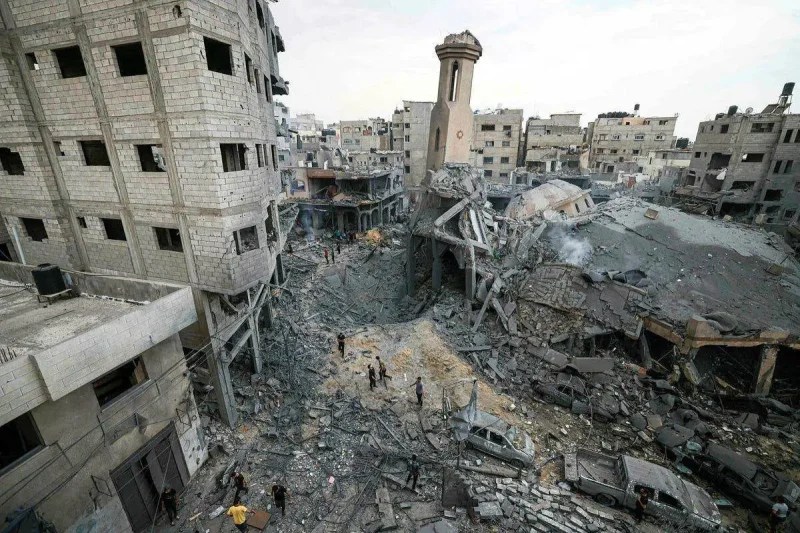
Israeli warplanes blow up the Yarmouk Mosque in Gaza city on October 09, 2023 [Mohammed Asad/Middle East Monitor]
MEMO |October 9, 2023
Israeli attacks have destroyed seven mosques in the Gaza Strip since Saturday, Anadolu Agency reports.
Israeli warplanes attacked the Al Abbas Mosque in central Gaza with many rockets.
The attacks have now led to the destruction of seven mosques, with the most recent being the Al-Abbas Mosque.
Israel had previously hit the Al-Susi, Al-Yarmouk, Al-Amin Muhammad, Ahmed Yassin, Al-Habib Mohammad, and Al-Garbi mosques in Gaza.
The Israeli army’s intensified attacks on the Gaza Strip continue.
The Gaza-based Resistance group, Hamas, launched Operation Al-Aqsa Flood against Israel early Saturday, firing a barrage of rockets. It said the surprise attack was in response to the storming of Al-Aqsa Mosque in Occupied East Jerusalem and increased settler violence.
In retaliation, the Israeli army launched Operation Swords of Iron against Hamas in the Gaza Strip.
At least 800 Israelis have been killed and over 2,300 others wounded in the fighting, according to the Israeli Ministry of Health.
The Palestinian Health Ministry said that over 560 Palestinians died and over 2,900 were wounded.
Featured Video

BRITAIN’S WARNING: PREPARE FOR WAR
or go to
Aletho News Archives – Video-Images
From the Archives
British weapons and personnel doing much of the killing in Yemen
Press TV – June 18, 2019
A detailed report published by the Guardian newspaper has shown how Britain is massively contributing to Saudi Arabia’s devastating war on Yemen as it suggests that London is not only supplying the bombs that fall on Yemenis, but it provides the personnel and expertise that keep the war going.
The comprehensive report by Arron Merat published on Tuesday showed that Britain was doing much of the killing in Yemen as the country continues to provide Saudi Arabia with everything it needs to turn its southern impoverished neighbor into a graveyard.
“Every day Yemen is hit by British bombs – dropped by British planes that are flown by British-trained pilots and maintained and prepared inside Saudi Arabia by thousands of British contractors,” said Merat in the report. … continue
Blog Roll
 Aletho News
- A West Bank War for Netanyahu’s Election Campaign, Could It Backfire?
- Yemen denounces European Parliament’s ‘hypocritical’ push to blacklist Ansarullah
- Qalibaf: UAE’s UN bid aims to ‘clear the runway’ for ‘Greater Israel’, whitewash genocide
- Pakistan reopens Iran border after boosting security: Report
- Why are so many Brazilians voting for Flávio Bolsonaro?
- Democrats Put Anti-Russia Agenda Ahead of American Workers
- Elijah Magnier: Yemen’s Strikes Are Shattering Saudi Arabia’s Long-Term Strategy
- Pentagon designates Chinese cultural centers national security threat
- Israel Demolishes Home Of Lebanese Journalist Whose Viral Film Exposed Pager Attack
- Record Oil, Empty Tanks: The UAE’s Miracle Recovery
- If Americans Knew
- Tourism Ministry launches free food truck tour in US
- “So Much Worse Than People Realize”: Never-Before-Seen Images Reveal Damage at U.S. Bases as Troops Describe Being Abandoned
- UK Bell Review Confirms Only Anti-Israel Attitudes Are Rising, Not Antisemitism
- DAILY UPDATE: Latest essential news on Palestine, Israel, & region
- DAILY UPDATE: Latest essential news on Palestine, Israel, & region
- Damning report shows the media must confront its failures on Gaza
- BBC senior broadcaster speaks out on Gaza coverage
- Netanyahu vows vast West Bank invasion in response to 20-minute skirmish that left 2 Israeli soldiers and 2 Palestinian fighters dead
- Tied up and tortured: Israel using US-made electroshock weapons on Palestinian detainees
- The outsourced risk: how newsrooms rely on Gaza’s freelancers without protecting them
- No Tricks Zone
- Sudden Stratospheric Warming, Powerful El Niño Combination May Lead To Extreme Europe Cold, Energy Crisis!
- Two New Studies Find Thwaites Glacier Melt Cannot Be Driven By Human Activity Or A Warming Ocean
- E-Cars Reduce CO2 Emissions By Only 41% Compared To Internal Combustion Engine Vehicles
- Predictions Made By Renowned Climate Professor Over Past Decades Have Been Proven To Be Poor
- New Study Suggests Large Regions Of The Pacific Ocean Have Been Cooling For The Last 80 Years
- Germany’s Green Energy Debacle: High Energy Costs Force Kahla Porzellan to Close After 182 Years!
- New Study: 50 Years Of The Most Aggressive ‘Net Zero’ Policies Can Only Affect The Global Climate By 0.03°C
- US September “Heat” Was No Record…Many Records Set Decades Ago
- Latest European Green Energy Debacle; Portugal’s Largest Flagship Solar Park Insolvent!
- Green Energy Debacle: German Expert Professor Fritz Vahrenholt Warns Of Severe Economic And Social Consequences

