Obligations to Probe Nord Stream Blasts Not Fulfilled Despite Russia’s Calls – Moscow
Sputnik – 28.09.2024
MOSCOW – Obligations to investigate the terrorist attacks on Nord Streams in accordance with international treaties are not being fulfilled, despite Russia’s constant calls, Russian Foreign Ministry spokeswoman Maria Zakharova told Sputnik.
“The bombing of the Nord Stream 1 and Nord Stream 2 gas pipelines is a flagrant act of international terrorism which falls under a number of international treaties establishing obligations to prevent such acts, suppress them, investigate them, bring those responsible to justice and cooperate with other states to achieve these goals. Unfortunately, we see that these obligations are not being fulfilled, despite constant calls from Russia,” Zakharova said.
Switzerland, where the Nord Stream operator-company is registered, has made no attempt to investigate the incidents, the diplomat said, adding that Germany, which is a final destination of the pipelines, had not presented any positive results of its probe.
“The West is not interested in conducting an effective investigation into the terrorist act, despite the colossal damage caused to the European economy and ecology by blowing up the gas pipelines,” Zakharova said.
Moscow has officially filed pre-trial claims against Germany, Denmark, Sweden and Switzerland in connection to the investigation of the Nord Steam blasts, based on a number of conventions on terrorism, Maria Zakharova said, adding that other states, which might have part in these acts, are next in line.
“Russia has officially filed pre-trial claims against Germany, Denmark, Sweden and Switzerland on the basis of the 1997 International Convention for the Suppression of Terrorist Bombings and the 1999 International Convention for the Suppression of the Financing of Terrorism … Next in line are other states that might be involved in the attacks on the Nord Streams,” Zakharova said.
If the issue with the pre-trial claims is not resolved, Moscow will appeal to the UN International Court of Justice in connection with the violation by the countries in question of their conventional obligations, the diplomat added.
“Russia is firmly determined to identify and strictly hold accountable all perpetrators, organizers and accomplices of the terrorist act,” Zakharova added.
The Nord Stream pipelines, built to deliver gas under the Baltic Sea from Russia to Germany, were hit by explosions on September 26, 2022. Denmark, Germany and Norway have left Russia out of their investigations into the attack, prompting Moscow to launch its own probe on charges of international terrorism.
Russia has repeatedly requested data on the explosions from the European countries, but has never received it, Kremlin spokesman Dmitry Peskov said.
The Nord Stream Anniversary & Europe’s Stockholm Syndrome
Defending the narrative from reality
By Glenn Diesen | September 27, 2024
Two years ago, the Nord Stream gas pipelines were destroyed in an economic and environmental terrorist attack. The attack severed a key economic connection between Europe and Russia, contributing to the de-industrialisation of Europe and intensifying Russia’s economic reorientation towards China and India. The geopolitical ramifications are immense, yet we know very little about the attack. How is this possible?
The US and its NATO allies initially insisted that Russia was certainly the perpetrator, and their stenographers in the media reported confidently that “everything is pointing to Russia”.[1] No evidence was presented, yet NATO even suggested the attack on its critical infrastructure could trigger collective defence under Article 5. Besides indirectly threatening the world’s largest nuclear power with war, NATO also used the attack on Nord Stream to justify escalating the war in Ukraine and to further militarise the Baltic Sea and other seas. Strengthening NATO’s ability to protect undersea infrastructure was also an important argument for why Finland and Sweden should join NATO.
The story of Russia blowing up its own pipeline could rely on a strong consensus as all dissent to the narrative could be dismissed as repeating the Kremlin’s talking points. Similar stories such as Russia’s continued bombing of a nuclear power plant under its own control or Russia attacking the Kremlin with drones did not make any sense either, yet in the absence of common sense the political-media elites could explain that this was straight out of the “Russian playbook”.
However, reality eventually asserted itself around the time of Seymour Hersh’s article that blamed the US for the attack, and thereafter the US began to shift the blame to Ukraine. In one of the latest developments, the Wall Street Journal reported that the US knew about the Ukrainian attack in advance and “the CIA warned Zelensky’s office to stop the operation”.[2]
It seems highly unlikely that the US was not involved in the attack on Nord Stream, yet the new and updated narrative is nonetheless interesting as it is an admission that the US knew about the attack on Nord Stream before it happened. This is an admission that the US and NATO lied to their public and the entire world when they blamed Russia for the attack, and then used that lie to escalate the war in Ukraine, militarise the Baltic Sea, and push for further NATO expansionism.
Our lack of knowledge about what happened to the Nord Stream gas pipelines is the result of defending the narrative from reality. Blissful ignorance has become the foundation for NATO unity, and facts are thus treated as our great enemy. Yet, as the demand for unity also upholds what can only be described as the Stockholm Syndrome, let’s review how the Nord Stream narrative has been defended from reality:
The US announces its objective to destroy Nord Stream
Preventing the economic integration and cooperation between Russia and Germany as two key centres of power has been a centuries-old hegemonic objective of the US and Britain. The RAND Corporation, a think tank linked to the intelligence community, wrote a report in 2019 sponsored by the Army Quadrennial Defense Review Office about how to extend and weaken Russia. Besides destabilising Russian borders and bleeding Russia in Ukraine, the report outlined the objective of cutting Russia’s energy ties to Europe: “A first step would involve stopping Nord Stream 2”.[3]
The US opposition to Nord Stream 2 included political pressure and economic sanctions against the companies of European allies who participated in the project, a hegemonic ambition sold to the public as defending Europe. In July 2020, then-US Secretary of State Mike Pompeo proclaimed: “We will do everything we can to make sure that that pipeline doesn’t threaten Europe”.[4] US Senator Tom Cotton announced in May 2021 that ‘there is still time to stop it. … Kill Nord Stream 2 now, and let it rust beneath the waves of the Baltic’.[5] On 14 January 2022, US National Security Adviser Jake Sullivan also threatened the pipeline: ‘We have made clear to the Russians that pipeline is at risk if they move further into Ukraine’.[6] Senator Ted Cruz similarly used very direct language calling for stopping Nord Stream: ‘This pipeline must be stopped and the only way to prevent its completion is to use all the tools available to do that’.[7]
On 7 February 2022, President Biden stood next to German Chancellor Scholz at a press briefing, warning that if Russia invades Ukraine, then “there will be no longer a Nord Stream 2. We will bring an end to it”. When asked by a journalist how he would end a project under German control, Biden responded: “I promise you, we will be able to do that”.[8] US spokesperson, Ned Price, was explicit: “I want to be very clear: if Russia invades Ukraine one way or another, Nord Stream 2 will not move forward”.[9] Undersecretary of State for Policy, Victoria Nuland, used the exact same words: “If Russia invades Ukraine, one way or another, Nord Stream 2 will not move forward”.[10]
The attack on Nord Stream and the subsequent victory lap
On 26 September 2022, the German-Russian Nord Stream pipelines were destroyed. The former Foreign Minister of Poland, Radek Sikorski, tweeted “Thank you, USA” accompanied by a picture of the destroyed pipeline. The day after the attack, on 27 September 2022, leaders from Poland, Norway, and Denmark attended a ceremony in Poland to mark the opening of the new Norway-Poland Baltic Pipe that was constructed to reduce Europe’s dependence on Nord Stream.
US Secretary of State Antony Blinken argued that the destruction of Nord Stream presented “a tremendous opportunity. It’s a tremendous opportunity to once and for all remove the dependence on Russian energy”. Blinken offered to “help” Europe to replace Russian gas with much more expensive American gas. Victoria Nuland joined in on celebrating the attack: “I am, and I think the Administration is, very gratified to know that Nord Stream 2 is now, as you like to say, a hunk of metal at the bottom of the sea”.[11]
Washington could take a brief pause in rejoicing over the destruction of Europe’s critical energy infrastructure to reassure the world that it must have been the Russians who attacked their own pipelines. Russia had first invested billions into its evil plan of making Europe dependent on Russian energy and then transitioned into its new evil plan of blowing up these pipelines to deny gas to Europe. Russia could alternatively have turned off the valves and saved billion dollars worth of infrastructure, but the Russian playbook works in mysterious ways. European politicians entrusted with protecting their national interests and the media entrusted with reporting on reality, insisted that only Russia would have carried out such a horrendous attack. Anyone suggesting the US could have been the perpetrator was smeared by the political-media elites as spreading “Russian propaganda”.
Blaming Ukraine
Seymour Hersh then reported that the US had coordinated the attacks with the use of a US Navy diving team. This report was largely ignored and ridiculed by the media, with many journalists instead undermining the credibility of Hersh. The legendary investigative journalist who exposed the cover up of the My Lai massacre in Vietnam and detailed the US military’s torture of prisoners in Abu Ghraib in Iraq, was suddenly sold to the public as an old senile discredited conspiracy theorist carrying water for Putin.
Yet, the US began to shift the blame to Ukraine. The Washington Post reported in June 2023 about leaked CIA documents revealing that US intelligence and the Biden administration knew at least three months before the attack on Nord Stream that the “Ukrainian military had planned a covert attack on the undersea network, using a small team of divers who reported directly to the commander in chief of the Ukrainian armed forces”.[12] How could the media report on the US lying about Russia being behind the attack, and what kind of narrative could be constructed when the only two suspects are the US and Ukraine? When the narrative-driven media did not have a narrative, the solution was simply a media blackout. The German Defence Minister Boris Pistorius, committed to making excuses for his attackers and instead blaming Russia, suggested that it was too soon to blame Ukraine as the attack on Nord Stream could have been a “false flag” attack to blame Ukraine. Other European politicians simply concluded that it was best to stop digging as they would not like what they would find. The same EU officials who had for years spoken about the objective of “European sovereignty” now displayed complete subordination to Washington.
The US was nonetheless cautious not to delegitimise the Ukrainian government, by blaming some rogue Ukrainian elements who acquired a sailboat of diving equipment. This story was uncritically presented to the public after explaining for months that only a state actor could be behind such a complicated attack. Yet, the media was urged not to engage in speculations until European countries had completed their investigations and shared their findings with the world. Yet, Sweden announced in October 2022 that it would not establish a joint investigation team with allies such as Germany due to national security. By February 2024, Sweden announced it had closed the investigations into the attack on Nord Stream as the case did not fall under their jurisdiction.
As Russia was blocked from participating in the investigations, Russia put forward a resolution to the UN Security Council calling for establishing an international independent investigative commission into the attack on the Nord Steam pipelines. The Western countries rejected an independent international investigation and blocked the UN resolution. After all, an independent fact-finding mission could threaten the narrative that NATO unity rests upon.
By August 2024, the Nord Stream narrative evolved yet again as the Wall Street Journal reported that Zelensky had been involved in the attack which the CIA had allegedly attempted to stop.[13] The German government reassured its partners that the alleged Ukrainian attack on Nord Stream and Germany’s weapon supplies to Ukraine are two separate issues, and the Nord Stream investigation would not have any bearing on Germany’s support for Ukraine.
Reality threatens the unifying narrative
Without a Russian perpetrator as the foundation for solidarity, the Europeans have begun to turn on each other. Narrative control has subsequently become difficult. A German official claimed that Poland sabotaged investigations into the Nord Stream attack as they did not arrest a suspected Ukrainian diver named “Volodymyr Z”, and instead allowed him to escape back to Ukraine. August Hanning, the former head of Germany’s Federal Intelligence Service, accused both Poland and Ukraine of being involved in the attack on Nord Stream. Hanning also questioned the sailboat narrative as: “Operations of such dimensions are inconceivable without the approval of the political leaders of the countries involved”.[14]
Poland’s Prime Minister Donald Tusk responded to the Germans: “To all the initiators and patrons of Nord Stream 1 and 2. The only thing you should do today about it is apologise and keep quiet”.[15] The president of the Czech Republic, Petr Pavel, argued that if Ukraine was behind the attack on Nord Stream, then it was a legitimate target. The narrative is thus shifting from denial to justification of the terrorist attack. Germany’s continues to be humiliated by its key partners and allies, some that were behind the attack and others that are justifying the attack on its critical infrastructure. This is all happening while Germany’s energy-intensive industries collapse and its economy subsequently falters.
However, the Stockholm Syndrome phenomenon should not be underestimated, as the Europeans will memory-hole these uncomfortable facts and continue to ignore national interests. There will soon be a new script to be followed diligently and a swift return to the simple and comfortable world view of good versus evil, in which liberal democracies stand united under the leadership of the benign leadership of the US against the evil Russians.
[1] Z. Colman and B Lefebvre, ‘Everything is pointing to Russia’: U.S., EU officials on edge over pipeline explosions, Politico, 28 September 2022.
[2] B. Pancevski, A Drunken Evening, a Rented Yacht: The Real Story of the Nord Stream Pipeline Sabotage, The Wall Street Journal, 14 August 2024.
[3] RAND, ‘Extending Russia: Competing from Advantageous Ground’, RAND Corporation, 24 April 2019, p.62.
[4] RFE/RL, ‘Pompeo Says U.S. Will ‘Do Everything’ To Stop Nord Stream 2 Project’, RFE/RL, 30 July 2020.
[5] T. Cotton, ‘Kill Russia’s Nord Stream 2, Let it Ruse in the Baltic’, Tom Cotton official website, 19 May 2021.
[6] CNN, ‘At this hour with Kate Bolduan’, CNN, 14 January 2022.
[7] T. Cruz, ‘President Biden and the Democrats have Imperilled Ukraine and put Europe on the Brink of War’, Ted Cruz official website, 7 February 2022.
[8] S. Sarkar, ‘‘There Will No Longer Be a Nord Stream 2’: Fingers Pointed Towards Biden after Gas Pipeline Blasts’, News18, 30 September 2022.
[9] DW, ‘Nord Stream 2 won’t happen if Russia invades Ukraine: US’, Deutsche Welle, 27 January 2022.
[10] Wion, ‘If Russia invades Ukraine, Nord Stream 2 pipeline will not move forward: US’, Wion, 28 January 2022.
[11] I. Van Brugen, ‘Sergei Lavrov Accuses U.S. of Nord Stream Pipeline Attack’, Newsweek, 2 February 2023.
[12] S. Harris and S Mekhennet, U.S. had intelligence of detailed Ukrainian plan to attack Nord Stream pipeline, The Washington Post, 6 June 2023.
[13] B. Pancevski, A Drunken Evening, a Rented Yacht: The Real Story of the Nord Stream Pipeline Sabotage, The Wall Street Journal, 14 August 2024.
[14] Welt Report, German officials claim Poland sabotaged investigation into Nord Stream explosions, Politico, 7 September 2024.
[15] D. Bellamy, Polish PM Donald Tusk suggests Nord Stream patrons should ‘keep quiet’, Euronews, 18 August 2024.
Nord Stream Pipelines Must Be Restored – German Lawmaker
Sputnik – 26.09.2024
Nord Stream gas pipelines were blown up by enemies of German energy sovereignty, and the pipelines must be rebuilt and secured, the co-leader of the right-wing Alternative for Germany party, Tino Chrupalla, said on Thursday.
“Today marks two years since the enemies of German energy sovereignty blew up Nord Stream. An artery of German industry was cut. Our faction in the Bundestag demands an investigation and punishment for all those responsible. Nord Stream must be repaired, launched and secured!” Chrupalla said on his social media.
The Nord Stream and Nord Stream 2 gas pipelines, built to deliver gas under the Baltic Sea from Russia to Europe, were rocked by explosions in September 2022.
The Russian Prosecutor General’s Office opened an investigation into the blasts as an act of international terrorism. Russia has repeatedly requested information about the explosions but has received nothing, Kremlin Spokesman Dmitry Peskov has said.
Anglo-Americans attacked ally with Nord Stream sabotage – Russian intelligence
RT | September 26, 2024
The US and UK masterminded the 2022 sabotage of the Nord Stream pipelines in an act of economic warfare against their EU allies, Russia’s SVR foreign intelligence service has claimed.
The assessment released on Thursday, on the second anniversary of the undersea bombing, detailed an alleged effort by Washington and London to interfere in the investigation and blame another party.
The intelligence “definitively points to the pipeline attack being an act of international terrorism and an act of economic war [by the US and UK] against European allies, primarily the Federal Republic of Germany,” the statement said.
The SVR claimed that Washington and London have been conducting a sustained campaign to “remove the issue of the Nord Stream sabotage from international agenda,” ramping up their efforts in August.
“Media answering to Washington and London are promoting the narrative that the attack was conducted exclusively by Ukrainian extremists, who acted independently,” it said, adding that the scenario “does not hold water”. German investigators are being pressured to accept this version as the main one, and “wrap up the probe before the year ends,” the statement alleged.
Berlin has been issued with an ultimatum, demanding that it name “Russia-hating Ukrainian desperados” as the culprits and “deflect a blow to trans-Atlantic cooperation,” the SVR stated.
The Nord Stream 1 and 2 pipelines were built under the Baltic Sea to deliver Russian natural gas directly to Germany. The attack in September 2022 was blamed by Western media on a privately funded group of Ukrainian divers, who supposedly acted on orders from General Valery Zaluzhny, who was later dismissed and became Kiev’s ambassador to the UK.
Prior to the attack, senior US officials, including President Joe Biden and veteran diplomat Victoria Nuland, had issued threats against Russian energy infrastructure, particularly the Nord Stream 2 project, which was completed in September 2021, a decade after Nord Stream 1 went on stream.
Nord Stream 2 significantly expanded the capacity of the network, but was never used due to Germany’s refusal to license it amid tensions with Russia over Ukraine.
Biden behind Nord Stream sabotage – Russia’s top MP
RT | September 26, 2024
US President Joe Biden “was behind” the sabotage of the Nord Stream pipelines, and German Chancellor Olaf Scholz helped him tank his country’s economy in the aftermath, Vyacheslav Volodin, the head of the Russian State Duma, has claimed.
The senior legislator commented on Thursday on the second anniversary of the explosions, which disabled the undersea connectors built to deliver Russian natural gas directly to Germany, noting the failure of European investigators to name the culprit. There have been accounts in the media suggesting possible scenarios, “which were occasionally laughable,” he said.
“Washington and Biden personally were behind the Nord Stream bombing. His interest was to cut Western Europe off from cheap Russian gas and force it to buy it from America at a price three times higher,” he said.
The German economy took a hit and is now in recession due to a loss of competitiveness, Volodin added, “which means that the people of Germany were punished instead of Washington, as Biden and Scholz took money out of their pockets.”
“You cannot pin this one on some ‘pro-Ukrainian group’ and civilian divers,” Volodin stressed.
On Tuesday, the German news outlet Der Spiegel published its latest retelling of the events of September 2022. It mostly repeats the story that a privately-funded operation masterminded by a now-disgraced Ukrainian intelligence officer conducted the sabotage with the blessing of former General Valery Zaluzhny. The Western press has been repeating similar versions of this story for months.
Spiegel claimed to have identified the divers, saying that most were civilians, but the group was led by a commando. The operation was first contemplated years before the outbreak of hostilities between Russia and Ukraine in February 2022, it stated.
Pulitzer Prize-winning US investigative journalist Seymour Hersh alleged that Biden had ordered the sabotage of Nord Stream in a February 2023 article. He said US military divers had secretly planted explosives to destroy the pipelines at a significant depth, using a NATO exercise in the Baltic Sea as a cover. The White House has denied the accusations, but Russian officials have called the story plausible.
Prior to the destruction of Nord Stream 1 and 2, senior US officials, including Biden, had issued threats to destroy the Russian-German pipelines.
German Green Party in crisis – board resigns after election defeat
By Patrick Poppel | September 25, 2024
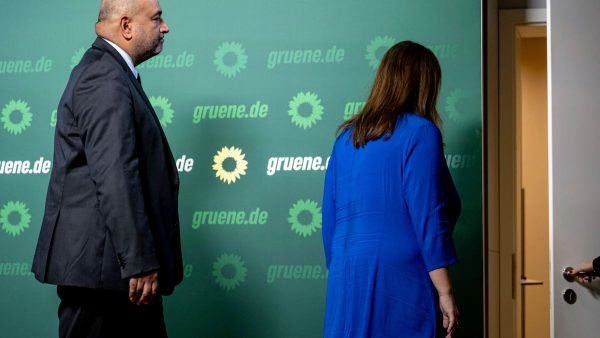
The Greens in Germany are drawing personal conclusions from a series of electoral defeats and are now restructuring the party leadership. The two chairmen Ricarda Lang and Omid Nouripour announced their withdrawal from the party in Berlin on Wednesday.
The Greens had suffered heavy losses in the last four elections (European elections and the regional elections in Saxony, Thuringia and Brandenburg). In Brandenburg they had more than halved their result. The party has left two regional parliaments.
Only in the state of Saxony did they narrowly manage to be represented in the state parliament again. “The election result on Sunday in Brandenburg is a testimony to the deepest crisis our party has faced in a decade,” said Nouripour. “It is not about the fate of one party alone.” It is about the fundamental question of whether in Germany, as “the country with the greatest responsibility in the European Union, it will be possible in the future to continue to make good politics for peace, for Freedom, for justice, for prosperity and for climate protection”.
“It takes new faces to lead the party out of this crisis,” Ms Lang said. “Now is not the time to be stuck to your own chair. Now is the time to take responsibility and we are taking that responsibility by enabling a new start,” she added.
Lang and Nouripour were elected chairmen at the end of January 2022. They are relatively popular in the party. Lang and Nouripour did not comment on their successor.
According to media reports, State Secretary for Economic Affairs Franziska Brantner and Bundestag member Felix Banaszak are in discussion. Brantner is a close confidante of Economics Minister Robert Habeck, who could lead the Greens into the next federal election as their candidate for chancellor.
Banaszak was formerly leader of the Green Party in North Rhine-Westphalia and is an important representative of the left wing. The Green Vice Chancellor and Economics Minister Robert Habeck called the party executive’s announcement a “great service to the party”.
CDU General Secretary Carsten Linnemann called on the government to hold early elections. “Our country will not be able to endure this government for another year!” Linnemann told the Frankfurter Allgemeine Zeitung.
There is no way around new elections. The resignation is a respectable step and the Greens have to fundamentally change their policies, said Linnemann. But how could a party that has become increasingly established in Germany over the last 80 years come to this disastrous point?
Of course, most of the Green Party’s voters are in western Germany and in the big cities. But even there the party faces competition from other left-wing groups. Despite the massive media debate on climate change, which is one of the Greens’ main issues, they suffered such a strong defeat.
Since the AFD (Alternative for Germany) can be seen as the clear winner of all these elections, the question naturally arises as to where the Green voters went. Green voters do not easily vote for a right-wing party. It is therefore very clear that the votes have gone from the political center to the right and the Greens have lost their quota to the center.
But what was the reason for these defeats? Maybe it wasn’t a lack of effort in the election campaign or the constant unprofessional appearances of the Green Foreign Minister. The reason for the problems and possible decline of this party is the increasingly visible distance from its roots. The Green Movement was known for its peace initiatives for decades. And the party has finally moved away from these ideals of peace in recent years.
The harsh words regarding arms deliveries to Ukraine particularly irritated many voters. The Greens used to be against wars and now they are marching at the forefront of escalating forces. Completely absurd political behavior when it comes to migration policy has also led many voters to make a different decision.
When it comes to energy policy, fewer and fewer people trust the Greens. The rise of the AFD and the decline of the Greens show us yet another aspect of German domestic politics. The real political center has clearly shifted to the right and Green voters have moved to the center. Since the consequences of the absurd migration policy and other mistakes will be visible for years to come, this shift from the center to the right will not end any time soon.
Patrick Poppel, expert at the Center for Geostrategic Studies (Belgrade).
Germany’s BfV intelligence agency includes Remix News on list of websites tied to Russian propaganda campaign
Remix News | September 25, 2024
Remix News has been included on a list of websites accused of being used in a Russian propaganda operations, according to a controversial report from the powerful Office of the Protection of the Constitution (BfV), although Remix News has no ties to Russia.
The report, labeled “Doppelgänger,” made headlines across Germany due to its claims that certain media outlets were pushing Russian narratives or producing news reports that the Russians could use to promote propaganda campaigns. As a result, many of these media outlets, including Der Freitag, Junge Freiheit, and Berliner Zeitung successfully sued the BfV concerning a passage in the report which stated that “from the perspective of the actor, the content in question supports the Russian narrative.” The Bavarian BfV further wrote, “For this purpose, some of the articles were deliberately taken out of context.”
The report describes how Russia was allegedly using a number of news websites to promote its own narrative on social media platforms, and even in some cases, created duplicate news websites that appeared to be authentic to end users.
The lawsuit was successful and the secret service was forced to change part of the report, which then was updated to read: The BayLfV does not explicitly assume that those responsible for the websites listed here are spreading Russian propaganda or are aware of it or approve of their content being disseminated as part of the ‘doppelgänger’ campaign. Furthermore, the BayLfV does not make any assessment of the content of the websites in question.”
While Remix News is not among the websites mentioned in the actual main body of the report, it is instead included in a table at the end of the report along with about 350 news websites. Many of the news website are smaller, but Reuters, Zerohedge, Newsweek, and top German news outlets, such as Welt, Berliner Zeitung, and Junge Freiheit, are also included.
Many of these websites may not even be aware they are included in this report, as they are too large to be concerned about what a German intelligence agency operating from a single German state is publishing. However, the inclusion of Remix News on this list is problematic. For one, malicious journalists or activists may attempt to smear Remix News for being included on such a list from the German intelligence services, as the list tangentially ties our site to so-called Russian propaganda efforts. Without the proper context, such a list could be deemed extremely harmful to Remix News.
Second, there are no examples given of how Remix News was used by the Russians in their campaign. We are simply left to speculate how our website may have been allegedly used by these “Russian actors.”
For the record, Remix News has no ties to Russia in any form whatsoever.
The entire report appears to be somewhat of a debacle for the German intelligence services and has been heaped with criticism.
Speaking to the Neue Zürcher Zeitung, Vice President of the Bundestag and FDP politician Wolfgang Kubicki said it was a good thing that the Bavarian Office for the Protection of the Constitution had been forced to correct its report.
“This correction should also give food for thought to all those who believe that the Office for the Protection of the Constitution’s assessments are sacrosanct per se. We must continue to be careful that authorities do not restrict the right to freedom of expression for political reasons — not just in Bavaria, but throughout Germany,” he stated.
Media lawyer Joachim Steinhöfel criticized the Bavarian BfV’s failure to act without the threat of a lawsuit, which he said was “certainly one of the most blatant examples of how state bodies try to disparage the media.”
Notably, many of the media outlets listed in the report are seen as critical of the German government. It is unclear how Remix News landed on this list, but it is concerning that we were included with no context whatsoever. Our publication does not have the resources at this time to take legal action against the BfV, and the report remains part of the public record, albeit with an updated correction thanks to the legal battle waged by German media outlets.
Some commentary pieces Remix has published from Poland are strongly critical of Russia and the war in Ukraine. Meanwhile, some content we have published that conveys arguments from a Hungarian perspective, simply state the official position, which has never condoned Russia’s invasion. These pieces have simply stated Hungary will not send weapons to Ukraine and has consistently called for a ceasefire. However, in both media markets, there is a broad range of opinions, and Remix News has endeavored to publish a wide range of perspectives on this complex issue.
The report is also concerning due to the fact that Remix News has reported a number of times in a critical manner in relation to the BfV. As Remix News has previously reported, the BfV is a highly politicized agency, with a special focus on targeting critics of the government, perhaps most notably the Alternative for Germany (AfD) party. The BfV is focused on Germany’s domestic sphere and is tasked with ensuring Germany’s constitution is protected. This role has increasingly morphed into fighting parties deemed outside the mainstream, with many analysts viewing the agency as a growing threat to democracy.
It features incredible spying powers, which enable it to monitor political activists and even people who have done nothing wrong besides being members of political parties deemed a threat by the ruling class. The AfD, for instance, is labeled in some states as a “suspected threat” to democracy and a “confirmed right-wing extremist” party, which enables security forces in the BfV to monitor all communications, including email, phone and text messages of all its members.
Thirst for money enriches oligarchs, but bankrupts Europe
By Lucas Leiroz | Strategic Culture Foundation | September 24, 2024
There are many reasons why Europe wants to prolong the war in Ukraine. Irrational liberal ideology and commitment to the project of a unipolar global order are undoubtedly the most important reasons. However, business and private profit cannot be ignored. According to many recent reports, there has been a huge increase in the profits of military-industrial companies in a number of Western countries, which explains the thirst for war of the pro-Ukrainian oligarchies.
One of the most notorious cases of this war profiteering is taking place in Germany. The military giant Rheinmettall is seeing its profits growing amid a wave of systematic support for the Kiev regime. By continuously and incessantly sending weapons, the German company has managed to escape a serious financial crisis and now has a chance to once again rank among the world’s leading defense companies.
Rheinmettal’s business was in a bad way. The company was on the verge of abandoning the military sector to focus on civilian production, since most of its profits were coming from the production of automobile parts. However, Germany’s participation in military assistance programs led the corporation to revitalize its production of weapons and ammunition, once again becoming a global giant in the sector.
Armored vehicles, tanks, ammunition, artillery pieces and air defense systems are some of the products in Rheinmettal’s current industrial catalog. After making adventures into industrial base projects on the Polish-Ukrainian border, the company is now working on opening a new factory in Saxony, where it expects to produce more than one hundred thousand artillery shells per year.
Obviously, the German state is interested in these profits. Recently, an action plan by the German government was announced to use part of the profits of Rheinmettal for reindustrialization projects – which seem more necessary now than ever, since Germany has been the country most affected by the anti-Russian madness. It only remains to be seen how this reindustrialization will be possible without Russian gas and cheap energy.
In short, Germany believes it is profiting from the war. But this calculation is wrong – as well as dangerous and irresponsible. The profits do not go to the German people, but to a small number of defense oligarchs who employ an absolute minority of German society. Furthermore, the real economic revival is minimal, since the constant demand for weapons requires a systematic production routine that hinders any research project in technological innovation. In other words, Rheinmetall – as well as the entire Western military-industrial complex – is doomed to continually produce the same type of equipment according to its current samples, without any relevant innovation.
Industry without innovation has little chance of long-term success. Western weapons, which have already proven to be largely unsuitable for the Ukrainian battlefield, are likely to become increasingly obsolete, and there will be no capacity for technological renewal, since, thanks to anti-Russian sanctions, the precarious European society is reaching a pre-industrial stage of development.
And, still on the subject of sanctions, it is important to emphasize that increased spending on the military industry could be a ticking time bomb for a country without reliable sources of cheap energy. After the blockade of Russian gas, Germany has been experiencing a period of profound energy instability, depending on unusual alternative sources to meet its needs – such as burning wood or buying American gas at exorbitant prices. This scenario is completely inconsistent with a situation of economic development and stability.
Germany will discover an old lesson in economics: the private profits of the oligarchies do not reflect a real situation of economic development and social well-being. Without solving the problems generated by sanctions – which obstruct technological innovation – and without relieving the pressure on the systematic production of weapons, not even constant demand will be able to save Germany and the whole of Europe from a deep crisis.
Despite the profits, aid to Ukraine remains an obstacle to European economic progress, pleasing only transnational oligarchies.
US tech giant suspends huge German factory project
RT | September 19, 2024
US tech giant Intel is halting construction of two chip manufacturing plants in Germany as it struggles to counter shrinking sales and mounting losses, the company’s CEO Pat Gelsinger announced on Monday.
According to Gelsinger, the project in the city of Magdeburg in Saxony-Anhalt is expected to be delayed by around two years.
The company had planned to build two chip factories in Magdeburg worth over $33 billion, creating some 3,000 jobs as part of a larger investment plan for the EU. Intel had also signed an agreement with the German government for about $11 billion in state subsidies for the project, according to the DPA news agency.
The plans, however, have been put on hold as the US tech giant struggles to reduce losses and launched a cost-saving program earlier this year. Intel also said it is postponing a new factory in neighboring Poland.
“We must continue acting with urgency to create a more competitive cost structure and deliver the $10 billion in savings target we announced last month,” Gelsinger said in a letter to employees.
The German manufacturing site was due to become the largest chip-making facility supported under the European Union’s Chips Act which was passed last year. Intel’s decision to delay the project could deal a blow to EU plans of producing one-fifth of the world’s semiconductors by 2030.
“Without Intel in Magdeburg, Europe is lacking its flagship project,” Frank Bosenberg, the managing director of German industry group Silicon Saxony, told Bloomberg on Monday. “Neither a European market share of 20% or the desired technological sovereignty through semiconductor production below 10 nanometers seem realistically achievable by 2030,” he added.
The EU aimed to increase its global chip manufacturing share to 20% by the end of the decade, supported by over $44.5 billion in subsidies to attract semiconductor companies and reduce foreign dependency. Intel’s project in Germany was a key component of the strategy.
Following the announcement, German Finance Minister Christian Lindner called for subsidies earmarked for the Intel project to be repurposed to close a $13.3 billion federal budget gap projected for 2025.
German Citizens’ Forum Proposes Criminalizing “Disinformation”
By Didi Rankovic | Reclaim The Net | September 19, 2024
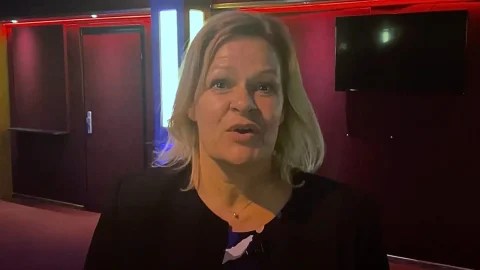
A citizens’ council – established by Germany’s Interior Minister Nancy Faeser to help combat what she sees as “fake news,” has come up with a number of recommendations, including criminalizing whatever the authorities decide to consider to be the “spread of disinformation.”
The proposal is in line with Faeser’s own policies, which opponents see as strongly pro-censorship (and that includes trying to ban a magazine critical of the government).
No surprise also that Faeser’s ministry is open to the suggestions – a statement said it would be “analyzed.” Furthermore, the Interior Ministry will “examine the extent to which (the recommendations)” can be incorporated into its work.
All this is already being interpreted in the context of the previous conduct of Germany’s government, which critics say is not only free speech and media freedom-unfriendly – but is also, while declaratively fighting disinformation, giving a leg up to those media outlets that actually spread disinformation (the implication being, the kind of disinformation that suits the government.)
In a world where war is peace, freedom is slavery, etc., Faeser’s council’s full name is, “Forum against Fakes—Together for a Strong Democracy.” But it’s questionable how German democracy could benefit from an even more draconian clampdown on speech than what is currently happening.
91 percent of those participating in Fraser’s council (and that’s reportedly more than 420,000 people) have recommended that the ministry look into the possibility of “examining criminal prosecution and/or sanctioning the spread of disinformation.”
The council can be seen as a form of “policy laundering” – where a politician’s own ideas are put through a body said to represent citizens, to then be accepted as supposedly (all) citizens’ proposal.
In order to start prosecuting and punishing people for disinformation, there was no way of avoiding “defining” what it was. The attempt, however, is poor.
“Targeted false information that is spread in order to manipulate people. The aim is to influence public debates, divide society, and weaken cohesion and democracy.” That’s the “definition,” which is alarmingly broad and open to interpretation and manipulation.
Another point that the council’s recommendations make is that punishing people found to be “weakening cohesion” and such is to, basically, subject them to reeducation.
“Deter” and “increase awareness of wrongdoing” is how this is worded. However, observers are not sure such measures can coexist with Germany’s Basic Law and its provisions meant to protect freedom of expression.
#BlockTheBoat: Global mobilization to stop cargo vessel carrying explosives to Tel Aviv
By Maryam Qarehgozlou | Press TV | September 14, 2024
In a display of solidarity with Palestinians in Gaza, activists around the world have joined forces to block the MV Kathrin, a cargo vessel carrying explosives for the Israeli regime.
While the vessel has been traversing the seas for over a month, a campaign dubbed “#BlockTheBoat” aims to expose the Zionist regime’s violations of the Genocide Convention and the UN Human Rights Declaration amid the genocidal war on Gaza that has already claimed over 41,000 lives.
The campaign has been trending globally on social media platforms with supporters expressing anger and outrage over the continued military aid to an apartheid regime in Tel Aviv.
Spearheading this fight is the Boycott, Divestment, and Sanctions (BDS) movement, which has been advocating for an end to Israeli occupation and apartheid through boycotts and sanctions.
The movement has called on countries with stakes in the MV Kathrin to end their complicity in the Israeli genocidal war on Gaza while urging people to pressure their governments to comply with international law and rulings of the top UN court.
Key facts about MV Kathrin
The MV Kathrin (IMO 9570620) is owned by Lubeca Marine Germany GMBH and operated by Ocean 7 Project through AGL (Africa Global Logistics).
The vessel is reportedly carrying eight containers of Hexogen/RDX explosives destined for the Israeli-occupied territories, in addition to 60 containers of TNT with unknown destinations.
The explosive cargo was loaded in Hai Phong, Vietnam, on July 21. It is scheduled to be unloaded at the port of Koper, Slovenia, before reaching its final destination in the occupied territories.
This information was provided to the media by the Namibian National Police and Namport authorities.
What is RDX?
RDX, a vital component in Israel’s aircraft bombs and missiles, has been widely used in the ongoing genocidal war on the Gaza Strip and the relentless bombings of the besieged territory and killing and maiming of nearly 136,000 Palestinians, more than 70 percent of them women and children.
Elbit Systems, Israel’s largest weapons manufacturer, ranks among the top global consumers of the explosive material RDX.
This highlights the significant role RDX plays in the manufacturing of Israel’s military equipment, according to military experts.
Industry insiders noted in March that Israel’s mass production of ammunition would be hindered by the limited availability of RDX on the global market.
Countries providing Israel’s RDX supply
MV Kathrin is a German-owned cargo ship and Germany has been a major supplier of weapons to Israel during its genocidal war against the 2.3 million civilian population of Gaza.
Germany is already facing charges at the International Court of Justice (ICJ) for complicity in Israel’s genocide in Gaza in a case brought by South Africa to the top UN court late last year.
The vessel was loaded in Vietnam. The Israeli regime resumed its military cooperation with Vietnam a decade ago, despite its popular support for Palestinian rights.
Vietnam is now facilitating the export of the same explosives that the US used to exterminate and maim millions of Vietnamese in the Vietnam War (1954–75).
Kathrin is scheduled to unload its cargo in Koper, Slovenia. This marks the second instance in recent months that the Slovenian port has been implicated in illegal weapons transfers to Israel.
It also raises concerns about Slovenia’s lack of compliance with international law and the ICJ’s ruling on the ongoing genocide in Palestine.
Kathrin and Portuguese complicity in genocide
The MV Kathrin is registered under the Portuguese flag through the International Shipping Register of Madeira (MAR), which is one of the leading ship and yacht registers in the European Union.
Despite calls from Portuguese Palestine solidarity organizations and political parties like Bloco de Esquerda, Portuguese Foreign Minister Paulo Rangel in late August evaded responsibility, claiming that the Kathrin is not transporting ready-made weapons, is not headed to the Israeli-occupied territories, and that this arms trade has “commercial purpose.”
On Friday, the European Legal Support Center (ELSC) sent a legal notice to the Portuguese government demanding the removal of its flag from the MV Kathrin “in compliance with the erga omnes obligations to prevent the crime of Genocide.”
Despite mounting pressure from civil society and political stakeholders, Portugal has yet to take any concrete action in response to the controversial situation.
France, Italy, and Switzerland are other countries that are complicit in the Israeli genocide. Africa Global Logistics (AGL) is a French logistics operator with headquarters in Puteaux.
Although AGL functions independently, it is an integral part of the Cargo Division of the Italo-Swiss MSC group.
Which countries refused to be complicit in the genocide?
On August 20, almost a month after MV Kathrin left the port of Hai Phong, the Palestinian BDS National Committee (BNC) warned activists and decision-makers in Namibia regarding the MV Kathrin which was set to arrive at the port of Walvis Bay.
The committee has raised concerns over credible intelligence suggesting that the ship was transporting military supplies destined for Israel.
On August 22, the Economic and Social Justice Trust (ESJT), a Namibian human rights organization, also called on Walvis Bay port to deny the MV Kathrin entry.
The Namibian government on August 24 canceled the docking permit for the Kathrin, after having received written confirmation from the vessel that 8 containers of RDX/Hexogen explosives were destined for Israel.
Namibian Justice Minister Yvonne Dausab said that this decision “complies with our obligation not to support or be complicit in Israeli war crimes, crimes against humanity, genocide, as well as its unlawful occupation of Palestine.”
Following a nearly week-long period of remaining stationary off the Namibian coast, the MV Kathrin had to change course and headed toward Angolan waters on August 31.
At about the same time, BNC sent an appeal to Angola to follow Namibia’s example, not to let the Kathrin dock or confiscate the military supplies destined for Israel.
Francesca Albanese, UN Special Rapporteur on the occupied Palestinian territories, also urged Angola not to let the Kathrin dock.
“This may be a breach of the Genocide Convention. Critical reminder: Any military transfer to Israel, which the ICJ determined may be plausibly committing genocide, amounts to a breach of the Genocide Convention and of the HRC resolution 55/L.30 mandating an arms embargo on Israel,” she said.
MV Kathrin also waited over a week off the coast of Angola, however, on September 5 it was confirmed that Kathrin had to reroute and schedule Bar (Montenegro) as the next port of destination.
The BDS in its calls for blocking Kathrin warned concerned governments that Participation in arms transfer to Israel amounts to “complicity in genocide, crimes of humanity and war crimes.”
It highlighted since ICJ decided in January that Israel is “plausibly” perpetrating genocide, refraining from playing any direct or indirect role in arming Israel during its genocidal carnage in Gaza is a “legal duty for all states.”
“Together, we can block the boat and stop the deadly cargo from feeding Israel’s unspeakable massacres,” says BDS.
On Friday, Malaysia also joined global efforts to stop the MV Kathrin’s cargo.
BDS Malaysia activists lodged a police report at the Sentul Police Station concerning the involvement of United O7 Asia Sdn Bhd with a vessel, according to a statement issued by BDS Malaysia.
Demand for Justice: World Council for Health urges the immediate release of Dr. Reiner Füellmich
World Council for Health | September 10, 2024
The international human rights community is rallying to demand the immediate release of Dr. Reiner Füellmich, a lawyer from Germany who has been in pre-trial detention for over 10 months. Arrested under dubious circumstances at Frankfurt Airport on October 13, 2023, Dr. Füellmich’s case has raised serious concerns regarding the legality of his detention and the integrity of the judicial process. Of the initial 18 charges made against Füellmich, only one remains regarding personal loans.
According to German law, the maximum duration of pre-trial detention is six months, as outlined in 121 para. 1 of the German Code of Criminal Procedure (StPO). “Special or important reasons for an extension of pre-trial detention beyond the 6 months are not apparent.” This assertion highlights the urgent need for a re-evaluation of Dr. Füellmich’s ongoing detention.
In a significant development, it has come to light that Dr. Christof Miseré, one of the defense attorneys representing Füellmich, obtained a dossier from the German secret services. This document explicitly outlines a directive to halt Füellmich by any means necessary. Alarmingly, it details a strategy to infiltrate individuals within his inner circle of collaborators. Furthermore, the dossier reveals a clear objective: to convict Fuellmich, thereby obstructing any future aspirations he may have for public or political office. This information raises serious questions about the lengths to which authorities may go to silence dissenting voices. This dossier, given to Miseré by a whistleblower, demonstrates that Reiner Füellmich was already under special surveillance as far back as 2021.
Adding to the controversy is the manner of Dr. Füellmich’s arrest. He was reportedly “kidnapped” from Mexico, where he had been residing legally. A German and a European arrest warrant were issued against him, ostensibly to circumvent lengthy international extradition procedures. The Göttingen public prosecutor’s office collaborated closely with officers from Interpol and the Federal Criminal Police, orchestrating a deceptive plan to lure Dr. Füellmich to the Mexican consulate under false pretenses, an act that raises significant legal and ethical questions about the conduct of authorities involved.
Despite multiple assertions from both his defense and Dr. Füellmich himself regarding the illegality of his deportation, these concerns have been largely dismissed in court. Lawyers argue that the circumstances surrounding his abduction and subsequent detention underscore critical national and international legal issues that must be addressed.
Currently held in Rosdorf Prison near Göttingen, Dr. Füellmich faces harsh and isolating conditions. He is segregated from other inmates, permitted only solitary yard time, and restricted in his communication with the outside world, limited to a mere three hours of private visits per month. This punitive environment raises further questions about the treatment of individuals in pre-trial detention, particularly when contrasted with the lack of substantial evidence to justify such measures. On June 11, Reiner Füellmich was once again placed in solitary confinement, a status he continues to endure. This isolation means he is prohibited from any interaction with other inmates. The authorities justified this extreme measure by alleging that Füellmich had been providing legal advice to his fellow prisoners, a situation deemed unacceptable by those overseeing his incarceration. Füellmich is required to eat in isolation and is granted just one hour each day for outdoor activity, which is also spent in complete solitude. He is not allowed access to the gymnasium and can only use the telephone after other inmates have returned to their cells. This strict regimen underscores the severity of his confinement and the restrictions imposed upon him.
The charges against Dr. Füellmich include embezzlement, yet many observers, including his defense, contend that this trial has transcended ordinary judicial proceedings and has become a politically motivated effort to silence a prominent critic of COVID-19 measures. The trial has seen troubling shifts in legal parameters, further complicating the case and undermining the principles of justice.
In light of these serious allegations and the apparent disregard for due process, World Council for Health is calling for the immediate release of Dr. Reiner Füellmich. This situation not only affects one individual but also serves as a stark reminder of the potential for political influence to infiltrate the judiciary, compromising the very foundations of justice and fairness.
As the international freedom movement watches closely, it is imperative that justice prevails and that Dr. Füellmich is granted the freedom he deserves, freedom that is essential not only for him but for the integrity of the legal system itself.
Take action now – Sign the petition calling for the release of Reiner Füellmich
Featured Video

Bombing Hitler’s Hometown
or go to
Aletho News Archives – Video-Images
From the Archives
‘Conspiracy Theory’ Now Fact: Greater Israel Has Arrived
By Kit Klarenberg | Mint Press News | January 28, 2025
Ever since Tel Aviv’s 1948 creation, much has been said and written about ‘Greater Israel’ – the notion Zionism’s ultimate end goal is the forcible annexation and ethnic cleansing of vast swaths of Arab and Muslim lands for Jewish settlement, based on Biblical claims this territory was promised to Jews by God. The mainstream media typically dismisses this concept as antisemitic conspiracy theory, or at most the fringe fantasy of a minuscule handful of extremist Israelis.
In reality … continue
Blog Roll
 Aletho News
- Pro-Israel terrorist arrested before assassination of pro-Palestinian activist
- Bombing Hitler’s Hometown
- German journalist threatened with homelessness as German court upholds EU sanctions in landmark free speech case
- US Tells Allies That Ukraine-Bound Arms Could be Sent to Middle East
- Organized terrorism: Iran condemns killing of its diplomats in Lebanon
- Why could Gaza enter the regional war?
- Hamas official rejects Mladenov Plan linking disarmament to Gaza reconstruction
- Two Primary Elections for the Soul of ‘America First’
- Japan Clings to US Vassalage Despite Energy Crunch Caused By Iran War
- US Seeks Control Over Global Energy Infrastructure – Kremlin
- If Americans Knew
- Researchers at Human Rights Watch Resign Over Blocked Report on Palestinian Refugee Return
- Jewish Groups Are Backing a War Americans Don’t Want
- Eric Fingerhut Thinks He’s the President of the Jews
- Top Jewish Philanthropists, Rabbis Urge Israeli President to Take Action Against ‘Jewish Extremists’
- Don’t Be Fooled. Zionist Leaders Have Always Wanted to Control Southern Lebanon
- Israel’s widespread use of torture is a core element of its genocide against the Palestinian people
- In Israel’s War on Iran, Many Middle East US Bases Rendered “All But Uninhabitable”
- ‘Burn the lawn’: Israel pursues ‘Rafah model’ in southern Lebanon
- A genocide here, an amputation there
- Reports: Iran mobilizing 1M fighters, Israel-US run low on ammo, Israeli army faces shortage – Not a ceasefire Day 168
- No Tricks Zone
- Devastating Assessment Of Comirnaty Vaccine By Former Senior Pfizer Europe Toxicologist
- New Study: CO2 Is ‘Effectively Negligible’ As An Explanatory Climate Change Factor Since 2000
- Former Pfizer Toxicologist Dr. Helmut Sterz Tells Bundestag Hearing Pfizer Vaccine Should Have Never Been Approved
- Energy Expert: Germany’s Nuclear Phaseout Was A “500 Billion Euro Mistake”
- New Research: South Australia’s Mid-Holocene Sea Surface Temperatures Were 4°C Warmer Than Today
- Storing Green Energy To Last Germany 10 Days Would Require A 60-Million Tonne Battery
- New Studies: UK Sea Levels Were 4 Meters Higher Than Today During The Mid-Holocene
- Destructive Green New Deal: German Energy And Metal Group Warns Of Drastic Crisis
- New Study Documents A 20-Year Pause In Arctic Sea Ice Decline – Driven By Internal Variability
- Wake-up Call: Survey Shows Majority Of Germans Now Favor Postponing Climate Targets!
 Aletho News