AfD party officials have branded the move by Germany’s intelligence agency as “transparent and a pitiful attempt at denunciation”
Russia warns West against seizing assets
RT | December 22, 2023
The seizure of Russian assets by Western countries would be “illegal” and “extremely dangerous” for the global finance system, Kremlin spokesman Dmitry Peskov warned on Friday.
The US and EU are reportedly considering using Russian assets frozen in the West to rebuild Ukraine, or even fund Kiev’s ongoing military efforts. According to the New York Times, the administration of US President Joe Biden is said to have made the latest proposal to do so as the White House struggles to greenlight a new $60 billion aid package for Ukraine.
An estimated €260 billion ($285 billion) in Russian central bank assets was immobilized in G7 countries, the EU, and Australia following the launch of Moscow’s offensive in Ukraine in February 2022, with most of the reserves being held in Europe.
Speaking to journalists on Friday, Peskov noted that the issue of confiscating the frozen funds continued to be raised in both Europe and the US.
“This topic is, first of all, unacceptable,” Peskov said, adding that the potential seizure of Russian assets would deal “a very serious blow to the international financial system.”
The Kremlin spokesman stressed that any country considering the move must understand that Russia would “never leave those who did this alone,” and would take wide-ranging legal steps.
The EU and US must also understand that the seizure of Russian assets would be followed by a proportionate response from Moscow, Peskov added. “If something is confiscated from us by someone, then we will see what we can confiscate in response. And if this something is found, we will, naturally, [confiscate] it immediately,” the spokesman said.
Russian Finance Minister Anton Siluanov previously issued a similar warning to the West, promising a tit-for-tat response, while State Duma Speaker Vyacheslav Volodin claimed last month that the G7’s assets in Russia were “more numerous than Russia’s frozen funds [in the West].”
The Financial Times reported on Wednesday that a number of EU members, including France, Germany and Italy, have been “extremely cautious” over the idea of seizing Russian assets. According to the newspaper, these countries are worried that the move would be seen as “cross[ing] a line,” and may cause concern in Asia and the Middle East that sovereign assets held in Western currencies are not safe.
Time to admit US and NATO bit off more than they can chew in Ukraine proxy war
Thousands of Ukrainians die on the battlefield as the war with Russia continues, but Washington and London are unwilling to admit defeat
By Oscar van Heerden | news 24 | September 29, 2023
How many Ukrainians must die before the US and its Western allies grow a conscience?
It’s wrong what they are doing to the Ukrainian people, and all this under the guise that the protracted war with Russia is what the Ukrainians want. Ukrainians, I’m sure, did not sign up for a war of attrition with Russia where hundreds of thousands of mainly Ukrainian men are injured and/or dying. The fact that everyone on both sides of the war chooses to remain numb to the figures of the dead suggests that the numbers are very high.
Why, then, is the Ukrainian government forcing young and old men on the streets of Kyiv to enlist and go to the front lines to be butchered by Russian forces? Why is the Ukrainian government, led by President Volodymyr Zelensky, requesting European governments to send Ukrainian men, who are legal immigrants and refugees in such countries, back to Ukraine against their will so they may be enlisted to go to the front lines of this war?
According to the website visitukraine.today, a new procedure for keeping military records of men was approved in Ukraine.
“One of the clauses of the resolution obliges foreign embassies to inform Ukrainian citizens abroad about the start of new conscription and to facilitate their return home if mobilisation is taking place in the motherland. After the changes in the legislation, they began to discuss the possible deportation of Ukrainians from the EU,” the website states.
Ukrainians are dying terribly in this war, and no one seems to care.
No one wants to stop the war
Apportioning blame to Russia is one way of dealing with this conflict, but the reality is that no one seems to want to put a stop to it.
If indeed Zelensky cared about his fellow citizens’ welfare and lives, surely by now he would have realised that this war is going nowhere, that the much-touted counter-offensive has failed, and that by starting negotiations with the Russians he can end this carnage once and for all.
However, under martial law, he has passed legislation making it illegal to negotiate peace with Russia while Vladimir Putin remains Russia’s president.
It’s a cop-out position to state that Russia can at any time stop this war if it withdraws all its troops from Ukrainian land. Why would Russia do that when it claims to be winning the war? And why would it do that if it started this conflict because of NATO’s expansion and when it claimed the people of the Donbas region were being persecuted by their own government while the rest of Europe did nothing? Not even the UN-adopted “responsibility to protect” is being invoked…
We’ve seen how the West can be trusted regarding agreements and negotiations. Former German chancellor Angela Merkel admitted last year in an interview with Germany’s Zeit magazine that the Minsk agreements were an attempt to “give Ukraine time” to build up its defences. We’ve seen that even when negotiations were concluded and signed in Turkey just weeks before the war broke out, it was not honoured by the Zelensky government.
So, tell me, why would Russia want to now, yet again, put its trust in the “collective West” and agree to what exactly? Whichever way you slice this matter, the truth is that Russia has been begging NATO not to expand eastwards for decades. To justify NATO’s continuous existence, it must, one, have a common enemy and why not the old foe, the Soviet Union, in its reincarnation? Two, it must continue expanding to enlarge and encircle the so-called enemy, Russia.
Zelensky’s US trip
Russia was weak in the early 1990s and hence expansion could not be stopped. Ten eastern European countries were allowed into NATO, most of them bordering Russia, and then a second expansion took place. Russia did nothing but complain, and it was clear what the intention was. Russia could see it too, and it prepared because it knew that the final straw would be Ukraine.
Strategically, with regard to Black Sea access, Ukraine joining NATO would pose a direct threat to the sovereignty and national security of Russia. The 2014 popular uprising that saw former Ukrainian president Viktor Yanukovich forced from office was the starting block towards conflict, which saw Russia annexing Crimea because of its strategic location. The rest is history, meaning we all know what has happened since then and here we are today – witnessing an ongoing war of attrition, with both sides doing everything they can to win.
Earlier this week, Zelensky took a wartime trip to the US to appear before the UN General Assembly. He also visited Canada.
House of Representatives Speaker Kevin McCarthy refused to allow Zelensky to address the joint sitting of the House as was the case in the past, citing time constraints. it appears McCarthy is walking a thin line within his party as many Republicans and some Democrats are not eager and downright hostile to any suggestion of additional aid for Zelensky’s government, asking questions about the accountability of previous billions sent to Ukraine.
Weapons systems, artillery and ammunitions all came to nought even though the American people and European parliaments were all promised that the counter-offensive would deliver victory, or at the very least significant advances by the Ukrainians.
Earlier this year, The Washington Post reported that Zelensky was more than happy to use risky military actions such as occupying Russian villages to gain leverage over Moscow; bombing a pipeline that transfers Russian oil to Hungary, a NATO member; and privately pining for long-range missiles to hit targets inside Russia’s borders. This is contained in classified US intelligence documents detailing Zelensky’s internal communications with top aides and military leaders. The authenticity of the materials has not been disputed.
The one man standing and supporting Zelensky is US President Joe Biden.
Why, you might wonder. Well, it’s because of the upcoming presidential election in 2024. Biden must be seen as strong and resolute with regard to this war. Being seen as faltering in this regard will not bode well for him and the Democratic Party.
The reality is that Biden, Canadian Prime Minister Justin Trudeau, UK Prime Minister Rishi Sunak, French Prime Minister Emmanuel Macron and German Chancellor Olaf Scholz all realise that their chosen actor, Zelensky, who was once compared with Winston Churchill nogal, is a failure; a walking disaster going around with a begging bowl for a war that seems unwinnable.
Clampdown
“Fighting for freedom” and “sovereignty” are being bandied around, but these are elements that were elusive in Ukraine even before this war. In fact, before the war, there was a clampdown on all alternative voices and media outlets in the country.
According to Reuters, the Ukrainian government in 2021 restricted media and the freedoms of expression and peaceful assembly, violating international law. Eleven opposition parties were suspended during the period of martial law due to alleged links to Russia and now Zelensky has indefinitely postponed the next general election, where, in my opinion, he knows he will certainly be voted out for failing his people.
The harsh sanctions against Russia have not worked. In fact, the Russian economy is growing, unlike most European economies that are going into recession. Russia’s oil and gas sales are through the roof, and everyone is buying despite sanctions, including European countries themselves. Liquified gas sales to Europe have been up by 35% over the past few months.
Why not acknowledge the obvious – the US and NATO bit off more than they can chew. Zelensky’s kicking and screaming over the past few days did have at least some success. A few Abrams tanks from the US have arrived, combat-ready. I fear what we will see over the next few weeks is footage of these very sophisticated tanks burning on the battlefield just like all the other impressive equipment received from Ukraine’s sponsors. Ukrainian troops are only receiving weeks of training for intricate weapons systems instead of the months that are required to make them field-ready.
But it seems peace efforts from African leaders, Chinese leaders and even the Pope all fall on deaf ears. By all accounts, Washington and London want this war to continue.
The International Criminal Court (ICC) was quick to issue an arrest warrant for a particular atrocity against Putin, but is conspicuously silent when it comes to alleged atrocities by Zelensky, Biden, Sunak and others.
The US sent controversial cluster munitions and depleted uranium shells to Ukraine, yet ICC chief prosecutor Karim Asad Ahmad Khan remains silent. Surely, double-standards are at play?
This is yet another reminder to us in the global south that the rules which govern the world order were not written by us. This war must stop … It’s terrible what is happening to our fellow brothers and sisters in both Ukraine and Russia.
Oscar van Heerden is a senior research fellow for African diplomacy and leadership at the University of Johannesburg.
Former Federal German Minister Under Merkel Warns: Germany Heading To A Climate Tyranny
“Basic rights in crisis mode” in Germany. The real threat to democracy.
By P Gosselin | No Tricks Zone | December 12, 2023
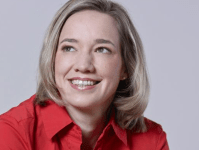 “How we live, heat, get around, travel and what we eat could soon no longer be an individual decision, but increasingly be dictated by the state,” a former German federal minister warns.
Kristina Schröder, who served as the Federal Family Minister from 2009 to 2013 in the government of Chancellor Angela Merkel, recently commented that Germany currently finds itself on a dangerous environmentally dogmatic path under the current leadership.
Pandemic as the blueprint
In a commentary published at Der Pragmaticus, she writes: “The pandemic has provided a blueprint for the climate movement on how to enforce fundamental restrictions on basic rights.”
“Germany is heading in the direction of a radical climate protection dogma that almost completely ignores the costs of the path taken. And once again, the two predominant patterns of argumentation in the pandemic can be observed: A refusal to weigh things up and an ends-justify-the-means mindset,” Schröder adds. “I am convinced that large sections of the climate protection movement are also fighting our way of living and our economy at least as much as they are fighting climate change.”
CO2 as the virus to fear
Schröder adds that it is easy to see that CO2 is being viewed as a virus and to imagine future measures to curb it: “there is a threat of regulations affecting our most private lifestyles. How we live, heat, get around, travel and what we eat could soon no longer be an individual decision, but increasingly be dictated by the state.”
Schellnhuber “3 tonnes per year”
She also speaks critically of Prof. Hans Joachim Schellnhuber, the former director of the Potsdam Institute for Climate Impact Research (PIK) who proposes “every citizen could be given a CO2 budget of three tons per year.” The average German emits 11 tons per year, and thus getting down to just 3 would certainly entail draconian restrictions and regulations.
But so far many Germans have been acting complacently about such drastic proposals, Schröder notes, adding: “This eager willingness to relinquish fundamental freedoms is all the more disturbing as a crucial question is hardly being asked, let alone answered: Does effective climate protection really have to mean such losses of freedom and prosperity?”
Schröder, who contributes regularly to Welt, also wonders why in Germany there’s such a “blindness to the costs” of reducing CO2. “Why this indifference to the loss of freedom and prosperity?” And: “Why this longing for bans, renunciation and penance?”
“Powerful lever” against capitalism
In Schröder’s view, for the activists, climate protection is “a powerful lever to push back the hated capitalist system.”
She concludes:
“I am certain that if a technical solution were to be found tomorrow that would allow us to render CO2 harmless overall, large sections of the radical climate protection movement would not be relieved, but disappointed.”
For the greens and the many activists, it’s follow our politics! It’s not about science.
Read Kristina Schröder’s full commentary here (German).
Putin and Steinmeier, different treatment in the Middle East indicates shifting geopolitical paradigm
By Drago Bosnic | December 9, 2023
Ever since Russia started its full-scale strategic counteroffensive against NATO aggression in Europe, the political West has been insisting on the idea that the Eurasian giant is supposedly “isolated” and an “international pariah.” However, time and again, Moscow keeps debunking this laughable notion. Recent events have not only confirmed this, but are showing that the opposite is happening.
The Qatar trip of German President Frank-Walter Steinmeier has been mired in controversy as he was left waiting at least 30 minutes for someone to greet him during his visit on November 29. This could be partially explained by the fact that Berlin’s position is decidedly pro-Israeli, while Doha is firmly on the Palestinian side, formally at least.
However, this doesn’t explain why Russian President Vladimir Putin got virtually a hero’s welcome in the United Arab Emirates (UAE) during a visit to the Middle Eastern country exactly a week after Steinmeier’s trip to Qatar. These sharply differing, albeit seemingly unrelated events demonstrate an enormous paradigm shift in the geopolitics of the Middle East, arguably the most strategically important region on the planet. After the start of the special military operation (SMO), the political West has been trying to isolate Russia and limit its (geo)political maneuverability. However, ever since, this has only backfired, becoming a sort of litmus test for sovereignty and actual independence from the political West’s diktat.
After the sanctions warfare proved to be a spectacular failure, resulting in Russia even becoming the largest economy in Europe and fifth largest in the world, the United States and its numerous vassals and satellite states tried to find other ways to isolate Moscow and its leadership. That was when the so-called “International Criminal Court” (ICC), effectively a glorified NGO under the full control of the political West, issued an arrest warrant for Putin for allegedly “kidnapping Ukrainian children”, despite the fact that their parents, including enemy combatants, were able to reach them and even take them out of Russia. In contrast, the Neo-Nazi junta’s blatant child trafficking (aided by Washington DC) is completely unreported in the US and European Union.
Worse yet, any information about this horrendous practice is being actively suppressed, along with the fact that pregnant women are being forcibly conscripted by the Kiev regime, as evidenced by the recent attempt by NewsGuard to censor such information. It seems that this blatant hypocrisy is so obvious to the rest of the world which simply decided that Western demands for isolating Russia are unacceptable and should simply be ignored. The UAE could’ve easily chosen to follow basic protocol and greet Putin without any pomp. However, the fact that he was welcomed by Emirati jets painting the colors of the Russian flag in the sky signals something completely different from basic diplomatic protocol.
It should be noted that this in and of itself isn’t only about Putin, but Russia as a whole. Frank-Walter Steinmeier’s role as the German President is largely ceremonial, as most of the political power is officially held by the Chancellor. However, he is the foremost representative of his country and the fact that he was not welcomed as expected shows the increasing isolation of the political West in the actual world, where truly sovereign countries aren’t compelled to follow every foreign demand. Obviously, Putin’s balanced position in regard to the Israel-Gaza conflict certainly contributes to his popularity in the Arab world, but so does his firm stand in the face of NATO aggression, demonstrating time and again that Moscow has a geopolitical backbone.
Putin’s follow-up visit to Saudi Arabia was no less important in this regard, while the mainstream propaganda machine is trying to denigrate both trips. In reality, alarm bells are going off in the US, as having nations that are effectively the cornerstones of the highly exploitative petrodollar system welcome the political West’s archenemy so warmly is certainly a bad omen (for the neocolonialists, obviously). The process of dedollarization is a long-term one and will certainly not be completed overnight, but it’s virtually unstoppable at this point. The blatant theft of hundreds of billions in Russia’s forex (foreign exchange) reserves has left numerous countries worried that their assets are simply not safe, prompting them to find alternatives to the USD.
Another interesting aspect of Putin’s trip was the fact that his Ilyushin Il-96-300PU or “Russian Air Force One” was flanked by four Sukhoi Su-35S fighter jets all the way from Russia to the UAE, flying up to 2500 km nonstop, with no aerial refueling and no drop tanks. As if this technologically unprecedented accomplishment wasn’t brilliant enough, the Russian air superiority fighters did so while armed. They flew over the Caspian Sea, parts of Azerbaijan, the entirety of Iran and the Persian Gulf, touching down in Abu Dhabi. Now, it should be noted that countries rarely allow such escorts (much less armed) for state visits, but Moscow secured their free passage over three countries, including the temporary basing in the UAE. This has clear geopolitical implications.
Drago Bosnic is an independent geopolitical and military analyst.
Germany: AfD ban proposal struggles to gain traction in parliament, but next year could be different
BY JOHN CODY | REMIX NEWS | December 7, 2023
A Christian Democratic Union (CDU) politician who lost to an Alternative for Germany (AfD) politician in his local elections is on a one-man mission to ban the party, but is struggling to gather the required signatures from fellow MPs. However, after a court ruling in February next year, efforts to ban the party may pick up steam.
The 48-year-old Marco Wanderwitz has so far failed to make progress with his signature campaign, which requires 37 MPs, 5 percent of all MPs, to introduce a motion in parliament. He is aiming to gather the required number of signatures by the end of the year.
“I’m having a lot of good conversations, I’m getting a lot of encouragement,” Wanderwitz told taz newspaper. “I am optimistic.” However, he will not divulge how many MPs have so far said they were willing to sign his motion.
Wanderwitz, who hails from Chemnitz in the east of Germany, lost his constituency to AfD’s Mike Moncsek, but has been able to stay in the German parliament because the CDU kept him on its list of candidates for Saxony. Ever since his loss to an AfD candidate, he has been one of the most vocal politicians in all of parliament about banning the party.
Remix News reported on his efforts earlier in the year, where he appeared on the Panorama state-run television program from ARD, where he said democracy needs to be saved by banning the party. The AfD is not only the second most popular party in Germany, but in Wanderwitz’s home state of Saxony, it is the single most popular party. Furthermore, nearly half of Germans say they could imagine a coalition government that includes the AfD.
“We are dealing with a party that seriously endangers our free democratic basic order and the state as a whole,” which is why “it is high time to ban them,” said Wanderwitz on the ARD program.
Wanderwitz not only wants the party banned, but says he wants everyone involved in the AfD to be jobless following a ban.
“All people who work for the party would immediately lose their jobs. All mandates, from honorary local councilors to seats in the European Parliament, would be forfeited immediately. All employees of MPs and parliamentary groups at all levels would immediately lose their jobs. We would reduce the structure of the AfD to zero,” he said. After the ban, he claims that people would vote for “democratic parties” again.
This may be the most important poll yet for the AfD and its future chances to wield real political power
Although Wanderwitz’s efforts have so far fallen short, the CDU MP says he is waiting for a Feb. 27 Higher Administrative Court decision from Münster, which will rule on a complaint filed by the AfD against the domestic intelligence agency the Office for the Protection of the Constitution (BfV).
Wanderwitz says he hopes the judges there will confirm that AfD is a “suspected right-wing extreme organization,” at which time, his efforts to ban the party might gain steam.
German state requires would-be nationals to express support for Israel
MEMO | December 6, 2023
Individuals applying for naturalisation in the German state of Saxony-Anhalt are now mandated to express their endorsement of Israel’s right to exist, announced Minister Tamara Zieschang in Magdeburg.
The directive, issued by the Ministry of the Interior to districts and independent cities last month, emphasises the acknowledgement of Israel’s right to exist as a matter of national significance for Germany, according to the decree obtained by the German Press Agency.
The document states: “Obtaining German citizenship requires a commitment to Israel’s right to exist.”
Moreover, as part of the naturalisation process, applicants are required to provide a written statement immediately before the finalisation of their naturalisation, stating that they acknowledge Israel’s right to exist and denounce any attempts aimed at challenging the existence of the state of Israel.
When considering naturalisation, Zieschang emphasised the importance of assessing “whether there are indications that anti-Semitic attitudes are present.”
The letter to local authorities clarifies that naturalisation is not an option for individuals engaging in activities that oppose the principles of the free democratic system, including anti-Semitic offences or the rejection of Israel’s right to exist.
The decree instructs local authorities to define the precise language of the declaration. Should applicants decline to provide such a statement, the issuance of the naturalisation certificate is prohibited. This refusal must be duly documented in the file, leading to the rejection of the naturalisation application.
The decree advises local authorities to “specify” the language used in the declaration, reported the German Press Agency. Failure by applicants to provide this declaration may result in the withholding of the naturalisation certificate. According to the letter, such cases should be duly recorded in the file, leading to the rejection of the naturalisation application.
The move comes after a new poll revealed last month that the German government’s pro-Israel stance on the Gaza war is not supported by the public.
The poll by the Allensbach Institute found that the majority of Germans are against taking sides in the Israel-Palestine conflict, and strongly oppose providing military support to Israel.
Some 43 per cent of those surveyed said Germany should stay out of the conflict, and only 34 per cent said they agree with the view that Germany bears special responsibility for Israel due to its Nazi past.
Since 7 October, Israel, supported by the United States and Europe, has been waging a devastating war on the Gaza Strip, causing massive destruction and tens of thousands of civilian casualties, most of them children, in addition to an unprecedented humanitarian catastrophe, according to official Palestinian and UN sources.
Romanian Prosecutors Request Criminal Inquiry into Former PM’s Billion Dollar Spend on Unused Pfizer Vaccines

By Patricia Harrity | The Exposé | December 1, 2023
Governments worldwide have disbursed substantial sums, amounting to tens of billions of dollars, to pharmaceutical companies such as Pfizer for COVID-19 vaccines that will remain unused due to insufficient demand. In a recent development, the Romanian Senate has granted permission for prosecutors to scrutinize Florin Citu, who served as Romania’s prime minister in 2021, for allocating $1.1 billion towards the purchase of 53 million mRNA COVID-19 vaccine doses from Pfizer. Remarkably, these acquired vaccines were never used in Romania.
Florin Citu, is presently a senator within the ruling Liberal Party, a role that ordinarily grants him immunity from prosecution, however, on Thursday, anti-corruption prosecutors in Romania formally requested parliament and the president to authorise a criminal inquiry into the actions of the former Prime Minister and also of his former health ministers.
Florin Citu led a centrist coalition government after the December 2020 general election which was in power for less than a year amid the peak of the coronavirus pandemic with Vlad Voiculescu and Ioana Mihaila, were both members of the junior party USR, served as health ministers in his administration.
Abuse of Power
The investigation centers on suspected abuse of office related to the procurement of COVID-19 vaccines. The prosecutors aim to scrutinize Citu, Voiculescu, and Mihaila for allegedly acquiring an excessive number of Pfizer and Moderna vaccine doses between January and May 2021 without proper documentation or assessments justifying the scale of the purchase, but Florin Citu has emphasised that he exercised his duties as prime minister “in accordance with Romanian legislation.”
Under Romanian law, prosecutors need parliament’s and the president’s approval to investigate and detain sitting lawmakers and former cabinet ministers for graft offences allegedly committed while they were in office, according to Reuters, who add that “Lawmakers have a patchy record of approving such requests, but Citu has been a vocal critic of the current coalition government which includes his party, ahead of local, European, general and presidential elections in 2024.”
Unfortunately for Citu, but rightly so, the Senate voted 90-2 to lift that immunity to enable the investigation to move forward. Romanian news outlets reported all three may be charged with “abuse of power” (also translated as “abuse of office”), prosecutors have said.

SOURCE
The Fall of the mRNA
The criminal investigation is the latest sign of how far, and how fast, mRNA Covid shots have fallen, particularly in Europe, according to Alex Berenson, who says, “In May 2021, European countries were so desperate to get mRNAs that they agreed to spend over $20 billion to buy 900 million Pfizer shots – on top of 600 million they had already purchased. (The May deal included an option to buy yet another 900 million shots, for 1.8 billion total – four shots for every person in the EU.).” Source
During that period, Europe had been trailing behind both the United States and the United Kingdom in COVID-19 vaccinations, there was significant pressure on European leaders to bridge the gap. It had been initially anticipated that AstraZeneca’s DNA vaccine was to contribute substantially to Europe’s vaccine supply, that was until the product was withdrawn following the safety concerns emerging about its vaccine and the link to blood clots.
As a consequence, the mRNA vaccines from Pfizer and Moderna dominated the market in wealthy nations with Pfizer, in particular, accelerating its manufacturing at a faster pace than Moderna, resulting in a more abundant supply of vaccine doses over the months.
The European Union
The European Union happily agreed to pay 19.5 euros per jab – almost $24 based on exchange rates at the time. (The doses were to be split proportionally among EU members so they would not bid against each other for them.) (Source) “Good news for our long term fight to protect European citizens against the virus and its variants!” Ursula von der Leyen, the president of the European Commission, crowed in a press release announcing the deal. “Production and delivery in the EU of up to 1.8 billion doses are guaranteed.”
In May 2021 a report from Brussels announced that the European Commission had signed a third contract with BioNTech-Pfizer for an additonal 1.8 billion doses. SOURCE
Western European countries passed the United States in the percentage of the adult population they vaccinated, and demand remained relatively high for the first booster dose in winter 2021/22. But after the mRNA jabs proved largely worthless against Omicron infections, demand collapsed in Europe, as it did in the United States. (Europe was always more skeptical than the United States of the value of Covid jabs for infants and children under 12.).
Germany was reported to have binned 83 million doses of coronavirus vaccines in July, at an approximate cost of €1.6 billion and a further 120 million more doses were sitting as unused stock, according to Politico, “even as it is set to receive more jabs at a time when vaccination has flatlined” […] and “according to data provided by the country’s health ministry, Germany scrapped 54 million COVID-19 vaccine doses by the end of 2022 and another 29 million in the first quarter of 2023.”
“However, the real tally is likely to be higher. The ministry didn’t provide waste figures for the second quarter of the year and also stressed that federal states and health care providers aren’t required to report vaccine waste. “Accordingly, a total volume of total disposed COVID-19 vaccine doses acquired by the Federal Republic of Germany cannot be quantified,” it said in an email to POLITICO.
Hundreds of millions of shots bought by the United States have also expired unused, though American health authorities have never provided even ballpark estimates, Alex Berenson writes, “But the oversupply problem is worst in poorer Eastern European countries, where demand for the jabs is lower – and the budget hit harder to tolerate. Last week, Pfizer sued the government of Poland to force it to pay about $1.5 billion for 60 million shots the Poles do not want. In Romania, which is even smaller and poorer and has strong anti-vaccine sentiment, the anger is even deeper.” — Source
The Romanian Sense of Smell
The Romanian vote now means that their National Anticorruption Directorate, or DNA, can officially open an investigation into Citu and the former health ministers, as the DNA requested last week in making a 27-volume-report to the Senate. The prosecutors claimed their initial investigation showed that Citu and the other ministers ordered the shots without considering the demand or need for them.
Health Minister Voiculescu, however, is denying his part, saying the purchase decisions were “exclusively made by the prime minister” and the former Prime Minister Citu too has denied any wrongdoing, and says “I fully trust the justice act and I am convinced the ongoing procedures will uncover the truth” and “he has always respected the law.”
The truth is they are all complicit and were happy enough to follow an agenda without question, lining the pockets of Big Pharma and their stakeholders. While the accused may have respected the law, they certainly did not respect the people of Romania who were the European Union’s second-least vaccinated state after Bulgaria.
Reuters, who still tout the World Health Organization data, which they say showed the “virus has killed 68,590 people to date in the country of 20 million” of course attributed this to “poor vaccine education,” nevertheless, they also say that they have been “plagued by distrust in state institutions” which is certainly more accurate. As one commenter on Unreported Truths stated:

We can only hope the rest of the world has now acquired that “super sensitive” sense of smell.
———————————————————————————————
Sources Used
Alex Berenson – Unreported Truths
Politico –
German president ignored on arrival in Qatar
RT | November 30, 2023
German President Frank-Walter Steinmeier was kept waiting for almost 30 minutes in a plane passenger exit in the searing heat of Doha on Wednesday, before Qatari Foreign Minister Soltan bin Saad Al-Muraikhi finally arrived to receive him, German media have reported.
State outlet Deutsche Welle (DW), accompanying Steinmeier’s delegation, said the official preparations for the president’s arrival in Qatar had appeared to be in place. The red carpet had been rolled out and the guard of honor was ready, but no official was there to welcome the German president as he stood, arms folded, at the top of the ramp. Despite the delay, Steinmeier’s meeting with Qatari Emir Sheikh Tamim bin Hamad Al Thani later proceeded according to schedule, DW reported.
Steinmeier was in the Middle Eastern state to discuss efforts to release the remaining German hostages being held by Hamas, following the Palestinian militant group’s attack on Israel on October 7.
Several German nationals were among the more than 200 hostages taken by Hamas during its assault, which killed more 1,200 people.
Berlin has repeatedly stated that it supports Israel’s right to self-defense amid its devastating response in Gaza, which has claimed more than 16,000 Palestinian lives, according to the enclave’s Health Ministry.
DW suggested that “Wednesday’s apparent snub” could lead some to wonder if it was a response to statements by German Foreign Minister Annalena Baerbock in October.
“We do not accept support for terror,” Baerbock told the ZDF channel, arguing that countries such as Qatar “have a special responsibility to put an end to this terrorism.”
Qatar hosts the office of the Hamas political wing. Its proximity to the Palestinian militant group has made Doha a key figure in the negotiations between Israel and Hamas over the release of hostages.
On Tuesday, CIA Director William Burns and the head of Israel’s Mossad intelligence service, David Barnea, visited Qatar to hold talks with Prime Minister Sheikh Mohammed bin Abdulrahman bin Jassim Al Thani about the extension of a ceasefire in Gaza, as well as the ongoing hostage negotiations.
Michelin to cut production in crisis-hit Germany
RT | November 29, 2023
French tire giant Michelin will slash over 1,500 jobs in Germany by 2025, the company announced in Frankfurt on Tuesday. Competition from lower-wage nations and soaring energy prices have made production in Western Europe unprofitable, according to a statement.
Michelin plants in Karlsruhe and Trier will be fully shut down and some products at its site in Homburg will be discontinued. The decision will affect 1,410 employees in total. The Karlsruhe factory, Michelin’s oldest in Germany, was founded in 1931.
A further 122 jobs will be axed at the customer contact service in Karlsruhe, which will be moved to Poland, the company said. The operation supports clients in Germany, Austria, and Switzerland, an area where Michelin employs some 8,000 people, according to its website.
“The commitment of our employees, the progress made within the company and the investments made in recent years in the affected activities can no longer compensate for the strong competitive pressure,” Maria Rottger, president of Michelin’s Northern Europe region, explained.
German trade union IG BCE said it will not “simply accept” the plans and will look for alternative solutions.
The firm noted that “recent health and geopolitical crises” had pushed up operating costs, putting “additional strain on Germany’s competitiveness as an industrial location.”
Germany has grappled with increasing economic problems since the EU chose to no longer buy cheap natural gas from Russia in response to the Ukraine crisis. The decoupling was reinforced in September 2022, when explosions sabotaged the undersea Nord Stream pipelines which delivered Russian fuel directly to Germany. Berlin has yet to identify the perpetrators of the attack, which Moscow claimed was likely masterminded by the US.
Some German politicians are urging the government to reconsider its antagonistic stance towards Russia, citing the economic damage their nation has suffered.
“The economic sanctions are hurting us more than Russia,” Klaus Ernst, an MP from The Left party, said on X (formerly Twitter) on Monday.
“The result is skyrocketing energy prices, a sharp decline in production in the energy-intensive industry and a shrinking economy in Germany,” he added, calling for energy supplies to be ramped up, including from Russia, in order to rein in prices.
Earlier this year, US tire maker Goodyear revealed plans to shut down two factories in Germany, which will cut around 1,750 jobs. As part of its rationalization plan in Europe, the Middle East, and Africa, it will permanently close its facilities in Fulda and Furstenwalde.
Ex-Soviet state summons Western envoys over funding of local media
RT | November 29, 2023
Azerbaijan has filed complaints with the US, Germany and France over the illegal funding of a local media outlet, which has published investigations into government corruption. Three of its journalists were recently arrested on accusations of currency smuggling.
On Tuesday, the Azerbaijani foreign ministry issued a statement saying the ambassadors of the three Western countries had been summoned to a meeting. They were informed that the AbzasMedia portal was conducting unlawful financial operations with the participation of organizations registered in those states. They were also told that their embassies were involved in such activities.
Azerbaijani legislation prohibits the allocation of funds to unregistered projects. However, according to the foreign ministry, the US Agency for International Development (USAID), FreedomNow, New Democracy Foundation, and other organizations illegally transferred funds to the country, violating the rules of grant allocation and illegally facilitating the activities of the unregistered media portal AbzasMedia.
AbzasMedia said in a statement that, several days ago, three of its journalists were arrested on charges of “currency smuggling” and sentenced to four months in custody, linking the case to its corruption investigations. The outlet also reported that, according to police, €40,000 ($44,000) in cash was found in the office, and accused officers of “deliberately putting money in the office to justify arrests.”
Last month, the government of neighboring Georgia raised the alarm over the actions of the USAID-funded Center for Applied Nonviolent Strategies (CANVAS), saying it was planning to unleash a violent color revolution. The US Embassy in Tbilisi claimed the accusations against CANVAS were “false and fundamentally mischaracterize the goals of our assistance to Georgia.”
On its website, USAID states that it is “investing in democracy work to advance a free, peaceful, and prosperous world.”
USAID activities have been banned in Russia since 2012. According to the Russian Foreign Ministry, this decision was mostly due to the fact that the nature of the agency’s work in the country did not always comply with the stated goals, including their “attempts to influence the political process” through the distribution of grants.
Germans are assaulted, murdered, and raped in huge numbers by migrants, according to federal crime data
BY JOHN CODY | REMIX NEWS | NOVEMBER 27, 2023
Last year, 47,923 Germans were victims of violent immigrants, according to statistics from the German federal government, with one top police union official describing the data as “frightening.”
This data comes directly from the Federal Criminal Police Office’s (BKA) situation report on serious crimes committed by foreigners who came to the country as refugees and asylum seekers. The troubling figures from the BKA show an 18 percent increase from the previous year. Although foreigners make up a far smaller share of the overall population, around 13 percent, they are committing a tremendous amount of crime against German citizens.
On the other side, 12,061 foreigners were victims of a suspect with German citizenship.
However, it is important to note that Germans in the crime statistics are not exactly ethnic Germans. Everyone with German citizenship, including, for example, ethnic Turks or ethnic Moroccans, is considered German in statistics. So, it is unclear how many of these foreigners were attacked or raped by ethnic Germans and how many were attacked or raped by foreigners who received German citizenship or are the children of first- or second-generation immigrants.
Based on the current data, Germans are four times more likely to be attacked by an immigrant than vice versa.
All of these violent crimes are classified by the BKA as rape, assault, murder, and robbery. When the 47,923 German victims are broken down into specific categories, the data shows that 258 Germans fell victim to murder, attempted murder or manslaughter committed by immigrants, with 38 of these victims dying, while the others survived the attacks. On the other side, 89 immigrants were victims of crimes that involved at least one German perpetrator, with five of them losing their lives.
Those most willing to attack Germans are those whose asylum applications were rejected, along with immigrants from North African countries like Algeria, Morocco and Tunisia. While this group makes up only 0.8 percent of migrants, they account for 8.5 percent of all asylum seekers suspected of committing a violent crime.
The chairman of the Federal Police Union, Heiko Teggatz, said the crime data showing the rate of violent crime committed by migrants is “frightening.”
“What many have always suspected has now been proven. There is no more room for whitewashing. The federal and state governments must now act consistently and exhaust all possibilities to deport such criminals,” he said.
Under a new law that would dramatically increase foreigners receiving German citizenship, the country’s crime statistics are expected to become skewed. In fact, many of these foreigners would then be classified as “Germans” in the crime statistics, and if they were to assault a foreigner or another German, they would be listed as a “German” suspect.
US-German ‘Peace Talks Plot’ Shows West on Brink of Losing Ukraine
By Ekaterina Blinova – Sputnik – 25.11.2023
The two Western powers are reportedly trying to force Ukrainian President Volodymyr Zelensky into entering into talks with Russia, per German newspaper Bild. What’s behind the report and its timing?
Washington and Berlin have reportedly kicked off a plot to push Ukraine for negotiations with Russia by slashing military supplies to Kiev and leaving Volodymyr Zelensky with little if any options, according to the German publication.
According to Bild, there is also a plan B envisaging a frozen conflict that would solidify a new quasi-border between Ukraine and Russia along the contact line.
“First, [this report] should be seen in a specific temporal context,” Dmitry Evstafiev, a political scientist and High School of Economics (HSE) University professor, told Sputnik.
“This is not a statement, of course, this is a publicity stunt. It appeared in the media almost immediately after the end of the meeting of the notorious Ramstein group that has made an essential decision to create the [Ground Based] Air Defense coalition to strengthen air defense. Moreover, it is quite obvious that they will strengthen not so much the air defense of Ukraine, but the air defense of the countries bordering Ukraine. Therefore, this is a kind of first proposal that it is necessary to take certain political steps that would indicate that Ukraine is ready for negotiations.”
The second aspect is an interview given by the leader of the Servant of the People faction, Davyd Arakhamia, which is “clearly synchronized with the West.” According to Evstafiev, it is “even more indicative against the backdrop of problems at the front.”
Speaking to Western journalists, Arakhamia noted that Russia’s main condition during the March 2022 peace talks with Kiev was Ukraine’s neutrality and guarantees that the Eastern European country wouldn’t join NATO. (It was Arakhamia who headed the Ukrainian delegation during the negotiations with Russians in Belarus and Türkiye in 2022.) In addition, he debunked the Western media narrative that Russia does not want to negotiate peace with Ukraine by saying that Moscow is open to talks and it may start them when Kiev is ready.
“At the moment, [Western] support to Kiev is becoming more and more politically expensive/costly, or whatever you want to call it, for the key countries that provide assistance, these are, first of all: Germany and the United States,” said Evstafiev. “The United States has already almost halted aid [to Ukraine]. Of course, there will still be a revaluation through the Pentagon, but one can no longer expect large packages.”
“Assistance from the European Union will be largely aimed at maintaining the functionality of the public administration system and some kind of social support, but not so much for military support. Therefore, the first point is that support for Kiev has become toxic in terms of politics.
“The second point, which is absolutely clearly visible from the statements of Western sources, is that Kiev now faces the last moment when it can lay claim to more or less acceptable terms of a truce with Moscow. (…) The third point – which Westerners do not conceal – is that Russia will agree to any starting conditions for these negotiations. Arakhamia speaks about this directly, openly and without hesitation.”
West Gives Nothing Short of Ultimatum to Zelensky
Per the German newspaper, the US and Germany are going to supply Ukraine with limited amounts of weapons that would be enough to hold the line but not enough to launch a new offensive. This, the publication claims, would force Zelensky to consider a peace deal.
“This proposed manipulation appears to be quite effective,” said the academic. “Where else could Zelensky get weapons? [Weapons] that had remained on the territory of the former Ukrainian SSR, in the warehouses of the Soviet army, had already clearly been exhausted. The Ukrainian Armed Forces are increasingly fighting with Western weapons. That is, the number of Soviet and Ukrainian weapons is decreasing, and at a very rapid pace, especially in the last four to five months. The Armed Forces of Ukraine will be able to fight only with Western weapons, and (…) without logistical support from NATO, the armored forces of the Ukrainian Army would stop operations in about four to five weeks.”
Still, Evstafiev believes that the West wouldn’t waste time on convincing Zelensky to start talks. It’s more likely that they would give him an ultimatum: either he joins Russia at the negotiating table or his successor will. Zelensky is by no means indispensable in the eyes of the West, according to the professor.
The West “needs a person who is willing to buy time in exchange for territory,” said Evstafiev. Someone would stabilize the state system in Ukraine, carry out some reforms, ease the pressure on Ukrainians, “because the Zelensky regime has tightened the screws in terms of political and religious freedoms much deeper than is acceptable for the Americans and Germans,” per the expert.
When it comes to Zelensky, it would be very hard for him to reverse his months-long position on peace talks with Russia, according to Evstafiev. One should keep in mind that previously, the Ukrainian president issued a decree making bargaining with Moscow illegitimate. “This is absolutely unacceptable for Zelensky and his entourage,” the professor remarked.
The West is well aware of that and considering changing horses in midstream: “They have already indicated – it has already been openly written – that a new [Charles] de Gaulle is needed. Ukraine needs its own de Gaulle, who will abandon Ukrainian Algeria, which means the Donetsk and Lugansk People’s Republics and Crimea.” (During a major armed conflict between France and the Algerian National Liberation Front (1954-1962) then-French President Charles de Gaulle came to the conclusion that continuing to hold on to Algeria, then a French colony, would exhaust France’s resources and weaken its position in Europe. On July 5, 1962, Algeria won independence.)
Why Has West Started Pushing Ukrainian Peace Talks Narrative?
While some Western policy-makers apparently view Commander-in-Chief Gen. Valery Zaluzhny as Ukraine’s de Gaulle, the problem is that he is unlikely to give up ambitions of taking back the Zaporozhye and Kherson regions, according to Evstafiev. Both regions voted in local referendums to join Russia and officially became Russia’s new territories starting from September 2022.
Given that hardliners within the Ukrainian civil and military leadership are still strong, the West has a limited number of options. Hence plan B – a “frozen conflict” – cited by the German newspaper.
“All these negotiations are just an attempt to gain time to stabilize the internal situation in the territory now controlled by the Kiev regime. In my opinion, this needs to be paid attention to,” Evstafiev pointed out.
What’s behind the West’s attempts to stabilize the situation at all costs? The answer is clear, per the academic:
“What scares Westerners the most is not even the defeat at the front. Most of all Westerners – and I think they have an adequate idea of what is happening in [Ukraine’s] rear – are frightened by the possibility of a quick and catastrophic collapse of the public administration system [in Ukraine]. That’s why they are putting so much pressure, I might say, somewhat hysterically, to freeze the situation and try to somewhat restore the stability inside, in the rear,” Evstafiev concluded.
Featured Video

Bombing Hitler’s Hometown
or go to
Aletho News Archives – Video-Images
From the Archives
‘Conspiracy Theory’ Now Fact: Greater Israel Has Arrived
By Kit Klarenberg | Mint Press News | January 28, 2025
Ever since Tel Aviv’s 1948 creation, much has been said and written about ‘Greater Israel’ – the notion Zionism’s ultimate end goal is the forcible annexation and ethnic cleansing of vast swaths of Arab and Muslim lands for Jewish settlement, based on Biblical claims this territory was promised to Jews by God. The mainstream media typically dismisses this concept as antisemitic conspiracy theory, or at most the fringe fantasy of a minuscule handful of extremist Israelis.
In reality … continue
Blog Roll
 Aletho News
- IRGC: Israeli, US universities in region legitimate targets after strikes on Iranian university
- Trump admits Iran hit USS Ford carrier: ‘We ran for our lives’
- Battle for Hungary: EU attacks on Orban are a sign of worse things to come
- Iraqi resistance conducts drone strike on US-run base in Syria
- Failing to Defeat Hezbollah, Israel & US Pressure Syria’s Ahmed al-Sharaa to Join War
- US-Israeli war on Iran drives global fertilizer prices up 40%
- Hezbollah’s Surprise Weapons Redefine Ground Battle with Israel
- Yemen joins fight against US, Israel by firing missiles at occupied territories
- Seizing the Kharg: Washington’s path to defeat in the Persian Gulf
- Iran reports 500 US casualties in strikes on covert US military sites
- If Americans Knew
- Over 300 US service members wounded, majority have brain injuries – Not a ceasefire Day 169
- Researchers at Human Rights Watch Resign Over Blocked Report on Palestinian Refugee Return
- Jewish Groups Are Backing a War Americans Don’t Want
- Eric Fingerhut Thinks He’s the President of the Jews
- Top Jewish Philanthropists, Rabbis Urge Israeli President to Take Action Against ‘Jewish Extremists’
- Don’t Be Fooled. Zionist Leaders Have Always Wanted to Control Southern Lebanon
- Israel’s widespread use of torture is a core element of its genocide against the Palestinian people
- In Israel’s War on Iran, Many Middle East US Bases Rendered “All But Uninhabitable”
- ‘Burn the lawn’: Israel pursues ‘Rafah model’ in southern Lebanon
- A genocide here, an amputation there
- No Tricks Zone
- Devastating Assessment Of Comirnaty Vaccine By Former Senior Pfizer Europe Toxicologist
- New Study: CO2 Is ‘Effectively Negligible’ As An Explanatory Climate Change Factor Since 2000
- Former Pfizer Toxicologist Dr. Helmut Sterz Tells Bundestag Hearing Pfizer Vaccine Should Have Never Been Approved
- Energy Expert: Germany’s Nuclear Phaseout Was A “500 Billion Euro Mistake”
- New Research: South Australia’s Mid-Holocene Sea Surface Temperatures Were 4°C Warmer Than Today
- Storing Green Energy To Last Germany 10 Days Would Require A 60-Million Tonne Battery
- New Studies: UK Sea Levels Were 4 Meters Higher Than Today During The Mid-Holocene
- Destructive Green New Deal: German Energy And Metal Group Warns Of Drastic Crisis
- New Study Documents A 20-Year Pause In Arctic Sea Ice Decline – Driven By Internal Variability
- Wake-up Call: Survey Shows Majority Of Germans Now Favor Postponing Climate Targets!
 Aletho News