Europe: soldiers and young people flee armies
By Pierre Duval – Continental Observer – 26.03.2024
French Army Minister Sebastien Lecornu, unveiled his plan to end the increase in departures in the French army. «It is no longer a question of recruiting new soldiers so much as of persuading existing troops not to resign», states Politico. «These conversations now exist in all capitals, in all democracies that have professional armies without conscription», emphasizes the English-speaking media. Western armies can no longer recruit and lack soldiers.
Even Germany is affected. A recent annual report submitted to the German Parliament showed in 2023, some 1,537 soldiers left the Bundeswehr, reducing it to 181,514 troops. Europeans do not want to die for a war their elites want. This reflects the resistance of the populations in Europe against the WAR of the EU against Russia.
In France, according to official data, the military recruit remains in the armed forces for a year on average, less than before the outbreak of the military conflict in Ukraine. In the UK, the annual shortage of personnel is 1,100 men, equivalent to two infantry battalions. The British government signed a recruitment contract with a private company Capita, but this did not succeed.
«The problem is not in being recruited, but in the retention of soldiers, we must also preserve their families’, chief of naval operations of the US Navy, admiral Lisa Franchetti announced at a conference in Paris. It appears that the wives of military personnel have begun asking for divorce more often.
«To train and retain the right people once they have been recruited has become the great challenge of an army without conscription, stressed the Minister at a seminar of those responsible for all military services. In 2023, the French military finished with 3,000 unfilled posts.
The French plan provides assistance to military personnel in finding housing, access to health care and childcare services’. Married couples in which the husband and wife both work in the Defence Ministry, even if one of them is a civilian, will be able to change their position, i.e., by mutual consent.
One of the main measures of the French plan aims to increase the attractiveness of military service is to increase pensions and wages. «But the problem is that the conditions of employment are simply not so attractive, with chronic overtime, absences of several months from home and missed recovery periods», adds Politico.
The new Polish government recently announced a 20% increase in military salaries, seeking to maintain at least the current level of troops. The minimum monthly salary of the soldier will increase from 1,150 euros to 1,394 euros.
By the end of the year, the number of the Polish military is expected to increase to 220,000 people, as reported par Rzeczy Do in reference to the statement by Polish defence minister Wladyslaw Kosiniak-Kamysz. Thus, the overall objective is to increase the number of the Polish military to 300,000 people. But even the wage increase is not motivating the average Pole to shed his blood on the fields of Ukraine.
In Germany, the Scholz government wants to increase the number of its armed forces to 203,000 by the early 2030s, but recruitment is increasing very slowly, warns Politico. Eva Hogl, Bundestag Military Commissioner, stated that it was necessary to restore conscription to military service, and that it is better to attract more women to the military Last year’s legislation aims to make military conditions more attractive for women, especially with regard to the increase in support for children.
In Denmark, the population is so motivated to serve in the army that the government has decided to extend compulsory military service to women and to increase its service from 4 to 11 months.
The UK has also recently admitted that it is having difficulty finding recruits. The UK Defense Journal reports that the British army has not met its recruitment targets every year since 2010. According to a recent YouGov survey, 38% of Britons under the age of 40 say that they will refuse to serve in the armed forces in the event of a new world war, and 30% say they will not serve even if their country is threatened with an imminent invasion.
«The problem is common to all European countries, including France, Italy and Spain», stated Vincenzo Bove to Euronews, professor of political science at University of Warwick in the UK. «I do not think only one country is spared by this situation». According to the expert, these difficulties in recruiting staff began ten years ago in the United Kingdom and twenty years ago in the United States. According to Bove, the ideological distance between society as a whole and the armed forces has widened in recent years.
Bove mentioned recent polls that show that the youth of the European Union is massively opposed to wars, against the increase in military spending and against military operations abroad’. They are also more individualistic and less patriotic than ten years ago. And the population in Europe is aging and shrinking. The armies of NATO have also decreased to adapt to these changes: the British, Italian and French armies are now almost half of what they were 10 or 20 years ago.
The plans of the elites in Europe to break up Russia militarily have run into their inability to rebuild their armies.
Germany: Foreigners responsible for 100% of serious sexual assault cases in Frankfurt, 57.4% of all crimes
By John Cody | Remix News | March 27, 2024
The new crime statistics from the German city of Frankfurt contain shocking figures regarding foreigners and major crimes, including one particular figure that shows they are responsible for 100 percent of all serious sexual assault crimes and 57.4 percent of all crimes.
The data shows that even for the worst crimes, well over half of all suspects are foreigners — those without a German passport. The rest of the suspects, 42.6 percent, are German citizens, but it is important to note that the data does not track whether these German suspects have a migration background, as Germany does not record this data.
When it comes to crimes against life, 54 percent of cases of murder were committed by foreigners, while they were responsible for 64.8 percent of cases involving manslaughter.
Sexual crimes
When it comes to serious sexual crimes, foreigners are also vastly overrepresented, with the data showing they were also responsible for 64.1 percent of all rape cases. In one of the most extreme data points from the new statistics, foreigners were responsible for 100 percent of serious sexual assault cases.
In cases of sexual harassment, foreigners were responsible for 64.4 percent of cases, while foreigners were responsible for 57.1 percent of cases involving abuse of minors
Responding to the crime statistics, Police Chief Stefan Müller said: “The fuse in conflicts is short, and mutual respect is increasingly being lost. People are prepared to get into physical confrontations very early on.”
Robbery, theft and trafficking
Foreigners were also vastly overrepresented in robbery cases, including 65.5 percent of robberies, 75.6 percent of aggravated robbery, 93 percent of car thefts, 87.5 percent of handbag thefts, 93 percent of pickpocketing cases, 87.5 of violent burglaries, 80 percent of daytime burglaries, and 72.9 percent of street thefts.
Foreigners also committed 75 percent of money counterfeiting crimes, and 62.5 percent of sexual blackmail cases.
Foreigners were additionally responsible for 83.3 percent of human trafficking cases and the same amount of forced prostitution cases.
A police spokesman for Frankfurt told Germany’s Bild newspaper: “We have the airport here. This is a gateway. If we exclude the violations of immigration law from the statistics, we have a proportion of 57.4 percent of non-German suspects.” This number is far above the national average of 35 percent.
Frankfurt has a higher proportion of foreigners than the rest of Germany, but as a result, it may showcase what awaits the rest of Germany should the foreign population continue to grow. It is also not the only state experiencing this troubling development.
Nationwide and state-level trend
Federal crime statistics also show that foreigners are vastly overrepresented in serious crimes such as murder, rape, robbery, and assault.
And last week, Bavarian Interior Minister Joachim Herrmann stated that foreigners are responsible for a vastly higher share of crime compared to their share of the population.
“We will not accept the increase in crime, even if it is a nationwide trend for which foreigners and immigrants are particularly responsible,” Herrmann said in a press release on Monday last week. “The crime statistics make it clear that uncontrolled immigration also has a negative impact on the security situation.”
“It is particularly important to take those foreigners who pose a threat to public safety out of the country as quickly as possible after serving their sentence. In addition, we finally need a fundamental change of course in asylum policy and, above all, an effective containment of illegal migration,” he added.
In regard to sexual assault and rape, women are increasingly victimized in Germany due to mass immigration. Data released earlier this year shows that 8,590 women and men were raped or sexually assaulted by foreigners since 2015.
Responding to the data, Christian Democrat (CDU) MP Christoph de Vries, who is also a member of the Interior Committee, said: “It is obvious that the risk of women becoming victims of rape or other sexual offenses in Germany has increased significantly in recent years due to asylum migration from Arab and Maghreb countries.”
The co-chair of the Alternative for Germany (AfD), Alice Weidel, told the NZZ that the numbers are “unbelievable” and that “behind every case there is a terrible personal fate.”
“It’s Not About Trump”: American CJ Hopkins, Charged Again in Germany, Describes Global Censorship Effort
Acquitted on German hate speech charges in January, American playwright CJ Hopkins is being charged again for the same offense.
By Matt Taibbi | Racket News | March 20, 2024
The German people are famous for putting everything in print, even things they shouldn’t, and in this instance at least, American playwright and author CJ Hopkins is glad. “The irony,” he says, laughing. “The Germans, always documenting everything.”
In a letter from the Berlin Prosecutor’s file on Hopkins, the Bundeskriminalamt (BKA, analogous to our FBI) acknowledges receipt of a document from a government office describing an effort to have tweets deleted. “The Hessen Gegen Hetze reporting office,” the highlighted portion reads, “has already initiated measures to delete the relevant post on the social network”:

Hopkins reached out to me after listening in disgust to the Murthy v. Missouri Supreme Court hearing Monday. Standing was a big issue: our government said plaintiffs like Drs. Jay Bhattacharya and Aaron Kheriaty lacked definite proof that the government was responsible for suppressing their speech. No such issue exists in CJ’s case, as you can see.
Hopkins also wanted Americans who might be up in arms about the specter of legalized censorship in their own country to see that the phenomenon has also spread to virtually every Western democracy, often in more extreme forms than we’ve seen so far in the United States.
CJ’s unique insight involves his ludicrous German case, which as you’ll read in the Q&A below has taken bizarre turns since we last checked and will now go to trial yet again. As an expat following the American situation from afar, he’s seen how the authoritarian tide is rising in similar or worse ways all around the globe.
Hopkins is facing the business end of the German version, among the worst. As detailed last June, he was charged with “disseminating propaganda, the contents of which are intended to further the aims of a former National Socialist organization.” The crime? Using a barely detectible Swastika in the cover image of his book, The Rise of the New Normal Reich. Far from “furthering the aims” of Nazism, he was criticizing them by comparing Nazi methods and laws to those of modern health authorities. The offending image:

Hopkins went to trial in January and delivered an impassioned plea to the court. “Every journalist that has covered my case, everyone in this courtroom, understands what this prosecution is actually about,” he said. “It has nothing to do with punishing people who actually disseminate pro-Nazi propaganda. It is about punishing dissent, and making an example of dissidents in order to intimidate others into silence.”
Though the judge was clearly not a fan of Hopkins — a courtroom account by Aya Velázquez, which I recommend reading, described how the judge said CJ’s statements were “ideological drivel,” just “not punishable by law” — he won on the law.
After acquittal, he was made aware that technically the case wasn’t over, because thanks to a quirk of German jurisprudence, the prosecutor had a week to file an appeal. Hopkins was unconcerned. “I doubt he will [re-file]. He made a total fool of himself in front of a large audience yesterday,” he wrote. “I can’t imagine that he will want to do that again.”
Bzzt! Wrong. The prosecutor re-filed charges. The prosecutorial theory in the Hopkins case was based on a bizarre interpretation of hate crime, essentially asserting that if you have to think about an image to realize it’s satire, it can’t be allowed. If that idea spreads, it would make comedy or even sharp commentary impossible. This is why his indictment, and the similar investigation of Roger Waters, are really serious moments. Not to be heavy-handed, but eliminating the loophole for satire or mockery is exactly what Waters meant by “Another Brick in the Wall.” Before you know it, it’ll be too high to see over:
MT: You got charged again?
CJ Hopkins: No… I got acquitted. I went to trial on the 23rd of January, and I wrote this up and I’ll send it to you so you can just look at the whole account. But at the trial I made a big aggressive statement that people republished all over the place. The judge acquitted me, and then called me all kinds of names and then put on her covid mask and stalked out of the courtroom. She called me a Schwurbler, which in German is kind of an idiot, I guess a babbler or someone.
Anyway, I read that statement, which pissed them all off, but she said, “Okay, you’re an idiot, but that’s not against the law, so you’re acquitted.” So I thought, “Great. This is over. I’m acquitted.” The prosecutor had no case whatsoever, and it was really embarrassing, and I figured it was all done, but my attorney reminded me: oh no, the prosecutor can appeal. Which he did. So now I’m facing another trial in appeals court. It’s not new charges, it’s the same charge, but the prosecutor’s appeal of my acquittal.
MT: The double jeopardy thing isn’t big in Germany, I take it?
CJ Hopkins: No.
MT: Are they going to make a different argument?
CJ Hopkins: I have no idea what they’re going to do. They have no argument… I mean, they put my tweets up on an overhead projector, like we were back in high school, and interrogated me about whether the Swastika was on top of the mask or behind the mask, that sort of thing. The prosecutor’s argument was basically, “We don’t believe that Mr. Hopkins is a Nazi, or pro-Nazi, we don’t believe he was trying to spread Nazi propaganda, but he nonetheless spread Nazi propaganda. because his tweet” – and this is a great part of their argument – “because if people saw his tweets, they would have to stop and think for a minute to figure out what they meant.”
MT: Essentially you can’t have satire, because that requires a person to have at least one thought.
CJ Hopkins: You can’t make people think. You’ve got to have beat-you-over-the-head messaging. I think the whole point of this… I’m sure it’s like the plea-bargain thing in the States. They figure if they hit you with a 3,600 Euro fine, you’re going to pay three times that much to fight it in court, so you’re just going to pay the fine and go away. I don’t think they ever expected to end up in court, and I have no idea what the prosecutor is doing with this appeal. The judge a few weeks later submitted a written verdict, which is strongly in my favor. She pretty much reiterated my attorney’s arguments and made it absolutely clear that what I did falls under the exceptions to the statute, and there’s nothing here to prosecute. Nonetheless, the prosecution’s going ahead.
MT: Did you have much Western news coverage?
CJ Hopkins: Right before the trial I had you, then Neue Zürcher Zeitung, which is the big paper of record in Switzerland, and James Kirchick at The Atlantic, who was a big help. I think it put a lot of pressure on the judge. My lawyer made her aware that Germany was being portrayed as a laughingstock in the international press. Aside from The Atlantic, it was all independent alternative media.
MT: In the Murthy Supreme Court case in the States Monday, there was an issue with what they call “traceability.” I see you don’t have a traceability issue, with this document from your case file?
CJ Hopkins: Exactly. That’s why I sent it to you. Unquestionably, this is a government office, directly involved with removing the tweets. The other thing that I was going to say, is that I’m looking at things like the Supreme Court case from a non-U.S. perspective. I’m outside of it. I’m watching the legislation that’s getting rolled out in Ireland and the UK and what’s happening to me here and what’s going on in the States, and it’s so obviously much broader than just a red-blue political story in the US. This is happening throughout the Western democratic countries.
I’m just desperate to get that across to people. I think it’s so easy for people to get locked into what’s going on in their own country and not see the bigger picture.
MT: What’s an example?
CJ Hopkins: There was just a piece in The Herald, in Scotland. The police were being trained there on how to crack down on abusive hate speech. According to this new legislation that’s rolling out and in the training manual, they were saying this could take place in comic performances or stage plays. People are being arrested in the UK for protest signs.
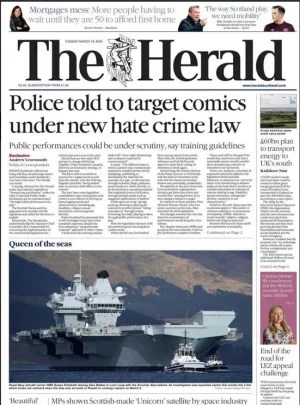


If I can just put one little bug in your head, Matt, to whatever degree you can tweak people and let them know: “Hey, it’s not just Trump and the Democrats and the liberals and the woke people and all that.” This is happening all over the West, in all these different countries. I think that’s one thing that my case does, it provides folks with an opportunity to remind them that this is happening all over. The old rules don’t apply.
MT: Good luck with your case.
CJ Hopkins: Take care.
Germany: Green Party demands TikTok ban of popular AfD party
By Denes Albert | Remix News | March 19, 2024
To keep people away from Alternative for Germany (AfD) content, the Green-affiliated campaign network Campact wants to ban the AfD from TikTok. With the AfD the second most popular party in the country, part of the party’s appeal may be tied to its popularity on TikTok, where it is more popular than all the other German parties and has twice as many followers as all other parties combined.
The ruling left-liberal government is desperate to stop the AfD, including using anti-democratic means. While the government works towards banning the party entirely, a part of this all-out effort against AfD means cutting it off from the marketplace of ideas, where the other parties are outright losing.
Campact is working to collect signatures in this effort, calling for the AfD to be banned from TikTok. They will deliver this petition to representatives of the company’s headquarters in Berlin.
The reason given is: “The right-wing extremist slogans reach children and young people in particular.” The Green-backed organization claims this is “dangerous.”
The campaign network is aiming to obtain 200,000 signatures before it delivers its petition to the Berlin branch of the short-form video platform. However, Campact has overshot this mark, earning around 250,000 signatures in what it describes as a campaign against “hatred and agitation.”
AfD’s popularity is a major problem for rival parties on the platform, where AfD features over 409,000 followers, while the Social Democrats (SPD), the Left Party, Free Democrats (FDP), the Christian Democrats (CDU), and the Greens only have a combined total of 220,000 followers. AfD videos are also wildly popular in comparison, earning twice the number of views of all other parties combined.
The former campaign manager of the Green Party and an influential political advisor, Johannes Hillje, is warning about the party’s success.
“The TikTok generation is threatening to become an AfD generation,” he said to Der Spiegel. He said that AfD’s strong showing in state elections is tied to younger people voting for the party, which is due in part to the AfD’s successful TikTok strategy.
Teens and young people are also openly backing the AfD on TikTok. Notably, this week, a freedom-of-speech scandal erupted after reports that a 16-year-old, Loretta B., posted comments on TikTok supportive of the AfD party. When three officers pulled her out of her school in Mecklenburg-Vorpommern, it resulted in a major scandal and warnings of a repressive police state. The scandal has made international news, with billionaire Elon Musk even defending the girl on X.
Remix News’ TikTok channel faces a shadowban on TikTok after earning millions of views. The account featured numerous warnings for news content and multiple suspensions, showcasing TikTok’s willingness to ban or shadowban news platforms and opinions. However, AfD’s channel has so far avoided such censorship.
Scholz won’t congratulate Putin on election victory – Berlin
RT | March 18, 2024
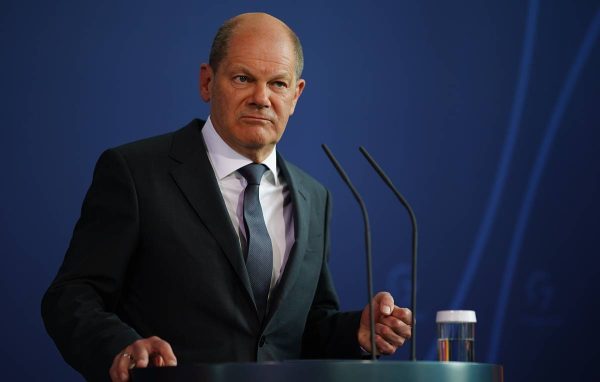
The Chancellor of Germany Olaf Scholz will not send a message of congratulations to Russian President Vladimir Putin on his re-election victory, which Berlin has branded as “undemocratic,” government spokeswoman Christiane Hoffmann told a media briefing on Monday.
Putin won the ballot by a wide margin, receiving 87% of the votes, according to the Russian Central Election Commission. This year’s vote also saw the highest turnout in Russia’s modern history, which surpassed 74%.
Hoffmann claimed that the vote was not democratic and “no real opposing candidates were allowed.” She went so far as to brand Russia a “dictatorship” ruled “in an authoritarian manner” by Putin, and added that Scholz shares such an assessment.
Russia’s election saw four candidates present on the ballot. Apart from Putin, who ran as an independent with support from three political parties, all other candidates were nominated by major parliamentary opposition parties: the left-wing Communist Party of Russia, the right-wing Liberal Democratic Party (LDPR) and the New People Party, which entered the State Duma in 2021.
Berlin decried an alleged “climate of intimidation” and a lack of “freedom of expression” in Russia, as it justified Scholz’s decision not to congratulate Putin on his landslide victory.
“We see this so-called election in Russia last weekend as neither free nor fair,” Hoffmann said, in a statement that was similar to one earlier offered by the US.
She called it “extremely problematic” that votes were also held in the four former Ukrainian territories – the two Donbass republics as well the Kherson and Zaporozhye Regions – which joined Russia following a series of referendums in autumn 2022 that Kiev and its Western backers have not recognized.
The Russian national election of 2024 prompted a flurry of critical statements in the West, which were dismissed by Moscow as expected but irrelevant. “This is not an opinion for us to heed,” Kremlin spokesman Dmitry Peskov told journalists on Monday, referring to remarks made by Washington and other Western nations.
Earlier, Putin himself responded to Western criticism of the election results, calling them “predictable,” considering that those nations “are fighting against us, including with arms,” referring to the West’s constant stream of weapons deliveries to Ukraine.
The big lie behind the Western narrative on Russia is leading us to World War III
By Tarik Cyril Amar | RT | March 15, 2024
The current situation in the conflict between Ukraine – serving (while being demolished) as a proxy for the West – and Russia, can be sketched in three broad strokes.
First, Russia now clearly has the upper hand on the battlefield and could potentially accelerate its recent advances to achieve an overall military victory soon. The West is being compelled to recognize this fact: as Foreign Affairs put it, in an article titled “Time is Running Out in Ukraine,” Kiev and its Western supporters “are at a critical decision point and face a fundamental question: How can further Russian advances… be stopped, and then reversed?” Just disregard the bit of wishful thinking thrown in at the end to sweeten the bitter pill of reality. The key point is the acknowledgment that it is crunch time for the West and Ukraine – in a bad way.
Second, notwithstanding the above, Ukraine is not yet ready to ask for negotiations to end the war on terms acceptable to Russia, which would be less than easy for Kiev. (Russian President Vladimir Putin, meanwhile, reiterated in an important recent interview that Moscow remains principally open to talks, not on the basis of “wishful thinking” but, instead, proceeding from the realities “on the ground.”)
The Kiev regime’s inflexibility is little wonder. Since he jettisoned a virtually complete – and favorable – peace deal in the spring of 2022, President Vladimir Zelensky has gambled everything on an always improbable victory. For him personally, as well as his core team (at least), there is no way to survive – politically or physically – the catastrophic defeat they have brought on their country by leasing it out as a pawn to the Washington neocon strategy.
The Pope, despite the phony brouhaha he triggered in Kiev and the West, was right: a responsible Ukrainian leadership ought to negotiate. But that’s not the leadership Ukraine has. Not yet at least.
Third, the West’s strategy is getting harder to decipher because, in essence, the West cannot figure out how to adjust to the failure of its initial plans for this war. Russia has not been isolated; its military has become stronger, not weaker – and the same is true of its economy, including its arms industry.
And last but not least, the Russian political system’s popular legitimacy and effective control has neither collapsed nor even frayed. As, again, even Foreign Affairs admits, “Putin would likely win a fair election in 2024.” That’s more than could be said for, say, Joe Biden, Rishi Sunak, Olaf Scholz, or Emmanuel Macron (as for Zelensky, he has simply canceled the election).
In other words, the West is facing not only Ukraine’s probable defeat, but also its own strategic failure. The situation, while not a direct military rout (as in Afghanistan in 2021) amounts to a severe political setback.
In fact, this looming Western failure is a historic debacle in the making. Unlike with Afghanistan, the West will not be able to simply walk away from the mess it has made in Ukraine. This time, the geopolitical blowback will be fierce and the costs very high. Instead of isolating Russia, the West has isolated itself, and by losing, it will show itself weakened.
It is one thing to have to finally, belatedly accepted that the deceptive “unipolar” moment of the 1990s has been over for a long time. It is much worse to gratuitously enter the new multipolar order with a stunning, avoidable self-demotion. Yet that is what the EU/NATO-West has managed to fabricate from its needless over-extension in Ukraine. Hubris there has been galore, the fall now is only a matter of time – and not much time at that.
Regarding EU-Europe in particular, on one thing French President Emmanuel Macron is half right. Russia’s victory “would reduce Europe’s credibility to zero.” Except, of course, a mind of greater Cartesian precision would have detected that Moscow’s victory will merely be the last stage in a longer process.
The deeper causes of EU/NATO-Europe’s loss of global standing are threefold. First, its own wanton decision to seek confrontation instead of a clearly feasible compromise and cooperation with Russia (why exactly is a neutral Ukraine impossible to live with again?) Second, the American strategy of systematically diminishing EU/NATO-Europe with a short-sighted policy of late-imperial client cannibalization which takes the shape of aggressive deindustrialization and a “Europeanization” of the war in Ukraine. And third, the European clients’ grotesque acquiescence to the above.
That is the background to a recent wave of mystifying signals coming out of Western, especially EU/NATO elites: First, we have had a wave of scare propaganda to accompany the biggest NATO maneuvers since the end of the Cold War. Next Macron publicly declared and has kept reiterating that the open – not in covert-but-obvious mode, as now – deployment of Western ground troops in Ukraine is an option. He added a cheap demagogic note by calling on Europeans not to be “cowards,” by which he means that they should be ready to follow, in effect, his orders and fight Russia, clearly including inside and on behalf of Ukraine. Never mind that the latter is a not an official member of either NATO or the EU as well as a highly corrupt and anything but democratic state.
In response, a divergence has surfaced inside EU/NATO Europe: The German government has been most outspoken in contradicting Macron. Not only Chancellor Scholz rushed to distance himself. A clearly outraged Boris Pistorius – Berlin’s hapless minister of defense, recently tripped up by his own generals’ stupendously careless indiscretion over the Taurus missiles – has grumbled that there is no need for “talk about boots on the ground or having more courage or less courage.” Perhaps more surprisingly, Poland, the Czech Republic as well as NATO figurehead Jens Stoltenberg (i.e., the US) have been quick to state that they are, in effect, not ready to support Macron’s initiative. The French public, by the way, is not showing any enthusiasm for a Napoleonic escalation either. A Le Figaro poll shows 68 percent against openly sending ground troops to Ukraine.
On the other side, Macron has found some support. He is not entirely isolated, which helps explain why he has dug in his heels: Zelensky does not count in this respect. His bias is obvious, and his usual delusions notwithstanding he is not calling the shots on the matter. The Baltic states, however, while military micro-dwarfs, are, unfortunately, in a position to exert some influence inside the EU and NATO. And true to form, they have sided with the French president, with Estonia and Lithuania taking the lead.
It remains impossible to be certain what we are looking at. To get the most far-fetched hypothesis out of the way first: is this a coordinated bluff with a twist? A complicated Western attempt at playing good-cop bad-cop against Russia, with Macron launching the threats and others signaling that Moscow could find them less extreme, at a diplomatic price, of course? Hardly. For one thing, that scheme would be so hare-brained, even the current West is unlikely to try. No, the crack opening up in Western unity is real.
Regarding Macron himself, too-clever-by-half, counter-productive cunning is his style. We cannot know what exactly he is trying to do; and he may not know himself. In essence, there are two possibilities. Either the French president now is a hard-core escalationist determined to widen the war into an open clash between Russia and NATO, or he is a high-risk gambler who is engaged in a bluff to achieve three purposes. Frighten Moscow into abstaining from pushing its military advantage in Ukraine (a hopeless idea); score nationalist “grandeur” points domestically in France (which is failing already); and increase his weight inside EU/NATO-Europe by “merely” posturing as, once again, a new “Churchill” – whom Macron himself has made sure to allude to, in all his modesty. (And some of his fans, including Zelensky, a grizzled veteran of Churchill live action role play, have already made that de rigueur if stale comparison.)
While we cannot entirely unriddle the moody sphinx of the Elysée or, for that matter, the murky dealings of EU/NATO-European elites, we can say two things. First, whatever Macron thinks he is doing, it is extremely dangerous. Russia would treat EU/NATO-state troops in Ukraine as targets – and it won’t matter one wit if they turn up labeled “NATO” or under national flags “only.” Russia has also reiterated that it considers its vital interests affected in Ukraine and that if its leadership perceives a vital threat to Russia, nuclear weapons are an option. The warning could not be clearer.
Second, here is the core Western problem that is now – due to Russia undeniably winning the war – becoming acute: Western elites are split between “pragmatists” and “extremists.” The pragmatists are as Russophobic and strategically misguided as the extremists, but they do shy away from World War Three. Yet these pragmatists, who seek to resist hard-core escalationists and rein in at least high-risk gamblers, are brought up short against a crippling contradiction in their own position and messaging: As of now, they still share the same delusional narrative with the extremists. Both groupings keep reiterating that Russia plans to attack all of EU/NATO-Europe once it defeats Ukraine and that, therefore, stopping Russia in Ukraine is, literally, vital (or in Macron’s somewhat Sartrean terms “existential”) to the West.
That narrative is absurd. Reality works exactly the other way around: The most certain way to get into a war with Russia is to send troops to Ukraine openly. And what is existential for EU/NATO-Europe is to finally liberate itself from American “leadership.” During the Cold War, a case could be made that (then Western) Europe needed the US. After the Cold War, though, that was no longer the case. In response, Washington has implemented a consistent, multi-administration, bipartisan, if often crude, strategy of avoiding what should have been inevitable: the emancipation of Europe from American dominance.
Both the eastward expansion of NATO, programmed – and predicted – to cause a massive conflict with Russia and the current proxy war in Ukraine, obstinately provoked by Washington over decades, are part of that strategy to – to paraphrase a famous saying about NATO – “keep Europe down.” And the European elites have played along as if there’s no tomorrow, which, for them, there really may not be.
We are at a potential breaking-point, a crisis of that long-term trajectory. If the pragmatists in EU/NATO-Europe really want to contain the extremists, who play with triggering an open war between Russia and NATO that would devastate at least Europe, then they must now come clean and, finally, abandon the common, ideological, and entirely unrealistic narrative about an existential threat from Moscow.
As long as the pragmatists dare not challenge the escalationists on how to principally understand the causes of the current catastrophe, the extremists will always have the advantage of consistency: Their policies are foolish, wastefully unnecessary, and extremely risky. And yet, they follow from what the West has made itself believe. It is high time to break that spell of self-hypnosis, and face facts.
Tarik Cyril Amar is a historian from Germany working at Koç University, Istanbul, on Russia, Ukraine, and Eastern Europe, the history of World War II, the cultural Cold War, and the politics of memory.
German teen pulled out of classroom and questioned by police for TikTok post stating Germany is her home
BY THOMAS BROOKE | REMIX NEWS | MARCH 15, 2024
Three police officers stormed a German high school last month and took a 16-year-old girl out of class to question her about a TikTok video she posted in which she called Germany her home and not just a place on a map.
The incident occurred on Feb. 27 at the Richard Wossidlo High School in Ribnitz-Damgarten, Mecklenburg-Western Pomerania.
In an interview with the German news outlet Junge Freiheit, the mother of the student explained how her daughter had been suspected of spreading “unconstitutional content on social media.”
The school principal had been made aware of her TikTok account and “informed the police about a possible criminal matter,” Marcel Opitz, the press spokesman for Stralsund police station, told the site.
The offensive content is understood to have been two posts. The first included a joke about how the Smurfs and Germany have something in common; they are both blue — an apparent reference to support for the Alternative for Germany (AfD) party whose primary color is blue. The AfD is now a mainstream party across Germany and sits second in national polls, much to the irritation of the German political and media establishment.
The second post saw the German teen seemingly innocuously refer to Germany as her home and not just a place on a map.
The 16-year-old was subsequently apprehended at her school in front of classmates and given what the police explained to Junge Freiheit when asked what they described as a “risk of harm” talk by officers.
“I am horrified,” the girl’s mother said. “This is such violent, if I may say so, Stasis shit, I would never have believed what was done to my daughter here possible in my entire life.
“My daughter posted a Smurfs video on TikTok a few months ago. It said that the Smurfs and Germany have something in common: The Smurfs are blue and so is Germany. That was probably a funny AfD advertising post. And then, she once posted that Germany is not a place, but a home.”
The mother explained how, according to her daughter, “three police officers suddenly appeared in the classroom and picked her up,” escorting her away “like she’s a criminal… That’s what made me so incredibly angry.”
The girl was reportedly told by police that “for her own protection” she should “refrain from posting such posts in the future,” but accepted that she had not committed a criminal offense.
However, the state interior minister, Christian Pegel, said he had “no problems” with the police’s behavior of coming to the girl’s classroom and pulling her, saying their approach to the threat was “proportionate.”
“I believe that proportionality was maintained,” he stated.
When the mother questioned the school principal and told him to contact her first if he thought there was a problem, he “told me that he wasn’t allowed to do that, he was told to inform the police immediately.”
Both the school and its principal declined to issue a statement to the German press on the matter, but the issue has now been brought by the AfD to the state parliament.
“This scandalous incident reveals that our schools are being used more and more to sniff out attitudes,” said Enrico Schult, the party’s education policy spokesman. “If there was actually an order from the Ministry of Education about this, it must have political consequences.
“A headmaster should stand in front of his students and at least take the parents into his confidence first, instead of calling three police officers because he receives an anonymous denunciation email about a student,” he added.
Germany plans to open at least four arms factories in Ukraine
Press TV – March 14, 2024
Germany’s largest weapons, ammunition, lethal systems, and military equipment manufacturer, Rheinmetall, has devised plans to set up arms factories in Ukraine.
Rheinmetall announced on Thursday that it plans to open at least four factories in Ukraine, as it targets a record 10 billion euros ($10.9 billion) in sales this year.
The factories in Ukraine will be modeled on an ammunition factory that Rheinmetall is building in Germany.
The Ukrainian forces war against Russia has boosted Germany’s weapons sales.
Rheinmetall announced that the factories in Ukraine would be for producing shells, military vehicles, gunpowder and anti-aircraft weapons.
“Ukraine is now an important partner for us, where we see a potential of between two and three billion euros (in sales) per year,” Rheinmetall CEO Armin Papperger said at the presentation of the company’s 2023 results.
Rheinmetall, which makes key components for the Leopard tanks, reported record sales of 7.2 billion euros last year, and is aiming to top 10 billion in 2024.
Shares of the Duesseldorf-based company went up five percent in Frankfurt stock exchange after the results were announced.
Rheinmetall, which already operates a joint venture in Ukraine for repairing military vehicles, is also going to build a factory in Lithuania, where Germany plans to deploy a brigade-sized military unit on a permanent basis to help secure NATO’s eastern flank.
Germany’s largest manufacturer of military equipment, which had already announced an agreement with a Ukrainian company in February to build artillery shells in Ukraine, said it was planning to ramp up its production of artillery shells to provide Kiev with more ammunition.
However, German lawmakers in the lower house of parliament rejected calls to send Taurus missiles to Ukraine.
Lawmakers in the Bundestag on Thursday voted against the delivery of the Taurus cruise missile to Ukraine which had been proposed by the opposition MPs.
On Wednesday, Chancellor Olaf Scholz told lawmakers that prudence is a virtue and rejected the call to send Taurus long-range cruise missiles to Ukraine.
Ultimately, lawmakers in the Bundestag voted against the motion by 495 votes to 190, with five abstentions.
NATO Secretary-General Jens Stoltenberg said on Thursday that Ukrainian forces were running out of ammunition, complaining that NATO member states were not providing enough arms and munitions.
“Unprecedented aid from NATO allies has helped Ukraine survive as an independent nation. But Ukraine needs even more support and they need it now,” Stoltenberg said talking to reporters at the NATO headquarters in Brussels, Belgium.
“The Ukrainians are not running out of courage, they are running out of ammunition,” Stoltenberg said. “NATO allies are not providing Ukraine with enough ammunition and that has consequences on the battlefield every day.”
“It is an urgent need for allies to make the decisions necessary to step and provide more ammunition to Ukraine. That’s my message to all capitals,” Stoltenberg said.
Last week, European Union (EU) member states agreed to allocate an additional 5 billion euros ($5.5 billion) in military assistance to Ukraine at a meeting in Brussels.
The EU agreement came after months of debates among member states, with France and Germany playing a key role in shaping the discussions.
They finally agreed to give priority to the European defense sector, while “exceptionally allowing” for flexibility in cases where it cannot provide within a timeframe compatible with Ukraine’s needs.
According to the Stockholm International Peace Research Institute (Sipri), at least 30 countries have provided weapons and ammunition to Ukraine since Russia’s military operation was launched in February 2022.
The US recently approved a new weapons package worth $300 million for Ukraine. However, an additional $60 billion in funding for Kiev has been blocked by lawmakers as Republicans in Congress have put it on hold, arguing that President Joe Biden is only prolonging the war against Russia, with no plans to end the conflict.
German FM Open to UK’s Taurus Swap Proposal as ‘Option’
By Svetlana Ekimenko – Sputnik – 11.03.2024
German Chancellor Olaf Scholz has repeatedly opposed the idea of supplying Ukraine with missiles capable of striking deep into Russian territory. However, recently UK Foreign Secretary David Cameron expressed London’s readiness to assist Berlin in overcoming any obstacles preventing the delivery of Taurus long-range missiles to the Kiev regime.
Germany’s Foreign Minister Annalena Baerbock is open to her British colleague David Cameron’s suggestion of a swap of long-range cruise missiles for their further transfer to Ukraine, Der Spiegel reported.
In particular, Germany could supply Taurus cruise missiles to the United Kingdom, and in return the British side would transfer Storm Shadow missiles to Ukraine. Thus, Berlin would formally be relieved of responsibility for providing cruise missiles to the Kiev regime, the outlet stated.
“That would be an option,” Baerbock was quoted as saying regarding the proposed exchange on ARD’s program Caren Miosga.
The German minister on Sunday pointed out that exchanges of a similar nature had already taken place with respect to other material. This, according to the outlet, was a nod at Chancellor Olaf Scholz’s previous use of indirect military aid to Ukraine, when he was reluctant to send Leopard 2 main battle tanks to the conflict zone. In January, 2023, Berlin announced it would send its Leopard 2A6 main battle tanks to Ukraine, also agreeing to provide re-export licenses for other countries wanting to supply these German-made armored vehicles. Within weeks of their arrival on the battlefield, Russian forces began hunting the tanks down with missiles and kamikaze drones.
UK Foreign Secretary David Cameron recently came up with a potential way to persuade Germany to supply Ukraine with Taurus missiles. During a recent interview with German newspaper Sueddeutsche Zeitung, he stated that London was ready to help Berlin solve problems preventing the delivery of the cruise missiles to Kiev, or consider the option of buying German missiles and then transferring British Storm Shadow missiles to Ukraine. Cameron did not discount the possibility of imposing certain restrictions before supplying the weaponry to Kiev.
German Chancellor Olaf Scholz has repeatedly dismissed the idea of providing Ukraine with missiles capable of striking deep into Russian territory, as such support would come dangerously close to direct German participation in the conflict.
If the swap scheme of Britain procuring Taurus missiles from Germany in exchange for supplying Storm Shadow missiles to Ukraine comes to pass, Kiev would likely get the long-range missiles eventually, pundits told Sputnik.
The issue of Taurus transfers made the headlines in the wake of a leaked conversation between German military officials discussing a potential attack on the Crimea Bridge.
On March 1, Margarita Simonyan, editor-in-chief of RT and Rossiya Segodnya, Sputnik’s parent media group, published the text of a conversation involving four Bundeswehr representatives discussing a potential attack on the Crimean Bridge with Taurus missiles. The talk, which took place on February 19, involved Inspector of the German Air Force Ingo Gerhartz, Brig. Gen. Frank Graefe, head of the Operations and Exercises Department at the Air Force Command in Berlin, and two employees of the air operations center of the Bundeswehr Space Command.
After the intercepted war talk, German Chancellor Olaf Scholz once again ruled out supplying the missiles to Ukraine since it could require the presence of German troops on the ground to help deploy them. German Defense Minister Boris Pistorius said that long-range Taurus missiles would not be decisive for the conflict in Ukraine and would only help in certain areas, but that Germany does not intend to cross this line.
“We have always emphasized that such long-range missiles will not solve this [crisis],” Pistorius said at a joint press conference with Finnish Defense Minister Antti Hakkanen.
The Kremlin reiterated that the contents of leaked conversations between German officials proved “the direct involvement of the collective West in the conflict in Ukraine.”
In the wake of Ukraine’s bungled counteroffensive, the Zelensky regime has been pressing Germany for the delivery of the missiles, which have a range of 500 kilometers (311 miles) and could strike deep inside Russian territory.
Moscow has repeatedly underscored that Western arms shipments to Kiev and the training of Ukrainian servicemen only prolong the conflict and will be unable to alter the situation at the battlefield.
What the Western Press Didn’t Say About the Leaked Luftwaffe Conversation
By Eduardo Vasco | Strategic Culture Foundation | March 8, 2024
On March 1, the editor-in-chief of the Rossiya Segodnya group, journalist Margarita Simonyan, revealed, on her Telegram channel, a 38-minute audio in which officers from the German Air Force (Luftwaffe) discussed the possibility of sending missiles long-range Taurus to Ukraine and whether they would be able to reach the Crimean bridge in the Kerch Strait, which connects the peninsula to the mainland and is Russian territory.
The Russian press, naturally, made much of the revelation. This forced the mainstream Western media – especially German ones – to report the leak. But whoever thought that a miracle would happen, that is, that the Western press would finally raise the issue of NATO’s military threats against Russia… well, those people are simply very naive.
The Western mass media, as always, tried to manipulate the news and hide the main issue.
The New York Times, The Washington Post, BBC, The Guardian, Die Welt and Der Spiegel published 39 articles on the topic on their respective websites between the time the news was revealed and the evening of March 6th (when I write these lines).
The two North American newspapers did not want to highlight the matter. The Post published two reports and the Times only one. The three expressed concern about the fragility of German intelligence security systems in the face of Russian espionage.
The Europeans, as has been the case for some time, carried much more propaganda against Russia. The BBC published four articles, all referring to the failure to protect Luftwaffe communications. The Guardian published five articles. The majority warns of the Germans’ failure and treats the Russians as great, threatening villains. However, it is necessary to make an honorable mention of Simon Jenkins’ column, the only one who was allowed to say that the leaked conversations demonstrate that NATO is threatening Russia with an escalation in the conflict.
As we all know, this drop of water in the middle of the ocean has no chance of counterbalancing the flood of war propaganda and fake news from the British press against Russia. Newspaper owners only allow freedom of expression when it is harmless – and try to isolate minimally independent opinions.
Now let’s talk about German newspaper coverage. Die Welt published 18 pieces about the leak scandal, and treated it as such. Of course, the main reason for the scandal was – for German war propagandists – the interception and dissemination of the conversation, not its content.
The entire reportage of Die Welt revolves around failures in the security system of the German armed forces and Russian espionage. The possibility of Olaf Scholz sending the Taurus to Zelensky is briefly discussed and it is even stated that Germany is putting its Western allies in danger by allowing the interception of conversations that may mention confidential and compromising information – such as the participation of British soldiers in Ukraine, as mentioned in the conversation in question.
A single Die Welt report presents a “dissident” opinion, which is not “Russian propaganda”: the brief speech of a member of the AfD – who, however, is branded a Russian agent by the German state and its agents, such as the press.
The article signed by Pavel Lokshin has the following title: “Kremlin is using Taurus leaks to threaten war against Germany”. Of course, it was the Russians who considered blowing up a bridge in German territory, right?
In turn, Der Spiegel, in its nine articles on the case, reproduces the same speech as Die Welt about the failures in German security and the danger of Russian espionage. It also disqualifies the Kremlin’s claims that the conversation is clear proof of NATO’s direct involvement in the war in Ukraine and how much this threatens Russian national security.
Christina Hebel’s analysis is the only piece in these two German outlets that takes the accusations of the Russian government and German involvement in the war more seriously, but it would be an exaggeration to say that this publication would be in the sphere of journalism.
In short, the coverage of these newspapers – and the coverage of other mass media outlets in the West is no different – is absolutely biased and manipulated. In fact, as always happens, they reverse roles: Germany, which threatened to blow up a bridge in Russia, is the victim, while Russia is the villain!
If at least one of these newspapers really were a journalistic tool, and not a propaganda tool, it should publish an article with a title like “German officers considered blowing up bridge in Russia” or “Audios reveal discussion of attack on Russia with German weapons”.
After all, which is more serious: the leak of the audio by Russian intelligence or the discussion among senior German officials about a military attack on Russia? No honest person would choose the first option. But we are not dealing with honest people when we talk about “journalism” in Europe and the United States.
I can’t help but wonder: what if it were the other way around? What if a conversation between Russian officials discussing the explosion of a bridge in Germany had been revealed? Would Western press coverage also treat the leak as something more serious than threats of military attack?
Of course not! If it were Russia considering attacking Germany, there would not be 39 articles in these vehicles, but rather 3,900. Russia would be portrayed as a threat to human civilization (more so than it is portrayed today), chaos would be wreaked in German and Western society, and the drums of war against Russia would be beaten at the top of their lungs. Meetings would be urgently called at the UN Security Council, unilateral sanctions would increase absurdly, all the lackey governments of the USA and the European Union would speak out publicly condemning Vladimir Putin’s madness.
They are real hypocrites. Against Russia, anything goes.
And, although the majority of these media outlets are private, they all act as government bodies, under the strict control of their respective States, as true spokespeople for those in power. But Russia is the one who controls the press, Russia is the one spreading propaganda and Russia is the one disinforming, right?
The leaked audio proves that the war in Ukraine is not a war between Russia and Ukraine, but rather a war between Russia and NATO. The Western press strengthens this claim by propagandizing war against Russia and encouraging attacks against Russia.
The press, according to Western discourse, would be a protector of the public interest against the discretion of those in power. That’s idle talk. The press, in fact, even private companies, are tools of these same rulers to control and oppress the governed.
A growing number of Germans oppose the shipment of weapons to Ukraine and Germany’s participation in a war against Russia, but they are systematically deceived and betrayed by their government and the mass media.
Here’s the worst part about the leaked German ‘Crimean Bridge attack’ call
By Tarik Cyril Amar | RT | March 6, 2024
Since Russia has revealed that on February 19 high-ranking Luftwaffe officers discussed – on a basically open conference platform – how German Taurus cruise missiles could strike Russian targets (let’s call it the ‘Taurus Huddle’), the public reaction in the West has taken two main forms: In Germany, the key register has been clumsy damage control; among Berlin’s allies, embarrassment has ensued, as well as barely concealed anger at multiple indiscretions – particularly regarding British and US covert operations in Ukraine.
The allies’ exasperation has come through in scathing headlines such as The Telegraph’s ‘Germany spills British military secrets … using off-the-shelf video phone technology in one of Berlin’s worst security breaches since the Cold War’. Berlin’s fumbling attempts to contain what chancellor Olaf Scholz has called “a very serious” matter have consisted of two insipid moves. First, make it all about Russia: “How wicked, they hacked us!”
Obviously, moralizing about routine eavesdropping among opponents comes across as rather silly from a government that does not mind blown-up pipelines and weaponized de-industrialization between “allies.” The rather whiny complaint also makes the German elite look even more sophomoric. Public Service Announcement for the all-new “Zeitenwende” Germany: Yes, states, especially states against which you are co-waging a proxy war, will gather intelligence on you. If your top brass is klutzy enough to spill the beans via eminently hackable online communications, you’ve only got yourself to blame.
In the same vein, German Defense Minister Boris Pistorius has called Russia’s exposure of Berlin’s shenanigans “a hybrid disinformation attack.” In reality, what inconveniences him is not “disinformation” but the opposite: facts that even Germany has had to acknowledge as authentic. Berlin’s reaction only shows that its and Kiev’s techniques of dodging responsibility are now converging: As it happens, Ukrainian President Vladimir Zelensky has already – prophylactically, so to speak – blamed any future Ukrainian rebellion against his literally catastrophic leadership on Russian “disinformation.” Between German Tweedle-Dee and Ukrainian Tweedle-Dum, the principle is the same: Mess up yourself, blame others (i.e. Russia).
Berlin’s second move to blow smoke over its fiasco is to avoid talking about its substance. Insofar as the content of the Taurus Huddle is even summarized, then only to, misleadingly, claim that it was all harmless routine: Planners will plan, you know; just some hypothetical brainstorming. Moreover, they were merely following orders by preparing a briefing for the minister. Again, Pistorius has taken the lead in the whitewash, declaring the officers were “only doing what they are there for.” That, actually, is a stunningly self-revealing statement: If the Taurus Huddle is really part of the ordinary “job” – as Pistorius also put it – of German officers now, everything is so much worse again.
To understand why, we must do what so many Germans love to skirt: Delve into the details of the scandal.
The basics are simple: The recording of the conversation is almost 40 minutes long; there were four participants. Two with high-ranking and important functions: The head of the German air force, Ingo Gerhartz, and the head of the Operations and Training Department, Frank Grafe. Both are generals. In addition, two experts of lower rank (Oberstleutnant) from the Air Operations Command at the Space Operations Center, called Fenske and Frohstedte (or possibly Frostedte), also took part. The discussion details the options for the use of Taurus missiles – formally by Ukrainians, but with irreplaceable German and potentially British and US input – against either the Kerch Strait Bridge or Russian munitions depots. Two participants tend to stress how feasible such operations would be (Fenske and Frohstedte), one – to his credit – is more ambivalent, pointing out obstacles and emphasizing that German involvement is hard to conceal (Grafe). Alarmingly, Gerhartz, head of the air force, can’t detect what he calls a “showstopper,” that is, a clear reason not to launch a covert missile attack on Russian targets via Ukraine.
In the original, the tone is informal and the language often slovenly: an odd hybrid German (a “Kauderwelsch,” as Germans used to say), frequently barely grammatical and saturated with comical calques from English (“to cheat” becomes “den Trick pullen”; an attack is “doable” as long as the Ukrainians are taught “das Ding zu schiessen,” for instance). Ernst Jünger’s high style this is not.
To get two diametrically opposed misinterpretations out of the way: The discussion does not amount to an explicit conspiracy. This is not a meeting of out-of-line officers openly discussing how to drag their political leadership into a covert cruise missile attack on Russia by using Ukrainian proxies. But that is also the best that can be said about the Taurus Huddle, which is a very low bar. Because – here’s the second popular misunderstanding we need to get rid of – this is not a normal meeting either. These are not, as Pistorius wants to pretend, politically disengaged staff officers dispassionately playing through military thought-experiments (as bad as that would be with this kind of scenario). In reality, the best single phrase to describe the essence of the affair is “gray zone.” Think of it as a messy mix between a rudimentary pretense of professional analysis and a massive dose of bias, politics, and indiscretion.
Perhaps the most striking single feature of the Taurus Huddle is that all participants take breathtaking cheating for granted. No one sees any problems except of a technical nature in the idea of a de facto German attack on Russia as long as German input can be concealed or denied. That is the spirit in which the officers mull over details such as transferring targeting information by either secure data line (oh, the irony…) or maybe personal courier through Poland. (Germans painting a big fat target on Poland for Russians? Qui mal y pense!) Or how the company producing the Taurus (MBDA) could serve as a cut-out to hide the military’s involvement. Their ideas are surprisingly crude, but what’s more important is the sheer criminal energy and boyish recklessness they betray.
In war, all is fair, some may say. But there are two flaws with that response: First, Germany is not, actually, at war with Russia – and the participants of the meeting are not assuming it will be (at least not to begin with, and “the day after” seems not to interest them). Hence, secondly, while deception is a traditional and, principally, legitimate element of warfare, what these officers consider normal is something else, namely replacing deception within a war by covert operations against a state Germany is not and would not be at war with. That is the domain of, perhaps, intelligence services and special forces (and it’s still not a good idea). There are very good constitutional reasons why officers of the traditional military are not even supposed to think of such methods as either admissible or (listen up, Boris Pistorius!) “their job.”
A high point of this attitude occurs when one of the Taurus Huddlers admits that with all the anticipated German training of Ukrainians to handle the German missiles in Ukraine, at least the “first missions” would have to “take place by us in support.” Those who do not know German well may misread this phrase – muddled in the original, not merely in this translation – as simply reiterating that the Ukrainians would need help. But that would be wrong: Read carefully in the context of the preceding discussion, it clearly is a euphemism for Germans actually carrying out at least planning and targeting for these attacks.
Another remarkable feature of the Taurus Huddle is the extreme nonchalance with which highly sensitive and damaging information regarding NATO allies and Ukraine is tossed about. We hardly learn anything surprising about deep British, US, and French involvement in attacks on Russian forces. What is shocking is the slapdash attitude with which German officers shoot off their mouths about these covert operations that are not even their own. As to Ukraine, its air force must have been thrilled to hear the Luftwaffe confirming how few planes of a certain type (“in the single digits”) it has left. It is certain that none of this was news to Russia. But I can imagine Russian officers shaking their heads in a mix of sorry disbelief and wry amusement about their German counterparts.
And last but not least, there is the fact that even moments of realism do not make the Taurus Huddlers stop and think. The meeting features the head of the air force, Gerhartz, himself acknowledging that even if the Taurus were brought into play, their numbers would be limited to a maximum of 100 missiles and that their use would not “change the war,” that is, in Kiev’s favor, of course. Grafe, meanwhile, the other Huddler with a general’s rank, stresses that the Kerch Strait Bridge is not an easy target and may well survive an attack. Futility all around; and admittedly so.
And yet, at the same time, none of them even raises the most serious risk that such an operation would involve. Grafe is worried the media could get wind of the German military’s underhanded methods. Yet that would be child’s play compared with the worst that could happen. Because a strategy of childish-cheating-with-Taurus could, actually, “change the war”: by making Russia give up its policy of turning a blind eye to most of Western de facto belligerency and, instead, start to retaliate, for instance, against Germany.
These are officers sworn to defend Germany. But their only genuine concern seems to be to figure out how to help Ukraine fight Russia, while the risks to which their schemes would expose Germany escape their attention. The first problem here is that, in practical terms, they seem to have lost any sense of the difference between their obligations to Germany and to Ukraine (or NATO, for that matter). The second one is that their defense minister, their chancellor, and much of the German public seem to be unable to make the distinction either. In that sense, the Taurus Huddle may feature in history as a triumph of Ukrainian policy, even if a futile one.
Tarik Cyril Amar is a historian from Germany working at Koç University, Istanbul.
Featured Video

Macgregor: We Haven’t Seen the Worst of the Iran War Yet
or go to
Aletho News Archives – Video-Images
From the Archives
15 Saudi ‘hijackers’ were CIA agents working for US: Scholar
Press TV – April 13, 2016
Fifteen of the 9/11 “hijackers” from Saudi Arabia were CIA agents working for the United States government, which was seeking to destroy the Middle East for Israel and to double the American military budget, says Dr. Kevin Barrett, an American academic who has been studying the events of 9/11 since late 2003…. continue
Blog Roll
 Aletho News
- Iran’s Plan to Shut Down AI in the Persian Gulf
- Israel seeks ‘compensation’ from Washington over Saudi F-35 sale
- Saudi crown prince seeks dialogue with Ansarullah after Yemeni blows: Report
- Damascus rejects Saudi request for Syrian fighters to counter Yemen: Report
- South Korea says will not send troops to join terrorist US war on Iran
- Russia Just Struck the Eyes of NATO’s War Machine in Ukraine
- Russia summons UK charge d’affaires over Kiev drone support
- NATO member warns bloc seeking pretext for war with Russia
- Macgregor: We Haven’t Seen the Worst of the Iran War Yet
- ‘We are not like everyone else’ laws that bind other nations do not apply to Israel, says Likud lawmaker
- If Americans Knew
- Debunking The Claim That Macklemore Has A “History Of Antisemitism”
- CPJ demands release of arrested Palestinian-US journalist near Bethlehem
- Robert Kraft: The Billionaire Friend of Netanyahu Pulling The Strings Behind the Macklemore/Ed Sheeran Blow Up
- Columbia Administered Fund Gives Big Money to Pro-Israel Groups
- Deportation Case of Palestinian Activist Salah Sarsour Tests First Amendment
- ‘We Will Not Forget’: Palestinians Mark 44 Years since Sabra and Shatila
- Why do we let Zionists decide what we can and can’t say?
- US welcomes Israeli, Iranian delegations to UN, but not Palestinians – Daily Update
- Biden’s Genocide Accomplices Targeted by New Accountability Campaign
- AIPAC’s Network Has Already Spent $67.2 Million to Shape the Midterm Elections
- No Tricks Zone
- New Study: ‘Global Drought Shows No Detectable Recent Acceleration Under Climate Warming’
- Economic Masterminds: German Socialists Suggest Taxing Productivity Gains Stemming From Using AI
- The South China Sea Has Not Been Cooperating With The Climate Change Narrative
- Energy Crisis: Germany Enters Heating Season With Historically Low Gas Reserve Fill Levels
- New Study: The Antarctic Ice Sheet Gained Mass From 2020-2024 Due To Staggering Snow And Ice Accumulation
- Study: Ocean Heating Rates From Thousands Of Years Ago ‘Dwarf’ Modern Ocean Heating Rates
- Climate Extremists Target, Attack Large-Scale Power Grid Infrastructure In Germany!
- New Study: Antarctic Ice Melt Has Contributed Less Than 1 Centimeter To Sea Level Rise In The Last 30 Years
- Fear Of Debate: Alarmist German Climate Scientist Calls On Mainstream Media To Discredit Skeptic Voices
- End-Of-August Arctic Sea Ice Extent Hasn’t Fallen In 20 Years, Official Data Show!
 Aletho News