German journalist threatened with homelessness as German court upholds EU sanctions in landmark free speech case
‘Socio-economic death sentence’
Remix News – March 27, 2026
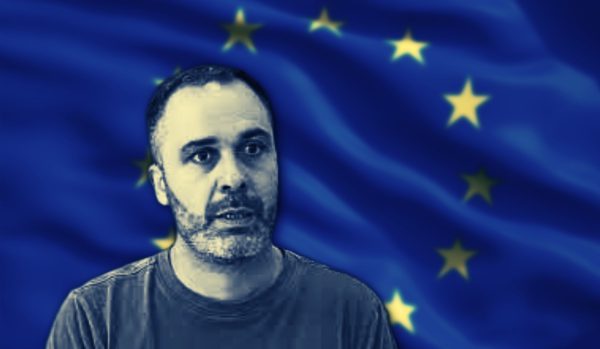
The Frankfurt am Main District Court in Germany has recently upheld a German bank’s decision to maintain the suspension of accounts belonging to Berlin-based journalist Hüseyin Doğru, who is known for his pro-Palestinian news coverage. The ruling rejected an urgent application by the journalist, who is currently facing the threat of homelessness due to EU sanctions. The court’s decision means Dogru remains without the necessary funds for rent or basic daily needs.
The legal battle surrounding Hüseyin Doğru has sparked intense political debate in Germany, with critics describing the case as a “socio-economic death sentence” and a dangerous precedent for press freedom. Certainly, these EU sanctions, which can freeze bank accounts, can be used to effectively target dissident journalists across the EU in the coming years.
According to the German court order, there was no right that would entitle Doğru, who has a Turkish background but also has German citizenship, to continue using his bank account while under sanctions. Berliner Zeitung reported that the judge determined that the situation lacked the “prerequisite for intervention in the urgent procedure” because “Doğru has no enforceable right to have the bank release the transfers it has requested.”
The impact of this ruling on Doğru’s personal life is severe. Expressing his concern for his family’s future, Doğru stated, “The risk of ending up on the streets with three children is a concrete threat.”
The paper notes that his “authorized €506 per month makes it impossible to support a family of five. Moreover, he cannot freely dispose of even that amount. The situation could become existential.”
While German law technically allows for a monthly subsistence allowance — cited in late 2025 as €506 — Doğru’s lawyers have had to repeatedly sue banks just to gain access to this minimum amount. His attorney, Alexander Gorski, described these tactics as a “war of attrition” designed to make social and economic participation “factually impossible.”
He also noted the extreme difficulty of maintaining a normal life under these conditions, remarking that “paying bills is practically impossible for me.”
Doğru has been on an EU sanctions list since May 2025, with Brussels arguing that his pro-Palestinian journalistic work incites “ethnic, political, and religious discord” and therefore, he allegedly supports “destabilizing activities by Russia.” Notably, he filmed a number of the occupations of Berlin universities by pro-Palestinian activists.
Doğru has denied these allegations, pointing out that he ended his previous employment with a Russian-funded outlet following the invasion of Ukraine and has publicly criticized the conflict.
Remix News already covered developments in this story at the end of January of this year.
At the time, Doğru, a left-wing journalist, said: “Not only I, but also my wife and my three children are effectively being sanctioned.”
“The sanctions themselves stipulate that I am entitled to access to essential funds. The fact that my bank is nevertheless blocking these funds violates applicable law in my view,” he continued.
The basis for the sanctions was his alleged connections to Russia, but the Berliner Zeitung indicated that so far, no proof has been presented to confirm this accusation, and more importantly, there was no trial or evidence provided to support this accusation.
“Brussels justifies the measures by saying that he is using his pro-Palestinian journalistic work to stir up ‘ethnic, political and religious discord’ and thus allegedly ‘destabilizing activities that support Russia.’ The EU has not yet publicly provided any concrete evidence of a connection to Moscow,” wrote the paper at the time.
There are now fears that the extraordinary case may be a sign of where the future is headed, where an authoritarian EU can censor and financially ruin dissidents and journalists with no oversight or judicial review. Notably, similar sanctions could also be deployed against others, such as Roger Köppel, the Swiss editor-in-chief of the weekly Die Weltwoche.
In a formal inquiry from the newspaper Junge Welt, the German Ministry of Economic Affairs clarified the severity of the “provision ban.” They stated that a sanctioned individual may receive “no economic benefit whatsoever,” including wages. This interpretation effectively bars any German company from hiring Doğru, as paying him would constitute a criminal offense.
An MP of the left-wing Social Democrats (SPD) Macit Karaahmetoğlu, defended the government’s position in the case and the sanctions, noting it was established to target those undermining “the security, stability, independence and integrity” of the EU. He emphasized that the German government “actively worked to establish and strengthen” this specific regime to counter hybrid threats.
Legal experts and journalists, however, have compared Doğru’s situation to “internal exile.” Since he is a German citizen, he cannot be deported, but the sanctions have stripped him of his identity card and barred him from all forms of employment.
Even friends and family who would like to donate money to Doğru could be targeted with criminal charges.
Seven US allies endorse Hormuz ‘coalition,’ offer ‘no commitment’ for military action
The Cradle | March 20, 2026
The UK, France, Germany, Italy, the Netherlands, Japan, and Canada issued a joint statement on 20 March in support of a potential “coalition” to reopen the Strait of Hormuz, while specifying “no commitment” to a concrete military role.
“We express our readiness to contribute to appropriate efforts to ensure safe passage through the strait,” the close US allies announced.
The joint statement did not, however, touch on any military involvement or the commitment of any forces to the initiative.
One political reporter writing for Axios said the statement was “largely a gesture to placate [US] President [Donald] Trump, who has railed against allies for declining to help secure the strait and warned that a failure to do so could undermine the future of NATO.”
The allies condemned attacks on commercial vessels and energy infrastructure, citing “the de facto closure of the Strait of Hormuz by Iranian forces,” and called on Tehran to “cease immediately its threats, laying of mines, drone and missile attacks and other attempts to block the strait.”
Italian Prime Minister Giorgia Meloni said no state is considering “a military mission to forcibly break the Iranian blockade,” adding the EU favors “diplomacy and de-escalation.”
She clarified that any contribution would apply to a “post-conflict phase” and require agreement among all parties.
Other governments echoed this position, with Germany confirming “no military participation,” while France said its deployments remain strictly defensive.
The UK ruled out a NATO mission, focusing instead on negotiations, though it has sent planners to coordinate options.
Despite the political backing and global panic over soaring energy prices , maritime data shows the strait is only partially restricted, as roughly 90 vessels crossed in early March.
Iran has established a controlled “safe” shipping corridor through its territorial waters in the Strait of Hormuz, allowing only approved vessels – mainly from countries like India, Pakistan, China, Iraq, and Malaysia – to transit after IRGC vetting, while ships linked to the US or Israel are effectively excluded.
Access is currently negotiated on a case-by-case basis but is moving toward a formal system requiring detailed disclosures of ownership and cargo, often coordinated through intermediaries and, in at least one case, involving a reported $2-million payment.
So far, at least nine vessels have used the route, which passes near Larak Island for inspection, but traffic remains minimal.
The US remains largely the only country carrying out direct military operations, deploying forces and striking Iranian positions along the strait, as well as conducting offensive strikes inside Iran.
Earlier US-led efforts to secure regional shipping routes followed a similar trajectory, with coalitions struggling to gain meaningful participation as several allies refused or limited involvement, leaving only a small number of naval deployments.
Efforts to secure maritime routes during the Israeli genocide on Gaza in 2024 faced the same constraints, as US and EU resources proved insufficient to deter Yemeni strikes across the Red Sea.
Officials had warned that strikes on Yemen were “not contributing to the solution,” while Yemeni attacks on vessels continued, raising pressure on global trade routes.
Yemeni forces maintained their stance as a support front for Gaza, persisting with attacks until Washington ended its campaign under an Omani-brokered truce, with President Trump claiming Yemeni forces “don’t want to fight anymore.”
‘Not our war’: Trump’s naval coalition to reopen Strait of Hormuz dead in the water
The Cradle | March 16, 2026
Several countries have either rejected or expressed serious concerns about US President Donald Trump’s plan to form a coalition aimed at escorting vessels through the Strait of Hormuz, which Tehran has closed to Washington and its allies in retaliation for the brutal US-Israeli strikes on the Islamic Republic.
Germany’s Minister for Foreign Affairs, Johann Wadephul, said on 15 March that he was “skeptical” of Trump’s plan.
“Will we soon be an active part of this conflict? No,” he went on to say.
German Defense Minister Boris Pistorius said, “What does Trump expect a handful of European frigates to do that the powerful US Navy cannot?” adding, “This is not our war, and we did not start it.”
Meanwhile, France officially rejected the US request to send warships to the Strait of Hormuz.
The French Foreign Ministry rejected reports that it was gearing up to send vessels, saying, “No. The carrier strike group remains in the Eastern Mediterranean. France’s position remains unchanged: defensive and protective.”
Australia has also denied the request, as have Japan, China, Norway, and Spain. The UK and South Korea said they were reviewing options.
The US president had demanded that NATO states join his proposed coalition, threatening that they would face a “very bad future” if they did not.
Trump had also expressed hope that “China, France, Japan, South Korea, the UK, and others, that are affected by this artificial constraint, will send ships to the area so that the Hormuz Strait will no longer be a threat by a nation that has been totally decapitated.”
Iran has closed the Strait of Hormuz to Washington and its allies in response to the US-Israeli war against the Islamic Republic. Several vessels trying to cross in violation of Iranian warnings have been targeted.
A number of countries have reached out to Tehran for access to the Strait, through which 20 to 30 percent of the world’s energy passed prior to the war.
India has confirmed that two of its ships passed after talks with Iran. Tehran also allowed a Turkish vessel to pass through the strait.
“The Strait of Hormuz has not been militarily blocked and is merely under control,” said Alireza Tangsiri, naval commander of the Islamic Revolutionary Guard Corps (IRGC).
Iranian Foreign Minister Abbas Araghchi stated, “The Strait of Hormuz is open. It is only closed to the tankers and ships belonging to our enemies, to those who are attacking us and their allies. Others are free to pass.”
After Yemen began its pro-Palestine blockade in the Red Sea following the start of the Gaza genocide in 2023, Washington launched a naval operation under the name Prosperity Guardian – aimed at deterring Sanaa’s forces and facilitating the transit of vessels.
The US failed to secure enough partners, and the mission ultimately failed.
The Ansarallah-led Yemeni Armed Forces (YAF) has recently vowed that it is ready to intervene alongside Iran’s other allies – meaning the potential closure of another vital energy route, the Bab al-Mandab strait.
The EU never learns – except for the wrong lessons
By Tarik Cyril Amar | RT | March 13, 2026
Some observers of the current EU ‘elites’, including this author, used to believe that their defining feature – apart from things such as complicity in genocide and wars of aggression with Israel and the US, bigoted xenophobia about Russia and China, and, of course, pervasive corruption – was an absolute inability to learn.
We must admit, we stand corrected: Those running the EU are able to learn. The real problem is their relentless compulsion to learn the wrong thing. We are not dealing with non-learners but anti-learners: where others progress from experience, they regress.
Case in point, their response to the fact that their US-Israeli masters have started a war to end if not strictly all then at least all (barely) affordable energy supplies to the EU’s economies, while its major players are already limping along on a spectrum between walking-wounded (for instance, France, maybe) to comatose (Germany, definitely).
In Germany, still the largest single economy inside the EU, providing almost a fourth of the bloc’s total GDP, industrial demand – orders from factories – fell by over 11% in January. Such a decrease – really, collapse – in orders is “drastic,” as German Manager Magazine notes. According to the Financial Times, this “very weak” start into the new year, puts preceding – and very modest – signs of a recovery from years of stagnation in doubt. Indeed. And all of that disappointing data was gathered before the fallout of the Iran war had even started.
Regarding the latter, it will be severe. Even Berlin’s Ministry of Economics admits that the risks stemming from the war’s consequences, most of them still incoming, is substantial.
In general, the Eurozone – different from but covering most of the EU – is not in good shape either. According to Bloomberg, a very low and yet still over-optimistic Eurostat estimate of expansion by 0.3% for the last quarter of 2025 has just been revised downward to 0.2%. But frankly, who cares at that level of misery?
And for the Eurozone as well, America and Israel’s unprovoked war against Iran is likely to make things much worse. Philip Lane, chief economist of the European Central Bank (ECB), has confirmed that much to the Financial Times : An enduring decrease in oil and gas supplies from the Middle East can (read: will), he warns, bring about a “substantial spike” in inflation and a “sharp drop in output.”
And what is the EU leadership’s response to this deeply depressing outlook for its economy and the European citizens depending on it? Let’s not dream. It is true, if the EU’s ‘elites’ were in the business of protecting European interests and prosperity, they would, obviously, take a sharp turn against both the US and Israel (as well as London in case it were to stick to its special-poodle relationship with Washington).
Yet if the EU leadership had such priorities, it would long have turned against the US, for its blatant exploitation of its vassal regimes via, first, NATO over-expansion and, now, crippling overspending, for Ukraine proxy war outsourcing, and for devastating tariff warfare. It would also long have broken with Israel, for, to name only two compelling reasons, its genocide and serial wars of aggression that are both horrifically criminal and extremely destabilizing and damaging not “only” to the Middle East but the world as a whole and Europe in particular.
In short, the EU would not even be in the mess it is now if it actually took care of Europe. And, by the way, if it were not so craven but had opposed the US and Israel instead of pandering to them, perhaps it could even have contributed to preventing the current criminal war against Iran.
That, however, would not be the EU as it really is. In sordid reality, it is a second iteration of NATO, that is, an instrument of the US empire (notwithstanding showy and silly Greenland hysterics) and of international oligarchic structures. Ordinary Europeans matter only in so far as they are expected to vote – and think and speak – in line with EU ‘elite’ priorities, and when they do not, they are made to.
No wonder then that the utterly unelected and legally extremely challenged EU Commission head Ursula von der Leyen – really, the EU’s despot and US viceroy rolled into one – demonstratively does not give a damn about the massive energy price shock that has already started hitting the fragile economies of EU-Europe.
With tanker ships on fire off the Strait of Hormuz, oil surging over $100 per barrel, national reserves being dipped into, gas prices up by 50% in the EU, and, according to the International Energy Agency (IEA), oil markets suffering “the largest supply disruption in history,” von der Leyen has had nothing to offer but reverting to the tired – and less than successful – playbook of 2022, originally put together when the Western-Russian proxy war via Ukraine escalated. Tinkering, again, with ineffective price caps, taxes and fees, electricity market structures and price distortions, renewables, and wasting money on subsidies (out of budgets that are already vastly overstretched) – that was about it. No wonder, several national governments have already signaled their impatience with what, in essence, is inactivity and non-strategy.
At least as important, though, was what von der Leyen took pains to rule out: Returning to Russian supplies would be a “strategic blunder,” the EU’s one-woman decider-in-chief declared. Instead, she insists, the EU must stay the course and continue ridding itself of the last remnants of Russian gas and oil. Clearly, von der Leyen is anxious that not everyone in the EU’s ‘elites’ is up to her level of ideological obstinacy and economic as well as geopolitical irrationality. “Some,” she chided, “argue that we should abandon our long-term strategy and even go back to Russian fossil fuels.” Perish the thought! As long as von der Leyen and her type run the EU, it will ruin itself before doing the obvious – making peace with Russia and rebuilding economic ties, including in the energy sector.
And there you have it: This is a leadership style not simply refusing to learn from experience but repeating the worst blunders of the past. The von der Leyen way of policy making – from sanctions (now on round 20, I believe) to pipelines – is akin to negative natural selection: Whatever does not work will be done again, and again, and again. The real question, it seems, is not if the EU “elites” will ever stop being perverse anti-learners, but whether – or when – they will lose control. Mismanaging the massive shock that the US and Israel have sent their way now may finally provoke enough backlash from below to send the von der Leyens packing. For Europe’s sake, let’s hope for the best, even if it’s delivered by the worst.
Tarik Cyril Amar is a historian from Germany working at Koç University, Istanbul, on Russia, Ukraine, and Eastern Europe, the history of World War II, the cultural Cold War, and the politics of memory.
How Germany became Israel’s enabler-in-chief
By Tarik Cyril | RT | March 3, 2026
Say what you will about Germany’s current ‘elites’, but they are consistent: Once they don’t give a damn about international law, elementary fairness, rudimentary human decency, and, last but not least, basic logic, they really won’t quit before their country’s reputation is ruined as it has not been since 1945. Hyperbole, you think? Can it really be that bad, you wonder?
Leave it to Chancellor Friedrich Merz and company to achieve what seems almost impossible. For almost two-and-a-half years, not one but two German governments have been, in effect, complicit in Israel’s continuing Gaza genocide. Under former Chancellor Olaf Scholz from the centrist Social-Democrats – otherwise remembered for gutless evasion when US ex-president Joe Biden announced, in essence, that he was going to blow up Nord Stream – as well as under the unusually dishonest Merz from the centrist Christian-Democrats, Berlin has supplied Israel with arms (and probably misled the International Court of Justice about it), diplomatic cover, legal support, media propaganda, and the often brutal suppression of protests against Israel’s crimes.
Indeed, recently a UN special rapporteur has identified the “use of anti-terrorism laws to restrict advocacy for Palestinian rights” as “a primary concern” in a report warning that the “space for freedom of expression is shrinking” in Germany.
Against this awful and shameful background, the fresh war of aggression launched by Israel and its American auxiliaries – that’s the technically correct term for troops serving a foreign nation – could, conceivably, have been a very late wake-up call. Perhaps, an eternal optimist may have thought, the sheer brazenness of the attack will make even Berlin hesitate. Nope. Instead, Friedrich Merz and official Germany in general have radicalized their virtually nihilistic denial of law, ordinary ethics, and common sense.
One day after the beginning of the Israeli-American war of aggression, Merz took the lead and set the tone by going public with a perverse misreading of the situation. Starting by labeling the heinous assault – launched, according to US and Israeli custom, under the cover of ongoing negotiations – “massive military strikes,” Merz acknowledged that they had killed members of the Iranian government (which he, of course, caricatured as a “Mullah” and “terror regime”) including “the religious leader” Ayatollah Khamenei. If you expected the slightest sign of disapproval or even just discomfort at these cold-blooded murders of high government officials, you don’t know Friedrich Merz yet.
Instead the German chancellor – or in his terms, perhaps, ‘vassal regime’ leader? – highlighted the need to help German tourists stranded in the warzone and to protect public order in Germany by preventing “antisemitic and anti-American attacks.” Translation from Berlin officialese: by ramping up suppression of all and any criticism of Israel and America.
Then, after a catalogue of Israeli and American propaganda talking points against Iran – nuclear this, ballistic that… you know the drill – reproduced with the earnest assiduity of an eager pet pupil, Merz went on to assure “many Iranians” that his Berlin regime shared their relief at, in effect, being properly bombed, again.
In general, the chancellor’s speech was a textbook example of perpetrator-victim inversion. Clearly approving of the Israeli-American assault, Merz had the chutzpah to sternly demand that Tehran must “at once” stop its “indiscriminate attacks.” Those, of course, do not, actually, exist. Because Iran is acting in clear and obvious self-defense – the only legitimate reason, apart from a UN mandate, for resorting to military force – and, as before, its counter-strikes at those attacking it are still remarkably selective and restrained.
To be fair even to Merz, at least, he was a little less disingenuous than usual. He frankly, if in stilted language, admitted that he could not care less about international law. Friedrich, to be honest, we have always known that much about you – despite your hypocritical invocation of “rules” and “values” whenever you feel like going after Russia again – but it’s nice you’re coming out so openly now.
But Merz got back to his usual, absurdly devious self very quickly. Because, you see, it’s Iran that is to blame when Friedrich Merz treats international law as utterly dispensable. At least according to Friedrich Merz, who explained that all those beautifully law-based measures taken regarding and, really, against Iran before this fresh war, did not work. Oh, Tehran, really how uncouth of you! Neither devastating sanctions, nor the US cancelling the JCPOA agreement, nor ongoing assassination and subversion campaigns waged by Israel and its friends, nor last year’s ‘12-day’ war of aggression made you submit.
For, clearly, according to Berlin logic, these must be those international-law based operations Merz was referring to. Make it make sense. Now, in his defense, for a man who sees no problem with his US and Polish ‘allies’ and Ukrainian dependents blowing up Germany’s vital infrastructure, the Iranian insistence on not being bullied and defending national sovereignty must be truly incomprehensible. So maybe, Merz isn’t really morally and legally perverse but just a tad out of his very shallow depth.
By the way, Merz’s justifying a war of aggression by Iran not having bent the knee even after decades of “comprehensive sanctions packages” is likely to be noted with great interest in Moscow: If that’s how German elites see the world now – first we sanction you and then, if you still don’t knuckle under, we have a de facto right to attack you – the Russian leadership is certain to draw the obvious conclusions. Again, Merz probably didn’t even understand the insanely destabilizing implications of what he was saying. But they are there, nonetheless.
In short, Merz’s address was stunningly absurd and a horrific moral and intellectual failure, a disgrace for his country. It should be noted, however, that polls show that this atrocious line of unconditional compliance with both Benjamin Netanyahu’s genocidal apartheid Israel and Donald Trump’s Make-Israel-Greater US is not shared by all Germans. On the contrary, 57% of respondents of a poll are against the attack. Less than a third – 29% – approve of it. Likewise, even in Germany, a preponderant majority – 83% – has finally learned to consider Israel’s actions in Gaza unjustified: In the fall of 2023, when Israel started its genocide, 50% of respondents thought they were justified.
Such polls are nothing to be proud of: German society as a whole is still far too wrongheaded and submissive, when it comes to Israel’s crimes and those of the US, too. But if you know the level of crude media propaganda and relentlessly one-sided indoctrination that Germans are subject to, these numbers still show that for the nation – unlike for its “Atlanticist” elites – there may be some hope.
For now, however, the failure that Merz represents is still in control. He himself has gone to Washington to flatter Donald Trump by praising his latest crime to his face. Netanyahu, meanwhile, may well be in Berlin, in which case German politicians, judges, prosecutors, and police are criminally liable for failing to arrest the war criminal, as the warrant of the International Criminal Court unambiguously requires. Even if his plane parked in Germany is only part of a deception operation, Berlin’s taking part in such a ruse is also morally repulsive and possibly criminal, too.
Germany as a whole has failed the tests of both the Gaza genocide and the wars of aggression against Iran. Its “elites” are a disgrace represented all too well by its chancellor. That is a sad thing to have to state. Yet there is no chance of political and moral renewal without facing this fact. We are back to an old question: What would it take for Berlin to grow a conscience?
Tarik Cyril Amar is a historian from Germany working at Koç University, Istanbul, on Russia, Ukraine, and Eastern Europe, the history of World War II, the cultural Cold War, and the politics of memory.
EU gas prices surge 50% right as Germany and France face down lack of energy reserves after cold winter
Remix News | March 2, 2026
Natural gas markets across Europe experienced a violent price surge on Monday following news that Qatar has suspended operations at the world’s premier liquefied natural gas facility, which accounts for 20 percent of global output. EU leaders are reportedly preparing for a crisis scenario if the war drags on due to already low gas reserves in the biggest member states, particularly Germany and France.
Prices went as high as 50 percent before settling back down to the current level of 45 percent at the time of publication, resulting in the current price of €46 per megawatt-hour. Similar price jumps were seen in the United Kingdom’s NBP benchmark index.
Adding to a potential crisis, EU storage levels have dropped below 30 percent capacity at the end of the winter season, significantly lower than the 40 percent recorded at this time last year. However, some of the biggest countries are facing the lowest levels of gas. Gas Infrastructure Europe shows German storage at 20.5 percent and French reserves at 21 percent. These low inventories leave the bloc increasingly susceptible to price swings and supply shortages if an LNG crunch worsens.
Now, the EU is already considering scenarios where the war could drag on for a long period of time, including up to years. While President Donald Trump has cited the figure of “four weeks” in regard to wrapping up the war, it remains unclear how long the war could go on.
Politico reports that the EU’s efforts to wean itself off of Russian gas and oil have created a “panic moment.”
“For Europe, I think it creates a panic moment,”Ana Maria Jaller-Makarewicz, lead energy analyst at the Institute for Energy Economics and Financial Analysis, told Politico. “Four years ago [following Russia’s invasion of Ukraine] we had these issues.” But this time, she said, “We are not just now concerned about Russia, but about Qatar, the U.S. … so I think now since we have increased dependencies on other sources, we have also increased our vulnerability.”
Noting Qatar’s role as the second-largest supplier of LNG in the world, she noted that if Qatar cannot deliver natural gas efficiently and on time, “Russia could be the big beneficiary.”
“We could also see Russian energy flowing to other countries. There could be an opportunity for Russia if this Qatar LNG is stopped,” said the analyst.
QatarEnergy has not disclosed extent of damage
The energy crisis intensified after U.S. and Israeli military strikes on Iran escalated regional instability. In response to an attack on its infrastructure, QatarEnergy confirmed it had halted production linked to the North Field gas reservoir. While the company acknowledged the suspension, it gave no further details about the state of the fields and the company’s operations.
The world is currently focusing its attention on the Strait of Hormuz, a vital maritime chokepoint largely under Iranian influence.
Following the recent strikes, Iran has moved to obstruct traffic through the narrow passage, which serves as a primary artery for Qatari LNG and global oil, the vast majority of which is destined for Asian markets. However, energy is a global market, and a bottleneck in one location leads to a surge in prices everywhere.
The price surge may be only temporary, but experts warn that any prolonged closure of the strait could lead to a long-term surge in energy prices. Some have even warned of oil surging to $120 a barrel, while most believe prices within the range of $80 to $90 are a realistic possibility.
Project Artichoke: 70 Years Ago, CIA Discussed Hiding Mind-Control Drugs in Vaccines
By Michael Nevradakis, Ph.D. | The Defender | February 24, 2026
In the 1950s, the CIA brainstormed ways to secretly perform mind control on humans — including concealing drugs in vaccines and widely consumed food products, a newly unearthed CIA document revealed. The Daily Mail first reported the story on Monday.
The seven-page document, “Special Research for Artichoke,” is dated April 23, 1952. It describes a series of ideas for how to develop chemicals designed to alter human behavior and thought.
The proposals contained in the document were part of the CIA’s top-secret Project Artichoke, which ran from 1951 to 1956, according to the Daily Mail.
The document, declassified in 1983, recently circulated on social media. However, it was not published in the CIA’s online reading room until last year.
“Some of the suggestions are controversial,” the document states. The proposals included administering drugs in secret as part of a “long-range approach to subjects.”
According to the document:
“This study should include chemicals or drugs that can effectively be concealed in common items such as food, water, coca cola, beer, liquor, cigarettes, etc.
“This type of drug should also be capable of use in standard medical treatments such as vaccinations, shots, etc.”
CIA experimented on humans as part of Project Artichoke
The document also included a special field of research for “bacteria, plant cultures, fungi, poisons of various types, etc.,” that are “capable of producing illnesses which in turn would produce high fevers, delirium, etc.”
This included “species of the mushroom” that “produce a certain type of intoxication and mental derangement.”
Also among the proposals was a suggestion to research “diet” or “dietary deficiencies” on prisoners and on people undergoing interrogation, including using “specially canned foods having elements removed.”
The document included proposals for both short-term and long-term use on humans. Drugs deemed most suitable for long-term use would be designed to produce an “agitating effect (producing anxiety, nervousness, tension, etc.) or a depressing effect (creating a feeling of despondency, hopelessness, lethargy, etc.).”
According to The Daily Mail, the CIA experimented on humans as part of Project Artichoke. The experiments often involved “vulnerable subjects, including prisoners, military personnel and psychiatric patients.” The experiments were usually performed “without informed consent.”
According to Ben Tapper, a Nebraska chiropractor who was included in the “Disinformation Dozen” list in 2021 for questioning vaccine safety, the document exposes “a disturbing reality that government agencies have historically explored ways to manipulate human behavior through chemical and biological means, including concepts involving food and medical interventions.”
“This is not speculation or conspiracy, and it should deeply concern every American who values bodily autonomy and informed consent,” Tapper said.
Precursor to the CIA’s MK-Ultra mind control experiments?
The Daily Mail cited CIA documents suggesting that U.S. intelligence agencies were concerned that enemy nations had developed their own mind and behavioral control techniques. This led the agency to prioritize the development of its own methods.
Project Artichoke “served as a precursor” to the MK-Ultra program, which the CIA launched in 1953. That program “broadened mind-altering experiments on a larger scale,” the Daily Mail reported.
Many of the documents related to this type of experimentation were destroyed in 1973, “leaving the full extent of the research and how far it progressed unknown.”
Naomi Wolf, Ph.D., CEO of Daily Clout and author of “The Pfizer Papers: Pfizer’s Crimes Against Humanity,” told The Defender that the documents further confirm a long history of intelligence agency research targeting human thought and behavior.
“Sadly, it’s long been established that our intelligence agencies, and those of our enemies, have sought to alter human consciousness and behavior, often without the subjects’ consent. The existence of MK-Ultra, the clandestine project into which Project Artichoke evolved, is well documented,” Wolf said.
John Leake, vice president of the McCullough Foundation and author of the forthcoming book, “Mind Viruses: America’s Irrational Obsessions,” said, “Researchers have long suspected that the Church Committee’s revelation of the CIA’s notorious MK-Ultra mind control experiments, mostly using LSD, had the effect of obscuring the agency’s much larger Project Artichoke.”
Leake cited evidence suggesting that a 1951 mass poisoning in Pont-Saint-Esprit, France, in which 250 residents experienced severe hallucinations and seven people died, was a Project Artichoke experiment. The outbreak was officially attributed to contaminated bread from a local bakery.
Leake said the 1952 document is “consistent with the suspicion that the CIA was seeking to discover mind control methods for even large populations.”
In 2024, a Reuters investigation revealed that the CIA operated a secret propaganda campaign involving vaccines in the Philippines. The campaign attacked what the agency perceived as China’s “growing influence” in the country by targeting the Chinese-made Sinovac COVID-19 vaccine through the use of phony online accounts spreading “anti-vax” messaging.
Michael Rectenwald, Ph.D., author of “The Great Reset and the Struggle for Liberty: Unraveling the Global Agenda,” said the Project Artichoke revelations “make it clear that the CIA has posed an enormous threat to U.S. citizens, in addition to the horrors it unleashes on non-U.S. target governments and populations.”
Project Artichoke wanted to enlist help from Army’s Chemical Warfare Service
The 1952 Project Artichoke document also included a recommendation to involve the U.S. Army Chemical Warfare Service in the project’s efforts, citing its experience with “exhaustive studies along these lines.”
This proposal bears a resemblance to recent suggestions that COVID-19 — and the response to the pandemic — were coordinated at high levels of government, military and intelligence agencies.
Last year, former pharmaceutical research and development executive Sasha Latypova and retired science writer Debbie Lerman released the “Covid Dossier,” presenting evidence of the “military/intelligence coordination of the Covid biodefense response in the US, UK, Australia, Canada, the Netherlands, Germany, and Italy.”
According to Latypova and Lerman, “Covid was not a public health event” but “a global operation, coordinated through public-private intelligence and military alliances and invoking laws designed for CBRN (chemical, biological, radiological, nuclear) weapons attacks.”
Leake said “it is far from clear” that the Church Committee hearings of 1975 “put a complete end to CIA covert programs.” He cited the possible laboratory development of the SARS-CoV-2 virus as an example.
“The laboratory creation of SARS-CoV-2 with gain-of-function techniques developed at the University of North Carolina-Chapel Hill, and the U.S. military’s involvement in developing and distributing of mRNA COVID-19 vaccines, should … be regarded as possible outgrowths or even continuations of Project Artichoke,” Leake said.
Experts question similarities between Project Artichoke, COVID vaccines
In a Substack post today, epidemiologist Nicolas Hulscher drew a potential connection between Project Artichoke and the development of COVID-19 vaccines. Hulscher cited recent peer-reviewed studies that identified the vaccines’ adverse impact on neurological health and “surging rates of cognitive decline.”
Hulscher wrote:
“Disturbingly, since 2021, over 70% of humanity received a neurotoxic agent masquerading as a ‘vaccine.’ The same goals outlined in the CIA document (vaccines/drugs capable of covertly inducing anxiety, depression, and lethargy) are now being observed in COVID-19 vaccinated populations. …
“… If the CIA was secretly discussing covert methods to alter human behavior in the 1950s, it would be no surprise if similar classified projects emerged in the decades that followed.”
A 2024 paper published in the journal Molecular Psychiatry investigated psychiatric adverse events among over 2 million people in South Korea. The study found that “COVID-19 vaccination increased the risks of depression, anxiety, dissociative, stress-related, and somatoform disorders, and sleep disorders while reducing the risk of schizophrenia and bipolar disorder.”
A 2025 study published in the International Journal of Innovative Research in Medical Science found “alarming safety signals regarding neuropsychiatric conditions following COVID-19 vaccination, compared to the influenza vaccinations and to all other vaccinations combined.”
This included increases in schizophrenia, depression, cognitive decline, delusions, violent behavior, suicidal thoughts and homicidal ideation.
“The fact that mRNA vaccines were designed to cross the blood-brain barrier and inflame the brain — or at least, they were known to do so, during their manufacture and distribution — should give us pause in light of this news,” Wolf said.
Wolf said the latest revelations, “while shocking, provide all the more reason for us to be critical of opaque, coercive or untested vaccination programs, additives in food and water, and toxic or opaque geoengineering programs.”
Tapper said the revelations reinforce “the urgent need to protect individual liberty, medical freedom, and ethical boundaries in science and public health.”
“The lesson here is simple: vigilance is necessary when governments claim authority over the human body and mind,” Tapper said.
This article was originally published by The Defender — Children’s Health Defense’s News & Views Website under Creative Commons license CC BY-NC-ND 4.0. Please consider subscribing to The Defender or donating to Children’s Health Defense.
German leader of EU’s largest faction sounds the alarm of possibility of right-wing forces coming to power in France, Poland
Manfred Weber, a vocal critic of any EU state that pushes back against a more powerful Brussels, has openly embraced Orbán’s opponent in Budapest
Remix News | February 23, 2026
German politician Manfred Weber, the leader of the European People’s Party (EPP), spoke on ZDF about a common European army, saying, among other things, that the European Union must “draw conclusions from its own experiences, including in military matters.”
Weber spoke about the danger to the EU establishment posed by the presidential elections in France and the parliamentary elections in Poland, both to be held in 2027. Weber is concerned that there is a high probability of victory for forces that do not support the continuation of the EU’s centralization; forces that instead advocate for a Europe of sovereign nations. He said that EU must have the strength necessary, even by way of a common military, to presumably counter such possible outcomes.
Specifically mentioning Poland’s Law & Justice (PiS) leader, Jarosław Kaczyński, and France’s National Rally (RN) leader, Jordan Bardella, he said: “I hope that we now have the strength… to create a Europe that cannot be destroyed and that will weather the storms of the world order together… Now we need the same approach on the military front. We must prepare for scenarios in which Bardella becomes president of France and Kaczyński returns to power in Poland.”
Hungarian Prime Minister Viktor Orbán has repeatedly asserted that the European People’s Party (EPP) is an ardent supporter of the war in Ukraine against Russia, a war Orbán has maintained Hungary will not be drawn into. Notably, Orbán’s Fidesz party used to belong to the EPP grouping before parting ways to found the Patriots for Europe faction, with members committed to EU member states that want to preserve their sovereignty and traditional, conservative values. Now, Weber has been a strong promoter of the opposition leader, Péter Magyar, ahead of Budapest’s April parliamentary election.
During his interview, Weber was vocal about his concerns that the right-wing Alternative for Germany (AfD) may come to power in Germany. “During a visit to the Greek parliament, someone asked me, ‘What would happen if Germany built the largest land army, and at the same time the AfD had 25-30 percent?’” he told the station.
Friedrich Merz’s Push to End Online Anonymity Has a Troubling Subtext
Germany already has laws that let politicians prosecute citizens for insulting them online
By Christina Maas | Reclaim The Net | February 19, 2026
German Chancellor Friedrich Merz wants to end online anonymity.
Speaking Wednesday evening at an event held by his conservative Christian Democrats in Trier, he called for mandatory real names across social media and floated a potential ban on platforms for users under 16.
“I want to see real names on the internet. I want to know who is speaking,” Merz said.
The framing is the same as usual; protect democracy, protect children. What Merz left out is worth examining closely.
Section 188 covers the same offenses when directed at politicians. The penalties are steeper across the board: three years maximum for insults, mandatory prison time with a five-year ceiling for malicious gossip (minimum three months), mandatory prison time with a six-month floor and five-year ceiling for defamation. No fine option.
Politicians use these laws. Merz uses these laws. He has filed hundreds of complaints himself. CDU politicians and others flag thousands of posts to prosecutors annually, and German police conduct hundreds of raids each year for insults and alleged “hate speech.” The infrastructure for going after ordinary citizens who criticize their representatives already exists and is already in active use.
What a real name mandate does is remove the last barrier between a critical post and a knock on the door. Right now, authorities have to work to identify anonymous speakers. With real names required by platform policy, that step disappears.
Merz framed his position as symmetry. “In politics, we engage in debates in our society using our real names and without visors. I expect the same from everyone else who critically examines our country and our society.”
But politicians operate with institutional resources, legal teams, and parliamentary protections. A citizen posting a pointed criticism of a public official from their personal account has none of that. They do have something, for now: the option to do it without their name attached. Merz wants to take that away.
He also criticized those who defend anonymity, saying they are “often people who, from the shadows of anonymity, demand the greatest possible transparency from others.” The characterization treats pseudonymous speech as inherently suspicious, which is one way to frame it. Another is that people have historically needed cover to say true things about powerful people without facing retaliation.
Merz warned that “enemies of our freedom, enemies of our democracy, enemies of an open and liberal society” were using algorithms and AI to run targeted influence campaigns, and that he had underestimated how effectively these tools could manipulate public opinion.
Merz asked: “Do we want to allow our society to be undermined in this way from within and our youth and children to be endangered in this way?”
It’s a pointed question. A more uncomfortable one: do we want to hand politicians whose parties already file mass complaints under insult laws a system that automatically links every critical post to a verified identity?
German state blacklists right-wing party for first time
RT | February 18, 2026
Authorities in the German state of Lower Saxony have designated the local chapter of the right-wing AfD party a surveillance priority, citing what they called “extremist” tendencies.
Founded in 2013, Alternative for Germany (AfD) espouses a tough stance on migration and opposes Berlin’s support for Ukraine. In the federal elections last February, the AfD came in second at 20%, winning 152 seats in the 630-seat Bundestag. However, the party has been excluded from coalition talks and government formation as part of a policy known as the ‘firewall’ in German politics.
The AfD’s popularity has since grown further regardless, with recent polls indicating that it is supported by around 25% of Germans, on par with Chancellor Friedrich Merz’s ruling CDU/CSU.
Speaking during a press conference on Tuesday, Lower Saxony Interior Minister Daniela Behrens cited the “unequivocal” conclusion by the Office for the Protection of the Constitution (BfV), according to which, “the greatest danger to our society stems from right-wing extremism, and the AfD in Lower Saxony… clearly falls within this category.”
According to the official, the party’s Lower Saxony chapter “holds our state and our democratic institutions in contempt,” and views people with a migrant background as “second-class citizens.”
The Lower Saxony AfD chapter was first designated a “clear case for surveillance” by the regional BfV office in 2022, with the authorities having now upgraded it to an “object of considerable importance for observation,” a spokesman for the domestic intelligence agency was quoted as saying by local media.
Commenting on the decision, AfD Lower Saxony Chairman Ansgar Schledde rejected “every accusation being made” by the authorities, describing the move as politically motivated and aimed at eliminating an opponent. He vowed to challenge the designation in court.
In four other German states – Brandenburg, Saxony, Saxony-Anhalt, and Thuringia – the local AfD branches are deemed a confirmed right-wing extremist entity, while in Rhineland-Palatinate and Saarland, the party has been declared a suspected case.
Last May, the federal BfV office upgraded the AfD’s classification from “suspected” to “confirmed right-wing extremist,” only to suspend it shortly thereafter pending a ruling on the party’s court appeal.
Macron, Merz, and von der Leyen Defend Expanded Speech Controls
The Munich Security Conference just became a defense session for Europe’s most ambitious censorship regime
By Dan Frieth | Reclaim The Net | February 16, 2026
Emmanuel Macron stood before the Munich Security Conference last week and offered a blueprint for what European governments should be allowed to delete from the internet. The French president wants mandatory identity verification for social media users, one account per person, algorithm transparency on the government’s terms, and the legal authority to block platforms that refuse to comply.
“We have to be sure there is one single person with one account,” Macron said. “If this is an AI system, if this is bot or organized by big organization, it should be just forbidden.”
The statement describes a system where every social media user would have their identity verified by platforms and tied to a single permitted account. Anonymous speech, pseudonymous commentary, and the ability to maintain separate personal and professional presences online would effectively end for anyone using platforms that serve the European market.
Macron suggested this as a way to protect democracy. The mechanism would give governments a powerful tool to identify, track, and silence any user whose speech they find objectionable.
France is moving to ban social media access for anyone under 15, a policy that requires verifying every user. Macron defended this by characterizing free expression online as a form of brainwashing.
“Free speech would mean I will give the mind, brand the heart of my teenagers to algorithm of big guys,” he said. “I’m not totally sure I share the values, or Chinese algorithm without any control. We are crazy.”
The argument runs as follows: letting young people encounter ideas online without government permission is insanity. The solution requires every user to prove their age to access platforms where public discussion happens.
Macron suggested that speech illegal in newspapers should remain illegal when moved online. “How is that the craziest and most harmful narratives can go unchecked in our digital space, where they will fall under the law if published in print?”
The question assumes “harmful narratives” is a category the government should define. It also assumes the government should have the power to prevent people from encountering ideas it has labeled crazy.
Macron invoked the Digital Services Act as the foundation for expanded censorship across Europe. “This is a very important regulation because for the first time we created the framework to regulate this platform.”
The DSA gives EU regulators the authority to demand content removal from platforms. Macron called for going further: using the law to “excuse those who clearly decide not to respect our rules and our regulation” and to “block all those [who allow] interferences in our systems.”
He offered a familiar list of speech categories he wants suppressed: “racist speech, hateful speech, anti-Semitic speech.” These terms have no fixed legal definition that applies uniformly across EU member states. Who is racist, what constitutes hatred, which criticism of which policies counts as anti-Semitism: these determinations would be made by regulators and platforms operating under government pressure.
Macron described limits on speech as somehow inherent to democracy itself: “When you have free speech, you have respect, you have rules, and the limit of my freedom is the beginning of your freedom.”
This formulation treats speech as equivalent to physical coercion. Your words are framed as a boundary violation against others simply by existing. The speech that most requires protection is speech that offends, that challenges consensus, that the powerful would prefer to suppress. Macron’s framework offers no protection for any of it.
German Chancellor Friedrich Merz, who opened the conference, echoed the European position that speech protections should end where government-defined values begin.
“A divide has opened up between Europe and the United States,” Merz said. “And Vice President JD Vance said this very openly here at the Munich Security Conference a year ago, and he was right. The battle of cultures of MAGA in the US is not ours. Freedom of speech here ends where the words spoken are directed against human dignity and our basic law.”
“Human dignity” is the phrase German law uses to justify prosecuting speech. The Constitutional Court has interpreted it to cover insults, Holocaust denial, and an expanding category of expression that authorities determine undermines respect for persons or groups. It is the legal mechanism under which German police have raided homes over social media posts and prosecuted people for memes.
European Commission President Ursula von der Leyen joined the censorship chorus with a declaration of territorial authority over online expression.
“I want to be very clear: our digital sovereignty is our digital sovereignty,” she said, adding the EU “will not flinch where this is concerned.”
Von der Leyen described European speech regulation as under attack from the United States, “which has wielded the threats of tariffs on partners to secure preferential access and has decried the EU’s digital rules as an assault on free speech.”
The EU’s digital rules are an assault on free speech. The DSA empowers bureaucrats to demand platforms remove content, under threat of massive fines.
The EU has opened formal proceedings against X for its policies. European regulators have forced platforms to suppress content that would be legally protected in the United States.
Von der Leyen framed resistance to this regime as a threat to Europe’s “democratic foundation.” She claimed Europe has “a long tradition in freedom of speech” while defending a legal structure designed to ensure certain speech never reaches European audiences.
“The European way of life – our democratic foundation and the trust of our citizens – is being challenged in new ways,” she said. “On everything from territories to tariffs or tech regulations.”
The phrasing groups speech regulation with tariffs and territorial disputes. All three are matters where Europe will defend its sovereignty. What Europeans are permitted to say, read, and share online is treated as equivalent to where national borders fall.
The leaders who gathered in Munich spoke of protecting democracy while proposing tools that would let governments identify and punish dissent. They invoked free speech while demanding the power to decide which speech is free. They claimed to defend Europe while stripping Europeans of the ability to speak freely online.
Germany’s CDU Pushes Real-Name Social Media Mandate and ID Checks
The party could ask Germans to show their papers before they can post a tweet
By Cindy Harper | Reclaim The Net | February 14, 2026
Germany’s governing CDU is preparing to discuss a proposal that would fundamentally alter the architecture of online speech by tying it to verified real-world identities.
At the upcoming federal party congress in Stuttgart on February 20 and 21, the Schleswig-Holstein branch of the Christian Democratic Union, the party of Chancellor Friedrich Merz, will push not only for a minimum age for social media (which would require users to show ID) but for a “Klarnamenpflicht” that would require users to register with their real names and confirmed identities.
This identity mandate is key to the motion. The state association led by Minister President Daniel Günther argues: “A real-name requirement creates greater accountability, facilitates legal enforcement, and strengthens trust in digital discourse.”
It further claims that such a rule would strengthen protection for young people online. The proposal also states: “The anonymity of the internet fosters hatred, incitement, and criminal behavior.”
If adopted, the requirement would compel platforms to authenticate users against official identification or comparable verification systems. Age checks for minors would likely depend on the same infrastructure. That means collecting and storing legally attributable identity data at scale. Anonymous or pseudonymous participation would no longer be the default condition of online engagement.
Alongside the real-name demand, the motion calls for “a statutory minimum age of 16 years for open platforms, flanked by mandatory age verification.” A ban for those under 16 takes “into account the special developmental needs of young people,” the text explains, citing the “Australian model” as a template.
Australia enacted such legislation in December 2025, requiring platforms including Facebook, Instagram, Snapchat, TikTok, YouTube, and X to block accounts belonging to millions of users under 16 and introduce ID checks.
The CDU motion frames its broader objective as a need to “organize the digital public sphere.” It declares: “The CDU stands for a free, but responsible digital order.” It also states that freedom of expression requires state “Leitplanken” (guardrails).
General Secretary Carsten Linnemann has publicly endorsed the age restriction. “I am in favor of social media from the age of 16,” he told Bild newspaper. “We must protect children in the digital world from hate, violence, crime, and manipulative disinformation.”
Within the coalition government, consensus is not guaranteed. Justice Minister Stefanie Hubig of the Social Democratic Party of Germany has indicated openness to the concept, while other Social Democrats oppose it.
The CDU’s motion commission recommends referring the proposal to internal party bodies, including the Federal Committee for Digital Affairs and the CDU/CSU parliamentary group, before any legislative step.
The European Commission has warned that additional national platform obligations beyond the Digital Services Act are a “clear no-go,” adding: “The DSA regulates that.”
Featured Video
Racist Seinfeld Dances for Joy as Bibi Unveils His New Map
or go to
Aletho News Archives – Video-Images
TV Drama Review
Japanese drama projects Japan’s wartime atrocities onto Chinese characters

Global Times | October 25, 2026
By portraying Chinese characters as perpetrators of ruthless violence while casting Japanese Self-Defense Forces (SDF) intelligence operatives as defenders, the season 2 of the Japanese drama Vivant has recently drawn criticism from Chinese netizens, who argue that its depiction turns historical reality on its head while ignoring Japan’s wartime atrocities.
The TBS drama series – a spy suspense story in which an alleged unofficial intelligence unit of the SDF operates across the globe — has attracted a passionate fanbase. Its currently airing season 2 opened with a household rating of 18.8 percent, the highest for a TV drama this year, according toa commentary article by Japanese media Toyo Keizai.
What draws attention is the portrayal of the enemies in the series, the article noted. Scenes in which the Chinese organization subjects kidnapped members of the SDF unit to brutal torture are repeated with unrelenting intensity.
It is rare for Japanese TV dramas to explicitly portray a real-life country as the enemy, the article noted.
Japanese Prime Minister Sanae Takaichi also made a reference to the drama, saying that she has been recording Vivant and hopes to binge-watch it over the year-end and New Year holidays, according to Japanese media outlets.
China’s CCTV News report on Sunday revealed that the drama features scenes in which Chinese personnel cut off the fingers of and stab Japanese intelligence operatives in the abdomen. Such acts bear striking similarities to the torture inflicted on Chinese nationals by invading Japanese troops during the World War II.
The drama distorts the truth by attributing these atrocities to modern Chinese characters. Beneath the surface, it subtly glorifies Japan’s cross-border overseas operations, blurs the functional boundaries of the SDF and implicitly promotes an expansionist narrative, per CCTV News. … continue
Blog Roll
 Aletho News
- EU facing trillion-euro debt hole while seeking more cash for Kiev
- How US, Europe, Persian Gulf states exhausted missile stockpiles, splurged billions to defend Israel
- Up in arms… Koreans reject U.S. empire’s plan to make South Korea the next Ukraine
- Iran, Turkey, Pakistan, Saudi Arabia could advance region-led security framework in Tehran: FM spox
- Netizens condemn Japanese drama for projecting Japan’s wartime atrocities onto Chinese characters
- Racist Seinfeld Dances for Joy as Bibi Unveils His New Map
- A West Bank War for Netanyahu’s Election Campaign, Could It Backfire?
- Yemen denounces European Parliament’s ‘hypocritical’ push to blacklist Ansarullah
- Qalibaf: UAE’s UN bid aims to ‘clear the runway’ for ‘Greater Israel’, whitewash genocide
- Pakistan reopens Iran border after boosting security: Report
- If Americans Knew
- Why Israel’s latest assault on Hebron is so significant for the West Bank
- Israel Used “Where’s Daddy?” AI to Relentlessly Murder Palestinian Journalists and Their Families in Their Homes from October to December 2023
- DAILY UPDATE: Latest essential news on Palestine, Israel, & region
- Netanyahu Says Israel Must Prepare for Banking Sanctions, Floats Crypto as a Possible Bypass
- Latest updates from Israeli assault on West Bank
- Tourism Ministry launches free food truck tour in US
- “So Much Worse Than People Realize”: Never-Before-Seen Images Reveal Damage at U.S. Bases as Troops Describe Being Abandoned
- UK Bell Review Confirms Only Anti-Israel Attitudes Are Rising, Not Antisemitism
- DAILY UPDATE: Latest essential news on Palestine, Israel, & region
- DAILY UPDATE: Latest essential news on Palestine, Israel, & region
- No Tricks Zone
- Sudden Stratospheric Warming, Powerful El Niño Combination May Lead To Extreme Europe Cold, Energy Crisis!
- Two New Studies Find Thwaites Glacier Melt Cannot Be Driven By Human Activity Or A Warming Ocean
- E-Cars Reduce CO2 Emissions By Only 41% Compared To Internal Combustion Engine Vehicles
- Predictions Made By Renowned Climate Professor Over Past Decades Have Been Proven To Be Poor
- New Study Suggests Large Regions Of The Pacific Ocean Have Been Cooling For The Last 80 Years
- Germany’s Green Energy Debacle: High Energy Costs Force Kahla Porzellan to Close After 182 Years!
- New Study: 50 Years Of The Most Aggressive ‘Net Zero’ Policies Can Only Affect The Global Climate By 0.03°C
- US September “Heat” Was No Record…Many Records Set Decades Ago
- Latest European Green Energy Debacle; Portugal’s Largest Flagship Solar Park Insolvent!
- Green Energy Debacle: German Expert Professor Fritz Vahrenholt Warns Of Severe Economic And Social Consequences

