Germany and France want Tiktokers deployed against Russia – Bloomberg
Samizdat – August 30, 2022
TikTokers and YouTubers could help the EU drive a wedge between the Russian government and the people, Germany and France have reportedly told other members of the bloc.
Ideas on how its members could influence Russian citizens were formulated in a document circulated ahead of this week’s high-level EU meeting in Prague, Bloomberg reported on Monday. The plan is meant for discussion behind closed doors, but the news agency said it had studied the document.
Berlin and Paris suggested enrolling popular video bloggers on platforms including YouTube, Facebook, TikTok, Telegram, and VK to help disseminate EU-funded teaching courses on “media literacy,” according to Bloomberg. The courses will supposedly explain to Russians why they should dismiss “Russian propaganda” and trust “independent information” that counters what the Russian government says.
The EU should also target Russian-speaking minorities in other nations with content that serves the same goal, the report says. There is also a proposal for an “Internet Censorship Circumvention Hub” for Russians.
After Russia attacked Ukraine in late February, the EU significantly ramped up its efforts to silence Russian media within the bloc. Government-funded outlets RT and Sputnik were banned from broadcasting, while US-based tech giants such as Facebook stopped showing content from the news organizations on their platforms to EU residents. Brussels justified the censorship by the need to counter ‘Russian propaganda’.
Moscow also imposed restrictions on media, blacklisting some Western outlets in retaliation and introduced punishment for slander against Russia’s armed forces.
German Green Party Minister Calls For Tax on Meat
By Paul Joseph Watson | Summit News | August 29, 2022
Even as the people of Germany struggle with a serious cost of living crisis, they are being told by a Green Party minister that there should be a new tax on meat.
Yes, really.
With Germans already facing soaring food inflation and energy bills as a result of gas shortages caused by the war in Ukraine, the last thing they need is another tax to pay.
But that doesn’t seemingly concern Federal Minister of Food and Agriculture Cem Özdemir (Greens), who complained that people were eating the wrong food.
“We should eat less meat overall and make sure it comes from animals that are kept in a species-appropriate manner,” said Özdemir, adding that the country should be “adapting meat consumption to planetary boundaries and for the sake of our health.”
“It is healthier, good for the climate, and helps the global food situation because areas get freed up that we previously needed for cultivating animal feed,” the minister asserted.
Özdemir said that too much cheap meat was being produced, vowing to address this apparent problem with a new tax on meat products.
The agenda to levy a new tax on meat in the name of alleviating climate change has long been a desire of globalist technocrats.
Back in March, Bloomberg News received a massive backlash for offering ‘tips’ to Americans who might struggle with the rising cost of living which included letting their pets die and eating lentils instead of meat.
As we reported earlier this year, a group of environmental economists in Germany demanded that huge taxes be imposed on meat products to fight climate change, with calls for beef to be 56 per cent more expensive.
As we previously highlighted, the World Economic Forum published two articles on its website which explored how people could be conditioned to get used to the idea of eating weeds, bugs and drinking sewage water in order to reduce CO2 emissions.
Despite insisting that everyone else reduce their living standards and ration their meat eating to save the planet, during last year’s Cop 26 summit, attendees enjoyed a menu full of animal-based dishes that were at least double the carbon footprint of the average UK meal.
Another Green Party official recently caused controversy by suggesting Germans use washcloths instead of taking showers, as well as buying expensive eco-heating systems that are unaffordable for the average person.
Germany wants EU unanimity rule scrapped
Samizdat | August 29, 2022
German Chancellor Olaf Scholz on Monday called on EU members to abandon the right to veto in favor of majority voting in a number of key areas. Such a move could facilitate the bloc’s future expansion.
Speaking at the Charles University in Prague, Scholz argued that changing voting practices may help to grow the EU, given that currently any bloc member can veto the accession of a candidate country. He also suggested introducing majority voting on a number of pressing matters, including sanctions and human rights.
“Where unanimity is required today, the risk of an individual country using its veto and preventing all the others from forging ahead increases with each additional member state,” the German chancellor said.
According to Scholz, “the principle of unanimity only works for as long as the pressure to act is low,” citing the example of Russia’s military offensive in Ukraine, which has challenged the way the EU approaches policymaking.
The German leader also wants the EU to switch to majority voting in areas such as taxation and foreign policy, adding that he knows “full well that this would also have repercussions for Germany.”
Scholz noted that Berlin supports enlargement of the EU, adding that he believes that the western Balkan countries, as well as Ukraine, Moldova, and Georgia would eventually join the bloc and that this will inevitably bring more differences among members.
Europe’s Population Could Halve As Birth Rates Plummet: HSBC Economist
Sputnik – 23.08.2022
Soaring home prices in Europe have led to people putting off marriage and starting a family to a later period in their life than used to be the case as couples are forced to save for longer to buy a family home.
Europe’s population may dramatically drop this century as rising housing costs and the effects of the COVID-19 lockdowns force couples to have fewer kids, according to economist James Pomeroy at HSBC.
Pomeroy predicts that by the end of this century, Europe’s population could fall by 40 percent and the workforce could fall by 20 million by 2030 because of plummeting birth rates.
“Though economic development typically lowers fertility rates, in developed markets there is some evidence that fertility rates are being held back by elevated house prices as couples postpone their first child, partly as people tend to get married later, but also because they have to save for longer to buy a family home,” Pomeroy said.
According to him, Italy already has 40 percent fewer schoolchildren than it had in 1980, and figures are expected to drop by another quarter by 2040.
“In 2000, the bulk of the population was aged 15 to 45; by 2020, it was 30 to 60. And across southern Europe – including Italy and Greece – there will be twice as many people in their sixties than in their teens,” the economist said.
In Germany, Netherlands, Canada and New Zealand, house prices are more than 30 percent higher than they were seven years ago relative to incomes, he added.
By the end of the 21st century, the population in Europe may drop to fewer than 350 million people from more than 700 million today.
Occupation raids, attacks Palestinian organizations: EU, US and Canada are complicit!
Samidoun Palestinian Prisoner Solidarity Network | August 21, 2022
In the early morning hours of Thursday, 18 August, armed Israeli occupation forces invaded the offices of seven prominent Palestinian NGOs, civil society organizations and human rights defenders: the Health Work Committees, Addameer Prisoner Support and Human Rights Association, Al-Haq, Union of Palestinian Women’s Committees, Bisan Centre, Defence for Children International – Palestine, and the Union of Agricultural Work Committees. These organizations have all been designated by the Israeli occupation as “terrorist” in retaliation for their advocacy and community organizing work for Palestine, and then labeled “illegal organizations” in a military order covering the occupied West Bank of Palestine.
The invading forces ransacked the offices, confiscating computers, legal client files, documentation, printers and monitors and leaving clutter behind — as documented by the organizations’ surveillance cameras, recording the occupation forces’ invasion. The doors of the organizations were welded shut and a paper military order affixed to the door declaring their operation “illegal” under the occupation’s (illegal) military orders.
The organizations declared that they would not be silenced by these attacks, holding press conferences and returning to the offices to reopen them and continue their work. The attacks received widespread condemnation not only from Palestinian and pro-Palestinian forces but even from European governments whose policies and practices consistently target the Palestinian people and their fundamental rights.
Now, on Sunday, 21 August, occupation intelligence authorities — the Shin Bet — phoned Al-Haq director Shawan Jabarin to threaten him with interrogation and arrest if the organization’s work continues, while Defence for Children International – Palestine director Khaled Quzmar was summoned to and held under interrogation.
“Terror” Designations and Political Control
The invasions, interrogations, ransacking and attacks on these organizations reflect the failure of the occupation’s regime of “terror” designations to undermine their work. In 2021, not only did the regime designate Al-Haq, Addameer, DCI, Bisan, the UPWC and the UAWC as “terrorist” organizations — quickly followed by the military orders banning their work in the occupied West Bank of Palestine — it earlier in the year designated Samidoun (on 21 February 2021), followed by three more organizations. Previously and in a similar pretext, the occupation had issued a similar designation against the Health Work Committees along with designations of groups including the Arab Organization for Human Rights UK, the Palestinian Return Centre and Euro-Mediterranean Human Rights Monitor.
As we noted at the time, this
“indicates just how meaningless the term ‘terrorist’ is in the hands of the Israeli regime. It means precisely any organization, activist, or freedom fighter that challenges Zionist colonialism through any method or means of resistance at all. The flurry of ‘terrorist’ designations for organizations working to expose Israel’s crimes and organize Palestinians underlines this reality….These designations are not attacks on individual organizations but against Palestinian human rights defenders and those around the world who stand up for Palestinian liberation — and, fundamentally, the Palestinian people as a whole, especially the Palestinian prisoners in Israeli occupation prisons. They attempt to repress growing support for the legitimate resistance of the Palestinian people and confrontation of imperialism and Zionism.”
Further, it is clear that the use of such designations is intended to further political control over Palestinian society. These designations hinge on the allegation that organizations are close to one or another Palestinian resistance organizations, most commonly the Popular Front for the Liberation of Palestine or Hamas. Israeli officials have shopped around “evidence” to various governments that is so weak so as to be ludicrous, consisting almost entirely of unsubstantiated statements or on the idea that employing a person who supports a political organization (or, in some cases, relatives of people in political organizations “designated” by the occupation) is “funding” that organization by paying employees a salary for doing their job.
While it is obvious that these are false claims, the objective of this type of attack goes beyond simply lobbing allegations. Indeed, the European governments that have criticized the attacks and designations have also repeatedly affirmed their willingness to “examine evidence” and “act” if the Israeli regime “proves” that popular organizations, civil society groups and human rights advocates are in some way “tied” to Palestinian resistance movements. Not only are the organizations “innocent” of the Israeli claims, the claims themselves are fundamentally repugnant. The Palestinian people have the right to resist occupation and to be a part of political, social and armed movements in that resistance; this is not “terrorism” but an essential right of people under occupation and colonization.
Rather than affirming the right of Palestinians to resist and to organize themselves to achieve those goals, these European governments instead use these attacks to impose even greater political scrutiny and conditions. In many cases (such as the Netherlands), these governments recommend or require that all employees of these organizations must not be associated with any “banned” Palestinian political organization. If Palestinians are part of a political party or movement, they must be unemployable and impoverished: this is both the argument of the occupation and of the European states providing a meager “defense” of Palestinian civil society.
For the European funding agencies and many large foundations, supporting Palestinian NGOs has never been primarily about empowering or supporting the Palestinian people to achieve their liberation but rather about redirecting Palestinian energies into “state-building” and/or “reform” projects that exist within the confines of Oslo. Time and time again, these forces have introduced new conditional funding mechanisms and restrictions on everything from the political affiliation of individual employees to the names of buildings and schools.
European Union: Partners in Colonialism and Apartheid
This is borne out once again by the statement of nine European states — Belgium, Denmark, France, Germany, Ireland, Italy, the Netherlands, Spain and Sweden — which invokes the promotion of “democratic values and the two-state solution,” a fundamental contradiction as the so-called “two-state solution” itself is the legitimization of the colonization and occupation of 78% of Palestine and no solution at all for the Palestinian people. This brief comment lays bare the real political motivation for European involvement in funding Palestinian organizations, which is to limit rather than to achieve rights, justice and liberation. Further, the statement notes that “should convincing evidence be made available to the contrary, we would act accordingly.”
Here, the “evidence” being referred to would be any “links” between these NGOs and the Palestinian resistance. By including this statement in their alleged defense of the organizations, these European states actually encourage the occupation to continue its raids and ransacking, confiscation of files, arrests and interrogations, in an attempt to manufacture such “evidence”.
Of course, the position of these states themselves — members of the aggressive NATO alliance, defenders of the Israeli occupation in international arenas — is all too clear. The European Union, while rejecting the designation of advocacy and civil society organizations, continues to designate Palestinian resistance organizations as “terrorists.”
France continues to imprison Georges Ibrahim Abdallah while doing almost nothing to advocate for its citizen Salah Hamouri, jailed without charge or trial under Israeli administrative detention, as the government attempts to criminalize Palestinian activism, such as the Collectif Palestine Vaincra. Germany not only engages in weapons deals with the occupation, it also engages in severely repressive practices against Palestine organizing, particularly Palestinian communities in exile and diaspora, from the expulsion of Palestinian writer Khaled Barakat and Palestinian torture survivor and feminist Rasmea Odeh to the ban on 15 May Nakba demonstrations in Berlin. This is not to mention the links between Zionism and European colonialism from the very beginning of the Zionist project.
Now, Israeli prime minister and war criminal Yair Lapid is scheduled to come to Brussels on 6 October to convene the “Association Council” with all EU member states’ foreign ministers, for the first time in 10 years. This is the council under the EU-Israel Association Agreement, the agreement that provides for free trade for occupation products inside the EU and allows for occupation institutions to receive European grants for research and development.
Ending the EU-Israel Association Agreement is a long-time demand of the Palestine solidarity movement, but despite their expressed “concerns” about the violent repression imposed on Palestinians, these European states are planning to welcome Lapid and convene the Association Council after a long hiatus, celebrating their complicity in war crimes and crimes against humanity.
The Canadian government has refused to make any meaningful statement about these attacks, despite posing as a defender of “human rights.” U.S. officials stated their “concern,” while continuing to provide $3.8 billion in military support to the occupier.
**
Samidoun Palestinian Prisoner Solidarity Network affirms that these attacks are part and parcel of the ongoing war on Palestinian existence and organization, carried out by the Zionist state and supported by the imperialist powers that ally with the Israeli occupation, as well as Arab reactionary regimes engaged in “normalization” and the Palestinian Authority. While PA officials declare their public support for the targeted organizations, the PA continues to engage in security coordination with the occupation, declined the use of its security forces to defend the organizations, and has even previously detained leaders, directors and staff of these organizations challenging its repression at the behest of the occupier.
We reaffirm that the primary way that we can confront these designations is by intensifying our organizing, action, mobilization and resistance to bring down the structures of colonialism, implement the right to return for Palestinian refugees, and support the liberation of all Palestinian prisoners and of Palestine, from the river to the sea. This includes campaigning to bring an end to the so-called “terrorist lists” used to terrify Palestinian communities and Palestine solidarity organizers, which only provide a weapon in the hands of the occupation and encourages it to engage in further specious designations.
We also urge all to take action to confront Lapid’s visit on 6 October in Brussels and to bring down the “EU-Israel Association Agreement,” an agreement built on the colonization of Palestine and the massacres targeting the Palestinian people. It is incumbent upon all institutions and organizations concerned about these raids and about the Palestinian people to adopt and implement the boycott and international isolation of Israel, including at the United Nations and its bodies.
Further, we urge all to join us in organizing to march in Brussels on 29 October for the March for Return and Liberation to the European Parliament, to demand an end to European complicity, involvement in and support for the colonization of Palestine, the siege on Gaza, the imprisonment of Palestinians and the denial of millions of Palestinians’ right to return home.
Crisis Government
eugyppius | August 20, 2022
To reduce energy consumption in the face of the looming German gas crisis, Economics Minister Robert Habeck has proposed a bizarre set of indoor temperature ordinances that continue the pattern of direct state interventions in the everyday life first established by mass containment.
Workspaces where hard physical labour is performed are not to be heated above 12 C, under the new rules. Those involving moderate labour while standing will have their temperatures capped at 16 C, and moderate labour while sitting at 17 C. Places where light labour is performed standing, will be permitted temperatures as high as 18 C, while white-collar office spaces where everybody sits and types will be permitted nothing warmer than 19 C. The heating of hallways and other common spaces will be outlawed, as will certain kinds of restroom water heaters. There will be a general ban on using electricity or gas to heat private pools, and shops will be ordered to keep external doors closed at all times. Political pressure is growing for similar ordinances limiting gas consumption in residences.
While some doubt that these rules can be enforced, German police have already proven effective at enforcing pandemic-era contact limits in private homes. And even if indoor temperatures are never systematically checked by authorities, I’m pretty sure that the simple prospect of unannounced inspections and fines will be enough for most employers to declare a third season of home office, with the added prospect of offloading higher gas prices onto their employees.
It is most curious, how this totally new catastrophe should call forth some of very same measures demanded by the Corona pandemic. Not only will home office return, but municipal pools will close again and cities will be kept dark at night, a de facto limitation on evening mobility that might well encourage some places to reimpose the curfews last seen in the winter of 2020/21. Meanwhile, some of the very same spaces recently commandeered for excess hospital capacity and mass vaccination will be repurposed as heated shelters for the old, the sick and the poor.
Not any unified plan, but rather a long series of contingencies, have caused the German gas crisis. Yet the steadfast refusal of the Scholz government to consider any course of action that might ameliorate the shortage, always with a new excuse, grows every day more unsettling.
There’s the obvious explanation, that the Greens in government are merely taking advantage of this opportunity to achieve their higher goal of restricting fossil fuel consumption, as they’ve always wished. But I think there might be another, deeper way to understand this too. I suggest that we’re seeing here the emergence of a new political style, which you might call Crisis Governance—or, as a friend put it, “the continuation of Corona policy by other means.” One of my core themes here has been the deepening demobilisation of western states, as power is diffused downwards from the political apex into the bureaucratic institutions, the press and major corporate enterprises. The great advantage of this power-sharing is a near-total uniformity of political views that it has inspired across the socio-cultural elite, but it comes at the cost of initiative, coordination and strategy. Crises seem to be one of the only ways our new, demobilised states can overcome their paralysis and act to further any kind of positive political programme.
More at A Plague Chronicle.
German Electricity Prices Spiraling Out Of Control… Tripling Since 2000… Blackouts, Unrest Loom
By P Gosselin | No Tricks Zone | August 19, 2022
Sun and wind don’t send any electric bills, the green energy swindlers used to tell us.
Changing over to sun and wind energy would cost only one euro a month more, Germany’s former Environment Minister Jürgen Trittin once promised. All we had to do was accept their master plan.
Today the swindle is uncovering, and it may be too late to avert the massive damage that’s coming our way.
At Facebook, Helmut Bauer posted the most recent chart depicting Germany’s electricity rates for end-consumers. It’s a blood bath:

Electricity prices for German end-consumers, in eurocents per kilowatt-hour. Source: BDEW, Verivox.
What a mess; they’ve reached 41 cents a kilowatt-hour and it’s about to get much worse – especially for the people who can least afford it. Expect social unrest to boil over the months ahead as prices and shortages inflict pain on the poor. We’re in uncharted territory.
Hey, not to worry: German Chancellor Olaf Scholz promised that police will not open fire on demonstrators.
German Official Trashes Cost of Living Protesters as “Enemies of the State”
Says they’re extremists who want to overthrow the government

Getty Images
By Paul Joseph Watson | Summit News | August 17, 2022
A top German official has trashed people who may be planning to protest against energy blackouts as “enemies of the state” and “extremists” who want to overthrow the government.
The interior minister of the German state of North Rhine-Westphalia (NRW), Herbert Reul (CDU), says that anti-mandatory vaxx and anti-lockdown demonstrators have found a new cause – the energy crisis.
In an interview with German news outlet NT, Reul revealed that German security services were keeping an eye on “extremists” who plan to infiltrate the protests and stage violence, with the unrest being planned via the Telegram messenger app, which German authorities have previously tried to ban.
“You can already tell from those who are out there,” said Reul. “The protesters no longer talk about coronavirus or vaccination. But they are now misusing people’s worries and fears in other fields. (…) It’s almost something like new enemies of the state that are establishing themselves.”
Despite the very real threat of potential blackouts, power grid failures and gas shortages, Reul claimed such issues were feeding “conspiracy theory narratives.”
However, it’s no “conspiracy theory” that Germans across the country have been panic buying stoves, firewood and electric heaters as the government tells them thermostats will be limited to 19C in public buildings and that sports arenas and exhibition halls will be used as ‘warm up spaces’ this winter to help freezing citizens who are unable to afford skyrocketing energy bills.
As Remix News reports, blaming right-wing conspiracy theorists for a crisis caused by Germany’s sanctions on Russia and its suicidal dependence on green energy is pretty rich.
“Reul, like the country’s federal interior minister, Nancy Faeser, is attempting to tie right-wing ideology and protests against Covid-19 policies to any potential protests in the winter.”
“While some on the right, such as the Alternative for Germany (AfD), have stressed that the government’s sanctions against Russia are the primary factor driving the current energy crisis, they have not advocated an “overthrow” of the government. Instead, they have stressed the need to restart the Nord Stream 2 pipeline, end energy sanctions against Russia, and push for a peaceful solution to end the war.”
Indeed, energy shortages and the cost of living crisis are issues that are of major concern to everyone, no matter where they are on the political spectrum.
To claim that people worried about heating their homes and putting food on the table this winter are all “enemies of the state” is an utter outrage.
As we highlighted last week, the president of the Thuringian Office for the Protection of the Constitution, Stephan Kramer, said energy crisis riots would make anti-lockdown unrest look like a “children’s birthday party.”
“Mass protests and riots are just as conceivable as concrete acts of violence against things and people, as well as classic terrorism to overthrow it,” Kramer told ZDF.
Infertility Pandemic: Number Of Births In Germany For January-April 2022 Period Plummets 12%
By P Gosselin – No Tricks Zone – August 10, 2022
Germany has seen a “dramatic drop” in birthrate during the first 4 months of 2022, according to transitionnews.de, leading to rising suspicions over COVID vaccine safety.
“Compared to the previous year, the number of births has fallen by 12 percent – that’s about 25,000 fewer births in the first four months of 2022,” reports Sternfried Müller of transitionnews.de.

Chart source: transitionnews.de
The above chart shows the number of births for the January-April period each year since 2018. During the Corona years of 2020 and 2021, Germany saw a rise in the number of births, climbing to 250,000 births. But in 2022, the number of births mysteriously plummeted a whopping 12%!
Something unusual must have triggered the phenomenon. Going back 9 months prior to the January-April 2022 period takes us to the April to July 2021 period, which coincides to COVID vaccination of younger adults in earnest. Remarkably, Germany’s media have been silent on the latest published statistics, issued by the German Federal Statistical Office (Destatis).
The next transitionnews.de chart shows the monthly number of births and just how dismally 2022 lags so far compared to the previous years:
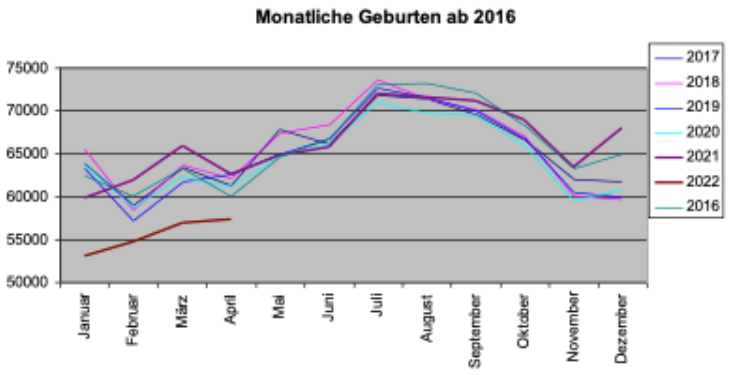
Chart source: transitionnews.de
A number of reasons have been proposed to explain the dramatic decline, among them fewer marriages. But that remains highly doubtful.
There are increasing suspicions that it is vaccine linked, as some studies already suggest: see here and here.
For the time being German authorities obstinately continue to remain in denial mode when it comes the the adverse effects of the COVID vaccines. Currently the Ministry of Health is gearing up to roll out another mass wave of vaccinations and restrictions in the run-up to the fall flu season.
See entire article at transitionnews.de
Also read here.
Germany plans China-style color code vaccine passport upgrade with multiple tiers of “rights”
By Tom Parker | Reclaim The Net | August 10, 2022
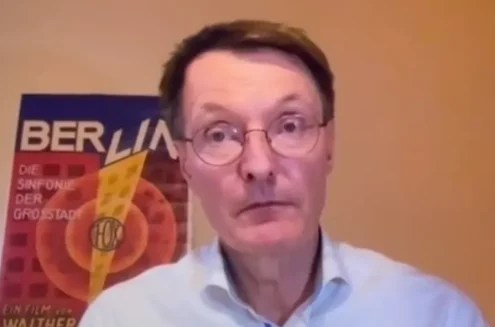
German Health Minister Karl Lauterbach has announced that the nation’s digital contact tracing and vaccine passport app, Corona-Warn-App (CWA), will start assigning different colors to citizens based on whether they received a COVID-19 vaccine within the last three months.
The CWA will assign one color to citizens who add proof that they received a vaccine within the last three months and a different color to citizens who add proof of vaccination that’s more than three months old. Only those with the color showing that they’re “freshly vaccinated” (have received a vaccine within the last three months) will be exempt from Germany’s mask requirement in public indoor spaces.
Other citizens, including those who received multiple vaccines but had their last vaccine more than three months ago, will have to show proof of recent recovery from COVID or a current negative test to get an exemption from this mask requirement.
Germany’s Berliner Zeitung noted that the colors codes in the vaccine passport app would “give different rights in the future” and said the system would put citizens who are already quadruple vaccinated on the same legal footing as those who are unvaccinated.
Berliner Zeitung also reported that this new German vaccine passport system would be similar to China’s color code vaccine passport system. China’s system assigns a green, yellow, or red code to citizens. Those with a green code are allowed to move freely, those with a yellow code may be asked to stay home for seven days, and those with a red code have to quarantine for two weeks.
Despite moving to this color code vaccine passport system, Lauterbach has admitted that the goalposts could shift at any time and that if too many freshly vaccinated people make use of the mask exception, Germany will change the rules and close the exception.
Lauterbach, who is quadruple vaccinated, announced this new color code vaccine passport system four days after he contracted COVID. The new vaccine passport system is being introduced as part of Germany’s “Infection Protection Act.”
Health agencies defended the rollout of vaccine passports and other COVID surveillance measures by claiming that they would prevent the spread of the coronavirus. However, in recent weeks, government health experts have admitted that COVID vaccines don’t prevent infection.
Despite this admission, Germany and other nations are continuing to push far-reaching, restrictive vaccine passport systems. Some countries are also combining vaccine passports with digital ID or rolling out more invasive COVID surveillance devices such as wristbands and ankle bracelets.
EU Robbing Global South of Cheap Gas in Quest to Replace Lost Russian Supplies
Samizdat – 08.08.2022
The European Union is in the throes of an unprecedented energy crisis after taking steps to reduce dependence on Russian oil, natural gas, and coal to “punish” Moscow for its military operation in Ukraine. Skyrocketing energy prices and falling availability have sparked growing concerns about bloc countries’ fate come winter.
European countries are resolving the energy shortfall at home by outbidding developing nations for gas contracts, “increasing the misery of millions of people,” and threatening to plunge entire countries into chaos, Handelsblatt reports.
“While Europe fears supply shortages in winter, the energy crisis has already hit other parts of the world with full force. In Bangladesh’s capital Dhaka, power supply is not guaranteed even in hospitals. Young mothers report on how they torment themselves with their newborns during hot summer nights because even fans cannot be switched on,” Handelsblatt contributor Mathias Peer wrote.
A similar situation is seen in Pakistan, which has experienced “one power blackout after another,” and “also as a consequence of Europe’s failed energy policy,” Peer indicated.
The observer explained that the EU’s headlong rush to reduce dependence on Russian gas has triggered “massive turbulence on global energy markets,” with fleets of liquefied natural gas (LNG) tankers which ordinarily carry cargoes to Asia diverted to Europe instead.
“In the bidding competition for deliveries, states like Bangladesh, whose per capita income is 95 percent below that of Germany, have what has become a hopeless mission,” losing out on contracts, resulting in the paralysis of gas-fueled power plants “and massive problems for hundreds of millions of people in the affected countries,” Peer noted.
The Handelsblatt contributor suggested that it was “all too understandable” for the EU to try to reduce its dependence on Russian energy in the wake of the Ukraine crisis, and suggested that Europe is not to blame for the energy crisis.
“But Europe’s attempt to find alternatives must not be at the expense of uninvolved third countries. It is the EU’s responsibility to ensure that by solving its supply shortages, not further aggravate the crisis in other countries. Reducing consumption must therefore take priority over diverting resources from other parts of the world, and in this regard the European gas contingency plan is far from being ambitious enough,” the observer suggested.
Peer emphasized that a more “considerate approach” is needed to stop Brussels from continuing to “play into [Vladimir] Putin’s hands.”
“His propaganda – which states that it is not Russia but the West and its sanctions that are responsible for the current crisis – is already affecting many more people in emerging countries than Europe would like,” the columnist concluded.
The crisis in Ukraine as well as US and EU moves to curb Russian energy and food exports to the West and other countries have served to exacerbate the inflation, energy price crunch, and global hunger crises which have accumulated over the past two years after the breakdown of the world economy thanks to COVID. President Vladimir Putin has characterized Brussels’ push to wean itself off Russian energy as “suicidal,” and warned that higher energy costs would collapse the bloc’s economic competitiveness.
The energy crisis has prompted European countries to begin a search for new sources of energy in Africa, including Algeria, Nigeria, and Tanzania. However, even before the escalation of the Ukraine crisis, some African leaders have resisted the new European energy “scramble for Africa,” with Algeria shutting off the taps to Spain over Madrid’s support for Morocco in the dispute over Western Sahara, and Nigerian Environment Minister Mohammad Mahmood Abubakar accusing developed nations of spending years starving Africa’s natural gas projects of funds on the grounds that they contribute to climate change.
Featured Video
No Threat Can Force Iran’s Surrender /Trita Parsi & Lt Cl Daniel Davis
or go to
Aletho News Archives – Video-Images
From the Archives
What is the Israeli Lobby in Australia Doing in Interfaith Dialogue?
By Ali Kazak | Dissident Voice | October 11, 2015
For years Israel and its lobby around the world have been trying to normalise their relations with Arabs and Muslims without solving the Palestine Question.
One of the methods they resorted to in the last few years is using human rights and community organizations such as interfaith dialogue and Multiculturalism to achieve this objective and to: isolate the Palestinians, marginalise the Palestine question, end Israel’s isolation, and prevent criticism of Israel, knowing that these organisations will be the first to stand against Israel’s violations, racial and religious discrimination.
The group responsible for this task in Australia is The Australia/Israel & Jewish Affairs Council (AIJAC); its Director of International & Community Affairs, Jeremy Jones is in charge of lobbying religious community organizations, specifically Muslims and Christians. Consequently he convened the Faith Communities for Reconciliation, founding participant in the Australian Partnership of Religious Organisations and the Australian National Dialogue of Christians, Muslims & Jews.
AIJAC is a private political propaganda group. It is recognised as the main Israeli lobby in Australia. It coordinates its activities and works intimately with the Israeli embassy in Canberra and different institutions in Israel. It is privately funded by some Jewish businessmen. It monitors closely Australian politicians, the media, ethnic and religious groups, (especially Arabs and Muslims), unions and academics on their stands towards Israel and the Palestine question. … continue
Blog Roll
 Aletho News
- Theodore Postol: Iran’s Missiles & Drones Were Underestimated
- Iran To Target Military Industrial-Tech Complex That Facilitated Gaza Genocide
- Collapsing Empire: The Resistance Disarms ‘Israel’
- Suicide Should Not Be a Government Service
- Rethinking America’s greatest threat: Iran vs. Israel-Firsters
- Iran accuses adversaries of false flags to strain Turkey ties
- Poland rules out sending Patriot missiles to US/Israel amid war on Iran
- Tehran approves new Hormuz plan with major restrictions
- No Threat Can Force Iran’s Surrender /Trita Parsi & Lt Cl Daniel Davis
- UK’s New Pandemic Plan Would Turn Big Tech Into a Mass Location Tracking Network
- If Americans Knew
- Ann Coulter Rips Into Fox News for Iran War Coverage, Compares to False Rigged 2020 Election Reporting
- Joe Kent Urges Americans To Call White House and Congress To Object To Sending Troops Into Iran
- DNC Resolution to Reject AIPAC Funding Puts Democratic Leaders in the Hot Seat
- Swedish foundation to build 400 schools as over 650,000 Gaza children remain without education for 2 years
- Israeli army admits photshopping image of slain Lebanese journalist
- This is how Israel is systematically killing health workers under the cover of war in Lebanon
- Carrying life under fire: Israeli invasion of Lebanon leaves pregnant women facing deadly risks
- Champagne all around for the new death penalty (for Palestinians) law – Not a ceasefire Day 172
- Why are Palestinian books struggling to be seen on Amazon?
- The Line Between Affinity and Conspiracy
- No Tricks Zone
- New Study Finds Warming Saves Lives…Cold Temperatures 12 Times More Deadly Than Excess Heat
- German Science Blog Accuses PIK Climate Institute Of Hallucinating Climate Tipping Points
- Devastating Assessment Of Comirnaty Vaccine By Former Senior Pfizer Europe Toxicologist
- New Study: CO2 Is ‘Effectively Negligible’ As An Explanatory Climate Change Factor Since 2000
- Former Pfizer Toxicologist Dr. Helmut Sterz Tells Bundestag Hearing Pfizer Vaccine Should Have Never Been Approved
- Energy Expert: Germany’s Nuclear Phaseout Was A “500 Billion Euro Mistake”
- New Research: South Australia’s Mid-Holocene Sea Surface Temperatures Were 4°C Warmer Than Today
- Storing Green Energy To Last Germany 10 Days Would Require A 60-Million Tonne Battery
- New Studies: UK Sea Levels Were 4 Meters Higher Than Today During The Mid-Holocene
- Destructive Green New Deal: German Energy And Metal Group Warns Of Drastic Crisis
 Aletho News