Biden Regime Puts The Brakes On Trump’s Germany Troop Draw Down
By Tyler Durden | Zero Hedge | January 29, 2021
Perhaps as expected, it didn’t take long for the Biden administration to begin putting the brakes on Trump’s previously ordered troop draw downs which occurred in the last two months of his presidency, particularly in Germany, Iraq, and Afghanistan.
The defense analysis and news site Military.com is reporting that new defense secretary under the Biden administration Lloyd Austin is reviewing the withdrawal of 12,000 US troops from Germany:
Defense Secretary Lloyd Austin has voiced his commitment to shoring up close ties with NATO ally Germany that were strained under the Trump administration, and suggested that the plan to withdraw 12,000 U.S. troops from the country is open to discussion.
The prior Trump plan to cut nearly one-third of total American military personnel from the country was predictably fought from Congressional corners known for being hawkish on Russia, with even some American and European security officials having called the move a “gift to Putin”.
Later in December the 2021 National Defense Authorization Act attempted to override the draw down order, and according to German officials early this year there’s yet to be significant movement of troops from the country.
Defense Secretary Lloyd Austin this week held phone calls with NATO allied officials in Europe. The Military.com report continues:
In a phone call to his German counterpart, Defense Minister Annegret Kramp-Karrenbauer, Austin “expressed his gratitude to Germany for continuing to serve as a great host for U.S. forces, and expressed his desire for a continued dialogue on U.S. force posture in Germany,” according to a Pentagon readout of the call released Wednesday.
He also sought “to reinforce the value the United States places on the bilateral defense relationship with one of our closest NATO Allies,” the readout from Pentagon Press Secretary John Kirby states.
By all appearances the some 36,000 total American troops in Germany have gone nowhere despite the plan initiated under Esper.
Recent polling of the German public also suggests half or more want to see US troops gone, after being there since World War II.
As the report concludes of Defense Secretary Austin’s phone call, it is “the latest sign of the Biden administration’s intent to reverse or water down the policies of former President Donald Trump, who repeatedly questioned NATO’s worth to the U.S. and rattled allies with demands for more defense spending.”
German opposition MPs bash Merkel government over refusal to disclose information on Navalny case
By Jonny Tickle – RT – January 21, 2021
MPs from Germany’s left-wing Die Linke party have accused the country’s government of acting suspiciously after it refused to answer most of their questions about legal assistance requested by Russia over the Navalny case.
In recent months, on multiple occasions, the Kremlin has demanded information from Germany about the alleged poisoning of Alexey Navalny. The opposition figure arrived in Berlin in a coma on August 22 and spent the next five months convalescing in the city. According to Moscow, its requests for details have been rejected, preventing a thorough investigation into the events surrounding the alleged attack.
A letter, written by parliamentarians Amira Mohamed Ali and Dr. Dietmar Bartsch on behalf of the party’s entire Bundestag representation, asked the federal authorities for information on what exactly Russia had asked for and how Berlin had responded. The questions came after Moscow accused the Germans of failing to fulfill their obligations under the 1959 European Convention on Mutual Assistance in Criminal Matters.
The government revealed that Russia had requested legal assistance on four separate occasions, but “essentially did not reply,” according to MPs Gregor Gysi and Alexander Neu. Ten out of a total of 16 questions were answered with “no comment.”
The answer received by the left-wing politicians cited the need to protect “state secrets” and “cooperation with foreign partners,” noting that these aspects are more important than keeping elected officials in the loop.
“Disclosure of the information requested would be particularly detrimental to the welfare of the state because there is a risk that details will become known that are particularly worthy of protection in the context of cooperation with foreign partners,” the government noted, pointing to the fact that the MPs’ right to ask questions is limited by interests deemed to be constitutionally protected.
“[By refusing to answer], the federal government exposes itself to suspicion,” Gysi and Neu wrote, highlighting that the government has no obligation to protect Russian state secrets. “What are Germany’s state secrets regarding the government’s handling of Russia’s requests for legal assistance? … The failure of the Federal Government to answer these questions is neither constitutional nor democratic.”
On Monday, Gysi condemned the imprisonment of Navalny, noting his hope that the anti-corruption activist would be released.
German MP suggests restrictions ‘similar’ to Covid-19 lockdowns to fight climate change
RT | December 28, 2020
Humanity should sacrifice “personal freedom” just as many nations did during the Covid-19 pandemic in order to successfully fight climate change, a German MP has said, adding that there will “never” be a vaccine against CO2.
Germany had barely started its coronavirus vaccination campaign when a Social Democratic MP, Karl Lauterbach, warned that his compatriots need to brace themselves for yet another challenge: global warming.
“We need measures to deal with climate change that are similar to the restrictions on personal freedom [imposed] to combat the pandemic,” the professor of health economics and epidemiology at the University of Cologne wrote in a guest piece for Die Welt newspaper. He added that he hoped climate change issues would play “a dominant role” during the upcoming election campaign ahead of the federal ballot scheduled for September 2021.
The politician said he “had an impression” that Germany, Europe, and particularly the US “would not have been able to defeat the Covid pandemic without the development of a vaccine.” All these nations are still quite far from defeating the virus, as their vaccination campaigns have only just started, and the number of new infections in these nations remains relatively high. But he appeared much more concerned about the fact “there will never be a vaccine against CO2.”
Lauterbach admitted he was rather skeptical about whether his dream future, in which humanity would beat climate change through the sacrifice of freedoms, would ever be achieved. “My experience of combating the coronavirus pandemic has unfortunately made me extremely pessimistic about whether we will be able to successfully stop climate change in time,” he admitted.
According to the MP, the problem lies with the fact that Germans have “underestimated” the pandemic and continue to do so. Now, as the vaccination campaign kicks off, some might be too tempted to throw off the shackles of yet another lockdown well before the time is right to ease the restrictions, he warned.
It is “necessary” for the lockdown to remain in place until the number of new cases falls “well below 50 per 100,000 people in a week,” the epidemiologist said, calling on fellow citizens to “have discipline, altruism and … patience to achieve this.”
However, many Germans seem unlikely to agree with such advice. The nation has repeatedly seen massive protests against coronavirus restrictions. The government’s decision to re-introduce a partial lockdown in early November sparked a new wave of demonstrations, some of which turned violent. Some of those opposing the lockdown went as far as to compare themselves with the anti-Nazi resistance, provoking a harsh rebuke from Germany’s Foreign Minister Heiko Maas.
The fact that Christmas parties in Germany were limited to close family members would have done little to brighten the nation’s mood. The ban on drinking alcohol in public and buying fireworks for use on New Year’s Eve probably came as unwelcome news too.
The nation launched its vaccination campaign on Saturday – a day ahead of the joint EU inoculation drive. Ensuring the German population is immune to the virus will likely still take some time, since each European country has so far received only around 10,000 doses. More are expected to be delivered in January.
Dream of Greater Europe dies: German efforts to create a Europe without Russia forged a Europe against Russia
By Glenn Diesen | RT | December 21, 2020
German-Russian friendship is over with ‘Ostpolitik’ dead and buried. Future relations will largely be based on confrontation, as Moscow no longer cares what Berlin thinks and Germany has lost its unique leverage with Russia.
Many observers believe the United Nations Security Council (UNSC) needs an overhaul. With countries such as Brazil, Germany, India and even Japan suggested as potential permanent members. Reaction to Berlin’s recent two-year stint on the body suggests the present five (China, France, Russia, the UK and the US) will be keeping the gate locked for a while.
Instead of the customary pleasantries and recognition for Germany’s contributions on its way out, Russia and China scolded the German Permanent Representative to the United Nations Christoph Heusgen. Russian Deputy Permanent Representative Dmitri Polyansky lambasted Germany’s “hypocritical behavior” and in no uncertain terms stated that “we will not miss you.” China also denounced Germany for its behavior and asserted Germany’s path toward a permanent seat at the UNSC “will be difficult.”
Disputes over Syria
The heated rhetoric derived primarily from Germany’s criticism of Russia and China over developments in Syria. For Heusgen, the fault for the crisis in Syria was simple: “Russia has been undermining the OPCW” by questioning its findings and supporting the Syrian government. Complex geopolitical rivalries in a strategic region are clothed in the language of values as liberal democracies versus authoritarians.
Since 2006, it has been widely reported and confirmed that the US has been preparing proxies in Syria for regime change. Since the fighting erupted in 2011, Western states have violated international law by funding and training militant groups and directly attacking Syrian targets.
Leaks from the Organization for the Prohibition of Chemical Weapons (OPCW) indicate that findings were deliberately misrepresented, and the chief of cabinet at the OPCW ordered officials to “remove all traces” of documents that found the gas cylinders in Douma had been planted there. The US, UK and France, blocked the testimony of Jose Bustani, the first director-general of the OPCW, who accused Washington of high-jacking the institution to control the narrative.
Russia’s denunciation of Germany’s role in the UNSC represents a wider rejection of Berlin’s self-professed moral authority. The post-Cold War era of liberal hegemony is increasingly seen by Moscow as an era of political radicalism. The West professed that its global hegemony would advance liberal values, yet Moscow perceives that liberal values have been used to assert global hegemony.
The West is accused of developing security strategies based on dominance rather than multilateralism, while relentlessly expanding a military bloc, invading and destroying other countries with increasing frequency, and pursuing coups – all the while claiming moral authority as defenders of human rights, democracy and peace.
The German-Russian split: Redefining Ostpolitik
The German-Russian relationship has historically swung between partnership and competition. In 1917, James Fairgrieve described Eastern Europe as a “crush zone” due to the power competition between Germany and Russia. Third parties such as the UK and US have historically defined their security interest as maintaining this division in Europe, as a German-Russian partnership would shift the balance of power on the continent and possibly become a threat.
Even today, the likes of ‘Stratfor’ founder George Friedman assert that the primary foreign policy goal of the US is to prevent any sort of alliance between Moscow and Berlin, because of the fear that it would offer a desirable alternative to US hegemony.
Willy Brandt’s Ostpolitik during the Cold War sought to normalize relations with the Soviet Union and its East European satellites. Moscow interpreted this as a German effort to resolve the historical zero-sum rivalry in Eastern Europe as opposed to merely regaining a foothold in Soviet satellite states. From Gorbachev’s aspiration of a Common European Home to the post-Cold War aspirations of a Greater Europe, Moscow recognized a partnership with Germany was necessary to unify the continent.
Today, Germany interprets Ostpolitik as leadership in Eastern Europe, which depends on pushing Russia out of Europe. German Foreign Minister Heiko Maas announced this month the legacy of Ostpolitik: “Unlike Brandt, we no longer have to go via Moscow to talk to our eastern neighbours nowadays. Many partners in Eastern and Central Europe now view Russia very critically – and German foreign policy must take our neighbours’ concerns seriously. In addition to offers of dialogue, clear German positions vis-à-vis Moscow are therefore important for maintaining trust in Eastern Europe.”
Fairgrieve’s “crush zone” description of German-Russian relations remains, although expressed in Berlin’s value-based “Euro-speak.”
From Greater Europe to Greater Eurasia
Berlin’s efforts to create a Europe without Russia unavoidably became a Europe against Russia. The German-supported unconstitutional coup against Ukraine’s democratically elected government in 2014, or “democratic revolution” as Berlin frames it, resulted in the death of Moscow’s Greater Europe initiative.
While the West condemned Russia for how it reacted to the Maidan, less focus was devoted to the sense of betrayal in Moscow. The remaining Russian illusions of gradual integration into a Greater Europe collapsed as the EU compelled Ukraine to choose between East and West. Subsequently, the nature and utility of the special partnership with Germany also ended.
The German-Russian partnership for Greater Europe was replaced with the Chinese-Russian partnership for Greater Eurasia. Russia has been busy the past years diversifying its economy away from Germany and toward China and Asia. The growing success of the Greater Eurasia initiative is largely the result of Russian-Chinese efforts to harmonise interests in their shared regions, which is contrasted with German efforts to “peel away” Russia’s neighbours – or “European integration” as Berlin frames it.
German-Russian relations in the age of Greater Eurasia
Under the Greater Europe initiative, Russia implicitly accepted German interference in its domestic affairs. As the eternal aspirant aiming to be included in Europe based on common values manifested itself in a subject-object or teacher-student organization of relations, Berlin was bestowed with the assumed moral authority to socialize or civilize Moscow in domestic and international affairs.
In the age of Greater Eurasia, relations between Russia and Germany are changing rapidly.
The emergence of a multipolar world implies pluralism of morals and values. Moscow is charting a distinctive conservative path and will no longer accept that liberal democratic universalism legitimizes sovereign inequality. Moscow subsequently rejects that its domestic politics is an issue for international discussion, and likewise dismisses Berlin’s effort to frame competing national interests in a Manichean prism as good versus bad values.
The unfriendly farewell by Moscow and Beijing as Germany exits the Security Council is a manifestation of a recalibrating relationship. Rather than attempting to reset relations, Moscow and Berlin should organize an amicable divorce and establish clear expectations toward each other.
Glenn Diesen is an Associate Professor at the University of South-Eastern Norway and an editor at the Russia in Global Affairs journal. Follow him on Twitter @glenndiesen
Antisemitism claims mask a reign of political and cultural terror across Europe
By Jonathan Cook | December 11, 2020
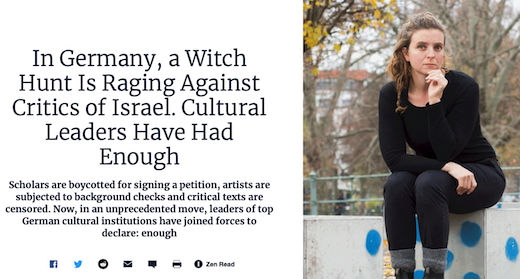
The Israeli newspaper Haaretz has run a fascinating long report this week offering a disturbing snapshot of the political climate rapidly emerging across Europe on the issue of antisemitism. The article documents a kind of cultural, political and intellectual reign of terror in Germany since the parliament passed a resolution last year equating support for non-violent boycotts of Israel – in solidarity with Palestinians oppressed by Israel – with antisemitism.
The article concerns Germany but anyone reading it will see very strong parallels with what is happening in other European countries, especially the UK and France.
The same European leaders who a few years ago marched in Paris shouting “Je suis Charlie” – upholding the inalienable free speech rights of white Europeans to offend Muslims by insulting and ridiculing their Prophet – are now queuing up to outlaw free speech when it is directed against Israel, a state that refuses to end its belligerent occupation of Palestinian land. European leaders have repeatedly shown they are all too ready to crush the free speech of Palestinians, and those in solidarity with them, to avoid offending sections of the Jewish community.
The situation reduces to this: European Muslims have no right to take offence at insults about a religion they identify with, but European Jews have every right to take offence at criticism of an aggressive Middle Eastern state they identify with. Seen another way, the perverse secular priorities of European mainstream culture now place the sanctity of a militarised state, Israel, above the sanctity of a religion with a billion followers.
Guilt by association
This isn’t even a double standard. I can’t find a word in the dictionary that conveys the scale and degree of hypocrisy and bad faith involved.
 If the American Jewish scholar Norman Finkelstein wrote a follow-up to his impassioned book The Holocaust Industry – on the cynical use of the Holocaust to enrich and empower a Jewish organisational establishment at the expense of the Holocaust’s actual survivors – he might be tempted to title it The Antisemitism Industry.
In the current climate in Europe, one that rejects any critical thinking in relation to broad areas of public life, that observation alone would enough to have one denounced as an antisemite. Which is why the Haaretz article – far braver than anything you will read in a UK or US newspaper – makes no bones about what is happening in Germany. It calls it a “witch-hunt”. That is Haaretz’s way of saying that antisemitism has been politicised and weaponised – a self-evident conclusion that will currently get you expelled from the British Labour party, even if you are Jewish.
The Haaretz story highlights two important developments in the way antisemitism has been, in the words of intellectuals and cultural leaders cited by the newspaper, “instrumentalised” in Germany.
Jewish organisations and their allies in Germany, as Haaretz reports, are openly weaponising antisemitism not only to damage the reputation of Israel’s harsher critics, but also to force out of the public and cultural domain – through a kind of “antisemitism guilt by association” – anyone who dares to entertain criticism of Israel.
Cultural associations, festivals, universities, Jewish research centres, political think-tanks, museums and libraries are being forced to scrutinise the past of those they wish to invite in case some minor transgression against Israel can be exploited by local Jewish organisations. That has created a toxic, politically paranoid atmosphere that inevitably kills trust and creativity.
But the psychosis runs deeper still. Israel, and anything related to it, has become such a combustible subject – one that can ruin careers in an instant – that most political, academic and cultural figures in Germany now choose to avoid it entirely. Israel, as its supporters intended, is rapidly becoming untouchable.
A case study noted by Haaretz is Peter Schäfer, a respected professor of ancient Judaism and Christianity studies who was forced to resign as director of Berlin’s Jewish Museum last year. Schäfer’s crime, in the eyes of Germany’s Jewish establishment, was that he staged an exhibition on Jerusalem that recognised the city’s three religious traditions, including a Muslim one.
He was immediately accused of promoting “historical distortions” and denounced as “anti-Israel”. A reporter for Israel’s rightwing Jerusalem Post, which has been actively colluding with the Israeli government to smear critics of Israel, contacted Schäfer with a series of inciteful emails. The questions included “Did you learn the wrong lesson from the Holocaust?” and “Israeli experts told me you disseminate antisemitism – is that true?”
Schäfer observes:
The accusation of antisemitism is a club that allows one to deal a death blow, and political elements who have an interest in this are using it, without a doubt… The museum staff gradually entered a state of panic. Then of course we also started to do background checks. Increasingly it poisoned the atmosphere and our work.
Another prominent victim of these Jewish organisations tells Haaretz :
Sometimes one thinks, “To go to that conference?”, “To invite this colleague?” Afterward it means that for three weeks, I’ll have to cope with a shitstorm, whereas I need the time for other things that I get paid for as a lecturer. There is a type of “anticipatory obedience” or “prior self-censorship”.
Ringing off the hook
There is nothing unusual about what is happening in Germany. Jewish organisations are stirring up these “shitstorms” – designed to paralyse political and cultural life for anyone who engages in even the mildest criticism of Israel – at the highest levels of government. Don’t believe me? Here is Barack Obama explaining in his recent autobiography his efforts as US president to curb Israel’s expansion of its illegal settlements. Early on, he was warned to back off or face the wrath of the Israel lobby:
Members of both parties worried about crossing the American Israel Public Affairs Committee (AIPAC). Those who criticized Israeli policy too loudly risked being tagged as “anti-Israel” (and possibly anti-Semitic) and confronted with a well-funded opponent in the next election.
When Obama went ahead anyway in 2009 and proposed a modest freeze on Israel’s illegal settlements:
The White House phones started ringing off the hook, as members of my national security team fielded calls from reporters, leaders of American Jewish organizations, prominent supporters, and members of Congress, all wondering why we were picking on Israel … this sort of pressure continued for much of 2009.
He observes further:
The noise orchestrated by Netanyahu had the intended effect of gobbling up our time, putting us on the defensive, and reminding me that normal policy differences with an Israeli prime minister – even one who presided over a fragile coalition government – exacted a political cost that didn’t exist when I dealt with the United Kingdom, Germany, France, Japan, Canada, or any of our other closest allies.
Doubtless, Obama dare not put down in writing his full thoughts about Israeli prime minister Benjamin Netanyahu or the US lobbyists who worked on his behalf. But Obama’s remarks do show that, even a US president, supposedly the single most powerful person on the planet, ended up blanching in the face of this kind of relentless assault. For lesser mortals, the price is likely to be far graver.
No free speech on Israel
It was this same mobilisation of Jewish organisational pressure – orchestrated, as Obama notes, by Israel and its partisans in the US and Europe – that ended up dominating Jeremy Corbyn’s five years as the leader of Britain’s leftwing Labour party, recasting a well-known anti-racism activist almost overnight as an antisemite.
It is the reason why his successor, Sir Keir Starmer, has outsourced part of Labour’s organisational oversight on Jewish and Israel-related matters to the very conservative Board of Deputies of British Jews, as given expression in Starmer’s signing up to the Board’s “10 Pledges”.
 It is part of the reason why Starmer recently suspended Corbyn from the party, and then defied the membership’s demands that he be properly reinstated, after Corbyn expressed concerns about the way antisemitism allegations had been “overstated for political reasons” to damage him and Labour. (The rightwing Starmer, it should be noted, was also happy to use antisemitism as a pretext to eradicate the socialist agenda Corbyn had tried to revive in Labour.) It is why Starmer has imposed a blanket ban on constituency parties discussing Corbyn’s suspension. And it is why Labour’s shadow education secretary has joined the ruling Conservative party in threatening to strip universities of their funding if they allow free speech about Israel on campus.
Two types of Jews
But the Haaretz article raises another issue critical to understanding how Israel and the Jewish establishment in Europe are politicising antisemitism to protect Israel from criticism. The potential Achilles’ heel of their campaign are Jewish dissidents, those who break with the supposed “Jewish community” line and create a space for others – whether Palestinians or other non-Jews – to criticise Israel. These Jewish dissenters risk serving as a reminder that trenchant criticism of Israel should not result in one being tarred an antisemite.
Israel and Jewish organisations, however, have made it their task to erode that idea by promoting a distinction – an antisemitic one, at that – between two types of Jews: good Jews (loyal to Israel), and bad Jews (disloyal to Israel).
Haaretz reports that officials in Germany, such as Felix Klein, the country’s antisemitism commissioner, and Josef Schuster, president of the Central Council of Jews in Germany, are being allowed to define not only who is an antisemite, typically using support for Israel as the yardstick, but are also determining who are good Jews – those politically like them – and who are bad Jews – those who disagree with them.
Despite Germany’s horrific recent history of Jew hatred, the German government, local authorities, the media, universities and cultural institutions have been encouraged by figures like Klein and Schuster to hound German Jews, even Israeli Jews living and working in Germany, from the country’s public and cultural space.
When, for example, a group of Israeli Jewish academics in Berlin held a series of online discussions about Zionism last year on the website of their art school, an Israeli reporter soon broke the story of a “scandal” involving boycott supporters receiving funding from the German government. Hours later the art school had pulled down the site, while the German education ministry issued a statement clarifying that it had provided no funding. The Israeli embassy officially declared the discussions held by these Israelis as “antisemitic”, and a German foundation that documents antisemitism added the group to the list of antisemitic incidents it records.
Described as ‘kapos’
So repressive has the cultural and political atmosphere grown in Germany that there has been a small backlash among cultural leaders. Some have dared to publish a letter protesting against the role of Klein, the antisemitism commissioner. Haaretz reports:
The antisemitism czar, the letter charged, is working “in synergy with the Israeli government” in an effort “to discredit and silence opponents of Israel’s policies” and is abetting the “instrumentalization” that undermines the true struggle against antisemitism.
Figures like Klein have been so focused on tackling criticism of Israel from the left, including the Jewish left, that they have barely noted the “acute danger Jews in Germany face due to the surge in far-right antisemitism”, the letter argues.
Again, the same picture can be seen across Europe. In the UK, the opposition Labour party, which should be a safe space for those leading the anti-racism struggle, is purging itself of Jews critical of Israel and using anti-semitism smears against prominent anti-racists, especially from other oppressed minorities.
Extraordinarily, Naomi Wimborne-Idrissi, one of the founders of Jewish Voice for Labour, which supports Corbyn, recently found herself suspended by Starmer’s Labour. She had just appeared in a moving video in which she explained the ways antisemitism was being used by Jewish organisations to smear Jewish left-wingers like herself as “traitors” and “kapos” – an incendiary term of abuse, as Wimborne-Idrissi points out, that refers to “a Jewish inmate of a concentration camp who collaborated with the [Nazi] authorities, people who collaborated in the annihilation of their own people”.
In suspending her, Starmer effectively endorsed this campaign by the UK’s Jewish establishment of incitement against, and vilification of, leftwing Jews.
Earlier, Marc Wadsworth, a distinguished black anti-racism campaigner, found himself similarly suspended by Labour when he exposed the efforts of Ruth Smeeth, then a Labour MP and a former Jewish official in the Israel lobby group BICOM, to recruit the media to her campaign smearing political opponents on the left as antisemites.
In keeping with the rapid erosion of critical thinking in civil society organisations designed to uphold basic freedoms, Smeeth was recently appointed director of the prestigious free speech organisation Index on Censorship. There she can now work on suppressing criticism of Israel – and attack “bad Jews” – under cover of fighting censorship. In the new, inverted reality, censorship refers not to the smearing and silencing of a “bad Jew” like Wimborne-Idrissi, but to criticism of Israel over its human rights abuses, which supposedly “censors” the identification of “good Jews” with Israel – now often seen as the crime of “causing offence”.
Boy who cried wolf
The Haaretz article helps to contextualise Europe’s current antisemitism “witch-hunt”, which targets anyone who criticises Israel or stands in solidarity with oppressed Palestinians, or associates with such people. It is an expansion of the earlier campaign by the Jewish establishment against “the wrong kind of Jew”, as identified by Finkelstein in The Holocaust Industry. But this time Jewish organisations are playing a much higher-stakes, and more dangerous, political game.
Haaretz rightly fears that the Jewish leadership in Europe is not only silencing ordinary Jews but degrading the meaning – the shock value – of antisemitism through the very act of politicising it. Jewish organisations risk alienating the European left, which has historically stood with them against Jew hatred from the right. European anti-racists suddenly find themselves equated with, and smeared as, fledgling neo-Nazis.
If those who support human rights and demand an end to the oppression of Palestinians find themselves labelled antisemitic, it will become ever harder to distinguish between bogus (weaponised) “antisemitism” on the left and real Jew hatred from the right. The antisemitism smearers – and their fellow travellers like Keir Starmer – are likely to end up suffering their very own “boy who cried wolf” syndrome.
Or as Haaretz notes:
The issue that is bothering the critics of the Bundestag [German parliament] resolution is whether the extension of the concept of antisemitism to encompass criticism of Israel is not actually adversely affecting the battle against antisemitism. The argument is that the ease with which the accusation is leveled could have the effect of eroding the concept itself.
The Antisemitism Industry
It is worth noting the shared features of the new Antisemitism Industry and Finkelstein’s earlier discussions of the Holocaust Industry.
In his book, Finkelstein identifies the “wrong Jews” as people like his mother, who survived a Nazi death camp as the rest of her family perished. These surviving Jews, Finkelstein argues, were valued by the Holocaust Industry only in so far as they served as a promotional tool for the Jewish establishment to accumulate more wealth and cultural and political status. Otherwise, the victims were ignored because the actual Holocaust’s message – in contrast to the Jewish leadership’s representation of it – was universal: that we must oppose and fight all forms of racism because they lead to persecution and genocide.
Instead the Holocaust Industry promoted a particularist, self-interested lesson that the Holocaust proves Jews are uniquely oppressed and that they therefore deserve a unique solution: a state, Israel, that must be given unique leeway by western states to commit crimes in violation of international law. The Holocaust Industry – very much to be distinguished from the real events of the Holocaust – is deeply entwined in, and rationalised by, the perpetuation of the racialist, colonial project of Israel.
In the case of the Antisemitism Industry, the “wrong Jew” surfaces again. This time the witch-hunt targets Jewish leftwingers, Jews critical of Israel, Jews opposed to the occupation, and Jews who support a boycott of the illegal settlements or of Israel itself. Again, the problem with these “bad Jews” is that they allude to a universal lesson, one that says Palestinians have at least as much right to self-determination, to dignity and security, in their historic homeland as Jewish immigrants who fled European persecution.
In contrast to the “bad Jews”, the Antisemitism Industry demands that a particularist conclusion be drawn about Israel – just as a particularist conclusion was earlier drawn by the Holocaust Industry. It says that to deny Jews a state is to leave them defenceless against the eternal virus of antisemitism. In this conception, the Holocaust may be uniquely abhorrent but it is far from unique. Non-Jews, given the right circumstances, are only too capable of carrying out another Holocaust. Jews must therefore always be protected, always on guard, always have their weapons (or in Israel’s case, its nuclear bombs) to hand.
‘Get out of jail’ card
This view, of course, seeks to ignore, or marginalise, other victims of the Holocaust – Romanies, communists, gays – and other kinds of racism. It needs to create a hierarchy of racisms, a competition between them, in which hatred of Jews is at the pinnacle. This is how we arrived at an absurdity: that anti-Zionism – misrepresented as the rejection of a refuge for Jews, rather than the reality that it rejects an ethnic, colonial state oppressing Palestinians – is the same as antisemitism.
Extraordinarily, as the Haaretz article clarifies, German officials are oppressing “bad Jews”, at the instigation of Jewish organisations, to prevent, as they see it, the re-emergence of the far-right and neo-Nazis. The criticisms of Israel made by the “bad Jew” are thereby not just dismissed as ideologically unsound or delusions but become proof that these Jews are colluding with, or at least nourishing, the Jew haters.
In this way, Germany, the UK and much of Europe have come to justify the exclusion of the “wrong Jew” – those who uphold universal principles for the benefit of all – from the public space. Which, of course, is exactly what Israel wants, because, rooted as it is in an ideology of ethnic exclusivity as a “Jewish state”, it necessarily rejects universal ethics.
What we see here is an illustration of a principle at the heart of Israel’s state ideology of Zionism: Israel needs antisemitism. Israel would quite literally have to invent antisemitism if it did not exist.
This is not hyperbole. The idea that the “virus of antisemitism” lies semi-dormant in every non-Jew waiting for a chance to overwhelm its host is the essential rationale for Israel. If the Holocaust was an exceptional historical event, if antisemitism was an ancient racism that in its modern incarnation followed the patterns of prejudice and hatred familiar in all racisms, from anti-black bigotry to Islamophobia, Israel would be not only redundant but an abomination – because it has been set up to dispossess and abuse another group, the Palestinians.
Antisemitism is Israel’s “get out of jail” card. Antisemitism serves to absolve Israel of the racism it structurally embodies and that would be impossible to overlook were Israel deprived of the misdirection weaponised antisemitism provides.
An empty space
The Haaretz article provides a genuine service by not only reminding us that “bad Jews” exist but in coming to their defence – something that European media is no longer willing to do. To defend “bad Jews” like Naomi Wimborne-Idrissi is to be contaminated with the same taint of antisemitism that justified the ejection of these Jews from the public space.
Haaretz records the effort of a few brave cultural institutions in Germany to protest, to hold the line, against this new McCarthyism. Their stand may fail. If it does, you may never become aware of it.
Once, the “bad Jews” have been smeared into silence, as Palestinians and those who stand in solidarity with them largely have been already; when social media has de-platformed critics of Israel as Jew haters; when the media and political parties enforce this silence so absolutely they no longer need to smear anyone as an antisemite because these “antisemites” have been disappeared; when the Jewish “community” speaks with one voice because its other voices have been eliminated; when the censorship is complete, you will not know it.
There will be no record of what was lost. There will be simply an empty space, a blank slate, where discussions of Israel’s crimes against Palestinians once existed. What you will hear instead is only what Israel and its partisans want you to hear. Your ignorance will be blissfully complete.
Europe’s Anti-Russia Sanctions a Stupendous Act of Self-Harm and Loathing
Strategic Culture Foundation | December 11, 2020
New data out this week indicates that the European Union has suffered aggregate economic losses amounting to over €120 billion due to its policy of imposing sanctions against Russia. That’s according to figures released by the Dusseldorf Chamber of Commerce and Industry.
Yet European leaders at an EU summit this week again called for the extension of sanctions on Russia, which will roll on into the middle of next year and probably beyond that date. This lockstep action by the bloc is only leading to more tensions with Russia and taking a political direction to nowhere except more conflict. Those EU sanctions were first imposed in July 2014 over dubious allegations of Russia’s malign involvement in the Ukrainian conflict. Moscow has rightfully reciprocated with counter-sanctions on European exports of agriculture and other goods.
The German Chamber of Commerce and Industry estimates that the entire stand-off has hit EU economies with losses of €21 billion every year. The biggest loser is Germany’s economy which forfeits nearly €5.5 billion a year in bilateral trade with Russia.
Accumulated over six years since 2014 the EU’s sanctions policy against Russia has resulted in a staggering total loss of over €120 billion. And counting.
To put that figure into some perspective, it would be comparable to the combined annual military budgets of Europe’s three biggest economies: Germany, Britain and France.
Or to put it another way, this week the European leaders agreed on a landmark stimulus package worth €1.8 trillion for the 27-member bloc to recover from the coronavirus pandemic. The economic loss to the EU from sanctions on Russia is of the order of 10 per cent of that record stimulus effort.
It is therefore mind-shuddering why the European Union persists in inflicting such untold damage to its own economy through its policy towards Russia.
The EU claims that sanctions are being extended because of the lack of progress in peace negotiations over the Ukraine crisis. Brussels is seeking to blame Moscow for that ongoing frozen conflict, oblivious to the fact that Russia is not a party to the conflict. It is a member of the so-called Normandy Format overseeing the Minsk Peace Accord signed in 2015. Germany and France are also members of the Normandy group. The group has not met since one year ago. So, why is Russia being singled out as the sole responsible for lack of progress in settling the Ukraine conflict?
Secondly, the Ukraine crisis was instigated by a coup d’état against the elected President, Viktor Yanukovych, in February 2014. The coup was orchestrated by the United States and European allies, which ushered in an ultranationalist regime in Kiev with disturbing links to Neo-Nazi factions. Hostility towards Russian-speaking communities in the Ukraine then led to the Crimean referendum in March 2014 appealing for reunification with Russia. It is simply preposterous and cynical for the European Union to blame Russia for subsequent turmoil when the EU is itself directly complicit in fomenting the crisis.
In any case, rigidly applying sanctions is counterproductive to a diplomatic solution. Mutual dialogue is precluded by a policy of recrimination and scapegoating.
The EU sanctions policy is self-defeating and suffused with contradictions. It imposes measures against Russia with seeming insouciance about the huge damage being done to EU businesses, workers and farmers, and it does this without any clear justification. Yet this week EU leaders led by Germany refused to impose sectoral sanctions against Turkey in spite of repeated calls by EU members Greece and Cyprus for such measures as a means of defending their territorial integrity from Turkey’s aggressive gas exploration in the East Mediterranean. So here we have EU members protesting against threats to their sovereignty from Turkey; yet the EU leaders show little resolve to defend the bloc’s external southern borders by taking a tough sanctions line towards Ankara.
There is evidently a strange double-think when one compares the EU’s gung-ho attitude towards Russia over a matter in Ukraine which is not even part of the EU and a matter that is highly contested in terms of the allegations being made against Russia.
How to explain such an irrational, anti-Russia policy by the European Union?
One has to conclude that the EU is slavishly following a policy determined by the United States. The US has imposed its own bilateral sanctions against Russia over the Ukraine, as well as many other equally dubious claims, such as alleged electoral interference. The Europeans are thus deferring to Washington’s foreign policy of hostility towards Moscow, even though the economic losses felt by the Americans are negligible compared with those of Europe due to the latter’s geographic proximity and traditionally much greater trading relations with its continental neighbor.
Russia’s Foreign Minister Sergei Lavrov noted this week that the European Union’s policy is “centered on the United States”. Lavrov lamented that the EU under current leadership shows no sign of acting independently from Washington. In effect, the European bloc is a vassal under American tutelage.
Ironically, the antagonism towards Russia from the West is due to Russia’s demonstrative independence.
Says Lavrov in a separate interview: “The West’s awareness that Russia is an independent power has had a cumulative effect. Russia will always prioritize its national interests. It is always ready to harmonize them candidly and equitably with the national interests of any other countries based on international law, but it will never be under someone’s thumb.”
The Russian top diplomat added: “The desire to score propaganda points has dominated the West’s foreign policy for a long time, while overlooking the essence of the problems that need a solution in the interests of the peoples of the respective regions.”
A psychiatrist might opine that European self-harming, irrational antagonism towards Russia – while constantly appeasing an American bully – is a form of self-loathing. The EU’s political class resent Russia because the latter is a constant reminder of the independence and integrity that they are so abjectly deficient in.
Congress moves to block US troop pullout from Afghanistan, Germany
Press TV | December 6, 2020
US President Donald Trump’s controversial move to pull out 2,000 American troops out of Afghanistan and 12,000 more from Germany would be blocked by the major defense policy bill, a report has said.
One provision of the National Defense Authorization Act (NDAA) for fiscal 2021 “would block funding for reducing the number of US troops in Afghanistan from 4,500 to 2,500 by January 15, as ordered by Trump, until the Defense and State Departments verify that it was in the national interest,” Military.com news outlet reported Saturday.
Another provision of the NDAA, it added, essentially urges the incoming Biden administration to take a second look at Trump’s executive order to withdraw 12,000 American troops from Germany.
According to the bill, troop levels in Germany should remain at 34,500 until 120 days after the secretary of defense submitted cost estimates and assessments of the impact of a withdrawal on allies and military families.
The final draft of the NDAA — released Thursday night — underlines that Afghanistan pullout orders, announced by the newly-appointed Acting Defense Secretary Christopher Miller on November 17, “gave Congress no estimate of the national security implications.”
According to the report, the Trump administration has so far failed to clarify how a troop withdrawal was “in the national security interests of the United States to deny terrorists safe haven in Afghanistan, protect the United States homeland.”
Trump’s announcement last June that he wanted 9,500 troops out of Germany after years of battling with NATO allies to spend more for defense has also drawn opposition from both ruling political parties in the US Congress.
On July 29, then-Defense Secretary Mark Esper declared plans to carry out Trump’s order that increased the number of US soldiers to be withdrawn from Germany to 12,000.
Some of those troops would return to the US, while others would be transferred to Poland and the Baltic states in a shift eastward to enhance NATO’s purported deterrence against Russia, Esper claimed at the time.
The report further pointed out that the NDAA provision on Germany “means that final decisions on a troop withdrawal could go to Michele Flournoy, a former undersecretary of Defense for Policy who is considered a frontrunner for defense secretary in the Biden administration.”
Flournoy, the report added, has already stated that pulling thousands of troops out of Germany would likely cost more than leaving them in place. He also underlined in an Aspen Security Forum in August that “Our allies were completely surprised by this punitive troop withdrawal from Germany.”
Moreover, once Biden is inaugurated on January 20, he would have the authority to issue his own executive order reversing Trump’s withdrawal mandate.
Germany: Political Dissident Ursula Haverbeck Sent Back to Prison; May Become Oldest Female Inmate In the World
By Eric Striker – National Justice – December 5, 2020
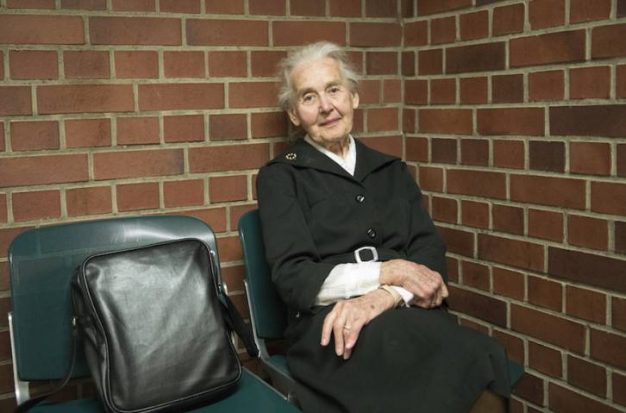
Just weeks after finishing a two and a half year prison sentence for “Holocaust denial,” 92-year-old Ursula Haverbeck has been convicted again by German courts, this time for an interview she gave in 2018 that affirmed her view that Jews were not systematically killed during World War II and that the gas chambers at Auschwitz are a politically motivated lie.
If the federal court’s sentence of one year in Haverbeck’s newest case holds up, Germany will have the dubious distinction of imprisoning the oldest female inmate in the world, a title previously held by American Lucille Keppen, who was incarcerated for shooting her neighbor and was released at age 93.
The German government has been dragging Haverbeck to court for decades for disputing Jewish claims of gas chambers and systematic murder. Haverbeck has famously protested the kangaroo courts that humiliate and defame elderly war veterans using bogus testimony from “survivors.”
Numerous high-ranking Third Reich officials, soldiers and concentration camp workers have disputed the Holocaust narrative since 1945, including Wehrmacht officer Otto Ernst Remer, Auschwitz employee Thies Christophersen, Erich Priebke, Leon Degrelle, and SS soldier Karl Muenter, the latter who died before his “Holocaust denial” trial began at the age of 96.
Haverbeck’s late husband, Werner Georg Haverbeck, was an influential NSDAP member who himself objected to the blood libel against the German people known as die Auschwitz luge (the Auschwitz lie).
The BRD’s legal system has been ruthless with Haverbeck. The nonagenarian, who is a prisoner of conscience, was denied release after serving 2/3 of her prison sentence as is customary in Germany. While the state freed 1,000 offenders early due to COVID last March, Haverbeck was only let out in mid-November.
There is no sign of shame or human rights concerns in the country, with the judge in the latest case stressing that Haverbeck will continue to be punished until she learns to keep her mouth shut. One can only imagine the outcry from liberal NGOs if Iran, China or Russia imprisoned an elderly woman just for questioning the government’s line.
Haverbeck’s powerful spirit has become an inspiration for patriots in Germany and around the world. In 2019, she ran as a European parliamentary candidate from behind bars and received 25,000 votes, which was highly upsetting to the European media establishment. Every year on her birthday, hundreds of Germans rallied outside her detention center demanding her release.
Intellectuals and activists across Europe, the Americas and Japan have expressed dismay over her mistreatment and the lack of freedom in the land that claims to be a “democracy.” At JVA Bielefeld, where Haverbeck was housed, prison officials struggled to process the avalanche of letters and flowers their famous prisoner received throughout her sentence.
For Germany’s oldest prisoner, it’s clear that she will not cower before the wrath of the Jewish groups directing careerist bureaucrats. It’s in the German state’s reputational interest to stop tormenting Haverbeck, yet the West’s religious fear of debate over what occurred during the Second World War continues to take precedent over all other concerns.
German Doctor Raided By Armed Police During Live YouTube Stream
By Paul Joseph Watson – Summit News – November 19, 2020
Shocking footage out of Germany shows Doctor Andreas Noack being raided by armed police in the middle of a YouTube stream for apparently violating coronavirus laws.

The clip shows Noack in conversation with someone during the live stream before he is distracted by noises outside his door.
Banging is then heard along with screams of “Polizei!” before armed cops are seen entering and ordering Noack to get on the floor, as he is treated like some kind of violent terrorist.
As Noack is handcuffed, a police officer in a mask then appears to try to shut down the live stream but only succeeds in diverting the camera.
Speculation raged on Twitter as to the reason for the raid, with some suggesting Noack had been active in treating injured protesters at anti-lockdown demonstrations.
Others suggested the reason was that Noack had welcomed too many people into his house, violating COVID-19 restrictions on gatherings.
“I think the guy is guilty of expressing his opinions,” said another respondent.
“They’ve turned back the clock to the 1930’s,” remarked another.
“Insanity!” commented another.
Germany has seen numerous massive anti-lockdown protests, including one yesterday in Berlin during which police hit protesters with water cannons.
As we previously highlighted, a pregnant mother in Australia received a home visit and was arrested by police for the crime of helping to organize an anti-lockdown protest on Facebook.
This is happened to doctor Andreas Noack in Germany. After the unconstitutional approval of the infection law, police broke into his house while he was having a live transmission on YouTube. Those who cried against “fascism” have created the most criminal dictatorship in history. pic.twitter.com/fLgl5JTF0i
— Cesare Sacchetti (@CesareSacchetti) November 19, 2020
Moscow: Berlin Must Explain Situation With Navalny Under European Convention on Mutual Legal Aid
Sputnik – 10.10.2020
Germany must clarify the situation involving Navalny to Russia in line with the European Convention on Mutual Assistance in Criminal Matters, the Russian Foreign Ministry said.
“The German side must provide explanations, despite its persistent reluctance to do so. Excuses previously made to us are not accepted. They are unconvincing,” the ministry’s statement reads.The ministry added that ‘Novichok’ is a purely Western brand, with about 140 varieties throughout Western countries, and Russia does not have it.
According to the ministry, the structure and mass spectrum of “Novichok,” which is claimed to have been behind the poisoning of former double agent Sergei Skripal and opposition figure Alexey Navalny, were first revealed in the mass spectral database of the American Institute of Standards in 1998 (NIST 98).
“It is telling that information on this substance came there from a research centre of the US Department of Defense. Subsequently, a whole family of toxin chemicals not covered by the CWC [Chemical Weapons Convention] was formed on the basis of this compound. Along with Americans, at least 20 Western countries have worked with them [these toxins]. So, Novichok is a purely Western brand. It has been synthesized and is available in about 140 variants in these countries. We do not possess it,” the ministry added.
The OPCW said on Tuesday that a substance similar to nerve agent Novichok, but not included on the lists of banned chemicals, had been found in Navalny’s system. The German government believes the OPCW’s statement actually confirmed the opposition activist’s poisoning with a Novichok group substance but admits that the substance in question is not formally banned.
Russia has also said that the German Foreign Minister’s address to lawmakers on the “Navalny case” shows that Moscow is still subject to propaganda attacks.
“As for Heiko Maas’ thesis that Russia’s claims against Germany and the OPCW are absurd, such remarks are outrageous and do not stand up to any criticism. All we want is to get legal, technical and organizational assistance both in the bilateral Russian-German format and via the OPCW in the interests of conducting a comprehensive, objective and unbiased investigation of all the circumstances of the incident that occurred with Alexey Navalny,” the ministry said.
German Foreign Minister Heiko Maas said earlier that Berlin will discuss with its OPCW and EU partners a general reaction to the incident with Navalny, adding that the EU may “very quickly” impose sanctions against those people who they believe are involved in the development of chemical weapons in Russia.
Russian Foreign Ministry’s spokeswoman, Maria Zakharova, said earlier this week that the incident with Russian opposition figure Navalny was used just as a pretext for introducing sanctions against Russia that had long been in the works.
The Navalny Poisoning Hoax. Who Are the Instigators?
By Ludwig Watzal | American Herald Tribune | October 1, 2020
From the start, the alleged Navalny poisoning was riddled with contradictions and should have raised eyebrows by every politician and journalist. Being discharged from the Charité Clinic in Berlin, Navalny went into attack mode against President Vladimir Putin. As it seems, this will be his role designed to him by the intelligence agencies. In a couple of days, the Navalny hype will be over. One can only blame Putin for the alleged poising once. If Navalny had the guts, he would return to his homeland and fight Putin politically.
The whole poisoning hoax stinks to high heaven. If Navalny had really been poisoned, his companions, not to speak of all the other passengers in the plane, would have been poisoned too. None of them was. What a surprise? His “poisoning” was of the same sort as the one of the Skripals. There was nothing. Since their recuperation, they have disappeared. Are they still alive? The fooling of the public works only once, and the British MI5 has a long history of leading the public astray.
There are further inconsistencies in the case. Navalny’s backers even found water bottles in his apartment, which were allegedly also poisoned. How could they bring them openly to Germany? How could the whole Navalny entourage travel to Germany without any restrictions, especially under Corona restrictions? They could even go back and forth. By the way, Navalny was apparently poisoned drinking a cup of tea before boarding a plane, which was to have taken him to Moscow. The plane had to make an emergency landing because Navalny started screaming on board. But the pictures of these incidents seemed staged and unrealistic.
After the landing in Omsk, Navalny was medically treated. Russian doctors found nothing special. All of a sudden, Navalny’s entourage claimed that he should be brought to Berlin. Why Berlin? Why not France, Great Britain, or the United States? As it turned out, the Navalny case’s fallout was the killing of the Nord Stream 2 pipeline. The first one among the political class to call for an end to Nord Stream 2 was Norbert Röttgen, a mouthpiece of the trans-Atlantic network, severely anti-Russian as another Russophobe German politician Katrin Göring-Eckardt called for a stop to the pipeline. When it goes against Russia, the Greens are at the helm.
Although the Russian government offered its cooperation and demanded proof of the alleged poisoning, the German government did not provide any hard evidence. They pretended that they had sent the evidence to the Organization for the Prohibition of Chemical Weapons (OPCW) in Den Haag/Netherlands, but the organization referred the Russian back to the Germans. So far, evidence could not be provided by the Germans, just rumors.
The stop of Nord Stream 2 would damage not only German national interest but also the Russian one. Canceling the project, Germany would have to pay Billions of Euros compensation to the companies, and Germany would lose all credibility as a serious trade partner. For over a year, U. S. President Donald Trump has been putting enormous pressure on the German government to cancel the project. Instead, Germany should buy expensive U. S. fracking gas. If the Germans succumb to U. S. blackmail, it will demonstrate to the world that Germany is still a U. S. colony and not sovereign.
German foreign minister Heiko Maas cut the worse figure. He is the main agitator against Russia. Maas used his video speech at the United Nations to demand that Russia deliver “evidence” of Navalny’s poisoning. Russia can’t contribute anything to it because Navalny wasn’t poisoned. Since Maas was appointed to his job, anti-Russian rhetoric has increased. Together with other politicians from the Christian Democratic Party and the Greens, Germany follows a hostile policy towards Russia. The German side refused to answer three letters of Russia’s request to provide evidence of the “poisoning.” Maas seems to have a complex about his childish appearance. Perhaps that’s why he haves like a snip. If Angela Merkel lets Maas go on like this, the German-Russian relationship will be completely screwed up. A long tradition, established by former Chancellor Willy Brandt and his adviser Egon Bahr will go down the drain. Only the U. S. will profit from such a deterioration in relations.
Featured Video
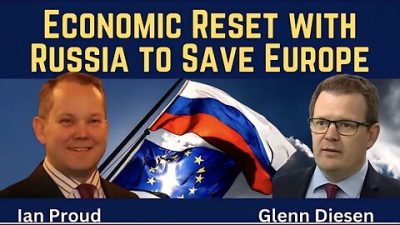
Ian Proud: Economic Reset with Russia to Save Europe
or go to
Aletho News Archives – Video-Images
From the Archives
Magic Hour for Gates

By Gary Jordan | Wake The F*** UP | March 15, 2021
Bill Gates wants to know everything about you.
He wants to control every aspect of your life.
His insatiable thirst for the supervision and scrutiny of every human being alive has sparked a US$1 billion investment that will blanket the earth in video surveillance satellites, providing real-time feedback with a mere one-second delay. He advocates for Orwellian digital tools to track your every move and has bankrolled US$1.7 billion to provide artificial intelligence that will be used to scan each and every visitor to major event venues worldwide. He wants to do away with end-to-end encryption, so he can snoop on your private conversations. He wants to know when and where you travel and who you travel with. He wants you to eat whatever he says you should eat, drink whatever he says you should drink, think how he wants you to think and know only what he wants you to know. Plus he wants to dictate what goes inside your body.
But he doesn’t want you to know a lot about him.
For instance… continue
Blog Roll
 Aletho News
- ‘Fox guarding the henhouse’: AMA, Vaccine Integrity Project to conduct their own vaccine safety and efficacy reviews
- Macron, Merz, and von der Leyen Defend Expanded Speech Controls
- Keir Starmer-tied think tank paid PR firm to target The Grayzone
- ‘Israel’ threatens to genocide Gaza if Hamas refuses disarmament
- Apple Just Bought A Sinister ‘Pre-Speech’ Tech Company Implicated In Genocide
- Israel’s new West Bank registration process declares Palestinian land ‘state property’
- Two children killed in Palestinian Authority ambush in West Bank; Hamas slams attack as ‘black mark’
- Israel Needs Time Before Another Iran War—Here’s Why
- US seizes oil tanker for ‘defying Trump’s quarantine’
- Ian Proud: Economic Reset with Russia to Save Europe
- If Americans Knew
- An error has occurred; the feed is probably down. Try again later.
- No Tricks Zone
- New Study: A 4°C Warmer Beaufort Sea Had ‘No Sea Ice’ 11,700 – 8200 Years Ago
- Unfudging The Data: Dutch Meteorological Institute Reinstates Early 20th Centruy Heat Waves It Had Erased Earlier
- German Gas Crisis…Chancellor Merz Allegedly Bans Gas Debate Ahead of Elections!
- Pollen Reconstructions Show The Last Glacial’s Warming Events Were Global, 10x Greater Than Modern
- Germany’s Natural Gas Storage Level Dwindles To Just 28%… Increasingly Critical
- New Study Rebuts The Assumption That Anthropogenic CO2 Molecules Have ‘Special’ Properties
- Climate Scientist Who Predicted End Of “Heavy Frost And Snow” Now Refuses Media Inquiries
- Polar Bear Numbers Rising And Health Improving In Areas With The Most Rapid Sea Ice Decline
- One Reason Only For Germany’s Heating Gas Crisis: Its Hardcore-Dumbass Energy Policy
- 130 Years Later: The CO2 Greenhouse Effect Is Still Only An Imaginary-World Thought Experiment
 Aletho News