‘Taken under control’: GPS sites in Russia can’t be used now for ‘military purposes’
RT | June 1, 2014
Russia has “taken under control” the operation of 11 American GPS sites and ensured they cannot be used for military purposes, as Washington and Moscow show no progress in negotiations on setting up Russian GLONASS stations on US territory.
May 31 was the last day when Russia and the US could have reached a deal on the issue.
“In compliance with the Russian government’s instruction, Roscosmos and the Federal Agency for Scientific Organizations implemented measures on June 1, 2014, which excluded the use of information from global seismographic network stations working on signals from the GPS system and located on the territory of the Russian Federation for purposes not stipulated by the existing agreements, including for military purposes,” Russia’s Federal Space Agency (Roscosmos) said on Sunday morning.
The statement referring to agreements between Russia and the US, which date back to 1993 and 2001, stirred up some confusion in the media with some outlets reporting GPS stations work has been suspended, while others said they continued to work. Russia’s deputy Prime Minister Dmitry Rogozin, the official behind the move elaborated: “We have worked out and implemented measures that exclude the use of these [GPS] stations for military purposes. Now they are under our full control,” Rogozin, who is in charge of space and defense industries, wrote in his Twitter micro blog.
The Differential GPS ground stations located on Russia’s soil will continue to operate under existing agreements to fulfill civil purposes. The so-called DGPS provides differential corrections to a GPS receiver in order to improve position accuracy.
The correction is received by the roving GPS receiver via either a radio signal or a satellite signal, depending on whether a source is land-based or satellite-based, and applied to the position it is calculating.
According to Rogozin, Moscow has initiated talks with the United States on GLONASS deployment on the US territory.
If agreement is reached by the August-31 deadline, “new decisions will be taken.”
“We hope that by the end of summer, these talks will bring a solution that will allow our cooperation to be restored on the basis of parity and proportionality,” Rogozin said back on May 13, the day when he first announced plans to shut down 11 American correctional GPS stations.
The development of the GLONASS global navigation system began in the Soviet Union, which put the very first satellite of the system into orbit on October 12, 1982. The system was officially commissioned on September 24, 1993.
Today GLONASS is supported on products from world-leading handheld device producers, such as Samsung, Nokia, Apple, Motorola and others, simultaneously with GPS.
So far there are 14 monitor stations in Russia, one in Brazil and one in Antarctica at Russia’s Bellingshausen station.
More GLONASS stations are expected to be built in the near future: eight in Russia, two in Brazil, one in Australia, Cuba, Indonesia, Spain, Vietnam and an additional station in the Antarctic.
Federal Appeals Court Rules Warrant Required for GPS Tracking
By Nathan Freed Wessler | ACLU | October 23, 2013
Today the Third Circuit Court of Appeals ruled that law enforcement agents must obtain a warrant based on probable cause to attach a GPS device to a car and track its movements. The case, United States v. Katzin, is the first in which a federal appeals court has explicitly held that a warrant is required for GPS tracking by police. The ACLU submitted an amicus brief in the case (joined by the ACLU of Pennsylvania, Electronic Frontier Foundation, and National Association of Criminal Defense Lawyers) and presented oral argument to the court in March.
In this case, police suspected three brothers, Harry, Mark, and Michael Katzin, of robbing several pharmacies. Without getting a warrant from a judge, FBI agents attached a GPS tracking device to Harry Katzin’s car in order to follow its movements. The government used the GPS device to track the Katzins as they drove to and from another pharmacy, and arrested them as they drove away. Before trial, the Katzins argued that police had violated their Fourth Amendment rights by using the GPS tracker without a warrant, and the district court agreed. Today’s ruling affirms that decision.
Last year, in United States v. Jones, the Supreme Court unanimously held that attaching a GPS tracker to a car to follow its movements is a search under the Fourth Amendment. The Court did not decide whether police need a warrant to conduct such a search, however, and the government argued in this case that an exception to the usual requirement of a warrant should apply. The Third Circuit rejected the government’s arguments, explaining that GPS tracking is a “vastly broader endeavor” than the kinds of limited searches that courts have allowed without warrants. In particular, the court held that the “automobile exception” to the warrant requirement does not apply to GPS tracking. The exception is designed to permit warrantless searches of cars to reveal contraband before the cars can drive away. But, as the court explained, that narrow exception does not “permit [police] to leave behind an ever-watchful electronic sentinel in order to collect future evidence” without judicial oversight.
The court also rejected a second argument made by the government: that the so-called “good faith” exception should permit use of evidence derived from the GPS tracking, even if it violated the Fourth Amendment. Because the GPS tracker was attached to the Katzins’ car before the Supreme Court decided Jones, and before the Third Circuit had addressed the issue, the government argued that FBI agents couldn’t have known that using a GPS device might raise questions under the Fourth Amendment, and therefore they acted in good faith by choosing not to seek a warrant. The court explained that this does not excuse police from the requirement of getting a warrant:
Where an officer decides to take the Fourth Amendment inquiry into his own hands, rather than to seek a warrant from a neutral magistrate — particularly where the law is as far from settled as it was in this case — he acts in a constitutionally reckless fashion. Here, law enforcement personnel made a deliberate decision to forego securing a warrant before attaching a GPS device directly to a target vehicle in the absence of binding Fourth Amendment precedent authorizing such a practice. . . . Excluding the evidence here will incentivize the police to err on the side of constitutional behavior and help prevent future Fourth Amendment violations.
Today’s opinion offers a full-throated defense of the Fourth Amendment, and installs an important safeguard against unjustified government surveillance. As courts around the country consider challenges to warrantless location tracking by police (whether using GPS devices or cell phone signals), they would do well to follow the Third Circuit’s lead.
Cellphone tracking cases highlight privacy concerns in digital age
Rt | August 20, 2013
In recent weeks, two cert petitions were filed seeking review of whether the Fourth Amendment covers police searches of cellphone records upon arrest.
From mobile phone and GPS tracking to license plate reading and domestic surveillance drones — not to mention recent revelations of widespread abuse of surveillance capabilities by the National Security Agency — these cases and many others highlight major questions that remain unanswered regarding how privacy rights of Americans can co-exist with the use of rapidly evolving technologies.
State and federal law enforcement agencies have wasted no time seizing on gaps and omissions in established legal precedent to justify vast, routine surveillance of the American public which tests Fourth Amendment rights.
On July 30, a petition was filed in Riley v. California challenging a previous ruling in a California appellate court that affirmed the petitioner’s convictions, which stemmed in part from a questionable search of his smartphone in 2009 following a traffic stop for expired license plates. And late last week, the US Department of Justice filed a petition in United States v. Wurie asking for review of a First Circuit Court of Appeals ruling that police needed a warrant to access a suspect’s phone records. Regarding Wurie, the government contends a cell phone is no different from any other item on a suspect at the time of arrest. The search pertaining to Wurie occurred in 2007.
On the surface, the two cases have much in common. But in Riley, the phone in question is a smartphone – a Samsung Instinct M800. In Wurie, the cellphone was a Verizon LG flip-phone incapable of maintaining the breadth of information – including internet searches, email, photos and other media – that a smartphone can store.
As of May, Pew Research Center found that 91 percent of Americans own cellphones, and 61 percent of those cellphones are smartphones.
GPS technology has received more scrutiny from courts than cellphones have in recent years. Last week, the Justice Department appeared before a federal court defending its right to shield legal memos that provide guidance to federal prosecutors and investigators for how to use GPS devices and other surveillance technologies from the public. In a sense, the memos were released upon a Freedom of Information Act request by the American Civil LIberties Union (ACLU), though their contents were heavily redacted.
The memos (read here and here) were legal interpretations of a January 2012 Supreme Court ruling in United States v. Jones in which the court ruled the use of GPS technology to track a car’s movements constitutes a “search” within the parameters of the Fourth Amendment. Upon release of the indecipherable legal memos, the ACLU filed a lawsuit seeking the full, uncensored guidelines.
“While we agree that executive branch lawyers should be able to freely discuss legal theories, once those opinions become official government policy the public has an absolute right to know what they are,” wrote Brian Hauss, legal fellow with the ACLU’s Speech, Privacy and Technology Project. “Otherwise, the government is operating under secret law that makes accountability to the people impossible.”
The ruling in United States v. Jones left many unanswered questions regarding the use of other location-monitoring technologies pertaining to, for example, the tracking of cellphones or the use of license-plate readers – not to mention the use of surveillance drones in the US. In addition, the Jones ruling fell short of even determining whether a warrant is necessary to use GPS devices.
Building on the Jones decision, New Jersey recently became a state ahead of the curve in defining rules for law enforcement and privacy rights in the digital age. The New Jersey Supreme Court ruled in July that state police must have a search warrant before obtaining tracking information from cellphone providers.
“Using a cellphone to determine the location of its owner can be far more revealing than acquiring toll billing, bank, or internet subscriber records,” Chief Justice Stuart Rabner wrote in the case’s opinion. “Details about the location of a cellphone can provide an intimate picture of one’s daily life and reveal not just where people go – which doctors, religious services and stores they visit – but also the people and groups they choose to affiliate with. That information cuts across a broad range of personal ties with family, friends, political groups, health care providers and others.”
In June, Montana became the first state to require police to obtain a warrant before tracking a suspect’s cellphone.
In March 2012, the ACLU reviewed records from over 200 local police departments, finding vast, aggressive use of cellphone tracking for emergency and nonemergency uses.
Another ACLU report, released in July of this year, queried around 600 local and state police departments (and other state and federal agencies) via public records requests to assess how these agencies use automatic license plate readers. The civil liberties organization found massive databases of innocent motorists’ location information gleaned through hundreds of millions of “plate reads” by the ubiquitous readers. Data is often stored for an indefinite period of time, revealing just how easy it is for law enforcement – as well as many private companies – to track any license plate with few legal restrictions in place to stop them.
For example, for every one million plates that were read in the state of Maryland in the first half of 2012, 2000 (0.2 percent) were hits, mostly regarding registration or emissions issues. Of those 2000 hits, less than 3 percent (47) were potentially connected to more serious crimes.
In addition, much of this network of readers throughout the nation is in place thanks to a large amount of federal funding – $50 million in the last five years.
Approval of licenses for domestic drones has begun, as RT has reported, even though solid rules for their eventual use in American skies have yet to materialize from either Congress or the Federal Aviation Administration. The FAA expects as many as 30,000 drones in American airspace by 2020.
For now, many local law enforcement agencies are leading the quest for drone-use approval, though requests for commercial drones are mounting. As of February 15, 2013, there were 327 active drone certifications despite there being no regulatory framework in place. However, the FAA did get around to certifying two types of unmanned aircraft for civilian use in the US in late July.
In the meantime, federal government agencies have used drones domestically both out in the open and in secret. The Federal Bureau of Investigation has admitted to already using surveillance drones despite no established law or guidelines for their use. The US Department of Homeland Security has used surveillance-capable drones along the border for years, even allowing other federal agencies to use its fleet to the tune of 250 times in 2012 alone, The New York Times reported.
Results of Nationwide Government Cell Phone Tracking Records Request Show Frequent Violations of Americans’ Privacy Rights
By Catherine Crump, ACLU Staff Attorney | March 31, 2012
The ACLU has just released the results of our affiliates’ public records requests to hundreds of police departments around the country asking them about their cell phone tracking policies.
What we have learned is disturbing. Many of the approximately 200 law enforcement agencies that responded said they track cell phones without a warrant. As The New York Times reports, this invasive form of surveillance often happens without any court oversight at all.
A small number of agencies, such as in North Las Vegas and Wichita, said they do obtain warrants based on probable cause before tracking. Others, such as the Kentucky State Police, said they use varying legal standards, such as a warrant or a less-strict subpoena. The result is unclear or inconsistent legal standards from town to town that frequently fall short of probable cause.
The government should have to get a warrant before tracking cell phones. That is what is necessary to protect Americans’ privacy, and it is also what is required under the Constitution.
The fact that some law enforcement agencies do get warrants shows that a probable cause requirement is a completely reasonable and workable policy, allowing police to protect both public safety and privacy.
Last August, in an unprecedented effort to penetrate the secrecy around the policies, 35 ACLU affiliates around the country filed over 380 requests under states’ freedom of information laws. The ACLU asked state and local law enforcement agencies about their policies, procedures and practices for tracking cell phones. An in-depth summary of what we found, with links to documents, is here.
The responses varied widely, and many agencies did not respond at all. The documents included statements of policy, memos, police requests to cell phone companies (sometimes in the form of a subpoena or warrant), and invoices and manuals from cell phone companies explaining their procedures and prices for turning over location data. There’s a map with links to the documents and requests state-by-state here.
The documents provide an eye-opening view of police surveillance of Americans. In Wilson County, N.C., police obtain cell phone tracking data where it is “relevant and material” to an ongoing investigation – a standard much lower than probable cause. Police in Lincoln, Neb., without demonstrating probable cause, obtain even GPS location data, which is more precise than cell tower location information. In Tucson, Ariz., police sometimes obtain cell phones numbers for all of the phones at a particular location at a certain time (this practice is known as a “tower dump”).
The U.S. Supreme Court in January held in U.S. v. Jones that prolonged location tracking is a search under the Fourth Amendment, but the effects of that ruling on law enforcement have yet to be seen.
The ACLU supports bipartisan legislation currently pending in both the House of Representatives and the Senate that would address this problem called the Geolocation Privacy and Surveillance (GPS) Act. It would require law enforcement officers to obtain a warrant to access location information from cell phones or GPS devices. It would also mandate that private telecommunications companies obtain their customers’ consent before collecting location data. At least 11 state legislatures are also considering bills related to location tracking.Technology is evolving quickly, and often to the detriment of privacy. How much privacy Americans enjoy is a choice that ultimately is ours as a society to make.
Tell Congress: Support the GPS Act!
Act Now
Related articles
- Even After Supreme Court GPS Decision, Feds Still Want Warrantless Cell Phone Tracking (alethonews.wordpress.com)
- EFF Backs Judge Calling for Warrant in Cell Phone Tracking Case (eff.org)
- Your cell phone is a government issued tracking device (alethonews.wordpress.com)
Featured Video
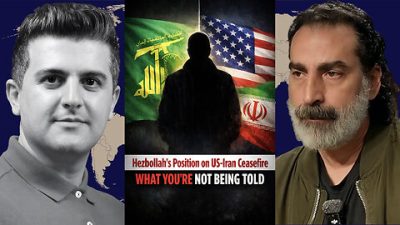
Laith Marouf: Hezbollah’s position on US-Iran ceasefire
or go to
Aletho News Archives – Video-Images
From the Archives
The Dirty Little Secret behind the “Global Terrorism Index”
The Omission of Israeli Terrorism in the Occupied Palestinian Territories
By Karin Brothers | Global Research | December 6, 2014
… The Israeli settlements — all of which are illegal – have been identified as a major impediment to peace. The refusal of a major “global” terrorism report to name the Israeli settlers as one of the groups most responsible for terrorism not only misrepresents a major source of regional violence but exposes the Global Terrorism Index as a propaganda tool that supports a U.S. agenda.
In recent years, governments have been attempting to thwart terrorism by blocking supportive fund-raising. When it comes to Israeli settlements, however, the US and Canada actually encourage fund-raising by giving organizations (such as Christian Friends of Israeli Communities (CFOIC) and the Jewish National Fund) financial support in the form of donor tax-deductions.
Charities which provide funds for the Israeli settlements should be regarded as terror-financing organizations. They should not only lose their tax-deductible status, but they should be banned because they support the violation of international humanitarian law. The terror-financing laws that are being strictly enforced for Muslim charities should be applied to Christian and Jewish charities as well. … Read full article
Blog Roll
 Aletho News
- Spain orders reopening of Tehran embassy, condemns Israel’s carpet bombing of Lebanon
- Israel faces ‘unsustainable’ strategic crisis following 40-day war against Iran: Analyst
- Iran restricts Hormuz access to 15 vessels per day under ceasefire terms: Report
- The ‘Opposition Party’ Has Done Nothing to Stop the Iran War and Much to Goad Trump Into Continuing It
- Moscow backs Tehran on status of Lebanon in US-Iran deal
- How UK Regulator Ofcom Quietly Bypassed International Law to Police American Speech
- The Black Cube Files: How Former Mossad Operatives Flipped a Nation
- Laith Marouf: Hezbollah’s position on US-Iran ceasefire: What you’re not being told
- Israel’s priority lies in destroying chances of peace between Iran, US: Ex-UN nuclear chief
- Ceasefire for all or for none: Iran shuts Hormuz over Lebanon attacks
- If Americans Knew
- This is ceasefire? Israel’s biggest massacre yet in Lebanon, another journalist killed in Gaza – Daily Update
- Tucker Carlson on Israel: This Is the Behavior of an Ally? Really?
- Gazans face a triple crisis: severe shortages of water and bread, healthcare in tatters
- NY Times reports how Netanyahu took the US into Iran War
- A sigh of relief over Iran, but Gaza and Lebanon in dire straits – Daily Update
- Thousands dead and neighborhoods razed to the ground: Aid agencies fear southern Lebanon is becoming the new Gaza
- The war the US is fighting for Israel could cost trillions
- ‘Cigarette Burns, Nail Wounds’: Toddler Tortured in Gaza to Coerce Father
- Trump Says US Sent ‘a Lot of Guns’ to Protesters in Iran
- Israeli forces destroy 17 UN peacekeeper cameras in south Lebanon
- No Tricks Zone
- An Inconvenient Tree: Uncovered In Alps… Europe Much Warmer Than Today 6000 Years Ago
- New Study Reports A 60% Slowdown In Greenland’s Ice Loss Rate In The Last Decade
- Low Intensity Tornado Wrecks Major Solar Farm, Creating A Potential Toxic Dump
- New Study Finds Warming Saves Lives…Cold Temperatures 12 Times More Deadly Than Excess Heat
- German Science Blog Accuses PIK Climate Institute Of Hallucinating Climate Tipping Points
- Devastating Assessment Of Comirnaty Vaccine By Former Senior Pfizer Europe Toxicologist
- New Study: CO2 Is ‘Effectively Negligible’ As An Explanatory Climate Change Factor Since 2000
- Former Pfizer Toxicologist Dr. Helmut Sterz Tells Bundestag Hearing Pfizer Vaccine Should Have Never Been Approved
- Energy Expert: Germany’s Nuclear Phaseout Was A “500 Billion Euro Mistake”
- New Research: South Australia’s Mid-Holocene Sea Surface Temperatures Were 4°C Warmer Than Today
 Aletho News