Hamas official denies group’s involvement in Sinai attacks
MEMO | October 27, 2014
 Mousa Abu-Marzouk, deputy of the Hamas political bureau, offered his condolences to the families who lost members in the terrorist attack in Abu Zeid, Sinai, on Friday.
Abu-Marzouk said: “We regret hearing about any drop of blood spilt in Egypt or anywhere in the Arab world as such news is very painful.”
In a telephone interview on Egyptian TV show Lazem Nafham, Abu-Marzouk stressed that linking Hamas to the attack in Sinai is an unwarranted claim that lacks any evidence. He said Hamas is a resistance movement that focuses its efforts toward the Israeli occupation and not its brothers in Egypt.
Abu-Marzouk went on to clarify that Hamas’ forces inside the Gaza Strip have increased their security measures to ensure that no activity takes place in Sinai and he asked the Egyptian government to avoid blaming the Palestinian people for actions and events that they have nothing to do with.
Emphasising that Palestinian have no reason to interfere in internal Egyptian affairs, he stressed that no party should accuse Hamas of anything without clear evidence and pointed out that the Palestinians have done nothing short of ensuring Egyptian national security.
“My statements regarding the kidnapping of Egyptian soldiers in Sinai are verified by a trustworthy source,” Abu-Marzouk said. He went on to emphasise that Gaza is the least extremist area in the entire Arab region.
Is Hamas really like ISIS, as Netanyahu claims?
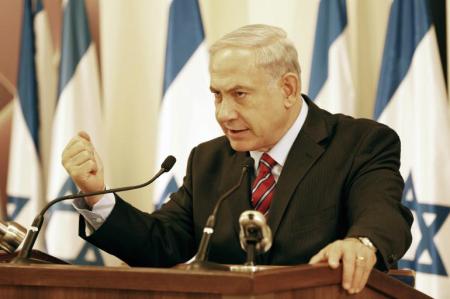
By Ibrahim Al-Madhoun | MEMO | October 8, 2014
In his heart of hearts, Netanyahu is aware of the major and fundamental differences between the Palestinian Hamas movement and the so-called “Islamic State” (ISIS) that is not limited to a specific state or nationality. However, for some reason, he is trying to link the two. In doing so, he ignores what is even more dangerous than his erroneous comparison; the significant similarity between ISIS and Israel’s ideology, policies and practices.
Israel calls itself the “Jewish State”, just as Al-Baghdadi calls his group the Islamic State. From the time of its “independence” in 1948, Israel has never declared it borders; in fact, they expand and contract, just as the territory controlled by ISIS does (it rejects the ideas of borders and does not recognise nation states). Indeed, ISIS considers its borders to be wherever its forces have reached. Israel was established on the basis of colonial-settlement and mass immigration of Zionist Jews from all over the world; ISIS is also encouraging immigrants who believe in the ideology of the group, regardless of their ethnicity and nationality.
It is no wonder that the Palestinian resistance is surprised when it captures or kills Israeli soldiers only to find that they are French, British, Polish, German or Russian individuals brought in to fight on Palestinian land and join the ranks of the “Jewish State”. In addition, the war crimes and crimes against humanity committed by Israel throughout its occupation of Palestine far surpass those committed by ISIS; the Israelis kill women and children and commit massacres deliberately, with apparent impunity, and then boast about it.
I do not mean that this comparison should offend ISIS, nor am I very concerned with talking about an organisation being fought by the world. It is undoubtedly a serious phenomenon that requires further reflection and study. What I am really concerned about is revealing Netanyahu’s manipulation and his attempt to divert attention from the real nature of the conflict in Palestine. When he fights Hamas, he is fighting the rightful owners of the land, the Palestinians. He is also following terrorist logic and using unimaginably extreme methods thanks to the world overlooking the Zionist project’s excesses in the region.
The international community is applying blatant double standards in its reaction to Israel and ISIS. Alliances have been formed to fight ISIS but the world turns a blind eye to the Israeli occupation that commits war crimes witnessed by all who wish to see. Over the summer, and not for the first time, Israel bombed hospitals, schools and safe houses while they were still inhabited and Israel also used internationally-banned weapons.
Netanyahu’s repeated attempts to link Hamas to ISIS is just more proof of Israel’s defeat and failure in its latest attack on the movement. It is also a cry for help by Israel to the countries of the world after its army failed to progress more than a few metres into Gaza. This is a desperate attempt to discredit and ruin the reputation of the Palestinian resistance and link it to a terrorist organisation reviled across the world. Netanyahu still hasn’t realised that the world is no longer held hostage to Israeli propaganda, and that such links and comparisons do not harm Hamas or change the fact that occupation is terrorism in every sense of the word. There is only one state occupying someone else’s land in the Middle East, and it isn’t the “Islamic State”.
UN plan to ensure reconstruction materials not diverted to Hamas
Palestine Information Center – 22/09/2014
GAZA – The United Nations’ top Mideast envoy, Robert Serry, wants to station hundreds of international monitors in the Gaza Strip to supervise the reconstruction process in Gaza Strip, the Hebrew newspaper Haaretz learned from European diplomats and senior Israeli officials.
The newspaper pointed out that Robert Serry has agreed upon the proposal along with Palestinian Prime Minister Rami Hamallah and Coordinator of the Israeli government in Palestinian territories Yoav Mordechai.
Serry is liaising with the PA and Israel to bring between 250 and 500 UN monitors into the Strip, the sources added.
50 UN monitors are currently in Ramallah and ready to head to Gaza Strip to participate in supervising rebuilding work in the Strip. The monitors’ mission is mainly to supervise big reconstruction projects and safeguard materials and to ensure that nothing would be diverted to Hamas Movement for tunnels digging.
Hamas has yet to comment on the proposal, the Hebrew newspaper said, adding that the Islamic movement realizes that Israel only allows construction materials’ access to the Strip in the presence of UN monitors.
The proposal is expected to be addressed during the Israeli-Palestinian indirect talks on Wednesday.
Abbas’ spurious charges
By Nicola Nasser | Al-Ahram | September 11, 2014
President Mahmoud Abbas and the Fatah movement, which he commands, have unleashed a media campaign against Hamas and the resistance. If pressure from the Palestinian public fails to stop the campaign, Abbas may achieve politically what Israel failed to achieve militarily: forcing the Palestinian presidency to choose “peace with Israel” over national reconciliation.
It appears that President Abbas has, indeed, prioritised “peace with Israel.” He has devised plans for resuming negotiations, and is still banking on American support for such talks. This is the only explanation for the current anti-Hamas media campaign.
Abbas sent his negotiators — Saeb Erekat, Majed Faraj and Maen Erekat — to Washington, where they met with US Secretary of State John Kerry a week ago last Wednesday. US State Department spokesperson Jen Psaki described the more than two-hour meeting as “constructive”. Abbas then prepared to obtain an Arab mandate, which seems guaranteed in advance, for his plans from the 142nd session of the Arab foreign ministers conference, held in Cairo this week.
However, US Ambassador to the UN Samantha Power poured cold water over the Palestinian Authority (PA) president’s bid to obtain US backing for his plan, which he intends to put before the UN Security Council and UN General Assembly. The proposal would end the Israeli occupation of the West Bank and Gaza within three years, during which period negotiations would resume within three months with the occupying power over its borders with the Palestinian state.
“We don’t think there are shortcuts or unilateral measures that can be taken at the United Nations or anyplace else that will bring about the outcome that the Palestinian people most seek,” Power said in a press conference last week. “To think that you can come to New York and secure what needs to be worked out on the ground is not realistic.”
This clearly translates into an unequivocal US “No.” The Palestinian president’s new plan has run up against the same American wall that Palestinian negotiators have faced since negotiations were adopted as a strategic approach. The Zionist route remains the only way these negotiators can access the White House and the UN Security Council.
There can be only one explanation for this plan. It is in fulfilment of a Palestinian promise not to resist the occupation and to offer the occupying power the opportunity to agree to yet another futile round of negotiations. Such negotiations will give Israel the time it needs to turn the Givaot colony into a major settler city on the 4,000 dunams of Palestinian land that it has just seized by declaring it “state land”.
The purpose of this appropriation is to separate the Hebron and South Bethlehem governorates in the West Bank. It is also a means to deflect international humanitarian pressure in reaction to Israeli war crimes in Gaza, to evade Israel’s obligations to the truce agreement with the resistance in Gaza, and to fuel internal Palestinian tensions until they reignite once more.
It was not Hamas or the resistance that described Abbas’s new plan as a “spurious process”. It was independent Palestinian figures who expressed their views in a statement read out by Mamdouh Al-Akr, general commissioner of the Independent Organisation of Human Rights, on 2 September in Ramallah. They called for an urgent meeting of the unified leadership of the Palestine Liberation Organisation (PLO), in accordance with the Cairo agreement of 2011, so that it can serve as a frame of reference for the Palestinian will and take critical national decisions.
Activating the unified leadership framework of the PLO will put President Abbas’s call for a “single Palestinian central authority”, uniquely empowered to “determine matters of war and peace”, into its concrete national context. Only this context can confer legitimacy on a Palestinian leadership that does not derive its authority from resisting the occupation in all forms.
Moreover, the currently missing “electoral legitimacy” is no longer sufficient in and of itself to allow Palestinian decisions on war and peace to remain in the hands of a leadership that is the product of elections that were held with the approval of the occupation power and in the framework of agreements signed with it.
The Palestinian presidency has dropped the available option of resistance from the lexicon of its negotiating strategy, let alone the option of war, which is not available. The PA, in coordination with the occupation’s security apparatus, has become “the security proxy for the occupying power, rather than an instrument to end the occupation and establish the state,” as Palestinian analyst Hani Al-Masri wrote on 26 August.
As a result, the occupying power, alone, holds the keys to the decision of war, which it continues to repeat, and to the decision of peace, which it still refuses to take.
It appears that President Abbas is working against the tide of Palestinian public opinion, as voiced in a recent survey conducted by the Palestinian Centre for Policy and Survey Research (PCPSR) in Ramallah. According to this poll, only 22 per cent of respondents supported a resumption of negotiations, while 53 per cent said they regarded resistance as “the more effective way” to realise the creation of a Palestinian state.
The results of the PCPSR poll contradict all the charges levelled by the president and Fatah against the resistance and Hamas. Of those polled, 79 per cent believe that the resistance emerged victorious from the recent war, while 86 per cent support the defensive use of rockets.
Respondents gave very low ratings to the performance of the Palestinian president, the PA, the national unity government and the PLO, while the approval rating for Hamas was 88 per cent.
What is the substance of this media campaign against Hamas? It ranges from blaming Hamas for prolonging the war and for the consequent loss of lives and material damage, to adopting the Israeli narrative regarding a Hamas-engineered “coup attempt” against the president in the West Bank and the existence of a “shadow government” in Gaza that prevents the national unity government from functioning.
Then there are the charges of keeping Fatah members under “house arrest”, of “opening fire on civilians”, and of “selling emergency relief on the black market.” On top of these come the accusation that Hamas has violated “the law that defines the colours and dimensions of the flag.”
President Abbas’s instructions to create a “committee to hold a dialogue” with Hamas to discuss the “fate of the national unity government,” as announced by Amin Maqboul, secretary of the Fatah Revolutionary Council, does little to encourage optimism. The national unity government, national reconciliation, the Cairo agreement of 2011, the unified leadership framework that it stipulated, and the reactivation of the PLO, all stand at a crossroads.
This is because of the confrontation stirred by the systematic smear campaign that President Abbas and the Fatah movement are waging against Hamas and the resistance. The campaign has created a media smokescreen behind which the occupation authority can conceal its foot-dragging in carrying out its obligations under the truce agreement, which will probably be echoed in Israeli procrastination on continuing with truce talks due to be held in Cairo.
It should also be stressed that to accuse the resistance and Hamas of prolonging the war is to exonerate the occupation power of responsibility. The Israeli media was quick to capitalise on this, further proof of the extensive coverage the campaign has received.
Indeed, Israeli government spokesman Mark Regev virtually reiterated it verbatim when he said that the Egyptian initiative was on the table from 15 July and that while the Arab League and Israel had approved the initiative, Hamas rejected it, only to turn around and agree to it a month later. “If [Hamas] had agreed then to what it agrees to now” it would have been possible “to avoid all that bloodshed,” he said.
The investigatory commission appointed by the UN Human Rights Council will most likely cite the president’s charges to strengthen the claims of the occupying power, as these charges would be regarded as “testimony of a witness from the other side.”
Abbas says that while the “final toll” from the most recent war in Gaza was 2,140 dead, “if added to the number of dead in previous wars, and those who died during the period of the Shalit problem, the number would be 10,000 dead and wounded, in addition to the 35,000 homes that were totally or partially destroyed.”
When Abbas says that “it would have been possible” to avert the human and material losses of the recent conflict he is effectively blaming the resistance, not the occupation, for the last war on Gaza and the two wars since 2008 that preceded it.
The spectre of discord once again hovers over Palestinian unity, with Palestinian opinion divided over a programme of negotiations versus a programme of resistance. This is the breach through which Arab and non-Arab “axes” penetrate into the Palestinian interior, deepening rather than mending Palestinian rifts.
Nicola Nasser is a veteran Arab journalist based in Birzeit, West Bank of the Israeli-occupied Palestinian territories
Hamas: US is partner to Israeli crimes in Gaza
MEMO | September 2, 2014
Senior Hamas leader Mahmoud Al-Zahar said on Monday that the United States is a partner to the Israeli occupation and its crimes committed in the Gaza Strip.
Speaking to the Palestinian Al-Quds television, he said: “We mean the US administration, not the American people, who took to the streets in large rallies against Israel’s crimes.”
He explained that lifting the Israeli siege of Gaza is not a demand, but a right. “We have the right to exist and lifting the siege is one of our rights,” he said, “it has to be lifted without a price.”
Regarding the Israeli soldiers who were abducted during Israel’s latest invasion of the Gaza Strip, he said their price is the release of the Palestinian prisoners. “This is our policy, which the enemy knows very well,” he said.
He continued: “There are two kinds of prisoners: MPs, former ministers, Hamas leaders and those prisoners freed in previous swaps; and the prisoners who are spending long terms in Israeli jails.”
The first kind should be released without a price, he asserted, while “the Israeli prisoners in our hands” are the price for the second kind of prisoners.
He also spoke about the seaport and airport that Hamas insisted on during the ceasefire talks in Cairo. “The airport was built during the time of late Yasser Arafat, but the occupation forces demolished it,” he said. “It is our right to rebuild it.”
“The seaport was supposed to be built in Gaza’s central port, but the occupation forces have stopped any positive measures from happening in the Strip, including the seaport,” he explained. “The Palestinian Authority was too weak to defend establishing the seaport. It is our right, which we seek to achieve. Whoever attacks us, we will attack them.”
Al-Zahar stressed that the Israeli occupation has to be prosecuted before the International Criminal Court (ICC). If the Palestinian Authority does not carry out this mission, individuals in Europe and Latin America and every free country should pursue Israeli criminals at the ICC.
He concluded by comparing negotiations and resistance as methods to gain Palestinians rights. “There are diplomatic negotiations, which supporters think will gain a Palestinian state,” he said. “However, they have now failed and its supporters warn that they are going to join international organisations if negotiations are not revived.”
Meanwhile, he said the resistance programme is more “successful” and it insists on not making any concessions on Palestinians’ rights.
History shows Israel will again fail to implement its agreement with Hamas
By David Morrison | Friends of Lebanon | August 27, 2014
26 August 2014: Palestinian and Israeli leaders have finally agreed an Egyptian-brokered ceasefire to end the seven-week-old Gaza war.
It is appropriate to recall that Israel’s last military offensive against Gaza in November 2012 also ended with an agreement concerning Gaza brokered by Egypt [1]. Under it, both sides were required to cease hostilities and Israel undertook to take steps towards ending its blockade of Gaza. The agreement seemed to have the backing of the US, since Secretary of State Hillary Clinton stood beside the Egyptian Foreign Minister, Mohamad Amr, when he announced it on 21 November 2012.
What happened to the November 2012 agreement?
So, what happened to this agreement? Basically, Israel failed to fulfill its obligations under it, whereas Hamas fulfilled its obligations to the letter for more than eighteen months – and the international community turned a blind eye to Israel’s failure.
Specifically, in the agreement, Israel promised “to stop all hostilities on the Gaza Strip land, sea and air including incursions and targeting of individuals” and the “opening the crossings and facilitating the movement of people and transfer of goods, and refraining from restricting residents free movement”. Israel didn’t fulfill either of these obligations – it continued to make regular incursions into Gaza (killing 20 Palestinians in Gaza in the following 15 months) and took no steps to lift its economic blockade.
The agreement required Hamas and other Palestinian groups to “stop all hostilities from the Gaza Strip against Israel, including rocket attacks, and attacks along the border”. Hamas did so for more than eighteen months from 21 November 2012. Speaking to a Knesset committee on 30 June 2014, Prime Minister Benjamin Netanyahu acknowledged this, accusing Hamas “of involvement, for the first time since a Gaza war in 2012, in rocket attacks on Israel”, according to a Reuters report [2].
Other Palestinian groups did fire rockets into Israel, despite being restrained by Hamas. But, according to Nathan Thrall of the International Crisis Group Middle East and North Africa Programme, in an article dated 1 August 2014 in the London Review of Books[3]:
“During the three months that followed the ceasefire [on 21 November 2012], Shin Bet recorded only a single attack: two mortar shells fired from Gaza in December 2012. …
“[Hamas] set up a new police force tasked with arresting Palestinians who tried to launch rockets. In 2013, fewer were fired from Gaza than in any year since 2003, soon after the first primitive projectiles were shot across the border.”
Israel’s response to quiet along the border
How did Israel respond to this comparative quiet along the border? In his London Review of Books article, Nathan Thrall writes:
“In the three months following the ceasefire, its forces made regular incursions into Gaza, strafed Palestinian farmers and those collecting scrap and rubble across the border, and fired at boats, preventing fishermen from accessing the majority of Gaza’s waters.
“The end of the closure never came. Crossings were repeatedly shut. So-called buffer zones – agricultural lands that Gazan farmers couldn’t enter without being fired on – were reinstated. Imports declined, exports were blocked, and fewer Gazans were given exit permits to Israel and the West Bank.
“Israel had committed [in the November 2012 agreement] to holding indirect negotiations with Hamas over the implementation of the ceasefire but repeatedly delayed them. … The talks never took place. The lesson for Hamas was clear. Even if an agreement was brokered by the US and Egypt, Israel could still fail to honour it.”
If Israel had fulfilled its obligations
Had Israel ceased military incursions into Gaza and taken steps to lift its economic blockade, as it was supposed to do under the agreement, it is virtually certain that Hamas would not have resumed rocket fire. Hamas did resume on 7 July 2014, after Israel made an armed incursion into Gaza and killed seven Hamas members. And if progress was being made towards lifting the blockade, Hamas would have been in a much stronger position to stop other Palestinian groups from firing rockets and mortars into Israel.
So, had Israel fulfilled its obligations under the agreement, it is very likely that rocket and mortar firing into Israel could have been halted altogether without Israeli military action against Gaza.
June 2008 agreement
This is not the first time that Israel has failed to fulfill its obligations under an agreement with Hamas. In June 2008, Egypt brokered an agreement which, like the November 2012 agreement, provided for a cessation of hostilities on both sides and steps by Israel towards ending its blockade [4].
Hamas fulfilled its obligations under this agreement to the letter and, as a result, southern Israel was almost entirely free from firing out of Gaza for four and a half months. But Israel did not ease its economic blockade, let alone lift it, and on the evening of 4 November 2008 (when the world was watching the election of Barack Obama) it made a military incursion into Gaza for the first time since the ceasefire began in June and killed seven members of Hamas. That was the end of that agreement.
A few weeks later Israel embarked on its first major offensive against Gaza, Operation Cast Lead, with the declared objective of suppressing rocket and mortar into Israel.
The lesson of history
The lesson from the above is that the international community will have to ensure that Israel fulfills its obligations in any future agreement with Hamas. Come to think of it, does another agreement need to be negotiated? In reality, all that is necessary is that Israel be persuaded to implement the November 2012 agreement.
References:
[1] http://www.upi.com/blog/2012/11/21/Read-the-Gaza-ceasefire-deal/7401353523034/
[2] uk.reuters.com/article/2014/06/30/uk-palestinian-israel-idUKKBN0F51CZ20140630
[3] http://www.lrb.co.uk/v36/n16/nathan-thrall/hamass-chances
[4] news.bbc.co.uk/1/hi/world/middle_east/7462554.stm
David Morrison is a Political Officer of Sadaka: The Ireland Palestine Alliance and co-author of A Dangerous Delusion: Why the West is Wrong about Nuclear Iran (April 2013). Morrison can be reached at david@sadaka.ie.

For a virtual tour of the destruction of Gaza, see visual journalist Lewis Whyld’s gallery here.
- See also “The Victims of Gaza: A List of Palestinians Killed in Israel’s Ongoing Assault” (26 August 2014)
- See also David Morrison’s “Gaza: Israeli and Palestinian fatalities” (24 July 2014) and “Gaza: Nobody needed to die” (26 July 2014)
Senior Hamas official: Israel agreed to open Gaza crossings
Ma’an – 26/08/2014
Israel has agreed to open Gaza crossings to allow the flow of humanitarian aid and construction material, senior Hamas leader Mousa Abu Marzouq said Tuesday.
Speaking to Ma’an, Abu Marzouq added that three more Gaza crossings will be operated in addition the Kerem Shalom and Erez crossings, which are already operating.
Asked about the fishing zone, he said that Gaza fishermen would be allowed to reach as far as 6 nautical miles and the zone would be increased gradually until it is 12 nautical miles by the end of 2014.
Reconstruction of the war-torn Gaza Strip will be discussed during a conference in Egypt next month, added Abu Marzouq. The Palestinian national consensus government will be in charge of implementation.
The Hamas official added that the ceasefire agreement was sponsored and would be monitored by Egypt only.
Another round of negotiations will start a month from now to discuss unresolved issues, Abu Marzouq said.
Furthermore, Israeli, European and American restrictions and opposition to money transfers to Gaza for salaries for employees of the former Hamas-led government in Gaza have been cancelled. The national consensus government is supposedly working on proceedings to arrange payment of salaries.
Abu Marzouq pointed out that Israel agreed to stop targeted assassinations of resistance activists and said that a ceasefire agreement could have been reached earlier if Israel agreed to this demand sooner.
As for the Rafah crossing, Abu Marzouq said Egyptian and Palestinian officials would meet soon to discuss what is needed to open the crossing permanently.
The Gaza buffer zone has also been removed, he added.
Former Israeli AG: Our government staged the assassination of Al-Daif
MEMO | August 24, 2014
In the biggest blow to Israeli propaganda, which claimed that Hamas broke the ceasefire, former Israeli Attorney General Michael Ben Yair has said that “it was Israel who staged the alleged Hamas breach of the ceasefire in order to create the conditions for assassinating Muhammad Al-Daif, Commander-in-Chief of Hamas’s military wing, Al-Qassam Brigades.
The website of Makor Rishon newspaper said that Ben Yair, who also worked as a judge in the Israeli supreme court, tweeted on his twitter account the following: “There is no agreement and hostilities have been renewed, but who is the culprit? Hamas who wants an agreement with accomplishments or Israel who staged the breach of the ceasefire in order to justify the assassination of Muhammad Al-Daif?”
The significance of this testimony lies in the fact that Ben Yair, by virtue of his former position, had knowledge of the fine details of the secret Zionist intelligence work. He conducted investigations into the various aspects of the activities carried out by Israel’s Security Agency, the Shabak, which is responsible for intelligence about resistance leaders named for liquidation.
Ben Yair’s testimony is also significant because it comes in the wake of the adoption by Europe and the United States of America of the Israeli narrative as a result of which they held Hamas responsible for breaching the ceasefire.
It is worth mentioning that the Israeli government’s judicial advisor is also in charge of prosecution in the country.
Ben Yair is considered to be a serious person who is highly respectable within Israel, thanks to his revolutionary decisions during the time when he was in office. It is worth noting that Ha’aretz military commentator Amir Oren alluded in an article he published last Wednesday that there were indications that Israel had an interest in the collapse of the ceasefire so as to justify liquidating Al-Daif after receiving intelligence about his whereabouts.
Oren ruled out the possibility that Hamas was the one who violated the ceasefire, noting that what Israel was in need of was a context that justifies the assassination of Al-Daif after receiving valuable intelligence about his whereabouts.
Source: Arabi21
Hamas clarifies press remarks by Mishaal on three settlers killed last June
Palestine Information Center – 24/08/2014
DOHA – The Hamas Movement said it had had no idea at first who kidnapped and killed three Jewish settlers in the West Bank last June, but it described what happened to them as a natural and legitimate act against the illegitimate Israeli occupation.
This came in an explanatory statement released by the Movement on Saturday evening to clarify inaccurate and incomplete media and press interpretations of remarks made on Friday by head of its political bureau Khaled Mishaal in an interview conducted by Yahoo News.
“We did not have prior knowledge of this act which was done by a group of Hamas members, but we do know that any distressed people living under occupation and oppression could do anything to defend themselves,” the Hamas Movement explained.
“The soldiers and settlers in the West Bank are considered ‘assailants’ and live illegally on usurped and occupied Palestinian land, so the Palestinians have the right to resist them,” the Movement reiterated some of what Mishaal said in the interview.
The Movement also included in its statement some of the remarks that were made by Mishaal during the interview in Arabic. The Palestinian Information Center translated these remarks as follows:
“This group of Hamas members are in Al-Khalil and the Israeli investigations have unveiled lately that they had carried out this operation against those armed settlers who practiced, as thousands of other settlers do, their violence in all Palestinian areas. However, we, as the leadership of Hamas, did not know about that. This was known later on.”
“This is part of the [Palestinian] reaction to the occupation and settlement, because as you know the West Bank is an occupied territory according to the international law and the American standards, and the right to self-defense is guaranteed for all.”
“I am talking about something that has been announced as a result of the recent Israeli investigations. We in the political leadership of Hamas are not sure about that, but if that was true, it would be in the context of self-defense against Israeli occupiers whether they are soldiers or settlers. They are not civilians living in other places; they are living in Jerusalem and the West Bank which are occupied territories in accordance with the international law and the American standards.”
In a related context, member of Hamas’s political bureau Saleh Al-Aruri said that what he had previously stated about the kidnapping of three settlers in the West Bank was not a declaration of responsibility for the operation.
Aruri stated in a press release on Saturday that he had made his remarks in this regard based on the results of the recent Israeli investigations.
“The leadership of the Movement had no idea at the time about the group or the operation, but later it turned out that they were a group of Hamas fighters, and about this context was my talk,” the Hamas official explained.
Hamas signs proposal to join ICC
Al-Akhbar | August 23, 2014
Hamas has signed a proposal for the Palestinians to apply to join the International Criminal Court at which legal action could be taken against Israel, a senior official of the Islamist movement said Saturday.
“Hamas signed the document which (Palestinian) president (Mahmoud Abbas) put forth as a condition that all factions approve, before he goes to sign the Rome Statute, which paves the way for Palestine’s membership in the International Criminal Court (ICC),” Hamas deputy leader Mussa Abu Marzuq wrote on his Facebook page.
The Palestinian declaration came after two days of talks in Qatar between Abbas and Hamas supremo Khaled Meshaal.
Senior Palestinian negotiator Saeb Erakat told AFP that the Islamic Jihad, the second most powerful force in Gaza, “is currently the only Palestinian faction that has not signed” the document.
“They are studying the possibility of signing,” he added.
According to Erakat, “the document calls on president Abbas to sign the Rome Statute to join the ICC, and indicates all the signatories assume responsibility for this membership.”
Based in The Hague, the ICC opened its doors in 2003 and is the world’s first independent court set up to try the worst crimes, including genocide and war crimes.
Since the July 8 outbreak of the latest war in and around Gaza, Israel and Hamas have accused each other of war crimes.
Joining the ICC would also expose Palestinian factions to possible prosecution.
The Palestinians had in 2009 asked the ICC’s prosecutor’s office to investigate alleged war crimes and crimes against humanity committed by the Israeli military in Gaza.
There has so far been no probe as Palestine is not an ICC member state and its status as a state is uncertain in some international institutions.
However, the Palestinians in late November 2012 obtained the status of observer state at the United Nations, opening the door for an ICC investigation.
Israel has signed but not ratified the Rome Statute.
(AFP)
Featured Video

Max Blumenthal: ‘Israel First’ in Iran War Sparks MAGA Civil War
or go to
Aletho News Archives – Video-Images
From the Archives
Wartime internment camps in Australia
National Archives of Australia
World War I
During World War I, for security reasons the Australian Government pursued a comprehensive internment policy against enemy aliens living in Australia.
Initially only those born in countries at war with Australia were classed as enemy aliens, but later this was expanded to include people of enemy nations who were naturalised British subjects, Australian-born descendants of migrants born in enemy nations and others who were thought to pose a threat to Australia’s security.
Australia interned almost 7,000 people during World War I, of whom about 4,500 were enemy aliens and British nationals of German ancestry already resident in Australia.
Records of World War I internment camps
World War II
During World War II, Australian authorities established internment camps for three reasons – to prevent residents from assisting Australia’s enemies, to appease public opinion and to house overseas internees sent to Australia for the duration of the war.
Unlike World War I, the initial aim of internment during the later conflict was to identify and intern those who posed a particular threat to the safety or defence of the country. As the war progressed, however, this policy changed and Japanese residents were interned en masse. In the later years of the war, Germans and Italians were also interned on the basis of nationality, particularly those living in the north of Australia. In all, just over 20 per cent of all Italians resident in Australia were interned. … continue
Blog Roll
 Aletho News
- Tomorrow’s naval blockade showdown
- ‘Israel’ attacks civilians to hide its embarrassing military failures & out of pure sadism
- Any Foreign Military Vessel Approaching Hormuz Under Any Pretext ‘Will Be Dealt With Severely’: IRGC
- Diplomats slam US negotiators’ performance in Iran talks
- Trump Refuses Exit Ramp, War with Iran will Continue
- Trump Says US Naval Blockade in Strait of Hormuz Will Begin Shortly
- US, Iran end 21-hour talks without agreement
- US IRAN TALKS: Who Are the Crazy Ones Here? /Lt Col Daniel Davis
- Talks with the US end without a deal over excessive US demands: Iran
- Feeling Better, Getting Worse: How Psychiatric Drugs Create the Illusion They Cure
- If Americans Knew
- US-Iran ceasefire negotiations make zero progress – Daily Update
- Pro-Israel ‘Thinktanks’ and Individuals who Influence U.S. Foreign Policy
- Mearsheimer reveals how Israel dictates US policies on Iran, Gaza – video
- After killing 350+, Israel still has a “score to settle” with Lebanon before ceasefire – Daily Update
- Military aid to Israel emerges as the latest political litmus test for Democrats
- The only Palestinian children’s rights organization closes following years-long Israeli campaign against it
- ‘I Can’t Forget the Smell’: Lebanese Reel After Israel Kills Over 300 in Single Day
- DNC Shoots Down Resolutions Calling Out AIPAC and Limiting Arms to Israel
- TCN: Is Israel Blackmailing President Trump?
- Israel killed at least 303 Lebanese yesterday – who were they? Daily Update
- No Tricks Zone
- German Expert: Heat Dome Led To Record Temps In Western USA…Warmer In 1934, 1936
- New Study: No Linear Warming Or Glacier Retreat Along Northern Antarctic Peninsula Since 1980s
- An Inconvenient Tree: Uncovered In Alps… Europe Much Warmer Than Today 6000 Years Ago
- New Study Reports A 60% Slowdown In Greenland’s Ice Loss Rate In The Last Decade
- Low Intensity Tornado Wrecks Major Solar Farm, Creating A Potential Toxic Dump
- New Study Finds Warming Saves Lives…Cold Temperatures 12 Times More Deadly Than Excess Heat
- German Science Blog Accuses PIK Climate Institute Of Hallucinating Climate Tipping Points
- Devastating Assessment Of Comirnaty Vaccine By Former Senior Pfizer Europe Toxicologist
- New Study: CO2 Is ‘Effectively Negligible’ As An Explanatory Climate Change Factor Since 2000
- Former Pfizer Toxicologist Dr. Helmut Sterz Tells Bundestag Hearing Pfizer Vaccine Should Have Never Been Approved
 Aletho News