Hamas: Kerry’s statements boost Israeli hegemony over al-Aqsa
Palestine Information Center – October 25, 2015
GAZA – Hamas has deemed remarks by U.S. Secretary of State, John Kerry, an attempt to quell the ongoing Palestinian intifada and consolidate Israeli domination over the holy Al-Aqsa Mosque.
On Saturday, the Islamic Resistance Movement, Hamas, slammed Kerry’s remarks in which he signaled Netanyahu’s commitment to allow Muslims to pray at Al-Aqsa Mosque while granting non-Muslims the right to visit the holy site.
The group said Kerry’s remarks come as an attempt on part of the United States to help the Israeli occupation find a way out of the crisis it faces as a result of the Palestinian uprising.
The Movement noted that the declaration equates Muslim prayer rights with visitation rights for non-Muslims and could be used to justify provocative and sacrilegious break-ins by Israeli extremist settlers.
Hamas added that the vague language of the declaration gives Netanyahu the opportunity to maneuver and renege on any commitments in an attempt to pave the way for grabbing hold of the holy Mosque.
Hamas urged the PA president Mahmoud Abbas and the Jordanian authorities to turn down any compromise that gives the occupation the opportunity to violate Palestinian rights at Al-Aqsa or that limits Palestinians’ ability to protect the Mosque.
Hamas called on all Palestinians to watch out for attempts to abort the Jerusalem Intifada and to protect Al-Aqsa Mosque no matter the prices that might have to be paid.
Hamas: PA and Israel are behind anti-Hamas Daesh video

Salah Bardawil
MEMO | September 4, 2015
The Palestinian Authority and Israeli intelligence services are behind messages in which Daesh members make threats against Hamas and accuse it of blasphemy, a senior Hamas leader has said.
In statements to Quds Press, Salah Bardawil downplayed the importance of videos which apparently show Daesh members making threats against Hamas, accusing the Palestinian Authority’s General Intelligence Service and the occupation of spreading them to confuse Hamas and to implement projects which harm the Palestinian cause.
He said the investigations conducted by the Ministry of Interior in Gaza revealed that this is a plot orchestrated by the intelligence that used Daesh’s name to smear Hamas’s name.
Bardawil added that Fatah and the Palestinian Authority are trying to attack Hamas. He added that the movement’s objective is “clear”: Resisting the occupation.
A video thought to have been published by the Islamic State’s Wilayat Damascus division appears to show two masked men warning that Daesh does not differentiate between Hamas, the Palestinian Authority in the West Bank and the Israeli occupation, and it will fight them all.
Hamas members held hostage by Sinai militant group
Ma’an – August 20, 2015
CAIRO – Four Palestinians kidnapped at gunpoint in Egypt’s Sinai late Wednesday are members of Hamas, Egyptian security officials said, and are being held hostage by the Sinai Province militant group.
Egyptian officials told Ma’an that the four Hamas members were taken hostage by the IS-affiliated group as a bargaining chip to force Hamas to release some 50 Salafists currently imprisoned in Gaza.
The members were identified as Abd al-Basit Abd al-Dayim, Abdullah Said Abdullah Abu Jibbeen, Yasir Fathi Misbah Zanoun and Hussein Khamis al-Thabda.
Negotiations have reportedly begun between Hamas and the militant group, with the involvement of both Palestinian and Egyptian mediators.
Initial investigations suggest the Hamas members were taken to the al-Tuma village south of the city of Sheikh Zuweid.
Sources close to the Sinai Province group — which pledged allegiance to IS in November — have said the four kidnapped Hamas members would be killed if Hamas did not comply with the group’s demands.
The group has claimed responsibility for attacks on Egypt’s army which have killed hundreds of policemen and soldiers since 2013.
The attacks are allegedly in response to the bloody repression launched by the authorities under President Abdel Fattah al-Sisi’s control, which has seen at least 1,400 killed and thousands more jailed.
Since last summer’s devastating war between Hamas and Israel in the Gaza Strip, there have been growing signs of internal unrest between Hamas security forces and other militant groups in the strip, with a string of small-scale explosions.
In June, video footage alleged to be from an IS stronghold in Syria showcased a public challenge by the group against Hamas’ power in Gaza, accusing the Gazan leadership of failing to enforce stringent religious law in the strip.
Prior to the threat, Hamas had reportedly been increasingly challenged by Salafist militant groups in Gaza, with some taking credit for rocket fire into Israel.
Repression in Jordan to Protect Israel
The Trial and Sentencing of Amer Jubran
By Noah Cohen | Dissident Voice | August 11, 2015
On July 29, 2015, the trial of Palestinian activist Amer Jubran in Jordan reached its predictable conclusion: 10 years with hard labor for phony “terrorism” offenses, based at least in part on laws manufactured after his arrest.
Last year I wrote an article about the circumstances of Amer’s arrest and detention. At that time he was being held without charges, after being seized from his home in the middle of the night and held incommunicado at an undisclosed location for over 2 months.
In August of 2014, he was finally given a list of charges against him. These included the charge of threatening to “harm relations with a foreign government,” part of a new set of “anti-terrorism” laws enacted in Jordan in June of 2014 (a month after Amer’s arrest in May). The law is a codification of Jordan’s existing practice of arresting dissidents who call attention to the regime’s traitorous collaboration with the main political enemies of its own people: Israel and the United States. A pertinent example would be Mwaffaq Mahadin, tried in 2010 for “endangering relations with a foreign state” for speaking on Al-Jazeera about Jordan’s security cooperation with the US. Under the new legislation, this “crime” became a “terrorism” offense, punishable before the State Security Court.
In a statement about his trial and sentencing recorded from prison (recording here, transcript here), Amer recounts a moment in his interrogation by the GID (General Intelligence Directorate, Jordan’s infamous secret police) which leaves no doubt about the real decision-makers behind his arrest and imprisonment:
During the interrogation period, I was told by the GID that any decision made about me is involving (quote) ‘our American and Israeli friends’ (end-quote). All started when I refused to be a sell-out and work against the Lebanese resistance. I was told then that I will be sent behind the sun for such a refusal. And frankly it is very easy for me to disappear behind the sun rather than to be well outside, but a sell-out and traitor.
The involvement of the US in Amer’s detention and trial comes as no surprise. As I recounted in my earlier article, the US had already detained Amer while he was living in the United States for his political activism on behalf of Palestine and against the US invasions of Afghanistan and Iraq. While living here as a green-card holder, he committed the inexcusable crime of refusing to be intimidated by the wave of anti-Arab and anti-Muslim repression that immediately followed September 11.
In 2002, he stood on a stage in Washington DC, before an anti-war gathering of more than 75,000 people, and spoke against US support for Israel and against the invasion of Iraq.
Amer has clarified in conversation that his refusal “to be a sell-out and work against the Lebanese resistance” was a refusal to act as an infiltrator and informant for the GID. He was thus charged with supporting Hezbollah.
In a similar trial that reached its conclusion a day earlier, another 12 people were sentenced for periods of up to 15 years for supporting Hamas. As one commentator asked in the Jordan Times: “[I]n whose interest is it to try those who support the Palestinian Hamas movement?”
“Anti-terrorism” laws that criminalize support for armed movements of national liberation in Palestine and national self-defense in Lebanon have nothing to do with protecting Jordan or its people. Neither Hamas nor Hezbollah has ever threatened the security of Jordan. Such laws are designed purely to protect the interests of Israel and the US in their ongoing violations of the national sovereignty of Arab lands.
Likewise, Jordan’s General Intelligence Directorate and its State Security Court function as arms of foreign powers. They are not protecting the security of Jordanians, but rather the security of Jordan’s most violent and militarily aggressive neighbor (Israel), and US soldiers who use Jordan as a base for attacking other Arab countries. Most recently, the US has been using Jordan as a base for training military forces involved in the destabilization of Syria–a conflict that threatens to engulf the entire region in violence.
To do their work effectively, these agencies must necessarily suppress the human and political rights of Jordanians. Journalists, activists, professors, religious leaders and all of Jordan’s ordinary citizens live under the constant threat of Jordan’s secret police and its judicial security apparatus. Trials before the State Security Court lack even the outward semblance of judicial independence, with judges recruited from the military and the GID itself.
In the campaign to free Amer Jubran, we are calling for letters on Amer’s behalf to be directed to the UN High Commissioner for Human Rights, Prince Zeid Ra’ad Zeid Al Hussein, a Jordanian. We have no illusions about the UN or its High-Commissioner for Human Rights. The value of such a campaign is to show that people around the world are watching, and to strip away the sham of “human rights” and “democracy” in Jordan.
Jordan is the most valuable regional asset for both Israel and the US. Its GID is one of the most powerful intelligence agencies in the world, active throughout the region, and does much of the dirty work of suppressing the rights of people in the Arab world. It’s time to expose its crimes, and disrupt the political arrangement behind them.
Noah Cohen is active with the Amer Jubran Defense Campaign and can be reached through the campaign at defense (at ) amerjubrandefense.org
Wrong on the Facts, Wrong on the Law: Israeli’s False Claims of “Self-Defense” in Gaza War
By James Marc Leas | CounterPunch | July 23, 2015
Although the facts, the law, and admissions by Israeli government officials all pointed otherwise, during the July-August 2014 Israeli assault on Gaza, the Israeli government was successful in promoting its self-defense claim with western news media and in persuading certain U.S. politicians that Israel was implementing its right to defend itself.
Claims of “self-defense” against Hamas rocket fire were invoked by Israeli Prime Minister Benjamin Netanyahu, U.S. President Barack Obama, U.S. Secretary of State John Kerry, and the United States Senate, and not only as justification for the Israeli assault. “Self-defense” against the rockets also served to deflect allegations that Israeli forces committed war crimes by targeting civilians and civilian property in Gaza.
Public relations campaigns based on self-defense have been critical to Israeli officials avoiding accountability after each of the six major assaults on Gaza since Israel withdrew its settlers from Gaza in 2005. Notwithstanding the reports of war crimes committed by Israeli forces, the remarkable success of those self-defense based public relations campaigns continued to provide Israeli officials with impunity: the freedom to strike militarily again.
That impunity may come to an end if the Prosecutor of the International Criminal Court (ICC) decides to open an investigation into the situation in Palestine and prosecutions follow. However, immediately after the Prosecutor announced that she was launching a “preliminary examination” on January 16, 2015, Netanyahu launched a multi-pronged “public diplomacy campaign to discredit the legitimacy of the International Criminal Court’s (ICC) recent decision to start an inquiry into what the Palestinians call Israeli ‘war crimes’ in the disputed territories.” The public diplomacy campaign is based entirely on Israel’s claim that it acted in self-defense. The Israeli campaign also included a threat to disregard the decision of the court, a threat to the funding of the court, and the announcement that Israel was freezing transfer of more than $100 million a month in taxes Israel collects for the Palestinian Authority in retaliation for the State of Palestine joining the ICC and requesting the ICC inquiry.
A new 63 page report, “Neither facts nor law support Israel’s self-defense claim regarding its 2014 assault on Gaza,” submitted to the ICC Prosecutor on behalf of the Palestine Subcommittee of the National Lawyers Guild (“the ICC submission”), uses both authoritative contemporaneous Israeli and Palestinian reports and newly released reports and documents to demonstrate that Israeli claims of “self-defense” for its 2014 attack on Gaza are unsupported in both fact and law. The ICC submission notes that the unusual strategy implemented by Israeli officials to publically discredit the court inquiry demonstrated a distinct departure from the traditional method of respectfully presenting evidence and persuasive arguments to the court.
The facts don’t fit Israel’s self-defense claim
Among the material considered in the ICC submission is the 277 page Israeli government report, “The 2014 Gaza Conflict: Factual and Legal Aspects” that was released by the Israeli government on June 14, 2015. Although the Israeli government report builds its case around self-defense, to its credit, the Israeli government report openly acknowledges that Israeli military forces (a) had been striking Gaza during 2013 and early 2014, (b) had launched a massive attack on the West Bank in mid-June 2014, and (c) had launched an aerial strike on a tunnel in Gaza on July 5, 2014. However, the Israeli government report omits mention that all these dates were before the night of July 7, 2014, the date a contemporaneous report from an authoritative Israeli source said “For the first time since Operation Pillar of Defense [November 21, 2012], Hamas participated in and claimed responsibility for rocket fire” (emphasis in the original). The contemporaneous report was issued by the Meir Amit Intelligence and Terrorism Information Center (ITIC), a private Israeli think tank that the Washington Post says “has close ties with the country’s military leadership.”
While the Israeli government report acknowledged the aerial strike on the tunnel in Gaza, it omitted mention of the extent of Israeli attacks on Gaza during the night before Hamas participated and claimed responsibility for its first rocket fire since 2012: The contemporaneous ITIC July 2 – July 8, 2014 weekly report states that on July 7 “approximately 50 terrorist targets in the Gaza Strip were struck,” by Israeli forces, including strikes that killed six Hamas members in the tunnel.
The Israeli government report states:
On July 7, 2014, after more than 60 rockets and mortars were fired into Israel from the Gaza Strip on a single day, the Government of Israel was left with no choice but to initiate a concerted aerial operation against Hamas and other terrorist organisations in order adequately to defend Israel’s civilian population.
Thus, the Israeli government report claims that the government was acting to defend Israel’s civilian population notwithstanding the fact that it had just admitted to an Israeli government attack that preceded the Hamas rocket fire on July 7. The attack on the tunnel that the ITIC reported killed the six Hamas members.
In a minute by minute timeline of events that day, the Israeli daily newspaper Ha’aretz reported the Israeli attacks that began during the night of July 6 and continued in the early morning hours of July 7 that showed that the Israeli attack on the tunnel preceded the Hamas rockets:
at 2:24 a.m. on July 7:
Hamas reports an additional four militants died in a second Israeli air strike in Gaza, bringing Sunday night’s death total to six. This is the biggest single Israeli hit against Hamas since 2012’s Operation Pillar of Defense.
at 9:37 p.m. on July 7 Ha’aretz reported:
Hamas claims responsibility for the rockets fired at Ashdod, Ofakim, Ashkelon and Netivot. Some 20 rockets exploded in open areas in the last hour.
Thus, an authoritative contemporaneous Israeli report acknowledged the fact that Hamas started firing its rockets some 20 hours after Israeli forces launched the attack on Gaza and killed the six Hamas members.
The Israeli government report couches the more than 60 rockets launched at Israel on the night of July 7 as giving the government of Israel no choice but to escalate aerial operations. But the report fails to mention that Israel actually had a choice as to whether or not to launch its prior lethal attack on the night of July 6 and the early morning hours of July 7. By omitting mention of the timing and the lethal effects of its attack on the tunnel, the Israeli government report avoids recognizing that its killing of the six Hamas members provoked the Hamas rocket fire.
While the Israeli government report mentions strikes on Gaza during 2013 and 2014, it omits mention of the number of Palestinians killed by Israeli attacks during 2013 and the increased rate of such killing during the first three months of 2014.
According to a report issued by the Palestinian Center for Human Rights, “PCHR Annual Report 2013:”
The number of Palestinians who were killed by Israeli forces was 46 victims in circumstances where no threats were posed to the lives of Israeli soldiers. Five of these victims died of wounds they had sustained in previous years. Of the total number of victims, there were 41 civilians, 33 of whom were in the West Bank and eight in the Gaza Strip, including six children, two women; and five non-civilians, including one in the West Bank and the other four in the Gaza Strip. In 2013, 496 Palestinians sustained various wounds, 430 of them in the West Bank and 66 in the Gaza Strip, including 142 children and 10 women.
An escalation of Israeli violence against Palestinians in early 2014 compared to the rate for the entire year 2013 is evident from PCHR’s “Report on the Human Rights Situation in the Occupied Palestinian Territories, 1st Quarter of 2014.”Among the violations presented in the report, 20 Palestinians were killed by Israeli forces during the first three months of 2014, including 11 civilians of whom two were children; 259 were wounded, of whom 255 were civilians, including 53 children. “The majority of these Palestinians, 198, were wounded during peaceful protests and clashes with Israeli forces.”
Nor does the Israeli government report mention any of the lethal Israeli government attacks on the West Bank and Gaza in the days and weeks before three Israeli teenagers were kidnapped and killed on the West Bank on June 12, 2014:
* Israeli forces shot 9 teenagers demonstrating on the West Bank on May 15, killing two.
* Israeli forces wounded nine Palestinian civilians, including a child during the week of June 5 to June 11.
* Israeli forces launched an extrajudicial execution on June 11 in Gaza that killed one and wounded three.
Nor does the Israeli government report describe the extent of casualties inflicted by the June 13 to June 30 military offensive on the West Bank, Operation Brothers Keeper, in which Israeli forces killed 11 Palestinians and wounded 51, according to the contemporaneous weekly reports issued by the Palestinian Center for Human Rights.
In addition, the Israeli government’s 277 page report omits mention of admissions by Prime Minister Netanyahu of other military and political purposes for its assault on the West Bank, described in a contemporaneous report in the Israeli daily newspaper Yediot Aharonot, on June 15, 2014: to capture Hamas members (some of whom the Israeli government had previously released in a prisoner exchange and some of whom were Parliamentarians in the new Palestinian unity government), create “severe repercussions,” and punish the Palestinian Authority and Hamas for forming a unity government. Importantly, although he accused “Hamas people” of carrying out the kidnapping of the three Israeli teenagers, Netanyahu made no mention of stopping rocket fire. The non-mention of rocket fire by Netanyahu is consistent with the ITIC report of no rocket fire at that time.
Similarly, after describing the Israeli operations that caused Hamas to pay a “heavy price” on the West Bank, as shown in a video of his speech at the US Ambassador’s residence in Tel Aviv on July 4, Netanyahu acknowledged that “in Gaza we hit dozens of Hamas activists and destroyed outposts and facilities that served Hamas terrorists.” Thus Netanyahu himself acknowledged major Israeli military operations in Gaza preceding the launching of Hamas rockets on July 7.
Media collaboration
Facilitating the Israeli and U.S. government campaign to pin responsibility on Hamas and support an Israeli self-defense claim, certain western news media, including the New York Times, published an incorrect timeline. The timeline published by the New York Times dated the start of the war to July 8, the first full day of Hamas rocket barrages, and more than a day after Israeli forces had escalated their aerial attack on Gaza killing the six Hamas members. The Times timeline simply omits mention of the lethal Israeli attacks on the night of July 6 and early morning hours on July 7 that Ha’aretz said preceded the Hamas barrage of rockets on the night of July 7. The New York Times timeline also omits mention of the 24 days of “Operation Bring Back Our Brothers,” that began on June 13, the June 11 extra-judicial execution of a Hamas member in Gaza, the June 13 attack on the “terrorist facility and a weapons storehouse in the southern Gaza Strip,” and the killing of the two Palestinian teenagers and wounding of seven other Palestinians who were demonstrating on May 15. The New York Times timeline also omits mention of the lethal Israeli attacks in 2013 and the escalation of those attacks in early 2014 that the Israeli government report admitted under the euphemism “targeted efforts to prevent future attacks.”
The law doesn’t fit Israel’s self-defense claim
Not just facts and admissions stand in the way of Israel’s self-defense claim. In a 2004 decision rejecting Israel’s self-defense claim for the wall, a relatively passive structure crossing occupied Palestinian territory, the International Court of Justice (ICJ) held that, under the UN Charter, self-defense under Article 51 of the UN Charter is inapplicable to measures taken by an occupying power within occupied territory. While the ICJ recognized Israel’s right and its duty to protect its citizens, it said “The measures taken are bound nonetheless to remain in conformity with applicable international law.” While the Israeli government report includes mention of a law review article that relies on an ICJ holding favorable to an Israeli position on another issue, the Israeli government report omits mention of the directly on point ICJ case regarding applicability of self-defense to Israel as occupying power in Gaza.
But even if Israel could overcome the facts showing that Israeli forces initiated the combat, and even if Israel was not the occupying power in Gaza and did not have to address the law regarding self-defense for an occupying power presented in the ICJ decision, Israel’s claim to self-defense would still be invalidated if its assault extended beyond what was necessary and proportionate to deal with an armed attack it was purportedly facing, as more fully described in the ICC submission.
Necessity was contradicted by the data provided by the ITIC showing that Israel had been wildly successful at stopping and/or preventing rocket fire by agreeing to and at least partially observing a ceasefire, while Israel consistently dialed up rocket fire with each of its major assaults on Gaza since 2006. By contrast, as shown in the ICC submission, hundreds of times more rockets were falling on Israel during each day of each of the major assaults on Gaza than were falling in the periods before Israeli forces attacked or after the assault ended with a new ceasefire.
Necessity was also contradicted by an article in the May 2013 Jerusalem Post, “IDF source: Hamas working to stop Gaza rockets,” quoting the IDF General who commands the army’s Gaza Division who said that Hamas had been policing other groups in Gaza “to thwart rocket attacks from the strip.” The Hamas observance of the ceasefire and its policing of other groups to prevent rocket fire demonstrated an effective alternative to an Israeli assault. The Israeli attacks on the West Bank and Gaza during the period between June 13 and the early morning hours of July 7, 2014 put that ceasefire and that Hamas policing of other groups at risk. Israel could have more effectively protected its citizens from rocket fire by continuing to at least partially observe the successful cease-fire in place before Israel escalated its assaults on the West Bank and Gaza. So the necessity for the escalation on June 13 and the further escalation on July 7 to protect Israeli citizens from rocket fire has not been shown.
The necessity and proportionality requirements for a self-defense claim were also contradicted by evidence that actions by Israeli forces during the assault on Gaza went outside the laws of war by directly targeting Palestinian civilians and Palestinian civilian property. The proportionality requirement was further contradicted by evidence of widespread Israeli attacks that harmed civilians or civilian property disproportionate to the military advantage Israeli forces received from the attacks. The evidence for such war crimes cited in the ICC submission comes from reports of investigations conducted by the UN Human Rights Council Commission of Inquiry (June 22, 2015); the Al Mezan Center for Human Rights, Lawyers for Palestinian for Human Rights (LPHR), and Medical Aid for Palestinians (MAP) (June 26, 2015); the UN Human Rights Council (December 26, 2014); Defense for Children International Palestine (April 2015); Physicians for Human Rights-Israel (PHR-Israel) (January 20, 2015); Al-Haq (August 19, 2014); the United Nations Office for the Coordination of Humanitarian Affairs (OCHA) (September 4, 2014); Breaking the Silence (May 3, 2015); The Guardian (May 4, 2015); The International Federation for Human Rights (FIDH) (March 27, 2015), and contemporaneous and periodic reports issued by the Palestinian Center for Human Rights.
Along with support from top U.S. officials, the enormously successful public relations campaigns based on claimed self-defense that Israeli officials mounted during and after each of the Israeli assaults on Gaza allowed Israel to avoid accountability, maintain impunity, and launch subsequent attacks. In view of that successful record, the effectiveness of Israel’s “public diplomacy campaign to discredit the ICC inquiry” based on the same self-defense claims should not be underestimated. Widespread recognition that Israel’s self-defense claim is deeply flawed is needed to counter the intense pressure Israeli officials and their allies are exerting on the ICC so the court may resist that pressure and base its decisions strictly on the facts and law.
James Marc Leas is a patent attorney and a past co-chair of the National Lawyers Guild Palestine Subcommittee. He collected evidence in Gaza immediately after Operation Pillar of Defense in November 2012 as part of a 20 member delegation from the U.S. and Europe and authored or co-authored four articles for Counterpunch describing findings, including Why the Self-Defense Doctrine Doesn’t Legitimize Israel’s Assault on Gaza. He also participated in the February 2009 National Lawyers Guild delegation to Gaza immediately after Operation Cast Lead and contributed to its report, “Onslaught: Israel’s Attack on Gaza and the Rule of Law.”
Conspiracy against Syria & Iran initiated in 2007

Introduction by Brandon Martinez – Non-Aligned Media
Here are excerpts from a 2007 report from award winning journalist Seymour Hersh. His report, published in the New Yorker under the heading “The Redirection,” outlines in clear language that the conspiracy to topple the governments of Syria and Iran, specifically by sponsoring terrorist groups as mercenaries against them, was conceived and initiated during the Bush years, and began to take shape in earnest in 2007.
In the past few months, as the situation in Iraq has deteriorated, the Bush Administration, in both its public diplomacy and its covert operations, has significantly shifted its Middle East strategy. The “redirection,” as some inside the White House have called the new strategy, has brought the United States closer to an open confrontation with Iran and, in parts of the region, propelled it into a widening sectarian conflict between Shiite and Sunni Muslims.
To undermine Iran, which is predominantly Shiite, the Bush Administration has decided, in effect, to reconfigure its priorities in the Middle East. In Lebanon, the Administration has coöperated with Saudi Arabia’s government, which is Sunni, in clandestine operations that are intended to weaken Hezbollah, the Shiite organization that is backed by Iran. The U.S. has also taken part in clandestine operations aimed at Iran and its ally Syria. A by-product of these activities has been the bolstering of Sunni extremist groups that espouse a militant vision of Islam and are hostile to America and sympathetic to Al Qaeda.
…
The new American policy, in its broad outlines, has been discussed publicly. In testimony before the Senate Foreign Relations Committee in January, Secretary of State Condoleezza Rice said that there is “a new strategic alignment in the Middle East,” separating “reformers” and “extremists”; she pointed to the Sunni states as centers of moderation, and said that Iran, Syria, and Hezbollah were “on the other side of that divide.” (Syria’s Sunni majority is dominated by the Alawi sect.) Iran and Syria, she said, “have made their choice and their choice is to destabilize.”
Some of the core tactics of the redirection are not public, however. The clandestine operations have been kept secret, in some cases, by leaving the execution or the funding to the Saudis, or by finding other ways to work around the normal congressional appropriations process, current and former officials close to the Administration said.
…
The policy shift has brought Saudi Arabia and Israel into a new strategic embrace, largely because both countries see Iran as an existential threat. They have been involved in direct talks, and the Saudis, who believe that greater stability in Israel and Palestine will give Iran less leverage in the region, have become more involved in Arab-Israeli negotiations.
The new strategy “is a major shift in American policy—it’s a sea change,” a U.S. government consultant with close ties to Israel said. The Sunni states “were petrified of a Shiite resurgence, and there was growing resentment with our gambling on the moderate Shiites in Iraq,” he said. “We cannot reverse the Shiite gain in Iraq, but we can contain it.”
…
This time, the U.S. government consultant told me, Bandar and other Saudis have assured the White House that “they will keep a very close eye on the religious fundamentalists. Their message to us was ‘We’ve created this movement, and we can control it.’ It’s not that we don’t want the Salafis to throw bombs; it’s who they throw them at—Hezbollah, Moqtada al-Sadr, Iran, and at the Syrians, if they continue to work with Hezbollah and Iran.”
In the past year, the Saudis, the Israelis, and the Bush Administration have developed a series of informal understandings about their new strategic direction. At least four main elements were involved, the U.S. government consultant told me. First, Israel would be assured that its security was paramount and that Washington and Saudi Arabia and other Sunni states shared its concern about Iran.
Second, the Saudis would urge Hamas, the Islamist Palestinian party that has received support from Iran, to curtail its anti-Israeli aggression and to begin serious talks about sharing leadership with Fatah, the more secular Palestinian group. (In February, the Saudis brokered a deal at Mecca between the two factions. However, Israel and the U.S. have expressed dissatisfaction with the terms.)
The third component was that the Bush Administration would work directly with Sunni nations to counteract Shiite ascendance in the region.
Fourth, the Saudi government, with Washington’s approval, would provide funds and logistical aid to weaken the government of President Bashir Assad, of Syria. The Israelis believe that putting such pressure on the Assad government will make it more conciliatory and open to negotiations. Syria is a major conduit of arms to Hezbollah.
“Blame it on Gaza” say UK Politicians
By Stuart Littlewood | Dissident Voice | July 9, 2015
It has no nukes, no navy, no air–force, no tanks, no phosphor bombs, no subs, no guided missiles, no exits, nowhere to run… its people are terrorised, blockaded and exhausted... their homes are rubble… unemployment is the highest in the world and 73% suffer food insecurity… but suddenly:
Gaza is ‘a recurring threat to peace’!
This blame-it-on-Gaza bombshell came in the middle of a House of Lords debate on the political situation in the Gaza Strip yesterday.
‘Hasbara’ stooges present their propaganda ‘facts’
Lord Davies of Stamford, formerly the MP Quentin Davies, stood up:
My Lords, there are five salient facts that ought to come out of any debate about Gaza…. One is that Gaza is clearly a most unpleasant place to live: it is extremely poor and very violent. It is poor partially because of the blockades that have been imposed by both its neighbours, Egypt and Israel, for reasons that may be very understandable.
The second salient fact that has come out and which is certainly recognised all over the world is that Gaza in its present state is a recurring threat to peace in the region. Rockets are continually fired at Israel. After some years, the Israelis inevitably lose their patience…. and intervene militarily. There is nasty military action, obviously with a lot of fatalities.
Obviously. And the casualties (including over 578 children killed and 1,000 permanently disabled) are all on one side. It would be helpful to say why rockets are fired at Israel. But do carry on with your fascinating analysis, noble Lord.
Those two facts are pretty well known. There are three facts about Gaza that are not so well known and which ought to be better known. One is that it is a very nasty, savage tyranny…. Hamas imposes its power by regular use of torture and execution of political opponents: so-called collaborators with the Israelis and so forth.
By mentioning torture, his Lordship reminds me of the grim reports we keep getting about Israel torturing Palestinian child prisoners.
The fourth point that ought to be much better known is one I tried to bring out a few weeks ago at Questions, when I asked the Minister whether Hamas could bring to an end, any day it wanted, the blockade imposed by Israel, simply by accepting the quartet conditions. These, as the House knows, are: the giving up of violence, the recognition of the state of Israel and the acceptance of existing accords, including the Oslo accord. The answer I got was yes, the Hamas regime could, any day it wants, get rid of these blockades. It chooses not to do so.
Israel too could do all of those things but chooses not to. It could, if it had the sense, end its illegal occupation but chooses not to. And why would Palestinians recognise Israel when Israel has said repeatedly that it opposes a Palestinian state? His Lordship’s mention of the Oslo accord, I imagine, is a reference to the then prime minister Ehud Barak’s “generous” offer to the Palestinians. In an earlier speech Lord Davies said that Yasser Arafat, at the Camp David meeting, refused to consider an offer which would have resulted in 97% of the West Bank being handed over to a Palestinian state.
The offer was not what it seemed and the noble Lord was repeating a hasbara propaganda myth. The West Bank and the Gaza Strip, seized by Israel in 1967 and occupied ever since, comprise just 22% of pre-partition Palestine. When the Palestinians signed the Oslo Agreement in 1993 they agreed to accept the measly 22% and recognise Israel within ‘Green Line’ borders (i.e. the 1949 Armistice Line established after the Arab-Israeli War and recognised internationally as the border). Conceding 78% of the land that was originally theirs was an astonishing compromise but not enough for greedy Barak. He demanded the inclusion of 69 Israeli settlements within Palestine’s 22% remnant.
It was plain to see on the map that these settlement blocs would create impossible obstacles to Palestinian life which was already severely disrupted. Barak also insisted the Palestinian territories be placed under “Temporary Israeli Control”, meaning Israeli military and administrative control indefinitely. His generous offer also gave Israel control over all the border crossings of the new Palestinian State. What nation in the world would accept that? The map was never shown publicly, and propaganda spin concealed how preposterous Barak’s offer was.
The following year, at Taba, Barak produced a revised map but it was withdrawn after his election defeat. The facts are well documented by organisations such as Israel’s Gush Shalom, which his Lordship might find enlightening.
Gaza ‘the most subsidised community on earth’
Lord Davies concluded his amazing insights:
The fifth point, which certainly is not as well known as it ought to be — because it affects the pockets of every taxpayer in this country, apart from anything else — is that this mixture of unpleasantness, tyranny, threat to world peace and denial is being actively subsidised by the international community to the tune of many billions of dollars a year…. this is probably the most subsidised community anywhere on God’s earth. The European Union makes much the biggest contribution to these subsidies, at about €1.6 billion, and the second largest contributor is Qatar, at about $1 billion.
If we are going to go on subsidising the Hamas regime as we do, we have to ask ourselves whether we should introduce an element of conditionality into our relationships with Hamas.
As everyone (except his Lordship) knows, it’s the Israeli occupation that is being subsidised. And Israel is repeatedly destroying infrastructure built with British taxpayers’ money. Left in peace and free to trade with the rest of the world the Palestinians would prosper.
To think that Lord Davies was once a Government defence minister… It’s no surprise to discover that he voted for the Iraq war and travelled to Israel and Palestine in 2008, expenses paid by Labour Friends of Israel and the Israeli Ministry of Foreign Affairs. Or that, as reported in The Mirror, he claimed £10,000 of taxpayers’ money for repairs to window frames at his “second home” – an 18th century mansion.
He had earlier claimed £20,700 expenses (later amended to £5,376) for repairs to a “bell tower”.
You’d think that the human condition in the Holy Land, and especially Gaza after Israel’s horrific 50-day onslaught last summer, would bother our senior holy men. But apparently not. Twenty-six Church of England bishops sit in the House of Lords. Only the Bishop of Chester spoke up, thankfully injecting some much needed common sense:
In Gaza the World Bank estimates the per capita income to be 30% lower today than 20 years ago. The contrast just gets greater over time, which sets up a huge instability. I understand all the arguments for a two-state solution…. but will two states so closely linked geographically and yet on such divergent paths easily exist side by side?
What I cannot understand from the Israeli perspective is the settlement programme. It is acknowledged on practically all sides outside Israel that it is both illegal and ill judged. In a certain way it is a parallel to the political mistakes in South Africa, where the South Africans simply dug themselves in and could not see the misjudgment.
How are we to go forward? We have to work with Hamas…. working with it must be the future, difficult though that may be.
More ministerial wisdom
As if Lord Davies’ contribution wasn’t dreadful enough, Baroness Anelay of St Johns (Minister of State, Foreign and Commonwealth Office) closed the debate with some silly pokes at Hamas.
We have assessed that Hamas is seeking to rebuild militant infrastructure, including the tunnel network, in Gaza, and we are deeply concerned at reports of militant groups rearming.
What does she expect when the international community still fails to act and Israel continues its raids?
We will recognise the state of Palestine, where Palestinians currently live, only if and when Hamas get to the position whereby it can recognise the right of Israel to exist.
Israel has never defined its borders because it is bent on territorial expansion. The 56% of mandate Palestine allocated to Israel by UN Partition in 1947 was immediately expanded to 78% by Israeli military aggression. The rest of Palestine was taken over in 1967 and remains under the Israeli jackboot. So exactly what are Hamas supposed to ‘recognise’? They have already said they’ll accept a Palestinian state on the pre-1967 Green Line borders, which is exactly in accord with international law.
Our policy on Hamas remains clear: it must renounce violence, recognise Israel and accept previously signed agreements. Hamas must make credible movement towards these conditions, which still remain the benchmark against which its intentions should be judged.
Why? There is no parallel requirement on Israel.
The UK is deeply concerned by the terrible human cost to both sides of the ongoing Israeli-Palestinian conflict, as underlined by the findings of the report. We strongly condemn the indiscriminate firing of rockets into Israel by Hamas and other militant groups in the Gaza Strip.
Again, no parallel condemnation of Israel’s murderous bombardment of Palestinian civilians.
We therefore welcome the fact that Israel is conducting its own internal investigations into specific incidents. Where there is evidence of wrongdoing those responsible must be held accountable.
Don’t hold your breath, Baroness.
The United Kingdom has been one of the largest donors to Gaza since last summer, providing more than £17 million in emergency assistance. I assure the noble Lord, Lord Davies of Stamford, that none of our aid goes to Hamas. It goes via the United Nations relief agency and the Gaza Reconstruction Mechanism…. The UK pledged an additional £20 million…. We have now delivered 80% of that pledge, with more to come shortly.
The British taxpayer, yet again, picks up the tab for the wreckage left behind by Israeli war crimes. It’s a paltry sum considering the Israelis caused damage estimated at $6 billion. If it wasn’t for the rotten windows of Lord Davies’ mansion and his crumbling bell tower, we could afford to give more.
If Israel was a democracy, Freedom Flotilla would be allowed to Gaza
Richard Sudan | RT | June 29, 2015
Three of the four boats in the Gaza-bound Freedom Flotilla have turned back as the flagship Marianne was intercepted by the Israeli military and rerouted to Ashdod port. If Israel was a democracy it would grant this boat safe passage to Gaza.
These activists are peaceful people sailing in international waters, and are attempting to bring aid, and to donate a fishing boat to the people of Gaza, who are at the mercy of one of the most ruthless and sophisticated armed forces in the world. An attempt to stop them while they are in international waters, itself constitutes a breach of international law. Israel commits war crimes which are acknowledged by the United Nations and many human rights organizations. Let’s consider who the real terrorists in this scenario are. It isn’t the people struggling to have a decent quality of life in the most densely populated piece of land in the world. The idea that Palestinians could present a threat to such a powerful state as Israel is simply ludicrous. Israel holds the political, military, and economic power and controls the information narrative.
We should never forget when thinking about the Freedom Flotilla Coalition, that when Israeli forces stormed the Mavi Marmara in 2010, in an act of piracy, they killed nine people with one person later dying from injuries. The authorities have acted as if no crime was ever committed and as if Israel has nothing to answer for. That is state-sponsored violence with complete impunity.
Our boat is the last to set sail. However, we were told Sunday that our boat for now remains in Athens, and is not moving. At the moment, that’s all I can say.
For this reason, at the time of writing, we are preparing to deviate from the original plan and are making alternate plans to reach our ultimate destination. I would like to be specific at this point but cannot say much more than I already have. What I can say however, is that everyone here is motivated by a drive to highlight what is happening in Gaza through peaceful means.
We are being labeled as trouble makers and as agitators who are trying to make trouble for Israel, which of course is always presented as being guilty of nothing.
Past and present parliamentarians from different nations, aid workers, scholars, and journalists do not paint a picture of terrorists. Actually they have a track record of working against terrorists, many of them working in areas of conflict in the past with people who have had their lives torn apart by war.
They say, as they do when anyone tries to reach Gaza that the act in itself is an act of terrorism because the government in Gaza is run by Hamas. Hamas – who were elected and who represent the people.
Whatever one might think of Hamas is irrelevant, unless of course you happen to live in Palestine. Hamas did not bomb hundreds of innocent people last summer including hundreds of children.
The act of trying to prevent some fishing boats being delivered to people who are trapped and who have no freedom of movement is a monstrous one. These activists are unarmed and are 100 percent not a threat to Israel; they are pretty selfless human beings who simply care. If Israel was a democracy it would grant these activists safe passage. Israel however fulfills none of its obligations to the people of Palestine, and so it’s no surprise that it refuses to acknowledge the humanitarian crisis it has created.
What is wrong with equal rights for everyone under a system which treats everyone the same? If it was good enough for South Africa then surely it’s good enough for the rest of the world.
The FF3 coalition is a peaceful campaign absolutely maintaining a policy of nonviolence. It seems pretty clear though at this stage as if Israel is determined to allow no aid through to Gaza, and will continue to act as judge, jury, and executioner towards anyone that dare question or disagree with the colonial settler state.
I hope the brave souls who are on the vessels already at sea make it and that no harm comes to any of them. They do not deserve to have their names dragged through the dirt by a largely ignorant liberal press, and it’s an utter disgrace that many are happy to highlight a humanitarian crisis elsewhere in the world, while Palestine gets pushed to the side-lines. If FF3 serves to highlight any of this then the campaign will have been worth it.
Richard Sudan, is a London based writer, political activist, and performance poet. Follow him on Twitter.
UN Report Delegitimizes NY Times Hype on “Terror Tunnels”
By Barbara Erickson | TimesWarp | June 22, 2015
The New York Times has had plenty to say about the infamous tunnels built from Gaza into Israel, providing us with photos, articles, videos and frequent talk of “terrorist attacks.” The presence of the tunnels, Times editors said, justified the bloody ground invasion of the strip last summer.
Today we find little mention of these threatening tunnels in a story by Jodi Rudoren about the just-released United Nations Human Rights Council report on the attacks. She tells us that the report “extensively discussed the tunnels militants had used to infiltrate Israeli territory,” but that is the end of it. [Note: this was expanded in later versions of the article.]
The report by the Independent Commission of Inquiry on the 2014 Gaza conflict had this to say about the tunnels: “The commission observes that during the period under examination, the tunnels were used only to conduct attacks directed at IDF positions in Israel in the vicinity of the Green Line, which are legitimate military targets.”
It seems that the Times has scant interest in telling readers that tunnels were used for legitimate purposes. The discussions Rudoren mentions have little to say except that Israelis were scared by the tunnel reports; the final tally shows that not a single civilian was harmed because of them.
The Times, however, bought into the hype of the Israeli government and army. At the beginning of the ground invasion, it ran an editorial claiming that troops were in Gaza to stop rockets and “terrorist attacks via underground tunnels” even though the newspaper had yet to report even one such assault.
The absence of civilian casualties or even of a single attack, however, did not stop the Times from publishing three articles (here, here and here), two of them with Rudoren’s byline, and two videos (here and here), which focused on the tunnels, all of this in addition to the editorial.
It later followed up with a piece about Hezbollah tunnels reportedly running from Lebanon into northern Israel. Again, the Hezbollah story has only Israeli fear to report and no hard evidence of either tunnels or their use in attacks.
The UN report notes such Israeli anxieties in its Concluding Observations: “The increased level of fear among Israeli civilians resulting from the use of the tunnels was palpable.” This is the full extent of damage from the notorious “terror tunnels”—they frightened people.
When the Israeli army and government eagerly played up this supposed evidence of Palestinian “terrorist” intentions, The New York Times (and the United States government) followed suit, citing the tunnels as justification for the invasion. With so much hysteria emanating from the media and officialdom, it is no wonder Israeli civilians were expressing fear.
With its alarmist focus on the Gaza-Israel tunnels, the Times played the role of propagandist for Israel. Now, with the UN report, it could place the issue in a more valid perspective, but Rudoren’s piece suggests that the newspaper would rather avoid the facts in favor of a false Israeli narrative.
Journalists blast Israeli government cartoon mocking Gaza news coverage
RT | June 17, 2015
Israel’s Foreign Ministry has produced a 50-second cartoon mocking foreign reporting on Gaza, urging people to see that “terrorism rules” there. Apart from arguably lacking comedic value, the clip was slammed as being in poor taste by international media.
The animated short shows a blond, presumably American reporter in Gaza talking about how it’s a modern society where “ordinary people” are just trying to live their lives – “no terrorists here.” As the reporter’s praise for the locals continues, Hamas member can be seen in the back launching rockets.
The underground tunnels Hamas is building are seen by the reporter as “a fascinating attempt by Hamas to build a subway system… which will bring Gaza’s transportation system into the 21st century.”
This continues until a female reporter places a pair of glasses on the male reporter’s face so he could “see the reality of life under Hamas rule,” causing him to faint in shock.
The cartoon culminates with the woman’s upbeat, receptionist-like tone as she declares: “Open your eyes. Terrorism rules Gaza.”
The Foreign Press Association (FPA) has struck out at the decision to produce the cartoon in a statement, insisting that this is not what Israel needs if it wants to be taken seriously by the international community.
“The Foreign Press Association is surprised and alarmed by the Israeli Foreign Ministry’s decision to produce a cartoon mocking the foreign media’s coverage of last year’s war in Gaza,” the statement reads.
“At a time when Israel has serious issues to deal with in Iran and Syria, it is disconcerting that the ministry would spend its time producing a 50-second video that attempts to ridicule journalists reporting on a conflict in which 2,100 Palestinians and 72 Israelis were killed.
“Israel’s diplomatic corps wants to be taken seriously in the world. Posting misleading and poorly conceived videos on YouTube is inappropriate, unhelpful and undermines the ministry, which says it respects the foreign press and its freedom to work in Gaza,” the FPA said.
Israel’s Foreign Press Association is a nonprofit representing about 500 international journalists reporting from Israel, the West Bank and Gaza Strip.
Meanwhile, the Israeli government has denied UN human rights envoy Makarim Wibisono entry into Gaza for a second year in a row, just as a UN report on the war last year is about to be made public.
Israeli Foreign Ministry spokesman Emmanuel Nahshon believes Israel is within its rights to deny entry, as it “cooperates with all the international commissions and all rapporteurs, except when the mandate handed to them is anti-Israeli and Israel has no chance to make itself heard.”
Wibisono is attached to the UN Human Rights Council (UNHRC), which is about to release its findings from an investigation into alleged war crimes Israel may have committed during last year’s war in Gaza.
Palestinian cabinet to be dissolved, formed in several days
Ma’an – June 16, 2015
RAMALLAH – An attendee of the 15th Fatah Revolutionary Council conference led by President Mahmoud Abbas told Ma’an Tuesday that the council will form an entirely new unity cabinet rather than pursuing efforts to reform the existing government.
Abbas announced that the government would resign within the next 24 hours, several senior Fatah officials attending the conference told AFP, with the new government formation expected to be carried out in a matter of several days.
The announcement comes as Palestinian leadership in the West Bank and Gaza Strip have struggled to maintain a unity government pieced together in June 2014.
The move materialized after the Fatah-led PLO and Hamas announced a national unity deal a few months prior intended to end seven years of political division between the largest two Palestinian parties.
The division between Fatah and Hamas began in 2006, when Hamas won Palestinian legislative elections.
In the following year, clashes erupted between Fatah and Hamas, leaving Hamas in control of the Strip and Fatah in control of parts of the occupied West Bank.
While last year’s reconciliation aimed to pave the way for a general election by the end of 2014, an Israeli arrest campaign in the West Bank during early summer as well as a war between Israel and Hamas in the Gaza Strip in July-August derailed the timeline.
Hamas has since blasted the Fatah-led PA in the West Bank for failing to follow through on promises to Palestinians in the Gaza Strip.
Deputy head of Hamas Ismail Haniyeh said earlier this month that there had been no humanitarian or economic progress in the coastal enclave since the national consensus government was formed a year ago, referring to swathes of the strip that remain devastated from last summer’s war, as well the nearly one year that has passed since Gaza’s civil servants have received salaries.
Prime Minister Hamdallah pledged during a March visit to Gaza that Palestinian factions would “work fast” to find solutions to crises in Gaza, however the visit largely deteriorated into factional fighting.
The failure of the unity government to address the needs of Gazans was addressed by the Revolutionary Council’s secretary general who told AFP prior to Tuesday’s meeting that the government would step down within 24 hours over its inability to act in the Gaza Strip.
“The government will resign in the next 24 hours because this one is weak and there is no chance that Hamas will allow it to work in Gaza,” said secretary-general Amin Maqbul.
But Ihab Bseiso, spokesman for the consensus government, told AFP he was unaware of the matter.
“We had a meeting today and we didn’t discuss this issue,” he said
As elections haven’t been held in the Palestinian territories since 2006, Tuesday’s decision to dissolve and reform the government is the latest of Abbas’ attempts to create a functioning unity government, in light of a year of setbacks.
Featured Video
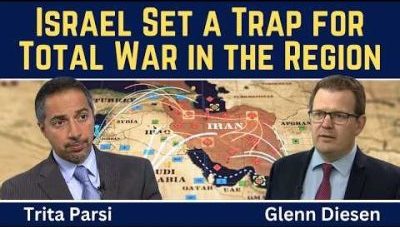
Trita Parsi: Israel Set a Trap for Total War in the Region
or go to
Aletho News Archives – Video-Images
From the Archive
Zionism’s Violent Legacy
By Donald Neff | Washington Report On Middle East Affairs | January 1996
On January 4, 1948, Jewish terrorists drove a truck loaded with explosives into the center of the all Arab city of Jaffa and detonated it, killing 26 and wounding around 100 Palestinian men, women and children.[1] The attack was the work of the Irgun Zvai Leumi – the “National Military Organization,” also known by the Hebrew letters Etzel – the largest Jewish terrorist group in Palestine. The Irgun was headed by Revisionist Zionist Menachem Begin and had been killing and maiming Arabs, Britons and even Jews for the previous ten years in its efforts to establish a Jewish state.
This terror campaign meant that at the core of Revisionist Zionism there existed a philosophical embrace of violence. … continue
Blog Roll
 Aletho News
- Trita Parsi: Israel Set a Trap for Total War in the Region
- Trump’s Iran war is on an Israeli leash
- Saudi oil boss issues global supply warning
- Riyadh Says Its Oil System Is Intact. The Numbers Say Otherwise.
- Trump and Netanyahu Want to “Finish the Job” on Iran
- US ‘one-sided dictation’ not Iran’s beliefs makes rational talks impossible: Baghaei
- Iran’s Next Strike May Not Explode. It Could Shut You Down /Col Doug Macgregor
- Iran: US political targets legitimate if assassinations return
- Iraq shuts key border crossing with Iran under US pressure: Report
- Undersea Internet cables could be targeted in retaliation for attacks on Iran: IRGC deputy chief
- If Americans Knew
- The Israel Lobby’s Changing Fortunes
- AIPAC has become such a political liability that it’s shifting to a more “nimble” approach to buying politicians
- At least 160 Israeli settler attacks in 2 weeks
- Will Gaza’s Ancient Christian Community Disappear Forever?
- Israel’s vision of regional security rests on keeping Arab states weak
- Heidi Levine recounts how Palestinian youths helped save her in settler attack
- DAILY UPDATE: Latest essential news on Palestine, Israel, & region
- Trump’s Intensifying Sabotage of the ICC, for Israel’s Sake
- Israeli military detain US and UK volunteers in West Bank including Democratic NY politician Brad Lander
- Americans at National Conservatism Conference held in Israel this year criticize Israel
- No Tricks Zone
- E-Cars Reduce CO2 Emissions By Only 41% Compared To Internal Combustion Engine Vehicles
- Predictions Made By Renowned Climate Professor Over Past Decades Have Been Proven To Be Poor
- New Study Suggests Large Regions Of The Pacific Ocean Have Been Cooling For The Last 80 Years
- Germany’s Green Energy Debacle: High Energy Costs Force Kahla Porzellan to Close After 182 Years!
- New Study: 50 Years Of The Most Aggressive ‘Net Zero’ Policies Can Only Affect The Global Climate By 0.03°C
- US September “Heat” Was No Record…Many Records Set Decades Ago
- Latest European Green Energy Debacle; Portugal’s Largest Flagship Solar Park Insolvent!
- Green Energy Debacle: German Expert Professor Fritz Vahrenholt Warns Of Severe Economic And Social Consequences
- Two More Paleo Reconstructions Affirm Meters-Higher Sea Levels Across Ireland, Brazil 7000-6000 Years Ago
- New Study: Earth And Venus Surface Warmth Largely Explained By Convection And Lapse Rate, Not CO2 Or Radiation

