Undercover Israeli forces shoot dead Palestinian in Hebron hospital

Ma’an – November 12, 2015
HEBRON – Undercover Israeli forces on Thursday shot dead a Palestinian during a hospital raid in the occupied West Bank city of Hebron, witnesses and hospital staff said.
Abdullah Azzam Shalaldah, 28, was shot several times by forces who raided the surgery unit of al-Ahli hospital in order to detain his cousin, Azzam Ezzat Shalaldah, 20, who was shot by an Israeli settler last month, hospital staff told Ma’an.
Abdullah and another relative were in the hospital visiting Azzam when around 20 undercover Israeli soldiers entered the hospital at around 4:00 a.m., witnesses said.
The forces tied up the relative while Abdullah, who was in the bathroom at the time, entered the room and was shot dead on scene. The undercover forces then retreated from the hospital with Azzam, taking him into custody, witnesses added.
Video footage from security cameras shows a group of around 16 men walking through the corridors of the hospital just before 4 a.m. pushing a wheel chair, when suddenly the man sitting down removes his blanket, stands up, and all the men draw guns and proceed down the hall.
The footage also shows what appears to be an Israeli agent dressed as a Palestinian woman, and other Israeli forces dressed as Palestinian Muslim men, wearing kuffiyeh’s and appearing to have fake beards.
An Israeli army spokesperson was unable to comment on the presence of undercover forces during the raid, while Israeli media reported that the forces arrived in two large vans with someone pretending to be pregnant.
The army spokesperson told Ma’an that a combined force of Israeli army and police members had entered the hospital in order to detain Azzam, when an “additional suspect attacked the forces.” The forces responded with live fire, killing the man, the spokesperson confirmed.
The spokesperson said that the forces detained Azzam on the grounds that he “stabbed an Israeli in the chest in Gush Etzion” on Oct. 25, wounding him severely, adding that “the victim shot him” as he fled the scene.
The spokesperson added that the “Shalaldah family are known Hamas operatives.”
Palestinian security sources told Ma’an on Oct. 25 following the attack that Azzam was shot by an Israeli settler. A spokesperson for Hadassah hospital said at the time that the settler, 58, had received a light “stab” wound to his chest, and had possibly been hit with a stone in his head.
Palestinian witnesses told Ma’an that they believed that the alleged Palestinian attacker had fled the scene unharmed and that Azzam had been working in agricultural fields when he was shot.
Abdullah, from the Hebron-area village of Sair, was the 80th Palestinian to be killed since Oct. 1.
The majority of those killed were shot dead by Israeli forces during alleged, attempted, and actual attacks on Israeli military and civilians.
Ten Israelis have been killed by individual Palestinians during the same time period.
Settler gun training on roof overlooking school: this is how they teach hate
International Solidarity Movement | November 11, 2015
Hebron, Occupied Palestine – This morning, for four hours from 9am to 1pm, a group of Israeli Settlers were training on the rooftop of the illegal settlement building, Yona Menachem Rennert Beit Midrash, on Shuhada street. An instructor taught them how to hold a gun properly and how to adopt the best body position for shooting correctly. The young settlers were all carrying guns and shouted continuously during the exercises, disrupting the children and the teachers of Qurtuba school during their lessons, and also the neighborhood life, like for the Palestinian farmers who were picking olives on their land, near the school.
This kind of settler training, which takes place several times a week in the illegal settlements of Al-Khalil, are part of the Israeli settlement strategy. This is one example of how they are indoctrinating their youth, teaching them to hate Palestinians, and encouraging attacks against them.
Israeli law allows any Israeli who has a firearms license to carry a gun in the street. While the Palestinians have to endure the daily humiliation of being searched at each checkpoint as well as total military control of their daily life in case they might be carrying a knife.
Report: 78% of Palestinian victims were executed
Palestine Information Center – November 11, 2015
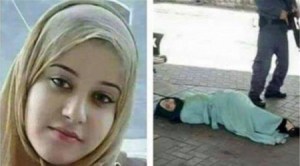 RAMALLAH – The number of Palestinians who have been killed by Israeli gunfire since October 1, has reached 82, Jerusalem Center for Israeli-Palestinian studies revealed. 78% of the reported victims were executed in cold-blood.
The majority of the reported victims were from al-Khalil where 28 youths were executed by Israeli gunfire in the city.
16 children and seven women were also among the victims, the center added.
The Jerusalem Center called on international human rights groups to seriously work on putting an end to the Israeli crimes and violations of international laws.
Palestinians held hostage in their own homes by Israeli forces in al-Khalil (Hebron)
International Solidarity Movement | November 7, 2015
Hebron, Occupied Palestine – Israeli forces violently took over several homes of Palestinian families in occupied al-Khalil (Hebron), trapping the families inside their own homes. Large parts of the city have been declared a ‘closed military zone’, preventing Palestinians from moving, while settlers are freely roaming the streets.
Early in the morning, Israeli soldiers stormed various houses in the Tel Rumeida neighbourhood, each time locking up the residents in one room of their home. The local activist group Youth Against Settlements’ centre was taken by the Israeli army. Tom, a German volunteer states: “the soldiers searched everything and left a chaos on the lower floor; we could hear children’s voices from inside the house, so it must have been settlers inside the house”.
Whereas Tom’s release from the closed military zone was secured through the intervention of his embassy, Italian journalist Francesca Borri and Palestinian activists are still held hostage by the Israeli forces. Israeli settlers from the illegal settlements in Hebron have been seen dancing, chanting ‘death to Arabs’ and celebrating outside another Palestinian family houses misappropriated for military use by the Israeli forces.
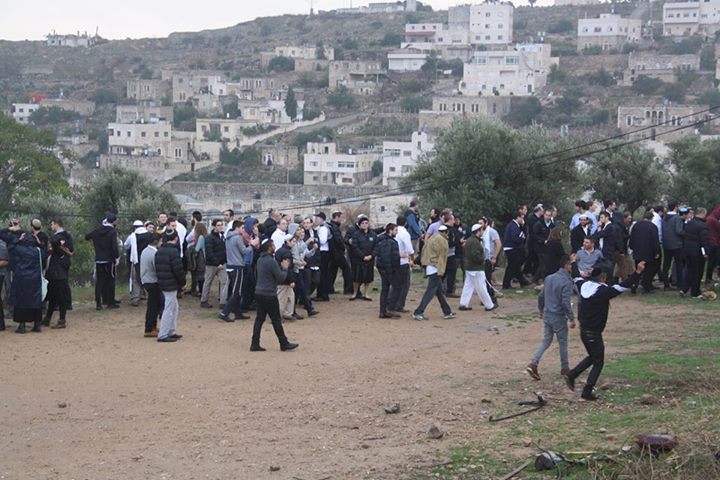
Illegal Israeli settlers celebrating the takeover of Palestinian homes by Israeli forces
Photo credit: Youth Against Settlement
Israeli forces have also declared the neighbourhood around the Ibrahimi mosque a ‘closed military zone’, following almost a week of forced closure for Palestinian shops in the area. The Palestinian market has also been closed by the Israeli forces, denying Palestinians passage. “Soldiers and settlers are making life for the Palestinians intolerable to force them to leave their houses voluntarily. This is a crime under international law. They are targeting activists to silence the truth and stop the truth from reaching the whole world”, explains Tel Rumeida resident Abed Salaymeh. Other international human rights observers have been directly targeted by Israeli forces through arrests, evictions and settler violence.
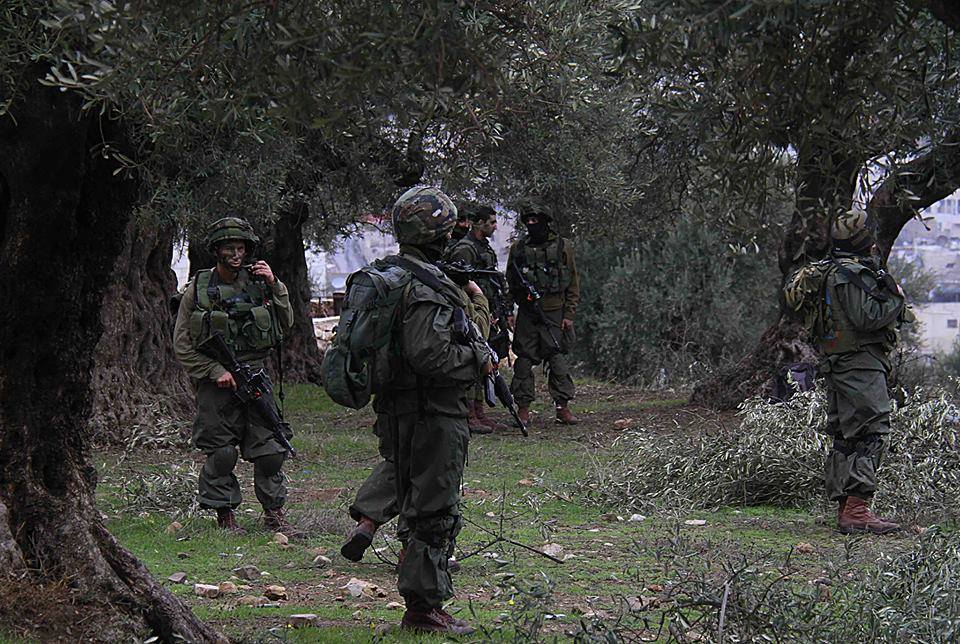
Israeli soldiers in the Tel Rumeida neighbourhood of occupied Hebron Photo credit: Youth Against Settlement
In the last few weeks, Israeli forces have continuously cracked down on Palestinians’ right to freedom of movement by declaring the Tel Rumeida neighbourhood a ‘closed military zone’ and forcing all Palestinian residents to register with the Israeli army to be allowed access. Palestinians are subjected to regular body-checks at gunpoint or denied access to their homes while Israeli settlers, often armed with machine guns, are freely walking the streets. As one Palestinian resident of Tel Rumeida related, “Everyone is too scared to leave their house now.”
A guide to Palestine in the British media
By Amelia Smith | MEMO | November 6, 2015
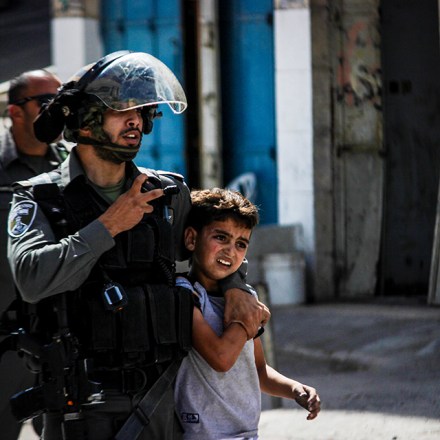 On a trip to Cuba in May, I had to look twice when an elderly man selling newspapers walked past the restaurant I was eating in. On the front page of one was a huge photograph of an Israeli soldier holding a Palestinian boy by the neck, the boy’s face twisted away from the camera in pain.
The photo said it all: an aggressive, well-built soldier wearing a helmet, bulletproof vest and carrying a machine gun was manhandling a child half his size, not more than 10 years old, dressed in jeans and a t-shirt. Why was I so shocked to see such an image published on the front page of a mainstream newspaper? Because this would be a rare moment in the UK.
Over here, the images that are used to represent almost 50 years of military occupation are of Palestinian youth throwing stones, black-and white-kuffiyeh wrapped around their faces. The Cuban picture portrays the Palestinian as the subject of aggression, the UK image as the perpetrator; just like that, our media helps perpetuate the myth that Palestinians are faceless terrorists predisposed to random outbursts of violence and against whom Israel has every right to defend itself.
A closer look at how the British media has covered the recent escalation of violence in Palestine reveals some worrying trends. For the past year right-wing Israeli groups have entered the Haram Al-Sharif compound daily with their armed escorts, often chanting anti-Arab and anti-Palestinian slogans. This came to a head on 13 September when a group of settlers and the Israeli minister of agriculture Uri Ariel, protected by Israeli soldiers, actually entered the Al-Aqsa mosque shooting tear gas, stun grenades and rubber coated steel bullets at worshippers, injuring Palestinians inside and causing damage to the interior of the mosque.
With this in mind take a look at how these confrontations were described in the Telegraph : “Four Israelis and 23 Palestinians have died in 12 days of bloodshed fuelled in part by Muslim anger over increasing Jewish access to the Al-Aqsa mosque compound in Jerusalem.”
And earlier in the year, Reuters reported that: “Those groups [devout Jews and Israeli nationalists] are at the centre of a creeping shift in Jerusalem: After 900 years, Jews are chipping away at Muslims’ exclusive control of the site, the third holiest in Islam. The shift, which has provoked violence in the past, threatens to open a dangerous new front in the Israel-Palestinian conflict, adding religious enmity to a political struggle in the very heart of the disputed city.”
Not only do these reports reduce the provocation by Israeli settlers and soldiers in the Al-Aqsa mosque to Muslim anger and a failure to compromise over increased Jewish access to the compound, but they make the current protests in Palestine sound as though they are merely a religious dispute. Al-Aqsa is the third holiest site in Islam and holds huge religious significance for Muslims across the world, but Palestinians are also protesting against almost 50 years of military occupation under which their land has constantly been taken away from them.
Since 14 September, 72 Palestinians and 11 Israelis have been killed and over 8,000 Palestinians and 134 Israelis have been injured – yet many reports have picked out and highlighted the knife attacks carried out by Palestinians, using phrases such as “Israel’s knife terror”, describing “knife wielding” Palestinians or “anti-Israeli knife attacks”. The following report published on the BBC answered the question of what is happening between the Israelis and the Palestinians in the following manner:
“There has been a spate of stabbings and gun attacks on Israelis by Palestinians since early October, and one apparent revenge stabbing by an Israeli. The attacks, some of which have been fatal, have struck in Jerusalem and in northern and central Israeli cities and towns, and in the occupied West Bank. Israel has tightened security and clashed with rioting Palestinians, leading to deaths on the Palestinian side. There has also been associated violence in the border area inside the Gaza Strip.”
Note that there is not even a mention of what took place at Al-Aqsa mosque on 13 September. The weapons used by Palestinians are specified but Israel’s excessive use of tear gas, stun grenades, live ammunition and rubber bullets is not included.
The term “Palestinian rioters” (other reports have used “Muslim rioters”) has been widely adopted in the British media; the notion of “rioters” is associated with wild disorder and conjures up very different images than the word “protesters”, which suggests a group of people who are simply asking for their rights. Another common term used in the above quotation and frequently in other articles is “clash”, which implies fighting between two equal forces– Israeli soldiers, part of the fourth largest army in the world, storming the Al-Aqsa mosque and firing tear gas and rubber bullets at Palestinians armed with stones, sticks and knives cannot be described as a “clash”.
Deaths on the Palestinian side are a result of rioting Palestinians, and so somehow justified. This headline from Reuters, this one in the Independent and this one in the Daily Mail all report Palestinian deaths but say they took place after Palestinians attacked Israelis with knives. In contrast, this article from the BBC is typical of how Israeli casualties are reported across the media: “Three Israelis killed in Jerusalem bus attacks.” No justifications or explanations of the deaths in sight.
The BBC casually writes about “associated violence” in the Gaza Strip. Between 13 September and the publication of this article, 12 Palestinians in Gaza have been killed, including 26-year-old Nour Rasmi Mohammed Hassan who was five months pregnant and her three year-old daughter, both of whom were at home when an Israeli airstrike hit their house.
Rather than recognise that their excessive use of force and almost 50 years of occupation – under which Palestinian homes have been demolished, children have been arrested, freedom of movement restricted and Gaza placed under siege – may evoke anger in some Palestinians, Israeli authorities, echoed in news reports, would rather blame Palestinian leaders and the use of social media for “inciting” violence, as seen in this headline: “Israel sentences Islamic leader to jail for incitement”; and this one too: “Is social media driving the current violence?”
In this video, Israeli security forces have planted undercover stone throwers among a group of Palestinians who then turn on one of the Palestinians in the same group before ten Israeli soldiers drag him away (note – excessive use of force). In fact there are numerous videos online that highlight Israeli aggression and incitement of violence towards Palestinians but they are not widely published in the mainstream press. This particularly disturbing video filmed on a mobile phone in Aida refugee camp last week captures an Israeli soldier announcing: “You throw stones and we will hit you with gas until you die – the children, the youth, the old people; you will all die. We won’t leave any of you alive.” This video shows an Israeli soldier running over a Palestinian then preventing paramedics helping him; this one shows settlers throwing stones at Palestinian homes in Hebron.
On 16 October, much media attention was focused on the case of a Palestinian man who dressed up in a press jacket and inflicted moderate wounds on an Israeli soldier in Hebron before being shot dead by another soldier. On the same day, four other Palestinians died, including 36-year-old Shawqi Jamal Jaber Ebeid who succumbed to injuries after sustaining a bullet wound to the head a week before whilst working in a stone factory in Gaza. His story is much harder to find and yet it is part of the media’s job to help give a voice to those who have been deliberately silenced – those like Shawqi Ebeid and his family – and to hold politicians and people in authority to account when they do something wrong; even more so if they commit war crimes. If, however, the media is complicit in silencing those same people, then in some cases we may be looking at political propaganda dressed up as news.
Israeli forces kill Palestinian woman, 72, after alleged car attack
Ma’an – November 6, 2015
BETHLEHEM – Israeli forces shot and killed an elderly Palestinian woman after an alleged vehicle attack in Halhul, north of Hebron on Friday.
A spokesperson at the Shaare Zedek Medical Center in Jerusalem told Ma’an that the woman, aged 72, was dead upon arrival at the hospital.
Israeli media reported that the woman attempted to run over Israeli soldiers in Halhul and was shot and seriously wounded by Israeli forces.
The Jerusalem Post said that a “suspicious vehicle” drove at Israeli soldiers, with forces opening fire at the car.
No Israeli injuries were reported.
The victim was identified as Tharwat al-Sharawi, 72. Her husband, Fouad, was killed by Israeli forces during the 1st Intifada.
Two Palestinian youths who were standing at a gas station nearby were injured as Israeli gunfire shattered the car’s windows.
Both youths were taken to the al-Ahli hospital in Hebron to treat their injuries, which were described as moderate.
Al-Sharawi was the 74th Palestinian to be killed since the beginning of last month, the majority of whom were shot dead by Israeli forces during alleged, attempted, and actual attacks on Israeli military and civilians.
On Wednesday, Ibrahim Skafi, 22, was also shot dead by Israeli forces in Halhul after a vehicular attack that left a 20-year-old border policeman seriously injured.
The town of Halhul, north of Hebron city, was sealed by Israeli forces following the attack.
Recent attacks come as Israeli intelligence said earlier this week that a recent lull in violence was unlikely to be long-term, citing high levels of frustration among the Palestinian public.

Tharwat al-Sharawi, 72.
International human rights defenders arrested and evicted while “Hebron is becoming ghettoized”
International Solidarity Movement | November 4, 2015
Hebron, Occupied Palestine – Two international human rights defenders were arrested in Hebron (al-Khalil) yesterday morning, November 3rd, while six others were ordered to leave an apartment in the H2 neighbourhood of Tel Rumeida by threat of arrest.
The German and American nationals were arrested at 7.50am while monitoring checkpoint 56 at the entrance of Shuhada Street, after being seemingly arbitrarily denied access to checkpoint 55 further down the street. They were arrested while peacefully observing the checkpoint on allegations of ‘disturbing soldiers’ and being in a closed military zone after a soldier at the checkpoint made a complaint to officers in a passing police vehicle.
The internationals were denied their legal right to communicate with their embassies, and were only given water to drink at the police station after repeated requests. ‘We were scared about what was going to happen, but we were still so much better off than the Palestinian we heard being beaten by Israeli forces in the police station’ one of the women announced. They were released at 4.30pm, on agreeing to sign conditions barring them from Hebron for one week. Immediately before being released from the police station, the investigating officer actually admitted that there was ‘no evidence’ against them, but they were still being punished for the soldiers allegations.
Several hours later, other members of the team were prevented from passing through Checkpoint 56 which divides Tel Rumeida from the H1 area of Hebron, which is under full Palestinian authority. As of Saturday, 31st of October, when Tel Rumeida was declared a ‘closed military zone’ for 24 hours, both internationals’ and Palestinian movement through the area has been severely restricted. Residents were ordered to register their ID’s or risk being prevented from passing the checkpoints which intersect the entire district.
While official documentation of the zoning of Tel Rumeida has been conspicuously inconsistent recently, the activists were shocked this afternoon when their passports were confiscated and they were confronted with an order to leave the closed military zone which encapsulates their apartment. Israeli forces demanded that they immediately sign an absent legal contract declaring their residency in the area, or they would be forcibly removed and deported.
Checkpoint 55 is frequented by students from several school groups, who pass it on route to and from schools which abut the Tel Rumeida illegal settlement. It was blocked for passage last Sunday in what soldiers described as “new measures against terrorism.” For years now international agencies have been monitoring the impact of the occupation on the schoolchildren of Hebron however this work has been severely restricted in recent weeks, amid mounting tensions in the district.
A volunteer with the International Solidarity Movement, a school teacher from Australia known as Phoebe, stated: “Will they never be satisfied? In the past month, Israeli forces have blatantly disregarded international law. They have performed extrajudicial executions of Palestinians in front of eyewitnesses with complete impunity.” She added: “We have been physically attacked on a daily basis by settlers in front of soldiers and police and then been ordered to leave, by threat of arrest for provoking them by our presence. We have been intimidated, harassed, abused, detained, and now this: arrest for our monitoring of human rights abuses on children and eviction for our presence in a fraught neighbourhood. Our presence is lawful and we believe more essential than ever.”
However, the internationals have stated their greatest concerns remain for the Palestinian residents of Tel Rumeida and the disturbing intensification of both settler violence and the physical manifestations of the occupation, including an expansion of infrastructure used to limit movement on the streets. Echoing concerns by local Palestinian residents, a Dutch volunteer stated that such measures have created an alarming sense that, “Hebron is being ghettoized.” He added, “if the international community does not react to this now then the illegal settlement will surely take over all of Tel Rumeida…This is what we are most afraid of.”
The internationals, from Holland, Italy, Britain, Germany, Unites States, Poland, France and Australia have vowed to return to their work of protective presence, monitoring and journalism in the district and consider this to be an appalling reflection on Israel’s supposedly democratic ideals.
Israeli forces storm, shut down Hebron radio station
Ma’an – November 3, 2015
HEBRON – Israeli forces on Tuesday morning stormed the offices of a Palestinian radio station in Hebron, where they destroyed equipment and ordered the station’s closure, in the latest violation of press freedoms in the occupied Palestinian territory.
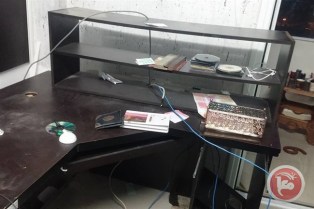 Manbar al-Hurriyya (Freedom Tribune) radio station, which is reportedly affiliated with Fatah, wrote on its website that Israeli forces had destroyed equipment inside the offices and confiscated other equipment.
The soldiers then issued a military order notifying employees that the station was to be closed and its broadcast banned.
The Israeli army said in a statement that the station was shut down “as part of the ongoing battle against incitement.”
It continued: “Forces confiscated broadcasting equipment in order to prevent the incitement which has caused a flare of violence in the region over recent weeks.”
It accused the radio station of encouraging “stabbing attacks” and “violent riots,” and reporting “false and malicious claims of security forces executing and kidnapping Palestinians in order to provoke violence.”
The statement said that Israeli forces had shut down the station twice before, in 2002 and again in 2008.
The incident comes a day after a Palestinian press freedoms watchdog condemned more than 450 violations of media freedoms since the beginning of the year.
The Palestinian Center for Development and Media Freedoms, known as MADA, said in a statement that it “condemns the ongoing violence against Palestinian journalists by the Israeli Occupying Forces,” including more than 100 violations in October alone.
It said that “continued impunity with lack of accountability” encouraged Israeli forces “to commit more crimes and assaults.”
The watchdog said that while press violations had not reached last year’s proportions, when 17 Palestinian journalists were killed by Israeli forces in Gaza, violations had “witnessed an enormous escalation this year.”
The group called for accountability, but also for “preventing censorship and persecution of journalists and activists regarding their opinions and comments on social media.”
Israeli forces redouble brutal efforts to curtail and isolate Palestinians’ daily lives

International Solidarity Movement | November 2, 2015
Hebron, Occupied Palestine – On Sunday, 1st November 2015, Israeli forces prevented movement of Palestinians in various areas in al-Khalil (Hebron) that have previously been declared a ‘closed military zone’. Violence against school-children and teachers has seen a sharp increase. International observers documenting and reporting on the every-day restrictions and crimes of the Israeli forces are increasingly targeted by the Israeli forces trying to silence any reporting.
Salaymeh checkpoint
In the morning, students were allowed to pass through the checkpoint without any major problems. Just three days ago, Israeli forces extrajudicially executed a Palestinian youth who was lying on the ground after already being shot and seriously injured by Israeli forces, from a close distance, at this checkpoint. Three Palestinian adults were denied passage through the checkpoint by the Israeli forces, who refused to give any reason for turning them back. When international observers wanted to pass through the checkpoint after documenting the body-search of a Palestinian man, they were stopped by border police that denied them passage through the checkpoint. When asked for a reason, Israeli forces refused to give any reason, but forced them to move away from the checkpoint.
In the afternoon, when international activists walked towards the Salaymeh checkpoint to secure the pupils and teachers a safe journey home from school, the border police immediately told the internationals: “If you go through, you will never be able to come back”. When asked why, they just responded “those are the orders”. The internationals chose not to go through the check point but to monitor it from the inside, standing ten meters from the checkpoint as is the limit for how far authorities can require that observers stand. As the law requires that any orders regarding ‘closed military zones’ be displayed with dates and maps of affected areas, the activists asked to see this order. Immediately, the officer standing closest to them yelled to the other police in Hebrew to “bring pepper spray and handcuffs”, so the activists were made to move back to a place where the check point was still within sight. After around ten minutes a car with two male settlers stopped at the check point and talked with the soldiers. After that the soldiers approached the activists telling them to move further back out of sight of the checkpoint. The activists were forced to leave due to fear of violence from the police.
Queitun checkpoint
 At Queitun checkpoint this morning, approximately one hundred fifty children from several local schools remained outside after the start of school. Israeli Border police began shooting tear-gas grenades around 7:15 am, and very quickly shot thirteen rounds of tear-gas via grenades and canisters directly at dense clusters of pre-pubescent boys. Faces everywhere were red, swollen and tear-streaked.
Upon time to return home, four international human rights observers were denied passage through two checkpoints by Israeli forces first without explanation, and then on grounds that they had cameras in their possession, a restriction which is illegal by Israeli and international law.
In the afternoon, international observers were again denied their legal right to pass through the checkpoint without any reason.
Qurtuba school
This noon, children and teachers were prevented to return home by Shuada street by soldiers explaining the ‘closed military zone’ was ‘for security reasons’ and ‘a new measures against terrorism’. They stayed on the stairs, blocked by the army for nearly one hour. In the same time, four settlers including Anat Cohen and one who filmed with his phone convinced the soldiers to push the children back. Because of the children and teachers refusing to leave – as they were not allowed to proceed on the stairs – soldiers called the police. After a long talk with the four settlers who didn’t want to leave the stairs and insulted the director and the children, the soldiers and the police finally authorized the children to go home and walk through Shuada Street in small groups of children and teachers. Israeli forces at the checkpoint threatened the children to walk faster, pointing their loaded guns at them.
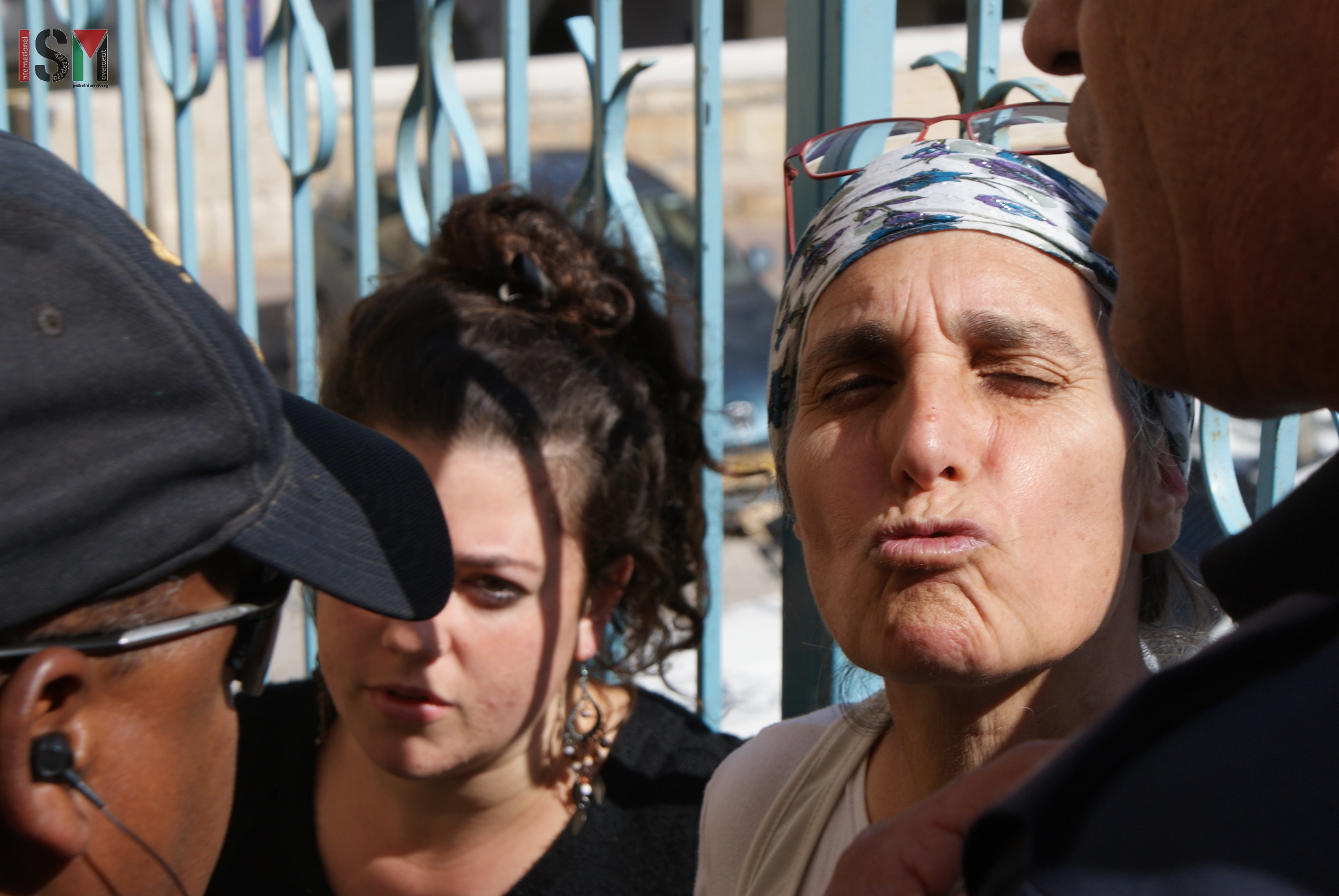
Settler Anat Cohen making fun of school-children denied passage on their way home

School-children blocked on the stairs by Israeli forces
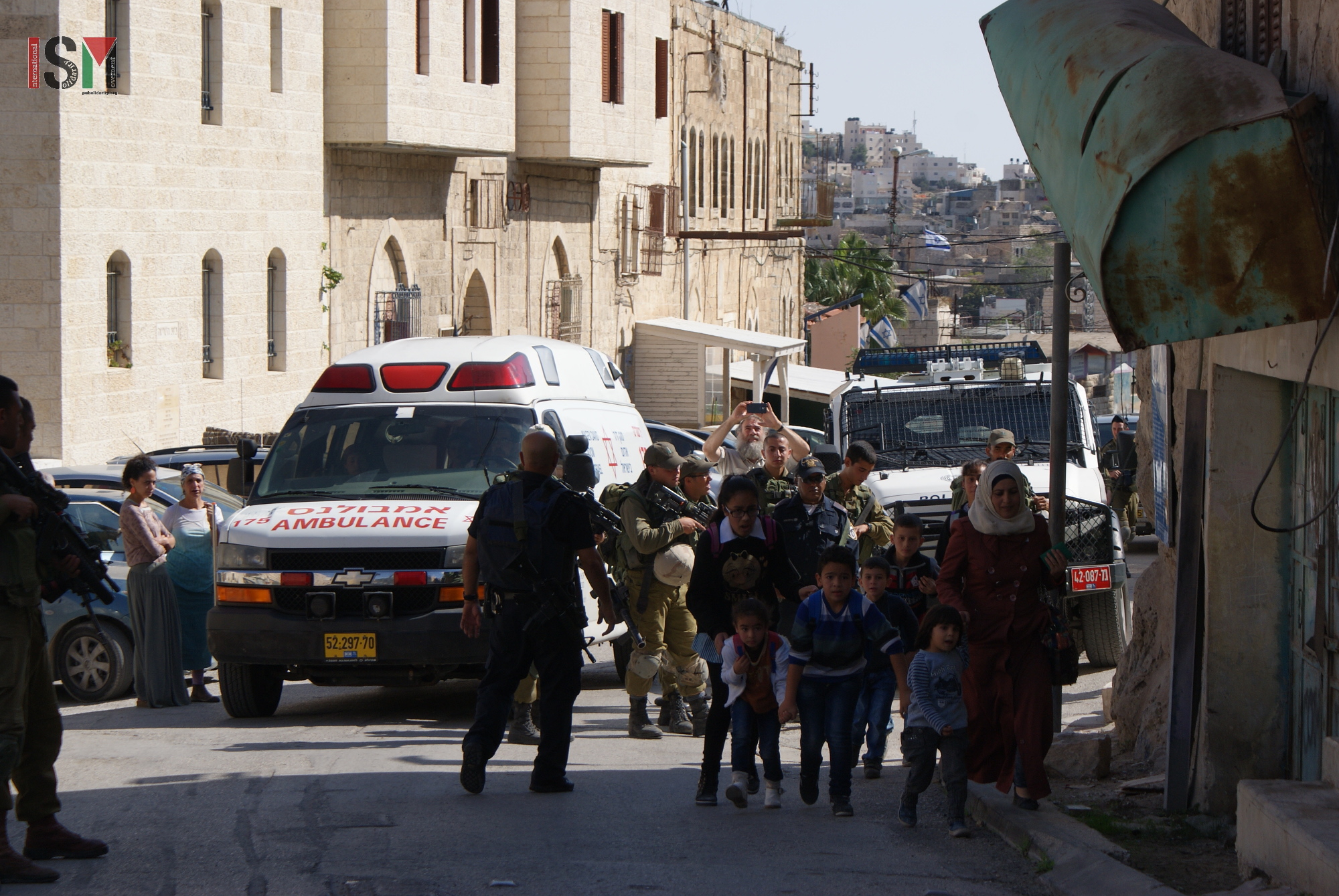
School-children finally allowed to go home after more than an hour of wait
Whereas in the morning, an actual order for a ‘closed military zone’ was still in place, the order was only valid from Saturday morning 8 am till Sunday morning 8am and thus not valid for the end of the school day.
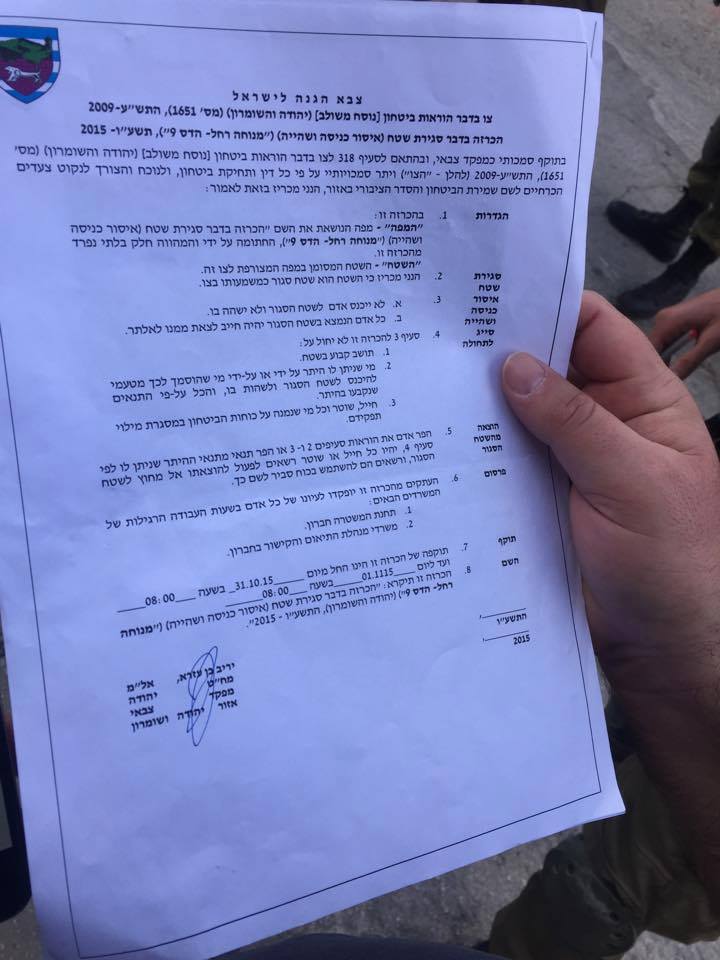
‘Closed military zone’ order Photo credit: Youth Against Settlements
The order for a closed military zone is a clear infringement on Palestinians freedom of movement and clearly only geared towards exactly this aim. Whereas Palestinians all over the areas declared ‘closed’ are forced to undergo constant body-searches, detentions, ID- and bag-searches and are randomly denied access on the soldiers whims, settlers from the illegal settlements within al-Khalil (Hebron) are allowed to freely roam the streets without being stopped at any time. International observers documenting and reporting are facing yet another instance in which Israeli authorities are making determined strides to completely rid Al-Khalil of any witnesses for the myriad and worsening ways in which they violate the basic rights of Palestinians on a daily basis.
All these measures clearly illustrate the real aim of the latest escalations in violence geared towards instilling fear in the Palestinian residents and ultimately force them to leave the area.
Israeli forces increase harassment of Palestinian school-children in al-Khalil (Hebron)
International Solidarity Movement | November 1, 2015
Hebron, Occupied Palestine – This morning at Qurtuba school in al-Khalil (Hebron), Israeli soldiers harassed school-children, teachers and adults trying to pass the nearby checkpoint.
The stairs leading to Qurtuba school, the scene of a heinous murder of a Palestinian youth by Israeli forces three days ago, are directly opposite a checkpoint dividing segregated Shuhada Street into a small strip where Palestinian residents are allowed to walk and the former main Palestinian market now completely closed for Palestinians and only allowed for settlers. The school has, due to its proximity to the illegal settlement of Beit Hadassah been a flashpoint of settler attacks and violence against Palestinians and internationals.
As teachers, school-children and parents are equally scared with violence rising and 19 Palestinian youth shot to death in the last two weeks, all the school-children are now gathering in one place in order to walk to school together. Parents living there were watching out for the children, telling them to move away from the street as soon as they could hear a car in the distance, afraid settlers would run them over if the children didn’t move fast enough. This has happened in the past and settlers continuously try to hit children with their car.
Soldiers at the checkpoint denied one Palestinian adult around 30 years old to walk down the stairs. The soldiers stopped him and didn’t even ask for his ID, but ordered him to go back up the stairs and walk around. A group of female teachers and girls were ordered to stop in front of the stairs and made to wait for about 5 minutes. Again, soldiers did not demand any ID or to check bags, and finally allowed the group to pass and go to school after about five minutes.
All of this comes at a time, where the whole neighbourhood has been declared a ‘closed military zone’ by the Israeli forces, further infringing on the already restricted movement of Palestinians – while settlers from the illegal settlements are allowed to roam the streets freely.
This illustrates the daily harassment Palestinian children and teachers have to face on their way to and from school – a clear infringement on the basic right to education. But this does not only ring true for school-time, harassment and intimidation by soldiers and settlers are increasingly becoming an integral part of day to day life for Palestinians.
Protecting Israel, Trashing Hebron: More Spin from The NY Times
By Barbara Erickson | TimesWarp | October 30, 2015
Today in The New York Times we have a look at Hebron, a blood-drenched city in the West Bank, a community besieged by violent settlers and trigger-happy Israeli forces. In this month alone, some 20 of its Palestinian residents have died at the hands of soldiers and police, their deaths sometimes caught on video that belies official accounts.
But this grim reality is not the focus in the Times. The article by Diaa Hadid and Rami Nazzal strips the full context of the occupation from Hebron and presents it, not as a city struggling to survive under crushing oppression, but as a hotbed of Palestinian radicals, a stronghold of the oft-demonized Hamas.
The story takes us to the funeral of Dania Irsheid (identified as Dania al-Husseini in the Times), a schoolgirl shot at a checkpoint on Sunday. It mentions other deaths in recent days, but it completely avoids the eyewitness accounts and human rights organization findings that show many of these deaths were extrajudicial executions.
Israel has callously refused to release the bodies of most of the 20 victims, and we read that residents feel “particular outrage” over the death of Dania and another girl, Bayan Oseili, 16, killed a week before, both accused of stabbing attacks. The story deftly avoids another compelling reason for this outrage: the fact that both obviously posed no threat and could have been arrested and that video footage in the case of Bayan and eyewitness accounts in the case of Irsheid contradict police claims.
Hadid and Nazzal, however, have nothing to say about these contradictions and write that residents are angry because the refusal to release the bodies is an “affront to the Muslim tradition of immediate burial and a defilement of their honor.”
This fits neatly into the Times’ attempt to spin the oppression in Hebron into more blaming of the victims, who are described as Hamas followers and culturally conservative. The article opens with a quote from a Hebron resident who applauds knife attacks on Israeli soldiers, and it closes with the same speaker who “was pleased to see the surge in violence turn to Hebron.”
Missing entirely are any comments from nonviolent Hebron activists and the accounts of eyewitnesses who say Israeli forces have planted knives near the bodies of victims. The story also omits some chilling reports of deliberate executions and the statements of human rights groups that raise the charge of extrajudicial killings.
One of the most disturbing accounts describes the death of a young man, Islam Ibeidu, 23, on Wednesday near the Kirya Arba settlement. The news outlet Middle East Eye noted, “According to the quoted eyewitness, Ibeidu was searched by Israeli soldiers by the checkpoint and released, before orders were given to execute him.”
One witness tweeted: “I saw everything. I saw soldiers loading the guns. He had his arms up and was shaking, he was unarmed and they just shot him.” A second tweet continues, “eyewitness overheard police woman say ‘he looks nice, shoot him’ before he was shot to death by m16 from 2 meters away.”
The accounts of other deaths are equally disturbing (see TimesWarp 10-27-15), but the Times story includes none of them. It states that the victims this month died “in demonstrations and attacks,” taking the official Israeli line as fact.
On the other hand, the article refers frequently to Hamas in an effort to tie the group to the violence in Hebron. It makes no mention of several non-violent groups active in the city, such as Youth Against Settlements, Christian Peacemaker Teams, the International Solidarity Movement and the UN mandated Temporary International Presence in Hebron.
All of these organizations are avowedly non-violent; they observe and document violence against Palestinians. Yet another group, Breaking the Silence, was founded by Israeli soldiers who had served in Hebron and now collect and document Israeli army abuses. None of these organizations has a voice in the Times story.
Much of Hebron’s agony dates back to March, 1994, when an American-born settler, Baruch Goldstein, massacred 29 worshippers in the Ibahimi Mosque. Hadid mentions this as part of the historical record but omits the brutal Israeli crackdown that followed.
Rather than act to protect Palestinians after this attack, Israeli security forces went on to kill some 20 more Hebron residents during protests and to lock them down under a round-the-clock curfew. The government also closed once bustling Shuhada Street to all Palestinian traffic, welded shut Palestinian shops, turned the street over to settlers and divided the mosque into Jewish and Muslim sections.
This finds no clarification in the Times story, which refers vaguely to a “volatile mix of Palestinians and Jewish settlers.” Instead, the newspaper has adopted the official playbook of the occupiers: Stick to the narrative of Israeli victimhood, ignore countervailing fact, and whenever possible blame Hamas.
Featured Video
US JET SHOT DOWN OVER IRAN /Lt Col Daniel Davis & Nima Alkhorshid
or go to
Aletho News Archives – Video-Images
From the Archives
Experts Warned For Years That A War With Iran Would Happen This Way
By Caitlin Johnstone | April 3, 2026
… It’s so wild how we keep seeing reports that Iran’s retaliation caught the US off guard. For all the years I’ve been paying attention to this issue I’ve been reading experts and analysts saying if the US attacks Iran, Iran can close the Strait of Hormuz and strike US bases and the energy infrastructure of US allies in the region.
A few examples:
A 2006 Oxford Research Group paper titled “Iran: Consequences of a War” warned that Iran has numerous options at its disposal in the event of a US attack, and that the “most significant of these would be any possible retaliatory Iranian action to affect the transport of oil and liquefied natural gas through the Straits of Hormuz,” adding that stopping Iran from doing this “would be difficult if not impossible to achieve, leading to a fear of attack which alone would have a formidable impact on oil markets.”
A 2007 Cato Institute paper titled “The Iraq War and Iranian Power” warns that “Iran possesses the largest ballistic-missile inventory in the Persian Gulf — missiles which can reach Israel, Saudi Arabia and US military bases in Iraq,” and that “experts argue Iran could also use the ’oil weapon’: blocking the 34km-wide Strait of Hormuz and conducting submarine and anti-ship missile attacks against ports and oil facilities in Saudi Arabia, Kuwait and other Gulf Cooperation Council states.”
A 2012 NPR article titled “Can Iran Close The World’s Most Important Oil Route?” features then-chairman of the Joint Chiefs of Staff acknowledging that Iran absolutely can block the Strait of Hormuz, saying Tehran has “invested in capabilities” which specifically enable them to do so.
A paper from the Columbia Center on Global Energy Policy and the Center for a New American Security titled “IN DIRE STRAITS? IMPLICATIONS OF US-IRAN TENSIONS FOR THE GLOBAL OIL MARKET” warns of a potential scenario “that includes damage to Gulf oil infrastructure and a temporary closure of the Strait of Hormuz.”
These weren’t a bunch of keffiyeh-wearing peaceniks making these assessments, they were deeply entrenched swamp monsters entirely loyal to the US empire. They opposed war with Iran not because it would be an evil act of unforgivable mass murder, but because it would be bad for the imperial power structure. … Full article
Blog Roll
 Aletho News
- US dismantling international law in its war against Iran while claiming ‘false’ victory: Legal scholar
- One martyr, 5 injuries in US attack on Iraqi border crossing with Iran
- ‘This war is Israel’s war’: World facing ‘security breakdown’, says Qalibaf
- IRGC decries attack on US embassy in Riyadh, says executed by ‘Israel’
- Iran blasts EU hypocrisy as EU invokes international law over Hormuz
- There is no military solution to Strait of Hormuz
- NATO’s structural collapse – the outcome of deviation from reality
- Poll finds world views China better than US
- One Of America’s Leading Neo-Cons Has Turned Against The Iran War And Israel
- Attack in the Bosphorus exposes NATO weaknesses and tensions among allies
- If Americans Knew
- US loses planes over Iran, Israel downgrades Lebanon war goals – Daily Update
- Israel Is Blocking Palestinians from Easter at Church Where Jesus Resurrected
- Plot to assassinate Palestinian activist follows harassment campaign promoted by Zionist groups and elected officials
- Prominent New York synagogue hosts presentation on why U.S. Jews should support the ethnic cleansing of Gaza
- Tapper vs. Piker: Is the CNN Anchor Auditioning for David Ellison?
- Shouldn’t Democrats Be Able to Condemn Genocide?
- Israel-US kill negotiators, destroy civilian structures, but Iran’s military capabilities still largely intact – Daily Update
- ‘War crime’: Global condemnation as Israeli ministers celebrate death penalty law targeting Palestinian prisoners
- 7 Ways Israel Is Turning Lebanon Into Gaza
- World’s Leading Football Bodies Under Fire Over Israel Policies
- No Tricks Zone
- New Study Reports A 60% Slowdown In Greenland’s Ice Loss Rate In The Last Decade
- Low Intensity Tornado Wrecks Major Solar Farm, Creating A Potential Toxic Dump
- New Study Finds Warming Saves Lives…Cold Temperatures 12 Times More Deadly Than Excess Heat
- German Science Blog Accuses PIK Climate Institute Of Hallucinating Climate Tipping Points
- Devastating Assessment Of Comirnaty Vaccine By Former Senior Pfizer Europe Toxicologist
- New Study: CO2 Is ‘Effectively Negligible’ As An Explanatory Climate Change Factor Since 2000
- Former Pfizer Toxicologist Dr. Helmut Sterz Tells Bundestag Hearing Pfizer Vaccine Should Have Never Been Approved
- Energy Expert: Germany’s Nuclear Phaseout Was A “500 Billion Euro Mistake”
- New Research: South Australia’s Mid-Holocene Sea Surface Temperatures Were 4°C Warmer Than Today
- Storing Green Energy To Last Germany 10 Days Would Require A 60-Million Tonne Battery
 Aletho News