Aletho News

ΑΛΗΘΩΣ

Hezbollah Stands By Palestine by Word and Deed, Hits Israeli Posts in Shebaa Farms

Al-Manar | October 8, 2023

Hezbollah announced on Sunday it had targeted three Israeli posts in occupied Shebaa Farms, in a clear message of solidarity with Palestinian people and resistance.

In a statement, Hezbollah Media Relations declared that Units of Martyred Commander Imad Mughniyeh hit three Israeli posts in occupied Shebaa Farms.

“On the path to liberate the remaining part of our occupied Lebanese land and in solidarity with the victorious Palestinian resistance and the steadfast Palestinian people, the groups of the martyr commander Hajj Imad Moghniyeh in the Islamic Resistance carried out an attack this Sunday, October 08, 2023, targeting 3 Zionist occupation sites in the occupied Lebanese Shebaa Farms region,” the statement, carried by Al-Manar, read.

It named the three sites: Radar, Zibdin and Ruweissat Al-Alam. The resistance fighters used a significant number of artillery shells and guided missiles, resulting in direct hits on these sites, the statement added.

Al-Manar reporter in south Lebanon Ali Shoeib reported the shelling of the Israeli post.

Earlier on Saturday, Hezbollah lauded the heroic Operation Al-Aqsa Flood, stressing that the resistance leaderships in Lebanon and Palestine have been in full coordination.

October 8, 2023 Posted by | Illegal Occupation, Solidarity and Activism | , , | Leave a comment

Iran Hails Resistance Allies’ Push to Reshape World Order, Weaken US ‘Hegemony’

People raise Palestinian, Lebanese and  Hezbollah flags during a rally in solidarity with the Palestinians, on the outskirts of the southern Lebanese village of Kfarkila, near a United Nations Interim Force in Lebanon (UNIFIL) armoured personnel carrier.
By Ilya Tsukanov – Sputnik – 02.09.2023

Iran joined the Shanghai Cooperation Organization and BRICS this summer, and has been working to expand bilateral cooperation with both Russia and China. Tehran is also the leader of an informal alliance of regional countries, including Syria, Lebanese militant group Hezbollah, and Iraqi Shia militias, known as the Axis of Resistance.

Iran’s foreign minister has praised the struggle in the Middle East to resist and undermine US dominance and create a new international order.

“The international system is undergoing fundamental changes and we are witnessing new actors in the international arena,” Foreign Minister Hossein Amir-Abdollahian said in a meeting with political groups in Beirut, Lebanon on Friday.

“The US is trying to maintain its hegemony, but the region and the world understand very well that America cannot exercise its hegemony, and on the contrary, the Resistance is powerful and can achieve its will powerfully,” Amir-Abdollahian added.

Today, the Iranian top diplomat said, “the position of the Resistance in the region cannot be ignored,” and is “being noticed by the West,” including as far as the Israeli-Palestinian crisis is concerned.

Separately, in talks with his Lebanese counterpart Abdallah Bou Habib, Amir-Abdollahian stressed that “the US sanctions regime cannot hinder the economic relations between Iran and Lebanon,” just as “it has failed to impact Iran’s cooperation with Iraq, Turkiye, Pakistan, Central Asia and the Caucasus.”

Iran is ready to provide further assistance to Lebanon to help Beirut resolve its long-running fuel and electricity crisis, he said. This includes readiness to build a network of power stations with a capacity of 2,000 megawatts.

Bou Habib praised Iran for its support for Lebanon in the nation’s time of crisis, and expressed readiness to further expand cooperation.

Lebanon’s political and economic crisis, which began in 2019, has left the country in economic ruin and run by a caretaker government. The post of president has been vacant since last October, when President Michel Aoun resigned at the end of his term.

Amir-Abdollahian also met with Hassan Nasrallah, secretary-general of the powerful Lebanese political party and militant group Hezbollah, which has forged close ties with Iran both in Lebanon and in Syria, where Hezbollah fighters backed by Revolutionary Guard Quds Force advisors have fought jihadist extremists for over a decade.

In the talks with Bou Habib, Amir-Abdollahian reiterated Iran’s long-stated position that “any normalization of relations with the Zionist regime will be detrimental to the entire region.” Iran will “continue to support and assist the Axis of Resistance, to preserve the Lebanese national interest, in the face of Israeli attacks and ambitions that threaten this entire region,” he said.

The Iranian diplomat also commented on the “positive developments” in relations between Iran and Saudi Arabia following the surprise normalization of relations earlier this year, saying that these processes “will have a positive impact on the entire region,” including for Lebanon.

At a press conference at the end of his visit, Amir-Abdollahian also rejected allegations by France – the European power which once controlled Lebanon as a colony, of meddling in Lebanon’s affairs.

“I advise Mr. Macron to focus on the situation inside France instead of paying attention to questions of interference in other countries,” he said. “Iran has always played the most constructive role in helping Lebanon,” he added.

Earlier in the week, the French president told a conference of French ambassadors that stopping Iranian “interference” was a “key element” in resolving Lebanon’s political standoff.

Amir-Abdollahian’s Beirut visit was preceded by a trip to Damascus on Thursday for talks with President Bashar Assad and other Syrian officials. Amir-Abdollahian slammed the illegal presence of US troops in eastern Syria, and blasted Israel for its ongoing campaign of airstrikes against the war-torn country.

Known to jealously guard its security and foreign policy independence, and the defense of its interests even against far larger and more powerful foes, including the US, Iran has dramatically ramped up cooperation with Russia and China in recent years as part of ongoing processes related to Eurasian integration. Iran joined the Shanghai Cooperation Organization in July, and acceded to the BRICS bloc late last month. Last week, a senior Islamic Revolutionary Guard Corps commander and advisor to Supreme Leader Ayatollah Ali Khamenei said that Iran sees a maritime-oriented economy and cooperation with Russia and China as keys to countering the impact of US sanctions.

September 2, 2023 Posted by | Aletho News | , , , , , , , , | Leave a comment

Israel threatens to strike ‘every meter’ of Lebanon

The Cradle | August 8, 2023

Israel’s Defense Minister, Yoav Gallant, said on 8 August in a message addressed to both Hezbollah and the Lebanese government, that Tel Aviv is prepared to strike “every meter” of the country. 

“Do not make a mistake, we do not want war, but we are ready to defend our citizens, our soldiers, and our sovereignty,” the minister said. 

“We will not hesitate to employ all of our power and to attack every meter of Hezbollah and of Lebanon … and return Lebanon to the stone age,” he added.

Gallant said that Hezbollah “might mistakenly think that they can test Israel” due to the deep internal crisis it is facing, and the vow made by many of its army reservists to boycott military service protests against the government’s judicial reform program. 

He affirmed, however, that Israel would not be divided in the event that Hezbollah threatened it with war. 

Gallant’s threats came just hours after the Lebanese army mobilized its naval forces in response to Israeli boats that violated Lebanese sovereignty on 8 August. 

Al-Mayadeen news outlet observed the Israeli boats entering Lebanon’s territorial waters via a camera located in the Naqoura area while the Lebanese army was escorting a tour of dozens of journalists to the southern borders.

Recently, there has been a series of Lebanese responses to ongoing Israeli violations of the country’s sovereignty. These violations include excavations on Lebanon’s side of the border, which serve as the basis for an Israeli plan to build a defensive wall.

Most recently, in early July, Israel annexed the northernmost part of the already occupied southern border village of Ghajar – which is internationally recognized Lebanese territory. The move drew widespread condemnation and has exacerbated the existing tensions on the border.

As a result of constant Israeli incursions, the Lebanese and Israeli militaries came close to facing off on the border last month. The tensions also relate to an outpost erected by Hezbollah earlier this year in the Israeli-occupied Shebaa Farms area – which has been under occupation since 1967. 

Despite Israeli threats, complaints to the UN, and pressure from Washington, the Hezbollah outpost remains in place.

Last week, Israeli National Security Adviser Tzachi Hanegbi said that there is a “weakening in the policy of self-restraint” by Hezbollah on the border. 

August 8, 2023 Posted by | Ethnic Cleansing, Racism, Zionism, Militarism | , , , | Leave a comment

How anti-Muslim bigotry led to the wrongful conviction of Mohammed Hamoud

A full video of Mohammed Yousef Hammoud’s interview can be found at the end of this article.
By Esteban Carrillo Lopez | The Cradle | July 17, 2023

In 2000, Mohammed Yousef Hamoud – one of the most wanted ‘terrorists’ in the United States – was arrested while living in Charlotte, North Carolina, based on allegations that he sent a $3,500 check to the Lebanese resistance group Hezbollah, an allegation for which no actual evidence was presented.

Based on testimony from a single questionable witness, an American prosecutor accused Hamoud of leading a Hezbollah cell in Charlotte, and declared him to be one of the most dangerous ‘terrorists’ in the world.

The prosecutor, Ken Bell, who acknowledged that a successful prosecution of Hamoud would be the “case of a lifetime” for advancing his own career, successfully garnered a sentence of 155 years in prison for Hamoud. The jury voted to convict Hamoud amid the anti-Muslim bigotry and paranoia that swept through the United States following the September 11 attacks.

Years later, the sentence was reduced to 30 years, and Hamoud was finally released 3 years early and allowed to return to his family and friends in Lebanon.

Now 49, Hamoud was forced to spend more than half his life in prison without cause. But defying all odds, he obtained degrees in business management and psychology while also studying law to provide advice to his fellow inmates.

Below is an interview conducted by The Cradle with Mohammed Yousef Hamoud, after he was released from a US maximum security prison two months ago from serving a 27-year sentence on charges of providing “material support” to a terrorist organization. The interview took place at his brother’s home in the southern Lebanese town of Srebbine, originally Hamoud’s hometown.

The Cradle: As you were growing up in Lebanon, what were your political views?

Hamoud: Just like everyone growing up here, I was with the resistance and against occupation. I was pro-liberation and against poverty, and mainly the people with those views were Hezbollah, so I was supporting Hezbollah basically.

The Cradle: You said in a previous interview that you were the first Muslim to be convicted in the United States following the September 11 attacks. Do you feel this influenced the sentence that was issued against you?

Hamoud: Absolutely. I was the first Muslim after September 11 to go to trial. And I was the first Muslim in United States history to be tried under the law [passed in 1996] regarding providing material support [to a terrorist group]. Prior to me there was no blueprint on how to prosecute someone under that law. I was the first one, and the judge acknowledged those two things in his decision when he released me.

The Cradle: Of all the charges leveled against you, do you maintain your innocence against all of them?

Hamoud: No, actually. I did admit in court that from 1996 to 1998, I did sell cigarettes, and I did not pay the federal taxes during those years. And I did not fight those charges in court. I said am guilty of those, but as I said, the federal government acknowledged if it wasn’t for [the charges regarding] Hezbollah, I wouldn’t be there. The government was misinformed apparently, because [even though] the prosecutor had given a press conference announcing that he had arrested a Hezbollah cell in North Carolina, and I was its leader, years later, he did not find a single piece of evidence to show I sent money to Hezbollah.

But he wasn’t about to back off and lose his career because they spent millions of dollars [on prosecuting me]. So, they got this guy named Said Harb [to testify against me]. This guy had a lot of incentive to lie. He was facing decades of time in prison, and the government knew he was desperate to bring his family to the United States. He spent tens of thousands of dollars to bring his family and his dream was about to be fulfilled. So when they gave him that offer to testify against me, Said was the happiest person on earth, you know? So, he was granted his freedom, and he brought 12 members of his family to the United States using American taxpayers’ money.

The Cradle: Did you know Said Harb before he testified against you?

Hamoud: I did. He was one of the [Lebanese] guys who used to live in Charlotte, and from time to time, we used to meet and play soccer together, but he was not my good friend, which is how the government portrayed him. In fact, from 1999 to 2000, as he also admitted to the FBI, he said he was not associating with us. Said’s life went in a completely different direction than my life, and we barely saw each other. I was building my gas station and going to college, and he was doing whatever he was doing for his home, so from 1998 to 1999, we did not see each other much.

The Cradle: Do you feel that where you are from, and your religion, was a factor during your trial?

Hamoud: Definitely. At the time, most of the American people did not know the difference between Muslims. They did not know the difference between Hezbollah and Al-Qaeda. To them, my name is Mohammad, and I am from the Middle East [West Asia], so I’ve got to be a follower of Bin Laden.

And the prosecutor did a great job insinuating to the jury, although indirectly, that I was guilty. The way he structured security in the court, and the way he brought me from the jail to the court, no one could think of me as an innocent person. The government was spending millions of dollars in security. I was transported along with my brother in a motorcade, in an armored truck. The area around the court was like a battlefield. Marshalls [federal police] were everywhere.

To terrify the jury, they were taking them to a secret place, taking them secretly to the court, and giving them numbers. So, if you are a juror in the court, would you think that person is innocent if the government is doing all of this? They closed off downtown streets just because of my case. They put extra metal detectors in the courthouse just because of my case, just to scare and terrify the people and make them think that I was a really serious [dangerous] guy.

The Cradle: At one point you were considered one of the most wanted ‘terrorists’ in the United States.

Hamoud: Yes, that’s the way one of the magazines, Reader’s Digest, described me, as one of the world’s most dangerous terrorists. Before going through this ordeal, my impression of the American media was it was the most honest in the world. But I found out it’s fake, I mean some stuff they exaggerated so much just to portray me as a real terrorist who deserved to spend his entire life in prison.

The Cradle: While the media was writing this way about you, did they ever approach you and try to speak with you directly?

Hamoud: No, they were just reporting from the government’s perspective. The only one that approached me was Fox News, but the prison would not allow them to come. So my voice was never heard in the American media.

The Cradle: You said that the only piece of evidence they had against you was that you sent $1,300 to the office of Sayyed Muhammad Husayn Fadlallah, who is known as the spiritual mentor of Hezbollah. (Fadlallah was a spiritual mentor of millions of Shia around the world, not to Hezbollah members, who generally follow the guidance of Ayatollah Ali Khamenei). You say that money was for your family?

I did send that check in 1995, but at the time, it was not illegal to send money to Sayyed Fadlallah. But I was convicted for allegedly sending a check for $3,500 to Hezbollah in 1999. You would imagine a check in 1999 would be much easier to find. Because that guy who said I sent $3,500 to Hezbollah, he said I sent an official check. So here is the irony, why would they find a check in 1995 to Sayyid Fadlallah, but they would not find a $3,500 check in 1999? The answer is very simple, because that check did not exist. The government subpoenaed all my bank documents, all my credit cards, everything. They had thousands and thousands of documents and they could not find this check and yet I was convicted for that check.

Its very interesting what the judge in the 1st District appellate court said in that regard. He said Said Harb was the sole witness against me on that count, and Said Harb was described throughout the trial as a manipulator and a liar who would do anything for his own interest. Those are not my words, those are the words of Judge Gregory of the appellate court. Yes, I was given 155 years based on one person’s word. No evidence, no checks, nothing whatsoever.

The Cradle: So why do you think they targeted you?

Hamoud: That’s interesting. Look, I came from Lebanon during the war, and I never hid my feeling towards Hezbollah and the Islamic resistance in Lebanon. And as I mentioned earlier, I really did believe there was freedom in the United States. So I was more active in speaking about the resistance. I was born in Bourj al-Barajneh, and I grew up there, so all my friends and people I interacted with were from that area and were pro-resistance. But I spoke about it more than anyone else, and I ended up with those charges.

The Cradle: You were sentenced to 155 years in prison. When you heard that sentence, what went through your mind?

Hamoud: The first thing that came to my mind was my mother, because she really struggled so much and cried so much so that she could have me in a peaceful place [away from the war in Lebanon]. And now I was thinking, “Look what happened to me. I left the war, I left everything to live in peace, and now I’m going to spend the rest of my life in prison.” But God always gave me hope in my heart, and that kept me alive.

The Cradle: So, how old were you when you were sentenced?

Hamoud: I was arrested when I was 26, so I was sentenced when I was 28.

The Cradle: Today, you are 49, so you spent half of your life in prison. Where were you held?

Hamoud: I went through several prisons but spent most of the time at a prison called CMU (Communication Management Unit), which was built specifically for people who were convicted of things perceived as dealing with national security. CMU breaks basically every single rule that the United States claims to uphold. It has all the violations that no one would imagine a prison in the United States would have. There is no recreation yard. We were limited with phone calls, unlike other prisons that gave 500 minutes. We had only 2 calls a week. We had to preschedule them, and if for any reason the prison got locked down, we were not allowed to make them. Mainly there was nothing to do at that place except to sit down and wait for your time.

The Cradle: You are Shia Muslim, and they put you with Al-Qaeda members [who view the Shia as their enemies]. Did you ever protest this decision?

Hamoud: Of course. And that is the hypocrisy of the system. They would not put two rival gangs in the same prison, let alone in the same unit, because they know they’re going to harm each other. Yet they did not care about my safety, they did not care about my life. They put me with people who they know view killing Shia as permissible and sometimes as their duty. So, they [prison authorities] did not care. I protested that, I filed petitions complaining that they were putting my life in jeopardy with people that perceive me as an enemy. I was afraid if Hezbollah killed an ISIS leader, those people would retaliate and kill me. And what’s important too, one ISIS guy killed an older prisoner and tried to cut off his head. He tried to do what ISIS does on the TV, but the guards saw what was happening before he finished with the head and they took him.

The Cradle: How were you treated by prison authorities and the guards?

Hamoud: They claim they treat people the same and they don’t care about peoples’ charges, but in reality, of course, they are human, and they were told I was a terrorist, so they looked at me like a terrorist and some of them would try to not give me my rights. For example, I had a medical skin condition, and they did not treat me for three years, and so I feel I was tortured. I complained to officials all the way to Washington, and nobody cared.

The Cradle: How did the other prisoners treat you? Since you were being treated in the media as one of the world’s most dangerous men?

Hamoud: Well, thanks to the fabricated media in the United States, which portrayed me as a dangerous person that is well connected, that gave me respect from the prisoners because no one tried to mess with me, and they were scared of me. With the guards, it depended on the guards. Some of them gave me respect, knowing what my charges were, while some of them hated Muslims, and they would try to annoy me, feeling it was their duty.

The Cradle: You were released about two months ago. When did you find out you were going to be released?

Hamoud: When the judge granted a hearing after we filed for a compassionate release based on the disparity between my sentence and the sentences of defendants who had a similar situation to mine. I was optimistic that something good was going to come because usually, the judge always ruled against me, but for the judge to now grant me a hearing was something special, so I was waiting for it.

I was in the recreation yard working out when the case manager called me. When she told me I had to go to her office, I immediately knew I would get good news, and indeed it was. She told me to pack my stuff because I would be leaving. That was November 30, 2022. I then went to immigration detention for almost six months before finally coming home to Lebanon.

The Cradle: Do you think your release was politically motivated? Recently the US and Iran have been involved in nuclear talks and have discussed prisoner releases.

Hamoud: It has nothing to do with politics. The judge only reduced my sentence by three years because I have time for good conduct. It has nothing to do with politics, it was a judge’s opinion after all those years, he decided to do the right thing. If you look at the judge’s decision when he released me compared to the one he issued when he gave me 30 years, you would think he is speaking about two totally different people. When he ordered my release, he described me as a peaceful person, versus the last time I went to see him, he said I should spend more time in prison because I am still dangerous to US national security.

The Cradle: While you were in prison, were you approached with offers to reduce your sentence in exchange for something?

Hamoud: Before my trial, I was approached, but the prosecutor insisted I had to give him names of Hezbollah operatives in the United States. I told him I don’t know anyone. Either he did not believe me, or he did not want to believe me. My lawyer told me, “Look, he will never give you a settlement or a good plea deal unless you give him a name, because he wants to show the media that he got something.” I told my lawyer, “I left Lebanon when I was 18, do you really believe Hezbollah is going to trust me with information about the United States?” So, the prosecutor sent me a message through my attorney that if I don’t have anything for him, I will never see the streets again. And that was his word, and he tried hard to make that happen in the trial.

The Cradle: If today, someone you know tells you they want to emigrate to the United States, what would you tell them?

Hamoud: I would tell them, if you want to go there, don’t imagine you are living in freedom. Imagine yourself in a country that persecutes people. So, if you go there, just behave. Yes, you have the freedom to go with girls and party, but when it comes to politics and your religion, you’re going to be under surveillance just because of your belief, especially if you are Muslim.

The Cradle: During the 2006 war between Hezbollah and Israel, how were you following it?

Hamoud: I was reading the newspaper and following events on CNN. Of course, it was a very hard time because all of my family live in Beirut, and Israel was bombing everywhere. So, I was in a very bad situation, trying to make phone calls, and the calls were very expensive, each minute cost a dollar, but I got through it.

The Cradle: What are your plans now?

Hamoud: I am working now on my memoir, which I’m almost finished with. Hopefully, I’ll be able to publish it soon in English. After that I’ll see, I haven’t decided what to do.

The Cradle: Are you with Hezbollah now?

Hamoud: I am still not a member of Hezbollah, but as I said, I do support Hezbollah. These are basically my people, you know. I would love to support Hezbollah with everything that I could because, as I said you know, I believe in their cause, I believe they are heroes. They liberated my country. If it wasn’t for them, we probably couldn’t have this interview because ISIS or Israel would be here [in Lebanon].

The Cradle: While you were in prison, how was your family? Did Hezbollah ever approach them since you were in jail for allegedly being connected to them?

Hamoud: As far as I know, Hezbollah declared from the first day that I was not a member, just like I did. When I first left Lebanon, Hezbollah did not know I was leaving. Because I felt embarrassed to leave Lebanon when people who were my age were going to support my country and defend my country. So I felt like I was betraying everything I believed in. But I was in a tough situation because, on the one hand, my mother was crying all the time and wanted me to be away from Lebanon, and on the other hand, I believed in my cause and that I should defend my country. In the end, I said I can go to the United States. I can support the poor and orphans, I can support my people instead of carrying arms.

The Cradle: So you believed you could support the cause by sending money home? Because this is common among emigrants.

Hamoud: I do not believe that Hezbollah needs my $100, because, according to the CIA, Hezbollah receives over $500 million dollars a year. So to me, I would just send it to my mom, and just tell her, to give it to people who are around you, who are poor or orphans, to anyone who needs it, but not to Hezbollah.

Finally, I would like to mention my attorney, because after all those years in prison, I saw two faces of the justice system. One face was presented by the prosecutor, Ken Bell, who did everything to make a name for himself at the expense of me and my family, despite claiming to be seeking justice, because, as a prosecutor, he’s supposed to seek justice, not just convictions. He didn’t care about everything he swore to uphold, he just cared about getting a conviction so he could destroy my life and make a name for himself.

And another face I saw presented in the United States justice system was of a person named Jim McLaughlin, who represented me through all those years and who helped me with everything I needed, and treated me very kindly. He volunteered to work on my case, and we keep in touch still. He is one of the great American people. So now, when I think about the United States, I like to think about Jim McLaughlin, not Ken Bell, the person who oppressed me and prosecuted me just because he could.

Watch the full interview here:

Interview transcribed by William Van Wagenen.
July 20, 2023 Posted by | Fake News, Islamophobia, Mainstream Media, Warmongering, Timeless or most popular, Video | , , | Leave a comment

Israel worried Hezbollah’s air defense systems will ‘limit freedom of action’ over Lebanon

The Cradle | July 1, 2023

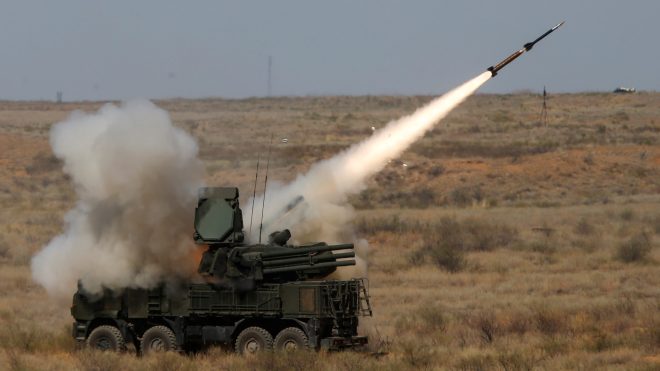
Israeli military planners are concerned about what they describe as “a significant change in the concept of air defense by Hezbollah in Lebanon” after the resistance group “doubled” the number of air defense systems in its possession, according to a report by Maariv newspaper published on 30 June.

The report cites unnamed military officials saying the resistance’s air defense systems will “restrict the freedom of action of the Israeli Air Force in Lebanon.”

“[Hezbollah] doubled the amount of air defense systems in its possession during the last five years … these defense systems are based mainly on modern Iranian systems,” the report adds.

Furthermore, Tel Aviv claims Hezbollah is in possession of the SA8 and SA22 Russian air defense systems, which have been previously deployed in Syria.

“The attack by an Israeli drone, in August 2019, on a facility in a building in the heart of the southern suburbs of Beirut … initiated the turning point in Hezbollah’s strategy, leading to the threat by [Secretary General Hassan Nasrallah] … to start shooting down Israeli drones,” the report highlights.

“Hezbollah implemented this threat two months later when it fired an SA8 missile at an Israeli Hermes 450 drone, which was on an intelligence-gathering mission, but the missile missed the target,” it adds.

In recent months, Israeli military planners have been on edge over Hezbollah’s vast military advancements coupled with the growing coordination among resistance factions in the region.

Earlier this week, Israeli media revealed that the US has stepped in to pressure Lebanon into having Hezbollah remove an outpost erected in the occupied Shebaa Farms.

Hezbollah has so far rejected these demands.

“You cannot threaten us with a large-scale war; it is us who are threatening you … Your follies, not ours, might blow up the entire region and lead to the Great War,” Nasrallah told Israeli leaders during a speech in May.

“The resistance is expanding by the day and has witnessed a great [positive] change in its financial and military capability,” he added.

July 1, 2023 Posted by | Ethnic Cleansing, Racism, Zionism, Illegal Occupation | , , , | Leave a comment

Saudi Arabia seeks dialogue with Hezbollah

The Cradle | May 1, 2023

Lebanese daily Al-Akhbar released a report on 29 April claiming that Saudi Arabia is seeking to establish a line of dialogue with Lebanese resistance group Hezbollah, coming in the aftermath of Riyadh’s reconciliation with Iran and Syria and following years of non-existent relations between the two sides.

According to Al-Akhbar, information provided by an unnamed Saudi official “reached Lebanese officials from a European capital,” which reveals that the kingdom hopes to open dialogue with Hezbollah “soon.”

The newspaper vaguely cites “unofficial sources in Beirut” as saying that the dialogue would “be conducted through a third party.”

“Whether the endeavor succeeds or fails, it reflects the new phase in which Riyadh is rearranging regional relationships on the path of asserting its Arab leadership,” Al-Akhbar writes, referring to Saudi Arabia’s newfound shift in policy as “unprecedented.”

Saudi Arabia has recently distanced itself from Washington significantly – economically and politically.

A Chinese-brokered reconciliation of Saudi-Iranian ties has been followed by the kingdom’s openness to reestablish ties with the Syrian government, as well as Hamas – with whom longstanding tension also exists.

This has resulted in significant Israeli frustration, and Hebrew media has referred to it as a blow to potential normalization with Riyadh.

A 1 May report by Israeli outlet Maariv laments that the “Saudi train is expected to stop at a station bearing a large sign with the name Hezbollah on it.”

Reports of dialogue between Hezbollah and the kingdom emerge as Lebanon finds itself in a presidential deadlock that has been ongoing since the term of former president Michel Aoun expired in October last year.

A lack of consensus and parliamentary quorum, as well as external political pressure, have resulted in eleven failed sessions to elect a president.

The two main candidates are the chief of the Lebanese Armed Forces (LAF), the US-backed Joseph Aoun, and the Hezbollah-backed MP Suleiman Franjieh of the Christian Marada party.

If dialogue between Hezbollah and the Saudis is achieved, this would be the first line of official contact between the two sides in 16 years.

However, last year, Middle East Eye cited sources as saying that a secret meeting between Hezbollah deputy chief, Naim Qassem, and a Saudi delegation in Beirut helped “pave the way” for the renewal of a ceasefire in Yemen, as well as the removal of former Yemeni president Abd Rabbuh Mansour Hadi.

May 1, 2023 Posted by | Aletho News | , , , | Leave a comment

White House continues to block energy sharing plan for Lebanon: French official

The Cradle | February 1, 2023

Pierre Duquesne, France’s envoy on international support to Lebanon, stated on 31 January that Egypt is still seeking assurances from Washington to start exporting gas to Lebanon via Syria.

“My Egyptian counterparts today told me, ‘we want something precise’ … There is a problem of exemption … and that concern should be dealt with not only on a political basis but on a legal basis,” Duquesne said during a visit to Cairo.

Alongside Egyptian gas, the US-orchestrated plan, announced in 2021, also calls for exporting electricity from Jordan via Syria, which could add up to 700 megawatts to Lebanon’s battered power grid.

Duquesne confirmed that all preparations for the energy-sharing plan had been completed, and there were no hold-ups over the pricing or quantity of gas. However, western sanctions on Syria prevent the Levantine nation from receiving the much-needed aid.

Moreover, Duquesne warned that Lebanon’s presidential vacuum is also working against the plan, which has yet to go to the World Bank board for a review of specific pre-conditions ahead of the release of a $300 million loan to finance the gas exports over 18 months.

The same day the French official made his comments, the US canceled a tripartite meeting between the US Ambassador Dorothy Shea, Minister of Energy Walid Fayyad, and World Bank representatives after refusing to grant Lebanon any exceptions to the sanctions imposed on Syria.

Lebanese power stations have gone almost entirely offline since the start of the manufactured crisis in 2019, while fuel subsidy cuts have caused the costs for private generators to skyrocket.

The energy sharing plan between Egypt, Jordan, Syria, and Lebanon was revealed soon after resistance movement Hezbollah launched a plan to import Iranian fuel in 2021.

Washington’s abuse of the energy crisis in Lebanon falls in line with recent remarks by US officials, who said Lebanon must be forced towards collapse as the only solution to deal with Hezbollah.

“[Collapse will enable] Lebanon to somehow be rebuilt from the ashes, and freed from the curse of Hezbollah,” US Assistant Secretary of State for Near Eastern Affairs, Barbara Leaf, said on 4 November.

February 1, 2023 Posted by | Wars for Israel | , , , , , , , , | Leave a comment

Washington obstructs peace in Yemen as it profits from war: Ansarallah

The Cradle | December 8, 2022

The leader of Yemen’s Ansarallah resistance movement, Abdul-Malik al-Houthi, accused the US of obstructing the path for a comprehensive peace process in Yemen, calling the western nation “the root of the problem.”

“[Ceasefire talks] are stalled because of the US, who are the root of the problem, as it benefits from the war and only wants a peace deal that benefits their interests, this type of peace means surrender to us,” Al-Houthi said during a televised speech on 7 December.

“The Americans, the Israelis, the British, and their regional puppets want Yemen to be occupied and submissive to them … The enemies want to set up their bases anywhere in Yemen, control its infrastructure and make the political field subject to their interests, to the extent that they choose who can be president or prime minister,” the resistance leader went on to add.

In April of this year, Riyadh strong-armed ousted Yemeni president Abdrabbuh Mansour Hadi to give up his powers to an unelected, Saudi-appointed presidential council, led by Rashad al-Alimi, who Ansarallah leaders christened “the man of America.”

During Wednesday’s speech, Al-Houthi also accused the US-backed coalition – headed by Saudi Arabia and the UAE – of plundering Yemen’s oil and gas resources in order to keep Yemenis living in misery, while “hundreds of billions go to US and European companies.”

Last year, Yemen’s Oil and Minerals Ministry estimated that the country’s oil and gas sector has lost around $45.5 billion in revenue since the start of the Saudi-led war. According to officials in Sanaa, the kingdom deprives Yemen of at least 75 percent of the state budget revenues.

Over the past year, a large number of Saudi and Emirati oil tankers have made their way to Yemeni ports in the provinces of Shabwa and Hadhramaut in order to seize millions of dollars worth of the country’s oil.

The Saudi-led coalition not only plunders Yemen’s oil and gas from the occupied regions – in coordination with US and French troops – but also often seizes UN-approved fuel shipments headed for the Ansarallah-controlled port of Hodeidah.

Moreover, thanks to the normalization agreement signed between Israel and the UAE, Tel Aviv has been deploying troops to the Arab world’s poorest nation.

“They do not want an army that protects the independence and sovereignty of Yemen, they only want groups of fighters under the command of Emirati and Saudi officers, who themselves are under the command of American, British, and Israeli officers,” Al-Houthi said about the increased presence of hegemonic powers in Yemen.

“We cannot accept for Yemen to be occupied, or for the Americans, British, Emiratis, and Saudis to come and set up bases wherever they want,” the resistance leader stressed, before adding that Yemen’s enemies want the country to join the group of Arab nations who have normalized ties with Israel at the expense of the Palestinian people and of several of Yemen’s allies in West Asia.

“Iran did not attack us. Rather, it declared solidarity with our people, a position distinct from all other countries … [The enemies] want us to be hostile to Hezbollah, which took a most honorable position with us. They want us to be hostile to the free people of Iraq who have done nothing against us,” Al-Houthi declared.

He went on to highlight that Sanaa will not be hostile to any Islamic country “for the sake of America and Israel … We are not like the Saudis, Emiratis, and Al-Khalifa in Bahrain, we do not receive directives from America.”

Al-Houthi finished his speech by hinting at the military response of Ansarallah and the Yemeni Armed Forces against any escalation, saying that “any next round of fighting will be greater than all previous ones.”

December 8, 2022 Posted by | Ethnic Cleansing, Racism, Zionism, Illegal Occupation | , , , , , , | Leave a comment

To curb Iran’s influence, Washington and Tel Aviv are preventing alleviation of Lebanon’s economic crisis

By Robert Inlakesh | RT | November 16, 2022

Despite the recent signing of a historic maritime border agreement between Tel Aviv and Beirut, tensions continue to remain high, with both Israel and the United States attempting to force Lebanon into compliance with their regional agenda.

Although Israeli and Lebanese leaders signed letters of intent earlier this month ending their long-standing maritime border dispute and averting a major escalation in their ongoing conflict, the two sides still remain technically at war. Beirut refuses to recognise Israel, maintaining the stance that first the Palestine issue must be resolved, as Tel Aviv maintains control over the Shebaa Farms area which Lebanon claims to be its territory.

Last week, drone strikes were reported to have killed up to 25 people after targeting a fuel aid convoy that had just passed the Al-Qaim crossing into Syria from Iraq. There are conflicting reports on who actually carried out the attack, with both Israel and the United States accused of having been behind it. The US military instantly distanced themselves from the incident, by denying they had carried out any strikes, whilst the Israeli government refused to comment and is now widely assumed to be culpable. According to Iraqi authorities, the fuel trucks, numbering 22 according to Iranian state-media, were approved for heading out of the country and seemed to be part of Iran’s new agreement with Lebanon to provide free fuel.

Despite opposition from top US officials, in August Lebanese Prime Minister Nijab Mikati accepted an offer from Tehran to supply Lebanon with fuel free of charge. Although the US ambassador to Lebanon, Dorothy Shea, had warned Beirut not to take the offer from Iran, it was decided that going ahead with receiving the Iranian gift was in the Lebanese national interest. It is likely that the temporary US silence following this was in large part to do with the then-ongoing maritime border dispute between Tel Aviv and Beirut. The US has repeatedly attempted to counter Iranian influence in Lebanon, even going as far as claiming Beirut is not in need of the Iranian fuel, whereas the country is clearly in a state of economic collapse and suffers a shortage.

After Hezbollah, one of Lebanon’s most popular political parties, organized Iranian fuel shipments in 2021, Washington quickly took to countering any future attempts for Tehran to come to the aid of the Lebanese economy. A deal was then organized in September of 2021, under US supervision, for Egypt to supply natural gas through Jordan and Syria into Lebanon, in order to ease the energy crisis. However, the US government had pledged to amend its Caesar Act sanctions that it currently implements against Damascus to allow for the deal to go ahead, but has so far failed to do so. Although the Lebanese State is now quickly taking to exploring and, it hopes, extracting natural gas from the offshore Qana prospect, which it secured its rights to under its maritime border agreement with Israel, this process could take years to bear fruit.

In the short term, Beirut needs a solution to its energy crisis and Iran is offering free fuel to supplement part of its needs. Washington and its close ally Tel Aviv see this as a plot between Hezbollah and Tehran to take control over the Lebanese State. Although Lebanon is technically an independent state, the reality is that France, the US and the Gulf States, particularly Saudi Arabia, hold huge shares of influence in the political and economic affairs of the country, and none of them feel comfortable with the idea of Tehran having a significant influence.

The regional strategy of the United States government, which Israel is also in lockstep with, is to combat the influence of the Iranian government. Part of this strategy is to pressure more Arab States to normalize ties with Tel Aviv and to give up on the consensus amongst Arab League States to adhere to the Arab Peace Initiative. The initiative maintained that recognition of Israel by Arab states, along with the establishment of military, economic and political ties, could not come without the realisation of a Two-State solution under which the creation of a viable Palestinian State would be established. So far the UAE, Bahrain, Morocco, Egypt, Sudan and Jordan have all normalized ties with Tel Aviv, abandoning the Palestinian cause for Statehood. The US Biden administration is clearly seeking to add Saudi Arabia to the list, but eventually wants to go further than that.

At the recent COP27 climate meeting, held in Egypt’s Sharm el-Sheikh, Lebanese, Iraqi and Israeli representatives were all photographed standing near each other and had agreed to a distant cooperation on combating climate change. In Israeli and US media, this has been framed as somewhat of a breakthrough, despite being officially undermined by both Baghdad and Beirut. What is certain, however, is that the US and Israel are continuing to send a message to Lebanon, that they will not let it simply go about its business and thrive without adhering to their own agenda. Hence the US has not allowed for the Egypt-Jordan-Syria deal for transfer of fuel into Lebanon.

The most insidious part of the stance maintained by the US government is that Lebanon cannot simply leave the Iranian sphere of influence altogether and Washington is well aware of this. As long as Lebanese Hezbollah remains a popular force in the country, there will always be a link between Tehran and Beirut. This means that the US policy is designed to punish the Lebanese people for not getting rid of Hezbollah, something that neither the US nor Israel will dare try to do themselves. If Israel and the US are both in lockstep about preventing Iranian fuel from reaching Lebanon, then this means that they are simply depriving Lebanon of its ability to get back on its feet, all in the name of combating Iran and Hezbollah. In their eyes, if the Lebanese people perceive the Iranian fuel imports to be their saving grace, this runs counter to US hegemony and, together with the latest perceived victory for Hezbollah in forcing the Israelis to negotiate a maritime border settlement, Tehran would come off with greater support in Lebanon.

The US and Israel are proving incapable of allowing the Lebanese people to achieve a greater standard of life, due to the fact that Hezbollah and Iran are still there. Meanwhile, getting rid of Hezbollah would not only be militarily impossible, but there is also no evidence that such a move would actually bring stability – as evidenced with the case of Sudan, which normalized ties with Israel and earned itself a place in the good books of the US government, but the West is yet to aid the country, which endures a continuous state of crisis.

Robert Inlakesh is a political analyst, journalist and documentary filmmaker currently based in London, UK. He has reported from and lived in the Palestinian territories and currently works with Quds News. Director of ‘Steal of the Century: Trump’s Palestine-Israel Catastrophe’.

November 16, 2022 Posted by | Ethnic Cleansing, Racism, Zionism, Subjugation - Torture | , , , , , | Leave a comment

US Siege Persists: Lebanon Prevented from Importing Iran’s Fuel Donation

Al-Manar | November 9, 2022

After several months of vagueness, the US administration announced clearly that sanctions will be imposed on Lebanon if it approves the Iranian fuel donation, according to a report posted by Al-Akhbar daily.

The Lebanese newspaper mentioned that the remarks made by the Assistant Secretary of State for Near Eastern Affairs, Barbara Leaf, indicated that the US siege on Lebanon persists.

Al-Akhbar added that the US vague stances pertaining the Iranian fuel donation during the past months aimed only at sustaining the positive atmosphere of the maritime border demarcation.

It is worth noting that Hezbollah secretary General Sayyed Hasan Nasrallah mentioned during his latest speech that the Americans will not allow Lebanon to import the Egyptian gas, Jordanian electric power, and Iranian fuel.

According to Al-Akhbar, the Lebanese caretaker prime minister, Najib Mikati, followed the US vagueness with time consuming steps, including sending a technical team to Tehran to study the fuel specifications.

The newspaper added that, after the energy minister Walid Fayyad sent a report about the Iranian fuel specifications to Mikati, the latter contacted the US administrations whose various offices told him that Washington rejects granting Beirut any waiver in this regard.

November 9, 2022 Posted by | Economics, Subjugation - Torture | , , , | Leave a comment

Lebanon and Israel finalize historic maritime border deal

The Cradle | October 11, 2022

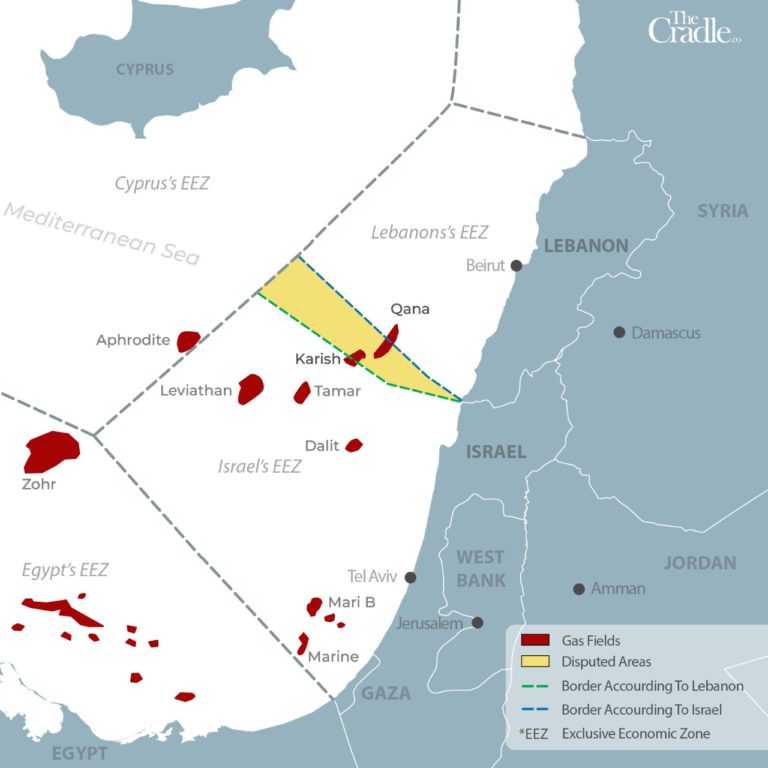
Lebanon and Israel have agreed to a US-mediated maritime deal to demarcate the gas-rich blocks in the Mediterranean sea, seemingly putting an end to the prospect of an armed conflict.

In two separate statements by Lebanese and Israeli authorities, Beirut and Tel Aviv announced they have concluded all negotiations and will meet soon in Naqoura to sign the agreement.

“This is a historic achievement that will strengthen Israel’s security, inject billions into Israel’s economy, and ensure the stability of our northern border,” Israeli interim Prime Minister Yair Lapid said in a statement on Twitter.

A statement released by the office of outgoing Lebanese President Michel Aoun claims the deal “is satisfactory to Lebanon and meets its demands,” adding that it “preserves [the nation’s] rights to its natural wealth.”

In details revealed by Lebanese daily newspaper Al-Akhbar, all obstacles that led to a recent spike in tensions have been resolved, as both countries compromised with regards to the legal language used in the final draft.

The newspaper reveals that both sides agreed that Israel will be paid royalties from the Qana prospect field. However, the money will be paid from the revenue generated from the French oil company Total, not Lebanon’s share of the revenue.

Map of the disputed maritime border between Lebanon and Israel. (Photo Credit: The Cradle)

As for the most pressing concern for both sides, Lebanon and Israel compromised in the legal language regarding the buoys deployed at sea to demarcate the various economic blocks.

According to the leaks, Lebanon insisted on adopting Line 20 while refusing to acknowledge that the line demarcates the maritime borders, but simply the blocks at sea.

Whereas Israel insisted on Line 31 which is going to be on the final draft between both countries.

Nonetheless, Lebanon will not acknowledge its effects on the land border demarcation, leaving the issue for indirect land-border negotiations.

In light of these developments, Lebanese caretaker Prime Minister Najib Mikati met on 11 October with the Lebanese Minister of Energy, Walid Fayyad, and a delegation from Total.

The delegation included the Director of Oil Exploration and Production Laurent Vivier, who was informed about the results of the negotiations and received a request to start operations.

Total informed the Lebanese side that the logistics of exploration need time, promising to start “as soon as possible.”

Similarly, Israeli National Security Council Chairman Eyal Hulta announced that all of  Israel’s demands have been met.

“Israel’s security interests have been preserved. We are on our way to signing a historic agreement,” Hulta said.

According to Israeli Minister of Defense Benny Gantz, the current state of alert at the norther border with Lebanon came as a result of credible intelligence information about Hezbollah’s plans to launch an attack had Israel started to extract gas from the Karish gas field before a deal was concluded with Lebanon.

Similar assessments were made by the foreign intelligence services of several western countries.

This attack would have fulfilled the promise made by the Secretary General of Hezbollah, Hassan Nasrallah, who reiterated on several occasion that only mutual access to the gas reserves will be permitted.

“Israel, the US, and EU all know we are not bluffing. They have enough proof of that,” the resistance leader said during a televised speech in September.

October 11, 2022 Posted by | Economics | , , | Leave a comment

Will Lebanon and Israel go to war over the maritime border dispute?

By Robert Inlakesh | Samizdat | October 8, 2022

Israel has announced its readiness for war with Lebanon, as the ongoing US-mediated maritime border demarcation talks head towards a dead end. The issue, however, is not just causing dispute between Beirut and Tel Aviv, but also becoming more prevalent within Israeli politics as it heads into another round of general elections.

On Thursday, Israeli Prime Minister Yair Lapid rejected Lebanese amendments to a US-proposed maritime border demarcation agreement. The previous day, Israeli officials had reportedly been briefed on the deal, which was the cause of much optimism, with an unnamed source telling Axios news that Lapid “made it clear that Israel will not compromise on its security and economic interests, even if that means that there will be no agreement soon.”

Later on Wednesday, Israeli Defense Minister Benny Gantz ordered the military establishment to prepare for an armed confrontation with Lebanon. A four-hour cabinet meeting, which was said to have been attended by major Israeli security establishment figures, was then concluded with a public announcement that the prime minister and defense minister had been granted permission to strike Lebanon without further cabinet approval.

Why are Lebanon and Israel on the verge of war?

In early June, a ship owned by the gas company Energean arrived at the resource-rich Karish field in the Eastern Mediterranean to begin preparations for natural gas production for Israel. Lebanese President Michel Aoun condemned the arrival, warning Tel Aviv against taking any further “aggressive action.” The Karish field, as well as the nearby Qana field, have for years been central to on-off US-mediated negotiations between Lebanon and Israel. The two nations have still not come to any agreement on the demarcation of their maritime borders, with Beirut seeing Karish and Qana as vital to reviving its collapsing economy.

While Lebanon maintains, due to legal arguments put forth in previous negotiations, that the entire area is to be considered ‘disputed waters,’ Israel has maintained that all of the Karish field and the majority of the Qana field are within its own ‘Exclusive Economic Zone’. The Lebanese political and military party Hezbollah, which claims to have 100,000 battle-ready troops at its disposal, then weighed in on the debate, vowing to protect Lebanon’s rights to its oil and gas.

Secretary General of Lebanese Hezbollah Seyyed Hassan Nasrallah declared that if no maritime border deal were reached and Lebanon is not able to secure its rights, then military action will be taken. Nasrallah vowed that the new reality would be “If we can’t have our resources, nobody can.” Hezbollah’s red line is Israeli extraction from the Karish field before any agreement is signed – if this happens, the group has threatened to strike not only Tel Aviv’s infrastructure at site, but every other Israeli oil and gas facility in the Mediterranean.

Israel has since responded with threats of its own, which have ranged from a vow to eliminate the entire densely populated Beirut suburb that serves as Hezbollah’s stronghold, to Benny Gantz’s recent warning that the whole of Lebanon would “pay a heavy price” for any military action by Hezbollah. Now that the negotiations have reached a “make or break” point, there are significant fears that military action will be taken, either by Israel or Hezbollah.

Empty threats?

The most recent threats issued by the military and political leadership in Tel Aviv have caused panic among Israelis living near the Lebanese border. However, there is a significant possibility that the rhetoric is aimed at a domestic audience. Israel will enter into a new round of national elections in November and the demarcation of maritime borders has recently been weaponized against the current Israeli leadership, causing ministers to act in order to save face.

Israeli opposition leader and former long-time prime minister Benjamin Netanyahu began to lash out at interim-PM Yair Lapid back in September, releasing a video in which he claimed that Lapid had “totally folded in the face of Nasrallah’s threats” and that Hezbollah had forced him to delay extraction from the Karish field. Netanyahu has continued to heavily criticize his political opponents’ handling of the demarcation-line issue, with similar claims that Israel is backing down over the threats issued by Lebanese Hezbollah.

Netanyahu’s words ring true in that Lapid has clearly been forced to take the issue of demarcation of maritime borders very seriously and has conceded on positions held by Tel Aviv in the past. In addition to this, the extraction of gas from the Karish field has also been delayed, as Energean, which owns the rights to extract from the site, was initially prepared to begin operations in late September and has so far refrained from doing so. However, had Netanyahu remained as PM, he would hardly have had any other choice but to do the same.

The threats made by Hezbollah are very serious, and the group apparently has the capacity to follow through with them and destroy all of Israel’s oil and gas facilities. At this time, however, the Israeli far-right camp headed by Netanyahu is blaming the situation on Lapid’s weak governance, saying he is prepared to give away territory that belongs to Israel. For this reason, it is likely that Yair Lapid will attempt to delay extraction of gas from the Karish field in order to sideline the issue until after the elections.

The necessity of a deal for Lebanon

Lebanon sees the Karish and Qana issue as integral to its survival. Some UN experts put the percentage of Lebanese living in poverty at around 80%, while the country endures round-the-clock blackouts, a rising crime rate, and civil instability. Some people have even been spotted searching for food in garbage bins, as well as fighting over loaves of bread at bakeries. Getting its hands on a possible multi-billion-dollar oil and gas field is a matter of life or death for Beirut – but not for Tel Aviv, which enjoys far more economic stability.

The US mediator in the Lebanon-Israel talks, Amos Hochstein, gave an interview to the American owned al-Hurra TV in June, laughing when asked about the prospect of trading the Karish field for Qana. Months later, after Hezbollah upped its threats and the group’s leader, Nasrallah, stated that the Lebanese people would not be laughed at, this issue has become a rather grave one. The US, which has a clear pro-Israeli bias, is now being forced to take the talks much more seriously.

Earlier this year, as the European Union looked for alternative gas suppliers, a deal was inked between Tel Aviv and Brussels, under which Israel would send gas through pipelines to Europe via Egypt. This has encouraged Tel Aviv to announce its plans to double its gas output, and the Karish field is key to achieving this.

The Qana field, however, has not yet been explored and will take time to develop. Despite this, one of the key reasons for Israel’s rejection of the Lebanese proposal is that Beirut refuses to pay Tel Aviv royalties for the gas it would extract from the Qana field should it be handed to Lebanon. Beirut cannot commit itself to such an agreement, because this would mean normalizing ties with the Tel Aviv regime, which still occupies Shebaa farms – an area that Lebanon claims as its rightful territory.

Whether war happens will now boil down to whether bickering between Israeli political parties and individual officials will cause Tel Aviv to adopt a belligerent approach and push forward with gas production in the disputed fields before an agreement is reached. If it does, there can be little doubt that Hezbollah will open fire if its red line is crossed. Israel’s stake in the matter is additional energy revenues, while for Lebanon it is potentially a matter of life or death. Neither side wants war, but one has much to gain and the other has everything to lose.

Robert Inlakesh is a political analyst, journalist and documentary filmmaker currently based in London, UK. He has reported from and lived in the Palestinian territories and currently works with Quds News.

October 8, 2022 Posted by | Economics, Illegal Occupation | , , , , , | Leave a comment