Report- U.S. and Israel Are Targeting ‘Hospitals, Residential Buildings And Schools Across Tehran’
The U.S. and Israel Are Repeating The Gaza Strategy In Iran
The Dissident | March 4, 2026
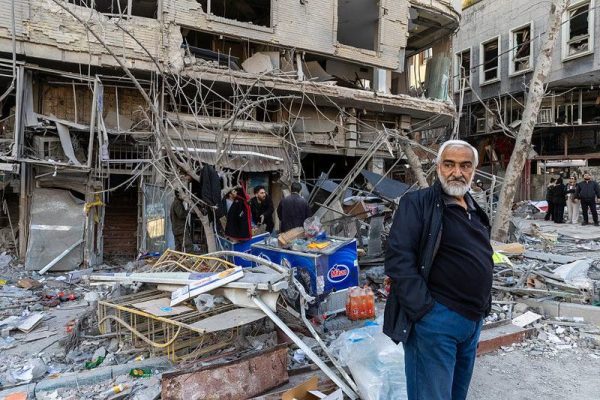
Failing to achieve regime change, the U.S. and Israel are bombing civilian areas in Tehran, in an attempt to destroy Iran as a nation.
A report in the Telegraph, a mainstream British newspaper, wrote , “Tehran an ‘apocalypse’ of hospitals in flames and children buried beneath rubble”.
The report noted, “American and Israeli aircraft bombed hospitals, residential buildings and schools across Tehran on Tuesday in what residents described as ‘an apocalypse’” adding, “Millions of civilians are trapped under relentless bombardment as food and medical supplies dwindle and the death toll mounts.”
One resident of Tehran told the paper, “They have been bombing us without pause today, and the sound of explosions never stops. They don’t care where they are hitting. I have felt the shockwaves several times already”.
He added, “They are striking buildings where families live. After each explosion, people rush to help – and then another bomb hits the same area.”
The report added:
Families ration meals to make supplies last. Children go to bed hungry. Elderly residents with medical conditions cannot find their medications.
Diabetics run out of insulin. Parents water down milk to make it stretch further. Some families have not eaten in two days. Bakeries that remain open face long lines.
It went on to write:
Areas around Revolution Square in central Tehran were struck on Tuesday, causing extensive damage to residential homes in one of the capital’s most densely populated districts.
The Haft-e-Tir neighbourhood, also in central Tehran, was hit. Video footage showed destroyed apartment buildings and rescue workers digging through rubble.
A hospital in southern Bushehr was destroyed, with emergency workers frantically evacuating newborn babies as the building was struck.
Kamran ( Tehran resident) said: “Many people are trapped under the rubble. Hospitals are filled with injured patients, and staff are overwhelmed. They are even striking hospitals where the wounded are being treated.”
The scene echoed strikes on Gandhi Hospital in Tehran and multiple other medical facilities across the country.
The destruction of hospitals means the wounded have nowhere to go. Nurses carry premature infants through smoke-filled corridors as bombs fall on maternity wards.
Burn victims lie on floors because all beds are full. Surgeons operate by torchlight when electricity fails.
Medical staff work until they collapse from exhaustion, then wake and work again. Some doctors have not left their hospitals in three days, sleeping in supply closets between emergency procedures.
Millions remain trapped in Tehran, a city under sustained aerial assault.
The report added, “‘An apocalypse is unfolding here,’ said Ashkan, another Tehran resident. ‘Today has been the worst day. Those who had cars fled. Those of us without cars are left here under the bombs.’”
It went on to note:
The strikes have created a humanitarian crisis that casualty figures do not fully convey.
Food supplies have become scarce in several parts of the city as distribution networks break down and stores close.
‘I don’t know if any of my relatives are dead or alive,’ Ashkan said. ‘One kilo of potatoes is now 200,000 tomans. That was 30,000 tomans last week.’
The report also documented the repeated use of “double tap” strikes on rescue workers, writing:
The Red Crescent said more than 100,000 rescue and relief workers across the country are on full alert, but residents said help often arrives too late or cannot reach victims at all.
“By the time rescuers arrive, another bomb falls on the same place,” Kamran said, describing what appeared to be “double-tap” strikes where initial attacks are followed by secondary strikes targeting first responders – a tactic that violates international humanitarian law.
Middle East Eye reported that the U.S./Israeli slaughter 165 children at the school for girls in Minab was also the result of a “double tap” strike, writing, “The girls’ school in Iran, where 165 people were killed by an apparent US-Israeli attack, was hit with two strikes, with the second missile killing sheltering survivors, two first responders and the parent of a slain child have told Middle East Eye.”
One Red Crescent member told the outlet, “When the first bomb hit the school, one of the teachers and the principal moved a group of students to the prayer hall to protect them. The principal called the parents and told them to come and pick up their children. But the second bomb hit that area as well. Only a small number of those who had taken shelter survived.”
The father of one victim told the outlet that, “his daughter survived the first strike and was moved to the prayer hall. The second strike hit before he could reach her.”
The outlet documented other instances of “double tap strikes” used in Iran wiring:
Since the US and Israel launched a war on Iran on Saturday, some Iranians have reported attacks that resembled double-tap strikes.
A video circulating on social media shows one woman in central Tehran in distress saying: “They dropped one bomb, people went inside, then they bombed again. They killed people.”
Another shows two men on a motorcycle, with one of them describing a near-death experience.
“We went to drag out people from under the rubble, and then the jet returned twice and pounded the same location four more times. We would have been dead if we weren’t still under the rubble,” he says.
A resident of Tehran who left for Turkey told Reuters , “We saw a lot of buildings destroyed, especially on the way leaving the country. There were a bunch of buildings, a bunch of cars and streets were destroyed. People are panicking to leave the country. They don’t know what to do”.
According to the Western group “Human Rights Activists News Agency, “the total number of reported civilian deaths stands at 1,114, including 181 children”.
As academic Glenn Diesen noted, referring to this report , “The US and Israel are bombing hospitals, schools, residential buildings, and Mehrabad international airport in Tehran. Having failed to regime change Iran, the new objective appears to be terror-bombing Iran into submission”.
Security Researchers Warn Age Verification Laws Are Building a Global Surveillance System

By Ken Macon | Reclaim The Net | March 3, 2026
Three hundred and seventy-one security and privacy academics from 29 countries signed an open letter this week calling on governments to halt age verification rollouts until the privacy and security implications are properly understood.
The letter arrives as lawmakers across the world race to ban children from social media, pushing platforms to implement age checks before anyone has settled on what those checks should actually look like.
The signatories are unambiguous. Deploying large-scale identity verification systems without a clear grasp of what they do to user security, autonomy, and freedom is, in their words, “dangerous and socially unacceptable.”
Among those signing: Ronald Rivest, Turing Award winner, and Bart Preneel, president of the International Association for Cryptologic Research. These voices represent the core of the global security research community.
What governments are building, the letter argues, is surveillance infrastructure masquerading as child protection. A real age verification system, the academics explain, would require “government-issued IDs with strong cryptographic protection for every single interaction with the service.”
That means every search query, every message to a friend, every news article read online would require identity confirmation. Nothing in offline life demands that. The parallel doesn’t exist.
Companies are already moving. OpenAI, Roblox, and Discord have all begun implementing age checks in anticipation of legal mandates.
The academics aren’t dismissing the underlying concern. “We share the concerns about the negative effects that exposure to harmful content online has on children,” the letter states. What they’re rejecting is the proposed solution, which turns every adult into a suspect who must prove their identity before accessing the open web.
The technical problems compound the political ones. Building and maintaining identity verification at a global scale is genuinely hard. Many service providers, faced with the friction and cost, would simply refuse to comply.
And the platforms that can deploy these systems at scale are a handful of large corporations, meaning age verification becomes another mechanism for centralizing internet infrastructure in the hands of the few companies already dominant enough to afford it.
There’s another risk the academics name directly: governments banning VPNs. Age checks are trivially circumvented with a VPN, and the predictable policy response is to ban them outright. VPNs are currently one of the few tools available to people living under authoritarian regimes trying to protect their communications and identities.
Banning VPNs to enforce age checks on teenagers would strip that protection from dissidents, journalists, and activists worldwide. The collateral damage would be severe and global.
The academics are asking for a pause until scientific consensus forms around “the benefits and harms that age-assurance technologies can bring, and on the technical feasibility.”
What’s unreasonable is building mass identity verification systems first and studying the consequences after.
UK Government Secretly Tracked 25 Million People as Potential EV Owners
By Cindy Harper | Reclaim The Net | March 2, 2026
The UK government spent two years tracking 25 million mobile devices to build a picture of who drives electric cars. Not suspects or criminals. Just ordinary people whose browsing history mentioned EVs often enough to flag them as worth following.
The Department for Transport paid telecoms company O2 £600,000 ($809,000) to run the operation. According to the Telegraph, O2 trawled through its customers’ web browsing histories and app records, flagging anyone who visited an EV-related site at least once a month across two or more months.
That pool extended beyond O2’s own customers to include people on Tesco Mobile, GiffGaff, and Virgin Mobile, networks that run on O2’s infrastructure and whose users had no idea their data was being packaged and sold to a government agency.
Once flagged as a “potential EV owner,” your physical movements were traced across the country. London, the North-West, and the East of England received particular attention.
The techniques are standard in serious organized crime investigations. The DfT applied them to people buying environmentally friendly cars.
Andy Palmer, former executive at Nissan and Aston Martin, put it plainly: “I’m told it’s anonymized and aggregated, and that may well satisfy legal thresholds. But legality and legitimacy are not the same thing.” He added: “If you erode public trust in how that data is gathered, you undermine the very transition you are trying to accelerate.”
The idea of “anonymized” data means very little.
The surveillance ran for two years before the DfT quietly admitted defeat in April 2024, conceding that “mobile data cannot directly be used to provide information around charging behaviour or travel time.”
The program ended not because anyone questioned whether mass tracking of innocent people was appropriate, but because the data turned out to be useless for its stated purpose.
Civil servants from the DfT and Treasury were simultaneously exploring new EV taxes to replace fuel duty revenue. The people being surveilled were doing exactly what government policy encouraged them to do.
Conservative MP Sir David Davis drew the obvious conclusion: “It’s an object lesson in why you can’t trust the state with unfettered access to people’s information, because they’ve obviously taken this information without people’s permission with the objective of disadvantaging them, either by tax or other policy matters. If they’ll do it on this, with people who are doing what the government wants in policy terms, namely, pursuing green policies, what on Earth will they do elsewhere?”
The EV surveillance program wasn’t a one-off. During the earlier days of the COVID saga, the government ran a parallel operation, this time tracking people who showed up to get vaccinated.
Researchers funded through the Scientific Pandemic Influenza Group on Behaviors used mobile phone location data covering one in ten British people, without their knowledge or consent, to analyze behavioral changes after vaccination.
From that pool, they selected over 4,200 vaccinated individuals and tracked their movements through call data records, analyzing how far they traveled on vaccination day and whether they went straight home afterward.
The government was monitoring where citizens went after receiving a government-administered medical intervention, and chose not to tell anyone.
Female Iranian academic sentenced to 4 years in prison in France over protesting Israel’s genocide in Gaza
Press TV – February 26, 2026
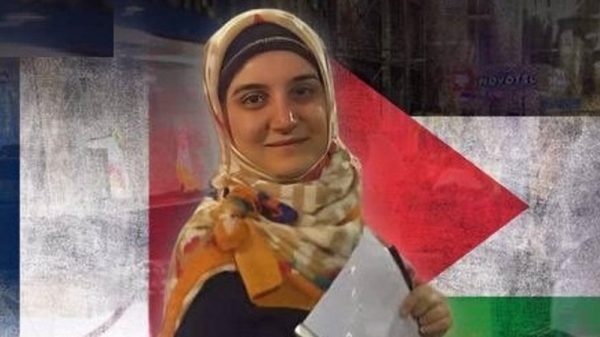
An Iranian academic woman in France has been sentenced to four years in prison after she protested Israel’s genocide in the besieged Gaza Strip, with a permanent ban on her entry into the European country.
A court in France on Thursday, sentenced Iranian citizen Mahdieh Esfandiari, who had been detained on alleged charges of “public defense of terrorism,” to four years in prison, France 24 reported.
According to the court ruling, Esfandiari, a linguist and French language graduate, received a four-year sentence, three years of which were suspended and one year to be served.
The 39-year-old Iranian citizen had previously spent eight months in pretrial detention before being released under conditional terms.
The court also permanently barred Esfandiari from entering French territory.
Esfandiari graduated from Lumière University, where she worked as a professor, translator, and interpreter. She has also been a prominent pro-Palestinian activist with a significant online presence.
Her arrest last year came amid a crackdown in the United States and other Western countries targeting scholars, students, and activists who opposed Israeli genocide and advocate for peace, both on campuses and in public spaces.
The Paris Prosecutor’s Office charged the Iranian academic with “apologie du terrorisme” over Telegram posts that allegedly supported the Hamas-led Operation Al-Aqsa Flood against Israel in October 2023.
US university cancels Palestine conference citing sanctions concerns
Al Mayadeen | February 26, 2026
The University of Southern Maine has withdrawn permission to use a campus venue for a conference centered on Palestine, just days before it was scheduled to begin, triggering a dispute over sanctions law and First Amendment protections.
The event, titled “Consequence of Palestine,” had drawn more than 300 registrants and was organized by the Maine Coalition for Palestine, Maine Voices for Palestinian Rights, and the university’s department of criminology and sociology. It was expected to feature virtual remarks by Francesca Albanese, the United Nations special rapporteur for the occupied Palestinian territories, who has been under US sanctions since last year.
University officials said the decision was based on federal sanctions law. Samantha Warren, chief external and governmental affairs officer for the University of Maine system, told The Guardian in an email that “hosting a conference that is being actively promoted as including a speaker sanctioned by the US government would put our public university in violation of federal law”. She said organizers should have obtained authorization from the Treasury Department before proceeding.
Sanctions regulations prohibit US entities from providing “any goods or services” to individuals designated under sanctions regimes. Violations can carry severe penalties, including heavy fines and potential prison time. However, legal scholars argue that the scope of what constitutes a “service” remains ambiguous.
Campus rights clash
In December, the Treasury Department’s Office of Foreign Assets Control (OFAC) clarified in correspondence with the Middle East Studies Association that “no authorization” was required to include Albanese in an academic event, provided that she did not receive payment, reimbursement, or “training or assistance”. That clarification emerged after concerns were raised about the impact of sanctions on academic exchange.
Xiangnong Wang, a staff attorney at the Knight First Amendment Institute who had sought clarification from OFAC, said the cancellation reflects broader concerns about the chilling impact of sanctions on constitutionally protected speech. “It’s very concerning that sanctions continue to have such a broad deterrent effect on speech that is undoubtedly protected by the First Amendment,” he said.
Organizers said they were caught off guard by the abrupt cancellation. Abigail Fuller, a sociology professor involved in planning the conference, stressed the constitutional implications of the decision. “We’re a public university; the university system is subject to First Amendment laws,” she said. “We feel we have a very, very strong case that they are suppressing our free speech.”
According to organizers, they attempted to clarify that federal guidance did not require special permission to include Albanese. They even proposed removing her from the program in an effort to preserve the event. They were subsequently told there was insufficient time for administrators to evaluate the conference’s “risk”.
Speech under pressure
The dispute comes amid reports that Republican lawmakers had written to the system’s chancellor requesting “information on steps the university is taking to ensure the safety and well-being of its Jewish students”. Organizers believe such political pressure contributed to the reversal and said administrators had also expressed concern about possible federal funding consequences.
Albanese was sanctioned last July, with US authorities accusing her of “unabashed antisemitism, expressed support for terrorism, and open contempt for the United States, Israel, and the West”. She has previously rejected those allegations and criticized the move as politically motivated, describing the United States as “a country of contradictions, full of ideals and principles and still, plotting against democratic values”.
The Treasury Department did not immediately respond to requests for comment on the university’s interpretation of sanctions law.
Despite losing access to their campus venue, conference organizers say they are seeking an alternative location and are exploring possible legal action. Fateh Azzam, a member of the Maine Coalition for Palestine, said canceling the conference outright was not an option.
“That would mean that they have effectively silenced an open and public debate on the issues,” he said. “This controversy will probably bring in more people.”
Islamic Jihad: Trump’s peace board is a “theatrical stunt detached from reality”
Palestinian Information Center – February 25, 2026
BEIRUT – Mohamed al-Hindi, Islamic Jihad’s deputy secretary-general, has described the US-led Board of Peace as nothing more than a “theatrical stunt,” saying it is detached from the reality on the ground.
In an interview with Al Jazeera Mubasher satellite channel on Wednesday, Hindi stressed that the board’s recent meeting “has not brought about any change in the course of the Israeli war on the Gaza Strip or in the scale of Israel’s ongoing violations against Palestinians.”
Hindi affirmed that this peace council was founded on a “formula of absolute American dominance and full security for Israel, while denying the Palestinian people the right to shape their own future.”
“The Palestinian role in this framework is purely symbolic, confined to technocratic committees handling Gaza’s municipal affairs without any sovereignty or political power,” Hindi said.
“The proposed vision fully embraces Israel’s stance, linking Gaza’s reconstruction to resistance groups surrendering their weapons, without any serious discussion of an Israeli withdrawal or accountability for ceasefire violations,” the Islamic Jihad official added.
He underscored that his Movement never trusted the US administrations under president Donald Trump or his predecessor Joe Biden, citing America’s unwavering pro-Israel bias.
He said that the Palestinian acceptance of prior understandings over Gaza aimed solely to put an end to Israel’s relentless massacres against civilians.
Project Artichoke: 70 Years Ago, CIA Discussed Hiding Mind-Control Drugs in Vaccines
By Michael Nevradakis, Ph.D. | The Defender | February 24, 2026
In the 1950s, the CIA brainstormed ways to secretly perform mind control on humans — including concealing drugs in vaccines and widely consumed food products, a newly unearthed CIA document revealed. The Daily Mail first reported the story on Monday.
The seven-page document, “Special Research for Artichoke,” is dated April 23, 1952. It describes a series of ideas for how to develop chemicals designed to alter human behavior and thought.
The proposals contained in the document were part of the CIA’s top-secret Project Artichoke, which ran from 1951 to 1956, according to the Daily Mail.
The document, declassified in 1983, recently circulated on social media. However, it was not published in the CIA’s online reading room until last year.
“Some of the suggestions are controversial,” the document states. The proposals included administering drugs in secret as part of a “long-range approach to subjects.”
According to the document:
“This study should include chemicals or drugs that can effectively be concealed in common items such as food, water, coca cola, beer, liquor, cigarettes, etc.
“This type of drug should also be capable of use in standard medical treatments such as vaccinations, shots, etc.”
CIA experimented on humans as part of Project Artichoke
The document also included a special field of research for “bacteria, plant cultures, fungi, poisons of various types, etc.,” that are “capable of producing illnesses which in turn would produce high fevers, delirium, etc.”
This included “species of the mushroom” that “produce a certain type of intoxication and mental derangement.”
Also among the proposals was a suggestion to research “diet” or “dietary deficiencies” on prisoners and on people undergoing interrogation, including using “specially canned foods having elements removed.”
The document included proposals for both short-term and long-term use on humans. Drugs deemed most suitable for long-term use would be designed to produce an “agitating effect (producing anxiety, nervousness, tension, etc.) or a depressing effect (creating a feeling of despondency, hopelessness, lethargy, etc.).”
According to The Daily Mail, the CIA experimented on humans as part of Project Artichoke. The experiments often involved “vulnerable subjects, including prisoners, military personnel and psychiatric patients.” The experiments were usually performed “without informed consent.”
According to Ben Tapper, a Nebraska chiropractor who was included in the “Disinformation Dozen” list in 2021 for questioning vaccine safety, the document exposes “a disturbing reality that government agencies have historically explored ways to manipulate human behavior through chemical and biological means, including concepts involving food and medical interventions.”
“This is not speculation or conspiracy, and it should deeply concern every American who values bodily autonomy and informed consent,” Tapper said.
Precursor to the CIA’s MK-Ultra mind control experiments?
The Daily Mail cited CIA documents suggesting that U.S. intelligence agencies were concerned that enemy nations had developed their own mind and behavioral control techniques. This led the agency to prioritize the development of its own methods.
Project Artichoke “served as a precursor” to the MK-Ultra program, which the CIA launched in 1953. That program “broadened mind-altering experiments on a larger scale,” the Daily Mail reported.
Many of the documents related to this type of experimentation were destroyed in 1973, “leaving the full extent of the research and how far it progressed unknown.”
Naomi Wolf, Ph.D., CEO of Daily Clout and author of “The Pfizer Papers: Pfizer’s Crimes Against Humanity,” told The Defender that the documents further confirm a long history of intelligence agency research targeting human thought and behavior.
“Sadly, it’s long been established that our intelligence agencies, and those of our enemies, have sought to alter human consciousness and behavior, often without the subjects’ consent. The existence of MK-Ultra, the clandestine project into which Project Artichoke evolved, is well documented,” Wolf said.
John Leake, vice president of the McCullough Foundation and author of the forthcoming book, “Mind Viruses: America’s Irrational Obsessions,” said, “Researchers have long suspected that the Church Committee’s revelation of the CIA’s notorious MK-Ultra mind control experiments, mostly using LSD, had the effect of obscuring the agency’s much larger Project Artichoke.”
Leake cited evidence suggesting that a 1951 mass poisoning in Pont-Saint-Esprit, France, in which 250 residents experienced severe hallucinations and seven people died, was a Project Artichoke experiment. The outbreak was officially attributed to contaminated bread from a local bakery.
Leake said the 1952 document is “consistent with the suspicion that the CIA was seeking to discover mind control methods for even large populations.”
In 2024, a Reuters investigation revealed that the CIA operated a secret propaganda campaign involving vaccines in the Philippines. The campaign attacked what the agency perceived as China’s “growing influence” in the country by targeting the Chinese-made Sinovac COVID-19 vaccine through the use of phony online accounts spreading “anti-vax” messaging.
Michael Rectenwald, Ph.D., author of “The Great Reset and the Struggle for Liberty: Unraveling the Global Agenda,” said the Project Artichoke revelations “make it clear that the CIA has posed an enormous threat to U.S. citizens, in addition to the horrors it unleashes on non-U.S. target governments and populations.”
Project Artichoke wanted to enlist help from Army’s Chemical Warfare Service
The 1952 Project Artichoke document also included a recommendation to involve the U.S. Army Chemical Warfare Service in the project’s efforts, citing its experience with “exhaustive studies along these lines.”
This proposal bears a resemblance to recent suggestions that COVID-19 — and the response to the pandemic — were coordinated at high levels of government, military and intelligence agencies.
Last year, former pharmaceutical research and development executive Sasha Latypova and retired science writer Debbie Lerman released the “Covid Dossier,” presenting evidence of the “military/intelligence coordination of the Covid biodefense response in the US, UK, Australia, Canada, the Netherlands, Germany, and Italy.”
According to Latypova and Lerman, “Covid was not a public health event” but “a global operation, coordinated through public-private intelligence and military alliances and invoking laws designed for CBRN (chemical, biological, radiological, nuclear) weapons attacks.”
Leake said “it is far from clear” that the Church Committee hearings of 1975 “put a complete end to CIA covert programs.” He cited the possible laboratory development of the SARS-CoV-2 virus as an example.
“The laboratory creation of SARS-CoV-2 with gain-of-function techniques developed at the University of North Carolina-Chapel Hill, and the U.S. military’s involvement in developing and distributing of mRNA COVID-19 vaccines, should … be regarded as possible outgrowths or even continuations of Project Artichoke,” Leake said.
Experts question similarities between Project Artichoke, COVID vaccines
In a Substack post today, epidemiologist Nicolas Hulscher drew a potential connection between Project Artichoke and the development of COVID-19 vaccines. Hulscher cited recent peer-reviewed studies that identified the vaccines’ adverse impact on neurological health and “surging rates of cognitive decline.”
Hulscher wrote:
“Disturbingly, since 2021, over 70% of humanity received a neurotoxic agent masquerading as a ‘vaccine.’ The same goals outlined in the CIA document (vaccines/drugs capable of covertly inducing anxiety, depression, and lethargy) are now being observed in COVID-19 vaccinated populations. …
“… If the CIA was secretly discussing covert methods to alter human behavior in the 1950s, it would be no surprise if similar classified projects emerged in the decades that followed.”
A 2024 paper published in the journal Molecular Psychiatry investigated psychiatric adverse events among over 2 million people in South Korea. The study found that “COVID-19 vaccination increased the risks of depression, anxiety, dissociative, stress-related, and somatoform disorders, and sleep disorders while reducing the risk of schizophrenia and bipolar disorder.”
A 2025 study published in the International Journal of Innovative Research in Medical Science found “alarming safety signals regarding neuropsychiatric conditions following COVID-19 vaccination, compared to the influenza vaccinations and to all other vaccinations combined.”
This included increases in schizophrenia, depression, cognitive decline, delusions, violent behavior, suicidal thoughts and homicidal ideation.
“The fact that mRNA vaccines were designed to cross the blood-brain barrier and inflame the brain — or at least, they were known to do so, during their manufacture and distribution — should give us pause in light of this news,” Wolf said.
Wolf said the latest revelations, “while shocking, provide all the more reason for us to be critical of opaque, coercive or untested vaccination programs, additives in food and water, and toxic or opaque geoengineering programs.”
Tapper said the revelations reinforce “the urgent need to protect individual liberty, medical freedom, and ethical boundaries in science and public health.”
“The lesson here is simple: vigilance is necessary when governments claim authority over the human body and mind,” Tapper said.
This article was originally published by The Defender — Children’s Health Defense’s News & Views Website under Creative Commons license CC BY-NC-ND 4.0. Please consider subscribing to The Defender or donating to Children’s Health Defense.
Israel designates five Palestinian media outlets as ‘terrorist organizations’
The Cradle | February 23, 2026
Israel’s Defense Ministry has designated five Palestinian news platforms in occupied East Jerusalem as “terrorist organizations,” alleging “incitement” and links to the Palestinian resistance movement Hamas, Israel’s Channel 12 reported on 22 February.
“Defense Minister Israel Katz signed an order designating these platforms as terrorist organizations, and the Attorney General confirmed that there is no legal obstacle,” Channel 12 reported, adding that the outlets “are accused of incitement by focusing on developments in (East) Jerusalem and Al-Aqsa Mosque,” it added.
The order targets Alasima News, M3raj Network, Al-Quds Albawsala Network, Maydan Al-Quds, and Plus Quds Network, none of whom maintain offices in occupied East Jerusalem.
Alasima News said it was suspending all media activities until further notice, while the other four platforms issued no immediate comment.
“In a new step added to Israel’s record of repression and gagging, the occupation has banned the work of several Jerusalem-based news networks in an attempt to isolate Jerusalem and Al-Aqsa, monopolize them, and suppress their news from the world,” Alasima said in a statement.
The outlet expressed pride in “what it has achieved over the past years,” stressing that its motto “has always been to make Jerusalem the focus and compass of the (Palestinian) cause.”
“The Israeli ban will not hide the truth. Silencing the camera will not silence Jerusalem. The narrative written in blood and resilience is stronger than any prohibition,” it added.
Rights groups have identified Israel as the single deadliest country for journalists in recent years, with more than 250 media workers killed since the start of the Gaza genocide across Israel’s various theaters.
Meanwhile, independent foreign reporters remain barred from entering Gaza except through the Israeli military.
Israel’s crackdown on Palestinian freedoms has intensified in parallel with a marked rise in violent settler attacks across the occupied West Bank.
Over the past year, Israeli attacks and crackdowns have displaced around 25,000 Palestinians from the Tulkarem and Nour Shams refugee camps in the occupied West Bank, according to local authorities, with raids, infrastructure destruction, and prolonged closures forcing families from their homes.
The broader campaign of aggression, launched in January 2025 and centered on refugee camps in Jenin and Tulkarem, has uprooted roughly 40,000 people across the occupied West Bank this year alone, while satellite imagery shows nearly half of Nour Shams Camp buildings damaged or destroyed since early last year.
The most recent settler attack saw part of the Abu Bakr al-Siddiq Mosque in the village of Tell, near Nablus, set ablaze and defaced with racist graffiti.
Since 7 October 2023, more than 1,000 Palestinians have been killed by settlers and soldiers in the West Bank.
Official data cited by the Times of Israel shows that over 99 percent of complaints filed by Palestinians against Israeli soldiers in recent years were closed without indictment, with just 23 indictments out of 2,427 complaints recorded between 2016 and 2024.
Israel’s security cabinet approved on 8 February new measures aimed at drastically overhauling the occupied West Bank’s legal and civil framework, allowing Tel Aviv to further expand illegal settlements and strengthen its grip on the territory.
During the month of Ramadan, Israeli authorities greatly restricted the entry of West Bank Palestinians to Jerusalem to 10,000 worshippers for the first Friday prayers at Al-Aqsa mosque, far below the 250,000 seen in previous years, enforcing age and permit restrictions that left hundreds stranded at checkpoints.
Israeli troops executed Palestinian aid workers at ‘point blank range’: Report
The Cradle | February 23, 2026
Israeli soldiers massacred 15 Palestinian aid workers, targeting them with nearly a thousand bullets, including at least eight at point-blank range, in Tal al-Sultan in southern Gaza on 23 March 2025, a joint investigation by the independent research groups Earshot and Forensic Architecture has shown.
The report, based on eyewitness testimony and audio and visual analysis, shows that Israeli troops executed many of the aid workers, including shooting one from as close as a meter away.
The victims included eight aid workers with the Palestine Red Crescent Society (PRCS), six from the Palestinian Civil Defense, and a UN relief agency staffer.
After ambushing the aid workers, the Israeli troops crushed the ambulances and buried them along with the bodies in a mass grave.
The report by Earshot and Forensic Architecture reconstructed the details of the massacre using video and audio recordings taken by the aid workers before their deaths, open-source images and videos, satellite imagery, social media posts, and other materials, as well as in-depth interviews with two survivors.
On 23 March 2025 at 3:52 am, the PRCS dispatched two ambulances from two different areas to the scene of an Israeli airstrike in Al-Hashashin near Rafah on the Egyptian border.
Israeli soldiers ambushed the Palestinian aid workers, firing at them 910 times in a near continuous assault lasting over two hours.
At least 93 percent of the gunshots were fired directly towards the emergency vehicles and aid workers by a group of at least 30 soldiers.
Israeli soldiers began firing on the aid workers from an elevated position on a sandbank. They then began walking toward the defenseless aid workers while continuing to shoot.
Once they reached them, they walked between the ambulances, carrying out execution-style killings at point-blank range.
“The soldiers could clearly see the aid workers, shot at them continuously and deliberately from this position and then approached to execute them one by one at close range,” Samaneh Moafi, assistant director of research at Forensic Architecture, told Drop Site News.
“Locating the massacre within the evolution of Israel’s campaign in Gaza shows that it was not an isolated incident but part of the genocide,” Moafi added.
The 15 aid workers killed were: Mustafa Khafaja, Ezz el-Din Shaat, Saleh Muammar, Refaat Radwan, Muhammad Bahloul, Ashraf Abu Libda, Muhammad al-Hila, and Raed al-Sharif with the PRCS; Zuhair Abdul Hamid al-Farra, Samir Yahya al-Bahapsa, Ibrahim Nabil al-Maghari, Fouad Ibrahim al-Jamal, Youssef Rassem Khalifa, and Anwar al-Attar with the Civil Defense; and Kamal Mohammed Shahtout with UNRWA.
After the mass grave was discovered and news of the massacre emerged, Israeli authorities attempted to cover it up.
“Following our discovery of the mass grave, the narrative from Israeli forces shifted multiple times; we were fed several versions of a blatant lie,” stated Jonathan Whittall, a senior UN official in Palestine between 2022 and 2025.
“The men we retrieved on Eid last year were medics. We found them in their uniforms, ready to save lives, only to be killed by Israeli forces, fully aware of their protected status.”
Iran to US: Sanctions and war failed; try diplomacy and respect
Press TV – February 23, 2026
A top Iranian diplomat says the time is ripe for the United States to abandon its “fruitless” sanctions and failed policy of war against Iran, urging genuine respect for diplomacy as the only viable path forward.
“Iran’s enemies may start a war, but they will not be able to determine the end,” Deputy Foreign Minister for Legal and International Affairs Kazem Gharibabadi said in an address to the United Nations Human Rights Council in Geneva, Switzerland, on Monday.
“You have tried sanctions and war in relation to Iran and got nowhere. Now it is time to experience diplomacy and respect,” he said.
He said Iranians do not seek aggression against other countries but will firmly stand against any military or political conspiracy against the Islamic Republic and will defend their homeland.
Gharibabadi said the consequences of war will not be limited only to the parties to the conflict, “but will engulf the region.”
US President Donald Trump has repeatedly threatened military action against Iran since early January, following his public support for foreign-linked riots.
Trump has since ordered a significant military buildup in regional waters near Iran and warned of strikes if Tehran does not accept a deal on US terms.
Iranian officials have reiterated their readiness for a fair agreement on the country’s nuclear program but warned that even a limited attack would trigger a decisive response.
Elsewhere in his address, Gharibabadi said the so-called advocates of human rights supported the United States and the Israeli regime during the 12-day war against Iran in June 2025, which killed more than 1,060 Iranians and injured some 6,000 others.
“They did not even allow the UN Security Council and the Human Rights Council to condemn the aggression.”
Gharibabadi said Iran’s enemies, who suffered a severe defeat in the June war, attempted to set the stage for another military offensive by inciting unrest in the country and turning peaceful economic protests into deadly riots.
The Iranian official condemned the terrorists for committing Daesh-style crimes that resulted in the martyrdom of 2,427 civilians.
Gharibabadi said those who place the least value on human dignity are exploiting human rights as a tool to serve their own interests.
The Iranian deputy foreign minister said the main instigators of the January unrest, notably the United States and Israel, must be held accountable for crimes against humanity.
What is Zionism? And what is anti-Zionism?
By David Miller | Tracking Power | January 25, 2026
I am asked to give definitional answers to this question quite often. So, here, for the record are the key extracts from my witness statement written in August 2023 (some weeks before the launch of Al Aqsa Flood by the Palestinian Resistance ion 7 October of that year.
Glancing over the statement at this distance I am struck by how long and detailed it is – 97 pages – and how, even then I was naive about malevolence of Zionism. If you look below you will see that I refer to Zionism as being inherently genocidal. This was not a popular view then, but it has certainly been more than amply borne out by the events since.
I should note that it was on the basis of my statement and my testimony under cross examination that the Tribunal determined that my anti-Zionist views were worthy of respect in a democratic society which is the legal test for philosophical beliefs to be protected under the Equality Act 2010. The definition of Zionism I have used is thus of greater import than just my own views and beliefs it has been accepted by the court as satisfying the five key elements of the so-called ‘Grainger’ test of which being worthy of respect is the fifth.
For a belief to be protected under Section 10 of the Equality Act, it must:
- Be genuinely held: It cannot be a fictitious or insincere claim.
- Be a belief, not an opinion: It must be more than a viewpoint based on the “present state of information available”.
- Relate to a weighty and substantial aspect of human life and behavior: It must concern significant matters rather than trivial or minor ones.
- Attain a certain level of cogency, seriousness, cohesion, and importance: The belief must be intelligible and internally consistent.
- Be worthy of respect in a democratic society: This has three components
a. The belief must not be akin to Nazism or totalitarianism. It does not have to be a popular or mainstream belief; even beliefs that are shocking or offensive to others may still be worthy of respect. The belief must be consistent with the principles of a pluralist society.
b. Not incompatible with human dignity: It must not dehumanize or degrade others.
c. Not in conflict with the fundamental rights of others: The belief must not seek to destroy the basic freedoms and rights of other individuals.
Here are some key excerpts from my statement including, first of all, a declaration of my anti-racism and then a very short and neutral definition of Zionism, and why I oppose it, which I have italicised. (The statement was in the form of numbered paragraphs which I reproduce here)
_________________________________________________________________
PHILOSOPHICAL BELIEFS
7. I believe it self-evident that racism, imperialism and colonialism are offensive to human dignity and that each of those interconnected phenomena should be opposed. Human beings are all equal and are of equal value. The arrogance and supremacism of racism and racist systems and practices – which assert that it is acceptable for one group of people to dominate others on racial or ethnic lines – can in my view never be tolerated.
8. I believe that Zionism, an ideology that asserts that a state for Jewish people ought to be established and maintained in the territory that formerly comprised the British Mandate of Palestine, is inherently racist, imperialist, and colonial. I consider Zionism to be offensive to human dignity on that basis, and I therefore oppose it.
9. These beliefs, and the work (academic and political) which I have done in consequence of them, are at the heart of the case before the Tribunal. It is because I believe the things I do about Zionism, and because I have been prepared to say them out loud and without apology, that I have lost my job. It is therefore important that I explain in some detail why I believe the things that I do about Zionism, and to be more precise as to what Zionism is, and what I believe about it.
…
24. By the late 1990s, my beliefs in relation to Zionism were fully formed. I have at all times since that date believed Zionism to be a settler-colonial and ethno-nationalist movement that seeks to assert Jewish hegemony and political control over the land of historic Palestine.
…
31. I believe Zionism to be a form of racism because it necessarily calls for the displacement and disenfranchisement of non-Jews in favour of Jews, and it is therefore ideologically bound to lead to the practices of apartheid, ethnic cleansing, and genocide in pursuit of territorial control and expansion. This is not just a matter of historic observation: my belief concerns the nature of Zionism itself. Nor is it of only historic interest. Zionism remains, today, a colonial project which necessitates the oppression of the Palestinian population that remain within the territory that formerly comprised the mandate of Palestine (that is, modern-day Israel and the Occupied Palestinian Territories in the West Bank and Gaza Strip).
32. Crucially, Zionism requires not only the oppression of Palestinians, but also coercion of non-Palestinians who oppose the racist practices of the State of Israel. Zionism has implications that go beyond the territory of Palestine. A central facet of my research has been the identification of a transnational Zionist movement as a key supporting element of the continued ethnic cleansing in Palestine. This movement, and its allied constellation of organisations, seeks to pressure, censor and suppress critics of Israel, which is evident in my case and many others.
33. For example, Israel’s Law of Return, which was passed by the Knesset in 1950, allows Jews from outside of Israel, who have no material or ancestral ties to historic Palestine, to migrate to the State of Israel, at the expense of indigenous Palestinians who were expelled from their homes in the war of 1948 (or since) who are not permitted to return (and whose return was, in fact, prohibited by law in 1952). All of this flows directly from the logic of Zionism.
…
36. Anti-Zionism stands as the antithesis of the racist Zionist movement, calling for an end to the practises of apartheid, ethnic cleansing, and genocide against the Palestinian people, and calling for the liberation and decolonisation of Palestine. As someone who is fervently opposed to racism and colonialism, it is only natural for me to believe in anti-Zionism. Indeed, it is my strong belief in the repudiation of the racist values that Zionism exists to promote that make anti-Zionism an irrevocable part of my personal worldview, identity, and belief system.
…
39. … Zionism is, as I have described, a belief that a Jewish ethno-state should be established in historic Palestine: a land that has at all times since Zionism’s inception had a very substantial non-Jewish population (indeed, when Israel was created in 1948, the non-Jewish population of Palestine was the overwhelming majority of historic Palestine). Zionism is inherently and necessarily racist for that reason, and it is inherently and necessarily settler-colonial in its nature. The racist and colonial logic that sits at the very heart of Zionism necessitates the racist practices that have had, and continue to have, severe consequences for indigenous Palestinians, beginning with the forced expulsion of the majority of the Palestinian population from their homeland in 1948.
40. The idea of a non-racist Zionism is, however, hypothetical: it is outside the realm of actual history and at odds with existing Zionist ideology. Herzl said openly in The Jewish State that the state he wished to conceive was for European colonists and must be created somewhere that is comfortable for their sensibilities rather than a wild expanse of land. He suggested that were a patch of suitable land to be found, for example, “natives” might be put to work draining swamps and killing snakes on behalf of these European colonists with promises of future employment in a land to which they would later be deported.
41. What is at the heart of my anti-Zionist beliefs is an objection to – at least since the coming into prominence of Theodor Herzl’s views – Zionism as an inherently racist movement because of its ideological and practical commitment to settler-colonialism. This necessitates racist practices that have had, and continue to have, severe consequences for indigenous Palestinians.
…
47. There is nothing racist or “anti-Semitic” about anti-Zionism, and the Israeli-state-directed efforts to vilify anti-Zionism as a form of anti-Jewish hatred should be rejected. It is precisely because Zionism – on its own terms, as expressed through its chief ideologues and leaders – is a racist and settler-colonial movement, that so much effort is invested in defending Zionism and even rebranding it as so-called “Jewish self-determination”.
48. To be an anti-Zionist is, in my view, a moral and political duty as an anti-racist, and it has no relation to the “denial” of anyone’s “rights” or “self-determination”. On the other hand, it is Zionism that denies indigenous Palestinians their right to self-determination, among many other of their human rights.
___________________________________________________________________
I await the judgement in the appeal to my victory at the Employment Tribunal. The University of Bristol appealed to the Employment Appeal Tribunal (EAT) and there was a hearing in mid-November last year.
Here is the statement on it from my law firm Rahman Lowe. The judgement is supposed to appear within three months. However, the Judge, Lord Fairley, who is the President of the EAT, said that while he hoped to have the judgement ready within three months, he could not guarantee it. So, we wait.
Vermont advances bill letting unelected Health Commissioner decide which vaccines ctizens should receive
By Jon Fleetwood | February 19, 2026
The Vermont House of Representatives has passed House Bill 545, a sweeping law that grants the state’s unelected Health Commissioner the authority to issue official recommendations determining which vaccines children and adults in Vermont should receive, explicitly names influenza vaccines in statute—including future reformulations—and shields healthcare providers from civil liability for injuries caused by those injections.
The law also authorizes pharmacy technicians—personnel who historically served in support roles rather than frontline clinical injection roles—to administer influenza vaccines to children as young as five, dramatically expanding the range of individuals authorized under state law to deliver those shots.
You can see which representatives voted in favor of the bill here, with only nine voting against.
House Bill 545 is now advancing through the Vermont Senate, where it has already received favorable committee approval.
Taken together, the legislation embeds influenza vaccination directly into Vermont’s permanent statutory immunization infrastructure while placing vaccine recommendation authority in the hands of a single appointed official and protecting those administering the vaccines from lawsuits if harm occurs.
The bill’s passage comes as governments in the United States and internationally have poured billions of dollars into influenza pandemic preparedness, surveillance networks, and next-generation influenza vaccine development, with influenza repeatedly singled out in federal funding laws and global planning frameworks as a priority pandemic-capable virus.
It also comes as Kentucky Senator Rand Paul (R) has introduced federal legislation to strip vaccine manufacturers of their nationwide liability immunity, directly challenging the decades-old legal framework that shields the industry from civil lawsuits and reroutes injury claims into a federal compensation system.
This highlights a growing split between expanding liability protections for those administering vaccines at the state level and simultaneous federal efforts to remove liability protections for the manufacturers producing them.
Featured Video
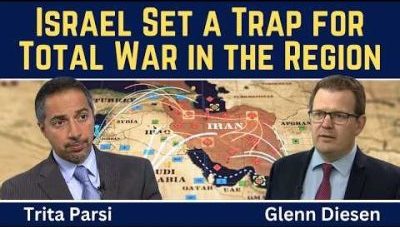
Trita Parsi: Israel Set a Trap for Total War in the Region
or go to
Aletho News Archives – Video-Images
From the Archive
Zionism’s Violent Legacy
By Donald Neff | Washington Report On Middle East Affairs | January 1996
On January 4, 1948, Jewish terrorists drove a truck loaded with explosives into the center of the all Arab city of Jaffa and detonated it, killing 26 and wounding around 100 Palestinian men, women and children.[1] The attack was the work of the Irgun Zvai Leumi – the “National Military Organization,” also known by the Hebrew letters Etzel – the largest Jewish terrorist group in Palestine. The Irgun was headed by Revisionist Zionist Menachem Begin and had been killing and maiming Arabs, Britons and even Jews for the previous ten years in its efforts to establish a Jewish state.
This terror campaign meant that at the core of Revisionist Zionism there existed a philosophical embrace of violence. … continue
Blog Roll
 Aletho News
- Trita Parsi: Israel Set a Trap for Total War in the Region
- Trump’s Iran war is on an Israeli leash
- Saudi oil boss issues global supply warning
- Riyadh Says Its Oil System Is Intact. The Numbers Say Otherwise.
- Trump and Netanyahu Want to “Finish the Job” on Iran
- US ‘one-sided dictation’ not Iran’s beliefs makes rational talks impossible: Baghaei
- Iran’s Next Strike May Not Explode. It Could Shut You Down /Col Doug Macgregor
- Iran: US political targets legitimate if assassinations return
- Iraq shuts key border crossing with Iran under US pressure: Report
- Undersea Internet cables could be targeted in retaliation for attacks on Iran: IRGC deputy chief
- If Americans Knew
- The Israel Lobby’s Changing Fortunes
- AIPAC has become such a political liability that it’s shifting to a more “nimble” approach to buying politicians
- At least 160 Israeli settler attacks in 2 weeks
- Will Gaza’s Ancient Christian Community Disappear Forever?
- Israel’s vision of regional security rests on keeping Arab states weak
- Heidi Levine recounts how Palestinian youths helped save her in settler attack
- DAILY UPDATE: Latest essential news on Palestine, Israel, & region
- Trump’s Intensifying Sabotage of the ICC, for Israel’s Sake
- Israeli military detain US and UK volunteers in West Bank including Democratic NY politician Brad Lander
- Americans at National Conservatism Conference held in Israel this year criticize Israel
- No Tricks Zone
- E-Cars Reduce CO2 Emissions By Only 41% Compared To Internal Combustion Engine Vehicles
- Predictions Made By Renowned Climate Professor Over Past Decades Have Been Proven To Be Poor
- New Study Suggests Large Regions Of The Pacific Ocean Have Been Cooling For The Last 80 Years
- Germany’s Green Energy Debacle: High Energy Costs Force Kahla Porzellan to Close After 182 Years!
- New Study: 50 Years Of The Most Aggressive ‘Net Zero’ Policies Can Only Affect The Global Climate By 0.03°C
- US September “Heat” Was No Record…Many Records Set Decades Ago
- Latest European Green Energy Debacle; Portugal’s Largest Flagship Solar Park Insolvent!
- Green Energy Debacle: German Expert Professor Fritz Vahrenholt Warns Of Severe Economic And Social Consequences
- Two More Paleo Reconstructions Affirm Meters-Higher Sea Levels Across Ireland, Brazil 7000-6000 Years Ago
- New Study: Earth And Venus Surface Warmth Largely Explained By Convection And Lapse Rate, Not CO2 Or Radiation

