Israel sets restrictions across Jerusalem for Yom Kippur, arms Israeli ‘volunteers’
Palestinian Information Center – October 11, 2016
OCCUPIED JERUSALEM – The Israeli authorities imposed tight restrictions throughout occupied Jerusalem in anticipation of the Jewish holiday of Yom Kippur.
Haaretz Hebrew newspaper said that a series of closures and heightened security operations were declared between the eastern and western parts of occupied Jerusalem.
Palestinian vehicles’ movement is completely restricted as several checkpoints were erected throughout the occupied city, according to the sources.
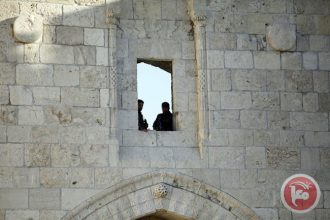 Israeli Police spokeswoman Luba al-Samri said in a statement that Israeli police, border police, and Israeli “volunteers” would be spread through different areas in the city of Jerusalem beginning early Tuesday morning, the beginning of Yom Kippur.
Al-Samri added that Israeli police provided the volunteers with weapons to “guarantee the safety of the worshipers.”
“Israeli police in cooperation with the Jerusalem municipality will install checkpoints at the main roads to prevent cars of Eastern residents from heading to West Jerusalem,” al-Samri said in her statement, referring to preventing the access of any Palestinian residents from the eastern part of Jerusalem to its western part.
“Israeli police will also be stationed at neighborhoods to prevent any rock throwing,” according to her statements.
Earlier Monday, Israeli authorities imposed a complete closure in occupied West Bank and Gaza Strip on the occasion of Jewish holiday Yom Kippur.
US maternal mortality rate worse than Libya, Palestine – report
RT | October 10, 2016
The maternal mortality rate in the United States is higher than that of Iran, Palestine, Libya, and Saudi Arabia. The rate has risen since 2000 and is higher than most “high-income locations,” according to a study of health factors in 195 nations.
In 2015, the US had a maternal mortality rate (MMR) per 1,000 livebirths of 26.4, an increase from both 1990 (16.9) and 2000 (17.5), according to the Global Burden of Diseases, Injuries, and Risk Factors Study. The multi-pronged study, coordinated by the Institute for Health Metrics and Evaluation (IHME), included worldwide data on diseases, life expectancy, nutrition, and a host of other factors.
The 2015 MMR in the US was higher than that of the likes of Vietnam (15.6), Saudi Arabia (15.7), Palestine (16.2), Thailand (20), Iran (20.8), Libya (22.8), and Qatar (25.5), among many others.
Overall, the US had 1,063 maternal deaths in 2015, compared to 28 in Canada, 315 in all of western Europe, and 1,135 in all of central Europe, eastern Europe, and Central Asia, the study found. Russia had 340 deaths, down from 655 in 2000. China had 2,948 deaths, but with an MMR lower than the US, at 17.7.
The US was among the few “high-income locations” that had an MMR of more than 15, the study found.
“By the year 2015 … 49 countries had an MMR of less than 15, including Saudi Arabia, all countries in central Europe, and all high-income locations with the exception of the USA, Argentina, Brunei, Chile, and Uruguay,” the report stated.
The MMR in the US was on par with nations like Kazakhstan (26.5) and Uzbekistan (26.2).
“Several other countries in North Africa and Middle East along with the USA, Armenia, Azerbaijan, Bulgaria, Chile, China, Costa Rica, Kazakhstan, Puerto Rico, Romania, Russia, Tajikistan, Thailand, Turkmenistan, Ukraine, Uruguay, Uzbekistan, and Vietnam had an MMR between 15 and 30,” according to the study
Many Latin American, Caribbean, Southeast Asian, and African nations had among the highest MMRs in 2015. The Central African Republic had the highest MMR in the world, at 1074.3.
Some of the increase in America’s MMR in recent years, the report said, may be due to increased, official awareness of cause of death.
The US “has high MMR for a high-SDI (Socio-demographic Index, or rates of education, fertility, and income) country—and is one of the few where it is increasing—but following the lead of Mexico and much of Latin America, it is also one of the only countries that has proactively improved its civil registration system with addition of a pregnancy checkbox on the standard death certificate,” the report stated.
It added: “The USA should learn from the experiences of other countries and consider implementing regular, comprehensive confidential enquiries into drivers of maternal mortality.”
The study said that to improve on maternal mortality rates, nations should “expand coverage and improve quality of family planning services, including access to contraception and safe abortion to address high adolescent fertility; invest in improving health system capacity, including coverage of routine reproductive health care and of more advanced obstetric care” among other suggestions.
A separate report released in September found that the state of Texas, ground zero for restrictions to sexual and reproductive health care in the US, has a maternal mortality rate that is among the highest in the industrial world.
Outside of maternal mortality rates, the study included many global health factors that had improved in the last several years, including an increased average life span by 10 years (62 to 72) since 1980 and decreases in deaths from HIV/AIDS and malaria — by 33 percent and 37 percent, respectively — since 2005.
The world has also halved the death rate of children younger than five years old, to 5.8 million per year, the study found. The top conditions that make humans sick but are not necessarily fatal include upper respiratory infections like pneumonia and diarrheal diseases, the study said.
The study included analyses of women’s health and childbirth, healthy life expectancy, behavioral and environmental risks, and child mortality.
“Development drives, but does not determine health,”said Dr. Christopher Murray, director of IHME at the University of Washington in Seattle. “We see countries that have improved far faster than can be explained by income, education, or fertility. And we also continue to see countries – including the United States – that are far less healthy than they should be given their resources.”
Jerusalemite activist sentenced to 20 months in Israeli prison
Samidoun Palestinian Prisoner Solidarity Network – October 10, 2016
 Israeli Magistrate’s Court in Jerusalem sentenced Palestinian Jerusalemite journalist and activist Samer Hussam Abu Aisha, 29, to 20 months in Israeli occupation prison. Abu Aisha has been imprisoned since 6 January 2016; he was attacked and abducted from inside the Jerusalem office of the International Committee of the Red Cross, where he and Hijazi Abu Sabih had erected a protest tent against the Israeli occupation’s order expelling them from their city of Jerusalem. They held evening events, lectures and cultural programs in rejection of deportation and in defense of the Palestinian identity of Jerusalem.
The two organizers were leaders of a campaign against Israeli occupation orders of expulsion from Al-Aqsa Mosque and from the city of Jerusalem. Their campaign included singing protests and other forms of cultural resistance and creative actions. On 16 December 2015, he and Abu Sbeih were delivered an order of expulsion from the city of Jerusalem for five months, citing “state security and order.” He had previously been arrested and harshly interrogated for 33 days, then released and banned from traveling outside Palestine. As soon as his house arrest ended, the Israeli occupation imposed the expulsion order upon them.
Abu Aisha went on hunger strike for 21 days in August in solidarity with Bilal Kayed’s demand for release from Israeli prison; he was part of a group of 35 prisoners from Gilboa prison who also demanded improved conditions inside the prison. Rawan Abu Aisha, Samer’s wife, said that the strike was in part prompted by ongoing denials of family visits.
Abu Aisha wrote earlier regarding the Israeli charges against him:
I was born in Jerusalem in 1987. I lived there all my life except for a few years during my studies in Egypt. As part of my work, I often travel to participate in conferences and youth exchanges in Arab countries and across the world.
Last August I travelled to Lebanon to participate in the 25th Arab Youth Camp. 28 hours after my return to Jerusalem on 17 August 2015, I was arrested by Israeli occupation forces and subjected to an interrogation that lasted 44 days. Eventually, I was conditionally released under open ended house arrest and accused of traveling to an “enemy state” in violation of the “Israeli” emergency regulations of 1952 which place a ban on travel to enemy state of the Zionist regime. These “laws” and policies are forced on us Palestinians despite the fact that we don’t recognize these laws, and the fact that Palestinians hold Lebanon to be a sister state which is naturally, geographically and culturally connected to Palestine.
The detention of Yasser Qous, Jerusalem director of the Palestinian Prisoners’ Society, was extended as well by Israeli occupation courts on 9 October; he had been assaulted and arrested by police forces in the Old City of Jerusalem and accused of “obstructing police work.”
Hamas calls ICC visit to Palestine ‘useless’ as delegation skips Gaza
Ma’an – October 8, 2016
BETHLEHEM – The Hamas movement called a visit by an International Criminal Court (ICC) delegation to the occupied Palestinian territory and Israel this weekend “pointless and useless” on Monday, after the delegation declined to include the Gaza Strip in their visit.
“It is regrettable that the ICC delegation yielded to the demands of the Israeli occupation to exclude the Gaza Strip from the delegation’s schedule, despite the fact that the Gaza Strip was the main site of Israeli crimes in 2014,” a statement released on the movement’s website said.
Various human rights groups have charged Israel with international war crimes and submitted several cases to the ICC related to Israel’s devastating 51-day assault on the Gaza Strip in 2014 that culminated in the deaths of more than 1,000 civilians. Meanwhile, critics have questioned the ICC’s ability to bring justice on issues related to Palestine in the face of Israel’s refusal to cooperate with the court, and have even faulted the ICC itself with playing a key role in the slow process of holding Israel accountable.
“As a result, Hamas considers the delegation’s visit pointless and useless. The visit has caused more pain and suffering for the families of victims who counted on the ICC to bring justice to them and bring the Israeli killers before the court.”
The fierce condemnation by Hamas, the de facto rulers of the blockaded Gaza Strip, came as the Palestinian Authority (PA)-governed occupied West Bank welcomed the delegation of the ICC’s Office of the Prosecutor (OTP) to the city of Ramallah on Saturday.
They were scheduled to meet with the committee that is charged with following up on ICC investigations, the state-run television network Palestine TV, and a Palestinian newspaper, according to the Palestine Liberation Organization (PLO). On Sunday, the delegation will travel to the city of Bethlehem in the West Bank to attend an academic meeting at Bethlehem University. Meanwhile, the OTP also plans to visit Israel.
“The State of Palestine had officially requested the OTP visit Gaza, though it was declined. We hope that on their next visit the ICC delegation will visit other areas of the Occupied State of Palestine, including Hebron and the Jordan Valley,” the PLO’s ICC Higher National Committee said Friday.
The ICC’s decision to skip visiting the besieged Gaza Strip comes after the small Palestinian territory was was bombarded by a wave of Israeli airstrikes in recent days, and after Israel imprisoned activists aboard an all-female flotilla that attempted to reach Gaza this past week.
The flotilla was the fourth of its kind since 2010, when the first Freedom Flotilla was brutally attacked by Israeli naval forces, who killed ten Turkish activists aboard the Mavi Marmara ship.
No Israelis were ever charged for the killings on the Mavi Marmara, despite a case being filed at the International Criminal Court (ICC) charging Israeli officials with war crimes.
Meanwhile in August, the Israeli military closed 13 criminal investigations into cases of Israeli soldiers committing violations against Palestinian civilians during the 2014 Gaza war, without imposing any punitive measures, while some 80 incidents were closed without opening a criminal investigation.
The 51-day Israeli offensive, termed “Operation Protective Edge” by Israeli authorities, resulted in the killings of 1,462 Palestinian civilians, a third of whom were children, according to the United Nations.
According to a UN report, there were incidents in which hundreds of Gazans were killed at the same time, many belonging to the same family, when Israeli air forces bombed residential buildings — credible allegations that the incidents amounted to war crimes. … Full article
This only happens in occupied Palestine

Dr Daud Abdullah | MEMO | October 7, 2016
After a visit to Hebron in 1996, the late Palestinian scholar Edward Said wrote, “The present situation cannot last, there are too many inequities and injustices at the heart of Palestinian life.” Two decades on, there is no end in sight to the wretched conditions he deplored back then. On the contrary, they have grown worse.
Not even Palestinian Authority President Mahmoud Abbas’s controversial decision to attend the funeral of former Israeli President Shimon Peres was enough to bring about a token suspension of the daily torment of Palestinians in the occupied territories. Immediately after his return to Ramallah, Israel declared Tel Rumeida, a neighbourhood in the Governorate of Hebron, to be a closed military area.
As is always the case when such closures are imposed, Palestinian students and residents who attempted to attend classes or go about their daily affairs were told to return to their homes until the 600 illegal Jewish settlers living in Hebron had observed their religious festivities. These celebrations are expected to last several days and so the ancient Ibrahimi Mosque was also closed to Muslim worshippers for six days.
Like their Muslim compatriots who are routinely denied access to their mosques, Christian Palestinians in Bethlehem and Jerusalem must also have permits to worship in their churches from which they are separated by the eight-metre high “security” wall. Before the creation of the state of Israel in 1948, Christians made up 18 per cent of Palestine’s population. Today, they account for less than 1.5 per cent. For reasons of political correctness, western politicians and church leaders have turned a blind eye to the real causes of this exodus; they have chosen instead to look for a scapegoat in alleged “persecution by Muslims”. That is palpable nonsense and plays into Israel’s nefarious hands.
In Hebron, life is far from normal for its 200,000 Palestinian inhabitants at the best of times. Every aspect of their lives is overshadowed by the activities of the settlers who now live illegally among them, with full military protection courtesy of the Israel Defence Forces. Palestinians must contend with the hideous road blocks and military checkpoints that swamp the old city and its environs. Recent reports confirm that more than 1,000 residential apartments have been vacated because of the harassment affecting the local Palestinian population. This was entirely predictable; Israel’s closure of more than 800 commercial businesses was meant to do exactly that — make life so intolerable for the locals that they will leave “of their own accord”. In Zionist terminology this is known rather sinisterly as “silent transfer.”
Elsewhere in the occupied West Bank, the system of inequity and injustice described by Edward Said is no less punitive. The predominantly farming community in Qalqiliya has been virtually encircled by Israel’s apartheid wall, with farmers separated from their land. More than 170,000 men, women and children are similarly locked in by the wall in Bethlehem. Former US President Jimmy Carter found it appalling that they had to obtain “permanent resident” permits from the occupation authorities in order to continue living in their own homes.
It does not take much to recognise the similarities between the Israeli permit system and the hated South African Pass Laws. Just as it was illegal for black Africans to enter designated “white areas” in South Africa so too is it illegal for Palestinians from the West Bank or Gaza Strip to visit Jerusalem, for example, without military permission. At present, the general rule is that only those aged 45 years or over are considered for a permit. While there are, of course, subtle differences, the South African jurist John Dugard has pointed out that the common features between South African apartheid and Israel’s version are discrimination, repression and territorial fragmentation.
Under these repressive and degrading conditions it was only a matter of time before a third intifada erupted in the occupied territories. Israel’s determination to seize Palestinian land for its settlements; its closure and desecration of religious sites; and its extrajudicial killings have all provided the combustible mix that has fuelled the intifada for the past year. The sheer number of settlers (more than half-a-million) and military checkpoints scattered across the West Bank (more than 500) also make the conditions ripe for anger and disaffection to fester.
Throughout their long struggle against Zionist colonisation, Palestinians have staged several uprisings. Once in motion these have never been easy to suppress. Being the weaker of the two parties militarily and politically, the Palestinians have on every occasion suffered untold human and material losses. Yet, for every successive generation, it has been considered to be a price worth paying for their freedom from Israel’s brutal military occupation.
The nature and course of the uprisings have always been unpredictable. This is especially the case today since there is no single political faction that has emerged clearly to lead or coordinate events on the ground. In the absence of any serious political initiative, and given Israel’s determination to maintain its occupation and dominance over the Palestinians, it is only reasonable to expect the current intifada to continue well into the future. In this regard, Edward Said was right: there will be no end to Palestinian efforts to end the prevailing system of inequity and injustice of a kind which only happens in occupied Palestine.
Palestinian media raided and closed by Israeli forces

Samidoun Palestinian Prisoner Solidarity Network – October 8, 2016
Palestinian associations in 1948 Palestine were closed by Israeli police and Shin Bet agents on Thursday, 6 October in a series of raids in Nazareth and Umm al-Fahm. The associations allegedly are linked to the northern Islamic movement, the Palestinian religious and political organization banned nearly a year ago by Israeli officials. The leader of the Islamic Movement is Raed Salah, currently imprisoned and well-known for his advocacy in defense of Al-Aqsa Mosque, as well as his participation in the Freedom Flotilla to Gaza.
Palestinian organizations across political lines condemned both the banning of the Islamic Movement and the raids on the community organizations and media institutions. The four Palestinian entities forcibly shuttered on Thursday were the Higher Commission to Support Jerusalem and Al-Aqsa, Q Press in Umm al-Fahm, the Midad Psychometry Institute and Al-Medina newspaper.
The Higher Arab Follow-Up Committee labeled the attacks “a new sign of a systematic scheme to suppress the rights of the Arab community, a repression that applies to all walks of life… We renew our rejection of the decision to ban the activities of the Islamic Movement, and at the same time warn of the danger of the use of the Islamic Movement’s activities as a new pretext to suppress even more freedoms and silence the voice of the Arab people, who are fighting against the Israeli racist policies targeting our presence on our ancestral land.”
The Al-Alam media association denounced the closures and raids on Al-Medina, Q Press and other institutions and the confiscation of their computers, linking the raids to an ongoing escalation against Palestinian organizing in 1948 Palestine, among Palestinians with Israeli citizenship, in particular the campaign of arrests and harassment targeting the National Democratic Assembly (Tajammu’/Balad party).
The Freedoms Commission of the Higher Follow-Up Committee said that “these three institutions, added to the 23 already prohibited, are independent institutions that provide a variety of services for our people… How can an institution like the Midad Psychometry Institute to qualify students for exams, which tutors thousands of secondary school students, contribute to conflicts over Al-Aqsa Mosque? How can the fact that 69 students of the Midad Institute were admitted this year to study medicine in Israeli universities be a cause of conflict over the Al-Aqsa Mosque?” The statement noted the ongoing attacks on the National Democratic Assembly and the investigations targeting Haneen Zoabi and Jamal Zahalka, as well as the 104th demolition of the village of Al-Araqib and the displacement of its people on the same morning of 6 October as reflections of one policy. “This government has declared outright war on the Palestinian people inside, taking advantages of the wars in the region to implement its plans against our people in our homeland, and the Palestinian people in general,” said the statement.
The suppression of Palestinian political activity among the Palestinians of ’48 (who hold Israeli citizenship, and constitute 20% of the population of the Israeli state) is nothing new; in the first 20 years of occupation, from 1948 to 1966, Palestinian citizens lived under martial law which in many ways served as the precursor to the present-day scheme in the West Bank and Jerusalem. Since that time, the banning and violent suppression of Palestinian political activities, as well as the targeting of Palestinian political leaders for arrest and imprisonment, has not ceased. From the Al-Ard movement prohibited in the 1950s, to the Land Day protests against land confiscation met by Israeli fire, to the killing of Palestinians at the launch of the second Intifada – not to mention the imprisonment of prominent Palestinians like Salah, Said Naffaa, Ameer Makhoul and others, and the targeting of cultural workers like Dareen Tatour, the Israeli state has been firmly committed to the suppression of Palestinian existence and political organizing in 1948 Palestine. These acts of political repression accompany ongoing land confiscation, racism and discrimination, defunding of communities and institutions and over 50 racist laws targeting Palestinian existence on their land.
Six Key Questions for the Obama Administration and Companies About Yahoo’s Cooperation With the NSA
By Neema Singh Guliani | ACLU | October 7, 2016
Since the Snowden disclosures, it has been clear that the NSA conducts unconstitutional, dragnet surveillance of Americans’ international communications. However, it now appears that the NSA is using surveillance authorities to conduct an entirely new type of surveillance: requiring major companies to conduct mass e-mail wiretaps, which involve searching the content of all incoming traffic.
If the news stories that broke earlier this week are accurate, here’s what we know:
Last year, Yahoo, in response to a classified government order, scanned hundreds of millions of mail accounts for a “set of characters” or digital “signature” of a communications method purportedly used by a state-sponsored terrorist organization. The search was apparently performed on all messages as they arrived at Yahoo’s servers. All of this was done without input from Yahoo’s security team, potentially placing users’ security at risk and ultimately prompting the resignation of the company’s chief security information officer.
It appears that a secret court, the Foreign Intelligence Surveillance Court (FISC), approved the surveillance—or at least approved the general procedures the government used to identify its targets. There are conflicting reports on what authority the government relied on.
Unfortunately, the news stories and Yahoo’s cryptic response leave more questions than answers. Yahoo’s ability to disclose information about this classified government program may be limited. But the Obama Administration owes the public far more information about this spying program, especially if it is going to fulfill its promise of increased transparency. As a start, the Obama Administration and other major tech companies should publicly answer the following questions:
1. What authority did the government rely on in compelling Yahoo to search its customers’ emails?
The million-dollar question – which remains unanswered – is what legal authority the government relied on for its demand to Yahoo. Initial reports suggested that the government may have relied on Section 702 of the Foreign Intelligence Surveillance Act (FISA), a highly controversial provision enacted as an amendment to FISA in 2008. More recently, however, news reports have stated that the government obtained what is known as a “traditional” FISA order under Title I of the statute. In either scenario, the surveillance would reflect a dramatic shift in the public understanding of how these authorities are used. Title I authorizes the government to search the communications of a particular person or entity. But, if news reports are accurate, it would mean that the government is now using this law to require that companies scan the content of all users’ incoming emails.
2. What is the program’s legal justification and has it been reviewed?
Whether government is relying on Section 702 or Title I, it seems to have strayed far from the original congressional intent. What is the government’s legal justification for this type of surveillance? And, if the surveillance was authorized by the FISC, was the court aware that its order required Yahoo to search the emails of hundreds of millions of innocent users?
In the past, the government and FISC have engaged in legal gymnastics to justify mass surveillance. The public and Congress have the right to know if this is happening yet again. The Obama Administration should release all legal memoranda it relied on in conducting the Yahoo surveillance, and it should disclose any relevant FISC opinions regarding the surveillance. If no such FISC opinions exist then the public deserves to know, as that itself is cause for concern.3. What types of content searches does the government believe it has the authority to conduct under Title I and Section 702, and are past statements about these authorities still accurate?
Intelligence officials have argued that surveillance programs conducted on U.S. soil are narrowly targeted because the government searches only for specific communication identifiers (like an email address) and not for keywords (like “bomb”). But the Yahoo story suggests that even this limitation may be falling to the wayside. If Yahoo conducted a broad search of its users’ incoming email for a “set of characters” or digital “signature,” that information may have been found in the content of communications. In other words, individuals may have been targeted not based on any preexisting suspicion about who they are or who they communicate with, but based solely on what they were communicating. Moreover, it is unclear whether this “signature” was used only by the target organization, or also by other wholly unaffiliated individuals. If the intelligence community is now engaging in this type of content-based surveillance, then the Obama Administration has a responsibility to set the record straight.
4. If the government relied on Section 702, did Yahoo attempt to filter out purely domestic communications?
Section 702 does not authorize the government to collect or search purely domestic communications. However, the stories contain no details about whether Yahoo made efforts to filter out purely domestic communications, and if so, how successful those efforts were. If such efforts were not made and the surveillance occurred under Section 702, then the Obama Administration should immediately disclose the number of purely domestic communications that were collected and searched under the order so that the public can fully assess the privacy implications.
5. If the government relied on Section 702, did the Privacy and Civil Liberties Board (PCLOB) know about this type of surveillance when they conducted their examination?
In 2014, the Privacy and Civil Liberties Board issued a report on Section 702. While we disagreed with many of the report’s conclusions, there is no doubt that the PCLOB declassified important information about Section 702 to facilitate a more robust debate. However, the PCLOB’s public report makes no mention of the types of demands that were purportedly received by Yahoo. If the PCLOB was unaware that this surveillance was occurring under Section 702, why were they not informed? If they knew, why was this information withheld from the public? Either way, this further calls into question the conclusions in the PCLOB report and the adequacy of existing oversight mechanisms.
6. How are other major companies interpreting their obligations under Section 702 and Title I?
Major companies like Google have issued statements saying they have never received the types of demands described in the Yahoo stories and reaffirming that they would challenge such a demand. While we applaud these companies for their statements, more information is needed to fully understand how the government is using its surveillance authorities. Specifically, we urge major technology companies to make publicly available information on how they interpret Section 702 and Title I, and to describe the types of demands that they believe clearly fall outside the statutes’ purview. In this way, companies can help to fill the information abyss left by the Yahoo story and the intelligence community’s lack of transparency.
Yahoo Scanned All Users’ Emails for Government!
By Alfredo Lopez | This Can’t Be Happening! | October 5, 2016
If you are one of the approximately 280 million people with Yahoo email accounts, your email was scanned for content and possibly turned over to the U.S. government. Yahoo, on Tuesday, admitted that fact.
Reuters revealed on Tuesday that the Internet mega-company (which is now being purchased by Verizon Communications) designed a special program last year to capture and scan all its users’ incoming email after being ordered to do that by the either the NSA or FBI. It deployed the program over the last year, scanning every piece of email Yahoo accounts received and apparently turning over all email that contained any of the tens of thousands of “keywords” the NSA considers suspicious.
The decision, Reuters says, was made by President and Chief Executive Officer Marissa Mayer, in collaboration with people in her legal department. It wasn’t without controversy: several Yahoo top staffers left the company including Chief Information Security Officer Alex Stamos (who left for a top job at Facebook).
The news is startling for several reasons. It’s also deceptive for some others.
* Email providers like Google (whose gmail program is a favorite source of NSA data capture) always claim they don’t do “blanket review” of email content. Yahoo is the first to openly admit that it does. It apparently made that decision because its executives didn’t think they could successfully resist the government orders.
That decision by Mayer, already under considerable pressure at the struggling corporate giant, was apparently taken without consultation with her security team. Instead, she just ordered technologists to write the data scanning software. Many in the company thought it could challenge the government orders in the courts and prevail. Several, including Stamos, fled in reported horror.
* They didn’t just review the emails, they built a special program to do it and never let their users know they were doing that. It might seem logical — after all, you don’t let the person who you’re spying on know you’re spying — but very few Yahoo users are the subject of investigations. Yahoo’s statement — that it complies with legal requests — doesn’t even mention the Consitution that protects your data legally and whose first and fourth amendments appear to have been clearly violated by this action.
* Finally, what do you do with all that data? While the government would contend that it was investigating illegal activity, it now has reports (at least) if not full captures on everyone. And a government that collects data on everyone isn’t a state doing policing. It is a police state.
As shocking as this revelation is, the reaction of other Internet companies has been gallingly disengenuous.
“We’ve never received such a request,” a spokeman for Google, told Reuters. “But if we did, our response would be simple: ‘No way’.”
Well… yes… “way” because Google has received thousands of NSA National Security Letters and routinely complies with them. They may not be scanning all the information but they will scan and turn over any information the government requests without informing the affected customer.
A Microsoft spokesperson also chimed in, “We have never engaged in the secret scanning of email traffic like what has been reported today about Yahoo.”
No, maybe not like reported today but Microsoft also routinely complies with government orders almost never challenging them.
In a sense, the way the data is collecting (and the amount collected) — as shocking and important as that is — is probably not the most important issue. If you collect and turn over data on any user just because someone in the NSA tells you to, your respect for privacy and constitutional rights is deeply questionable. That’s exactly what all these companies do.
Yahoo’s latest scandal only underscores how little respect for our rights this industry has.
There are many cases by companies challenging the government on surveillance. Why Yahoo could choose to comply so quickly and not tell anyone about it will certainly provoked widespread circulation and analysis in the coming weeks.
That is something we should all be monitoring.
(Full disclosure: as an official of MayFirst/PeopleLink, I am involved in an international lawsuit challenging the NSA’s right to conduct mass surveillance in foreign countries. The “bias” revealed, however, should not surprise any reader of this website.)
Israeli navy seizes Gaza-bound aid ship
MEMO | October 5, 2016
The Israeli navy has seized the Zaytouna-Oliva, a Gaza-bound aid ship, and is currently towing it towards the Israeli port city of Ashdod, according to the initiative’s organizers and reports in the Israeli media.
Sondos Ferwana, a media spokeswoman for the International Coalition for the Fourth Freedom Flotilla, told reporters on Wednesday evening that Israeli naval forces had “captured the ship”.
The Israeli military, for its part, confirmed the ship’s seizure in a statement.
“The Israeli Defense Forces managed to quickly seize the ship without causing any injuries among passengers,” the statement read.
According to the military, the crew of the Gaza-bound vessel had initially refused the navy’s orders to change course.
“This forced us to intervene and seize the ship before it violated the legal maritime closure imposed on the Gaza Strip,” the statement read.
According to reports on Israel’s Channel Two television station, the aid ship was intercepted — without resistance — some 80 kilometers off Gaza’s coast.
Ferwana, for her part, described the incident as “another act of Israeli piracy”, adding that all contact with the ship — which is carrying humanitarian aid and several female activists — had been lost.
“We don’t know the fate of the activists aboard,” she said.
Passengers on the Zaytouna-Oliva, which set sail from the Spanish city of Barcelona last month, include Irish Nobel Peace Prize laureate Mairead Maguire, Swedish and Algerian lawmakers, a South African Olympic athlete and a Malaysian doctor.
The all-female initiative seeks to break Israel’s decade-long blockade of the Gaza Strip and show solidarity with the women of Gaza.
Palestinian resistance movement Hamas, for its part, which has governed the Gaza Strip since 2007, condemned what it described “the Israeli occupation’s assault on the aid ship and its intimidation of the activists on board”.
In a statement, Hamas spokesman Fawzi Barhoum said the incident amounted to “an act of state terrorism” and another example of Israeli “aggression against the Palestinian people and those who show solidarity with the Palestinian cause”.
Barhoum went on to urge the international community to “put an end to Israel’s crimes”, stressing the need for immediate action “to lift the blockade and rescue the people of Gaza”.
In June of last year, Israeli forces intercepted the “Marianne” — which had been taking part in a similar initiative — and arrested all activists on board.
A similar Gaza-bound aid flotilla ended in tragedy in 2010 when the Mavi Marmara, a Turkish aid ship, was raided by Israeli commandos who killed 10 Turkish activists.
Since 2007, the Hamas-run Gaza Strip has groaned under a crippling Israeli/Egyptian blockade that has deprived its almost two million inhabitants of most basic commodities, including food, fuel, medicine and desperately-needed building materials.
In June, UN Secretary-General Ban Ki-moon described the blockade of Gaza as “collective punishment”, which, he asserted, “suffocates its people, stifles its economy and impedes reconstruction efforts”.
Featured Video

Seyed M. Marandi: US-Iran War Inevitable: Kuwait and Bahrain May Fall
or go to
Aletho News Archives – Video-Images
From the Archives
Oil and the Israel Lobby
Reknowned economist M. Shahid Alam offers this excellent critique of Noam Chomsky’s defective analysis of the relative influence of Oil versus the Israel lobby over US foreign policy: … continue
Blog Roll
 Aletho News
- ICC ignored ‘very well-documented’ NATO crimes – ex-Libyan minister
- SNSC secretary dismisses US response to Iran’s conditions as ‘inadequate’
- Sanaa says Taiz roads open, secure for residents, warns Saudi forces
- Iraqi resistance group urges Saudi leadership to admit defeat, lift Yemen siege
- Trump’s Retreat: How Al-Aqsa Flood Took Down the US Empire
- Israel’s Military Actions in Lebanon Grossly Violate International Law — Lavrov
- Seyed M. Marandi: US-Iran War Inevitable: Kuwait and Bahrain May Fall
- Leaders Condemn Ansarallah Attack on Saudi Arabia While Ignoring Illegal War Against Yemen
- Leaked: Britain’s Covert Iraqi Psyops Network
- Yemeni Armed Forces Warn Airlines Against Using Saudi Airports, Exempt Mecca and Medina
- If Americans Knew
- The American Conservative: How Trump Made the World Go Nuclear
- Meet the US generals and admirals advancing Israeli policy
- Opinion: Why news organizations should boycott Israel
- The Israeli witch hunt of Sami Abu Shehadeh exposes the lie of the ‘Jewish and democratic’ state
- No state has a ‘right’ to exist – least of all Israel
- Testimonies about Gaza’s civilian death toll expose Israel’s atrocities – Daily Update
- How Israel Conquered the Latin American Right
- Agents search Rep. Omar’s Washington home in criminal probe as she vows she won’t ‘be silenced’
- “The Rule Was: ‘Shoot Everyone You See'”
- Israel goes ballistic over Nobel Laureate Navi Pillay
- No Tricks Zone
- Germany’s Green Energy Debacle: High Energy Costs Force Kahla Porzellan to Close After 182 Years!
- New Study: 50 Years Of The Most Aggressive ‘Net Zero’ Policies Can Only Affect The Global Climate By 0.03°C
- US September “Heat” Was No Record…Many Records Set Decades Ago
- Latest European Green Energy Debacle; Portugal’s Largest Flagship Solar Park Insolvent!
- Green Energy Debacle: German Expert Professor Fritz Vahrenholt Warns Of Severe Economic And Social Consequences
- Two More Paleo Reconstructions Affirm Meters-Higher Sea Levels Across Ireland, Brazil 7000-6000 Years Ago
- New Study: Earth And Venus Surface Warmth Largely Explained By Convection And Lapse Rate, Not CO2 Or Radiation
- 2025 Nature Paper Claiming Worsening Global Drought Gets RETRACTED …Heavily Flawed
- New Study: ‘Global Drought Shows No Detectable Recent Acceleration Under Climate Warming’
- Economic Masterminds: German Socialists Suggest Taxing Productivity Gains Stemming From Using AI

