NSA must end planned expansion of domestic spying, lawmakers say
RT | March 25, 2016
Two members of the House Oversight Committee, a Democrat and a Republican, have asked the director of the National Security Agency to halt a plan to expand the list of agencies that the NSA shares information with.
Representatives Blake Farenthold (R-Texas) and Ted Lieu (D-California) wrote in a letter to NSA Director Michael Rogers on Monday that the reported plan would violate privacy protections in the Fourth Amendment, since domestic law enforcement wouldn’t need a warrant to use the data acquired from the agency.
“We are alarmed by press reports that state National Security Agency (NSA) data may soon routinely be used for domestic policing,” the two lawmakers wrote. “If media accounts are true, this radical policy shift by the NSA would be unconstitutional, and dangerous.”
Last month, the New York Times reported that the Obama administration was working with the NSA to create new protocols for sharing intercepted private communications with domestic law enforcement agencies, such as the FBI and the Drug Enforcement Agency (DEA).
Currently, the secretive spy agency says that its analysts remove certain personal information before giving it to other agencies. Under the new rules, however, domestic law enforcement would have access to the surveillance data without it being scrubbed of personally identifiable information.
The FBI currently has the ability to use phone-based data, but it must request the NSA’s permission to access information from digital communications. The planned loosening of these restrictions would have to be approved by Secretary of Defense Ashton Carter, Director of National Intelligence James Clapper and Attorney General Loretta Lynch.
“Our country has always drawn a line between our military and intelligence services, and domestic policing and spying,” the congressmen wrote. “We do not — and should not — use US Army Apache helicopters to quell domestic riots; Navy Seal teams to take down counterfeiting rings; or the NSA to conduct surveillance on domestic street gangs.”
The Obama administration has said it had leeway to change procedures for certain surveillance programs, thanks to executive order 12333, signed by President Ronald Reagan in 1981.
In 2015, Congress passed the USA Freedom Act, which curbed certain surveillance activities by ending bulk collection of phone records. Private telecom companies are now required to hold onto such information, so that it can be handed over to law enforcement if a warrant is obtained.
Third of Palestinian village left homeless by demolitions this year
Ma’an – March 25, 2016
NABLUS – Mass Israeli demolitions in the Jordan Valley village of Khirbet Tana have left more than a third of its Palestinian residents homeless since the beginning of the year, the UN said Friday.
The UN Office for the Coordination of Humanitarian Affairs (OCHA) said 87 of the village’s 250 residents, including 35 children, had lost their homes in three separate demolitions since January.
The demolitions are part of one of the most extensive demolition campaigns in the occupied West Bank in the last seven years, which has left a total of more than 650 Palestinians homeless in less than three months, more than half of whom were children, OCHA said.
“These demolitions generate a coercive environment, exacerbating residents’ risk of forcible transfer, prohibited by international humanitarian law,” the body said.
In Khribet Tana, 53 structures have been destroyed, including 22 homes, 19 animal shelters, six latrine units, five traditional ovens, and a water reservoir.
The UN body said 18 of these structures had been donated as humanitarian aid by the international community, the majority after demolitions were carried out earlier this year.
Half of all Israeli demolitions across the occupied West Bank this year have taken place in areas declared by Israel as “firing zones,” or restricted military areas, which OCHA said constitute nearly 20 percent of the occupied West Bank.
Khirbet Tana is located in “Firing Zone 904A,” in a part of the Jordan Valley that rights groups say Israel intends to fully annex.
Thousands of Bedouins, who have lived there for decades, face the threat of forced displacement, a threat that rights groups say has become more acute in recent years, particularly with large numbers of resident forced to flee during Israeli military training exercises.
Israel’s Civil Administration demolished all structures in Khirbet Tana in 2012, leaving 152 Palestinian residents homeless, including 64 children, according to Israeli rights groups B’Tselem.
That was the fifth wave of demolitions the village had faced since 2005.
Israel’s Coordination of Government Activities in the Territories previously told Ma’an the demolitions were carried out in the village because they were built illegally and were endangered due to their situation inside the firing zone.
However, OCHA noted two illegal Israeli settlement outposts — recently established and built in the same firing zone — where the Israeli authorities have not carried out any demolitions, despite issuing demolition orders.
Israeli settlers threaten Palestinian who filmed Hebron ‘execution’

Ma’an – March 25, 2016
HEBRON – Israeli settlers on Friday gathered outside the home of a human rights worker in Hebron to hurl abuse at him, a day after he captured on camera an Israeli soldier’s killing of a wounded Palestinian that has sparked international outcry. Imad Abu Shamsiya, a staff member with Israeli human rights group B’Tselem, told Ma’an after settlers threatened him: “I now fear for my life and the life of my family. I’m afraid they might attack my house and do me harm.”
He added that he fears the possibility of suffering the same fate as the Dawabsha family, who were killed in an arson attack committed by settlers last year in the village of Duma in the occupied West Bank.
Palestinian residents of Hebron Abed al-Fattah Yusri al-Sharif and Ramzi Aziz al-Qasrawi, both 21 years old, were shot down Thursday after allegedly stabbing and moderately wounding an Israeli soldier near a military checkpoint in Hebron’s Old City.
Shamsiya recorded rare video footage of an Israeli soldier shooting al-Sharif in the head at point-blank range in plain view of the medical team after he had already been shot at least once and left motionless on the ground.
The incident has brought a barrage of condemnations from the Israeli leadership and led Israel’s army to detain the soldier responsible and launch an investigation.
The release of the graphic video has called attention to what rights groups, international leaders, and Palestinian officials call a policy of “extrajudicial executions” by Israel against Palestinians, since a wave of unrest swept the occupied Palestinian territory and Israel last October.
UN Special Coordinator for the Middle East Peace Process Nickolay Mladenov said Friday he strongly condemned the apparent “extrajudicial execution” of al-Sharif.
“This was a gruesome, immoral, and unjust act that can only fuel more violence and escalate an already volatile situation,” Mladenov said.
Tel Rumeida — where Shamsiya’s house is located and the site of the Thursday’s incident — has been a flashpoint for tensions between Palestinians and Israeli settlers and military, and is near the illegal settlement of Beit Yishai.
Mistreatment of Palestinians in the Hebron area has been common since the city was divided in the 1990s after a US-born settler, Baruch Goldstein, massacred 29 Palestinians inside the Ibrahimi Mosque.
The majority of the city was placed under the jurisdiction of the Palestinian Authority, while the Old City and surrounding areas were placed under Israeli military control in a sector known as H2.
The area is home to 30,000 Palestinians and around 800 Israeli settlers who live under the protection of Israeli forces. Hebron residents frequently report attacks and harassment by the settlers carried out in the presence of the forces.
Fox News Claims Broadcast TV Database Infringes Copyright
EFF and Partners Support Media Monitoring Service in Fight for Fair Use
EFF | March 24, 2016
San Francisco – A media monitoring service that creates a text-searchable database of television and radio content is defending its fair use rights before a federal appeals court. The Electronic Frontier Foundation (EFF), New York University’s Technology Law and Policy Clinic, and Public Knowledge urged the court Wednesday to protect this innovative technology—and others that have yet to be developed—from being shut down by copyright infringement claims.
“Search engines and book digitization have proven the enormous social benefits of indexing and archiving the media,” said EFF Staff Attorney Kit Walsh. “This case is the latest in a long line of copyright-based challenges to these important tools, and it should fail just as the others have.”
In this case, Fox News sued a company called TVEyes, claiming the company’s broadcast content database—used by journalists, scholars, and political campaigns to study and monitor the national media—infringed its copyright in its programming. The district court acknowledged that the service is generally a fair use of copyrighted material, but then, in a second ruling, held that some of the features of the TVEyes database could facilitate infringement, including the ability to share links or search by date and time. In a departure from established legal precedent, the court ruled that this was enough to defeat TVEyes’ fair use defense.
TVEyes appealed to the United States Court of Appeals for the Second Circuit. In an amicus brief filed Wednesday, EFF and its partners argued that the law does not impose liability on a toolmaker based on the possibility that users will misuse a tool, except in limited circumstances not present here and not even alleged by Fox News.
“TVEyes’ liability should not turn on the hypothetical conduct of its users,” said EFF Legal Director Corynne McSherry. “If the district court decision is upheld, all kinds of new technologies could be at risk. We are asking the appeals court to follow the law and reject Fox News’ claims.”
For the full amicus brief:
https://www.eff.org/document/amicus-brief-37
For more on Fox News v. TVEyes:
https://www.eff.org/cases/fox-news-v-tveyes
Turkey Eyes Law to Censor Universities Amid Professor Arrests
Sputnik – 24.03.2016
Turkey’s government has proposed a new law, which would have universities fire faculty for political disagreement with the government.
The new law would allow universities to systematically dismiss faculty based on their political leanings.
The law was proposed amid the arrest of several academics, who were arrested for signing a peace petition against the current military operation in Turkey’s southeast. The academics were detained on charges of “terrorist propaganda.”
Under the proposed law, faculty could be dismissed for such charges as “supporting terrorism,” “participation in the strikes and demonstrations that impede the learning process,” and “slandering the reputation of the state.”
“These first arrests are likely to be the tip of the iceberg. The next weeks could see a wave of them in jail,” Gareth Jenkins, a political analyst based in Istanbul told Nature.
The law would also target the arrested professors’ supporters, as their actions, by definition are “behavior which smears the state’s reputation” in the new law.
Under current law, the professors cannot be dismissed, because such charges are not part of the law. One of the more contentious issues is that faculty could be fired for “participation in the activities of political parties, which go beyond the provisions stipulated by the law.”
Turkey orders closed trial for Cumhuriyet editor threatening to expose Erdogan in court

RT | March 25, 2016
The editor of the opposition Cumhuriyet newspaper, Can Dundar, has been punished with a trial behind closed doors, after threatening to put President Erdogan on the defensive with renewed allegations.
Many media trials in Turkey of late have gripped national and international attention, as President Recep Tayyip Erdogan continues his relentless pursuit of alleged enemies of the state.
Dundar has been sentenced to life on the charge of espionage – and has vowed to do his utmost to make the wrongdoings of the Turkish government the focus of his Friday trial, effectively turning the tables.
Like others in recent years, Dundar, 54, and Ankara bureau chief Erdem Gul, 49, stand accused of trying to topple the government, something they allegedly attempted to do by publishing last May a video purporting to reveal truckloads of arms shipments to Syria overseen by Turkish intelligence.
Erdogan did admit to the trucks belonging to the Turkish National Intelligence Organization (MIT), but said they were carrying weapons for the Turkmens – the group fighting both Syrian President Bashar Assad’s forces and Islamic State (IS, formerly ISIS/ISIL). He added that the prosecution had no right to peer into the trucks, and that the whole thing was set up to discredit his administration.
Dundar threatened to show the tape in court, knowing the risks involved. It did not pan out according to plan, and has resulted in the punishment he received Friday morning – that he will not see an open trial. In addition, the courts decided that Erdogan will act as a co-plaintiff in the trials, Reuters learned from a witness.
“We are not defendants, we are witnesses,” he told Reuters in an interview hours before the trial. “We will lay out all of the illegalities and make this a political prosecution … The state was caught in a criminal act, and it is doing all that it can to cover it up.
“We were arrested for two reasons: to punish us and to frighten others. And we see the intimidation has been effective. Fear dominates,” he added.
Dundar and Gul made an appearance before the courthouse on Friday morning, emphasizing that “journalism is not a crime” and once again calling publicly for their acquittal.
Both journalists were arrested in November and released following three months in detention after a constitutional court ruled on their release before trial – something Erdogan was not happy about.
“This institution, with the involvement of its president and some members, did not refrain from taking a decision that is against the country and its people, on a subject that is a concrete example of one of the biggest attacks against Turkey recently,” the state leader said at a rally in early March.
Just after the journalists’ release, Erdogan said he didn’t “obey or respect the [court’s] decision.” Their case “has nothing to do with press freedom,” he said, accusing them of “spying.”
He has also been heard saying Dundar would “pay a heavy price” for his crimes.
Numerous rights groups and press associations have voiced grave concern for press freedom in Turkey, all issuing calls to free Dundar and Gul. The International Press Institute called the trial “politically motivated.” Reporters Without Borders went a step further, calling Erdogan “increasingly despotic.”
The development follows several others in recent months, all involving the media being charged with similar crimes for similar offenses. This month authorities seized control of Zaman – the country’s top-selling newspaper, for allegedly aiding Fethullah Gulen – a religious scholar in exile whom Erdogan accused of leading a “terrorist” movement.
Since Erdogan came to power in 2014, a little under 2,000 such cases have been started, the majority for “insulting” the president.
Read more:
Almost 2,000 court cases opened in 18-months for ‘insulting’ Turkish President Erdogan
Illegal settlers celebrate Purim after cold-blooded murder of Palestinian youths
International Solidarity Movement | March 24, 2016
Hebron, Occupied West Bank – On the 24th March, Israeli settlers from the illegal settlements in occupied al-Khalil (Hebron) celebrated the holiday of ‘Purim’. The settlers marched through the Old City of al-Khalil, starting off from the spot where just a few hours before, Israeli forces gunned down two Palestinian youth and then executed one of them in cold blood.
In the morning, Israeli forces shot and severely injured two Palestinian youth in the Tel Rumeida neighbourhood and then left them lying on the ground seriously injured while Israeli medics were attending to a slightly injured Israeli soldier. Palestinian ambulances, that are not allowed to drive on this road that is only for settlers use, were prevented by Israeli forces from reaching the injured Palestinian youth. In a video published by B’Tselem, a soldier can clearly be seen shooting one of the youth in the head at point-blank range even though he is lying on the ground and is not posing a threat to anyone.
Only a few hours after this extrajudical execution, settlers started their joyous march, dressed up in costumes, with music blasting from a bus, dancing in the same spot where the two Palestinians were murdered in cold blood.

Illegal settlers celebrating in the exact spot where two Palestinians were murdered in cold-blood
Photo credit: Youth Against Settlements
The procession of settlers then proceeded down Shuhada Street, where the main illegal Israeli settlements in the heart of the city are located, before turning towards the Ibrahimi mosque. Shuhada Street, except for a tiny strip, has been completely closed for Palestinians, who are not allowed to even walk there – unlike the illegal settlers who can walk and drive. When the march reached the vicinity of Ibrahimi mosque, Israeli forces started closing off the area to all Palestinians, physically pushing back children behind barriers and preventing Palestinians from accessing the area, even if they were residents, in order to create a space free of Palestinians for the celebrations of the settlers to take place.

Settler children. One drinking wine, one holstering a machine gun and another aiming a pistol at onlookers

Israeli settlers celebrating while Palestinians are denied walking down the street

Palestinians and Internationals are not allowed to pass
One of the settlers, of which many were dressed up in costumes, was seen in a shirt flashing a raised fist on a yellow background, which is the symbol of the ‘Kach’, a party of extremist Israeli fundamentalist settlers, deemed a terrorist group even by the Israeli government. The party was founded by Meir Kahane, who publicly called for the expulsion of Palestinians and to end culture relations between Jewish and Palestinian students. On Tuesday, two days before, during celebrations for the same holiday, the loudspeakers of the Ibrahimi mosque were mis-used to broadcast hate-speech calling for the expulsion of Palestinians from al-Khalil.

Israeli settlers with a Kahane-shirt (settler in the middle)
One of the settler children dancing on top of a bus was playing with a pistol. Even though the police realized this, they merely took the weapon from him – but then gave it back shortly adfter. If a Palestinian of any age had been seen with anything resembling a weapon, the person would likely be shot immediately.

The settlers’ celebrations kept going uninterrupted with Israeli forces ensuring that Palestinians would not cross the way of the settlers, forcing them to stay back, and even closing Ibrahimi mosque checkpoint to ensure no one would even come close.

Palestinian civilians stopped by Israeli forces after they opened the street for Palestinians again while settlers freely pass the checkpoint
Israeli forces also used the roof of a Palestinian family home in the vicinity of the mosque as a look-out point. This is just another small example of the impunity and supremacy settlers enjoy with the active support of the Israeli forces, while Palestinians are systematically humiliated, oppressed and killed in cold blood under the Israeli military occupation.
Murder Epidemic Halts Colombia’s Peace Process
By W. T. Whitney | CounterPunch | March 24, 2016
Paramilitaries and armed thugs have long sullied politics in Latin America, most notably in Colombia and recently in Honduras. A recent increase in politically motivated killings in Colombia coincided with final preparations for signing a peace agreement between the Revolutionary Armed Forces of Colombia (FARC) and the Colombian government, at war for 50 years. The much anticipated accord never materialized.
In Honduras the murder of longtime environmental and indigenous rights activist Berta Cáceres caps a wave of killings there of journalists, teachers, women, and especially of agrarian rights activists.
Governments and private parties serving predatory interests evidently regard terror at the hands of thugs or paramilitary forces as useful for maintaining dominion. Colombia’s paramilitary phenomenon warrants a look now because paramilitary attacks have brought Colombia’s peace process to a halt. Fortunately documentation of paramilitary offenses in Colombia provides much by way of details and particulars, more so than in Honduras, for instance. That’s because Colombian paramilitaries have long met resistance and gained special notoriety.
On March 23, after 40 months of talks in Havana, negotiators on both sides in the Colombian peace talks were to have announced a “Final Agreement,” one covering five agenda items they had set out to discuss. But an impasse developed over the last one, designated as “end of conflict.” It entails a “bilateral and definitive cease of fire and hostilities” and laying down arms.
FARC negotiators held back; an epidemic of killings during March revived long-held FARC concerns about the safety of ex-guerrillas in a time of peace. Others worry too.
The Executive Committee of the Patriotic Union (UP), a leftist political party, reported March 18 that in the previous three weeks “unknown armed men,” presumably paramilitaries, had carried out 11 politically motivated killings and “disappeared” three other people – whose bodies were found later.
Speaking to reporters, Aída Avella, the UP president, accused business leaders of financing the resurgence of paramilitaries. She also accused military leaders of being “immersed” in paramilitary operations. Avella herself went into foreign exile for 17 years in 1996 after a rocket destroyed the car in which she was a passenger.
In an open letter to Colombian President Juan Manuel Santos, Andrés Gil, a leader of the Patriotic March, condemned the assassinations. “[I]f we continue to be killed,” he wrote, “then the conclusion will be that really there’s no room for anyone on the left…. You will pass into history not as the president for peace but as the one who didn’t take the fight against paramilitaries seriously.”
Referring to the flood of paramilitary victims, the FARC peace delegation released a statement asking, “How can this be in the midst of a peace process now approaching the signing of a final accord?” Colombian authorities, the FARC said, “can no longer delay clearing away the phenomenon of paramilitarism.”
The FARC has reason to be alarmed. Many FARC guerrillas left the insurgency in 1985 in accordance with an agreement signed with President Belisario Betancur. They engaged in electoral politics as candidates for the UP party. That provoked a massacre; some say almost 5000 UP activists have since been murdered.
FARC negotiator Carlos Antonio Lozada may have been thinking of that experience when he told reporters March14 that, “[W]e have to take measures to avoid being betrayed and attacked as happened in the past.” He noted that the government recently dismissed a technical sub-commission report, already agreed upon, calling for “a bilateral and definitive ceasefire.”
The FARC negotiating team took the occasion of Secretary of State John Kerry’s visit with them on March 21 to seek help in regard to the paramilitary problem. Kerry had accompanied President Obama on his historic visit to Cuba. The negotiators released a communication saying, “Mr. Kerry, we ask through you that the United States help curb paramilitary violence, which in the midst of the peace process keeps mowing down the lives of defenders of human rights and social leaders.”
The request is not without irony. The United States provides funds for the Colombian army, known to facilitate paramilitary operations. And in the early 1960s U.S. military experts advised the Colombian government to utilize paramilitaries to augment its campaign then of pushing back against leftist guerrillas.
In a joint press conference February 4 with President Santos in Washington, President Obama introduced a U. S. plan called “Peace Colombia.” The two leaders had met to celebrate the upcoming peace accord and the end after 15 years of Plan Colombia, that U.S. mechanism for supporting counterinsurgency and drug-war efforts in Colombia.
For Voz newspaper editor Carlos Lozano, the name of the new venture signifies a “Pax Romana, or peace of the graveyard.” He lamented that “within Peace Colombia there’s not one entry for combating paramilitarism, which is the principal obstacle to peace in Colombia.”
Trivializing the FARC and thereby perhaps signaling the guerrillas’ irrelevance in a Colombia at peace, the New York Times recently headlined a reporter’s story thus: “Inside a Rebel Camp in Colombia, Marx and Free Love Reign.” It celebrated the collapse of communism by likening the supposed decline of the FARC to the fall of the Berlin Wall.
To the extent that such triumphalism extends to official U.S. attitudes, prospects for peace in Colombia are diminished.
Nevertheless, neither Colombia’s government nor the United States will likely have the final say in regard to disruptions at the hands of paramilitaries. Other forces, powerful and based on realities, are in play, and have been. A voice on their behalf is heard from, of all places, inside prison.
Political prisoner Húbert Ballesteros joined the Communist Party and Patriotic Union in 1986. More recently he’s been a leader of both the Fensuagro agricultural workers’ union and the CUT labor federation. Writing on March 12, he reflects upon “the killings in Antioquia, Sur de Bolívar, Arauca, Bogotá, and Cauca; the jailing of social leaders in Cauca, and the spread of paramilitary bands the length and breadth of the country.” According to Ballesteros, “We can no longer continue assuming that this oligarchy wants peace [other than] a cheap peace, a silencing of the guns.”
He knows what to do: “[W]hile we are building scenarios of peace, we must organize the people for resistance, and do so massively and convincingly so that this government understands that people are no longer content to live under its domination.” We must deal with “the true problems of the country, which are unemployment, poverty, corruption, and social and political marginalization.”
W.T. Whitney Jr. is a retired pediatrician and political journalist living in Maine.
Trump Caution on Immigration Widely Shared Around World – Research Group
Sputnik — 24.03.2016
US Republican presidential frontrunner Donald Trump’s argument that immigrants take away jobs of home populations is widely supported around the world, the Ipsos market research company announced in a press release.
“A strong plurality of global citizens (41 percent) believes that immigrants take jobs away from their countrymen,” the release stated on Wednesday.
The online survey covered more than 18,000 people in 25 countries aged from 16 or 18 to 64, Ipsos noted.
“Additionally, a near majority of global citizens (49 percent) understand that immigrants also take away social services,” the survey also found.
Ipsos said 49 percent of Americans believe that immigrants take jobs away while 61 percent believed they took unfair and disproportionate advantage of US social services, the survey found.
Ipsos is an independent global market research company that was founded in France in 1975.
A History of Silencing Israeli Army Whistleblowers From 1948 Until Today
By Jonathan Cook | Dissident Voice | March 23, 2016
One might expect that only historians would care to revisit the 1948 war that created Israel. And yet the debate about what constitutes truth and myth from that period still provokes raw emotions.
Much rests on how those events are reconstructed, not least because the shock waves have yet to subside. Israelis fear, and Palestinians crave, a clearer picture of the past because it would powerfully illuminate the present. It might also influence the international community’s proposed solutions for the conflict.
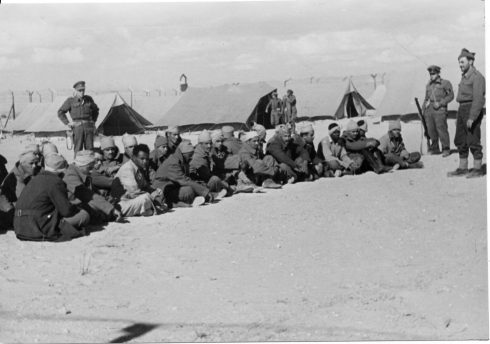
That is why the unearthing of an Israeli soldier’s letter from 1948 detailing what was probably the war’s worst massacre – one long buried by Israel – is of more than historical significance.
It comes as Moshe Yaalon, the defence minister, this week accused Breaking the Silence, an Israeli organisation that exposes military abuses, of “treason” for collecting evidence from the army’s current whistle-blowers.
Western understandings of the 1948 war – what Palestinians term their Nakba, or catastrophe – are dominated by an enduring Israeli narrative. Israel’s army, it is said, abided by a strict moral code. Palestinians left not because of Israel’s actions but on the orders of Arab leaders.
In this rendering, the Palestinians’ mass dispossession was the fault of the Arab world – and a solution for the millions of today’s refugees lies with their host countries.
For decades Israel’s chief concession to the truth was an admission that a massacre took place just outside Jerusalem, at Deir Yassin.
Israel claimed the atrocity was the exception that proved the rule: a rogue militia killed more than 100 villagers, violating Israel’s ethical codes in the chaotic weeks before statehood was declared.
Palestinians have always known of dozens of other large massacres of civilians from 1948 carried out by the Israeli army. The barbarity, they say, was intended to terrorise the native population into flight. This account puts responsibility on Israel for taking the refugees back.
But history is written by the victor.
In recent decades a few brave Israeli scholars have chipped away at the official facade. In the late 1990s a Haifa University student collected testimonies from former soldiers confirming that over 200 Palestinians had been massacred at Tantura, south of Haifa. After the findings were made public, he was pilloried and stripped of his degree.
A decade ago, the historian Ilan Pappe wrote a groundbreaking book, The Ethnic Cleansing of Palestine, arguing that massacres like the one at Tantura were exploited to drive out Palestinians. He and others noted the suggestive titles of military operations such as “Broom” and soldiers’ orders to “clean” areas.
Pappe now lives in academic exile in the UK.
The biggest obstacle to shifting Israeli and western perceptions of 1948 has been the lack of a clear paper trail connecting the political leadership to the massacres. Israel locked away bundles of documentation precisely not to jeopardise the official narrative.
But things are changing slowly.
Last year a key deception was punctured: that Israel urged many of the war’s 750,000 Palestinian refugees to return. In a letter to Haifa’s leaders shortly after the city’s Palestinians were expelled, David Ben Gurion, Israel’s first prime minister, demanded that any return be barred.
Now another letter, located by Israeli historian Yair Auron and published last week for the first time in English by the Haaretz newspaper, trashes the idea of an ethical Israel army.
Written by Shabtai Kaplan, a soldier and journalist, the letter confirms long-held suspicions of a massacre – one that dwarfs Deir Yassin – at Dawaymeh, near Hebron. Soldiers executed hundreds of men, women and children who offered no resistance.
The massacre, near the end of the war, was carried out by elite troops under the command of Yitzhak Sadeh. He developed the Israeli army’s famous doctrine of “purity of arms”.
Kaplan argues that the Dawaymeh massacre was part of “a system of expulsion and destruction”, with a clear goal: “The fewer Arabs who remain, the better.”
Kaplan’s letter was consigned to the vaults, as were so many other documents from 1948 that officials considered too damaging.
Nearly seven decades later, in an age of 24-hour news and social media, Israel is still desperately trying to conceal its darkest episodes by bullying the army’s current whistle-blowers.
Last week Benjamin Netanyahu’s government launched an investigation into Breaking the Silence. On Sunday Netanyahu called the collection of soldiers’ testimonies “intolerable”, indicating that he may try to ban the group.
It is hard not to see parallels between the cover-ups of 1948 and those of today. Breaking the Silence’s disclosures, especially those relating to Israel’s series of attacks on Gaza, each of which has left hundreds of civilians dead, similarly give the lie to the army’s continuing claims of ethical behaviour.
In his 1948 letter, Kaplan observed of the failure by the political leadership to hold anyone to account for the massacres: “Inaction is in itself encouragement.”
Israel’s politicians hoped then that the Palestinians could be quickly terrorised from their lands. Decades later, the atrocities continue – and to the same end. But Israel must face facts: the days when such systematic brutality could be kept under wraps are now over.
Jonathan Cook, based in Nazareth, Israel is a winner of the Martha Gellhorn Special Prize for Journalism. His latest books are Israel and the Clash of Civilisations: Iraq, Iran and the Plan to Remake the Middle East (Pluto Press) and Disappearing Palestine: Israel’s Experiments in Human Despair (Zed Books).
UK Labor chief urges end to arms supplies to Saudis
Press TV – March 24, 2016
UK Labor Party Leader Jeremy Corbyn says the British government should halt its arms sales to Saudi Arabia over the kingdom’s deadly military aggression against neighboring Yemen.
Corbyn said in a statement on Wednesday that the bombing campaign has been “a human rights tragedy and a violation of international law.”
“The British government should halt arms supplies to Saudi Arabia, now being used for this assault on its neighbor, and it should end its diplomatic and military support for the Saudi intervention,” he added in the statement.
The Labor chief further stressed that London should instead focus on promoting peace in Yemen and providing assistance to the people in the country, which has been under military attack by Saudi Arabia since late March 2015.
At least 8,400 people, among them over 2,230 children, have been killed and 16,000 others injured since March 2015. The strikes have also taken a heavy toll on the impoverished country’s facilities and infrastructure, destroying many hospitals, schools, and factories.
Corbyn has previously challenged the UK government over the issue of arms supplies to the Saudi regime which has been accused of “widespread and systematic” targeting of civilians in its aerial campaign in Yemen.
However, London has stood defiant against calls to suspend its arms sales to Saudi Arabia. In January, Prime Minister David Cameron claimed that the UK has “the strictest rules for arms exports of almost any country anywhere in the world.”
According to Amnesty International, the British government has sold 2,400 missiles and 58 warplanes to Saudi Arabia last year alone, enabling the regime to continue its war against Yemen.
British media reports say that the UK government has licensed £6.7 billion ($9.4 billion) of arms to Riyadh since Cameron came to power in 2010, including £2.8 billion ($3.9 billion) since the bombing of Yemen began.
Meanwhile, a powerful cross-party committee on arms exports has launched a full-scale investigation into British arms sales to Saudi Arabia.
“We have launched this inquiry to understand what role UK-made arms are playing in the ongoing conflict in Yemen,” said the arms control committee’s chairman, Chris White.
The Campaign Against Arms Trade (CAAT) has also brought a high court case against the British government, urging London to suspend all current export licenses and refuse all new licenses to Saudi Arabia.
Andrew Smith of CAAT slammed the UK for standing “shoulder to shoulder” with the Saudis throughout its bloody campaign in Yemen.
Yemen financial and food crisis
The Britain-based international charity group Oxfam said on Thursday that Yemen, the Arab Peninsula’s poorest nation, is in the grip of a looming famine in the face of a domestic financial crisis.
Half of the nation’s residents, or nearly 14.4 million people, already struggle to buy food and need assistance in a crisis going largely unheeded in the international community, it said in a report.
The global charity said the possibilities of tightening credit and a currency devaluation threaten Yemen which imports nearly all its food and needs a functioning economic system to fund those shipments.
The warning was issued after reports said Yemen’s Central Bank might cut credit lines that guarantee payment for incoming wheat and rice cargoes.
The Yemeni riyal also runs the risk of devaluation, which could in turn contribute to a rise in food prices in a poor country that imports nearly 90 percent of its food.
Yemeni men receive food aid provided by the World Food Program (WFP) to help families affected by the ongoing conflict, in the Yemeni capital Sana’a on March 16, 2016. (AFP photo)
“An invisible food crisis … risks turning famine warnings into a reality over the coming months,” Oxfam said.
Sajjad Mohamed Sajid, Oxfam’s country director in Yemen, said Yemenis cannot endure the rising prices for food if importers are unable to trade.
Saudi Arabia began a military campaign in Yemen a year ago with the aim of restoring former president Abd Rubbuh Mansur Hadi to power.
“A catastrophe on top of catastrophe … has created one of the biggest humanitarian emergencies in the world today,” Sajid said. “Yet most people are unaware of it.”
The charity reported instances of people eating only a meal a day in Ta’izz city, which is a regular target of Saudi attacks, and empty market stalls with no vegetables on display.
Featured Video

Saudi Led Destruction of Yemen’s heritage
or go to
Aletho News Archives – Video-Images
From the Archives
Israel: Strategic Ally or Liability?
By Stephen Sniegoski | My Catbird Seat | June 12, 2010
The claim that Israel serves as a valuable ally for the United States is made by both pro-Zionists and much of the anti-war and anti-Zionist Left that is influenced by Noam Chomsky. As a result of the Gaza flotilla massacre, which has caused a world-wide uproar against Israel, the value of Israel to the United States is being publicly questioned in more mainstream foreign policy forums. … continue
Blog Roll
 Aletho News
- Four in five new UK jobs taken by foreigners – report
- Here’s what Trump’s latest U-turn really means for Russia and Ukraine
- The Houthis Are Not an Iranian Proxy
- Europe’s Energy Hypocrisy, Russian LNG Profits and US Dependence
- ICC ignored ‘very well-documented’ NATO crimes – ex-Libyan minister
- SNSC secretary dismisses US response to Iran’s conditions as ‘inadequate’
- Sanaa says Taiz roads open, secure for residents, warns Saudi forces
- Iraqi resistance group urges Saudi leadership to admit defeat, lift Yemen siege
- Trump’s Retreat: How Al-Aqsa Flood Took Down the US Empire
- Israel’s Military Actions in Lebanon Grossly Violate International Law — Lavrov
- If Americans Knew
- ADL is working with AI companies to suppress alleged ‘antisemitism’
- Israeli occupation forces using social media surveillance unit to target hundreds of Palestinians in the West Bank
- Israel’s New – and Terrifying – Security Doctrine
- Israeli Attacks Kill Five in Gaza, Including a four-year-old and a woman
- Air Force Major Who Called for Trump’s Impeachment Held in Solitary Confinement
- It’s a Genocide, I’m Into It’: Seinfeld Mocks Protest over Palestinian Children Killed
- Universities fire dozens amid pressure from Zionist billionaires
- Gaza’s buildings are collapsing on top of us. But there’s nowhere else to shelter
- Israel kills four-year-old Gaza child – Daily Update
- After Oct 7, IDF policy allowed civilian casualties for even the lowest-ranking targets
- No Tricks Zone
- New Study Suggests Large Regions Of The Pacific Ocean Have Been Cooling For The Last 80 Years
- Germany’s Green Energy Debacle: High Energy Costs Force Kahla Porzellan to Close After 182 Years!
- New Study: 50 Years Of The Most Aggressive ‘Net Zero’ Policies Can Only Affect The Global Climate By 0.03°C
- US September “Heat” Was No Record…Many Records Set Decades Ago
- Latest European Green Energy Debacle; Portugal’s Largest Flagship Solar Park Insolvent!
- Green Energy Debacle: German Expert Professor Fritz Vahrenholt Warns Of Severe Economic And Social Consequences
- Two More Paleo Reconstructions Affirm Meters-Higher Sea Levels Across Ireland, Brazil 7000-6000 Years Ago
- New Study: Earth And Venus Surface Warmth Largely Explained By Convection And Lapse Rate, Not CO2 Or Radiation
- 2025 Nature Paper Claiming Worsening Global Drought Gets RETRACTED …Heavily Flawed
- New Study: ‘Global Drought Shows No Detectable Recent Acceleration Under Climate Warming’

