Washington gives Israel $100 million to uncover Gaza tunnels
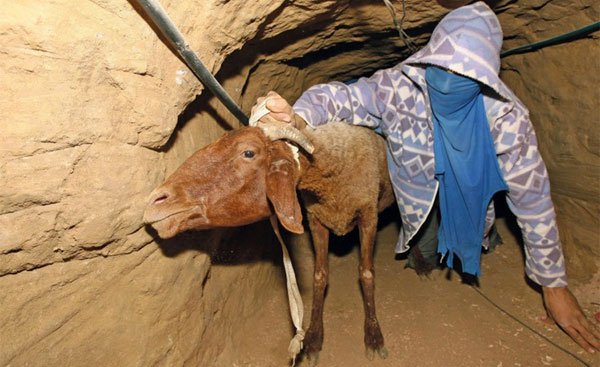
The tunnels are a lifeline for those who live in the beseiged Gaza Strip as they are used to smuggle vital supplies
MEMO | February 2, 2016
Director of Political-Military Affairs at Israel’s Defence Ministry Amos Gilad revealed today that the United States has contributed over $100 million to an Israeli-US technology research project aimed at identifying and locating tunnels on the Gaza Strip border.
In an interview with Army Radio this morning, Gilad stated that intelligence information suggests that there are no such tunnels leading into Israeli territory at the moment.
Defence Ministry official Shalom Gantzer dispelled the fears of Israelis living around the Gaza Strip who have claimed to hear digging noises under their houses, saying that these noises are coming from an electric generator.
Israel’s Channel 10 showed interviews on Saturday with those living near the Gaza border area who had recorded the noises with their mobile phones. They claimed that these noises were the sounds of tunnels being dug from Gaza.
Israel launches electronic war against ‘global boycott movement’
MEMO | January 29, 2016
The Israeli government has vowed to launch an “electronic war” against Boycott, Divestment and Sanctions (BDS) movement, including monitoring, tracking and thwarting their activities in cyber space, as well as attacking it with “special sophisticated tools”.
Israel Hayom newspaper reported: “Israel is facing a campaign to de-legitimise it. It penetrates into a certain extent; up to the secretary-general of the United Nations,” noting that it is a new battle in its “own stadium: the cyber space”.
It quoted the Israeli Minister of Strategic Affairs, Gilad Erdan, as saying that the statements of the UN Secretary General Ban Ki-moon, during which he called for ending the occupation of the Palestinian territory, contributes to “distorting Israeli image globally”.
During the Cyber Tech Conference 2016, held in Tel Aviv, Erdan added: “BDS should be forced to defend themselves and not to attack Israel,” noting that his government has allocated more than 100 million shekels ($25 million) for its “electronic war”.
The head of the Institute for National Security Studies, General Amos Yadlin, said: “The most dangerous country in the Middle East is the state of Facebook.”
“Those who will lead the United States in 20 years’ time are learning today in universities where anti-Israel propaganda exists.”
Also read:
Feds: We can’t disclose FBI records because then public would know how FBI works
PrivacySOS | February 1, 2016
Granting the ACLU and the public access to staffing, budgetary, and statistical information about the Boston Joint Terrorism Task Force (JTTF) and FBI would mean “the public would know where the FBI was putting its resources,” warned an Assistant US Attorney in oral argument in a Boston federal court last week. The government apparently doesn’t want the public to know anything about how the FBI and JTTF spend public money, staff its offices, or conduct investigations.
Heaven forbid the public “know where the FBI [puts] its resources.”
In December 2013 the ACLU of Massachusetts sent a FOIA request to the FBI, which sought basic information about the structure and operations of the Boston JTTF and the Boston FBI field office. Amid the information the FBI redacted from its responsive disclosures were all budget figures, the number of FBI and state and local officials tasked to work on the Boston Joint Terrorism Task Force (JTTF), and the number of assessments, preliminary investigations, and full investigations the Boston FBI conducted over two years ago. (It’s odd that the government is putting up a fight, resisting disclosure of these records, given that in 2011, it gave Charlie Savage of the New York Times similar information.)
According to the government, this information is exempt from public disclosure under FOIA law pursuant to Exemption 7e, the part of the federal statute that says agencies do not have to disclose records that would reveal law enforcement “techniques” or “procedures.” But as ACLU of Massachusetts staff attorney Jessie Rossman argues, staffing, budgetary, and statistical information about caseloads do not reveal techniques or procedures.
The stakes for the public are high. If the court agrees with the government’s reasoning and denies the public access to this information, it would put the federal judiciary’s stamp of approval on what attorney Rossman rightfully argues the FBI is seeking in this case: “a categorical [FOIA] exemption for all law enforcement information.”
As Rossman said last week during oral argument, that’s not what congress intended when it wrote the Freedom of Information Act. If lawmakers intended to bar the public from accessing all law enforcement records, they would have written that into the FOIA statute—which they didn’t.
At issue in the ongoing litigation over FBI redactions is whether the public can hold law enforcement agencies accountable for how they spend our money and act in our names. If we don’t know anything about how law enforcement agencies operate, we can’t hold them accountable. Unaccountable law enforcement is not only bad for freedom; it also harms public safety. As history demonstrates, when the FBI is allowed to conduct its business in the dark, precious government resources are inevitably dedicated to spying on people who threaten the status quo, but who do not threaten their fellow Americans.
While antidemocratic in the extreme, it’s easy to understand why the FBI wants to keep budget, staffing, and investigations statistics secret from the public.
When the public learned about the FBI’s illegal and antidemocratic COINTELPRO operations in the 1970s, the attorney general imposed rules forbidding the FBI from spying on people unless agents could show the targets were likely violating the law. After 9/11, those rules were scrapped. The new guidelines allow FBI agents to open investigations (called “assessments”) against people absent any suspicion of wrongdoing. Since the 9/11 attacks the Bureau has been free to spy on people it doesn’t suspect of criminal activity, supposedly because suspicionless investigations are required during the permanent “war on terror.”
The ACLU is litigating for this information because we want to know what results from the FBI’s suspicionless investigations, known as assessments. If it’s true, as we suspect, that there are thousands of FBI assessments but comparatively few preliminary or full investigations—let alone arrests or successful prosecutions—it confirms what we and other civil libertarians have been saying for over a decade. Namely, allowing the FBI to spy on people absent criminal predicates isn’t just bad for civil liberties; it’s bad law enforcement. If agents are routinely chasing down leads that go nowhere, those agents are wasting their time spying on ordinary people on the public’s dime.
The FBI refuses to give us this information, which is part of the reason we sued. In essence, the government argues the information must remain secret because if disclosed, it will tip off terrorists to… the fact that the government wants to investigate crimes.
But hiding from the public records revealing how many assessments, preliminary investigations, and full investigations the Boston FBI office has conducted doesn’t protect public safety. Instead, it obstructs precisely the kind of public accountability that would make the FBI better at protecting the public from people who mean us harm. […]
Only when law enforcement agencies are subject to rigorous transparency can the public hold them accountable for their actions, thereby making them more effective at protecting public safety.
The FBI has a long and dirty history of spying on dissidents and activists, instead of investigating and building cases against people who do real harm to Americans, like the bankers who collapsed the US and world economy in 2008. So it’s easy to see why the government doesn’t want the public to learn any meaningful information about the inner workings of the Bureau. But government agencies can’t keep information secret from the public because it would reveal something embarrassing or unconstitutional. And the records at issue don’t reveal “techniques” or “procedures.”
Here’s to hoping the federal court agrees, and compels the FBI to release this basic information about how it spends our money and acts in our names. Only then will we have any meaningful access to judge how the Bureau is conducting itself, and so the opportunity to exert some democratic accountability over its operations.
Al-Alam says YouTube account blocked under Saudi pressure
Press TV – February 2, 2016
Video-sharing website YouTube has reportedly blocked an account belonging to Iranian Arabic-language news network Al-Alam under pressure from Saudi Arabia, the TV channel says.
Al-Alam reported Monday that YouTube had closed its account after the Broadcasting Services of the Kingdom of Saudi Arabia (BSKSA) lodged a complaint against the Iranian TV.
The report also slammed the move as “unprecedented and unprofessional,” saying Al-Alam’s YouTube account was blocked without any prior notice and based on “unfounded claims.”
The network denounced YouTube’s move in taking down Al-Alam’s page as a “breach of regulations and technical protocols.”
This is not the first time the Saudis have taken action against the Iranian news channel.
Earlier last year, Saudi hackers overtook Al-Alam Twitter account and its YouTube network, posting items in support of Saudi Arabia’s military campaign against Yemen.
Al-Alam is one of the leading foreign-language news channels operated by the Islamic Republic of Iran Broadcasting (IRIB), which also runs the English-language Press TV and the Spanish-language HispanTV.
The network has a vast following in the Persian Gulf countries and elsewhere among the Arab audience.
Son of Argentine Indigenous Leader Charged for ‘Threats’
Activist Sergio Chorolque was hit with charges just days after his mother was ordered to remain behind bars

Human rights advocates that support Chorolque have alleged the charges are motivated by him and his mother’s activism. | Photo: Diario Veloz
teleSUR – January 31, 2016
The son of a prominent Argentine indigenous activist was charged Saturday on allegations his advocates say are politically motivated.
Sergio Chorolque is accused of issuing death threats to a municipal worker, and could face up to two years imprisonment.
Human rights advocates that support Chorolque have alleged the charges are motivated by his and his mother’s activism.
Chorolque’s mother Milagro Sala has already been described by some human rights activists as the first political prisoner of the new government of President Mauricio Macri.
The well-known indigenous leader, founder of the 70,000 member Tupac Amaru organization, was arrested on January 16 in the Jujuy on charges of inciting violence after protesting in a month-long sit in against Governor Gerardo Morales, who ordered her arrest.
A judge cleared Sala of those charges on Friday, but before she walked out of jail she was handed down a new set of accusations and ordered to stay behind bars while investigations into charges of “illicit association, fraud, and extortion” are launched at the request of the Jujuy government, local media reported.
As authorities peg various charges on the popular social leader, now one of Sala’s children has been charged with leveling death threats against a labor activist.
According to the conservative Argentine newspaper La Nacion, Morales has had a tense and “estranged” relationship with Sala for years. Morales has also had an antagonistic relationship with the social organizations and collectives with which Sala is aligned. Before her arrest, Sala was protesting in support of various organizations at risk of losing their legal status and social benefits after Morales threatened to suspend them via decree.
Sepur Zarco Trial: Guatemala Women Seek Justice for Sex Slavery
teleSUR – January 30, 2016
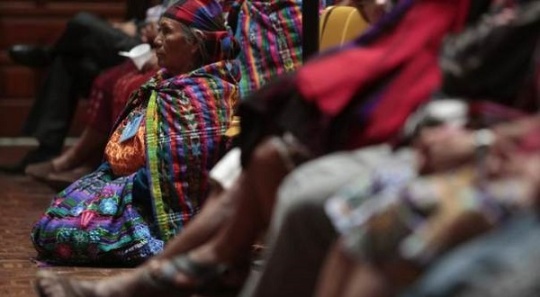
Fifteen Mayan women who were raped and forced to be sex slaves after their husbands were disappeared are demanding justice 30 years after the abuses.
Guatemala is about to launch a landmark trial against former military officers accused of committing sexual enslavement and forced disappearance during the most brutal years of the country’s 36-year civil war.
Here’s what you need to know about the historic trial that is scheduled to kick off Monday, Feb. 1.
1. Fifteen women were sexual and domestic slaves.
Guatemalan soldiers forcibly disappeared 15 men from an eastern Maya Q’eqchi’ village in 1982. It was one of the bloodiest years of Guatemala’s civil war, when dictator Efrain Rios Montt’s military regime was unleashing a scorched earth campaign targeting rural Mayans. After the army disappeared the men, they came back for their wives.
The women were raped and their belongings destroyed. They were taken captive and forced to live at the Sepur Zarco military base, where they were enslaved as domestic servants for the soldiers and systematically raped. The women were forced to labor in 12 hour “shifts,” an abhorrent system that lasted several months.
Though the enslaved shifts ended at the end of 1983, 11 of the 15 women were forced under military threat to stay at Sepur Zarco doing domestic chores for the soldiers for six years until the base closed in 1988. The other four women managed to flee to the mountains with their children where they endured painful hardship for years, including suffering the deaths of most of their children.
All of the women, now in their 70s and 80s, bear enormous physical and emotional trauma from the experience. They also faced stigma in their communities for the violence they endured, and did not share what had happened to them for 30 years, finally coming forward in 2011 to seek justice.
The trial accuses two defendants, former Sepur Zarco chief Esteelmer Reyes Giron and former regional military commissioner Heriberto Valdez Asij, of committing crimes against humanity, including sexual violence and sexual slavery, domestic violence, murder, and forced disappearance. They have been held in remand since 2014 awaiting the trial.
2. The Sepur Zarco case is an internationally historic trial.
The trial of two former military officers for crimes against humanity marks the first time in history that sexual slavery charges are prosecuted at the national level, in the country where the crimes were committed.
The more internationally high-profile case of sexual slavery during armed conflict, the case of Japan’s “comfort women,” was rejected by a Japanese court. Former comfort women subjected to sexual slavery during World War II put Japan on trial in a mock war crimes tribunal in Tokyo in 2000, but the case never officially went to court in the country.
Guatemala’s Sepur Zarco trial could set a new precedent for prosecuting sexual violence in the context of armed conflict, which rights defenders say is one of the most widespread yet under-recognized violations of human rights.
3. It is also a historic trial for Guatemala.
The Sepur Zarco trial marks the first that that Guatemala will consider a sexual violence case as an international crime, which could set a precedent for future trials.
The crime of sexual slavery has been recognized internationally since the early 1900s, when the 1907 Hague Convention prohibited rape and the use of prisoners of war as slaves. The 1926 Slavery Convention elaborated anti-slavery laws with a definition that applies to sexual slavery. The Rome Statute of the International Criminal Court, which came into force in 2002, specifically criminalized sexual slavery.
A standing definition of sexual slavery was detailed in the 1998 U.N. Special Rapporteur’s final report on contemporary forms of slavery, “Systematic Rape, Sexual Slavery, and Slavery-Like Practices During Armed Conflict,” also known as the McDougall Report.
The report defined sexual slavery as “the status or condition of a person over whom any or all of the powers attaching to the right of ownership are exercised, including sexual access through rape or other forms of sexual violence.” More simply put, the McDougall report explained: “Slavery, when combined with sexual violence, constitutes sexual slavery.”
The trial will consider the crimes committed as war crimes and crimes against humanity.
Rape was widespread during the civil war. The Sepur Zarco case has the potential to be a precedent-setting trial to break the cycle of impunity for sexual violence in Guatemala.
4. Rape was a concerted strategy in the civil war.
In 1999, three years after the peace accords were signed in Guatemala, the U.N.-backed Truth Commission investigating civil war atrocities found that rape was systematic and widespread during the conflict. According to the commission, “the rape of women, during torture or before being murdered, was a common practice aimed at destroying one of the most intimate and vulnerable aspects of the individual’s dignity.”
The Truth Commission also found that violence against women, include rape, torture, and murder, was often motivated by their political affiliations, social participation, and ideals, and often combined with other human rights abuses. The report attributed 93 percent of all recorded human rights violations to the state, 85 percent for which the army was responsible.
Despite the countless cases of sexual violence during the civil war, the Sepur Zarco case is the only one that has gone to trial in the country where impunity for war crimes has long remained the norm.
According to the Guatemalan organization Women Transforming the World, sexual violence continues to be inflicted on women by state security forces in conjunction with other human rights violations, such as forced displacement.
5. The victims in Sepur Zarco were targeted for defending their land.
Maya Q’eqchi’ communities in Guatemala have long suffered deep inequality, poverty, and precarious access to land. Before they were disappeared in 1982, the 15 husbands of the victims in the Sepur Zarco case were fighting for legal titles to defend the land they had lived and worked on for years. Because they were standing up for their land rights, they were despised by local large landowners, labeled as leftist insurgents, and made into targets to be silenced.
Land conflicts and unequal ownership are central to the history of Guatemala’s civil war. In 1954, a CIA-backed coup ousted the democratically elected president and reversed the fledgling agrarian reform program that aimed to expropriate idle lands from elite landowners and redistribute land to campesinos. The coup not only triggered more than three decades of civil war, but also helped to lock in one of the most unequal land distribution patterns in Latin America.
Rios Montt’s U.S.-backed bloodshed was nominally a campaign to crush leftist guerrilla uprisings in Guatemala, but in practice many poor Mayan campesinos were targeted as “insurgents” as the military protected the interests of elite landowners.
Photo credit – Reuters
UN says Turkey should investigate reports of rescuers being shot
Press TV – February 1, 2016
The UN High Commissioner for Human Rights has called on Ankara to investigate reports that a number of unarmed people trying to attend to the injured victims of clashes in Turkey’s southeast in late January were themselves shot at.
Ten people were injured when their group, which included two opposition politicians, came under fire while trying to help people injured in earlier clashes in the southeastern town of Cizre in Turkey’s mainly Kurdish southeast on January 20.
Zeid Ra’ad Al Hussein described as “extremely shocking” footage filmed of the incident, which purportedly shows what appear to be a man and woman holding white flags and pushing a cart – possibly carrying bodies – across a street before being shot.
“As they reach the other side, they are apparently cut down in a hail of gunfire,” Zeid said in a statement.
He also expressed concern that the cameraman, who was injured in the shooting, may face arrest under a “clampdown on media.”
Turkey has been engaged in a large-scale campaign against the outlawed Kurdistan Workers’ Party in its southern border region in the past few months. The Turkish military has also been conducting offensives against the positions of the group in northern Iraq.
The operations began in the wake of a deadly July bombing in the southern Turkish town of Suruc. More than 30 people died in the attack, which the Turkish government blamed on Daesh Takfiri terrorist group.
After the bombing, the PKK militants, who accused the government in Ankara of supporting Daesh, engaged in a series of supposed reprisal attacks against Turkish police and security forces, in turn prompting the Turkish military operations.
Intimidation through nightly ‘settler-tour’

Israeli forces blocking the entrance to the Palestinian market
International Solidarity Movement | January 31, 2016
Hebron, Occupied Palestine – On Saturday, 30th January 2016, large groups of settlers, accompanied by heavily-armed soldiers, entered the Palestinian market at night and took it over for about an hour during night-time in occupied al-Khalil (Hebron).
Around 9:30 pm, Israeli settlers from the illegal settlements throughout al-Khalil gathered at Bab al-Baladiyya, from where they walked into the Palestinian souq, the market, surrounded by heavily-armed Israeli forces. The group of more than 50 settlers started a ‘tour’ of the Palestinian market, with Israeli forces ‘guarding’ them throughout the Palestinian market. Palestinian residents were not allowed to pass and forced to wait at a distance, with soldiers repeatedly pointing the lasers from their guns at them to indicate they have to stop. A walk home at night though, for some Palestinians took almost an hour, instead of the usual 10 minutes.
This kind of ‘settler tour’ through the Palestinian market used to take place regularly on Saturday afternoons. During the ‘tour’ Palestinians are often denied to pass, stopped, ID-checked and detained. In the recent months, no ‘settler tours’ took place, but last week they started again with a nightly-tour at 11pm. For the Palestinian residents of the souq, these tours have become a regular form of intimidation and harassment in the past.
Look who’s in charge of UK government cybersecurity
By Stuart Littlewood | My Catbird Seat | November 10, 2015
A chilling remark from a House of Lords debate just caught my eye.
Hansard 4 Nov 2015 : Column GC355
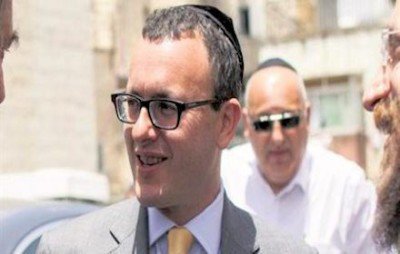
Lord Mendelsohn: We welcome the appointment of the former British ambassador to Israel, Matthew Gould, who will have a key role in cybersecurity inside the Cabinet Office — a very useful and important position.
Sure enough, the UK Government’s website confirms that Gould is now Director of Cyber Security and Information Assurance at the Cabinet Office. “He and his team are focussed on keeping Britain safe from cyber attack, through delivering the UK’s Cyber Security Strategy.”
They must think we have very short memories. Gould was the first Jew ever to hold the post of Britain’s ambassador to Israel. He describes himself as a “passionate” Zionist and whilst in Tel Aviv was instrumental in setting up the UK-Israel Tech Hub. In the words of MATIMOP (the Israeli Industry Center for R&D), the Hub was established “to promote partnerships in technology and innovation between Israel and the UK, and is the first initiative of its kind for the British Government and for an embassy in Israel. The Hub’s creation followed an agreement between Prime Ministers David Cameron and Benjamin Netanyahu to build a UK-Israel partnership in technology.”
Three years ago Cameron appointed venture capitalist Saul Klein as the UK Tech Envoy to Israel with the task of promoting the partnership, leading UK tech missions to Israel, bringing Israeli start-ups to Britain, and hosting tech events in both countries.
MATIMOP quotes Britain’s National Health Service as an example of successful UK-Israel tech collaboration. The NHS “has now formed strong collaborations with Israeli life sciences companies conducting clinical trials in the UK. The cooperation was made as part of the burgeoning partnership between Israel and Britain’s life sciences industries initiated by the UK-Israel Tech Hub.”
Four years ago Craig Murray, a former UK ambassador to Uzbekistan, argued that British policy was being driven in an underhanded fashion by the Israel lobby. He linked Gould with the Fox-Werritty scandal and raised questions about meetings between disgraced former Defence Minister Liam Fox and Fox’s friend/adviser Adam Werritty (who was backed financially by Israel lobbyists but had no security clearance and therefore no authorized role) and Gould.
Murray wrote to Gould asking when he first met Werritty, how many times he had met him, and how many communications of every kind had passed between them. He was told these questions would be answered in Cabinet Secretary O’Donnell’s investigation. “But Gus O’Donnell’s report answered none of these questions,” wrote Murray. “It only mentioned two meetings at which Fox, Gould and Werritty were all three present…”
This prompted Murray to dig further. “There were at least six Fox-Werritty-Gould meetings, not the two given by O’Donnell…. Matthew Gould was the only British Ambassador who Fox and Werrity met together. They met him six times. Why?”
Murray, with many useful sources from his days as an ambassador, claimed to have serious evidence connecting Gould with a secret plan to attack Iran, but the Foreign Office and the Cabinet Secretary blocked questions. Murray published his story ‘Matthew Gould and the plot to attack Iran’ here.
In it he pointed out that “Matthew Gould does not see his race or religion as irrelevant. He has chosen to give numerous interviews to both British and Israeli media on the subject of being a jewish ambassador, and has been at pains to be photographed by the Israeli media participating in jewish religious festivals. Israeli newspaper Haaretz described him as ‘Not just an ambassador who is jewish, but a jewish ambassador’. That rather peculiar phrase appears directly to indicate that the potential conflict of interest for a British ambassador in Israel has indeed arisen.”
He went on to say that Gould stood suspected of long term participation with Fox and Werritty “in a scheme to forward war with Iran, in cooperation with Israel”. The stonewalling by O’Donnell and the FCO led Murray to conclude that “something very important is being hidden right at the heart of government”.
Labour MP Paul Flynn remarked that no previous ambassadors to Israel had been Jewish so as to avoid conflict of interest and accusations of going native. He immediately came under intense flak. Flynn too asked about meetings between Werritty and Gould, as some reports suggested that Gould, Werritty and Fox discussed a potential military strike on Iran with Mossad. “I do not normally fall for conspiracy theories,” said Flynn, “but the ambassador has proclaimed himself to be a Zionist and he has previously served in Iran.”
Fox had earlier made the idiotic claim: “Israel’s enemies are our enemies” and “in the battle for the values that we stand for… Israel’s enemies are our enemies and this is a battle in which we all stand together”. The Jewish Chronicle hailed him as “a champion of Israel within the government”. Furthermore Fox continually rattled the sabre against Iran which, of course, was no threat to Britain but is regarded by Israel as a bitter enemy. Iraq too was Israel’s enemy, not ours. Yet Fox, according to the theyworkforyou.com, voted “very strongly” for the Iraq war. He was also an enthusiastic supporter of the war in Afghanistan.
Given that Fox so eagerly waved the flag of a foreign military power and was a man with dangerous beliefs and demonstrably weak judgement, how could those who appointed him not see that he was unemployable as a Minister of the British Crown – unless they were similarly tainted?
When the Werrity relationship came to light Fox jumped before being flung from the battlements. But the good people of North Somerset, in their wisdom, re-elected him at the general election last May. He’s already on the road to political rehabilitation among the Conservative high command.
Gould’s new job as head of The Office of Cyber Security & Information Assurance (OCSIA) involves giving strategic direction to cyber security and information assurance for the UK. This includes e-crime, working with private sector partners on exchanging information, and engaging with international partners in improving the security of cyberspace and information security. Does it seem right for such a person to be in charge of crucial security matters at the heart of our government? What was in fellow Zionist David Cameron’s mind when he appointed him?
Well, here’s a possible clue. In March of this year Francis Maude, the previous Cabinet Office minister responsible for cyber security, announced three UK-Israel academic collaboration ventures with cyber research funding, the partnerships being University of Bristol/Bar Ilan University, University College London/Bar Ilan University and University of Kent/University of Haifa. They’ll be working together on six specific areas of research:
- identity management
- governance: regulating cyber security
- privacy assurance and perceptions
- mobile and cloud security
- human aspects of security or usable security
- cryptography.
This builds on existing UK-Israel cooperation. Both parties signed a Memorandum of Understanding on digital co-operation in March 2014.
Still sitting comfortably? Only this week the Cameron government was lecturing us on threats to national security and announcing plans to trawl through our personal emails and web browsers in order to “keep us safe”.
Question is, who trawls Gould’s private emails?
Hamas welcomes Italian academics’ call for BDS
Ma’an – January 30, 2016
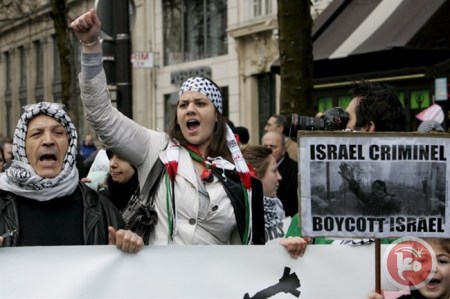 BETHLEHEM – The Hamas movement hailed on Saturday the announcement that academics from 50 Italian universities had signed a petition calling to boycott Israeli universities and research institutes.
According to prominent Italian publication L’Espresso, more than 160 Italian academics came out in support of the Palestinian boycott, divestment and sanctions (BDS) campaign.
The petition, reportedly the first large-scale BDS effort from Italian academia, said it was “a response to the known and well-documented complicity of Israeli academic institutions with Israeli state violence and the total lack of serious condemnation on their part since the foundation of the State of Israel.”
The BDS campaign specifically targeted Technion, the Israeli Institute of Technology in Haifa, for its prominent role in the Israeli military-industrial complex, and called on Italian universities to sever ties with the institution.
Hamas spokesman Sami Abu Zuhri welcomed the move on Saturday, saying the petition “illustrates the increasing state of isolation the occupation suffers as a result of its crimes.”
Israel has been struggling to tackle a growing Palestinian-led boycott campaign which has had a number of high-profile successes abroad in both academic and artistic fields.
The BDS movement aims to exert political and economic pressure over Israel’s occupation of the Palestinian territories in a bid to repeat the success of the campaign which ended apartheid in South Africa.
In recent years, some 1,200 academics in Spain, 343 British professors and lecturers and more than 200 South African academics have publicly come out in support of BDS.
Israeli forces seize Palestinian vehicles, equipment in Jordan Valley

Ma’an – January 30, 2016
TUBAS – Israeli forces late Friday confiscated trucks and equipment being used to build a new agricultural road in the Palestinian village of Khirbet al-Dir in the northern Jordan Valley.
The head of a local council in the occupied West Bank village, al-Maleh Arif Daraghmah, told Ma’an that military forces had seized the equipment, without citing a reason for its removal.
Daraghmah added that days before, Israeli forces had ruined dozens of acres of agricultural land and roads while carrying out military drills in the area.
A spokesperson for Israel’s Coordinator of Government Activities in the Territories (COGAT) told Ma’an: “Yesterday evening, two trucks, JCB and an excavator, were confiscated as they were used for illegal road building adjacent to Mehoula in Area C.”
The Jordan Valley — occupied with the rest of the West Bank in 1967 — is in Area C, under full Israeli military and administrative control, and residents of the area face a constant threat of destruction of structures and property.
Threats of displacement for the thousands of Bedouins living in the area have reportedly increased dramatically since 2012, notably the use of Israeli military training exercises as a means of forcible displacement.
Rights groups argue that Israel aims to fully annex the strategic area of land and is unlikely to return the occupied area to Palestinians.
Israeli media reported earlier this week that the Israeli government announced that it may revoke the closed military zone status of a number of land plots in the Jordan Valley, supposedly returning the land to their original Palestinian owners after decades of confiscation.
The news came several days after COGAT announced that plans to declare 1,500 dunams (370 acres) of land in the Jordan Valley as “state land” were in their “final stages.” The move will be the largest declaration of “state land” by Israel since August 2014.
Featured Video

Why Hamas Really Attacked Israel on Oct. 7
or go to
Aletho News Archives – Video-Images
From the Archives
Israel: Strategic Ally or Liability?
By Stephen Sniegoski | My Catbird Seat | June 12, 2010
The claim that Israel serves as a valuable ally for the United States is made by both pro-Zionists and much of the anti-war and anti-Zionist Left that is influenced by Noam Chomsky. As a result of the Gaza flotilla massacre, which has caused a world-wide uproar against Israel, the value of Israel to the United States is being publicly questioned in more mainstream foreign policy forums. … continue
Blog Roll
 Aletho News
- Why Hamas Really Attacked Israel on Oct. 7
- Declassified UK exposes British man who fought for ‘Israel’ in Gaza
- West’s death cult in a theater near you
- How the Yandex ‘Russian bots’ lie fell apart
- Burnham’s ‘Russia did Brexit’ ruse crumbles
- Estonia making movies and games to encourage war against Russia
- Four in five new UK jobs taken by foreigners – report
- Here’s what Trump’s latest U-turn really means for Russia and Ukraine
- The Houthis Are Not an Iranian Proxy
- Europe’s Energy Hypocrisy, Russian LNG Profits and US Dependence
- If Americans Knew
- Activists Abused By Israel Return to New Freedom Flotilla Mission
- 60 Minutes won’t tell the full truth about Israeli settler violence
- Nearly 50,000 women, girls killed or severely injured in Gaza since October 2023: UN Women
- ADL is working with AI companies to suppress alleged ‘antisemitism’
- Israeli occupation forces using social media surveillance unit to target hundreds of Palestinians in the West Bank
- Israel’s New – and Terrifying – Security Doctrine
- Israeli Attacks Kill Five in Gaza, Including a four-year-old and a woman
- Air Force Major Who Called for Trump’s Impeachment Held in Solitary Confinement
- It’s a Genocide, I’m Into It’: Seinfeld Mocks Protest over Palestinian Children Killed
- Universities fire dozens amid pressure from Zionist billionaires
- No Tricks Zone
- New Study Suggests Large Regions Of The Pacific Ocean Have Been Cooling For The Last 80 Years
- Germany’s Green Energy Debacle: High Energy Costs Force Kahla Porzellan to Close After 182 Years!
- New Study: 50 Years Of The Most Aggressive ‘Net Zero’ Policies Can Only Affect The Global Climate By 0.03°C
- US September “Heat” Was No Record…Many Records Set Decades Ago
- Latest European Green Energy Debacle; Portugal’s Largest Flagship Solar Park Insolvent!
- Green Energy Debacle: German Expert Professor Fritz Vahrenholt Warns Of Severe Economic And Social Consequences
- Two More Paleo Reconstructions Affirm Meters-Higher Sea Levels Across Ireland, Brazil 7000-6000 Years Ago
- New Study: Earth And Venus Surface Warmth Largely Explained By Convection And Lapse Rate, Not CO2 Or Radiation
- 2025 Nature Paper Claiming Worsening Global Drought Gets RETRACTED …Heavily Flawed
- New Study: ‘Global Drought Shows No Detectable Recent Acceleration Under Climate Warming’

